A banquette gives the dining table a settled place in the room. It can follow a corner, sit beneath a window, or create a boundary beside the kitchen. The bench is only part of the decision: table supports, back cushions, nearby doors, and the route into each seat all affect how comfortable the arrangement feels.
These examples include fitted benches and freestanding upholstered seating used at dining tables. Look at the visible layout before borrowing its colors or fabrics. A beautiful corner still needs room for knees, an accessible way to sit down, and surfaces you can clean after meals. The notes explain those practical choices alongside the details shown in each photograph.
PART 01
Shape the Seating Around the Table
IDEA 01 / 20
Follow the Window Corner with a Low Back
 SaveSupport Non AI Creator
Image credit: Photo: Julia Robbs. From: Hyphen & Co
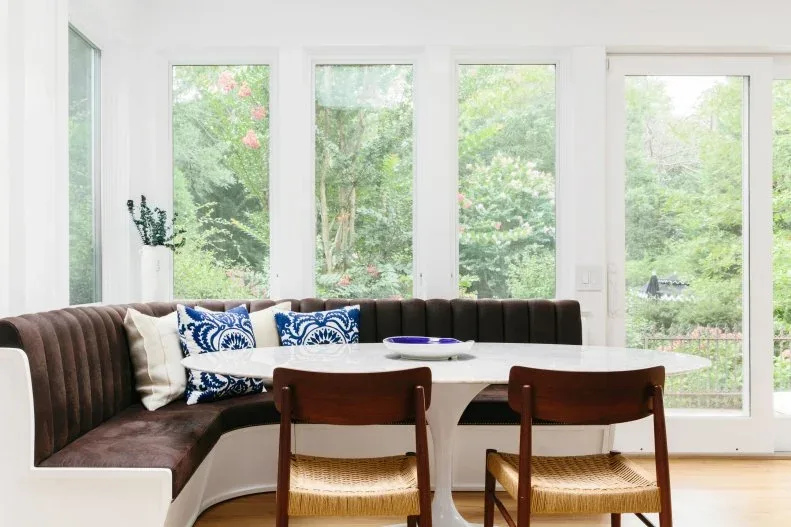
A dark brown banquette follows the window corner, leaving the tall glazing visible above its low back. Vertical upholstery lines give the bench definition without adding another pattern beside the blue-and-white pillows. A white oval table brightens the center, while wooden chairs provide separate seats on the open side. The garden view remains a prominent part of the dining setting.
Keep a window-side back low enough to preserve the view and reach the window fittings. Try the table position with cushions in place, since bulky pillows reduce usable seat depth. Check how the corner guest will get in and out. An oval edge can ease movement, but the table base still needs to leave comfortable space for feet.
IDEA 02 / 20
Give a Small Corner a Bright Painted Base
 SaveSupport Non AI Creator
Image credit: From: Barbie Palomino
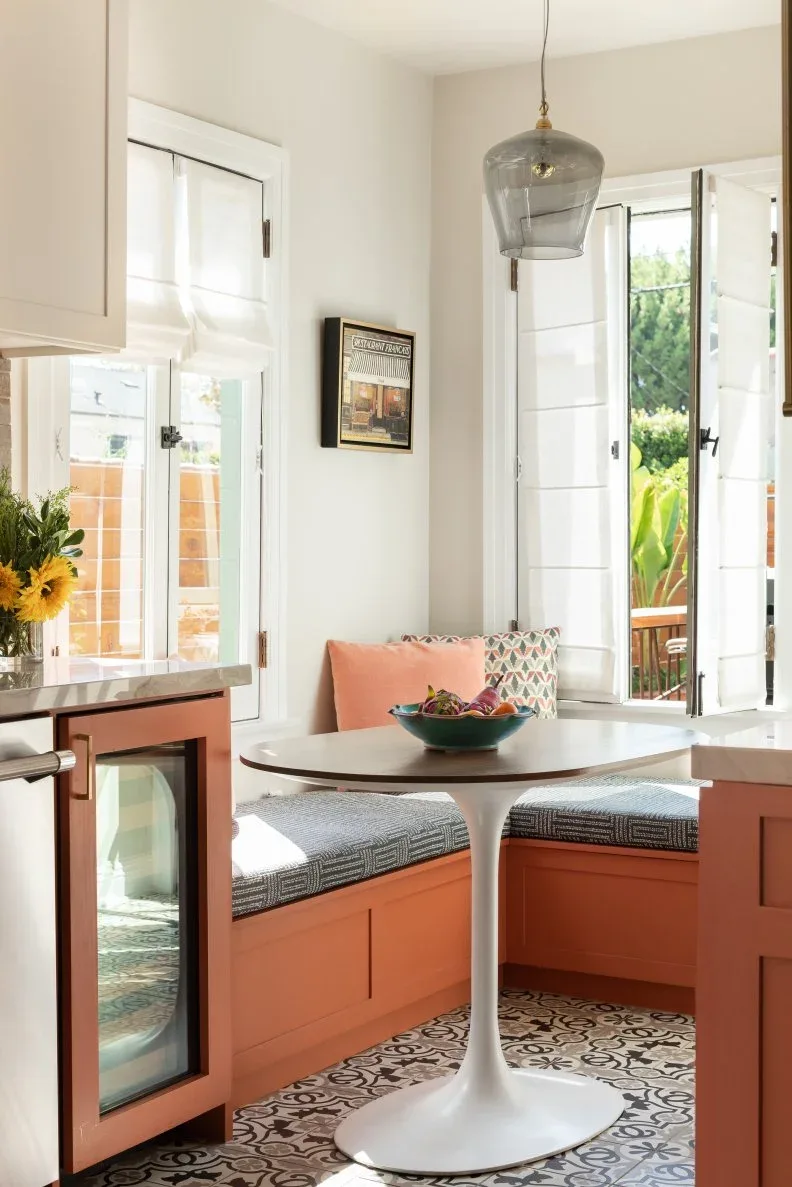
Orange paint defines this compact bench beneath the corner windows. Gray patterned seat cushions add detail without covering the bright base, and a white pedestal table keeps its support concentrated near the center. Pale walls and a glass pendant leave the upper part of the nook comparatively quiet. The dining corner feels distinct from the adjacent cabinets despite the close connection.
Choose a bench-base finish that can handle regular contact from shoes and cleaning cloths. Test the orange beside the cushion fabric rather than deciding from separate samples. Check the table’s edge against the seated position on both sides of the corner. Keep access to windows and nearby cabinets clear so the dining area does not interrupt ordinary kitchen tasks.
IDEA 03 / 20
Put a Bold Stripe on the Long Back
 SaveSupport Non AI Creator
Image credit: Photo: Caitlin Murray. From: Caitlin Murray
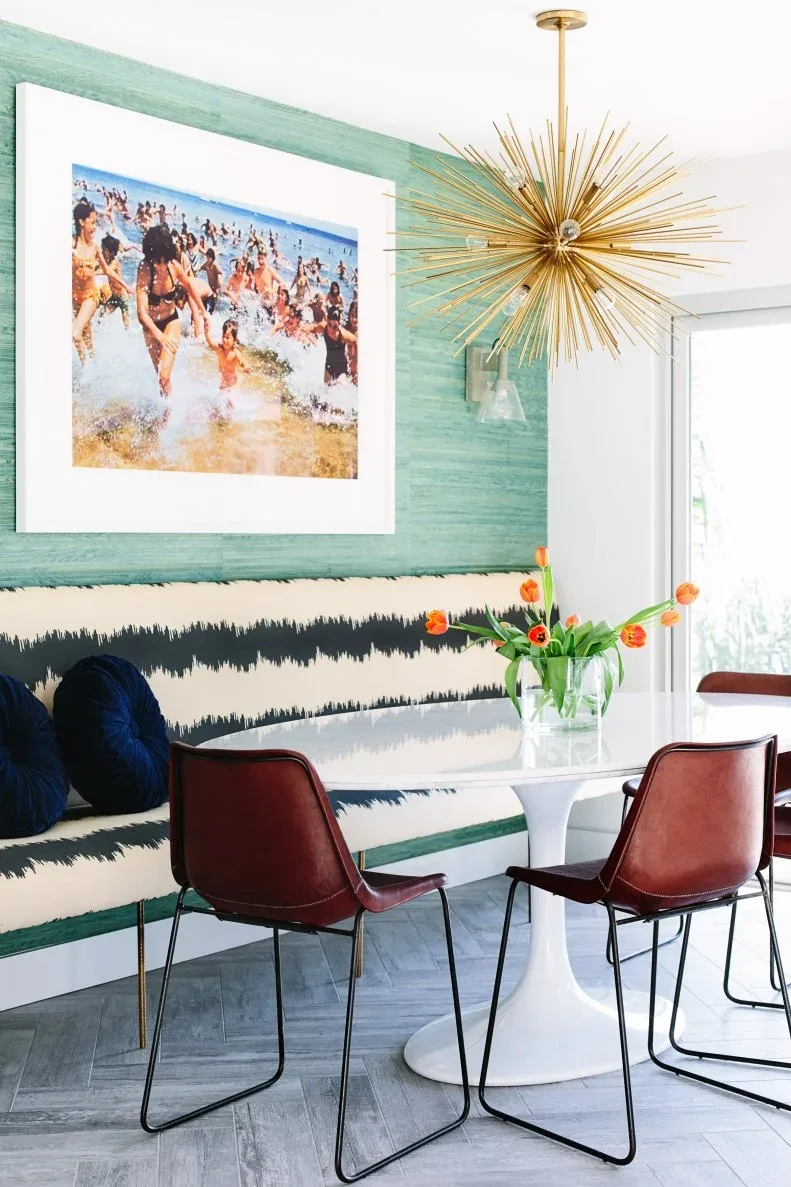
A broad black-and-white stripe makes the long bench back the dining area’s strongest pattern. The green wall and framed beach imagery sit above it, while a gold-colored starburst light adds a separate shape overhead. Red-brown chairs bring warmer color to the open side of the white table. The bench shows how upholstery can carry the room’s main decorative detail.
View the complete stripe repeat on a generous fabric sample before ordering upholstery. Compare its direction across the back and seat, including seams and corners. A strong stripe can work with simpler loose cushions rather than several unrelated prints. Ask the upholsterer how the fabric will be cleaned and whether replacement covers or individual sections can be renewed later.
IDEA 04 / 20
Use a Neutral Bench Beside Existing Cabinetry
 SaveSupport Non AI Creator
Image credit: From: Design Development
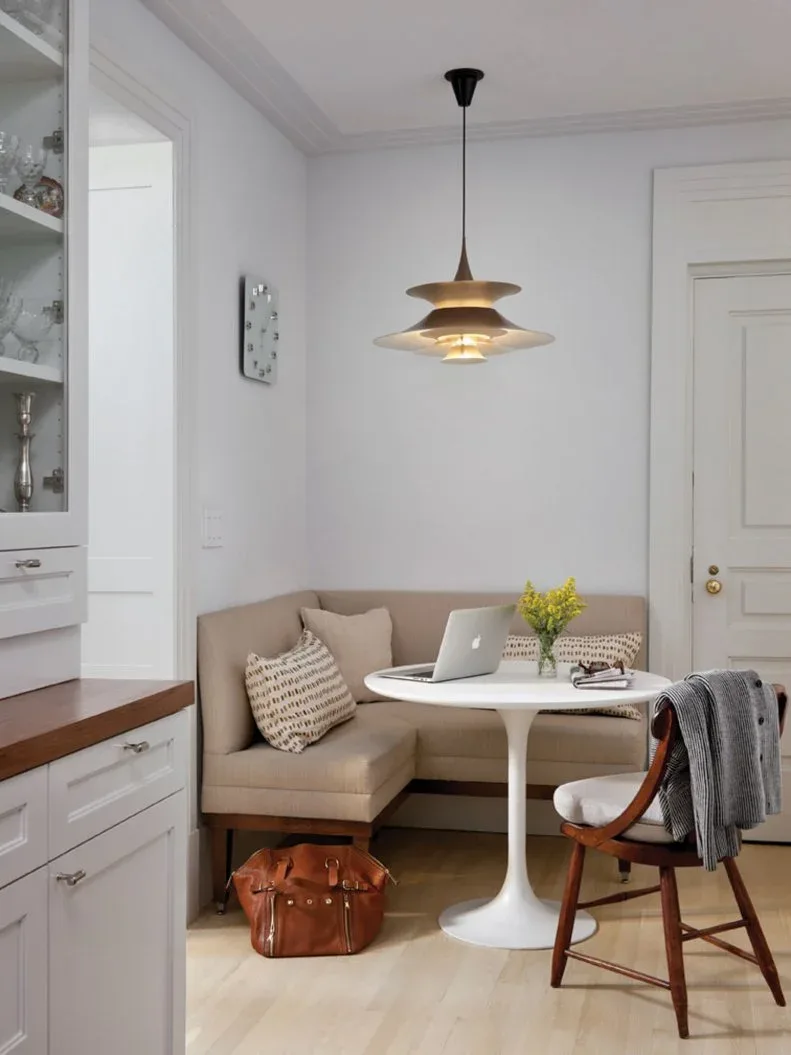
A pale beige bench fits into the corner beside the white cabinets. Its upholstered back and seat make the nook feel softer than the surrounding cabinet fronts. A round white table leaves the corners of the bench visible, while patterned pillows add small-scale detail. The layered pendant gives the area a focal point without requiring a strong wall color behind the seating.
If a bench sits close to existing cabinets, confirm that doors and drawers still open comfortably. Compare the upholstery with the cabinet color in the room’s actual light; similar pale shades can look quite different together. Test the round table’s reach from each seating position. Keep the daily number of pillows manageable so sitting down does not require clearing the bench.
IDEA 05 / 20
Try a Freestanding Upholstered Banquette
 SaveSupport Non AI Creator
Image credit: Photo: Suzanna Scott. From: Regan Baker
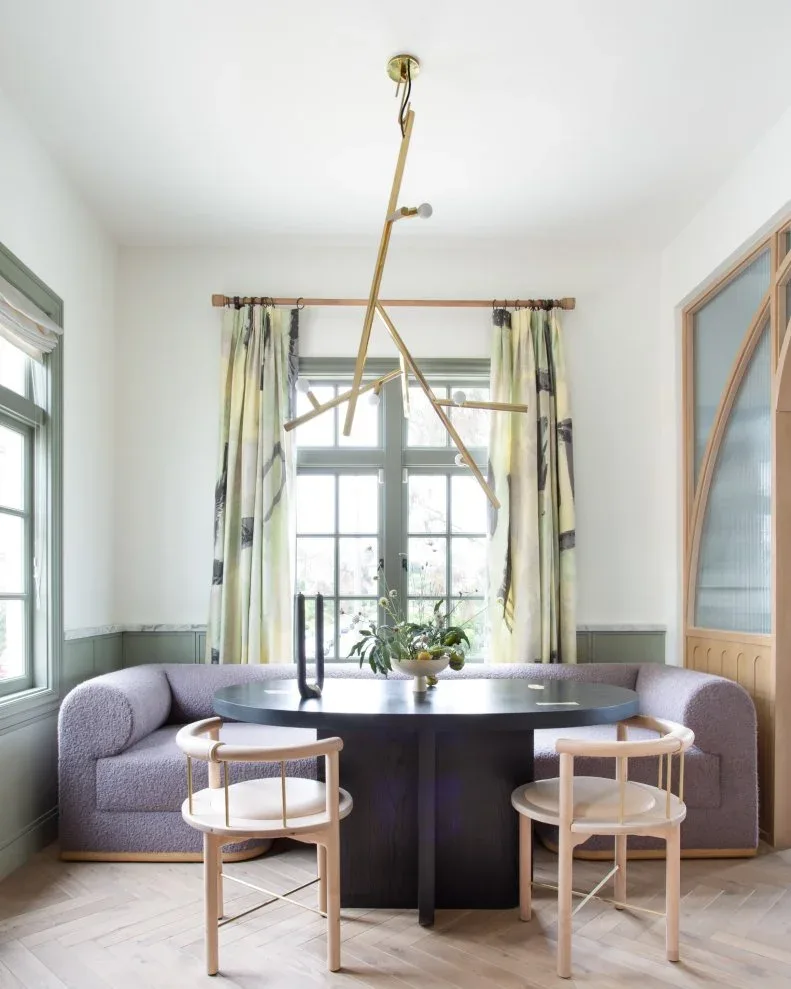
A purple upholstered banquette sits behind the dark round table, with curved arms giving it a furniture-like outline. Pale wooden chairs provide a contrast on the open side. Patterned curtains and gray-green lower walls add further color around the seating, but the bench’s broad purple surface remains clear. This arrangement uses a substantial upholstered seat without a visible fitted cabinet base.
Test a freestanding banquette at the intended table before buying if possible. Lounge seating can be too low or deep for comfortable dining, especially when soft cushions compress. Check the arm position against the tabletop and leave a workable route around the ends. Confirm delivery access as well, since a curved upholstered piece may be awkward to move through narrow doors.
PART 02
Balance Color, Cushions, and Everyday Care
IDEA 06 / 20
Balance a Yellow Corner with Simple Stools
 SaveSupport Non AI Creator
Image credit: Photo: Kacey Gilpin Photography. From: Bailey Austin Design
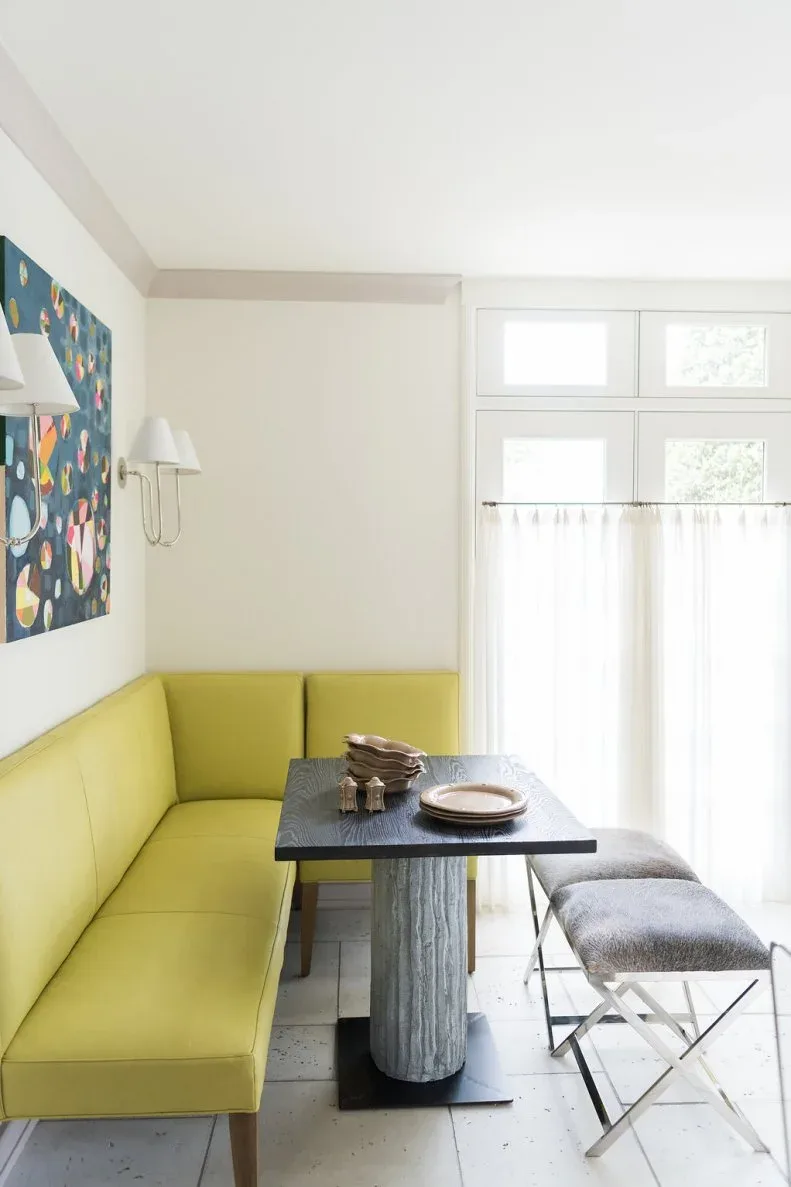
Yellow upholstery gives the corner bench a lively identity against the pale walls. Its straight back and seat edges contrast with the gray stools on the open side of the dark rectangular table. Artwork contributes smaller areas of color nearby. The window and curtain brighten the end of the arrangement, while the furniture keeps the dining layout easy to distinguish.
Stools can keep the open side visually light, but their comfort differs from a supportive dining chair. Consider who uses the table and how long meals usually last before choosing them. Compare table height and seat height together, and test knee clearance around the central support. Pick an upholstery shade you enjoy in daylight and under the evening dining light.
IDEA 07 / 20
Keep a Pale Corner Bench Below a Gallery
 SaveSupport Non AI Creator
Image credit: Photo: Stacy Zarin Goldberg. From: Zoe Feldman Design
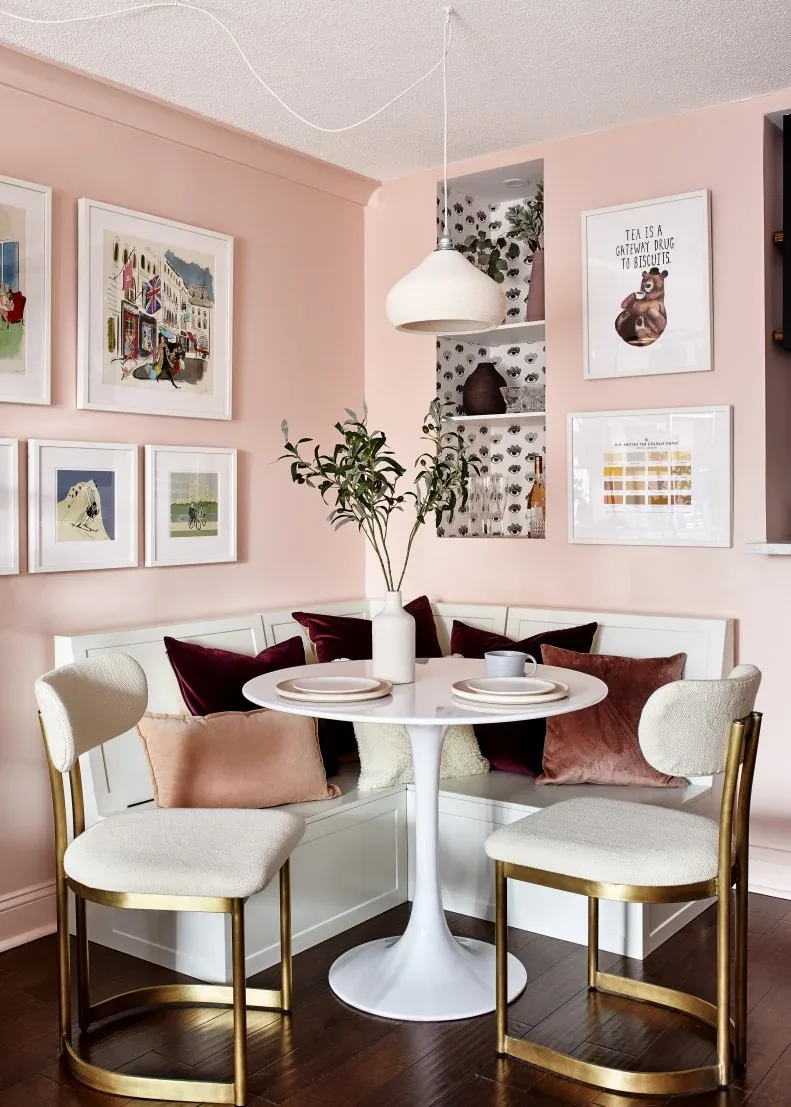
A pale corner bench sits below a varied gallery on pink walls. Burgundy and blush pillows deepen the room’s colors without changing the bench’s light base. The round white table repeats that pale surface, while the separate chairs introduce curved backs and gold-colored legs. The bench stays visually simple, allowing the artwork and loose cushions to supply most of the detail.
When art hangs above a bench, allow for seated heads and cushions before marking frame positions. Choose a few useful pillows that provide back support rather than filling the entire seat. Check the upholstery’s cleaning instructions, particularly for a pale fabric used during meals. If storage is included beneath a similar fitted bench, plan how it will open around the table.
IDEA 08 / 20
Build Drawers into the Bench Base
 SaveSupport Non AI Creator
Image credit: Photo: Regan Wood Photography. From: Claire Paquin
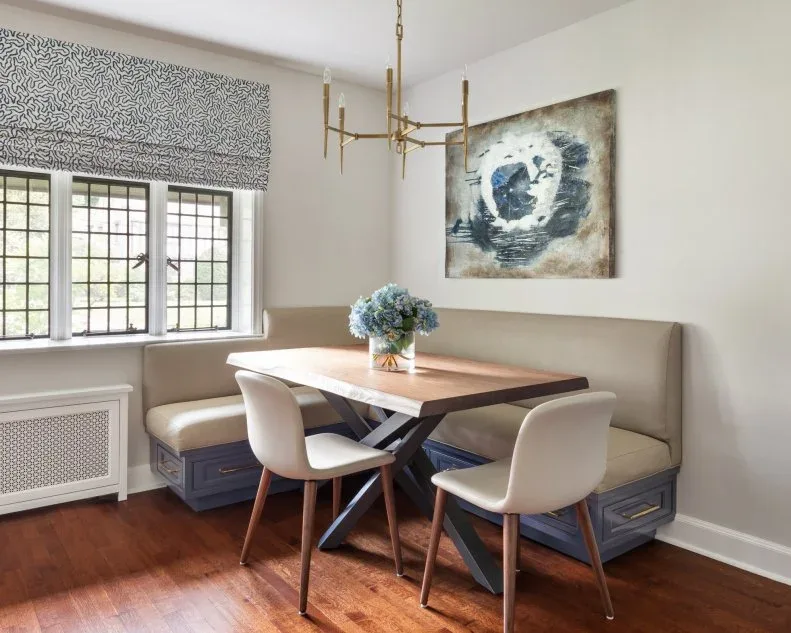
Blue-gray drawer fronts make the bench base part of the room’s color scheme beneath pale upholstery. A wooden table with crossing supports occupies the center, while two pale chairs sit on the open side. The patterned window shade and abstract picture add detail above. The visible drawers offer a practical storage feature without replacing the dining seat with a tall cabinet.
Check drawer travel against the table supports and any chairs before planning this type of base. Storage is most useful when it opens without moving the whole dining arrangement. Decide what will live inside and size the compartments accordingly. Keep seat cushions removable for cleaning, and make sure handles do not catch knees or clothing as people slide into place.
IDEA 09 / 20
Connect the Bench to the Kitchen Peninsula
 SaveSupport Non AI Creator
Image credit: Photo: Amy Bartlam. From: Jenn Feldman Designs
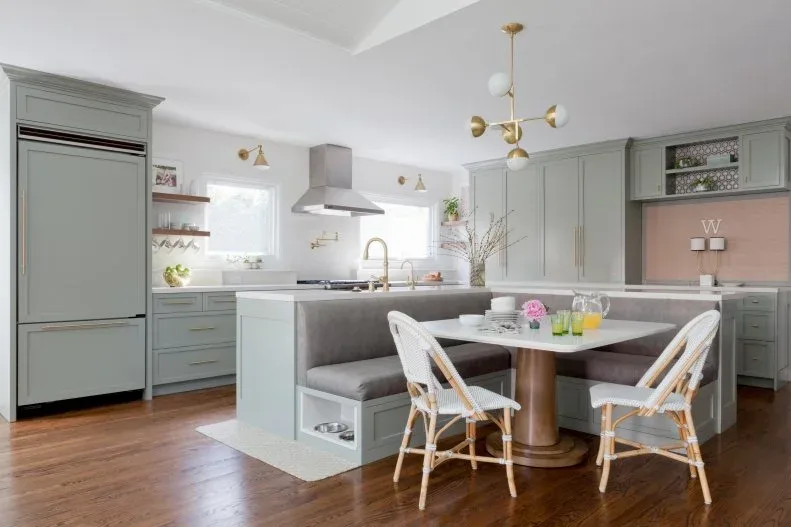
The gray bench shares a boundary with the kitchen peninsula, giving the dining area a place within the larger room. A white tabletop and gold-colored cylindrical support provide a clear contrast to the seating. Woven chairs add a different texture on the open side. A small lower cubby is visible at the bench end, while matching gray cabinetry surrounds the arrangement.
A peninsula-side bench needs to work with the kitchen’s routes as well as the dining table. Check appliance and cabinet access with guests seated. Keep any open cubby for items that can tolerate dust and occasional crumbs, and avoid blocking it with chair legs. Plan the back height so it supports diners while leaving nearby work surfaces comfortable to use.
IDEA 10 / 20
Make a Dark Upholstered Corner Feel Inviting
 SaveSupport Non AI Creator
Image credit: Photo: Chris Gill. From: Gioi Tran
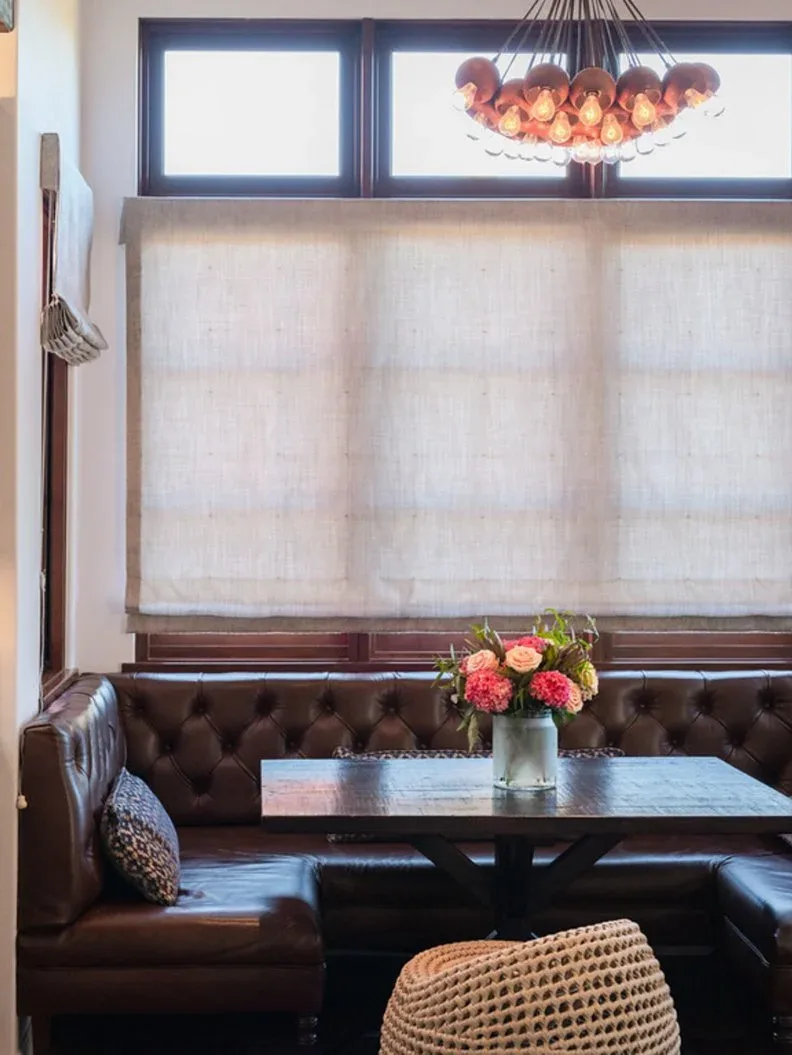
Dark brown tufting gives this corner bench a rich, detailed surface beneath the broad window shade. A dark rectangular table continues the restrained palette, while flowers and a patterned pillow bring smaller areas of color. The woven chair introduces a lighter texture in the foreground. Warm reflections in the overhead light keep the setting from relying entirely on dark flat surfaces.
Tufted upholstery has more seams and recesses than a plain bench, so consider how you will remove crumbs and dust. Follow the actual fabric or covering’s care instructions rather than assuming every dark surface is wipeable. Check the window shade’s access behind the table. Keep the table close enough for dining without forcing knees tightly against its supports.
PART 03
Work with Windows and Existing Walls
IDEA 11 / 20
Soften a Curved Bench with Mixed Cushions
 SaveSupport Non AI Creator
Image credit: Photo: Matthew Williams. From: LABLstudio
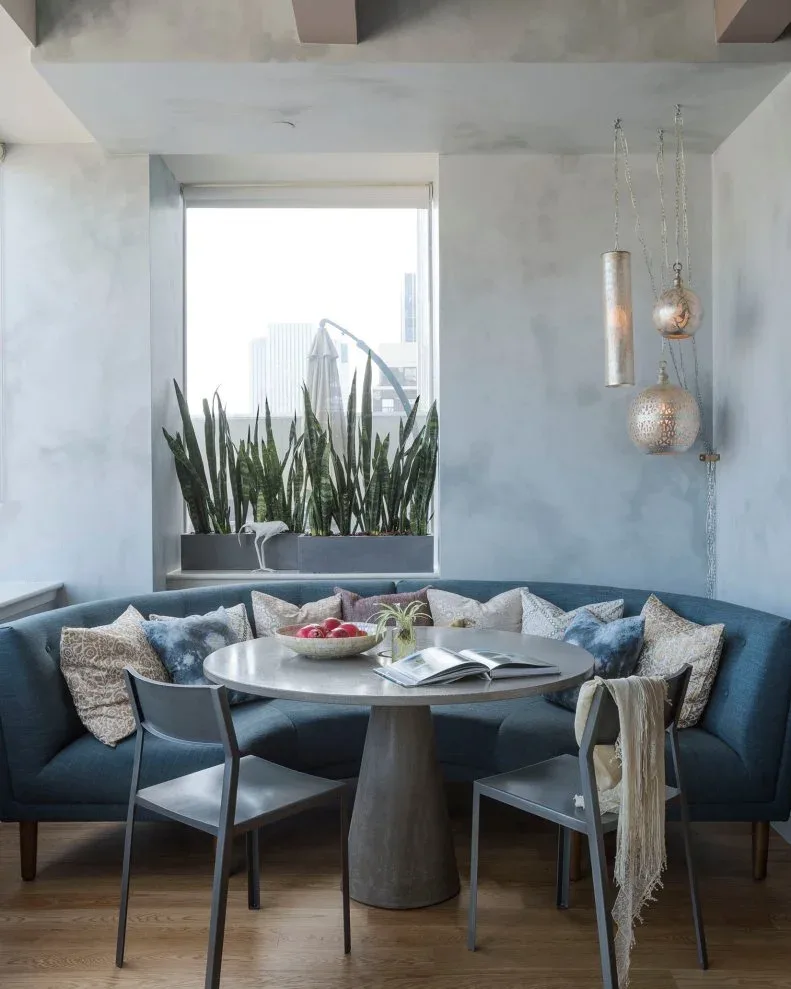
A curved blue banquette wraps around the round gray table, giving the dining nook a softer outline than a square corner. Mixed pillows add lighter areas across the back, while gray chairs repeat the table’s quieter color. Plants sit near the window above the bench. Three hanging lights bring different shapes to the wall side without crowding the tabletop itself.
A curved bench and table should be tested together because the usable reach changes along the seat. Leave enough space at the ends for people to enter without climbing around furniture. Choose pillows with supportive sizes rather than an excess of large cushions. Keep plants in stable containers and consider how watering and falling leaves will be managed above the upholstery.
IDEA 12 / 20
Keep Window Seating Clear with Two Table Supports
 SaveSupport Non AI Creator
Image credit: Photo: Stacey Cohen
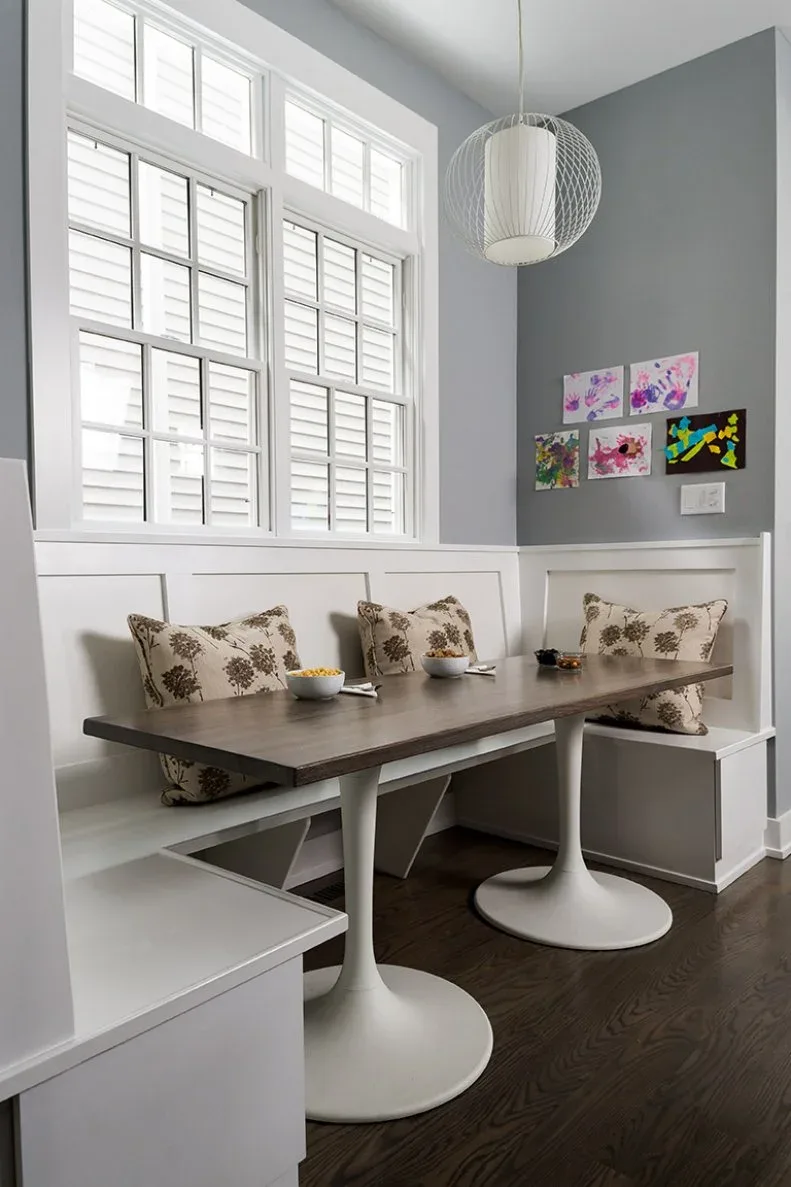
White paneling connects the fitted bench with the lower wall beneath the shuttered windows. Patterned pillows add comfort against the straight back, while a dark rectangular tabletop contrasts with two white pedestal bases. Gray upper walls give the children’s art a quieter background. The arrangement keeps the window fittings visible above the seating instead of enclosing the corner with a tall upholstered back.
Two table supports can suit a longer top, but their placement still affects where people put their feet. Mark the supports on the floor and try every seating position before committing. Check that shutters open with the table in place. Display children’s pictures above likely contact points, using secure frames or another suitable method that keeps small loose parts out of reach.
IDEA 13 / 20
Let a Wooden Bench Echo the Table
 SaveSupport Non AI Creator
Image credit: From: Joseph Stabilito
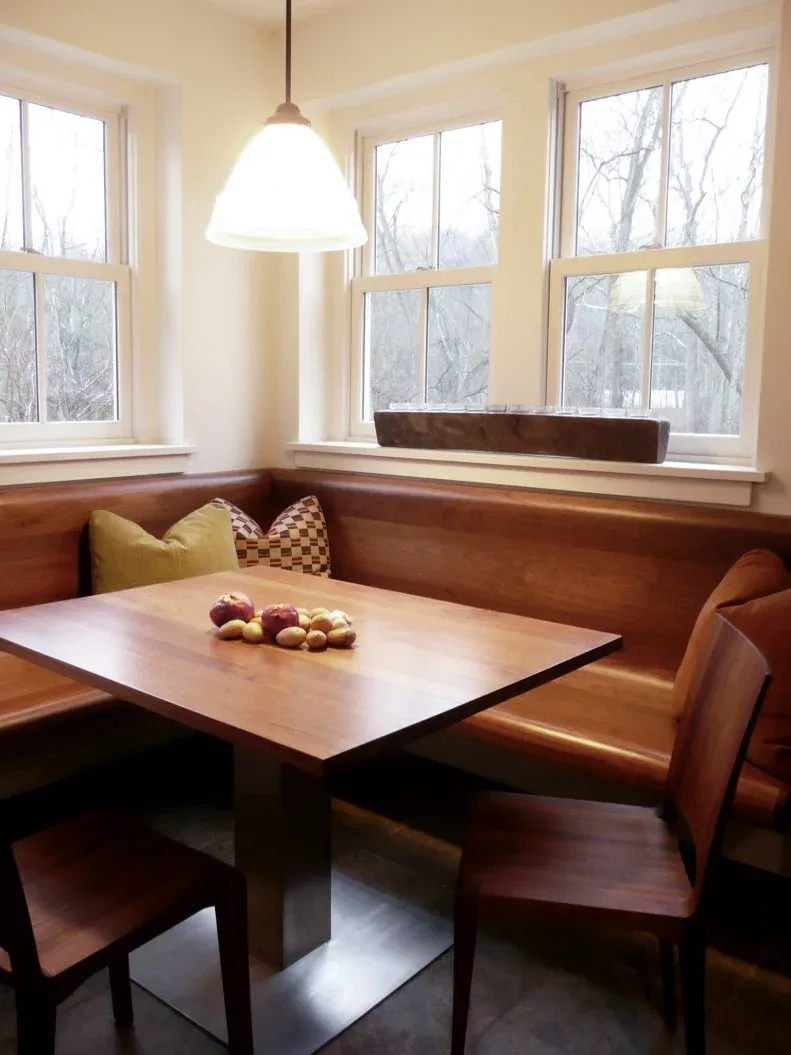
The wooden bench and square tabletop repeat warm brown tones beneath the white-framed windows. A broad central metal support gives the table a different finish without adding legs at each corner. Dark wooden chairs continue the simple furniture palette. Two pillows soften part of the bench back, while the low outline leaves the windows and their natural light clearly visible above.
A wooden seat is easier to keep visually uncluttered than a pile of loose cushions, but comfort should be tested over a full meal. Check the back angle and the table’s reach before commissioning a similar bench. Use removable pads if extra softness is needed, with a suitable way to prevent slipping. Follow the finish’s care instructions when wiping spills.
IDEA 14 / 20
Use Window Fabric to Connect Colorful Chairs
 SaveSupport Non AI Creator
Image credit: Photo: Susan Galvani. From: Susan Galvani
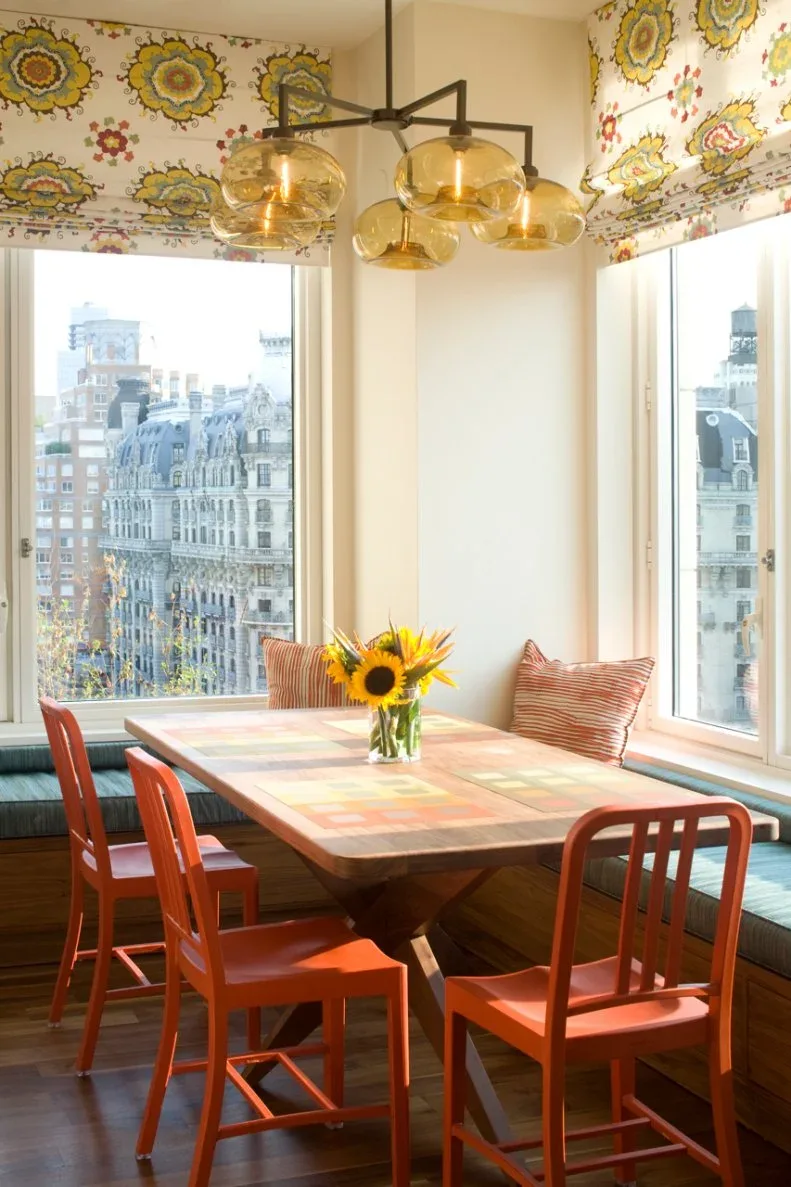
Teal seat cushions run beneath the corner windows, while orange chairs bring a contrasting color to the open sides of the table. Floral shades contain several colors that connect those separate furniture choices. Striped pillows add another pattern at a smaller scale. Amber-colored glass shades overhead repeat the warmer tones, leaving the wooden tabletop as a calmer surface in the center.
Start with the window fabric when combining several colors, then pull a limited selection into seating and cushions. View enough of the pattern to understand its repeat before ordering shades. Check that the raised fabric clears the window fittings and the seated position. If the table has crossing supports, try the corner seats to confirm comfortable space for feet.
IDEA 15 / 20
Give a Compact Green Bench a Clear Purpose
 SaveSupport Non AI Creator
Image credit: Photo: Jennifer Jacobson ©
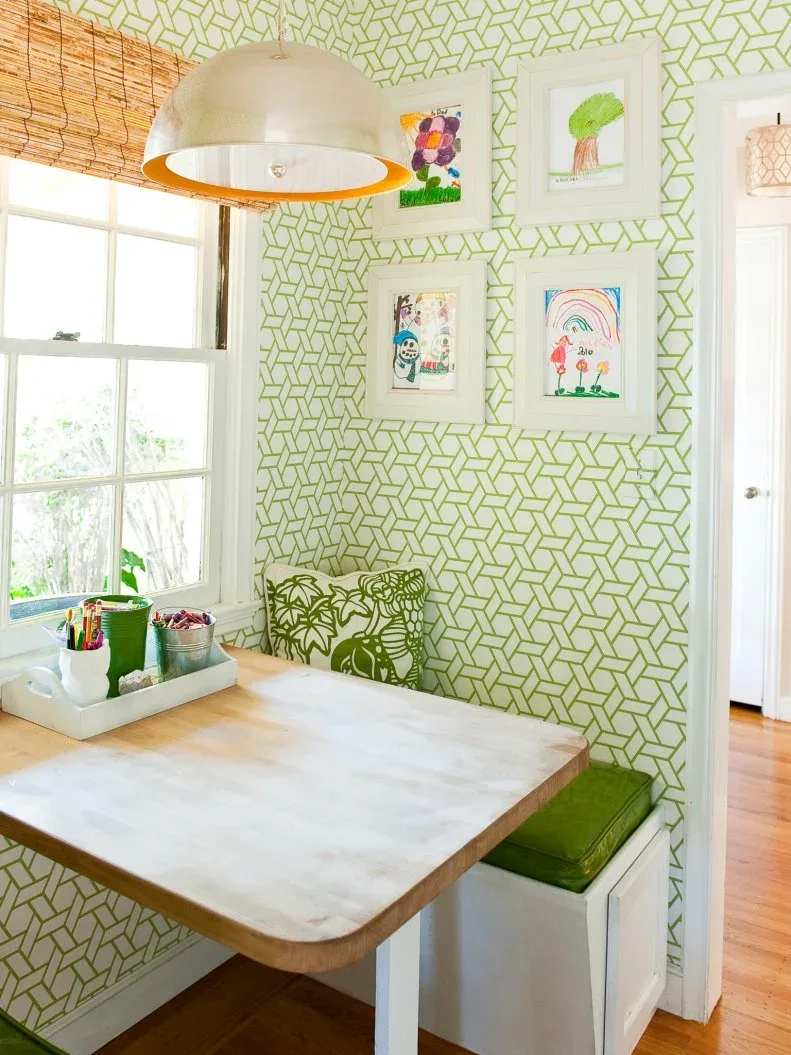
Green cushions connect the small fitted bench with the geometric green-and-white wallpaper behind it. A pale wooden tabletop with rounded corners projects into the nook, leaving the bench visible at the side. White framing keeps the children’s drawings separate from the repeated pattern. The domed pendant and woven window shade bring larger, simpler forms beside the more detailed wallpaper and artwork.
Define what a compact nook needs to do before adding accessories: everyday meals, homework, or a short coffee break may require different storage. Keep the working surface clear enough for that main use. Rounded tabletop corners can ease movement, but check the supporting base too. Choose cushion covers with realistic care requirements and keep art clear of regular contact behind seated heads.
PART 04
Make the Fitted Details Useful
IDEA 16 / 20
Put a Bright Bench Above a White Drawer Base
 SaveSupport Non AI Creator
Image credit: Photo: Bill Reitzel ©
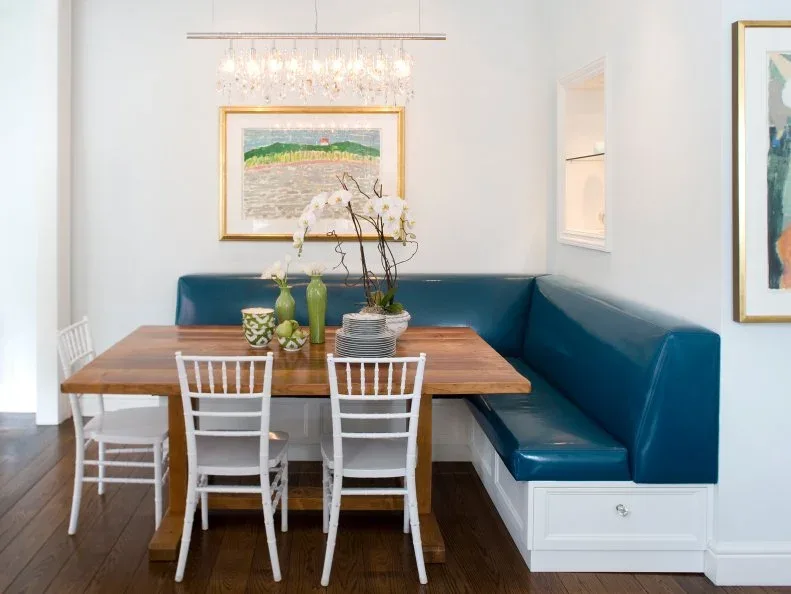
Blue upholstery gives the fitted corner bench a strong outline above its white base. A visible drawer adds a practical detail at the near end, while white chairs repeat the lighter finish across the wooden table. Framed art and a rectangular chandelier decorate the upper part of the room. The contrast makes the bench a focal point without coloring the surrounding walls.
Keep the drawer’s opening route clear when positioning the table and end chair. Match upholstery samples with the painted base in the same light before making a final choice. A contrasting base can make marks more noticeable, so choose a finish suited to regular contact. Test the corner seat’s access rather than assuming a long bench comfortably accommodates every extra guest.
IDEA 17 / 20
Run a Bench Along the Window Wall
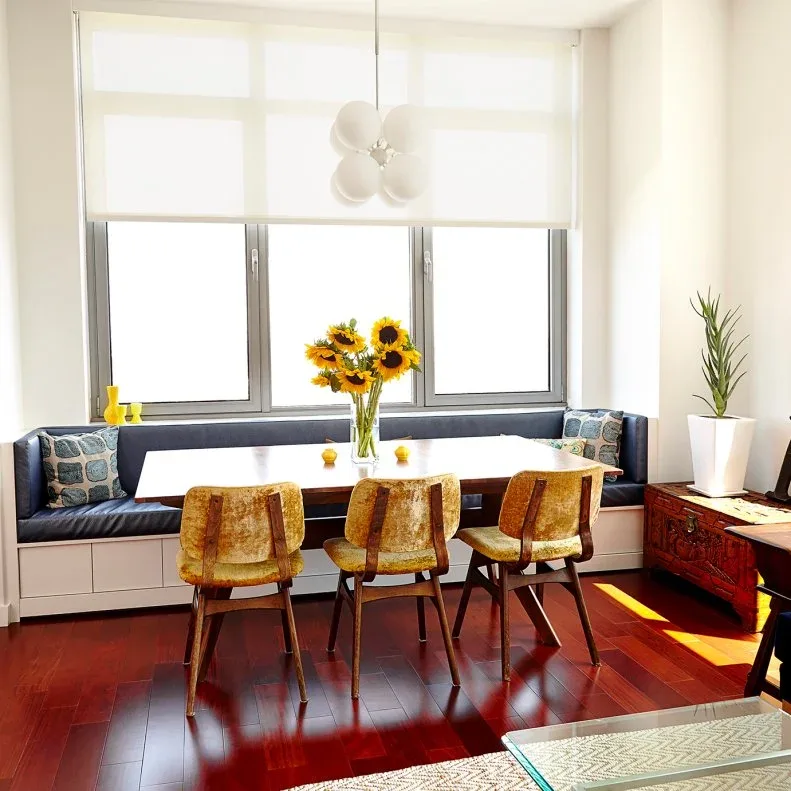 SaveSupport Non AI Creator
Image credit: Photo: Alyssa Kirsten. From: Lauren Rubin Architecture
A straight dark bench follows the broad window wall, keeping the dining area aligned with the room’s daylight. The white paneled base connects it with the pale walls, while mustard-colored chairs bring warmer color to the open side of the wooden table. Sunflowers repeat that yellow note at the center. The long layout is clear without extending the bench into a corner.
A straight bench allows people to enter from either end when those ends remain open. Check the route past neighboring furniture and leave enough space to pull out the separate chairs. Plan cushion sizes around the actual seating positions. Keep window coverings reachable, and choose a fabric suited to the amount of sun the bench receives during the day.
IDEA 18 / 20
Use an Open-Side Bench with a Wraparound Banquette
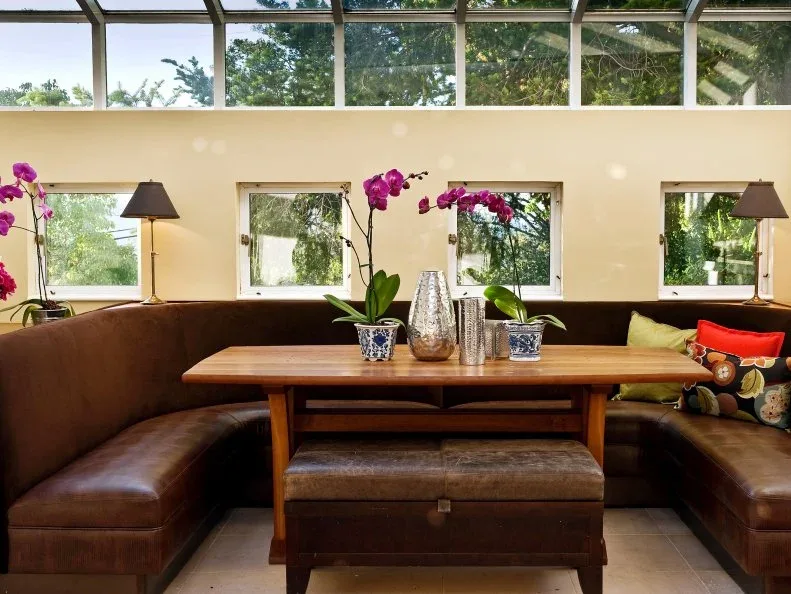 SaveSupport Non AI Creator
Image credit: From: Jane Ellison
Dark brown seating wraps around the far sides of this long wooden table. A separate upholstered bench occupies the open side, repeating the darker seat color without adding chair backs in the foreground. Windows at different heights bring light above the fitted seating. Orchids and colorful pillows add smaller accents, leaving the broad brown surfaces and wooden tabletop as the main elements.
An open-side bench changes how diners enter and leave the table, so test the whole arrangement with people seated. It may need to move to release someone from the fitted corner. Confirm that its weight and floor protection make that practical. Keep loose cushions where they provide useful support, and avoid counting an awkward corner as a guaranteed additional seat.
IDEA 19 / 20
Fit a Booth Between Display Cabinets
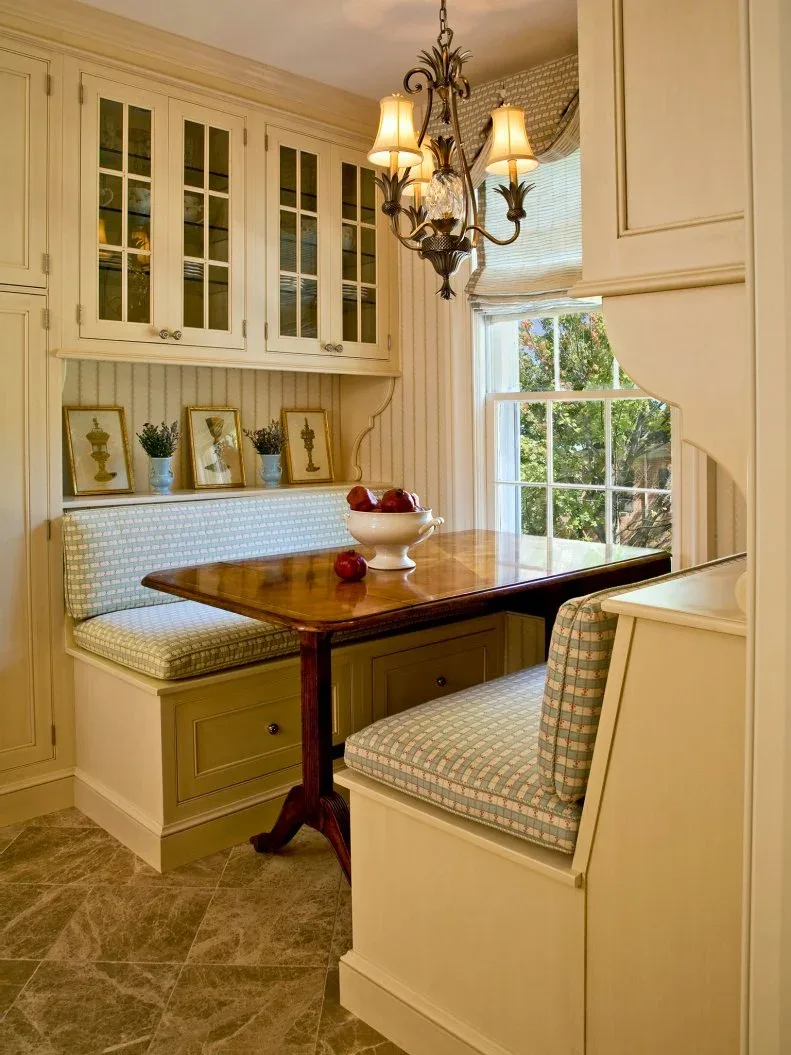 SaveSupport Non AI Creator
Image credit: Photo: Photography by Ross Chapel. From: Marika Meyer
Two facing benches create a booth beneath pale display cabinetry. Small-scale patterned cushions soften the seats and backs, while drawer fronts are visible below. A wooden pedestal table introduces a darker surface in the center. Framed pictures line the shallow area beneath the glass-front cupboards, and the shaded chandelier gives the compact dining setting a more traditional decorative detail overhead.
Facing benches require careful table placement because people need space to slide in from the open end. Check cabinet handles, door swing, and head clearance above the seating before building. Keep shelves or ledges secure and avoid fragile objects where diners may brush them. Plan access to the drawers without forcing the heavy table to move every time storage is needed.
IDEA 20 / 20
Pair Red Cushions with a Rounded Table Edge
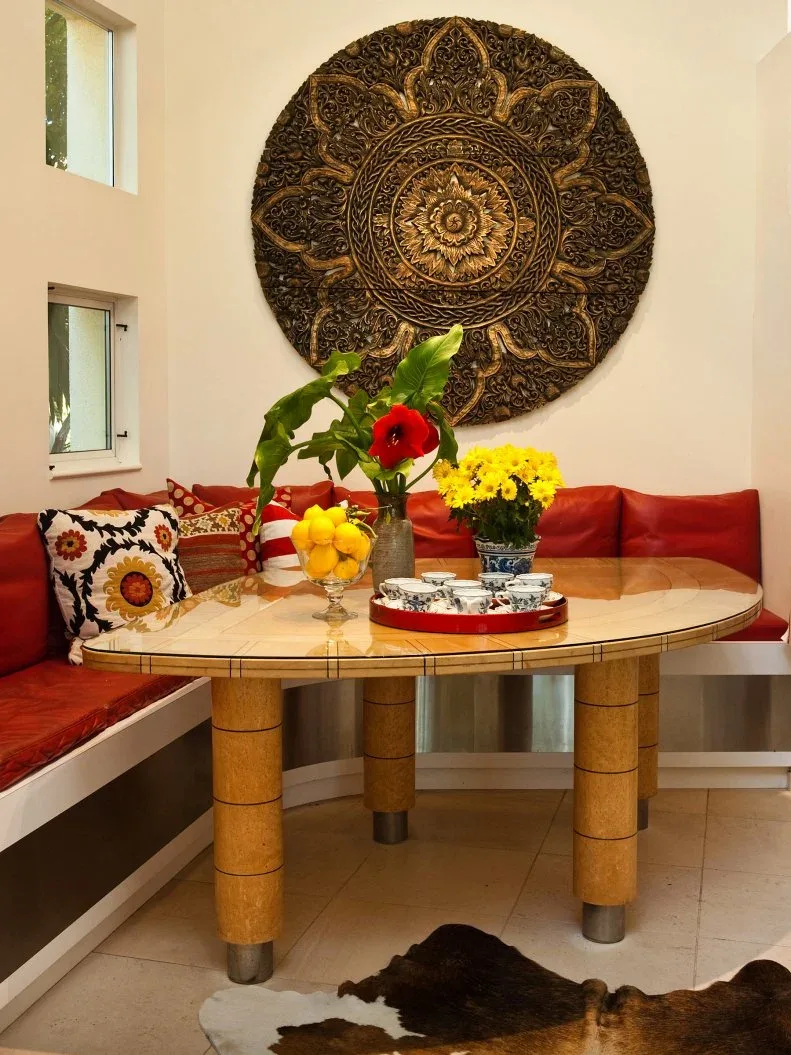 SaveSupport Non AI Creator
Image credit: From: Jane Ellison
Red cushions give this corner banquette a strong color against the pale wall and white base. Patterned pillows vary the seating’s surface, while a large circular wall ornament provides detail above. The table has a rounded outer edge and substantial cylindrical legs, making its shape a visible part of the composition. Yellow flowers add a smaller bright contrast beside the red upholstery.
A rounded edge can help in a corner, but substantial table legs still determine where knees and feet fit. Test the positions along both sides of the bench rather than judging only the tabletop. Choose a few pillows that support diners without narrowing every seat. Secure heavier wall decorations appropriately and keep them clear of heads and frequently handled cushions.
BRING IT ALL TOGETHER
Test the Whole Seating Arrangement
Choose the bench and table together, then check every place you expect someone to sit. The corner, table supports, cushion thickness, and routes around the ends can matter more than the overall length. A fitted bench may make good use of a wall, while a freestanding upholstered piece offers a different degree of flexibility and requires the same careful dining-height checks.
Make cleaning and access part of the plan. Drawers need room to open, window coverings need to move, and upholstery should suit the way your household uses the table. A manageable number of cushions and a clear serving surface will make the nook easier to enjoy. Keep separate chairs available when they provide a more comfortable or accessible option for guests.