Dining chairs influence much more than the view across the table. Their arms, seat depth, back shape, and weight affect how easily people sit down, move around, and stay comfortable through a meal. Start with the table you already have, then consider the people who use it and the cleaning routine you can realistically maintain.
These rooms show different ways to combine seating with a table, from patterned upholstery and woven backs to transparent frames and simple wooden chairs. The photographs offer ideas for appearance, while the accompanying advice helps you assess fit and daily use. Try a chair in person whenever possible; a pleasing silhouette alone cannot tell you whether it suits your body or your table.
PART 01
Give the Seating Color and Pattern
IDEA 01 / 20
Repeat a Pattern Across Upholstered Chairs
 SaveSupport Non AI Creator
Image credit: Photo: Michael J. Lee. From: Ana Donohue
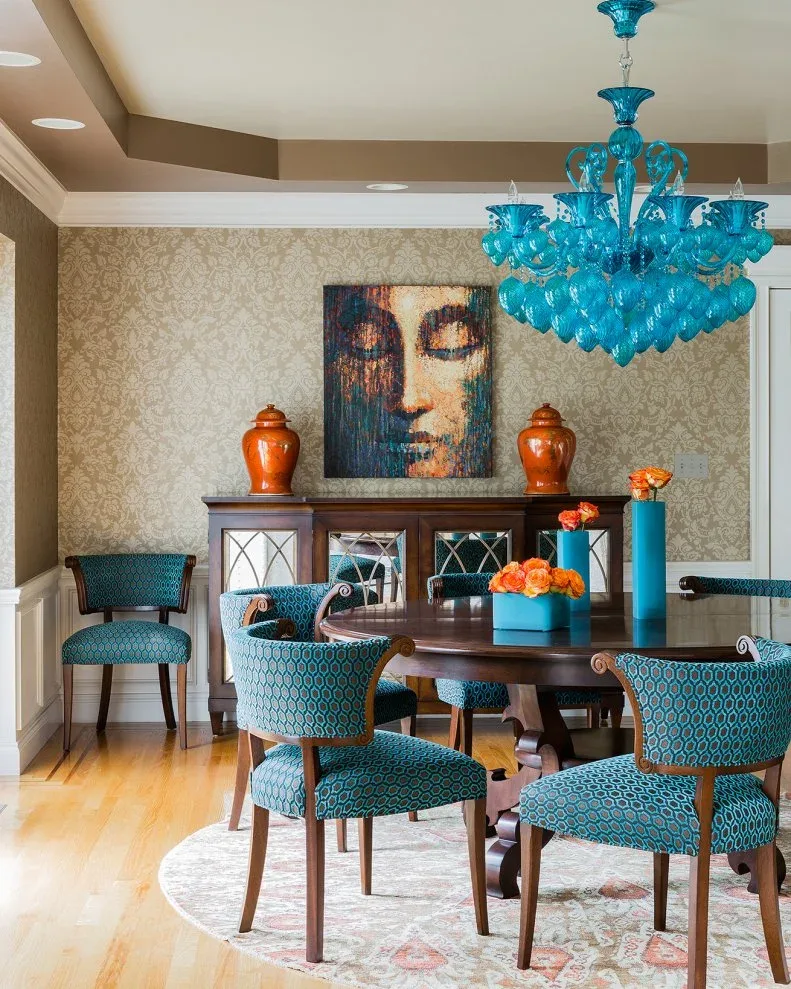
Blue patterned upholstery repeats across the chairs, giving the seating a connected appearance around the dark table. Wooden frames outline the curved backs and upholstered seats. The aqua chandelier echoes the cooler colors above, while orange vessels and flowers supply contrast. Because the same fabric appears several times, the chairs contribute a substantial pattern even though each individual seat occupies a small area.
View an upholstery sample beside your table and under the room’s evening lighting before ordering a complete set. A small repeat can look busier when multiplied across many chairs. Ask about the fabric’s cleaning instructions and how the seats are constructed. Try the back support and check that any arms fit beneath the table without catching its underside.
IDEA 02 / 20
Reserve a Stronger Color for the End Chairs
 SaveSupport Non AI Creator
Image credit: Photo: Anthony Bonisolli. From: Daniel Dionne
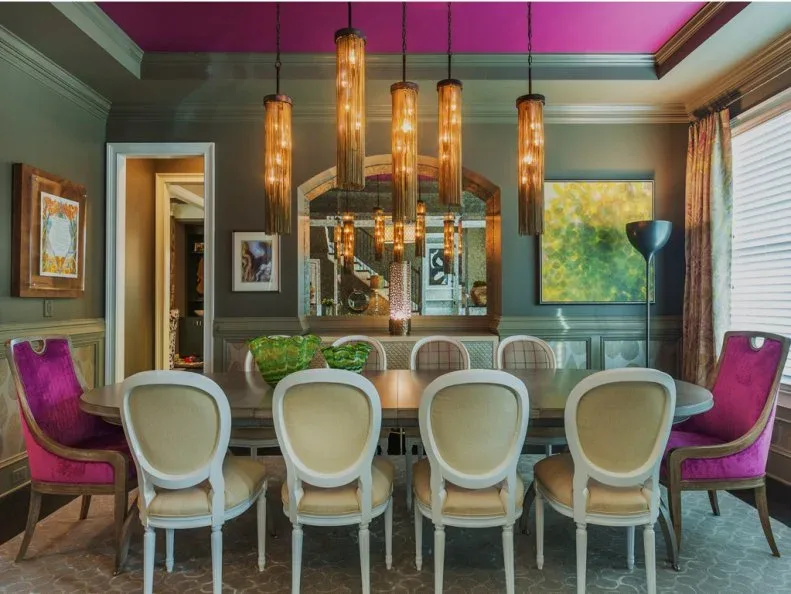
Pink end chairs interrupt the rows of pale oval-backed seats around the long table. Their taller silhouettes and stronger upholstery color make the table ends distinct without changing every chair. Gray walls provide a quieter setting, while the pink ceiling continues the accent overhead. The repeated pale frames keep the brighter seats connected with the rest of the dining furniture.
End chairs can differ from side chairs, but their seat heights should still work comfortably with the same tabletop. Check width and leg placement at the table ends before choosing a larger style. If you are reupholstering only two chairs, take a sample of the existing finishes along when selecting fabric so the new color feels considered within the whole room.
IDEA 03 / 20
Connect Contrasting Chairs with a Small Shared Detail
 SaveSupport Non AI Creator
Image credit: Photo: G CRAWFORD. From: Jennifer Dyer
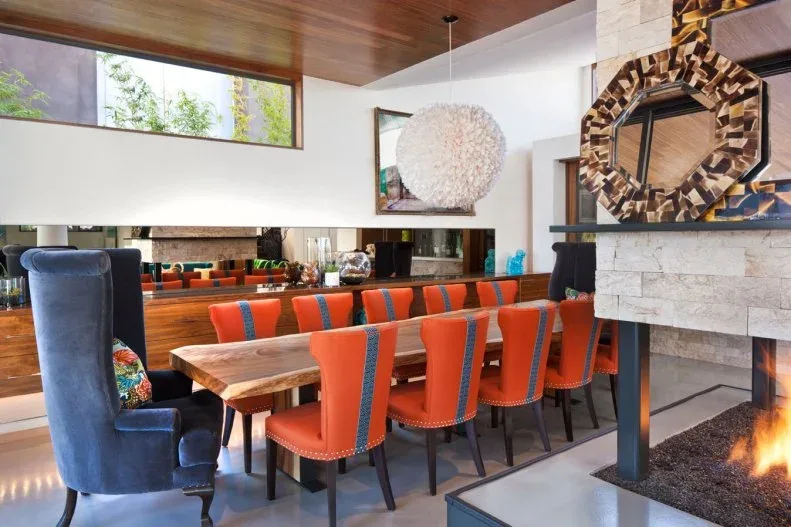
Orange chairs line the wooden table, each carrying a blue stripe down its back. A taller blue chair at the end repeats that smaller accent on a much larger scale. The contrasting colors therefore relate to one another instead of appearing unrelated. The mirror also repeats the seating in the view, making the chair pattern particularly noticeable beside the fireplace wall.
A shared trim, stripe, or frame finish can connect different chairs without requiring identical upholstery. Keep the repeated detail easy to recognize and avoid adding too many competing patterns. Check clearances with the larger end chair in place, especially beside a fireplace or circulation route. Confirm the upholstery’s care instructions rather than assuming that a smooth-looking surface is easy to wipe clean.
IDEA 04 / 20
Use One Bright Chair Color in a Pale Room
 SaveSupport Non AI Creator
Image credit: Photo: DKOR Interiors. From: DKOR Interiors
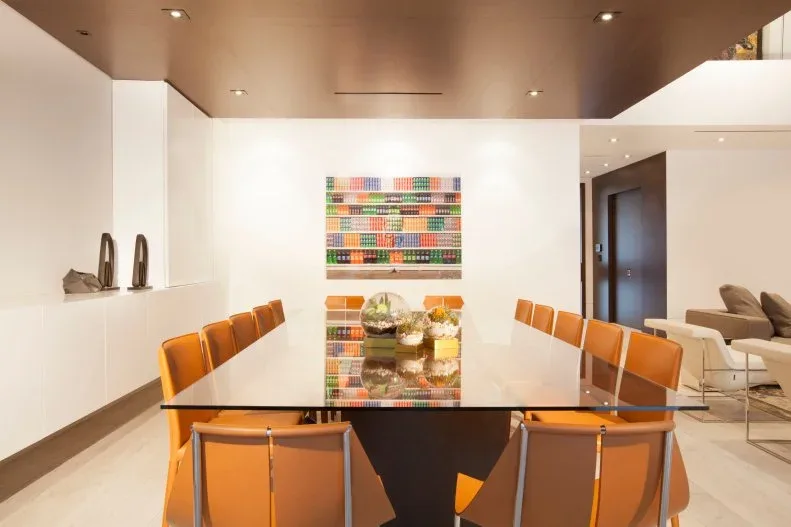
Orange chair backs and seats create two bright lines along the glass tabletop. Their slim metal frames allow the pale floor and surrounding space to remain visible between the seats. A colorful artwork repeats the room’s livelier tones without covering the walls in pattern. The chairs provide much of the color at dining height while the larger surrounding surfaces stay comparatively quiet.
Before buying a full set in a strong color, place a large fabric or finish sample where the chairs will sit. Test it in daylight and after the lights are switched on. Check the frame’s contact points beneath the seat and ask how the upholstery is cleaned. Suitable floor protectors can help limit marks and scraping when the chairs move.
IDEA 05 / 20
Soften a Busy Room with Matching Upholstered Backs
 SaveSupport Non AI Creator
Image credit: From: Troy Beasley
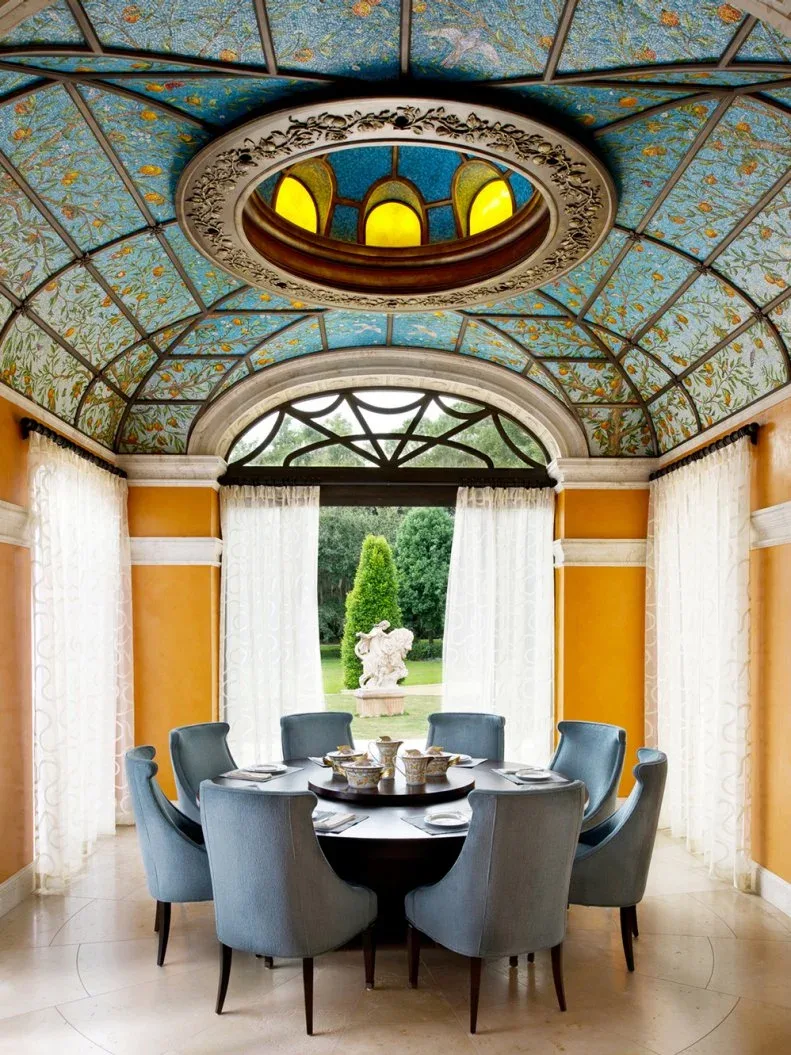
Pale blue chairs form a repeated outline around the dark round table. Their tall upholstered backs introduce broad areas of quieter color beneath the heavily patterned ceiling. Orange walls make the blue seating particularly distinct, while the curved back shapes relate to the circular table. The matched chairs give the dining arrangement a recognizable structure within a room that already contains considerable decoration.
When walls or ceilings carry strong patterns, plain upholstery can give the seating a calmer appearance. Test the color alongside those existing finishes rather than selecting it in isolation. Tall backs also influence the view through the room, so check their height from the doorway. Sit in a sample chair long enough to assess both the back shape and the seat depth.
PART 02
Match Chair Shapes to the Table
IDEA 06 / 20
Pair Low Rounded Chairs with a Pedestal Table
 SaveSupport Non AI Creator
Image credit: Photo: Michael J Lee. From: Ana Donohue
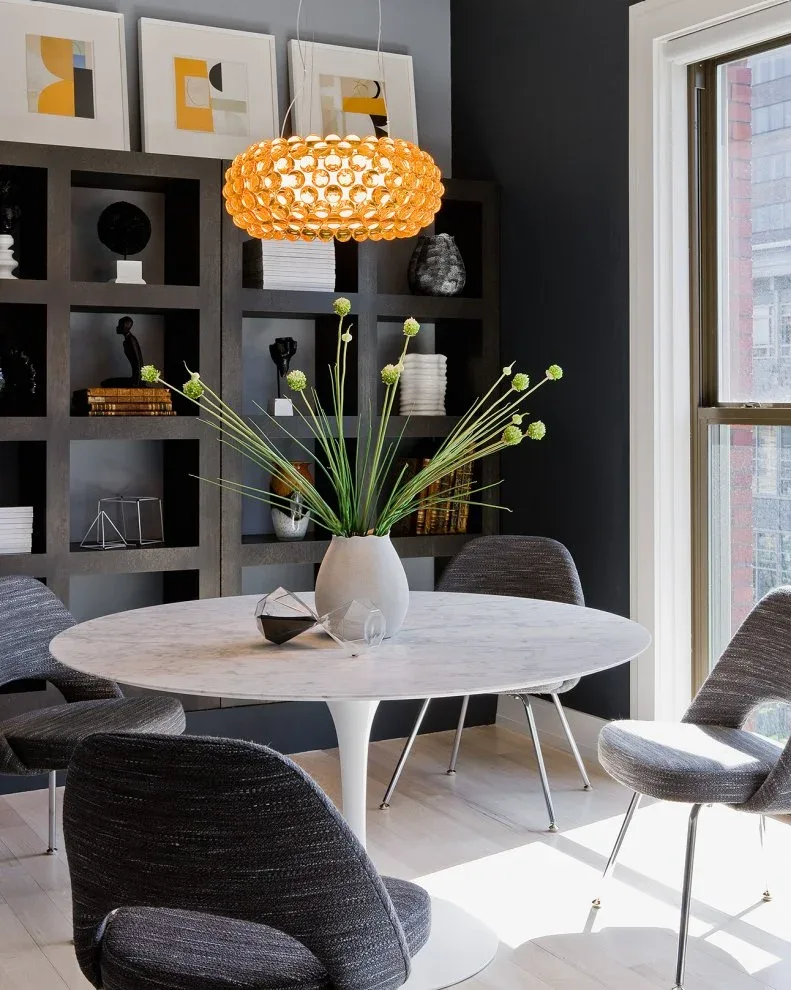
Low rounded chair backs sit beneath the pale tabletop, preserving a clear view toward the black shelving and window. Their dark upholstery relates to the display wall, while thin metal legs keep the lower arrangement open. The table’s central pedestal changes how the chairs gather around it, avoiding corner legs but still occupying floor space beneath the middle of the dining group.
Try the chair with the actual table whenever possible. A central pedestal can interfere with feet even when the tabletop appears generously sized. Check the gap between seat and underside, and make sure the chair can slide inward comfortably. Rounded backs vary greatly in support, so test where the upper edge meets your back rather than judging comfort from the outline.
IDEA 07 / 20
Keep a Compact Table Open with Cantilever Frames
 SaveSupport Non AI Creator
Image credit: Photo: Caitlin McCarthy Design. From: Caitlin McCarthy Designs
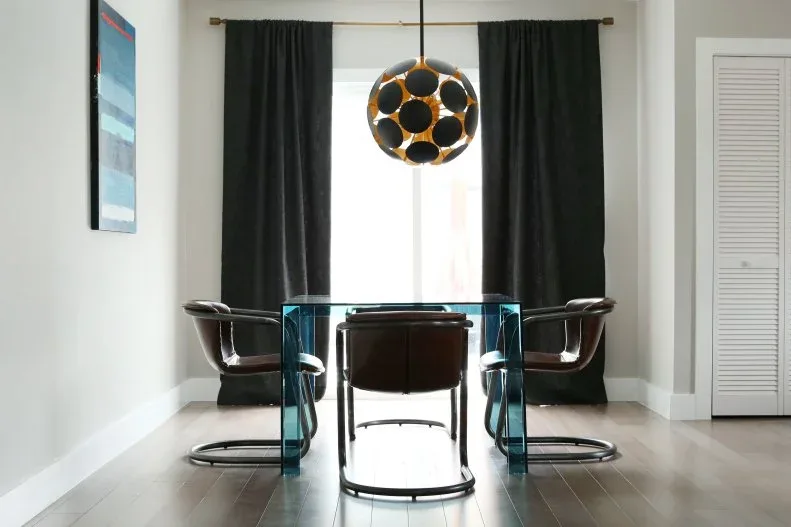
Curved metal bases support the dark chairs around the glass table, leaving their lower frames visibly open. The chair arms sit close to the tabletop, and the transparent surface keeps the central furniture group relatively light in appearance. Black curtains repeat the seating’s darker tones behind it. The compact arrangement shows how chair frames can influence the amount of floor visible around a table.
Check the entire frame footprint, not just the seat width, when measuring for cantilever chairs. The curved base may extend farther than expected and needs appropriate contact pads for your flooring. Follow the manufacturer’s load and use guidance. Test whether the arms slide beneath the tabletop and whether the chair remains easy to move when the surrounding seats are occupied.
IDEA 08 / 20
Choose Low Backs for an Open Dining Corner
 SaveSupport Non AI Creator
Image credit: Photo: Laura Bohn. From: Laura Bohn
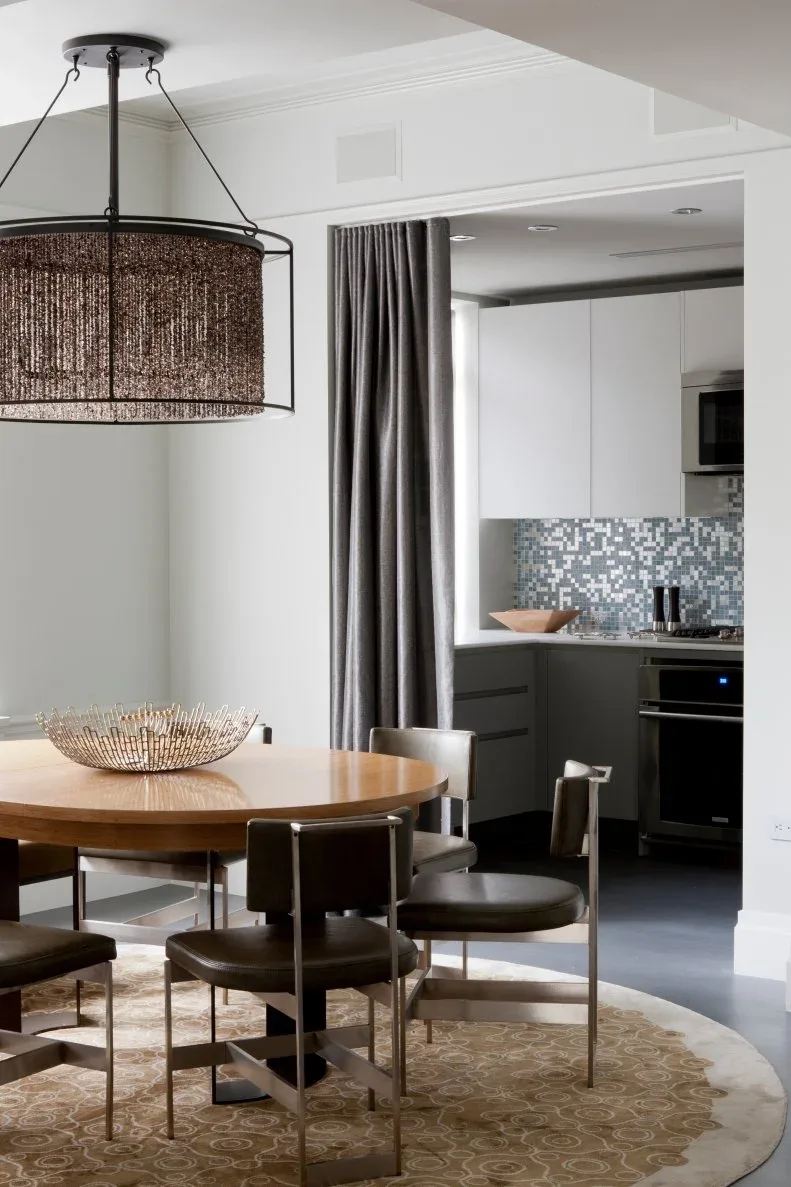
Dark low-backed chairs gather around the round wooden table without rising far into the view toward the kitchen. Their restrained outlines work with the gray curtains and pale walls, while the tabletop provides the strongest warm color in the group. A broad hanging shade sits above the arrangement. The chair height helps the dining corner remain visually connected with the adjoining room.
Low backs can suit an open room, but they should still support the people who regularly use the table. Test how the back meets your body and whether the seat feels stable during a longer meal. Measure the space needed to pull each chair out, including the route into the kitchen, rather than relying only on the table’s diameter.
IDEA 09 / 20
Match Simple Wooden Chairs to a Substantial Table
 SaveSupport Non AI Creator
Image credit: Photo: KuDa Photography. From: Jordan Iverson
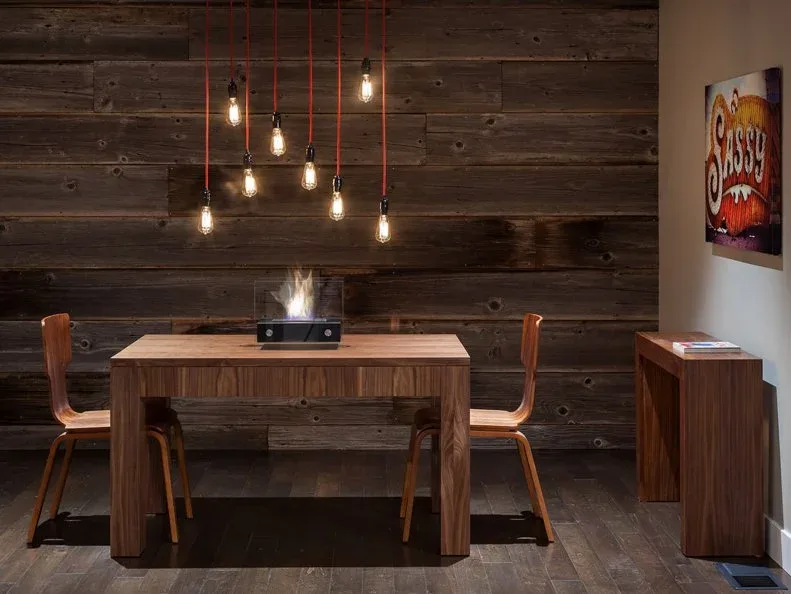
Two slender wooden chairs flank the substantial table, creating a contrast between narrow seating frames and broad table surfaces. Their warm color connects with the tabletop and darker timber wall without repeating the table’s heavy proportions. Separate hanging lights add smaller details above. The chairs remain easy to distinguish against the wall because their curved outlines differ from its long horizontal boards.
Matching wood colors is optional; proportion and comfort matter more when assessing this kind of pairing. Check that the table’s thick top leaves enough room above the seat and that its legs do not trap chair movement. Try the back and seat before purchasing. Ask how the finish should be cleaned, and use floor protectors suited to the chair legs and flooring.
IDEA 10 / 20
Use Curved Pale Backs Along a Long Table
 SaveSupport Non AI Creator
Image credit: Photo: Jennifer Dyer. From: Jennifer Dyer
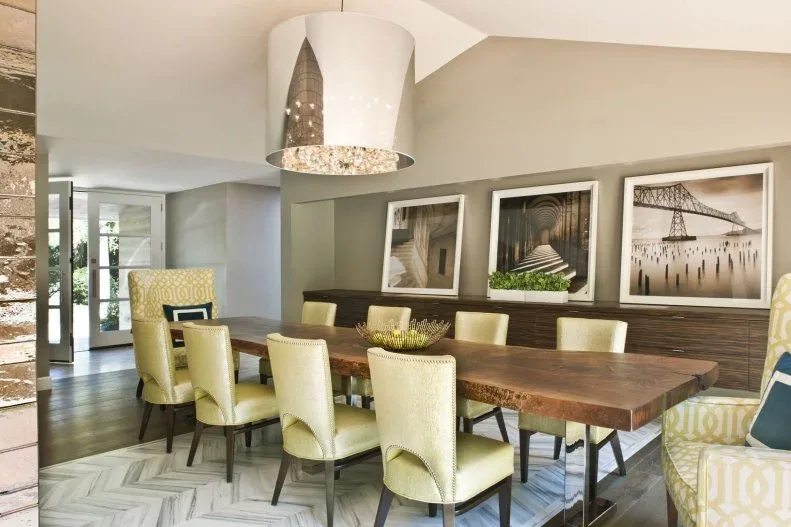
Pale green upholstery lines the long wooden table, introducing a softer color against its darker surface and the wall behind. Curved openings at the lower backs break up the otherwise solid chair silhouettes. Dark legs connect the seating with the table’s stronger tones. Framed photographs provide detail above, while the chairs keep the color closer to the level where people sit.
Check whether a back opening affects support for the people using the chair; the appearance alone cannot answer that. For a long table, test the spacing with chairs pulled out and occupied. Leave room to move between neighboring seats without catching the frames. Choose upholstery with a care routine you can maintain, especially if the table is used for everyday meals.
PART 03
Combine Different Types of Seating
IDEA 11 / 20
Combine Striped End Chairs with Metal Side Seats
 SaveSupport Non AI Creator
Image credit: Photo: Cory Holland. From: Harmony Weihs
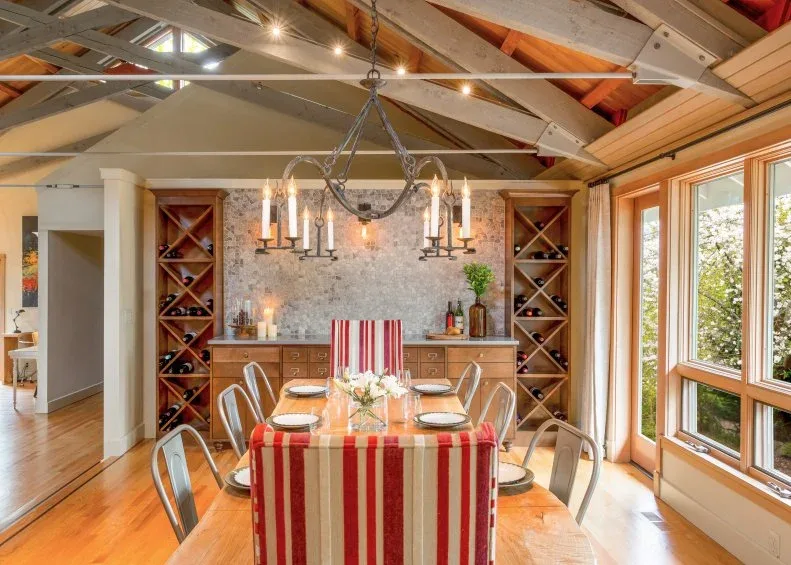
Striped upholstered chairs mark the ends of the wooden table, while metal chairs occupy the longer sides. The stripe gives the room a distinct pattern without placing it on every seat. The metal frames connect with the exposed structural details overhead, and the wooden tabletop relates to the window framing. Different chair types share the same table but contribute separate textures and outlines.
Mixed seating works more comfortably when seat heights suit the same tabletop. Check whether the upholstered seats compress noticeably compared with the metal ones. Ask about cleaning both the fabric and the frame finishes. If you are keeping existing side chairs, bring their measurements when shopping for end chairs so the larger additions do not reduce usable space at the table corners.
IDEA 12 / 20
Give an End Seat a Taller Silhouette
 SaveSupport Non AI Creator
Image credit: Photo: G CRAWFORD. From: Jennifer Dyer
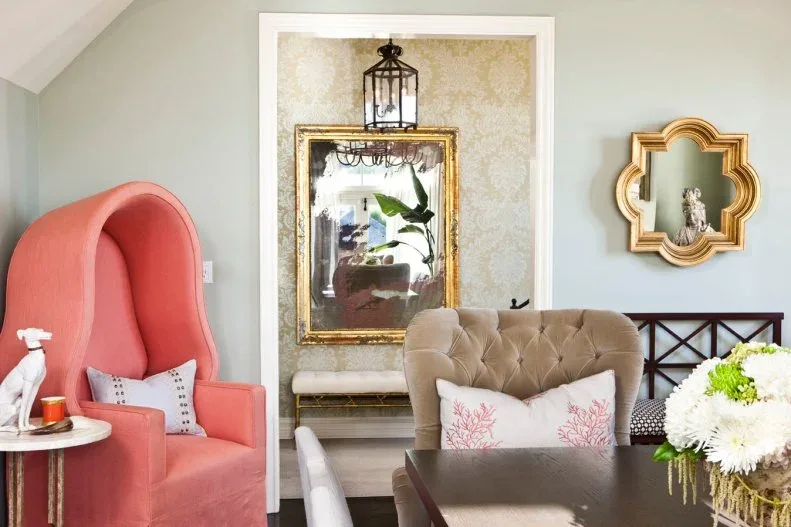
A tall coral chair gives one end of the table a noticeably different silhouette from the pale tufted chair beside it. Its enclosed upper shape makes it a strong feature even without a patterned covering. The dark tabletop separates the two upholstery colors, while gold-framed mirrors add detail on the surrounding walls. The seating becomes part of the room’s decoration rather than a matching row.
A tall or enclosing chair needs checking for more than floor space. Sit down and stand up to test access, and assess whether the sides restrict movement or conversation. Confirm that its seat height works with the table and that the back does not obstruct a frequently used route. Avoid filling the chair with decorative cushions that reduce useful sitting depth.
IDEA 13 / 20
Balance a Patterned Bench with Plain Side Chairs
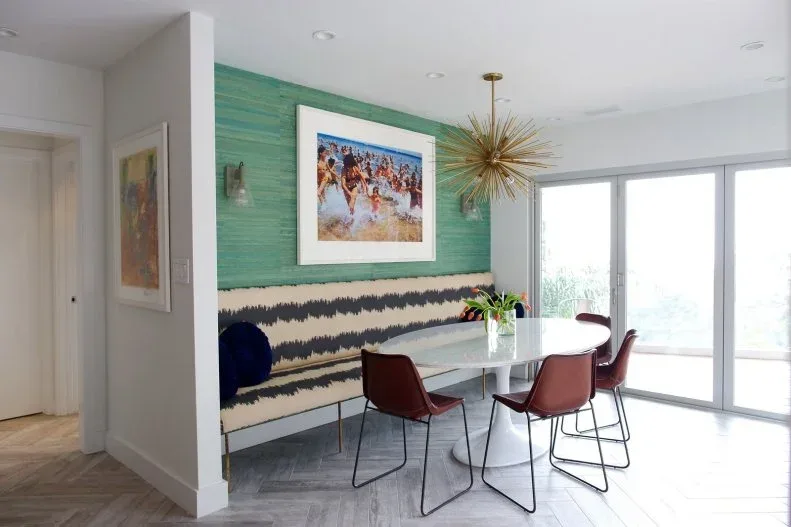 SaveSupport Non AI Creator
Image credit: Photo: Caitlin McCarthy Design. From: Caitlin McCarthy Designs
Dark red side chairs face a patterned bench across the white oval table. Their plain surfaces give the seating a quieter counterpart to the bench’s broad repeating pattern. Thin metal bases reveal more of the floor beneath the chairs, while the green wall contributes another separate color. The chairs and bench provide different seating forms without competing through equally busy upholstery.
Measure the bench and chair seat heights against the same table, including the effect of cushions. The chairs should remain easy to pull out without obstructing the glass doors. Consider how guests reach the middle of the bench and where an extra chair could go when needed. Keep the side-chair upholstery simple if the bench fabric is intended to remain the main pattern.
IDEA 14 / 20
Mix White Side Chairs with a Bench and End Chair
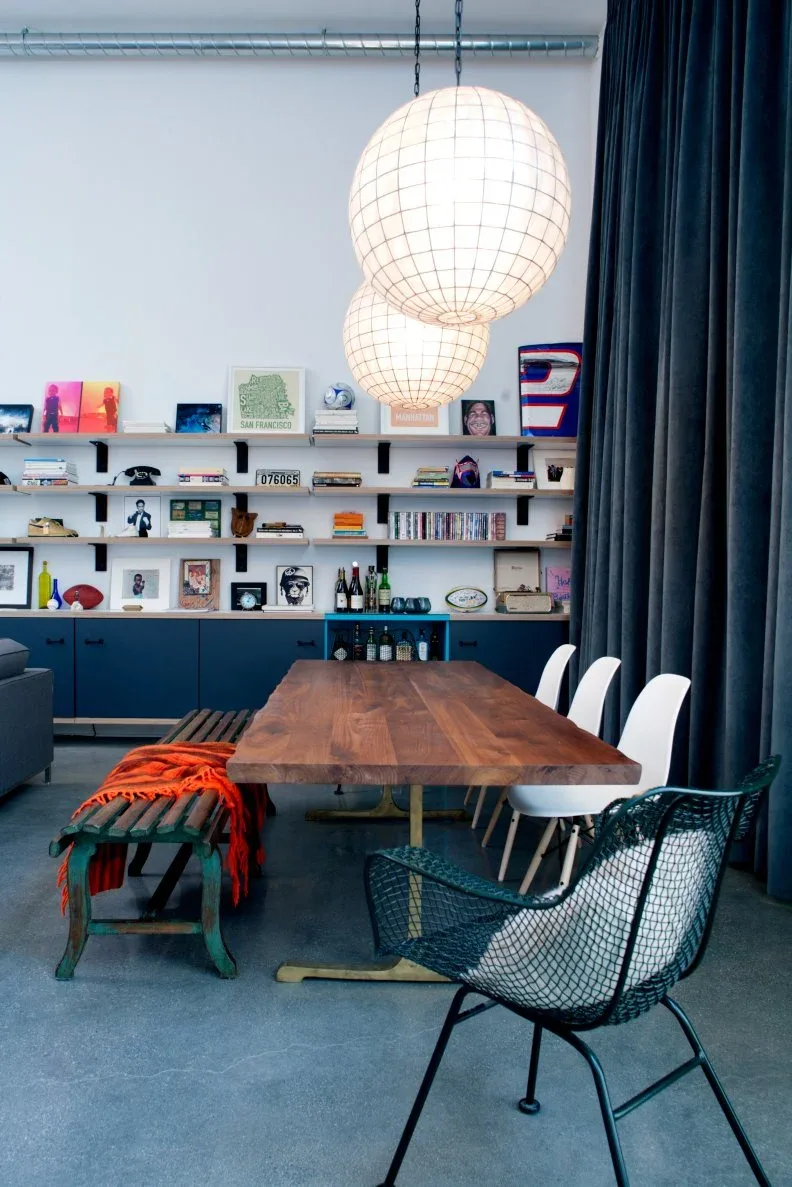 SaveSupport Non AI Creator
Image credit: Photo: Daleet Spector Design. From: Daleet Spector
White curved chairs line one side of the wooden table, opposite a green bench topped with an orange throw. A dark open-weave chair sits at the end, giving the group another distinct outline. The pale side chairs connect with the walls and globe lights, while the darker seating relates to the room’s blue cabinetry. The different forms make the table look informal and adaptable.
Each seating type should be checked against the table separately. A lounge-like end chair may sit lower or extend farther than a dining chair, while a bench has different access needs. Test the seat heights, usable depth, and routes around the ends. Keep throws away from serving areas and remove extra cushions if they prevent people from sitting close enough to the table.
IDEA 15 / 20
Pair Wooden Side Chairs with Patterned End Seats
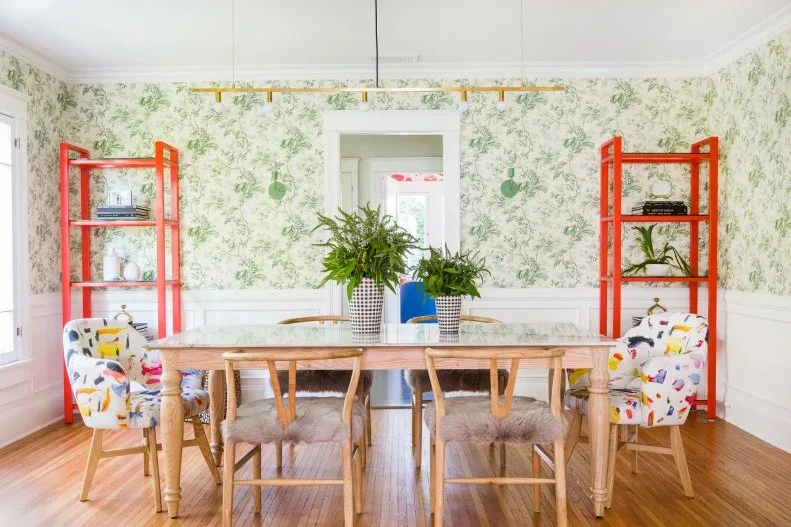 SaveSupport Non AI Creator
Image credit: Photo: Tessa Neustadt
Wooden side chairs repeat along the table, with fluffy coverings adding softer texture across their seats. Multicolored upholstered chairs mark the ends, bringing larger patches of pattern into the group. Green floral wallpaper and red shelves already supply considerable color behind the seating. The comparatively simple wooden frames give that fuller decoration some space rather than repeating it on every furniture surface.
Loose seat coverings need to remain secure when people sit down and stand up. Check whether they alter the usable seat height or depth, and follow their specific cleaning instructions. Test the end chairs’ width against the table corners. A shared wood tone can connect different chairs, but keep comfort and sound construction ahead of an exact finish match.
PART 04
Choose Texture and Finishing Details
IDEA 16 / 20
Let Transparent Chairs Reveal a Patterned Floor
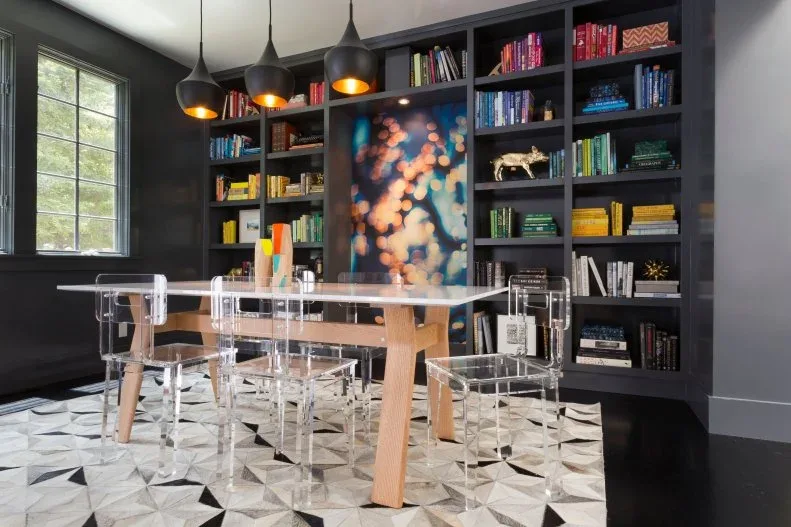 SaveSupport Non AI Creator
Image credit: Photo: Ann Lowengart. From: Ann Lowengart
Transparent chairs allow the patterned floor and wooden table legs to remain visible through the seating. Their outlined arms and backs still define each place, but they add less solid color beside the black shelving and bright books. Dark pendant lights continue the room’s stronger upper shapes. The contrast shows how clear furniture can change the view without reducing the actual space occupied by chairs.
Transparent chairs still need the same circulation space as opaque ones. Check their arm width, seat height, stability, and intended use before choosing them for a tight room. Follow the maker’s cleaning guidance because unsuitable products can damage clear surfaces. Expect fingerprints and scratches to be visible, and consider whether that maintenance suits a table used frequently by children or guests.
IDEA 17 / 20
Bring Woven Backs into a Pale Dining Room
 SaveSupport Non AI Creator
Image credit: Photo: Tracy Lynn Studio. From: Tracy Lynn Studio
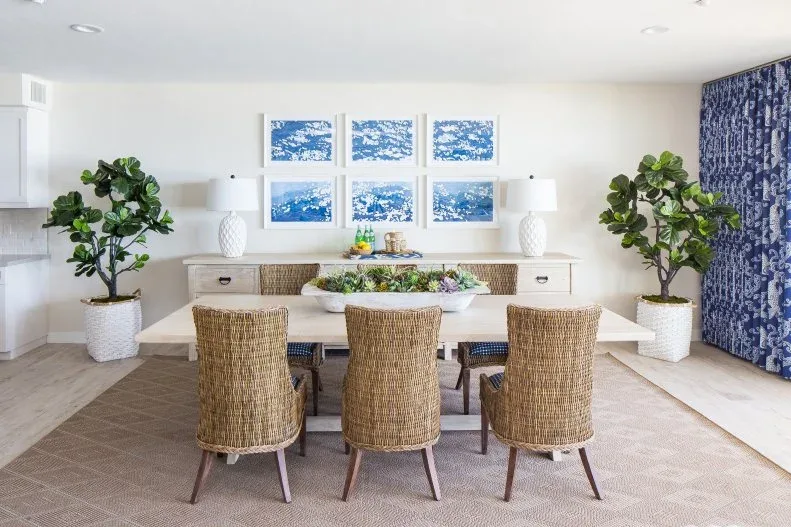
Tall woven backs form a warm textured row in front of the white table. Their brown tones stand apart from the pale cabinetry while working with the room’s softer floor colors. Blue curtains and framed pictures introduce a separate repeated accent above and beside the seating. The chairs make texture a prominent part of the dining arrangement without adding a printed upholstery pattern.
Check the woven surface for rough edges and ask about the material and its care requirements before buying. Different woven constructions have different maintenance needs, so appearance is not enough to identify a cleaning method. Test the back support and how easily the chair moves. Leave room behind the seats to pull them out without catching the curtains or nearby plants.
IDEA 18 / 20
Outline Pale Upholstery with Dark Frames
 SaveSupport Non AI Creator
Image credit: Photo: Stacie St. Jarre. From: Sonja Capasso
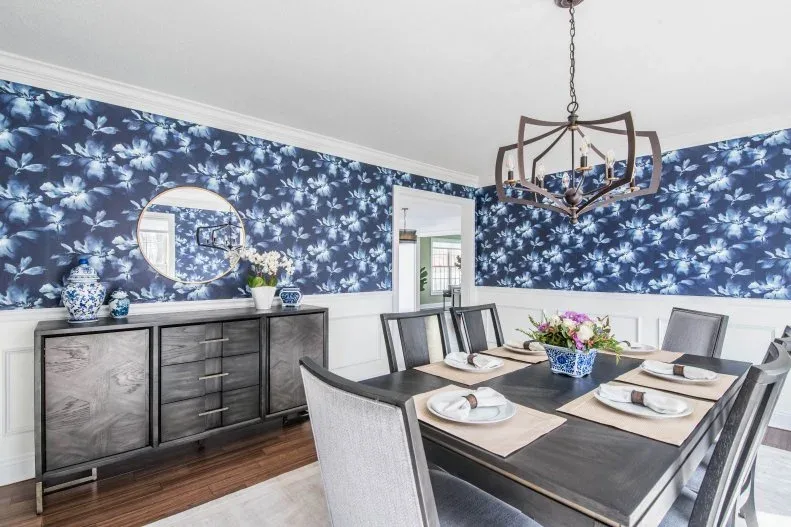
Dark rectangular frames outline the pale chair upholstery around the table. That repeated edge connects the seats with the darker tabletop, while the fabric relates to the white paneling and pale rug. Blue floral wallpaper supplies the room’s main pattern above the seating. The chair frames therefore add structure without introducing another competing print beside the decorated walls and sideboard.
Inspect how the upholstery meets the frame, especially where crumbs or spills might collect. Ask whether the seat can be removed for repair or recovering. Test the back edge for comfort and check that the frame does not catch the tabletop when pushed inward. Pale fabric can work for daily dining when its cleaning instructions and your household’s habits are a good fit.
IDEA 19 / 20
Use Nailhead Edges on a Rounded Upholstered Chair
 SaveSupport Non AI Creator
Image credit: Photo: Kristada. From: Casabella Interiors
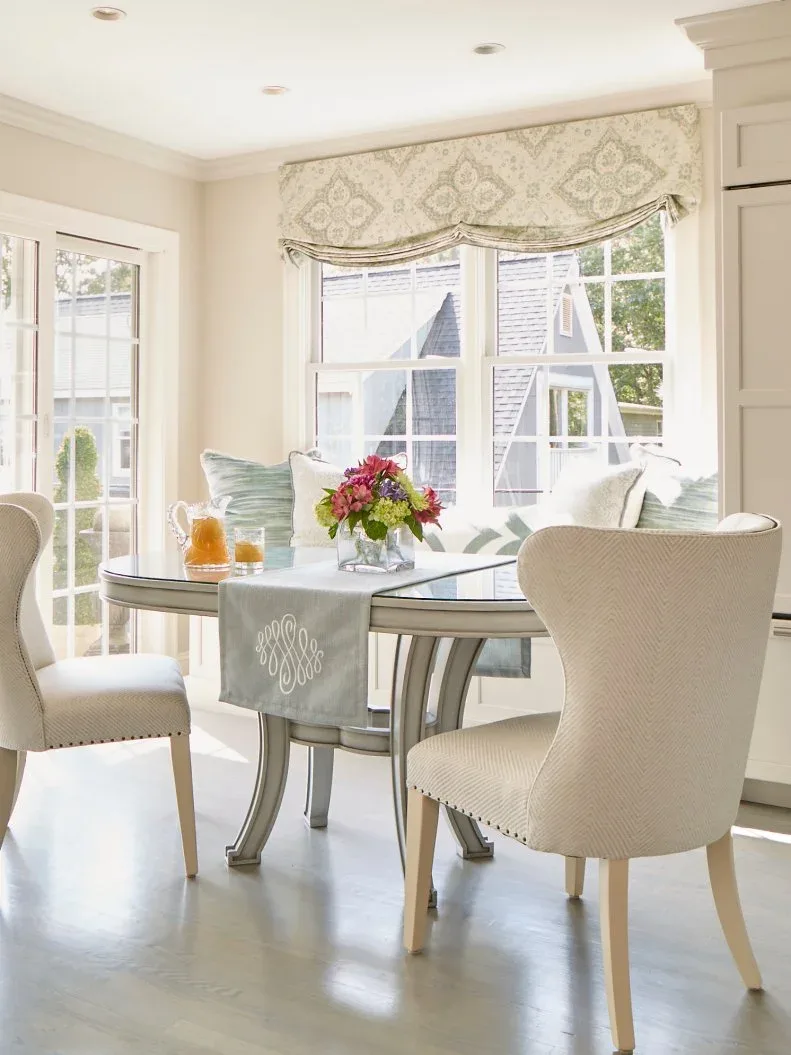
A rounded upholstered back curves around the near chair, with nailhead edging tracing the seat’s lower outline. Its pale fabric relates to the neighboring chair, window bench, and surrounding trim. The glass tabletop leaves more of the chair shape visible from the side. The detailing provides a small repeated accent without relying on a strong upholstery color or a large printed pattern.
Sit in the chair to check whether the curved sides give useful support or limit movement at the table. Inspect the decorative edging for secure fixings and ask how the upholstery should be cleaned around it. Measure the widest point of the back as well as the seat. Allow enough separation between neighboring chairs so the rounded sides do not bump during meals.
IDEA 20 / 20
Add a Textured End Chair to Pale Upholstered Sides
 SaveSupport Non AI Creator
Image credit: Photo: Amy Lutz. From: Butter Lutz Interiors
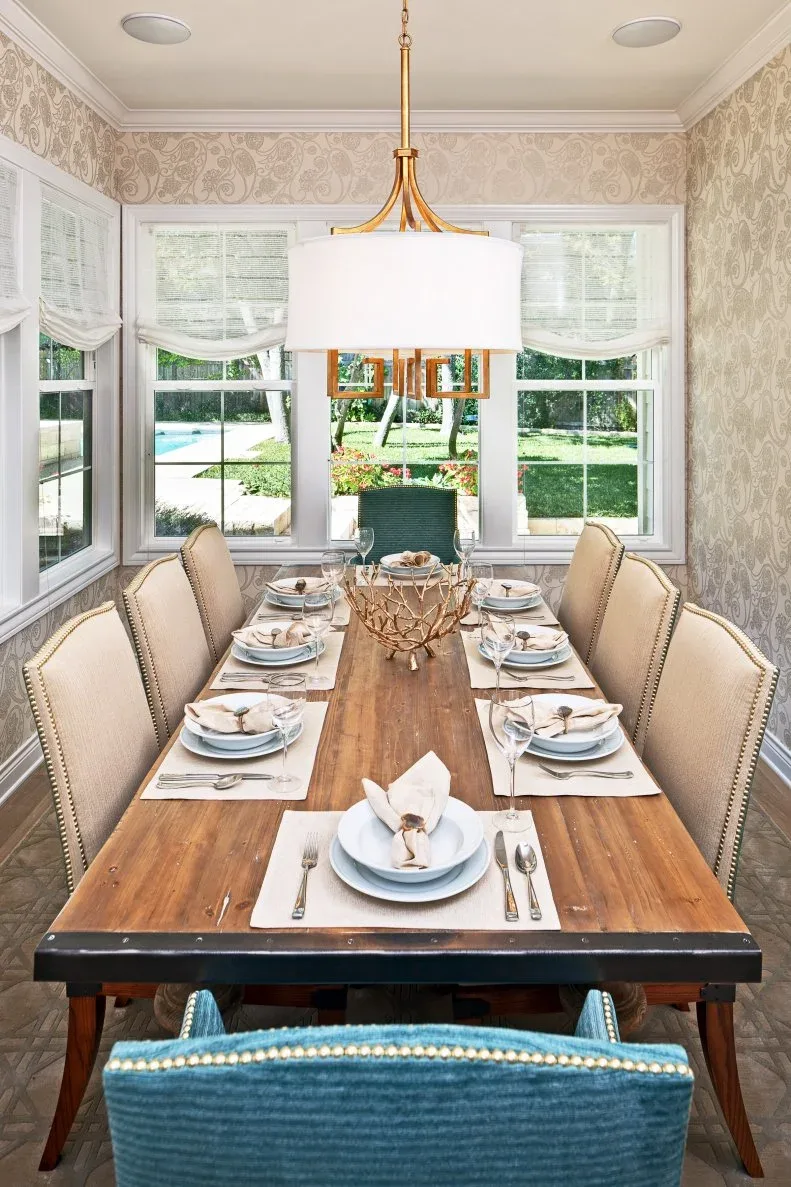
Pale upholstered side chairs repeat along the wooden table, their edged backs creating a regular outline. A blue textured chair occupies the near end and introduces a stronger color without changing the whole set. The broad white shade and pale window treatments keep the upper room comparatively quiet. The table’s warm surface separates the blue accent from the otherwise lighter seating and surrounding finishes.
An end chair can add texture while the side chairs remain simple, but compare their seats at the same table before committing. Check arm clearance and the space between the end chair and nearby windows. Ask for care instructions for both coverings. Keep the tabletop arrangement low enough for conversation, and leave enough room for people to reach their seats without brushing the upholstery against curtains.
BRING IT ALL TOGETHER
Choose a Chair You Can Use Comfortably Every Day
Start with fit: the seat needs to work with the table, the back should support you comfortably, and the chair must move without blocking the room. Measure arms, frame footprints, and table undersides as well as the obvious seat width. When mixing chairs, compare their actual sitting heights, including how much upholstered seats compress. Try the combination before ordering an entire set.
Then consider upkeep and appearance together. Upholstery, woven surfaces, transparent frames, and painted finishes all need care suited to their construction. Ask for the maker’s instructions rather than guessing from a photograph. A dining chair earns its place through comfortable meals and manageable maintenance; color and shape should support those practical qualities instead of making daily use harder.