Floating shelves can bring useful storage and personal detail to a dining room without adding another piece of furniture to the floor. The best arrangement starts with how you use the table: where chairs move, where plates arrive, and which dishes or pictures you want within reach.
These ideas include shelves beside dining tables and supporting serving counters in shared dining spaces. Use the photographs to choose a layout and a display style, then check your wall construction, shelf loading and clearances before fitting anything. A tidy shelf should make meals easier rather than turn the wall into another obstacle.
PART 01
Shelves for Pictures and Tableware
IDEA 01 / 20
Let Dark Shelves Blend Into the Wall
 SaveSupport Non AI Creator
Source: hgtv.com
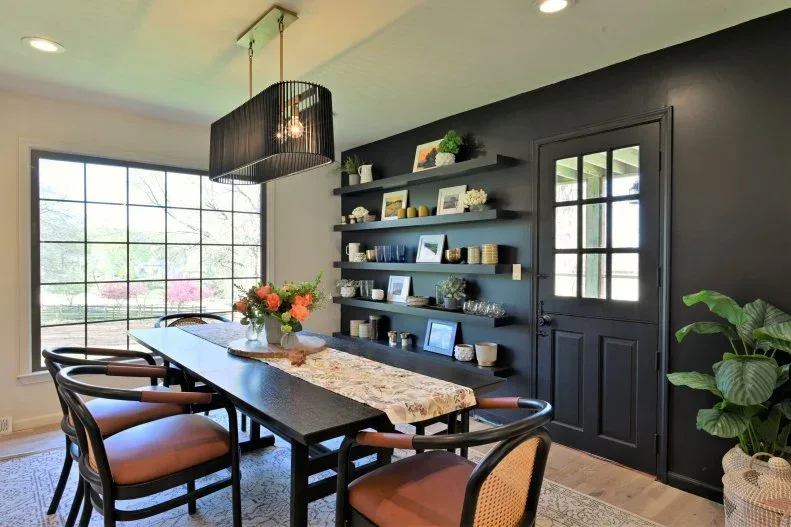
A bank of dark shelves almost disappears against the dark wall, leaving cups, plants and small pictures to supply the color. The black table and curved chair backs repeat that background, while orange seats keep the dining group distinct. Several shelf levels turn a single wall into a display without adding a large cabinet to the floor beside the table.
Choose a few categories before filling an arrangement this tall: everyday cups, framed pictures and small plants are enough to begin. Leave clear patches between groups so individual objects remain visible from a seated position. Keep frequently used pieces on shelves you can reach comfortably, and reserve the upper levels for light displays that do not require daily handling.
IDEA 02 / 20
Use One Broad Shelf Above the Table
 SaveSupport Non AI Creator
Image credit: Habitat
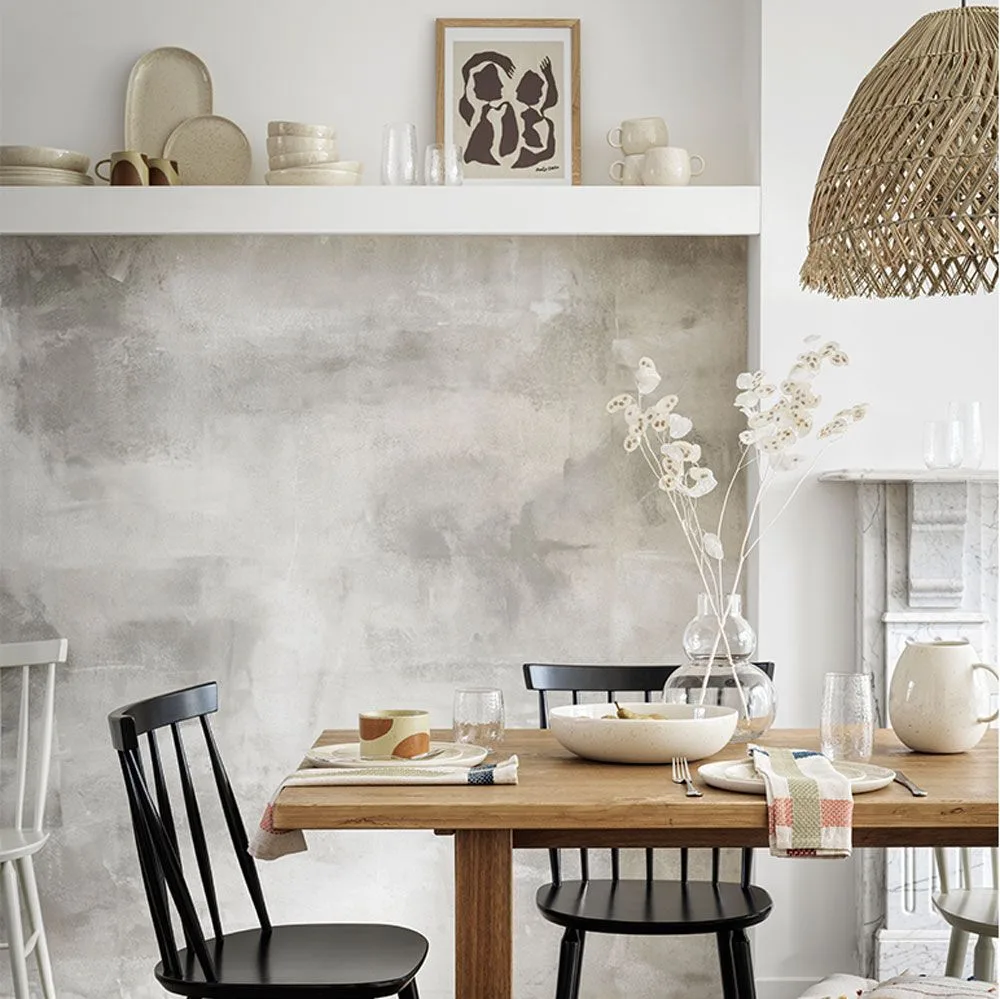
One white shelf stretches across the gray wall above a wooden table, carrying pale dishes, clear glasses and a framed print. Its solid front edge makes a clean horizontal line against the mottled background. The woven pendant and mixed black and white chairs give the lower half of the room plenty of detail, so the shelf does not need competing colors.
A single shelf works well when you want display space without covering the whole wall. Mark its position with removable tape and check it while sitting, standing and pulling out chairs. Arrange the tallest piece first, then add smaller groups on either side. Confirm the shelf and wall fixings are suitable for the combined weight of the tableware before loading it.
IDEA 03 / 20
Turn Picture Ledges Into a Dining Gallery
 SaveSupport Non AI Creator
Image credit: Future PLC/Katie Lee
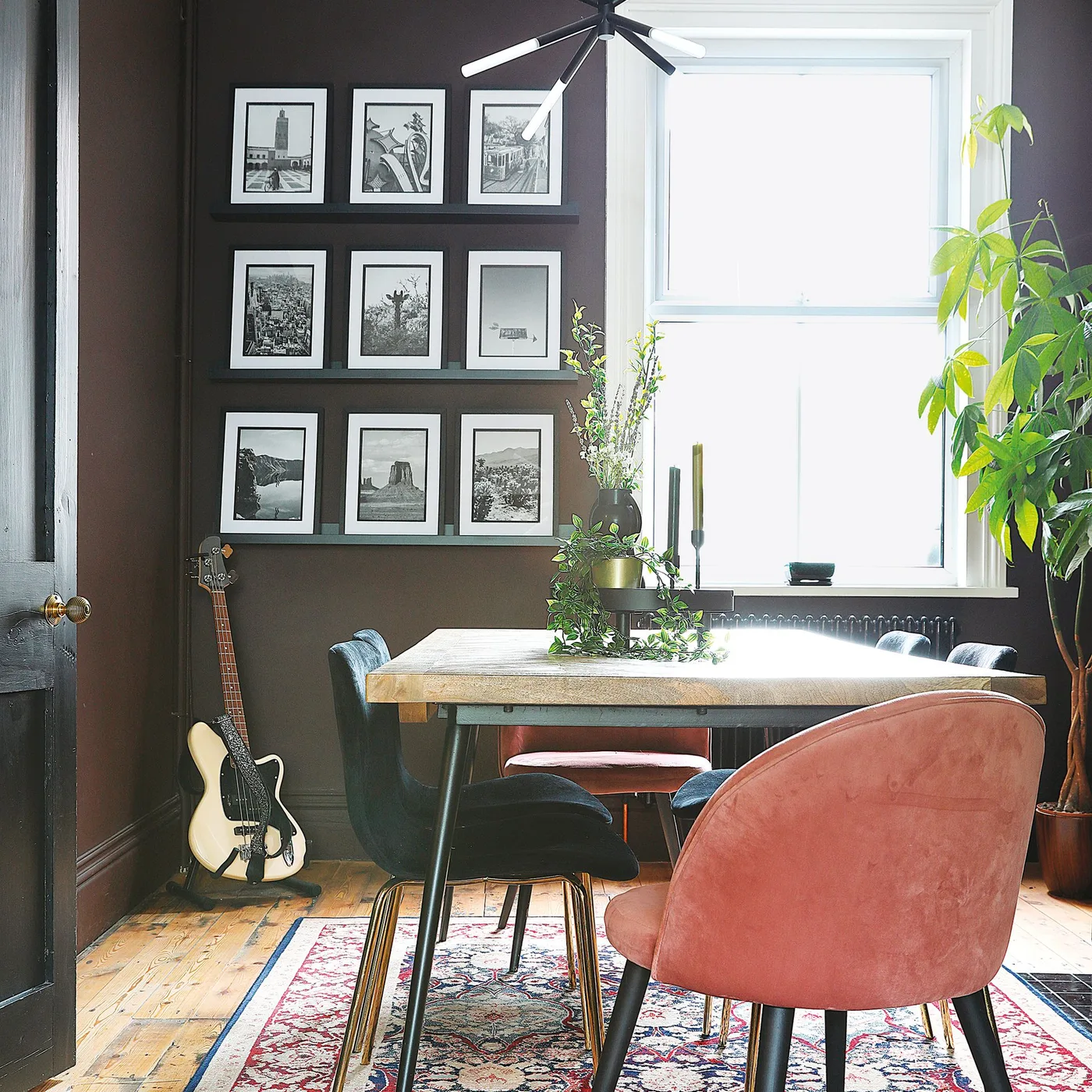
Three dark ledges carry a tidy grid of black and white photographs beside the dining table. Pale mounts separate the pictures from the brown wall, and the repeated frame size makes the collection feel deliberate rather than crowded. The pink foreground chair adds a softer color without needing another decorative object on the ledges, while the bright window breaks up the dark backdrop.
Picture ledges are useful when you enjoy changing photographs without rearranging a wall of individual hooks. Check that each frame sits securely inside the ledge and cannot tip forward when nearby furniture moves. Keep larger frames toward the back, avoid covering important parts of neighboring pictures, and leave enough room to lift each one out for cleaning without disturbing the entire row.
IDEA 04 / 20
Pair White Display Shelves With a Sideboard
 SaveSupport Non AI Creator
Source: hunker.com
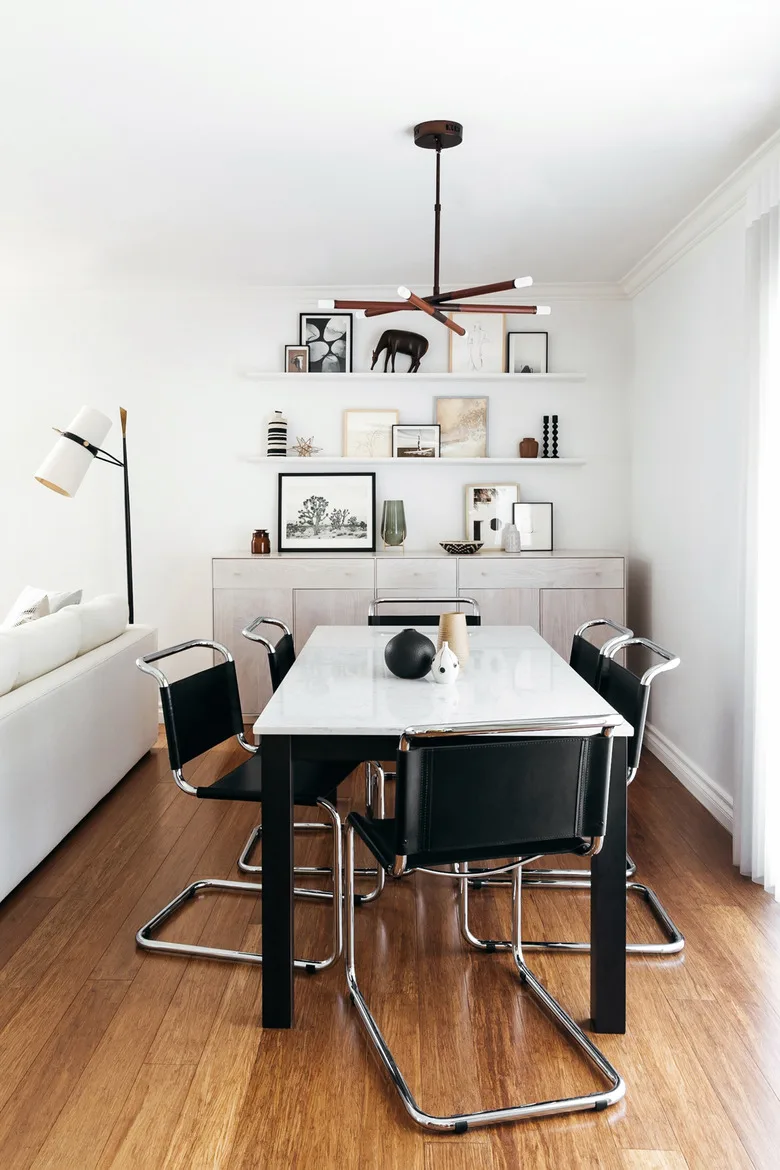
Two white shelves above a pale sideboard keep this narrow dining area light, even with several framed pictures on display. Their finish matches the wall, so the black chair seats and picture frames provide the stronger outlines. The sideboard takes care of the heavier storage below, while the shelves make a personal backdrop behind the white rectangular dining table and branching pendant.
Use the sideboard for bulky dishes and let the shelves hold lighter pieces you want to see. Start with one taller frame on each level, then place smaller objects where they will not disappear behind it. Keep the sideboard top partly clear for serving. Before installation, check that the shelf depth leaves enough space for someone to stand comfortably between the table and cabinet.
IDEA 05 / 20
Build a Flexible Wall of Framed Prints
 SaveSupport Non AI Creator
Source: hunker.com
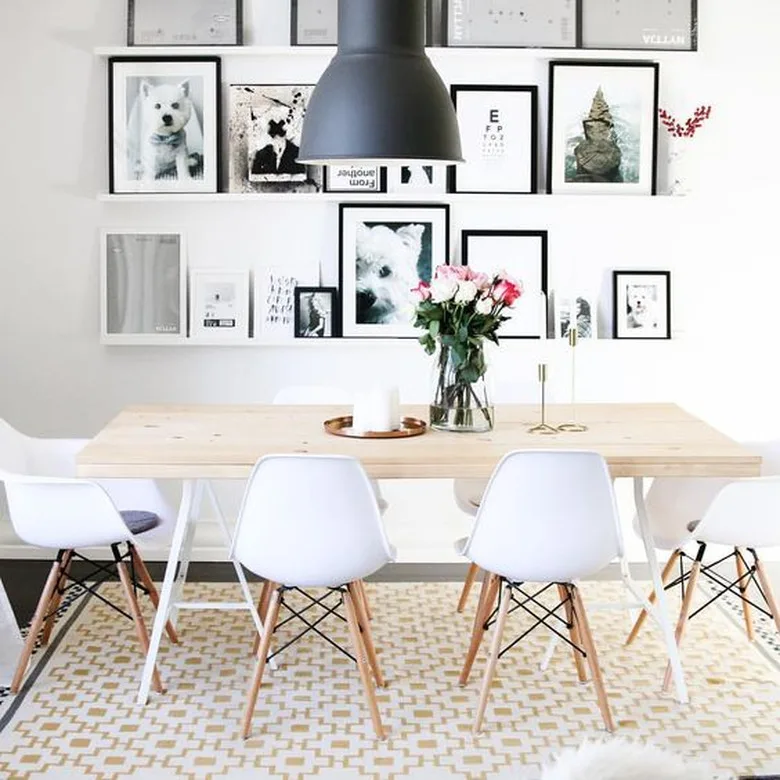
Rows of white ledges support a collection of differently sized prints behind a pale table and white chairs. Black frame edges and the dark pendant prevent the pale room from looking flat, while the ledges organize the mixed artwork into clear horizontal bands. Flowers on the table remain the main splash of color, keeping the wall display connected without matching every piece.
Choose a few consistent frame finishes before mixing subjects and sizes. A ledge arrangement becomes easier to read when some pictures stand alone and others overlap slightly, with the front frames leaving the images behind visible. Check the tallest frame against the shelf above before ordering. Secure any pieces that could fall near diners, and move table candles away from the displayed artwork.
IDEA 06 / 20
Display Plates on Slim White Ledges
 SaveSupport Non AI Creator
Image credit: Future PLC/Simon Whitmore
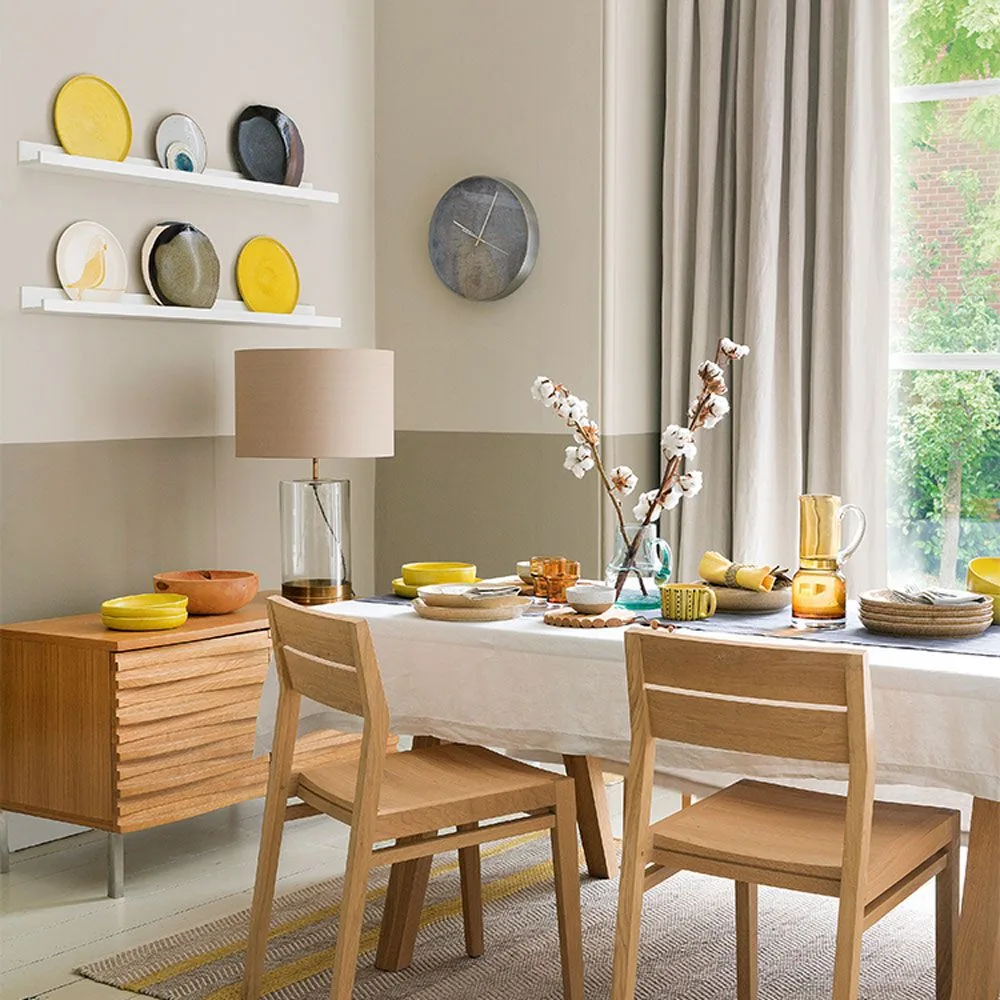
Two slim white ledges display yellow, gray and cream plates beside the dining table. Their shallow profile suits the small wall section above the wooden sideboard, and the plate colors reappear in the table setting. Unlike a deep shelf filled with stacked dishes, this arrangement gives each plate a visible outline and leaves most of the wall surface open around the collection.
Use ledges intended to support plates securely, with a retaining edge appropriate to the pieces you plan to display. Test the arrangement on the floor before hanging it, placing contrasting colors apart so similar plates do not merge visually. Store the everyday stack in the cabinet below. Display pieces still collect dust, so remove and clean them before using them at the table.
PART 02
Work Around Windows, Doors and Seating
IDEA 07 / 20
Wrap Shelves Around a Breakfast Nook
 SaveSupport Non AI Creator
Source: hunker.com
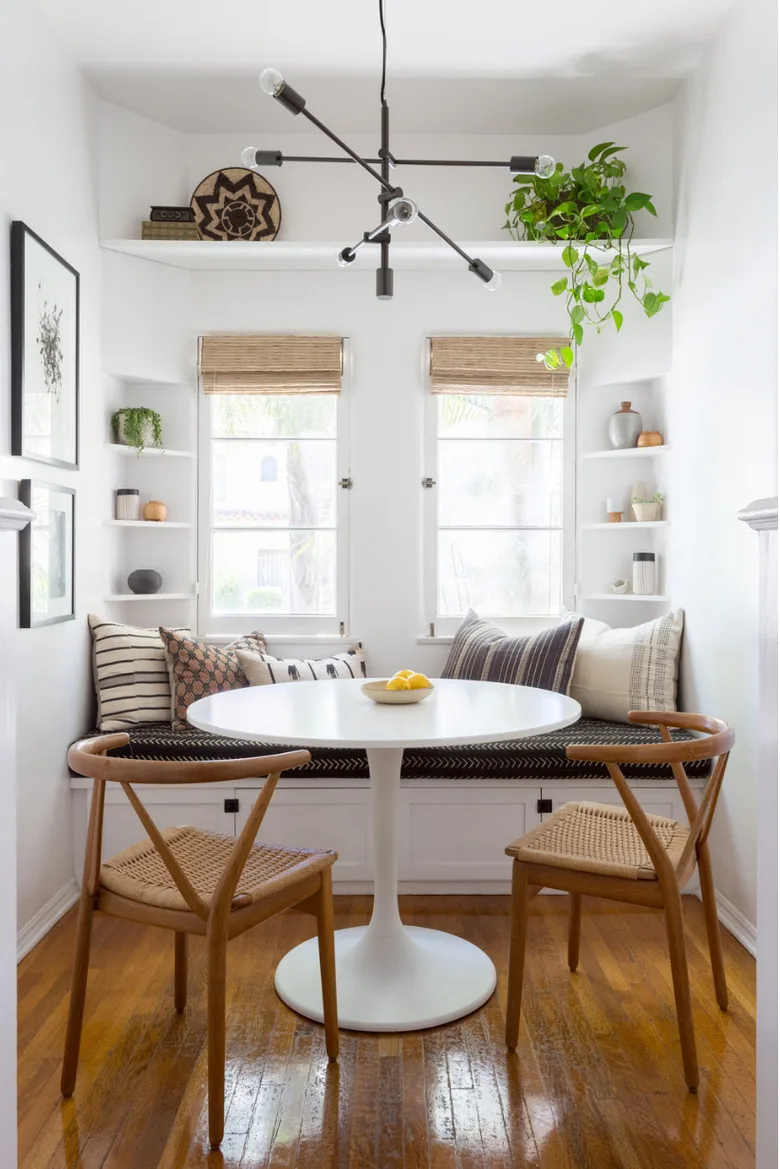
White shelves occupy the narrow corners beside two windows, with a higher shelf connecting the composition above the glazing. A trailing plant softens one end, while bowls and small vessels sit in the side sections. The round table, woven seats and cushioned bench already fill the lower room, making the wall space a useful place for a restrained decorative collection.
Keep shelves away from the route people use to slide onto the bench and stand back up. In a compact nook, shallow shelves can prevent objects from projecting into the seating area, but they still need enough depth to support each item fully. Protect shelf surfaces beneath plant pots and keep trailing stems clear of window handles, blinds and the lighting fixture.
IDEA 08 / 20
Add a High Shelf Above Door Frames
 SaveSupport Non AI Creator
Image credit: Future PLC/James Merrell
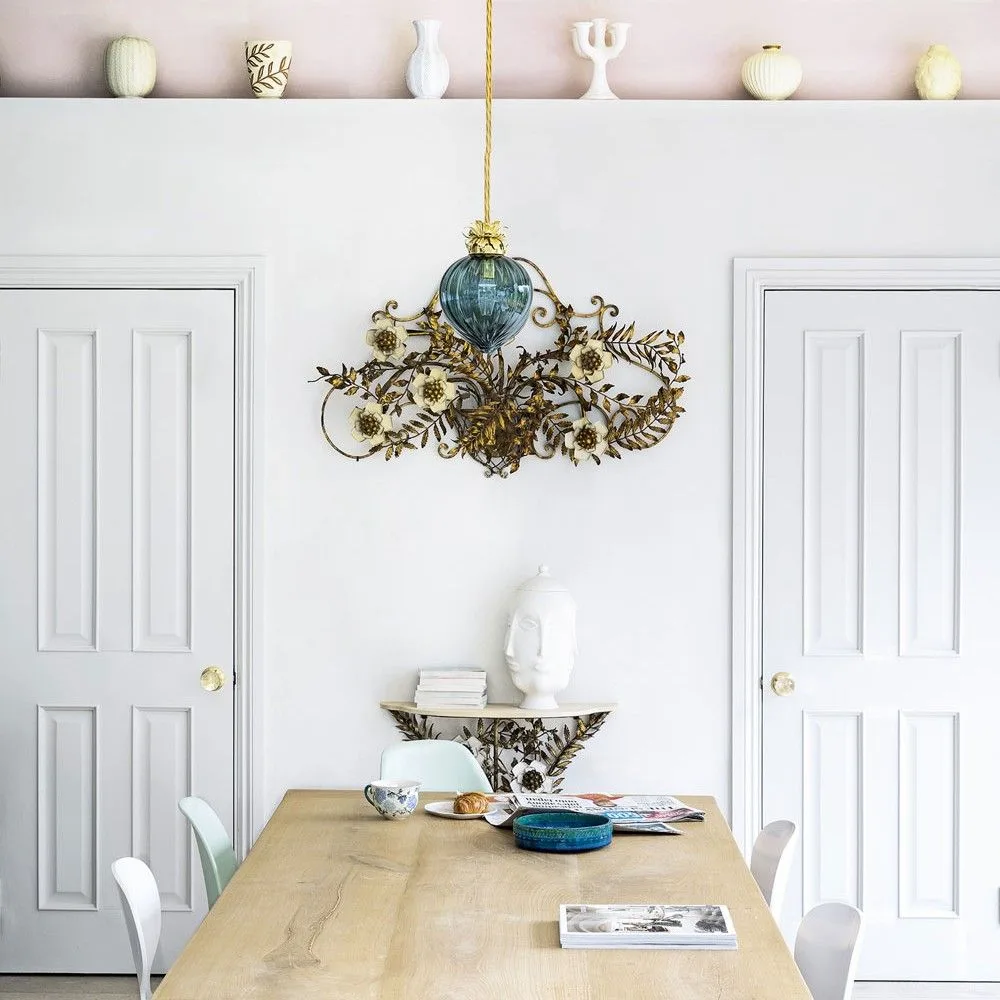
A high white shelf spans the wall above two door frames, displaying a spaced row of pale vases. It uses an otherwise empty strip of wall without occupying the narrow area behind the table. The decorative chandelier hangs lower in the foreground, so the simple shelf and quiet objects provide a calm background rather than competing with its many small details.
Treat a high shelf as occasional display rather than daily storage. Choose stable pieces you can lift and clean safely, and plan access before installing it; balancing on dining furniture is not a sensible cleaning routine. Check the clearance above opening doors and confirm the fixing locations. Leave space around each vase so the collection remains legible from across the room.
IDEA 09 / 20
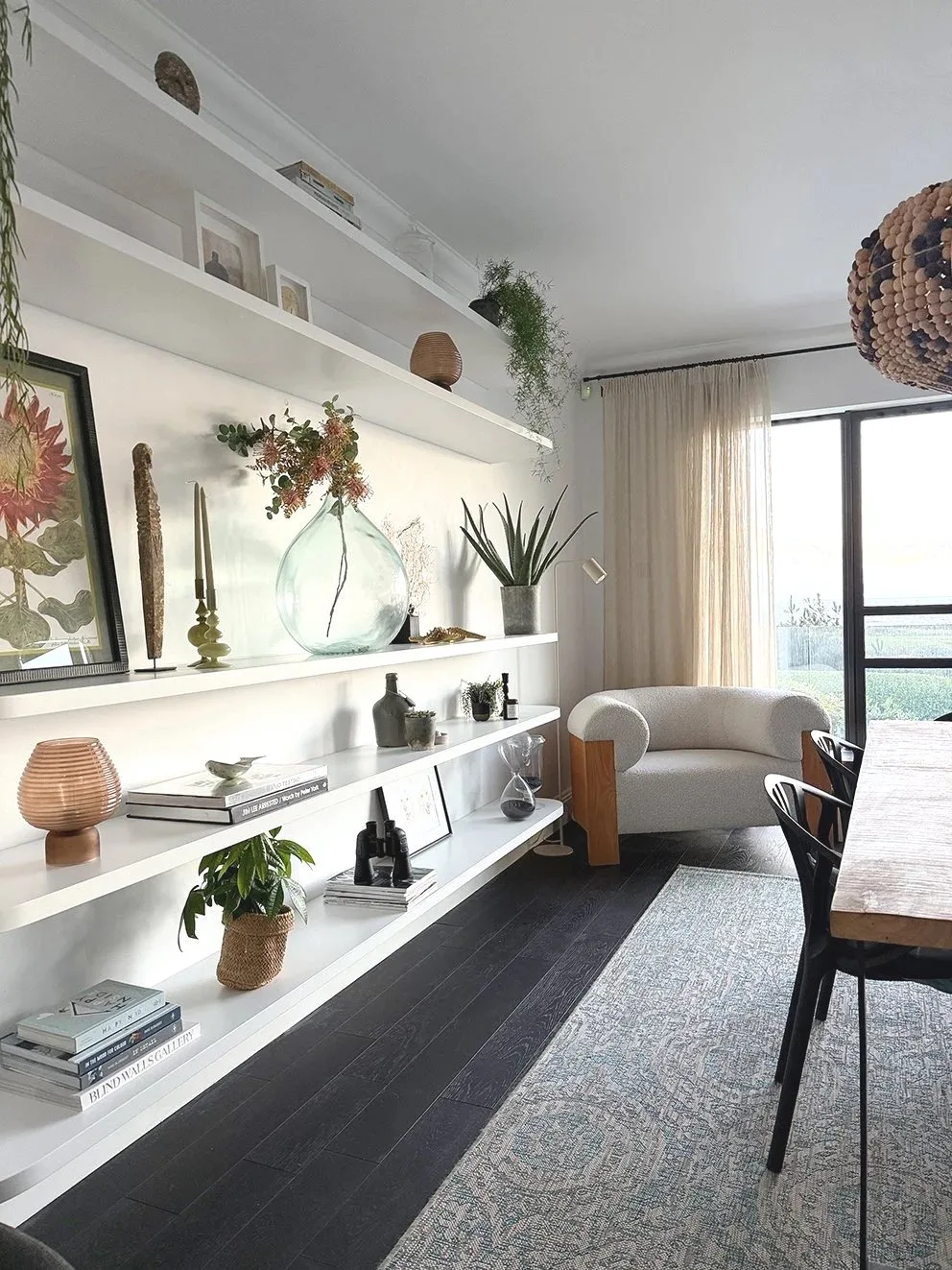
Soften a Long Wall With Rounded Shelf Ends
 SaveSupport Non AI Creator
Source: interiorstylehost.com
Long white shelves with rounded ends stretch beside a wooden dining table, carrying books, framed artwork, vases and plants. The repeated pale lines connect the display, but each level has a different rhythm of tall and low objects. An armchair sits at the far end, and the shelves keep the floor open between that seat and the dining table rather than adding another storage unit.
Begin with the larger artwork and vase, then spread smaller objects across the remaining levels instead of filling every gap. Rounded shelf ends soften the appearance, but you still need to check how far the shelves project into the walkway. Use protective pads beneath pots and vases, route lamp cables securely, and avoid placing open flames beneath an overhanging shelf or trailing foliage.
PART 03
Connect Shelves to Shared Dining Spaces
IDEA 10 / 20
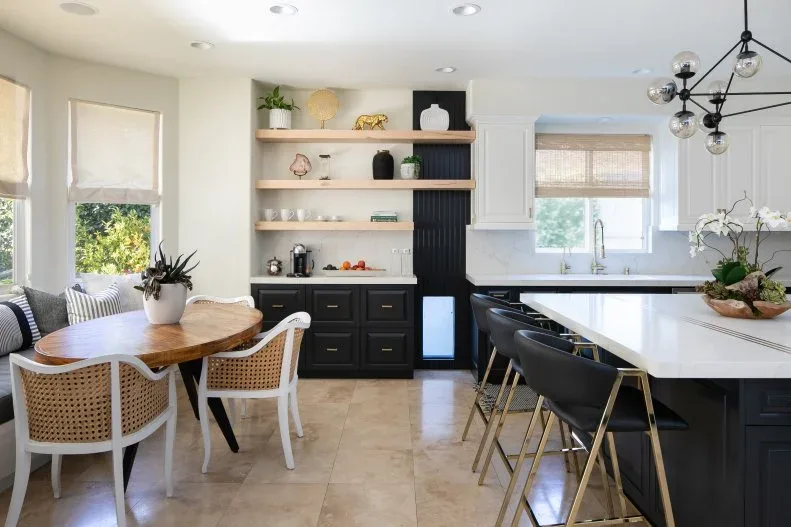
Connect Breakfast Seating to a Serving Wall
 SaveSupport Non AI Creator
Image credit: From: Breegan Jane
Three wood-toned shelves rise above black cabinetry beside the breakfast table and window bench. Pale dishes, framed art and dark vessels link the white walls with the black cabinet fronts, while the shelf finish echoes the tabletop. Because the table sits close to the serving area, the shelves become part of the dining backdrop even though the room also contains an island.
For a shared kitchen and dining area, choose shelf objects that make sense from both sides of the room. A small set of everyday cups can sit below occasional decorative pieces, with rarely used items stored behind doors. Keep the counter beneath available for preparing drinks, and check that seated guests and open cabinet drawers can share the same area without blocking one another.
IDEA 11 / 20
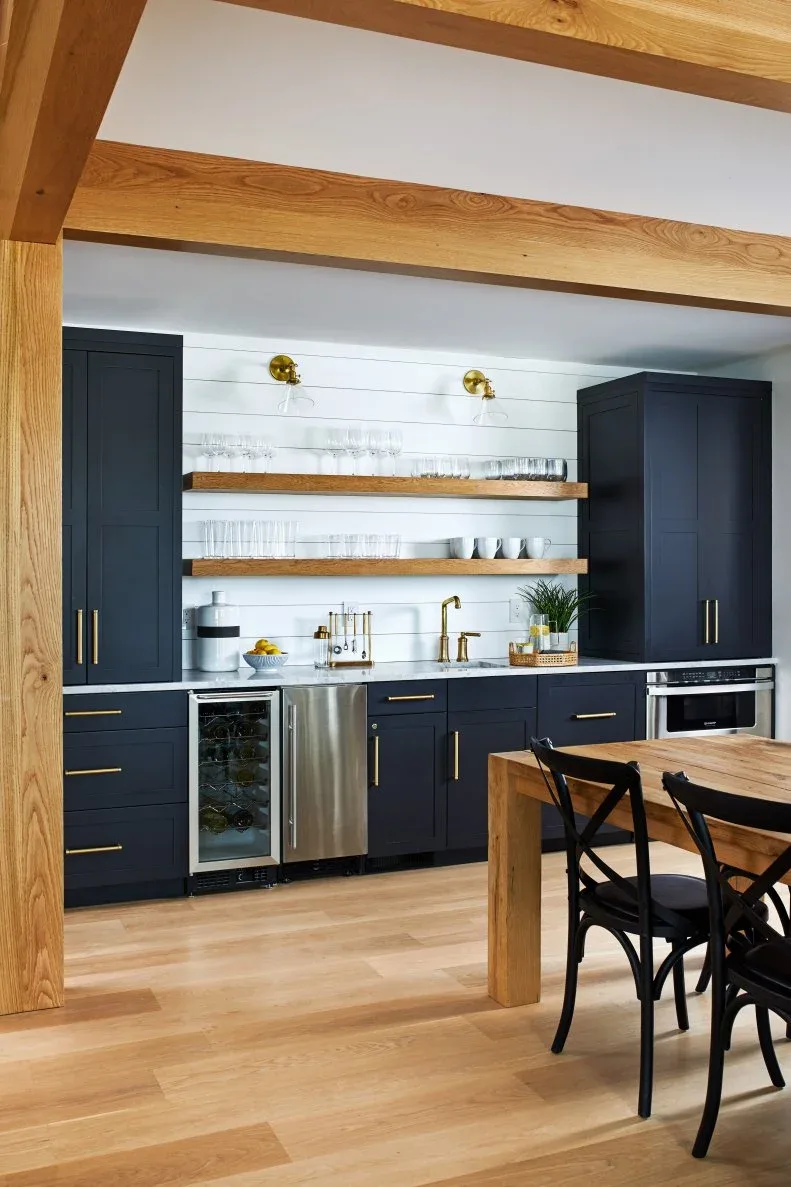
Run Serving Shelves Between Tall Cabinets
 SaveSupport Non AI Creator
Image credit: Photo: Stacy Zarin Goldberg. From: Zoe Feldman Design
Two wood-toned shelves bridge the gap between dark tall cabinets above a drinks counter. Clear glasses fill much of the upper shelf, with white cups and containers on the lower level. The white horizontal wall boards help the darker cabinet edges stand out, and the visible dining table carries the same warm tone as the shelves and exposed overhead beams.
Measure the tableware you actually use before deciding the space between shelves. Leave enough height to lift a glass without tilting it into the shelf above, and keep the countertop clear where drinks will be poured. Check the shelf rating with a full collection rather than a few sample glasses. Regularly used pieces are easier to keep clean than a dense display of rarely handled stemware.
IDEA 12 / 20
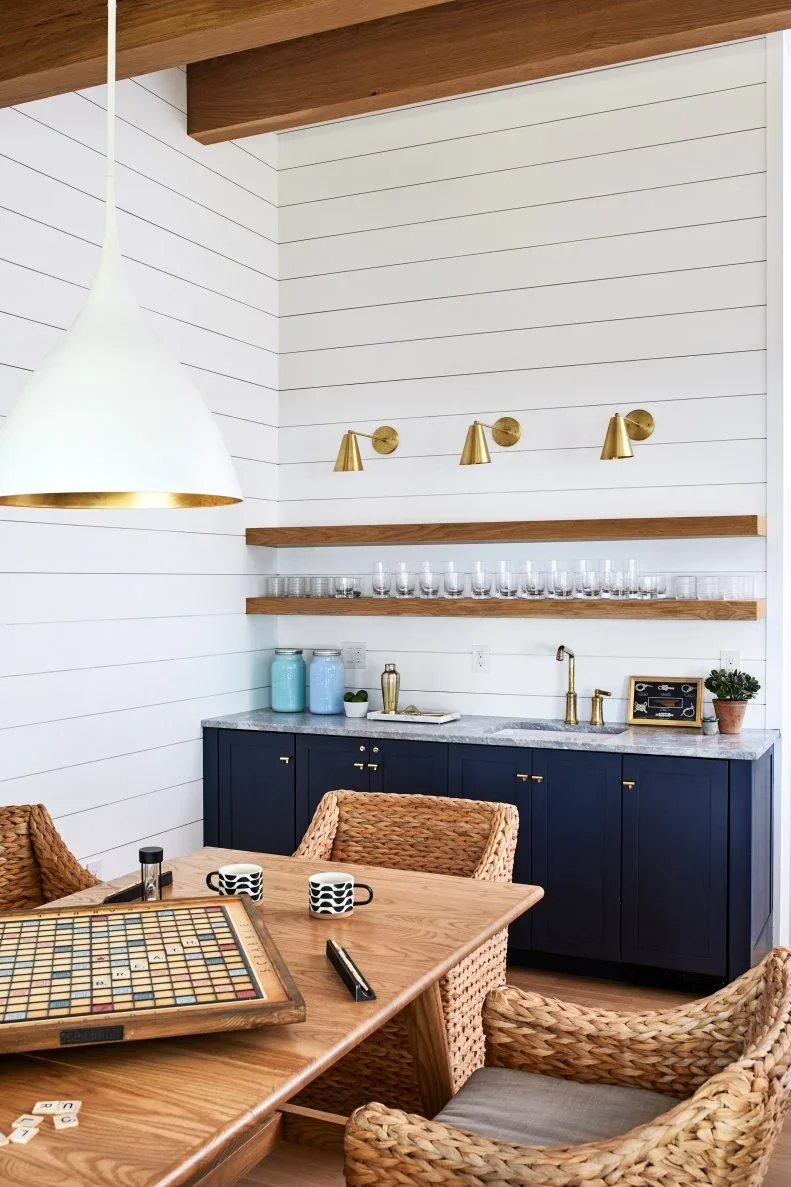
Keep Glassware Near a Casual Dining Table
 SaveSupport Non AI Creator
Image credit: Photo: Stacy Zarin Goldberg. From: Zoe Feldman Design
Wood-toned shelves above navy cabinets form a relaxed serving area behind a wooden table with woven chairs. A row of clear glasses sits on the lower shelf, while small gold-toned wall lights repeat the warm accents in the pendant and cabinet hardware. The board game and mugs on the table show how a dining space can support ordinary afternoons as well as meals.
Place the glasses you use most often where you can reach them without leaning across the table. Keeping the serving counter behind the seating can free the tabletop for games, but the route between chairs and cabinet fronts still needs to work. Store extra games and less attractive supplies inside the lower cabinets, leaving the shelves for a smaller collection that is easy to dust.
IDEA 13 / 20
Let Clear Shelves Reveal a Textured Wall
 SaveSupport Non AI Creator
Image credit: Photo: Lissa Gotwalls Photography. From: Bartone Interiors
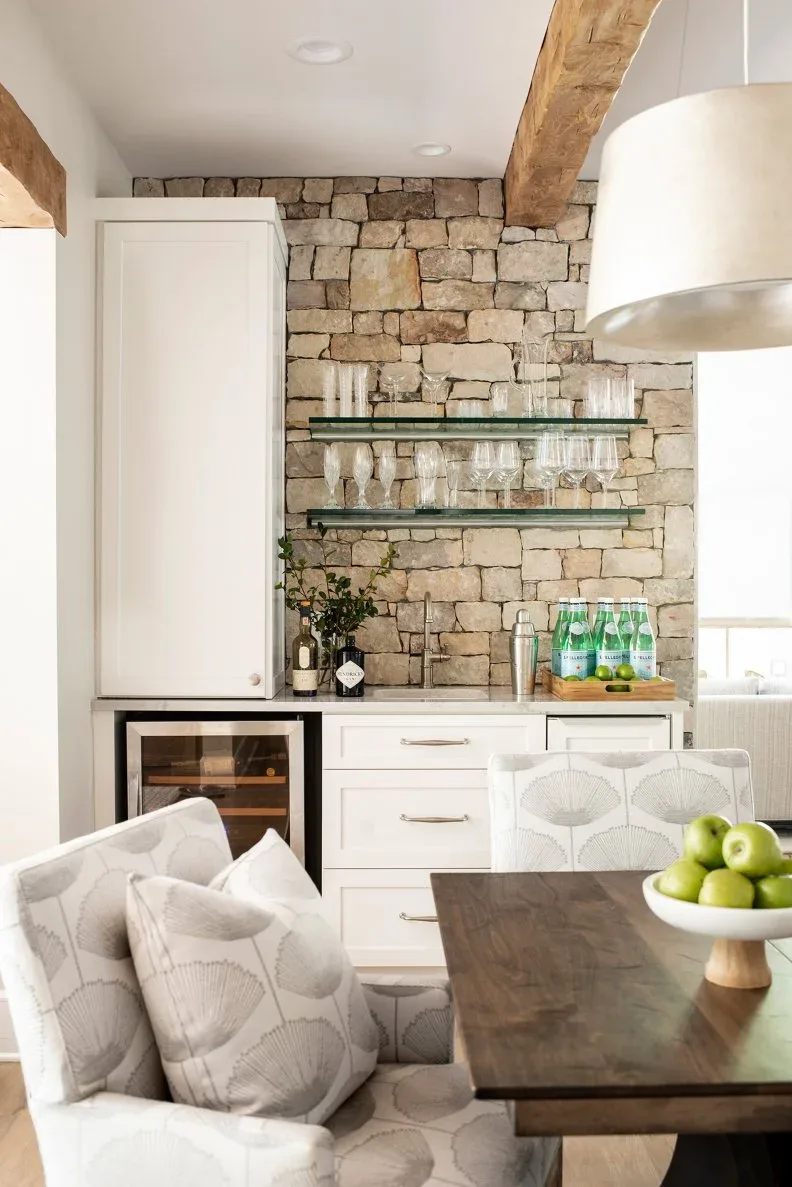
Two clear shelves carry stemware against a textured stone wall beside the dining table. Their thin edges let the uneven backdrop remain visible, while white cabinetry below provides a quieter base. The pale patterned chairs and dark wooden tabletop add contrast without hiding the serving area, demonstrating how a transparent shelf can make a busy wall feel less interrupted than a thick opaque board.
A textured wall requires careful installation planning because the visible surface may not provide the support the shelf needs. Have the substrate and fixing method checked before fitting shelves, and follow the supplier guidance for glass shelf support and loading. Leave room to lift stemware without touching the shelf above. Fingerprints and dust show on clear surfaces, so choose a collection you can remove easily for cleaning.
PART 04
Plan a Useful Serving Area
IDEA 14 / 20
Match Floating Shelves to a Colorful Counter
 SaveSupport Non AI Creator
Image credit: Photo: Jane Beiles, Architect: Kenneth McGahren Architect, Landscape Architect: Keith E. Simpson Associates New Canaan, Millwork: Marek Bil Old World Construction, Contractor: West Construction. From: D2 Interieurs
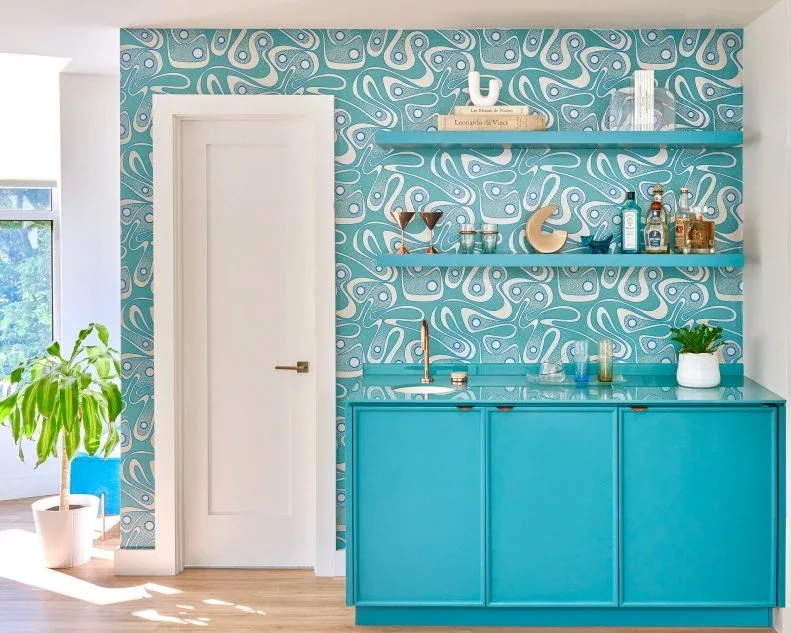
Turquoise shelves and cabinet fronts turn this drinks counter into a single colorful feature against blue patterned wallpaper. Glasses, bottles and a few sculptural objects stand out against the darker shelf edges, while the nearby white door gives the composition a clear stopping point. The shelves repeat the cabinet color instead of introducing another contrasting finish into an already lively serving area.
When using patterned wallpaper behind open shelves, limit the number of object colors so the display remains readable. Keep drink ingredients together on one accessible section and use the other shelf for lighter decoration. Check that the door can open fully without striking projecting objects. Protect the wall and shelf surfaces from splashes near the sink, using cleaning methods suitable for their actual finishes.
IDEA 15 / 20
Make a Narrow Drinks Niche Feel Intentional
 SaveSupport Non AI Creator
Image credit: Photo: John Merkl. From: Studio Heimat
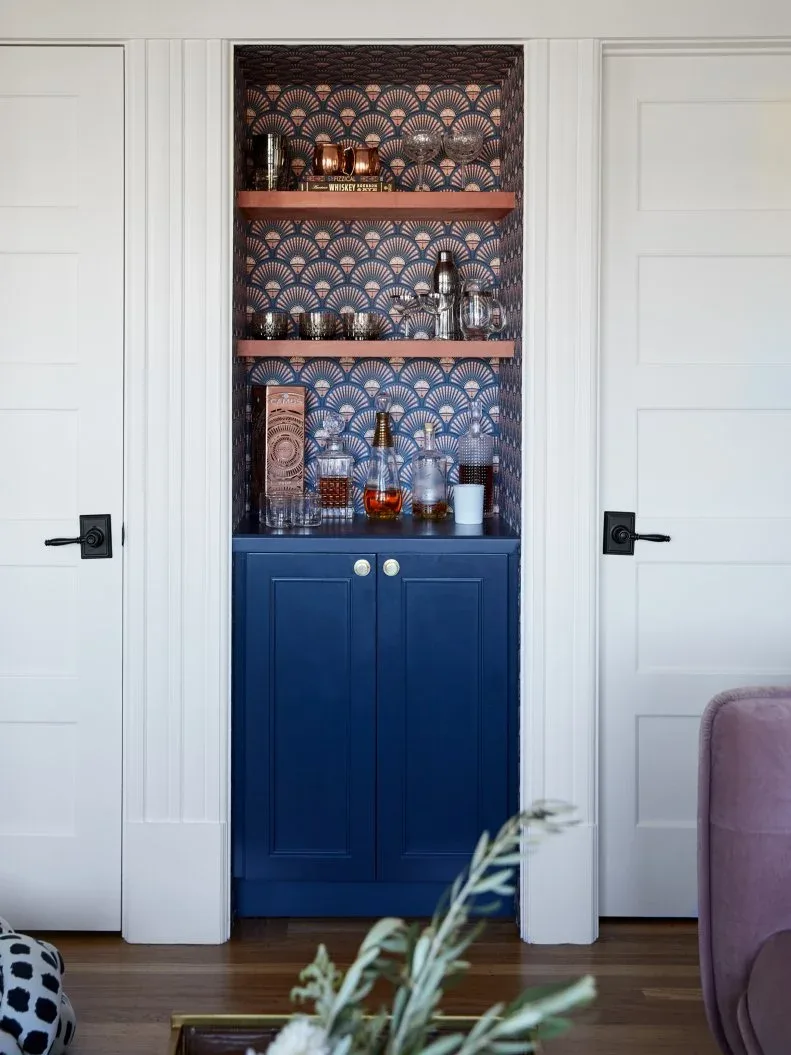
Two reddish wood-toned shelves sit inside a narrow patterned niche between white doors. The navy lower cabinet anchors the small serving station, while the warm shelves pick up the colors in the fan-shaped wallpaper. A few glasses and bottles fit comfortably into the recess, showing how a modest wall section can support a dining drinks area without taking over the whole room.
Choose shelf depth around the items you want to store, keeping everything inside the recess rather than projecting into the doorway route. Plan enough clearance to lift bottles and glasses off the shelves, and leave the countertop useful for setting down a tray. A compact niche becomes cluttered quickly, so keep duplicate supplies behind the cabinet doors and display only the pieces you regularly use.
IDEA 16 / 20
Split Short Shelves Around a Serving Window
 SaveSupport Non AI Creator
Image credit: Photo: Brian Bieder. From: Maggie Griffin
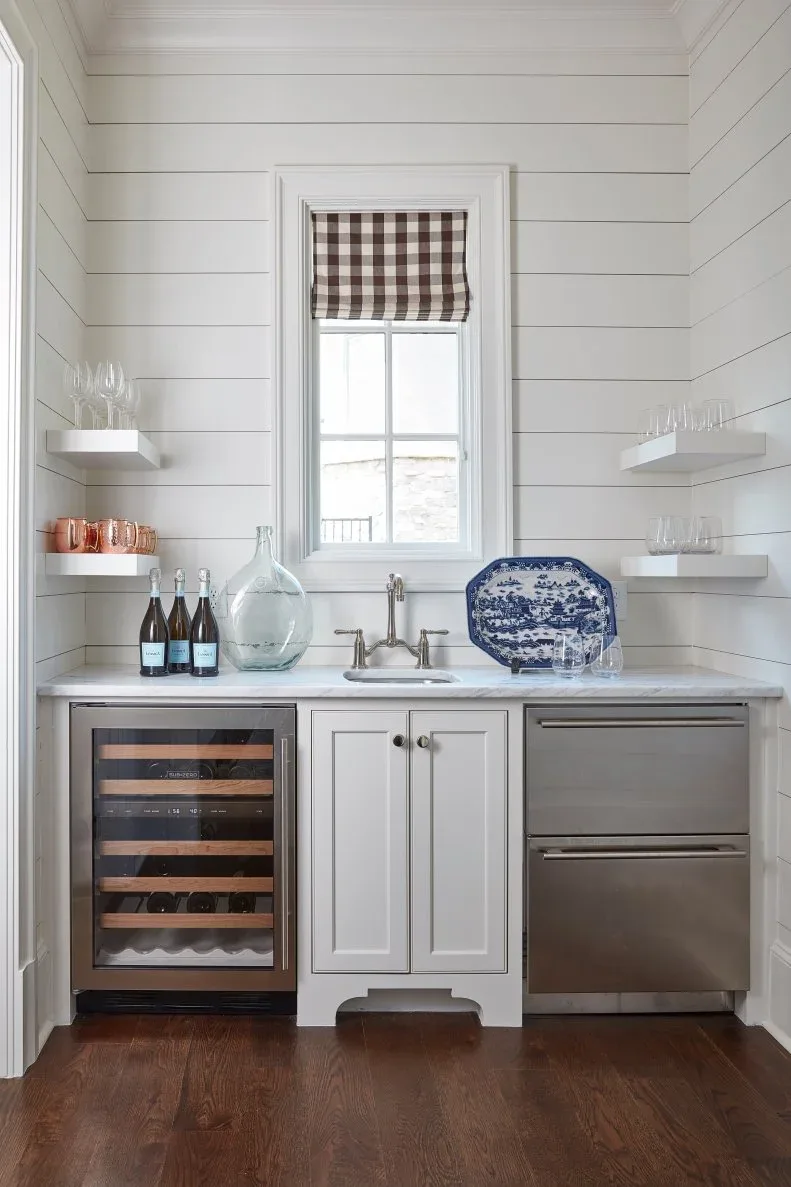
Short white shelves flank a window above a compact drinks counter, with pink glasses on one side and clear glasses on the other. Their light finish blends with the horizontal wall boards and white lower cabinets. The central window remains open to daylight, so the shelves create storage at the sides rather than replacing the view with one long shelf across the glass.
Before fitting shelves close to a window, check the full movement of the blind, window handles and any opening sections. Short shelves suit a small glass collection, but overcrowding makes individual pieces harder to remove. Keep heavier bottles on the counter or in suitable lower storage, and wipe away water around the sink promptly so the serving area remains pleasant to use during a meal.
IDEA 17 / 20
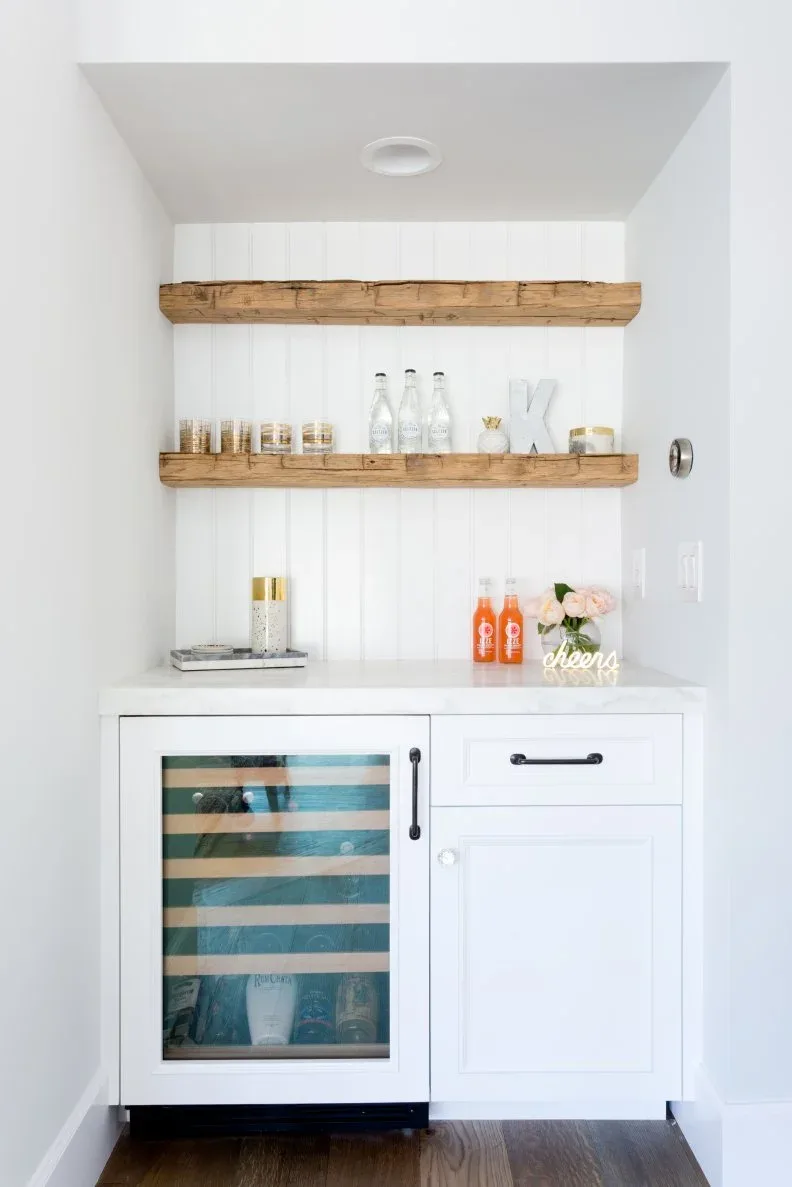
Give a Compact Serving Counter Warm Shelves
 SaveSupport Non AI Creator
Image credit: Photo: Amy Bartlam. From: Blackband Design
Two thick wood-toned shelves bring warmth to a small white serving counter. Clear bottles and glasses occupy the lower shelf, while the upper one remains mostly empty, letting the textured fronts of the boards become part of the display. The drinks fridge and cupboard below make this a practical supporting station rather than a full wall of decorative storage beside the dining space.
Use a compact station like this to separate drink preparation from the dining table. Keep the lower shelf available for pieces needed during a meal and resist filling the upper shelf just because it exists. Check that fridge and cupboard doors open without clashing with nearby chairs. A thick shelf still needs correctly specified support; its appearance alone does not establish how much weight it can safely carry.
IDEA 18 / 20
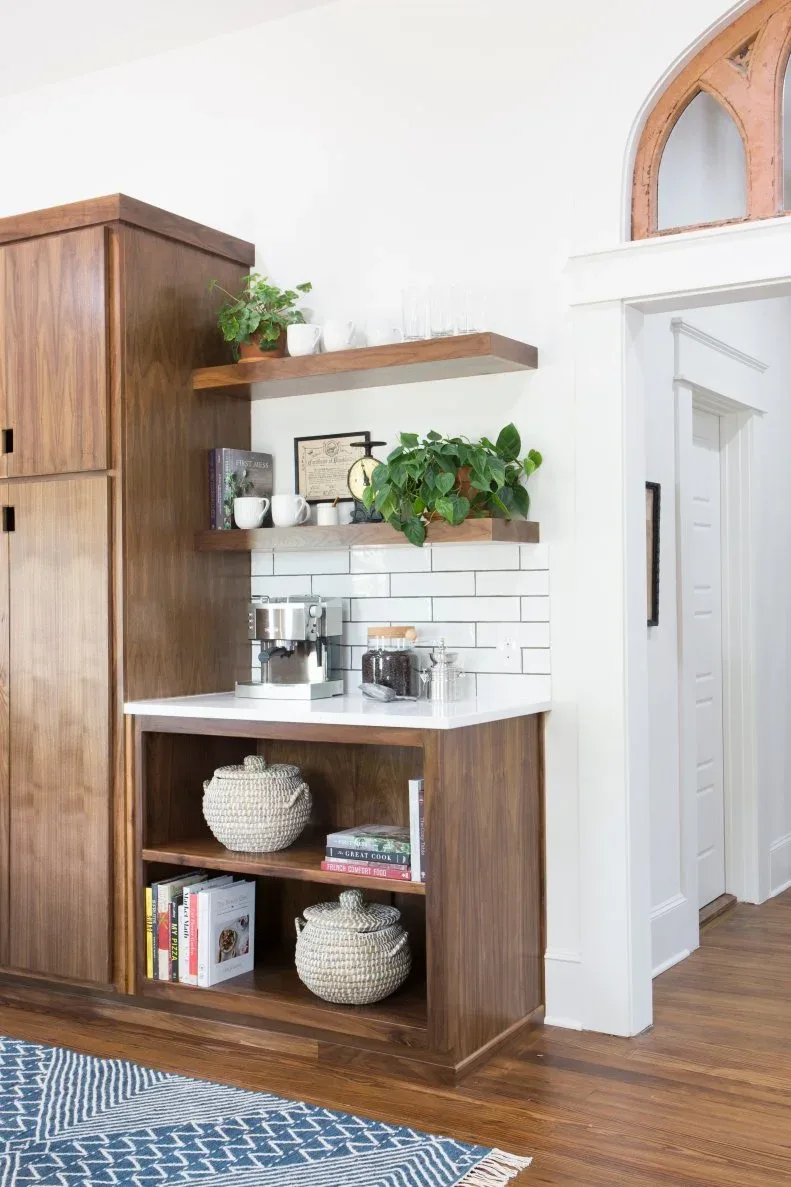
Separate Open Serving Shelves From Bulk Storage
 SaveSupport Non AI Creator
Image credit: Photo: Jennifer Boomer/Verbatim Photo Agency. From: Fixer Upper
Two wood-toned shelves extend beside a tall cupboard above a coffee counter, displaying white cups, a small clock and leafy plants. White rectangular wall tiles separate the darker wood from the work surface, and the open cubbies below hold books and baskets. The combination provides several kinds of storage in one small area while keeping the upper wall more open than another tall cabinet would.
Let the enclosed cupboard carry the supplies that do not need to be visible, leaving the shelves for a limited set of useful cups and decoration. Allow space above the coffee equipment for operation and cleaning according to its instructions. Lift plant pots onto protective trays, keep trailing leaves away from hot appliances, and place frequently handled items where they can be reached without moving the plant each time.
IDEA 19 / 20
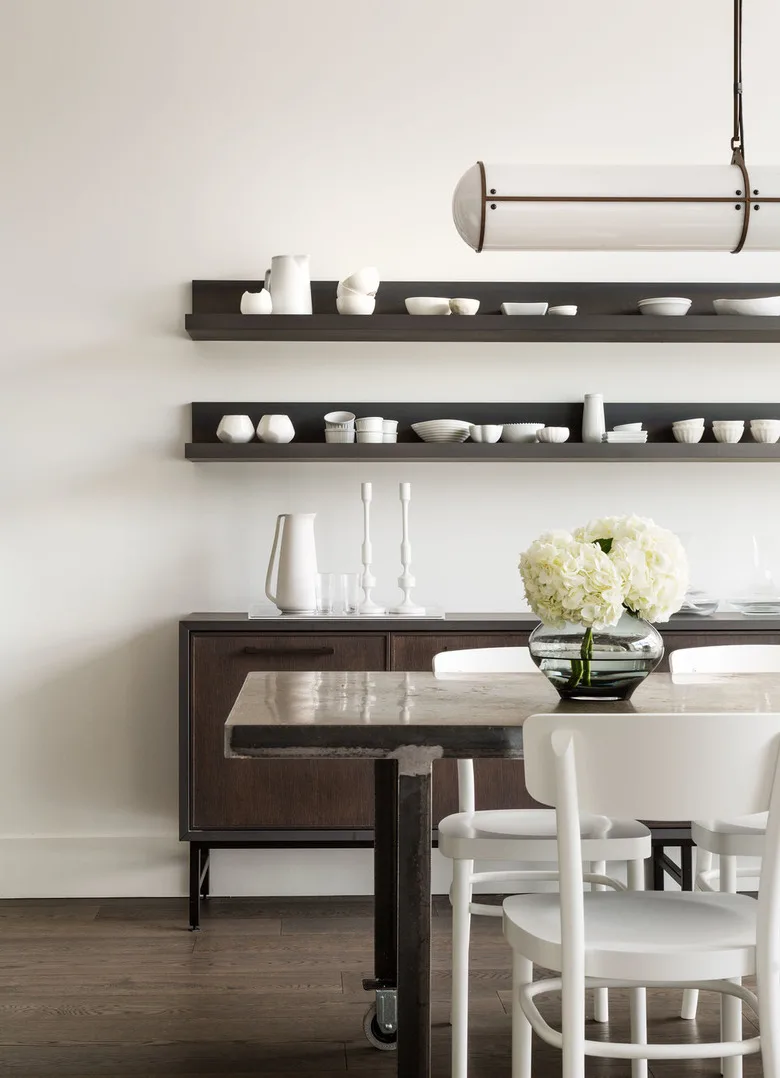
Show Pale Bowls Against Dark Shelf Ledges
 SaveSupport Non AI Creator
Source: hunker.com
Two dark shelf ledges display pale bowls and small vessels above a matching sideboard behind the dining table. Their raised back edges give the dishes a defined backdrop, while the long pendant repeats the horizontal shape overhead. White chairs connect the display to the seating, and the restrained arrangement allows differences in bowl shape to supply interest without relying on bright colors.
A shallow display shelf suits small bowls, but check that every base sits fully on the shelf rather than overhanging its front. Keep heavier serving pieces in the cabinet and rotate a smaller selection above. If you want to use the displayed dishes for meals, include washing them in your routine. Leave the sideboard top clear enough to land a tray without shifting the whole decorative arrangement.
IDEA 20 / 20
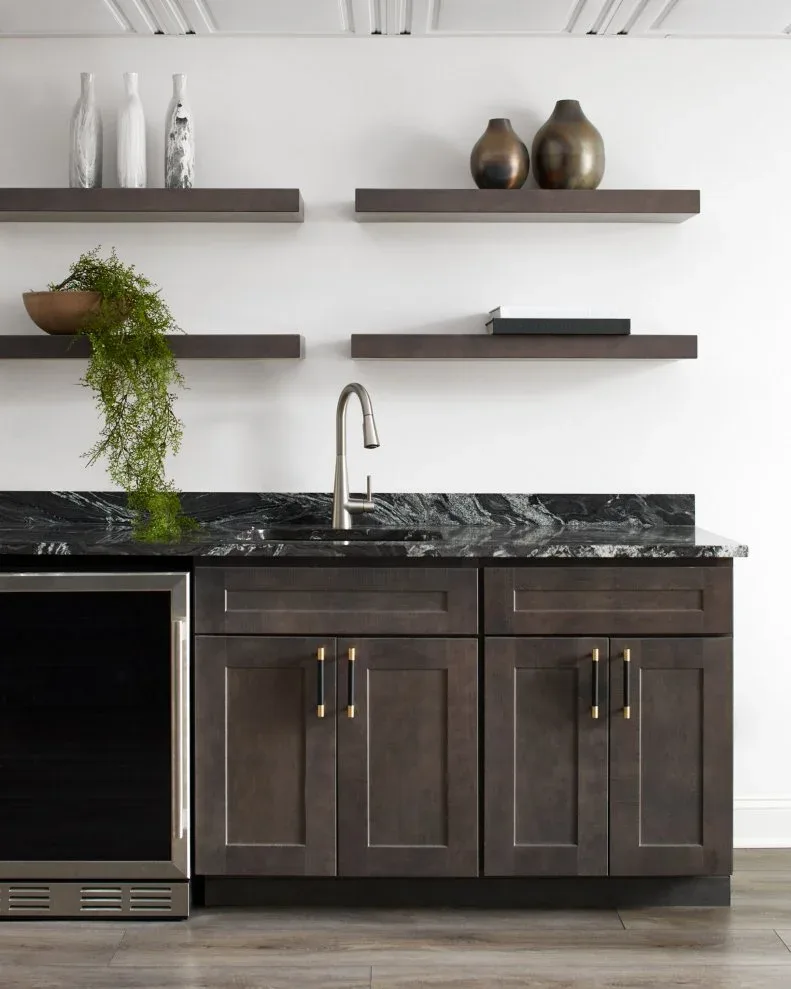
Stagger Short Shelves Above a Drinks Counter
 SaveSupport Non AI Creator
Image credit: Photo: Brian Wetzel. From: Gray Space Interiors
Four short dark shelves form two separated pairs above a drinks counter, leaving a vertical gap around the sink area. Tall pale bottles occupy one upper shelf, rounded dark vessels sit on the other, and a trailing plant adds movement below. The staggered objects make the wall feel balanced without identical displays, offering an alternative to a long continuous shelf above a dining serving station.
Lay out the shelf positions on the wall before installation, checking the balance with the countertop and the objects you already own. Keep hanging foliage away from the faucet and preparation area, and leave enough space to lift the taller vases safely. Store everyday glassware elsewhere if these shelves are mainly decorative, so preparing drinks does not require reaching through plants or moving the display.
BRING IT ALL TOGETHER
Start With What You Want to Keep Within Reach
Choose the shelf layout around the objects you use and the room you have. Picture ledges, tableware shelves and drinks counters each need different depths and clearances. Mark the position on the wall, move the chairs, open nearby doors and try reaching the proposed shelf before making holes.
Keep the display small enough to clean comfortably. Use enclosed storage for spare supplies, protect surfaces under plants, and check the shelf supplier guidance for loading and installation. The finished arrangement should leave the table, serving counter and walking route easy to use.