A light over the dining table needs to work from the chairs as well as the doorway. The fixture should relate to the table shape, leave room for serving and make conversation comfortable, whether you prefer one broad shade or a group of smaller pendants.
These dining rooms show different ways to place and combine hanging lights. Use the visible arrangements as a starting point, then check your own table position, ceiling height, seated views and evening brightness before choosing a fitting.
PART 01
Give One Shade a Clear Place
IDEA 01 / 20
Center a Bold Light Over an Oval Table
 SaveSupport Non AI Creator
Image credit: Jonathan Adler
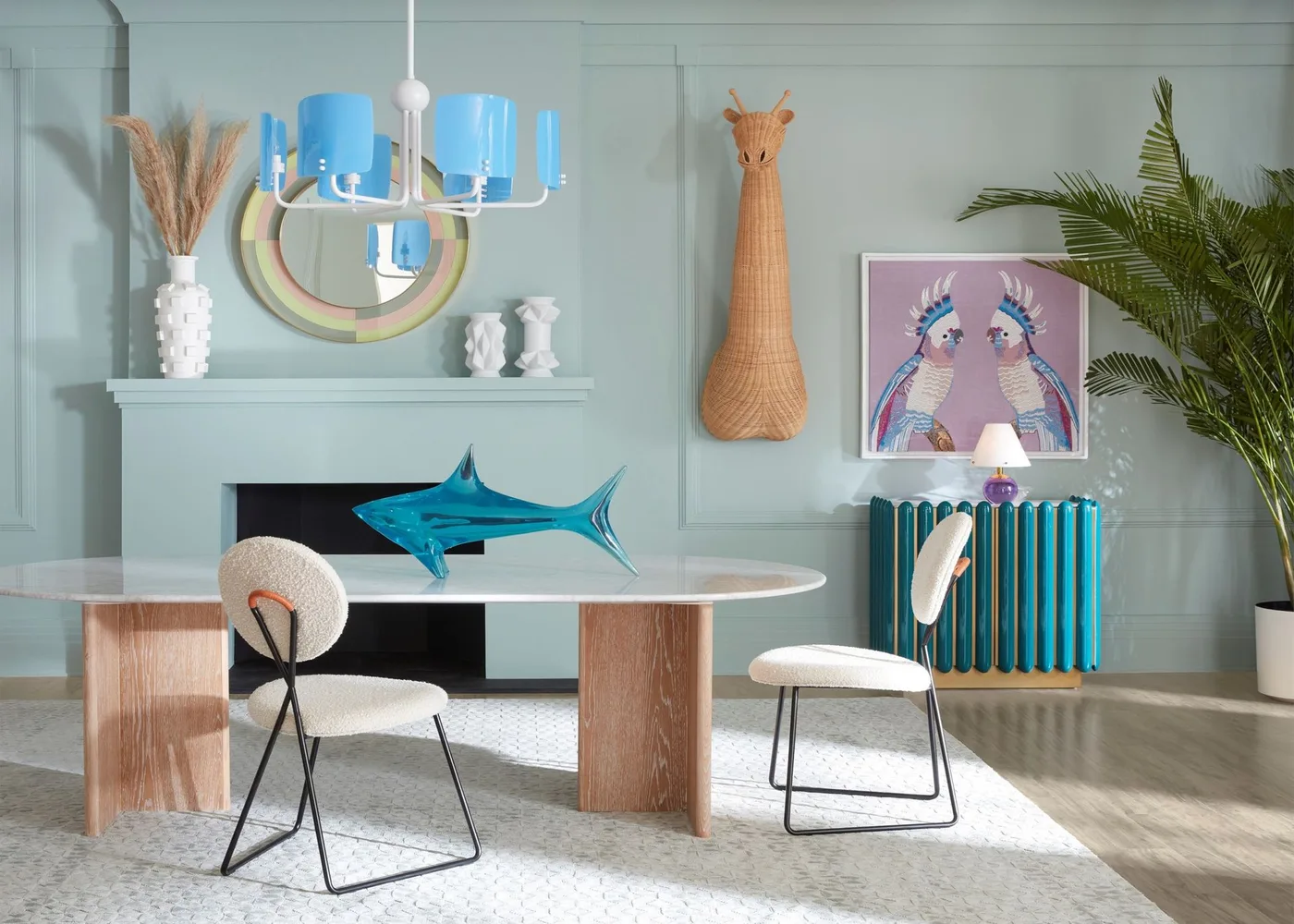
A bold blue hanging light marks the center of this dining group, standing out against pale green walls and a white oval tabletop. Its strong color draws the eye upward, while the rounded table keeps the arrangement below softer. The wood supports add a warmer note, giving the dining area several distinct shapes without requiring a tall, elaborate centerpiece on the table.
Position a statement light around the table you actually use, rather than automatically choosing the middle of the room. Before installation, place the chairs and check the view from both ends of the oval. A fixture that looks balanced from the doorway may interrupt conversation when seated. Keep the table center relatively low and make sure the light suits the available ceiling height.
IDEA 02 / 20
Use a Broad Shade Above a Long Table
 SaveSupport Non AI Creator
Image credit: Future PLC/Caroline Mardon
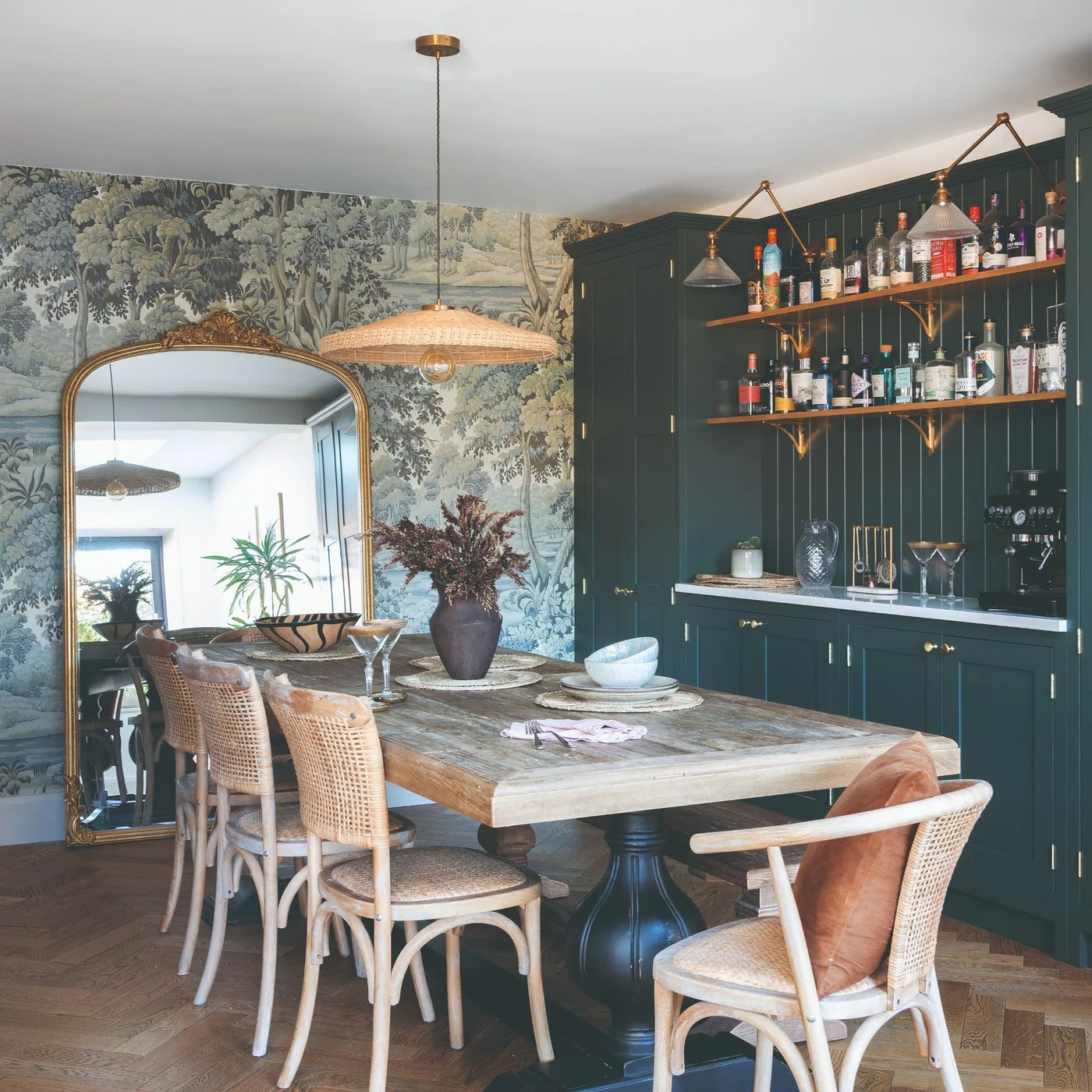
A broad, shallow woven shade hangs above a long wood table, repeating the texture of the surrounding woven chairs. The dining arrangement sits in front of botanical wallpaper, a large mirror and a dark blue counter, so the pendant gives the busy background a clear center. Its wide outline spreads across the table visually without extending into a deep cluster of hanging pieces.
Compare the shade width with the tabletop and chair positions before buying. A broad fixture should remain comfortably inside the dining group, with enough room to stand and lean across the table. In a room with patterned wallpaper, try a shade with one clear silhouette. Check how its weave affects the light after dark, and keep tall flowers from crowding the space directly beneath it.
IDEA 03 / 20
Bring Warm Color to a Window-Side Table
 SaveSupport Non AI Creator
Image credit: Future PLC/Dominic Blackmore
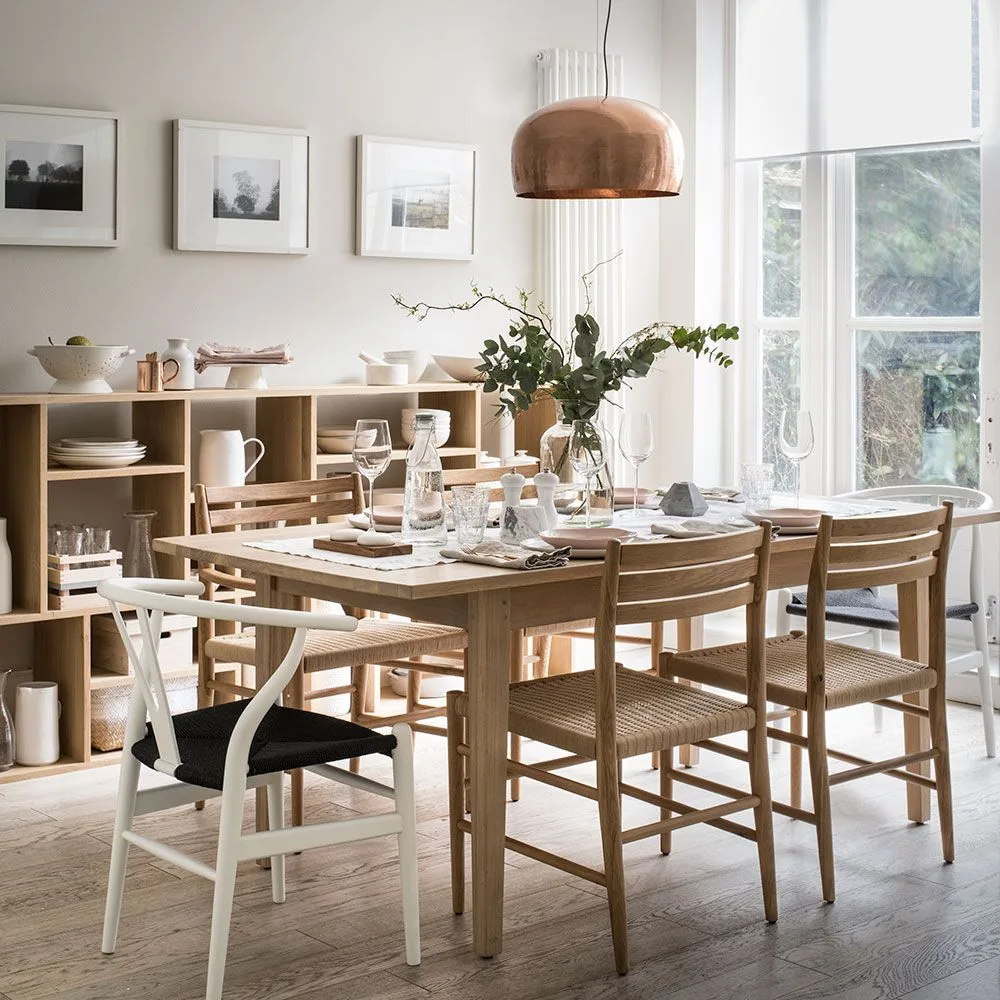
A copper-toned dome provides a warm accent above this wood table beside the window. White walls and open wood storage keep the room light, while mixed white and wood chairs make the dining group feel informal. The pendant has a definite lower edge, giving the table a visible canopy without filling the surrounding space with several separate cords or decorative arms.
Check an opaque dome from every seat, especially the chair closest to the window. Its light may concentrate on the tabletop while leaving the surrounding room comparatively dim. Add separate room lighting if needed rather than choosing an excessively bright bulb. Keep the hanging shade clear of the window view, and follow the fixture guidance when cleaning a polished finish that readily shows handling marks.
IDEA 04 / 20
Keep a Small Table Light Clear of the Doors
 SaveSupport Non AI Creator
Image credit: Future PLC/Simon Whitmore
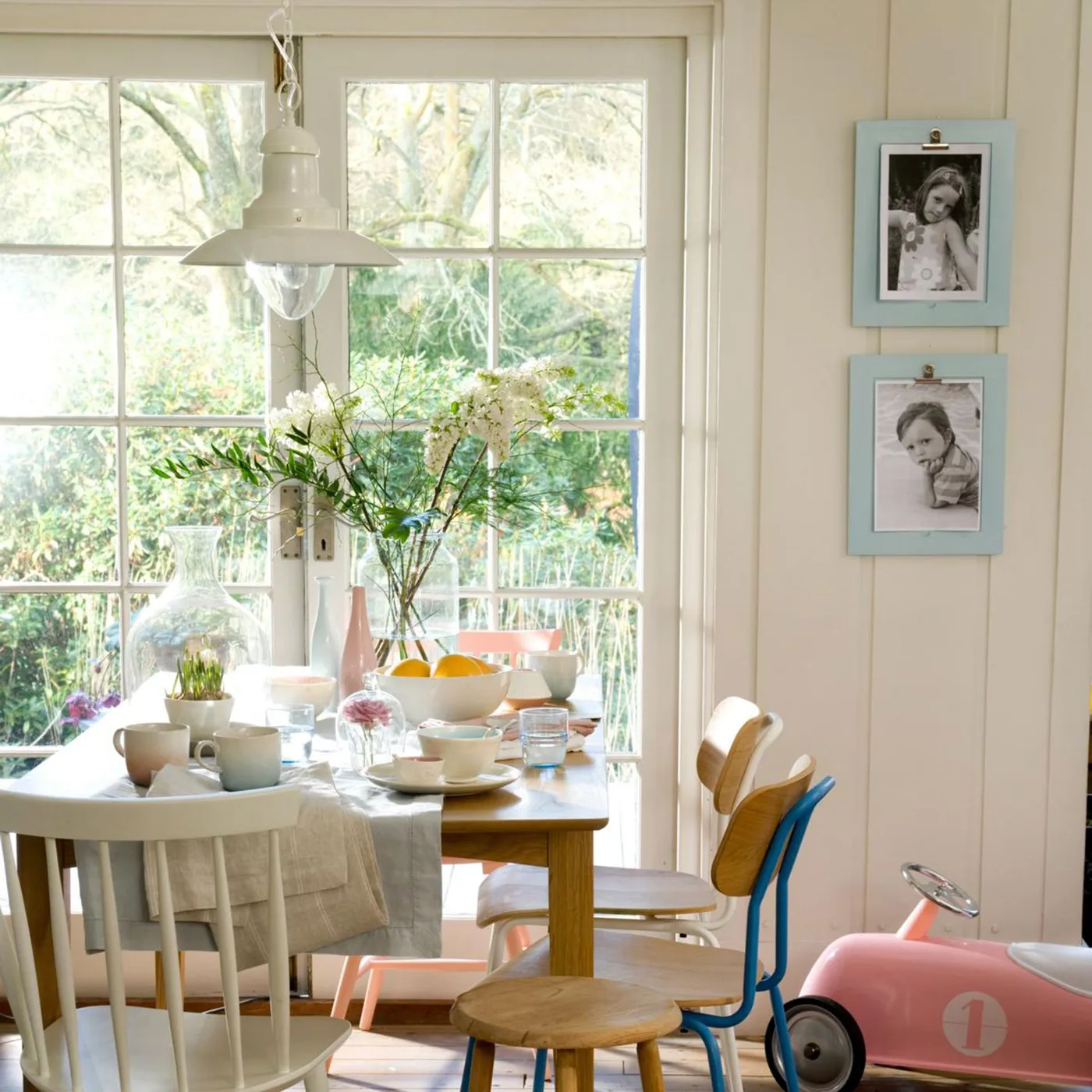
A single white pendant hangs over a compact wood table in a room with white wall paneling and French doors. Mixed pale, yellow and blue seating surrounds the table, while a small pink toy car sits close by. The simple shade gives the family eating area a center without adding another strong color to the everyday objects already gathered around it.
Set out the real family seating before deciding where the pendant belongs. Different chair sizes change how people move around a small table, and door access needs to remain comfortable when someone is seated. Check the fixture height while standing beside the chairs and reaching across to serve. Use a suitable shade and bulb combination that keeps exposed light from shining directly into a seated person’s eyes.
IDEA 05 / 20
Space Two Colorful Shades Along a Rectangle
 SaveSupport Non AI Creator
Image credit: Future PLC/Simon Whitmore
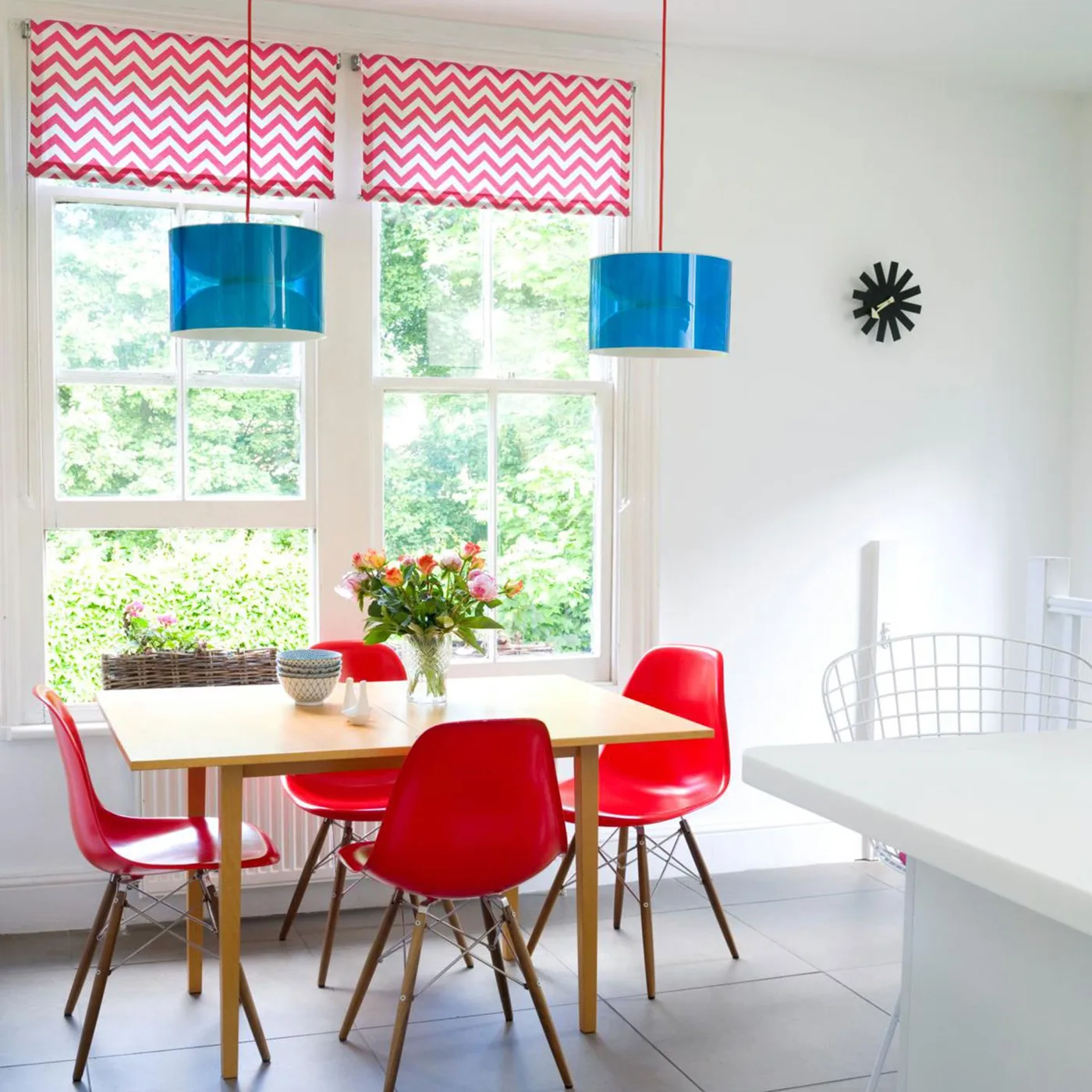
Two blue drum shades form a repeated line above a rectangular wood table. Red chairs and red zigzag blinds provide a second strong color, while white walls give the arrangement breathing room. The two lights relate to the long tabletop rather than forming one central cluster, making this bright dining corner feel clearly organized despite the lively window pattern and seating.
Lay out paired shades with the table in its normal position before arranging electrical work. Check that each one remains within the table footprint and that their spacing looks balanced from both long sides. Matching shade heights can keep a colorful room orderly. Avoid crowding the window line with oversized drums, and test the lamps together so one end of the table does not look noticeably brighter.
PART 02
Check Light and Seated Views
IDEA 06 / 20
Gather Staggered Lights Above a Round Table
 SaveSupport Non AI Creator
Image credit: Future PLC/David Giles
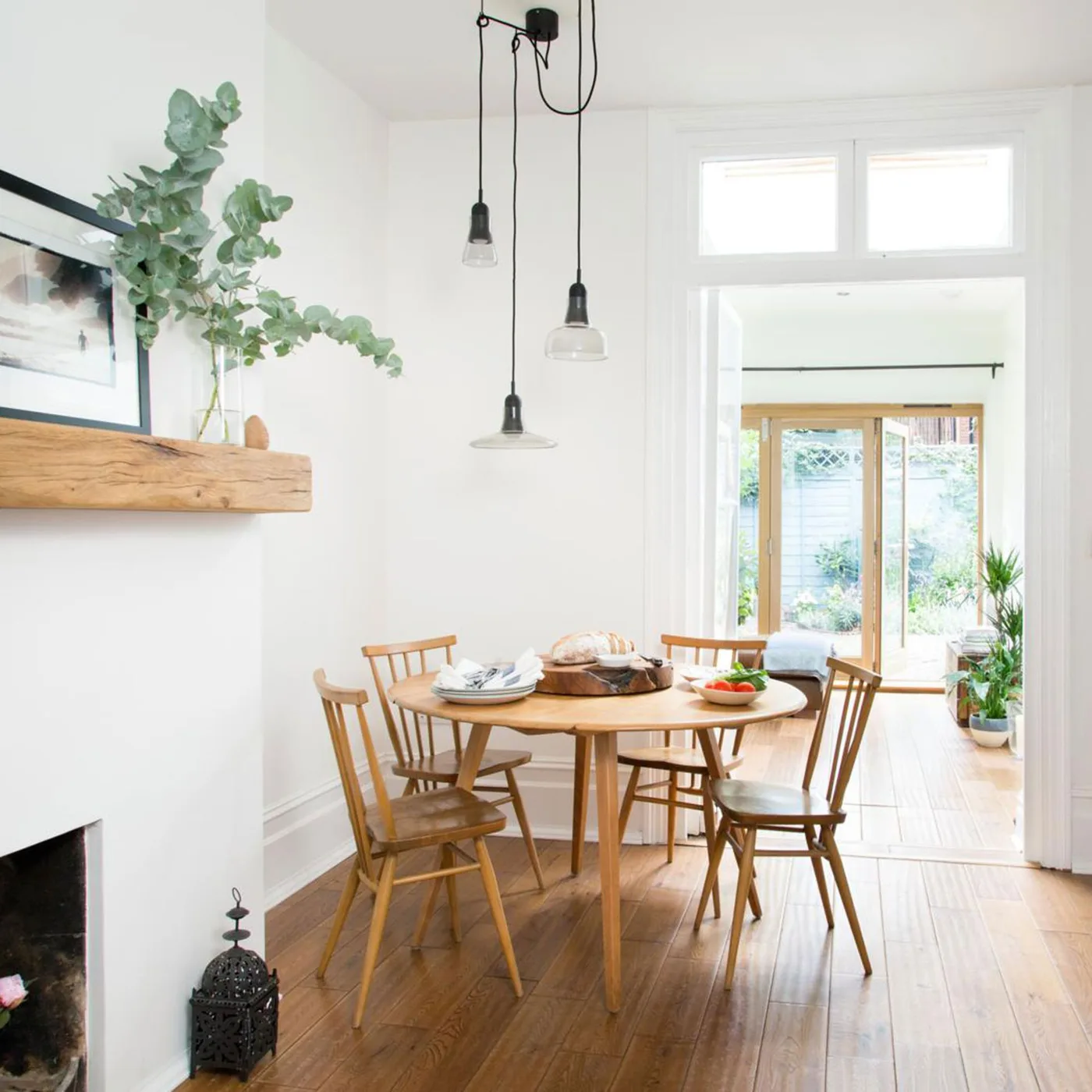
Three small clear shades hang at different heights above a round wood table beside the fireplace. Their dark cords loop back toward the wall, adding a loose graphic line against the white room. Wood chairs and floorboards keep the dining group warm, while the small shades leave much of the view toward the adjoining room open instead of creating a heavy canopy.
Keep the lowest shade comfortably above the table and compare the whole cluster with the circle below. Staggering lights can create movement, but widely scattered drops may look disconnected from a compact table. Have the installation arranged for the chosen fixture rather than improvising loose supports. Check brightness from a seated position, since clear shades and visible bulbs can be distracting even when the overall arrangement looks delicate.
IDEA 07 / 20
Keep the Brick Wall Visible Through Glass
 SaveSupport Non AI Creator
Image credit: Future PLC/James French
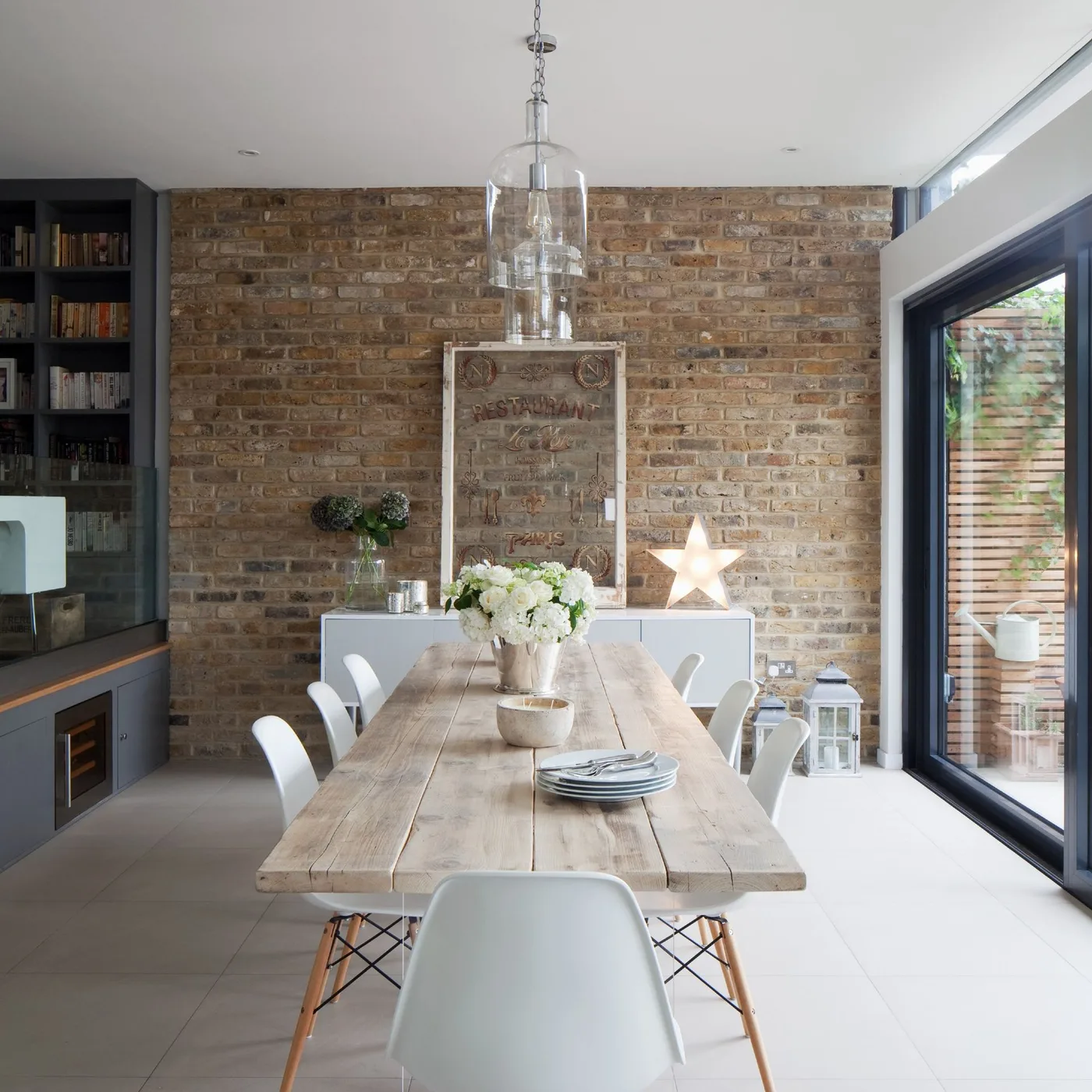
A clear glass pendant sits above a long pale wood tabletop in front of an exposed brick wall. White chairs and large glazing keep the room bright, while the pendant’s transparent outline lets the brick remain visible behind it. The hanging light adds a defined vertical detail without covering the wall’s texture or making the long dining arrangement feel enclosed from above.
Clear glass works best when its appearance is maintained as well as its light output. Plan a safe way to reach the shade for cleaning, and use the maker’s recommended method after the fixture has cooled. Check the visible bulb from both ends of the table for glare. Keep flowers below the conversational sightline so the transparent shade and open room layout continue to feel unobstructed.
IDEA 08 / 20
Check a Pendant Beside a Reflective Mirror
 SaveSupport Non AI Creator
Image credit: Future PLC/Dominic Blackmore
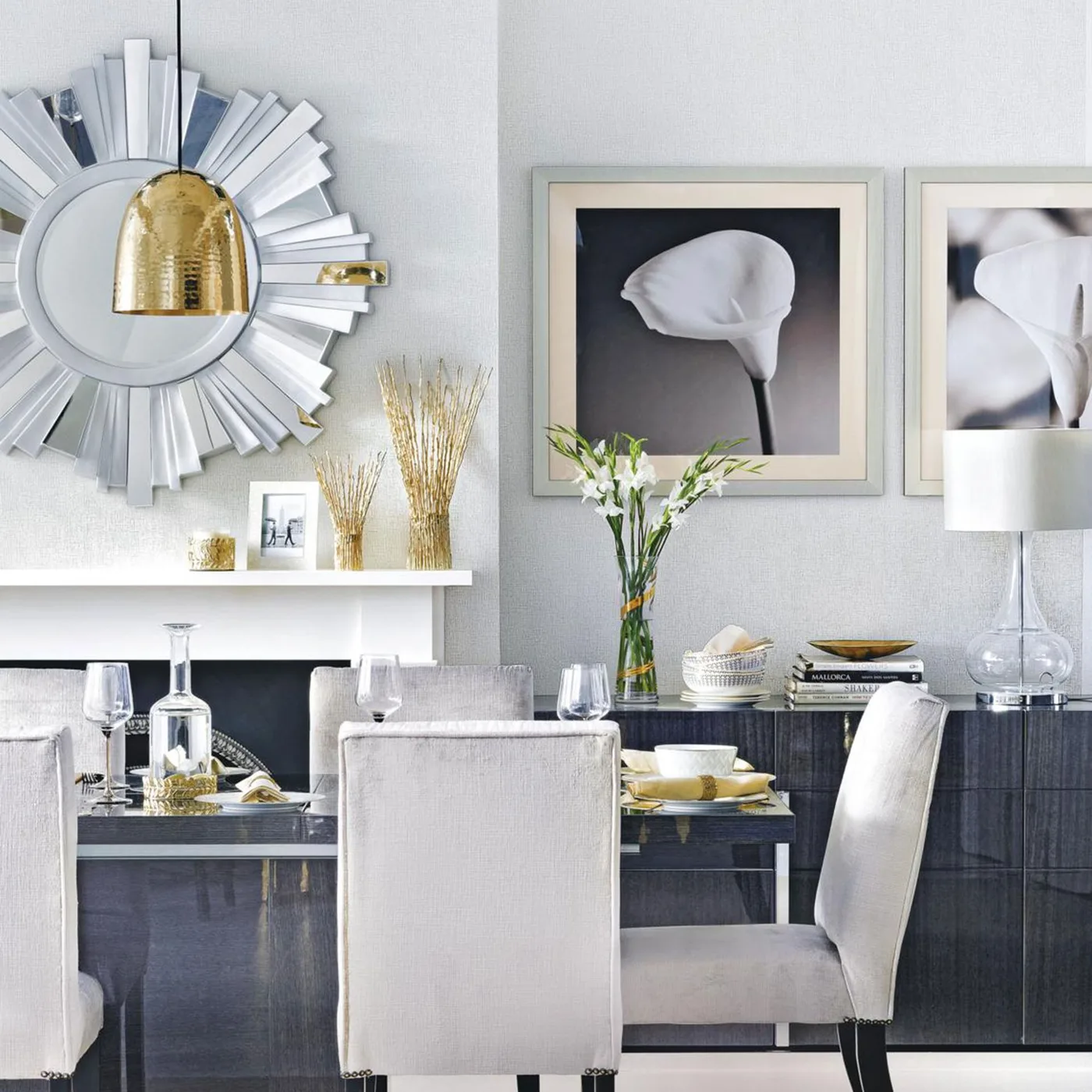
A gold-toned dome hangs in front of a silver sunburst mirror above a dark dining table. Pale upholstered chairs soften the darker surface, while black and white floral pictures repeat the room’s restrained palette. The pendant gives the table a warm metallic accent, but the mirror behind it makes the relationship between the fixture, wall and seated viewpoint particularly noticeable.
Look at a pendant and nearby mirror together from each chair before settling on the hanging position. Reflections can make one bright light seem more prominent, especially during an evening meal. Adjust the arrangement so the mirror does not return an uncomfortable view of the bulb. Keep table decoration simple when the wall already has several large pieces, and choose appropriate lighting controls for the fixture.
IDEA 09 / 20
Give a Pair of Metal Shades Room to Breathe
 SaveSupport Non AI Creator
Image credit: Future PLC/Dominic Blackmore
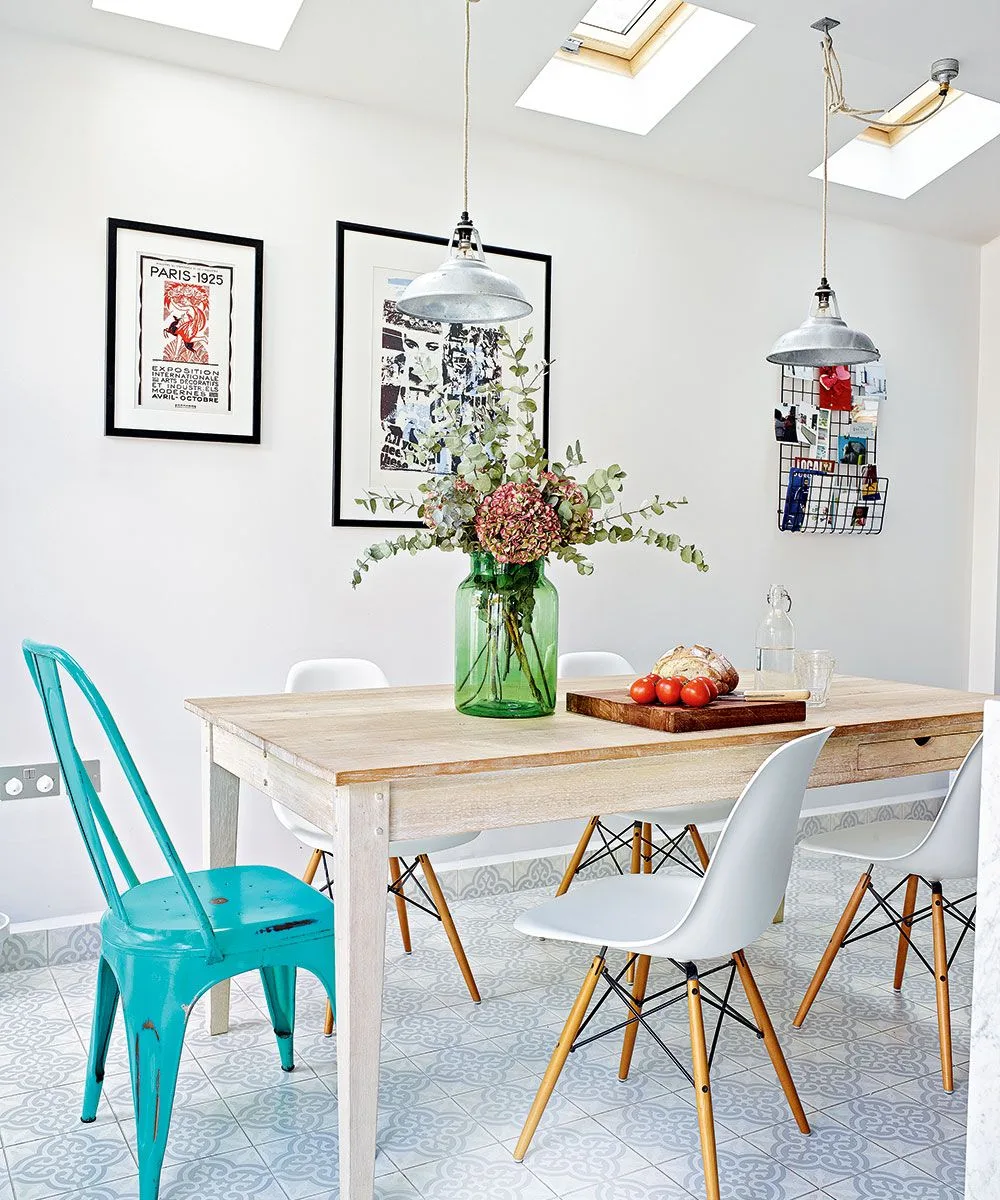
Two pale metal shades hang above a wood table beneath skylights, with white chairs and one turquoise chair bringing a relaxed mix below. Dark framed prints give the wall structure, while the pendant cords create a separate line overhead. The matching shades keep the table recognizable as a dining area even in a bright room where daylight enters from several directions.
Review the arrangement after sunset as well as in daylight. Skylights can make a table look well lit during the day without revealing whether the pendants work comfortably for dinner. Keep both shades aligned with the table rather than the skylight openings. If the chosen fittings are adjustable, follow their instructions and check the range before installation; the photograph alone does not establish how a mechanism operates.
IDEA 10 / 20
Separate Dining Lights From Island Lights
 SaveSupport Non AI Creator
Image credit: Future PLC/David Merewether
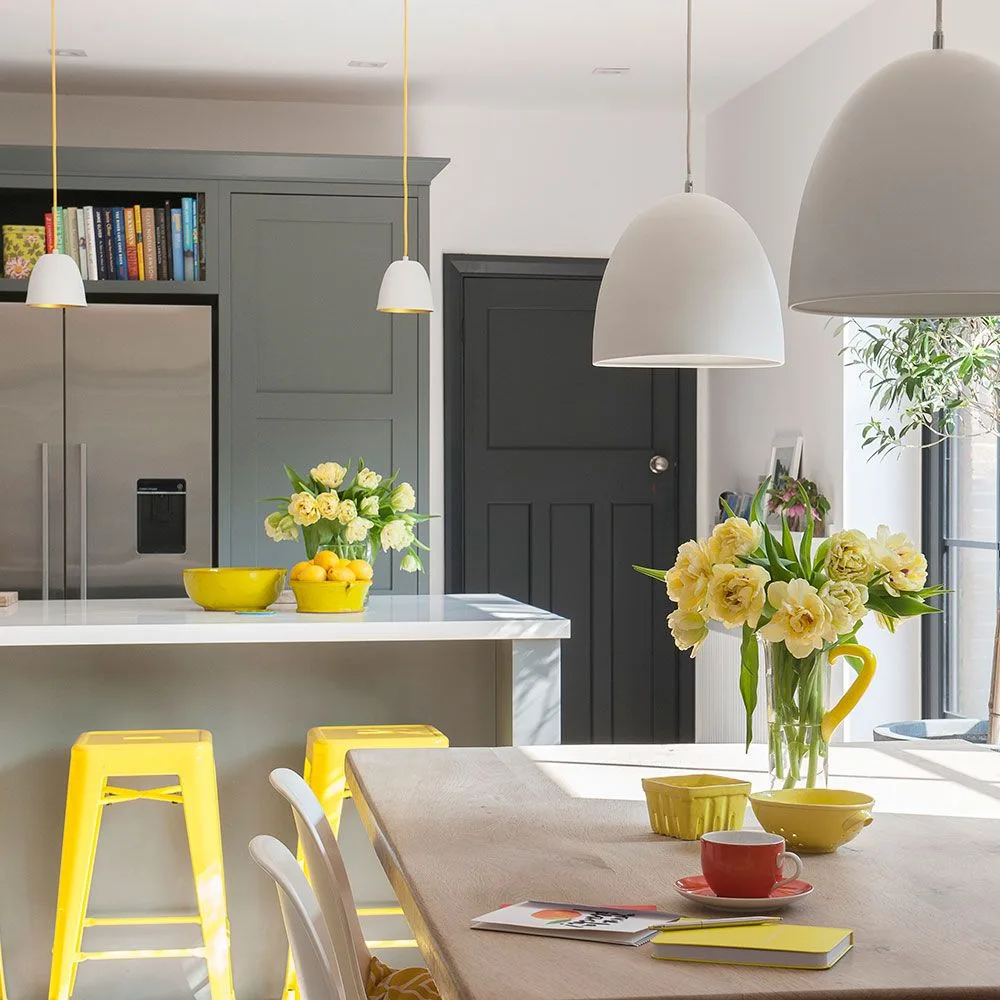
Large white domes hang over the dining table in the foreground, while smaller white lights sit above the kitchen island behind. Yellow stools and flowers connect the two areas through color, but the change in pendant scale helps distinguish eating at the table from working at the counter. The shared white finish keeps the kitchen and dining arrangement visually related without using identical sizes everywhere.
Plan the dining and island fixtures as separate groups around the activities below them. A larger shade can suit the table while a smaller fitting leaves more room around the counter, but check both from the same doorway to avoid a crowded ceiling. Separate controls make it easier to adjust each area during meals. Keep the dining pendants clear of chair movement and the route between table and kitchen.
PART 03
Connect the Table to Its Room
IDEA 11 / 20
Anchor a Patterned Corner With One Shade
 SaveSupport Non AI Creator
Image credit: Future PLC/Simon Whitmore
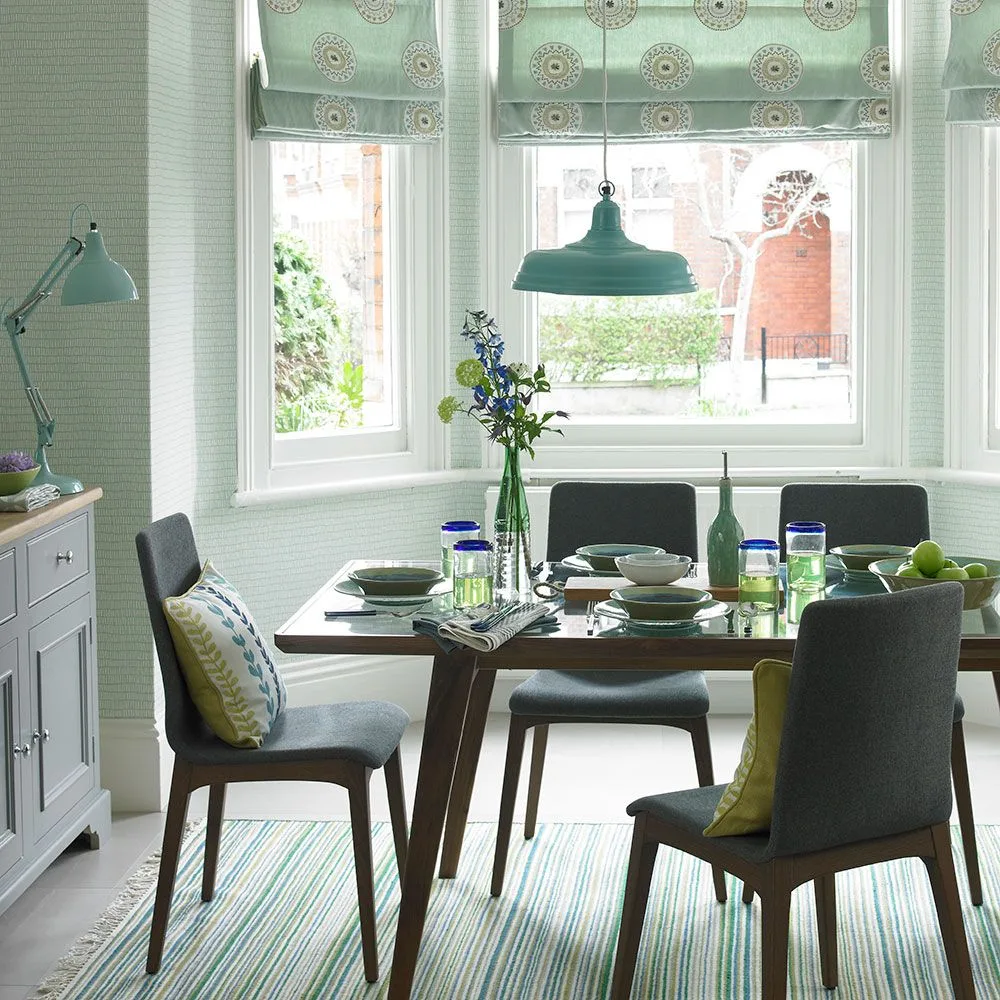
One green shade anchors a dining corner filled with green wallcovering, patterned blinds and a striped rug. Gray upholstered chairs give the table a calmer border, while green glassware repeats the pendant color at meal level. The light has a simple, solid outline, helping it stay recognizable against the detailed windows rather than adding another intricate pattern above the dining group.
When a dining corner already contains several patterns, test the pendant against the background from a seated position. A plain shade can create a clearer center than a highly detailed fitting. Check that it leaves enough room above the table centerpiece and does not block the window view. Use the table’s position to guide the ceiling drop, particularly where the room’s corner and window arrangement are not symmetrical.
IDEA 12 / 20
Connect Adjacent Rooms With Matching Finishes
 SaveSupport Non AI Creator
Image credit: Future PLC/Serena Fokschaner
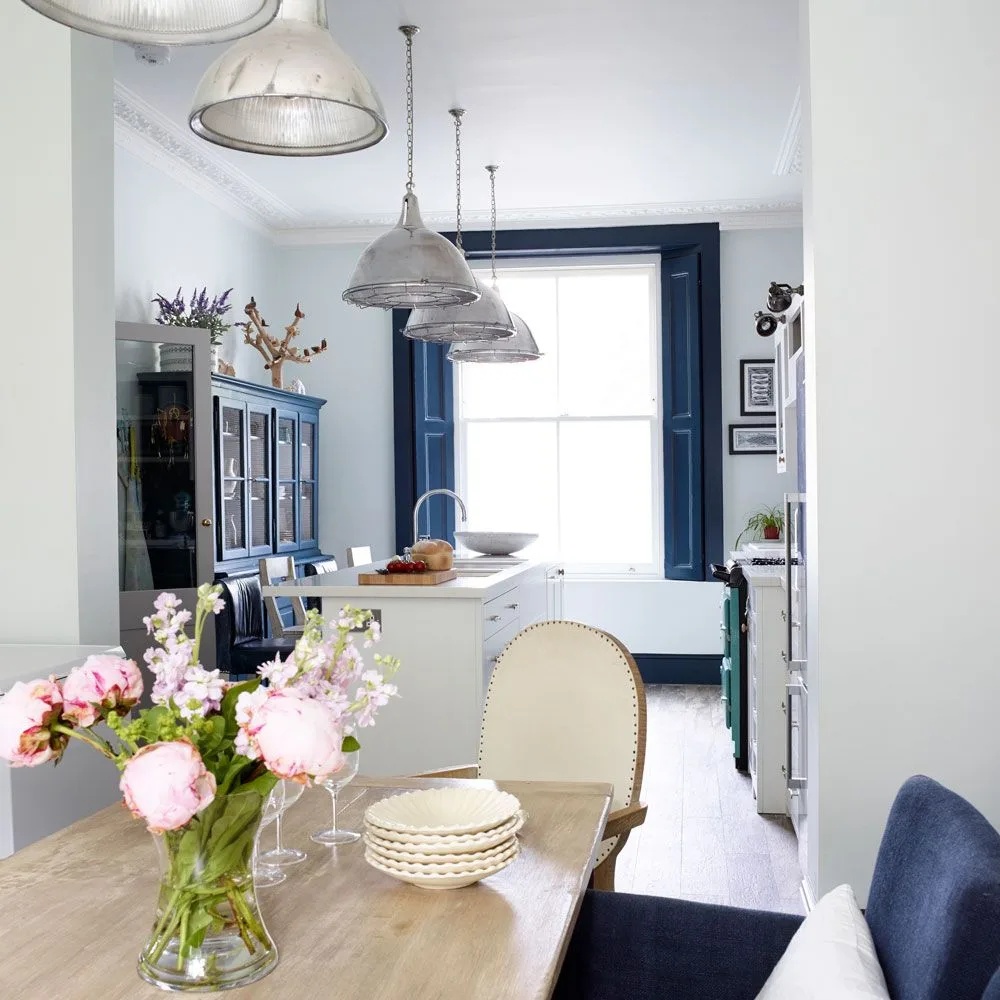
A metal shade hangs above the wood dining table, with more metal pendants visible through the opening into the kitchen. Blue window trim and cabinetry supply a shared background color, while the repeated light finish links the two spaces overhead. The foreground table still feels like a separate dining area because its pendant belongs to the table rather than to the distant kitchen counter.
Use a repeated finish when adjacent spaces are seen together, but decide each fixture’s position from the furniture beneath it. Matching lights do not need identical drop lengths across rooms with different tasks. Check the view through the opening so shades do not overlap awkwardly. Keep the dining centerpiece low enough for conversation, and leave a convenient route for carrying dishes from the kitchen to either side of the table.
IDEA 13 / 20
Make a Cluster Fit Within the Table Footprint
 SaveSupport Non AI Creator
Image credit: Future PLC/Colin Poole
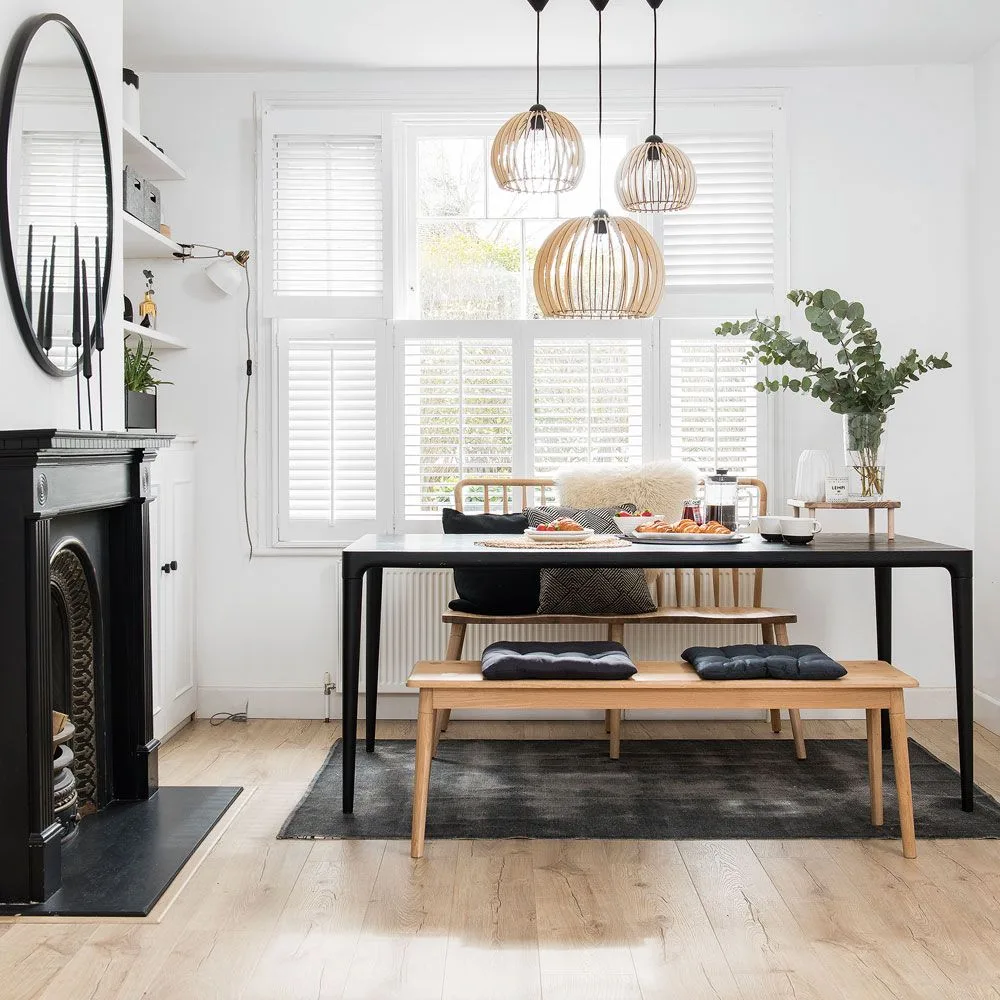
Three open rounded pendants form a loose cluster above a dark rectangular table. Wood benches, white shutters and a black fireplace give the room a clear mix of warm and dark details. The open shades remain visually light against the bright window, while their grouped placement makes the dining area feel centered without repeating a rigid row across the full table length.
Check the outer edge of a cluster against the usable table area before installation. A fitting that spreads beyond the tabletop can interfere with standing or bench access, even when its shades look light. Test the lowest point from both seated and standing positions. Keep the tabletop arrangement compact beneath the cluster, and leave the bench ends clear so people can slide into place without walking around extra furniture.
IDEA 14 / 20
Keep a Drop Cluster Above the Serving Area
 SaveSupport Non AI Creator
Image credit: David Giles
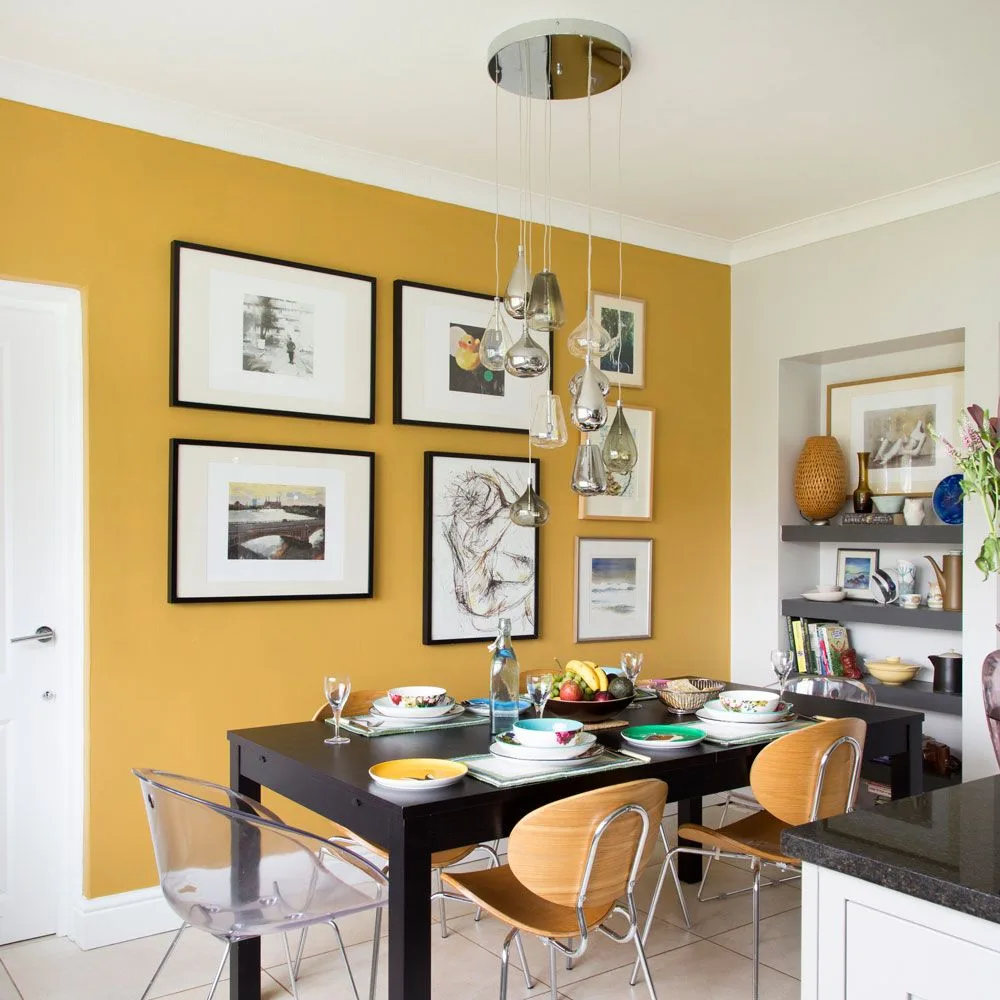
Small reflective drops hang together over a dark dining table in front of a mustard gallery wall. Their varied heights add movement, while the photographs behind remain the room’s main block of decoration. Wood chairs and one clear chair bring several textures below, showing how a hanging cluster can belong in a colorful eating area without requiring the rest of the furniture to match.
Arrange the cluster so the lowest drops stay clear of serving and conversation. A decorative grouping can look attractive from across the room yet become intrusive when someone reaches for a shared dish. Check the reflections from the shades at night, particularly near a colorful wall. Keep taller tabletop objects away from the hanging pieces, and choose a fitting whose individual surfaces can be cleaned without a difficult routine.
IDEA 15 / 20
Repeat Table Color in a Simple Drum Shade
 SaveSupport Non AI Creator
Image credit: Mark Scott
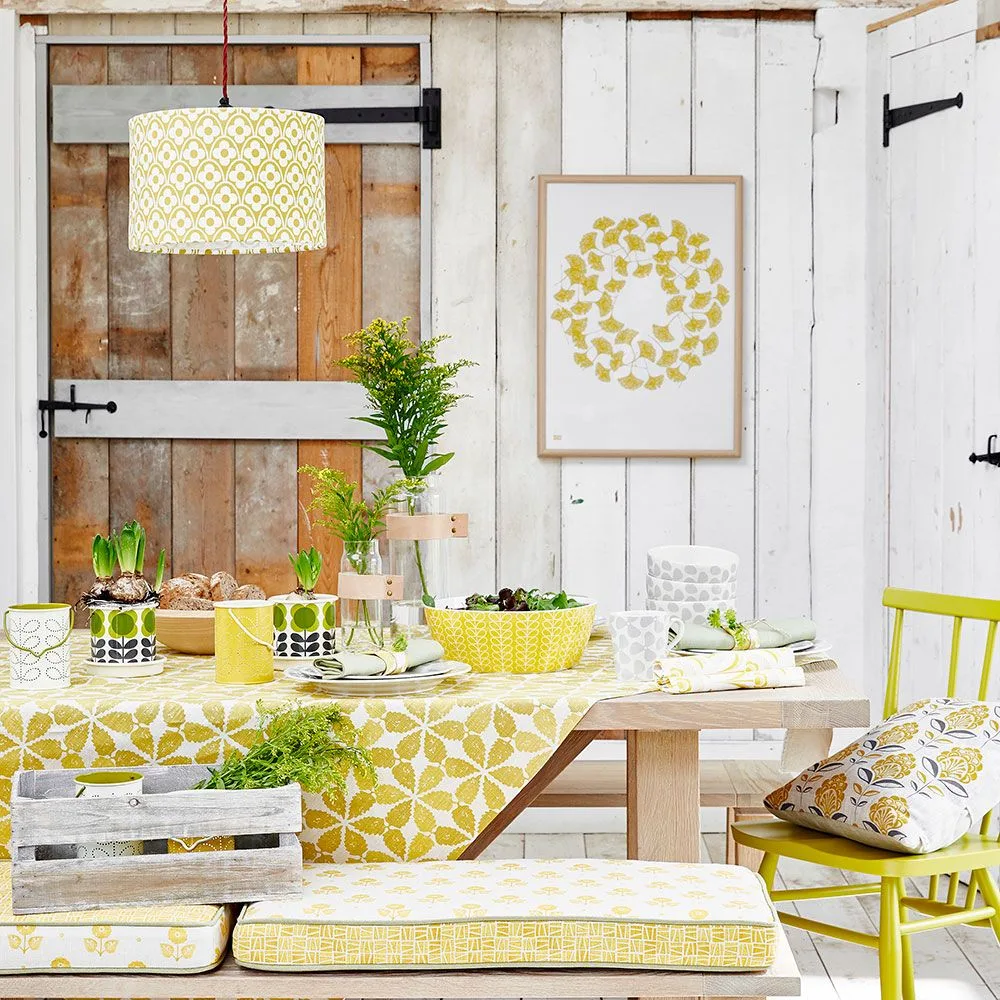
A yellow-green patterned drum hangs above a pale wood table in a room with white wall boards and a rustic door. The pendant repeats colors found in the table covering, cups and chair cushions, gathering the lively dining arrangement into one palette. Its straightforward shape provides a quieter outline than the many small patterns below, keeping the upper part of the room easy to read.
Repeat a color rather than every pattern when choosing a shade for an already busy table. Check whether the drum’s underside leaves the bulb visible from the chairs, and select the fitting accordingly. A tabletop covering changes the amount of reflected light, so try the lamp with the coverings you normally use. Keep the hanging shade well clear of tall foliage and leave space to move serving dishes underneath.
PART 04
Match the Seating and Table Shape
IDEA 16 / 20
Center a Drum Over a Bench-and-Chair Layout
 SaveSupport Non AI Creator
Image credit: Future PLC
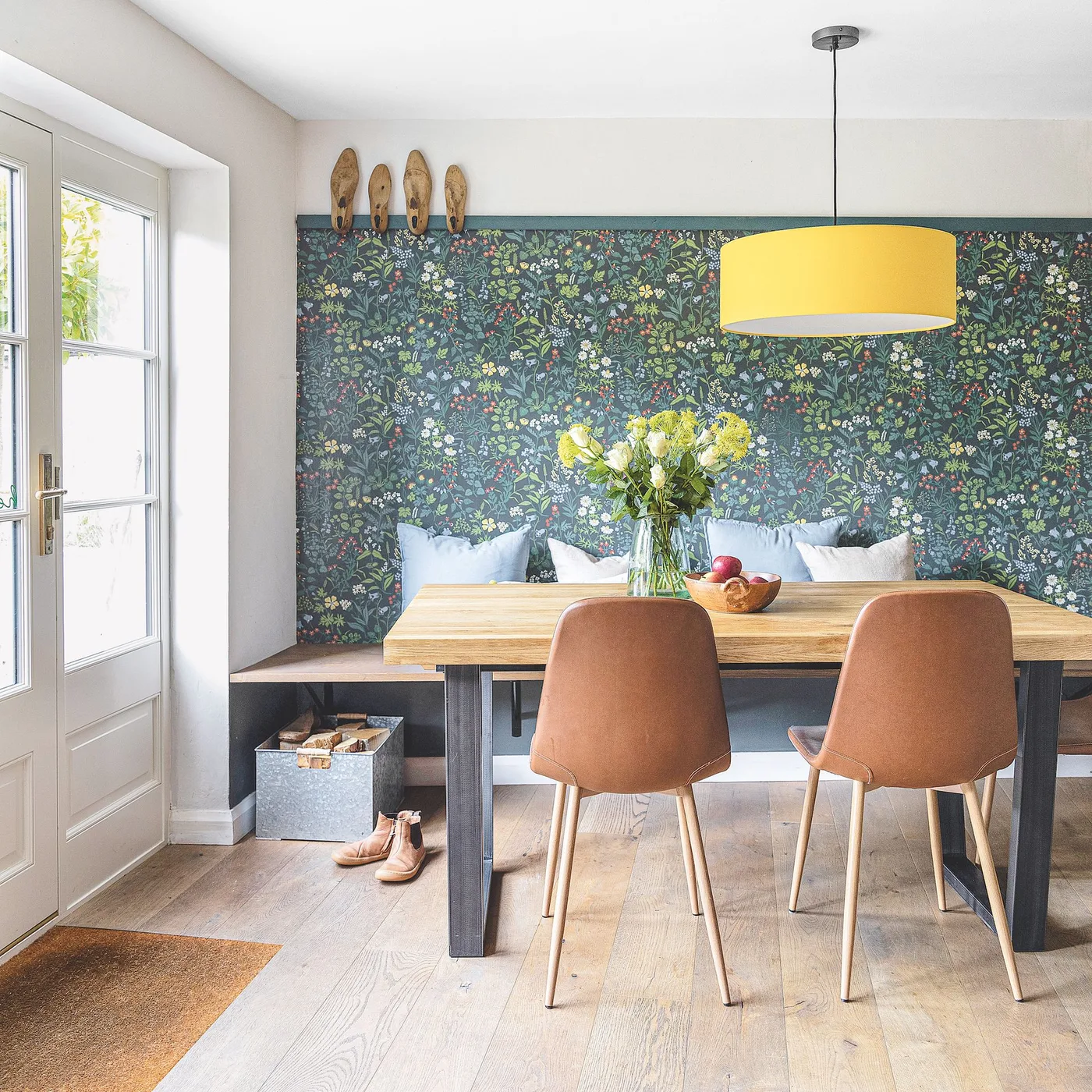
A yellow drum hangs over a wood table placed in front of a built-in bench and floral wallcovering. Two tan chairs face the bench, while pale cushions make the back seating comfortable and visually lighter. The shade supplies one strong, uncomplicated color above the table, giving the patterned dining nook a clear focus without covering the wall with another decorative object.
Center the light around the tabletop, accounting for the bench that fixes one side of the seating arrangement. The room’s midpoint may sit elsewhere, particularly in a narrow nook beside a door. Check chair pull-out space before choosing the final table position. Keep a broad shade high enough to preserve conversation across the table, and consider how its color looks with the wallpaper under the intended bulbs.
IDEA 17 / 20
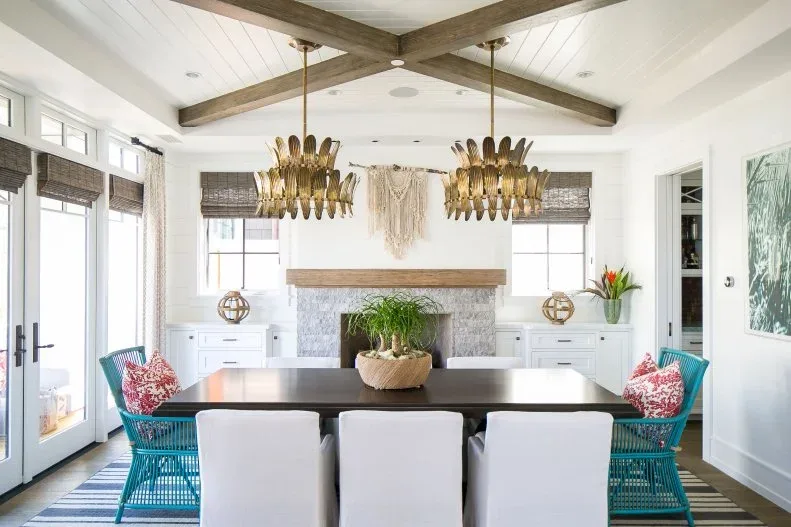
Pair Two Fixtures Beneath a Beamed Ceiling
 SaveSupport Non AI Creator
Image credit: Photo: Ryan Garvin. From: Blackband Design
Two gold-toned sculptural lights sit above a long dark table under a white ceiling crossed by wood beams. White side chairs keep the center restrained, while turquoise end chairs define the table’s length. The paired lights repeat the dining group’s symmetry without following the full beam pattern, giving the furniture below its own recognizable arrangement within the larger room.
Use the table and chairs to guide paired fixture spacing beneath a beamed ceiling. Do not assume that a visually convenient beam location provides the appropriate mounting support; have the installation checked for the chosen fittings. Compare both lights from the end chairs so they feel balanced along the table. Keep the centerpiece low, letting the sculptural shades provide the main decoration above the meal.
IDEA 18 / 20
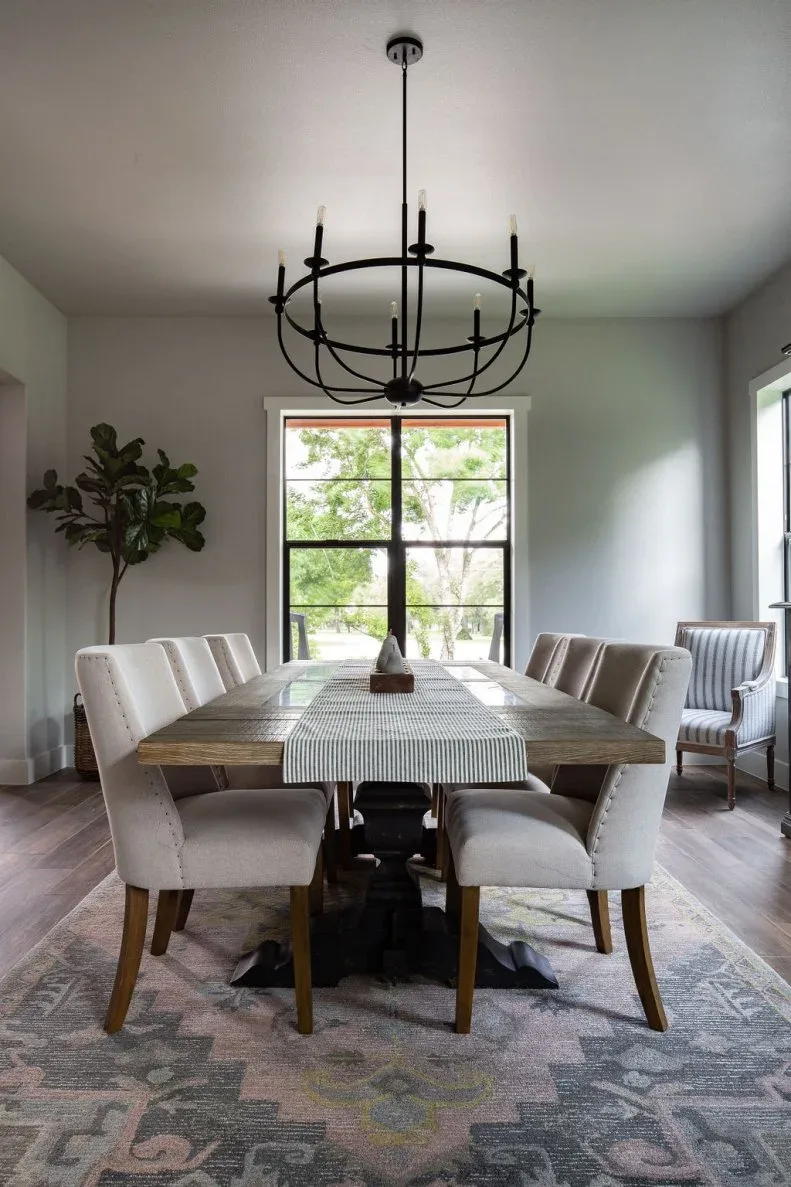
Give a Long Table One Open Circular Fixture
 SaveSupport Non AI Creator
Image credit: Photo: Grace Laird Photography. From: Ashley Moore
An open black circular chandelier sits above a long wood table with pale upholstered chairs. Its thin rings contrast with the substantial tabletop, while a striped runner leads the eye down the center below. The room’s gray walls and patterned rug stay comparatively quiet, allowing the light’s dark outline to mark the dining area without needing several separate ceiling drops.
One circular fitting can work over a rectangle when its spread suits the central dining group. Check how much of the table receives comfortable light, especially the end seats, rather than relying on the fixture outline alone. Keep the chandelier within the table’s footprint and review exposed bulbs from seated eye level. A restrained runner and low centerpiece leave the open shape easy to appreciate during meals.
IDEA 19 / 20
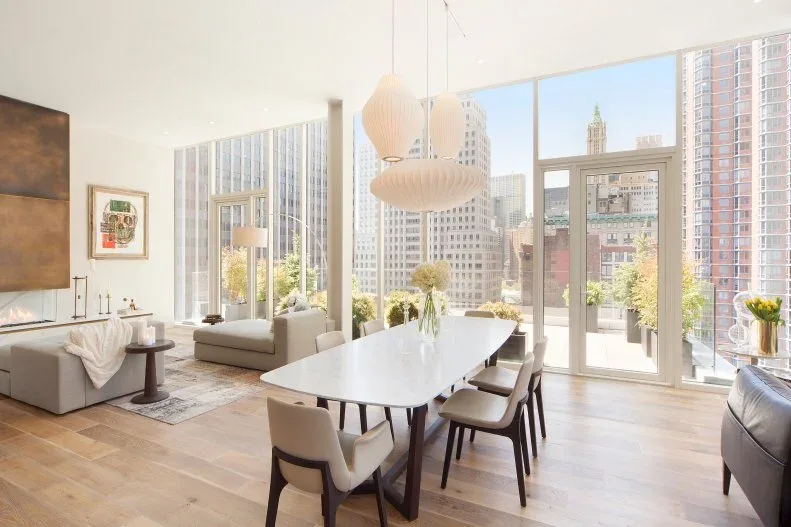
Cluster Pale Pendants Over an Open-Plan Table
 SaveSupport Non AI Creator
Image credit: Photo: Anne Ruthman. From: B Interior
Pale rounded pendants gather above a white dining table beside tall windows in an open living area. The chairs give the table a dark border, while the soft-looking shade forms keep the ceiling detail light. A nearby sofa shares the same room, but the hanging cluster helps identify the dining zone without adding a partition or interrupting the broad window view.
Position a pendant cluster over the table before judging it against the rest of an open room. It should define the dining group without spreading into the sofa area or the route to the windows. Check the shades against the view from the living seats as well as the dining chairs. Compare their evening brightness together, and choose a practical cleaning method for the selected shade material.
IDEA 20 / 20
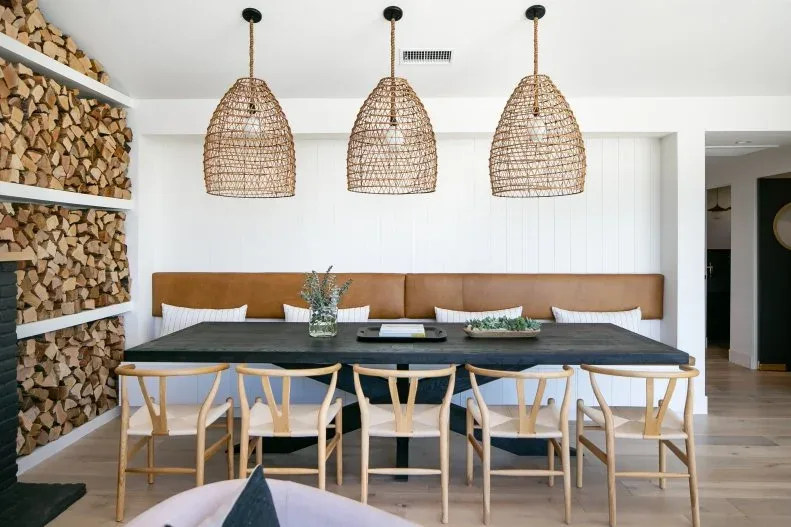
Align Three Woven Shades With a Bench
 SaveSupport Non AI Creator
Image credit: Photo: Ryan Garvin. From: sKout
Three woven shades form an even row over a dark dining table backed by a brown bench. Pale wood chairs create a lighter front edge, while stacked firewood fills shelves at the side. The repeated shades echo the long seating arrangement, giving the dining wall a steady rhythm without requiring a large picture or a complicated arrangement of table accessories beneath them.
Plan a row of three around the table length and the positions people use most often. Keep the outer shades within the dining footprint, and check that the bench seats receive useful light rather than sitting in shadow behind it. Woven shades can create patterned light, so assess that effect before committing. Follow the fixture instructions for cleaning and bulb selection, especially where several shades collect dust overhead.
BRING IT ALL TOGETHER
Try the Arrangement From Every Chair
Put the table where it will normally stay, pull out the chairs and mark the proposed fixture position before arranging installation. Check the lowest point while seated, standing and reaching across to serve. A light should belong to the dining group while leaving the routes around it comfortable.
Test the intended bulbs and controls after dark. Look for glare through clear shades, reflections in nearby mirrors and uneven light at the table ends. Use the fitting instructions for mounting, bulb compatibility and cleaning, and have electrical work handled appropriately for the fixture and location.