A chandelier can give the dining table a clear place in the room, but its shape is only part of the decision. Consider how it looks from the doorway, whether people can see one another beneath it, and how its bulbs appear from a seated position. A fitting that looks beautiful in daylight still needs to work during an ordinary evening meal.
The rooms below show compact and expansive forms, open frames, small shades, clear globes, and decorative hanging details. Use the visible relationships between the light, table, ceiling, and surrounding furniture as inspiration. Before installation, check the actual fitting’s weight, electrical requirements, mounting instructions, and access for cleaning with a qualified installer. A photograph cannot establish those details for your room.
PART 01
Choose a Shape That Suits the Setting
IDEA 01 / 20
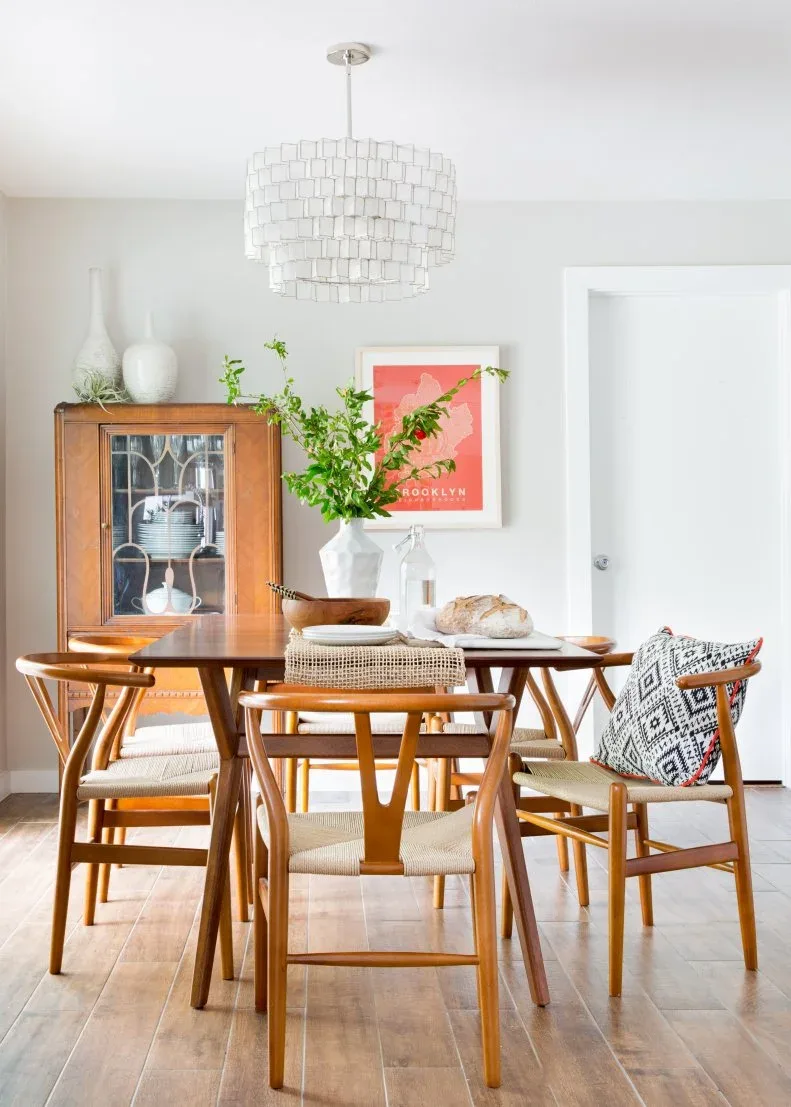
Repeat Small Shapes in a Compact Tiered Fitting
 SaveSupport Non AI Creator
Image credit: Photo: Molly Culver Photography. From: Becca Stephens Interiors
Repeated pale rectangular pieces give this chandelier a tiered outline above the wooden table. Its lighter color relates to the walls, while the regular small shapes contrast with the chairs’ curved wooden frames. The glazed cabinet provides another detailed surface in the background. The fitting adds decoration at ceiling level without introducing a strong new color into the compact dining arrangement.
Compare the fitting’s full width and depth with the table rather than relying on a small product photograph. Repeated pieces create extra edges where dust can settle, so ask how they are cleaned and whether any parts are removable. Check the view across the table from seated positions before setting the hanging height, and follow the maker’s installation instructions.
IDEA 02 / 20
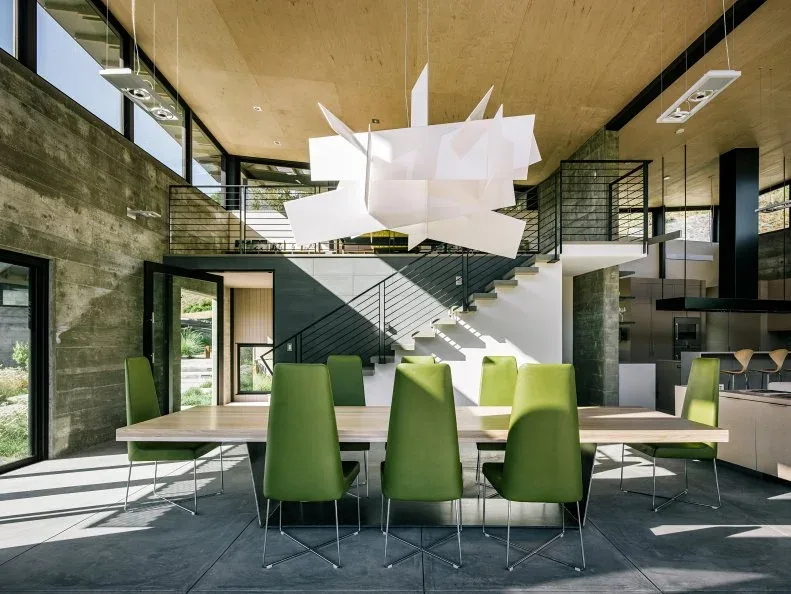
Use an Angular Sculpture Above a Long Table
 SaveSupport Non AI Creator
Image credit: Photo: Joe Fletcher Photography. From: Feldman Architecture
Broad white angular elements form a suspended sculpture above the long dining table. Their irregular outline stands apart from the room’s straight ceiling edges, stair rails, and window frames. Green chairs repeat a stronger color below, while the fitting remains pale against the warm ceiling. Its substantial spread makes it part of the overall room view, not simply a small object over the tabletop.
An expansive fitting needs checking from several viewpoints, including the stairs and adjoining rooms. Confirm the full drop and width, then test whether its lowest and outermost parts interfere with movement or sightlines. Ask the installer to verify the mounting requirements for the actual model. Plan a safe way to reach all its surfaces for cleaning before choosing a complex shape.
IDEA 03 / 20
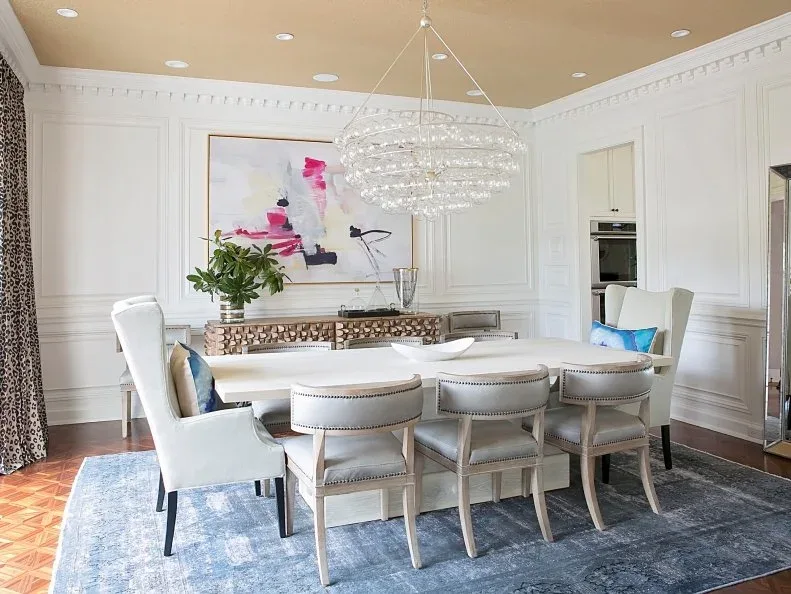
Let a Broad Clear Fitting Echo a Pale Table
 SaveSupport Non AI Creator
Image credit: Photo: Paige Rumore Photography. From: Lori Paranjape
A broad clear fitting hangs over the pale dining table, its repeated tiers forming a rounded outline. White paneling and light upholstery create a related background, while the blue rug and colorful artwork provide stronger accents elsewhere. The suspended details remain visible against both the pale walls and warmer ceiling. The arrangement puts a substantial decorative shape above the seating without adding another solid block of color.
Clear components can show dust and reflections readily, so check the cleaning method before deciding on an elaborate design. Consider the light when it is switched on as well as its daytime appearance. Exposed lamps may cause glare from a seated position. Use bulbs and controls approved for the fitting, and discuss dimming compatibility with the installer rather than assuming any combination will work.
IDEA 04 / 20
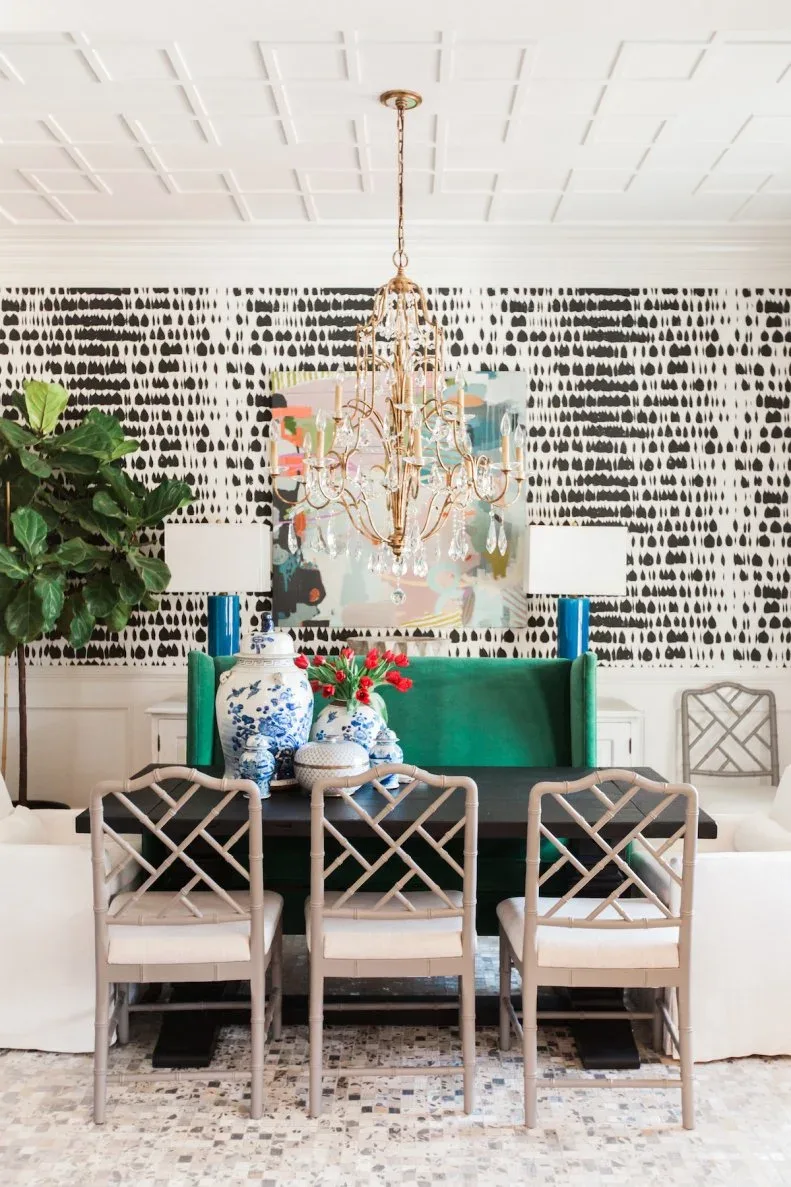
Set a Curving Chandelier Against Graphic Wallpaper
 SaveSupport Non AI Creator
Image credit: Photo: Catherine Truman. From: Kendall Simmons
Curving gold-toned arms and clear hanging drops stand out against the black patterned wallpaper. A green bench adds a broad patch of color behind the dark table, while pale lattice-back chairs repeat more open lines below. The chandelier’s narrow arms allow portions of the wall pattern to remain visible through it. Its warmer finish gives the dining group a distinct accent against the graphic background.
When the wall pattern is already busy, compare the chandelier silhouette against it before purchasing. Open arms may remain clearer than a dense shade, but decorative drops still add visual detail. Keep tall centerpieces from obscuring conversation beneath the fitting. Check how the drops attach and how they can be cleaned safely without pulling on the arms or electrical connections.
IDEA 05 / 20
Choose a Rounded Cluster Above a Round Table
 SaveSupport Non AI Creator
Image credit: Photo: Jeff Herr. From: Terracotta Design Build
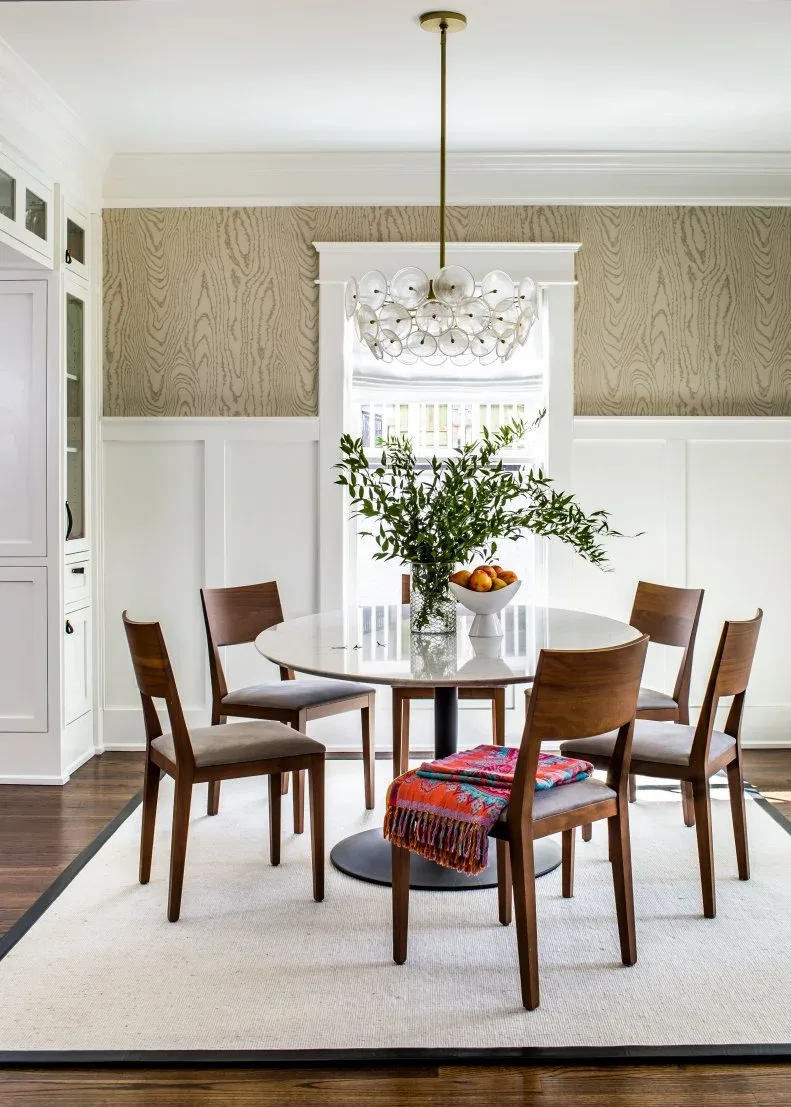
Clear circular elements gather around the fitting’s center, creating a rounded cluster above the round dining table. A narrow gold-toned stem connects it with the ceiling while leaving the surrounding wall visible. Wooden chairs add warmer outlines beneath the pale tabletop. The light repeats the table’s general shape without matching its surface, and the patterned wall gives the clear details a contrasting background.
A round table does not require a perfectly round fitting, but related shapes can make placement easier to assess. Check the light from each seat because clear elements can reflect bulbs differently around the table. Confirm that the stem or suspension allows the needed drop. Ask about access to the lamps and cleaning between the closely spaced circular components before ordering.
PART 02
Use Open Frames and Curving Arms
IDEA 06 / 20
Keep a Dark Curving Frame Visually Open
 SaveSupport Non AI Creator
Image credit: Photo: Scott Carlisle. From: Christopher Architecture and Interiors
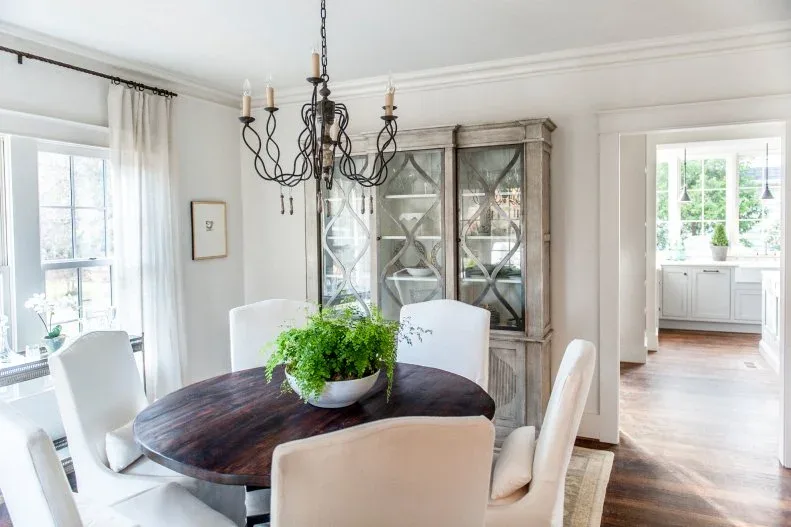
A dark chandelier draws a series of curves above the round wooden table. The open frame leaves the windows and glazed cabinet visible behind its arms, while candle-shaped lamps add small pale points at the edges. Light upholstered chairs contrast with both the fitting and the tabletop. The repeated dark tones connect the upper and lower parts of the dining group without filling the space between them.
Open frames can reveal the bulbs from several seats, so consider glare when choosing compatible lamps. Test how the dark outline looks against both daylight and evening backgrounds. Check that the fixture’s arms remain within a comfortable area over the table. A simple-looking frame still needs proper ceiling support and safe access for lamp changes; verify those practical details before installation.
IDEA 07 / 20
Add Small Dark Shades to Curved Arms
 SaveSupport Non AI Creator
Image credit: Photo: Elisabeth Witt. From: Amy Carman Design
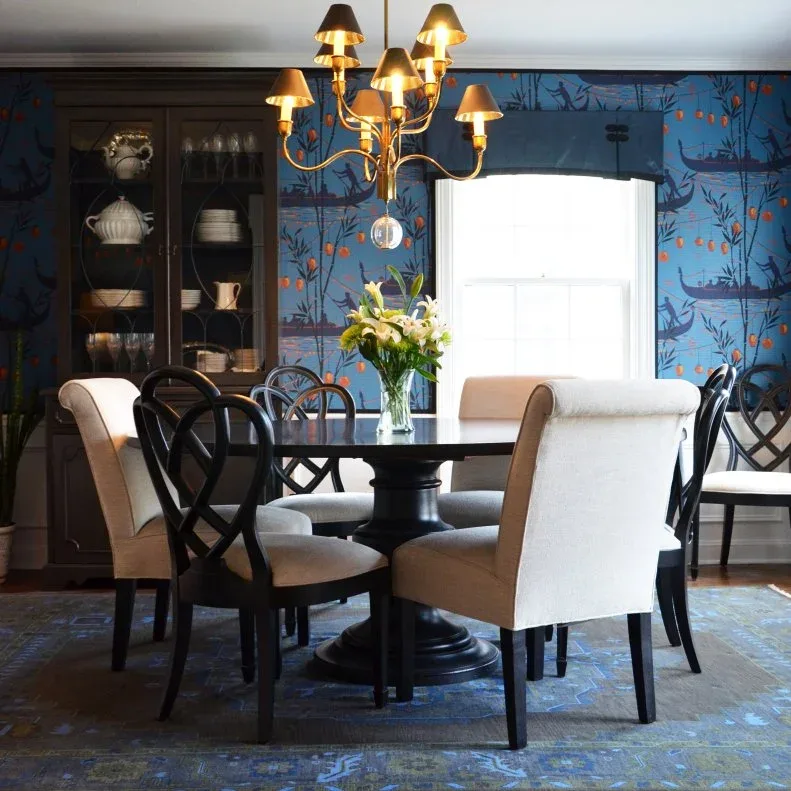
Small dark shades cap the chandelier’s curved gold-toned arms. Their repeated outlines connect with the dark table and cabinet, while the warmer frame remains visible against the blue wallpaper. A clear sphere hangs beneath the central stem, adding a separate decorative detail. Pale end chairs keep the seating from becoming entirely dark and allow the light’s smaller shaded elements to remain distinct in the room.
Small shades influence how light spreads and how much of the lamp is visible, so inspect the fitting while illuminated if possible. Confirm the approved bulb type and any limits stated by the manufacturer. Allow room to remove each shade for maintenance without disturbing nearby arms. Choose a hanging position that preserves conversation and keeps the lower ornament clear of normal table use.
IDEA 08 / 20
Use a Dark Ring Above a Wooden Table
 SaveSupport Non AI Creator
Image credit: Photo: Grace Laird Photography. From: Ashley Moore
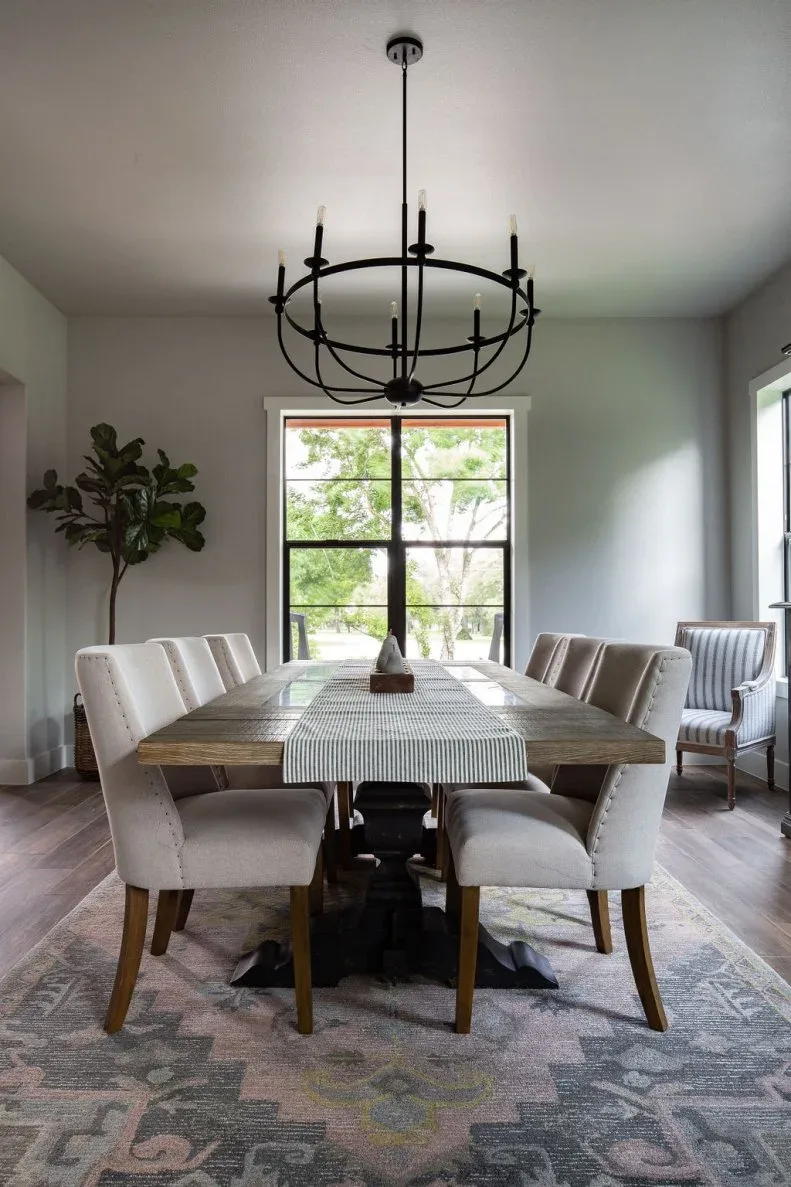
A black ring surrounds the upright lamps above the wooden table. Curved supports beneath it make the fitting more three-dimensional than a flat hoop, while the open center keeps it relatively transparent in the room view. The dark window frame repeats its color behind the pale chairs. A striped runner adds detail below without matching the chandelier’s strong circular outline or competing with its height.
Look at a ring fitting from the side as well as underneath; its supports and lamp holders may add more depth than expected. Check glare from the seats and confirm compatible lamps before buying. Keep the hanging height useful for meals and table clearing. Dust the ring and supports according to the maker’s instructions, using safe access with the power isolated as appropriate.
IDEA 09 / 20
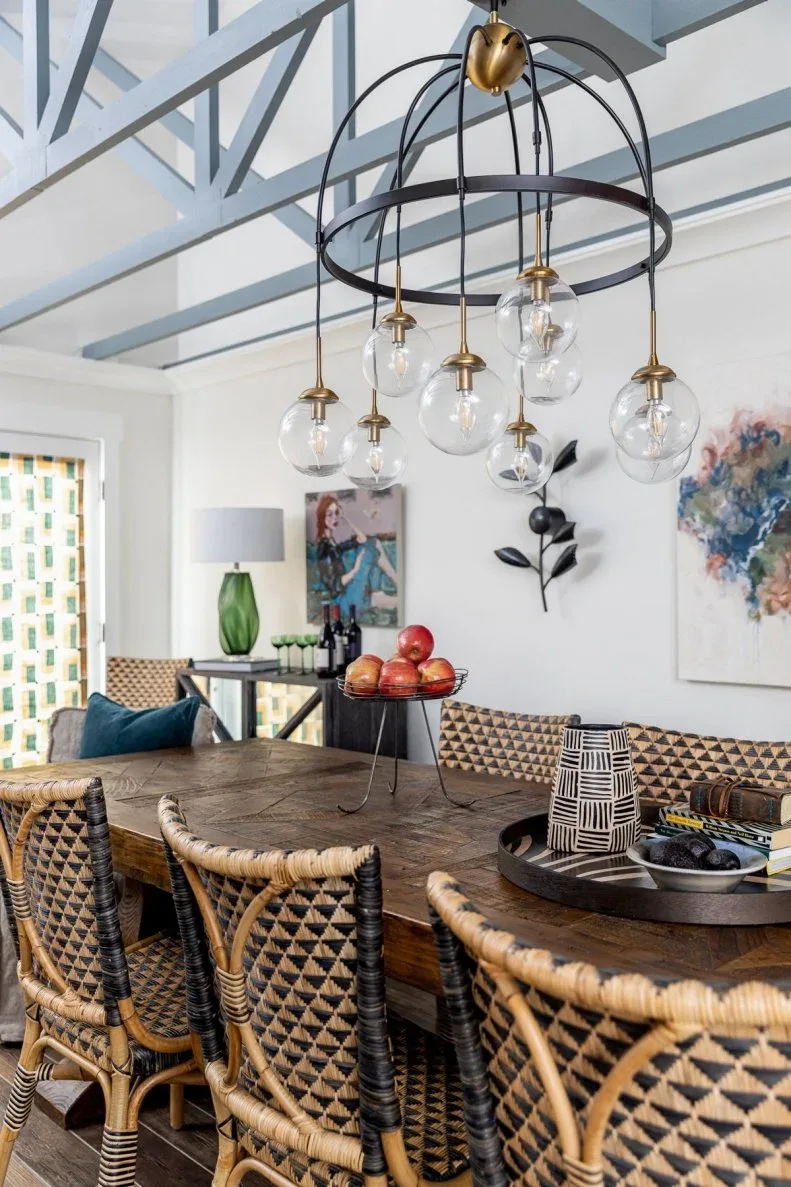
Suspend Clear Globes Within an Open Cage
 SaveSupport Non AI Creator
Image credit: Photo: Riegler Photography. From: Cheryl Kees Clendenon
Clear globes hang at different levels inside the dark open cage. Gold-toned fittings add small warmer accents, while blue ceiling beams create another framework above. The dining chairs bring pattern and woven texture below the light. Because the cage is open, its outlines remain distinct without becoming a solid shade that hides the beams or the wall decorations visible beyond the table.
A cage with suspended globes has several surfaces and connection points to maintain. Ask how the globes are removed, supported, and cleaned, and whether replacement parts are available. Check the lowest globe as well as the main frame when measuring the drop. Compare the fitting’s width with the table so its outer edges do not extend into a frequently used route.
IDEA 10 / 20
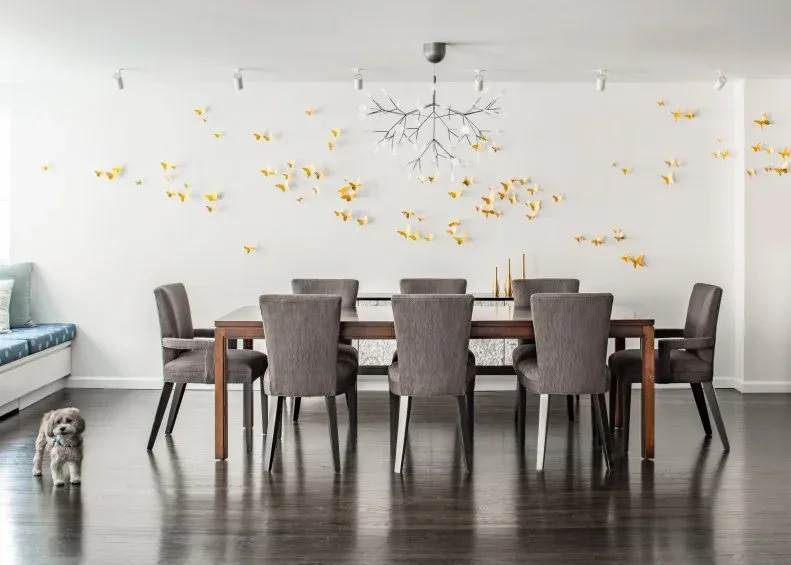
Keep a Branching Frame Light Against a Decorated Wall
 SaveSupport Non AI Creator
Image credit: Photo: Sean Litchfield. From: James Wagman Architect
Thin branching lines form the chandelier above the long table. Its sparse dark outline remains visible against the pale wall without covering much of the scattered yellow butterfly decoration. Gray chairs and darker flooring provide quieter areas below. Separate ceiling track lights also appear in the room, showing that the central decorative fitting is part of a wider arrangement rather than the only visible lighting feature.
A fine branching fitting should be inspected for exposed lamps and projections before selecting its position. Check the table view from both ends and avoid placing the outer branches where people regularly pass. If other ceiling lights are present, discuss how the controls can work together. Plan cleaning around delicate arms so dusting does not bend or stress the frame.
PART 03
Add Hanging Detail Without Losing the Table
IDEA 11 / 20
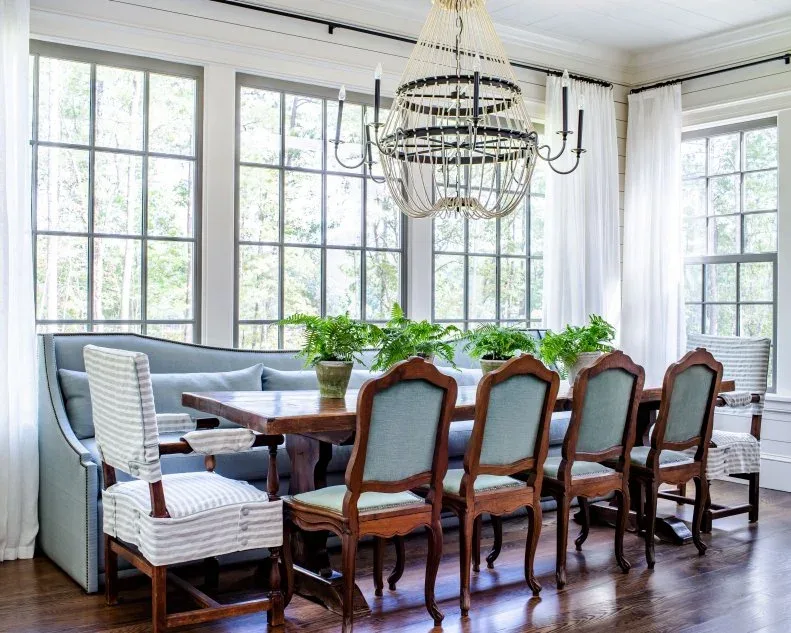
Mix Beaded Curves with Candle-Style Arms
 SaveSupport Non AI Creator
Image credit: Photo: Ashley Gilbreath. From: Ashley Gilbreath
Pale bead strands drape between the chandelier’s dark circular tiers, with candle-style arms extending outward. The combination creates a broad layered silhouette above the wooden table. A blue bench and varied upholstered chairs add softer color beneath it. Bright windows keep the individual strands visible, while the fitting’s darker framework separates its shape from the surrounding pale walls and curtains around the dining space.
Measure the outer arms and the longest bead strands when assessing the fitting’s size. A decorative light can occupy more space than its central frame suggests. Ask about the bead material and cleaning method instead of assuming it is suitable for a particular product. Check the fixture’s weight and mounting requirements with the installer, and allow safe access for dusting each tier.
IDEA 12 / 20
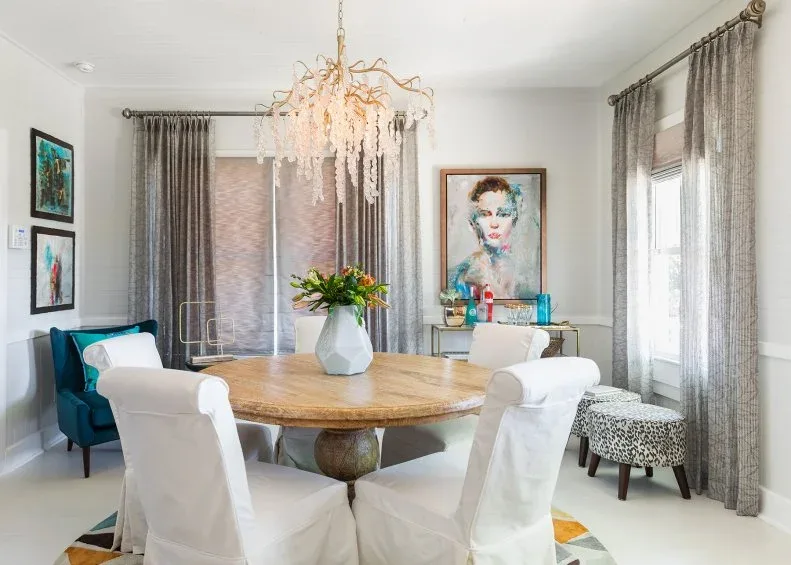
Choose Cascading Detail Above a Simple Round Table
 SaveSupport Non AI Creator
Image credit: Photo: Greg Riegler Photography. From: Cheryl Kees Clendenon
Pale hanging details cascade from the pale gold-toned frame above the round wooden table. The fitting’s decorative edge contrasts with the table’s comparatively simple surface and the white chair coverings. Gray curtains provide a restrained background, while a blue chair adds a smaller color accent at one side. The light brings much of the arrangement’s intricate detail overhead instead of spreading it across the tabletop.
Cascading components need a workable cleaning routine, particularly where strands overlap. Ask which parts can be removed and how the manufacturer recommends handling them. Check the lowest detail from seated and standing positions before fixing the drop. A simpler centerpiece can leave more visual space beneath this kind of fitting, while compatible dimming may help control brightness during different uses of the table.
IDEA 13 / 20
Coordinate a Chandelier with Wall Lights
 SaveSupport Non AI Creator
Image credit: Photo: Julie Soefer Photography. From: Marie Flanigan Interiors
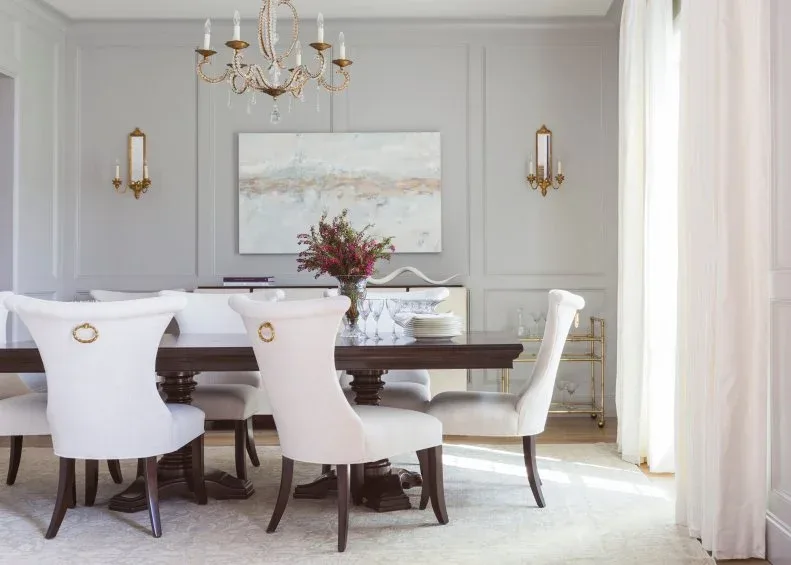
A small curved chandelier hangs over the dark table, with pale decorative drops adding detail beneath its arms. Paired gold-toned wall lights appear on the gray paneled wall behind it. White chairs and curtains keep the surrounding furniture lighter, allowing the warmer fittings to stand out. The central light and wall lights share a decorative character without repeating exactly the same size or outline.
Consider how the central fitting and wall lights will be controlled together. Separate controls can make the room useful for more than one activity, but the electrical arrangement needs proper planning. Compare their finishes under evening light before buying. Check that wall lights remain accessible around artwork and furniture, and choose compatible lamps rather than assuming every fitting accepts the same type.
IDEA 14 / 20
Repeat Two Decorative Fittings Along the Table
 SaveSupport Non AI Creator
Image credit: Photo: Courtney Apple
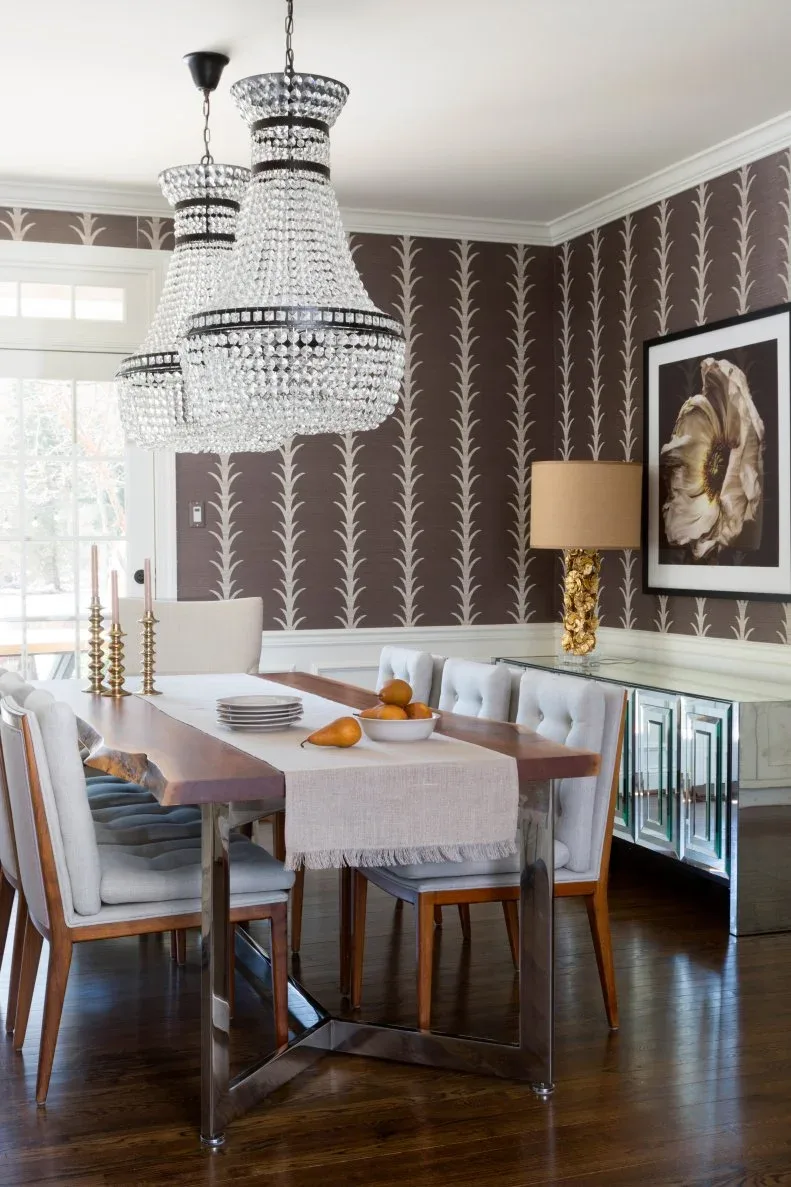
Two clear tiered fittings hang along the rectangular table. Their dark bands give each light a recognizable outline against the pale ceiling, while the repeated shapes extend the decoration across more of the dining group. Dark floral wallpaper and mirrored cabinetry provide additional detail around the room. Pale tufted chairs keep the seating related to the lighter parts of the chandelier pair without duplicating their tiers.
Two fittings need careful spacing based on the table’s actual position and length. Check the arrangement with chairs in use and consider whether the table is likely to move later. Compare the combined brightness with the room’s other lighting. Confirm ceiling support and electrical provision for both fixtures, and plan safe access to clean the inward-facing surfaces between their closely repeated tiers.
IDEA 15 / 20
Group Small Shades Above a Round Table
 SaveSupport Non AI Creator
Image credit: Photo: Village Properties, a member of Luxury Portfolio International. From: Village Properties and Luxury Portfolio International®
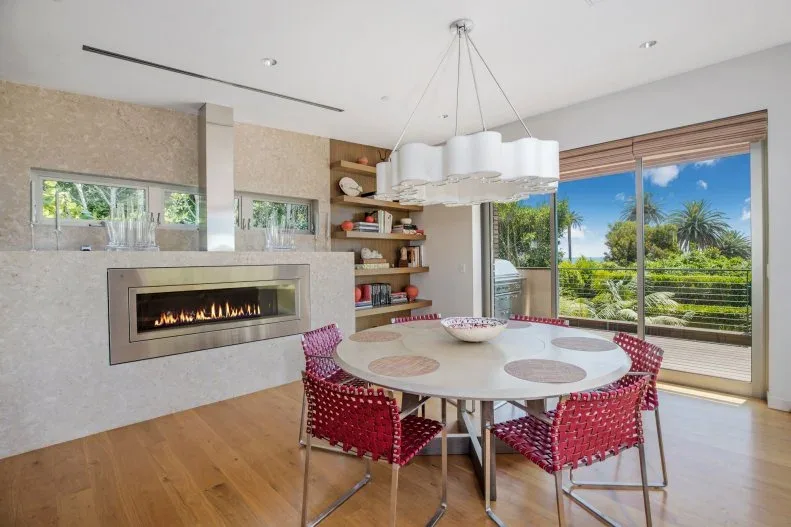
Pale cylindrical shades gather above the round dining table, suspended from a shared ceiling point. Their repeated forms make the light read as a group rather than one broad solid shade. Red woven chairs add stronger color around the pale tabletop. The horizontal fireplace and broad window create wider lines elsewhere, leaving the clustered fitting to mark the dining position within the open surrounding space.
A grouped shaded fitting should be checked for its overall spread and lowest edge, not just the dimensions of one shade. Look beneath it from each seat to assess visible lamps and brightness. Confirm the approved lamp specification and shade-care method. Keep the group centered on the table’s ordinary position, and have the mounting and suspension adjusted according to the manufacturer’s instructions.
PART 04
Try Globes, Branches, and Linear Arrangements
IDEA 16 / 20
Combine White Globes with an Irregular Gold-Toned Frame
 SaveSupport Non AI Creator
Image credit: Photo: Emily Minton Redfield. From: Duet Design Group
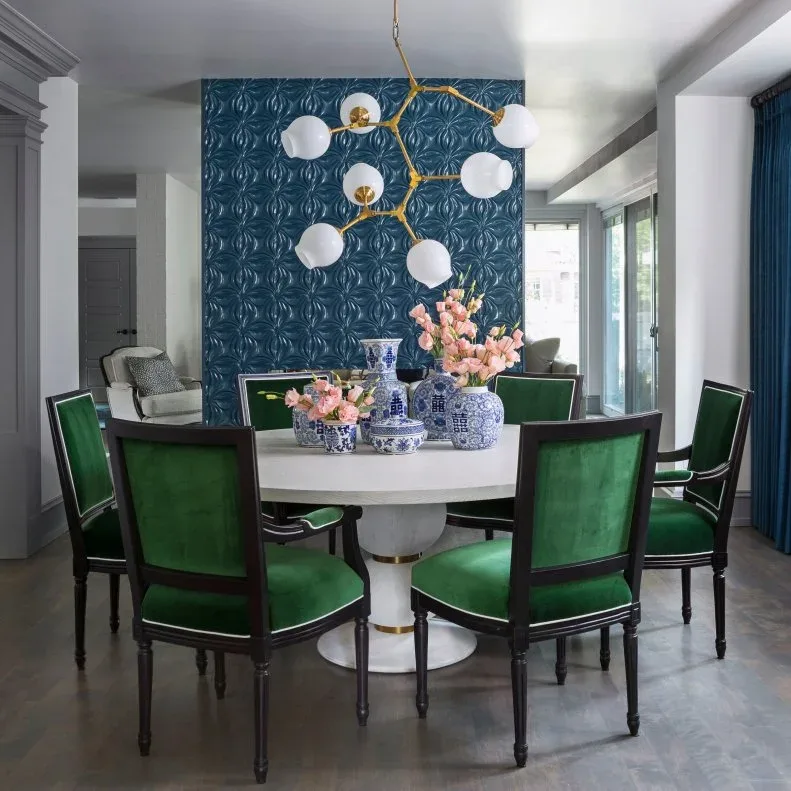
White globes occupy different points along the irregular gold-toned frame. The fitting spreads above the round table without forming a conventional ring or a single central shade. Green chair upholstery adds another saturated color below, while the blue patterned wall makes the pale globes distinct behind it. The arrangement combines a loose branching outline with repeated rounded elements that are easy to recognize across the room.
Check the full reach of every branch when comparing the fitting with the table. Uneven arms may project farther on one side even when the central stem is aligned. Ask how the globes are opened for lamp replacement and cleaned without twisting their supports. Inspect the light while illuminated if possible, since a pale globe’s appearance does not establish how evenly it will diffuse brightness.
IDEA 17 / 20
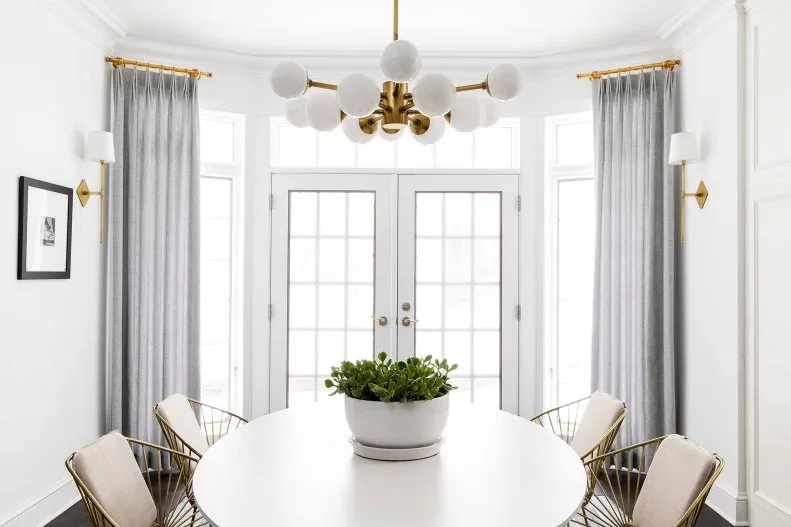
Repeat Round Globes Above a Pale Oval Table
 SaveSupport Non AI Creator
Image credit: Photo: Troy Thies Photography. From: Martha O'Hara Interiors
White globes extend around the chandelier’s gold-toned center, echoing the softer outline of the pale oval table. Slender chair frames and gray curtains give the room a relatively restrained setting. Wall lights repeat the warmer metallic tone at the sides. The chandelier adds a recognizable upper shape while keeping its main colors connected with the table, chairs, and surrounding pale window framing behind them.
Compare the globe spacing with the table from the doorway and from seated positions. A fitting that looks balanced from one direction can feel crowded from another. Ask about the globe construction, lamp access, and approved bulbs before purchase. If matching wall lights are planned, check their output and controls alongside the chandelier so the complete arrangement remains comfortable during evening meals.
IDEA 18 / 20
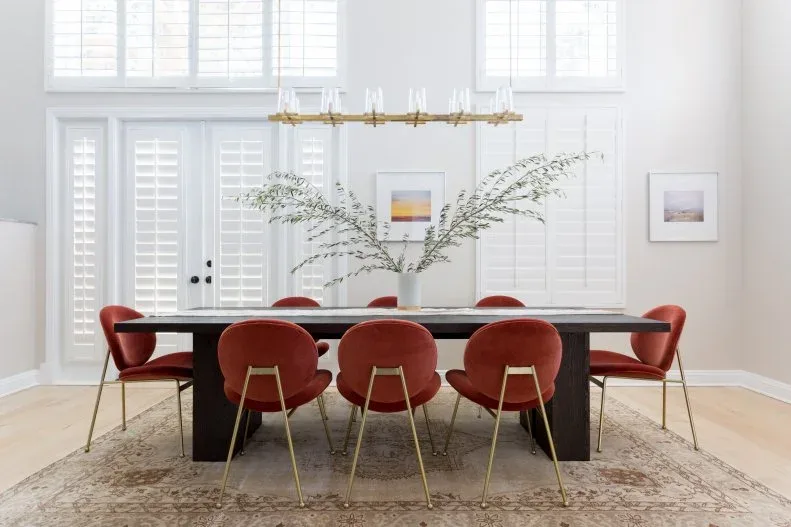
Stretch a Slim Linear Chandelier Along the Table
 SaveSupport Non AI Creator
Image credit: Photo: Amy Bartlam. From: Genna Margolis
A slim gold-toned fitting runs along the long dark dining table, carrying a row of upright lamps. Its narrow profile leaves much of the tall window wall visible behind it. Coral red chairs add stronger rounded shapes beneath the light, while the surrounding pale surfaces keep the arrangement clear. The linear form relates to the table’s length without repeating the bulk of its dark surface.
Measure the fitting’s full length and compare it with the table in its normal position. Check whether suspension points need to align with ceiling structure and discuss any adjustment with the installer. Exposed lamps can be bright at seated eye level, so inspect compatible bulb options and dimming requirements. Keep branches or tall centerpieces from interfering with the view or reaching into the light’s space.
IDEA 19 / 20
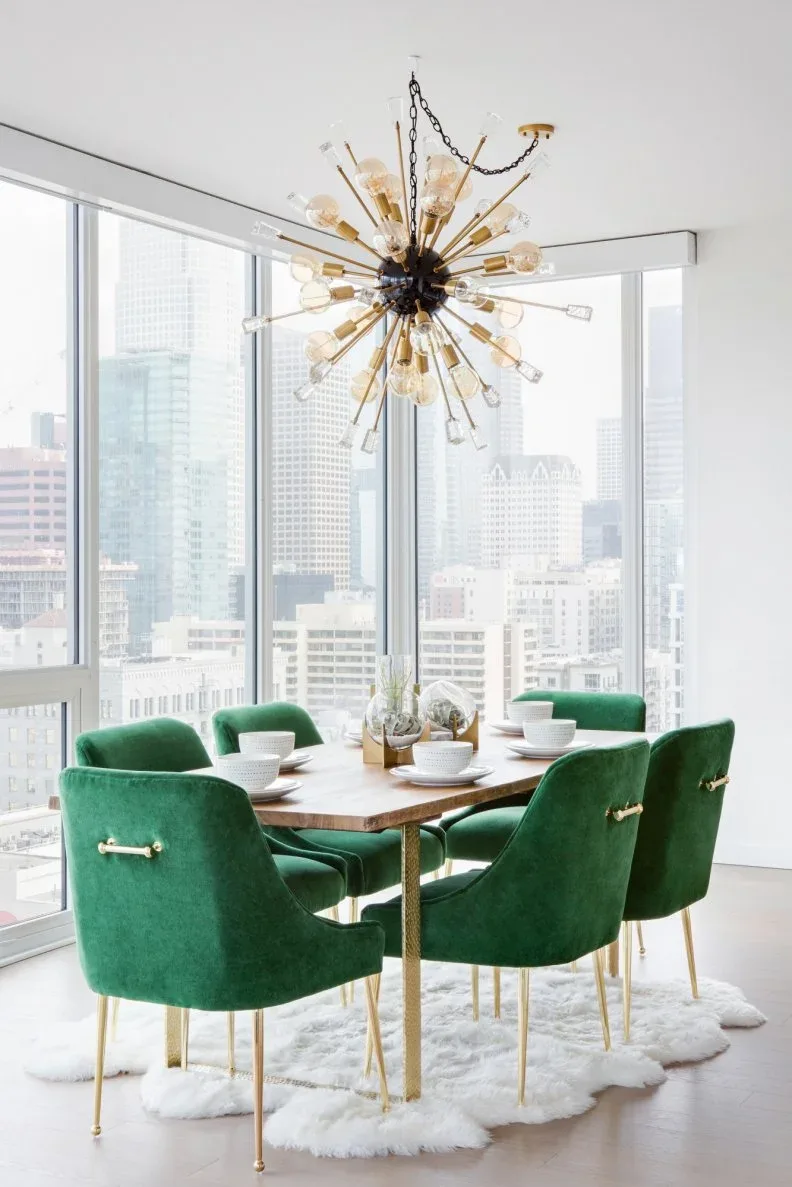
Use a Radial Fitting in a Bright Window Corner
 SaveSupport Non AI Creator
Image credit: Photo: Chad Mellon. From: Lindye Galloway
Gold-toned arms radiate from a dark central body above the wooden table. Clear lamp surrounds repeat around the ends, producing a more expansive shape than a shaded central pendant. Green upholstered chairs bring a strong color below, while the corner windows keep the room’s boundaries visible. The fitting’s spread gives the dining group a clear upper feature against the broad daylight view beyond the glass.
A radial fitting has outer tips that need to remain clear of normal movement around the table. Check the complete diameter and lowest point before installation. Assess lamp glare from the chairs, particularly after daylight fades. Ask how the clear surrounds are removed or cleaned, and confirm replacement-part availability so a damaged component does not leave the whole fitting difficult to maintain.
IDEA 20 / 20
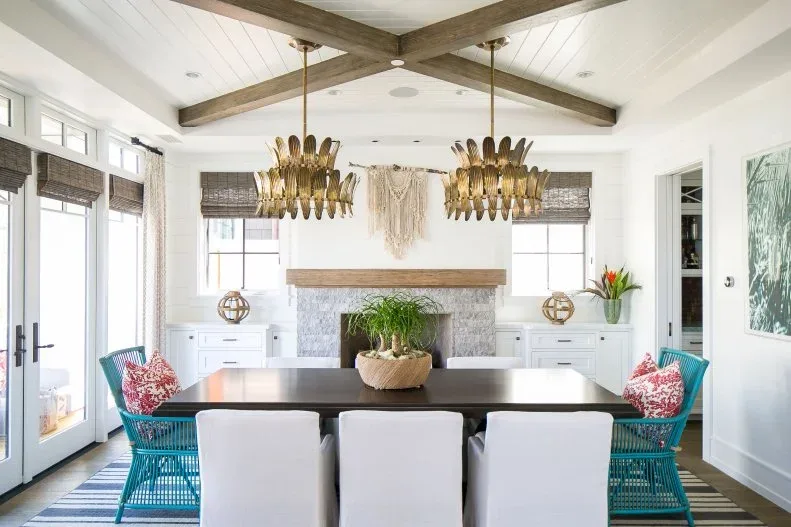
Repeat Warm-Toned Decorative Lights Beneath Ceiling Beams
 SaveSupport Non AI Creator
Image credit: Photo: Ryan Garvin. From: Blackband Design
Two warm gold-toned fittings hang beneath the crossing wooden ceiling beams. Their layered outward shapes provide a repeated decorative outline above the long dark table. Blue woven end chairs add color at either end, while pale side chairs keep the middle of the seating lighter. The paired lights mark the table’s length and remain distinct from the larger structural lines crossing the ceiling above them.
Before planning a pair, map the table position and each fitting’s full spread beneath the beams. Do not assume a decorative beam is suitable for mounting without having its construction checked. Consider the combined light output and controls, and inspect how overlapping layers will be dusted. Keep both fittings accessible for maintenance without depending on moving a heavy dining table every time.
BRING IT ALL TOGETHER
Check the Light from Every Seat
Compare a chandelier with the table and the room together. Its width, length, drop, outer projections, and visible lamps all affect how it works during meals. Look from the doorway and sit at different places around the table before settling the height. If the table moves or extends, consider how the fitting will relate to those positions as well as its everyday arrangement.
Ask about mounting, approved lamps, control compatibility, cleaning, and replacement parts before buying. Decorative complexity brings more surfaces to maintain, while a simpler form can still produce uncomfortable glare if its lamps are exposed. Use the actual manufacturer’s instructions and a qualified installer for electrical work. The most useful chandelier combines an appealing shape with comfortable evening light and manageable upkeep.