Dining wall decor can be personal, practical or quietly decorative. A picture group, mirror or shelf display should connect with the table and seats while leaving doors, windows and storage easy to use. The most useful starting point is the wall area you can actually see from the room’s everyday positions.
These twenty photographs show different scales and arrangements, from one round mirror to full bookcase walls. Compare the visible display with your own furniture, then check fixing requirements, chair clearance and safe access before putting the pieces in place.
PART 01
Give Smaller Displays a Clear Position
IDEA 01 / 20
Brighten a Small Dining Wall With Two Pictures
 SaveSupport Non AI Creator
Image credit: Photography by LAURE JOLIET
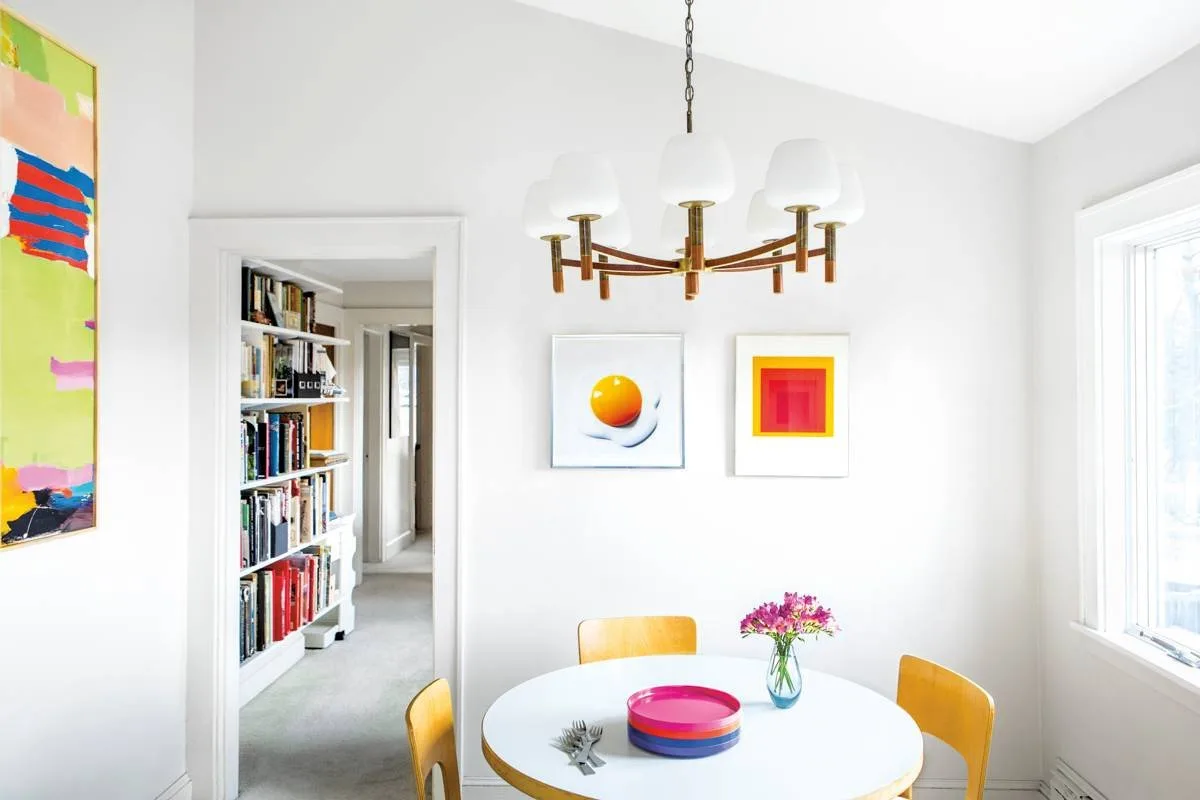
Two bright pictures in white frames give this pale dining wall a compact color accent. Their orange and red shapes connect with the yellow chairs around a white round table, while a larger colorful picture occupies the neighboring wall. The pair adds interest above the seats without needing to fill every stretch of the room with frames.
Plan the pair around the visible wall area and the table position, then check the composition from the doorway and seats. Use fixings suited to the wall and frame weight. Keep the lower edges clear of chair backs, and consider reflected daylight when choosing glazing. A small grouping works best when its spacing is deliberate rather than spread across an oversized gap.
IDEA 02 / 20
Contrast Wood Panels With a Deep Blue Sliding Door
 SaveSupport Non AI Creator
Image credit: Photography by Laure Joliet
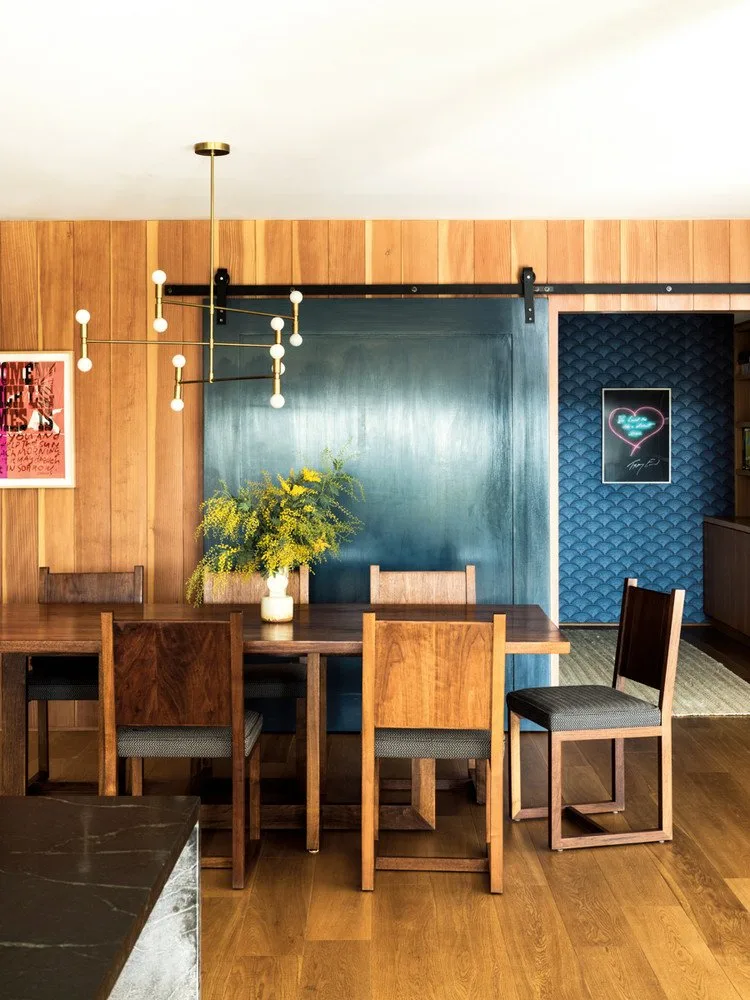
Wood panels surround a deep blue sliding door behind a wood dining table. A patterned blue recess and framed pictures add smaller details beside the broad door surface, while the chairs repeat the warm wood tones. The wall combines several textures without needing a dense gallery, using the door itself as a large color area within the dining setting.
Plan wall displays around the sliding door’s complete travel path and hardware. Frames and projecting objects must remain clear when the door opens, and the track needs access for cleaning. Check panel and paint care separately, since adjacent finishes may need different products. Keep the smaller pictures easy to read rather than placing so many around the door that its useful movement becomes awkward.
IDEA 03 / 20
Layer Framed Pictures Over Blue Floral Wallpaper
 SaveSupport Non AI Creator
Image credit: Photography by LAURE JOLIET
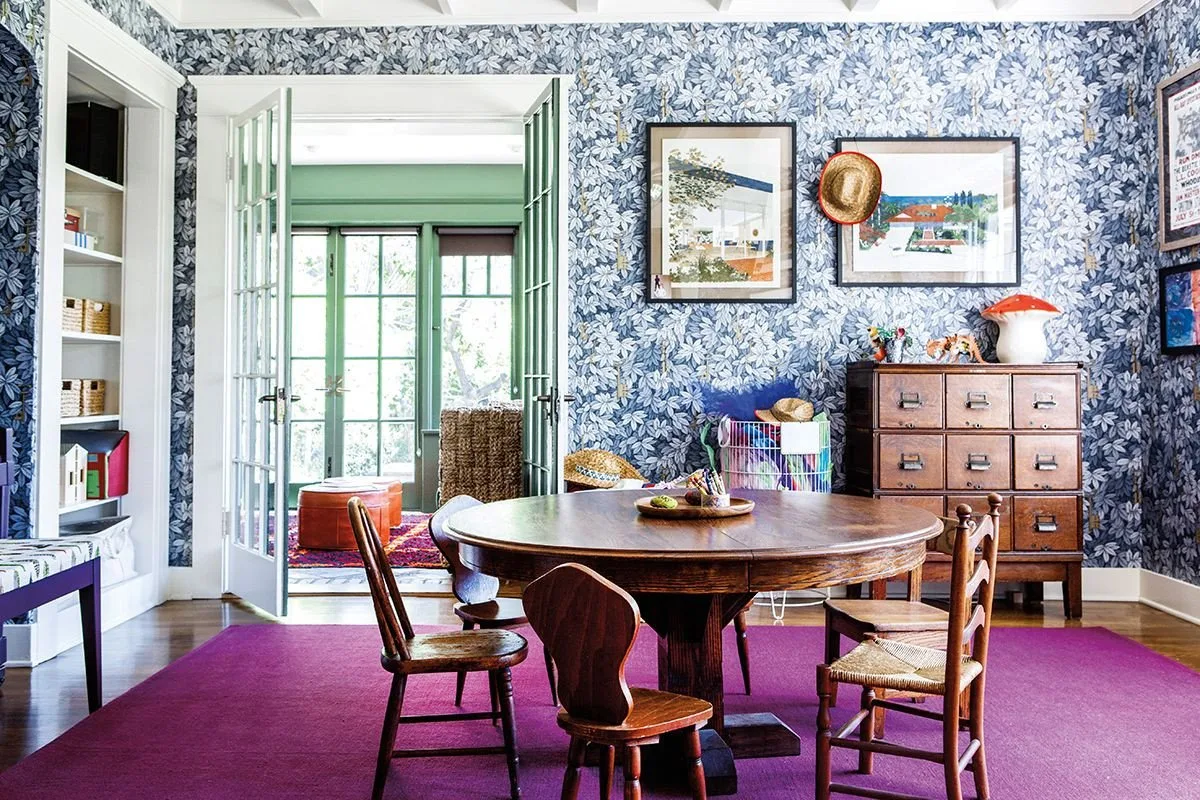
Framed pictures sit above a small drawer cabinet against blue floral wallpaper beside a round dining table. Mixed wood chairs and a purple rug add more color below, while a pale doorway opens toward the next room. The picture frames give the busy wall a few clear rectangular shapes, allowing the wallpaper to remain visible between the displayed pieces.
Compare frame outlines against the wallpaper before making fixing holes. A darker frame or broad pale mount can help distinguish a picture from a detailed background. Confirm the wall support and preserve access to cabinet drawers. Check the wallpaper’s cleaning guidance around lamps and objects on the cabinet top, and avoid positioning delicate pictures where they can be brushed while the storage is used.
IDEA 04 / 20
Give a Deep Blue Wall One Round Mirror
 SaveSupport Non AI Creator
Image credit: Photography by Aaron Bengochea
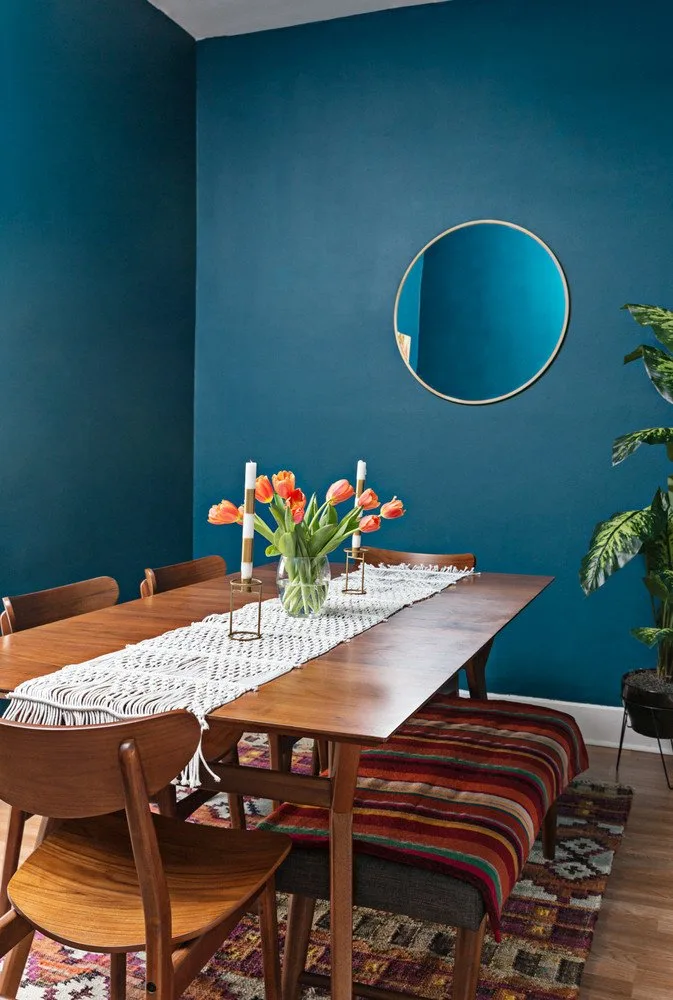
One round mirror sits on a deep blue wall behind a wood dining table and striped bench. Its thin warm-toned frame keeps the outline simple, contrasting with the straight tabletop and runner below. Orange flowers add a smaller bright accent, while the broad blue wall remains mostly clear, making the mirror a distinct feature rather than part of a crowded collection.
Check the reflected view from seated height and the doorway before fixing a mirror in place. Use hardware appropriate to its weight and wall construction, and keep the lower edge clear of the bench and table display. Clean with products suited to the mirror and frame. Avoid assuming a larger mirror will improve the room if it mainly reflects glare or a busy adjoining area.
IDEA 05 / 20
Use a Dark Lower Wall Behind Leaning Prints
 SaveSupport Non AI Creator
Image credit: Photography by JEREMY LIEBMAN
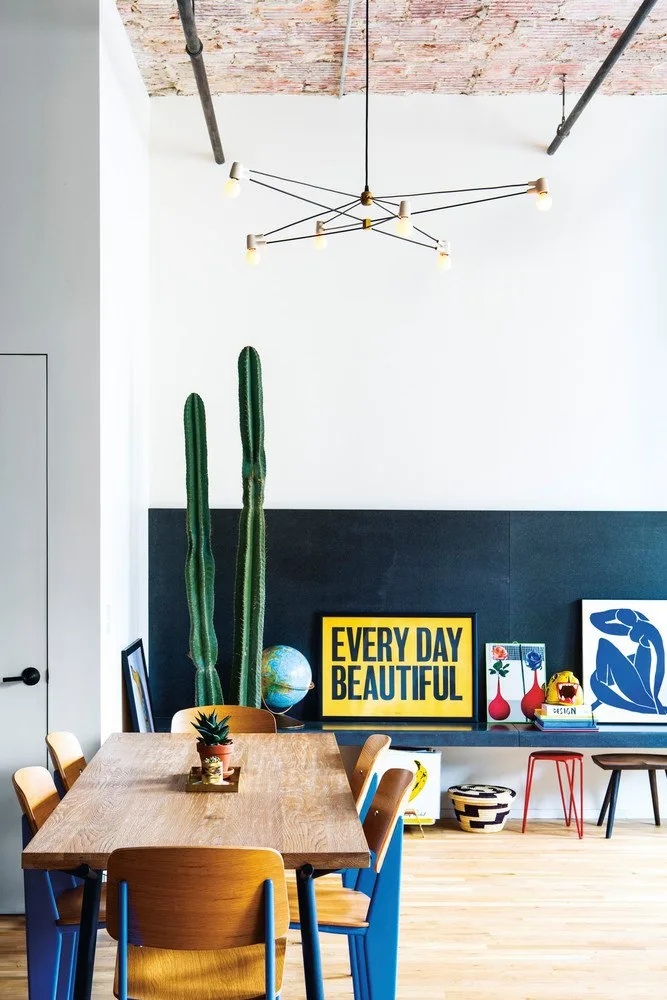
A dark lower wall forms a backdrop for leaning colorful prints, a globe and small objects beside a wood dining table. The pale upper wall remains open beneath exposed ceiling details, while a tall cactus adds another vertical shape. The display uses the room’s lower edge, giving the pictures a visible base without turning the entire wall into a gallery.
Secure leaning frames against slipping or falling rather than relying on their angle alone. Keep the display clear of chair movement and leave access to clean the supporting surface. Check whether the lower wall finish tolerates scuffs from nearby furniture. Choose a few pieces that can be seen above the table and seats, and keep fragile objects away from areas used for serving.
PART 02
Choose a Main Wall Feature
IDEA 06 / 20
Balance a Pale Wall With Matching Colorful Pictures
 SaveSupport Non AI Creator
Image credit: Photo: Wake and Loom. From: WAKE + LOOM
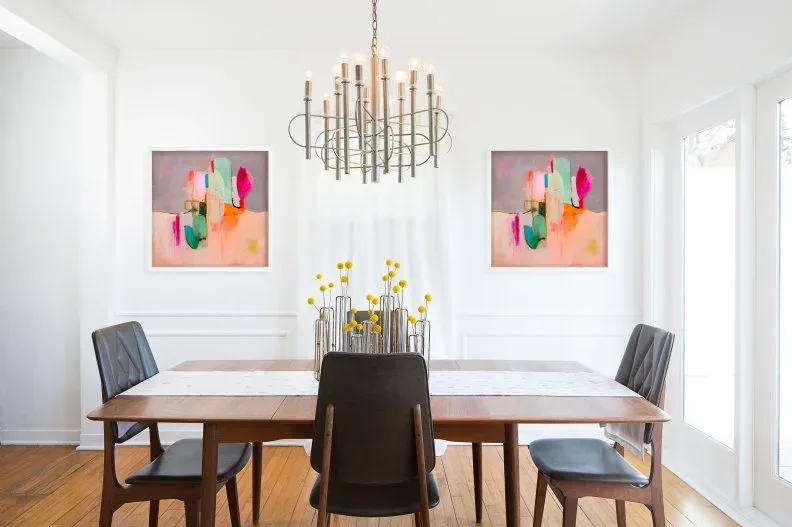
Two matching colorful pictures sit on either side of a pale central wall feature behind a wood dining table. Their pink, green and orange shapes provide the room’s main wall color, while dark chairs and a slender chandelier supply clearer outlines in front. The repeated pictures create balance without requiring identical objects on the tabletop or another strong wall pattern.
Set out the pair around the wall feature and table together rather than centering each picture on an unrelated patch of wall. Check fixing points, frame weight and chair-back clearance. Matching artwork can feel repetitive if the rest of the room also uses many identical pieces, so keep neighboring displays restrained. Leave access to dust the frames without having to climb on the dining table.
IDEA 07 / 20
Turn Tableware and Bottles Into a Shelf Display
 SaveSupport Non AI Creator
Image credit: Photo: Amy Bartlam. From: Katherine Carter Design
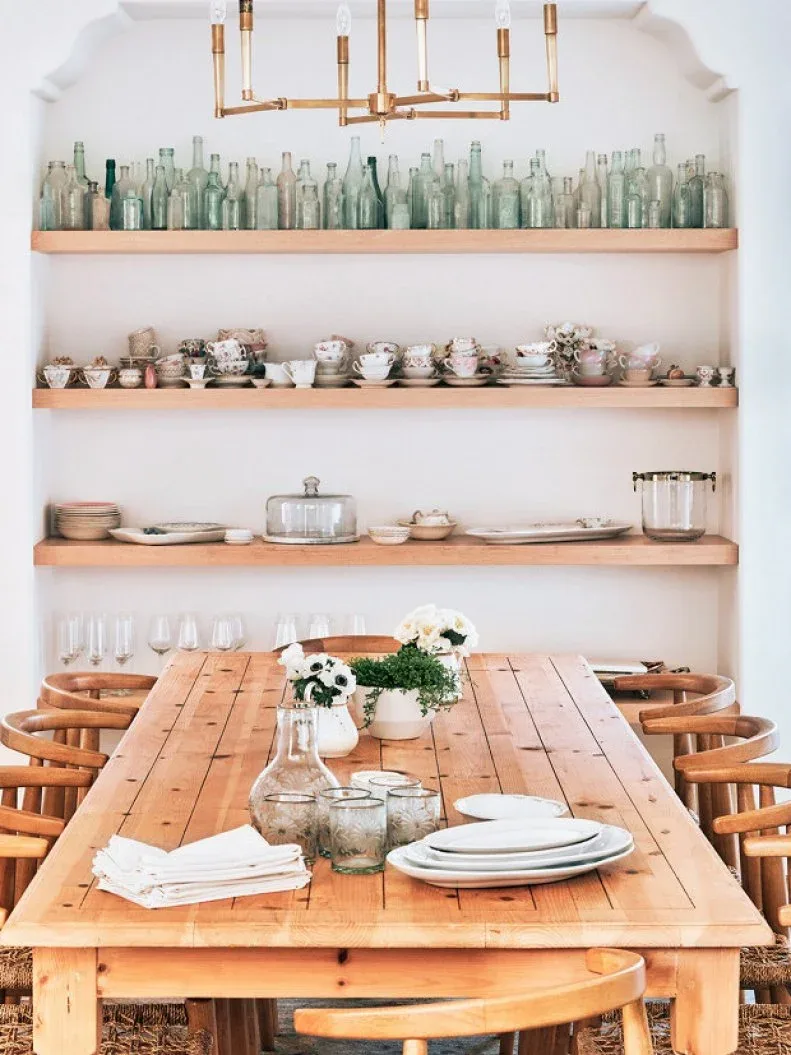
Three long wood shelves hold pale green bottles, cups and serving pieces above a wood dining table. The upper row has a repeated glass outline, while the lower shelves contain more varied tableware. Pale wall space separates the groups, allowing everyday objects to become the wall display instead of adding framed art above a separate storage cabinet.
Confirm shelf support and capacity for glass and tableware before filling a long run. Leave enough depth and spacing to lift pieces out safely, and keep heavier items comfortably reachable. Secure tall or unstable display objects as appropriate. Open dishes and glasses need regular cleaning before use, and a practical landing place nearby makes retrieving several pieces easier than carrying them directly to the table.
IDEA 08 / 20
Make a Dining Library the Main Wall Feature
 SaveSupport Non AI Creator
Image credit: Photo: David Lauer. From: Duet Design Group
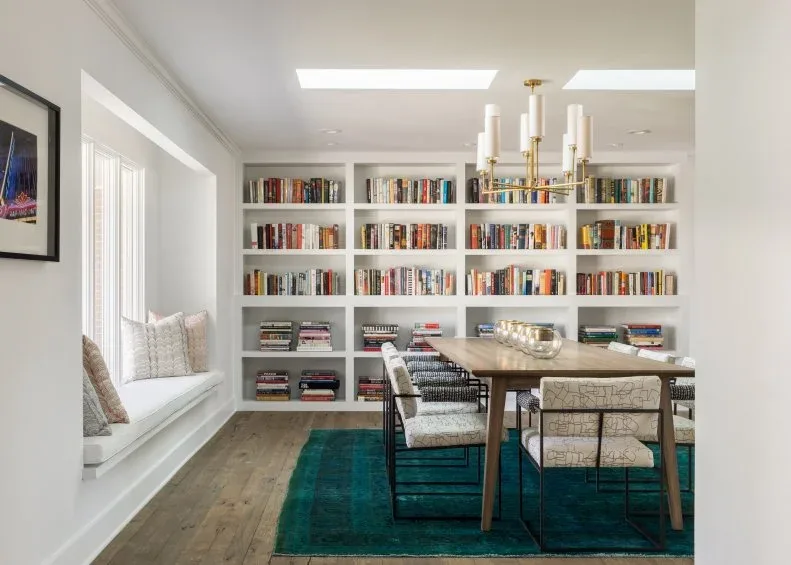
A full white bookcase wall forms the backdrop to a wood dining table and patterned chairs on a teal rug. Book spines supply many small colors within the repeated compartments, while a window bench and skylights keep the surrounding room light. The shelves carry enough visual detail that the dining wall does not need another layered picture arrangement in front of the books.
Plan shelves around the actual book collection and confirm support, spans and load limits. Keep a safe way to reach upper compartments and leave the route behind dining chairs usable for browsing. Avoid adding small objects that make books difficult to remove. Dust sections regularly and protect nearby books from drinks, especially when the dining table also serves as a reading or work surface.
IDEA 09 / 20
Give a Portrait a Clear Place Behind the Table
 SaveSupport Non AI Creator
Image credit: Photo: Drew Kelly. From: Antonio Martins
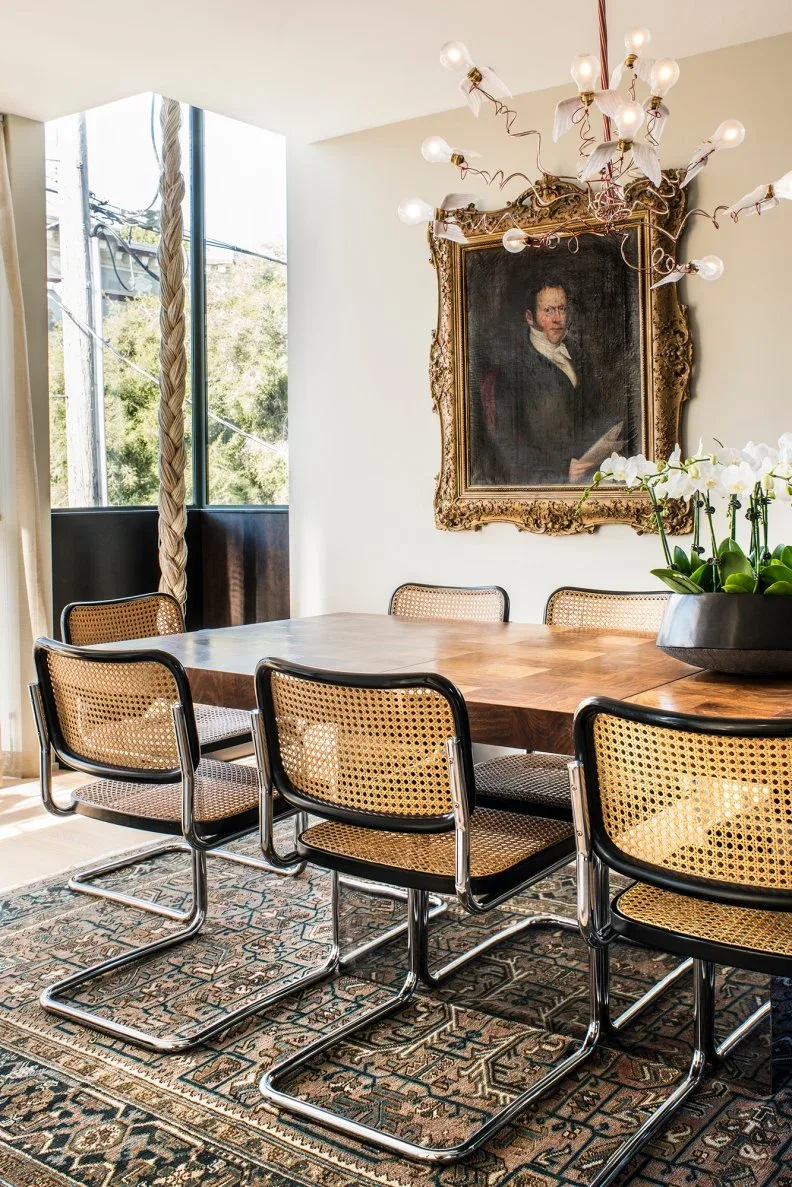
A large portrait in an ornate warm-toned frame hangs behind a wood dining table and woven-back chairs. The pale wall gives the detailed frame room to stand out, while a branching light adds a different outline overhead. The portrait serves as one concentrated wall feature, allowing the nearby window, tabletop and chairs to remain distinct rather than surrounded by additional small pictures.
Check the artwork from the seats as well as the room entrance before choosing its final position. Confirm fixings for the complete frame weight and protect delicate work from unsuitable light or environmental conditions according to its care guidance. Keep the frame clear of furniture and flower arrangements below. Leave safe access for dusting rather than positioning it where routine care requires standing on the table.
IDEA 10 / 20
Use a Bright Lettering Sign Against a Dark Wall
 SaveSupport Non AI Creator
Image credit: Photo: Jacob Hand Photography
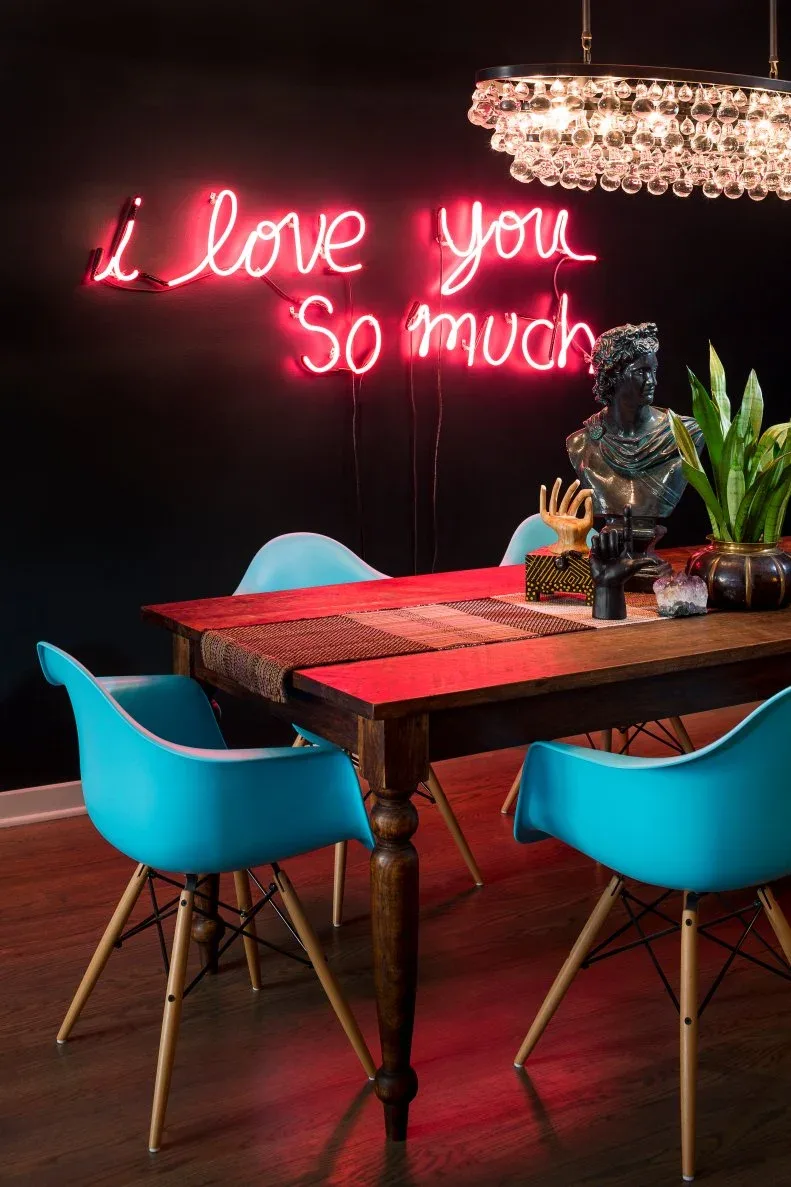
Pink illuminated lettering stands out against a dark dining wall above a wood table and turquoise chairs. A red tabletop strip and sculptural objects continue the room’s bright accents, while the sign supplies a different kind of wall display from a framed picture. Its glowing lines remain the main feature because the surrounding dark surface is otherwise mostly clear.
Check the sign’s actual construction and installation instructions rather than assuming every illuminated sign uses the same technology. Plan safe electrical access and cable routes, and choose brightness that remains comfortable from the dining seats. Leave room for maintenance and use the specified cleaning method. Keep the display away from splashes and preserve enough clear wall space for the lettering to remain easy to read.
PART 03
Make Pictures and Patterns Personal
IDEA 11 / 20
Make a Large Calendar Part of the Dining Wall
 SaveSupport Non AI Creator
Image credit: Photo: Design by Brian Patrick Flynn
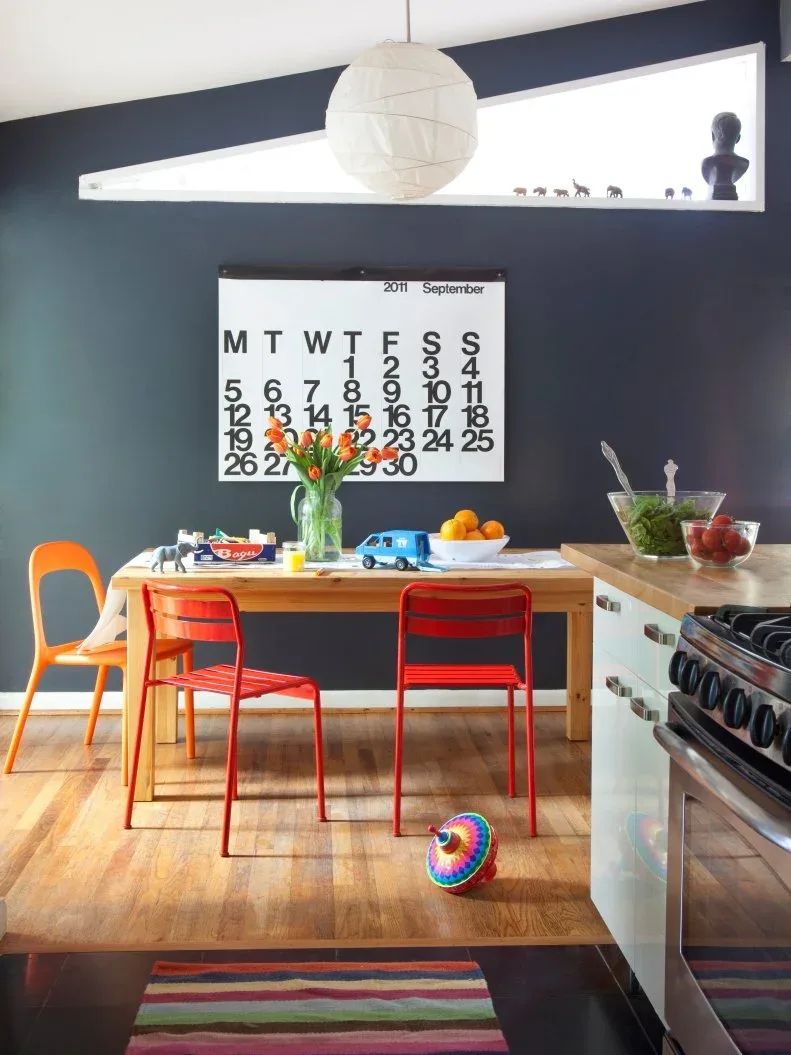
A large black-and-white calendar hangs on a dark dining wall beneath a high triangular window. Red and orange chairs bring brighter color to the wood table, while small objects sit along the window ledge above. The calendar gives the wall a graphic grid that also has a practical purpose, showing how everyday planning can become part of the room’s visible arrangement.
Choose a calendar that is readable from the places where you will check it and easy to update without moving the table. Keep its fixing secure and leave the window usable. A dated page is useful only when it stays current, so include changing it in your routine. Avoid placing protruding objects on the ledge where they can fall toward diners or interfere with window maintenance.
IDEA 12 / 20
Place One Lettering Print Inside Pale Wall Trim
 SaveSupport Non AI Creator
Image credit: From: Leanne Ford and Restored by the Fords
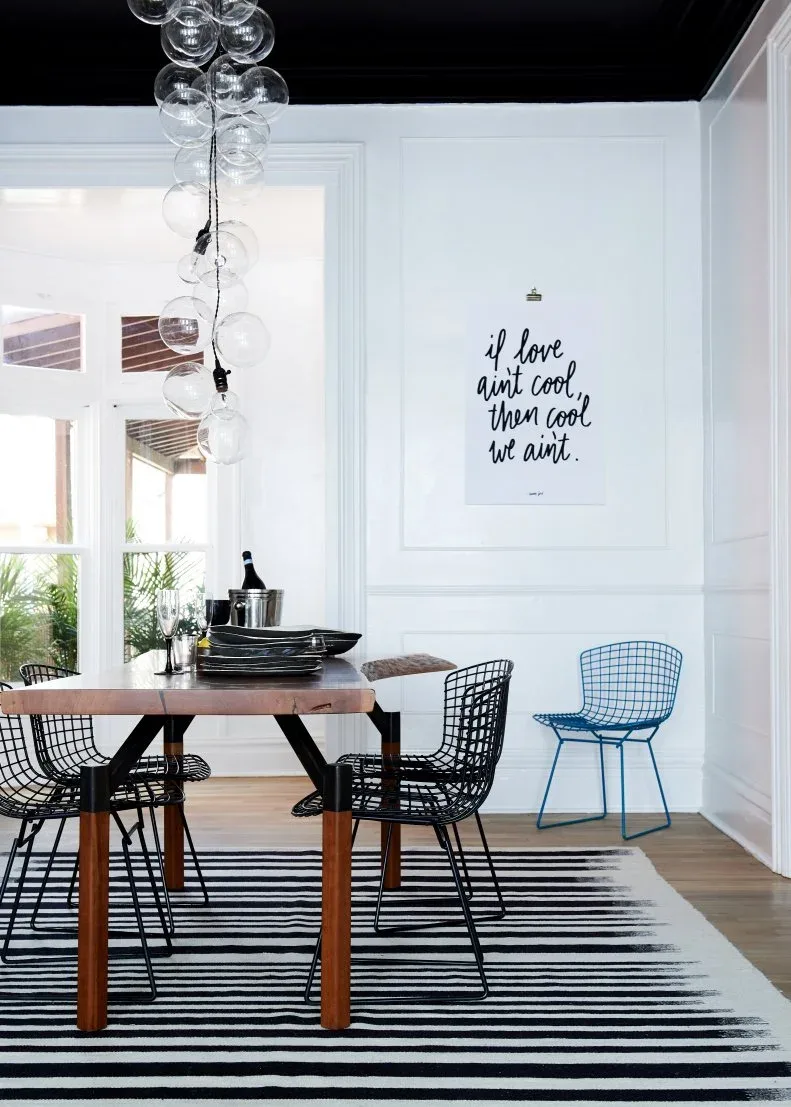
A black lettering print occupies a framed section of pale wall above a wood dining table. Dark wire chairs, a striped rug and a black ceiling repeat its contrast, while the surrounding trim gives the small print a larger architectural boundary. The wall uses one clear message-based piece rather than filling the pale panels with many competing pictures.
Choose lettering you want to live with and check that its scale works from the table and doorway. Keep the print centered within the intended trim area, then use suitable fixings for its frame or hanging method. Consider glare and protect paper according to its care needs. Leave chair backs clear of the lower edge and avoid adding more text nearby that makes the display hard to follow.
IDEA 13 / 20
Mix Colorful Art Within a Compact Gallery
 SaveSupport Non AI Creator
Image credit: Photo: Photography: Christian Torres; Design by Pippa Lee and Tali Roth. From: Pippa Lee
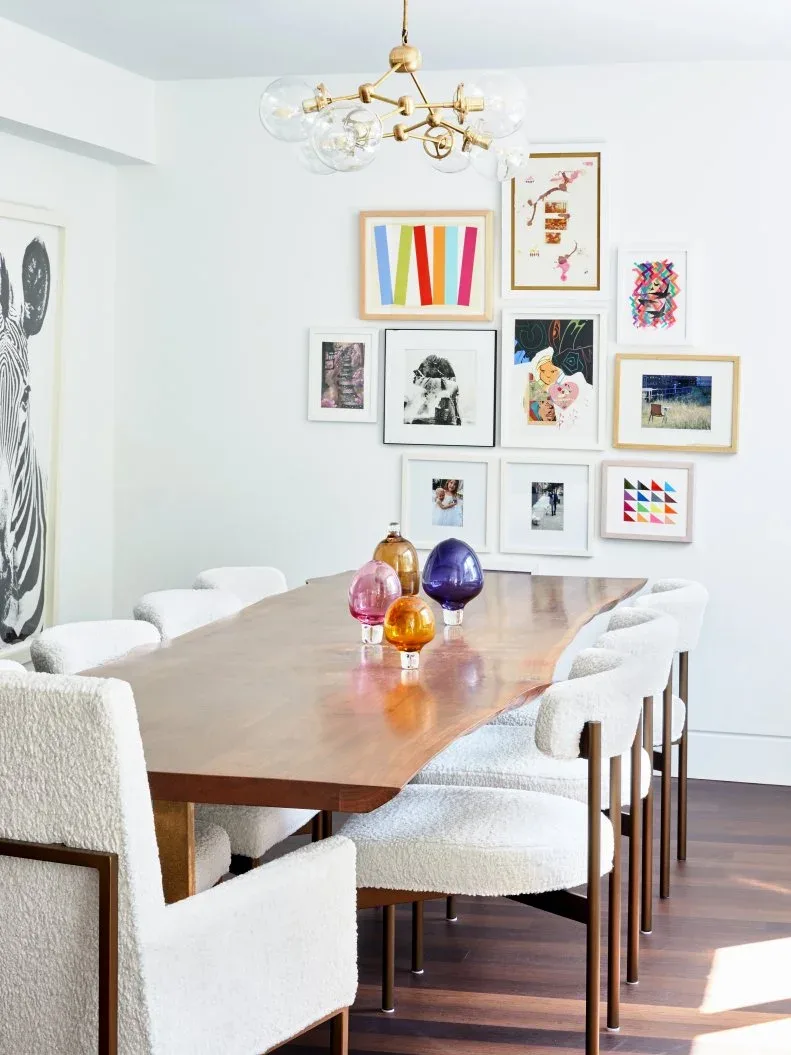
Colorful and monochrome pictures form a compact gallery above a wood dining table and pale textured chairs. Different frame sizes allow abstract shapes, portraits and smaller photographs to sit together without identical borders around every piece. Colored vessels on the table repeat a few accents from the pictures, linking the wall display with the eating area while leaving the pale background visible.
Lay out the gallery at full size before making holes, checking its outer shape against the table and chairs. Use fixings appropriate to each piece rather than treating a large frame like a small print. Keep lower pictures clear of furniture and allow room to clean between frames. A mixed collection can grow gradually, but reserve space deliberately so additions do not leave cramped or accidental gaps.
IDEA 14 / 20
Use a Scattered Geometric Pattern Beside a Dining Nook
 SaveSupport Non AI Creator
Image credit: Photo: Laura Metzler. From: Kerra Michele Huerta
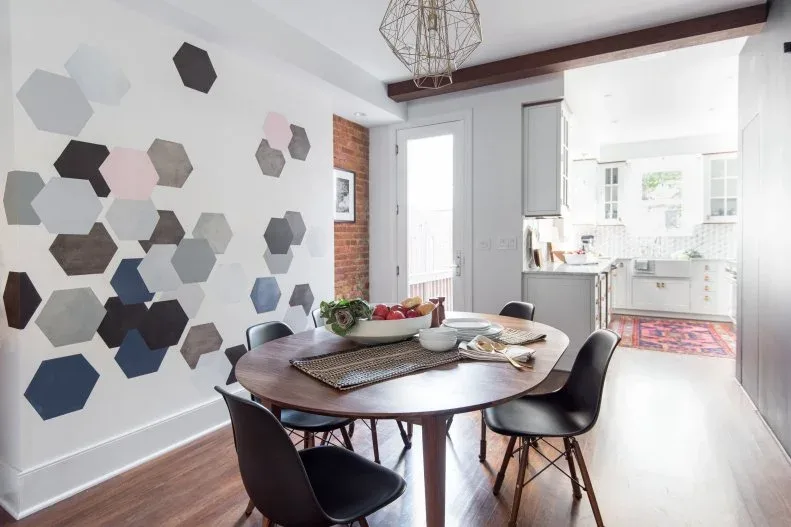
Scattered hexagonal shapes in pale pink, gray, blue and darker tones cover part of a wall beside an oval dining table. Their loose arrangement leaves white space between groups, contrasting with the adjacent brick surface and pale kitchen beyond. The wall creates a decorative pattern without using a single large picture, giving the compact dining area a distinct backdrop.
Map the pattern around the actual wall dimensions before applying paint or another chosen treatment. Confirm the surface preparation and removal method for the product you use rather than assuming all geometric displays are made alike. Keep switches, trim and chair movement clear. Test colors together in the room’s light, and leave enough plain background for the individual shapes to remain easy to distinguish.
IDEA 15 / 20
Give Family Photographs a Large Four-Part Grid
 SaveSupport Non AI Creator
Image credit: Photo: Brian Patrick Flynn
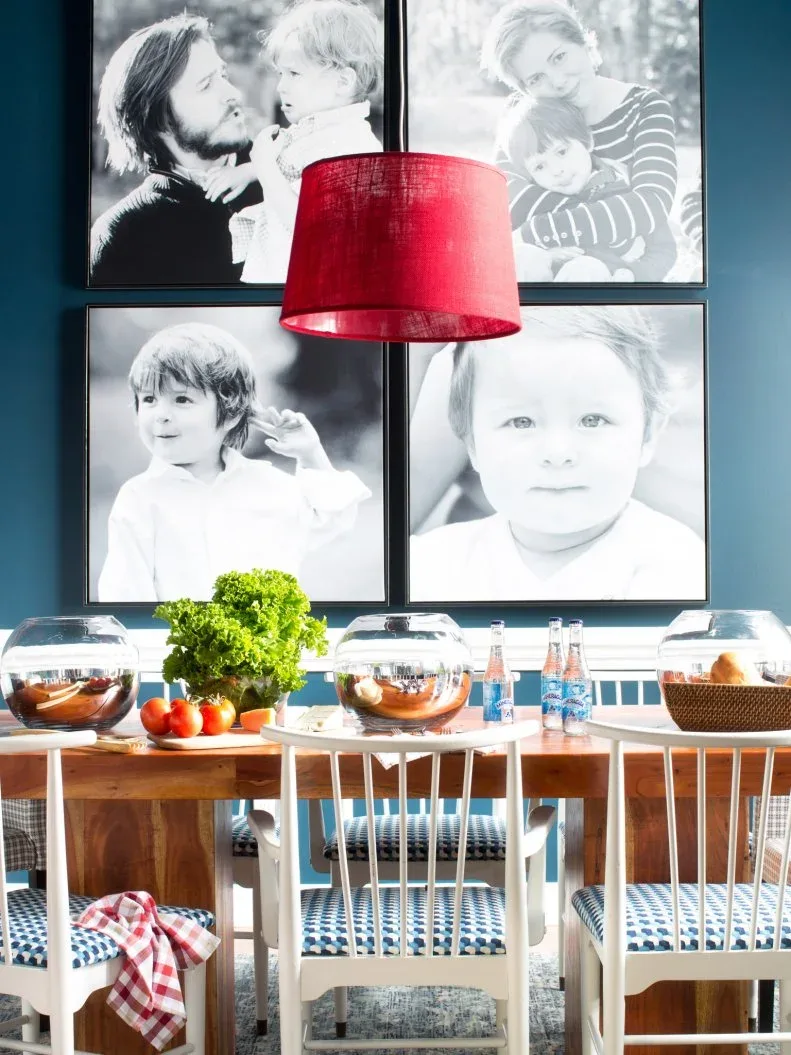
Four large black-and-white family photographs form a two-by-two grid on a blue dining wall. Their dark borders connect the separate images, while white dining chairs and a wood table give the foreground a simpler structure. A red hanging shade adds a concentrated color accent in front, showing how personal photographs can provide the wall’s main display without needing many small frames.
Check image resolution at the intended print size before ordering large photographs. Set consistent gaps between frames and use suitable support for their weight. Consider privacy when choosing family images for a room visible to visitors, and protect prints according to their care guidance. Check the grouping around the hanging light from the seats so important parts of the pictures are not continually hidden.
PART 04
Connect Repeated Shapes With the Dining Layout
IDEA 16 / 20
Repeat Small Framed Prints Above a Pale Rail
 SaveSupport Non AI Creator
Image credit: Photo: Jennifer Boomer/Verbatim Photo A. From: Fixer Upper
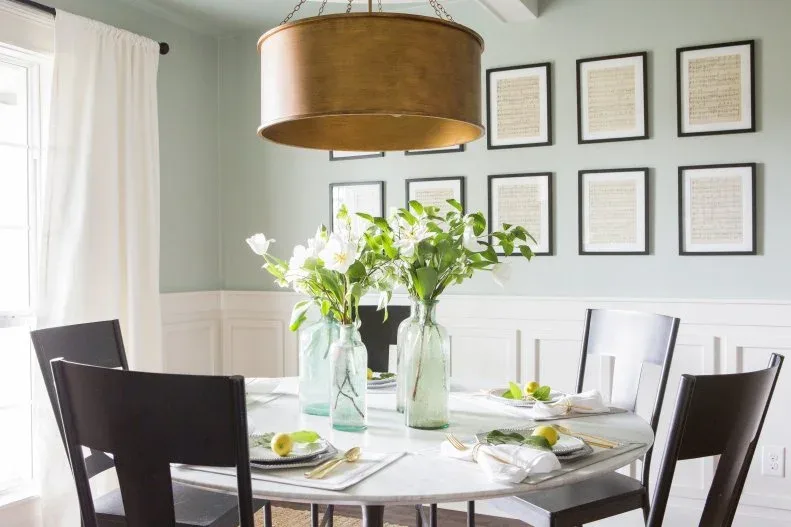
Small pale prints in dark frames form two rows above white lower-wall paneling beside a round dining table. The repeated borders give the muted green wall a neat grid, while dark chairs echo the frames below. A broad warm-toned shade and clear vases add softer shapes in front, keeping the display orderly without making every element in the room rectangular.
Measure the outer grouping against the wall and table before spacing individual frames. Keep the lower row clear of the rail and chair backs, and confirm that the print details are readable at normal viewing distance. Use suitable fixing methods and check each frame’s weight. A regular grid needs careful spacing; make paper templates first so small alignment errors do not accumulate across the rows.
IDEA 17 / 20
Pair Graphic Pictures Above a Colorful Bench
 SaveSupport Non AI Creator
Image credit: Photo: Bruce Damonte
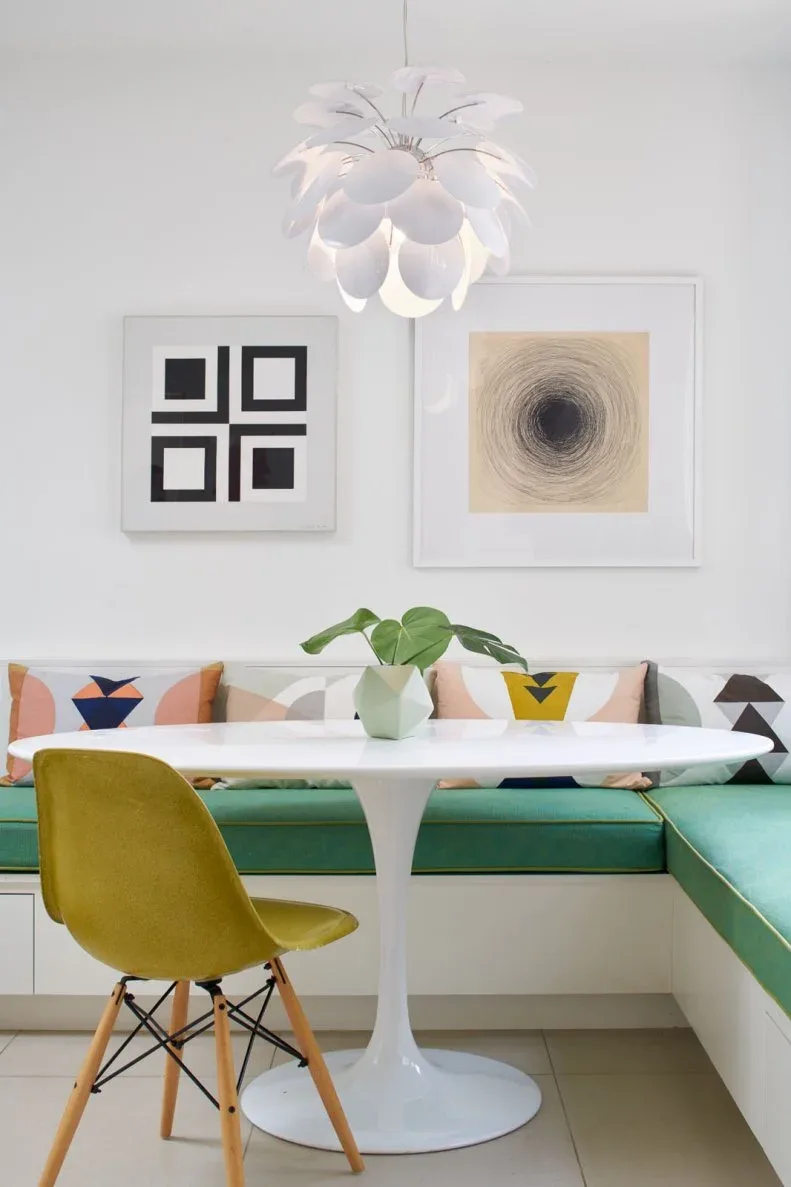
Two pale-framed graphic pictures sit above a green dining bench with geometric cushions. One picture uses dark square shapes, while the other has a circular center, giving the pair different forms within a shared pale border. A white pedestal table and yellow chair continue the compact nook’s bright furniture, connecting the wall art with the bench without repeating every cushion pattern exactly.
Set the pictures high enough to remain clear of seated heads and cushion movement, then check the grouping from the room entrance. Confirm fixings and frame weight, especially above a bench used regularly. Avoid adding projecting shelves where people lean back. Keep the pale frames accessible for cleaning and let the existing cushion colors guide additional art rather than introducing another unrelated set of accents.
IDEA 18 / 20
Carry Angular Wall Pattern Around the Windows
 SaveSupport Non AI Creator
Image credit: Photo: Sean LItchfield. From: Casagrande Studio
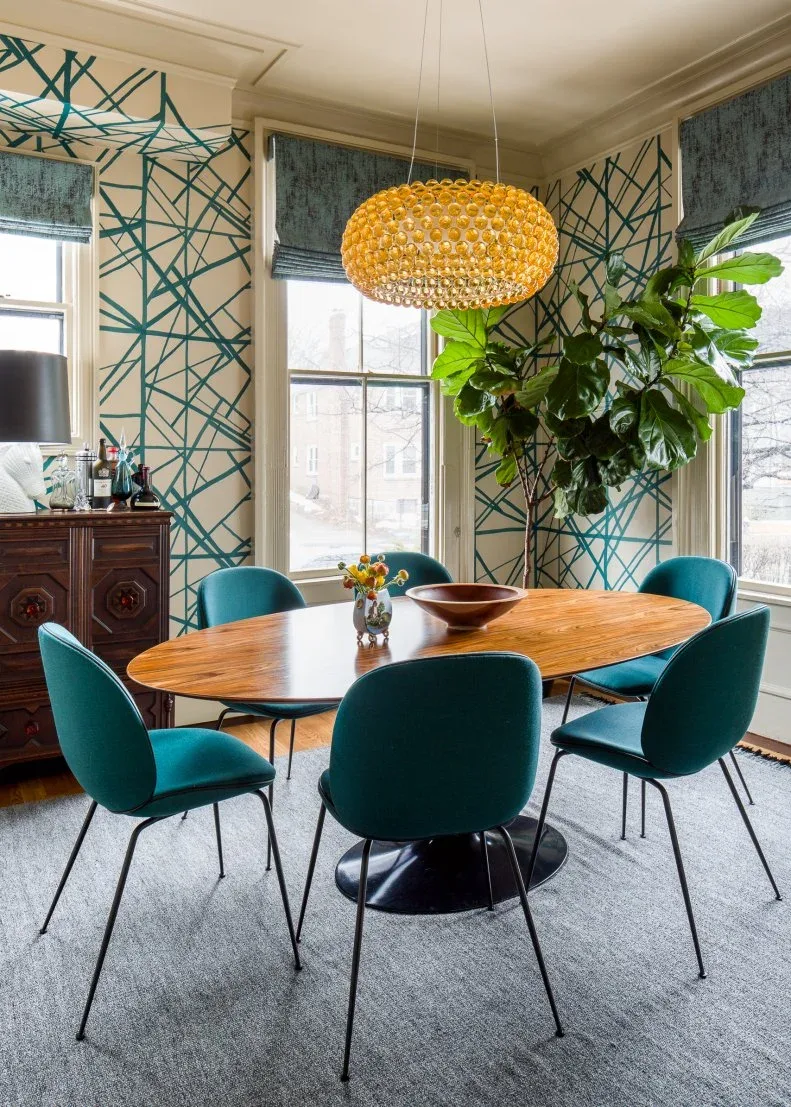
Teal angular lines cover the pale wall between dining windows behind an oval wood table and teal chairs. The repeated line color connects directly with the seating, while a yellow hanging light adds a warmer accent overhead. The pattern occupies the wall strips around the windows rather than relying on one central picture, making the whole dining corner feel deliberately connected.
Plan the line pattern around window trim, corners and switches before choosing a wall treatment. Test its scale in the room so the lines remain readable without becoming an uncomfortable visual tangle. Confirm surface preparation and cleaning instructions for the product used. Keep neighboring artwork restrained, and leave window hardware and blinds accessible instead of allowing decoration to interfere with their daily use.
IDEA 19 / 20
Use One Tall Oval Mirror Beside a Narrow Table
 SaveSupport Non AI Creator
Image credit: Photo: Genevieve Garruppo
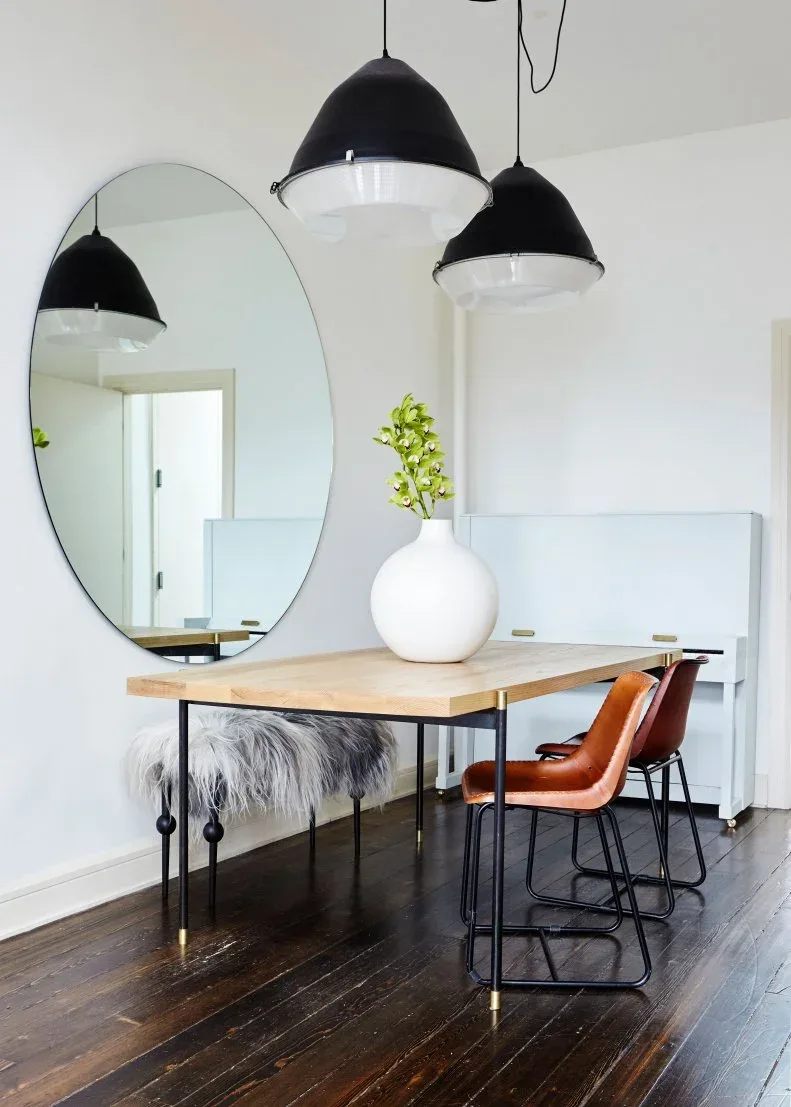
A tall oval mirror sits beside a narrow wood dining table with brown chairs and a textured bench. Black pendant shades appear in the reflection, giving the pale wall another view of the room’s overhead shapes. The mirror’s curve softens the table’s straight edge, providing one substantial wall feature in a dining area that keeps its other surfaces largely clear.
Check the mirror reflection from seated and standing positions before fixing it. Use support suited to its weight and wall construction, and preserve clearance from the bench and table edge. A tall mirror needs safe cleaning access as well as visual room. Avoid placing it where frequent chair movement can strike the frame, and consider glare from nearby windows and hanging lights.
IDEA 20 / 20
Balance a Picture Grid With One Large Circular Image
 SaveSupport Non AI Creator
Source: hgtv.com
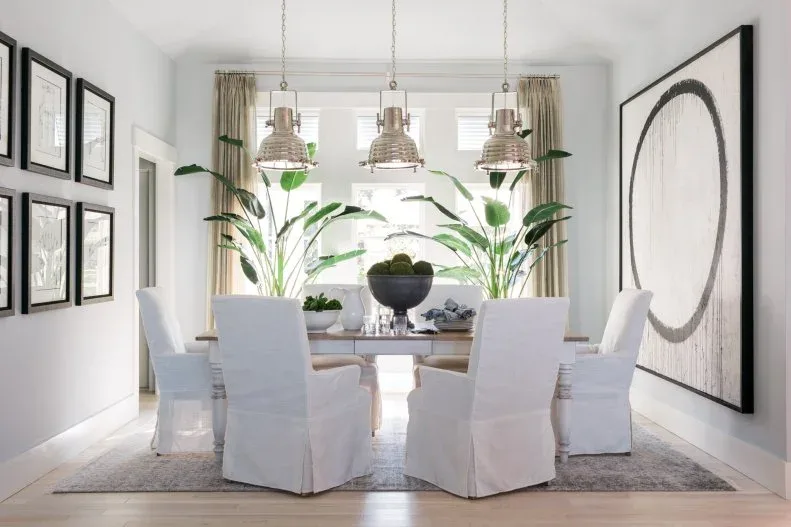
A grid of smaller dark-framed pictures occupies one dining wall opposite a large circular artwork. White upholstered chairs and a round table repeat the room’s lighter shapes, while hanging metal shades provide detail above. The two wall displays use different scales, allowing a collection of small pieces to share the room with one broad graphic image without covering both sides identically.
Check both displays from the doorway and dining seats before finalizing their sizes. Keep the smaller frames readable and the larger work clear of chair backs and circulation. Use appropriate fixings for each frame and allow safe access for cleaning. The walls can have different arrangements while sharing a border color or pale background, so avoid filling empty space merely to make the two sides match.
BRING IT ALL TOGETHER
Check the Wall From the Places You Use
View the arrangement from the doorway, dining seats and neighboring space before making fixing holes. Keep lower edges clear of chair backs and leave doors, window hardware and storage openings usable. Paper templates can help establish spacing and scale without repeatedly marking the wall.
Confirm the weight and support needs of frames, mirrors and shelves. Secure leaning objects appropriately and plan safe access for cleaning. Follow care instructions for the actual artwork and finishes, and treat electrical displays or structural alterations as installation work that needs its own planning.