Dining room shelving works best when it gives the things you use a clear home. A shelf for serving bowls needs different depth and support from a picture ledge, while a dining library must account for heavy books and access behind occupied chairs.
These settings include open wall shelves, low compartments, glazed storage with open sections and room-dividing units. Compare the visible arrangement with your table and daily routine, then confirm the actual support, load limits and safe access before installing or filling shelves.
PART 01
Connect Shelves With the Dining Setting
IDEA 01 / 20
Combine Serving Storage With Two Open Shelves
 SaveSupport Non AI Creator
Source: domino.com
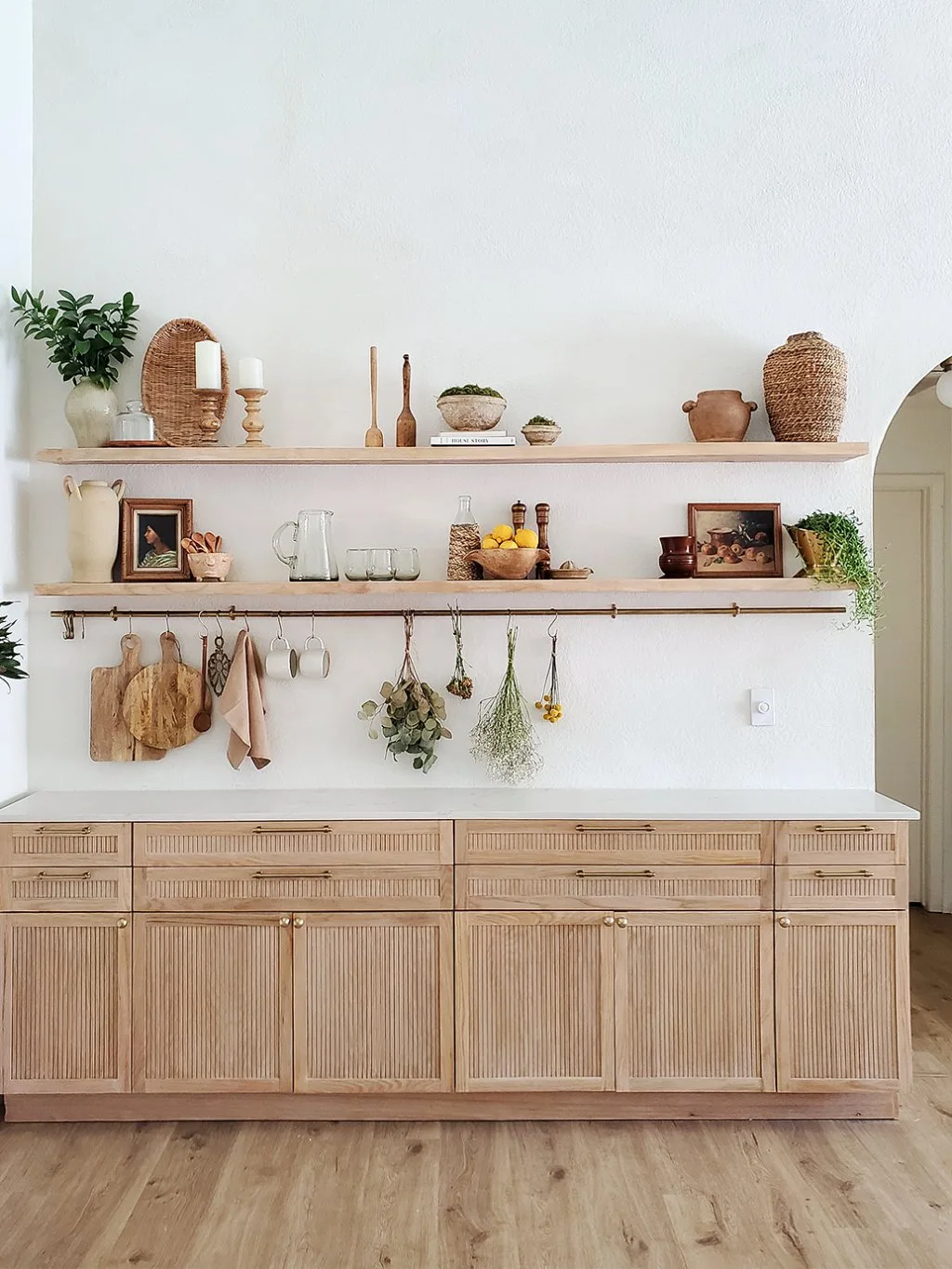
Two pale wood shelves sit above a fluted serving cabinet, with glassware, framed pictures and small decorative objects arranged across them. A narrow hanging rail holds cups, boards and textiles below the lower shelf. The cabinet supplies a broad working surface, while the open shelves keep selected items visible without filling that surface with every piece used for entertaining.
Separate frequently used serving pieces from objects kept mainly for display. Leave enough height to lift a jug or tray off the lower shelf without hitting the one above. Confirm the shelf and rail load limits and use fixings appropriate to the wall. Keep hanging textiles away from spills or appliances, and allow space to wipe the serving surface without moving the entire display.
IDEA 02 / 20
Make a Dining Library With Repeated Compartments
 SaveSupport Non AI Creator
Source: houzz.com
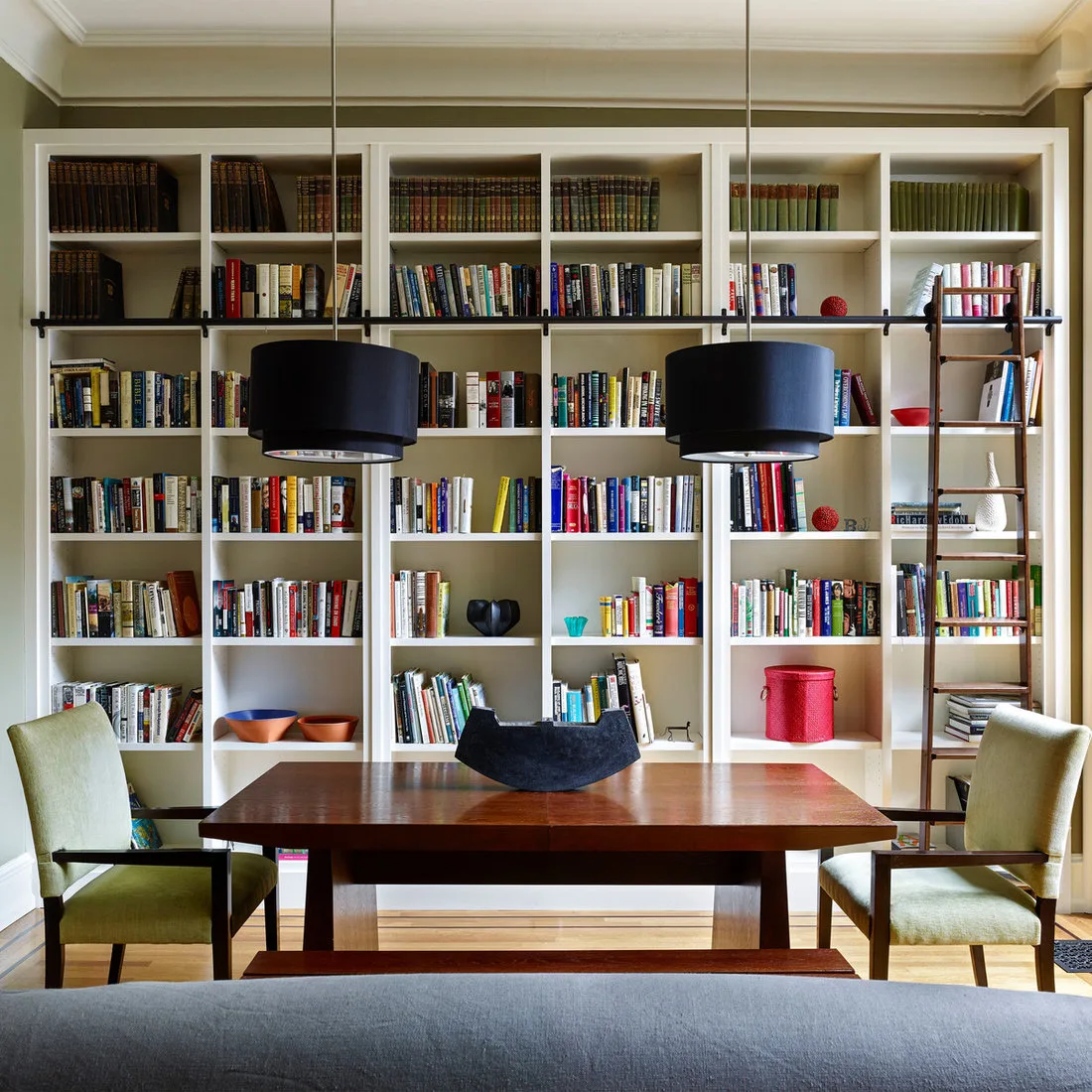
Full-wall white shelving creates a dining library behind a wood table and green chairs. Repeated rectangular compartments organize the books into a clear grid, with occasional bowls and colored objects interrupting the rows. Dark pendant shades give the dining group a stronger center. The shelves supply the room’s main visual detail, so the table does not need a large collection of decorative pieces.
Plan shelf spacing around the books and objects you actually own rather than making every opening identical by habit. Books are heavy, so confirm shelf spans, supports and load limits before filling a wall. Keep a safe route to the upper sections and avoid using dining chairs as access equipment. Leave room between the table and shelving for browsing, cleaning and moving seats.
IDEA 03 / 20
Frame a Window Bench With Useful Shelves
 SaveSupport Non AI Creator
Source: houzz.com
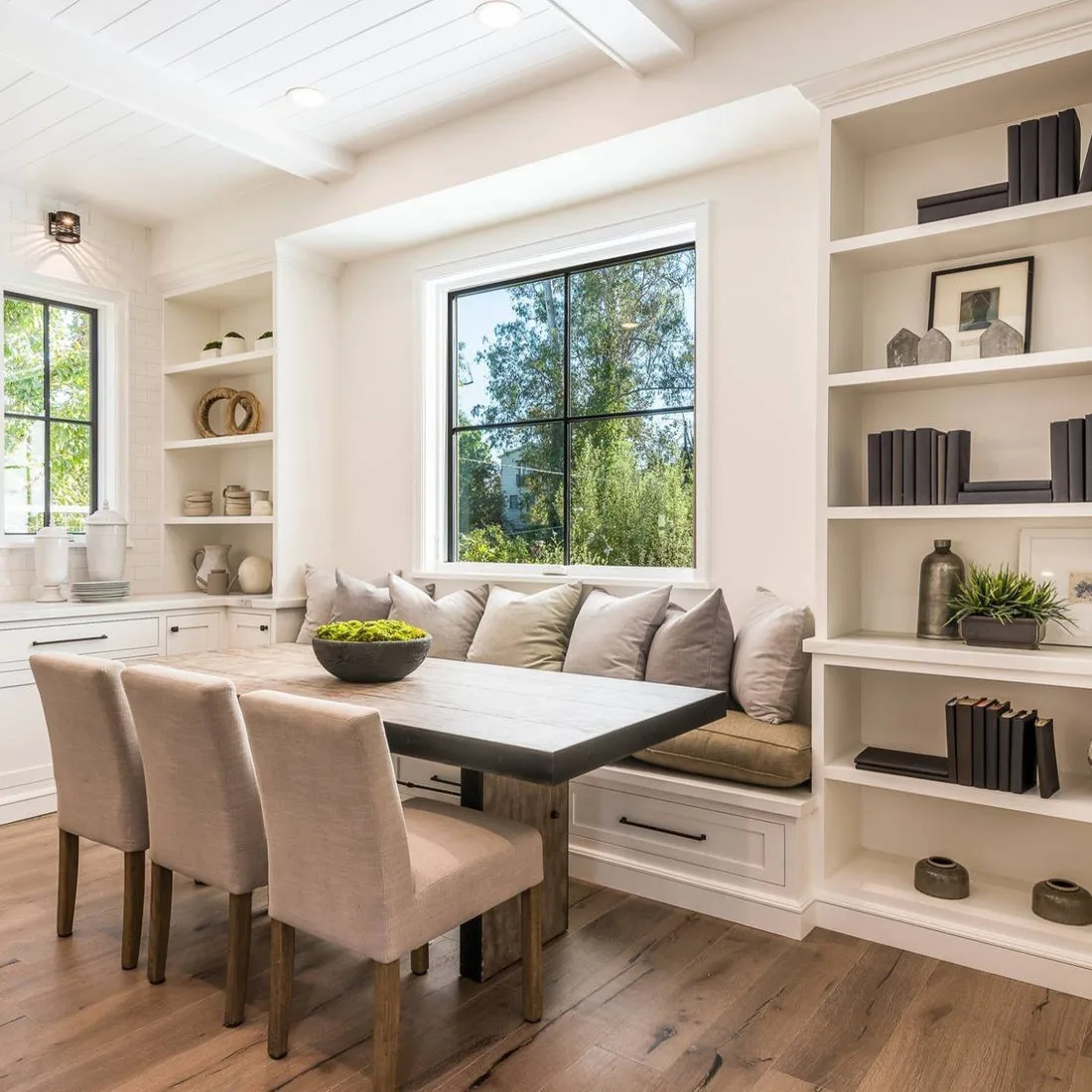
White shelves frame a wide window bench beside a dark dining table and pale chairs. The open compartments hold books, vessels and pictures, while lower cupboards and bench drawers offer less visible storage. Keeping the shelving pale allows the window view to remain prominent. The arrangement gives a small dining setting several storage types without placing a separate cabinet in the seating route.
Check how the shelves meet the bench cushion and window trim before planning their depth. Someone sitting at the table should not lean against projecting shelf edges. Store heavy items where they can be reached comfortably, and leave drawers usable with chairs pulled back. Confirm wall support and shelf loads, then keep enough empty space around displayed objects to dust the compartments easily.
IDEA 04 / 20
Use Open Shelving to Divide a Dining Nook
 SaveSupport Non AI Creator
Source: houzz.com
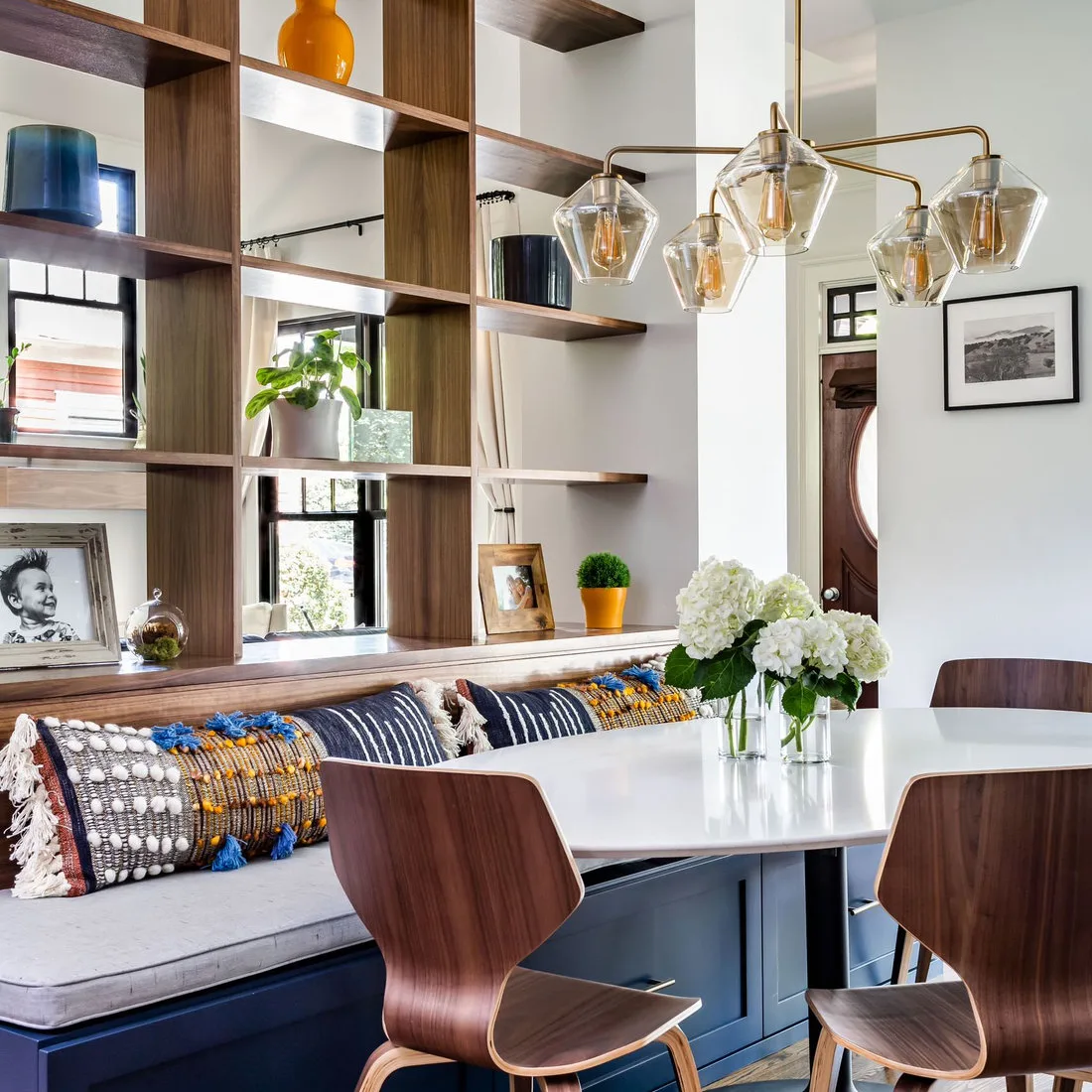
An open wood grid rises behind a blue dining bench, allowing views through the compartments toward the adjoining space. Books, colored vessels and small plants occupy selected sections rather than every opening. Patterned cushions soften the bench below, while a pale table and curved wood chairs keep the eating surface distinct. The shelving divides the nook without creating a solid wall.
Treat a room-dividing shelf as a structure that needs proper support, not just a place to arrange objects. Confirm its fixing method and stability before adding books or breakable pieces. Keep objects from overhanging toward seated people, and consider how the display looks from both sides. Leave access for cushion removal and cleaning, especially where the shelf meets the bench back.
IDEA 05 / 20
Display Serving Bowls on Bracketed Wood Shelves
 SaveSupport Non AI Creator
Source: houzz.com
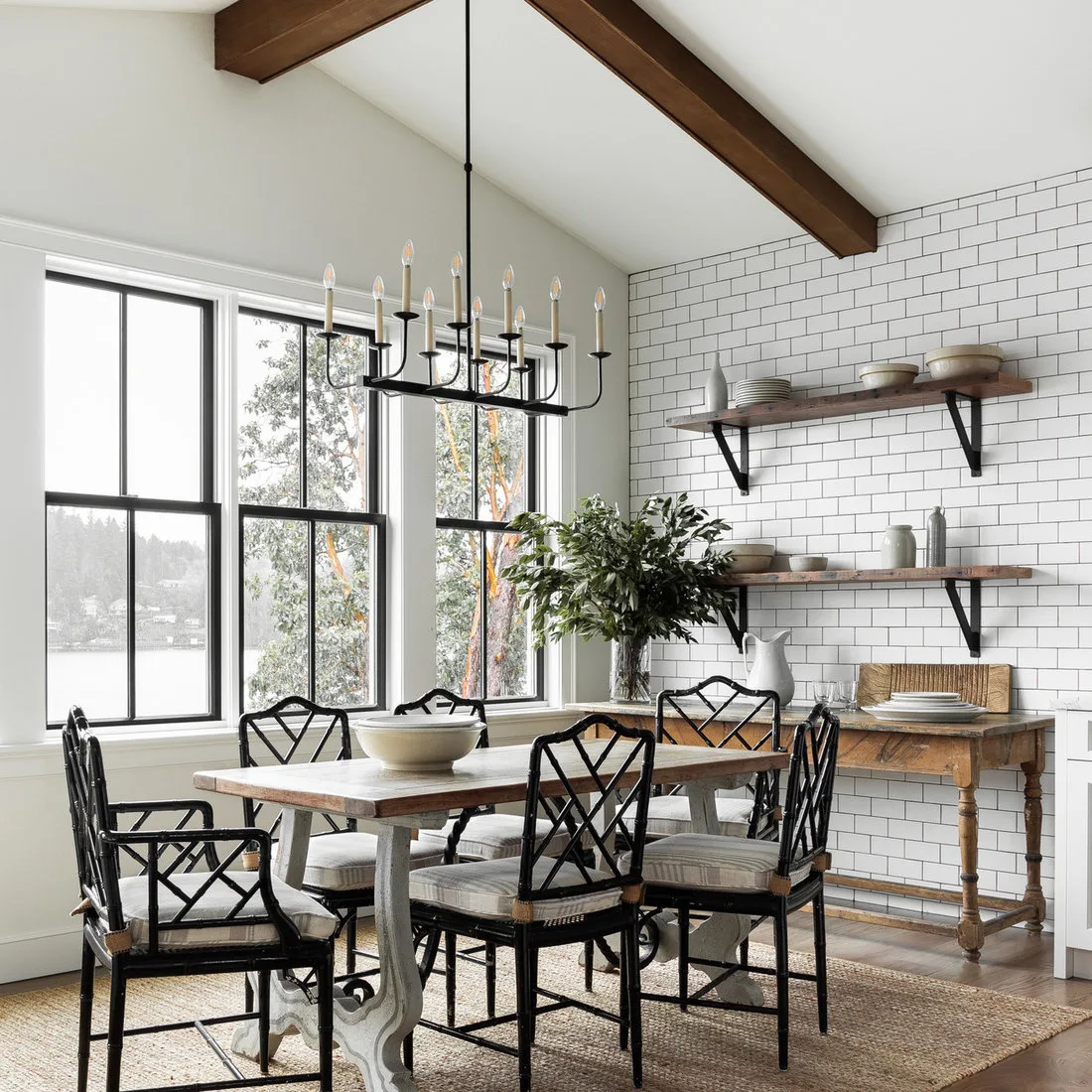
Two bracketed wood shelves display pale bowls against a white tiled wall beside the dining table. A wood console below carries plates and a pitcher, while dark dining chairs repeat the color of the shelf brackets and hanging light. The shelves add practical storage at the room’s edge, leaving the table itself available for meals rather than permanent display.
Check bowl height, shelf depth and comfortable lifting space before positioning the brackets. Heavy stacks need support suited to both the wall construction and shelf span. Drilling into a tiled surface requires the correct method and a check for services behind it. Keep the console top usable for setting down a bowl, and arrange everyday pieces where they can be reached without stretching over furniture.
PART 02
Keep Serving and Everyday Storage Accessible
IDEA 06 / 20
Carry White Shelving Around a Bright Opening
 SaveSupport Non AI Creator
Source: houzz.com
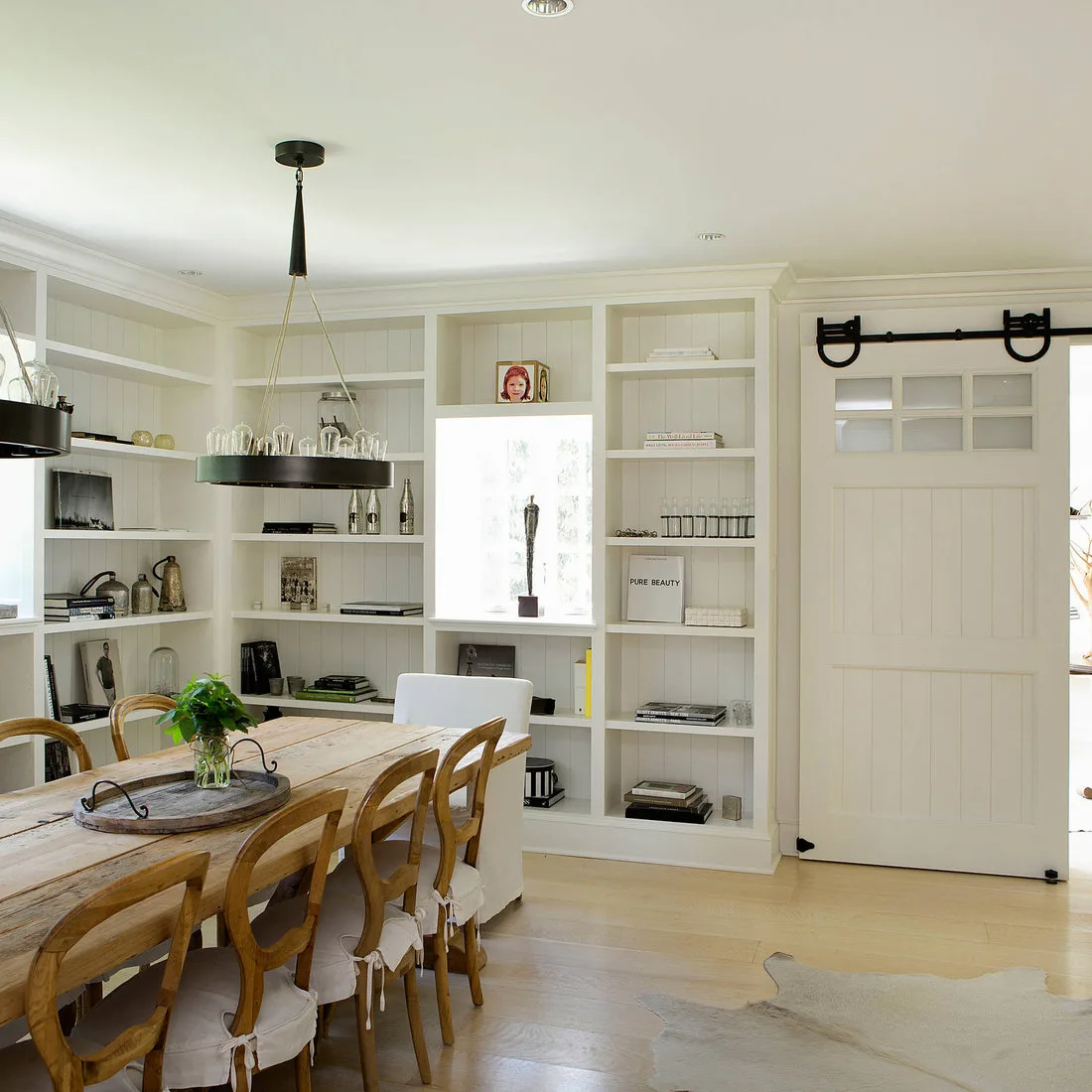
White open shelves surround a narrow bright opening behind a long wood dining table. Books, pictures and serving pieces occupy the compartments, with enough pale background remaining to keep the wall light. A sliding door continues the white finish at the side. The shelving adds storage around the opening rather than covering it, helping the dining room retain its connection to the space beyond.
Set out the shelf divisions around the opening and door hardware before fixing any trim. Keep items from interfering with the sliding door or its track, and preserve access for maintenance. Allow a clear route behind occupied dining chairs to reach the lower shelves. Check the load capacity for books, and choose a cleaning routine that does not require shifting every object each time.
IDEA 07 / 20
Leave an Open Center Between Glazed Cupboards
 SaveSupport Non AI Creator
Source: houzz.com
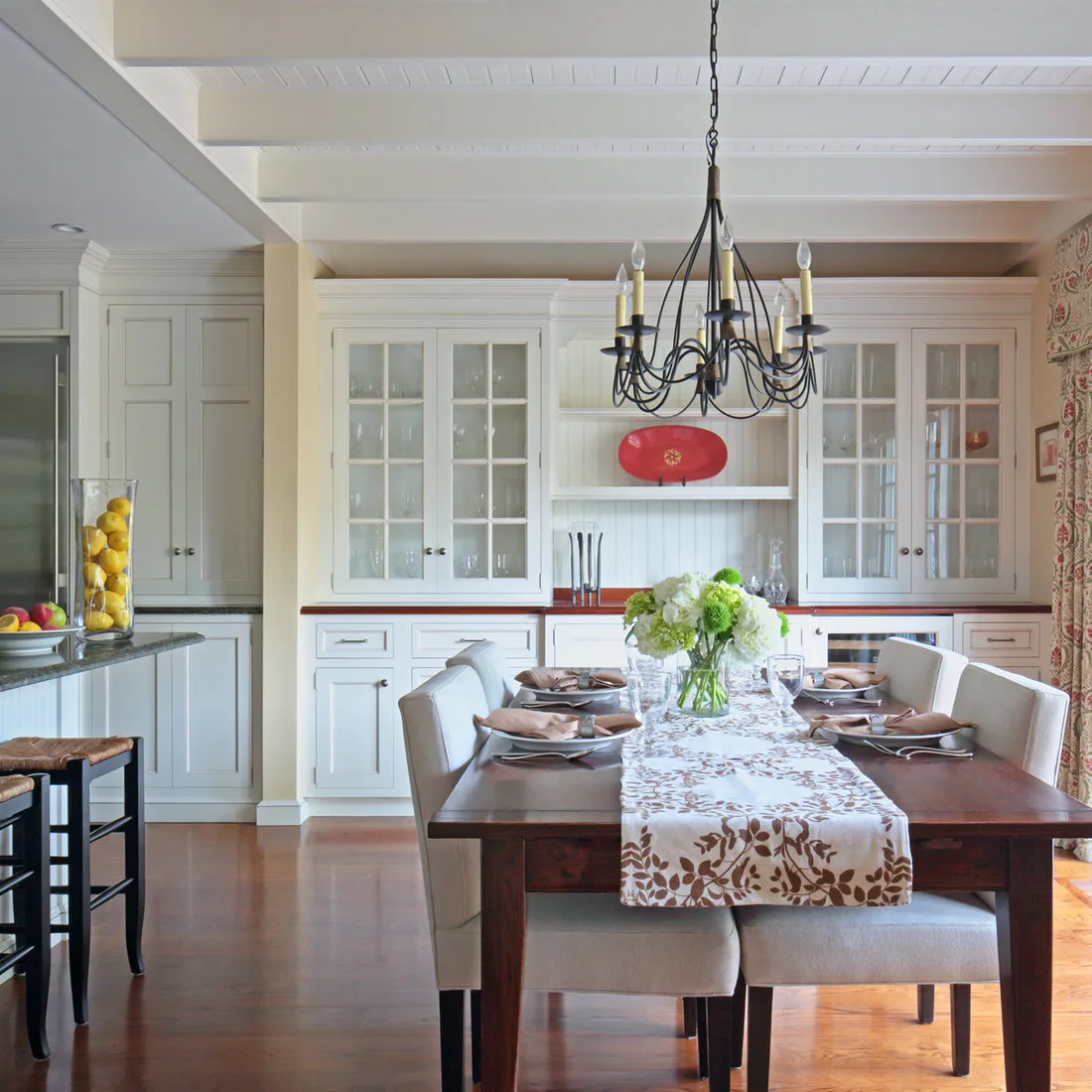
Glazed cupboards flank open central shelves in a white dining hutch behind a set wood table. A red serving piece adds a clear accent within the pale storage wall. The open center gives selected items a more visible position, while the side cupboards keep other pieces behind doors. A long counter below connects those storage sections and offers space beside the dining table.
Keep the open center for pieces you use or enjoy seeing rather than treating it as overflow from every cupboard. Check the height of tall serving items and leave a landing place on the counter. Glazed doors still need opening clearance when chairs are pulled back. Confirm shelf load limits and secure the unit appropriately, then clean both the open shelves and the glass as part of routine care.
IDEA 08 / 20
Build a Serving Wall With an Uncluttered Shelf Center
 SaveSupport Non AI Creator
Source: houzz.com
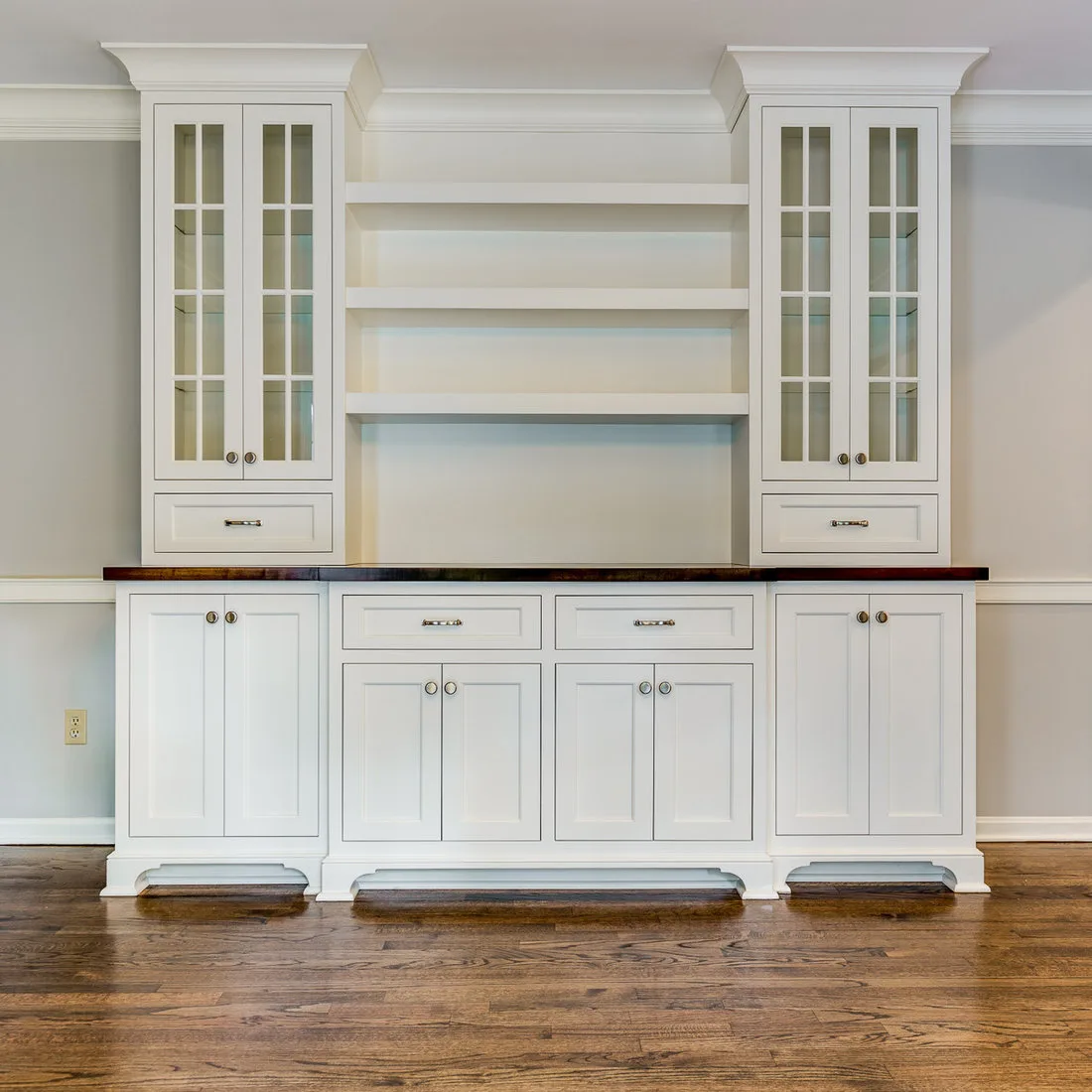
A dark counter runs across a white serving cabinet, with open central shelves between two narrow glazed cupboards. The empty center makes the shelf spacing and cabinet proportions easy to see. Drawers and lower doors add storage below without competing with the display area. This detail view shows how a serving wall can combine visible shelving with a broad surface for setting out food or tableware.
Plan the shelf center around the tallest pieces you want to display and the counter space needed for serving. Leave enough room to lift objects out without tilting them past a shelf edge. Check door clearance, fixings and any electrical points before installation. Keep heavy or fragile items within comfortable reach, and use the actual counter and cabinet care instructions when wiping meal spills.
IDEA 09 / 20
Turn Dining Shelves Into a Coffee Station
 SaveSupport Non AI Creator
Source: houzz.com
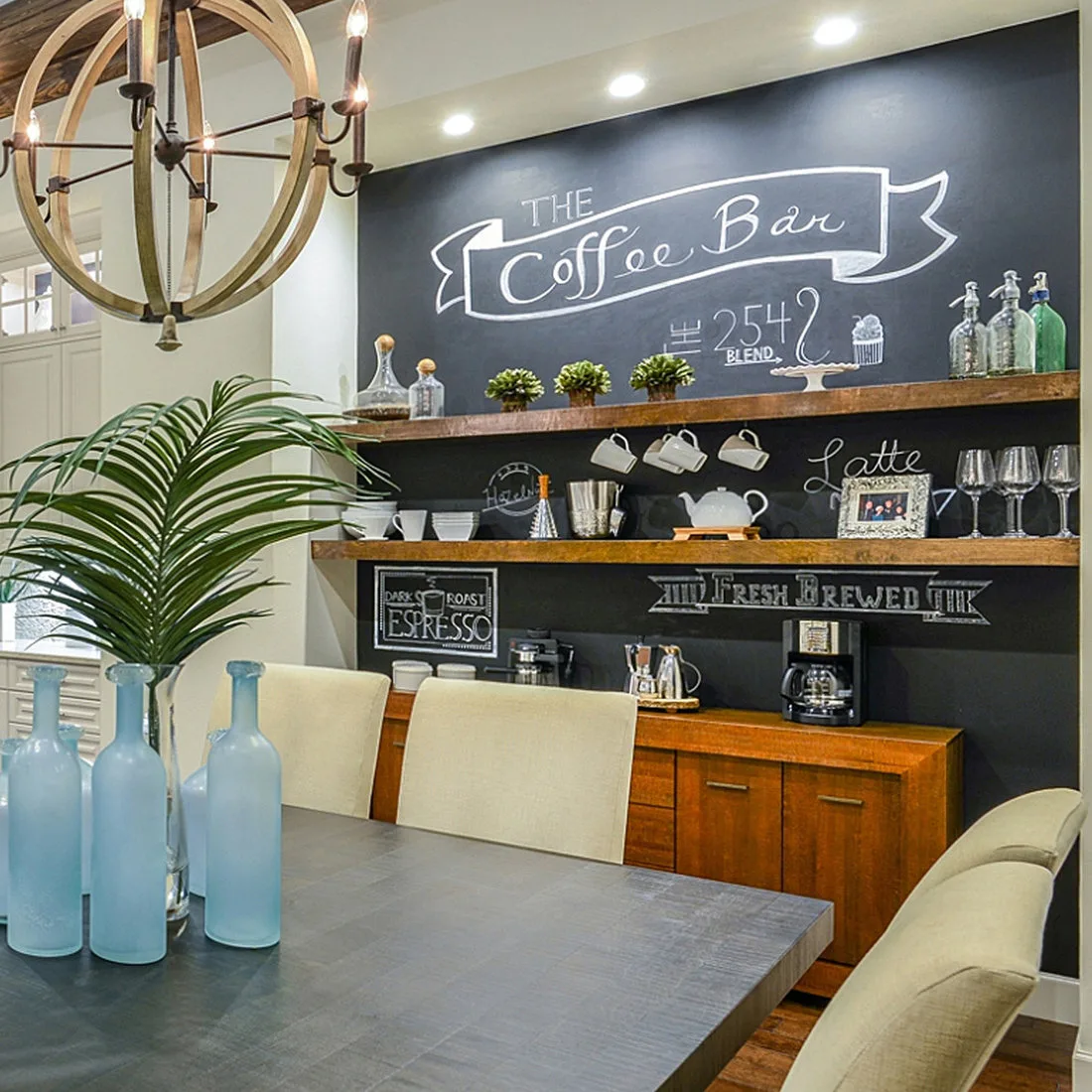
Two wood shelves hold cups, glassware and small containers above a cabinet used as a coffee station. A dark wall with chalk lettering gives the shelf contents a strong backdrop beside the dining table. Hanging cups use the space below a shelf, while the cabinet top provides a separate area for appliances. The arrangement brings serving supplies close to the seats without placing everything on the table.
Plan appliance sockets and clearances independently of the decorative shelf layout. Check the appliance instructions for heat, steam and ventilation before putting a shelf above it. Keep cords out of chair routes and hanging cups within easy reach. Confirm rail and shelf capacities, and leave a practical surface for filling cups. Wipe splashes promptly using products appropriate to the actual wall and cabinet finishes.
IDEA 10 / 20
Use Low Compartments Beside a Dining Bench
 SaveSupport Non AI Creator
Source: houzz.com
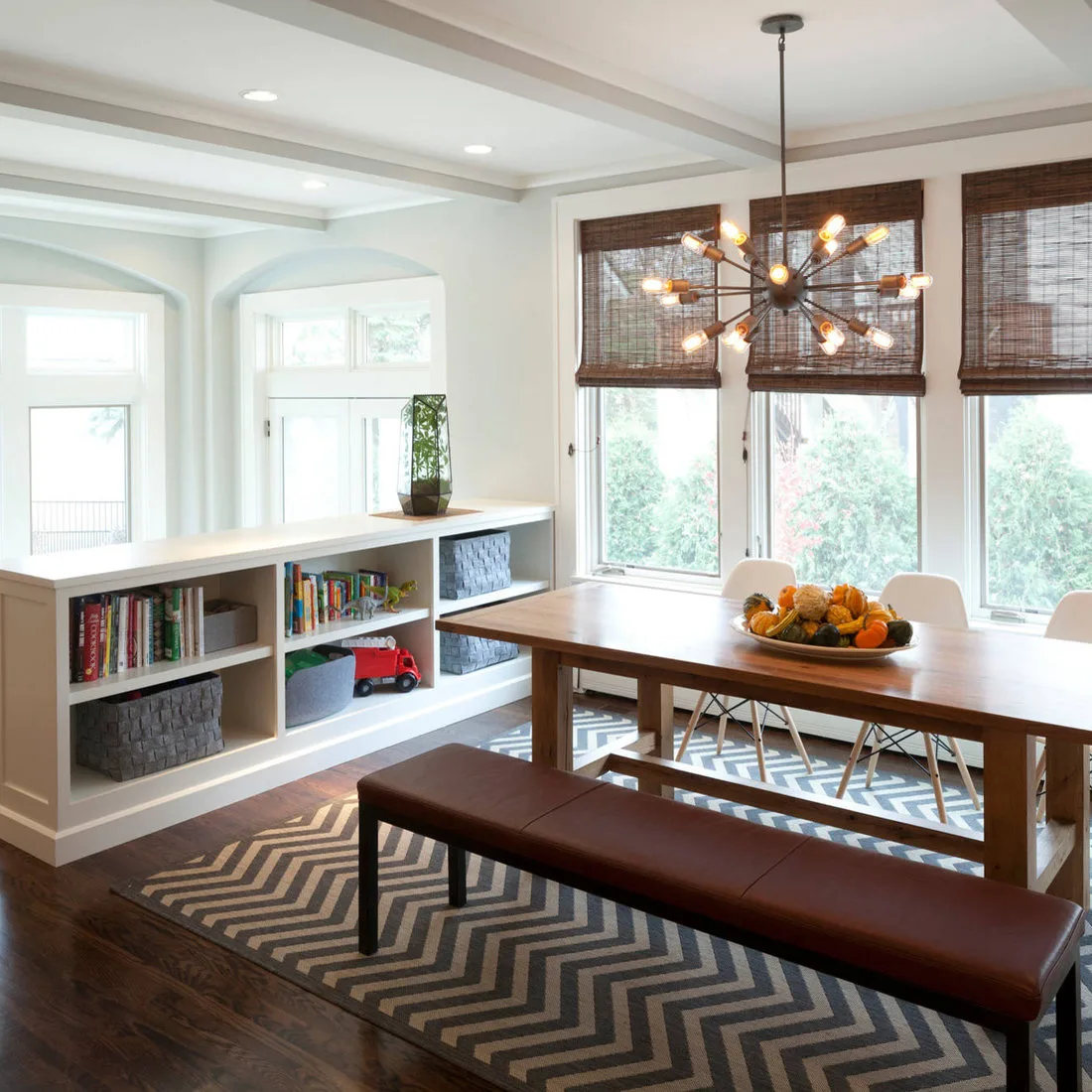
Low white cubby shelving sits beside a wood table and long upholstered bench. Books, baskets and a small toy occupy different compartments, making the storage useful for more than serving pieces. Its broad top forms a visual boundary beneath the opening to the next space, while the low height leaves the windows and room beyond visible. The dining area gains accessible storage without a tall cabinet.
Choose basket sizes around the actual openings and leave handles easy to grasp. Keep heavy items low and make sure the unit is stable and secured as required. Check access with the bench pulled away from the table, since a long seat can block several compartments at once. Use closed baskets for small loose pieces and leave the top clear enough to wipe and use comfortably.
PART 03
Give Books and Pictures Their Own Place
IDEA 11 / 20
Add Bookshelves Beside a Dark Dining Nook
 SaveSupport Non AI Creator
Source: houzz.com
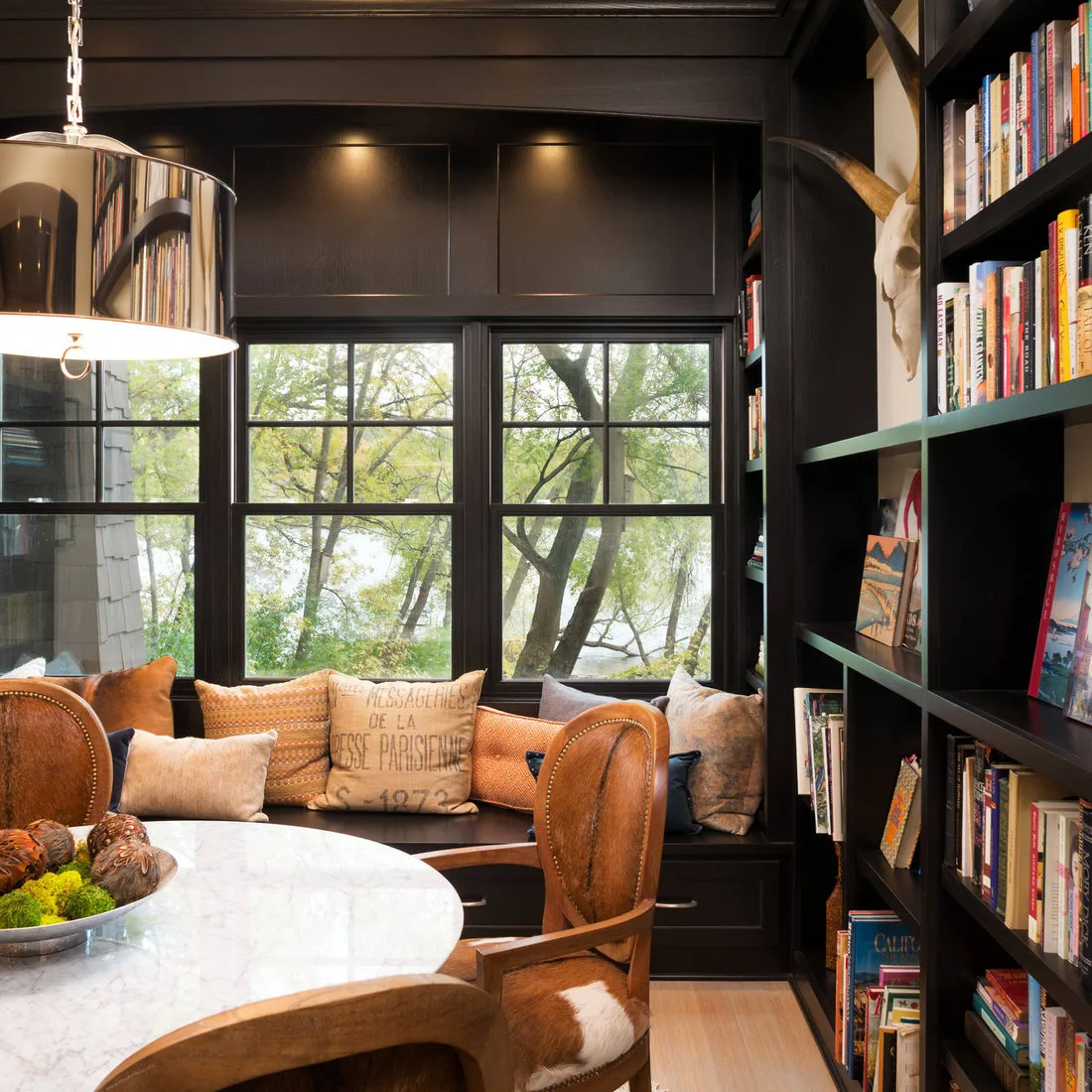
Dark bookshelves sit beside a window bench and pale round tabletop, with warm-toned chairs and cushions softening the dining nook. The book spines bring many small colors into an otherwise dark architectural setting. Large compartments allow pictures and taller objects to sit among the books, so the shelves feel like part of a lived-in dining corner rather than a separate display wall.
Keep the shelf edges clear of shoulders and chair movement in a close dining nook. Check book weight and support before filling long shelves, and leave enough space to remove a volume without scraping the finish. Protect books from drinks placed near the table edge. Make the lower compartments easy to reach for cleaning, and use appropriate lighting rather than adding small lamps with cords across the seating route.
IDEA 12 / 20
Keep Open Shelves Light in a Windowed Room
 SaveSupport Non AI Creator
Source: houzz.com
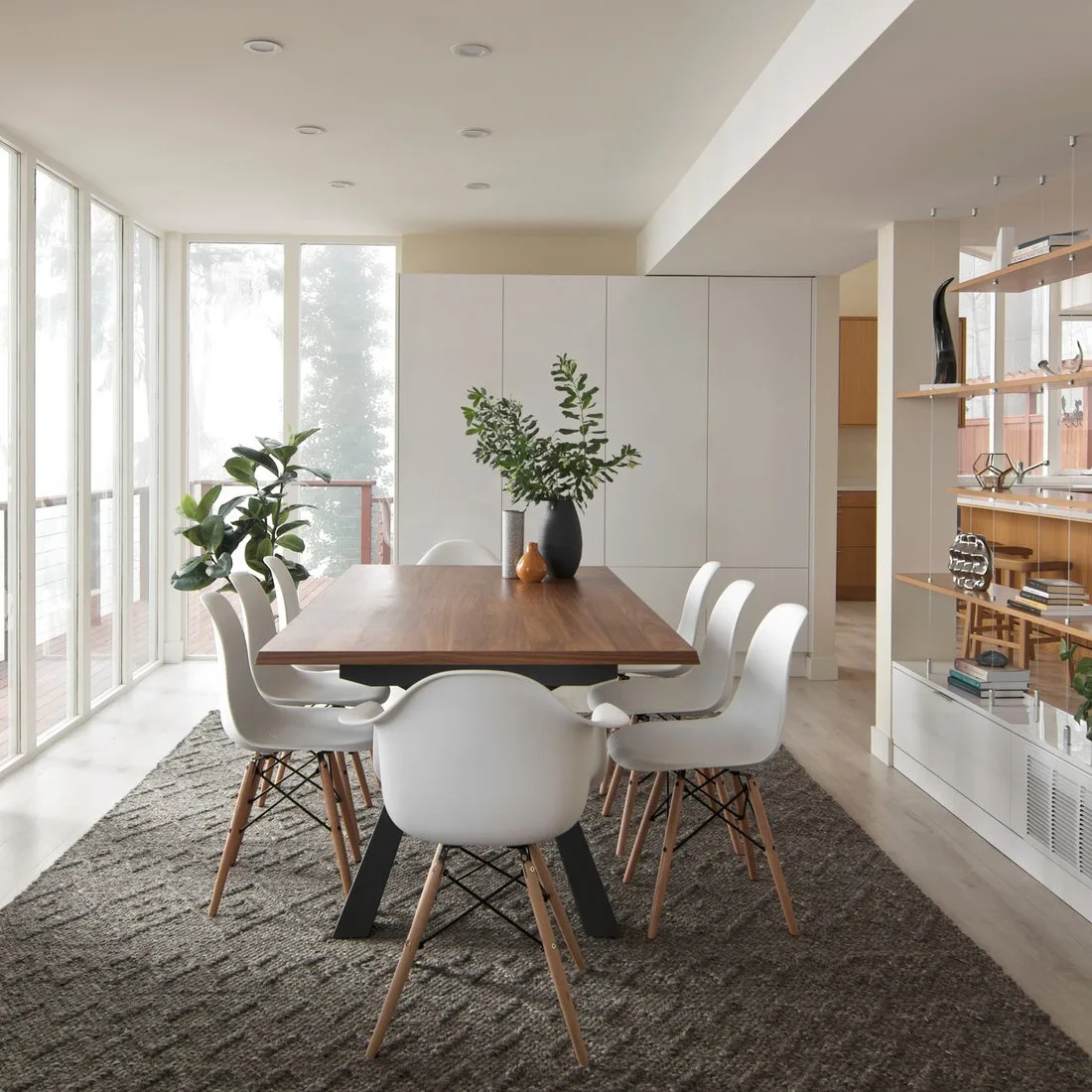
Pale open shelves hold books and small display pieces beside a wood table and white chairs in a bright windowed room. Their slim horizontal lines keep the storage visually lighter than a solid full-height cabinet. The white chair shells and surrounding walls connect with the shelf supports, while the wood tabletop introduces a warmer center within the pale setting.
Choose the shelf depth around the objects you need to store, not simply the narrowest profile available. Confirm support and load limits for books or heavier vessels. Keep breakable items away from shelf edges near dining chairs, and check sunlight exposure before displaying fragile finishes or paper. Leave room to dust around objects and preserve access to any heating or ventilation equipment beneath the shelves.
IDEA 13 / 20
Use Slim Ledges for a Dining Picture Collection
 SaveSupport Non AI Creator
Source: houzz.com
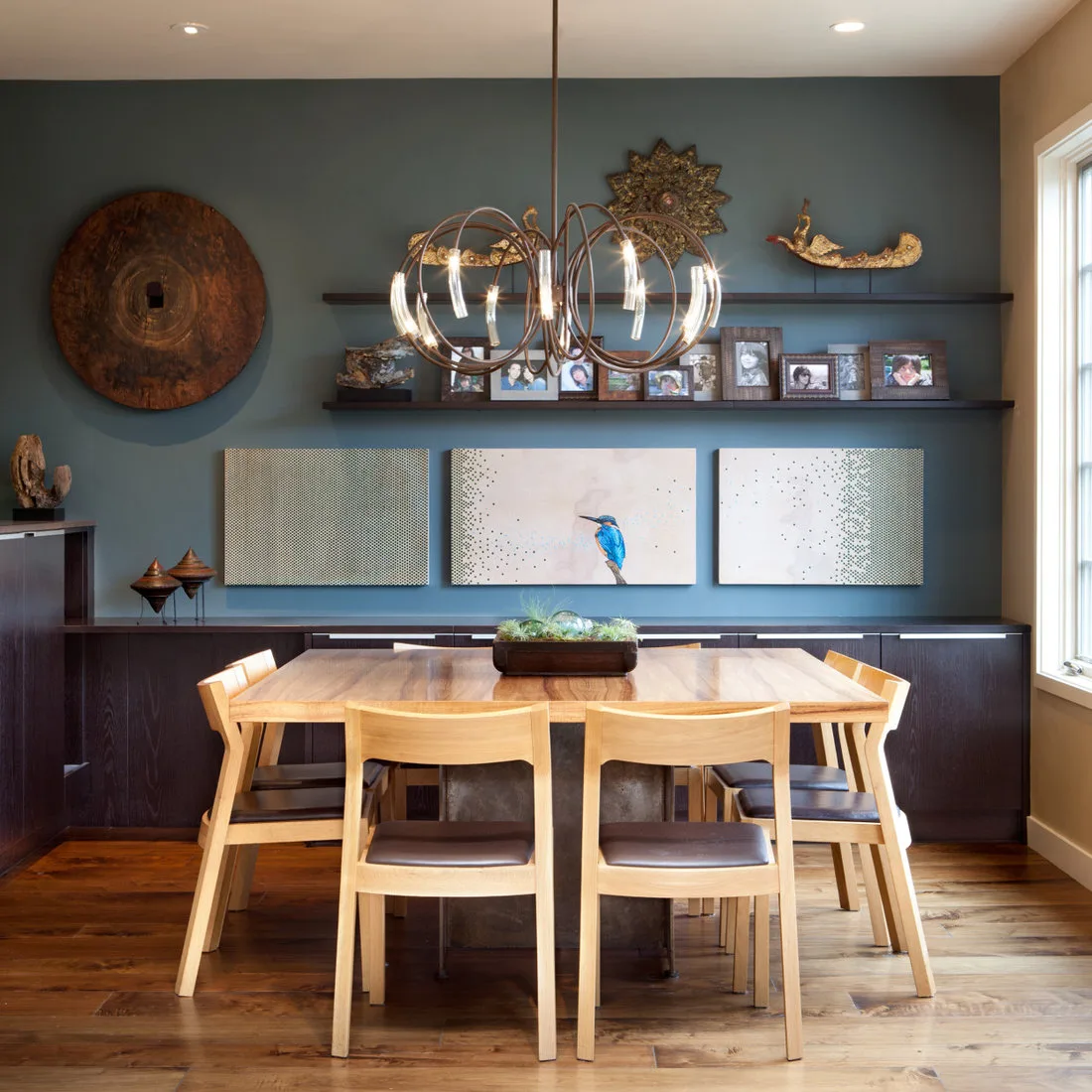
Two slim dark ledges sit above a row of larger artworks on a blue dining wall, with framed photographs grouped along the lower ledge. A wood table and matching chairs create a warm foreground, while low dark storage runs below the wall display. The ledges keep smaller pictures grouped at a consistent height, allowing the collection to change without placing many individual frames across the dining surface.
Choose ledges deep enough for the frames and their supports, then confirm the fixings and weight limits. A picture ledge is not automatically suitable for heavy crockery. Keep frames from leaning where chair movement or a knock could dislodge them. Plan the vertical gap around the artwork below, and leave enough room to dust the ledges without repeatedly taking apart the whole collection.
IDEA 14 / 20
Wrap a Bench Corner With Picture Shelves
 SaveSupport Non AI Creator
Source: houzz.com
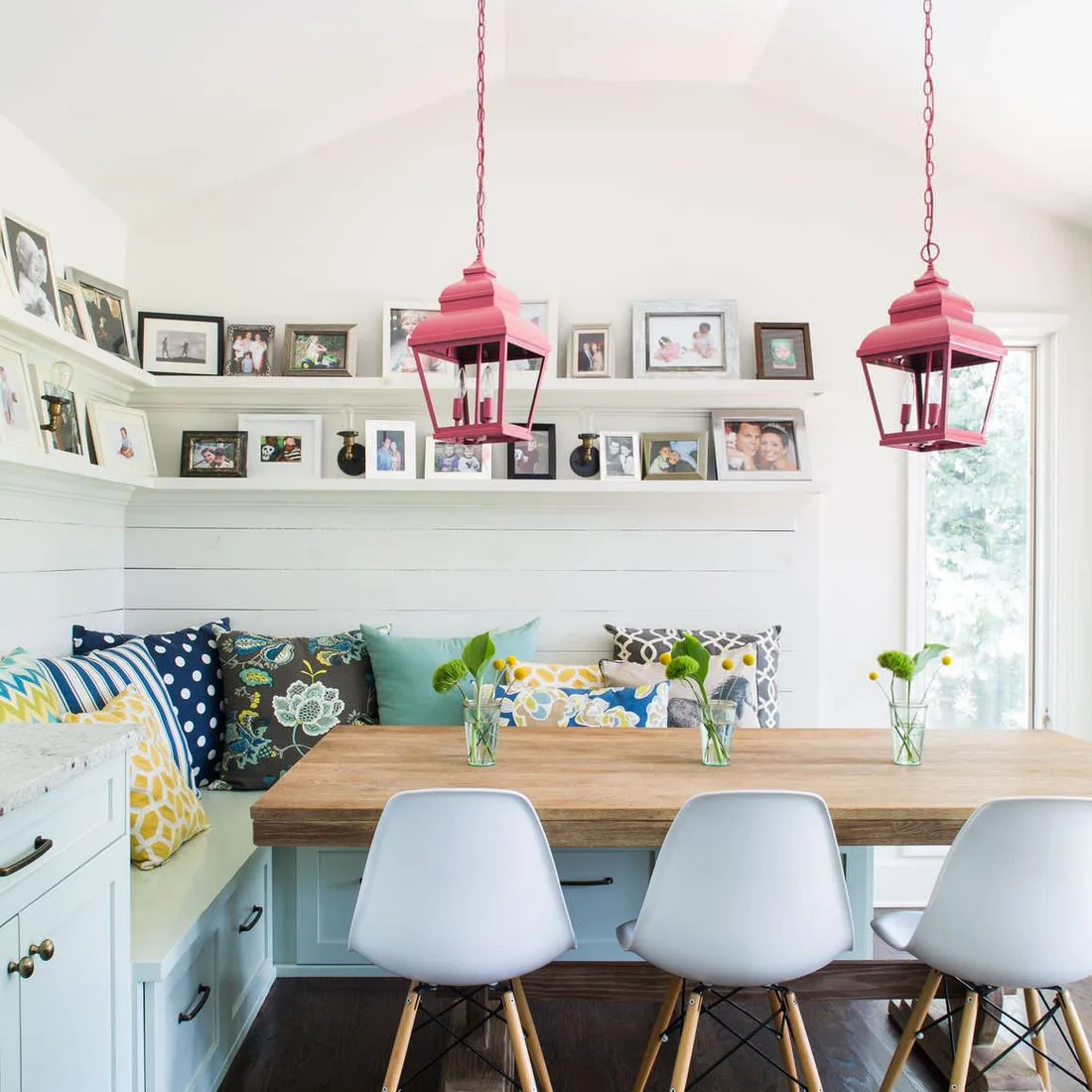
White picture shelves turn around a dining bench corner, displaying framed photographs above bright patterned cushions. White chairs and a wood table keep the eating area straightforward, while two pink lantern lights repeat a stronger accent overhead. The shallow shelves let the picture collection follow the wall without occupying the bench or tabletop, giving the nook a personal backdrop.
Check head and shoulder clearance above the bench before setting the shelf height. Use supports and fixings suitable for the wall and frame weights, and avoid precariously leaning pictures over occupied seats. Leave a clear gap between the cushions and lowest shelf so cleaning and cushion removal stay easy. Group frames with some breathing space rather than filling every available length of ledge.
IDEA 15 / 20
Share Open Shelves With an Eat-In Kitchen
 SaveSupport Non AI Creator
Source: houzz.com
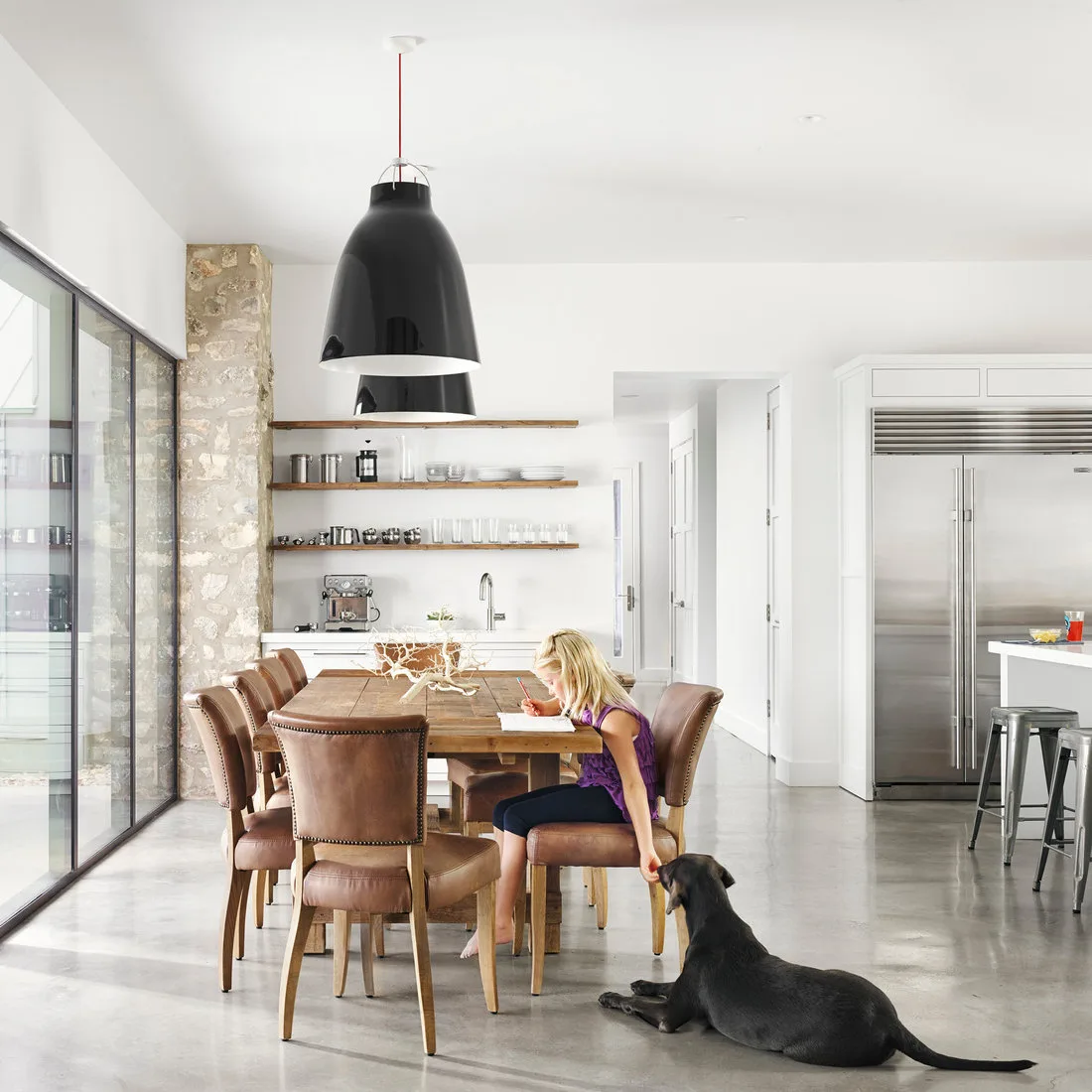
Three wood shelves hold glassware and serving pieces beside an eat-in kitchen table. Brown upholstered chairs and a wood tabletop add warmth, while a pale wall and large windows keep the shared room bright. The shelves provide a practical link between preparing and serving food, with the most visible pieces close to the dining seats rather than hidden at the far end of the kitchen.
Keep the dining route clear when reaching for glassware, and place frequently used pieces where you can lift them comfortably. Check shelf support and the load of stacked dishes before installation. Open storage near kitchen activity needs regular cleaning, so avoid crowding the shelves with objects that are difficult to move. Confirm that nearby appliances have the clearance and ventilation required by their instructions.
PART 04
Fit Shelves Around Windows and Shared Uses
IDEA 16 / 20
Repeat White Shelves Around a Kitchen Window
 SaveSupport Non AI Creator
Source: houzz.com
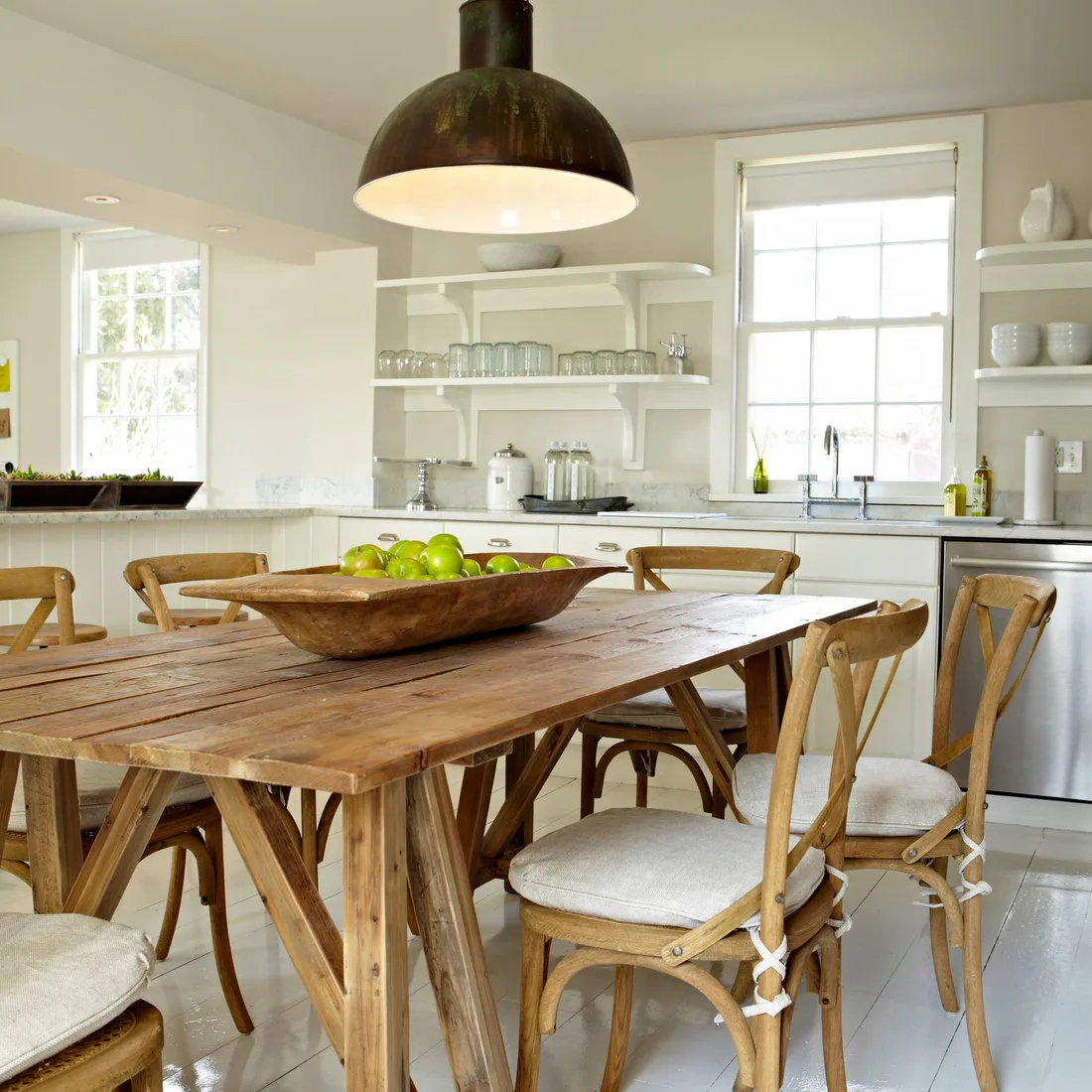
White bracketed shelves sit around a kitchen window behind a wood dining table and cross-back chairs. Rows of glasses and pale bowls keep the storage closely related to meals, while the matching shelf and wall color gives the room a light backdrop. The table occupies the foreground, showing how open kitchen shelving can also serve an everyday eating area in the same room.
Keep the window usable and leave access to its handles before adding shelves at either side. Confirm support for the actual glassware and dishes, and store heavier stacks at a comfortable lifting height. Open shelves near a sink may collect splashes, so check the finish and clean regularly. Leave a landing place for serving pieces rather than carrying everything directly from a high shelf to the table.
IDEA 17 / 20
Place Shelves Above a Separate Work Surface
 SaveSupport Non AI Creator
Source: houzz.com
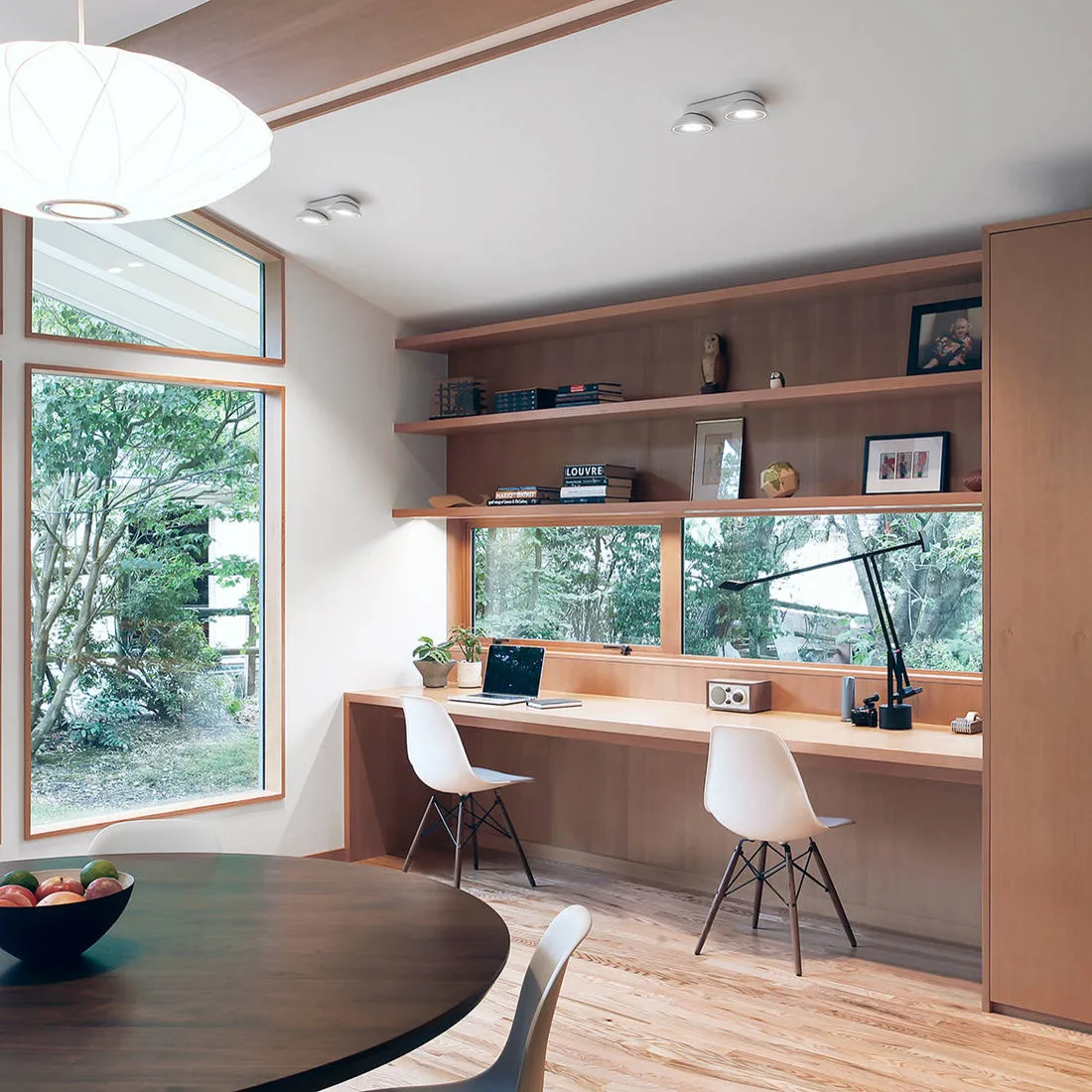
Wood shelves rise above a window-facing work surface beside a round dining table. Books and framed pictures occupy the upper space, while two white chairs face the desk below. The dining table remains a separate surface in the foreground. The shelves make storage useful for a room that handles both meals and work without forcing office supplies onto the eating surface.
Give work materials their own shelf area and keep the dining tabletop clear when it is time to eat. Check the shelf depth and fixings for book loads, and leave space to remove items without leaning over a monitor. Plan cable access independently of the shelving and keep cords away from chairs. Preserve window access and a comfortable route between the desk and dining group.
IDEA 18 / 20
Line an Alcove With Four Long Book Shelves
 SaveSupport Non AI Creator
Source: houzz.com
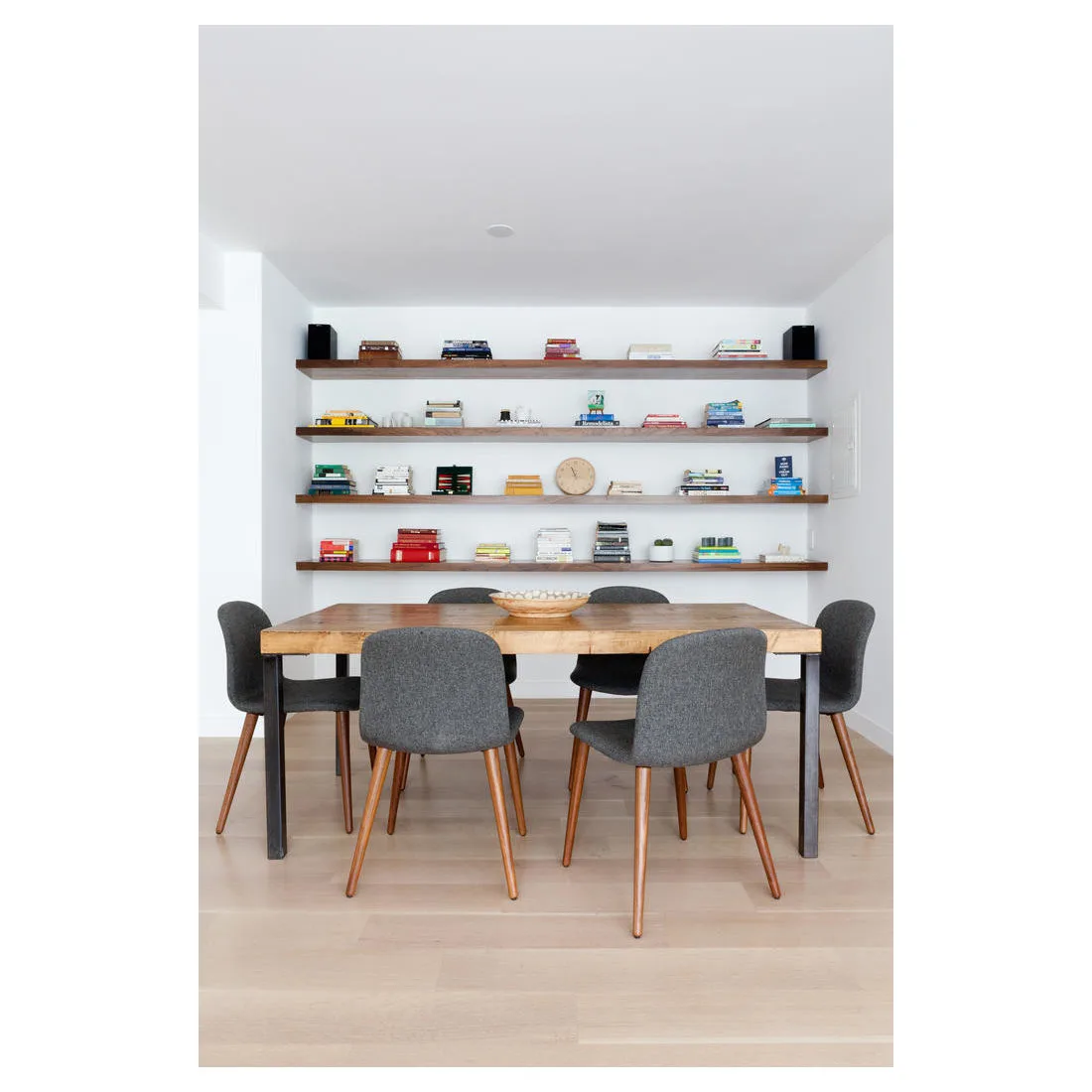
Four long wood shelves run across a pale dining alcove behind gray chairs and a wood table. Small book groups and objects leave sections of the shelf surfaces visible, keeping the storage from becoming a solid wall of spines. The wood shelves repeat the tabletop’s warmth, while their dark end supports give the otherwise pale recess a clearer outline.
Confirm how long shelf spans are supported before filling them with books. Avoid assuming the visible end pieces alone can carry a heavy collection. Measure the alcove carefully and leave enough depth for your actual books and objects. Keep chairs from striking the lower shelf, and plan a safe way to reach the upper level without climbing on the dining furniture.
IDEA 19 / 20
Use Bright Freestanding Shelves as a Pair
 SaveSupport Non AI Creator
Image credit: Photo: Tessa Neustadt
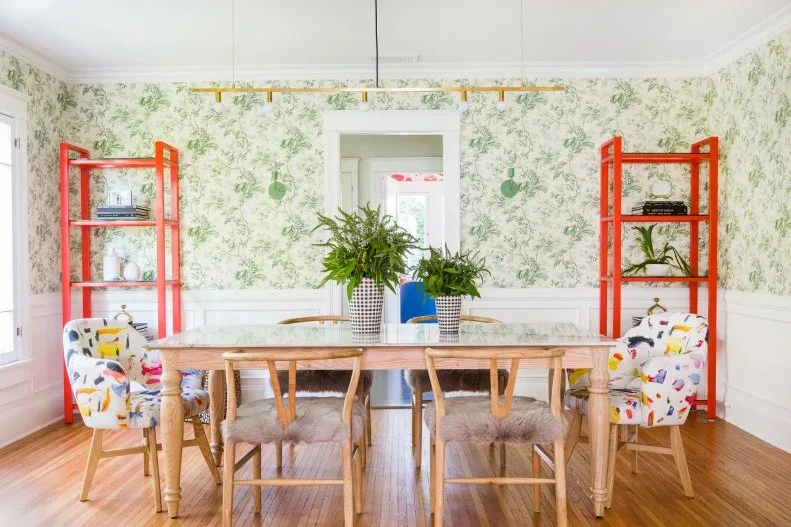
Two bright red open shelving units stand on either side of a wood dining table against green botanical wallpaper. Pale dishes, vessels and a plant occupy their tiers, while colorful chair upholstery brings smaller accents into the foreground. The paired units give the wall a balanced structure without needing built-in cabinetry, and their strong color makes the storage part of the room’s character.
Check stability and secure tall units according to their instructions before adding breakable serving pieces. Keep enough room beside occupied chairs to reach the shelves safely. Place heavier objects low, and leave space around plants for watering without splashing dishes or books. A matching pair does not need identical displays; balance the overall weight while keeping the pieces you use most within comfortable reach.
IDEA 20 / 20
Use a Low Bookcase Along a Dining Wall
 SaveSupport Non AI Creator
Image credit: Photo: Meghan Bob. From: Breeze Giannasio
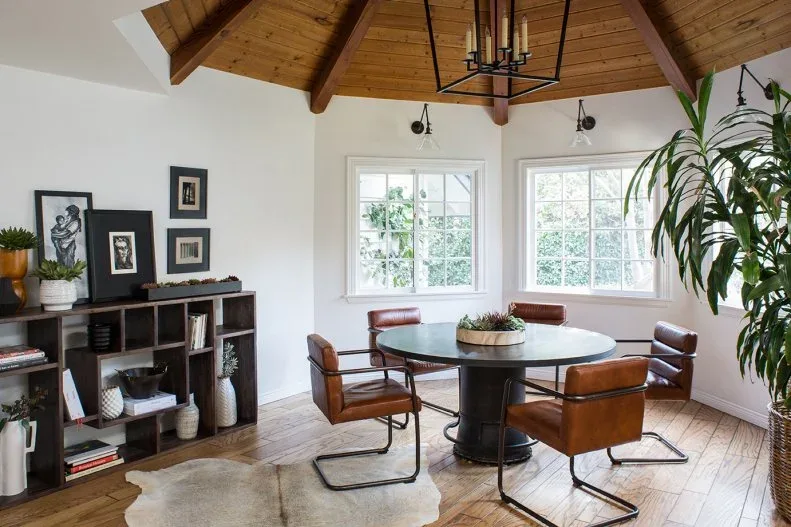
A low dark bookcase runs beside a round dining table and brown chairs under a wood vaulted ceiling. Books and pale vessels fill selected compartments, with framed pictures resting above. The lower height leaves the windows and ceiling structure visible, giving the dining area useful storage without another tall feature. Its dark outline also connects with the table base and chair supports.
Plan access to each compartment with the chairs in their normal seated positions. Keep pictures securely supported and avoid letting large objects overhang toward a passing route. Confirm the unit’s load limits and any required anchoring, particularly before adding a heavy book collection. Use the top for a restrained display so it remains easy to dust, and keep everyday serving pieces within comfortable reach.
BRING IT ALL TOGETHER
Plan the Contents Before the Shelf Layout
Measure the books, bowls and frames you want to keep, then allow room to lift each item out. Check access with chairs occupied and drawers open. Leave enough clear surface for setting down serving pieces and cleaning around the display.
Confirm wall construction, shelf support and load limits before installation. Secure freestanding units as required and keep heavy pieces within comfortable reach. Use suitable access equipment for high shelves, and leave windows, door hardware and electrical points usable.