Dining room window treatments need to work from the seats as well as look good from the doorway. Start with privacy, glare and window access, then consider how fabric or slats will move around the table. An attractive gathered panel or raised shade does not show how the treatment performs when closed.
These twenty photographs show dining spaces with simple shades, paired layers, patterned curtains and lighter decorative panels. Compare the visible arrangement with your own windows, then check dimensions, fixing needs and care guidance for the product you choose. Keep the opening and its controls usable during an ordinary meal.
PART 01
Choose Useful Shades and Window Layers
IDEA 01 / 20
Repeat Dark Gathered Shades Around a Dining Corner
 SaveSupport Non AI Creator
Image credit: Photo: Christopher Stark. From: Gioi Tran
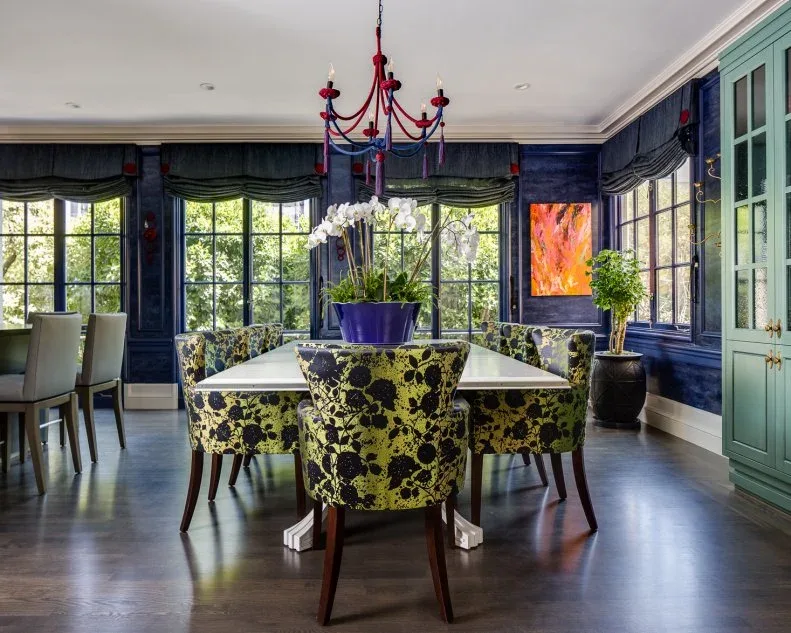
Dark gathered shades sit above black-framed windows around this dining corner. Their curved lower edges soften the straight window divisions, while the deep wall color makes the fabric feel part of the room rather than a separate pale strip. Patterned chairs and a colorful chandelier carry the stronger accents, leaving the window treatments relatively quiet despite their detailed folds.
Check how far each shade can lower and whether its gathered fabric obstructs the opening when raised. A decorative appearance does not establish its privacy or light-filtering performance. Compare samples against the dark wall in daylight and evening light, then confirm an operating system you can reach around the table. Use an appropriate cordless system where children or pets can access windows.
IDEA 02 / 20
Layer a Warm Textured Shade With Dark Curtains
 SaveSupport Non AI Creator
Source: hgtv.com
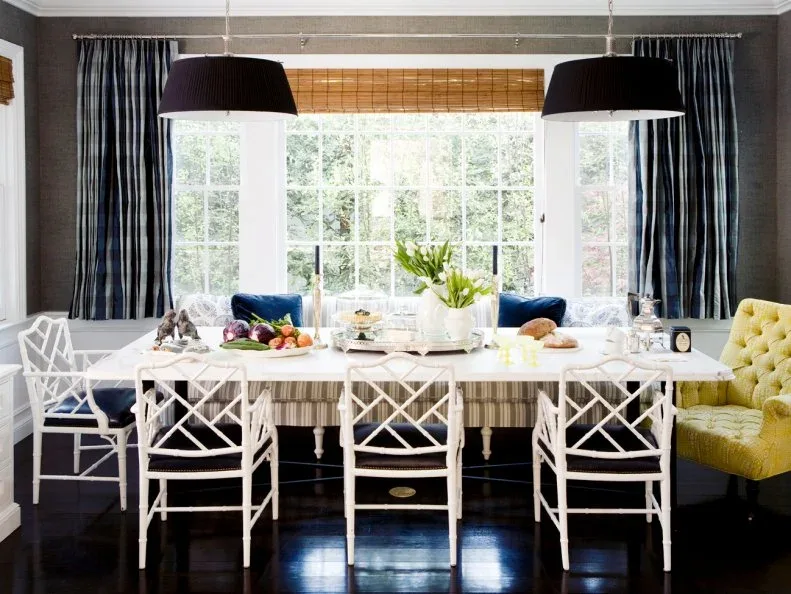
A warm textured shade crosses the top of a broad dining window, with dark curtains gathered at either end. White chairs and a pale table stand out against the darker walls, while blue and yellow seating accents add smaller colors. The two window layers give the room both a horizontal band above the glass and longer vertical outlines along its sides.
Decide what each layer needs to do before choosing two separate products. Check privacy with the shade lowered and confirm that the curtains have enough width to cover the glass if they are intended to close. Allow stacking space outside the window and keep controls reachable behind the seating. Follow the actual cleaning instructions for the textured shade rather than assuming it can be washed like curtain fabric.
IDEA 03 / 20
Keep Bay-Window Shades Clear of Bench Seating
 SaveSupport Non AI Creator
Image credit: Photo: G CRAWFORD. From: Massucco Warner Interior Design
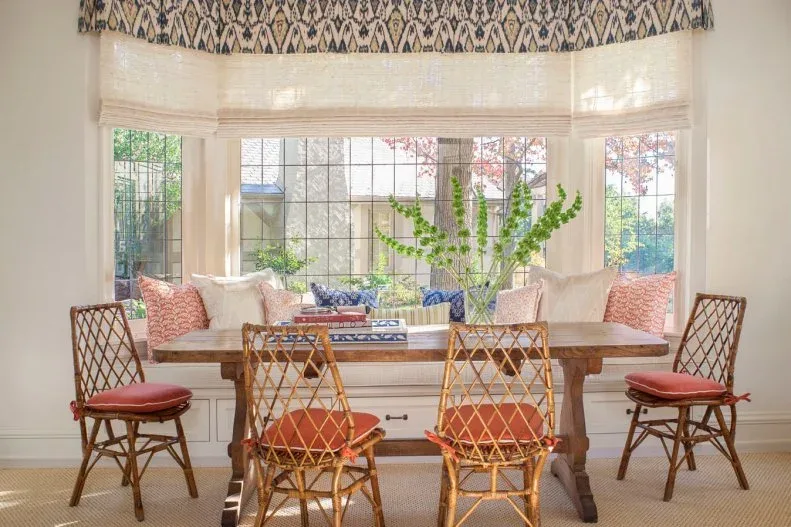
Pale gathered shades follow the windows around a dining bay above a cushioned bench. A patterned band runs along their upper edge, echoing the mix of printed cushions below without covering the whole window with a dense motif. A wood table and open-backed chairs sit in front, leaving the bay itself to provide the nook’s softer background.
Measure each bay section separately and check how adjoining treatments meet at the corners. Make sure raised fabric and fittings do not prevent the windows from opening. Choose controls that remain safe and reachable from the bench, and confirm the required coverage when the shades are down. Keep cushions away from operating hardware and allow access to clean the glass without having to balance on the table.
IDEA 04 / 20
Use Simple Folded Shades Behind a Breakfast Nook
 SaveSupport Non AI Creator
Image credit: Photo: Jon Cook. From: Pfeffer Torode Architecture
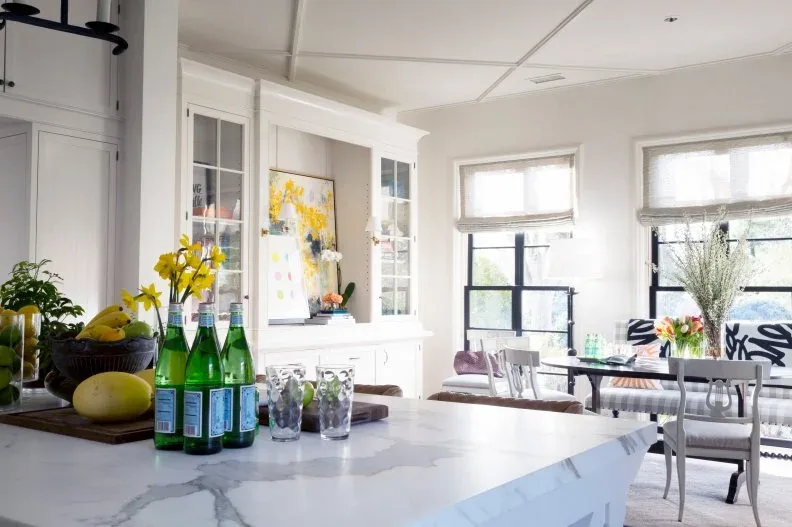
Pale folded shades sit at the tops of black-framed windows behind a breakfast nook beside the kitchen. Their simple fabric folds keep the window area lighter than the strongly patterned seating below, while the white cabinetry provides another calm surface nearby. The compact treatment works with the nook’s furniture instead of adding floor-length fabric behind chairs and a bench.
Check the shade depth against handles and opening windows before choosing an inside or outside fitting. Select fabric and hardware suited to the nearby cooking environment, following the product’s cleaning guidance. Test the lowered position for glare at breakfast and privacy after dark. Keep operating controls reachable without leaning across a set table, and leave enough clearance for the seating to move normally.
IDEA 05 / 20
Combine Soft Top Folds With Pale Window Slats
 SaveSupport Non AI Creator
Image credit: Photo by Genevieve Garruppo; Design by Rinehardt Miller Interiors
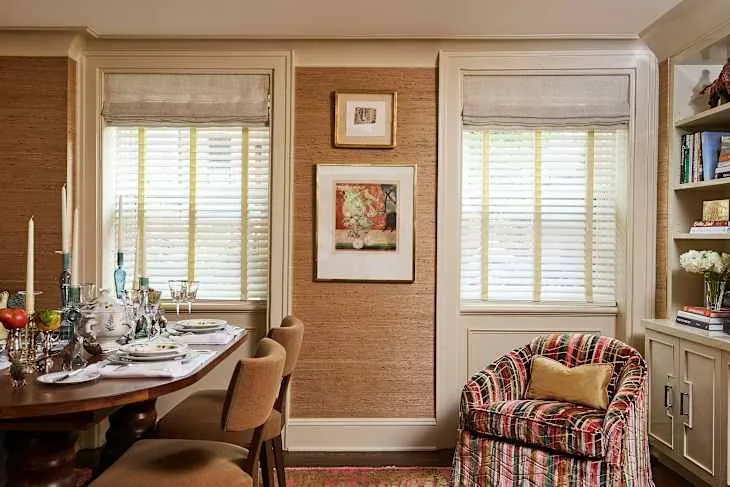
Pale folded fabric treatments sit above white window slats in this warm-toned dining room. The soft upper folds contrast with the repeated horizontal lines below, while broad white trim gives each window a clear outline. A plaid chair, small framed pictures and a nearby bookcase supply more detail, allowing the window layers to stay mostly neutral beside the dining table.
Check whether both layers are operational and decide which will control glare and which will provide privacy. Confirm that a lowered fabric shade does not obstruct the slats or their adjustment. Leave hardware accessible within the trim and compare the combined depth before ordering. Clean each layer according to its own instructions; delicate fabric and rigid window slats may need different products and techniques.
PART 02
Plan Curtains Around Doors and Daily Movement
IDEA 06 / 20
Pair Leaf-Print Panels With a White Blind
 SaveSupport Non AI Creator
Image credit: Future PLC/David Giles
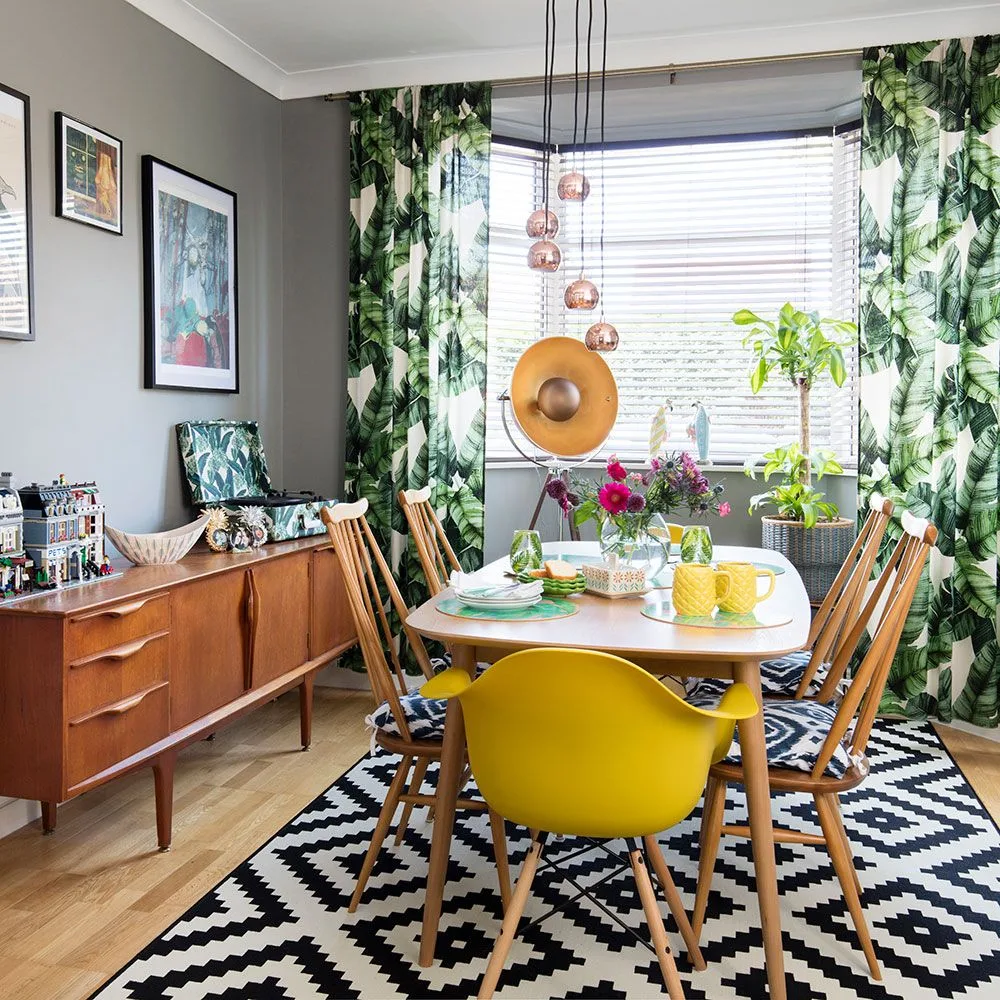
Green leaf-print panels frame a white horizontal blind behind a dining table with yellow chairs. The pale gaps in the curtain pattern keep the greenery distinct, while the blind supplies a simpler layer across the glass. A black-and-white geometric rug adds another pattern below, showing how the window treatment can be colorful without requiring the wall or tabletop to repeat every motif.
Test the blind’s slat adjustment from a seated position to see whether it controls glare without removing the view entirely. Check nighttime privacy separately. Leave room for the curtain stack at the window sides and keep hems clear of chair movement. A busy leaf print benefits from a quieter blind, but the fabric still needs practical care instructions suited to how often the dining room is used.
IDEA 07 / 20
Frame Dining Doors With Plain Taupe Panels
 SaveSupport Non AI Creator
Image credit: Future PLC/Colin Poole
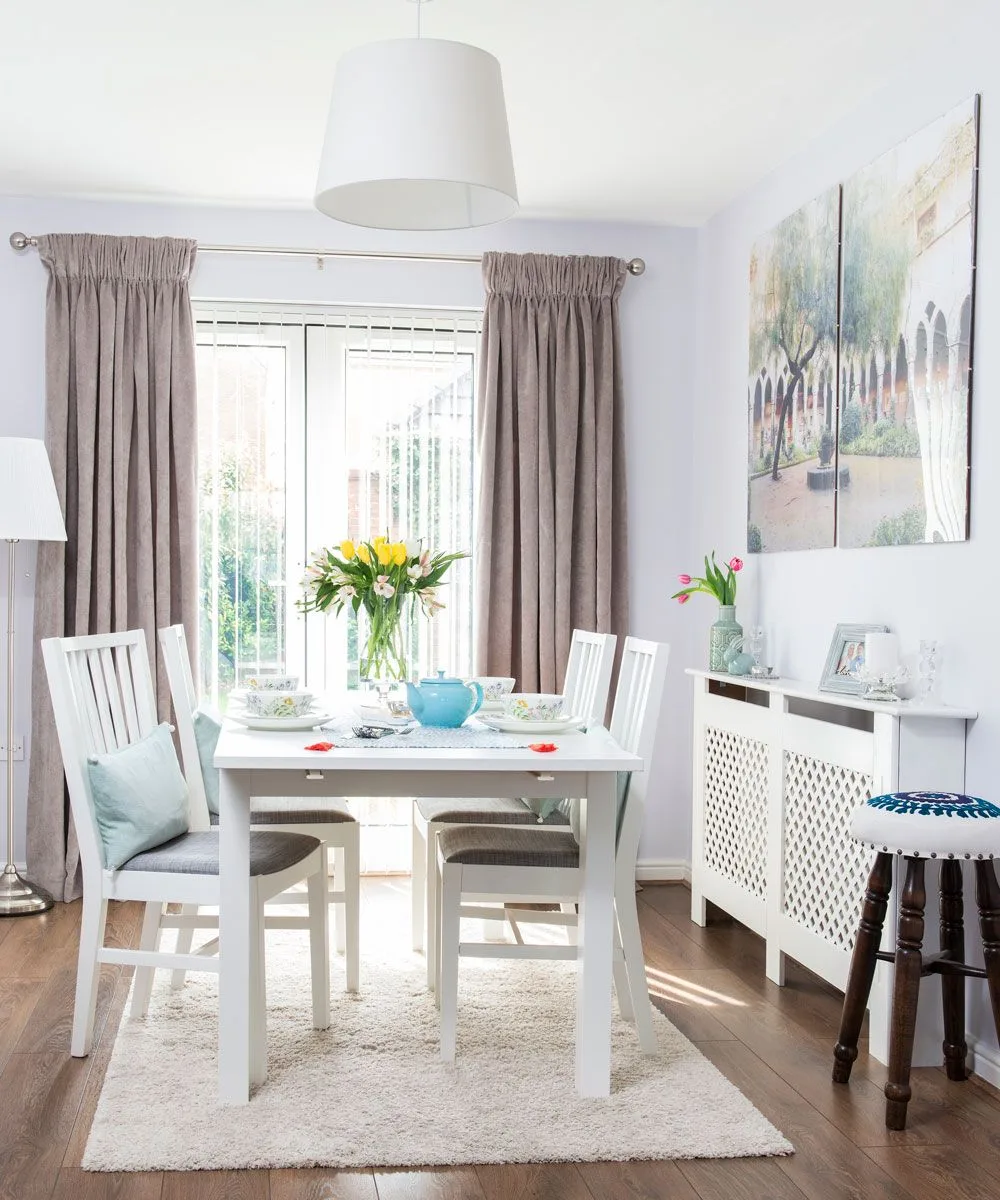
Plain taupe panels frame white glazed doors behind a small white dining table and chairs. Their gathered headings and long folds add texture to the mostly pale room, while the open center keeps the garden view visible. The restrained fabric color connects with the wood floor and chair seats, giving the doorway a softer edge without introducing another printed surface.
Check the complete door swing and handle positions before deciding where the panels will rest. Curtains intended to close need enough width for coverage as well as their folds. Leave a usable route between the table and doorway, and keep hems from dragging through an entrance used regularly. Choose a heading and support system that you can draw comfortably without pulling on the fabric itself.
IDEA 08 / 20
Keep Green Printed Panels Outside the Door Opening
 SaveSupport Non AI Creator
Image credit: Blinds2Go
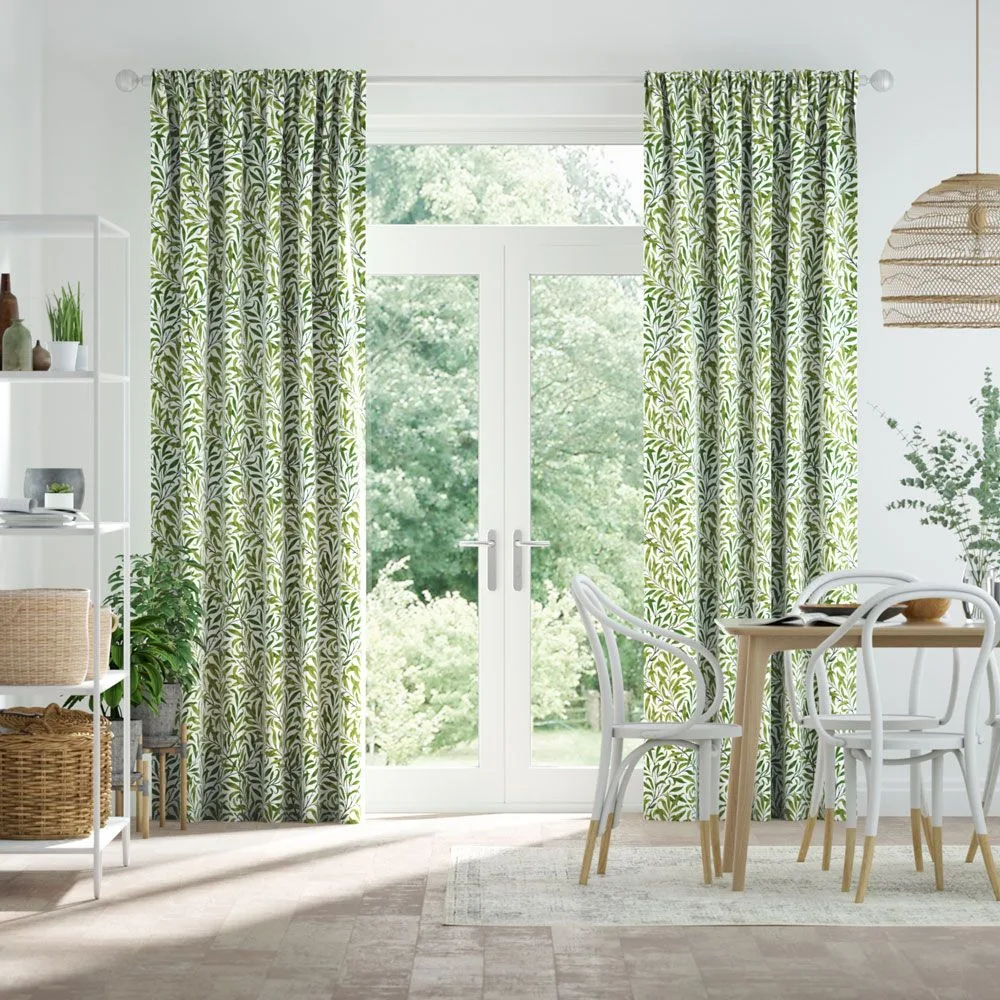
Green leaf-pattern panels sit on either side of white glazed doors beside a round wood dining table. Their pale background keeps the window outline light, while the print connects visually with the greenery outside. White chairs and a woven hanging shade continue the room’s simple shapes, so the curtains provide most of the pattern near the dining corner.
Plan the panel stack beyond the usable door opening, checking handles and hinges as well as the glass. Compare the print at its actual scale before ordering; a folded sample can hide how the leaves repeat across a full panel. Keep fabric clear of the doorway route and inspect privacy with the doors covered. Follow the curtain maker’s cleaning instructions to protect the colors and heading.
IDEA 09 / 20
Use Geometric Panels Around a Dark-Framed Door
 SaveSupport Non AI Creator
Image credit: Future PLC/Thomas Sanderson
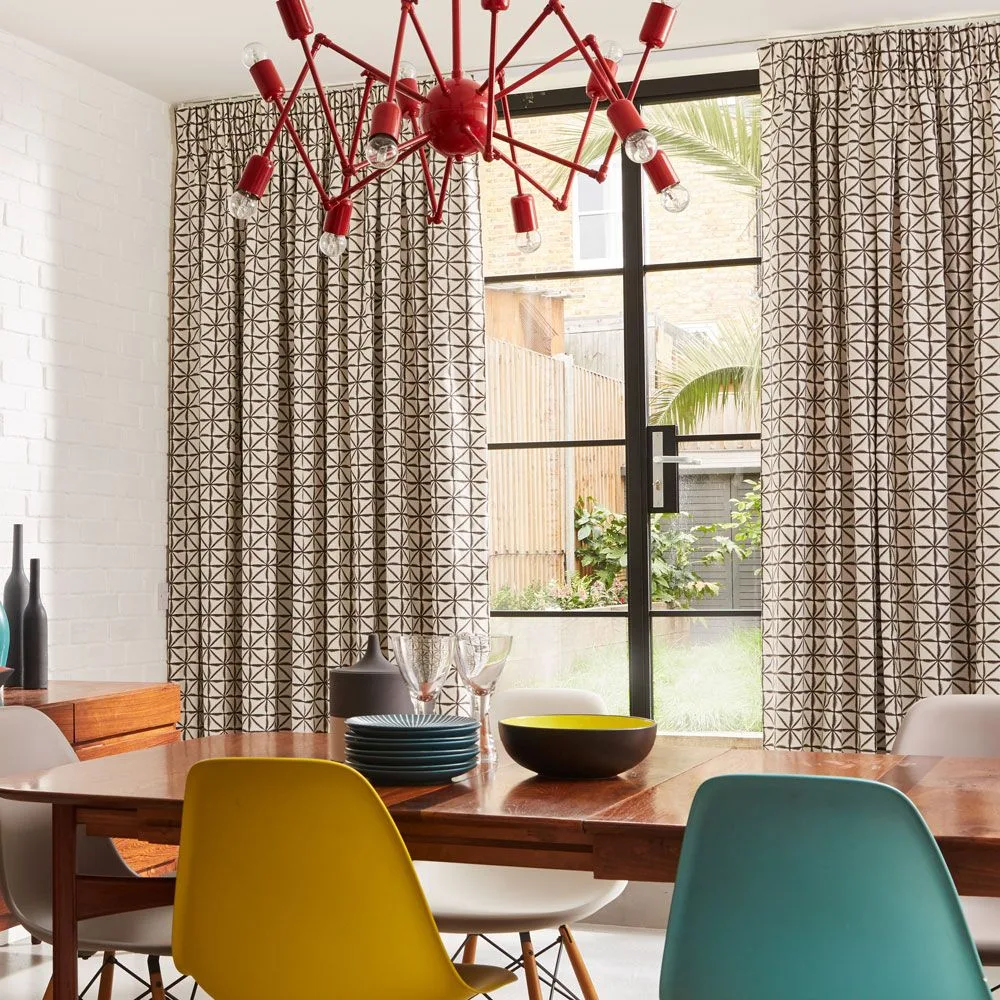
Black-and-pale geometric curtains frame a dark glazed door behind a wood dining table. Their repeated angular shapes connect with the door’s straight divisions, while yellow and teal chairs and a red hanging light add stronger solid colors. The patterned panels occupy the sides of the opening, leaving the central glass and outdoor view visible in the photographed arrangement.
Check pattern alignment between the two panels and decide how much of the motif you want visible when they are gathered. Confirm that the fabric stacks clear of the door handle and opening path. Test privacy rather than judging it from the dark pattern alone. Choose hardware that supports the actual curtain weight and leave enough space behind dining chairs to draw the panels without catching their backs.
IDEA 10 / 20
Coordinate a Small Kitchen Shade With Dining Curtains
 SaveSupport Non AI Creator
Image credit: Future PLC/Simon Whitmore
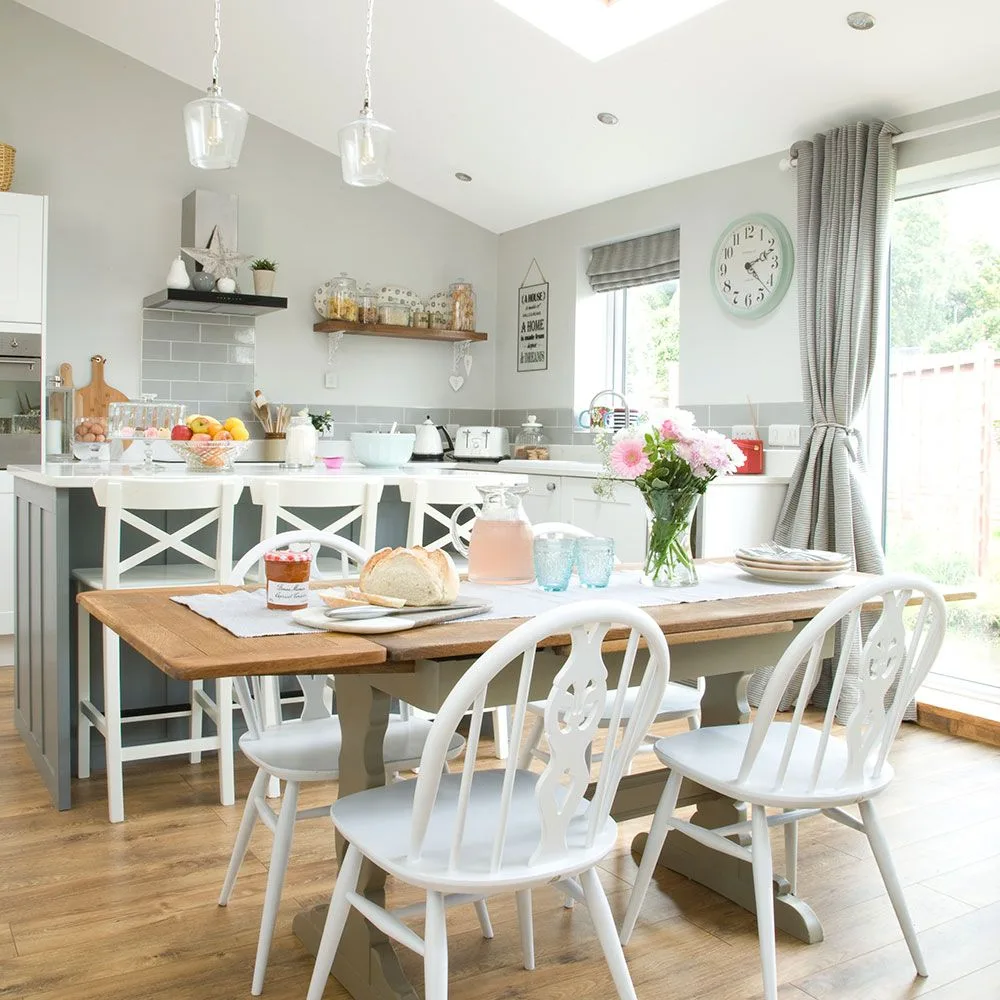
A pale gray shade covers the smaller kitchen window while a similar-colored curtain is tied back beside the larger dining opening. White cabinetry and dining chairs keep the shared space light, with the wood tabletop providing a warmer surface in front. The window treatments use a connected color across different shapes rather than forcing a long curtain onto every window.
Choose each treatment for the job and access needs of its own opening. A kitchen shade should remain clear of working surfaces and be practical to clean, while the dining curtain needs room to draw beside the chairs. Compare fabric samples together in the same light. If using a tieback, place it where it can be released safely and verify that the panel still provides the intended coverage when closed.
PART 03
Connect Fabric Color With Practical Coverage
IDEA 11 / 20
Use Quiet Neutral Folds Beside Displayed Tableware
 SaveSupport Non AI Creator
Image credit: Future PLC/Simon Whitmore
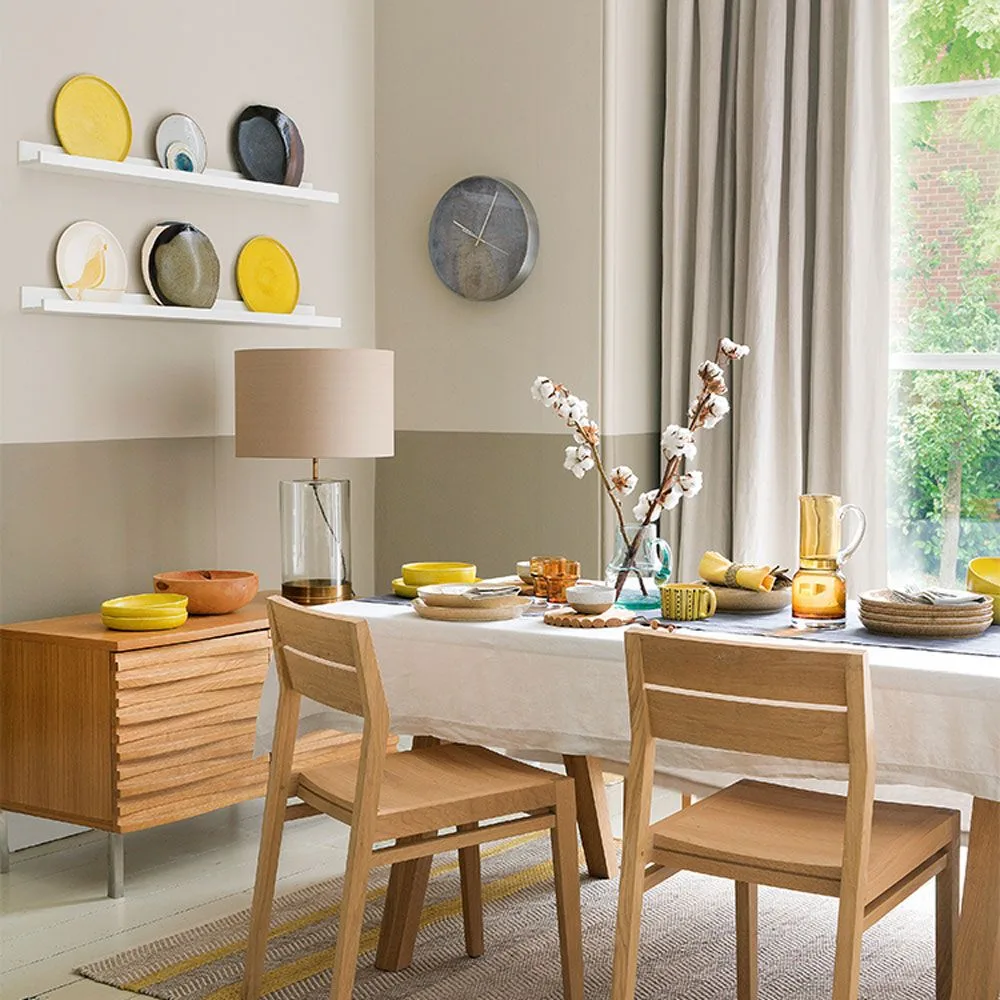
Long pale neutral curtains fall beside a dining table, matching the quiet background of the wall and broad lampshade. Yellow tableware and plates displayed on narrow shelves provide the room’s brighter accents, while wood furniture adds warmth. The gathered fabric creates a soft vertical line at the window without competing with the small collection of plates nearby.
Check how the curtain color looks against both the wall and the window light; pale neutrals can appear quite different when backlit. Choose enough width for useful coverage and leave clearance from the tabletop and serving objects. Keep the hem practical for cleaning around the chairs. Confirm privacy from outside after dark, since a softly colored panel may still be translucent under indoor lighting.
IDEA 12 / 20
Add a Soft Top Detail to Floral Dining Curtains
 SaveSupport Non AI Creator
Image credit: Future PLC/David Brittain
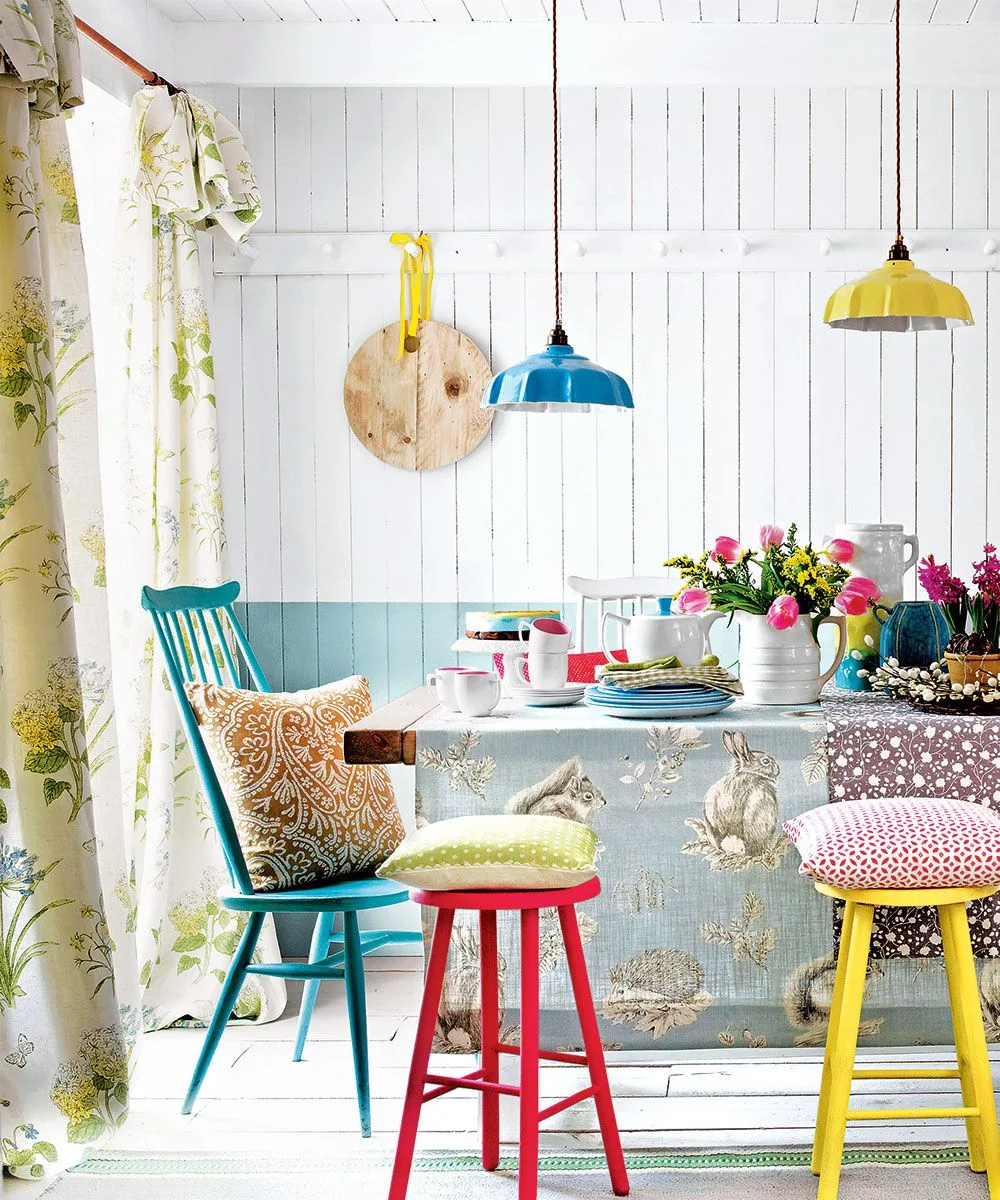
A pale floral curtain with a gathered top detail hangs beside this colorful dining arrangement. Its green print connects with the turquoise chair and painted lower wall, while blue and yellow pendant shades introduce clearer solid accents. The fabric’s softer folds contrast with the white wall boards and straight table edge, adding a different texture without darkening the whole corner.
Check whether the upper detail allows the panel to travel freely along its support or is intended to remain decorative. Confirm the closing width and the amount of glass covered when the curtain is open. Keep fabric clear of dining spills and choose a cleaning method that preserves both print and folds. If the room already has many colors, test the full curtain sample beside existing furniture before adding more accents.
IDEA 13 / 20
Use a Yellow Panel Against Green Dining Walls
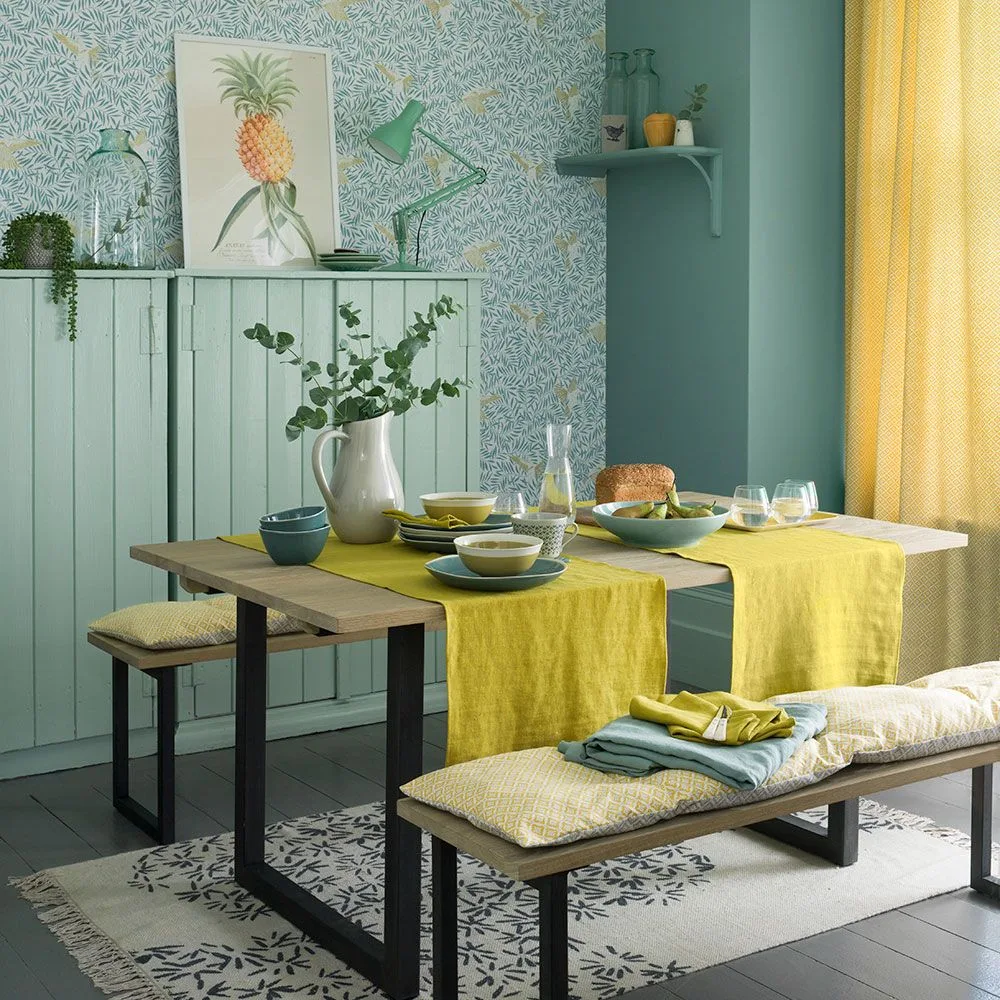 SaveSupport Non AI Creator
Image credit: Future PLC
A yellow panel stands beside pale green wall boards and leafy wallpaper in this dining corner. Yellow runners and bench cushions repeat the curtain’s color, while the wood table and dark legs keep the furniture relatively simple. The solid fabric gives the patterned wall a clear neighboring surface, adding warmth without introducing another small-scale print at the window edge.
Compare the yellow sample in daylight and under the room’s evening lights before committing to a large panel. Decide whether it is a decorative side treatment or needs enough width to cover the opening. Check the actual fabric’s light control and cleaning instructions rather than assuming its color means it is opaque. Keep the hem and folds clear of the bench route and nearby table settings.
IDEA 14 / 20
Repeat Deep Green Between Curtains and Lighting
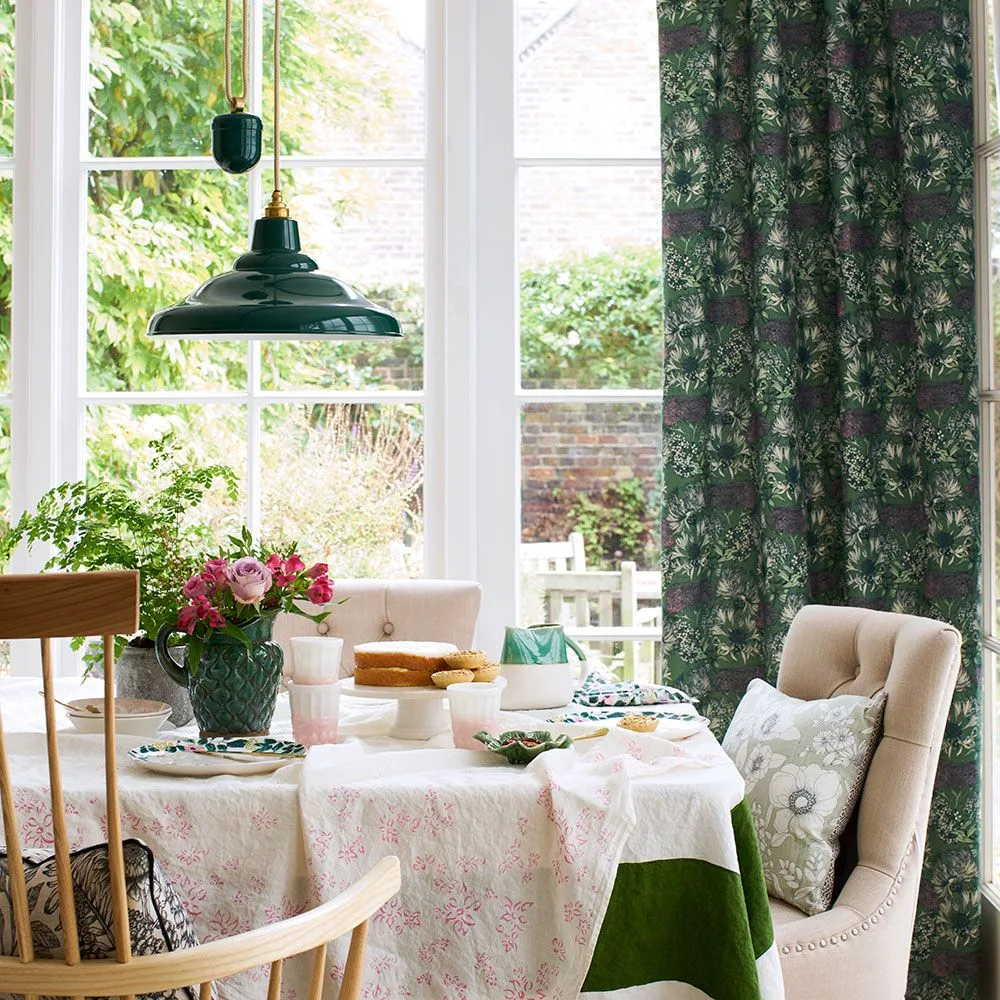 SaveSupport Non AI Creator
Image credit: Future PLC/Nick Pope
A deep green patterned panel hangs beside pale dining windows and repeats the color of the pendant shade above the table. Beige upholstered chairs and a pale printed tablecloth soften the darker green outline, while the garden remains visible through the broad glass. The curtain connects one vertical edge with the overhead light rather than requiring every fabric in the room to match.
Test the curtain’s color and pattern against the upholstered seating in both daylight and evening light. Check how much glass the gathered panel covers and whether more width is needed for closing. Keep the fabric clear of chair backs and serving surfaces. A dark print can conceal some marks, but it still needs a suitable cleaning routine and a separate check for nighttime privacy.
IDEA 15 / 20
Add Blue Panels Around a Pale Blind
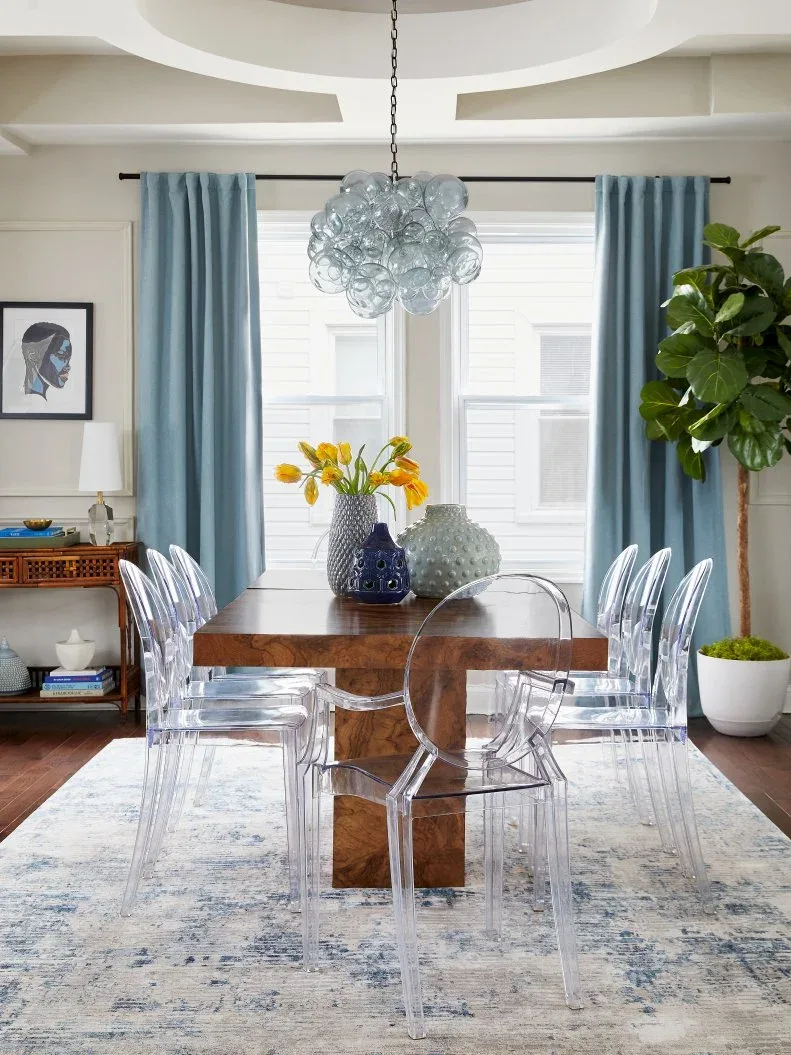 SaveSupport Non AI Creator
Image credit: Photo: Liz Daly. From: HGTV Magazine
Blue panels frame a pale blind behind a wood dining table and clear chairs. A dark rod provides a thin horizontal outline above the fabric, while the room’s pale walls and ceiling keep the blue concentrated around the window. The plain curtain color works beside the table’s varied wood grain and the light’s clustered glass shapes without adding another patterned layer.
Choose the blind for the light and privacy control you need, then size the curtains for their intended decorative or closing role. Check the combined depth near the sill and handles. Clear chairs make the window more visible, so inspect the curtain hem and panel balance from the room entrance. Use support appropriate to the actual fabric weight and leave access for cleaning the blind separately.
PART 04
Check Lighter Textiles and Broader Openings
IDEA 16 / 20
Keep Folded Shades Simple Against Patterned Walls
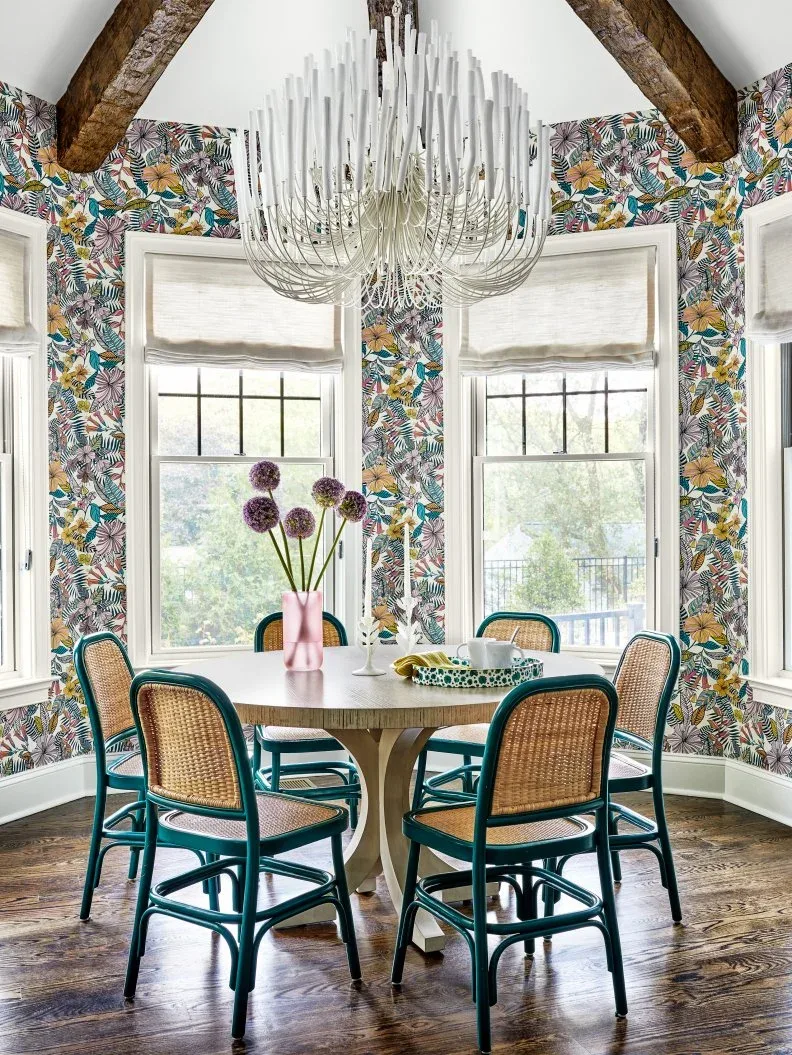 SaveSupport Non AI Creator
Image credit: Photo: Stacy Zarin Goldberg. From: HGTV Magazine
Pale folded shades sit within black-framed dining windows surrounded by colorful leafy wallpaper. Green chair frames and woven backs add detail around the round table, while exposed beams and a large pale light occupy the upper room. The simple fabric gives each window a calm top edge, allowing the wallpaper’s larger collection of colors and shapes to remain distinct.
Compare the shade color with the wallpaper’s pale background rather than trying to match every leaf. Measure inside the window carefully and confirm that folds and fittings allow the sash or casement to move. Check lowered coverage and the view from seated height. A quieter shade still needs the right privacy and glare performance; decorative restraint does not replace checking how the treatment actually works.
IDEA 17 / 20
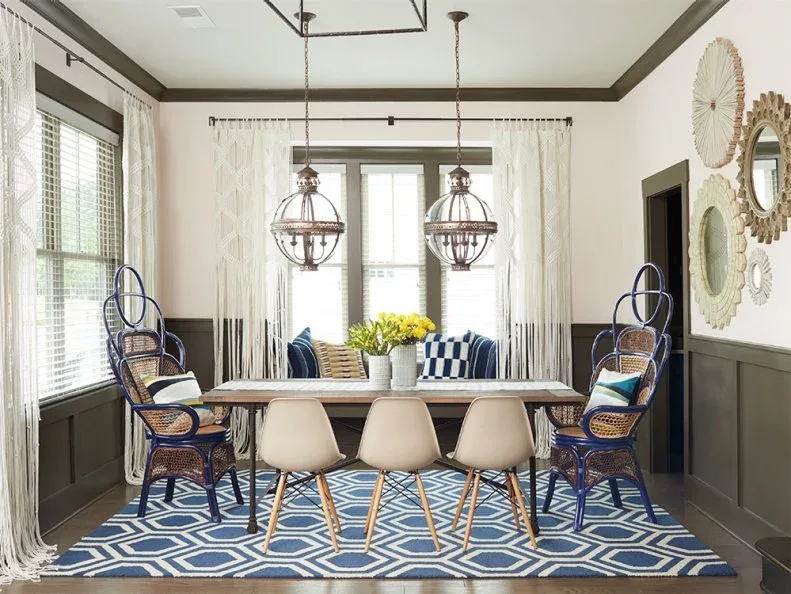
Layer Open Fringed Panels With Window Blinds
 SaveSupport Non AI Creator
Image credit: Photo: David Tsay. From: HGTV Magazine
Long pale open-pattern panels with fringe hang beside white blinds in a dining room outlined by gray trim. The loose textile pattern contrasts with the straight window slats and wall boards, while blue chairs and a blue geometric rug bring stronger color below. The panels add texture at the sides of the glass without appearing to form a dense privacy layer.
Treat the open-pattern panels as decorative unless their actual construction provides the coverage you need. Use the blind to assess privacy and glare control, then check that fringe remains clear of chair legs and cleaning equipment. Confirm a suitable support and care method for the textile. Avoid pulling on the open strands to operate the treatment, and choose a safe operating arrangement for the blind.
IDEA 18 / 20
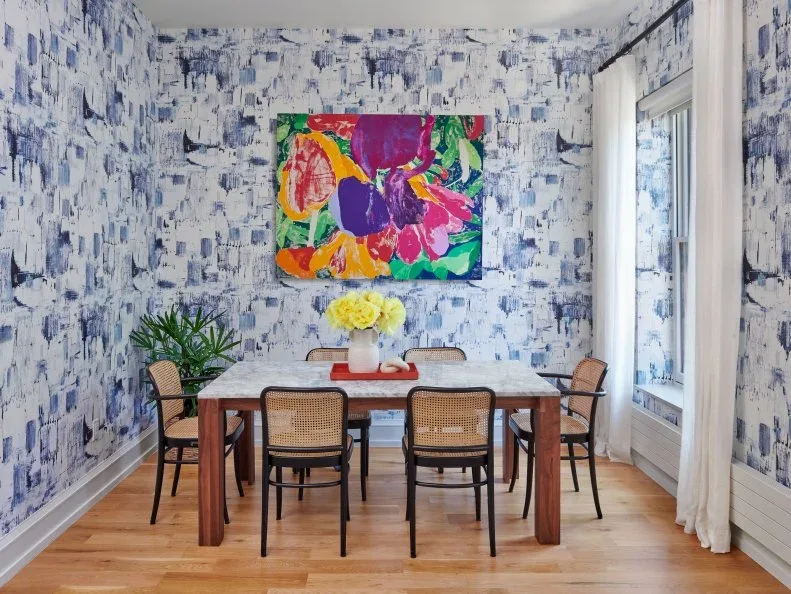
Soften a Patterned Dining Corner With Pale Sheers
 SaveSupport Non AI Creator
Image credit: Photo: Alison Gootee. From: HGTV Magazine
Pale sheer panels soften a window beside a dining table surrounded by blue-and-white patterned walls. A colorful painting adds larger shapes behind the wood furniture, while woven-back chairs keep the seating texture visible. The lightly colored fabric gives the window a quieter edge, letting the wall pattern continue around the corner without another opaque print in front of the glass.
Check a full fabric sample against daylight to judge how much glare it reduces and how much of the view remains visible. Sheers may offer limited privacy after dark, so assess whether another layer is needed. Leave room for the panels to stack and keep the lower fabric clear of chair movement. Follow the maker’s washing or cleaning guidance so delicate headings and hems retain their shape.
IDEA 19 / 20
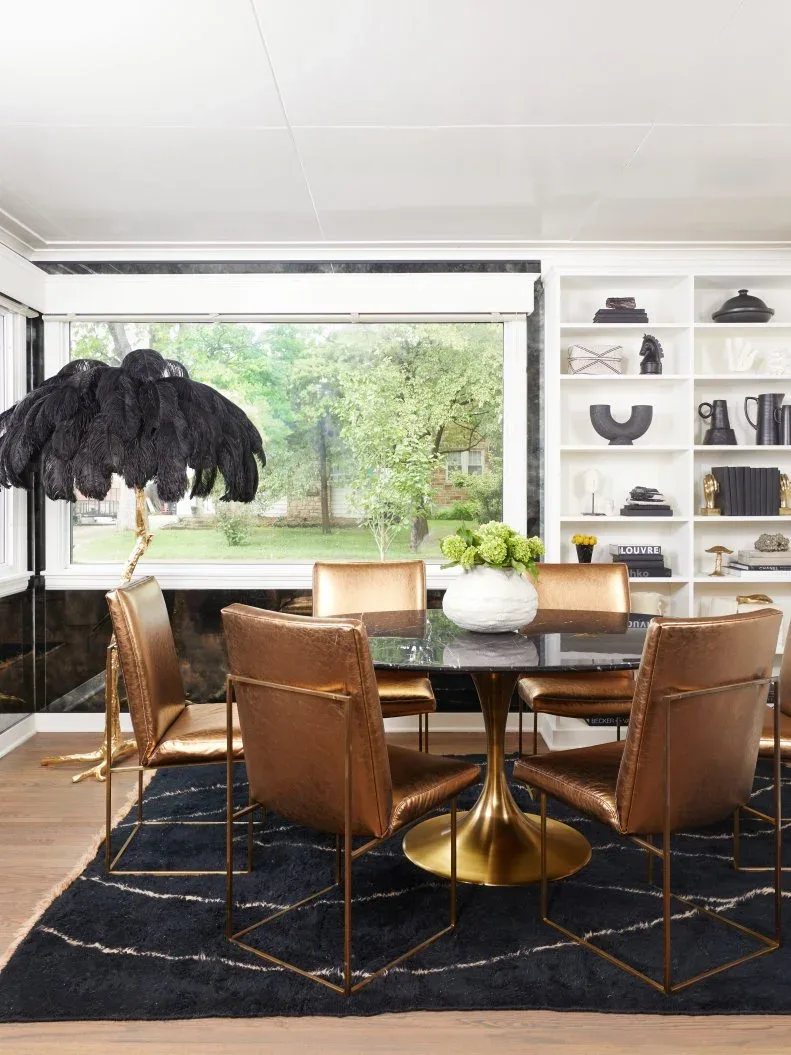
Keep a Wide Window Treatment Above the View
 SaveSupport Non AI Creator
Image credit: Photo: Andrew Kung. From: HGTV Magazine
A broad pale treatment sits above a wide window behind a dark dining table and brown chairs. Its straight lower edge keeps the garden view open in the photographed position, while dark window borders and white display shelves provide clear outlines nearby. The room avoids long curtain stacks at the window sides, leaving more of the wall and storage visible around the dining furniture.
Confirm the actual treatment type, maximum width and support requirements before copying a broad span. Check how much glass remains visible when it is raised and whether it can provide complete coverage when lowered. Test access to controls around the table, and consider whether one large unit or separate sections would be easier to use. Preserve clearance from shelves and leave safe access to clean the upper fittings.
IDEA 20 / 20
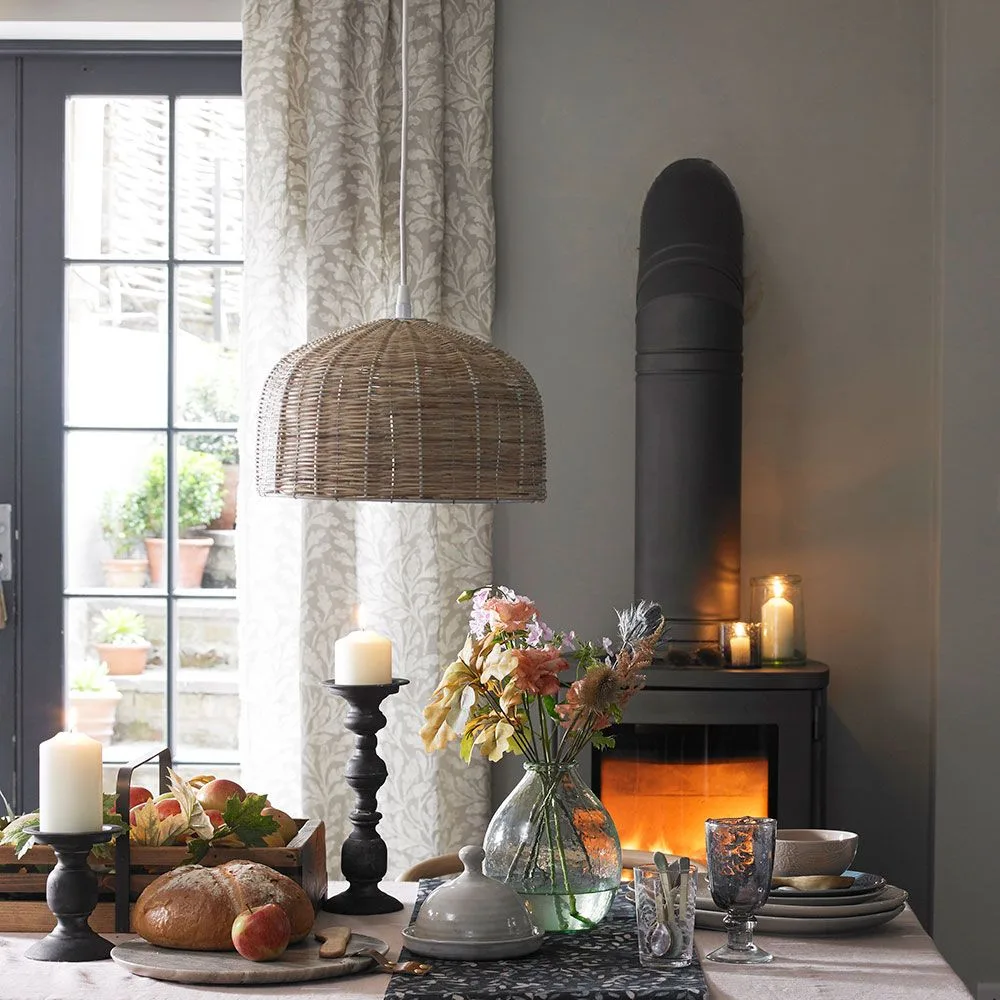
Keep Leaf-Patterned Curtains Clear of a Stove Corner
 SaveSupport Non AI Creator
Image credit: Future PLC/David Brittain
Pale leaf-pattern curtains hang beside a glazed door near a dark stove and tall flue. The print adds a softer surface to the gray dining corner, while a woven pendant and a table display of flowers and food supply other textures. The photograph shows how window fabric can share a dining room with a hearth feature, but does not establish installation clearances.
Plan curtains around the stove’s own installation and clearance requirements before choosing fabric length or support positions. Follow the appliance manufacturer’s instructions and obtain appropriate installation advice; the photograph cannot establish a safe distance. Keep the doorway usable and fabric away from hot surfaces. Select a practical cleaning method for the actual textile and check that drawing the curtain cannot move it toward the stove or flue.
BRING IT ALL TOGETHER
Test the Window Treatment From Your Dining Seat
Check the view with the treatment open, partly closed and fully closed before settling on its arrangement. Leave doors, handles, windows and seating routes usable. Plan stacking space and support for the actual fabric or unit weight, then confirm how you will reach each control without disturbing the table.
Compare privacy after dark and glare during the hours you normally use the room. Choose safe operating systems and follow the product’s installation and care instructions. Where a stove or other heat source shares the space, establish the required fabric clearances from its own guidance before placing any curtain nearby.