An earthy bedroom can begin with warm bedding, muted green upholstery, brown walls or a visible wood detail. Choose the part of the room you want to emphasize, then keep the neighboring colors and furniture useful for ordinary sleep, dressing and storage. A few connected surfaces can do more than a collection of unrelated natural-looking accessories.
These twenty photographs show different balances of warmer color and texture. Compare the bed, windows and storage with your own layout before choosing what to borrow. Check practical light control, bedside access and care requirements alongside the appearance, and leave enough quiet space for the room’s strongest wood, woven or colored surface to remain distinct.
PART 01
Start With Warm Color Around the Bed
IDEA 01 / 20
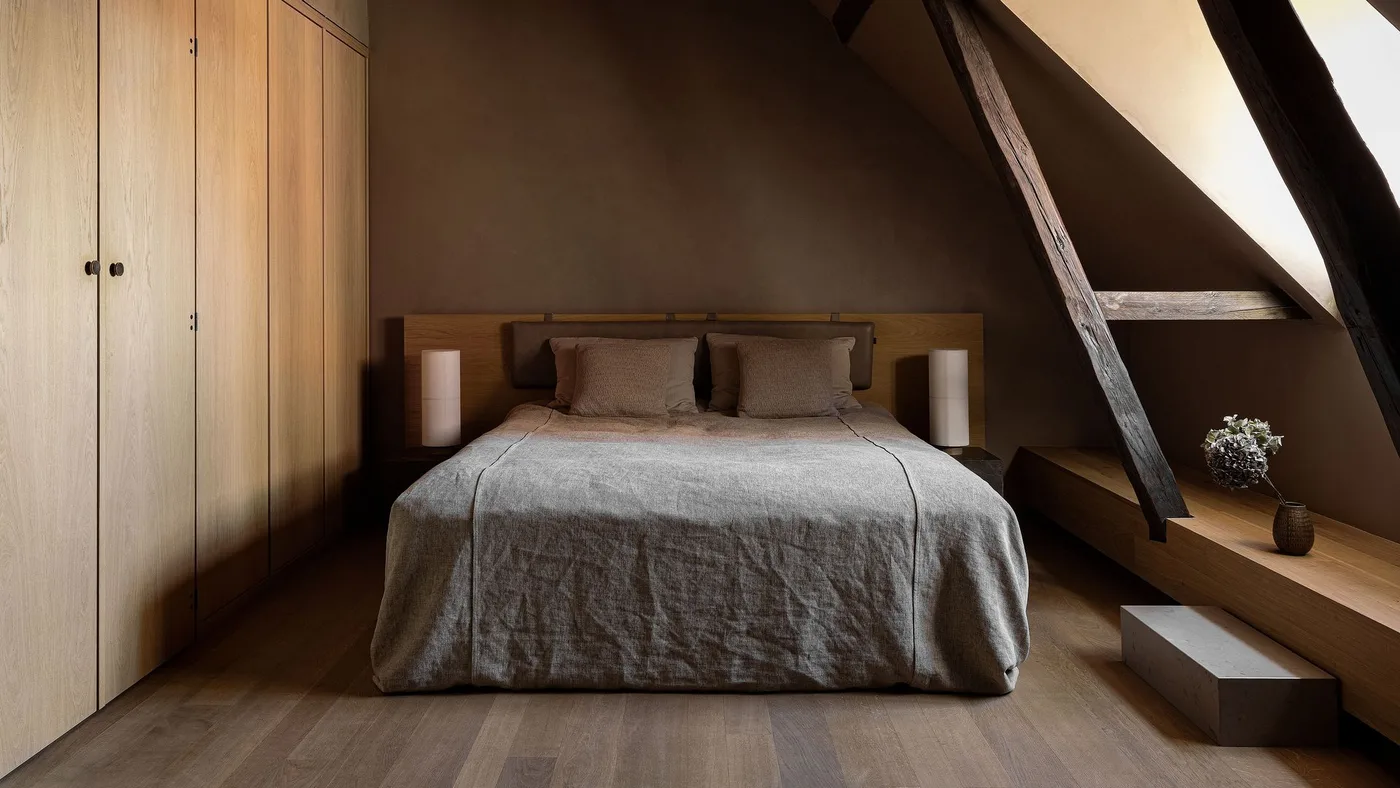
Connect Brown Walls With Full-Height Wood Storage
 SaveSupport Non AI Creator
Image credit: Jonas Bjerre-Poulsen and Monica Grue Steffensen. Design: Norm Architects
Brown walls connect with full-height wood cupboards beside a bed dressed in pale gray. A dark angled beam crosses the sloping ceiling, while a long low ledge follows the room’s side beneath it. The larger brown and wood surfaces give the bedroom its earthy character, with the simpler bedding and cylindrical bedside lamps keeping the sleeping area easy to distinguish.
Compare the wall color with the cupboard finish under the room’s own daylight and bedside lighting. Preserve head clearance beneath the slope and a usable route past the low ledge. Full-height storage needs doors that open comfortably beside the bed, not only a tidy closed appearance. Keep the sleeping textiles practical to wash and avoid filling the ledge with fragile objects along a regular walking route.
IDEA 02 / 20
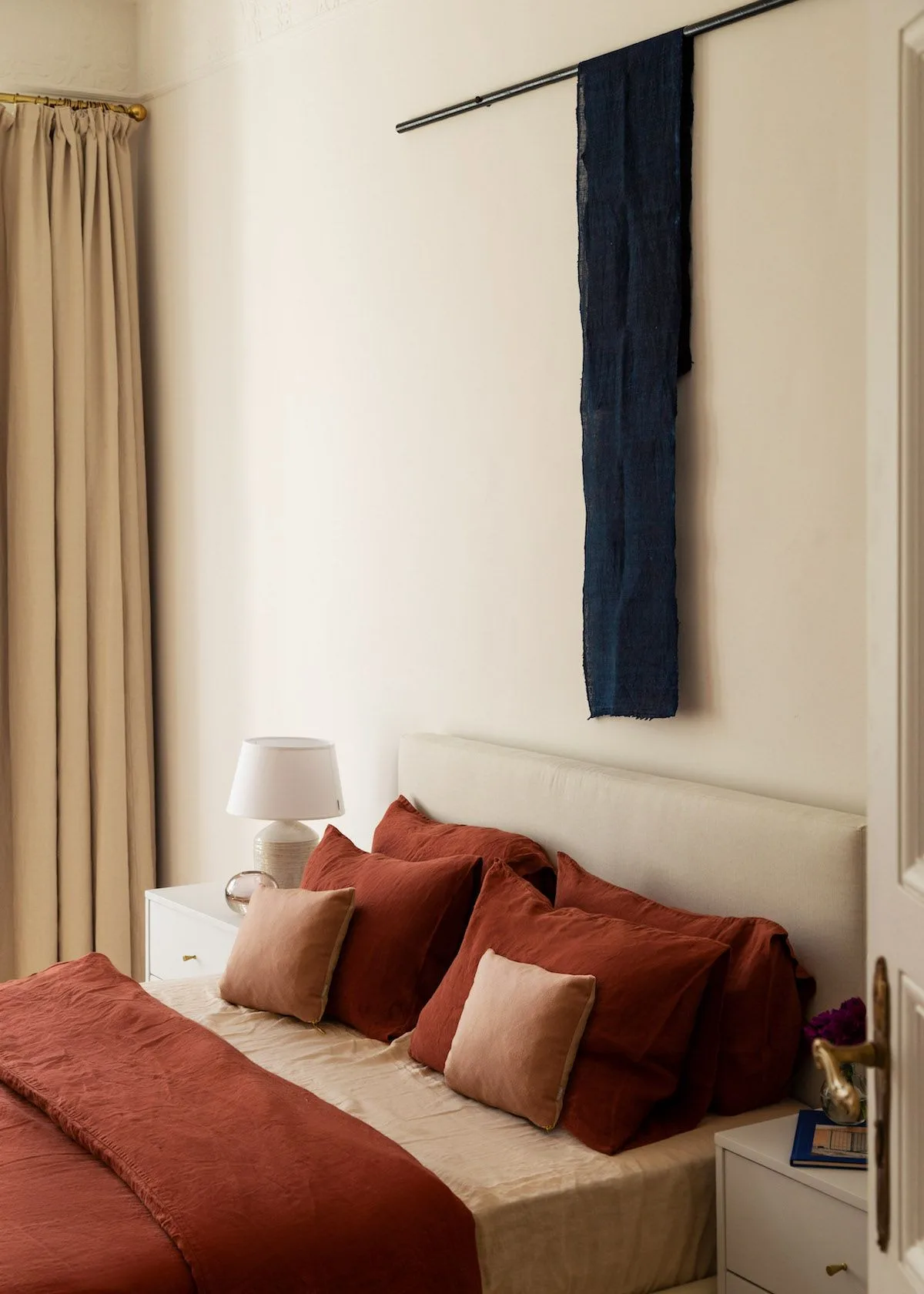
Add Rust Bedding to a Cream Bedroom
 SaveSupport Non AI Creator
Image credit: Thomas Richter White Arrow LLC
Rust-colored pillows and a broad runner add warmth to a cream bedroom with a pale upholstered headboard. Smaller pale pink cushions soften the darker rust, while a narrow dark wall hanging introduces a strong vertical accent above. The curtains and bedside furniture remain light, letting the bed carry most of the room’s earthy color without requiring a complete change to the surrounding surfaces.
Choose the rust and pink tones together so they share an undertone beside your existing cream bedding. Check textile care instructions before mixing several covers, especially if they need different washing methods. Leave a practical place for decorative pillows at night. Secure the wall hanging appropriately and keep the bedside surfaces usable for a lamp, water or other items you need within reach.
IDEA 03 / 20
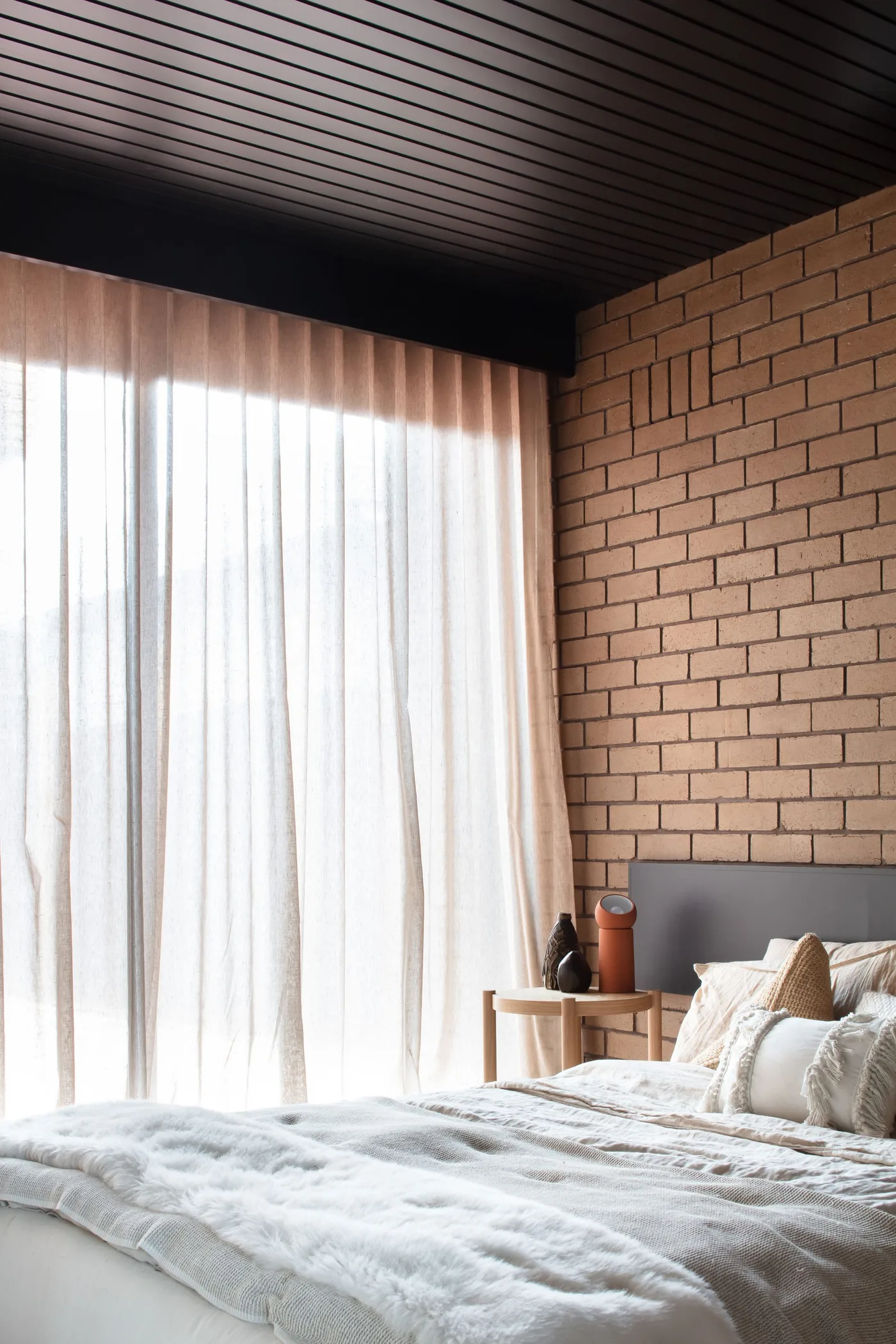
Soften a Brick Bed Wall With Pale Curtains
 SaveSupport Non AI Creator
Image credit: Design by Modscape. Photo by John Madden
A warm brick wall sits beside pale curtains and light bedding beneath a dark lined ceiling. The repeated brick joints provide most of the wall’s texture, while the curtains soften the broad window edge. A small wood bedside surface and a few simple vessels continue the warmer tones, keeping the room focused on brick, fabric and dark overhead lines rather than many decorative layers.
Assess existing brick and its condition before treating it as an exposed finish, then use a cleaning or protective method suited to the actual surface. Compare the dark ceiling with the available light and add useful bedside illumination where needed. Check curtain privacy after dark and keep fabric clear of furniture movement. Avoid placing fragile bedside objects where they reduce the usable surface around the sleeping area.
IDEA 04 / 20
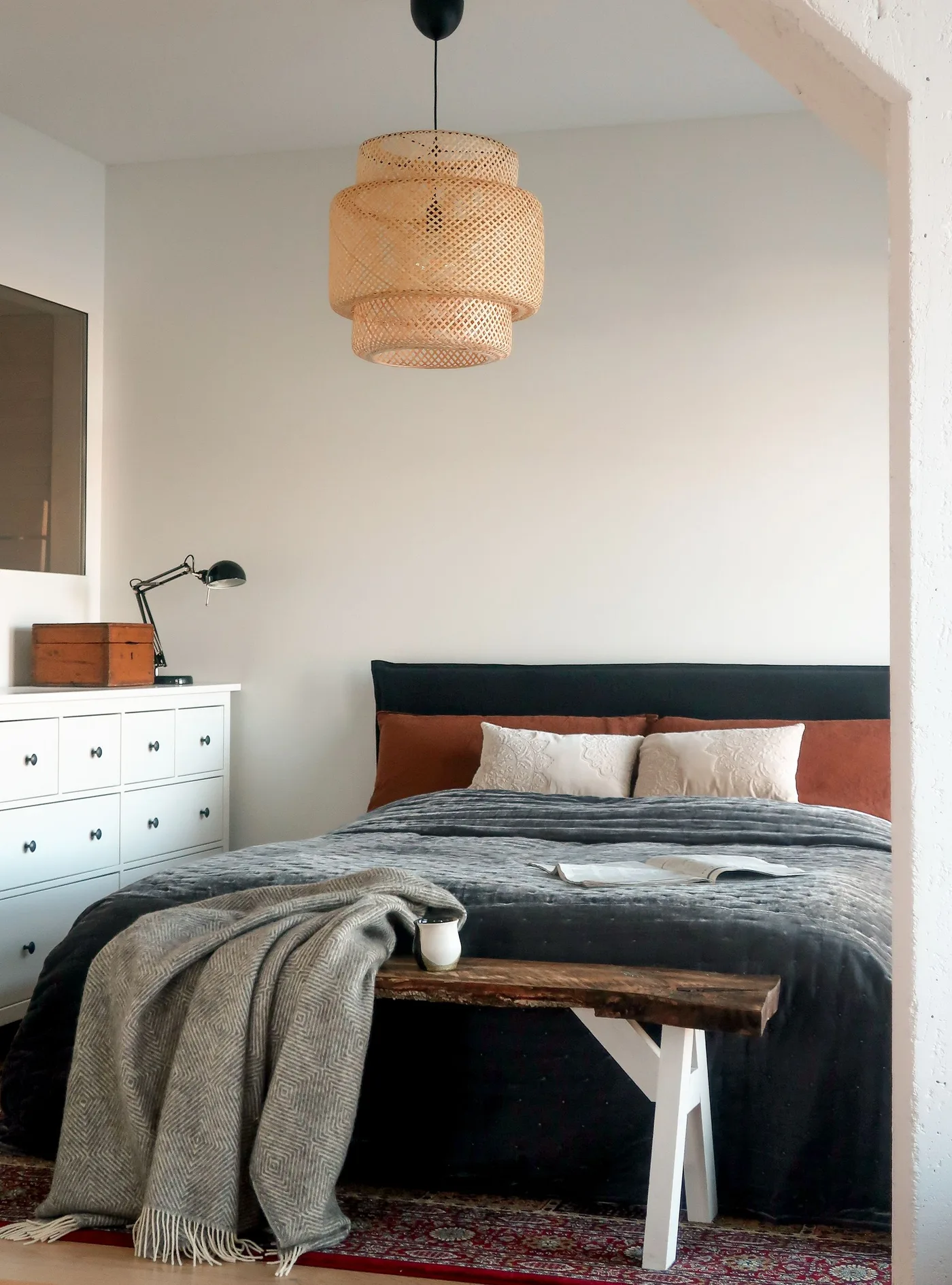
Balance a Woven Pendant With Rust and Charcoal
 SaveSupport Non AI Creator
Image credit: @luovodesign
A broad woven pendant hangs above a bed with rust pillows and charcoal bedding. The pendant’s warm open texture contrasts with the darker headboard, while a pale drawer chest provides a quieter surface beside the bed. A wood bench and patterned rug add detail below, showing how earthy color can sit within a simple pale room rather than covering every wall in brown.
Check the pendant’s size and position against the bed, ceiling height and any nearby moving fixtures before choosing it. Use installation and bulb guidance for the actual light. Confirm that the drawer chest opens comfortably and the bench leaves a clear route around the bed. A textured shade collects dust differently from a smooth fitting, so choose one you can maintain with its specified cleaning method.
IDEA 05 / 20
Use Pale Outlines on a Clay-Colored Bed Wall
 SaveSupport Non AI Creator
Image credit: Phil Crozier
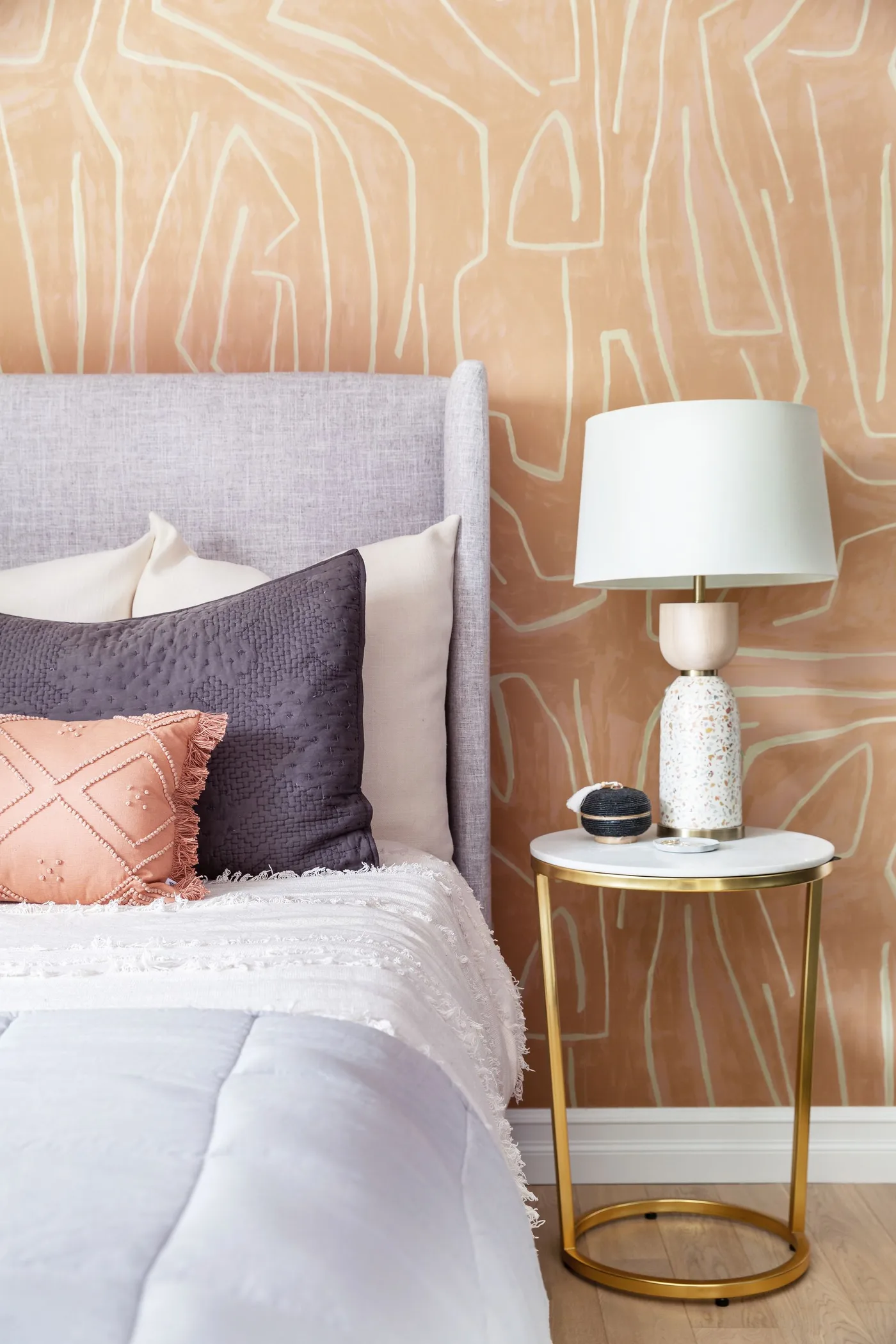
Pale abstract outlines cross a clay-colored wall behind a gray upholstered headboard. A peach cushion repeats the warmer background, while a darker cushion and pale bedding provide clearer contrasts in front. The small round side table has a gold-toned frame and a light top, adding a different outline without competing with the wall’s loose irregular line pattern.
View a large sample of the wall treatment beside the headboard before choosing the pattern scale. Keep the bedside table large and stable enough for the items you actually use, despite its lighter outline. Check care instructions for the upholstered headboard and patterned cushions separately. A strong bed-wall pattern works best when neighboring artwork and accessories leave enough quiet space for its shapes to remain readable.
PART 02
Connect Brown, Green and Ochre Accents
IDEA 06 / 20
Give Brown Walls Pale Bedding and Warm Light
 SaveSupport Non AI Creator
Image credit: thevillacollective. Design: Liliana Atilova
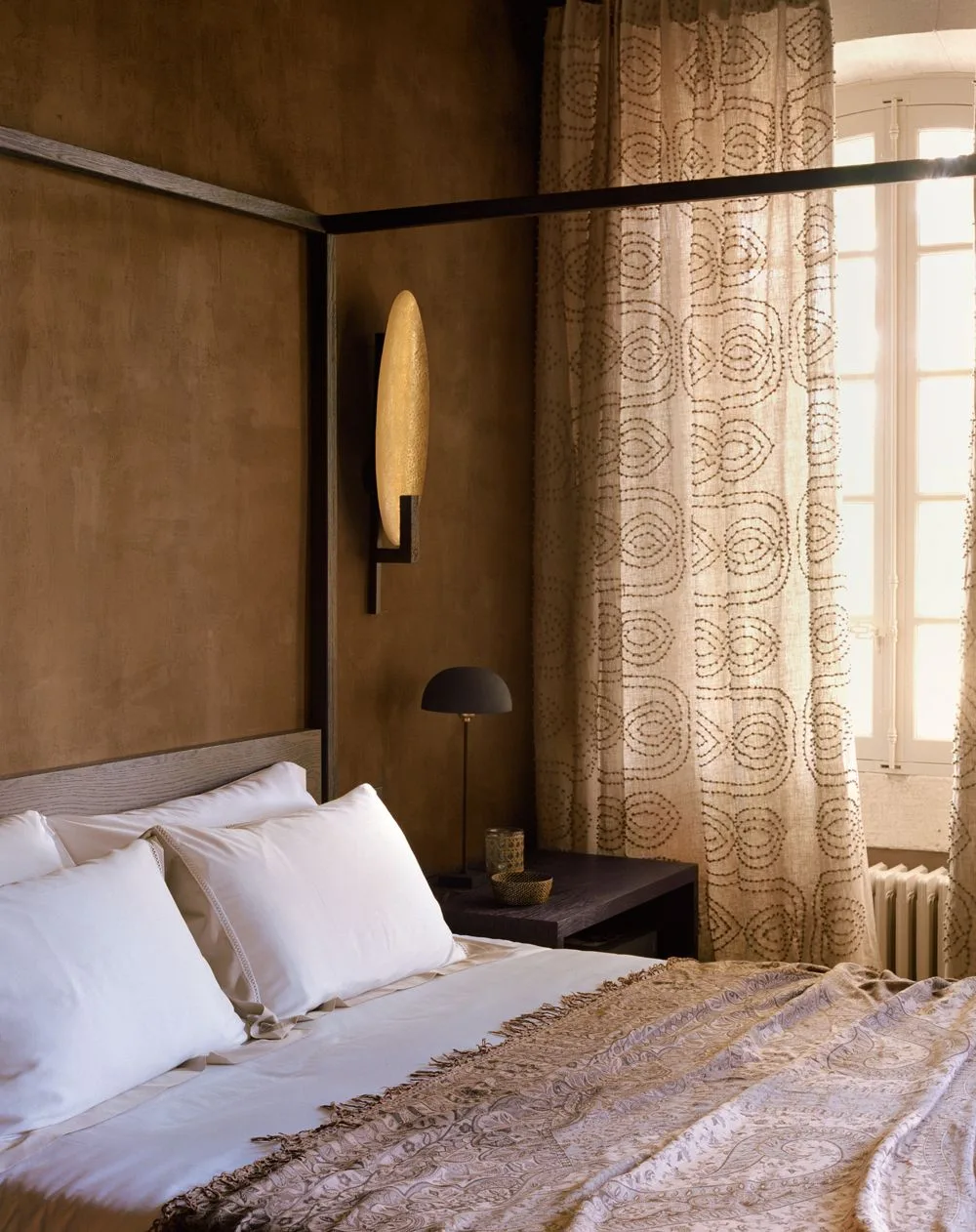
Brown walls surround a dark four-post bed with pale bedding and a fringed patterned cover. Pale curtains carry a repeated circular motif beside the window, while a gold-toned wall light adds a smaller warm highlight above the bedside table. The darker structure stays distinct against the brown background because the bedding and window fabric supply broader areas of lighter color.
Test brown wall samples under both daylight and bedside light before covering a large area. Confirm bed-frame height and circulation around its posts, and choose reading light positions that are useful from the pillows. Patterned curtains still need enough coverage for privacy and comfortable sleep. Check the care requirements of fringed bedding and avoid using extra layers that are difficult to store when they are removed at night.
IDEA 07 / 20
Repeat Ochre Across Storage and Ceiling Stripes
 SaveSupport Non AI Creator
Image credit: Utkan Gunerkan
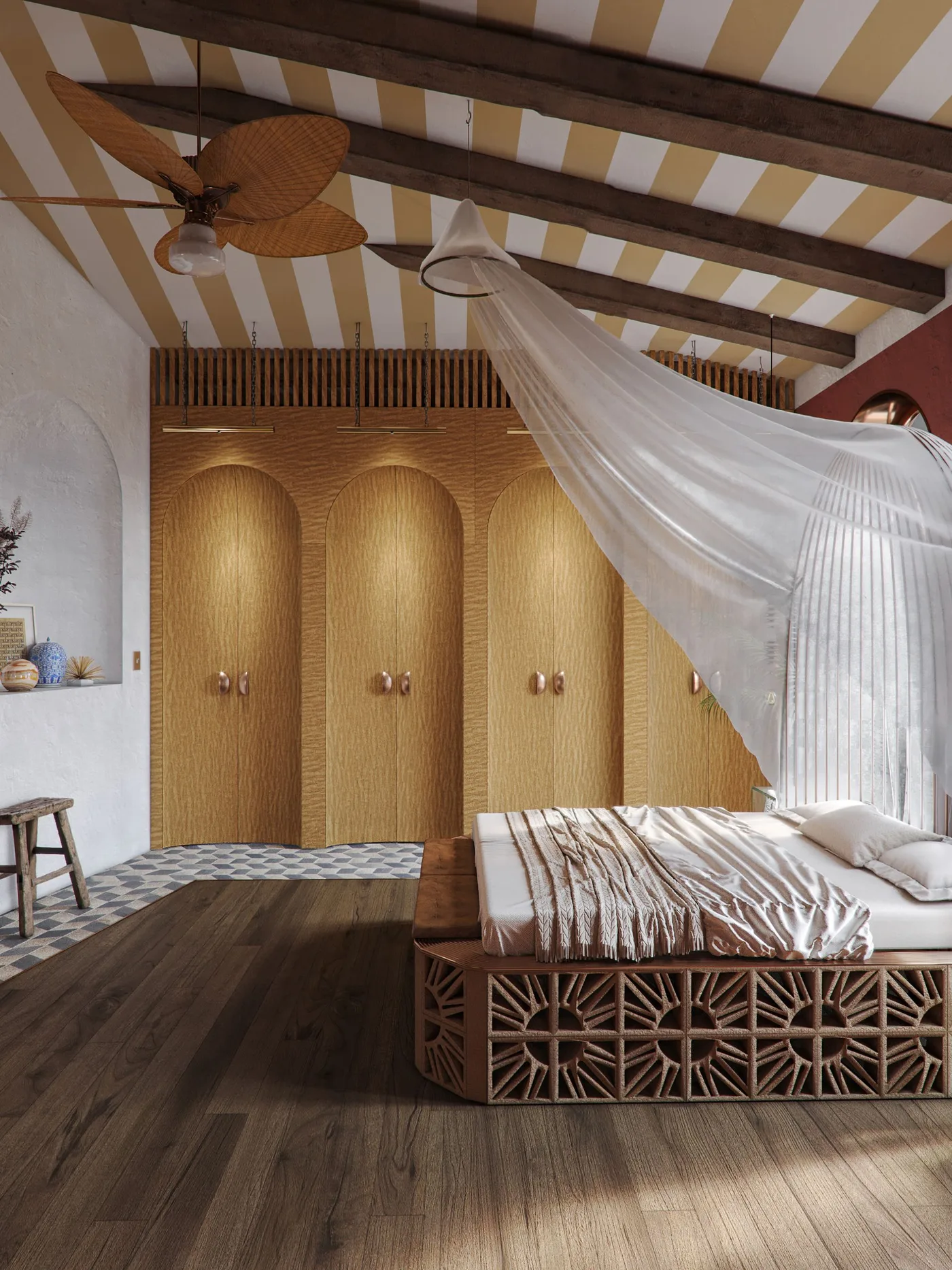
Ochre-and-pale stripes cross the ceiling between dark beams above a bed with a light canopy. Arched wood storage doors repeat the warmer color across the far wall, while the wood floor gives the room a quieter base. The bed’s woven-looking frame and pale cover add softer texture, connecting the overhead pattern with a relatively restrained sleeping area below.
Map a ceiling pattern around existing beams and fittings before choosing stripe widths. Check that storage doors can open around the bed and that a canopy has suitable secure support. Keep hanging fabric clear of fans, lights and other moving or hot fixtures, following their own installation requirements. A textured bed frame needs accessible cleaning surfaces, so leave enough space to care for its sides and corners.
IDEA 08 / 20
Let Deep Green Surround a Simple Pale Bed
 SaveSupport Non AI Creator
Image credit: Chris Horwood. Design: Studio Kaya
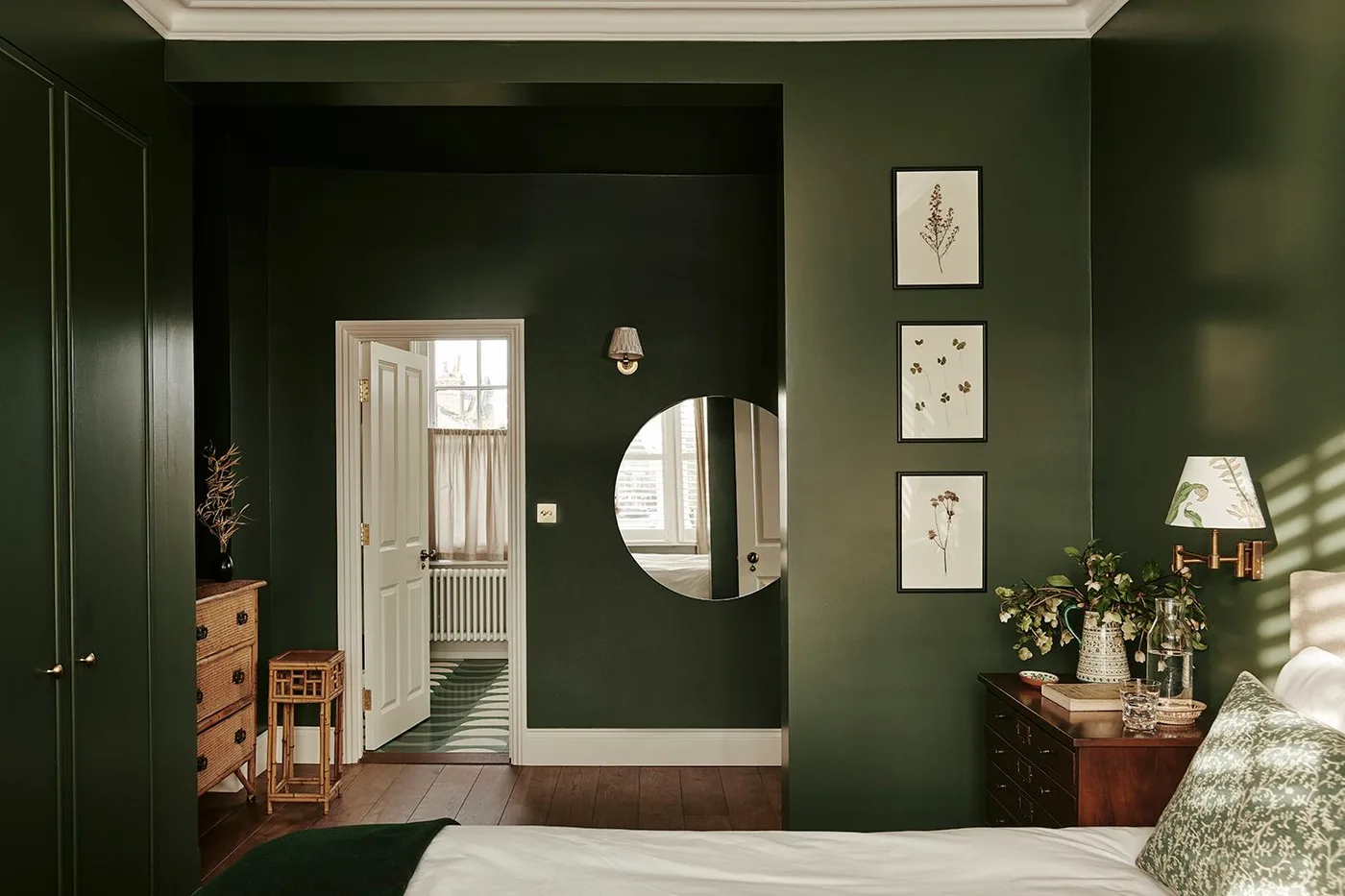
Deep green walls and cupboards surround pale bedding in this bedroom. Botanical pictures form a small vertical group, while a round mirror adds another clear shape beside the doorway. Warm wood appears in the bedside furniture and floor, giving the green a softer neighboring texture. The color stays continuous across large surfaces rather than breaking the room into many different accent walls.
Test a large green sample against the bedding and wood finishes under the light you normally use. Keep cupboards easy to open and leave the doorway route clear. Check the mirror’s reflected view from the bed as well as the entrance, then use appropriate fixing hardware. A few botanical pieces can connect with the palette, but avoid adding so many that the quieter green wall becomes visually crowded.
IDEA 09 / 20
Pair Muted Green Upholstery With Warm Pale Walls
 SaveSupport Non AI Creator
Image credit: Chris Tubbs. Design: Amira Hashish
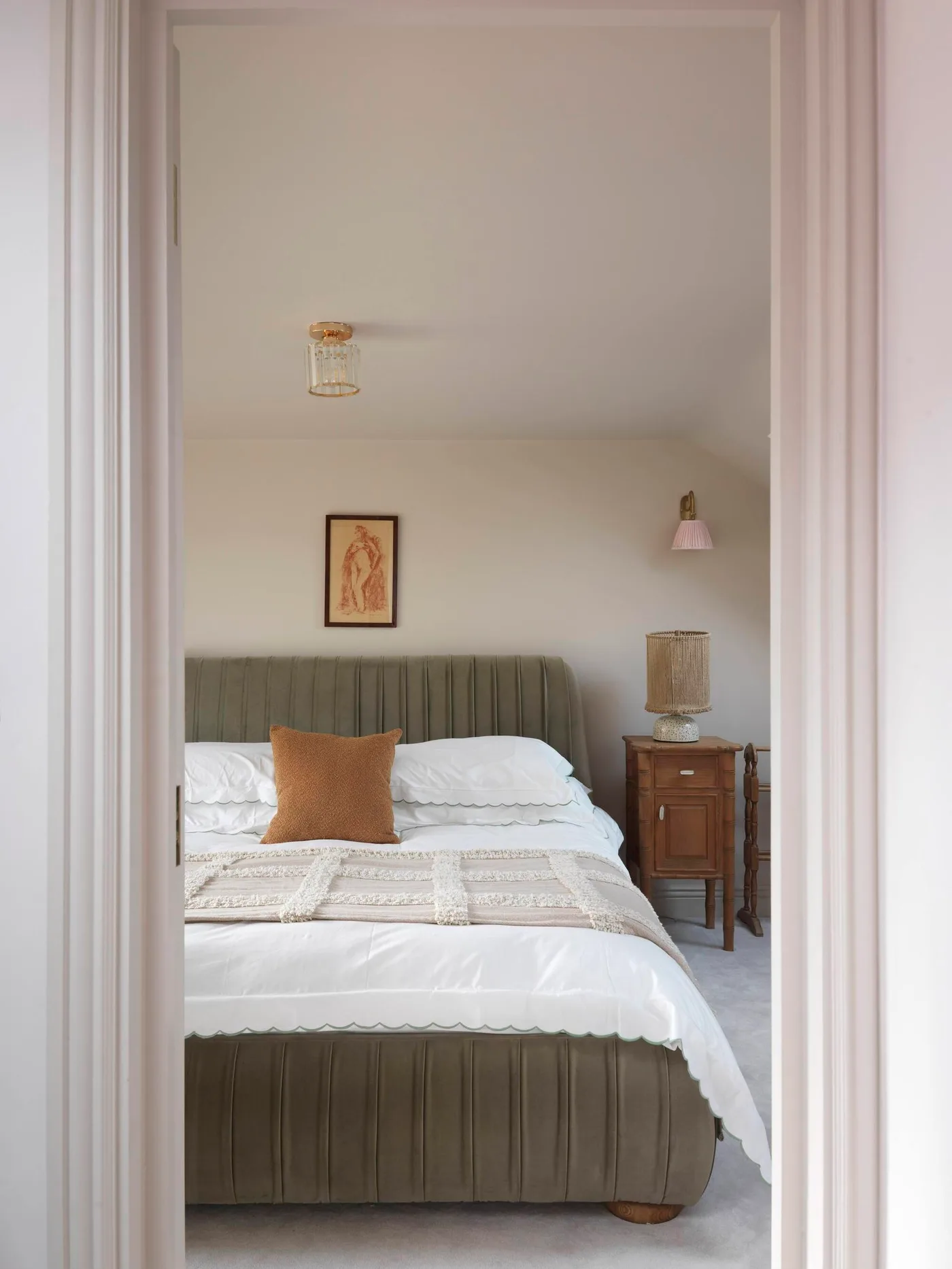
A muted green upholstered bed sits against warm pale walls with simple artwork above. White bedding keeps the sleeping area light, while one ochre cushion supplies a stronger warm accent in front. A wood bedside cabinet and textured lampshade add smaller natural-looking details, allowing the green upholstery to remain the main colored surface without surrounding it with competing patterns.
Compare upholstery samples with the existing bedding in daylight and evening light before selecting a green tone. Check the fabric’s care guidance and leave a practical place to store extra cushions. Confirm that the bedside cabinet opens comfortably and its lamp gives useful light from the bed. Keep artwork securely fixed and positioned clear of the headboard rather than using its size only to fill an empty wall.
IDEA 10 / 20
Repeat Warm Wood Around Pale Bed Linen
 SaveSupport Non AI Creator
Image credit: Photo: Rachel Whyte. From: Fixer Upper
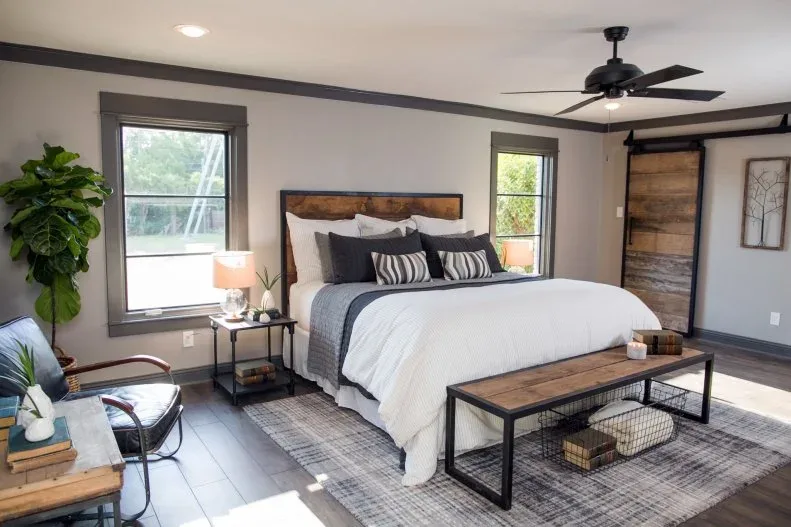
A wood headboard, wood-topped bench and sliding wood door bring warmth to a bedroom with pale bed linen. Dark furniture frames and window trim provide thinner contrasting outlines, while gray textiles keep the floor and bed relatively quiet. A tall leafy plant adds another color and shape near the window, connecting the wood details with the room’s greener accent.
Compare the wood tones rather than assuming each piece must match exactly. Check the door’s complete travel path and leave room to pass the bench at the bed’s foot. Plan storage for the basket and daily items so the open furniture does not become a collection of loose objects. If the plant is living, confirm its light and drainage needs and protect the floor beneath its container.
PART 03
Balance Wood and Pattern With Pale Bedding
IDEA 11 / 20
Use Wood-Framed Doors Beside a Quiet Neutral Bed
 SaveSupport Non AI Creator
Image credit: Photo: Jennifer Boomer/Verbatim Photo Agency. From: Fixer Upper
Wood-framed glazed doors introduce a warm outline beside a bed dressed in pale neutral fabric. The dark metal bed frame and paired geometric pictures add clearer lines, while wood bedside chests continue the door’s warmer color below. The room keeps its walls and ceiling light, showing how earthy texture can come from furniture and joinery rather than a strongly colored bed wall.
Check privacy and light control at glazed doors, especially if the room opens toward a frequently used outdoor area. Preserve a clear route between the bed and doorway. Compare bedside chest heights with the mattress and confirm useful drawer access. Keep decorative branches and lamps from crowding the working surface, and maintain the door and wood furniture with products appropriate to their actual finishes.
IDEA 12 / 20
Make an Ochre Pattern the Warmest Bedside Surface
 SaveSupport Non AI Creator
Image credit: From: Fixer Upper and Flip House to Family Project
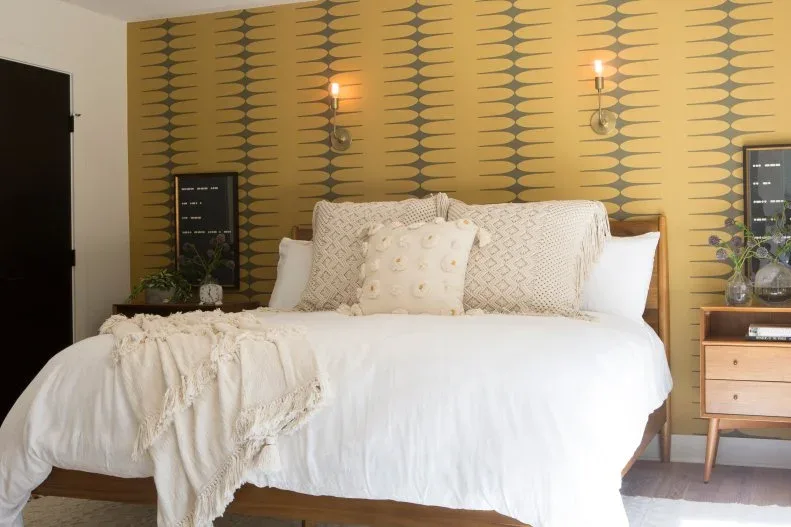
An ochre wall with repeated gray shapes forms the backdrop to a bed with pale bedding and textured cushions. Slim wall lights sit against the warmer pattern, while a wood bedside unit gives the room another simple warm surface. The bed stays mostly light, allowing the wall to supply the strongest color and rhythm without another large patterned layer across the quilt.
Check the full repeat and color of the wall treatment beside your bedding before ordering it. Plan light and furniture positions so they do not hide awkward parts of the pattern. Keep textured cushions practical to clean and provide a place to put them aside at night. A strongly colored wall still needs useful task lighting; assess the room from the pillows instead of relying on the photograph’s brightness.
IDEA 13 / 20
Use Botanical Walls With Warm Woven Shades
 SaveSupport Non AI Creator
Image credit: Photo: Jennifer Boomer/Verbatim Photo A. From: Fixer Upper
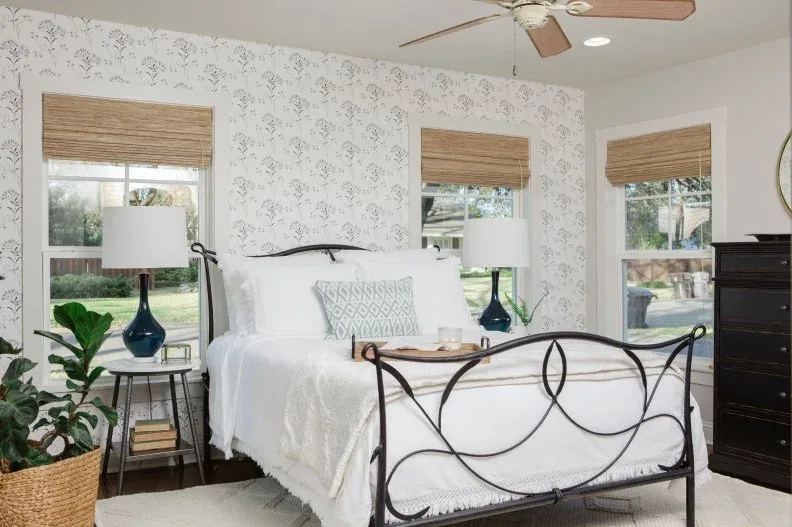
Pale botanical wallpaper surrounds windows fitted with warm woven shades behind a dark curved bed frame. White bedding keeps the sleeping area simple, while a leafy plant in a textured basket repeats the room’s natural shapes beside the bed. The shade color gives the otherwise pale walls a warmer horizontal band, connecting the windows with smaller woven details below.
Confirm the shades provide the privacy and sleep-related light control you need, rather than judging them by texture alone. Compare the wallpaper repeat around window trim before installation and keep bedside lighting useful for reading. If adding a living plant, choose it for the actual light and care conditions. Use a protective container inside a decorative basket and leave enough space to clean around it.
IDEA 14 / 20
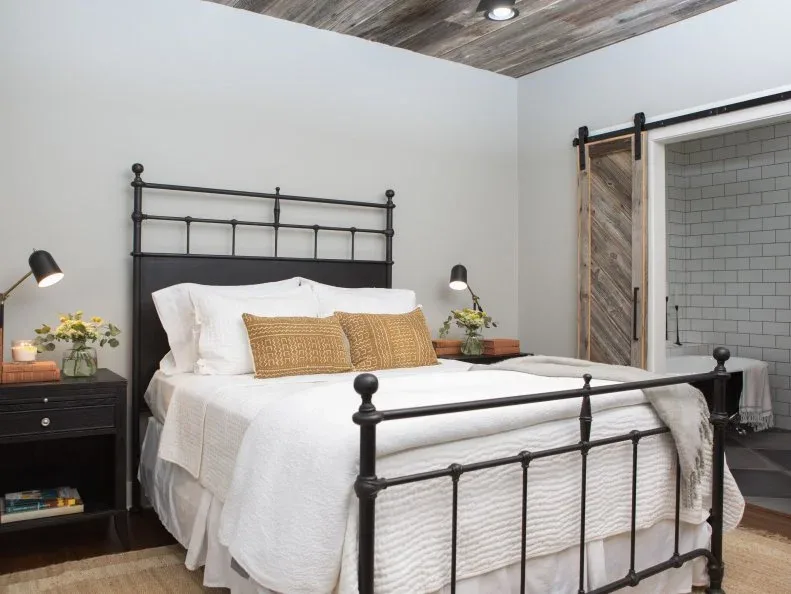
Keep Pale Bedding Below a Textured Wood Ceiling
 SaveSupport Non AI Creator
Image credit: Photo: Jennifer Boomer/Getty Images. From: Chip Gaines and Fixer Upper
A textured wood ceiling and sliding wood door add warmer surfaces around a dark metal bed. Pale bedding and a simple wall keep the larger sleeping area light, with ochre cushions supplying a smaller color accent. The room uses the wood overhead and at the doorway as its main earthy detail, avoiding another heavy pattern behind the bed itself.
Confirm ceiling and door finishes are in suitable condition and use maintenance methods appropriate to their real surfaces. Keep the sliding door’s travel path and hardware accessible. Compare the ochre textile with the wood under your bedside lighting before adding more colors. Leave clear routes around the bed frame, and choose bedding that is comfortable to use and straightforward to wash rather than relying on decorative texture alone.
IDEA 15 / 20
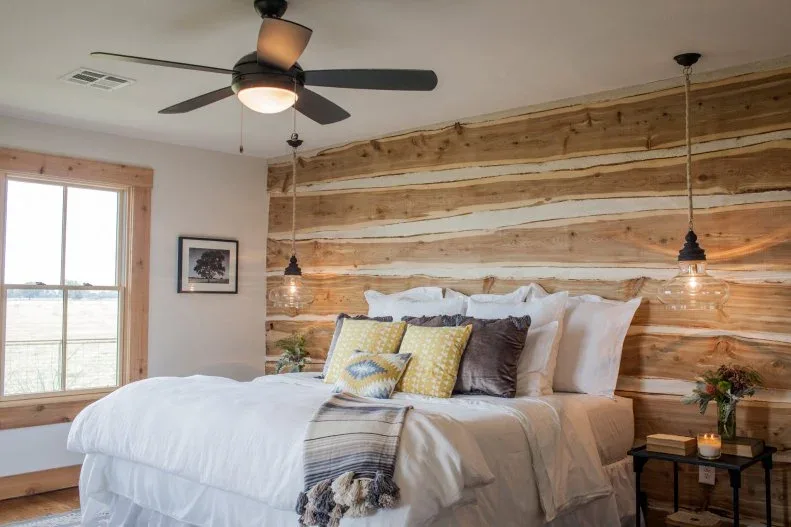
Give Varied Wood Boards a Quiet Pale Bed
 SaveSupport Non AI Creator
Image credit: From: Fixer Upper
Varied warm wood boards stretch behind a bed with pale bedding and yellow cushions. Their irregular tones and pale joins provide the wall’s texture, while hanging bedside lights add a pair of simple outlines. The surrounding walls and ceiling stay light, letting the wood become a clear feature rather than one of several equally busy patterns in the sleeping area.
Inspect boards for condition and finish before using them inside a bedroom, and plan suitable secure fixing. Keep the surface accessible for dusting around the headboard and lights. Check light positions from the pillows and provide useful bedside storage below. Compare bedding against a larger section of the boards so its warmer accents connect with the variation instead of introducing another unrelated color.
PART 04
Give Natural Shapes a Useful Place
IDEA 16 / 20
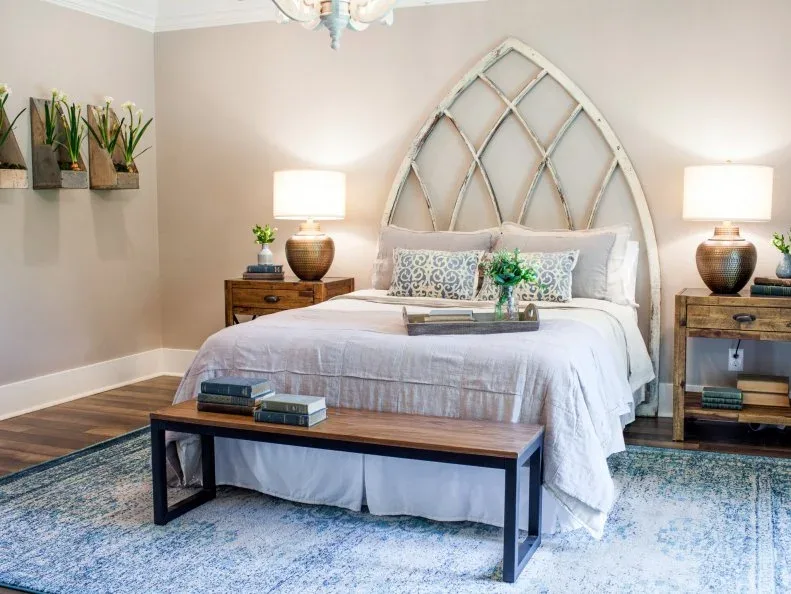
Warm a Pale Room With Wood Bedside Storage
 SaveSupport Non AI Creator
Image credit: From: Fixer Upper
Wood bedside units and broad lamps warm a pale bedroom with light bedding. An arched decorative frame stands above the bed, while a simple wood-topped bench adds another horizontal surface at its foot. Small green accents provide irregular shapes within the mostly neutral room, allowing the warmer wood and lamp bases to remain visible without a dense arrangement of accessories.
Confirm secure fixing for a large decorative frame above the bed and check its weight and condition before installation. Leave useful surface space on each bedside unit and choose lamp positions that are comfortable from the pillows. The bench needs clear walking space around it and should have a practical job. Avoid filling it with fragile displays if it is also needed for dressing or placing bedding aside.
IDEA 17 / 20
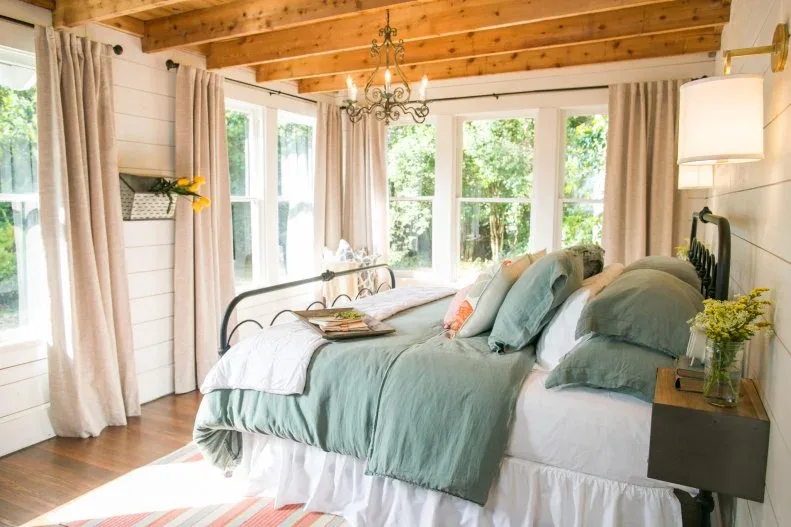
Connect a Warm Wood Ceiling With Soft Green Bedding
 SaveSupport Non AI Creator
Image credit: Photo: Rachel Whyte. From: Fixer Upper
A warm exposed wood ceiling spans a bedroom with pale wall boards and soft green bedding. Long neutral curtains frame the windows, while a darker bedside surface gives the pale fabric a clearer edge. The green provides a gentle color change below the ceiling, connecting the room’s warmer structural detail with a quieter sleeping area rather than another strong wall treatment.
Check the ceiling’s condition and care needs before highlighting it, and keep ventilation and light fittings accessible. Compare the green bedding with the wood in the room’s own light. Test curtain coverage for nighttime privacy and morning light control, then preserve the window route for cleaning. Choose bed layers you can manage comfortably and keep the side surfaces useful instead of covering them with decorative objects.
IDEA 18 / 20
Bring Irregular Wood Shapes Above a Simple Bed
 SaveSupport Non AI Creator
Image credit: From: Fixer Upper
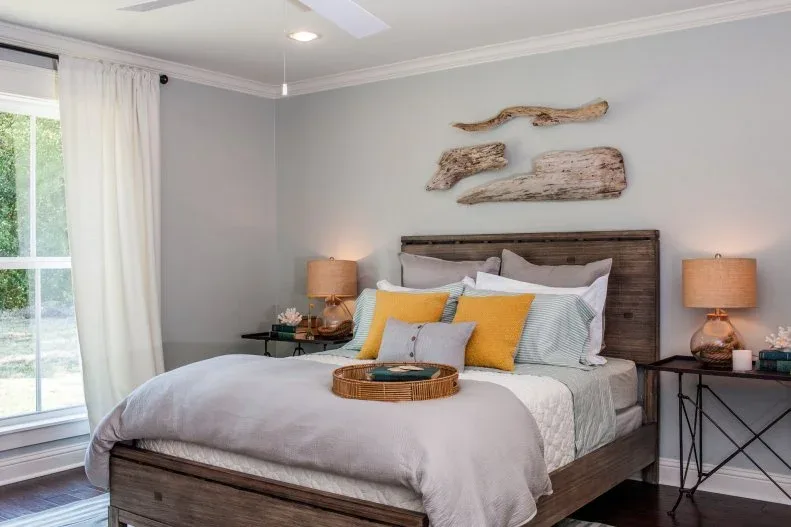
Irregular wood pieces form a loose wall arrangement above a wood bed with pale bedding. Yellow cushions and warm-toned lamps supply smaller color accents, while gray walls give the wood outlines a quieter background. The pieces add an organic shape above the straight headboard, making the earthy detail visible without requiring a full wall of planks or a large patterned quilt.
Choose wall pieces in suitable condition and confirm fixings for their weight, especially above a sleeping area. Keep edges and projecting forms clear of normal movement around the bed. Dust with a method suited to the actual finish rather than assuming all weathered-looking wood needs the same care. Limit nearby wall displays so the irregular shapes remain distinct and leave the bedside furniture practical for everyday use.
IDEA 19 / 20
Set a Warm Woven Accent Against Muted Green
 SaveSupport Non AI Creator
Image credit: From: Fixer Upper
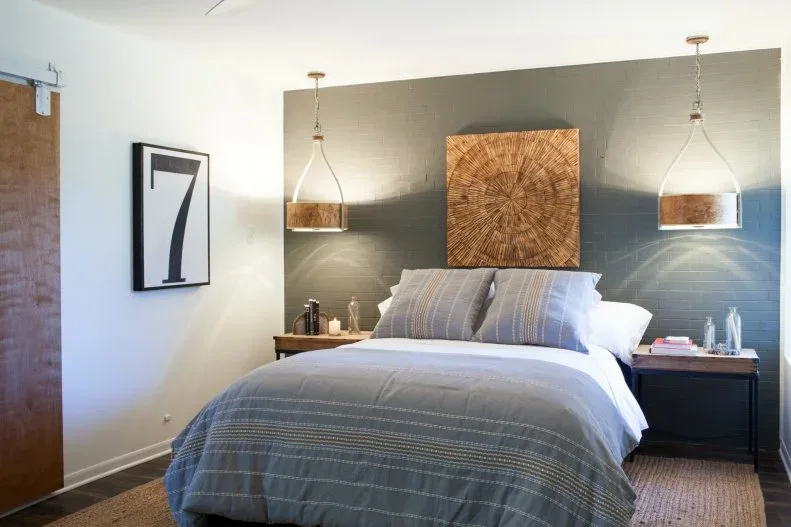
A large warm woven accent sits on a muted green wall above pale gray bedding. Hanging shades repeat the warmer texture at either side, while simpler wood bedside surfaces continue the color below. The room concentrates its earthy details behind and beside the bed, keeping the surrounding pale walls and sleeping textiles quieter so the woven shapes can stand out.
Compare the woven accent and shade textures together before adding more patterned objects nearby. Confirm secure fixing for the wall piece and installation guidance for the lights. Check that the shades provide useful bedside illumination and can be cleaned safely. Keep the wood side surfaces large enough for daily items, and choose the wall color under your own lighting rather than assuming it will match the photographed green.
IDEA 20 / 20
Use a Pale Wood Bench With Neutral Bed Layers
 SaveSupport Non AI Creator
Image credit: From: Fixer Upper
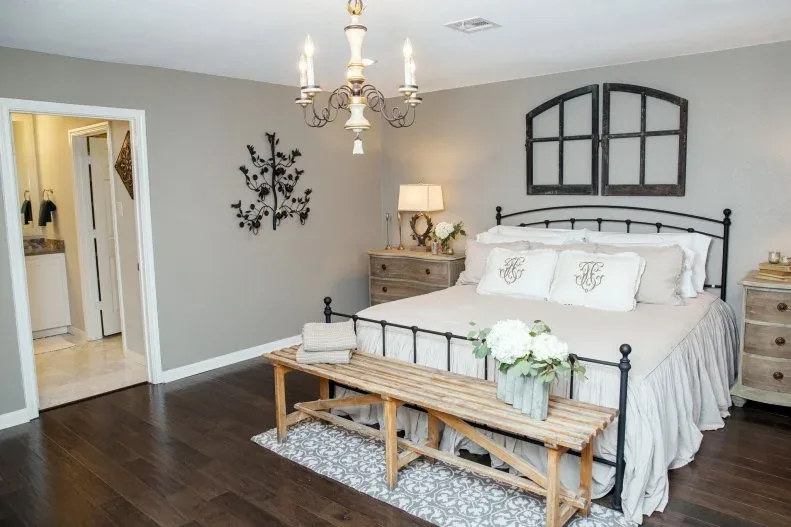
A pale wood slatted bench stands at the foot of a dark metal bed with neutral bedding. Wood bedside chests add warmer texture on each side, while darker window-shaped wall pieces and a branching wall accent create separate outlines above. The bench supplies a substantial natural-looking surface close to the bed, giving the mostly gray and pale room an earthy detail at everyday level.
Choose a bench for the role you need and confirm its capacity before using it as seating. Leave enough walking space around the bed’s foot and keep the top usable for dressing or putting bedding aside. Check wood edges and finish for comfortable contact and straightforward cleaning. Secure wall pieces appropriately, and avoid adding a bench simply to fill the floor if it makes the route to doors or drawers awkward.
BRING IT ALL TOGETHER
Keep the Warm Details Useful and Easy to Care For
Choose one larger color or texture, then connect it with a few smaller pieces beside the bed or window. Check storage doors, drawer openings and routes around benches before placing extra furniture. Leave bedside surfaces useful and provide somewhere for decorative pillows and covers when they are removed at night.
Compare samples in daylight and under the lights you use before sleep. Confirm window privacy and light control, use secure fixing for objects above the bed and follow care instructions for actual finishes and textiles. Wood tones and woven details can vary without matching exactly, provided their placement still supports the room’s everyday routines.