An earthy modern bedroom combines warm color with furniture that has a clear purpose. Olive, clay, rust, ochre and brown can work with simple bed frames, useful storage and lighting you can reach comfortably. The right combination depends on the room’s daylight, existing finishes and the amount of pattern you enjoy living with.
These rooms show several ways to bring that warmth into a bedroom, from a replaceable blanket to a full bed wall. Look at how each photograph balances its strongest color with the furniture around it, then choose the details that suit your own space. You do not need to copy every feature to make an arrangement work.
PART 01
Start With Warm Color
IDEA 01 / 20
Use Dusty Pink Across Walls and Curtains
 SaveSupport Non AI Creator
Image credit: Future PLC / Dominic Blackmore
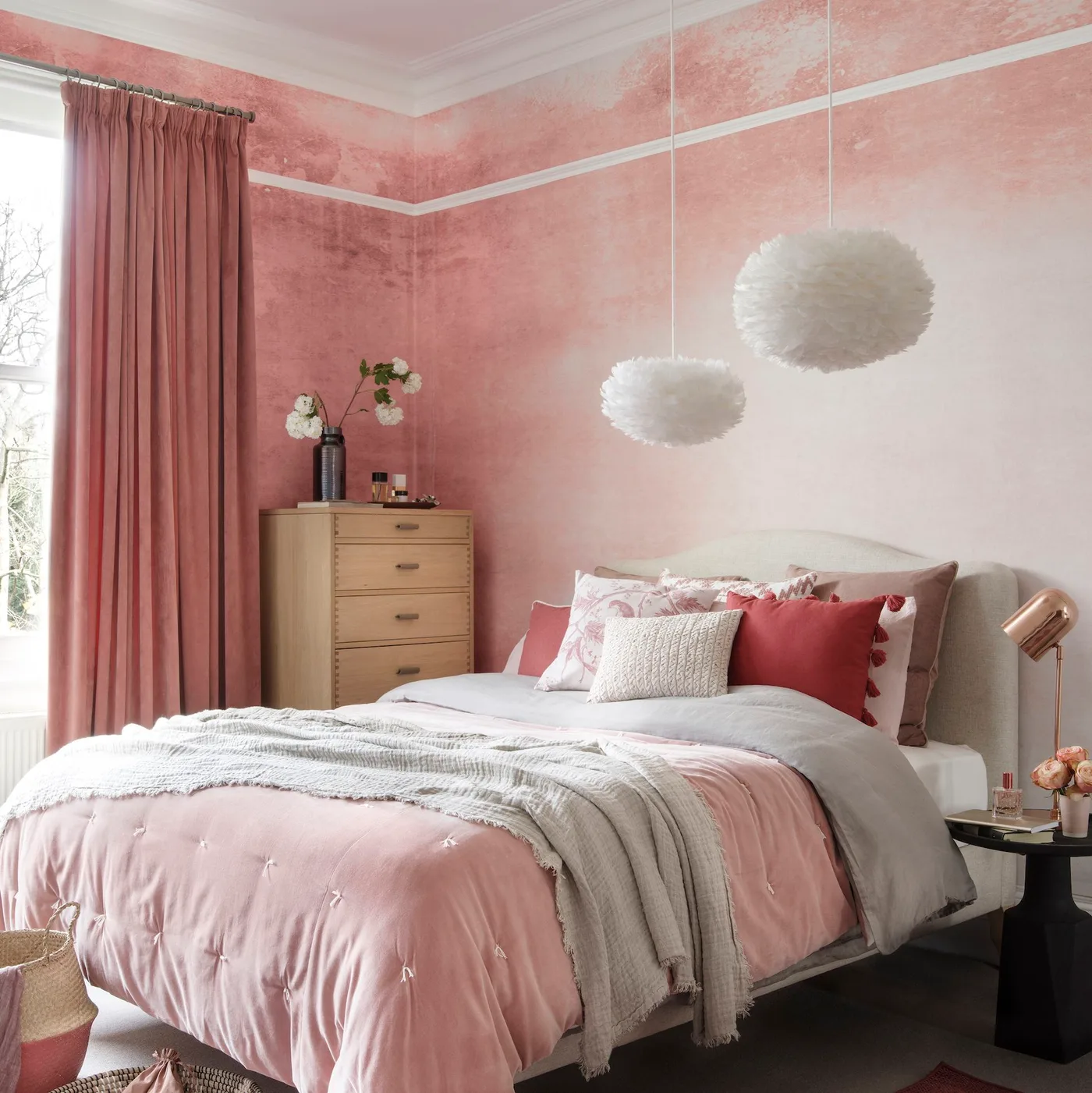
Dusty pink travels from the mottled walls to the long curtains and bedcover, giving this room a consistent warm background. A gray throw and darker cushions interrupt the pink without replacing it. The two fluffy white pendants add unusually soft outlines above the bedside furniture, while the wood drawers give the lower part of the room a more definite shape.
Try your pink samples beside the curtain fabric and bedding before committing to several large surfaces. Slight differences can look intentional, but an unexpected orange or purple cast may change the whole room. Choose pendant positions around how you reach the bedside drawers and switches. Check the shades’ cleaning instructions, since their textured surfaces need more attention than a smooth shade.
IDEA 02 / 20
Pair Muted Green Paneling With a Pale Rose Bed
 SaveSupport Non AI Creator
Image credit: Future PLC / Dominic Blackmore
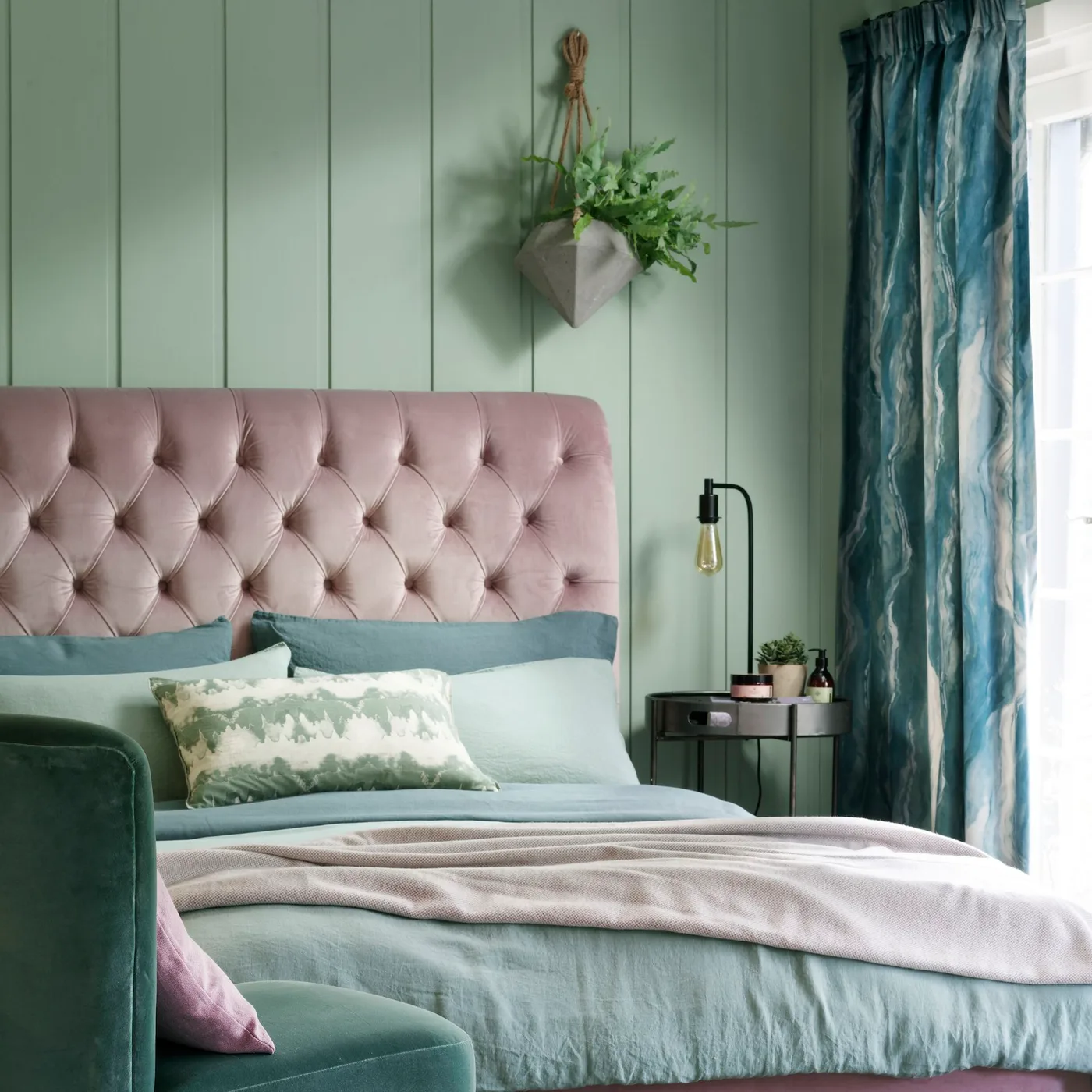
Muted green vertical paneling gives the bed wall a clear rhythm behind a pale rose tufted headboard. Green bedding and a deeper green seat repeat the wall color, while the patterned curtains introduce a brighter blue-green note. The dark round bedside table and exposed-bulb light add smaller contrasting outlines, keeping the pink upholstery from becoming the only feature in the room.
Use the bed upholstery as your starting point when choosing a green wall color, and compare the pairing in daylight and lamplight. Keep additional patterns limited if the curtains already have a strong design. Check that a round bedside table has room for your regular essentials rather than judging it by appearance alone. Leave the curtain edges and nearby furniture enough space to move freely.
IDEA 03 / 20
Balance Clay Pink With a Blue-Gray Cover
 SaveSupport Non AI Creator
Image credit: Future PLC / Dominic Blackmore
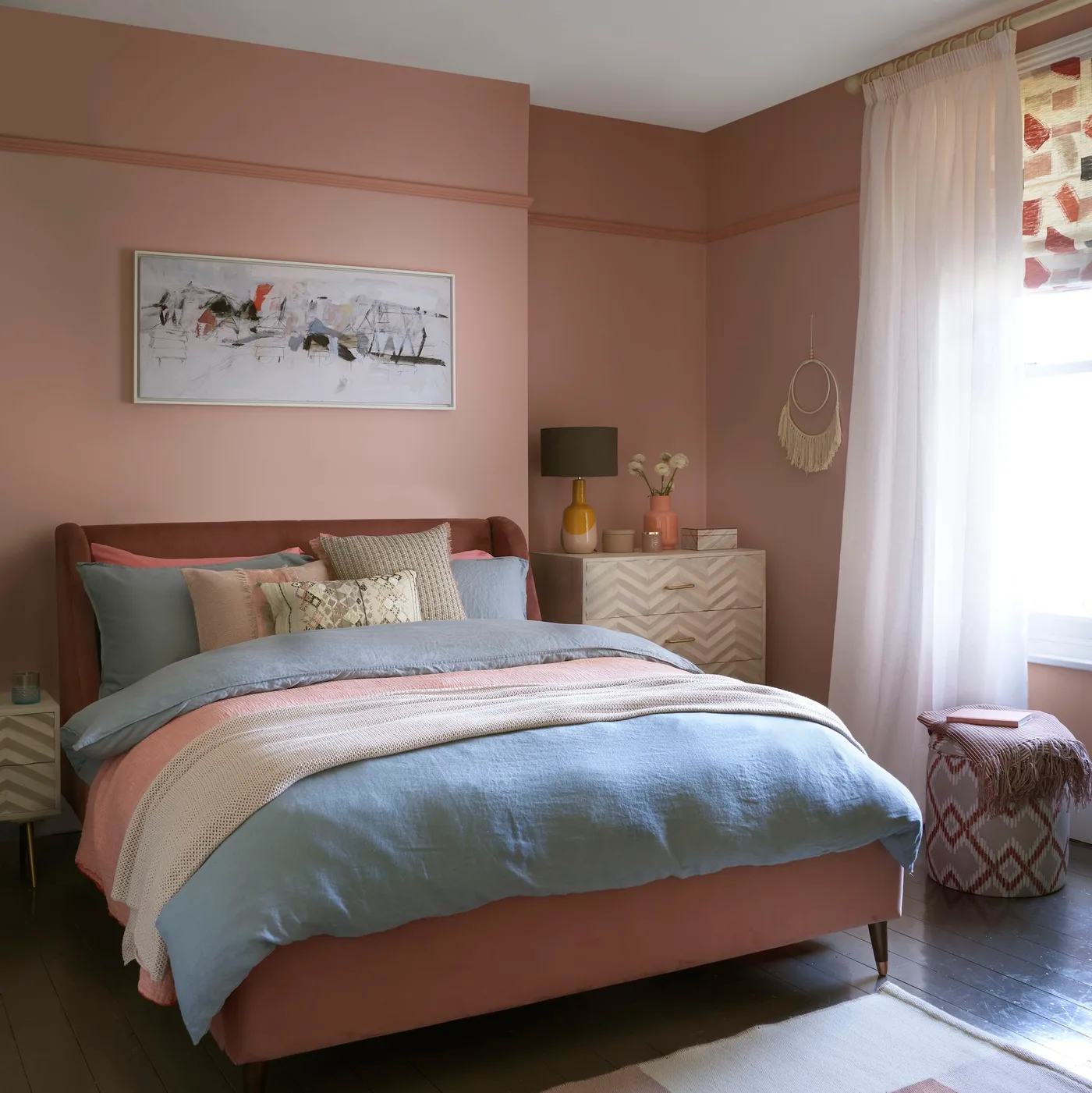
Clay pink walls and a straight upholstered bed create a warm base, with the blue-gray cover offering a cooler surface across the center. A pale drawer chest carries a geometric pattern that is quieter than the contrast in the bedding. The mustard lamp base adds another warm color near the bed, making the room feel varied without requiring several different wall treatments.
Keep the cooler color on a replaceable item such as a cover or throw if you want flexibility later. Test the mustard lamp color with the wall paint, since a yellow that looks gentle in a shop can become much stronger at home. Check the drawer chest’s opening space and lamp height from the bed. Let one patterned furniture surface carry the detail before adding more prints.
IDEA 04 / 20
Add Mustard to a Simple White and Wood Room
 SaveSupport Non AI Creator
Image credit: Future PLC / Colin Poole
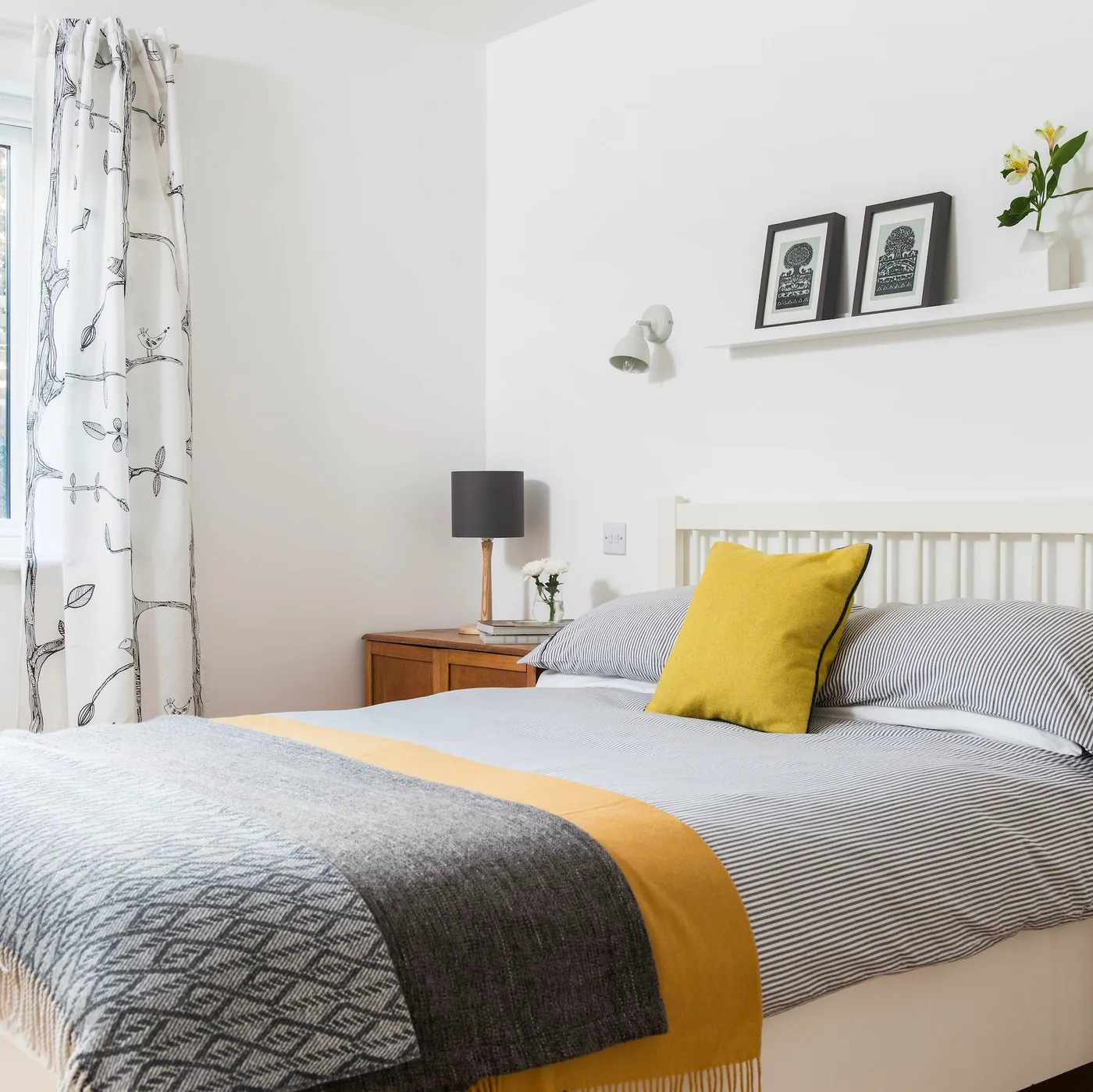
A pale spindle bed and white wall leave plenty of room for the striped bedding and mustard cushions to stand out. The gray-and-mustard throw repeats the accent lower down, while a wood bedside table and wood-colored lamp stem provide warmer furniture details. Framed pictures sit on a narrow ledge above, giving the otherwise simple bed wall a small, organized display.
Start with one mustard cushion and a throw rather than buying an entire matching bedding set. This makes it easier to judge how much yellow the room needs. Secure the frames and ledge appropriately above a sleeping area. Choose a bedside lamp shade that gives useful light without shining directly into your eyes, and keep part of the small table free for everyday items.
IDEA 05 / 20
Follow an Angled Ceiling With Warm Storage
 SaveSupport Non AI Creator
Image credit: Jonas Bjerre-Poulsen and Monica Grue Steffensen. Design: Norm Architects
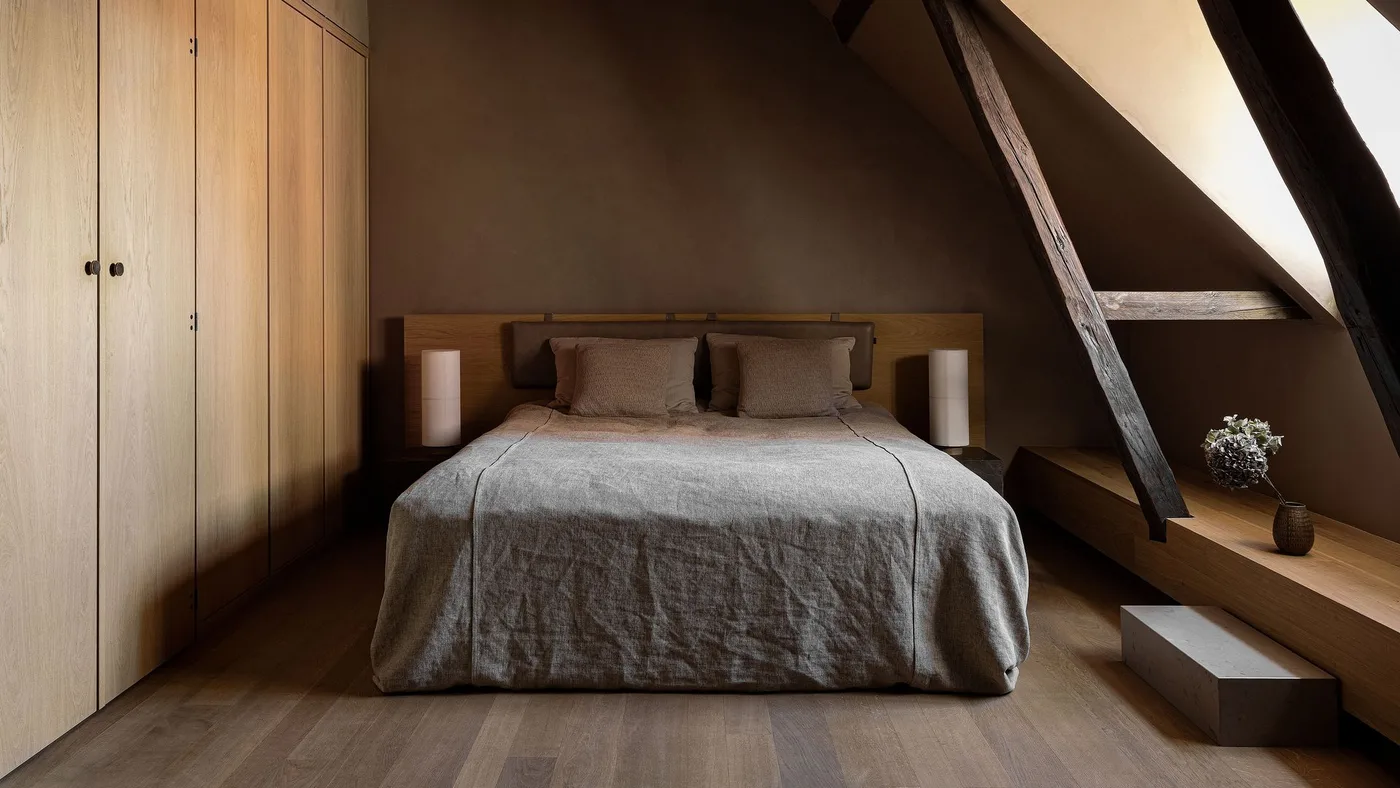
Warm brown surfaces and wood cupboards give this attic room a continuous color story around the gray bedding. The angled beam remains visible rather than disappearing into the background. Storage follows the room’s unusual shape, making the architecture part of the arrangement instead of using unrelated tall furniture that would interrupt the sloping outline beside the bed.
Measure usable headroom and door movement carefully before planning storage beneath a slope. Keep the taller daily-use items where you can reach them comfortably, and reserve lower compartments for less frequent needs. Gray bedding offers a quieter contrast to warm brown surroundings; compare fabric samples in the room first. Leave the approach to both sides of the bed practical, even if the roof shape encourages an uneven arrangement.
PART 02
Give Texture a Clear Place
IDEA 06 / 20
Let Rust Textiles Warm a Cream Room
 SaveSupport Non AI Creator
Image credit: Thomas Richter White Arrow LLC
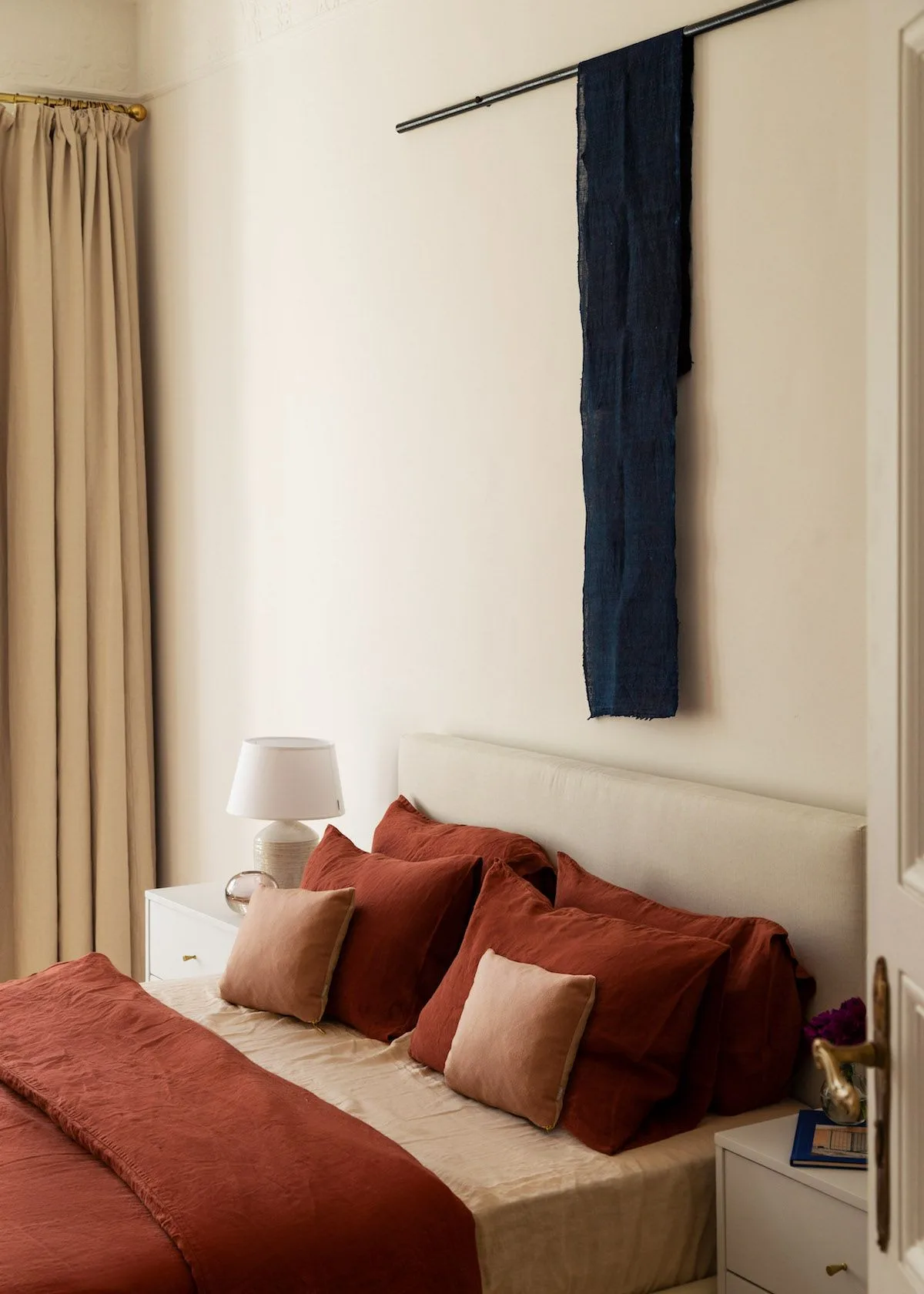
Rust cushions and a matching runner supply most of the warmth in this cream bedroom. Smaller pale pink pillows soften the transition into the light bedding, while a narrow dark wall hanging gives the bed wall a more defined center. The arrangement relies on a few broad textile colors rather than filling the room with earth-toned accessories across every available surface.
Choose the runner for how you use the bed, including whether it will be folded away each night. Keep decorative cushions to a number you can store easily when sleeping. Compare rust fabrics beside the cream bedding, as some lean noticeably redder or more orange. Hang the wall piece securely and consider its cleaning needs, particularly if its surface catches dust close to the pillows.
IDEA 07 / 20
Contrast Pale Bedding With Brick and Dark Slats
 SaveSupport Non AI Creator
Image credit: Design by Modscape. Photo by John Madden
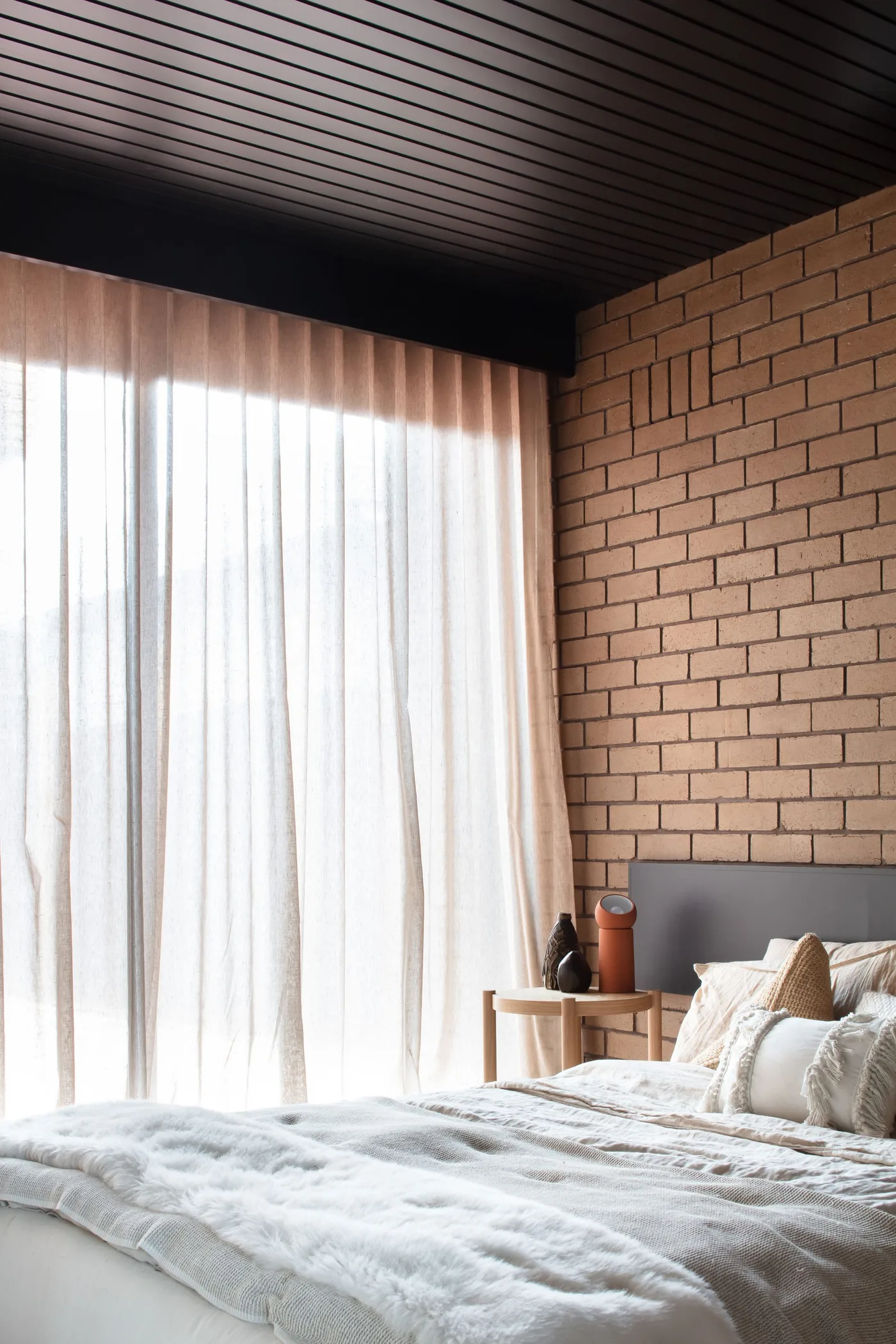
Brick provides a warm, uneven backdrop beneath a dark slatted ceiling, while the pale bedding keeps the center of this room visually lighter. Sheer curtains introduce another soft surface alongside the harder-looking wall and ceiling details. The contrast works because the bed remains relatively simple, allowing the existing architectural textures to supply most of the pattern and depth.
If your room already has a strong wall texture, start with plain bedding before introducing another print. Check the wall’s actual condition and suitable cleaning method rather than treating every brick surface the same way. Sheer curtains may need a separate layer for nighttime privacy. Try warmer and cooler whites beside the brick, and choose lighting that makes the bedside area useful despite the darker overhead surface.
IDEA 08 / 20
Repeat Rust Beneath a Woven Pendant
 SaveSupport Non AI Creator
Image credit: @luovodesign
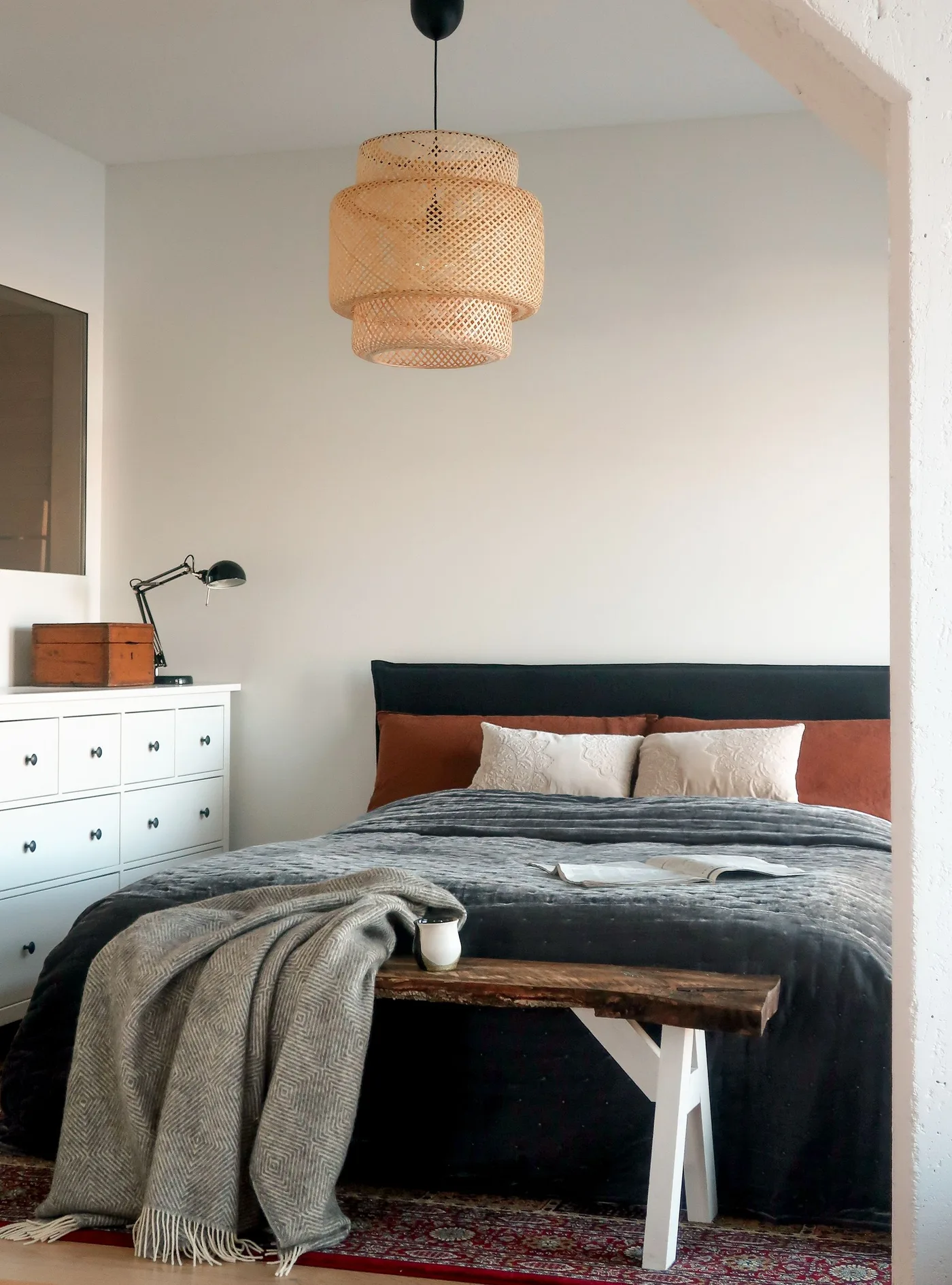
A woven pendant brings a broad textured shape above a charcoal bed, while rust cushions create a smaller warm focal point below. The white drawer chest keeps one side lighter, and the wood bench repeats the warmer tones near the foot. A patterned rug connects these separate pieces without requiring the bed, storage and lighting to share the same finish.
Choose a bench only after checking the walking space at the foot of the bed and the clearance needed for nearby drawers. A patterned rug can help connect different furniture colors, but compare it with your bedding before adding more pattern. Follow the pendant’s cleaning instructions and check its hanging position from both sides of the bed. Use rust accents where they stay visible during ordinary daily use.
IDEA 09 / 20
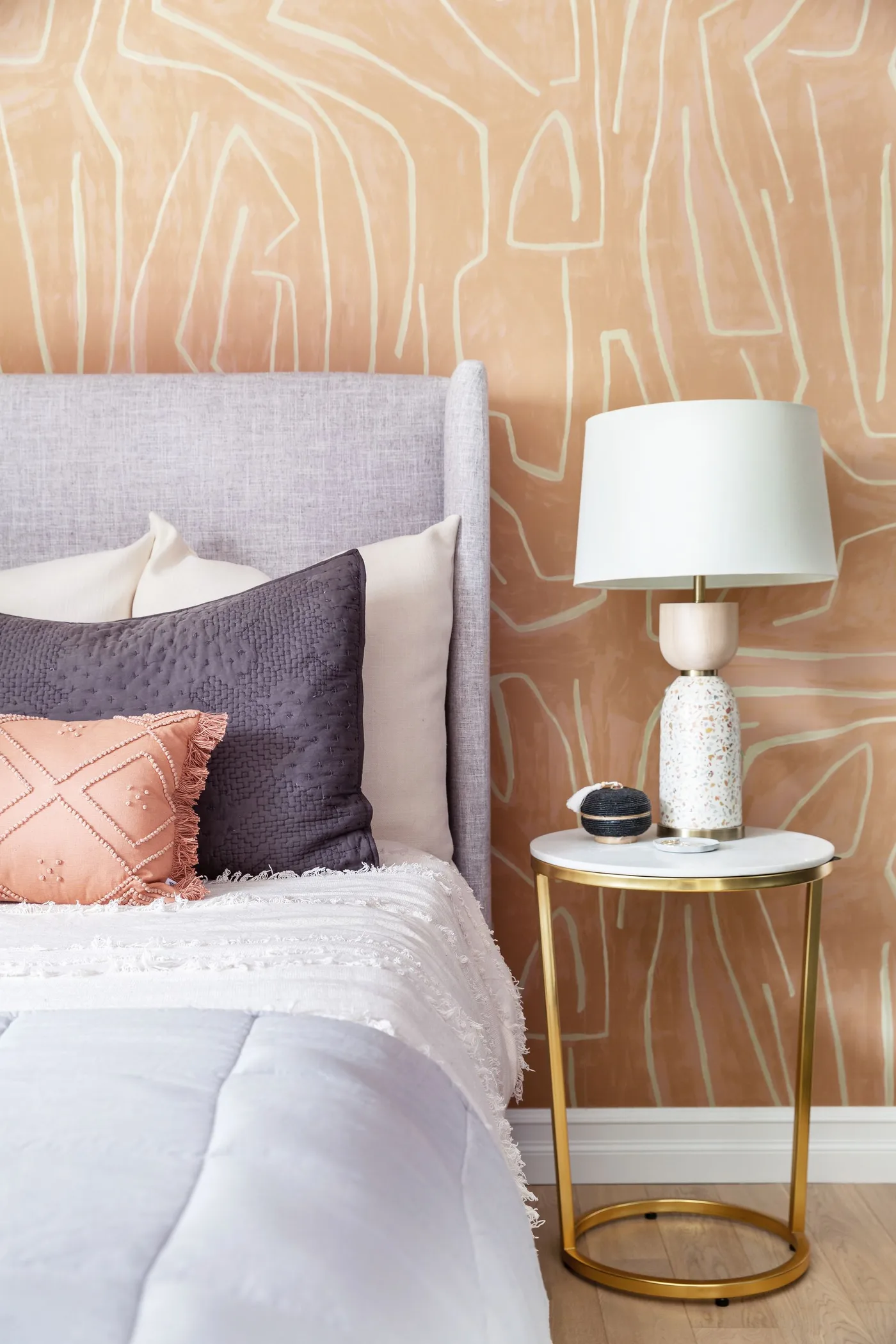
Use Pale Abstract Wallpaper With Peach Accents
 SaveSupport Non AI Creator
Image credit: Phil Crozier
Pale abstract outlines spread across a clay-colored bed wall behind a gray headboard. Peach cushions pick up the wall’s warmth, while navy cushions add a sharper contrast close to the light bedding. A round gold-colored table introduces a different outline beside the bed, keeping the arrangement from becoming a series of matching rectangles and identical neutral surfaces.
View a large wallpaper sample from the doorway as well as beside the bed before choosing it. A small repeat can feel much busier across a whole wall. Keep other patterns restrained if you want the abstract lines to remain clear. Check the round table’s usable top area and stability, and select a lamp that leaves enough room for your usual bedside items without crowding its edge.
IDEA 10 / 20
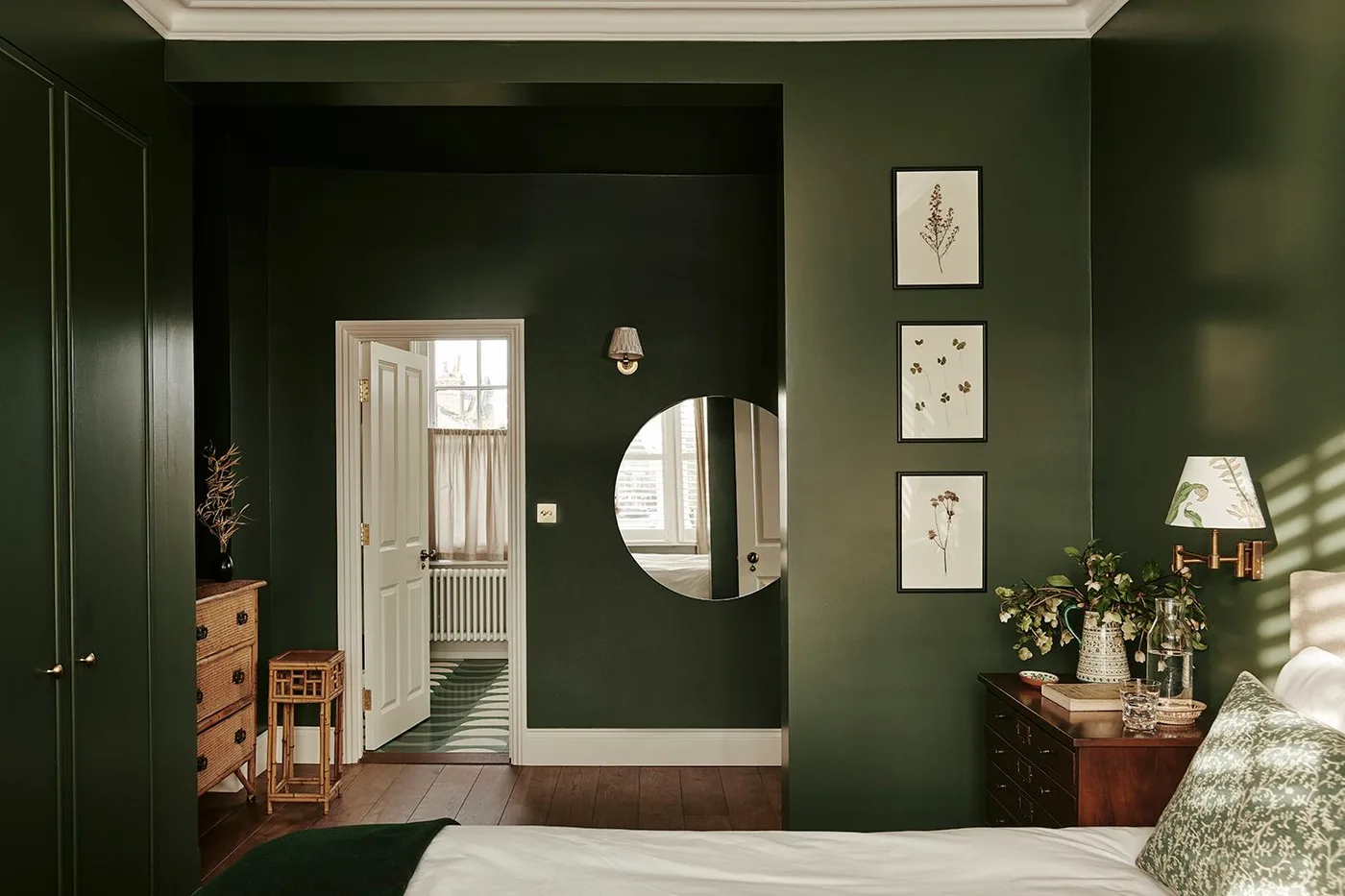
Keep Forest Green Around Simple White Bedding
 SaveSupport Non AI Creator
Image credit: Chris Horwood. Design: Studio Kaya
Forest green walls and wardrobe doors give this bedroom a strong continuous background. White bedding breaks up the darker area around the bed, while the warm wood drawer chest supplies a second major color near the mirror. Three botanical pictures repeat the green theme in a more detailed form, making the display feel connected to the room rather than added afterward.
Test a dark green sample across both a wall and a cupboard surface if you want them to read as one color. Their different finishes may alter the result. Keep wardrobe openings and the approach to the chest clear before deciding where pictures and accessories go. Choose bedside lighting for reading as well as atmosphere, and limit extra botanical patterns if the framed display already gives you enough detail.
PART 03
Balance Green With Light Surfaces
IDEA 11 / 20
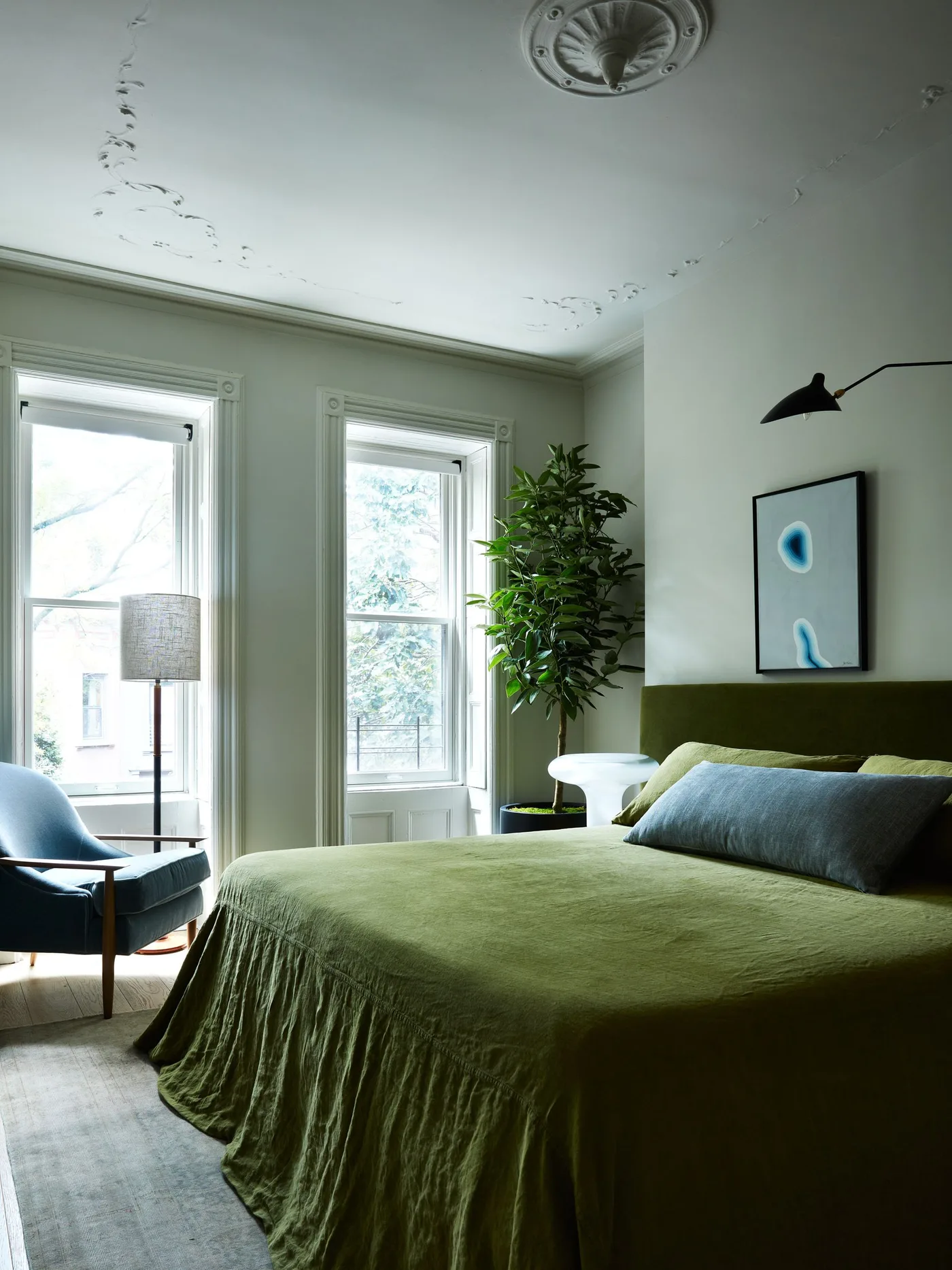
Bring Olive Green Into a Bright Bedroom
 SaveSupport Non AI Creator
Image credit: Tim Lenz. Design: Crystal Sinclair
Olive bedding and a wide, low green headboard give this bright bedroom a broad earthy center beneath a pale ceiling. A black reading light provides a small defined shape against the light surroundings. A teal chair adds a separate color near the large plant, while the windows keep the green textiles from being the room’s only connection with a natural-looking palette.
Check the headboard’s overall width against the wall and bedside furniture before choosing a low, extended design. Keep reading-light controls easy to reach from the pillows. A fringed cover needs a care routine suited to its trim, especially if pets use the bed. Place a large plant according to its actual light and watering needs, leaving enough space to clean around its pot and move the chair.
IDEA 12 / 20
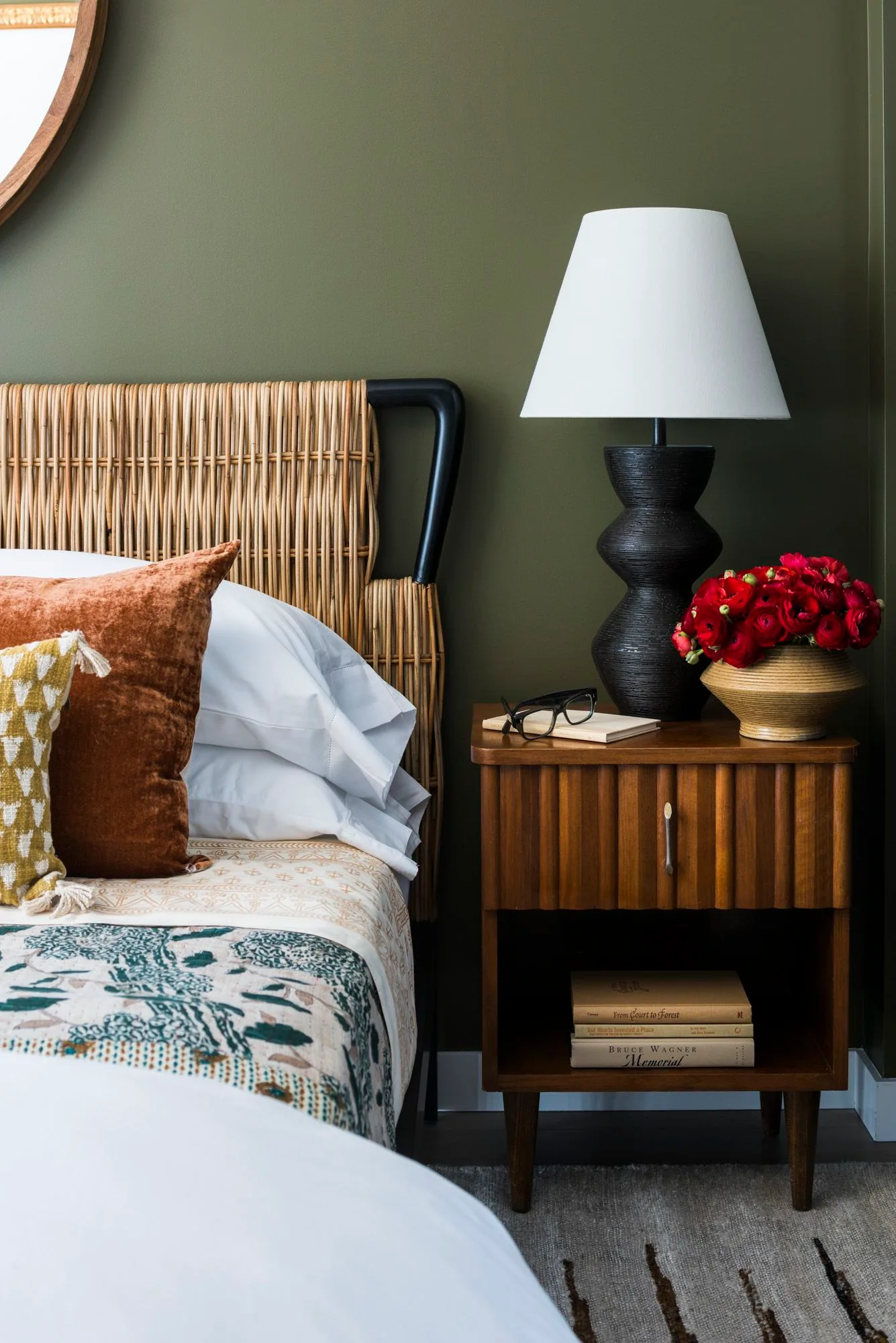
Set Woven Detail Against a Dark Olive Wall
 SaveSupport Non AI Creator
Image credit: Adam Kane Macchia. Design: BHDM
A woven headboard in a black frame creates a clear contrast against the dark olive wall. White bedding gives the weave room to stand out, while a rust cushion introduces warmth close to the center. The fluted wood bedside cabinet adds another repeated line below the lamp, so the room’s texture comes from larger furniture details rather than many small decorations.
Check the headboard’s construction and recommended cleaning method before buying it for everyday use. Woven surfaces can collect dust differently from smooth upholstery, and an open pattern may show the wall behind. Keep the bedside top practical around the lamp and flowers. If you repeat fluting elsewhere, use it sparingly so the cabinet remains a distinct detail rather than one part of an overly busy collection.
IDEA 13 / 20
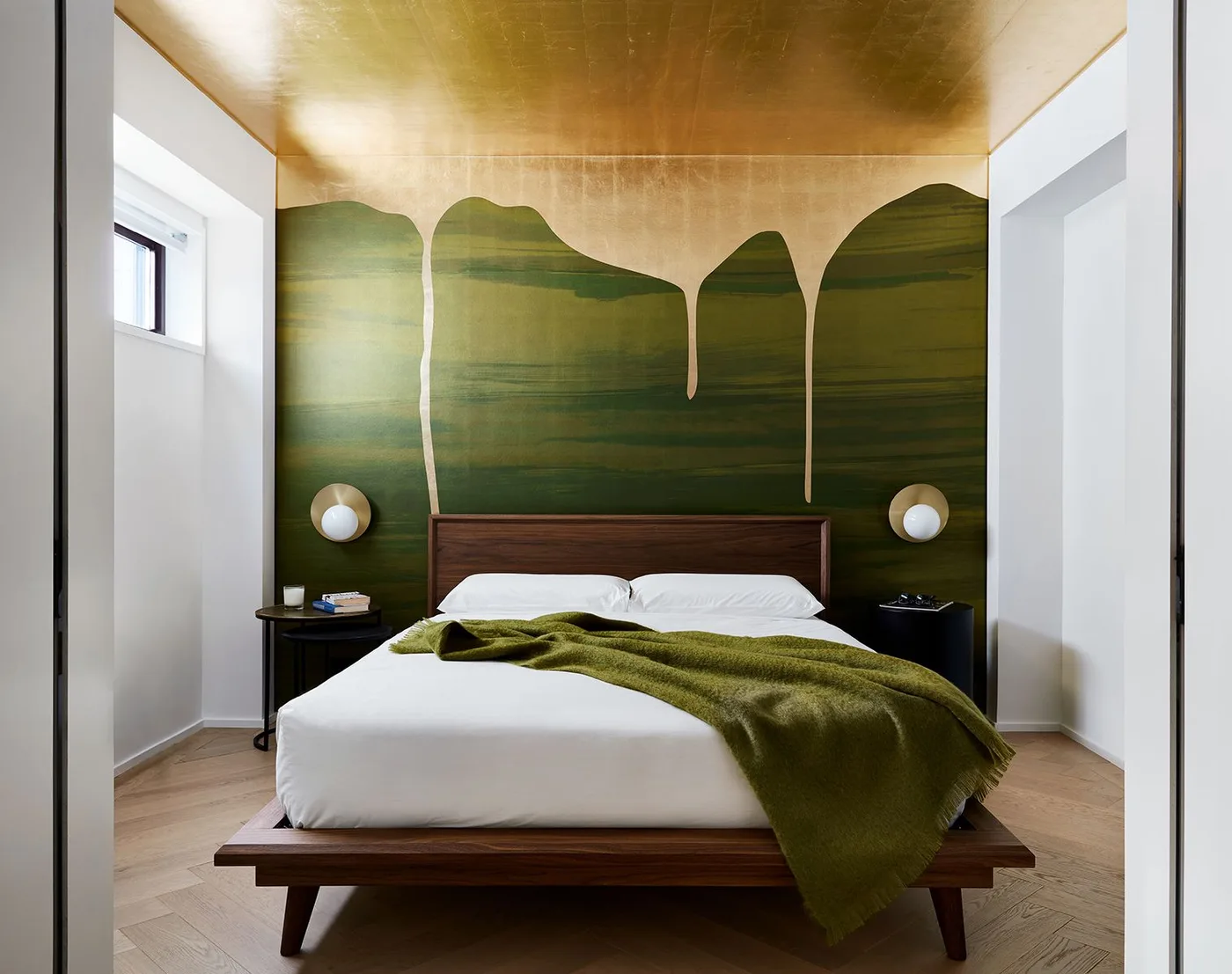
Give the Bed Wall a Green and Gold Pattern
 SaveSupport Non AI Creator
Image credit: David Mitchell. Design: Stadt Architecture
Green and gold abstract decoration fills the wall above a low wood bed, making the wall the room’s largest patterned surface. An olive blanket repeats the green at a lower level, while two globe wall lights and dark bedside tables create a balanced arrangement around the pillows. The pale floor and light bedding keep the strong bed-wall colors from taking over every surface.
Work out the bed and lighting positions before committing to a large wall pattern. Keep switches reachable and choose bedside tables with enough height and surface area for your needs beside a low frame. Plain bedding helps the wall remain readable. Compare any gold-colored finish with the actual light fittings, and decide whether cleaning access behind the low bed suits your usual routine.
IDEA 14 / 20
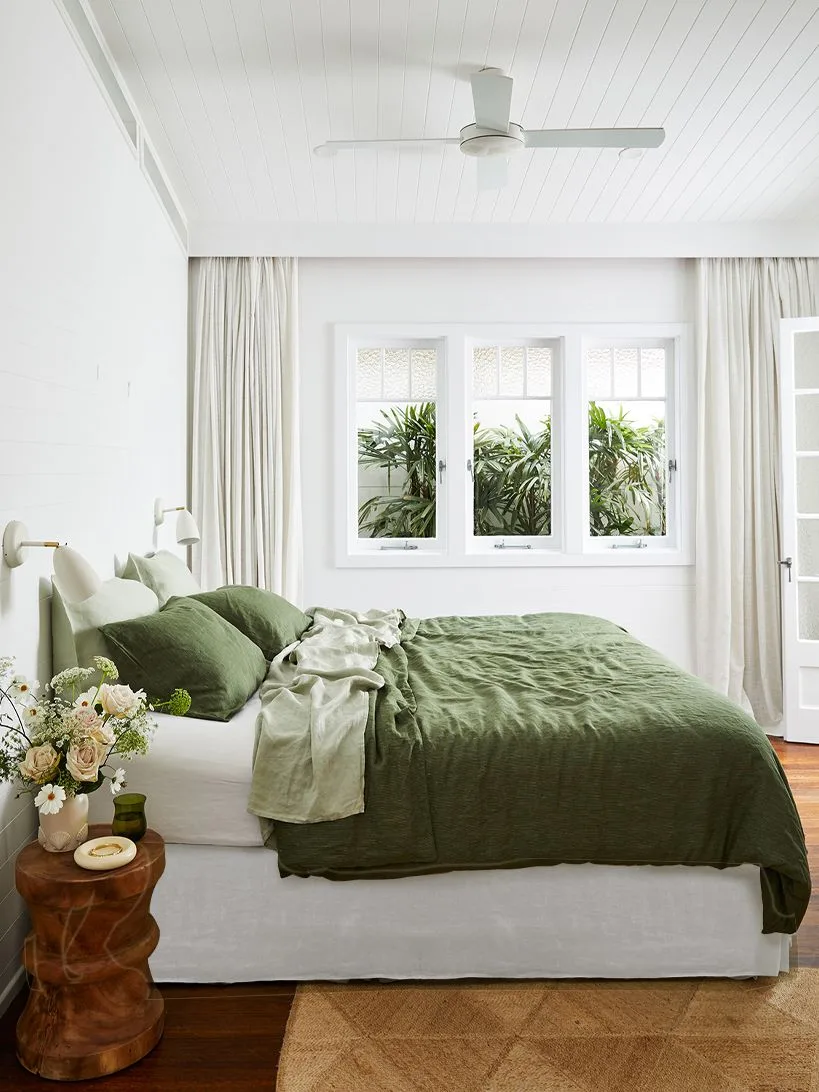
Warm an All-White Room With Olive and a Wood Table
 SaveSupport Non AI Creator
Image credit: Bed Threads
Olive bedding creates a single broad patch of color in this bright white room. A spiral-shaped wood bedside table supplies a more sculptural warm detail beside the bed, and the woven-looking rug adds texture beneath it. White curtains and the paneled ceiling stay within the pale background, allowing the green textiles and table to stand out without several competing accents.
Choose a sculptural table for stability and useful top space as well as its shape. Check whether your lamp, phone and a glass can sit safely together. Compare olive fabrics in the room’s strong daylight before buying a whole set. A textured rug needs an appropriate cleaning method and a secure position near the bed. Confirm the curtains provide the privacy you need when the lights are on.
IDEA 15 / 20
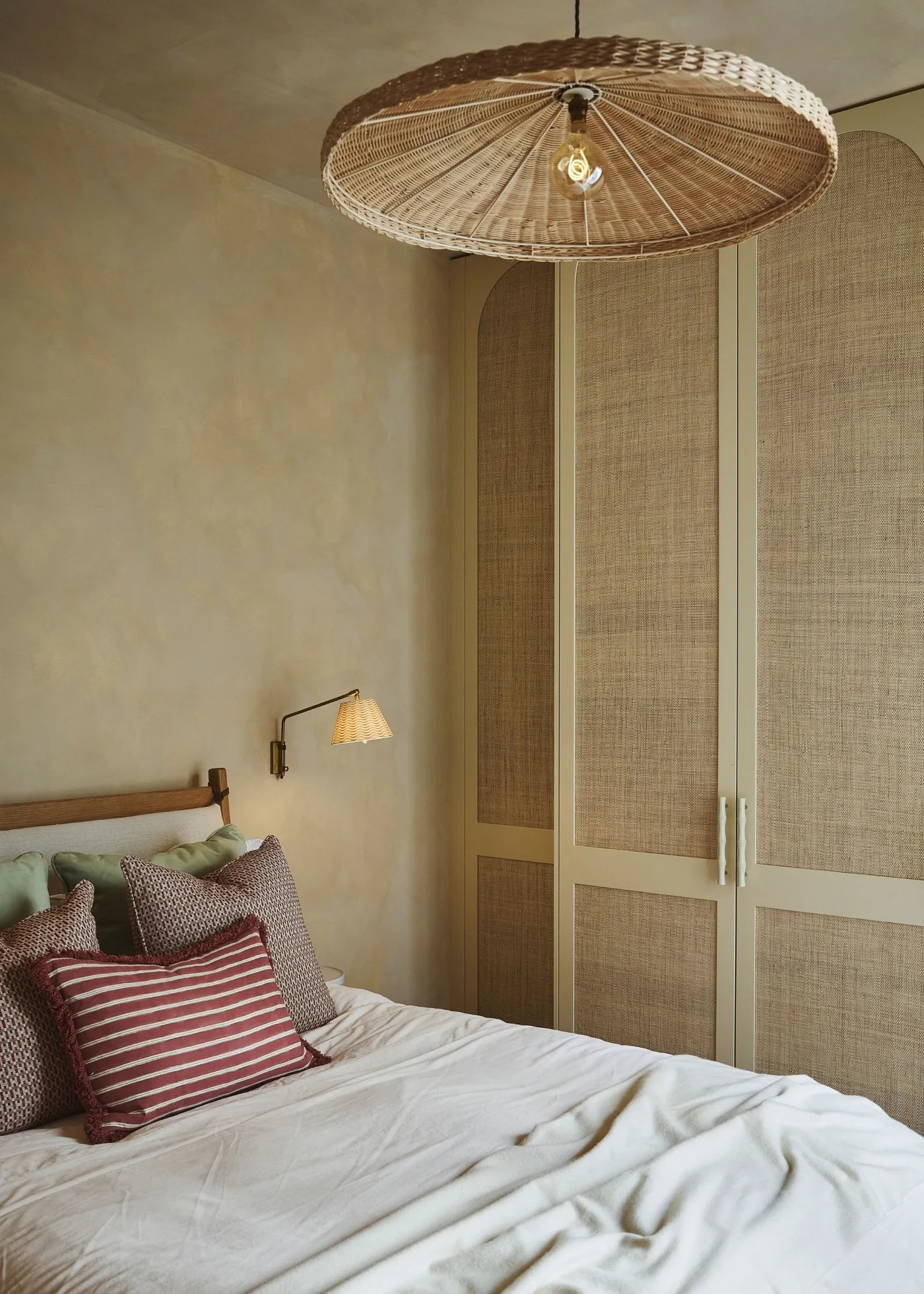
Mix Large Woven Shapes With Simple Cabinet Fronts
 SaveSupport Non AI Creator
Image credit: Malcolm Menzies. Design: Project London
Mottled sand-colored walls create a soft backdrop for the large woven pendant and smaller bedside light. Tall textured cupboards with arched inset details bring another substantial surface beside the bed. Muted rose and green bedding with a rust striped cushion keeps the earthy palette varied, but the furniture’s broad outlines still give the room a clear structure rather than a collection of loose accessories.
Limit additional texture if your lighting and cupboard fronts already supply several strong patterns. Check the actual cabinet finish and cleaning guidance before choosing it, especially around handles and inset edges. Keep the pendant clear of door movement and the places where you sit or stand near the bed. Try the bedding colors together in small samples, removing one if the combination becomes too busy for the room.
PART 04
Finish With Color and Contrast
IDEA 16 / 20
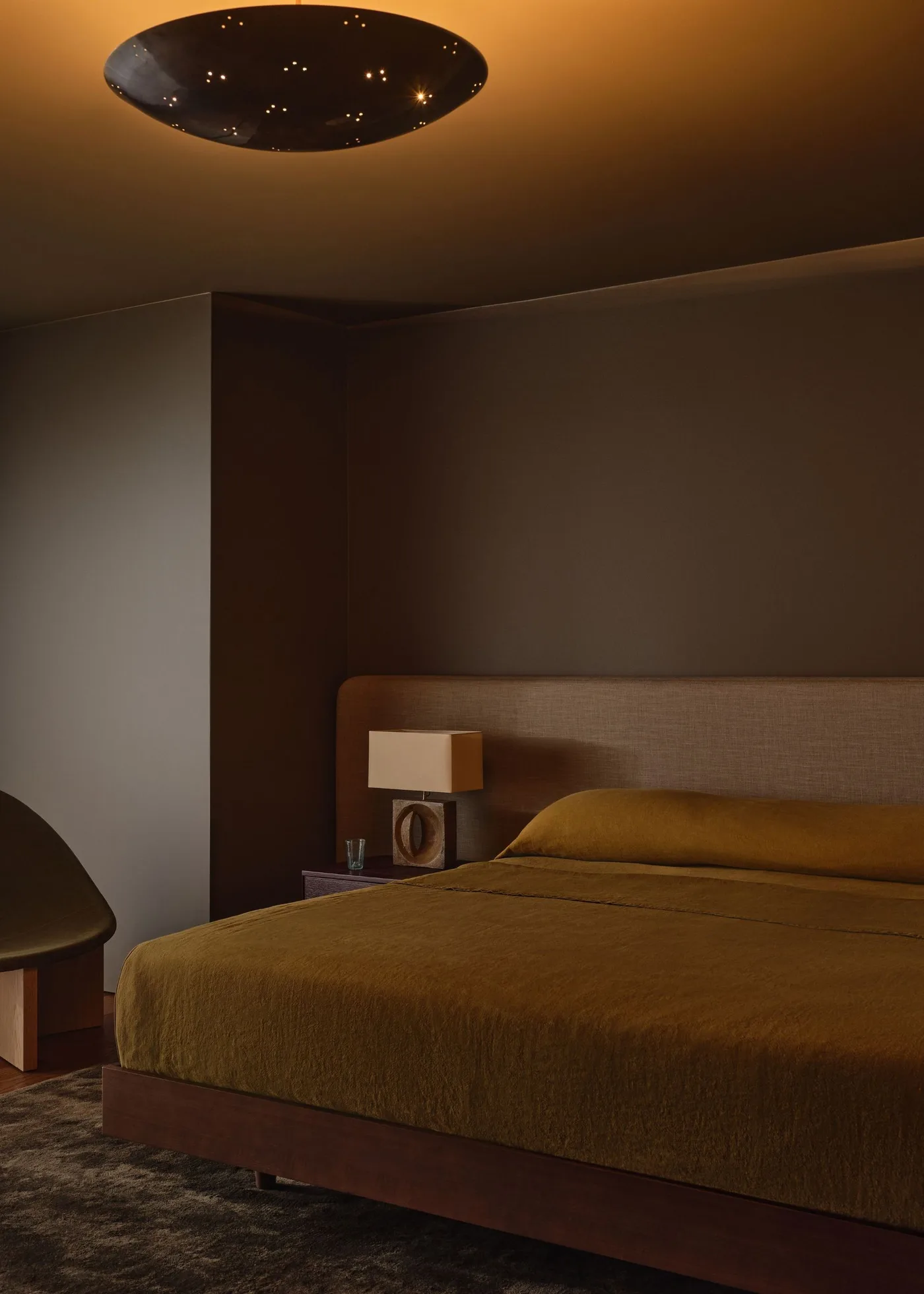
Make Ochre the Brightest Color in a Brown Room
 SaveSupport Non AI Creator
Image credit: Michael Clifford. Design: Jessica Alpert Design
Ochre bedding forms a bright central block against deep brown walls and a long, darker headboard. The broad ceiling fitting and cube-shaded bedside lamp add modern geometric outlines above and beside the softer fabric. A dark chair remains within the surrounding brown palette, letting the bedcover carry the main contrast instead of introducing several unrelated bright furniture colors.
Test an ochre fabric alongside your chosen brown paint under evening lighting, when both colors may appear deeper. Keep enough contrast between bedding and the headboard to make their edges clear. Choose a bedside lamp for the tasks you actually do there and check glare from the pillows. A dark room still needs practical light at storage and dressing areas, even if the bed stays the strongest visual feature.
IDEA 17 / 20
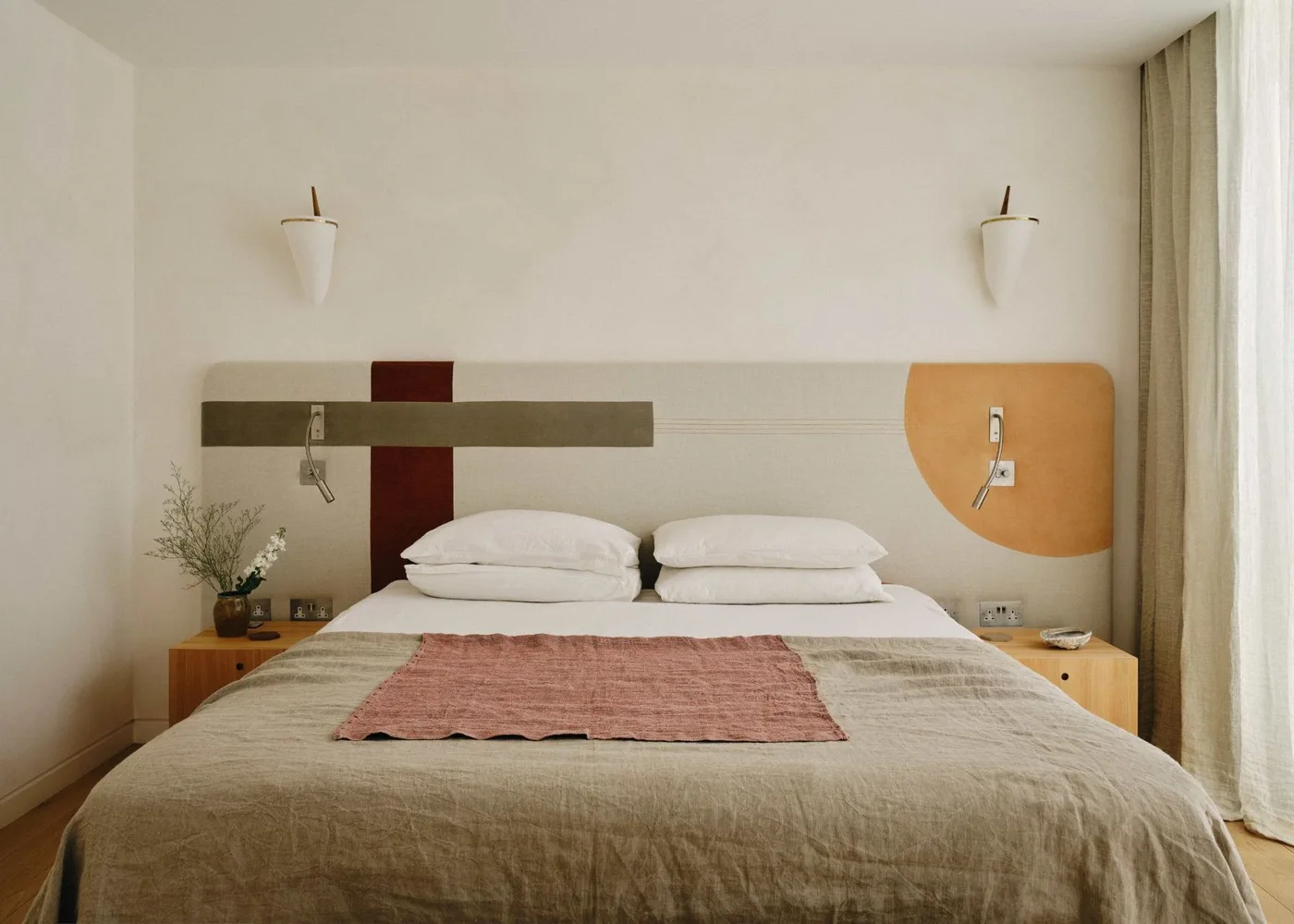
Build a Color Palette Into a Linear Headboard
 SaveSupport Non AI Creator
Image credit: Beth Davis. Design: Studio Iro
A long headboard carries olive horizontal lines, a deep red vertical stripe and a mustard semicircle across a warm pale wall. Pale wood bedside shelves continue the low horizontal arrangement, while white wall lights sit above smaller reading lights. Gray-taupe bedding and a dusty rose cloth remain quieter below, allowing the headboard’s graphic colors to do most of the decorative work.
Plan the headboard pattern around the mattress and bedside positions rather than placing each color independently. Check that shelves offer enough space for daily essentials and that both kinds of light have a clear purpose. Repeat just one or two headboard colors in textiles if you want a calmer result. Compare paint and fabric samples together, since the same color name can produce noticeably different appearances.
IDEA 18 / 20
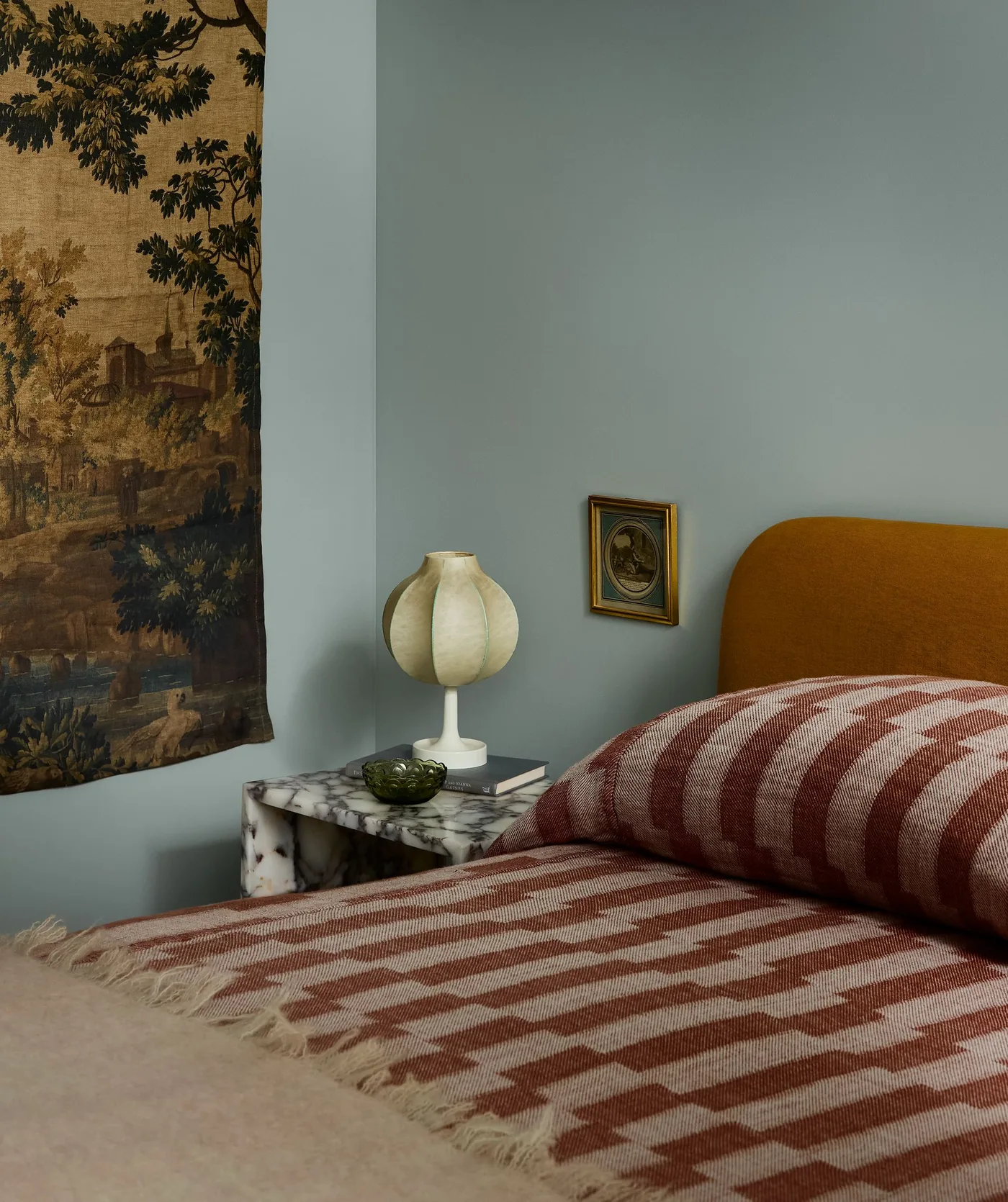
Pair an Ochre Headboard With Rust Pattern
 SaveSupport Non AI Creator
Image credit: Malissa Mabey. Design: Yond Interiors
An ochre headboard and rust-and-white zigzag blanket provide the warmest colors in this bedroom. The pale blue wall offers a cooler background, while a landscape wall hanging adds deeper brown detail to one side. A sculptural white lamp and dark veined bedside surface give the nearby corner simpler shapes, balancing the stronger textile pattern across the center of the bed.
Use the headboard and blanket as a pair when testing a cooler wall color; the warm pieces need enough presence to remain the focus. Avoid adding another large zigzag or stripe if the cover already feels lively. Check the care requirements of the actual bedside surface before placing drinks there. Position the wall hanging securely and make sure it does not compete with the lamp or crowd the pillows.
IDEA 19 / 20
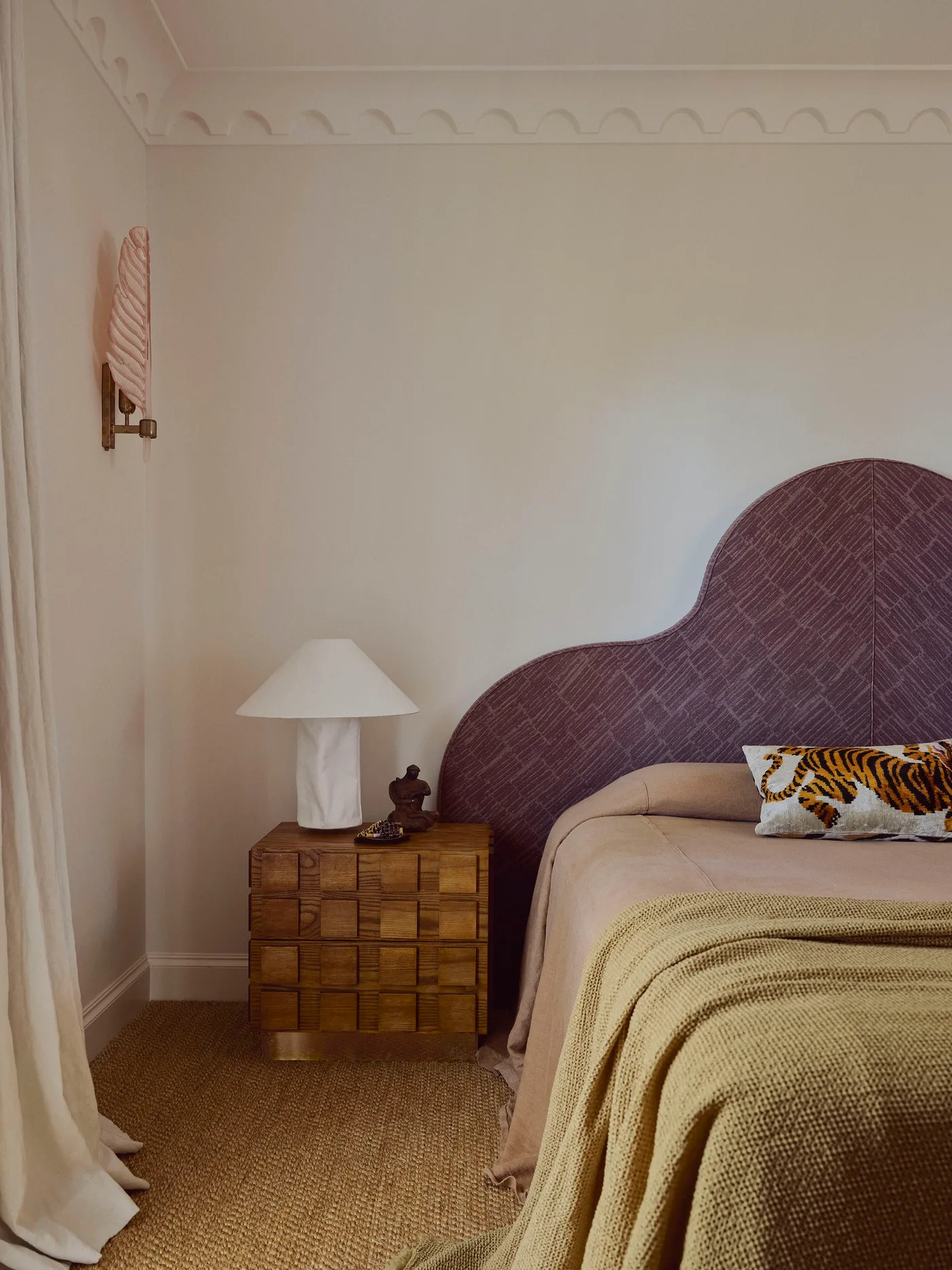
Use Aubergine With Tan and Soft Pink
 SaveSupport Non AI Creator
Image credit: Anson Smart. Design: Duet
A curved aubergine-patterned headboard gives this warm pale room a darker focal point. Tan and soft pink bedding ease the transition into a khaki-colored blanket, creating a varied earthy palette without relying entirely on beige. The block-patterned wood bedside cabinet adds another geometric detail below a white conical lamp, while a small pink wall light repeats the softer textile color.
Compare aubergine fabrics with your bedding under the lighting you use at night, since the darker color can look browner or more purple. Let the headboard and cabinet carry the patterns before adding printed cushions. Keep the lamp base and everyday items comfortably within the cabinet top. Choose a curved headboard for support and cleanability as well as its outline, particularly where upholstery meets the frame.
IDEA 20 / 20
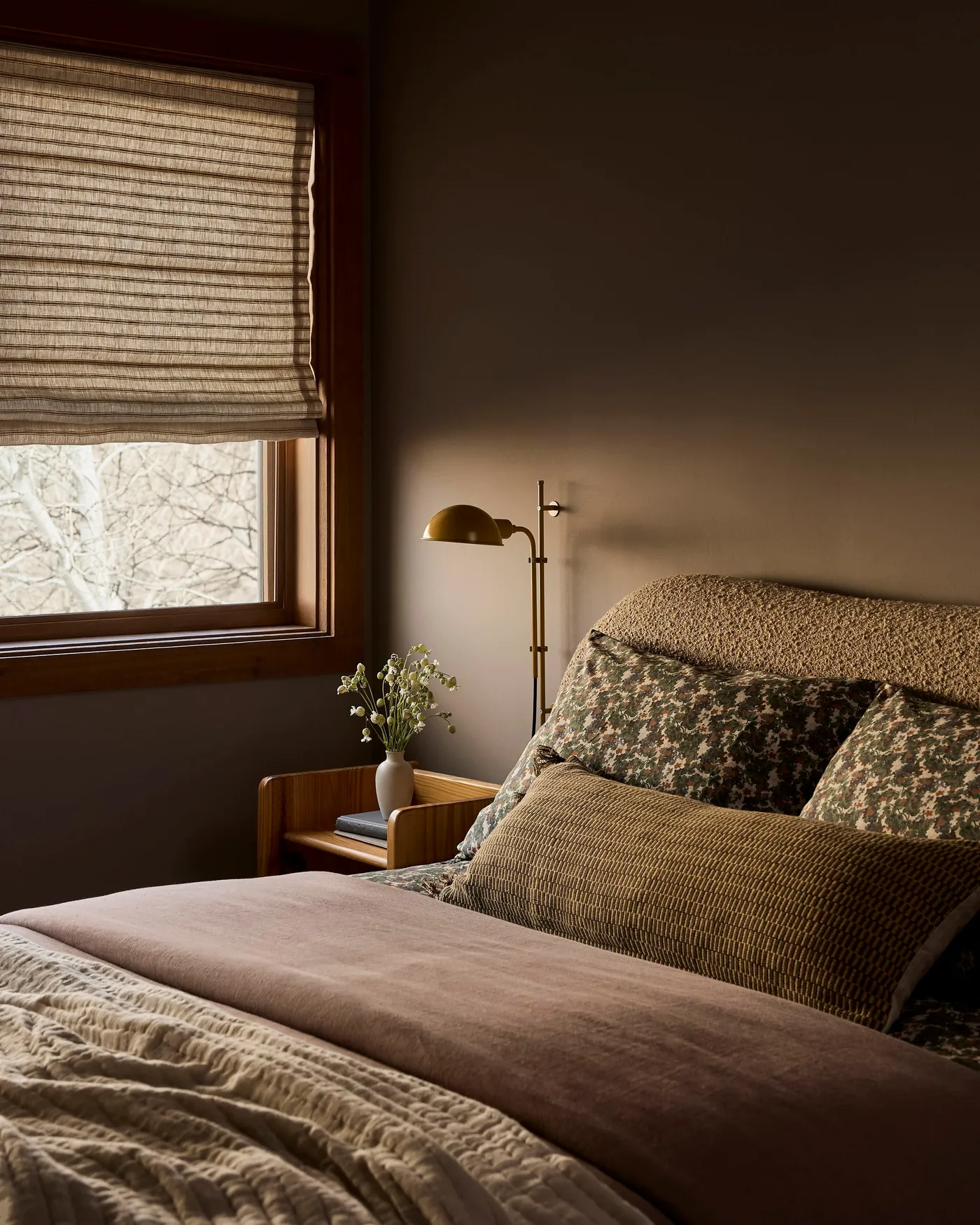
Layer Muted Pink and Olive Against Brown
 SaveSupport Non AI Creator
Image credit: Malissa Mabey. Design: Yond Interiors
Brown walls surround a textured taupe headboard and muted pink blanket, with olive patterned pillows adding a greener earthy note. A long striped cushion connects the darker and lighter colors across the bed. The woven window shade and open wood bedside table repeat the room’s warmth near the window, while a small gold-colored reading light supplies a sharper outline beside the upholstery.
Choose patterns at different scales if you want to combine pillows and a striped cushion without losing their individual shapes. Check that the window shade offers enough privacy and can be cleaned according to its construction. Keep the open bedside shelf useful rather than filling it with fragile displays. Test the reading light from your usual position, and select textured upholstery with a care routine you can maintain.
BRING IT ALL TOGETHER
Choose the Warm Detail You Will Use Every Day
Start with the part of the room that needs attention: storage, bedside light, a worn cover or an empty bed wall. A useful improvement gives an earthy palette a place in daily life, rather than adding objects you have to move whenever you use the room. Compare colors with the pieces you intend to keep before buying anything new.
Try one larger warm surface and a small supporting detail first. A rust cover with a wood table, or an olive headboard with pale bedding, can be enough. Check drawer access, lighting controls, privacy and cleaning needs as you arrange the room. Add another pattern or texture only when the existing combination still feels comfortable and practical.