English cottage style makes room for patterned quilts, wood furniture, framed pictures and the quirks of a smaller bedroom. The most useful approach is to choose a few connections between them: a color repeated through the bedding, a finer wall pattern behind a larger fabric print, or pale furniture around stronger exposed beams. The room should still be easy to sleep in, clean and move through.
These twenty photographs offer different combinations of cottage character, from sunny attic nooks to leafy wallpaper and simple metal beds. Treat them as individual arrangements to learn from, rather than instructions to buy every object shown. Notice the window access, bed shape and storage beside the patterns, and adapt those decisions to the space and care routine you actually have.
PART 01
Work With Beams and Warm Color
IDEA 01 / 20
Give Exposed Beams a Fine Patterned Background
 SaveSupport Non AI Creator
Image credit: Chris Snook
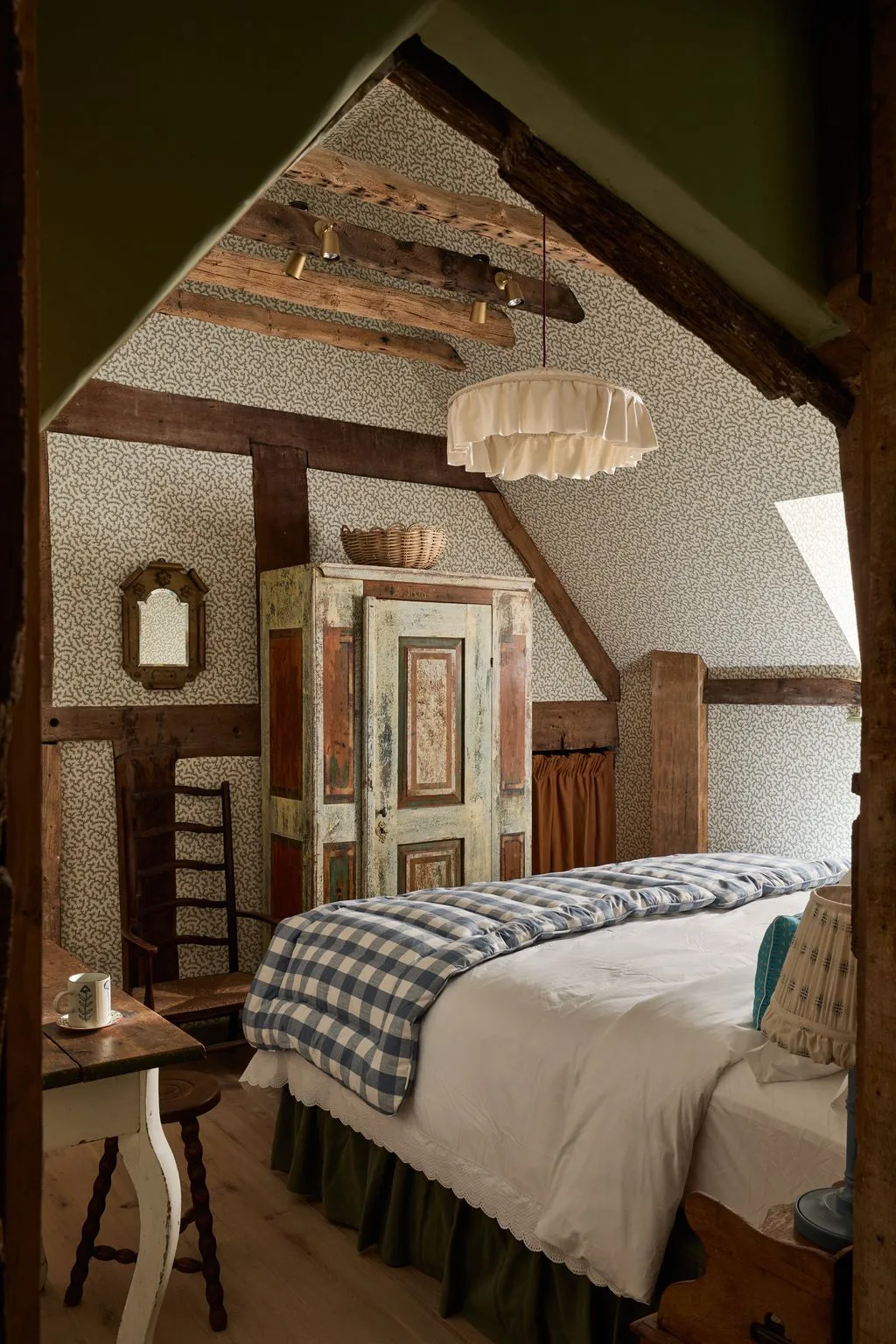
Dark roof beams cross a fine patterned wall and ceiling above a bed dressed with white bedding and a blue checked blanket. A cupboard with several muted painted colors adds another textured-looking feature beside the bed. The pale ruffled pendant introduces a softer outline overhead. The smaller wallpaper pattern keeps the background connected while the beams remain the strongest lines in the room.
In a room with exposed beams, compare a large wallpaper sample with both the wood and your bedding before ordering. Measure the usable height around the bed and cupboard, including doors when open. Select a pendant that can be cleaned and reached appropriately. Do not alter structural timbers to copy an arrangement; work with the existing room and leave a comfortable route to the window.
IDEA 02 / 20
Use Orange Walls to Warm a Twin Bedroom
 SaveSupport Non AI Creator
Image credit: Dean Hearne
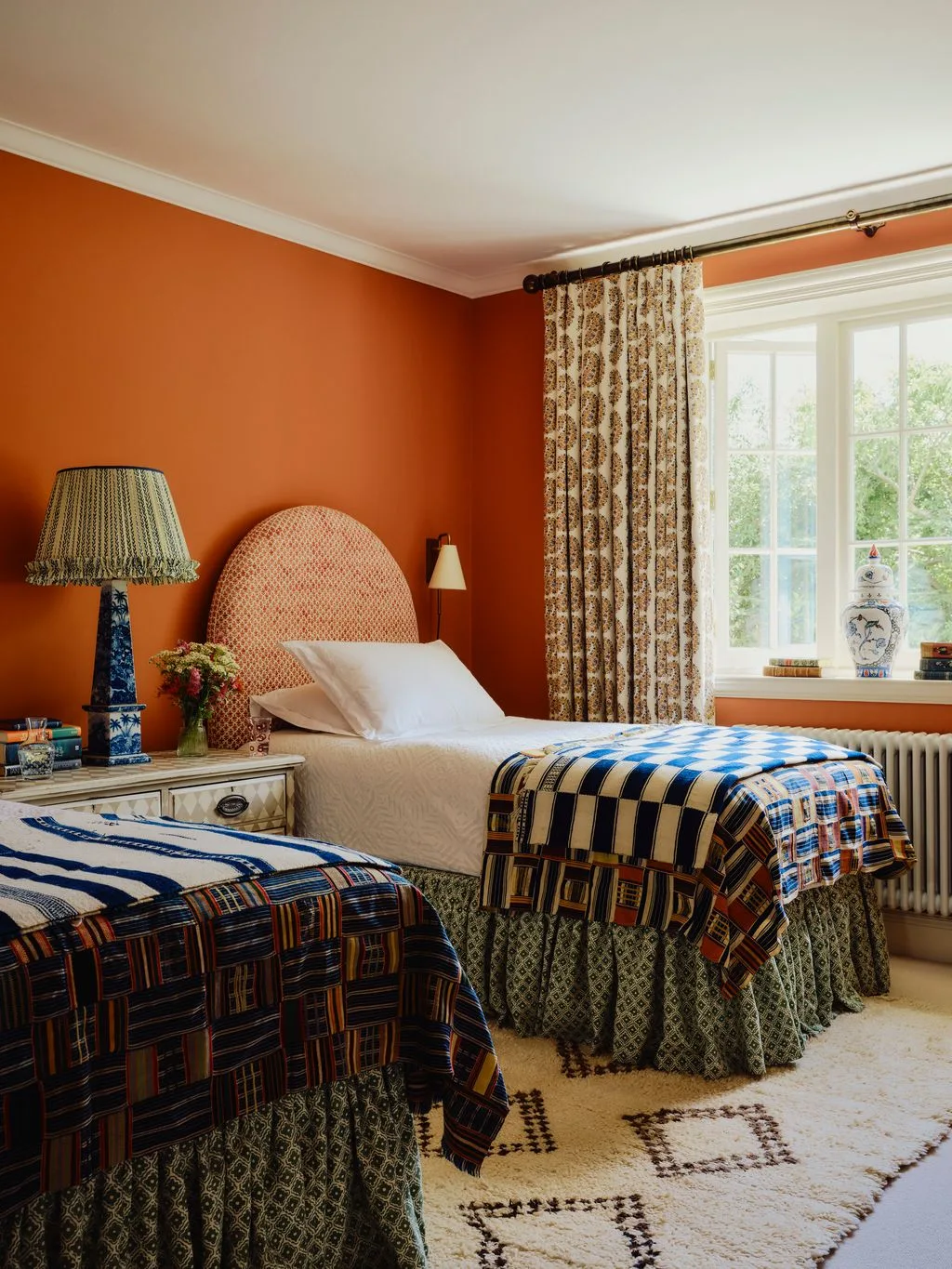
Orange walls surround two beds with pale rounded headboards, while blue checked throws create a cooler contrast across the white bedding. The patterned curtains repeat smaller warm and dark details beside the window. A tall blue lamp sits on the shared bedside surface. The room feels coordinated through repeated bed shapes rather than through making every fabric use exactly the same print.
Test a warm orange paint near your window and under the lamps you will actually use; a small sample can look very different across a whole wall. Keep each sleeper’s route to the beds clear and choose a shared table that holds everyday essentials. Compare the throws with the curtains at full scale, and select washable bedding for the guests or household members using the room.
IDEA 03 / 20
Keep a Low Beamed Room Light Around the Bed
 SaveSupport Non AI Creator
Image credit: Chris Snook
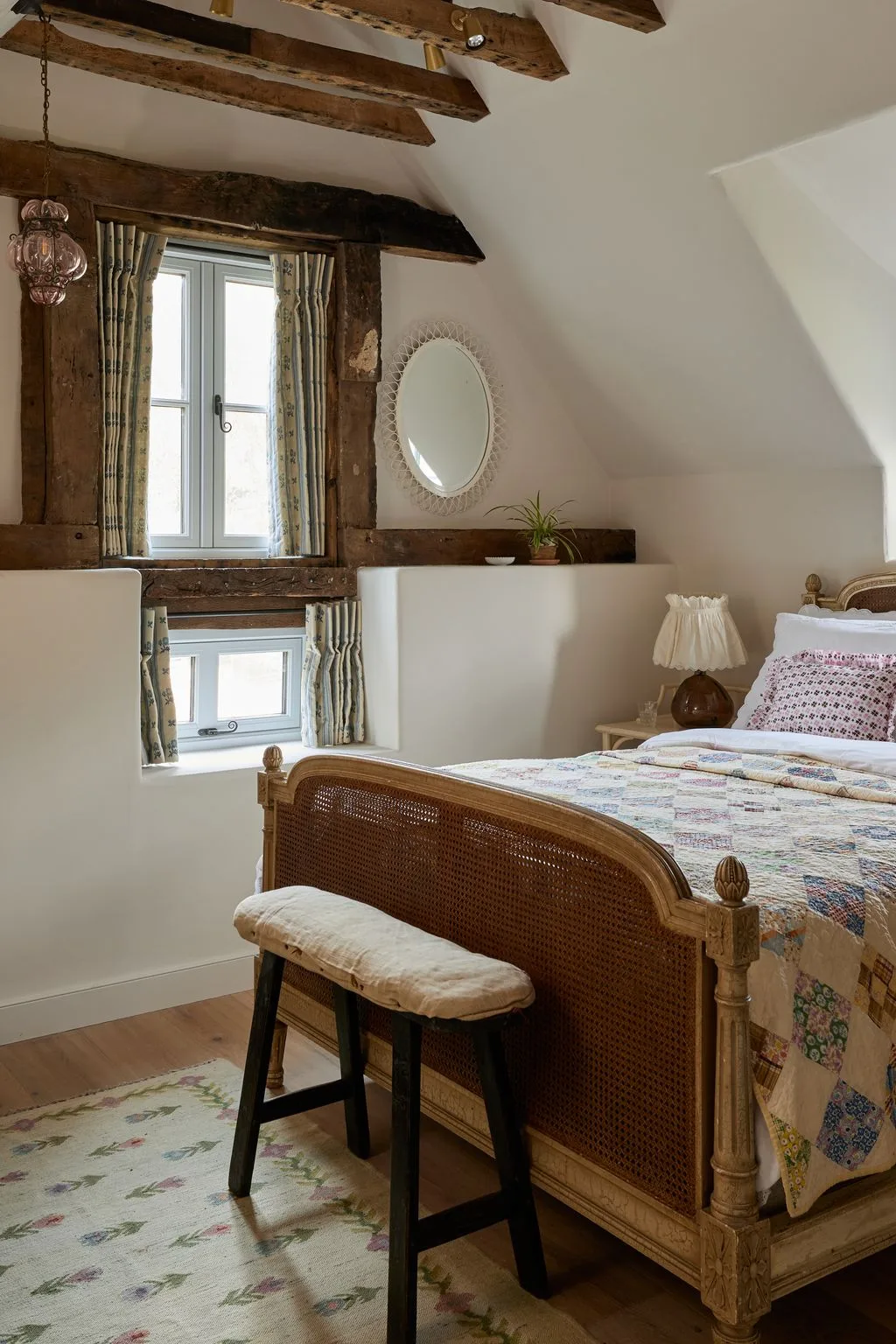
Exposed beams frame a light wall and window beside a wood bed with woven panels. A pastel patchwork quilt brings smaller areas of color to the bedding, while striped curtains add a narrow vertical pattern around the window. The oval mirror has a pale decorative border. A padded stool provides a separate small seat without introducing another large piece of furniture beneath the low ceiling.
Check head clearance beside the bed before deciding where a stool or bedside table will sit. Keep the window treatment easy to open rather than allowing fabric to collect around the furniture. A patchwork cover can provide enough color on its own, so compare additional cushions carefully. Inspect a woven bed frame for sound construction and follow its care guidance instead of assuming it is suitable because it looks traditional.
IDEA 04 / 20
Soften a Green Bed With a Cream Fabric Backdrop
 SaveSupport Non AI Creator
Image credit: Simon Upton
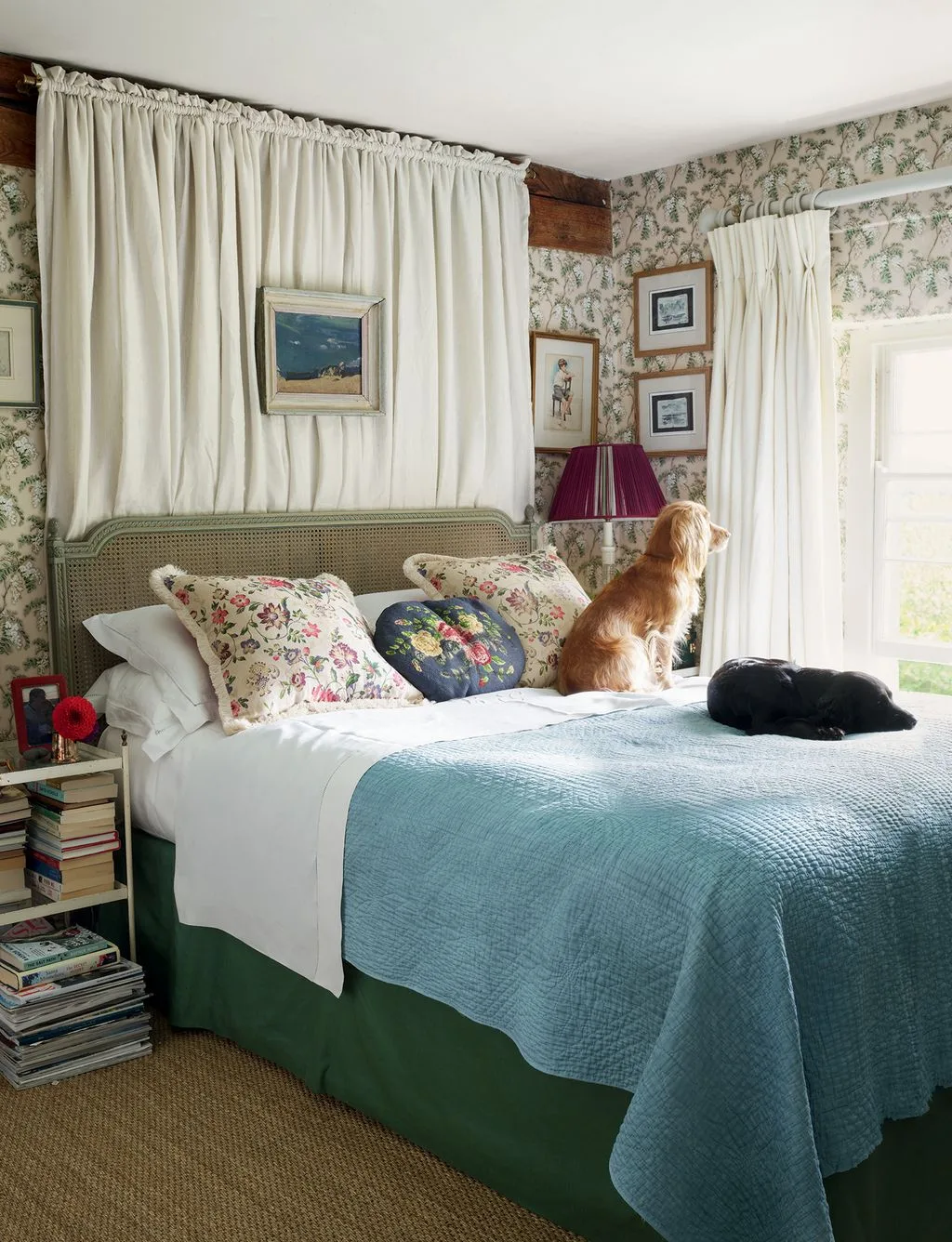
A green headboard with woven panels sits against gathered cream fabric, with a small framed picture placed against the pale backdrop. Floral cushions bring several colors onto the white bedding, while a blue cover and green bed skirt repeat cooler tones lower down. The surrounding wall has its own fine pattern. The pale fabric gives the headboard a quieter setting within the layered room.
A fabric backdrop needs secure supports, suitable clearance from lights and a practical way to remove dust. Keep it clear of the window and any heating equipment. If pets share the room, choose bed covers that fit your cleaning routine and avoid relying on decorative cushions for durability. Give bedside books a stable shelf rather than allowing stacks to narrow the route beside the bed.
IDEA 05 / 20
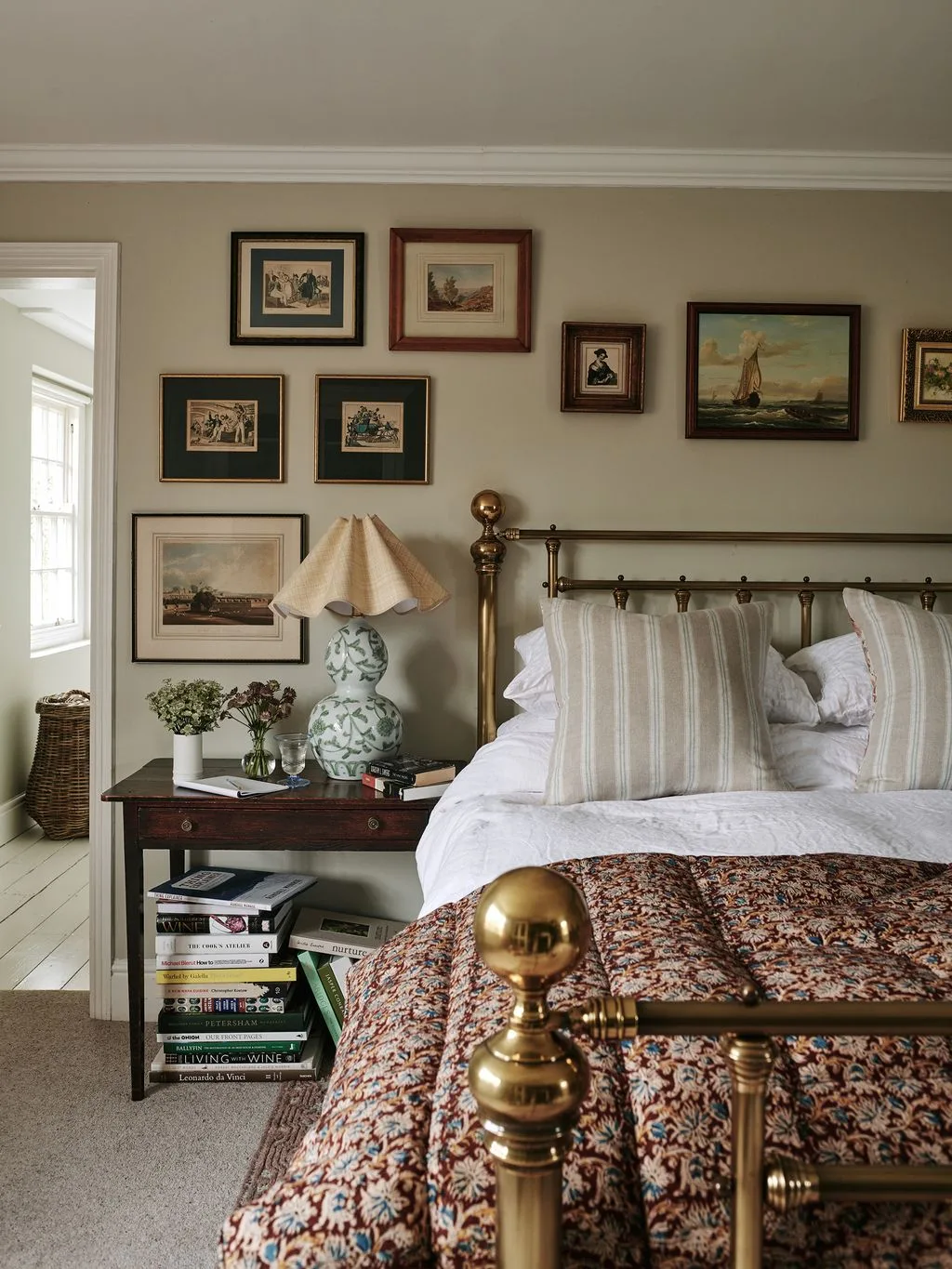
Build a Picture Group Around a Metal Bed
 SaveSupport Non AI Creator
Image credit: Chris Horwood
A gold-colored metal bed stands beneath a varied group of framed pictures on a muted pale wall. Striped cushions give the upper bedding a relatively quiet pattern above a darker, densely patterned cover. A green-patterned lamp with a pale ruffled shade sits on the wood bedside table. The room combines smaller collected-looking objects without giving every picture the same frame or size.
Arrange the picture group on paper before fixing it to the wall, keeping the bed’s upper rail and your seated head position in mind. Secure each frame appropriately rather than resting heavy pieces above pillows. Leave enough table surface for a drink and reading essentials, and move book stacks to accessible storage. Check the metal frame’s joints and noise as well as its decorative appearance before choosing one.
PART 02
Give Nooks and Patterns Useful Roles
IDEA 06 / 20
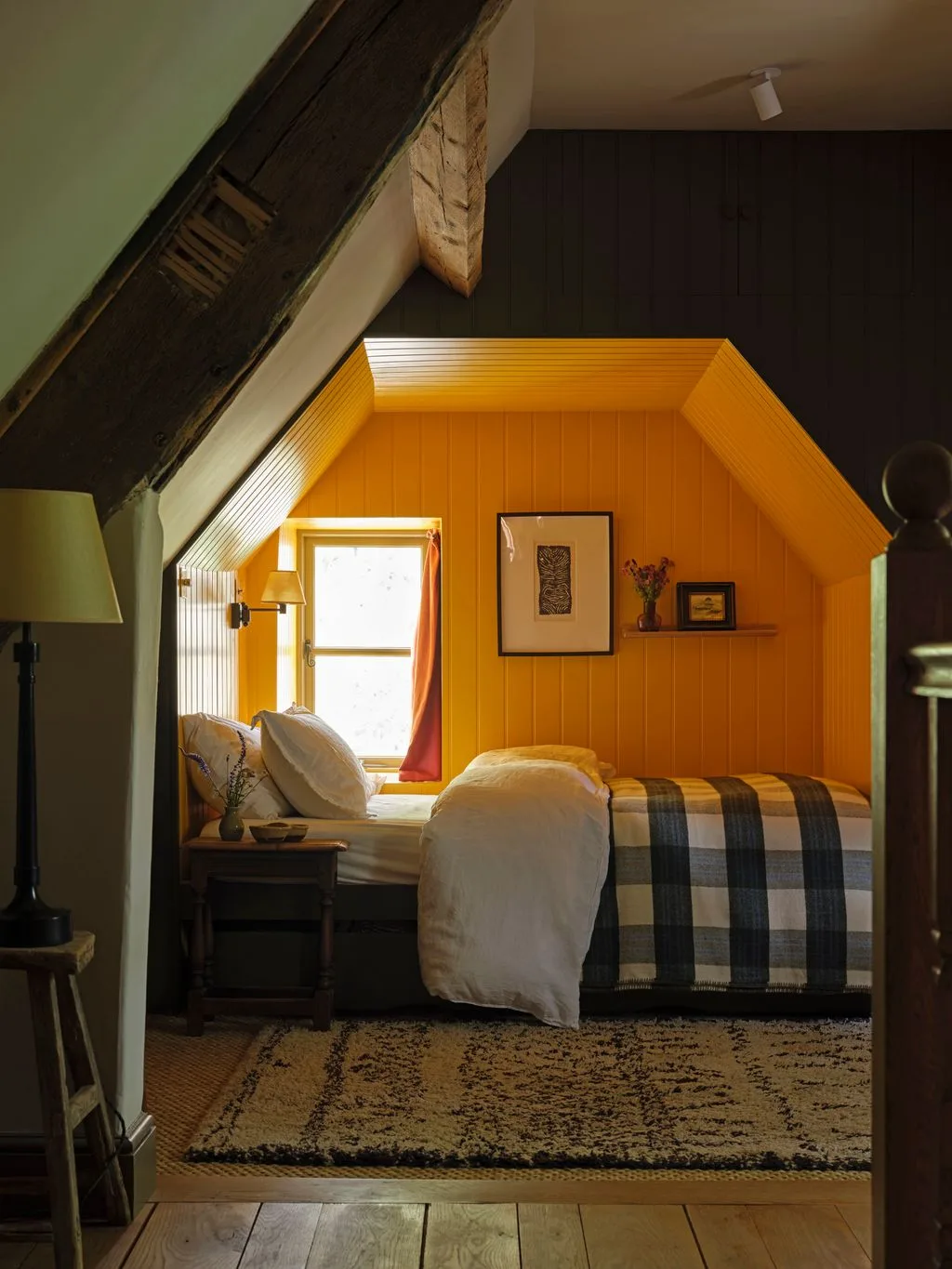
Give an Attic Bed Nook a Sunny Interior
 SaveSupport Non AI Creator
Image credit: Beth Evans
Yellow paneling surrounds the bed inside a shaped attic recess, creating a bright center against the darker wall outside it. A small window brings light into the nook, with pictures placed on the yellow surfaces nearby. The checked blanket supplies a broader pattern across otherwise pale bedding. Exposed wood and the sloping ceiling keep the surrounding architecture clearly visible rather than hiding it behind fabric.
A bed recess must still allow comfortable entry, ventilation, lighting and access for changing the bedding. Check those needs before considering fitted paneling or a new enclosure. Keep window hardware reachable and avoid turning a useful opening into a blocked decorative feature. Compare the yellow with the actual evening light, and seek appropriate advice before altering the attic’s structure or adding permanent fitted furniture.
IDEA 07 / 20
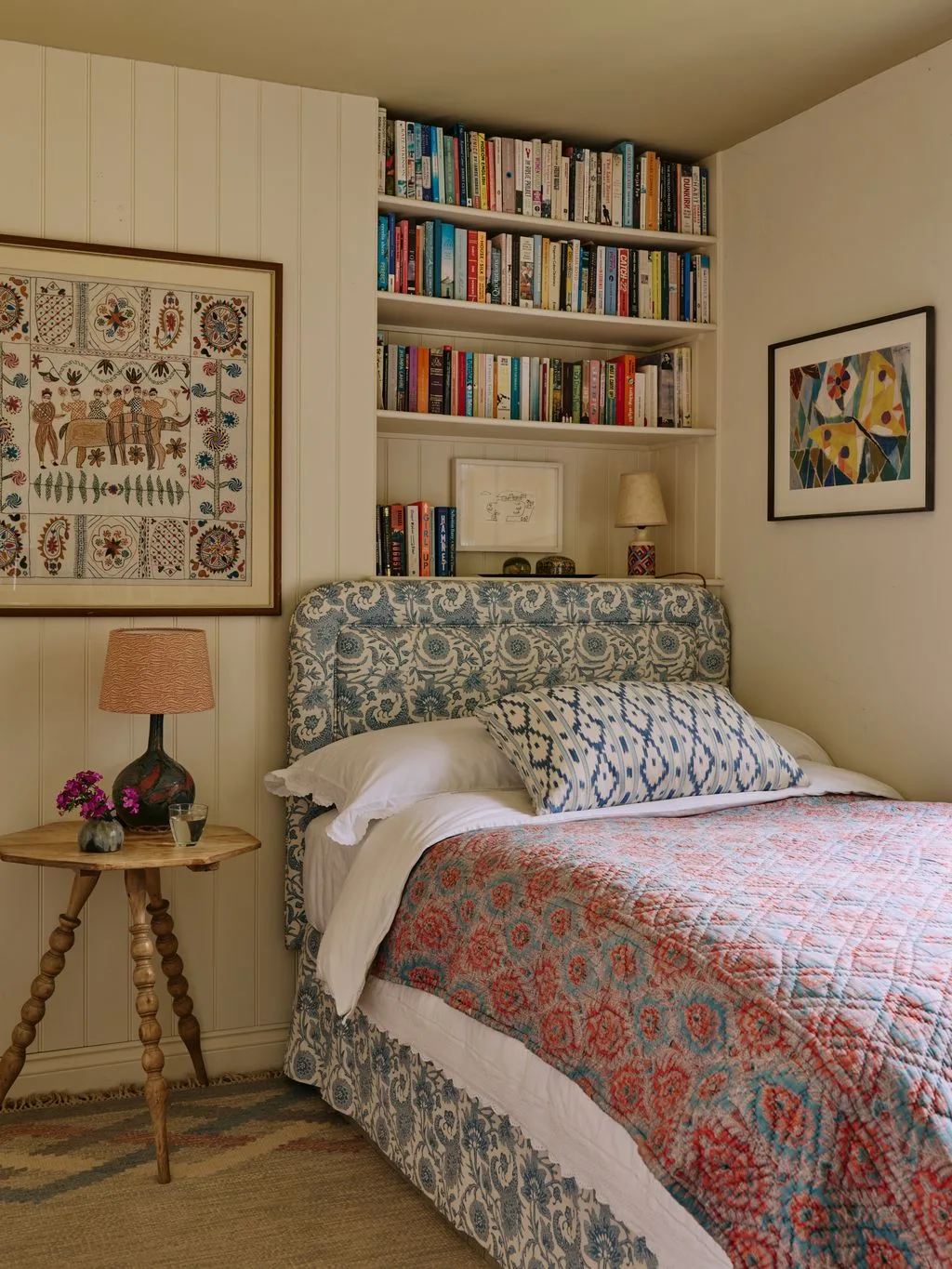
Make Books Part of a Patterned Bed Corner
 SaveSupport Non AI Creator
Image credit: Christopher Horwood
A blue patterned upholstered bed sits beneath several shelves of books, with a coral patterned quilt adding a warmer layer across the bedding. Pale paneling supports the larger framed artwork beside the headboard, while a small wood table carries a shaded lamp. The book colors form their own narrow bands above. The room gives storage and pictures clear places around the bed rather than filling the tabletop.
Check the wall and shelf fixings for the actual load before putting books above a bed, and avoid loose objects where they could fall onto pillows. Keep frequently used reading within comfortable reach. Compare the quilt and upholstery in daylight so their patterns remain distinct. Choose a bedside table with enough space for essentials, and plan how you will dust the shelves without climbing on unsuitable furniture.
IDEA 08 / 20
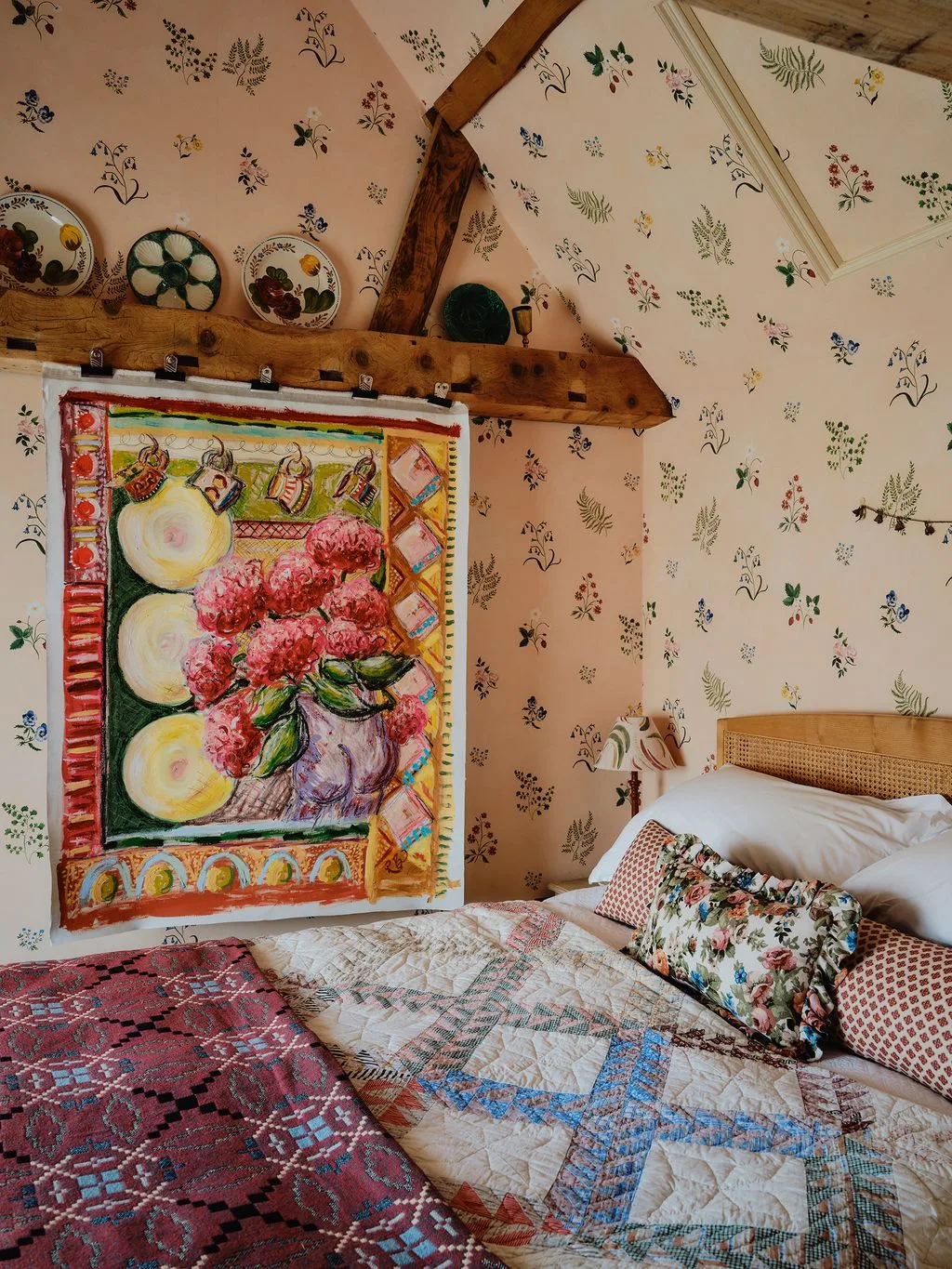
Pair Small Floral Walls With a Bold Wall Hanging
 SaveSupport Non AI Creator
Image credit: Dean Hearne
Small floral motifs cover the pale sloping walls around a bed with patchwork bedding and several patterned cushions. A large colorful wall hanging hangs below an exposed beam, supplying a stronger area of red, green and yellow beside the bed. Decorative plates sit along the beam above it. The contrast between the smaller wall pattern and the larger hanging piece gives the layered fabrics a clearer order.
Choose the largest decorative piece first if it will carry most of the color, then compare wallpaper and cushions around it. Keep the hanging secure and clear of heating equipment, and use appropriate fittings for decorative plates above sleeping areas. Reduce the number of loose cushions if changing the bedding becomes inconvenient. Follow each quilt’s care instructions, particularly when older or delicate fabrics are part of the arrangement.
IDEA 09 / 20
Use Bold Checks Beneath Floral Attic Walls
 SaveSupport Non AI Creator
Image credit: Dean Hearne
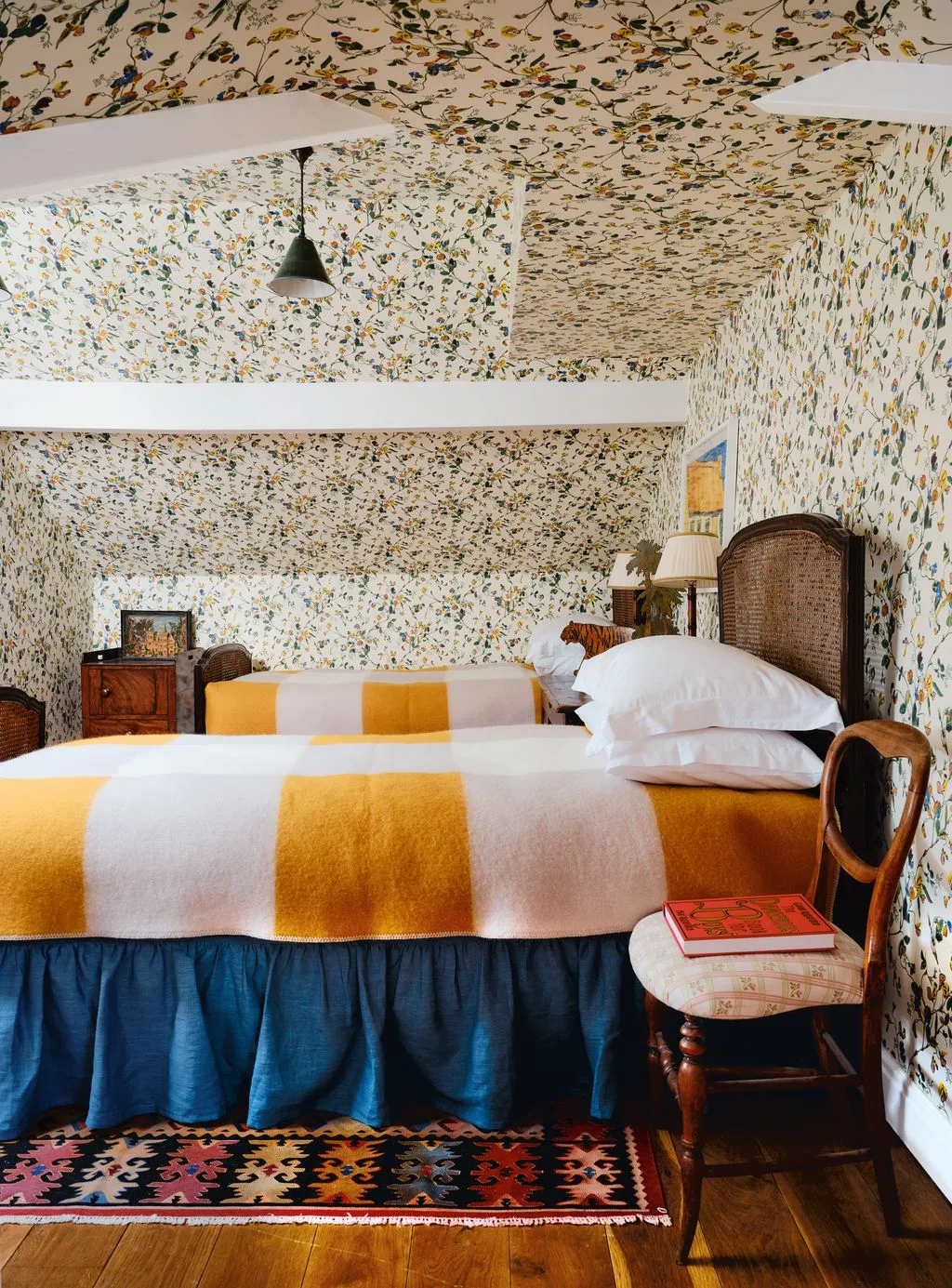
Fine floral wallpaper extends across the sloping walls and ceiling around two beds with tall woven-panel headboards. Broad yellow-and-white checks make the bed covers a much larger pattern, while blue bed skirts introduce a separate solid color below. White horizontal beams interrupt the floral surface overhead. The mix stays understandable because each pattern occupies a different scale and a clearly defined part of the room.
Check the ceiling pattern from the pillow as well as from the doorway before committing to it. Keep the bedding easy to wash and make sure both beds remain accessible for changing sheets. Tall headboards need comfortable clearance beneath the slope. A chair used as a bedside surface should be stable and convenient; a small proper table may work better if guests need room for water and charging essentials.
IDEA 10 / 20
Give Botanical Wallpaper a Quiet White Bed
 SaveSupport Non AI Creator
Image credit: Mark Anthony Fox
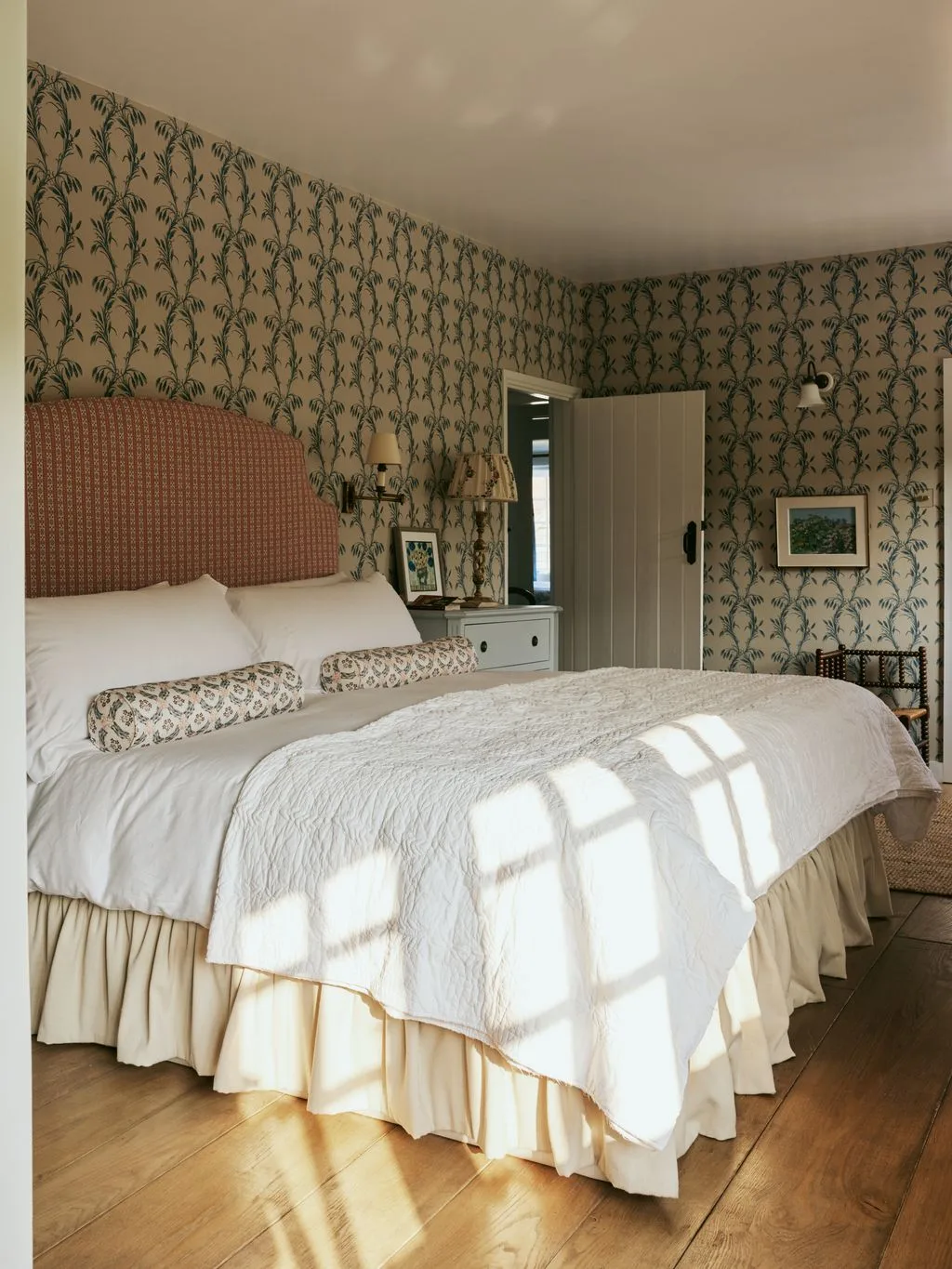
Green botanical wallpaper creates a repeated vertical pattern around a reddish upholstered headboard. White pillows, a pale quilt and a cream bed skirt make the bedding comparatively quiet. Small shaded lamps and a pale bedside cabinet sit below the patterned walls, while the wood floor contributes a warmer plain surface. The headboard adds color without requiring another large decorative feature above the pillows.
Compare the headboard fabric against a full wallpaper sample rather than judging each separately. Keep a broad plain area of bedding if the walls already provide the room’s main pattern. Check that drawers can open beside the bed and that lamps are comfortable for reading. Follow the quilt and upholstery care guidance, and leave floor space clear so the bedside furniture can be cleaned without moving the whole bed.
PART 03
Connect Green, Quilts and Soft Layers
IDEA 11 / 20
Wrap a Small Attic in Leafy Pattern
 SaveSupport Non AI Creator
Image credit: James McDonald
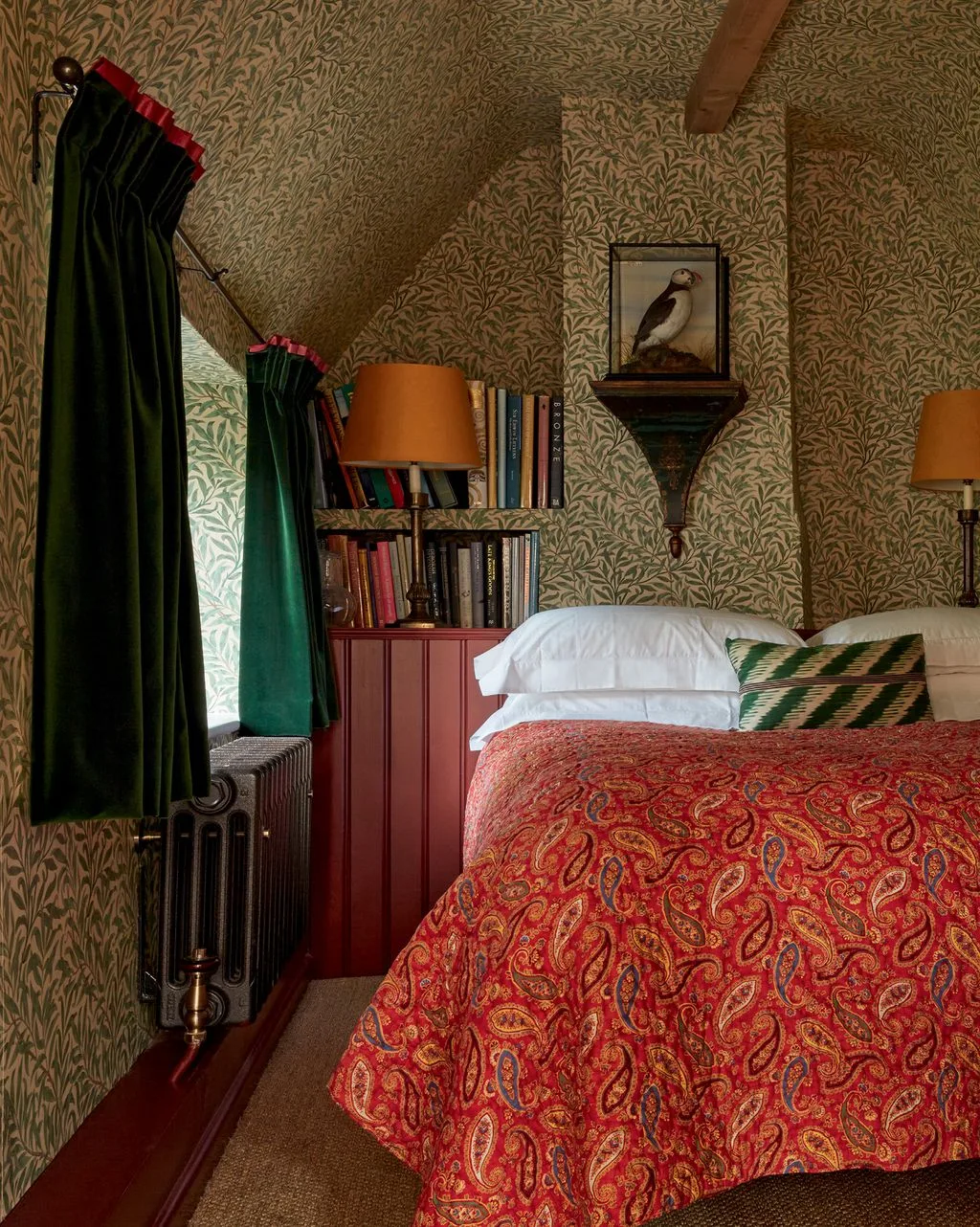
A leafy pattern continues over the walls and sloping ceiling around a bed with a red paisley cover. Dark green curtains add deeper vertical areas beside the window, with a small bookshelf and orange lamp shade providing separate accents near the headboard. A framed bird picture sits above the pillows. The room uses several colors while keeping the wall and ceiling connected through one repeated motif.
Try the leafy pattern on a large sample placed against the ceiling slope as well as the wall. An enveloping pattern will be visible when you lie down, so judge it from the bed. Keep curtains able to open fully and follow heating clearances near the radiator. Choose a practical place for books, and check reading light quality before selecting an orange shade only for its decorative color.
IDEA 12 / 20
Keep Green Around Rough Walls and Floral Fabric
 SaveSupport Non AI Creator
Image credit: © Rachael Smith Photography Ltd
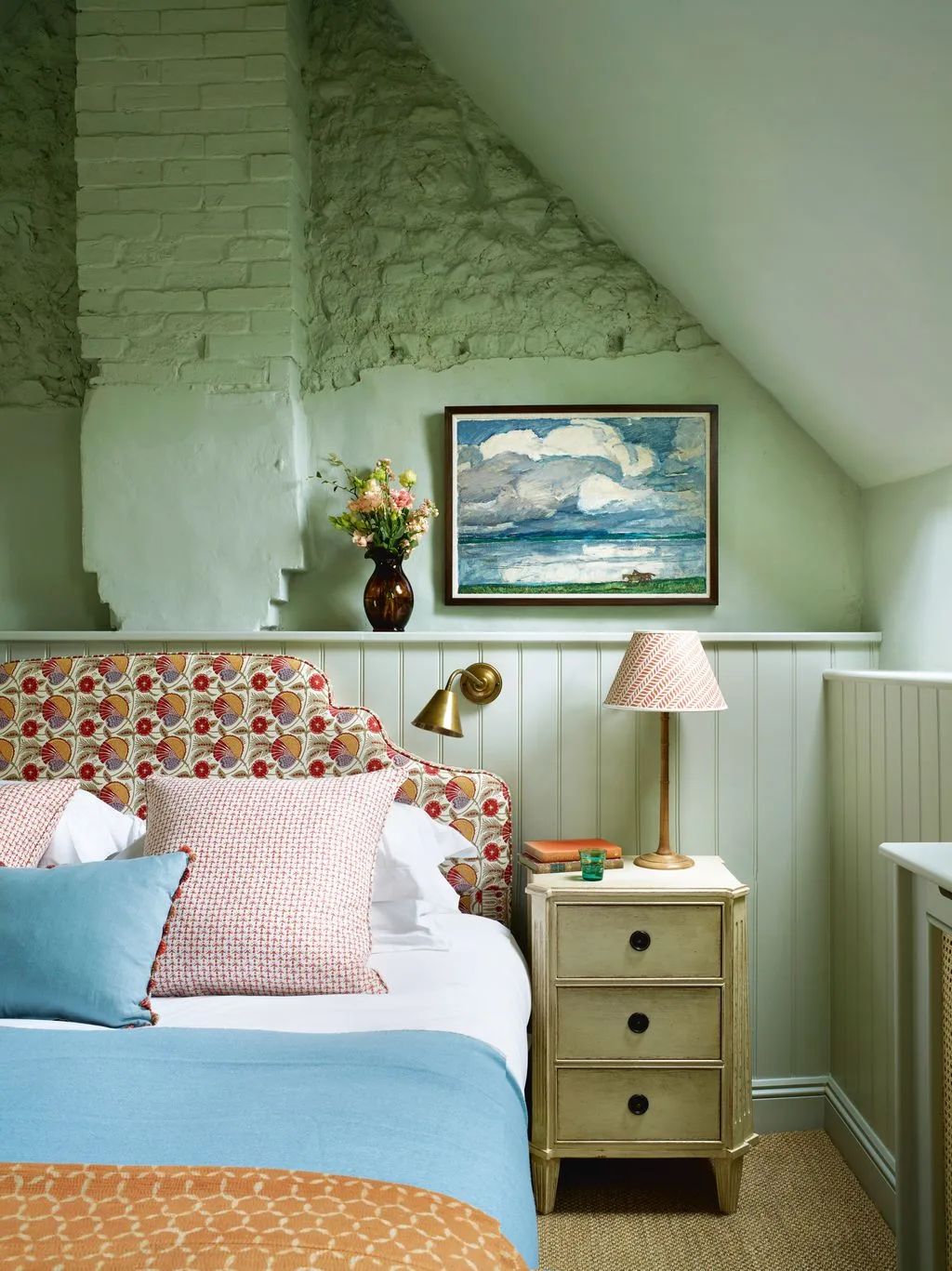
Pale green paint links the paneling, chimney breast and surrounding walls in this bedroom, while rough masonry remains visible beside the ceiling slope. A floral headboard introduces warmer red and yellow details above blue bedding. Narrow pale bedside drawers and a small shaded lamp supply useful furniture below a framed seascape. The limited wall color keeps the varied surface textures from competing with the upholstery.
Assess the condition of exposed masonry before choosing a finish, especially if there are signs of damp or loose material. Seek suitable advice for the existing wall rather than applying a coating simply to match a photograph. Compare green paint with the headboard fabric in your actual light. Check that narrow drawers still hold what you need, and keep lamp switches reachable without leaning awkwardly across the bed.
IDEA 13 / 20
Coordinate Several Beds With Different Quilts
 SaveSupport Non AI Creator
Image credit: Dean Hearne
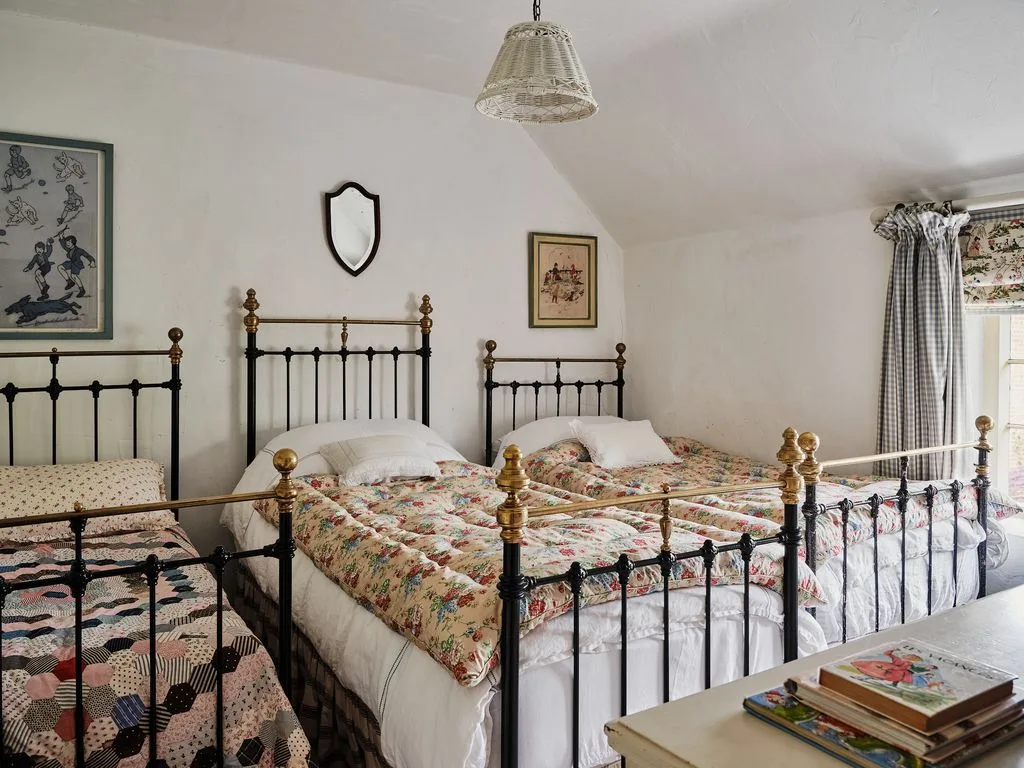
Three dark metal beds share a pale room, each with gold-colored finials and a different patterned quilt. Framed pictures and a small mirror add detail above the headboards, while checked curtains form a narrow pattern at the window. A pale woven-looking pendant hangs overhead. Repeating the bed frames gives the room a common outline even though the covers use different colors and motifs.
Plan clear routes for every sleeper before choosing several beds for one room. Keep access to the door and window practical, and allow space for making each bed without climbing over another. Matching frames can bring consistency while individual quilts help distinguish sleeping places. Inspect bed joints and mattress fit, and provide accessible lighting and storage suited to the people who will actually use the room.
IDEA 14 / 20
Layer Soft Patterns Against Warm Yellow Walls
 SaveSupport Non AI Creator
Image credit: Christopher Horwood
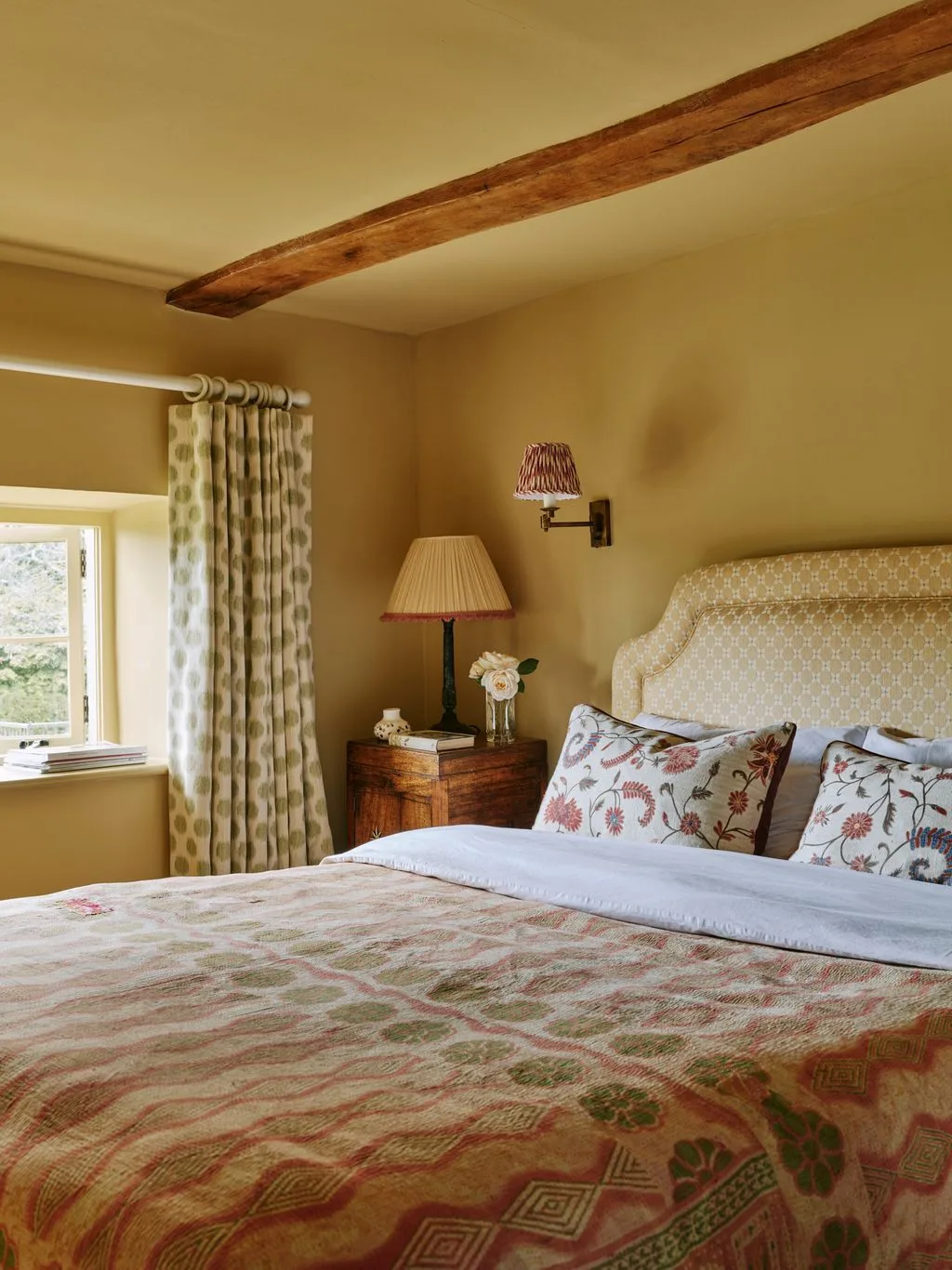
Warm yellow walls sit behind a shaped pale patterned headboard, with a wood beam crossing the ceiling above. Floral cushions and a more densely patterned bed cover introduce smaller colors across the bedding. Checked curtains give the window a separate repeated shape, while a shaded bedside lamp and wall light offer two distinct lighting positions. The plain wall provides a pause between the different textiles.
Choose the wall color alongside the largest fabric samples so the yellow supports them rather than intensifying every warm shade. Check that the wall light is useful for reading and clear of the headboard. Keep the curtains easy to draw around the bedside furniture. Reduce loose cushions if they make nightly use inconvenient, and choose bed covers with care instructions that match the washing routine you can maintain.
IDEA 15 / 20
Frame a Blue Bed Nook With Cream Curtains
 SaveSupport Non AI Creator
Image credit: Christopher Horwood
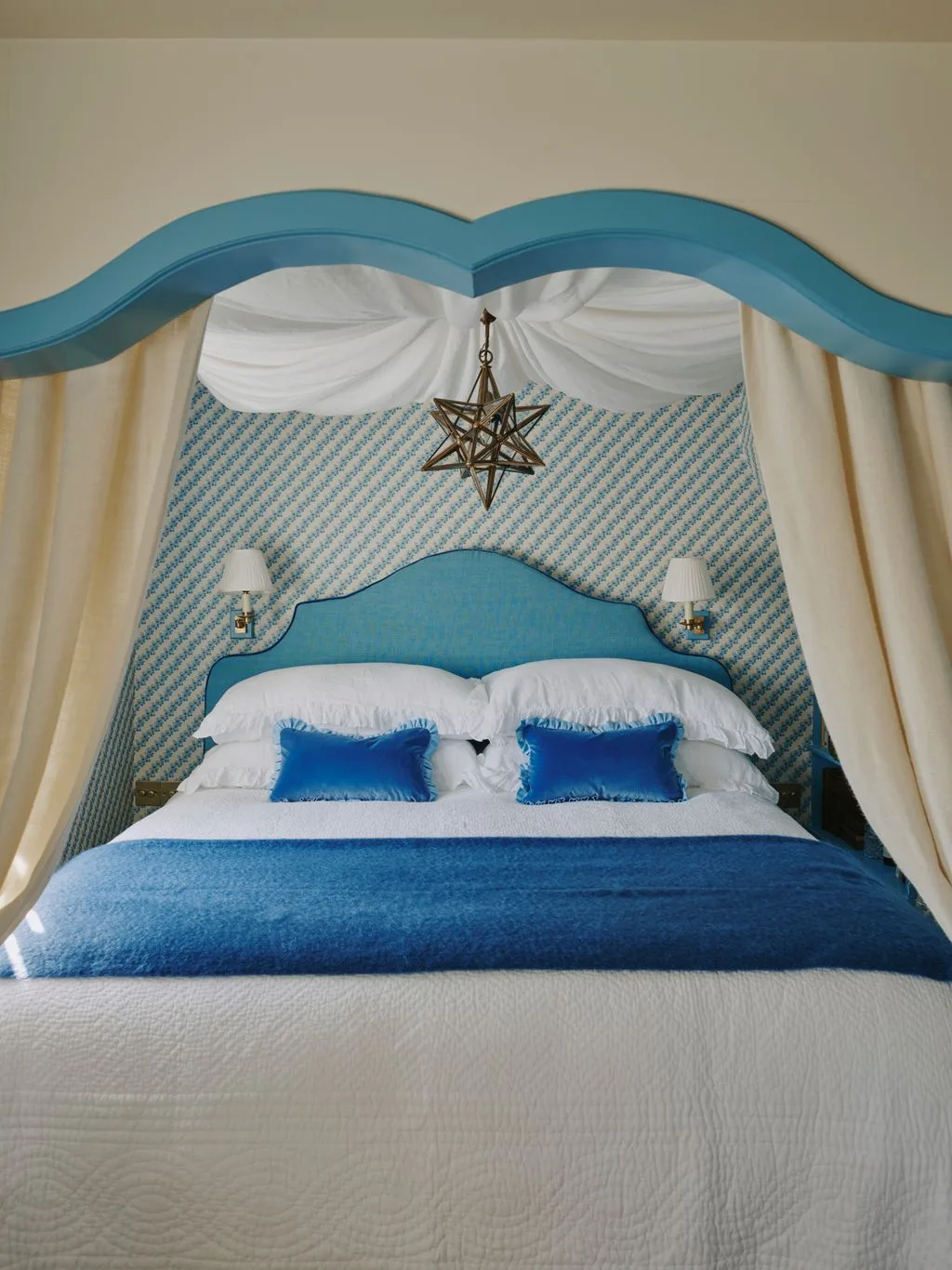
A double-curved blue border frames a bed recess lined with a fine blue-and-white pattern. The shaped blue headboard repeats the upper outline, while cream curtains hang at the sides and pale gathered fabric sits overhead. A star-shaped light provides a smaller central feature above white pillows and blue cushions. The repeated blue gives the enclosure a clear identity despite the several fabric surfaces.
A fitted bed nook needs practical access, ventilation and room to change the bedding. Plan those needs before adding curtains or an enclosure, and keep fabric clear of light fittings according to their requirements. Check how the curtains are supported and how you will remove them for cleaning. A suspended decorative light must be correctly installed and positioned so it does not interfere with sitting up in bed.
PART 04
Finish Small Rooms With Character
IDEA 16 / 20
Add Small Illustrations Around an Attic Bed
 SaveSupport Non AI Creator
Image credit: Paul Massey
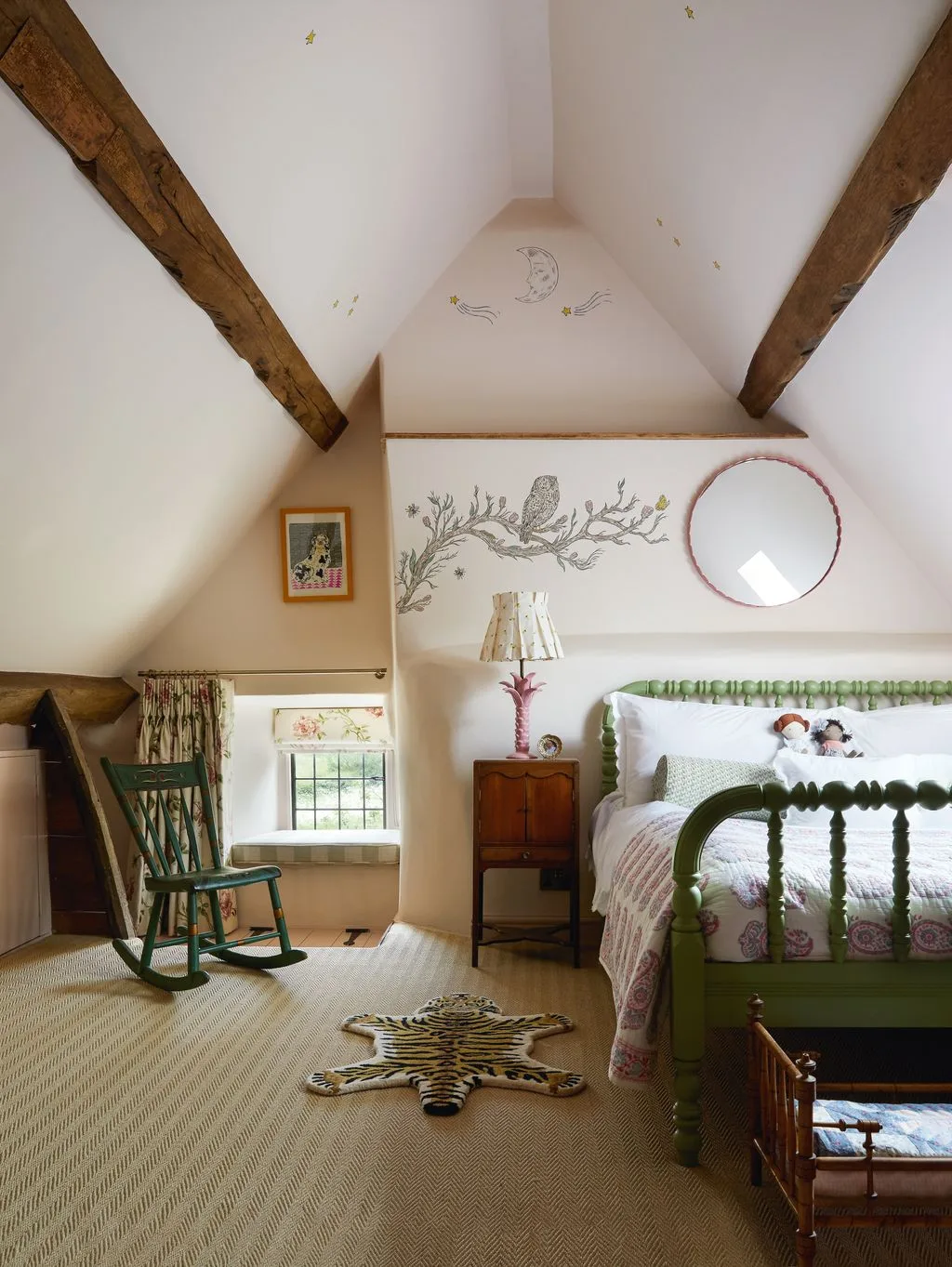
Two exposed beams follow the sloping ceiling above a green bed with turned details. An owl perched on a drawn branch decorates the wall behind, with smaller moon and star illustrations higher up. A green rocking chair sits beside the low window, and a tiger-shaped rug adds a playful outline on the floor. Pale surrounding walls give these individual details space to remain visible.
Use a few illustrated motifs rather than filling every ceiling surface if the beams already make a strong pattern. Check the rocking chair’s full movement before positioning it near the bed or a low window. A shaped rug needs to lie securely and stay out of the main walking route. Keep window access clear, and choose wall decoration that can be maintained or changed without damaging unsuitable surfaces.
IDEA 17 / 20
Combine Fine Wallpaper With a Shaped Headboard
 SaveSupport Non AI Creator
Image credit: Boz Gagovski
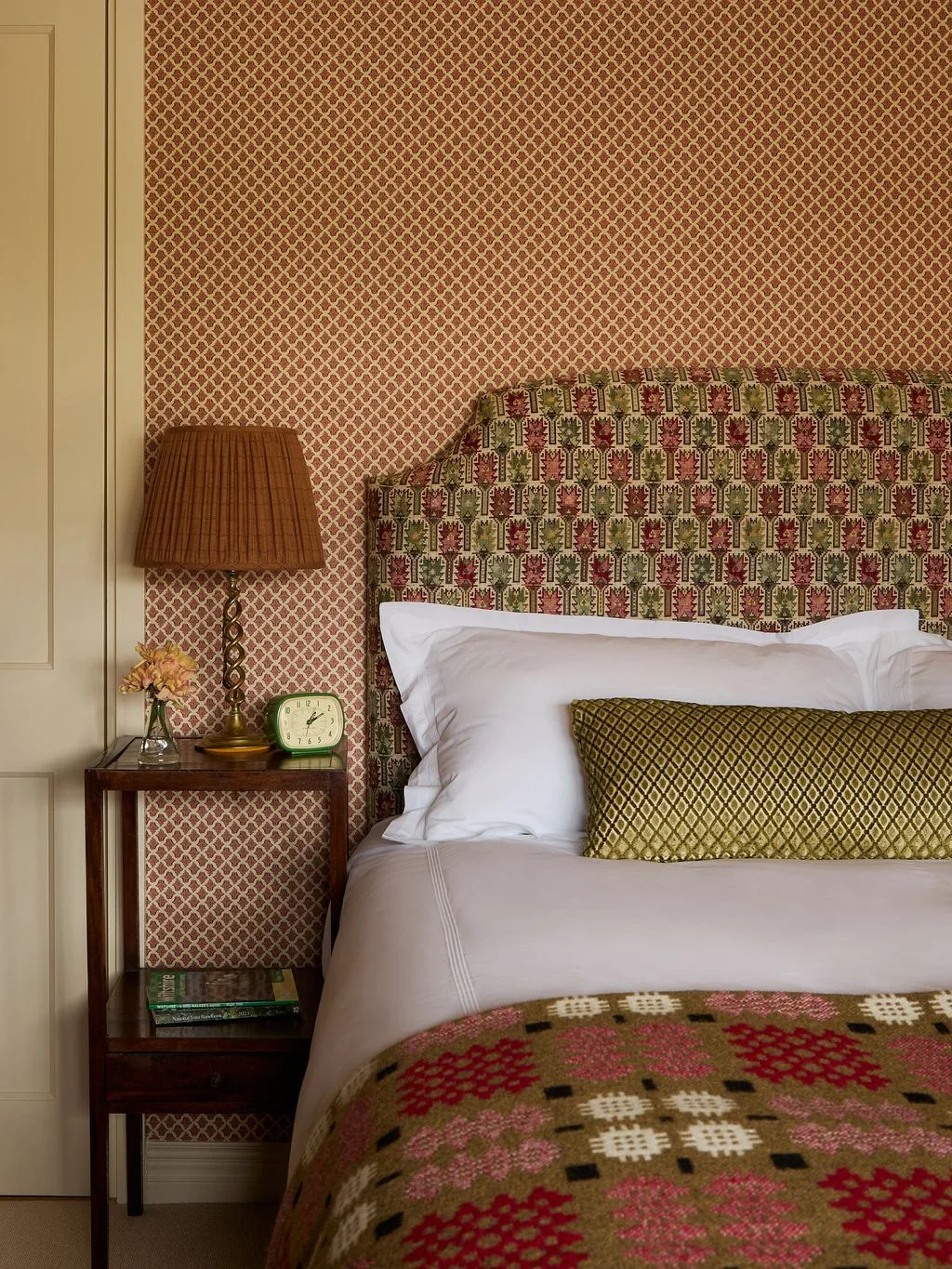
Fine reddish geometric wallpaper surrounds a shaped headboard with a larger repeated pattern. White pillows provide a broad light area between the headboard and an olive patterned cushion, while the bed cover adds colorful geometric blocks lower down. A small dark bedside table carries a pleated lamp shade and green clock. The patterns remain separate through their different sizes and the plain bedding between them.
Compare the wallpaper and headboard fabric side by side in large pieces, keeping some white bedding while judging the combination. A shaped headboard can be decorative without adding loose cushions, which may be useful in a compact room. Check that the bedside table holds your essentials and leaves the light switch convenient. Choose a lampshade for comfortable reading light as well as its contribution to the room’s colors.
IDEA 18 / 20
Make a Red Turned Bed the Main Accent
 SaveSupport Non AI Creator
Image credit: Boz Gagovski
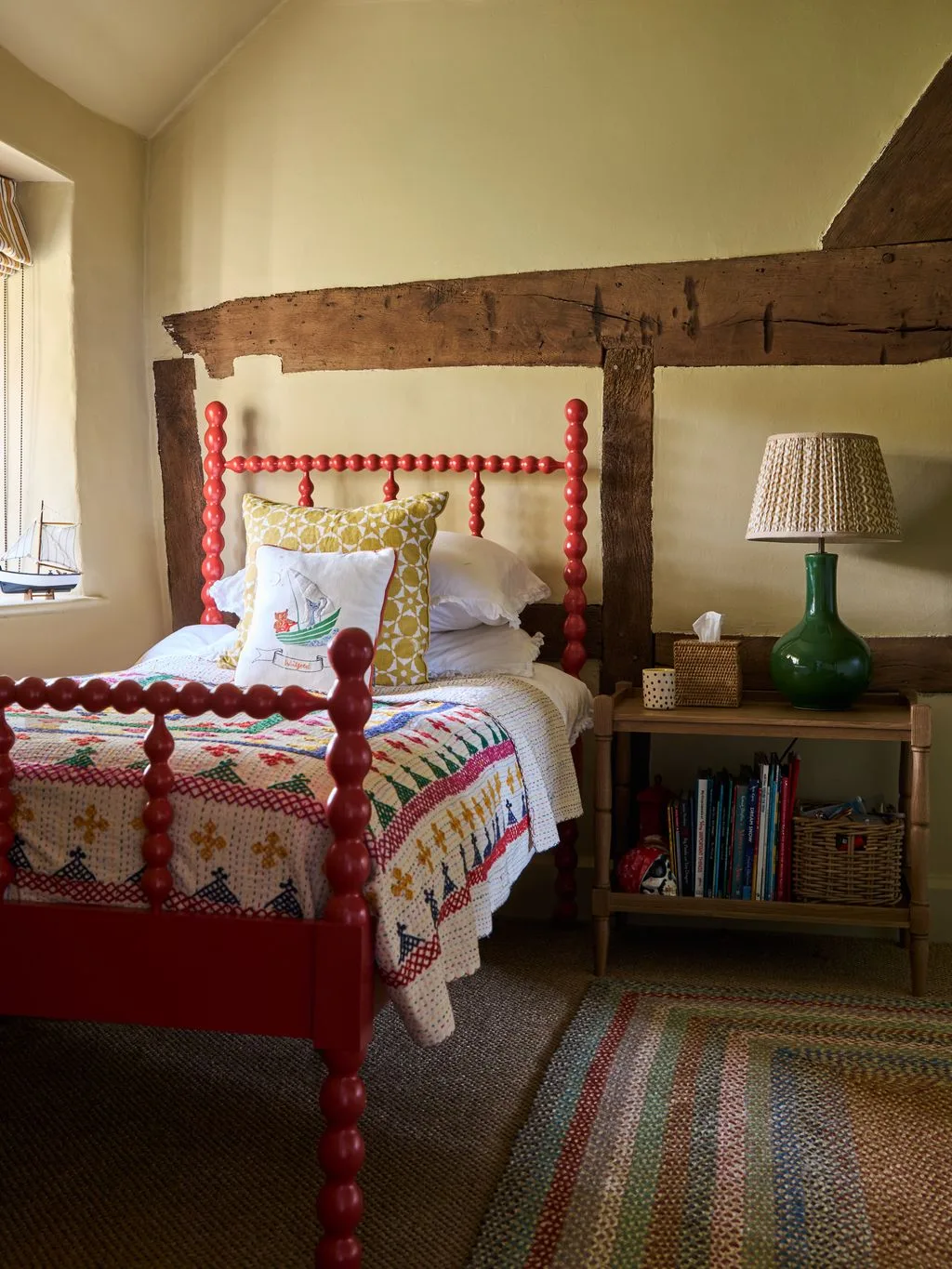
A red bed frame with rounded turned details stands against a pale wall crossed by exposed wood. The patchwork quilt introduces several smaller colors, with a yellow cushion and green lamp continuing the warm, varied palette. Books and a basket fit within the small bedside shelving unit. The pale background lets the red frame remain the most distinct piece rather than making every surrounding surface equally strong.
Choose the frame around a suitable mattress and sound construction before considering its paint color. Check that the finish is appropriate for the furniture and can be maintained where hands and bedding touch it. Keep the bedside shelf stable, with books stored where they are easy to reach. Compare the quilt and lamp with the red in daylight, and leave enough open floor space to make the bed comfortably.
IDEA 19 / 20
Repeat Pale Green Through Checks and Small Details
 SaveSupport Non AI Creator
Image credit: Jonathan Bond
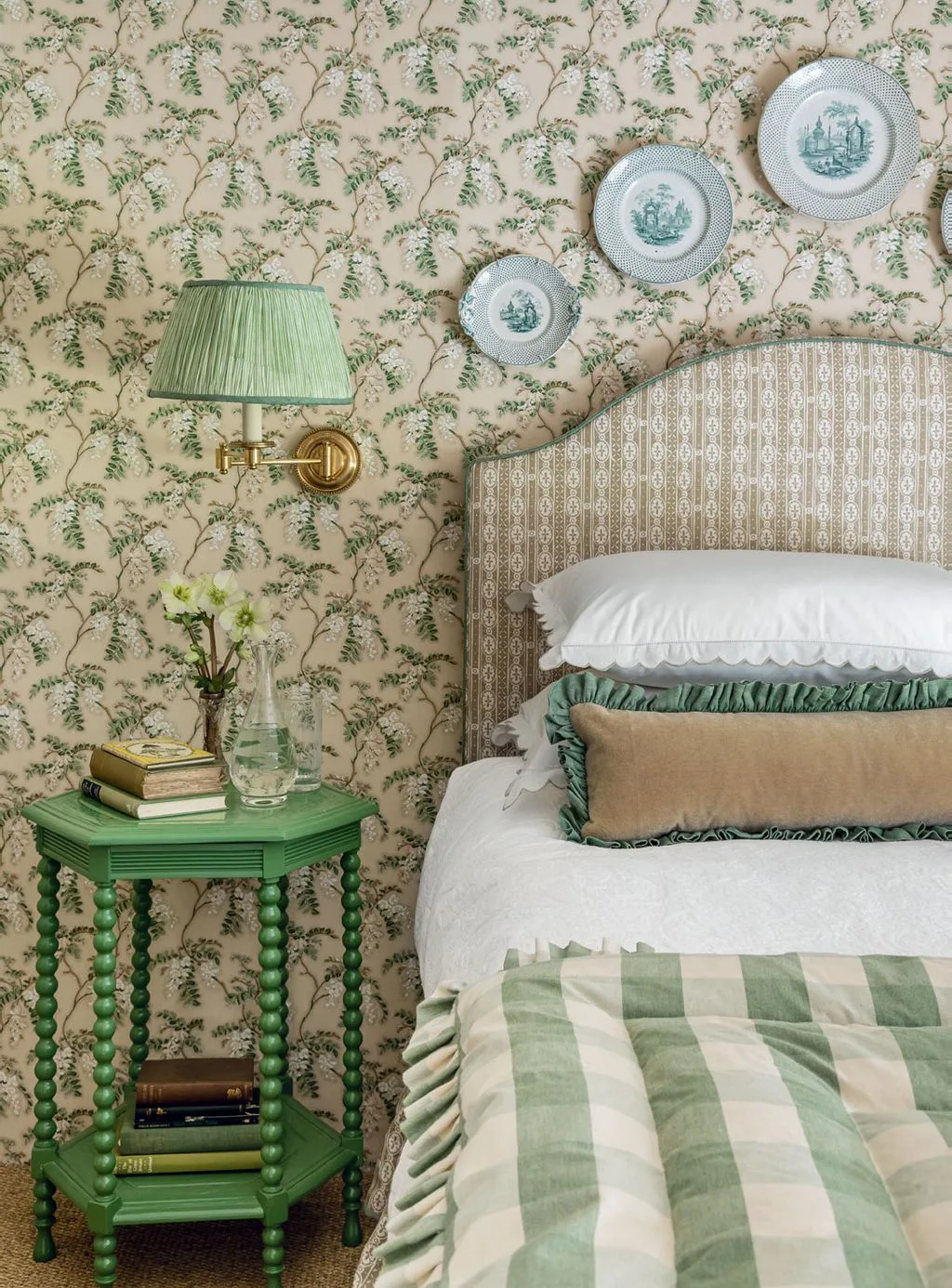
Green leafy wallpaper sits behind a shaped pale patterned headboard, with decorative plates forming a small group above it. The bed cover uses broad pale green checks, while a green wall shade and turned bedside table repeat the color in solid areas. White bedding leaves quieter space between the patterns. The limited palette connects several decorative surfaces without requiring all of them to use the same motif.
Compare the checks and leafy pattern at full scale, leaving enough plain bedding for each to remain clear. Secure wall plates with appropriate fittings, particularly above a sleeping area. Check that the turned bedside table has a steady, usable surface rather than judging it only by its shape. Position the wall light for comfortable reading and follow its clearance requirements around the upholstered headboard and any nearby fabrics.
IDEA 20 / 20
Let a Dark Attic Keep a Softer Bed Surface
 SaveSupport Non AI Creator
Image credit: Tom Griffiths
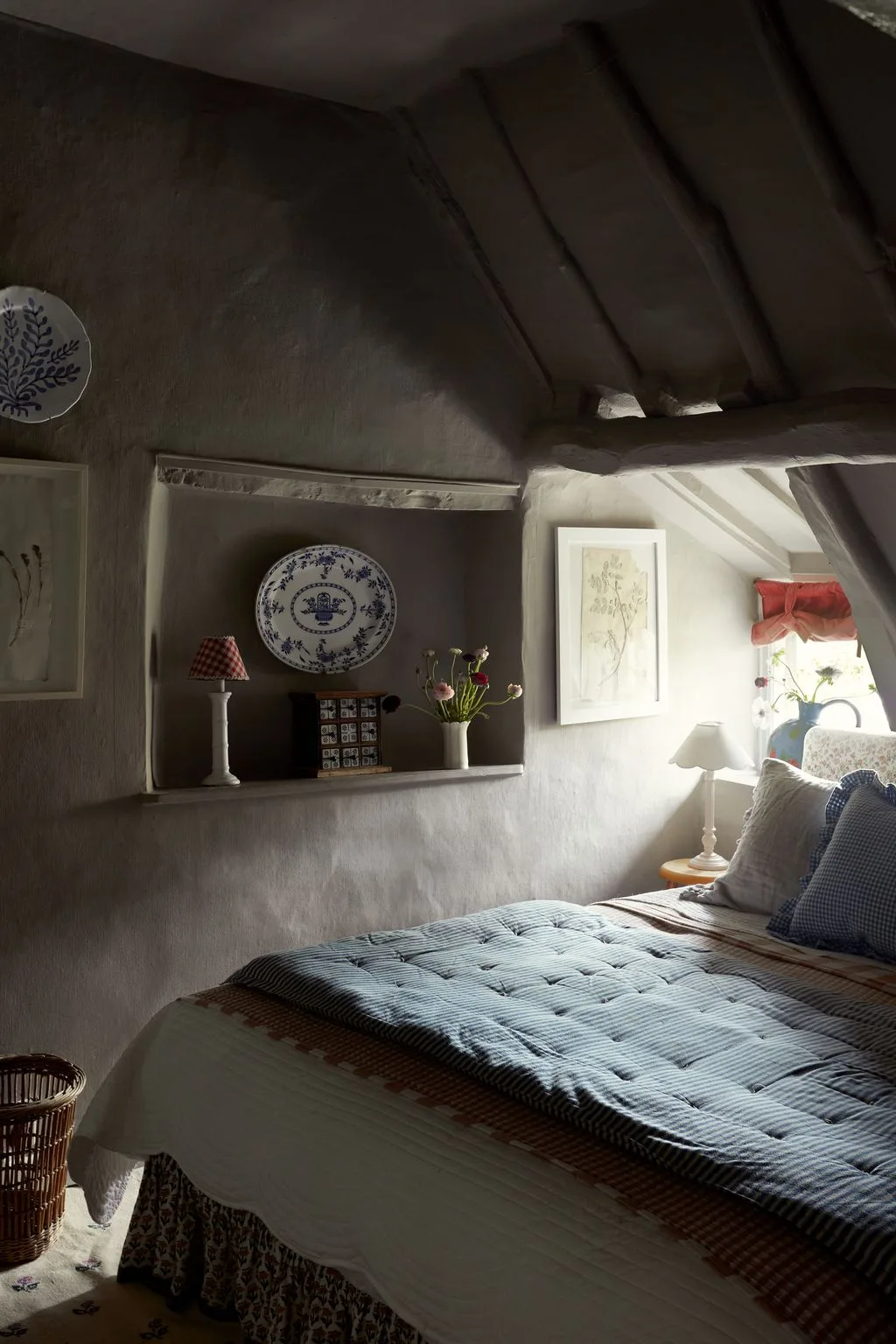
Muted dark walls and roof beams create a close, shaded setting around a bed with a blue striped padded cover. A recessed shelf carries decorative plates, a small lamp and a few objects, with framed art placed near the brighter window. A pale bedside lamp adds a lighter detail beside the pillows. The bed textiles soften the darker architecture without attempting to make every surface bright.
Judge a dark paint sample during the times you actually use the bedroom, including with your reading light on. Keep the small window accessible and avoid filling the recess with objects that are difficult to dust. Choose bedding for warmth and care needs rather than assuming a padded cover will suit every season. Check head clearance around the roof slope and leave a clear route along the usable side of the bed.
BRING IT ALL TOGETHER
Keep the Layers Comfortable to Live With
Start with the room’s fixed features and the bedding you want to use every night. Beams, low windows and a ceiling slope affect where furniture can sit, while wallpaper and quilts determine how much additional pattern the room needs. A limited connection between the colors usually gives varied pieces a clearer relationship than trying to make every surface match.
Check the practical parts before adding another layer: clear access around the bed, reachable lamp switches, stable storage and fabrics you can clean. Avoid loose heavy displays above pillows, and seek suitable advice before altering structure or enclosing an attic bed. Cottage character can come from a few well-chosen details while the bedroom remains comfortable and manageable.