A farmhouse fireplace can be rough and rustic, pale and restrained or surrounded by country color. Start with the room’s architecture and the fireplace you actually have, then decide whether a mantel, wall treatment or furniture arrangement is the detail worth changing. Wood beams and collected objects can add character without every surface sharing the same texture.
These twenty photographs show fireplace walls, seating arrangements and a few closer decorative details. Use them to compare visible styles, then check any changes with a qualified fireplace professional and the instructions for your installation. A photographed display does not establish safe clearances, fuel type, structural support or whether the fireplace was operating when the room was styled.
PART 01
Country Surrounds and Useful Fireplace Walls
IDEA 01 / 20
Contrast a Detailed Surround With Exposed Beams
 SaveSupport Non AI Creator
Image credit: Lucas Eilers
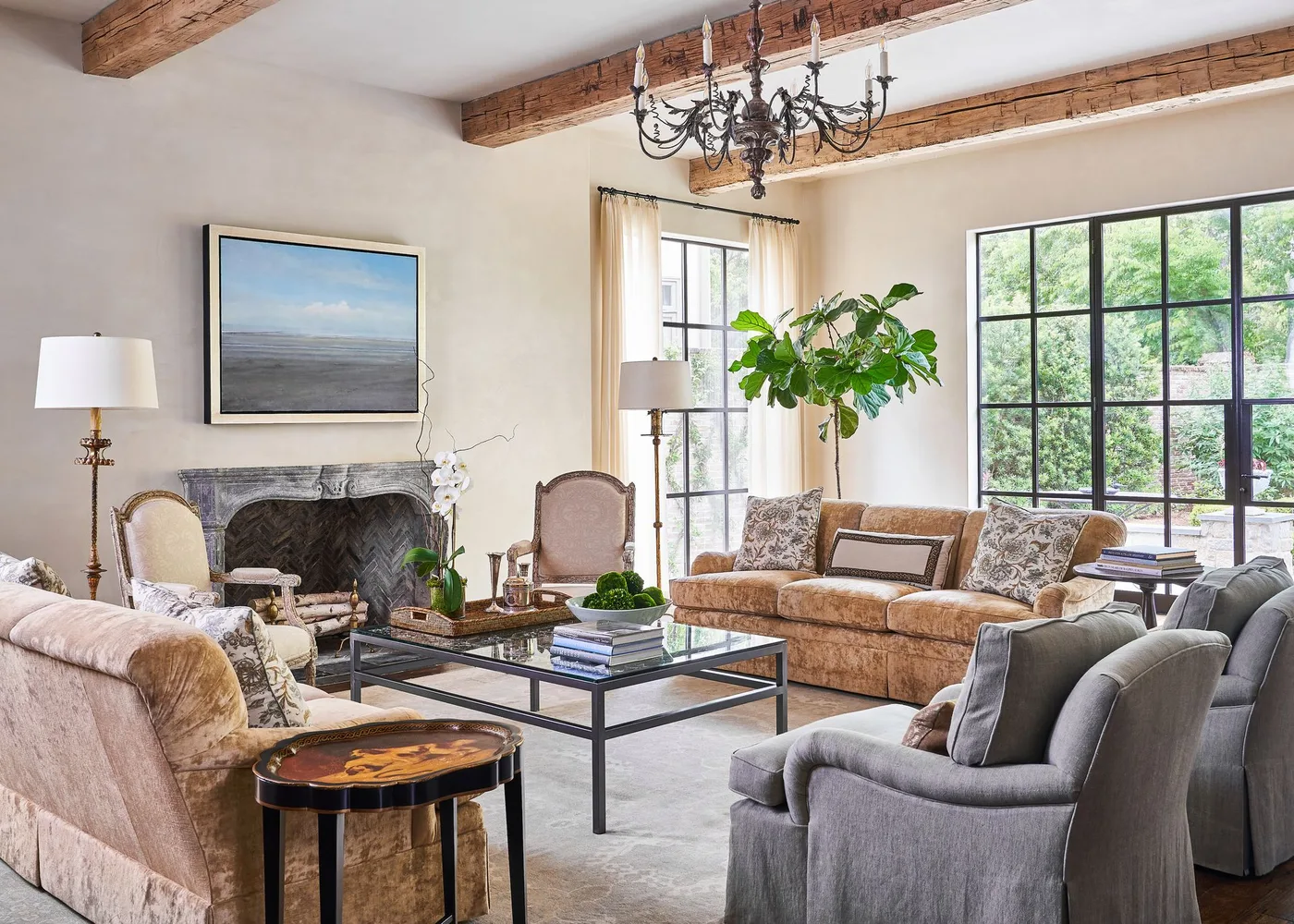
A gray surround with a shaped opening gives this fireplace a more refined outline than the exposed ceiling beams. A landscape picture hangs above it, while pale walls and mixed upholstered seating keep the country room relaxed. The contrast allows the fireplace and timber to have different characters. A dark chandelier repeats some of the fireplace opening’s stronger lines without making every finish match.
Choose a surround profile that suits the opening’s scale and the room’s architecture rather than copying the beams’ rougher texture everywhere. Keep the approach to the fire clear when arranging chairs. Before changing the surround or hanging artwork above it, have the actual fireplace and required clearances assessed. Follow the finish’s care guidance and avoid treating decorative stone appearance as proof of heat suitability.
IDEA 02 / 20
Balance a Stone-Look Wall With Low Cabinets
 SaveSupport Non AI Creator
Image credit: Charbonneau Interiors
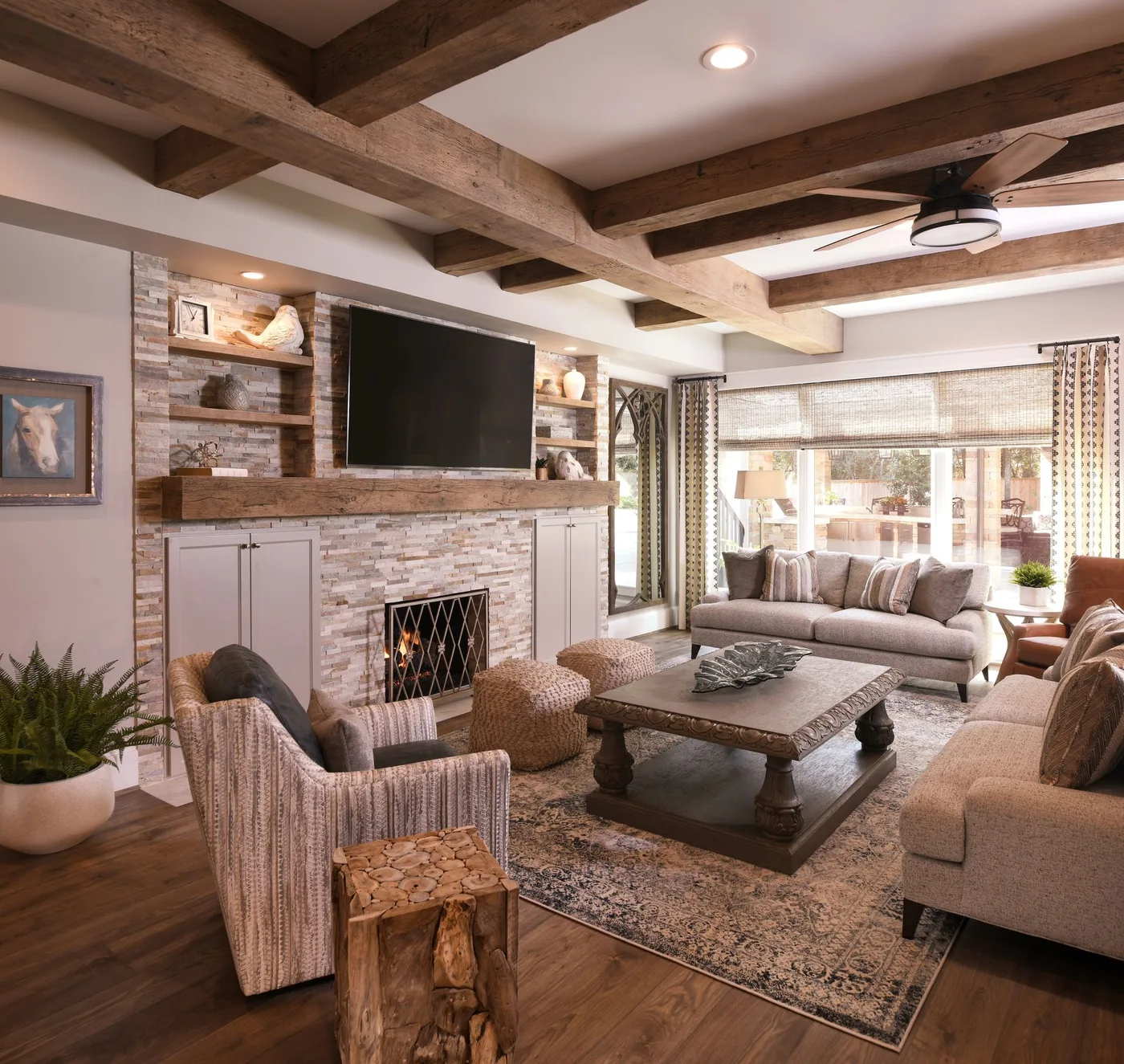
A broad wood mantel crosses this textured pale fireplace wall beneath the television. Open shelves flank the upper area and closed cabinets occupy the lower sides. The wood beams overhead repeat the mantel’s warmer color, with neutral seating keeping the room quiet. The arrangement gives a farmhouse gathering space both a central fire feature and room for everyday storage.
Plan the screen position and cabinets together with the fireplace requirements. A mantel’s presence does not establish that a television above it is protected from heat. Keep storage and electrical access usable, and do not conceal equipment vents behind decorative objects. Compare the seating view before committing to the screen height, especially when the fireplace wall already has a substantial horizontal shelf.
IDEA 03 / 20
Use a Quiet Surround Between Collected Shelves
 SaveSupport Non AI Creator
Image credit: Lauren Ramirez
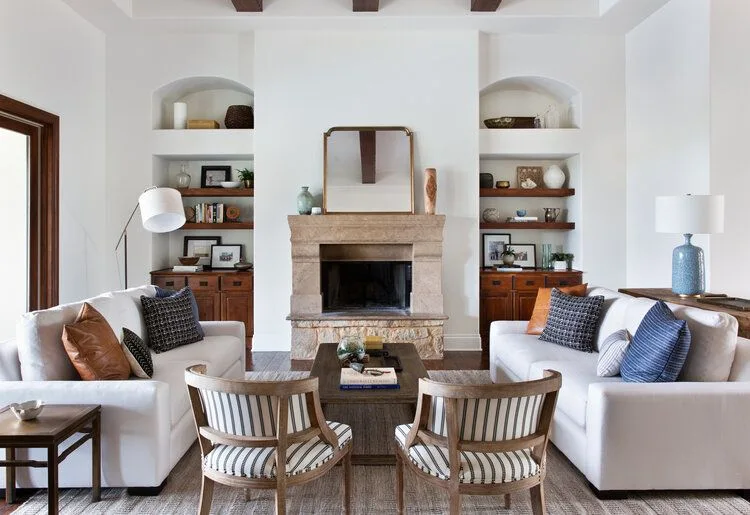
A pale block-style surround sits between arched shelf recesses filled with books and collected objects. Wood cabinets anchor the lower storage, while facing white sofas and striped chairs form a conversation group in front. The fireplace is restrained compared with the surrounding display. That balance lets a farmhouse room feel personal without turning the mantel into another crowded shelf.
Give the mantel fewer objects when adjacent shelves already carry several collections. Arrange the seating with a clear route around the coffee table and toward the hearth. Check shelving and cabinet positions against the fireplace’s installation requirements before adding built-ins. Keep frequently used objects on the accessible shelves and leave display pieces spaced enough to remove and clean without disturbing the whole group.
IDEA 04 / 20
Link a Wood Mantel to Traditional Country Furniture
 SaveSupport Non AI Creator
Image credit: Lucas Eilers
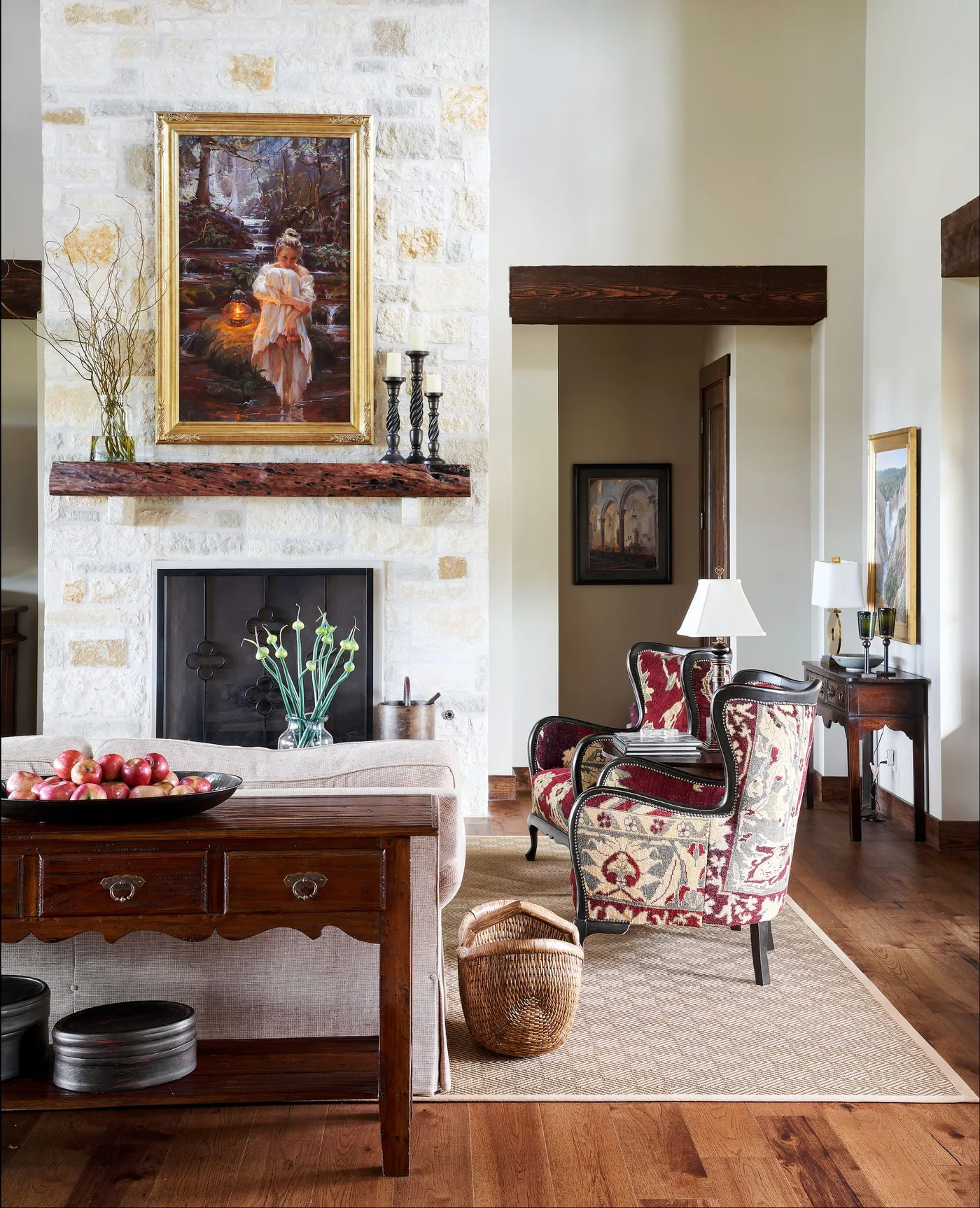
A reddish wood mantel brings warmth to the pale masonry of this fireplace. A framed figure painting hangs above it, with dark candlesticks and fine branches adding smaller details along the shelf. Patterned chairs and a wood table continue the country palette around the seating area. The fireplace feels connected to the furniture through color rather than an identical finish on every piece.
Sample the mantel finish beside existing wood furniture and flooring before choosing a new stain. A darker shelf can look substantial even when the surrounding wall is light. Keep branches, candles and artwork outside the clearances required for the actual fireplace, and use flameless decorative candles if that suits the display better. Do not add a combustible mantel without an appropriate installation assessment.
IDEA 05 / 20
Make a Blue Wall the Fireplace’s Backdrop
 SaveSupport Non AI Creator
Image credit: Creative Tonic
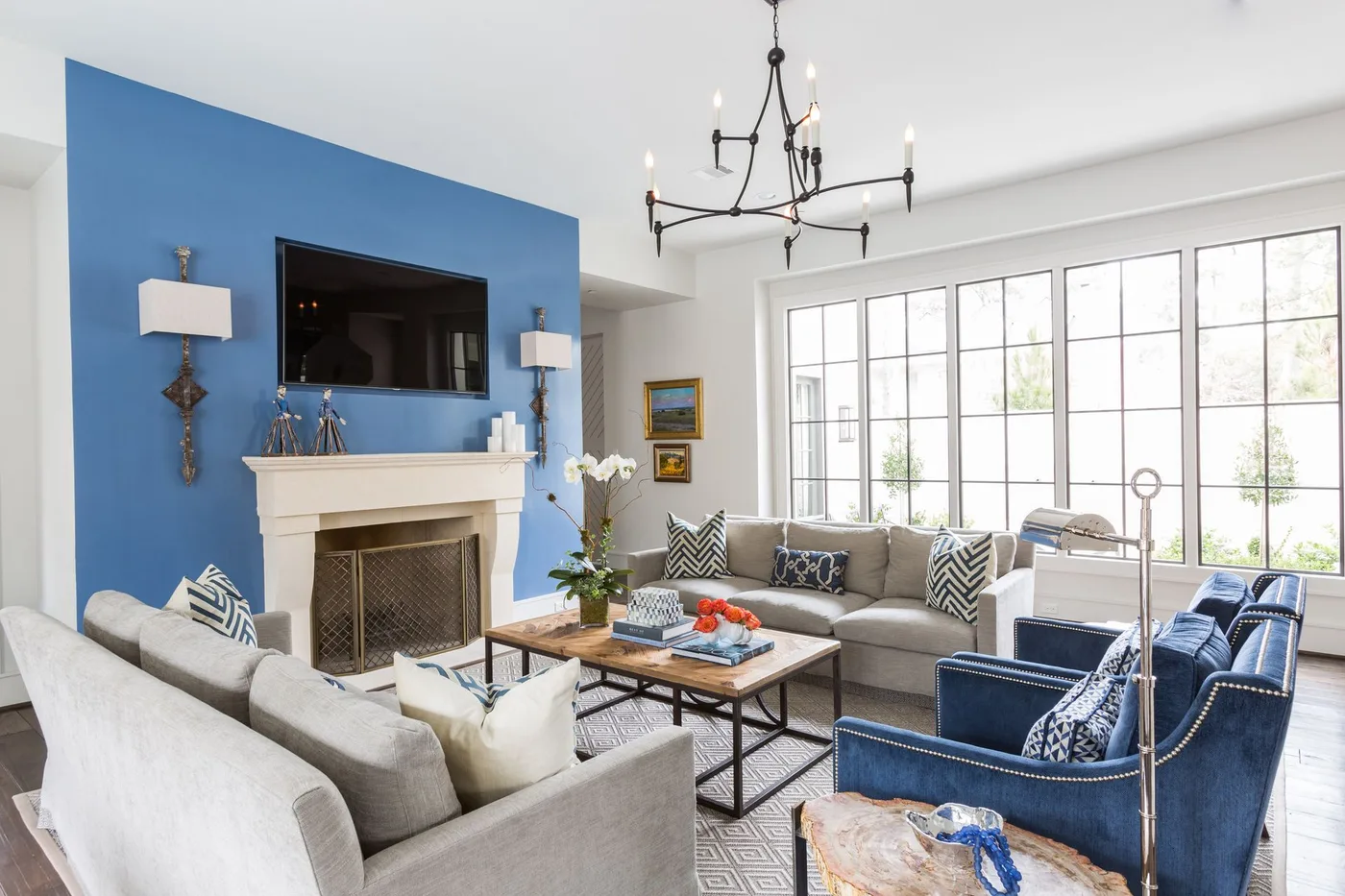
A pale traditional surround stands out against a bright blue fireplace wall. A television and wall lamps occupy the area above, while blue chairs and patterned cushions repeat the color in the seating group. Large windows keep the room bright. This farmhouse-inspired arrangement uses paint and furniture accents to update the setting without making the surround itself the boldest surface.
Try the wall color beside the actual surround and under both daylight and evening lamps. Keep stronger color on a defined wall if the room already has several doorways and windows. The television and lamps need their own safe placement and electrical planning around the fireplace. Check the viewing angle from the sofas and keep the route to the hearth free of tables or loose accessories.
PART 02
Small Rooms, Country Color and Pale Details
IDEA 06 / 20
Keep a Cottage Opening Simple in a Small Room
 SaveSupport Non AI Creator
Image credit: Future
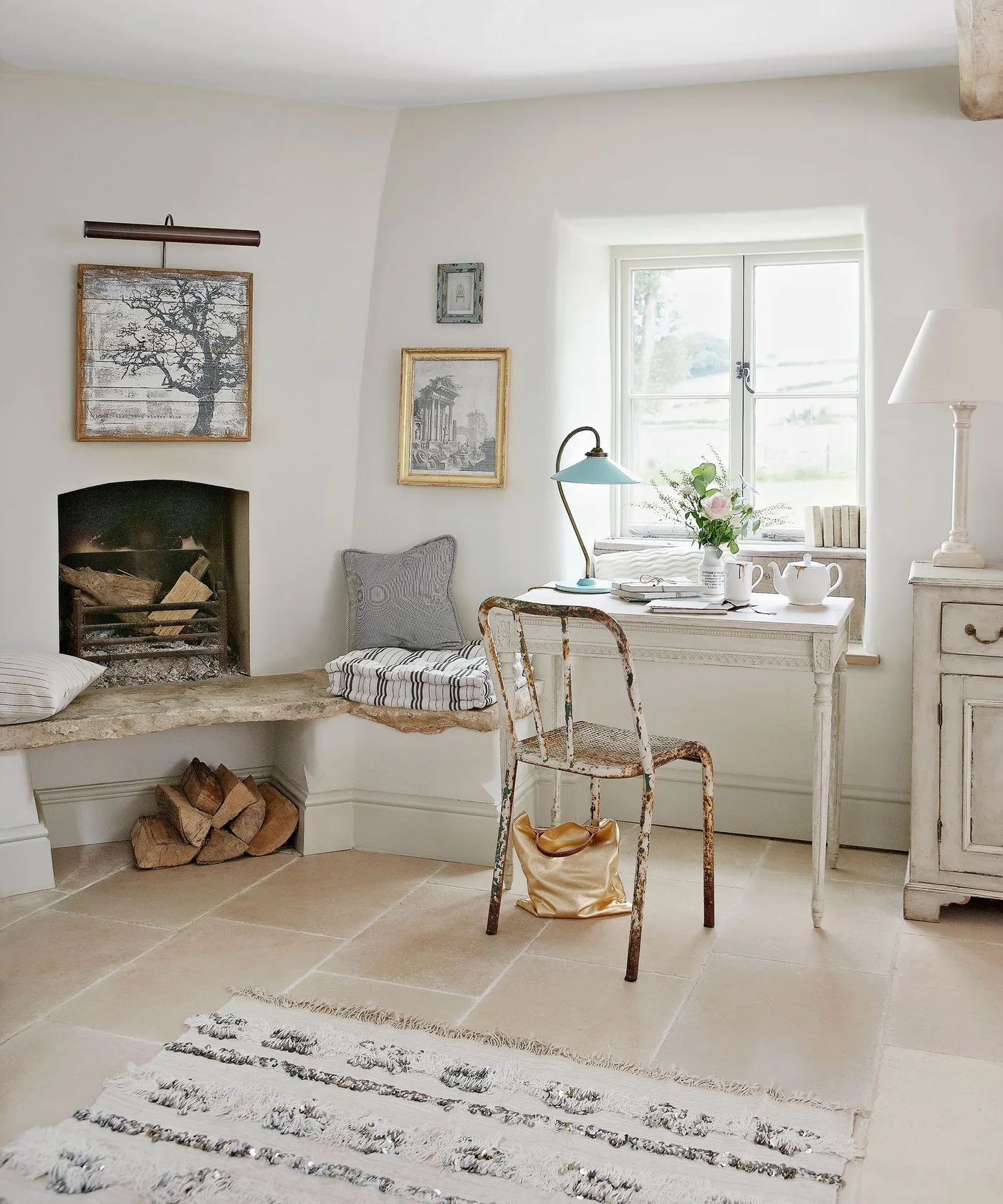
An arched dark opening is set into a simple pale chimney breast in this small country room. A broad hearth surface extends to either side, with cushions shown in the photographed arrangement and logs stored below. A desk takes advantage of the neighboring window. The fireplace’s simple outline lets the room carry several functions without a large projecting decorative surround.
Treat the cushions and nearby furnishings as a photographed arrangement rather than evidence of safe placement beside an operating fire. Keep combustible items clear whenever the fireplace is used, following its actual requirements. A desk nearby also needs comfortable circulation and separation from heat. If you want a hearth seat, have its construction and intended use assessed instead of assuming a broad ledge is a suitable bench.
IDEA 07 / 20
Set a Pale Fireplace Against Dark Country Walls
 SaveSupport Non AI Creator
Image credit: The Cotswold Company
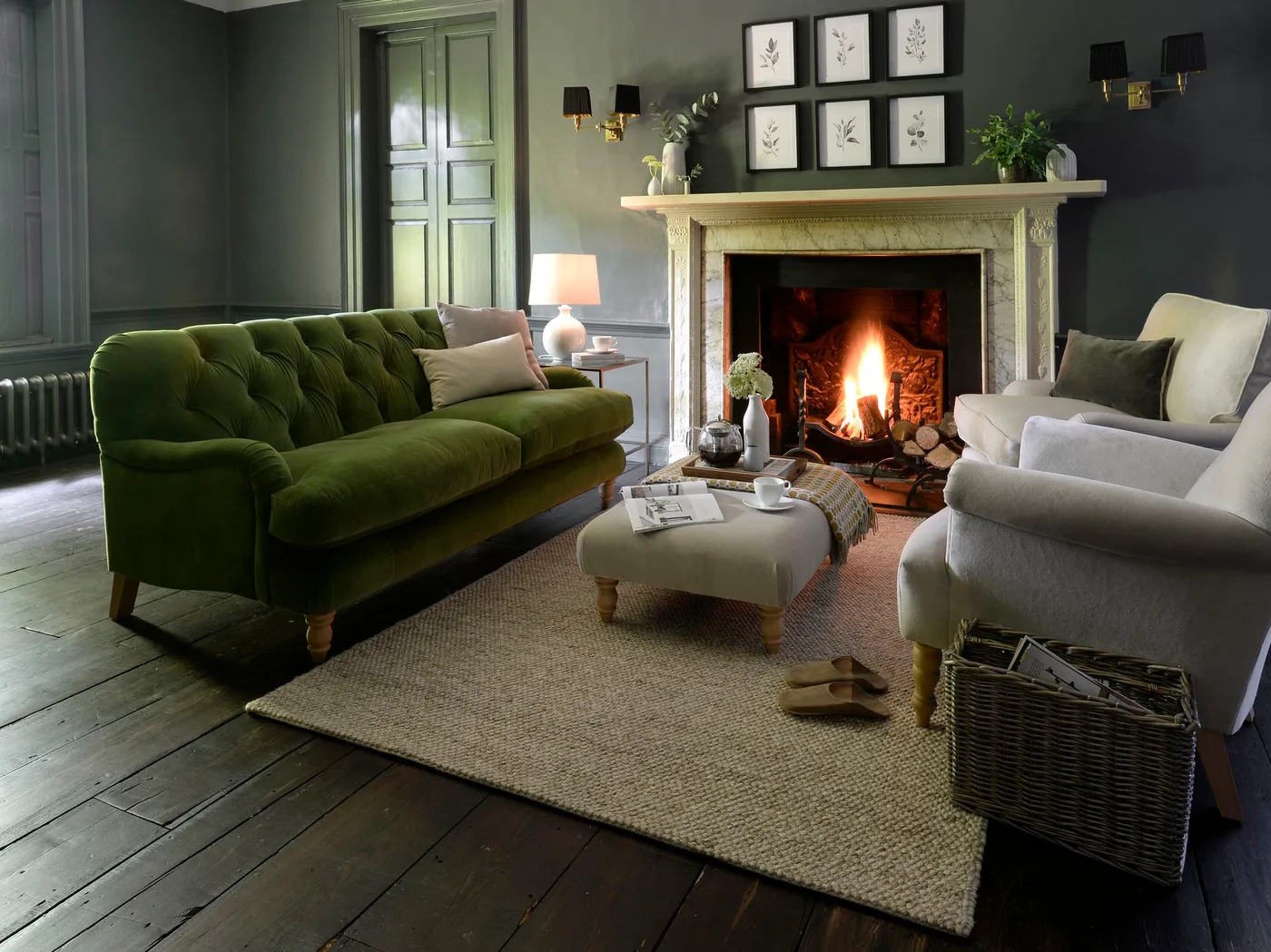
A pale traditional surround becomes the brightest architectural feature against these dark gray walls. A green sofa and pale upholstered chairs face the fire, with a small botanical picture grid above the mantel. The dark boards and neutral rug give the room a grounded country feel. Color does most of the decorative work, leaving the fireplace profile easy to appreciate.
Check dark paint samples beside the surround in evening light as well as near the window. Keep the mantel display small when the picture grid already provides detail overhead. Arrange seating according to the fireplace’s operating clearances and the room’s walking routes. Light upholstery beside a working fire will need a practical care routine, so review the fabric instructions before choosing it for daily use.
IDEA 08 / 20
Pair a Beam Mantel With Recessed Log Niches
 SaveSupport Non AI Creator
Image credit: Photo: Jennifer Boomer/Verbatim Photo A. From: Fixer Upper and New Chapter for Family of Four
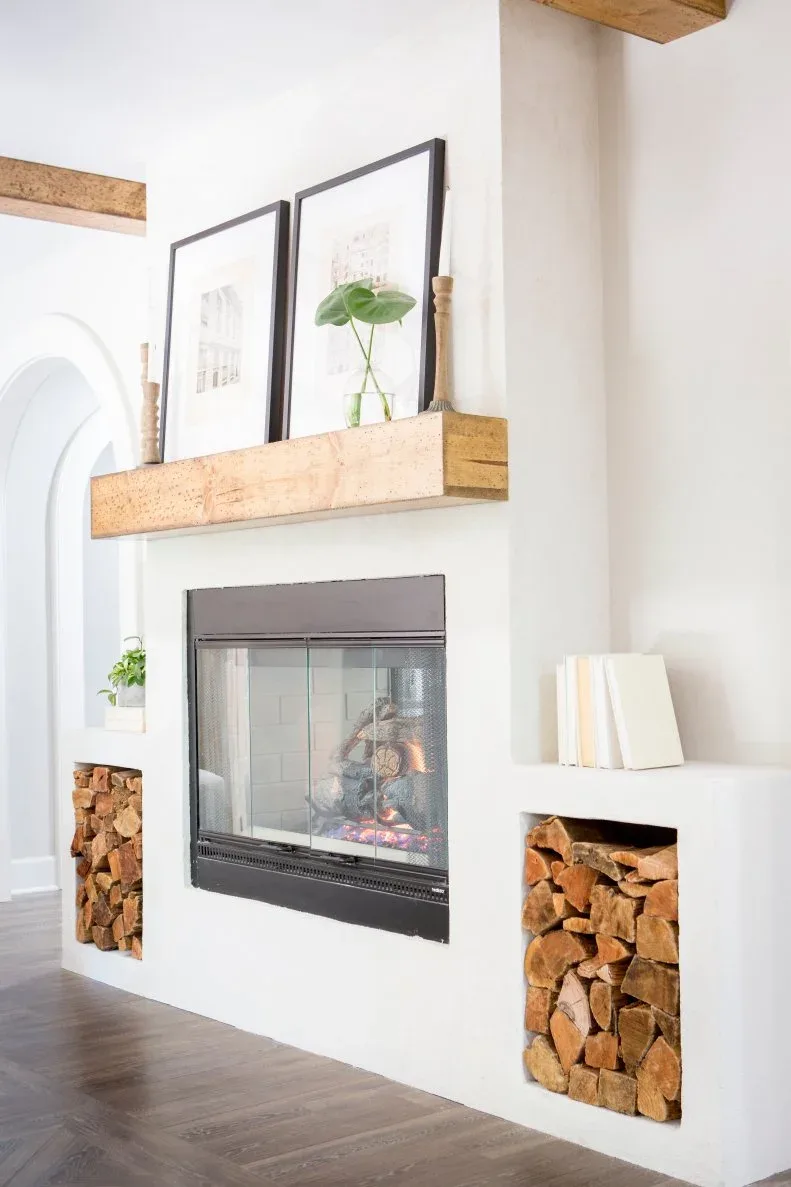
A thick wood mantel adds a warm horizontal line to this white fireplace wall. Two framed pictures and a small green vase occupy the shelf, while log-filled niches sit at either side of the black-framed glazed opening. The contrast between the timber, white wall and dark firebox creates a clear modern farmhouse outline. The recessed storage keeps the floor in front comparatively open.
Confirm whether nearby log storage is permitted for the actual appliance and installation; decorative placement in a photograph does not establish safe separation. Keep logs dry and contained so bark does not spread across the route. Have the beam’s position and support assessed before installation. Secure framed pieces appropriately and leave access to controls, vents and the firebox unobstructed.
IDEA 09 / 20
Let a White Fireplace Support Country Patterns
 SaveSupport Non AI Creator
Image credit: Photo: Katie Nixon Photography. From: Caitlin Wilson
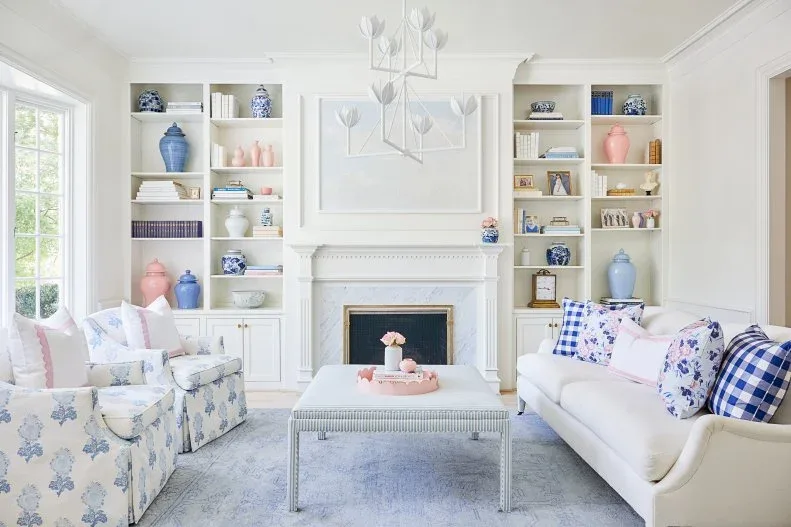
A white traditional fireplace sits between shelves holding blue and pink vessels. Floral upholstery and checked cushions bring the country pattern into the seating area, with a pale coffee table keeping the center quiet. The surround blends with the shelves rather than introducing another strong color. That restraint lets the collected pottery and fabrics become the room’s decorative focus.
Use a limited palette across different patterns so the shelves and upholstery feel connected. Leave space around the fireplace opening and keep fabrics clear of the working hearth. Secure large display vessels and choose shelves that can support their weight. Check cleaning and light exposure for patterned upholstery, particularly where a pale chair will receive frequent use near the fire.
IDEA 10 / 20
Bring Country Color Around an Ornate Fireplace
 SaveSupport Non AI Creator
Image credit: Photo: Emily Minton Redfield. From: Duet Design Group
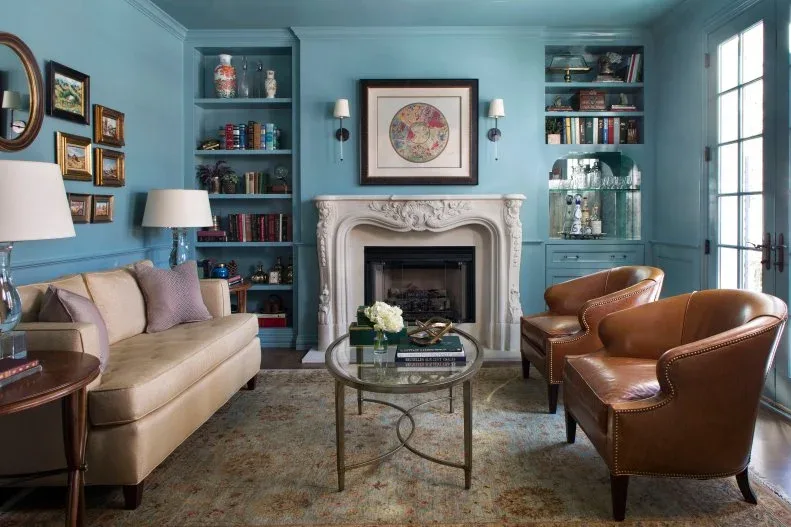
Blue walls and built-in shelves surround a pale fireplace with a carved, curved profile. A tan sofa and brown chairs bring warmer tones into the room, while framed artwork sits above the mantel. The fireplace supplies traditional detail within a more saturated country palette. A glass-topped table keeps the center visually lighter than another large dark wood piece would.
Let the surround’s carving remain readable by keeping the mantel display restrained. Sample the blue beside existing trim and upholstery before painting the whole room. Keep chairs clear of the hearth and check how the room works when people move between the seating and shelves. A detailed surround needs a cleaning method appropriate to its actual finish, especially where dust collects in carved recesses.
PART 03
Rustic Texture and Larger Room Proportions
IDEA 11 / 20
Repeat Rough Stone in a Timber-Framed Room
 SaveSupport Non AI Creator
Image credit: Photo: Troy Thies. From: Martha O'Hara Interiors
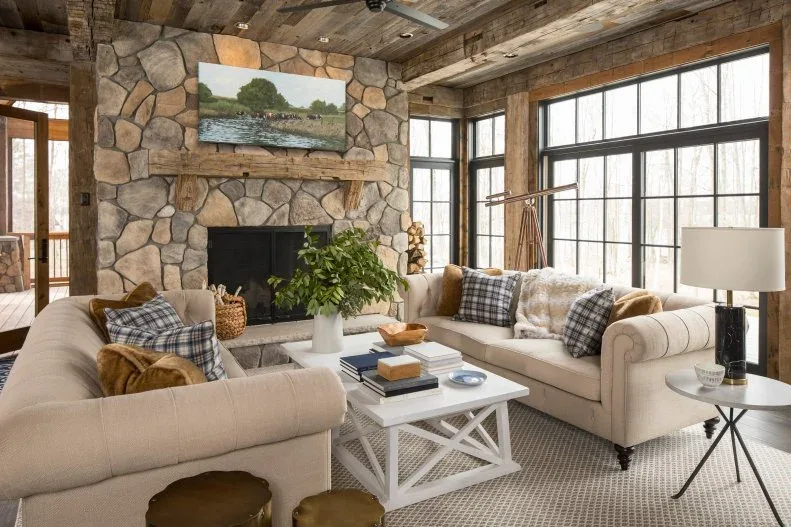
Irregular stone rises from the firebox to the ceiling beneath weathered-looking wood beams. A landscape picture and a rough mantel sit above the dark opening. Pale sofas and checked cushions soften the room around it, with a white cross-braced coffee table adding a familiar farmhouse detail. The fireplace remains substantial, but the lighter seating keeps the gathering area from feeling entirely dark and heavy.
Consider the whole wall’s scale before choosing a rough stone treatment; large irregular pieces can dominate a compact room. Keep the hearth approach clear despite the generous seating group. Have the wall, mantel and artwork placement checked for the actual fireplace installation. Use a cleaning method suited to the stone and mortar, since rough texture can hold dust without tolerating every household cleaning product.
IDEA 12 / 20
Give a High Fireplace a Quieter Surface
 SaveSupport Non AI Creator
Image credit: Photo: Casey Dunn. From: Furman and Keil Architects
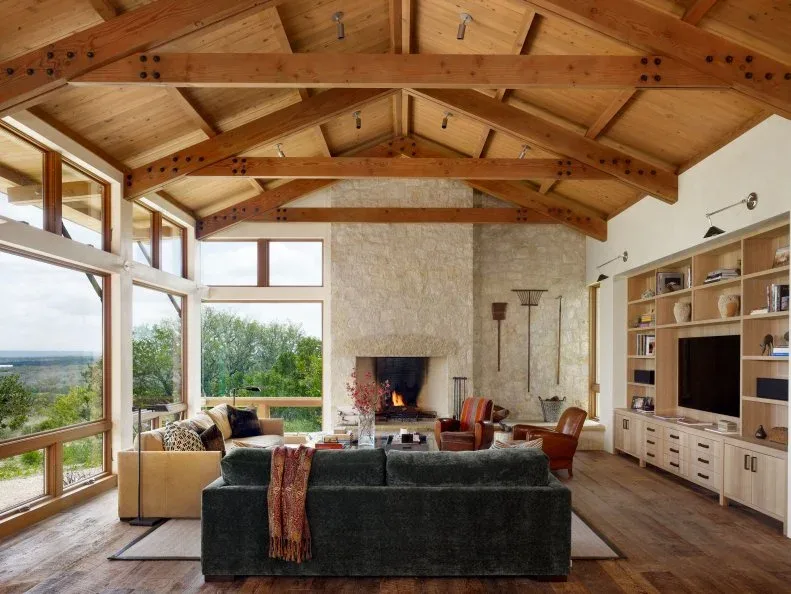
A tall pale textured fireplace anchors the far end of this timber-trussed great room. The quieter wall surface contrasts with the wood ceiling and exposed structural outlines overhead. Dark and tan seating forms a gathering area below, while shelving occupies one side of the room. The fireplace’s broad vertical shape establishes the destination without needing a crowded mantel or another strong pattern.
Judge a tall fireplace treatment from the seating area as well as close up. A quieter surface can make a complicated roof structure easier to read. Keep the fire tools and operating access usable, with furniture set to the fireplace’s required clearances. Plan maintenance access for the high surface and confirm the proposed finish and support with the installer before committing to a full-height treatment.
IDEA 13 / 20
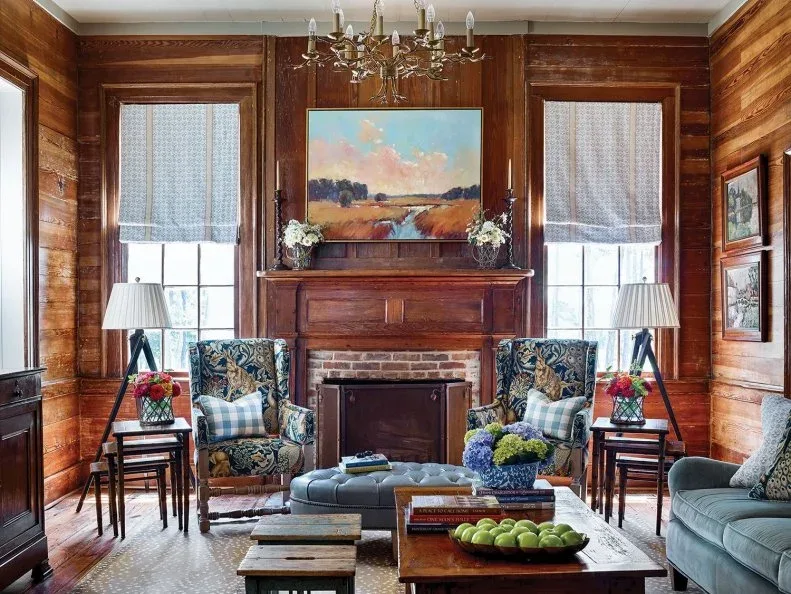
Use a Brick Opening Within Timber Paneling
 SaveSupport Non AI Creator
Image credit: Photo: Emily Followill. From: James Farmer
A brick opening sits within a traditional wood mantel in this timber-paneled room. A landscape picture hangs above, with patterned chairs and a chandelier adding collected country detail. The wood walls and mantel feel related without making the brick disappear. Lighter window treatments and lamps break up the darker surfaces, giving the fireplace a place within a layered room rather than a single feature wall.
Assess existing paneling and the fireplace together before adding another wood element. The required separation around an operating fire depends on its actual construction and equipment. Keep the display simple enough to clean and inspect, and protect artwork from unsuitable heat exposure. Lighter textiles can balance dark timber visually, but place curtains and chair fabrics according to the fireplace’s operating requirements.
IDEA 14 / 20
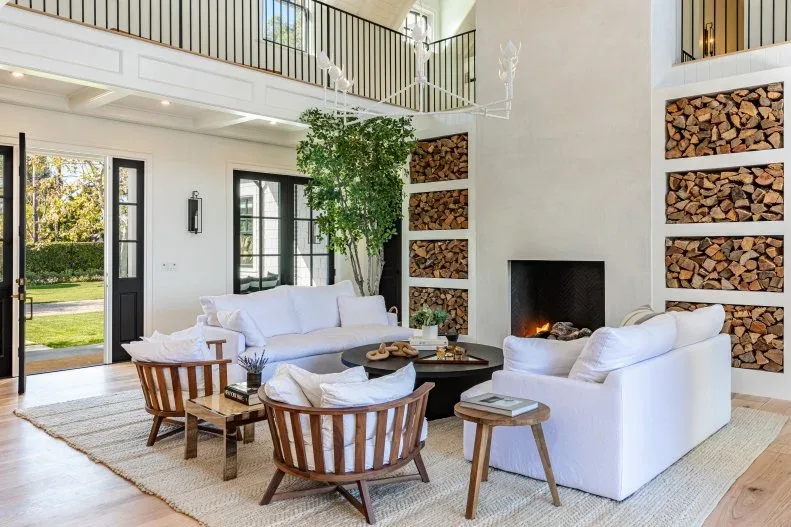
Make Log Storage Part of a Tall Pale Wall
 SaveSupport Non AI Creator
Image credit: Photo: Pinnacle Estate Properties, a member of Luxury Portfolio International. From: Pinnacle Estate Properties and Luxury Portfolio International®
A tall plain fireplace wall rises between several log-filled shelf recesses. White sofas and wood chairs gather around its dark opening, with an upper gallery increasing the room’s vertical scale. The repeated log ends bring texture to an otherwise restrained farmhouse-inspired space. The broad pale center lets the storage patterns frame the fireplace without competing with a decorative mantel.
Treat log recesses as a storage plan that needs checking against the actual installation rather than a universally safe feature. Contain loose bark and leave inspection and cleaning access. A tall wall also needs suitable construction and support for its chosen finish. Keep the seating comfortable while maintaining the fireplace’s required clearances, and avoid placing a rug or low table where it obstructs the hearth approach.
IDEA 15 / 20
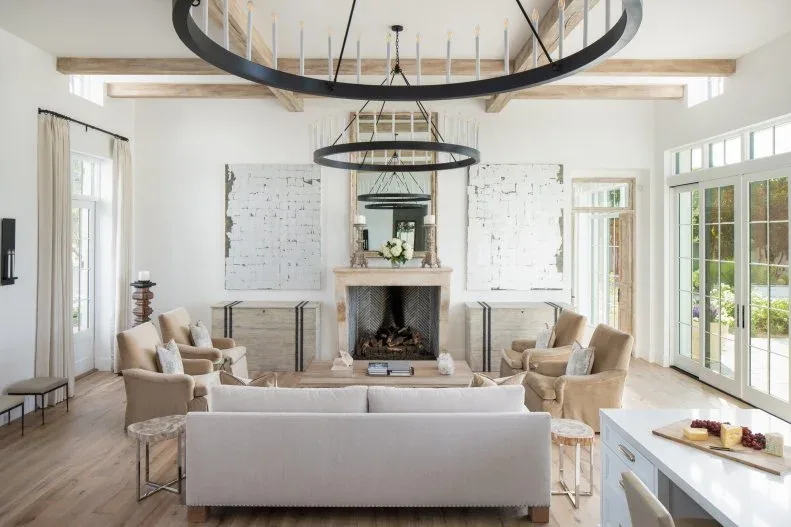
Balance a Country Mantel With Modern Lighting
 SaveSupport Non AI Creator
Image credit: Photo: Sun Valley Photo. From: The Refined Group
A pale fireplace and tall mirror give this light room a traditional country center. Black ring chandeliers introduce stronger contemporary outlines beneath exposed ceiling beams. Neutral chairs and a white sofa gather around a low table, with restrained wall decoration letting the fireplace remain visible. The mix works through scale and contrast rather than making the lighting imitate every detail of the surround.
Check the mirror’s mounting and heat exposure, and use the fireplace’s actual clearances to position nearby furniture. Large overhead lights need enough room above the seating and circulation routes. If you borrow this mix, keep smaller accessories quiet so the chandelier and mantel do not compete with several other focal points. Confirm installation and maintenance access for both the fireplace and lighting.
PART 04
Mantels, Shelving and Thoughtful Displays
IDEA 16 / 20
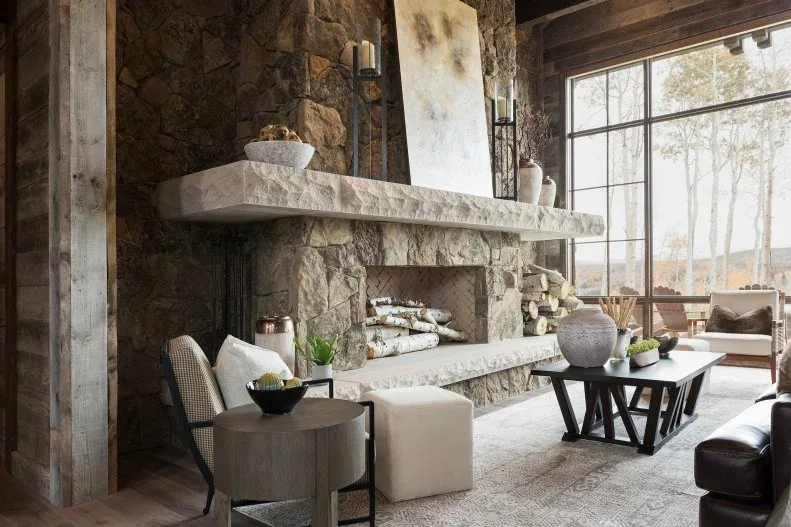
Let a Broad Stone Shelf Lead a Rustic Room
 SaveSupport Non AI Creator
Image credit: Photo: Lucy Call. From: LMK Interior Design
A broad pale stone shelf projects across this substantial rough-textured fireplace. An abstract picture and tall candles occupy the area above, with dark timber beams and a large window framing the rustic setting. The shelf’s simple horizontal edge contrasts with the irregular wall surface. It gives the fireplace a defined line without requiring a separate ornate surround around the opening.
A projecting stone shelf needs appropriate structural support and a position approved for the actual fireplace. Keep the hearth and seating routes clear of sharp corners or obstacles. Check artwork and candle placement against heat and clearance requirements, using flameless candles where suitable. Avoid assuming that a stone appearance identifies the material or its maintenance method; obtain specifications before selecting cleaning products.
IDEA 17 / 20
Connect the Fireplace to Open Display Shelves
 SaveSupport Non AI Creator
Image credit: Photo: Claire Esparros. From: Crystal Sinclair
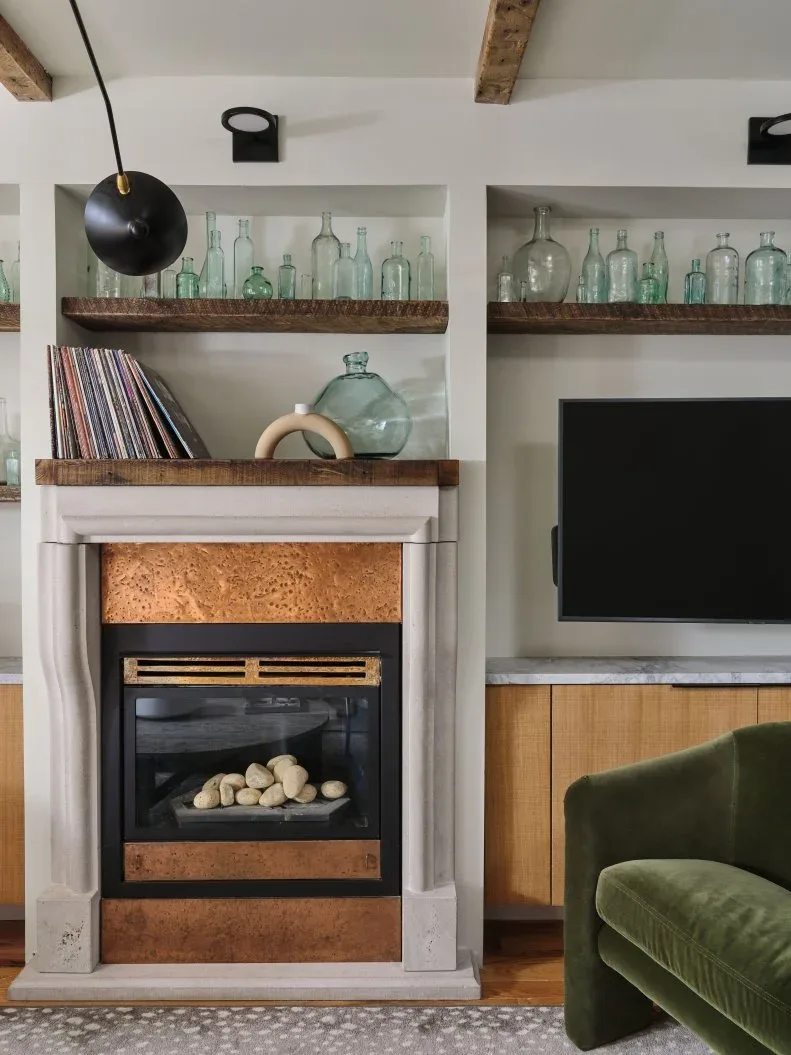
Glass bottles line open wood shelves above this compact fireplace and the neighboring television area. A pale surround defines the firebox, while the warmer inner panel connects with the shelving and lower cabinet doors. A green upholstered seat adds country color beside the arrangement. The fireplace is part of a larger useful wall rather than a separate decorative feature with no storage role.
Keep the shelf contents secure and leave space to remove bottles for cleaning. The fireplace, television and cabinetry need a coordinated plan for heat, vents, wiring and maintenance access. A warm-toned surface does not identify its material or suitability around the fire. Check specifications before changing the inner panel, and avoid allowing decorative pieces to block controls or appliance openings.
IDEA 18 / 20
Use an Arched Opening Beneath a Wood Ceiling
 SaveSupport Non AI Creator
Image credit: Photo: Ashley Gilbreath. From: Ashley Gilbreath
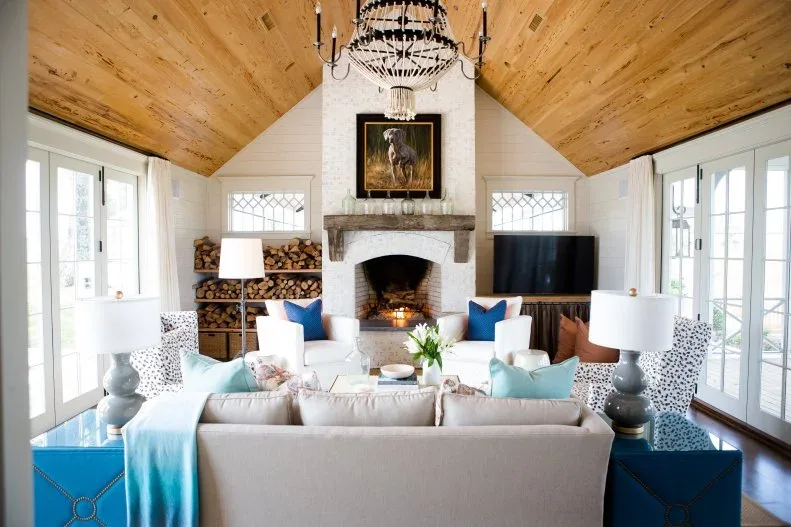
An arched fireplace opening gives this white wall a softer shape beneath the pitched wood ceiling. A thick mantel and framed picture establish the center, while log shelving sits on one side and a television on the other. White seating and bright blue accents keep the country room lively. The fireplace relates to the roof through its height rather than copying the ceiling’s timber finish.
Keep the arch visible when choosing furniture heights and the mantel display. Check log shelving, picture and television locations against the operating fireplace’s requirements before treating the photographed layout as a plan. A tall room may need more than one lighting source for comfortable evening use. Leave the hearth approach unobstructed and keep throws, cushions and other textiles clear when the fire is operating.
IDEA 19 / 20
Use a Wood Shelf Against Pale Brick
 SaveSupport Non AI Creator
Image credit: Photo: Rachel Whyte. From: Fixer Upper
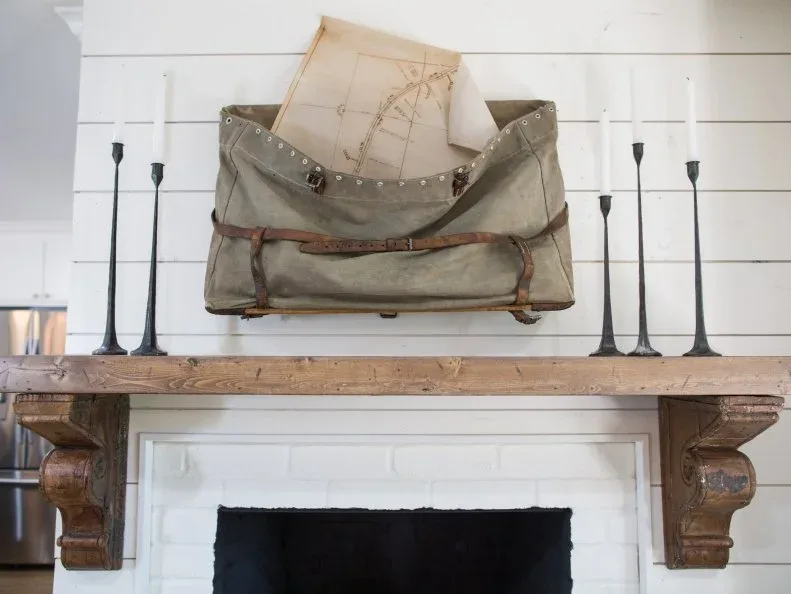
A wood shelf on decorative corbels creates a strong horizontal line above this pale brick opening. Tall dark candlesticks occupy the shelf, while a hanging fabric bag and papers appear above it in the photographed display. White horizontal wall boards support the farmhouse character. The shelf and corbels provide the useful architectural idea here; the decorative arrangement needs different treatment around a working fire.
Do not copy the fabric-and-paper display near an operating fireplace. Remove combustible decorations and confirm all required clearances before use. Have the wood shelf, corbels and their position assessed for the actual installation. If the fireplace is kept permanently unused, a display can be planned for that purpose, but do not let its appearance imply that decorative objects are safe beside heat or flame.
IDEA 20 / 20
Keep a Gray Fireplace Warm With Timber and Weaving
 SaveSupport Non AI Creator
Image credit: Photo: Julie Soefer Photography. From: Marie Flanigan Interiors
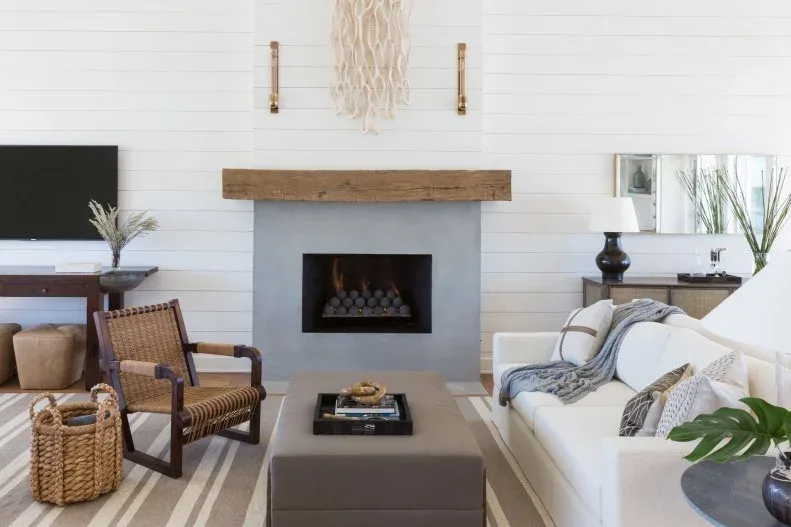
A plain gray fireplace stands against white horizontal boards beneath a wood beam mantel. A woven chair and basket add warmer texture at one side, with a pale sofa keeping the room relaxed. The fireplace’s simple face makes the timber shelf more prominent. This offers a modern farmhouse direction in which wall texture and furniture do more decorative work than an elaborate surround.
Compare the gray finish beside the timber in your own lighting before committing to the combination. Confirm the mantel’s required position and support, and choose a fireplace finish specified for the installation. Keep baskets, cushions and throws clear of operating heat sources. A woven chair adds visual warmth, but its placement still needs to allow safe circulation and the fireplace’s required furniture clearance.
BRING IT ALL TOGETHER
Make the Fireplace Work With the Whole Room
Choose the detail that will matter most from the main seating position. A pale surround can calm a busy room; rough stone can supply texture where the furniture is simpler. Keep the route to the hearth clear and give storage, lighting and a television their own practical planning rather than attaching them to the fireplace wall after the arrangement is finished.
Confirm the actual installation before altering a mantel, finish or nearby built-in. Keep combustible decorations and textiles outside the required clearances and make maintenance access straightforward. A photograph is useful for comparing color, proportion and furniture relationships, but the operating requirements of your fireplace must guide what can safely be copied.