A fireplace accent wall can draw attention through color, texture or the shape of the chimney itself. Some rooms suit a dark full-height column; others need a pale patterned surface that works quietly with the furniture. Start with the opening, ceiling line and views from your main seats, then choose a finish that gives those existing features a clear relationship.
These twenty-two photographs show different treatments in sitting rooms, a bedroom and a study. Use them to compare visible finishes and arrangements, while confirming construction and heat requirements for your own appliance. A photograph can help you choose a color or pattern, but the appliance instructions and a qualified installer determine what belongs around an operating fireplace.
PART 01
Give the Chimney Height and Texture
IDEA 01 / 22
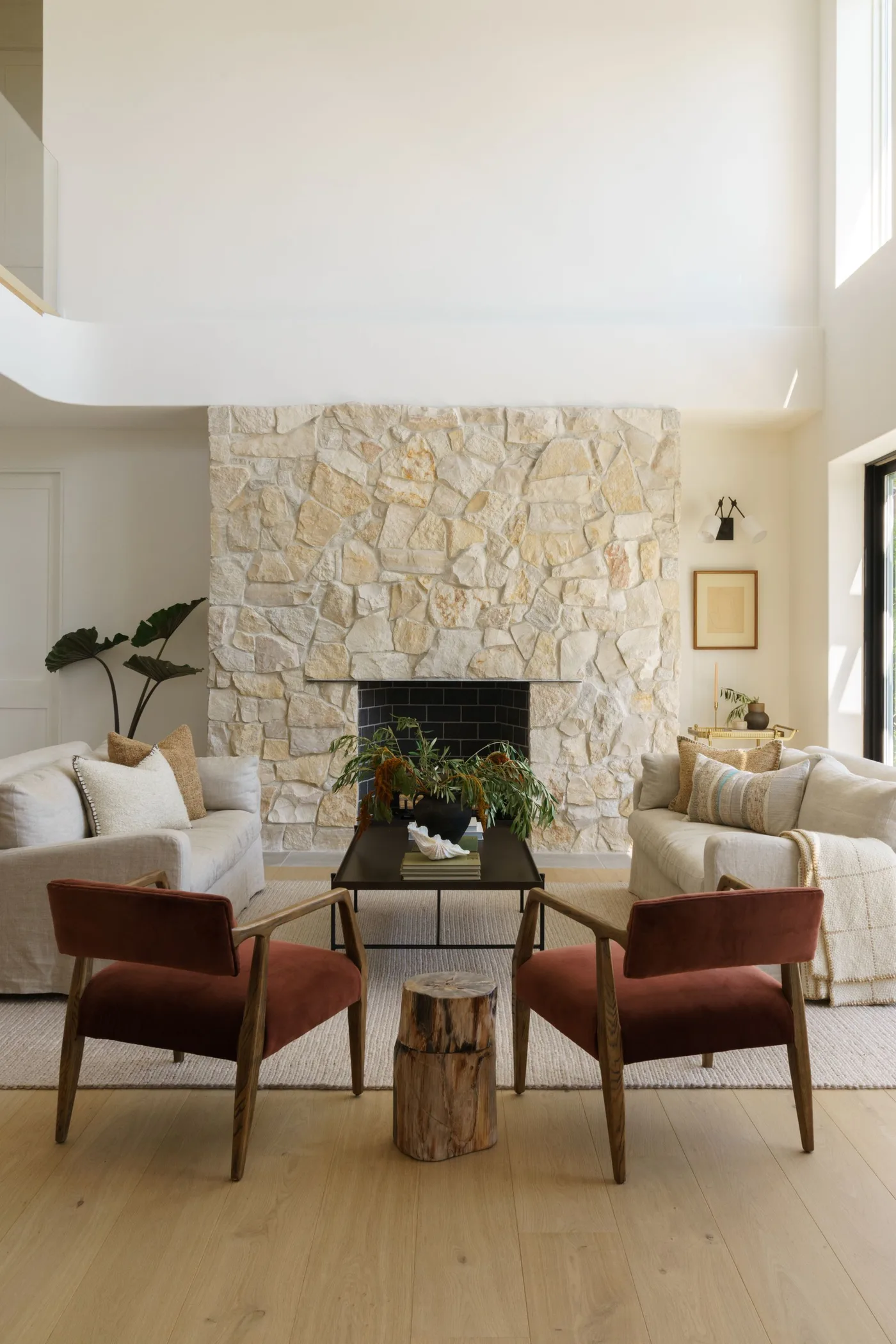
Give a Pale Stone Wall Room to Stand Out
 SaveSupport Non AI Creator
Image credit: Charlotte Lea. Design: Abbie Naber
Irregular pale stones cover the tall chimney wall in this bright sitting room. Their uneven edges supply the decoration, while a black firebox gives the lower section a clear center. Pale sofas continue the quiet color scheme and a rust-colored chair adds warmth in the foreground. This arrangement shows how a fireplace accent wall can feel substantial without introducing a very dark color or a busy collection of pictures.
Look at a large cladding sample under daylight and evening lamps before choosing its tone. Deep joints and uneven faces need a cleaning approach suited to the actual material, so ask about routine dust removal as well as installation. Keep the surrounding furniture simple enough to reveal the texture. Have a qualified installer confirm the wall support, finishing system and appliance clearances before specifying a heavy fireplace surface.
IDEA 02 / 22
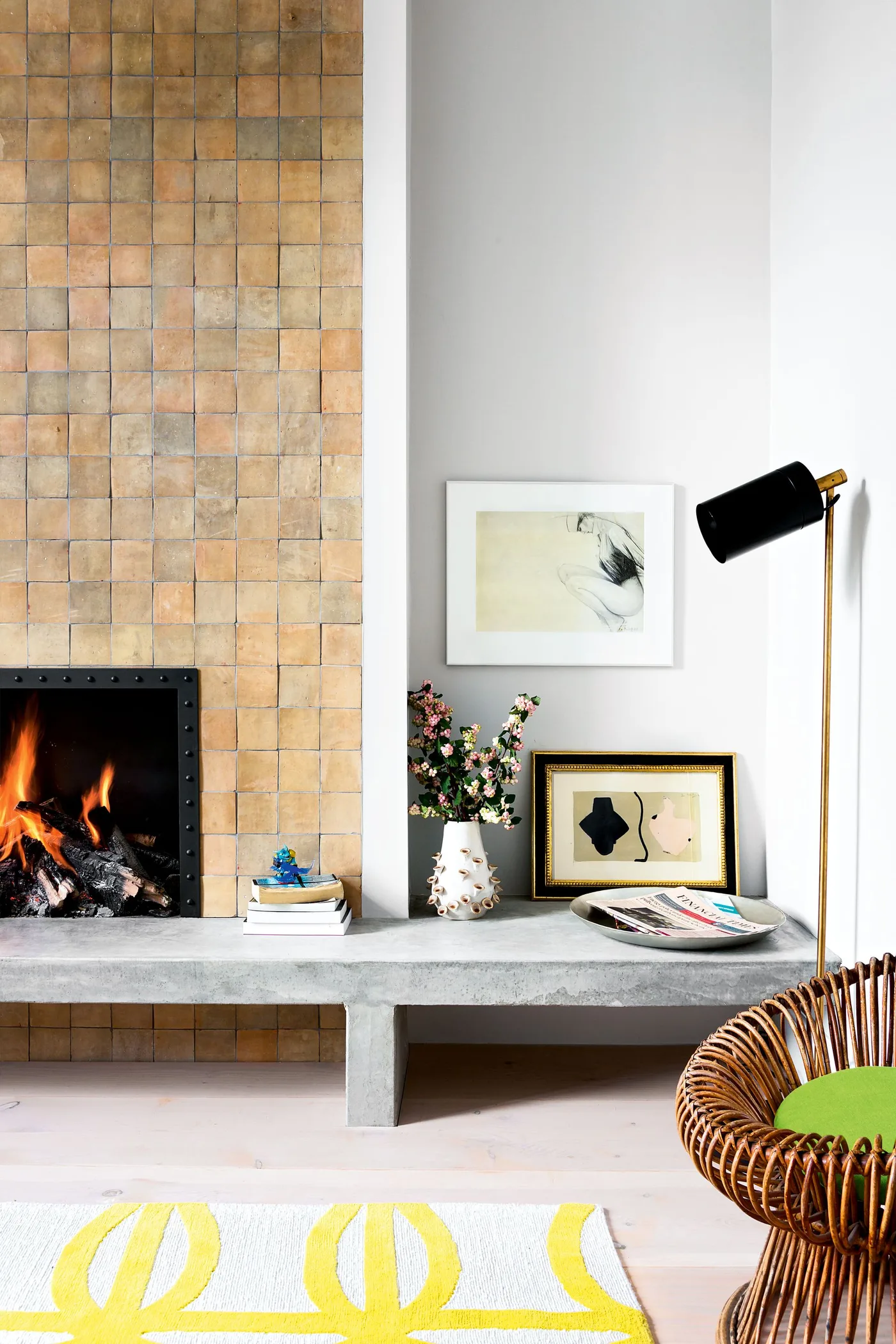
Warm the Chimney Breast With Golden Squares
 SaveSupport Non AI Creator
Image credit: Paul Craig
Golden square tiles turn this projecting chimney breast into a warm block of color. The dark opening interrupts the grid, while a pale hearth extension provides a quieter line below the adjoining display. A dark woven chair repeats the contrast without competing with the tile pattern. The photograph is useful for a room where a simple repeated shape can provide interest, leaving artwork and furniture to take a supporting role.
Compare tile and grout samples together because the joint color changes how strongly the squares read. Confirm that the complete installation is suitable for the appliance and its expected heat exposure. Plan the grid around the opening before work begins, avoiding awkward narrow cuts at prominent edges. Keep the adjacent display modest and choose a cleaning method approved for both the tile surface and the joints.
IDEA 03 / 22
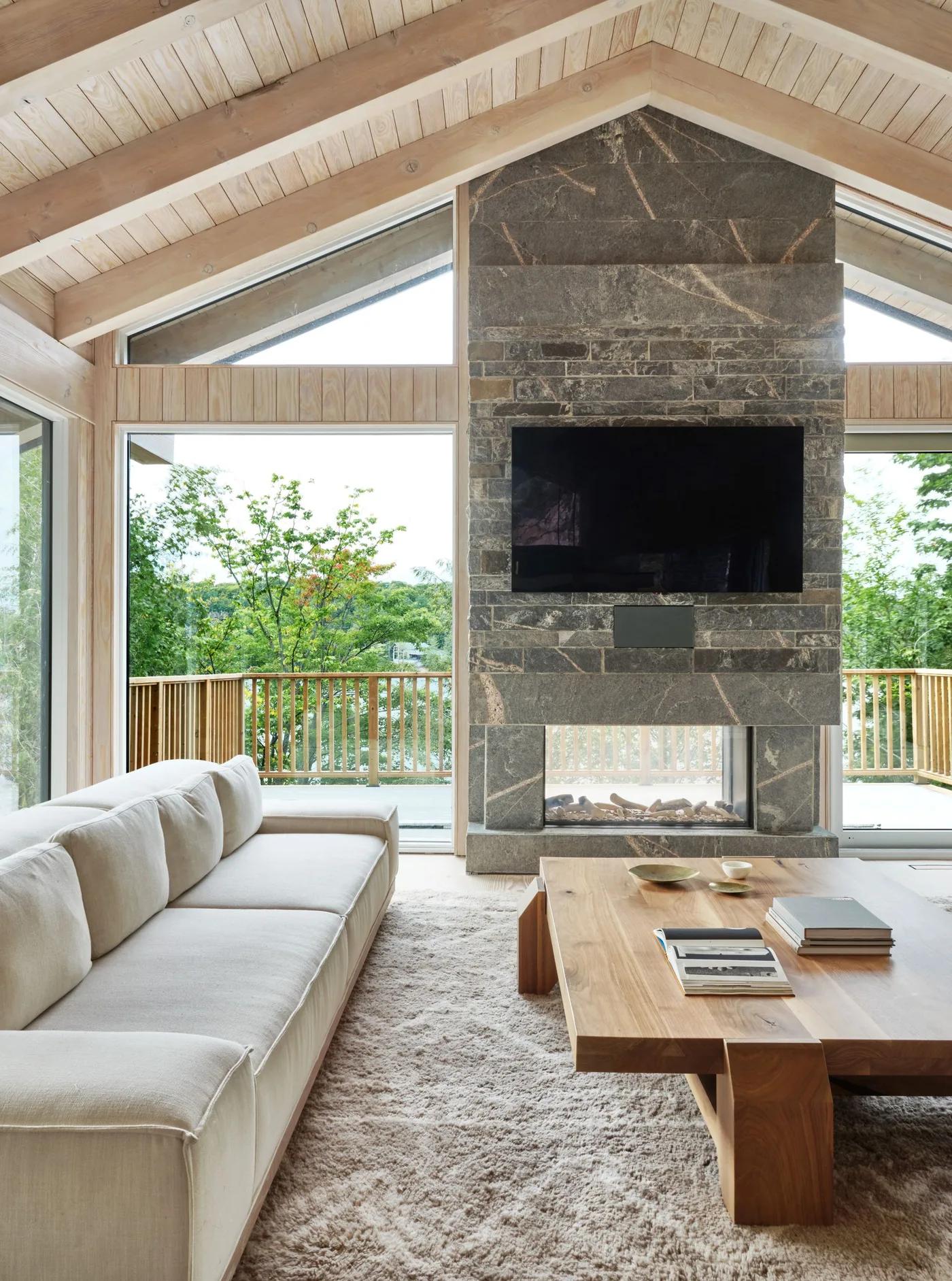
Follow a Pitched Ceiling With a Tall Gray Wall
 SaveSupport Non AI Creator
Image credit: Studio Paolo Ferrari
A gray block-patterned chimney rises to the peak of this pitched ceiling, emphasizing the room’s height. Pale wood overhead and large windows keep the darker central surface from dominating the sitting area. The television and glazed fireplace are arranged on the same vertical line. This is a useful example of letting the architecture determine the accent wall’s outline rather than stopping a strong finish at an arbitrary height.
Assess the wall from seated eye level as well as from the doorway before committing to a full-height treatment. A television above a fireplace needs its own mounting, temperature and cable requirements checked against the appliance instructions. Do not assume this photographed arrangement suits every model. Plan maintenance access and structural support with the installer, and keep nearby furniture positioned for comfortable viewing rather than simply copying the central alignment.
IDEA 04 / 22
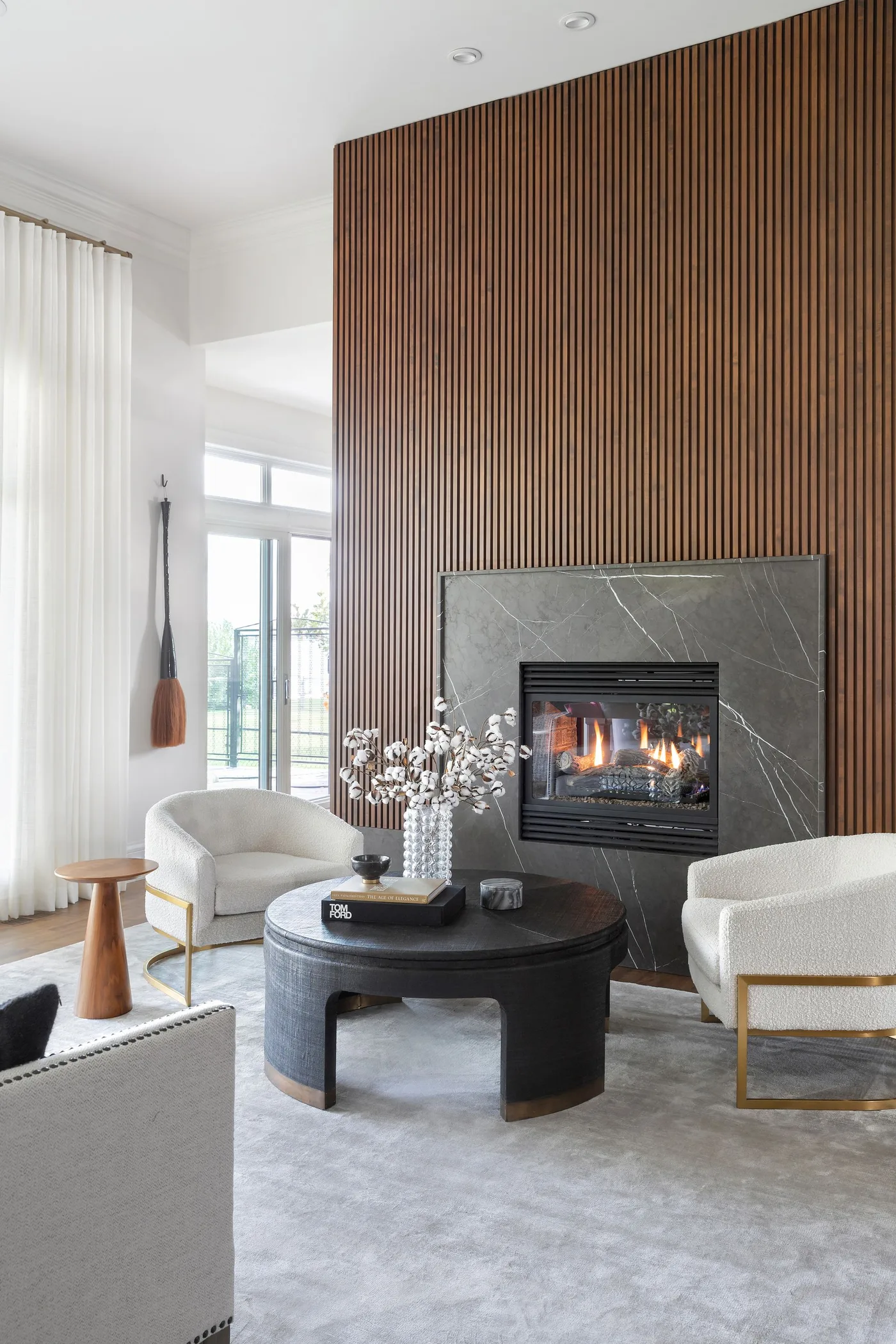
Combine Vertical Slats With a Dark Fireplace Face
 SaveSupport Non AI Creator
Image credit: Phil Crozier. Design: Reena Sotropa
Warm vertical slats fill the wall behind a dark veined fireplace face. The two surfaces bring different rhythms: narrow straight lines above and a broad patterned rectangle below. A white chair and small dark table leave much of that contrast visible. This photograph offers a way to combine a warm-looking backdrop with a more dramatic fireplace surround while keeping the rest of the room’s furniture relatively restrained.
Treat the photograph as a color and texture reference rather than an installation specification. Wood and other combustible finishes need the appliance’s required separation and a suitable approved construction detail. Confirm those limits before extending slats near the opening. Choose a layout that allows dusting between grooves, and compare the dark surround sample with the slats so the veining remains distinct instead of disappearing under evening lighting.
IDEA 05 / 22
Make Blue Tile the Brightest Surface
 SaveSupport Non AI Creator
Image credit: Chase Daniel. Design by Breathe Design Studio
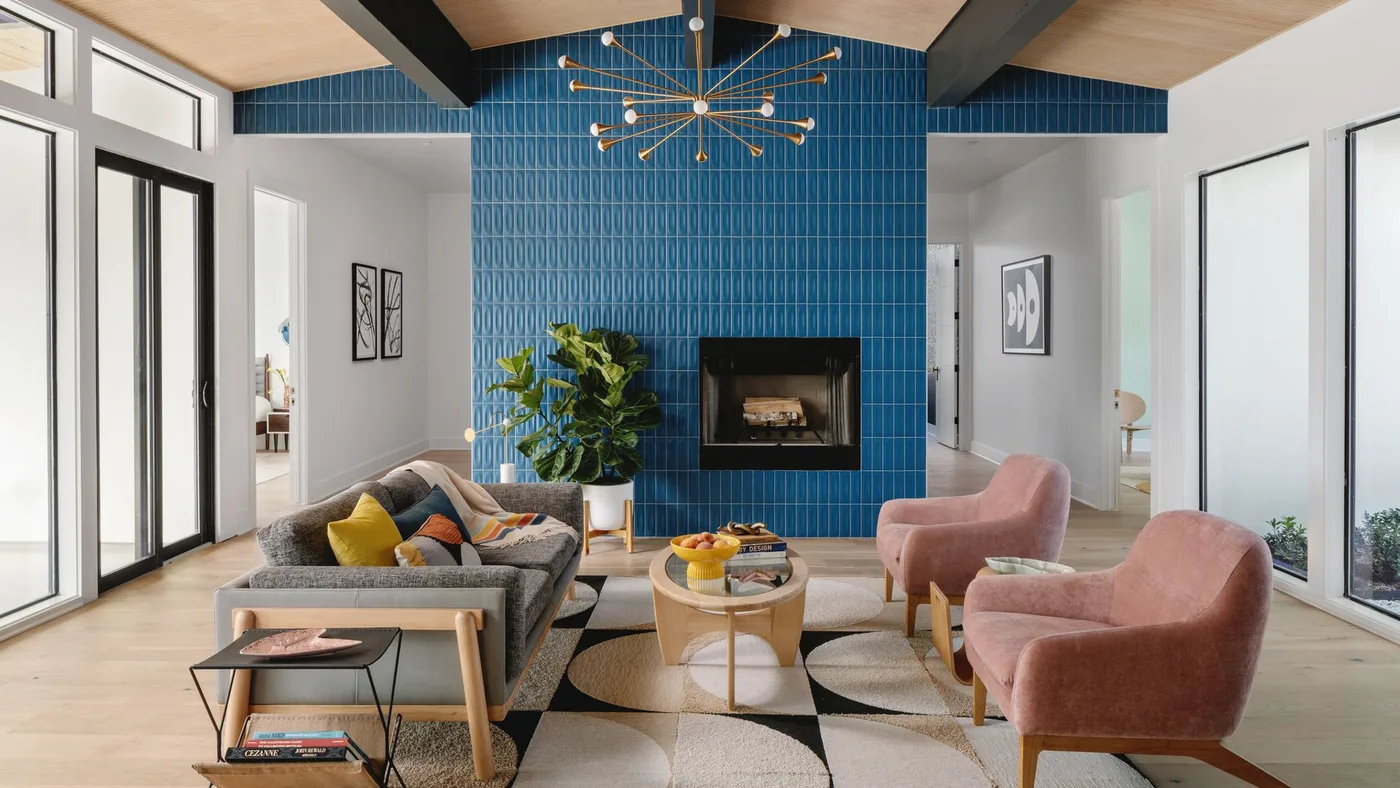
Bright blue vertical tiles cover the tall chimney breast beneath a wood ceiling with dark beams. The fireplace opening adds a compact black shape near the base, while gray seating provides a quieter foreground. Pink chairs introduce a second color without covering the tiled wall. The photograph demonstrates how one saturated surface can give an otherwise familiar sitting room a distinct focal point, especially when the wall follows the ceiling’s slope.
Test the blue beside your ceiling finish and main upholstery before choosing the final tile. Compare it at several times of day; a large glossy or strongly colored surface can feel different from a small sample. Plan joints and cuts around the firebox with the installer. Keep replacement tiles and the approved care instructions, and resist adding equally strong patterns to every seat when the wall already supplies substantial color.
PART 02
Use Color to Define the Fireplace
IDEA 06 / 22
Paint the Wall and Mantel a Deep Blue Tone
 SaveSupport Non AI Creator
Image credit: Future
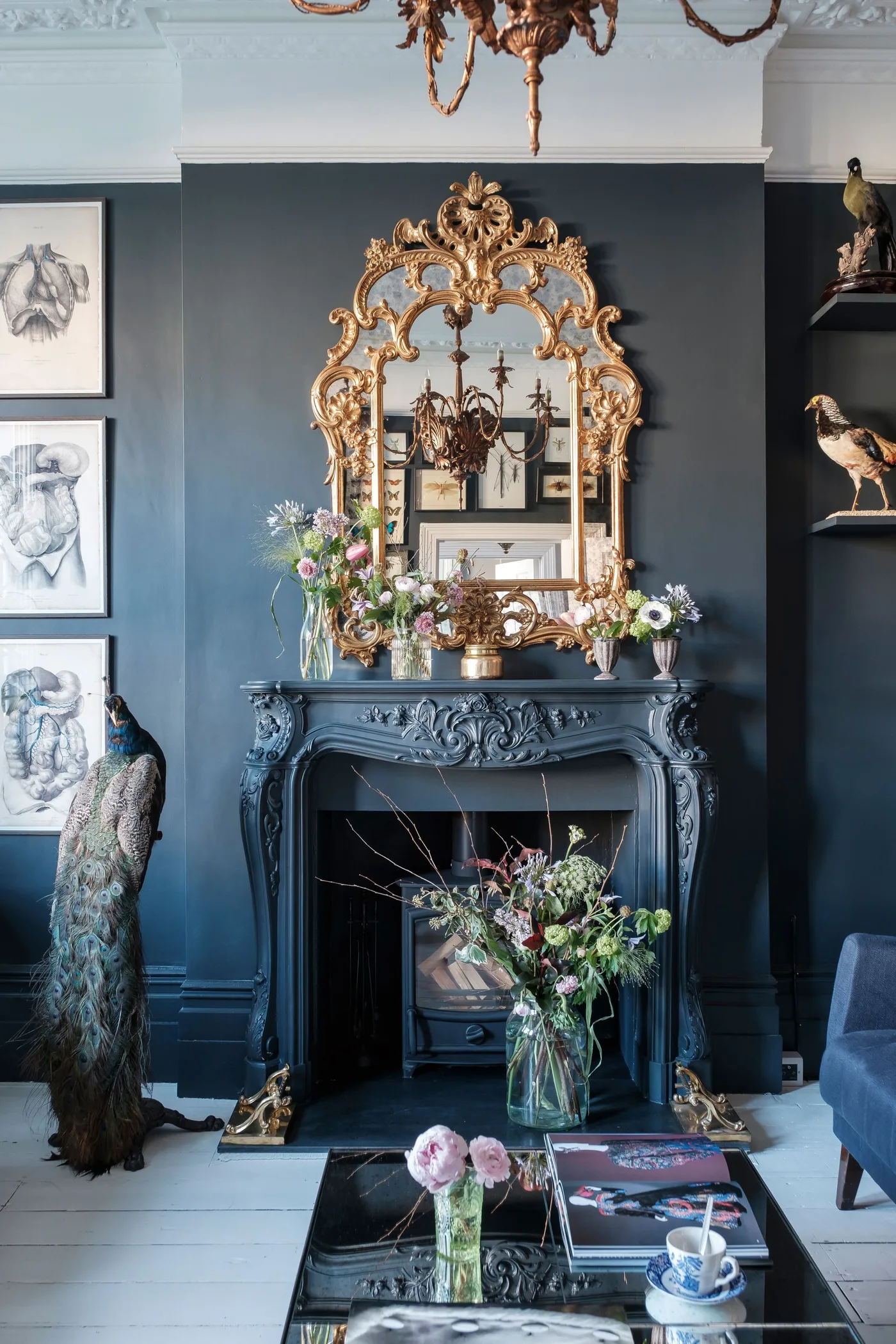
A deep blue tone links the wall and ornate mantel in this room, allowing their different shapes to read as one broad backdrop. The tall gold-framed mirror becomes the brightest feature above the opening. Flowers and small ornaments add a collected character, although the wall color itself does most of the visual work. This example is useful when an existing decorative mantel would look too fragmented against a contrasting wall.
Test a generous paint sample around the mantel and under your usual lamps before taking the color across the wall. Identify the mantel material and choose an appropriate coating for its location and heat exposure. Keep flowers, loose decorations and floor displays outside the appliance’s required clearances when it operates. Borrow the unified color first, then reduce the number of accessories if everyday cleaning or access becomes difficult.
IDEA 07 / 22
Frame the Fire With a Simple Gray Column
 SaveSupport Non AI Creator
Image credit: Photo: Chris Hosford - Helios Design Group. From: Helios Design Group
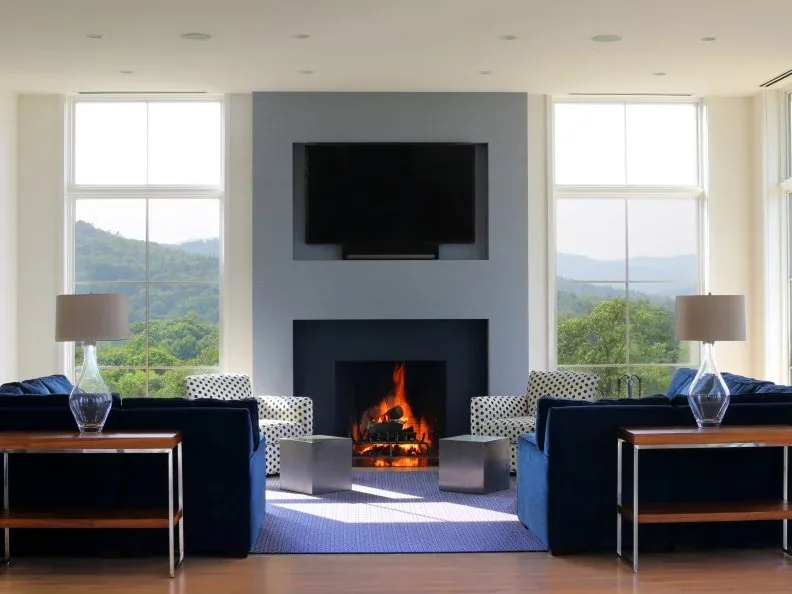
A simple gray chimney wall stands between two large windows in this sitting room. The smooth-looking finish makes the central column easy to read, with the fireplace and television stacked within it. Navy sofas and white chairs repeat the dark-and-light balance below. The photograph shows that an accent wall can rely on a clear silhouette and a single color rather than a complex pattern or an elaborate mantel display.
Use the window light to judge a gray sample throughout the day, checking whether it turns cooler or warmer beside existing upholstery. Confirm the finish is appropriate around the appliance instead of assuming ordinary wall paint is sufficient everywhere. Plan television mounting and heat exposure separately. Leave the window edges visually clear and position seats for conversation as well as screen viewing so the accent wall supports the room’s everyday use.
IDEA 08 / 22
Use Black Panels Against Pale Neighboring Walls
 SaveSupport Non AI Creator
Image credit: Photo: Jim Tschetter, IC36O Images. From: Dresner Design
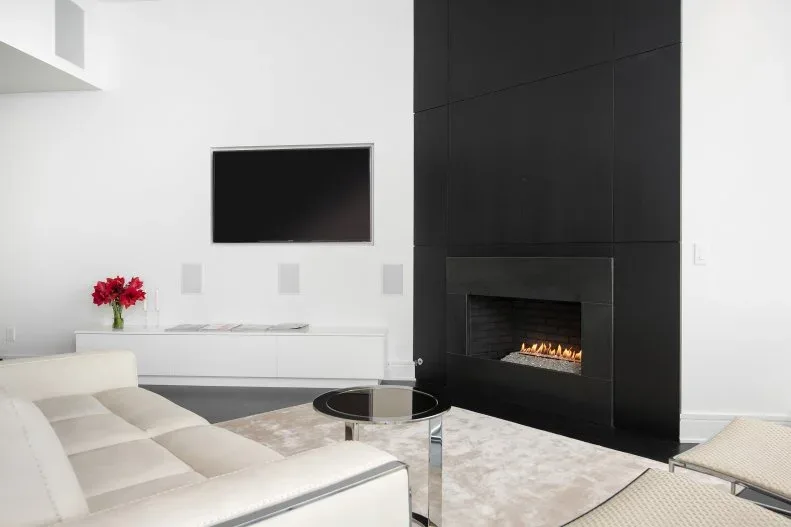
Black panels give the fireplace a sharply defined vertical backdrop in this pale living room. Their straight seams add subtle structure without introducing a second strong pattern. The television sits on the adjacent wall, leaving the fireplace surface to stand on its own. White seating and a round glass table keep the foreground light. This arrangement is helpful when you want a dramatic focal wall without placing every entertainment feature on it.
Check a dark finish in the room’s evening lighting before covering the full height. Panel composition and fixing details must be appropriate for the fireplace and confirmed with its installer; appearance alone cannot establish suitability. Consider how fingerprints, dust and joints will be maintained. Keep furniture and wall accessories restrained around the black surface, and plan cable routes on the neighboring television wall before finishing either area.
IDEA 09 / 22
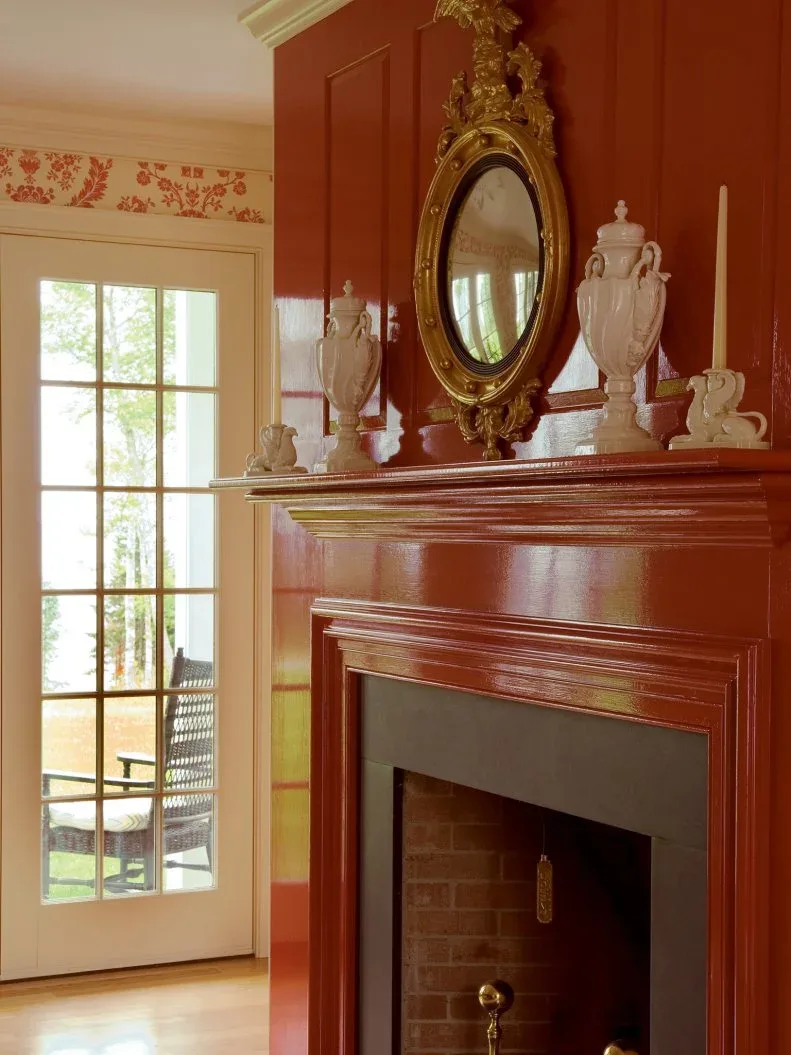
Carry Rust Red Across Panels and Mantel
 SaveSupport Non AI Creator
Image credit: Photo: Photo Credit: Edward Addeo ©. From: John Lyle
Rust red covers both the paneled chimney wall and the mantel, creating a broad warm accent beside pale neighboring surfaces. An oval gold mirror breaks up the straight panel lines, while white urns stand out along the shelf. The photograph offers a strong color approach that still feels organized because the architectural pieces share one finish. The mirror supplies the main decorative shape rather than several separate pictures above the fire.
Try the red on a large sample near the room’s wood, flooring and upholstery; it can appear much brighter once it covers several panels. Identify the existing finishes before preparing or repainting the mantel. Choose the sheen with routine cleaning and reflected light in mind. Secure the mirror appropriately and keep shelf objects within the appliance’s placement requirements, leaving enough space to dust rather than filling every available inch.
IDEA 10 / 22
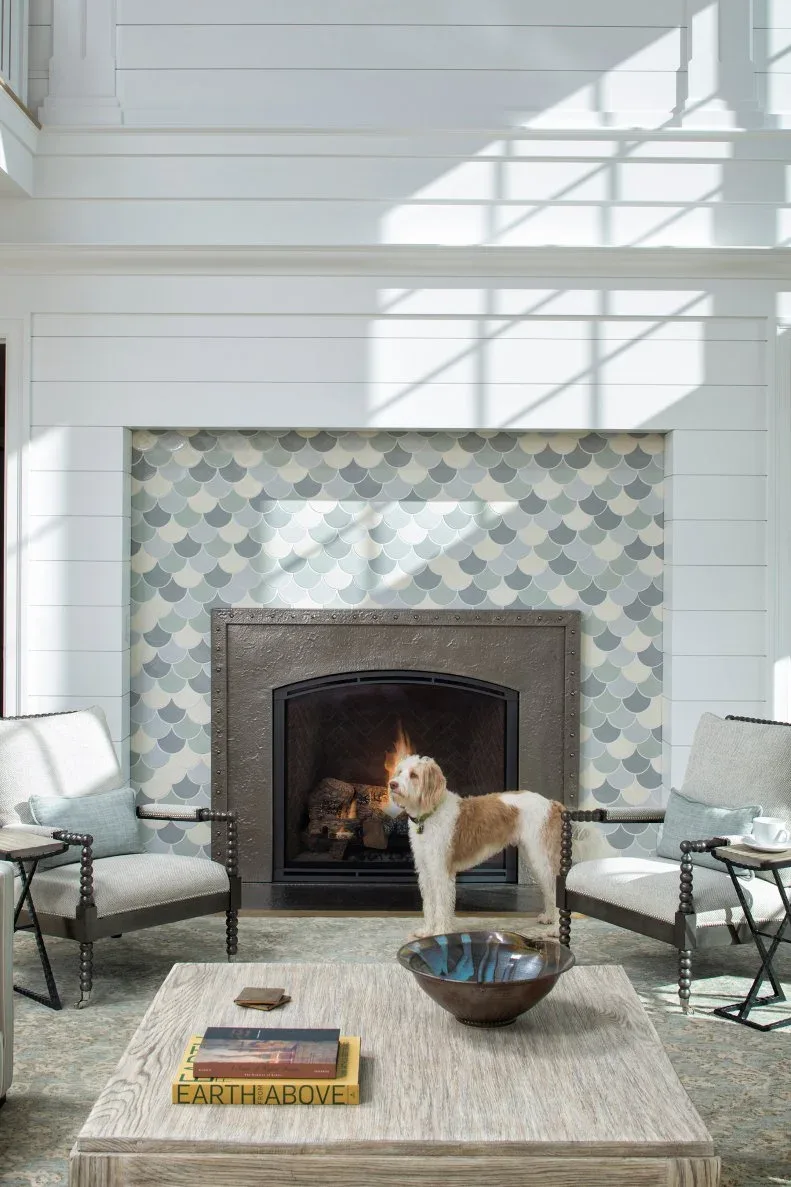
Add a Scalloped Tile Pattern Around the Opening
 SaveSupport Non AI Creator
Image credit: Photo: Landmark Photography. From: Andrea Swan
Pale scalloped tiles form a wide patterned area around a black arched fireplace opening. White horizontal boards continue above them, keeping the upper wall quieter than the curved repeat below. Pale chairs on either side leave the center visible. This photograph is useful for an accent wall that needs texture without a very strong color: the repeated tile edges bring movement while the surrounding pale surfaces hold the composition together.
Review a larger tile layout before ordering so you can see how the scallops meet the arched opening and outer edges. Grout tone can either emphasize or soften each curve. Have the installer confirm a suitable tile, adhesive and backing system for the appliance. Keep chairs and soft furnishings at the required distance when using the fire, and follow the approved cleaning guidance rather than treating every pale tiled surface alike.
IDEA 11 / 22
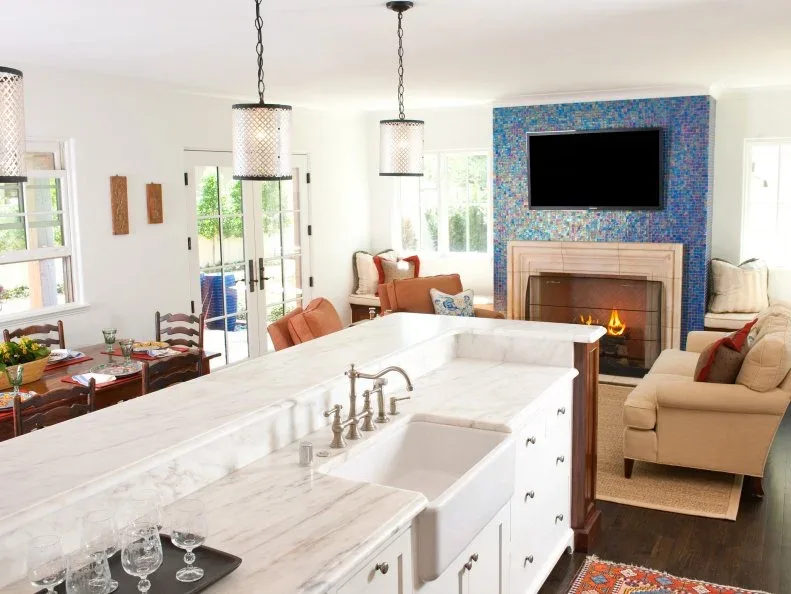
Let a Blue Mosaic Connect an Open Room
 SaveSupport Non AI Creator
Image credit: Photo: Dan Piassick; Design By: Astleford Interiors
A blue-purple mosaic chimney wall catches the eye across this open kitchen and living area. Its small repeating pieces contrast with the larger plain cabinet fronts and pale surrounding walls. Warm-colored seating adds a softer counterpoint below the television. The photograph shows how a fireplace accent can organize the view from another working area, giving an open room one clear destination without repeating the same patterned finish on every surface.
Look at the sample from the kitchen entrance and the seating area before choosing a small mosaic. A pattern that looks delicate close up may read as one strong color at a distance. Confirm heat suitability and plan the tile edges around the television and opening. Keep cables accessible through appropriate routes, and consider joint cleaning before selecting a highly textured or numerous-joint finish for a frequently used room.
PART 03
Combine Pattern With Quieter Surroundings
IDEA 12 / 22
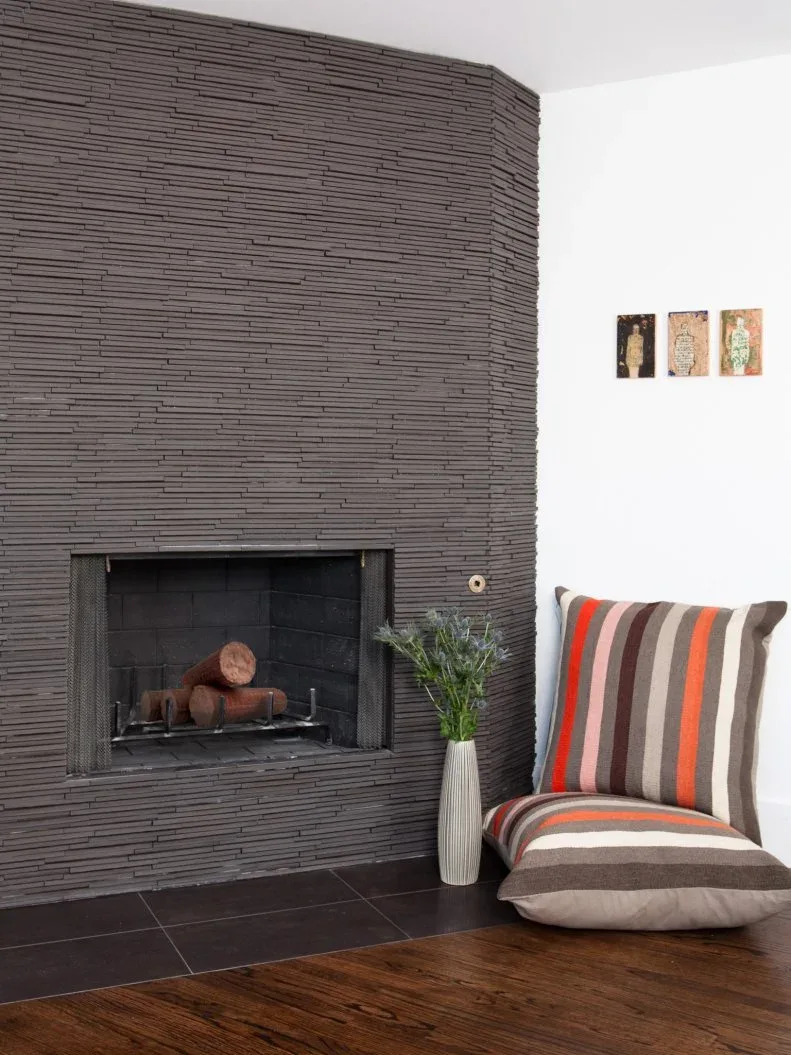
Build Texture With Narrow Dark Horizontal Lines
 SaveSupport Non AI Creator
Image credit: Photo: Photo Designs by Odessa. From: Regan Baker
Narrow horizontal lines cover this tall dark gray fireplace wall, giving its otherwise simple shape a layered texture. A black opening and dark hearth blend into the lower portion, while a striped floor cushion adds a warm note at the side. This example is useful for a room that needs a substantial accent without a busy color combination. The texture supplies interest even when the fireplace itself is not operating.
Check the actual cladding material and its installation requirements before choosing a similar layered surface. Recessed joints can collect dust, so ask how they should be cleaned without damaging the finish. Keep the hearth available for its intended purpose. A cushion beside a fireplace is a styling detail to relocate whenever the appliance’s clearances require it; do not use a photograph to judge safe placement of fabric or other combustible objects.
IDEA 13 / 22
Keep Brick Visible in a Bedroom
 SaveSupport Non AI Creator
Source: hgtv.com
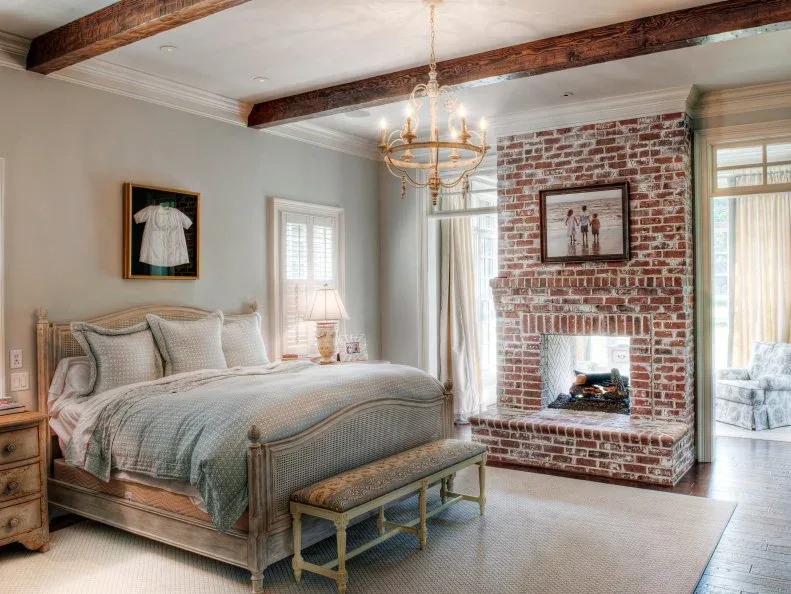
Red brick forms a tall central wall in this bedroom, with wood ceiling beams adding another warm texture above. Pale blue bedding and a light bench soften the stronger brick color in the foreground. The fireplace wall feels connected to the room’s architecture rather than added as a separate display. This photograph offers a bedroom-specific example of letting an existing textured chimney become the main accent while keeping the sleeping furniture comparatively quiet.
If your room has exposed brick, have its condition and the fireplace assessed before making cosmetic changes. Identify an appropriate cleaning method rather than using a strong general-purpose product on an unknown surface. Position bedding, upholstered furniture and the bench according to the appliance’s instructions, allowing ordinary access around the bed. Test any adjoining paint sample beside the brick so the warmer wall does not make the rest of the room look unexpectedly cold.
IDEA 14 / 22
Pair Pale Herringbone With a Navy Side Wall
 SaveSupport Non AI Creator
Image credit: Photo: Chipper Hatter. From: Corine Maggio
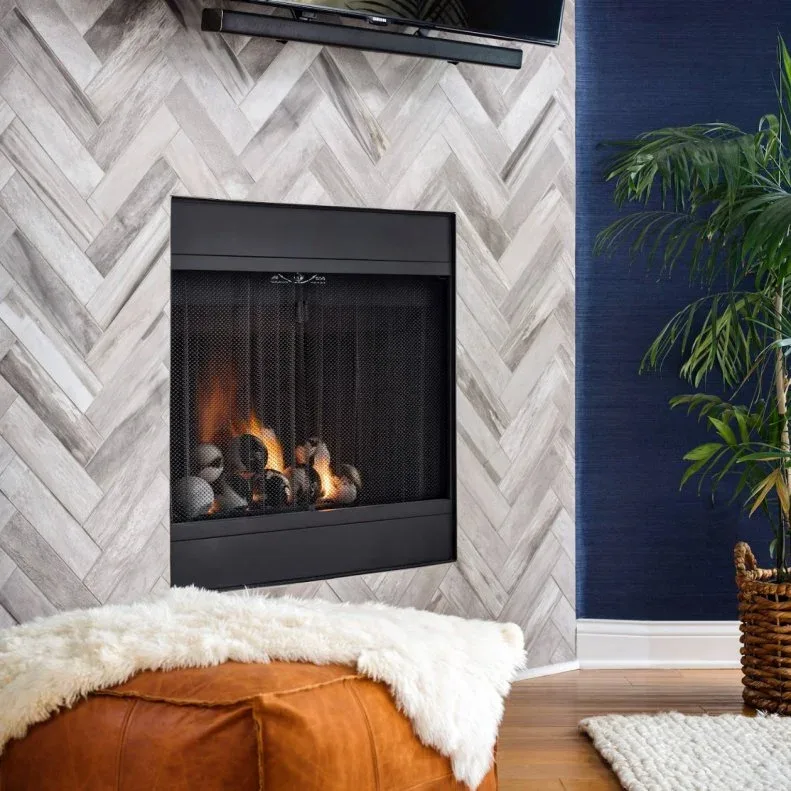
A pale herringbone pattern climbs the fireplace wall beside a deep navy side wall. The dark opening interrupts the angled repeat, while the neighboring color makes the light tiles more noticeable. An upholstered footstool and plant basket soften the foreground. This photograph is useful for combining a patterned focal surface with a plain colored wall, giving each finish a distinct role instead of competing with several different tile patterns.
Lay out enough tiles to judge the herringbone direction and its cuts around the opening before installation. Test the navy beside the tile and grout under evening light as well as daylight. Confirm the full finishing system is appropriate for the fireplace. Place the footstool, basket and textiles outside the required operating clearances, and preserve access to the hearth for cleaning rather than treating it as an extension of the seating group.
IDEA 15 / 22
Use Fine Stripes on a Tall Fireplace Face
 SaveSupport Non AI Creator
Image credit: Photo: Emily Minton Redfield. From: Duet Design Group
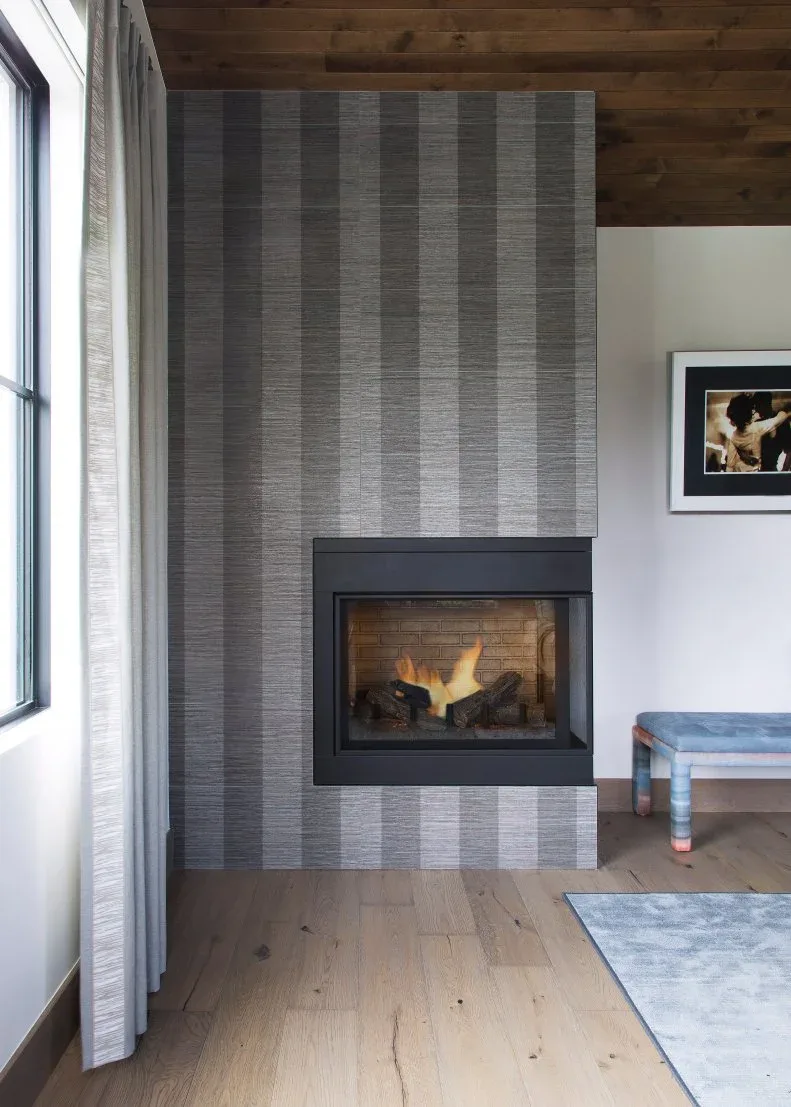
Fine pale and dark stripes cover the tall fireplace face in this room. The linear surface creates a graphic accent below a wood ceiling, with the black opening providing a broader contrasting rectangle. A blue bench introduces color at the side without interrupting the central wall. This example is helpful when you want a repeated line rather than a large scenic pattern, especially in a room with strong horizontal furniture shapes.
Identify the actual surface product before considering a similar effect; the photograph does not establish whether a finish is suitable near heat. Have the installer confirm the complete assembly and required separation from the opening. Compare a larger striped sample from normal seating distance, where fine lines can read differently. Keep neighboring finishes simpler, and choose a cleaning approach suited to the product rather than assuming all striped wall treatments behave like paint.
IDEA 16 / 22
Reflect the Room Above a Pale Surround
 SaveSupport Non AI Creator
Image credit: From: Jamie Herzlinger
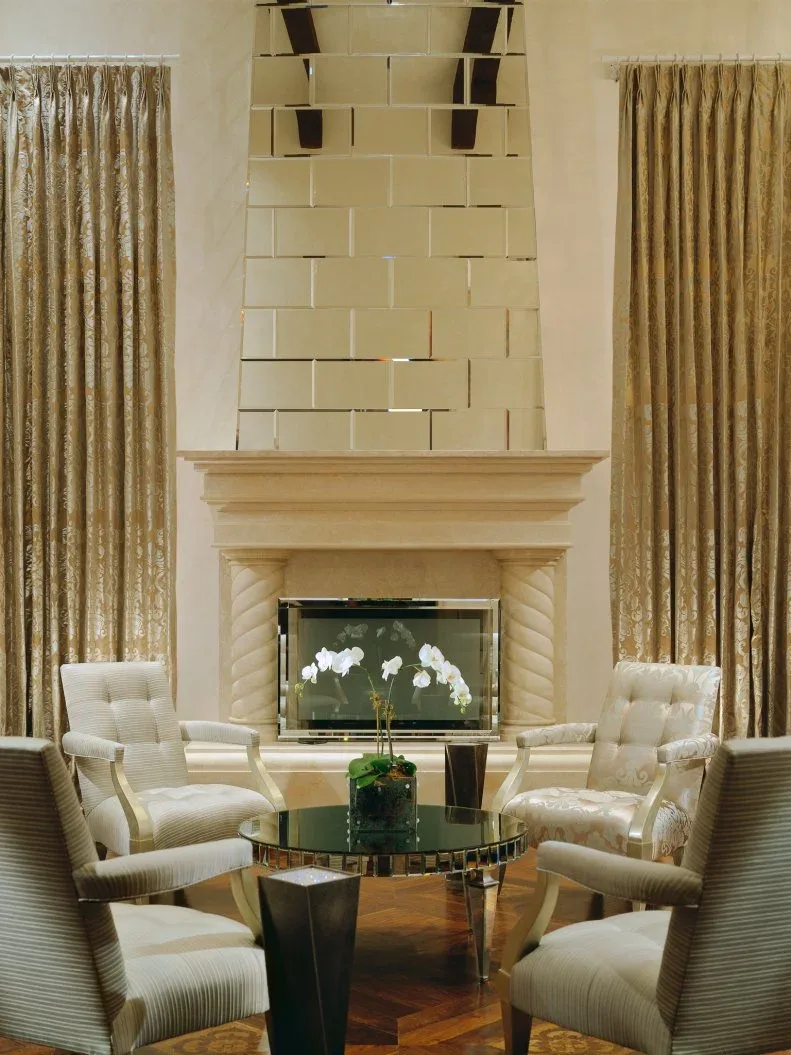
Rectangular mirrored pieces cover the wall above this pale carved fireplace surround. Their joints create a subtle grid while reflected curtains and room details add changing color. White chairs and a dark table keep the foreground clearly outlined. The photograph offers a reflective accent wall for someone who enjoys a more decorative interior, showing how the upper wall can contribute interest without adding several individual framed pictures above the mantel.
Review the reflection from the main seats before specifying mirror panels; the wall will repeat whatever stands opposite it. Fireplace locations need suitable glazing, fixings and heat-related detailing confirmed by a qualified professional. Do not assume ordinary decorative mirrors and adhesive are appropriate. Plan access for cleaning each panel and keep the mantel display restrained so reflections do not multiply an already crowded collection of accessories.
IDEA 17 / 22
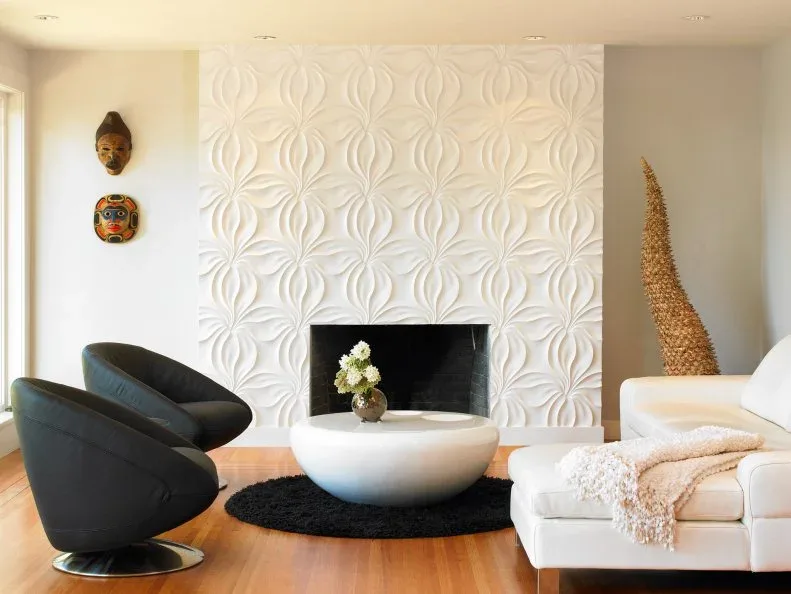
Let a Raised White Pattern Supply the Contrast
 SaveSupport Non AI Creator
Image credit: Photo: Works Photography; Design By: The Sky is the Limit Design
A raised repeating white pattern covers this fireplace wall, creating contrast through shadows instead of a strong color. The dark opening and black chairs make the relief easier to read, while a pale sofa and round white table continue the quiet background. This photograph is useful for a light room that needs a focal surface without losing its pale appearance. The wall’s texture remains the decorative feature even with very few accessories.
Look at a sample under side lighting to see how clearly the raised pattern appears in your room. Ask about the material, its heat suitability and an approved cleaning method before choosing the installation. Deep relief can require more careful dusting than a flat finish. Keep nearby shapes relatively simple, and consider whether your usual lamps will reveal the texture or leave the whole wall looking flatter than expected.
PART 04
Let the Wall Follow the Room’s Architecture
IDEA 18 / 22
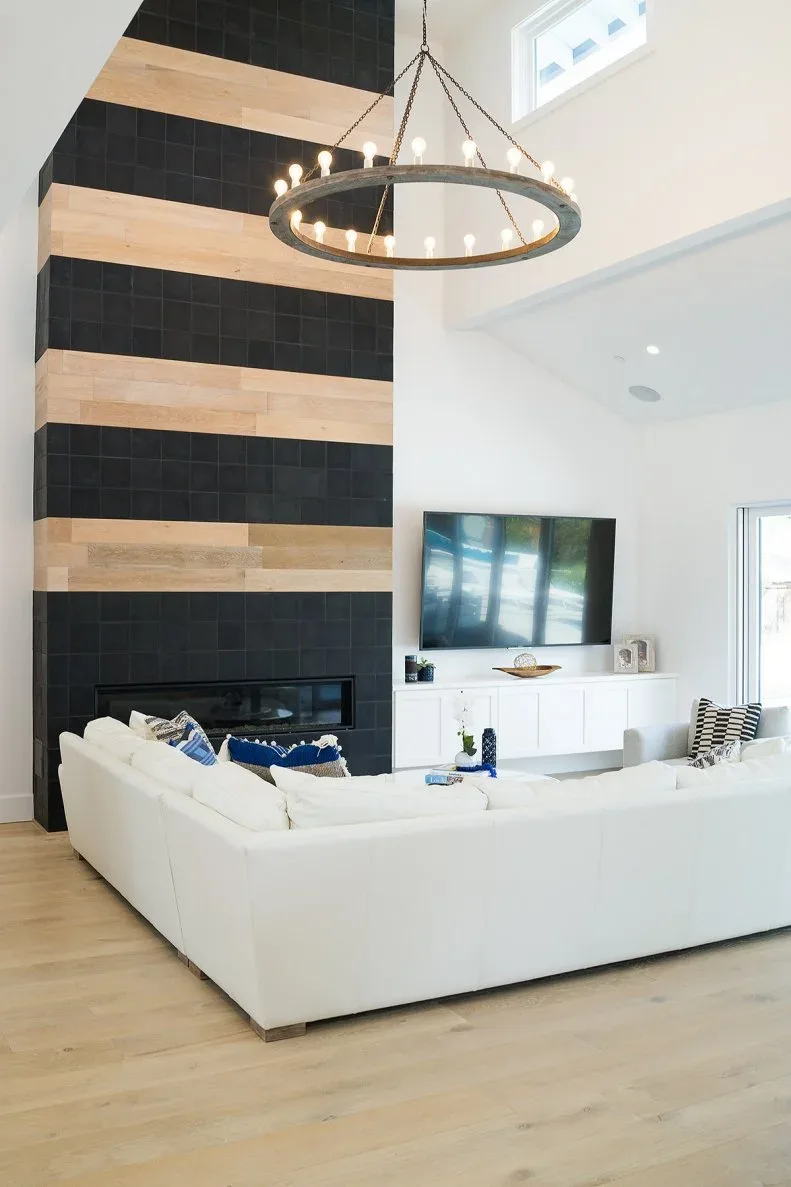
Break Up a Tall Wall With Broad Bands
 SaveSupport Non AI Creator
Image credit: Photo: Lane Dittoe Photography. From: Anthology Interiors
Broad black and warm pale bands divide this tall fireplace chimney into several horizontal sections. The pattern makes the wall’s height noticeable without relying on a large picture above the opening. A white sofa curves through the foreground and the television occupies an adjoining pale wall. This arrangement offers a graphic accent for a high-ceilinged room, where wide bands can be easier to read from across the space than a very small repeat.
Plan the band widths on a full elevation before selecting finishes, checking their relationship to the opening and ceiling. Establish the actual materials and appliance clearances with the installer rather than copying the photograph’s apparent wood-like sections near heat. Consider how seams and transitions will be cleaned. Keep adjoining walls quieter so the stripes remain legible, and check their appearance from the main seating area before approving the final layout.
IDEA 19 / 22
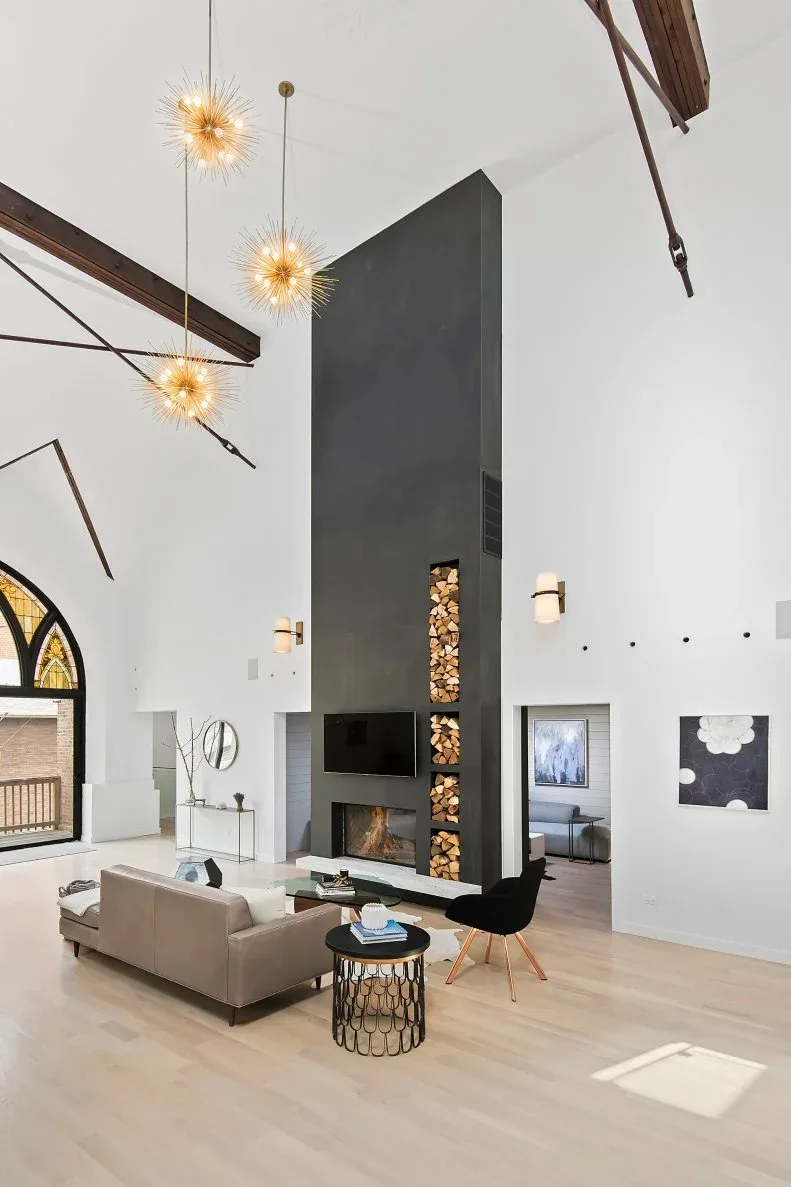
Make a Charcoal Column Follow the Roof Line
 SaveSupport Non AI Creator
Image credit: Photo: Jim Tschetter. From: Linc Thelen Design
A charcoal column rises toward the pitched roof in this bright room, with its upper edge following the ceiling’s angle. A narrow recess of stacked logs adds a contrasting small-scale pattern beside the fireplace and television. Pale seating and surrounding white walls keep the tall shape distinct. The photograph shows how a simple dark surface can highlight architecture, especially when there is enough uninterrupted wall height to let the column stand out.
Evaluate a dark sample from the entrance as well as the seating area, considering how much of the column remains visible above furniture. Confirm the finish, recess construction and appliance clearances with a qualified installer. Log storage needs an appropriate location and access; a decorative photograph is not a safety specification. Plan any television heat limits and service routes separately, and keep the floor around the column easy to clean.
IDEA 20 / 22
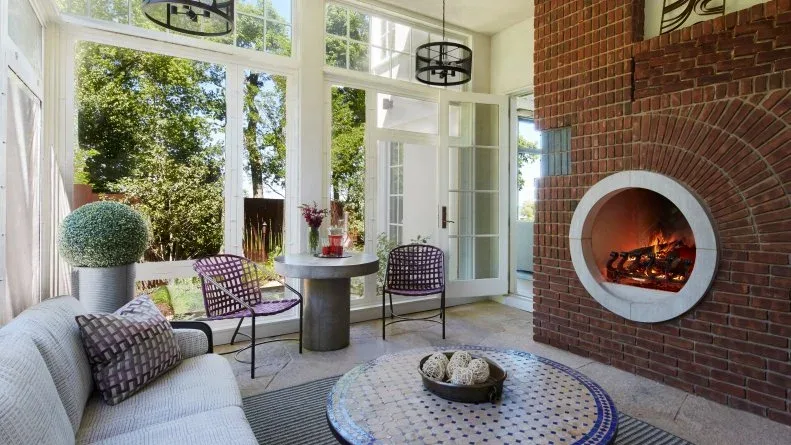
Use a Round Opening Against Red Brick
 SaveSupport Non AI Creator
Image credit: Photo: Werner Straube Photo. From: Morgante Wilson Architects
A round pale-edged fireplace opening contrasts with the straight courses of this red brick wall. Tall nearby windows keep the sitting area bright, while a gray sofa and circular table repeat softer shapes below. The photograph offers an accent wall based on the relationship between a familiar texture and an unusual opening. The brick can stay visually simple because the circular frame already gives the central feature a distinctive outline.
A round fireplace opening is an appliance and construction choice, so discuss feasibility with a qualified installer before treating it as a cosmetic alteration. If retaining an existing brick wall, inspect its condition and use cleaning guidance suited to it. Let the circular detail remain clear by limiting nearby wall ornaments. Position the sofa and table for comfortable movement while observing the fireplace’s required clearances, rather than matching their photographed distances.
IDEA 21 / 22
Keep Pale Horizontal Cladding Uninterrupted
 SaveSupport Non AI Creator
Image credit: Photo: Mark Roskams. From: Michele Bitter
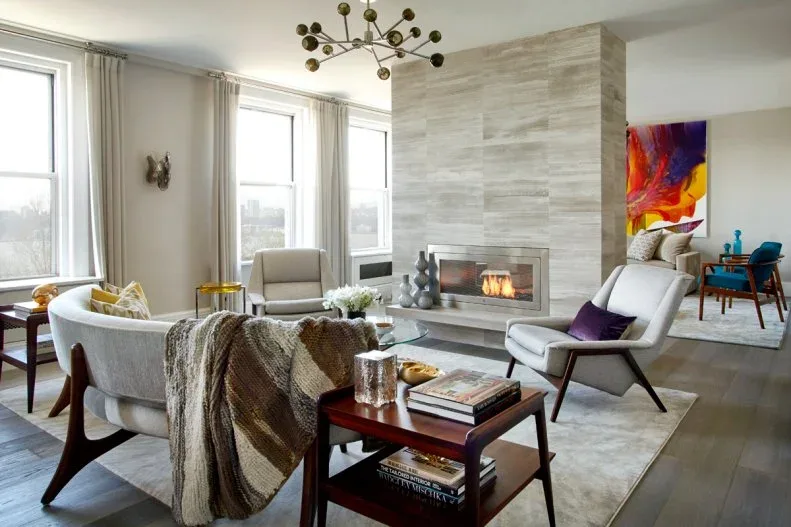
Pale horizontal cladding covers a broad chimney wall in this sitting room. The layered tones add texture while staying close to the light curtains and upholstery, with the glazed fireplace supplying a smaller dark contrast below. A curved sofa and lounge chair face the wall without covering its upper portion. This example is useful for a gentle accent: the surface stands apart through its structure rather than a highly saturated color.
Compare the cladding sample with your curtains and floor so their pale tones feel compatible under everyday lighting. Confirm the actual material, wall support and appliance-compatible finishing system before installation. Ask how joints should be dusted and cleaned, especially if the surface has deep ledges. Keep artwork elsewhere if you want the layered finish to remain uninterrupted, and position chairs to allow cleaning access around the fireplace and its lower edges.
IDEA 22 / 22
Bring a Green Fireplace Wall Into a Study
 SaveSupport Non AI Creator
Image credit: Photo: Paige Rumore Photography. From: Vernich Interiors
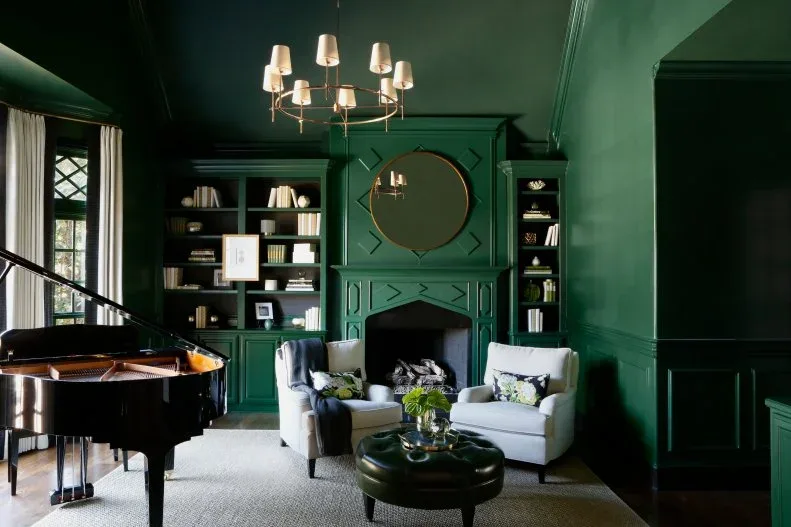
Deep green links the fireplace wall, adjoining bookcases and ceiling in this study. Decorative panel lines make the chimney breast distinct within that shared color, while a round mirror and pale chairs add contrast. A black piano contributes another dark shape at the side. The photograph offers an immersive variation on a fireplace accent wall: the focal point comes from its architectural detail rather than from painting the chimney a different color.
Test the green under task lighting and evening lamps before extending it overhead. Keep reading and working areas sufficiently lit instead of relying on the pale furniture to brighten the room. Identify the mantel and wall materials before choosing preparation and coatings, following the appliance’s requirements. Leave shelves manageable for dusting and maintain access around the piano and chairs so the strong color does not encourage a more crowded layout.
BRING IT ALL TOGETHER
Choose the Finish From Your Everyday View
Compare a large sample from the seats you actually use, beside the floor, upholstery and adjoining walls. Decide whether color, texture or height should be the main feature before adding mirrors or pictures. A fireplace wall usually needs fewer accessories once its surface already carries a strong pattern.
Confirm materials, fixings, appliance clearances and cleaning requirements before installation. Keep soft furnishings and decorative objects in appropriate locations when the fire operates. If a television shares the wall, check its separate mounting and temperature limits so the finished arrangement remains practical as well as attractive.