A green couch can provide the main color in a living room or connect with a more patterned arrangement. Compare the shade with the walls and furniture you are keeping, then choose the sofa around actual comfort and daily use. Olive, pale green, yellow-green and patterned green fabrics create noticeably different seating groups.
These rooms focus on the couch and the pieces within reach of it: cushions, tables, lamps and neighboring chairs. Some use solid upholstery; others introduce green through a fabric pattern. Check seat depth, walking routes and cleaning guidance before buying, and leave enough exposed seating for the room to work beyond a carefully arranged display.
PART 01
Choose the green couch around everyday seating
IDEA 01 / 20
Make a Bright Green Couch the Main Accent
 SaveSupport Non AI Creator
Source: www.housebeautiful.com
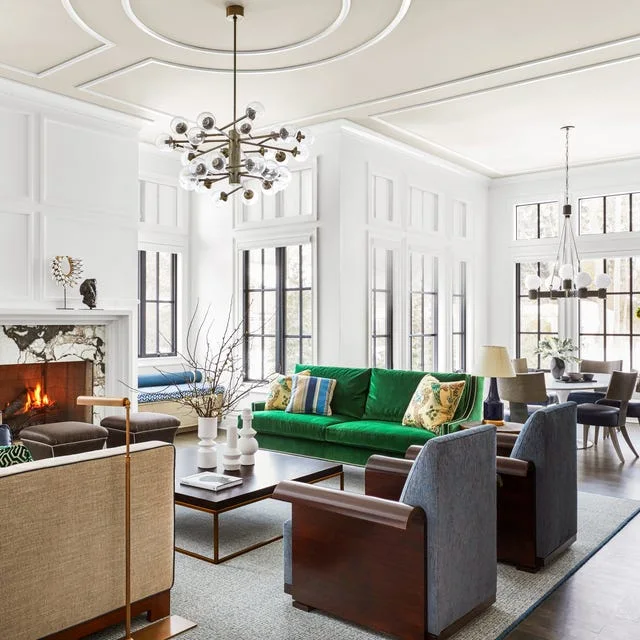
The green sofa provides the strongest furniture color in a room with pale walls and a light central table. Darker chairs give the surrounding seats clear outlines, while patterned cushions add smaller blue and warm accents. The arrangement leaves the couch distinct without asking the wall or every other chair to repeat its green.
Choose the couch around the people who will use it, checking seat depth and comfort before settling on the color. Keep the surrounding chairs within conversational reach while leaving a useful route through the room. Compare upholstery samples with the rug and table finish, since the larger green seat will remain prominent even with only a few cushions.
IDEA 02 / 20
Give a Deep Green Corner Couch Warm Surroundings
 SaveSupport Non AI Creator
Image credit: STUDIO HAHN. Design: Studio Calvagno
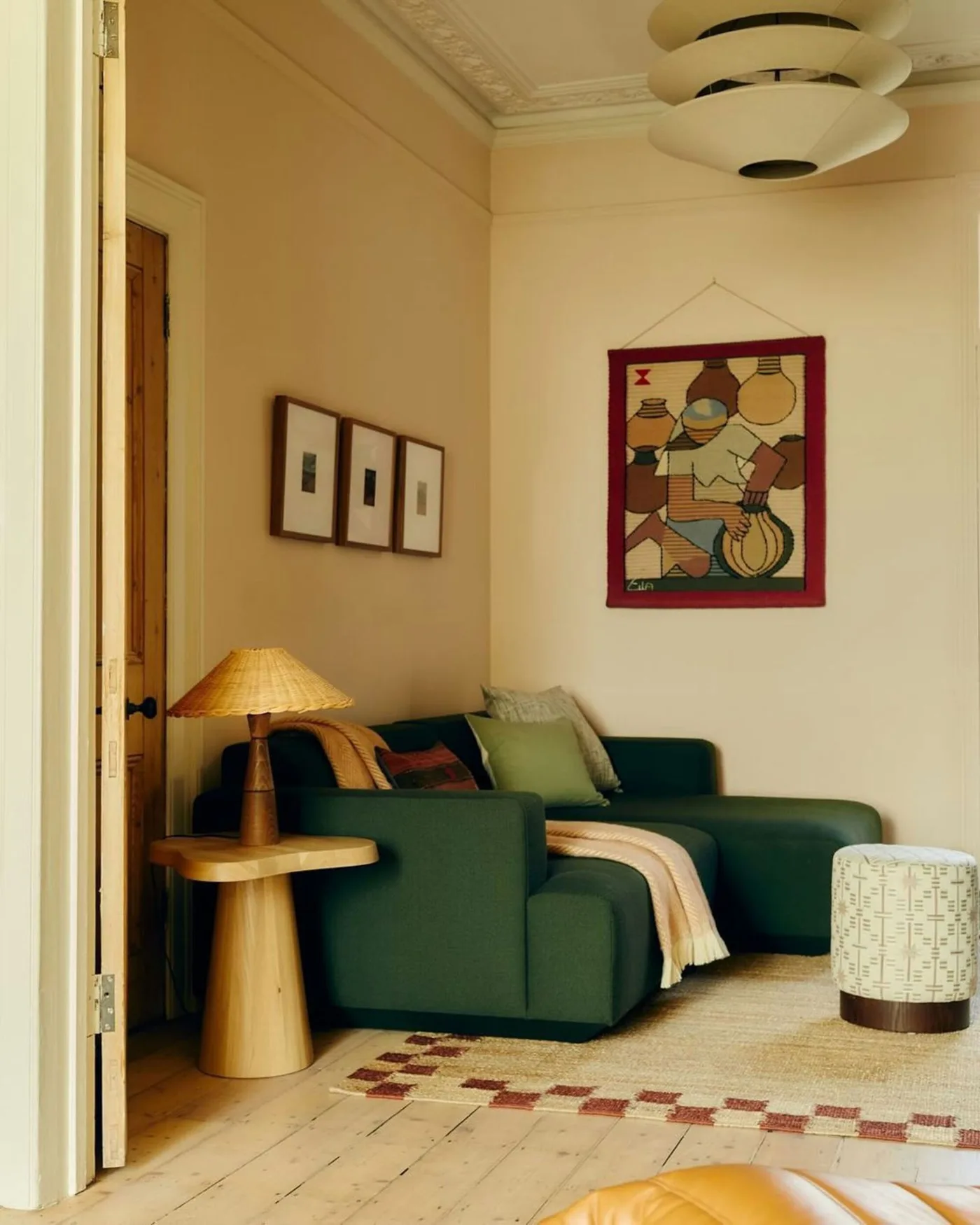
The deep green couch sits against a warm pale wall, making its darker upholstered outline clear beneath the framed pictures. A wooden side table and shaded lamp add warmth at the side, while a checked rug border repeats some of the surrounding brown tones. The smaller pale footstool provides a lighter movable piece.
Measure the corner section against the route into the room, allowing practical space beside its projecting seat. A side table should remain reachable from the seat used most often, not simply fill the available gap. Choose a lamp with useful reading light and keep its cable clear of the route behind or beside the couch.
IDEA 03 / 20
Let a Pale Green Couch Sit Near Leaf Curtains
 SaveSupport Non AI Creator
Image credit: Future PLC/Carolyn Barber
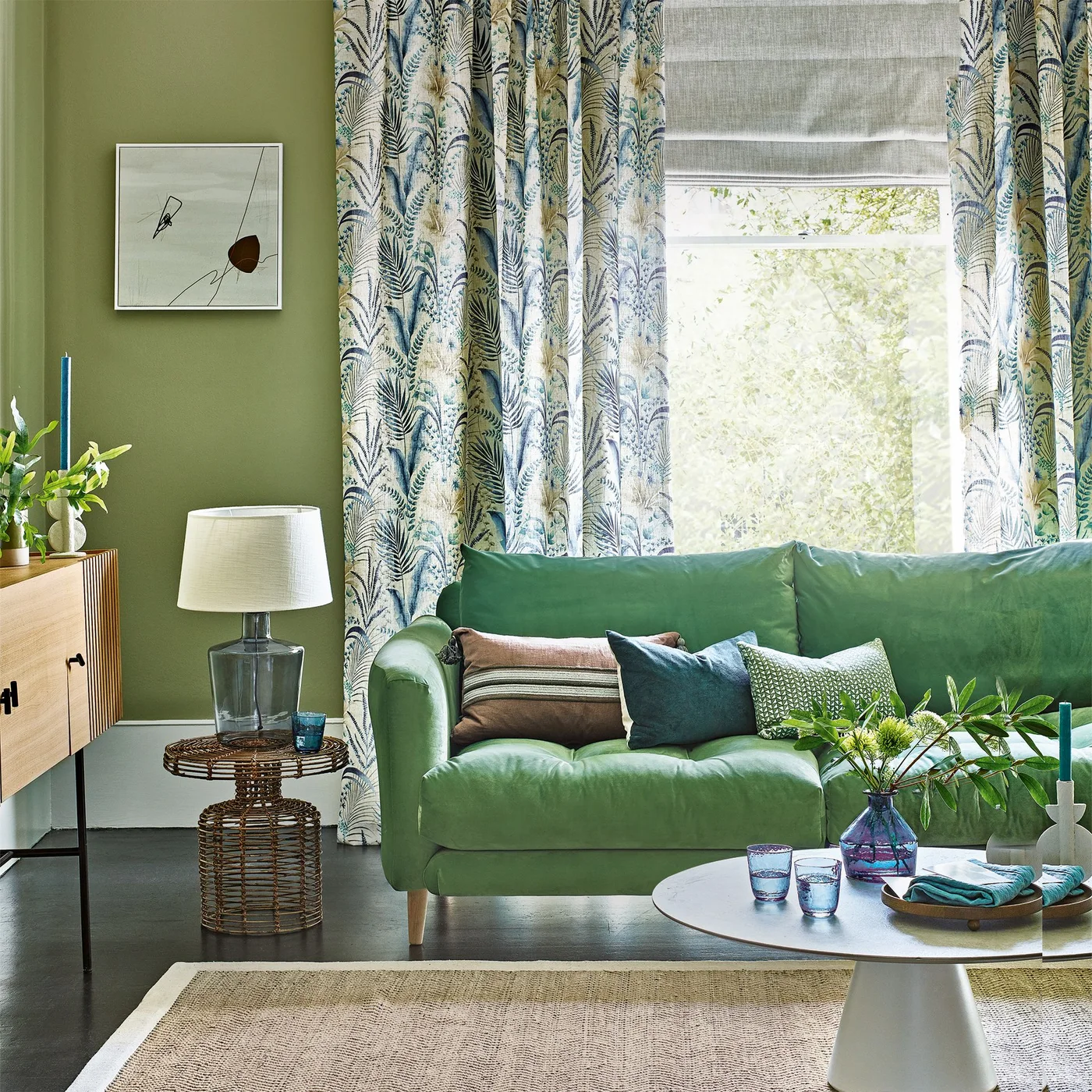
The pale green sofa relates to the leafy curtains without taking on their larger pattern. Its solid fabric gives the cushion arrangement a quieter background, while the woven side table adds texture near the arm. A pale oval coffee table separates the stronger green seat from the darker flooring beneath.
Judge a pale upholstery sample in the light beside your window before ordering the full couch. Check whether loose cushions reduce useful sitting depth, and follow the fabric’s cleaning instructions when choosing covers. A lighter table can keep the central arrangement visually quieter, but its size still needs to suit the distance to each seat.
IDEA 04 / 20
Keep Green Seating Clear of Dark Storage
 SaveSupport Non AI Creator
Image credit: Future PLC / Caroline Mardon
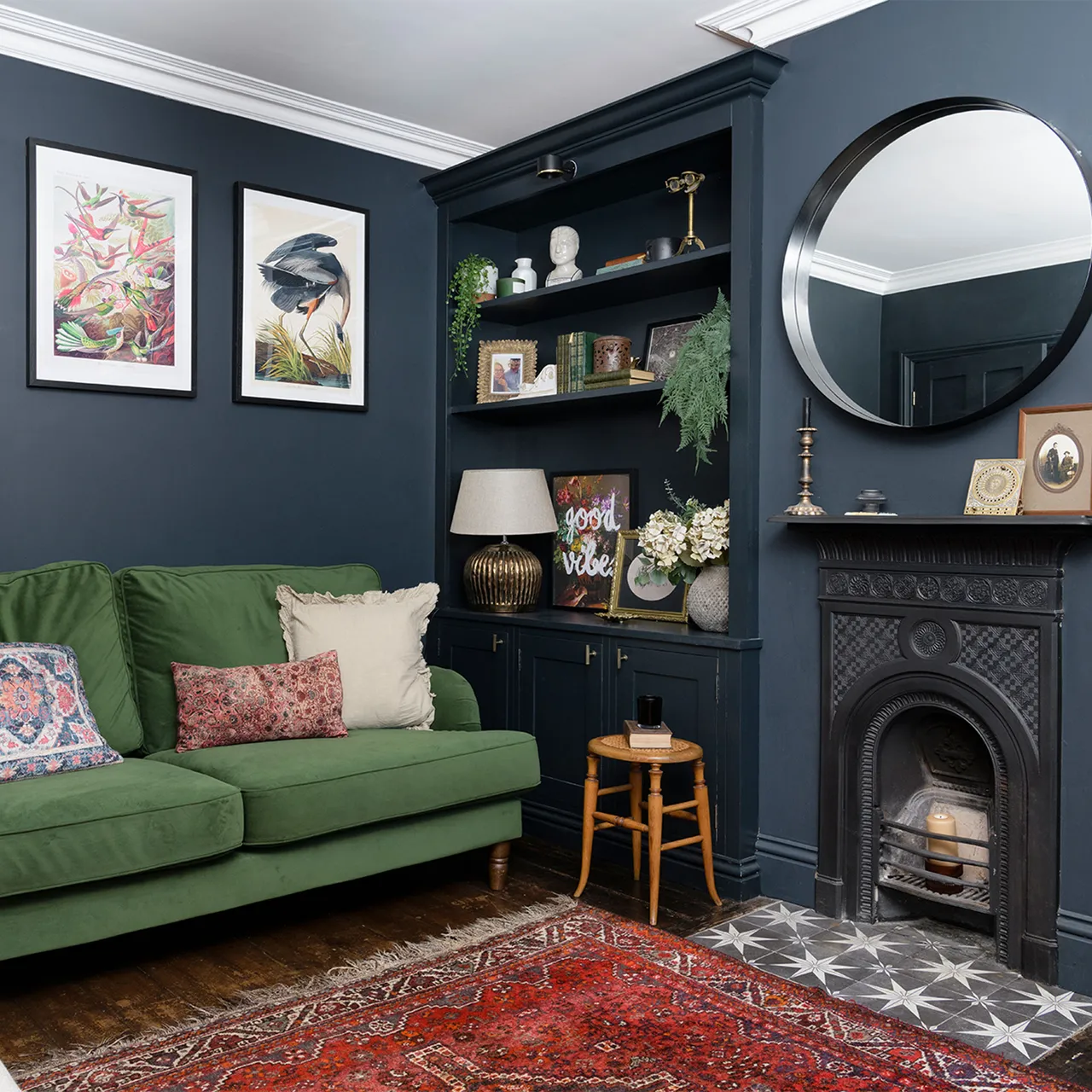
The green couch creates a softer-colored seating area against the darker walls and storage. Pale and pink patterned cushions provide lighter details on the seat, while a red rug adds a warmer pattern below. A small wooden stool supplies a compact surface between the couch and the fireplace.
Check that the couch leaves room to open the lower storage and use the side surface comfortably. Place regularly handled books where someone can reach them without leaning over a seated person. Apartment living room ideas compare smaller seating arrangements when you need a colored sofa and useful storage to share a limited footprint.
IDEA 05 / 20
Keep a Compact Green Sofa Lightly Cushioned
 SaveSupport Non AI Creator
Image credit: Future PLC/Nathalie Priem
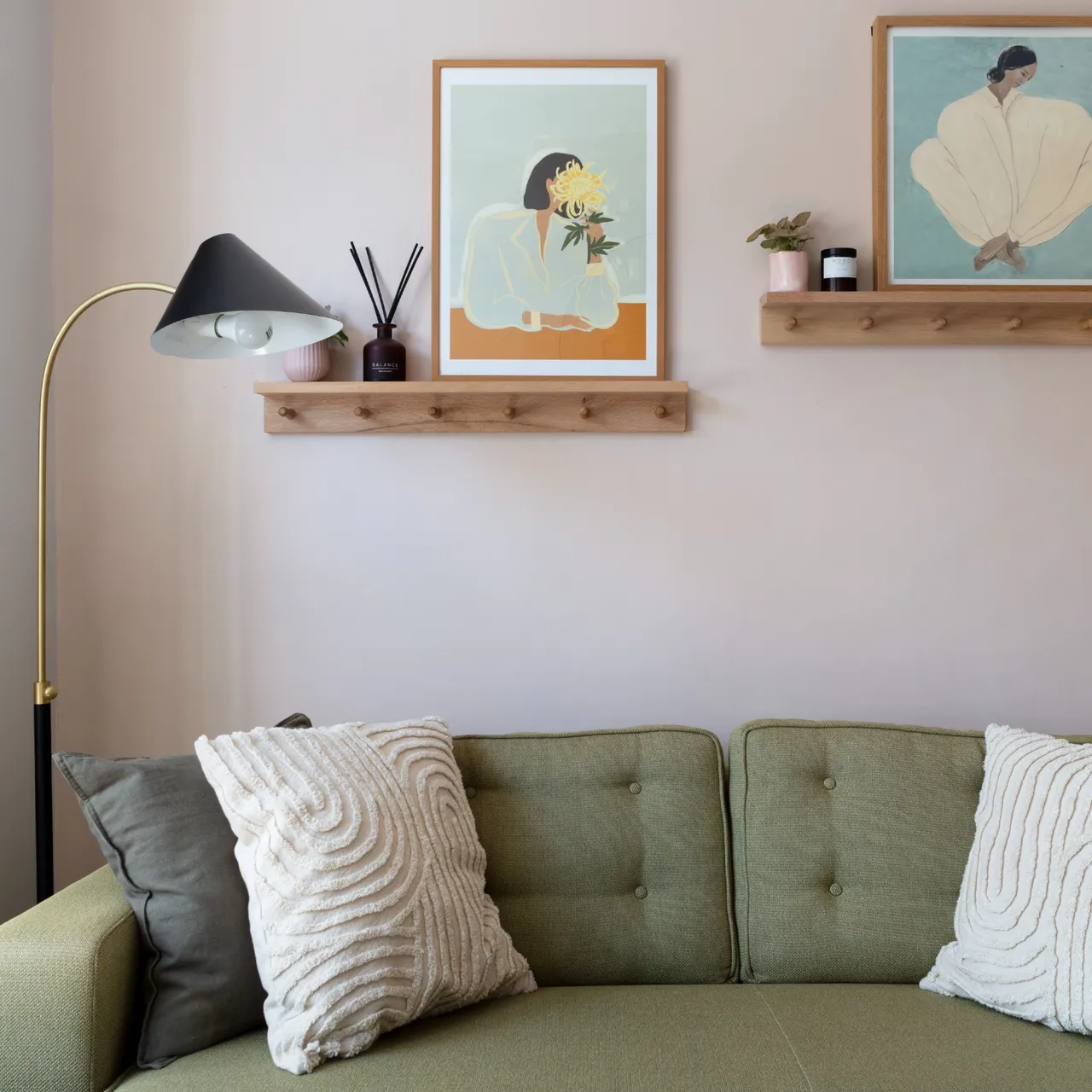
The muted green sofa provides the main colored surface beneath the two picture shelves. Pale textured cushions add contrast at each end without hiding the buttoned back completely. Wooden shelf fronts and a warm metal lamp stem give the simpler pale wall a few warmer lines around the couch.
Try the sofa with the cushions you expect to use, checking that two people can still sit comfortably. Secure shelves and pictures appropriately above seating and keep projecting edges out of head space. A floor lamp should light the seat without requiring an awkward reach past the couch arm or leaving its base in the walking route.
PART 02
Pair the couch with warmer and patterned details
IDEA 06 / 20
Mix a Small Green Couch with Botanical Details
 SaveSupport Non AI Creator
Image credit: Future PLC/Carolyn Barker
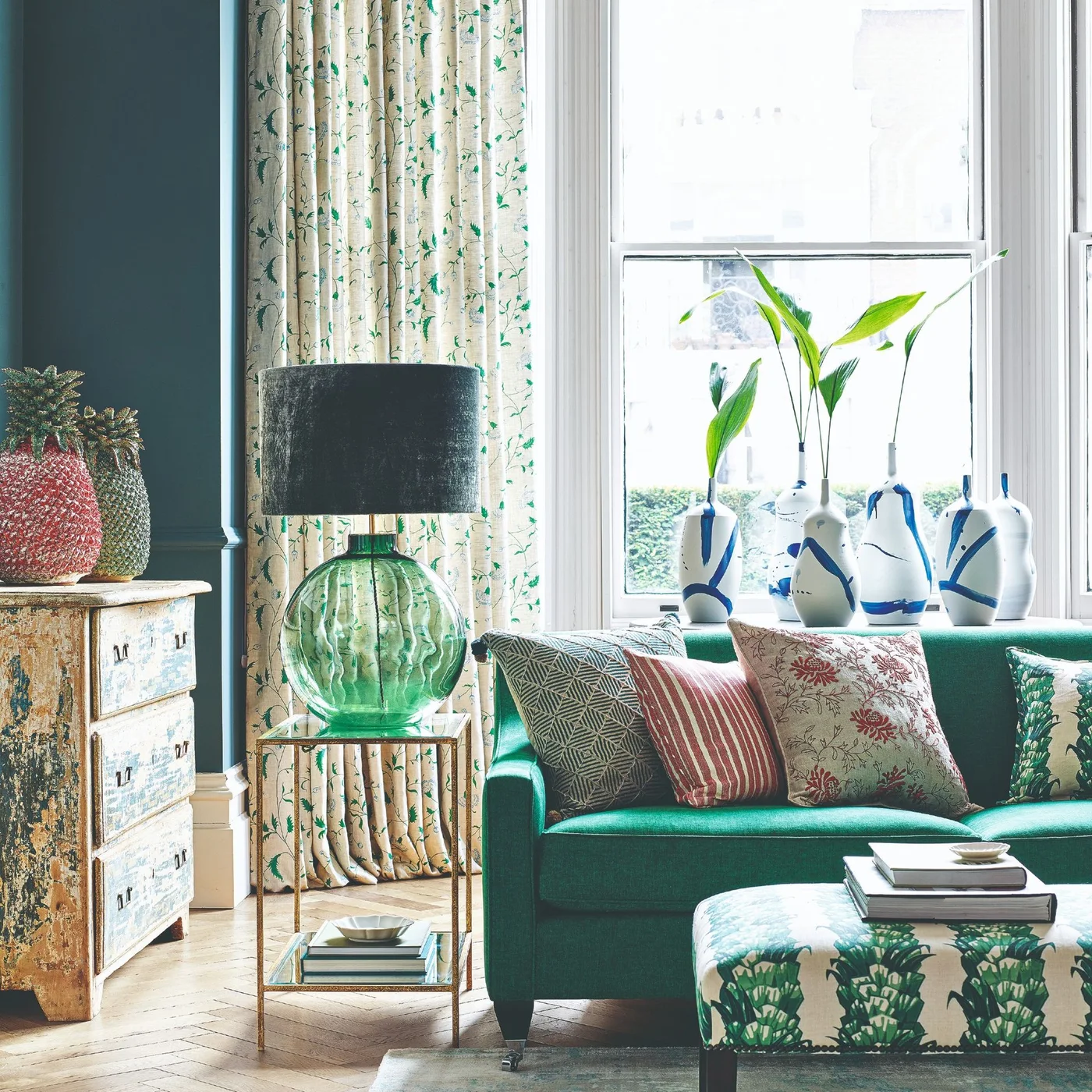
The green couch has a solid upholstered surface, allowing the curtains and footstool to supply the larger patterns. A green glass lamp repeats the seat color in a different form beside the arm. Pale areas in the curtains and cushions break up the stronger greens near the window.
Choose which patterned piece should draw attention before adding several more cushions. Keep a useful surface within reach of the couch even when the footstool is occupied. Check that window access and curtain movement remain easy, and compare the couch fabric with the lamp shade under evening light rather than relying only on the bright photographed setting.
IDEA 07 / 20
Warm an Olive Sofa with Pink and Red
 SaveSupport Non AI Creator
Image credit: Future PLC/Anna Stathaki
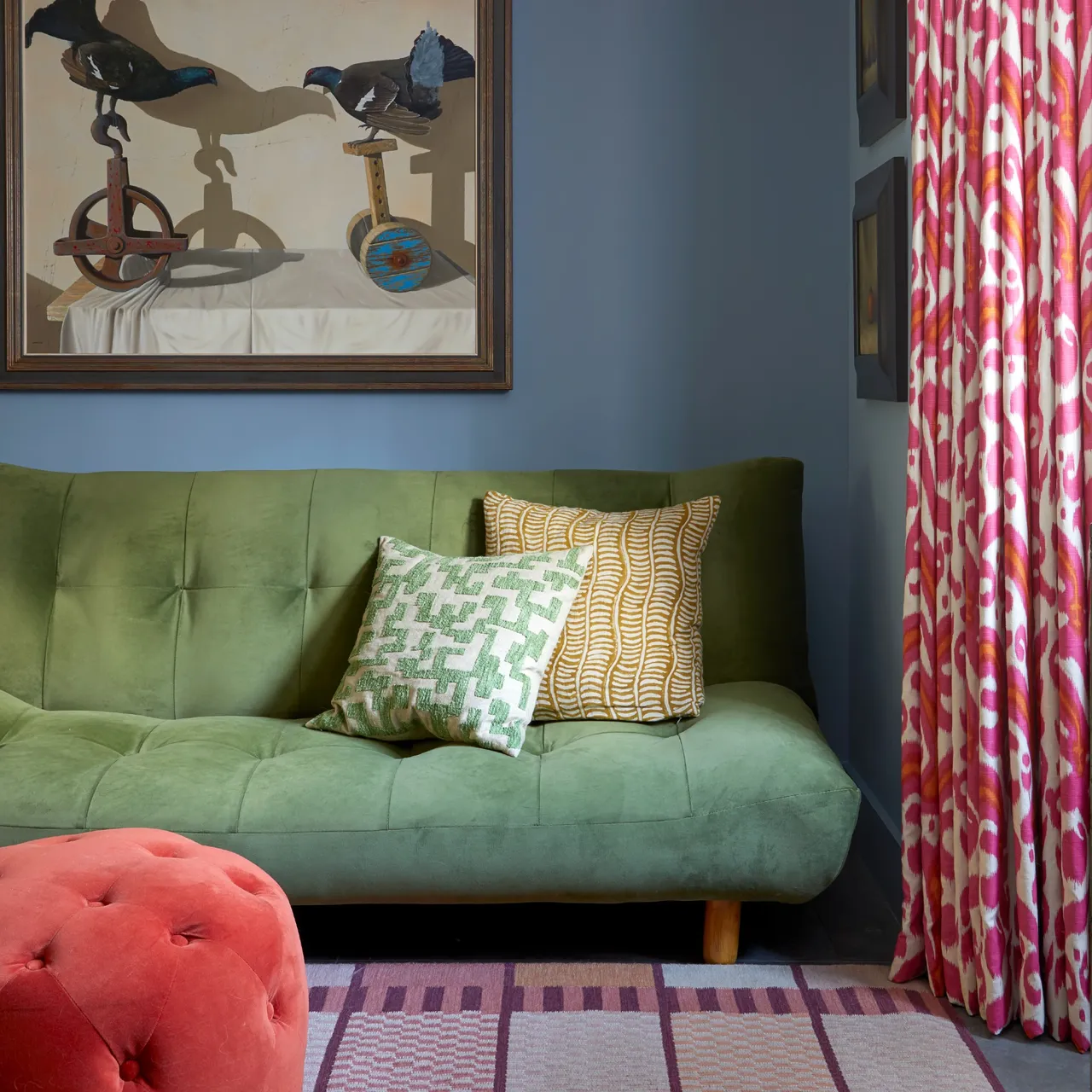
The olive sofa provides a solid background for the smaller patterned cushions, while the pink curtain introduces a taller warm pattern at the side. A red footstool brings another warm accent below the seat. Blue walls and the framed artwork keep the room’s color combination varied without changing the couch fabric.
Compare the full curtain repeat with the couch sample before selecting a similarly bright combination. Choose the footstool around leg comfort and circulation, allowing enough room to stand up from the sofa. If you prefer a quieter version, retain the olive couch and one warm textile rather than adding all the photographed accent colors.
IDEA 08 / 20
Use Geometric Cushions on a Green Couch
 SaveSupport Non AI Creator
Image credit: Future PLC
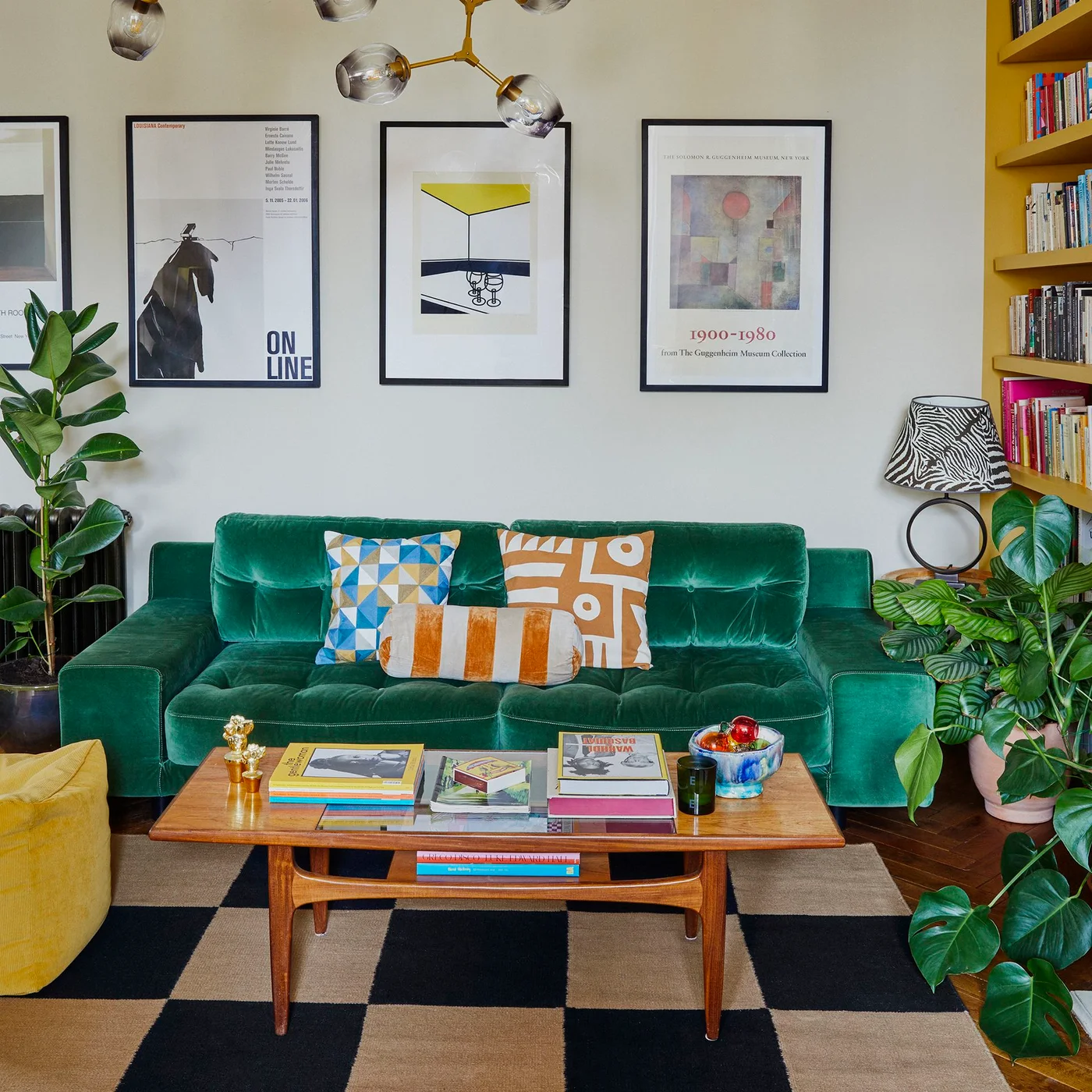
The green couch remains the largest upholstered color, while geometric cushions add blue, white and warm orange details across its back. Framed posters use dark outlines above, and the yellow bookcase provides another large accent beside the seat. The wooden table and broad checked rug organize the surrounding shapes.
Leave enough exposed back and seat for the couch to remain comfortable, especially if its upholstery already has buttoned details. Select a few cushion patterns that share colors rather than matching every motif. Eclectic living room ideas show more ways to combine collected furnishings while keeping the seating and useful surfaces easy to use.
IDEA 09 / 20
Put Yellow-Green Upholstery Against Pink
 SaveSupport Non AI Creator
Source: realhomes.com
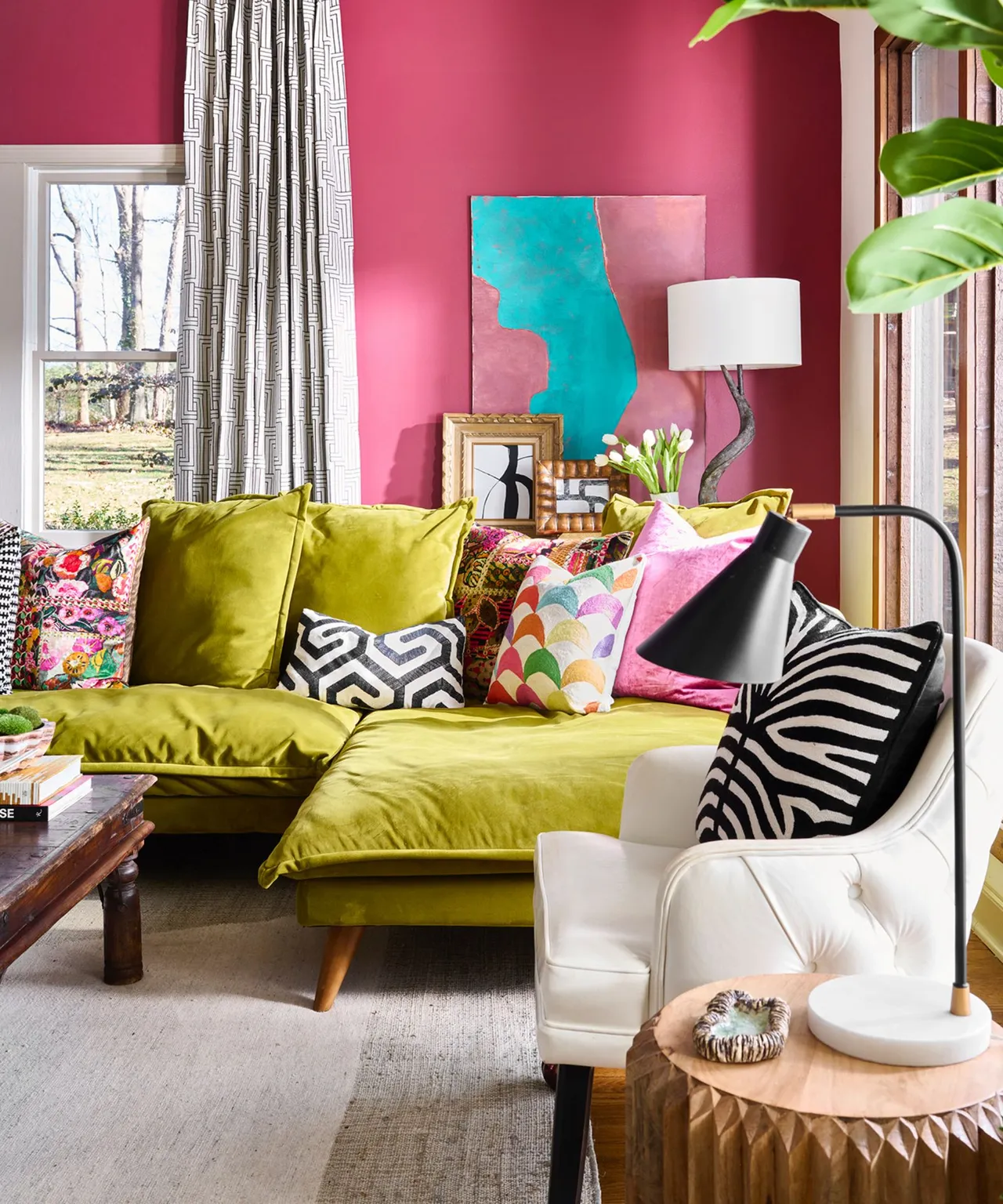
The yellow-green couch contrasts strongly with the pink wall, giving the seat a distinct bright outline. Mixed cushions repeat pink, green and black-and-white details at smaller scales. The pale armchair adds a quieter upholstered area beside the stronger couch, while the window curtains supply a narrow repeated pattern.
Place the actual wall and upholstery samples beside each other before buying a couch in a strong yellow-green shade. Keep some cushions movable so the seat remains useful beyond the photographed display. A plainer nearby chair can reduce the amount of competing color while still providing another comfortable place to sit.
IDEA 10 / 20
Let a Green Sectional Face a Colorful Rug
 SaveSupport Non AI Creator
Source: domino.com
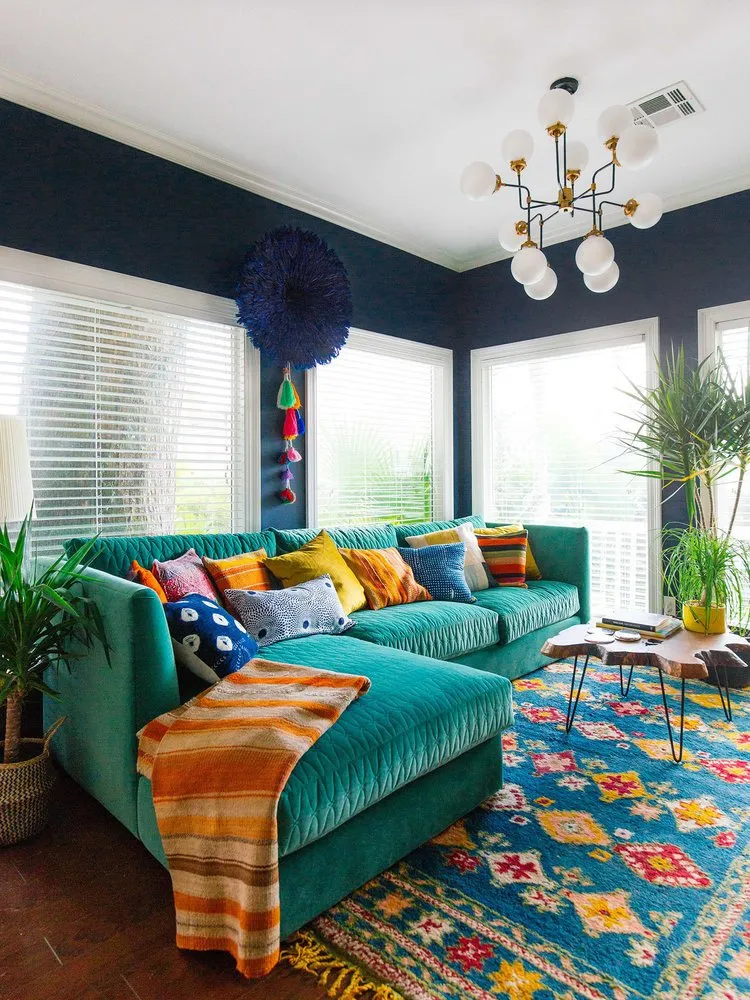
The green sectional defines the larger seating area beside the windows, with warm yellow and orange cushions creating smaller contrasts along its back. A colorful rug repeats those accents below. Dark upper walls and pale window blinds give the brighter upholstery a background with clearly separated lighter and darker areas.
Confirm that the projecting section suits how you enter and move around the room before ordering it. Position a movable table where each main seat can reach it without crossing the chaise. Keep the cushion collection manageable and check care requirements for the fabric, since the couch will receive more handling than the surrounding wall color.
PART 03
Give the larger seat useful surroundings
IDEA 11 / 20
Pair Ribbed Green Seating with Warm Cushions
 SaveSupport Non AI Creator
Source: realhomes.com
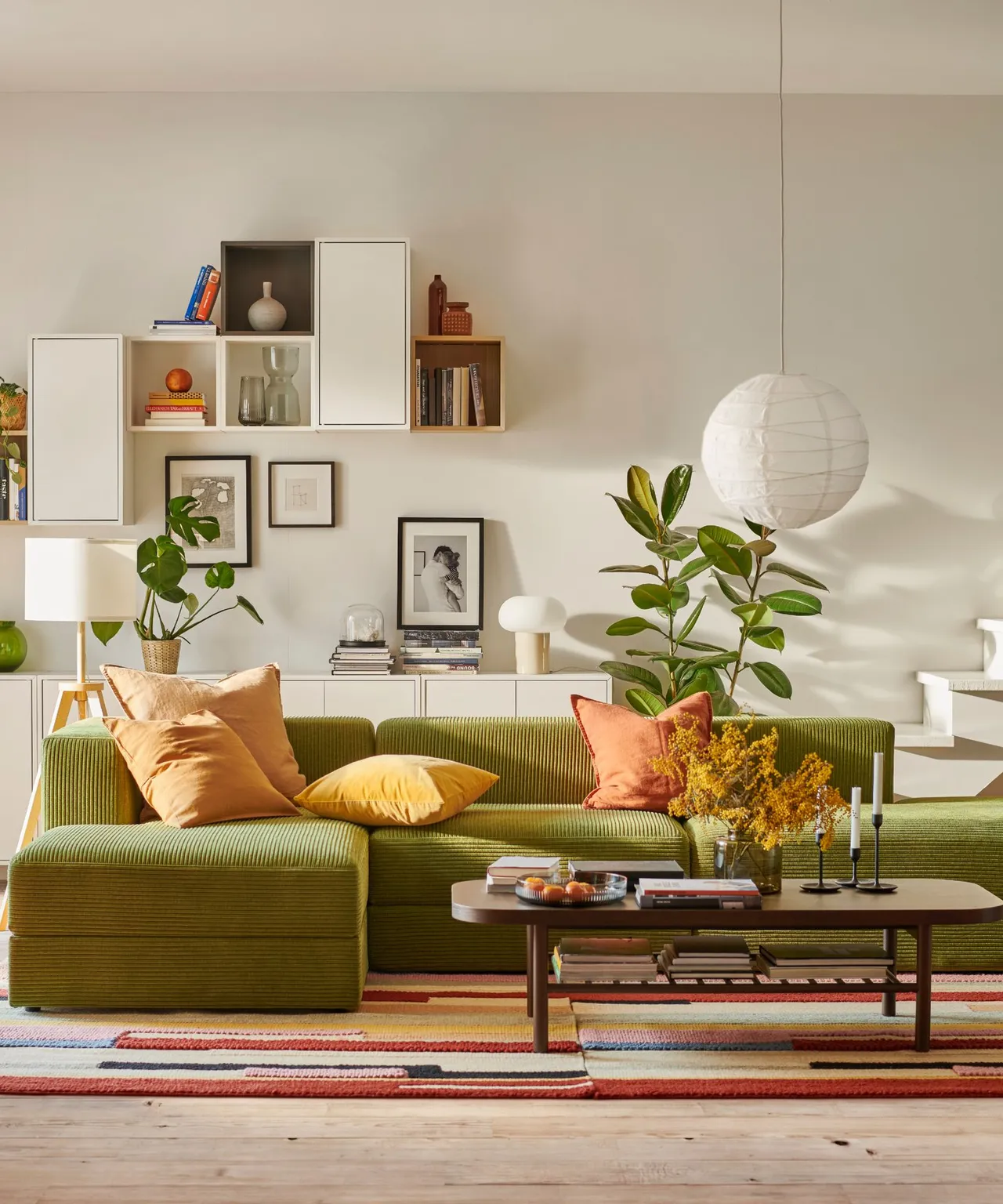
The ribbed green upholstery gives the sofa a repeated texture while its outline remains straightforward. Orange and yellow cushions add warmth across the seat, connecting with smaller objects around the shelving. Pale walls keep the couch prominent, and the wooden coffee table introduces a useful warmer surface in front.
Ask for upholstery care guidance for the exact fabric rather than assuming every ribbed finish cleans the same way. Check whether the sectional’s shape leaves easy access to the shelves behind it. Keep tabletop decoration compact enough to preserve space for everyday use, and make sure cushions do not occupy the full depth of the shorter seat.
IDEA 12 / 20
Give a Green Couch a Pale Screen Backdrop
 SaveSupport Non AI Creator
Image credit: Jessica Isaac
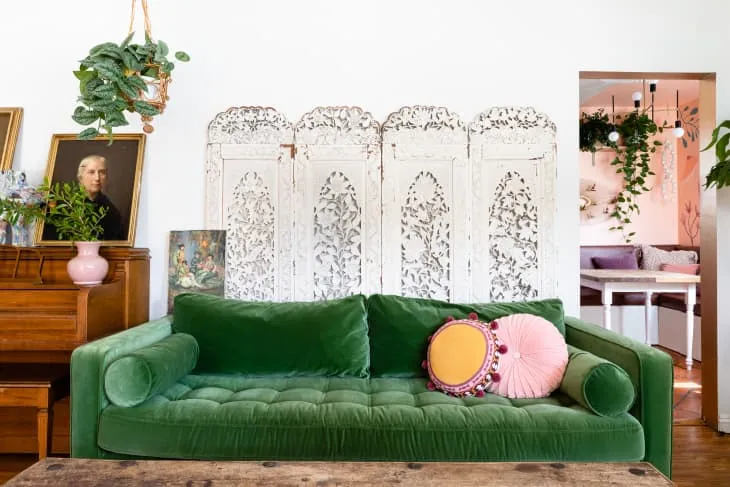
The pale folding screen provides a decorative background behind the green couch without adding another strong wall color. Tufting and round bolsters give the sofa its own repeated details, while pink cushions introduce warmth at one end. Nearby wooden furniture contrasts with the lighter screen and the softer upholstered surfaces.
Check the stability and placement of a folding screen behind seating, keeping it out of routes where it might be bumped. Choose a couch for actual seat support rather than tufting alone, and confirm that the bolsters leave useful space. Above couch wall decor ideas offer other ways to frame a green seat when a freestanding screen is impractical.
IDEA 13 / 20
Let a Slim Green Sofa Share a Tall Room
 SaveSupport Non AI Creator
Image credit: ANSH INTERIORS
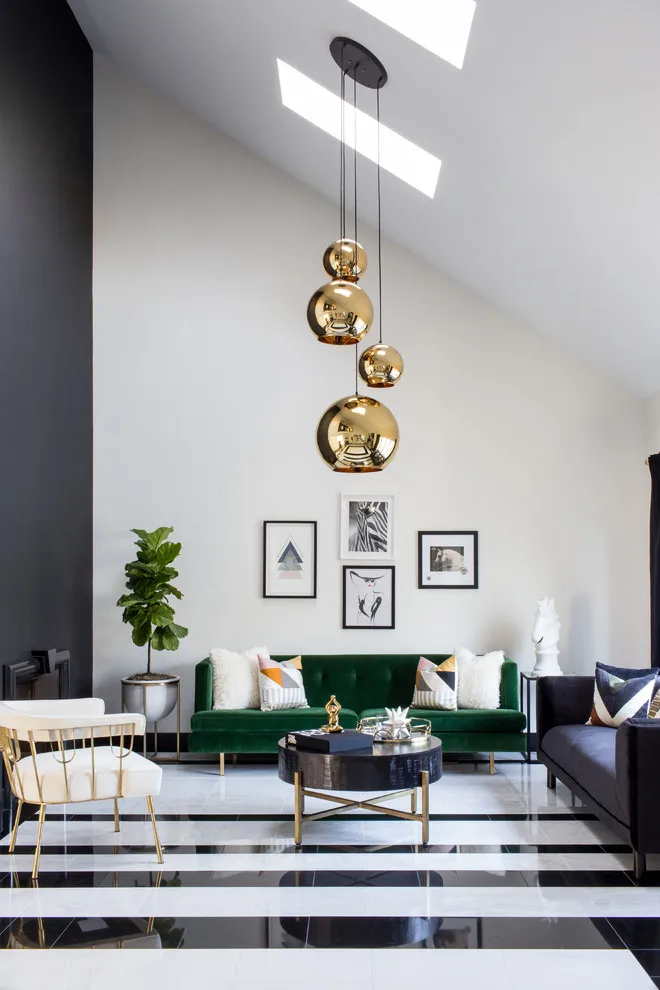
The green sofa introduces color as a relatively narrow upholstered shape against the tall pale wall. Small framed pictures gather above it, while suspended warm metal lights occupy some of the larger overhead area. Dark tables and striped flooring give the lighter room additional lines around the seating.
Test the sofa’s back support and seat depth before choosing a slimmer outline for a larger room. Keep the picture group related to the couch position, then plan reading lights separately from the overhead display. Check the surrounding tables at sitting height and leave enough passage between the couch and other seating.
IDEA 14 / 20
Balance Green Upholstery with Pale Armchairs
 SaveSupport Non AI Creator
Image credit: Photo: Jared Kuzia Photography. From: Kristina Crestin
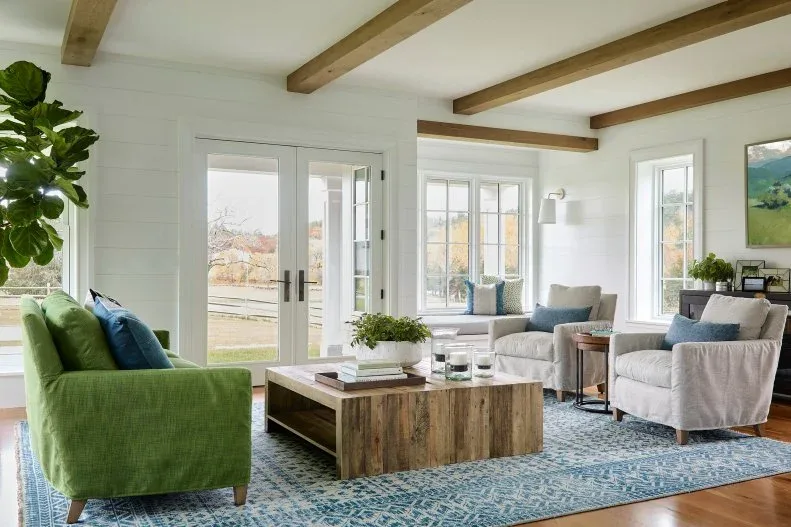
The green couch forms one side of a seating group whose other chairs remain pale. A blue patterned rug connects the furniture below the broad wooden coffee table, while the exposed beams repeat a warmer outline overhead. Blue cushions and the lighter walls keep the green seat part of a varied but restrained color combination.
Arrange the furniture around comfortable conversation before selecting a table to fill the central area. Check seat-to-table reach as well as the walking route behind the armchairs. Keep heavy objects and decorative trays from taking over the useful tabletop, and compare upholstery samples with the rug you intend to keep.
IDEA 15 / 20
Place a Tufted Green Sofa in a Pale Country Room
 SaveSupport Non AI Creator
Image credit: Photo: Kyle Born. From: Michelle Gage Interiors
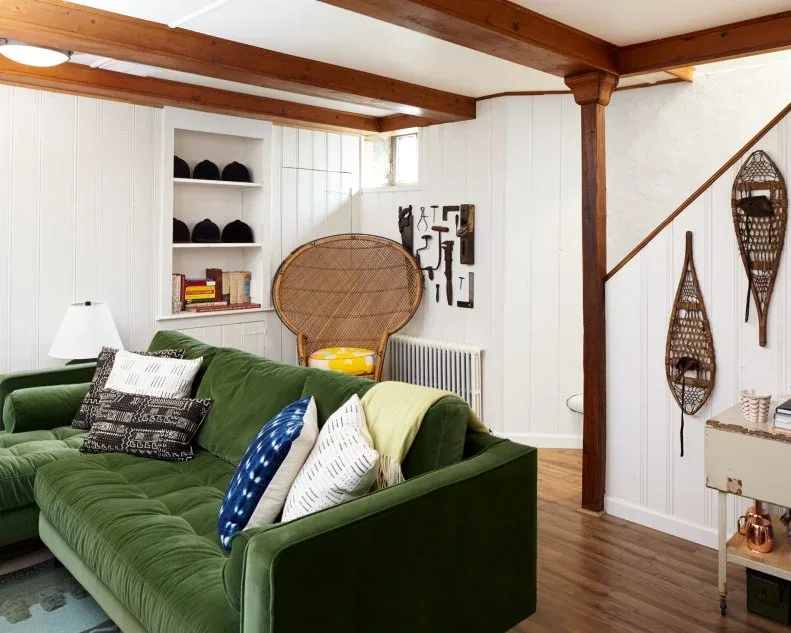
The green sofa stands out against the pale boards, with its tufted seat providing a different texture from the nearby woven chair. Wooden beams and the floor add warmth around the upholstered piece. Darker patterned cushions and a pale throw introduce smaller contrasts without changing the room’s largely light background.
Check that the couch’s cushion construction suits daily sitting rather than judging comfort from the tufted appearance. Keep the neighboring chair usable and leave access to the shelves behind the furniture. Farmhouse living room ideas compare more combinations of wood, pale walls and comfortable seating when a green couch is one part of a country-inspired arrangement.
PART 04
Compare softer colors and green fabric patterns
IDEA 16 / 20
Keep a Softer Green Couch Comfortable
 SaveSupport Non AI Creator
Source: homesandgardens.com
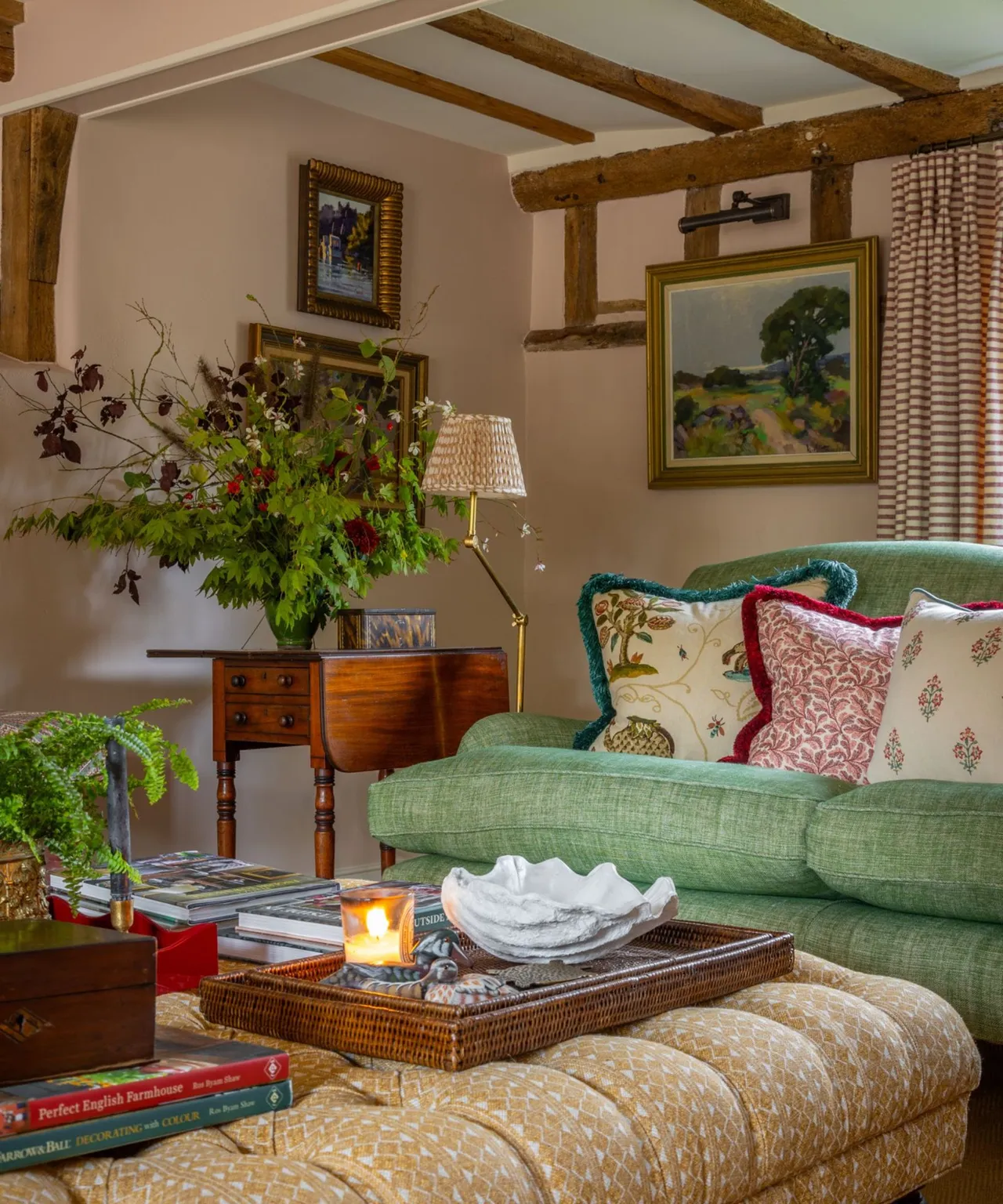
The softer green couch relates to the leafy arrangement and botanical cushions while the surrounding walls remain warm and pale. Wooden furniture and the exposed beams give the room firmer lines around the seat. A woven tray on the central upholstered surface provides a defined place for smaller useful objects.
Try the sofa with its back cushions in place and check that decorative pillows do not push the sitting position too far forward. Follow the fabric’s guidance for spills and regular cleaning. Keep plant containers stable and separate from the upholstery, and choose a tray that remains easy to move when the central surface is needed for feet.
IDEA 17 / 20
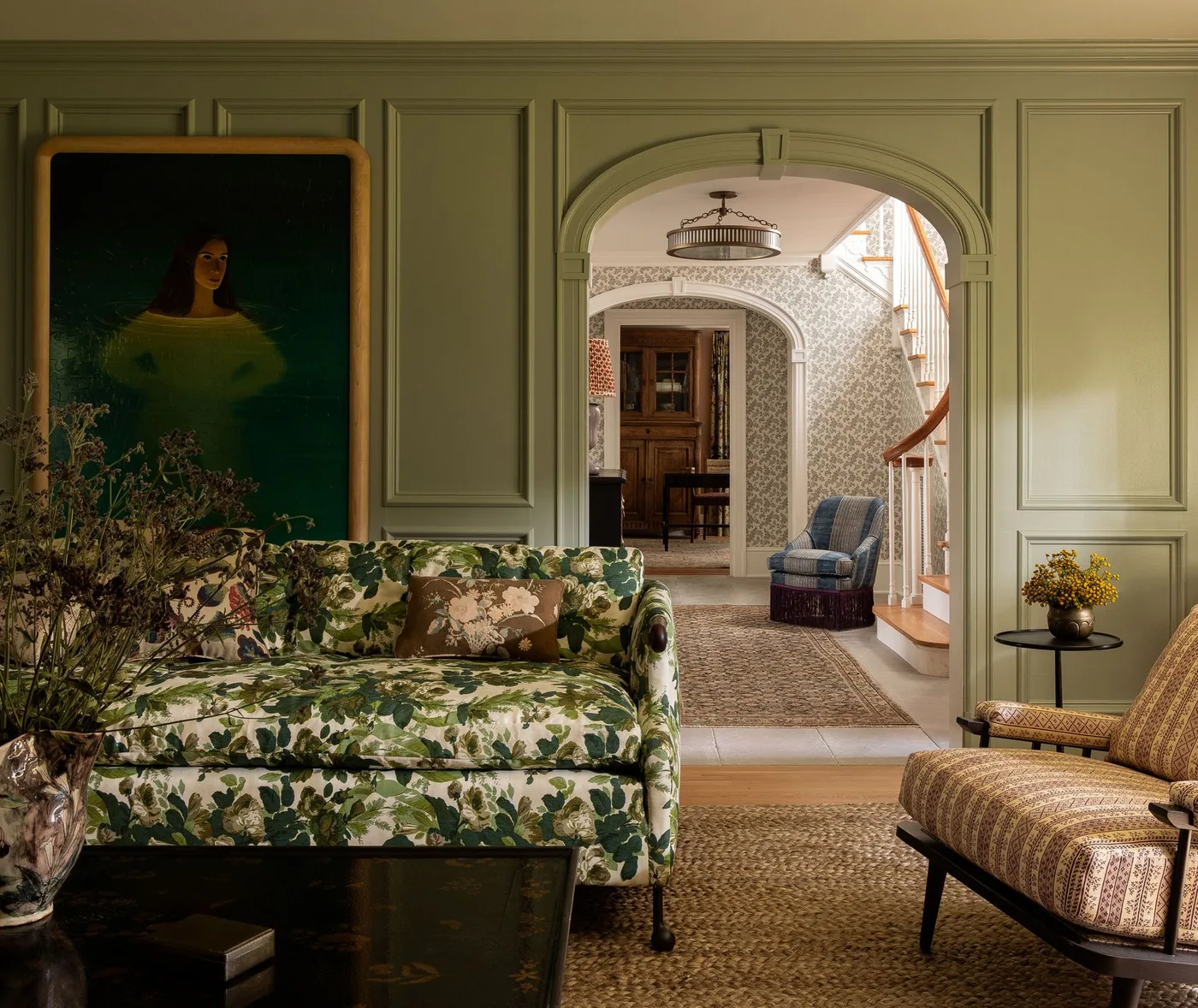
Choose Green Botanical Upholstery as the Main Pattern
 SaveSupport Non AI Creator
Image credit: Harris Kenjar. Design: Heidi Callier
The sofa’s botanical upholstery repeats the green paneling in a larger leafy pattern, while its pale background prevents the seat from becoming one solid dark shape. A nearby patterned chair adds another motif at a different scale. The dark round table gives the busier seating a simpler central outline.
Look at a generous fabric sample before choosing botanical upholstery, including how the design will cross cushions and seams. Compare it with the chair fabric rather than selecting the two independently. Keep smaller accessories restrained if both seats are patterned, and choose the table size around comfortable reach from the sofa’s main sitting positions.
IDEA 18 / 20
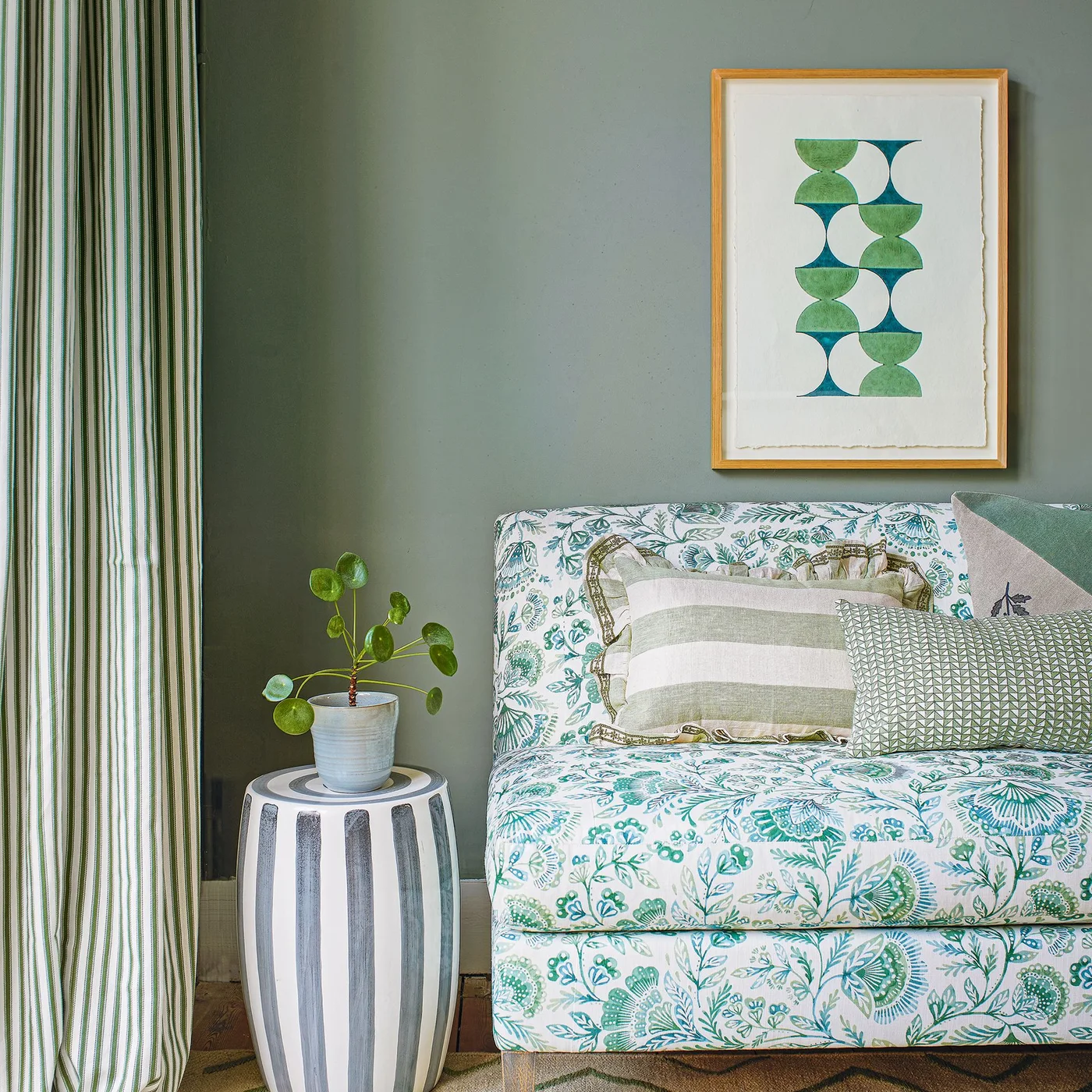
Use a Pale Sofa with Green Floral Pattern
 SaveSupport Non AI Creator
Image credit: Future PLC/Polly Wreford
The green floral print supplies the couch’s color through its pattern, leaving much of the upholstered background pale. Striped curtains and the side table bring different repeated lines beside it. Gray-green walls connect with the fabric more quietly, while the framed geometric picture adds another clear shape above.
This approach works when you prefer green in a fabric design rather than across a solid couch. Compare full pattern repeats and choose cushions that leave some upholstery visible. Check the cleaning requirements for the pale background before ordering, and keep the side table positioned so it remains useful without crowding the curtain edge.
IDEA 19 / 20
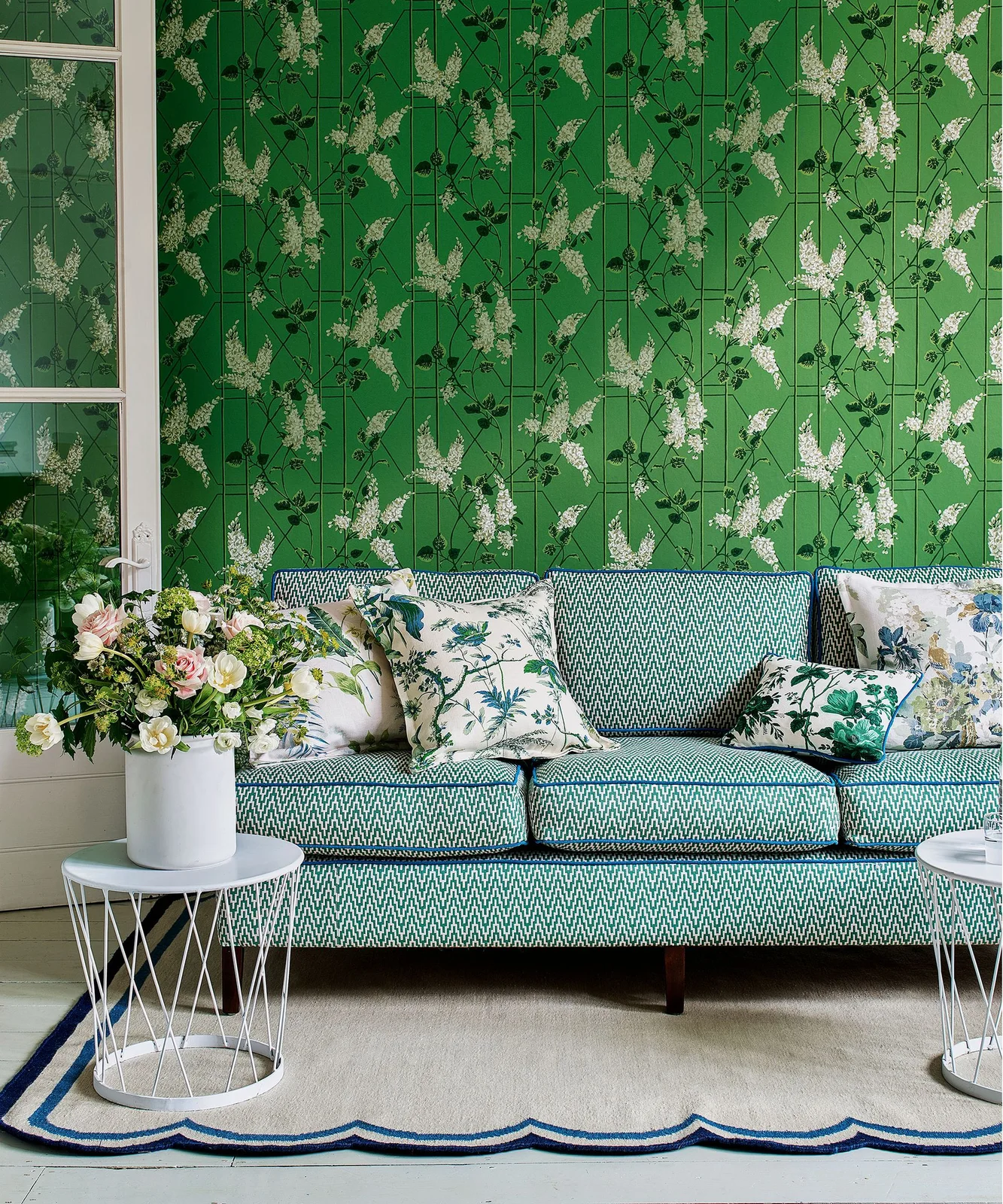
Mix a Small Green Motif with Floral Walls
 SaveSupport Non AI Creator
Image credit: Future / Polly Wreford
The couch uses a small blue-green repeating motif against a wall with a larger bright green floral design. Pale cushion backgrounds introduce lighter shapes between those patterns, and the side table remains simple. The upholstery provides a patterned green option rather than the solid emerald or olive fabric seen in other rooms.
Choose the couch fabric beside the actual wallpaper, judging both patterns at their intended scale. Keep the seat comfortable by limiting loose cushions and checking their depth. If the wall is already busy, retain a simpler table and lamp arrangement; another patterned furnishing is optional rather than necessary to connect the green colors.
IDEA 20 / 20
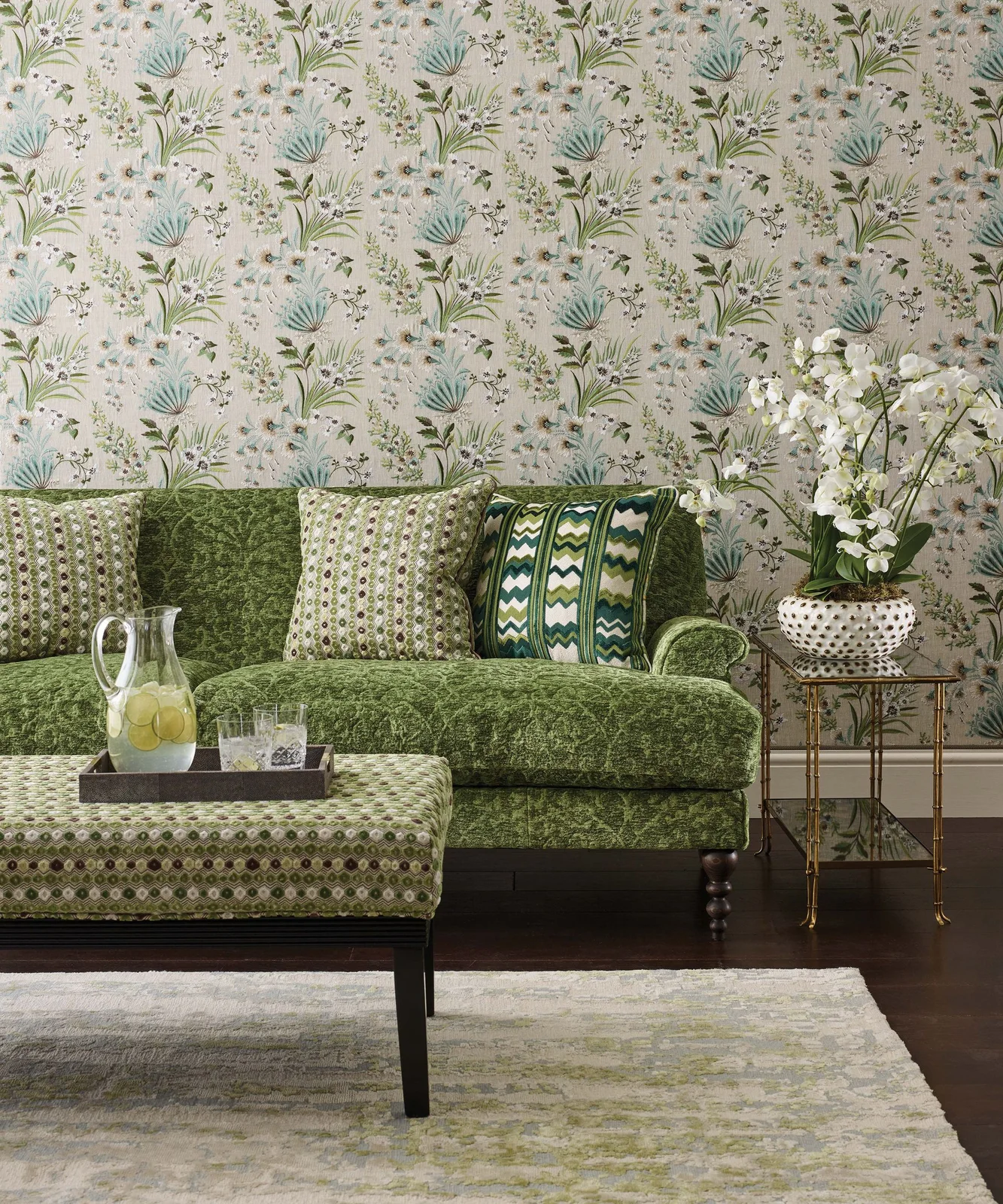
Coordinate Green Upholstery with a Patterned Footstool
 SaveSupport Non AI Creator
Image credit: Nina Campbell distributed by Osborne & Little
The sofa’s green pattern connects with the dotted footstool while the botanical wall carries finer details on a pale background. Larger striped and dotted cushions change the pattern scale across the seat. A glass-topped side table supplies a more open outline beside the couch, leaving the textiles to carry most of the decoration.
Check the sofa and footstool fabrics together before choosing coordinated upholstery, including the maintenance each piece needs. Leave enough room to stand up between the couch and central footstool. A stable tray can hold drinks on an upholstered surface, but keep it movable and avoid filling the whole top if the footstool is also used for lounging.
BRING IT ALL TOGETHER
Make the colored couch comfortable first
Check the sofa’s sitting depth, back support and overall footprint before choosing the final upholstery. Compare the green sample beside the wall, rug and nearby chair fabrics, then decide which smaller colors should repeat. A couch can lead the room’s palette without requiring a matching curtain, cabinet and cushion collection.
Keep useful tables within reach, position reading lights for the seats that need them, and allow practical passage around a corner section or footstool. Follow the care guidance for the actual fabric and keep decorative pillows movable. If the arrangement feels crowded, reduce the smaller accessories before assuming the couch color is the problem.