Minimalist dining rooms can feel warm when the table, seating and storage work well together. These photographs include pale rooms, darker wood arrangements and a few focused color accents. Some retain rustic beams or traditional paneling; look at the quieter furniture and limited displays rather than assuming a restrained room must have completely bare architecture.
Start with comfortable chairs, useful place settings and space to move while people are seated. Plan nearby storage for tableware before deciding how much should remain visible. Then compare one or two stronger details, such as an artwork, pendant or chair color, against the larger surfaces already in your room.
PART 01
Keep tables and larger furniture clear
IDEA 01 / 20
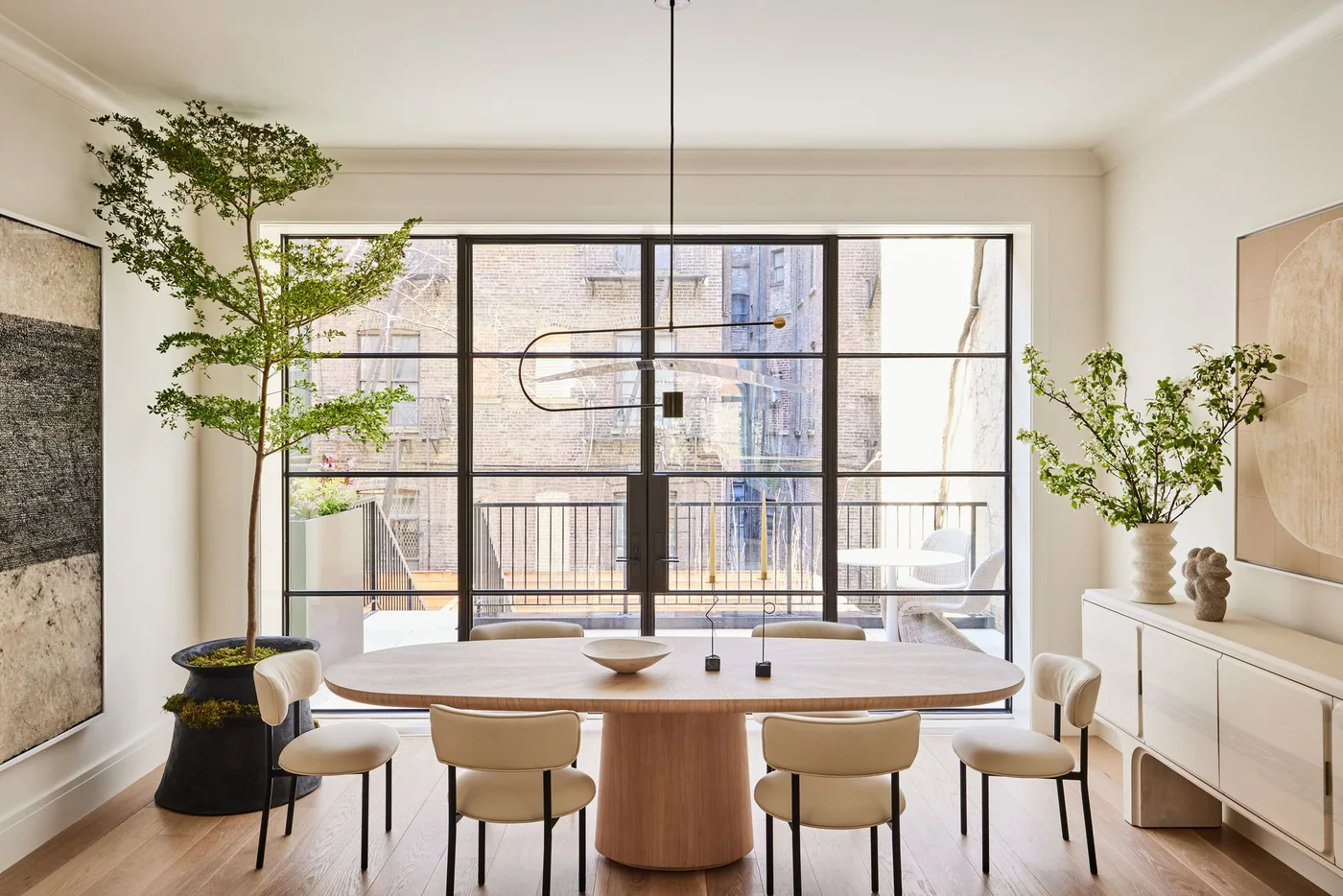
Give an Oval Table a Clear Window Background
 SaveSupport Non AI Creator
Image credit: Chango & Co. Photo credit: Nicole Franzen
The oval table brings a broad rounded form between the cream chairs, with its pedestal keeping the base comparatively simple. Black-framed glazed doors create a clearer rectangular background behind the pale furniture. The sideboard follows the room’s light palette, while leafy plants soften the taller edges without adding another printed surface.
Check chair movement around the pedestal and test the upholstered seats for comfortable everyday use. Keep the route to glazed doors clear when everyone is seated. A dining room sideboard can hold tableware close to the table, reducing the need for objects on top; choose its depth and door movement from the actual space available.
IDEA 02 / 20
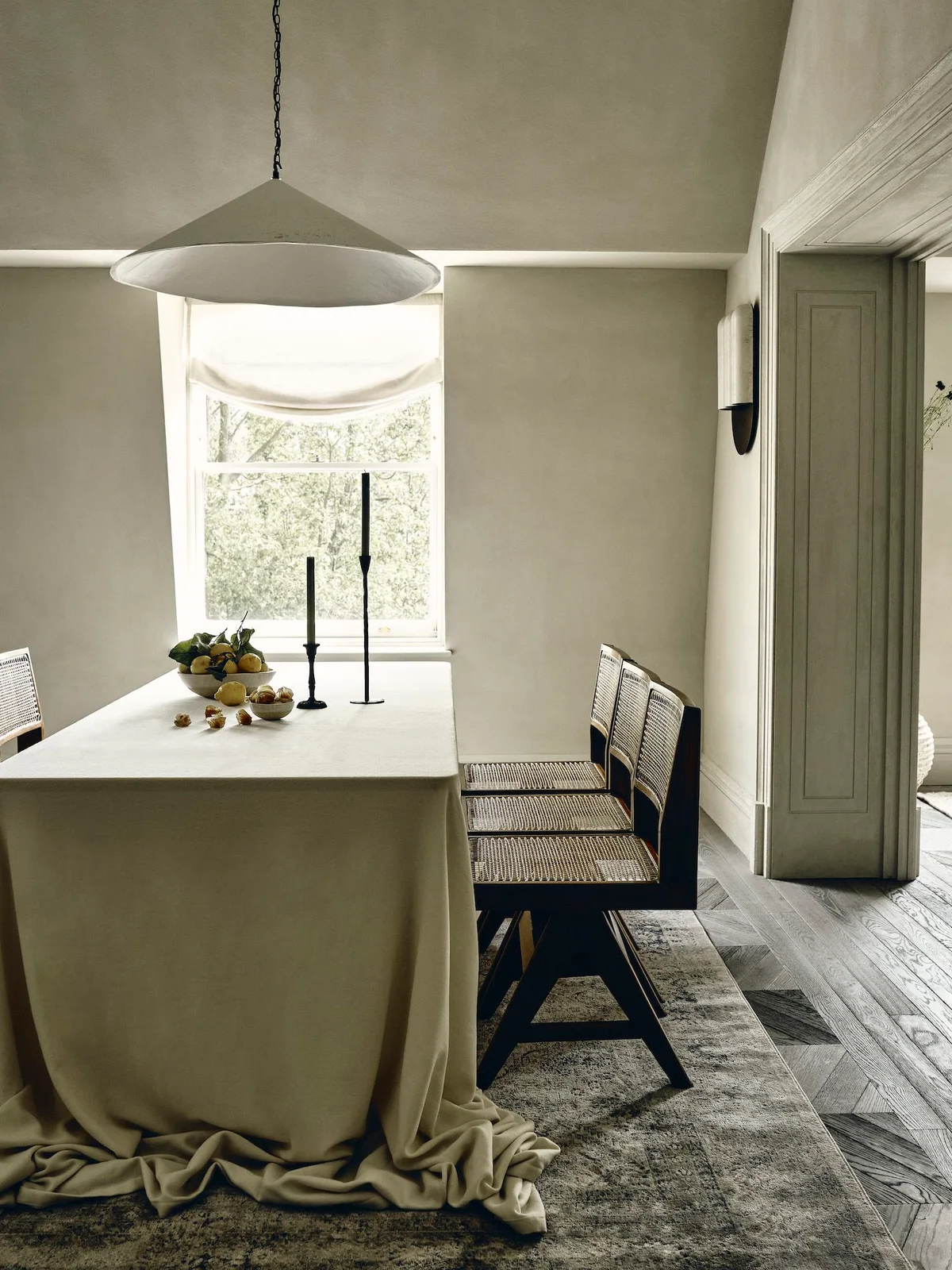
Use a Long Tablecloth Within One Muted Palette
 SaveSupport Non AI Creator
Image credit: Banda. Photo credit: Ben Anders
The pale tablecloth connects the tabletop with a long draped section below, keeping its outline close to the muted wall color. Dark chair frames and woven backs create smaller repeated contrasts along the sides. A broad cone pendant and the softly gathered shade introduce two larger shapes without extending strong color across the room.
Use a tablecloth length that lets diners sit and move their chairs without catching loose fabric. Choose a washable textile if this is an everyday eating area and check chair comfort through a normal meal. The pooling hem is a styling detail in the photograph; shorten it for easier floor cleaning and more straightforward access around the table.
IDEA 03 / 20
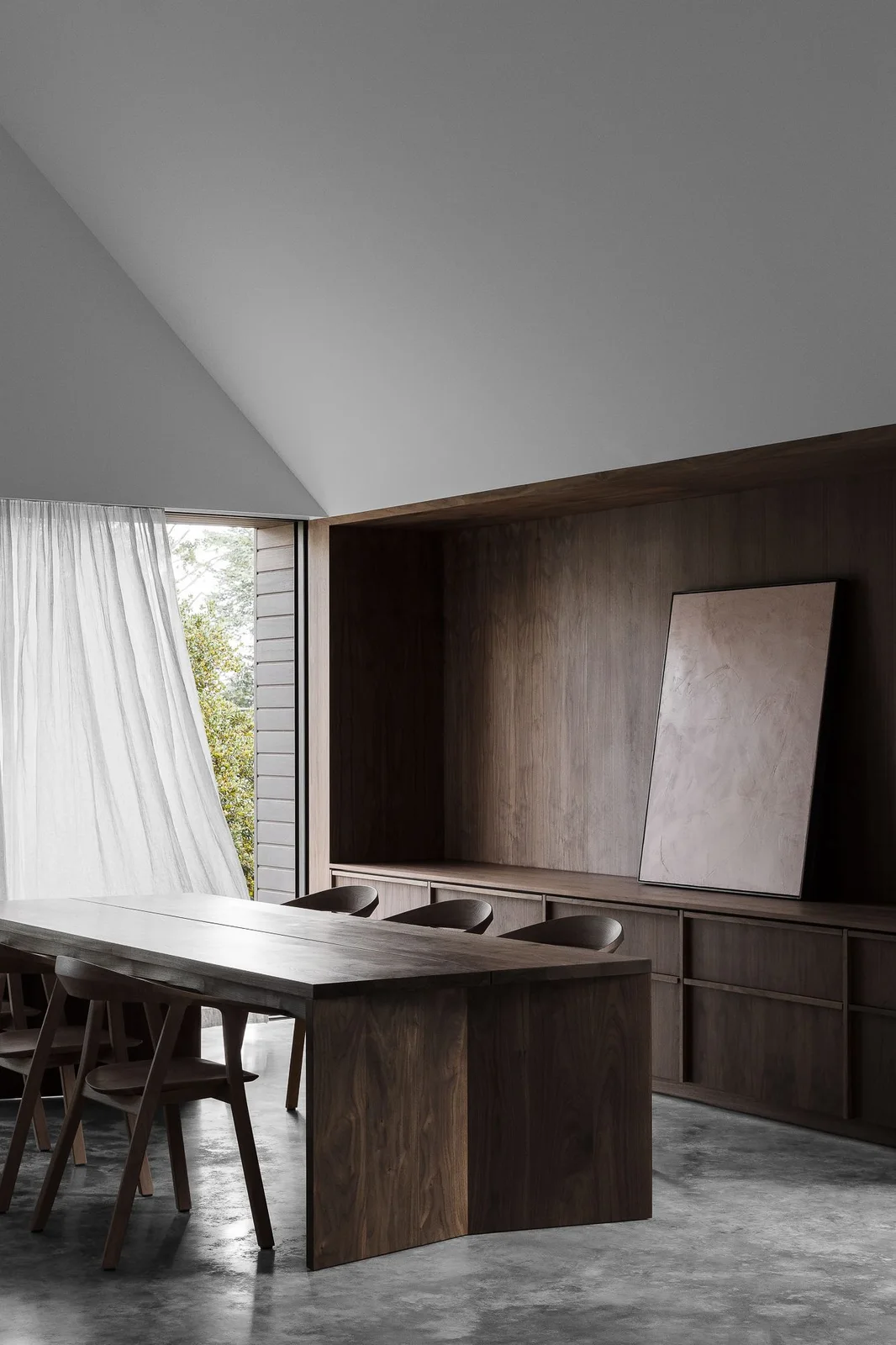
Connect a Simple Wood Table with Quiet Wall Storage
 SaveSupport Non AI Creator
Image credit: Adam Kane Architects. Photo credit: Timothy Kaye
The wood table follows the warmer wall panels and lower cupboards, creating a continuous group of larger dark surfaces. Curved chair backs give that group smaller rounded edges. Pale curtains and the lighter artwork provide separate quiet sections beside the window, with few objects interrupting the long storage top behind the dining furniture.
Plan the cupboards from serving dishes and table linens before deciding how much surface should remain open. Check whether chair backs clear the cabinet doors when the table is in use. Japandi dining room ideas compare more restrained wood arrangements if you want warmer furniture and practical storage with a similarly limited choice of surrounding accents.
IDEA 04 / 20
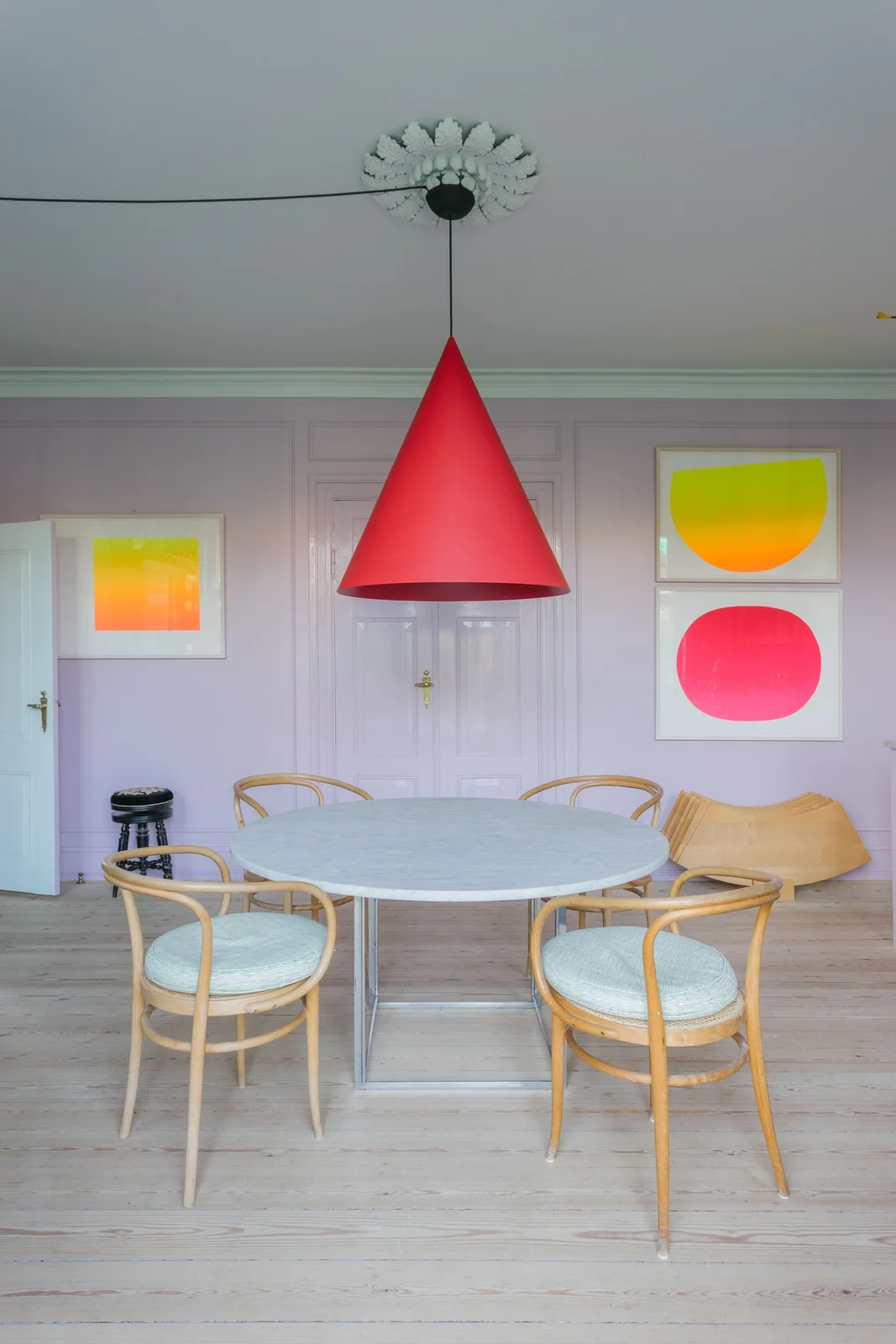
Keep Bright Accents Separate Against Lilac Walls
 SaveSupport Non AI Creator
Image credit: Nadia Olive Schnack. Photo credit: Kim Høltermand
Lilac walls create a continuous pale background around the round table. The light wood chairs repeat curved frames at seating height, while the red cone pendant forms a single stronger shape above. Bright geometric artwork supplies smaller color blocks on the walls, leaving the furniture arrangement itself comparatively simple and uncluttered.
Compare the wall and pendant colors together under your evening lighting before choosing permanent finishes. A limited palette can still include bright accents when each has a clear place. Keep the table available for meals and verify pendant placement with an appropriate installer, checking comfortable sightlines rather than copying the photographed height without measurements.
IDEA 05 / 20
Reach a Dining Light from the Wall
 SaveSupport Non AI Creator
Image credit: Le White. Photo credit: Nicole Franzen
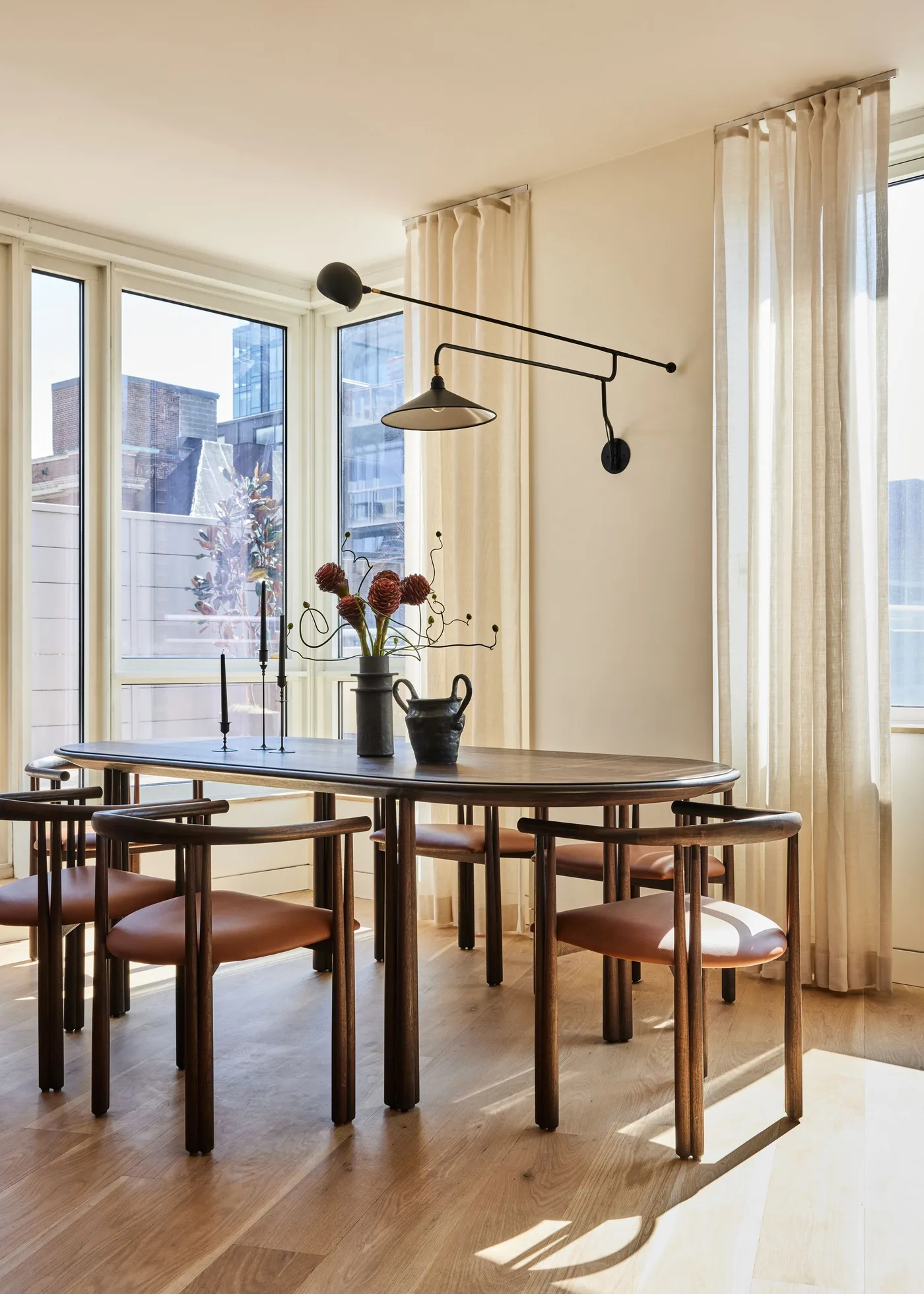
The slim dark tabletop creates a clear horizontal line among the curved wood chair frames. Pale curtains extend a quieter background around the glazing, letting the black articulated wall light remain distinct above the table. A small group of vessels sits centrally, leaving the table edges and seating positions easy to see.
Have the wall light’s reach, fixing and electrical installation assessed for the proposed table position. Check head clearance as well as the lighting needed for meals. Dining room lighting ideas compare more arrangements if a projecting wall fixture would complicate movement, and keep any tabletop display low enough for diners to see one another comfortably.
PART 02
Limit stronger patterns and furniture accents
IDEA 06 / 20
Let One Large Artwork Carry the Strong Pattern
 SaveSupport Non AI Creator
Image credit: Amie Weitzman
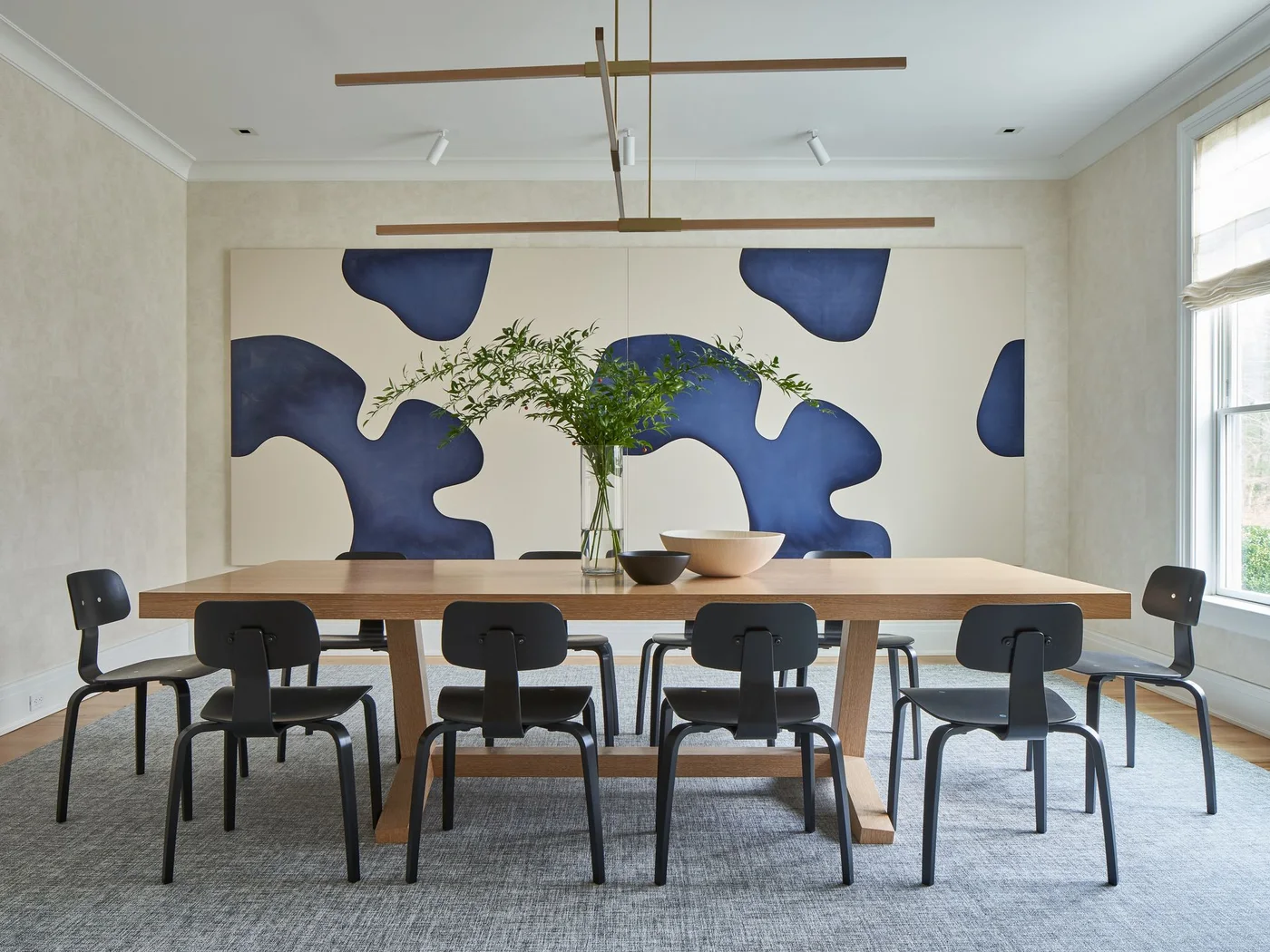
A large blue abstract artwork supplies the room’s strongest pattern behind the plain wood table. Black chairs repeat compact dark outlines around the seating group, while the narrow overhead light extends a straighter line above. Pale walls and the subdued rug allow that single artwork to remain distinct without surrounding it with several competing displays.
Choose artwork size from the wall and viewing distance, then secure it appropriately rather than judging scale only from a photograph. Keep the dining light suitable for the full tabletop and check chair movement on the rug. Repeat a dark detail through a small number of practical fittings, allowing the larger wall surface to carry the main visual interest.
IDEA 07 / 20
Use Soft Seat Layers Without Filling the Room
 SaveSupport Non AI Creator
Image credit: Lisa Staton. Photo credit: Haris Kenjar
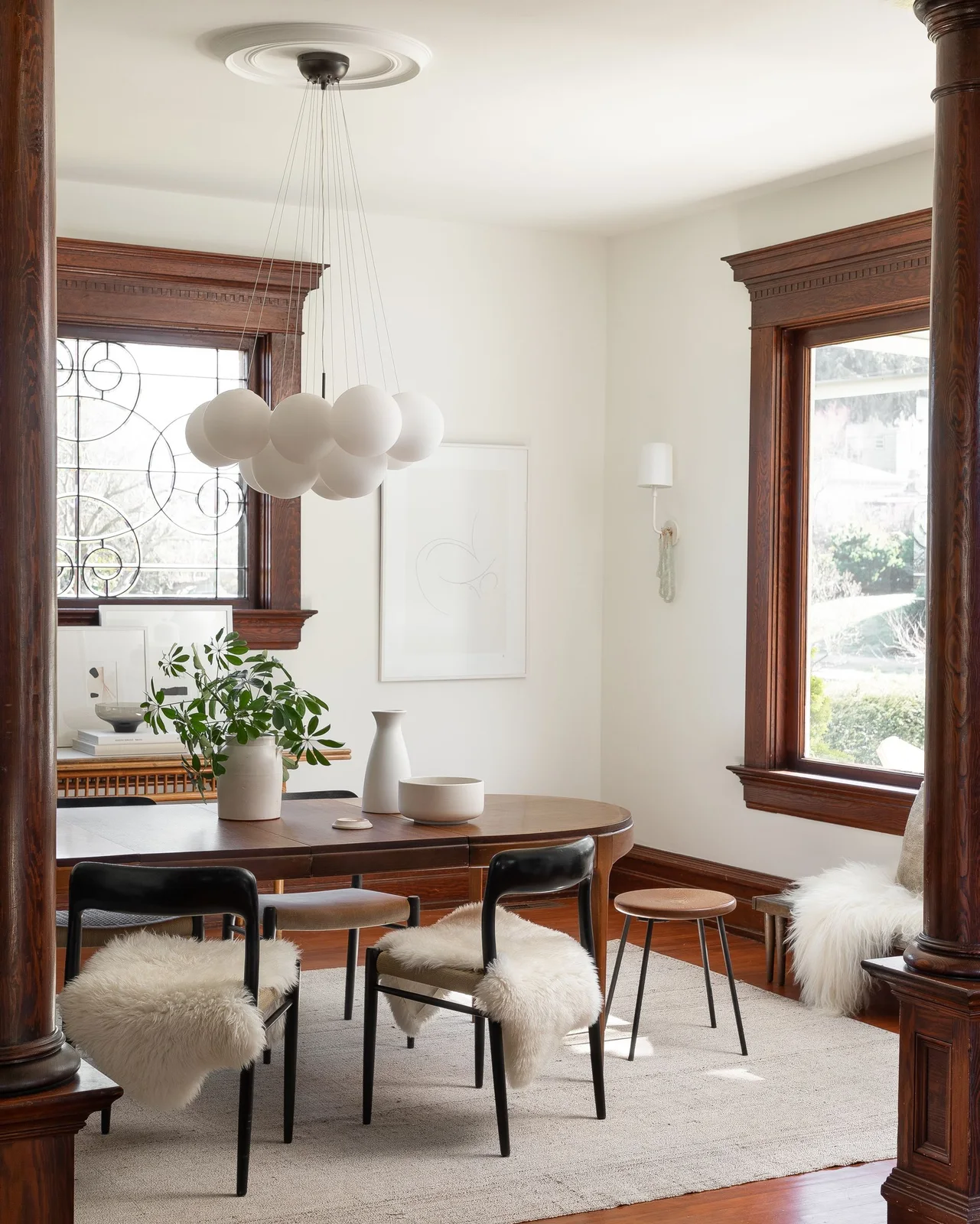
The wood table and darker chair frames connect with the substantial window trim. Pale shaggy seat coverings soften those smaller furniture sections, while clustered white globes create a rounded overhead group. The walls remain comparatively clear, with the window details and restrained tabletop arrangement carrying the room’s warmer character.
Choose seat layers from comfort and actual washing requirements, securing them so they do not slip during use. If textured coverings are difficult to maintain around meals, use fitted washable cushions instead. Keep the table surface manageable and retain easy access to windows, borrowing the warm wood and pale textiles without adding more objects to every surrounding ledge.
IDEA 08 / 20
Use Yellow Table Supports as the Single Bright Detail
 SaveSupport Non AI Creator
Image credit: Corinne Mathern Studio. Photo credit: Laure Joliet
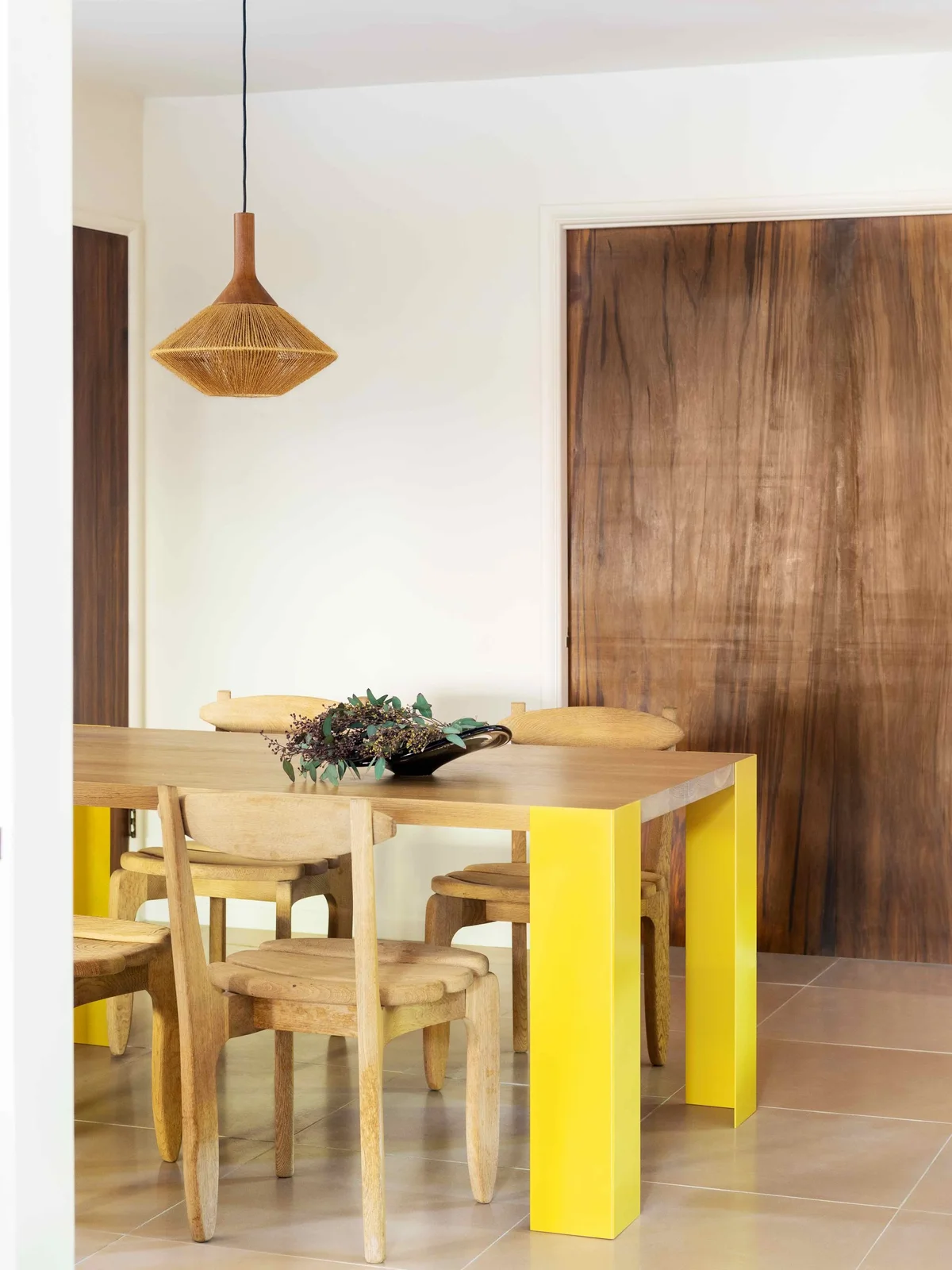
Bright yellow supports give the otherwise warm wood table a distinct lower accent. Curved wood chairs connect its tabletop with the broad wood door behind, while the woven pendant adds a finer texture above. White walls separate those warmer surfaces, leaving the yellow sections as the main concentrated color within the simple furniture group.
Check table support positions against diners’ feet and comfortable chair access before choosing an unusual base. Use a larger yellow sample beside your existing wood finishes if you plan a similar accent. Keep upholstery and tabletop accessories comparatively quiet, allowing one practical furniture detail to provide color without needing several matching ornaments around the room.
IDEA 09 / 20
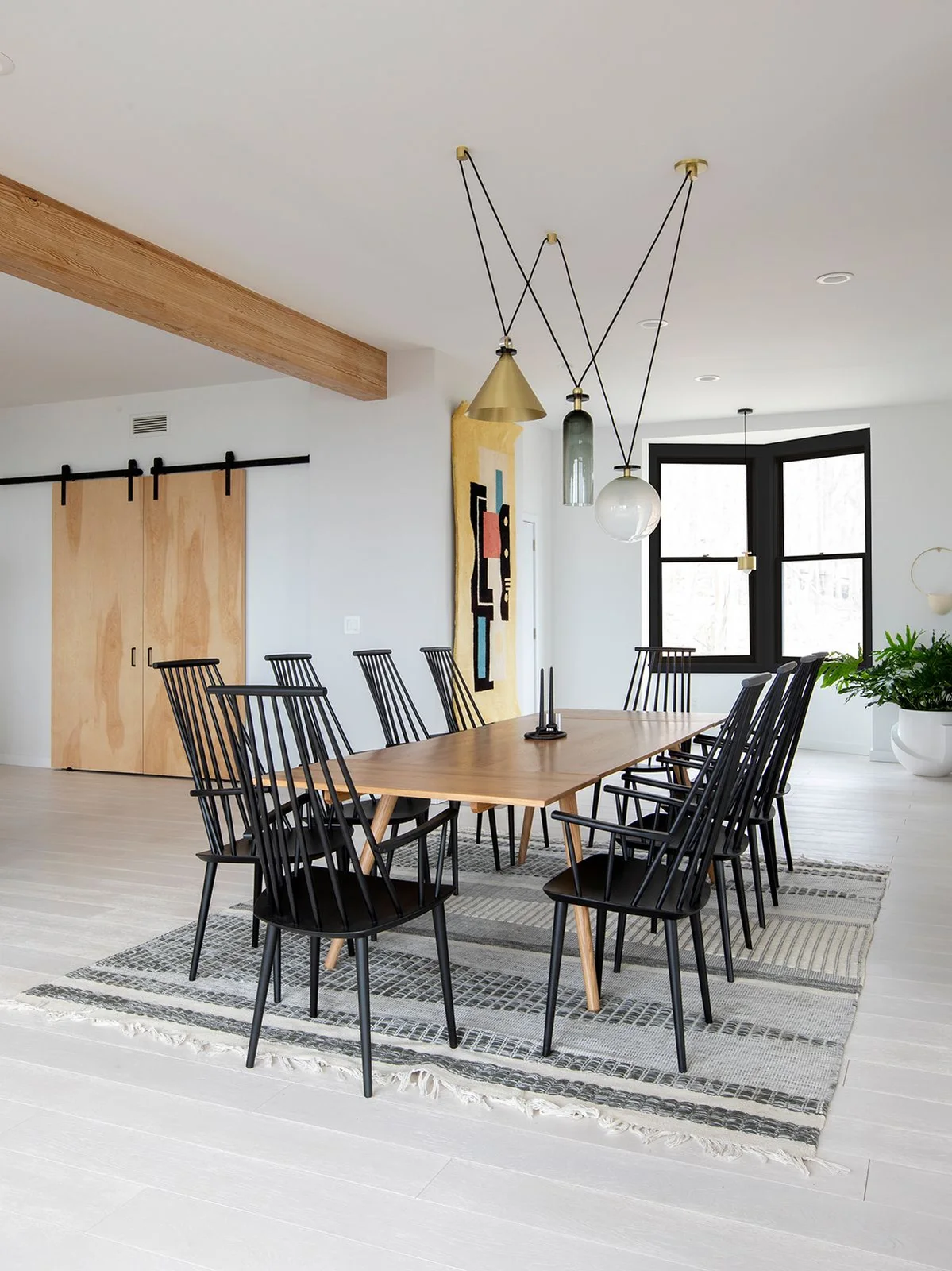
Connect Black Spindle Chairs with a Pale Wood Table
 SaveSupport Non AI Creator
Image credit: Tangible Space. Photo credit: Charlie Schuck
Black spindle chairs introduce a repeated narrow grid around the pale wood tabletop. Their darker lines connect with the hanging cables and black window frame, while the wood sliding doors echo the table’s warmer color. A striped rug adds smaller pattern below, leaving most larger wall surfaces white and comparatively uninterrupted.
Test spindle seating for comfortable support and check the table height against any chair arms. Choose a rug that allows normal chair movement without catching fringed edges. Keep sliding-door access clear and assess the hanging lights together for suitable illumination, rather than selecting several different shades purely for their appearance in a finished room.
IDEA 10 / 20
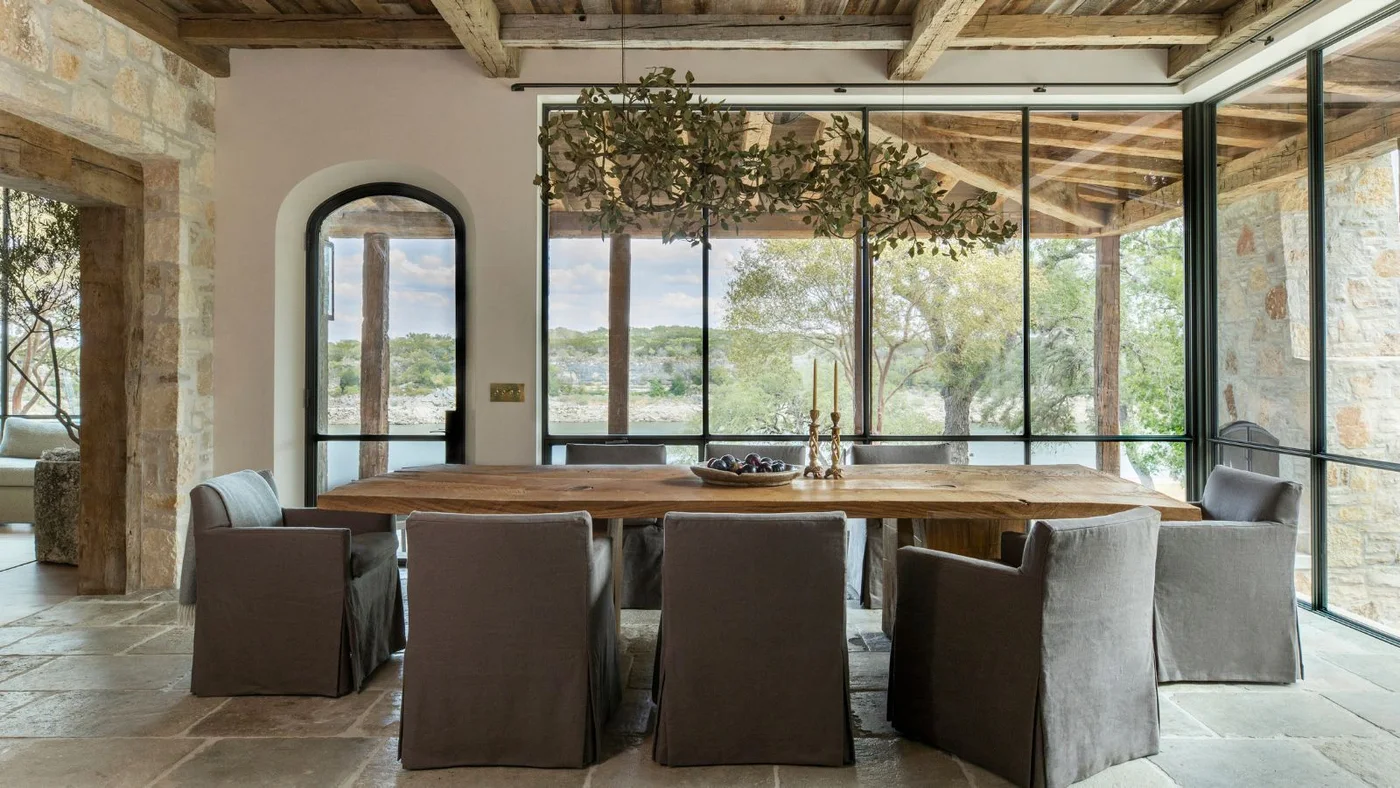
Keep Dining Furniture Simple Within a Beamed Room
 SaveSupport Non AI Creator
Image credit: Marie Flanigan Interiors/Julie Soefer Photography
The plain wood tabletop and gray chair coverings keep the furniture group quiet beneath the more textured beams. Broad glazing opens a clear background toward the greenery beyond, with pale walls and flooring linking the surrounding surfaces. The leafy overhead fixture introduces a more decorative outline, showing how restrained furniture can sit within rustic architecture.
Borrow the limited furniture colors without assuming that every existing beam or textured wall needs to disappear. Check the chair coverings for suitable care around food and choose a light that can be cleaned comfortably. Use the table’s working area for meals, preserving access to the glazing and avoiding additional large displays that compete with the room’s existing architecture.
PART 03
Use warm colors and practical fixed seating
IDEA 11 / 20
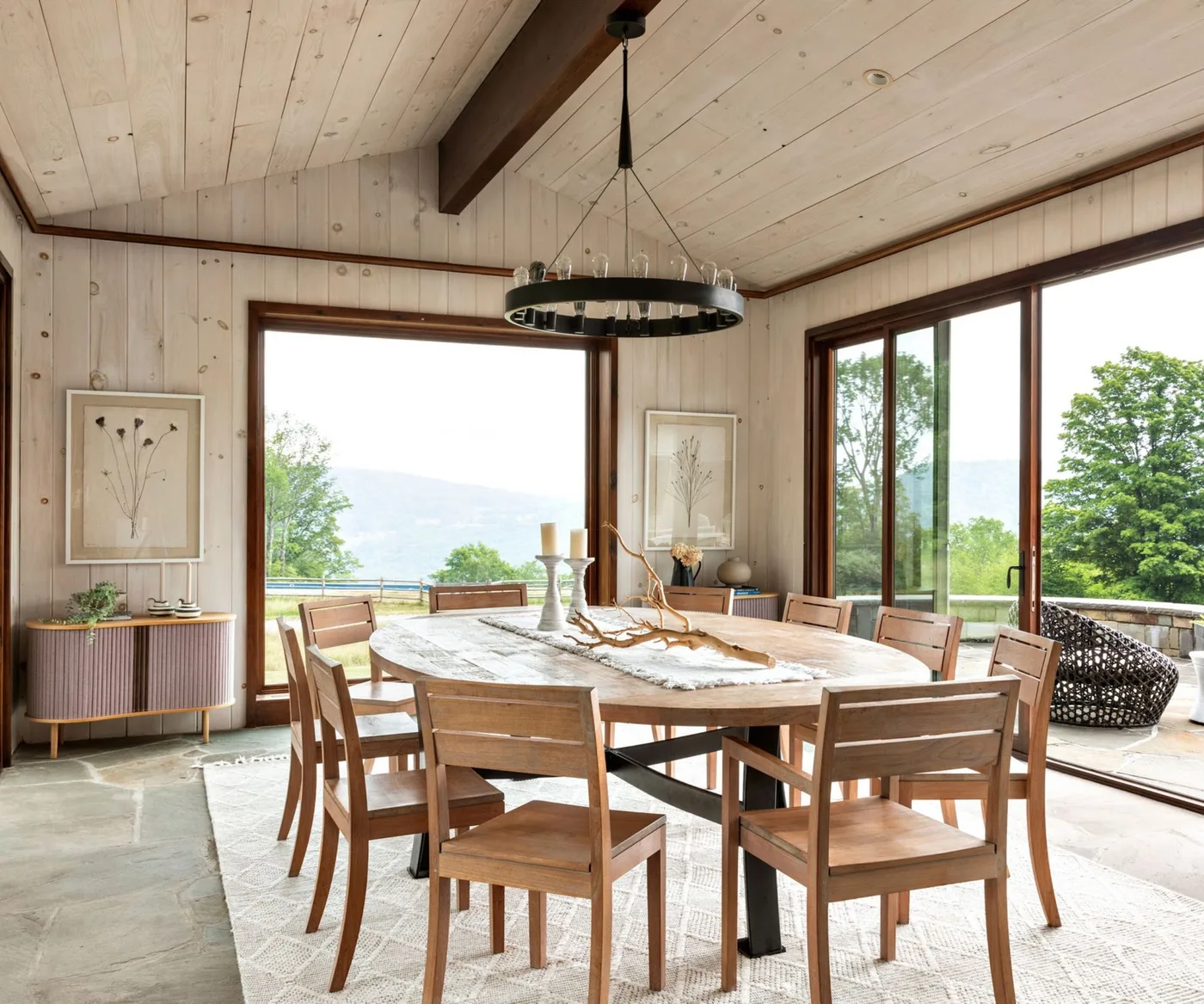
Let Plain Wood Seating Follow a Paneled Room
 SaveSupport Non AI Creator
Image credit: Allison Lind Interiors/Regan Wood
Pale wood wall panels and the plain chairs create related warmer surfaces around the table. Darker window frames and the ring light provide a smaller repeated contrast. The broad view remains prominent because the furniture and artwork carry relatively little pattern, with only a few objects interrupting the tabletop.
Compare the table finish with existing paneling in daylight, checking whether closely related shades look comfortable together. Choose chair comfort and a manageable cleaning routine before matching wood tones. Keep the window route usable and limit tall tabletop objects, so a room with substantial architectural texture can still feel orderly around the place where people eat.
IDEA 12 / 20
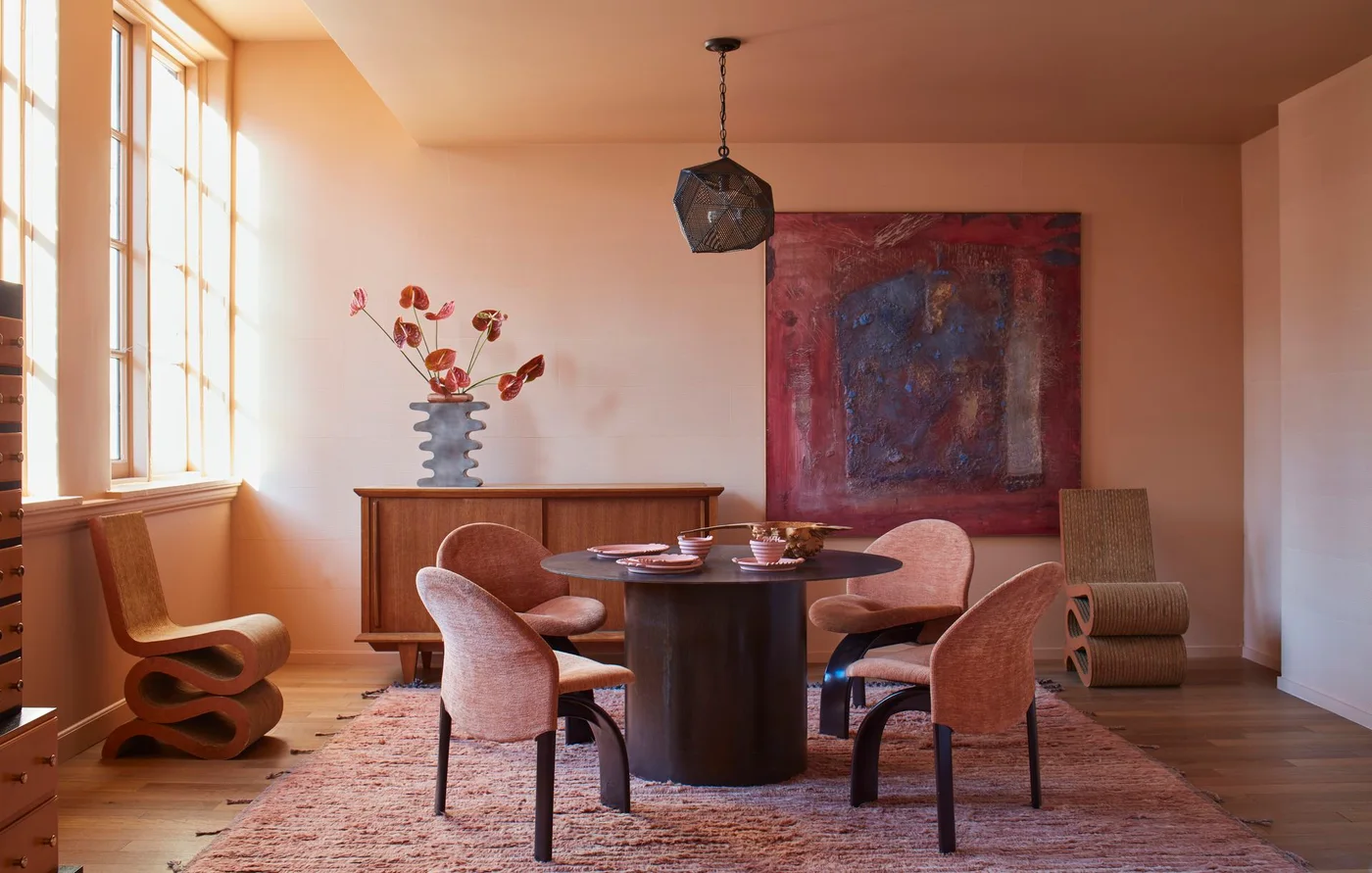
Use a Warm Wall Color Around Rounded Furniture
 SaveSupport Non AI Creator
Image credit: Farrow & Ball
Peach walls and the ceiling make a continuous warm background around the dark pedestal table. Rounded pink chairs and a subdued rug continue that softer color group below. The large red artwork introduces a stronger wall section, while the simple sideboard provides storage without breaking the room into several smaller competing furniture outlines.
View the peach and pink finishes together under both daylight and evening lamps before covering several surfaces. Keep sideboard storage organized around tableware and leave useful room for serving. Rounded chair shapes still need comfortable support and enough space to move, so test them with the proposed table rather than estimating capacity from a styled photograph.
IDEA 13 / 20
Give Rounded Yellow Chairs a Quiet Paneled Background
 SaveSupport Non AI Creator
Image credit: Lemieux Et Cie
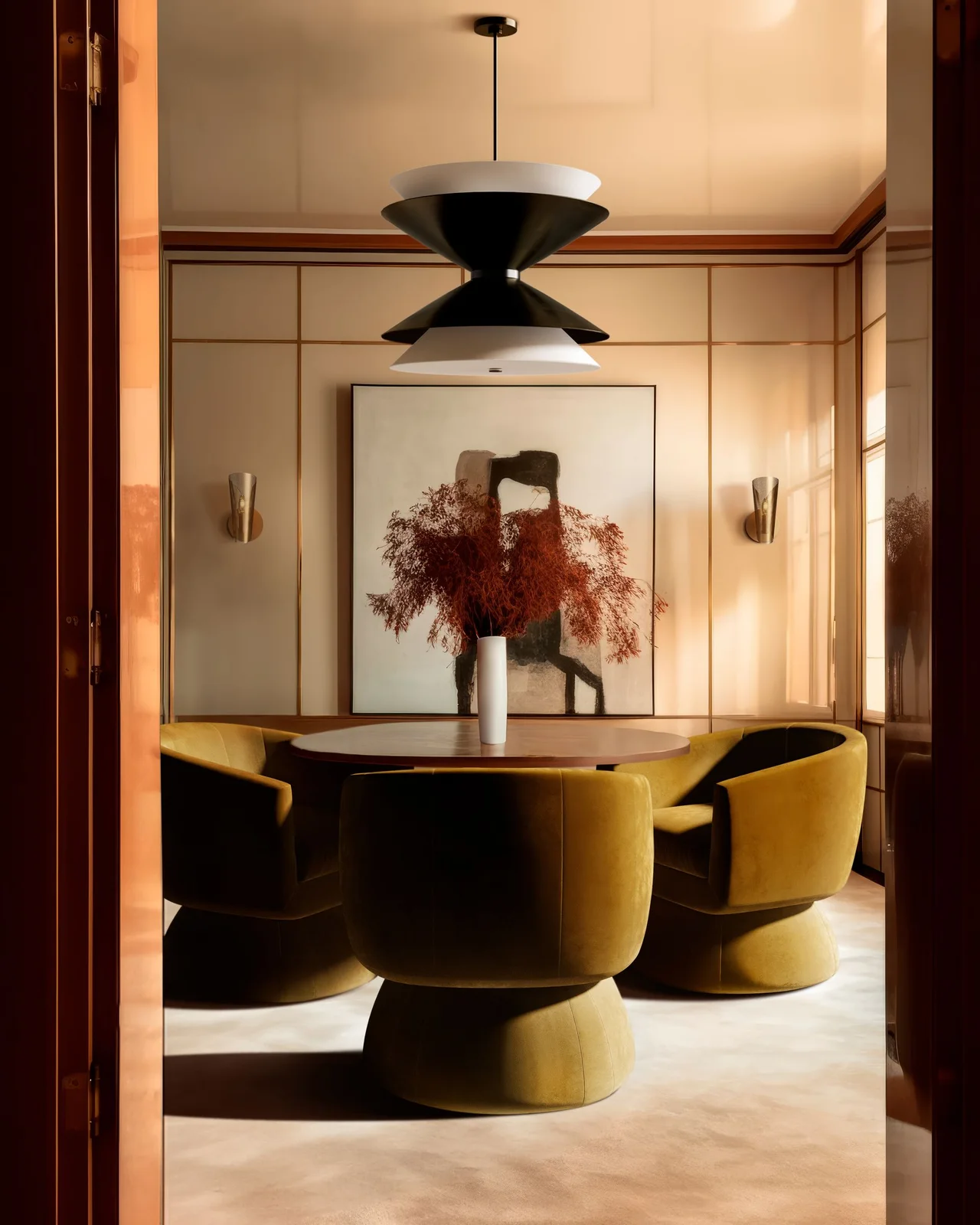
Rounded yellow chairs form a repeated group around the darker circular tabletop. Pale paneled walls provide a quieter rectangular background behind their fuller shapes. One abstract painting and small wall lights keep the upper wall arrangement limited, while the black pendant repeats the table’s deeper color overhead.
Measure the full chair footprint, including its broad base, before deciding how many seats fit comfortably. Check fabric maintenance for daily meals and leave enough room to pull each chair out. Use the larger furniture shapes as the main accents, keeping tableware and nearby storage simpler if several upholstered chairs already occupy much of the visible floor area.
IDEA 14 / 20
Use a Plain Built-In Bench Beside a Dark Table
 SaveSupport Non AI Creator
Image credit: Mary Wadsworth
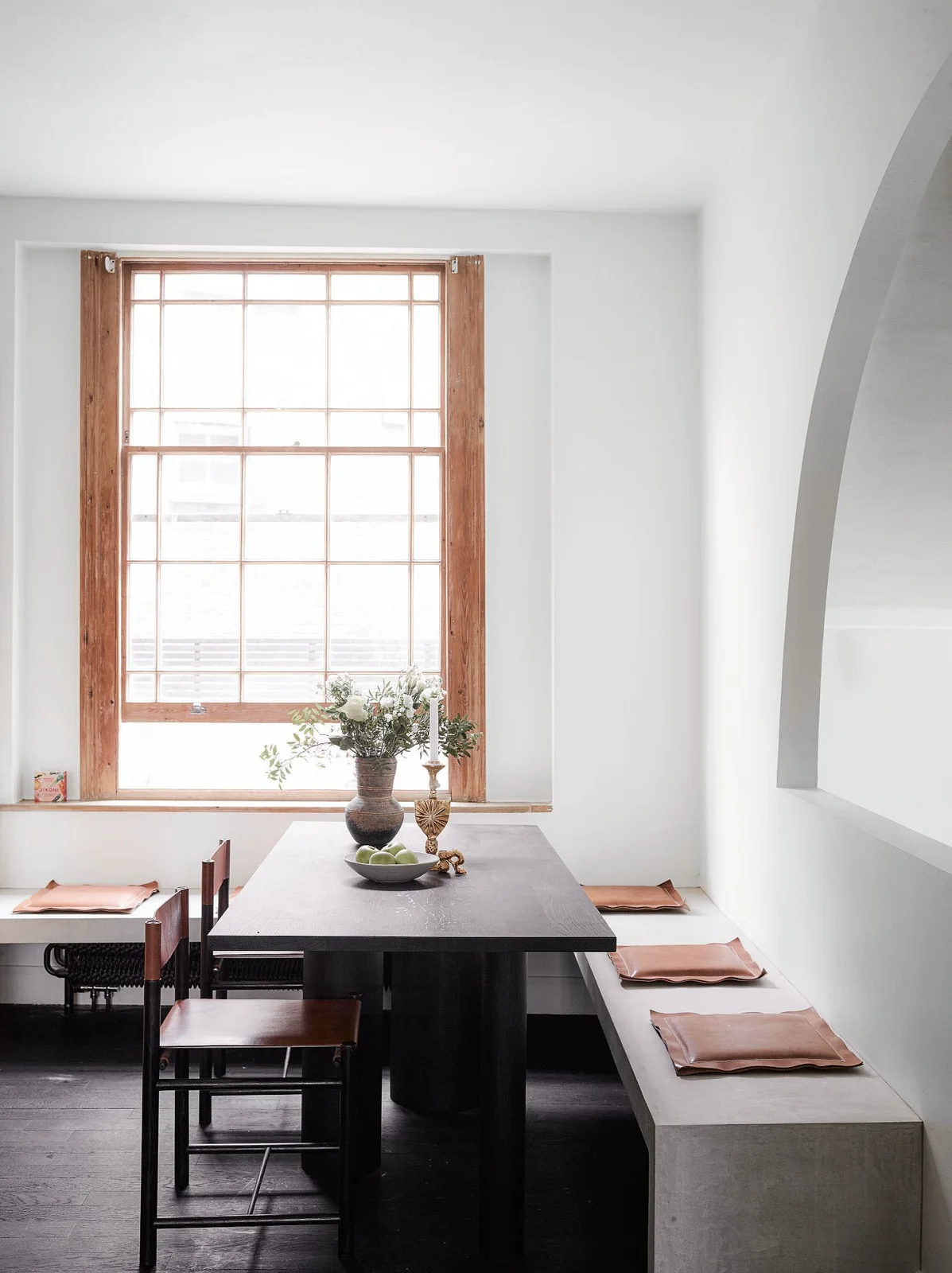
A plain pale bench follows the window wall, leaving the dark tabletop as the stronger central horizontal section. Small coral cushions add limited warmer blocks along the seating edge. Narrow chairs keep the opposite side more open, while the arched opening provides a curved architectural detail within the otherwise straight furniture arrangement.
Plan bench depth and table distance for comfortable sitting, especially if someone will use the seating for longer meals. Keep removable cushions straightforward to clean and maintain access to the window. Dining room banquette ideas compare more fixed seating layouts if you want to combine useful wall seating with enough room to enter and leave the table comfortably.
IDEA 15 / 20
Keep Seating Simple Beside a Tiled Window Wall
 SaveSupport Non AI Creator
Image credit: French+Tye. Design: MW Architects
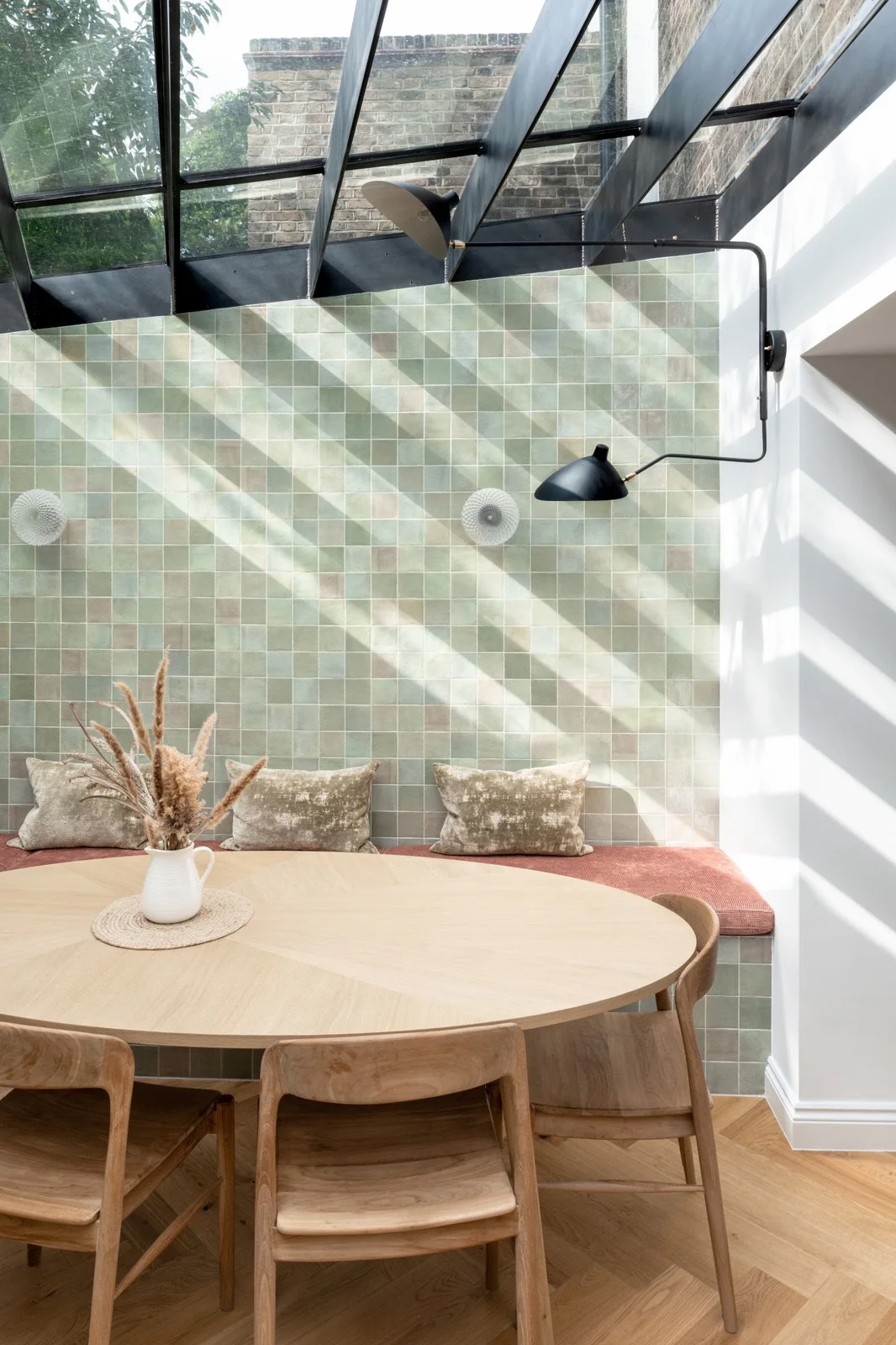
Small green wall tiles provide the finer repeated texture behind the plain wood furniture. The round table and simple chair backs keep the seating group clear beneath the glazed roof. A coral bench supplies one warmer horizontal section, while the black projecting light introduces a darker outline against the lighter glazing and walls.
Compare tile and upholstery samples together before committing to two larger colored surfaces. Keep seat cushions suitable for the room’s conditions and leave access for cleaning the glazing. A simpler table setting can balance a textured wall; prioritize comfortable seating and the route around the table before adding additional decorative pieces to an already distinctive window area.
PART 04
Plan useful seating around clearer views
IDEA 16 / 20
Use a Sculptural Table with Limited Surrounding Objects
 SaveSupport Non AI Creator
Image credit: John Merkl. Design: K Interiors
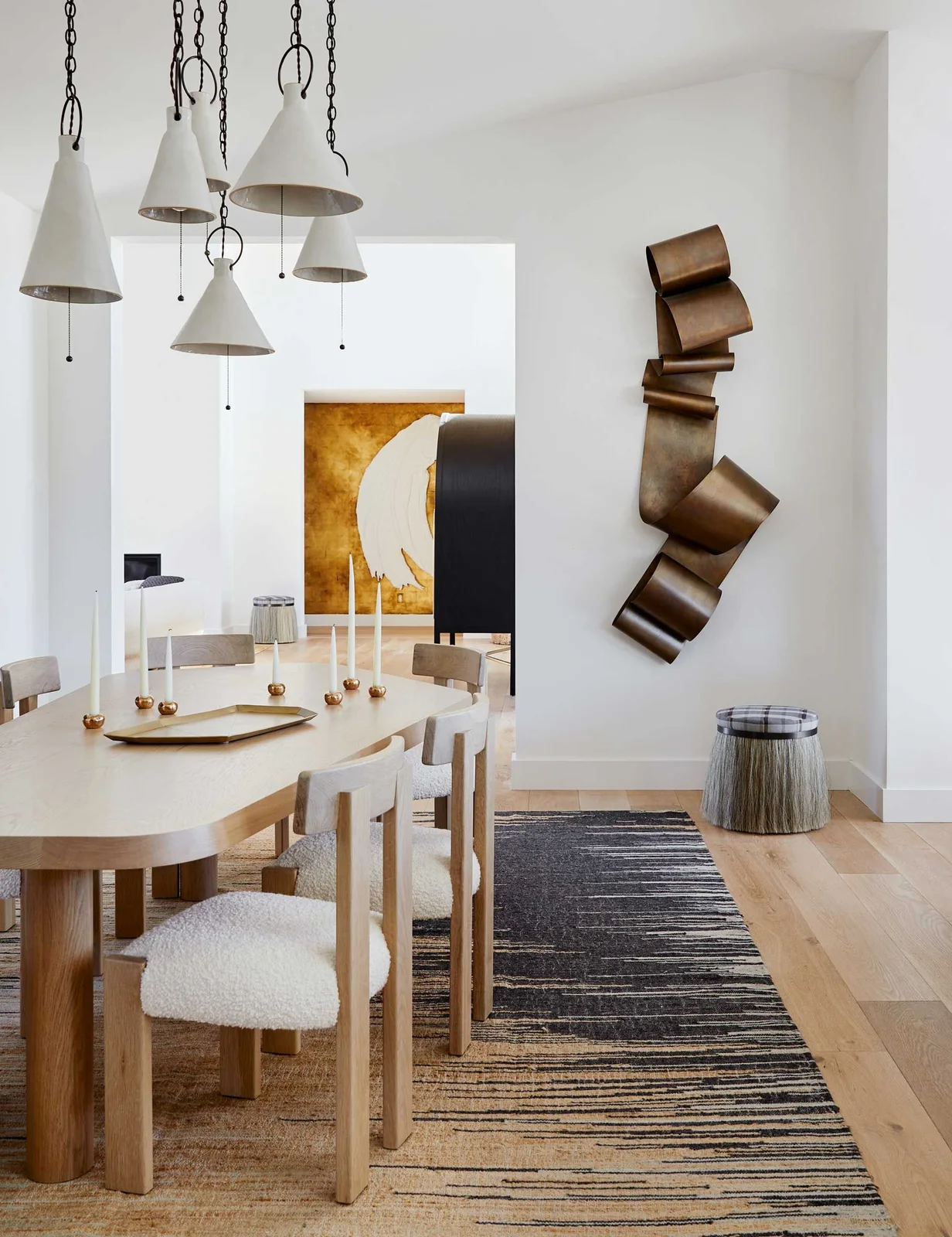
The table’s irregular outline introduces a softer shape among the pale upholstered chairs. Broad wood supports provide a warmer lower section, while white cone lights form a separate overhead group. Large abstract pieces carry the surrounding wall interest, with the darker striped rug creating a clearer boundary beneath the otherwise light seating arrangement.
Check whether each seating position has enough usable table depth before choosing an irregular shape. Test legroom around the broad supports and confirm chair movement on the rug. Keep the surrounding objects limited so the furniture can remain the main feature, and choose upholstery from actual stain care requirements rather than assuming pale fabric suits every eating routine.
IDEA 17 / 20
Give a Pale Dining Group One Blue Wall Accent
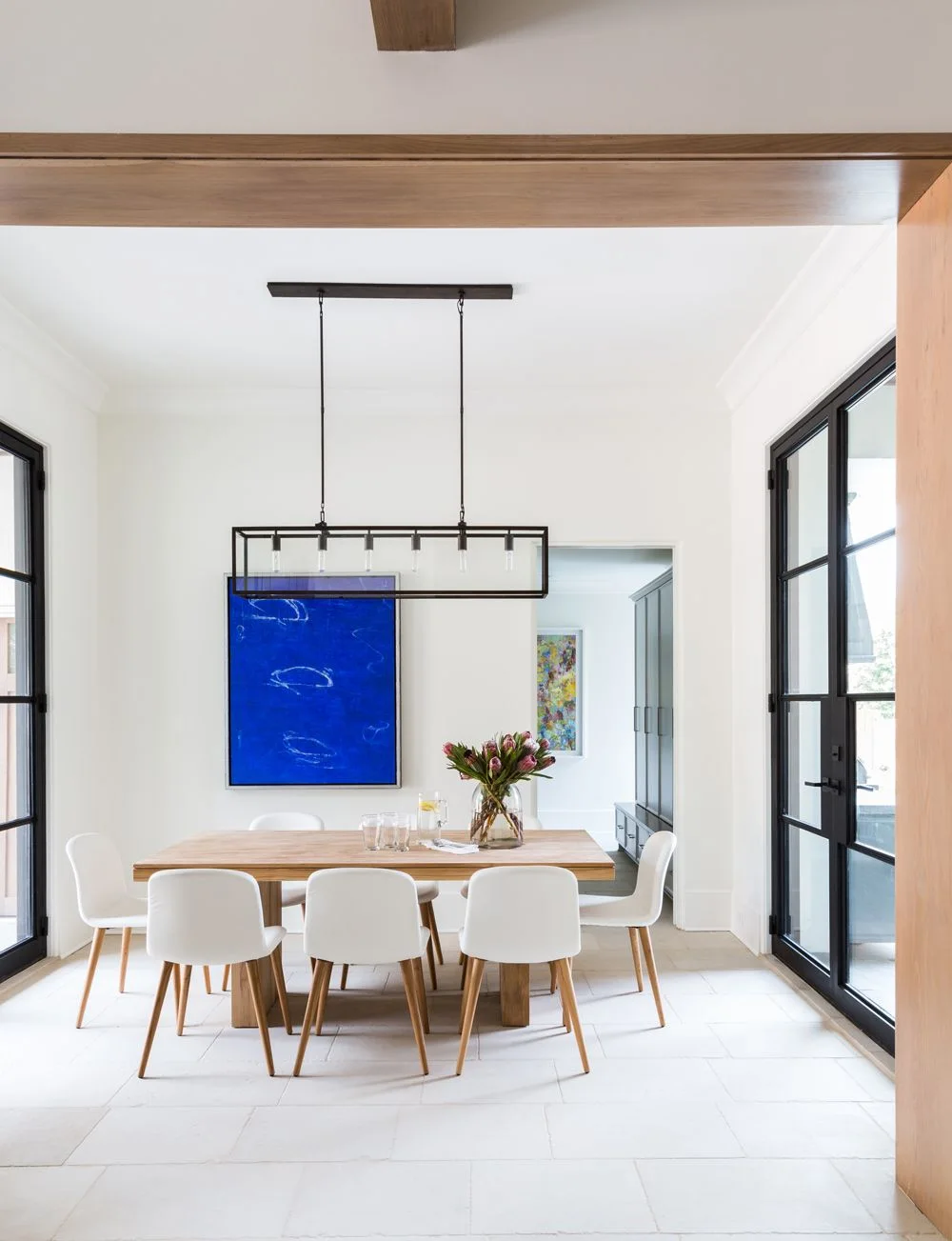 SaveSupport Non AI Creator
Image credit: Marie Flanigan
The pale wood table and white chair backs keep the main seating group comparatively light. A rectangular black light connects with the glazed door frames, introducing consistent straighter outlines around the furniture. The blue artwork provides one concentrated color block on the white wall beneath the warmer ceiling beams.
Keep the route to both glazed sides clear when the chairs are occupied and check the table supports against comfortable legroom. Use one larger artwork to introduce color if you prefer fewer smaller displays. Confirm the light’s coverage and installation for your table, retaining useful illumination and window access alongside the room’s restrained palette.
IDEA 18 / 20
Pair a Curved Dining Bench with a Simple Dark Table
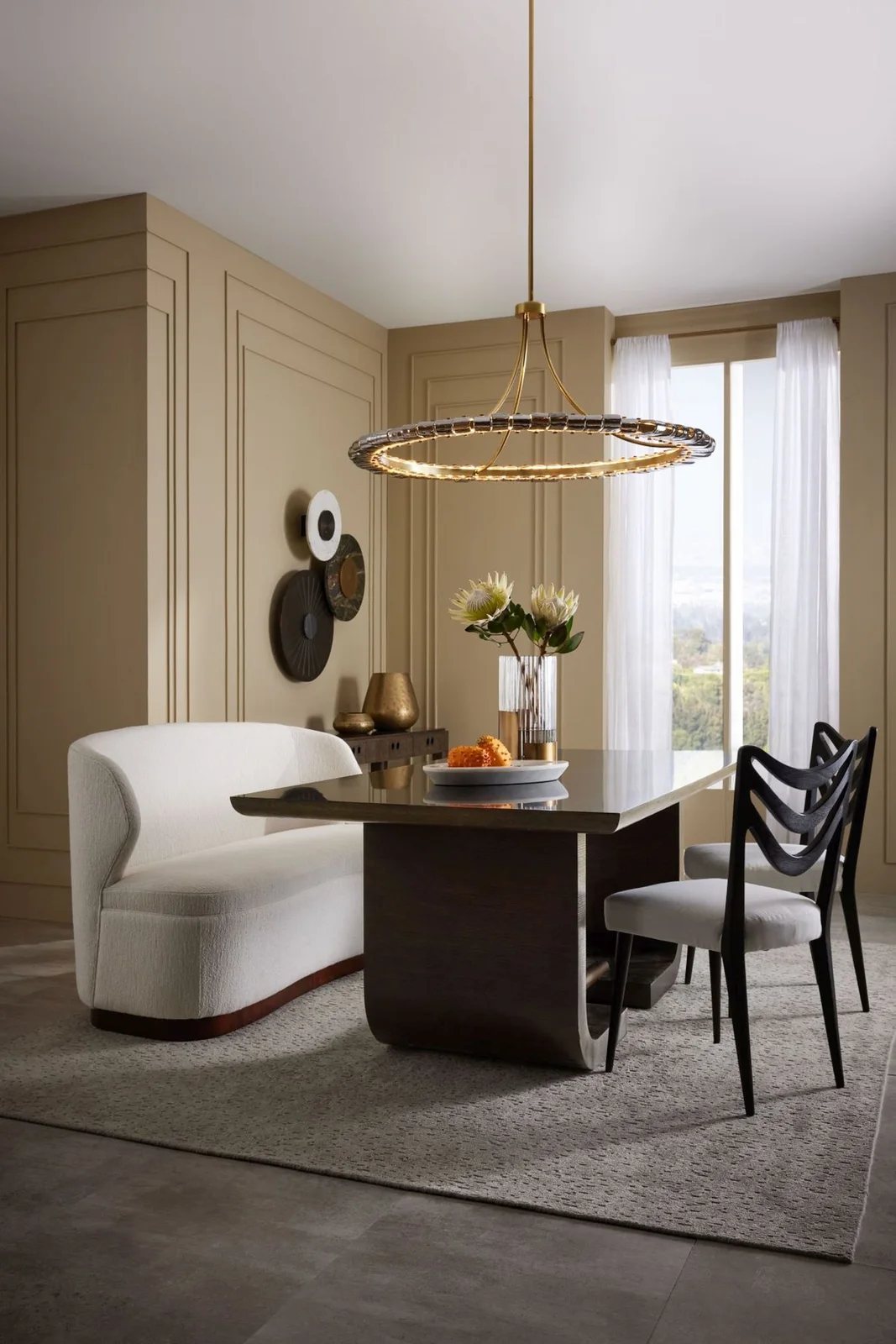 SaveSupport Non AI Creator
Image credit: Arteriors
The curved pale bench introduces one broader soft shape beside the straight dark table. Black chair backs repeat smaller curves on the opposite side, keeping the seating group connected without matching every piece. Muted paneled walls and pale curtains provide quieter surrounding surfaces, with the ring pendant forming a distinct rounded outline above.
Test the curved bench with the table so diners can sit comfortably and reach their places without leaning awkwardly. Choose upholstery suited to meal spills and plan a practical way to clean beneath the seat. Keep cushions and tabletop objects limited, letting the furniture’s shape provide interest while preserving comfortable entry at each end of the table.
IDEA 19 / 20
Use Yellow Seats to Frame a Clear Courtyard View
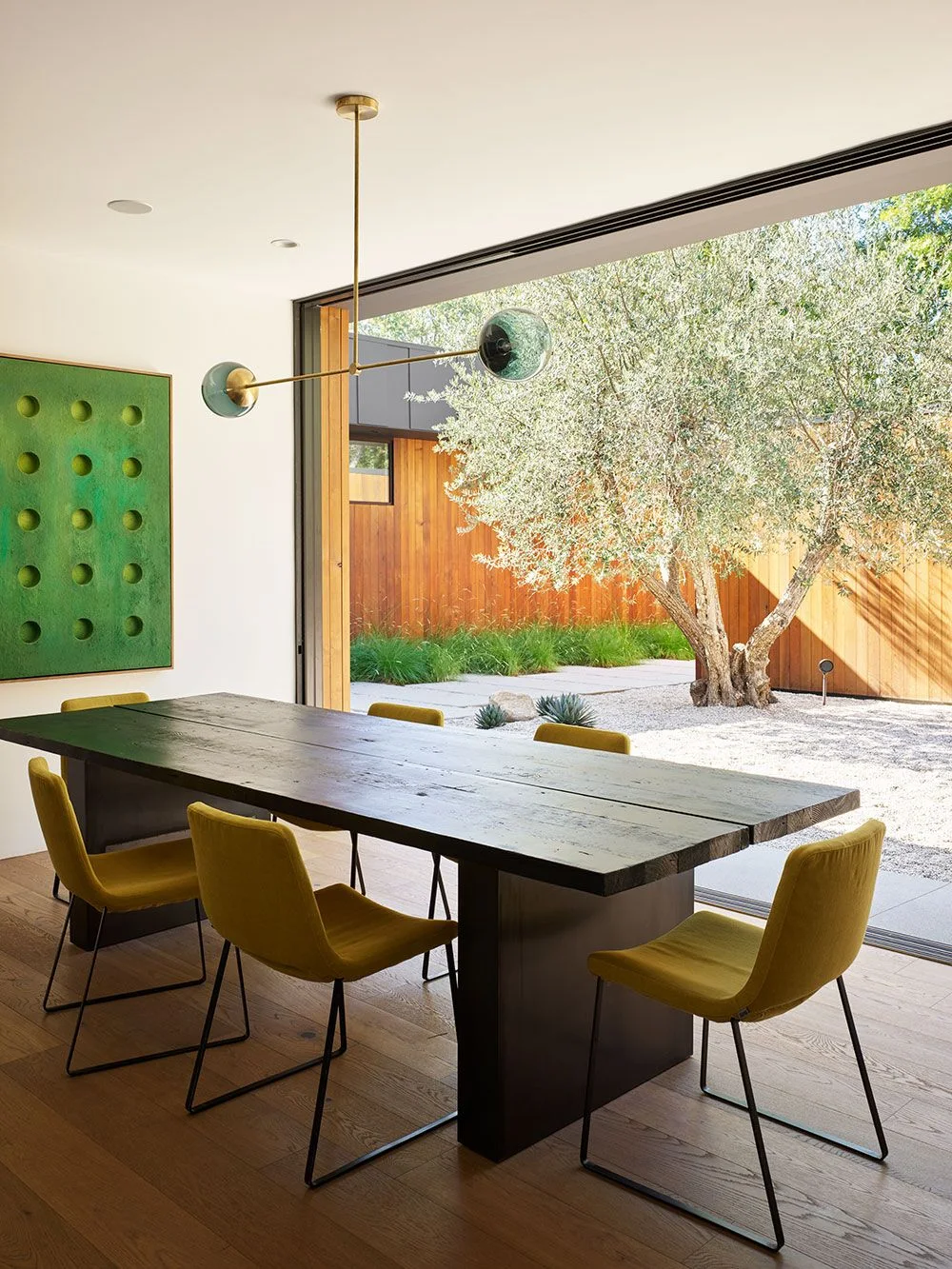 SaveSupport Non AI Creator
Image credit: Matthew Millman
Yellow chairs give the dark tabletop a repeated warmer outline along its sides. A slim light with rounded ends leaves much of the courtyard view visible above the seating. The green artwork supplies a separate wall accent, while the larger pale surfaces and wood floor keep the surrounding finish group relatively limited.
Plan the table position around opening movement and everyday access to the courtyard. Compare yellow upholstery with the actual outdoor light and check its care requirements before choosing several chairs. Keep taller table decorations away from the main view, preserving comfortable dining reach as well as the sense of connection with the outdoor space.
IDEA 20 / 20
Keep a Wood Sideboard Useful Beneath One Artwork
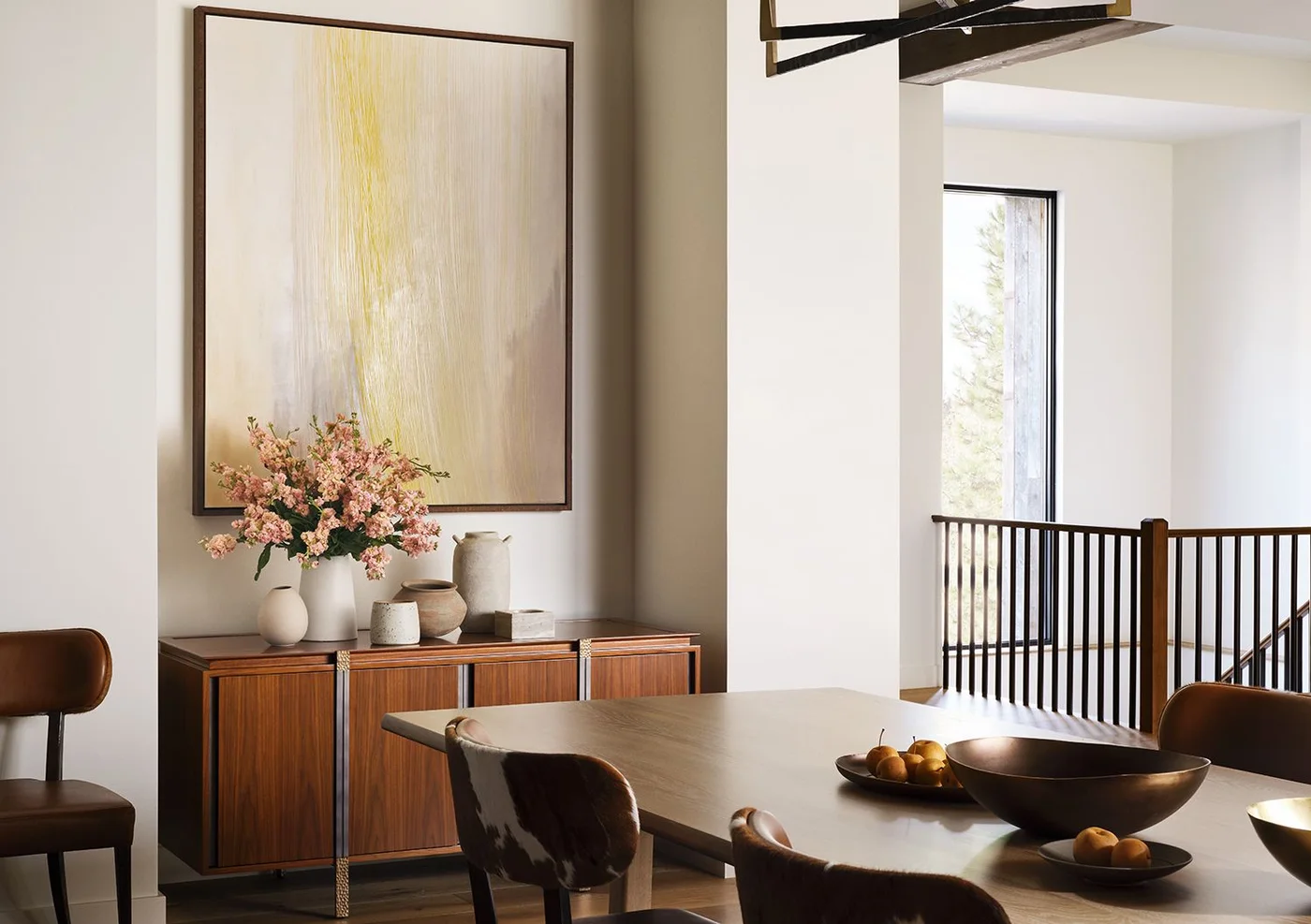 SaveSupport Non AI Creator
Image credit: David Mitchell. Design by Daniel Joseph Chenin
The wood sideboard creates a warm rectangular section beneath one larger pale artwork. Curved brown chairs repeat smaller warm shapes around the light tabletop, while the dark stair railing provides a more regular background grid. A small number of vessels stays grouped on the cabinet, leaving most of its top available.
Choose sideboard compartments from serving dishes, linens and the items you need near meals. Preserve comfortable access between the table and nearby circulation route, checking drawers or doors with chairs pulled out. Keep the display manageable and use the remaining top for serving, rather than adding accessories until a useful storage piece becomes difficult to use.
BRING IT ALL TOGETHER
Choose comfort before simplifying the room
Check chair support, table reach and access with the dining group in use. A quieter arrangement still needs convenient tableware storage and enough room for serving. Keep the furniture that makes meals comfortable, then reduce excess objects or competing colors around it rather than treating an empty room as the only goal.
Compare a small group of larger finishes in your own lighting. A warm wood table, one artwork or a distinct pendant can provide character without filling every wall. Check upholstery and tabletop care before buying, and retain usable surfaces so the room stays straightforward to maintain between normal meals.