A minimalist nursery can give sleep, changing and adult seating their own useful places without filling every wall or floor corner. These photographs include pale furniture groups, darker rooms and limited patterned backdrops, alongside smaller storage details. Keep the ideas that simplify daily care rather than assuming minimal means every surface must be white.
Photographed rooms can include staged pillows, blankets, bumpers, mobiles or decorative toys that should not be copied into an infant sleep space. Follow current CPSC Safe Sleep guidance: use a compliant crib or other suitable infant sleep product, a firm flat mattress and only its fitted sheet, placing the baby on their back. Keep cribs away from windows, cords and reachable hanging objects, and anchor storage appropriately.
PART 01
Connect storage with useful daily care
IDEA 01 / 20
Connect Three Useful Pieces with a Pale Finish
 SaveSupport Non AI Creator
Source: www.petiteamelie.co.uk
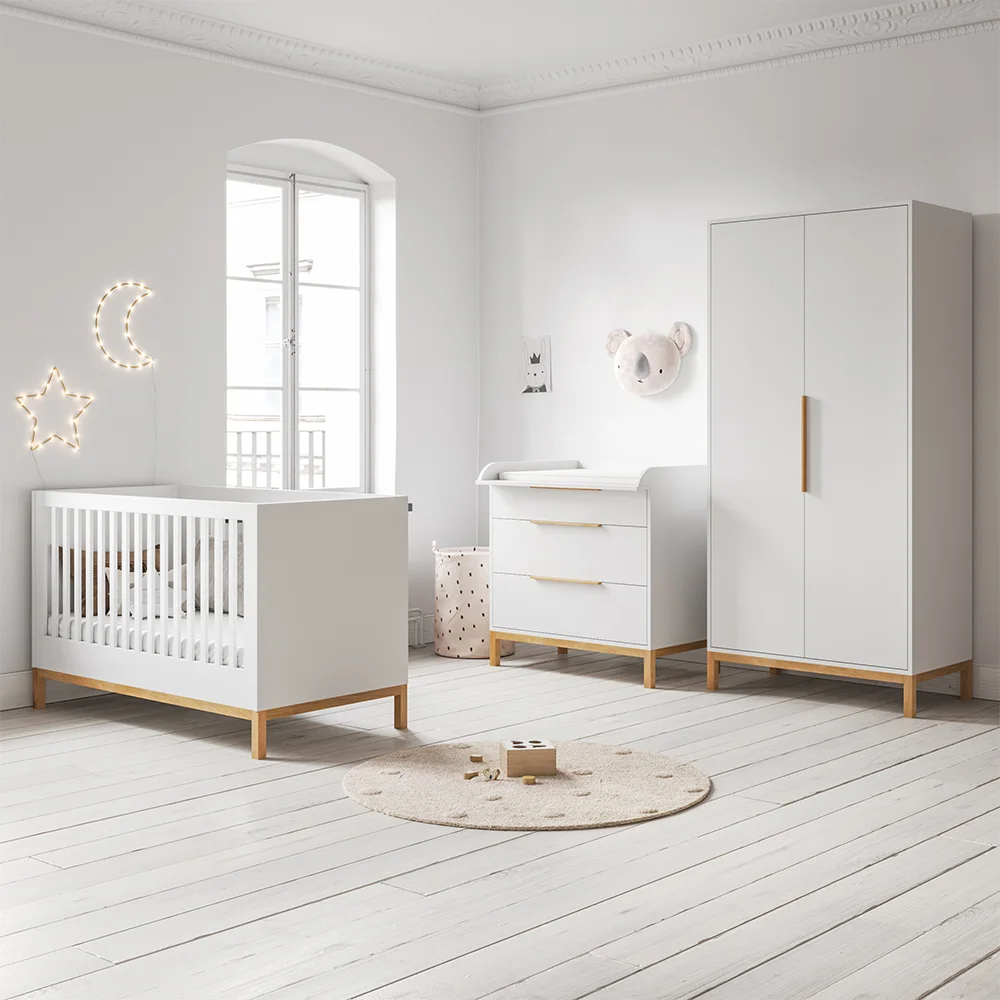
The pale crib, drawer chest and wardrobe create a connected furniture group with three distinct jobs. Wood legs and handles supply smaller warm details below the plain white fronts. A round rug marks a limited floor area, leaving the surrounding room visible without several separate furniture colors or a larger decorative display.
Choose the pieces for useful sleep, changing and clothing storage rather than buying a whole matching set automatically. Japandi nursery ideas compare other limited furniture groups. Anchor storage appropriately, place the crib away from windows and accessible cords, and remove staged bedding or toys so infant sleep uses a firm flat compliant surface with only a fitted sheet.
IDEA 02 / 20
Keep Changing Supplies in Open Fabric Bins
 SaveSupport Non AI Creator
Image credit: IKEA
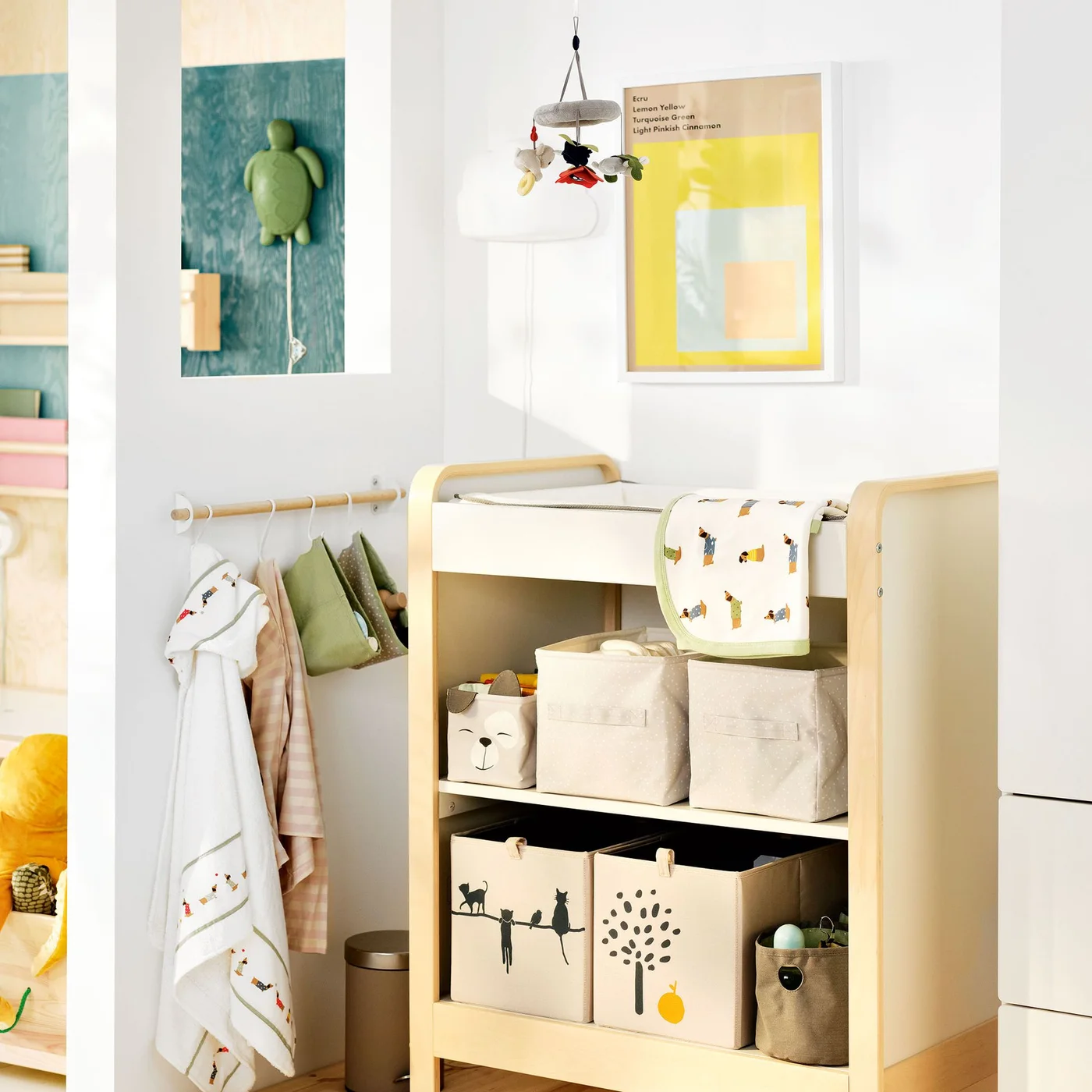
The open changing unit keeps supplies visible in separate fabric bins beneath the upper surface. Pale wood provides one warm furniture color against the white wall, while the smaller yellow picture adds a contained accent. A short clothes rail gives frequently used garments another defined position beside the shelving.
Set up changing supplies within your reach before putting a baby on the surface, keeping one hand on the baby and never leaving them unattended. Follow the unit’s assembly and anchoring guidance, removing the hanging mobile and heavy overhead picture from the changing position. Keep bins manageable so retrieving a clean item does not require sorting through several crowded layers.
IDEA 03 / 20
Give Closed Drawers a Limited Color Accent
 SaveSupport Non AI Creator
Image credit: Photo: Melanie Johnson. From: Abbe Fenimore
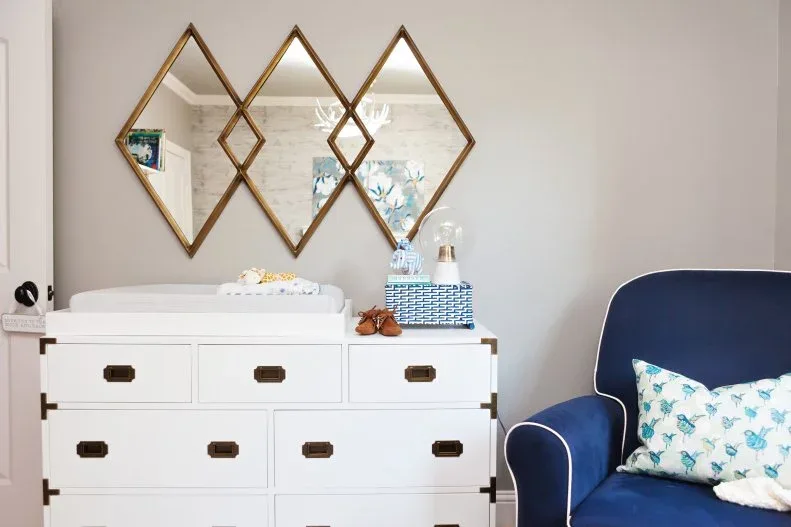
The white dresser gives daily supplies a mostly closed storage position beneath the repeated mirror shapes. Dark handles define the drawers without another large furniture color, while the blue chair supplies a single stronger seating accent. The pale wall keeps the larger background quieter around the two main useful pieces.
Check the dresser’s suitability for a changing attachment rather than assuming any flat top can serve that job. Anchor the furniture and install mirrors securely away from the changing area. Keep everyday supplies within adult reach, and test drawer access with someone seated so the chair does not obstruct the storage used most often.
IDEA 04 / 20
Keep a Dresser and Chair on One Clear Wall
 SaveSupport Non AI Creator
Image credit: Photo: Hugo Landa Garcia. From: Stephanie DeBrincat
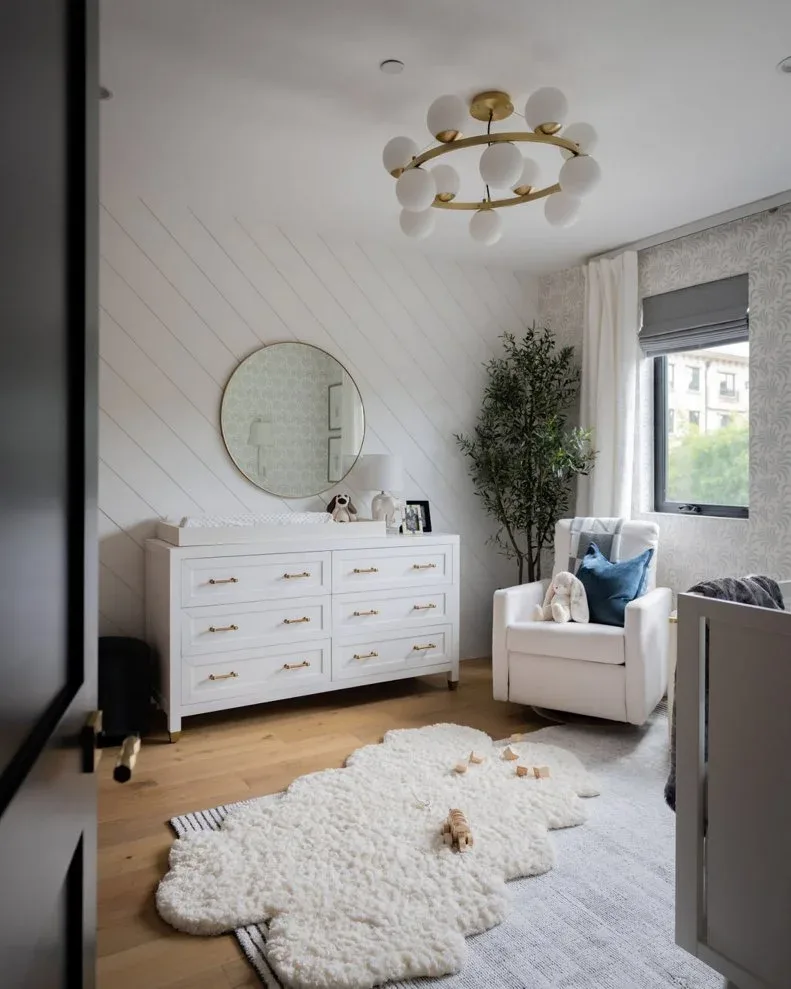
The white dresser and pale chair form a limited furniture group beside the diagonal boards. A round mirror introduces one curved detail above the straighter storage fronts, with warm flooring separating the larger pale surfaces. The darker shade adds a smaller defined window edge without changing the whole room’s color palette.
Farmhouse nursery ideas compare other uses of board detailing beside practical furniture. Keep the chair’s movement and drawer access clear before adding a footrest or more baskets. Anchor the dresser and position the mirror securely outside the changing area. Choose cordless window coverings, keep furniture away from windows and remove or secure overlapping rug edges if they make carrying a baby through the room less steady.
IDEA 05 / 20
Give Everyday Supplies Separate Basket Compartments
 SaveSupport Non AI Creator
Image credit: Photo: Life Created. From: Kirsten Holmstedt
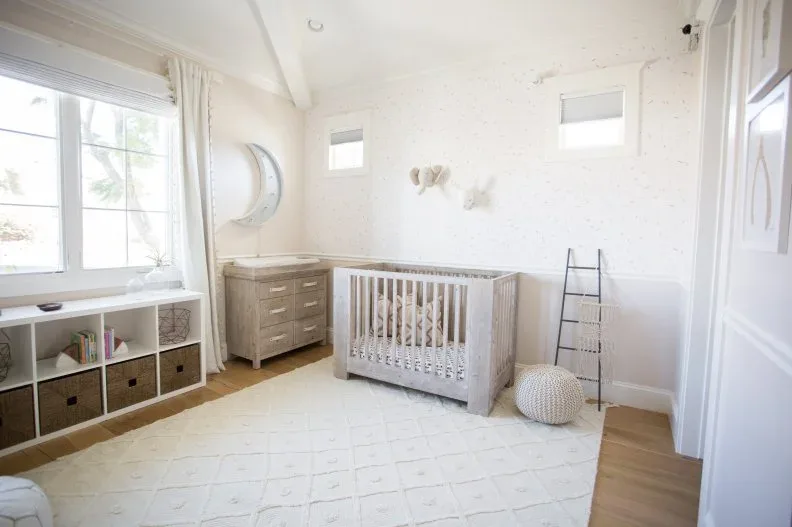
The pale wood crib and dresser connect the main furniture through a limited warm finish. Separate baskets organize smaller supplies within the lower storage, while the white walls keep the larger background lighter. A subtle rug pattern adds a smaller floor detail without requiring additional painted furniture or several competing wall decorations.
Use reachable baskets for adult care supplies and keep heavier items lower, anchoring the storage appropriately. Preserve an uncluttered route between changing and sleep positions. Move the crib and climbable furniture away from windows and cords, and remove pillows, blankets, toys and other staged items from the crib before infant sleep.
PART 02
Keep larger furniture and clothing manageable
IDEA 06 / 20
Keep a Brick Backdrop Around Plain Wood Furniture
 SaveSupport Non AI Creator
Image credit: Photo: Lauren Rubin Architecture PLLC. From: Lauren Rubin Architecture
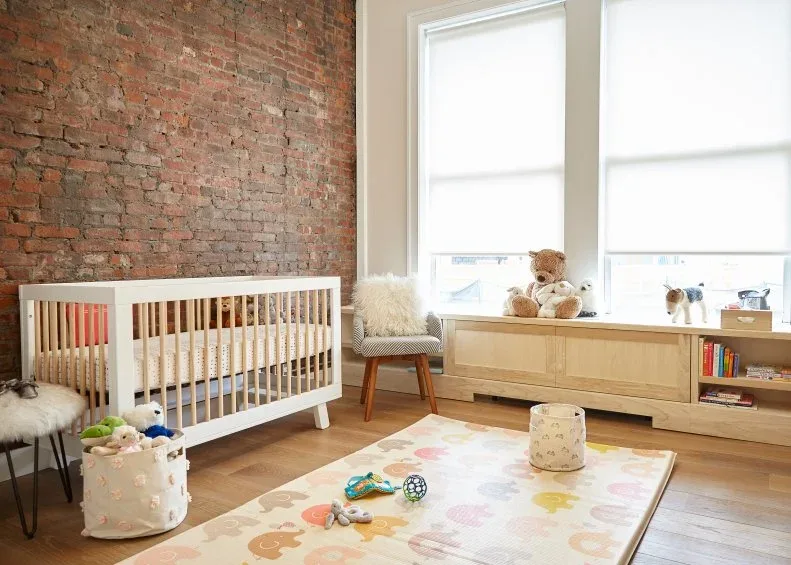
The brick wall provides much of this room’s texture, with plainer wood furniture keeping the main storage and sleep pieces visually connected. A colorful rug concentrates the brighter pattern at floor level. The low storage supplies a separate surface beside the windows, leaving the surrounding walls comparatively free of additional decoration.
Work with useful existing wall texture instead of adding more large patterns around it. Check furniture anchoring and crib condition, keeping the sleep position away from windows, cords and reachable objects. Use the rug for supervised floor activity when suitable, then clear loose toys from the carrying route and keep the infant sleep space bare except for its fitted sheet.
IDEA 07 / 20
Use Slatted Detail on a Small Storage Group
 SaveSupport Non AI Creator
Source: www.petiteamelie.co.uk
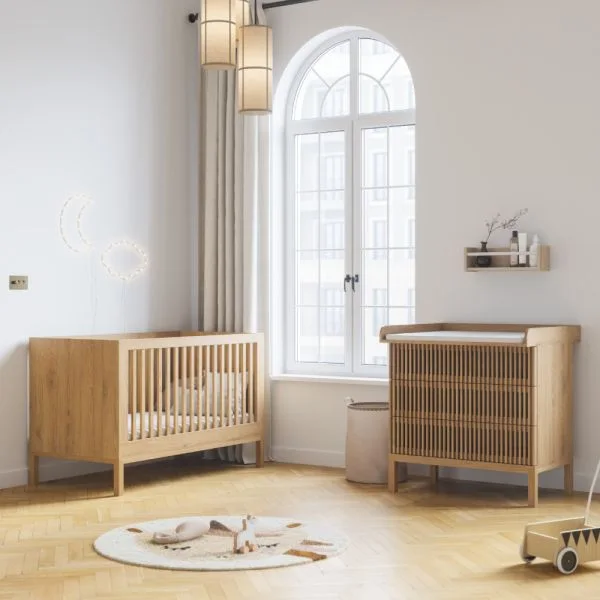
The crib and slatted chest connect through their warmer wood finish, with the repeated narrow lines supplying most of the furniture detail. Pale walls leave the taller arched window prominent behind them. A small patterned rug adds a separate rounded floor shape without filling the open area with extra storage pieces.
Check whether both furniture jobs fit comfortably before buying pieces for their matching slats. Place the crib away from the window and accessible curtains or cords, anchor the chest and secure changing supplies within adult reach. Keep suspended lights outside the crib’s reach and remove the staged pillows and textiles before preparing the infant sleep surface.
IDEA 08 / 20
Keep a Simple Drawer Chest Beside the Crib
 SaveSupport Non AI Creator
Source: www.petiteamelie.co.uk
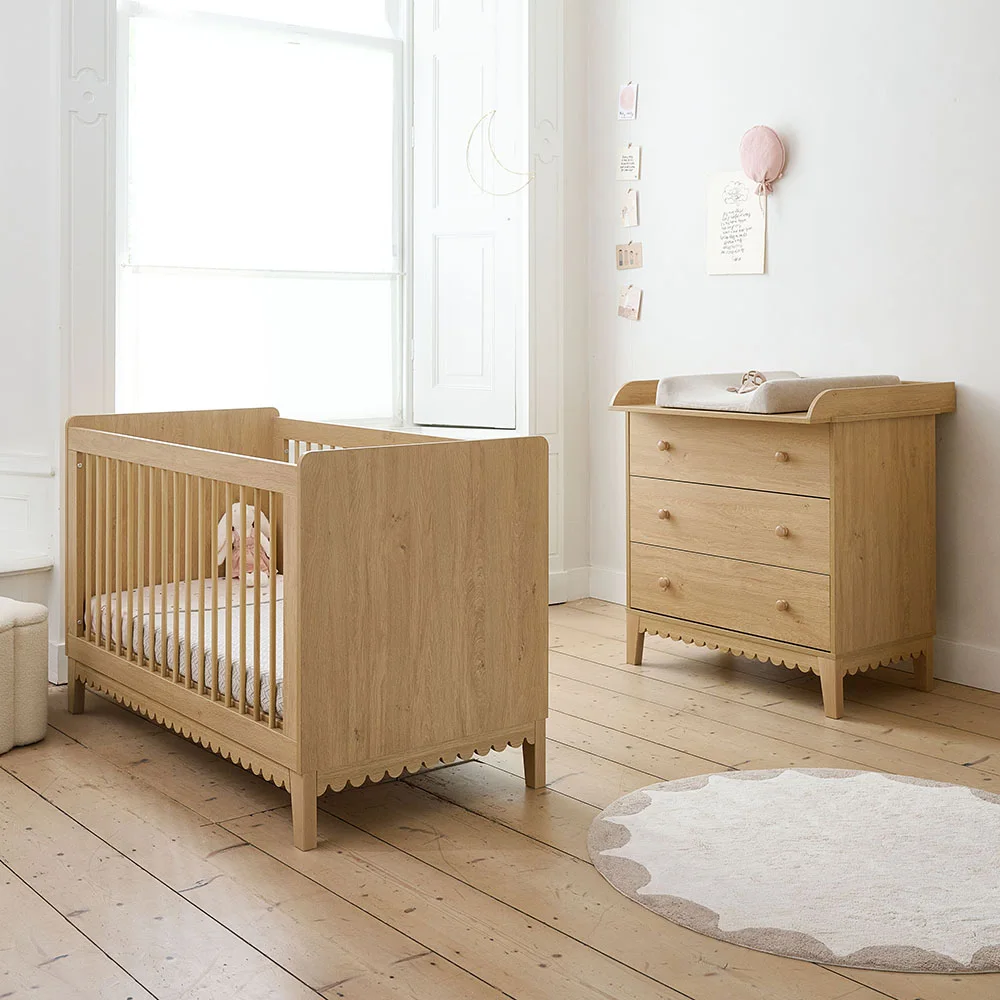
The crib and chest share a pale wood finish that keeps their different furniture shapes connected. Plain drawer fronts supply useful closed storage without a larger display cabinet. The scalloped rug repeats a smaller curved detail at floor level, leaving the white wall and surrounding wood flooring comparatively quiet.
Keep daily supplies in reachable drawers and anchor the chest according to its instructions. Assess changing-top compatibility separately from the dresser’s appearance, staying beside the baby throughout changing. Move the crib away from windows and cords and clear all pillows, toys and loose covers from the sleep surface, using only the correctly fitted sheet on its suitable firm flat mattress.
IDEA 09 / 20
Display Only a Small Clothing Selection
 SaveSupport Non AI Creator
Source: www.petiteamelie.co.uk
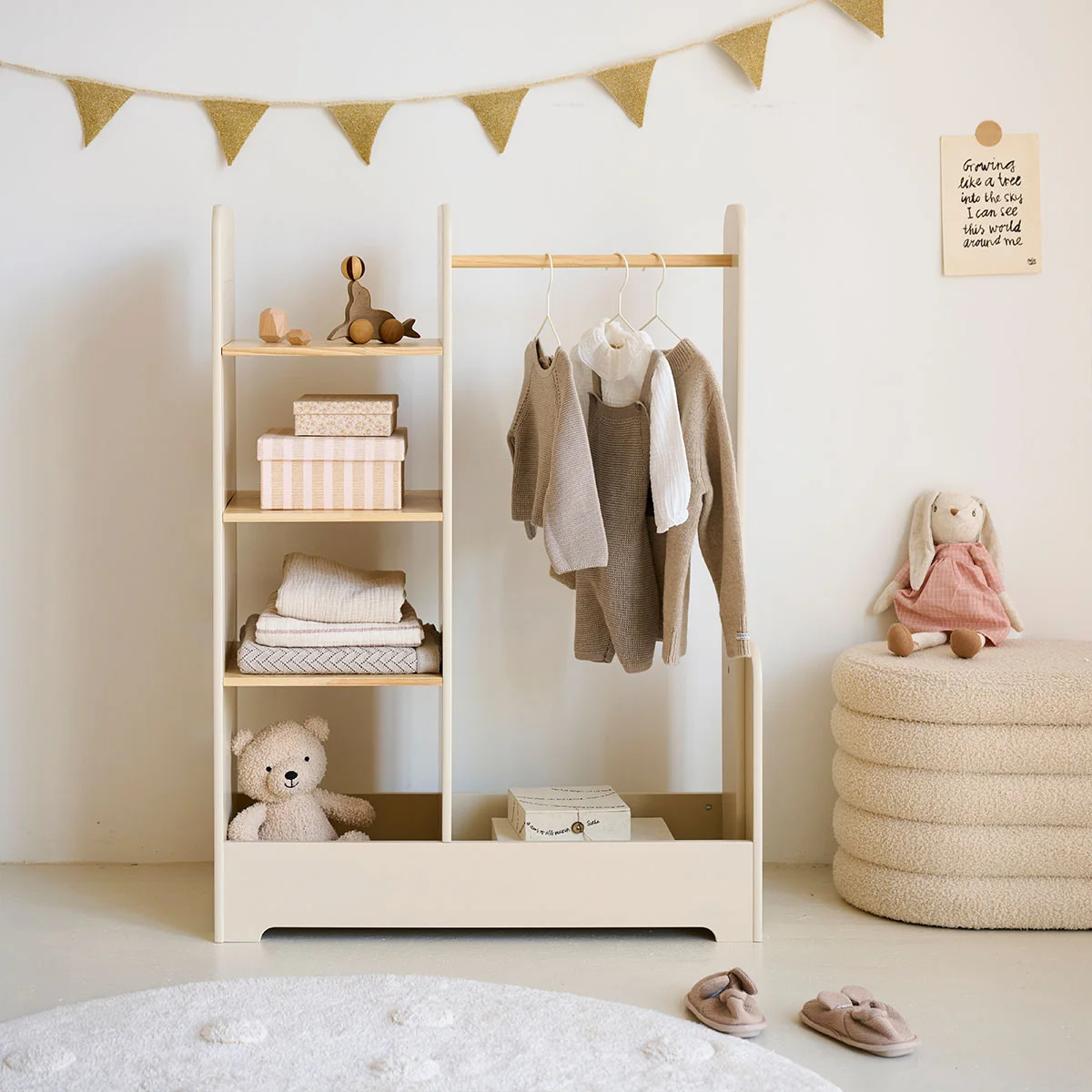
The small rail separates hanging garments from folded items on its narrow shelves. Pale wood posts connect with the white lower drawer, giving the storage one limited furniture palette. A few clothes remain visible rather than filling the whole rail, with the nearby pouf providing a separate low rounded shape.
Choose open clothing storage only when the displayed selection stays manageable and the remaining clothes have a useful home. Anchor the unit appropriately and keep small accessories, hangers and decorative garlands out of reach. Leave the floor route clear and store adult care supplies securely rather than treating an open rail as suitable storage for every nursery item.
IDEA 10 / 20
Use Plain Drawers for Everyday Clothing
 SaveSupport Non AI Creator
Source: www.petiteamelie.co.uk
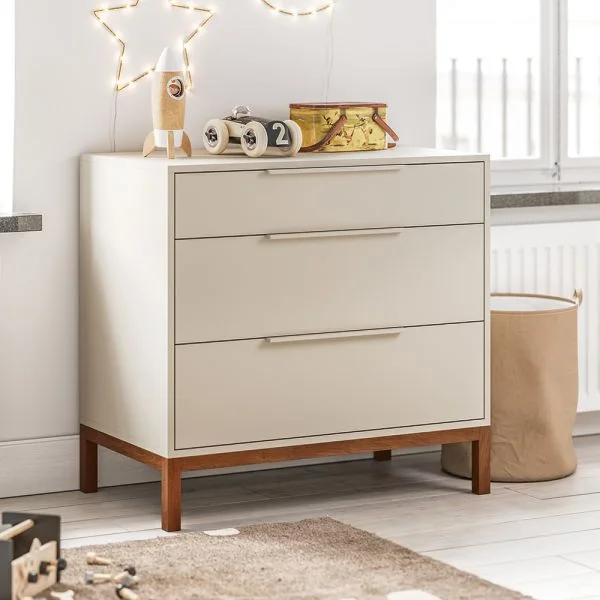
The drawer chest gives this nursery detail a clear closed-storage shape, with wood legs supplying a smaller warmer edge below. Long straight pulls keep the fronts simple. A fabric hamper provides another defined position beside it, while the pale wall and window background leave the larger furniture outline visible.
Sort drawers by supplies you use together, keeping heavy belongings lower and anchoring the chest according to its instructions. Keep the furniture away from windows and accessible cords, securing or removing the decorative light cables. Place small display objects outside a child’s reach and avoid filling the entire top when a useful adult landing surface would make daily care easier.
PART 03
Separate decoration and supervised play from sleep
IDEA 11 / 20
Contain a Muted Mural Around a Plain Crib
 SaveSupport Non AI Creator
Image credit: Future PLC
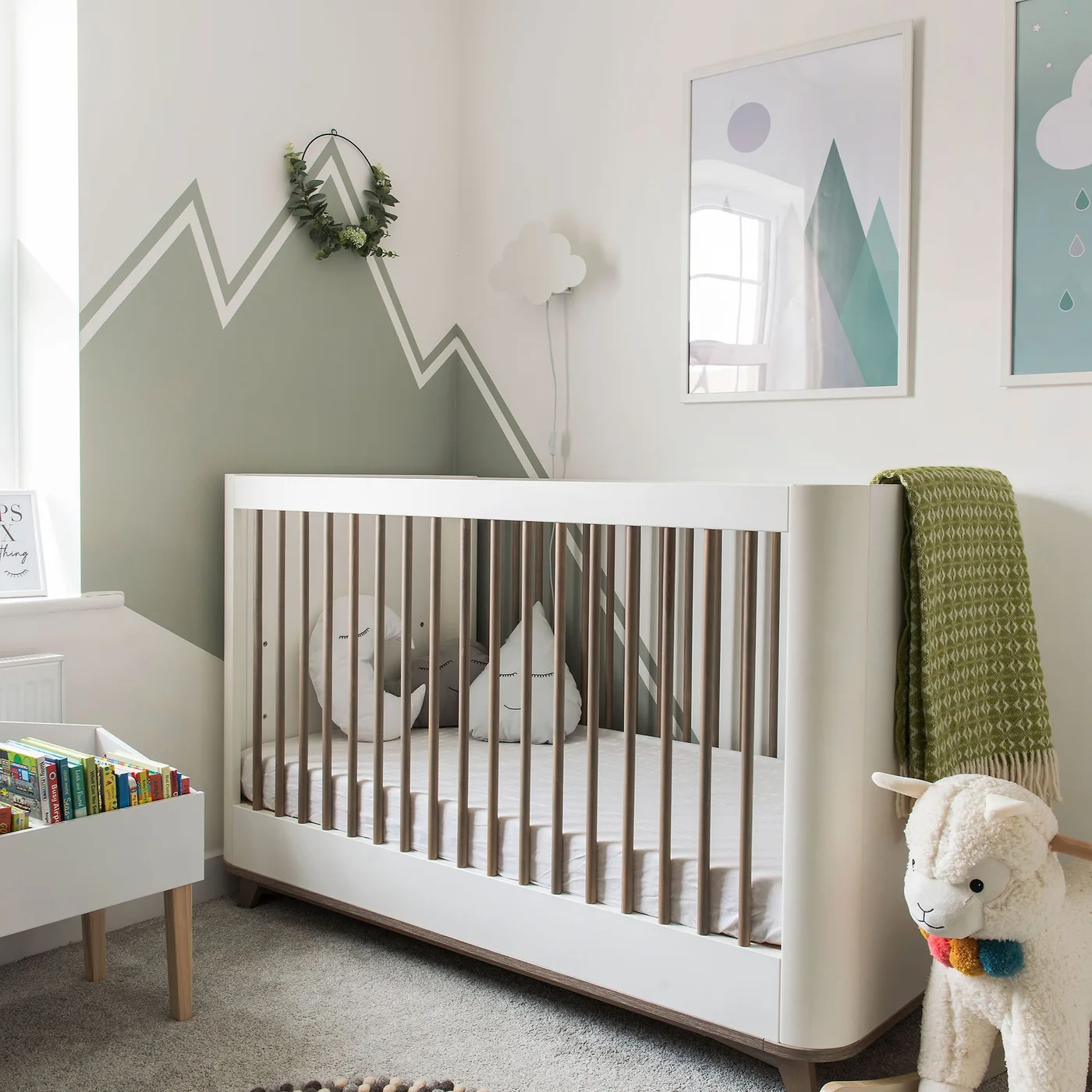
The mountain-shaped mural supplies a contained wall color behind the simpler white crib. Wood slats introduce warmth without another painted furniture group, with the smaller picture shapes repeating the wall’s geometric character. The neighboring low book storage provides a separate useful position rather than adding a taller display cabinet beside the sleep area.
Keep the mural and furniture as the useful inspiration, placing pictures and decorative objects securely away from the crib. Remove the pictured cover, pillows and toys before infant sleep, using the appropriate firm flat mattress and fitted sheet only. Anchor adjacent storage and keep cords outside reach as the child becomes more mobile.
IDEA 12 / 20
Separate Books and Supervised Play from Sleep
 SaveSupport Non AI Creator
Image credit: Future PLC/Anna Stathaki
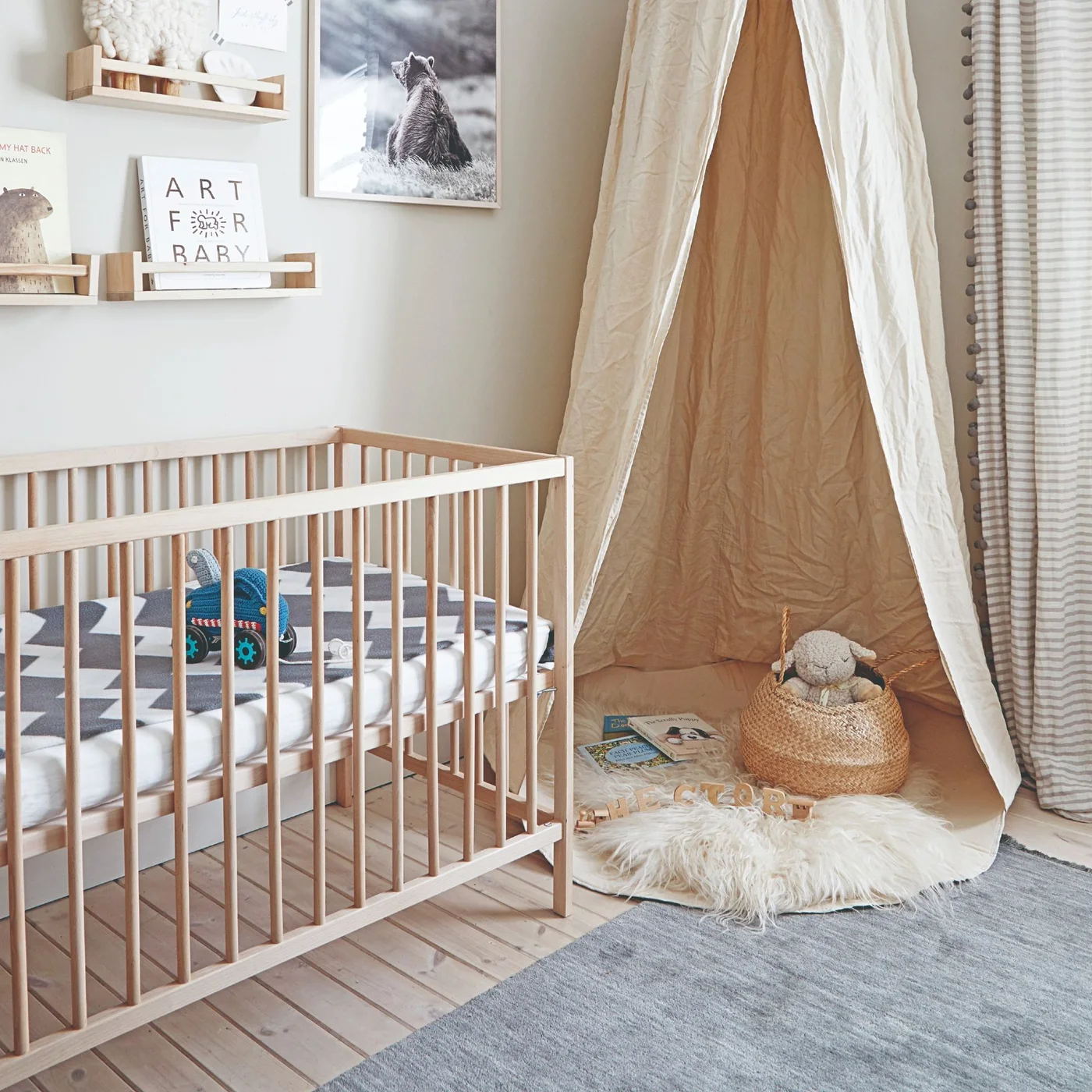
The pale wood crib gives the room a simple central furniture outline beside the smaller book ledges. Books face outward in a limited selection rather than occupying a large freestanding shelf. A separate fabric corner marks a play position, with pale walls keeping the surrounding furniture and floor textures connected.
Treat the fabric corner as supervised awake play, keeping its hanging material and cords well away from the crib. Secure book ledges outside the sleep area and remove the pictured pillows and toys from the crib before sleep. Keep the carrying route clear and choose only play items appropriate for the child’s actual age and development.
IDEA 13 / 20
Keep One Tall Wardrobe Visually Simple
 SaveSupport Non AI Creator
Source: www.petiteamelie.co.uk
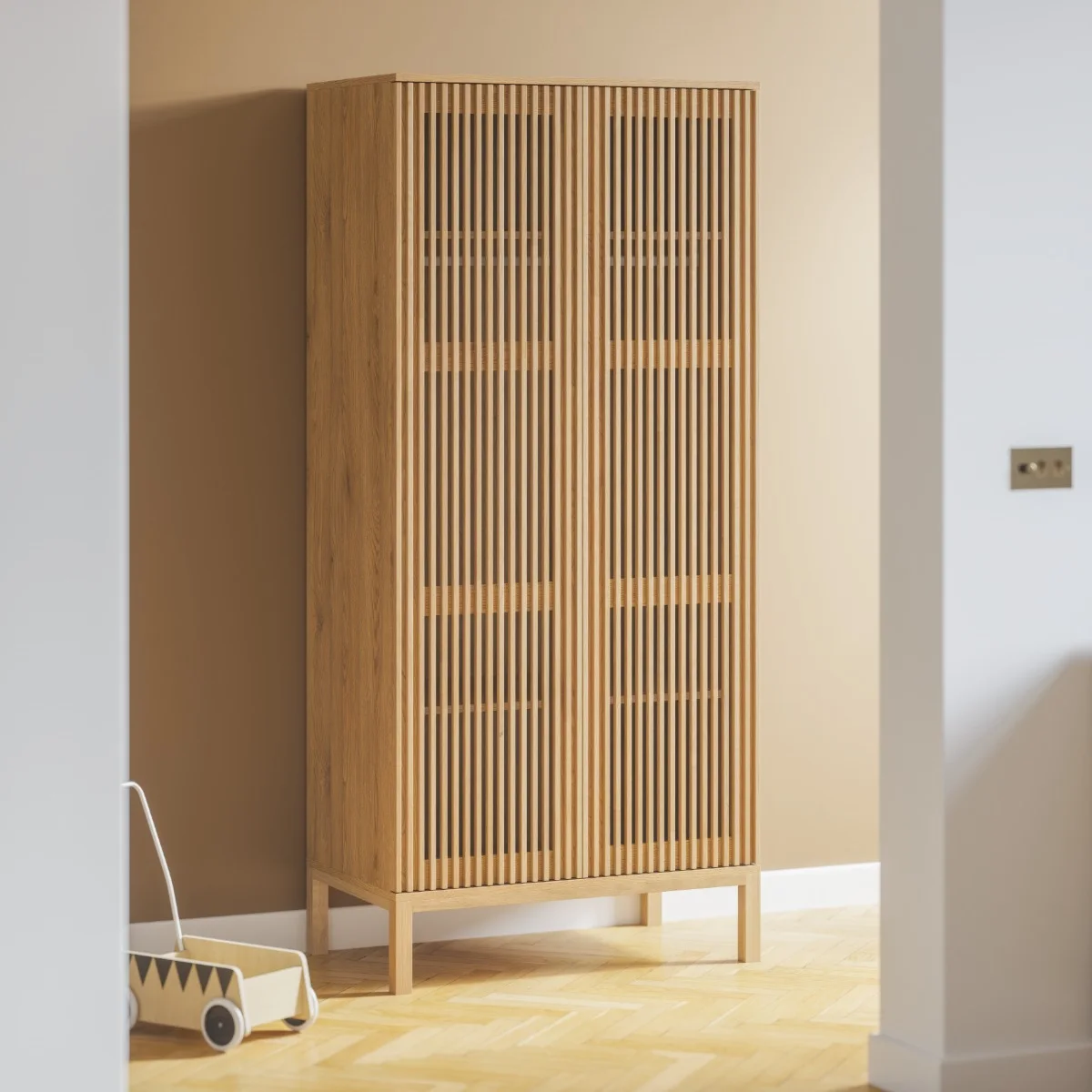
The wardrobe concentrates its detail in repeated wood slats rather than a mix of several colors or applied patterns. Its taller outline gives clothing a separate storage position within the pale room. The simpler lower frame leaves the base visible, keeping the furniture shape clearer than an adjoining collection of small cabinets.
Check internal storage, door movement and useful clothing reach before choosing the wardrobe for its slatted appearance. Anchor the tall unit appropriately and keep heavy belongings low. Leave the floor beneath and around it easy to clean, putting away small toys when they obstruct the route used to carry a baby or reach the wardrobe.
IDEA 14 / 20
Use a Single Mountain Wall Behind Plain Furniture
 SaveSupport Non AI Creator
Image credit: Photo: Rebecca Zajac. From: Rebecca Zajac
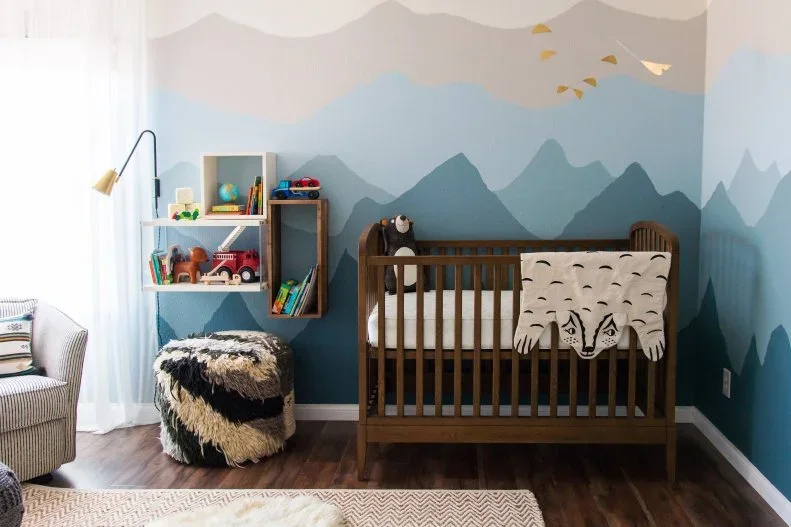
The layered mountain mural concentrates the room’s stronger color on one wall. The wood crib supplies a warmer simpler furniture outline against it, while a pale chair keeps the seating quieter. Small open boxes separate books and toys beside the wall rather than spreading more display furniture across the floor.
Keep the mural as the main decorative feature and reduce extra objects where they crowd daily care. Secure shelves and lights away from the crib, keeping books and small toys outside reach. Remove the staged toy and draped blanket from the infant sleep space, and check that the pouf does not narrow the route between chair and crib.
IDEA 15 / 20
Connect White Furniture with a Graphic Rug
 SaveSupport Non AI Creator
Image credit: Storkcraft
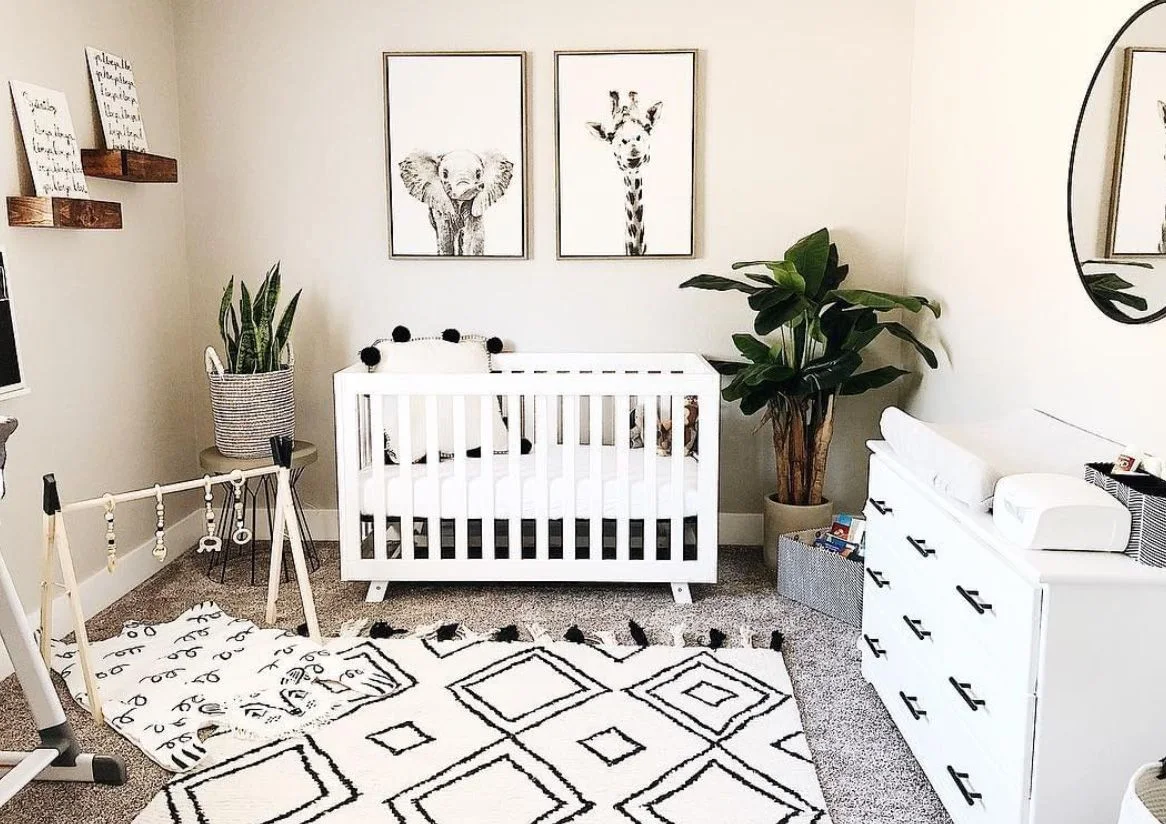
The white crib and dresser connect the main furniture without additional large painted surfaces. Dark drawer handles repeat the smaller picture frames, while the geometric rug carries the stronger pattern below. The pale wall leaves the furniture group visible around the plants and smaller floor-play arrangement.
Keep the rug stable and limit extra floor objects when they interrupt the carrying route. Anchor the dresser, place pictures securely away from the crib and keep plant pots outside the child’s reach. Remove the pictured decorative garland and any loose bedding or toys from the sleep area, retaining only the suitable fitted sheet for infant sleep.
PART 04
Use limited color around a clear layout
IDEA 16 / 20
Use One Blue Wall Beside Quieter Seating
 SaveSupport Non AI Creator
Image credit: Photo: Stacy Zarin Goldberg. From: Breeze Giannasio
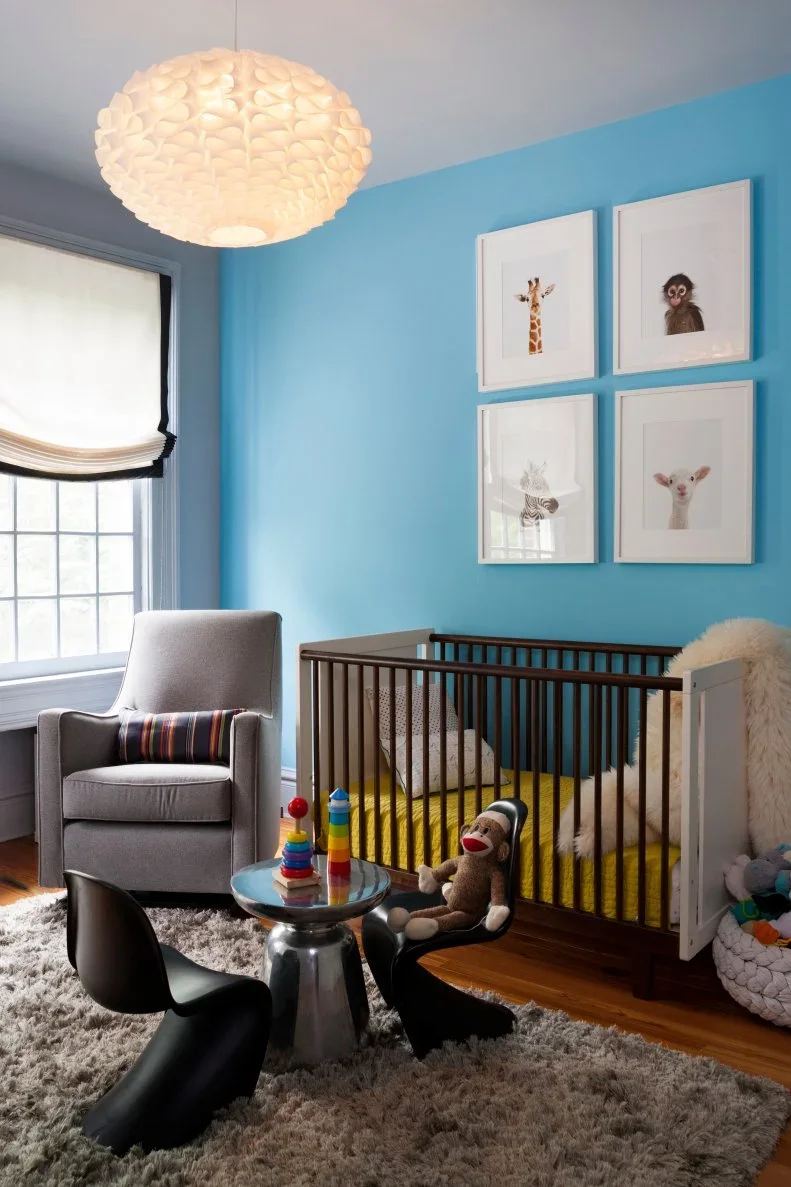
The blue wall provides one stronger background behind the wood crib, leaving the nearby chair and shade paler. A limited group of animal pictures repeats a familiar frame shape above. The rounded pendant supplies a separate light outline without adding another storage unit or a large collection of furniture colors beside the chair.
Keep a comfortable route to the crib and test the chair for supported sitting during care. Position pictures securely away from the sleep area and choose cordless window coverings, keeping furniture away from windows. Remove pillows, toys and loose blankets shown in the crib before sleep, checking the crib and mattress against current safety requirements and recalls.
IDEA 17 / 20
Keep a Repeated Wall Pattern Within One Palette
 SaveSupport Non AI Creator
Image credit: Photo: Laura Metzler. From: Kerra Michele Huerta
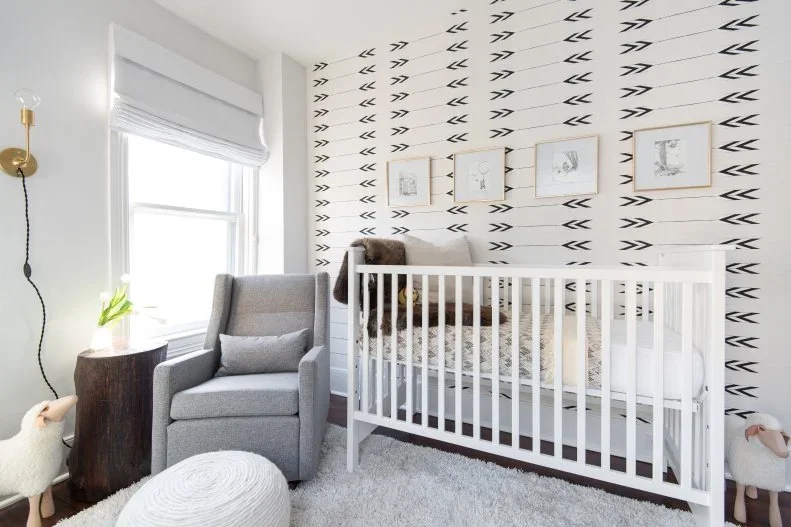
The small dark arrow shapes provide one repeated wall pattern behind the plain white crib. A gray chair connects to the quieter surrounding surfaces, while a smaller wood table introduces warmth beside it. The rounded footrest supplies another useful shape at floor level without changing the larger furniture palette.
Check chair and footrest positions for comfortable adult care, leaving the route to the crib unobstructed. Keep the wall light and its cable outside a child’s reach and move framed pictures securely away from the sleep area. Remove the staged pillows, covers and toys from the crib, maintaining a bare suitable infant sleep surface.
IDEA 18 / 20
Keep a Pale Wallpaper Beside Closed Storage
 SaveSupport Non AI Creator
Image credit: Lindye Galloway Studio + Shop/Chad Mellon
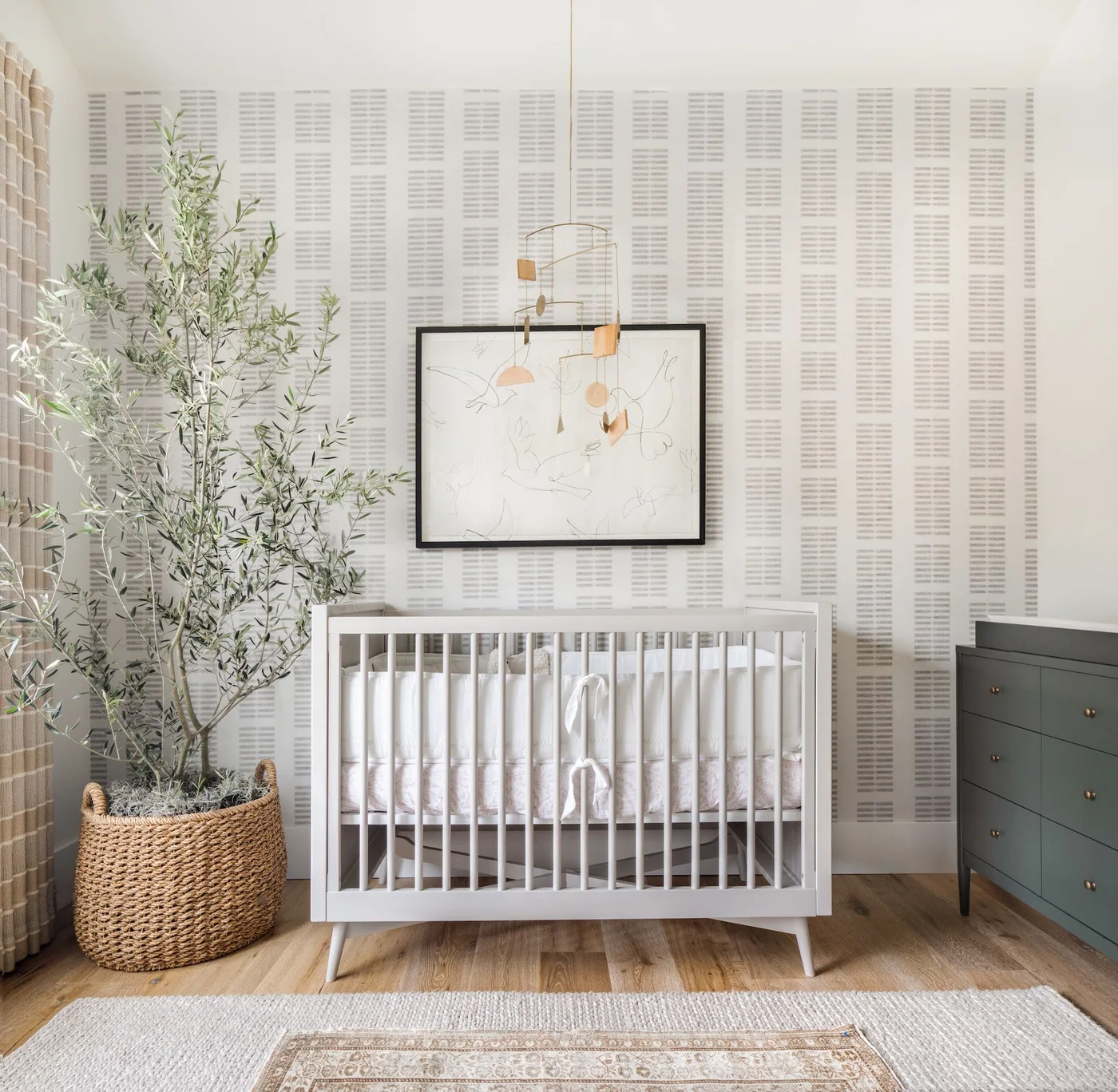
The wallpaper repeats a small pale pattern rather than introducing several separate wall colors. A darker dresser gives the closed storage a defined furniture block beside the lighter crib. The pale rug connects the floor area, with the plant providing a separate taller shape instead of another display cabinet near the sleep position.
Check the carrying route and remove overlapping rug edges if they make movement less steady. Anchor the dresser and move the plant, picture and mobile away from the crib’s reachable area. Clear the staged pillows, bumpers, covers and toys before infant sleep, using a compliant crib with an appropriate firm flat mattress and fitted sheet only.
IDEA 19 / 20
Plan Two Cribs Around Separate Access
 SaveSupport Non AI Creator
Image credit: Kate Lester Interiors
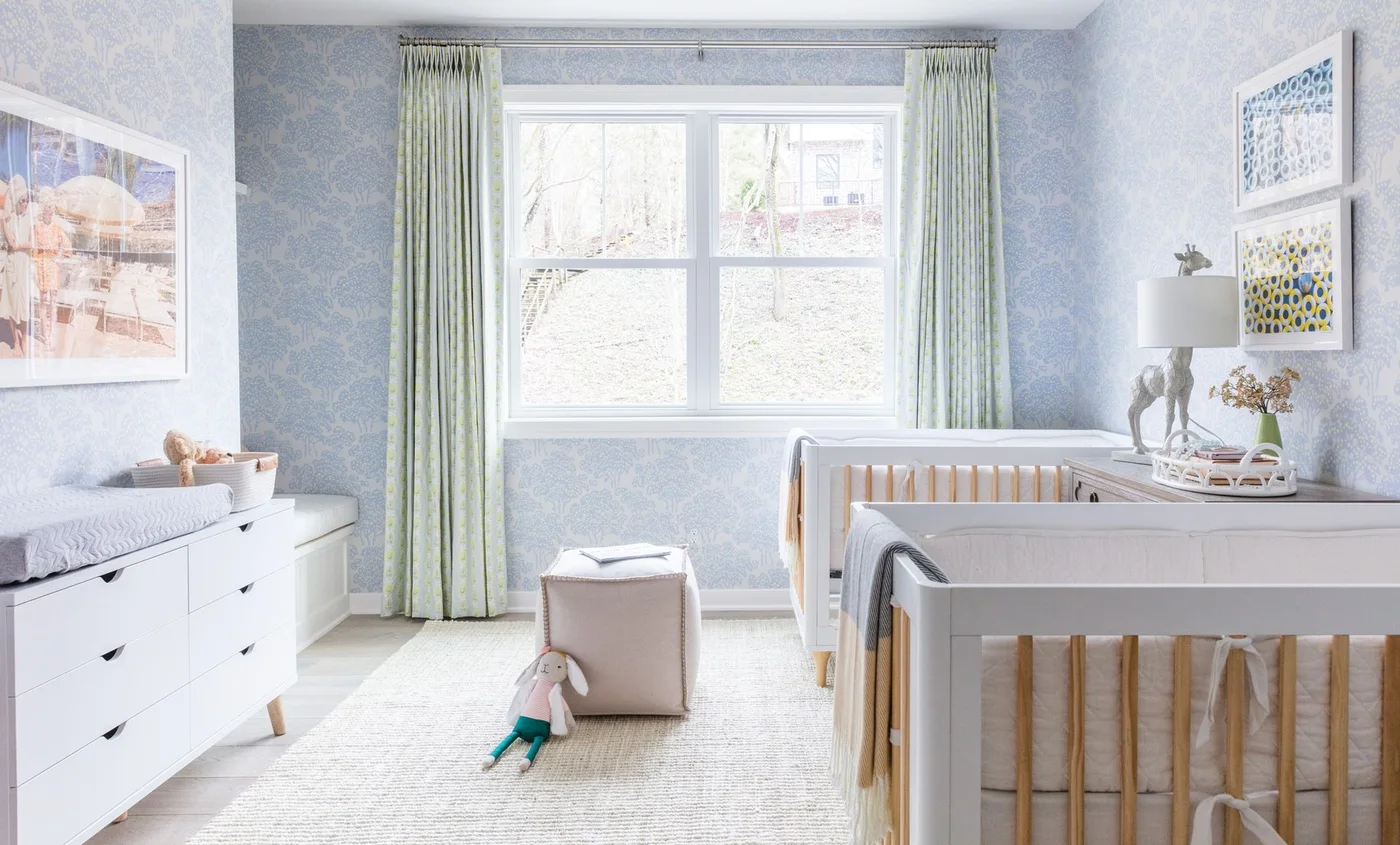
The two cribs share a pale finish with the drawer storage, keeping the larger furniture group connected. Wood slats provide smaller warm details, while the green curtains add a limited separate color at the window. The paler wall pattern remains a background to the furniture rather than requiring another collection of decorative cabinets.
Plan a separate compliant sleep space for each baby and check adult access to both cribs without moving other furniture. Anchor the storage and place cribs away from windows, curtains and cords. Remove all pictured draped covers and loose bedding before sleep, keeping lamps and decorative objects outside reach and frequently used supplies convenient to the changing position.
IDEA 20 / 20
Use a Dark Wall with a Limited Furniture Group
 SaveSupport Non AI Creator
Image credit: Future
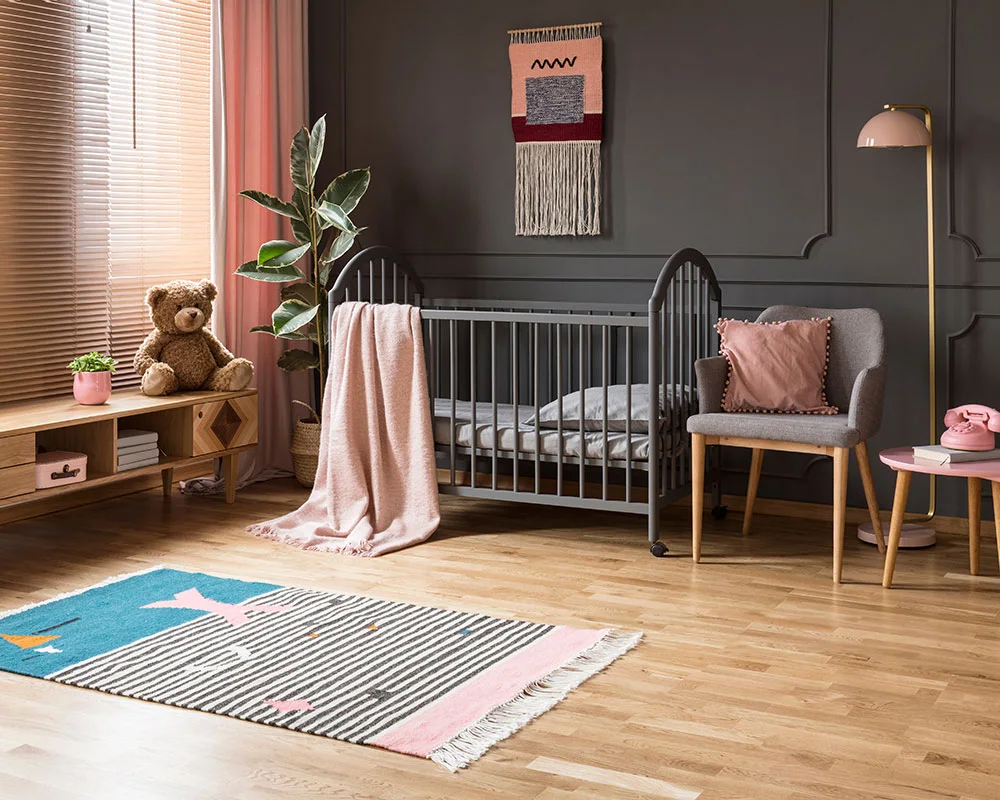
The charcoal wall gives this room a deeper background around the limited furniture group. A pale chair keeps the seating lighter beside the darker crib, with pink curtains adding one softer accent. Low wood storage brings warmth below the window area, while the small rug concentrates the brighter floor pattern.
Compare the darker paint under daylight and evening lighting so care tasks remain easy to see. Anchor the cabinet, use cordless coverings and keep the crib away from the window and hanging wall textile. Remove the draped blanket and other loose items from the sleep surface, preserving a clear route between the chair and crib.
BRING IT ALL TOGETHER
Choose fewer pieces that make care easier
Begin with a suitable infant sleep space, reachable changing supplies and supported adult seating. Plan the route between them, keeping loose objects and unstable rug edges out of the way. Anchor storage, follow furniture instructions and keep window cords, lamps and hanging decorations outside the child’s reach.
Then connect the room with a limited furniture palette or one contained wall pattern. Closed drawers can hold everyday supplies while a few open bins organize frequently used items. Keep all decoration separate from infant sleep, regularly reviewing the room’s arrangement as the child grows and can reach or climb more.