A simpler children’s bedroom still needs room for favorite toys, books and individual interests. These photographs use quieter furniture, limited color groups and defined storage areas to keep everyday belongings manageable. Some show whole rooms; others focus on a useful detail, such as a book ledge, a desk or baskets below the bed.
Start with how the room is used rather than removing everything decorative. Plan a suitable bed, reachable storage and an easy walking route, then choose a few details the child enjoys. A photograph can suggest colors and arrangements, but it cannot establish furniture anchoring, bed suitability or safety around windows and hanging decorations.
PART 01
Connect simple beds with a quiet background
IDEA 01 / 18
Give a Shared Room Matching Simple Beds
 SaveSupport Non AI Creator
Image credit: Credit: Leela Cyd
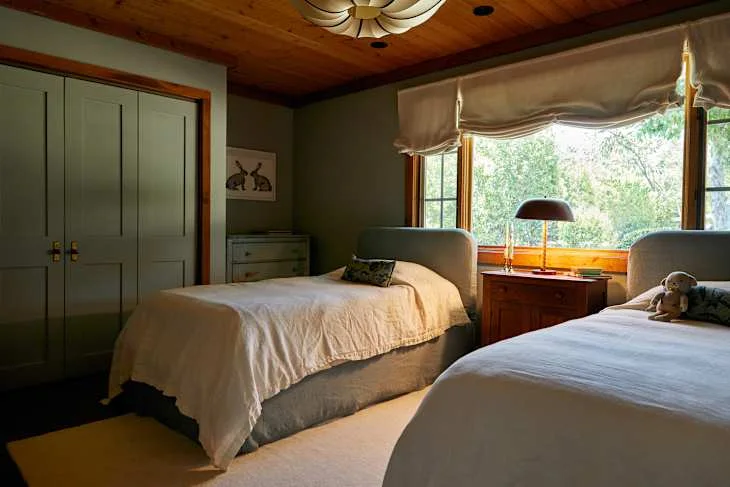
Two pale beds provide repeating shapes against the green walls, while matching closed wardrobes keep the storage fronts consistent. The wood ceiling brings warmth above the quieter bedding. With the larger pieces sharing a small group of colors, the room feels connected without needing identical toys or decorations on every surface.
Give each child an identifiable drawer or wardrobe section before choosing matching accessories. Plan room to open doors and change both beds comfortably. Check the actual window arrangement separately: use cordless coverings and keep beds and climbable furniture away from windows and covering cords, even when a photographed layout places them nearby.
IDEA 02 / 18
Repeat Pale Wood Across a Bed and Cabinet
 SaveSupport Non AI Creator
Image credit: Industville
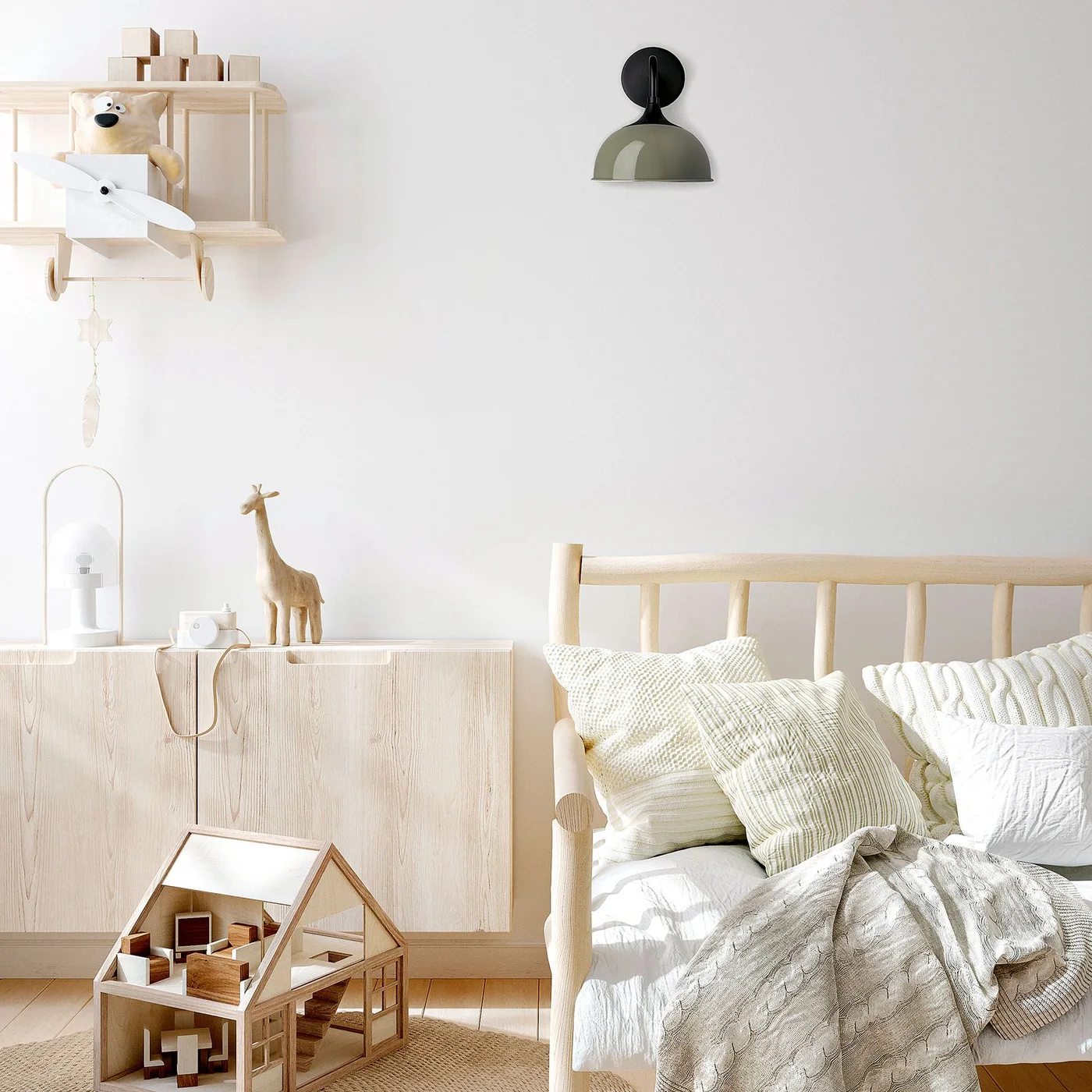
The bed and cabinet repeat a pale wood finish against the white walls, giving the room a simple furniture backbone. Green and white cushions introduce color at the sleeping area, while a small dollhouse adds a personal object on the cabinet. The limited larger finishes leave those smaller details easy to notice.
Compare existing furniture finishes before buying a matching set; similar tones can connect useful pieces without requiring an exact match. Japandi bedroom ideas offer more examples of pale wood paired with restrained colors. Secure the cabinet and wall fittings appropriately, and place frequently used toys where a child can reach them without climbing onto the furniture.
IDEA 03 / 18
Use Under-Bed Baskets to Clear the Floor
 SaveSupport Non AI Creator
Image credit: Future PLC/Katie Lee
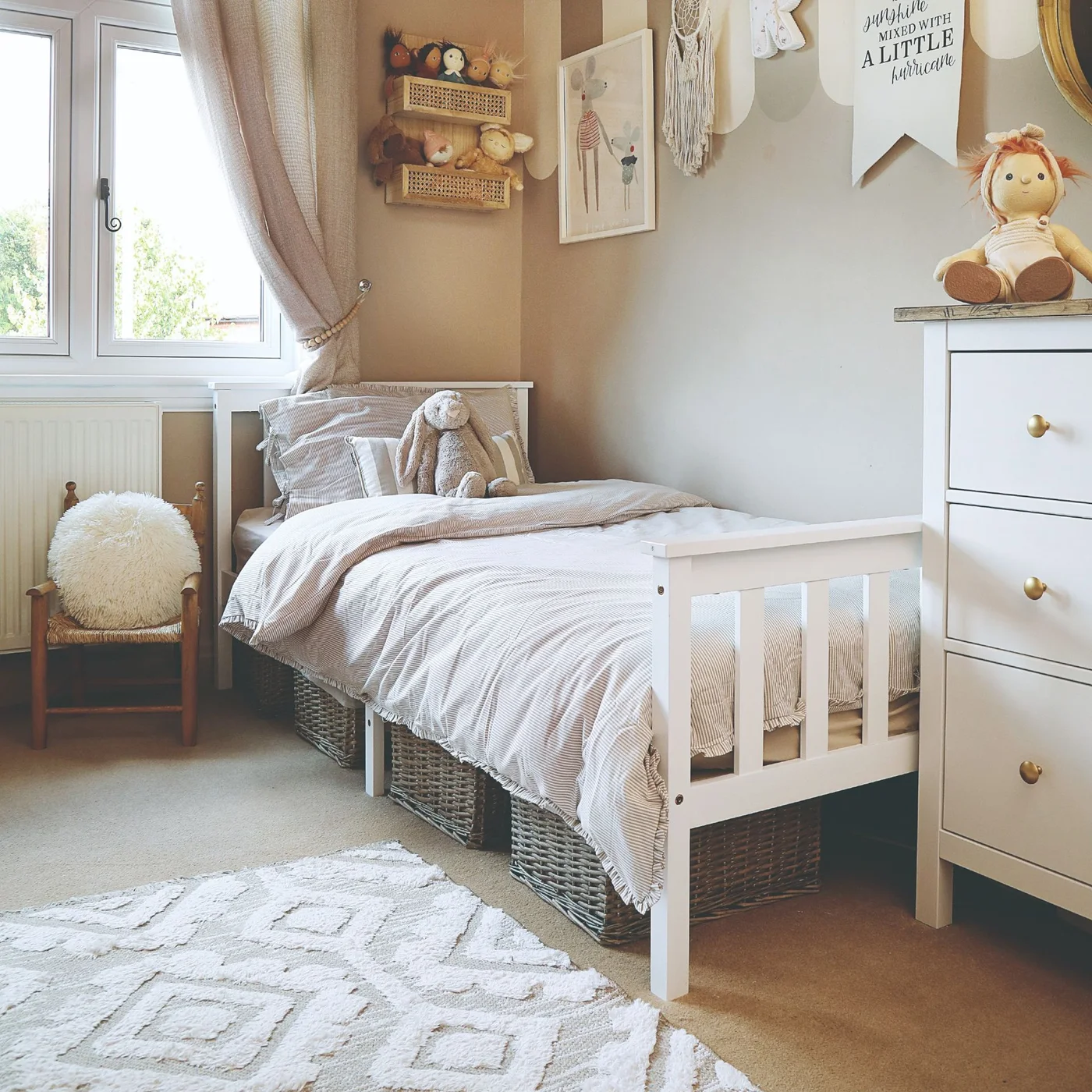
The baskets beneath the white bed provide a defined place for belongings without adding another large cabinet. Pale walls, bedding and a light rug keep the larger surfaces quiet, while the chest of drawers offers a second storage type. Small wall decorations remain visible because the floor around the bed stays comparatively open.
Check the usable gap and access below your own bed before buying baskets. Choose containers a child can pull out comfortably, with smooth edges and a simple category for each. Leave room for cleaning underneath, and secure the chest according to its instructions rather than assuming a low, visually plain piece cannot tip.
IDEA 04 / 18
Let One Loose Mural Carry the Color
 SaveSupport Non AI Creator
Image credit: Jessica Alexander for Popix Designs
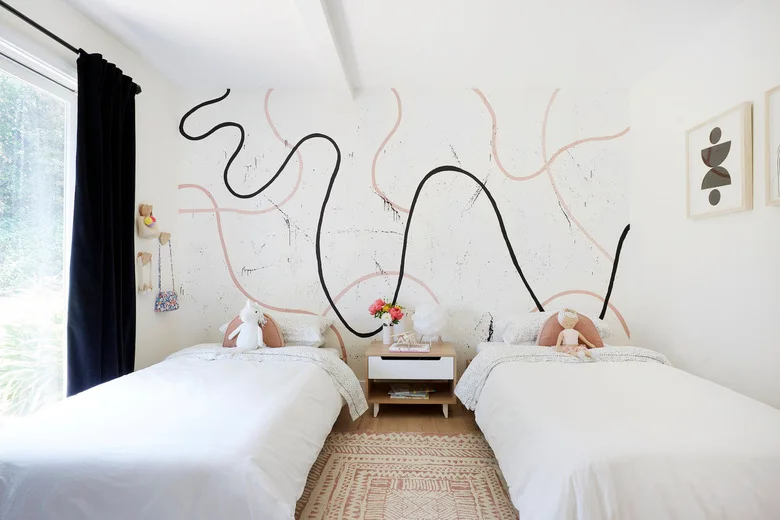
Loose black and pink lines turn the wall into the room’s main playful feature. White bedding keeps the two sleeping places visually simple, and one small unit separates them without dividing the whole room. The pale rug adds a quieter pattern below, leaving the wall marks to provide most of the stronger contrast.
Choose a small group of mural colors that work with bedding you already own, then leave neighboring walls quieter. Accent wall bedroom ideas can help compare one larger feature with several smaller decorations. Give each child practical access to bedtime belongings, and keep cords or breakable objects off a shared surface if they would be easy to knock over.
IDEA 05 / 18
Pair a Simple Bed Frame with Closed Storage
 SaveSupport Non AI Creator
Image credit: Lorena Canals
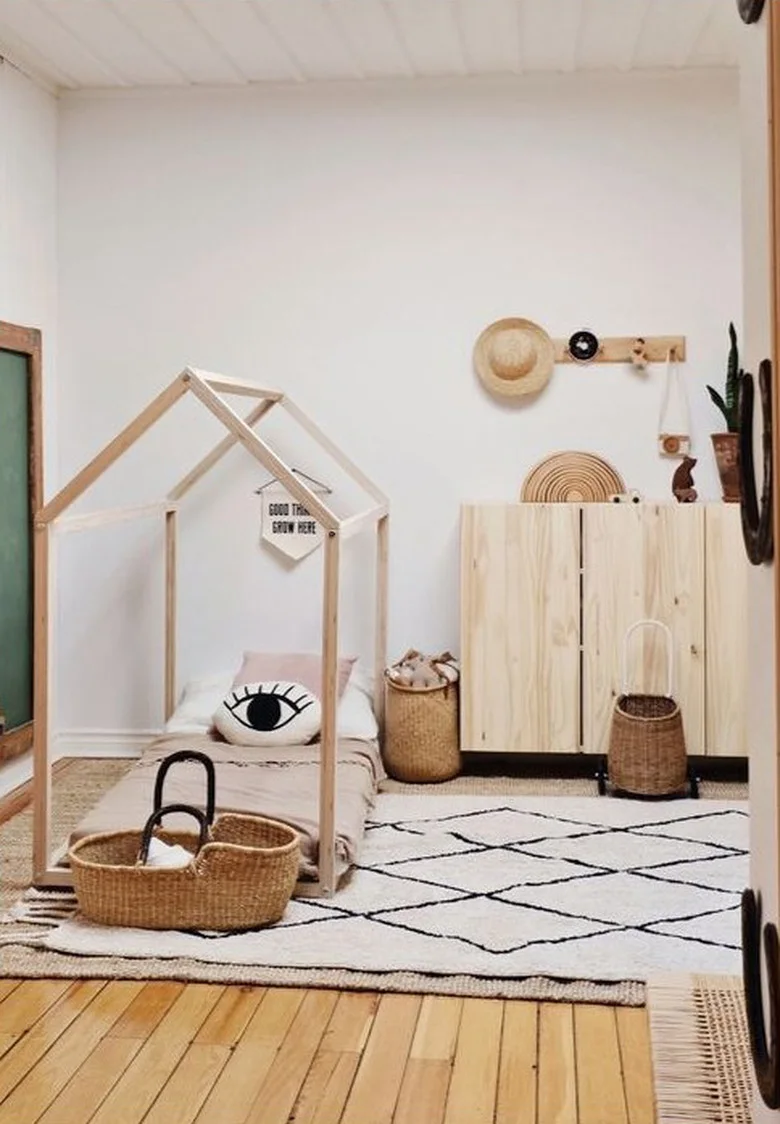
The open house-shaped frame gives the bed a playful outline without a solid wall of decoration. A plain cabinet repeats its pale wood tone, while woven baskets hold smaller belongings nearby. Black lines on the rug introduce the strongest pattern, with the otherwise light surfaces keeping the room’s separate pieces clear.
Check the frame’s age guidance and assembly instructions before selecting a similar bed, including whether added hanging decorations are permitted. Give baskets specific jobs so they remain storage rather than extra objects to move at bedtime. Anchor the cabinet correctly, and avoid placing desirable toys on top where they might encourage a child to climb.
PART 02
Keep personality in shared and individual rooms
IDEA 06 / 18
Keep a Playful Bed Outline Against a Quiet Wall
 SaveSupport Non AI Creator
Source: www.hunker.com
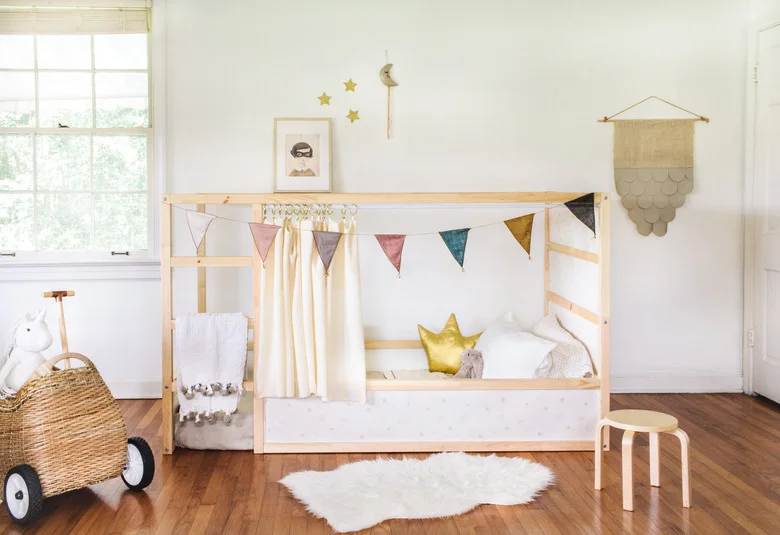
The pale frame and small bunting make the bed the room’s main decorative shape. White walls and light bedding keep the backdrop restrained, while a gold-toned cushion introduces one brighter detail. A small stool and woven toy pram sit separately beside the bed instead of building a dense collection along the whole wall.
Use the simple frame as inspiration while choosing a bed appropriate to your child’s age and needs. Check the manufacturer’s instructions before attaching anything to it; decorative strings and loose hanging fabric should not become part of an unsafe sleeping arrangement. Keep the route to the bed clear, with wheeled toys stored elsewhere overnight if they can move underfoot.
IDEA 07 / 18
Choose One Playful Theme Within a Quiet Palette
 SaveSupport Non AI Creator
Image credit: Iris Nacole
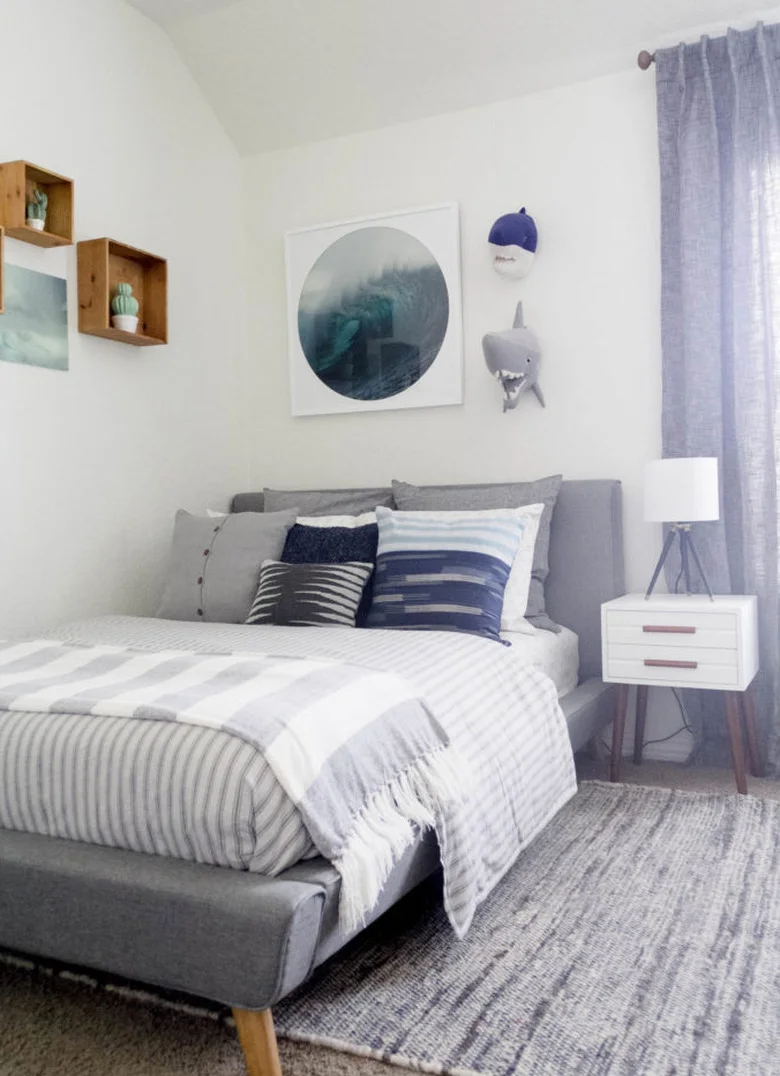
Blue and gray stripes connect the bedding to the ocean-themed artwork above, while the pale walls leave the smaller animal decorations visible. The gray upholstered headboard provides a single larger backdrop for the pillows. A white bedside unit repeats the quieter wall color, so the theme stays concentrated around the sleeping area.
Choose a few favorite pieces from a theme instead of filling every wall with related objects. Check upholstery cleaning guidance and whether cushion covers can be washed before using several on a child’s bed. Secure wall decorations appropriately, and manage bedside lamp cords so the room’s simple appearance also supports an easy, practical bedtime routine.
IDEA 08 / 18
Make Shared White Beds Easy to Tell Apart
 SaveSupport Non AI Creator
Image credit: North South Blonde
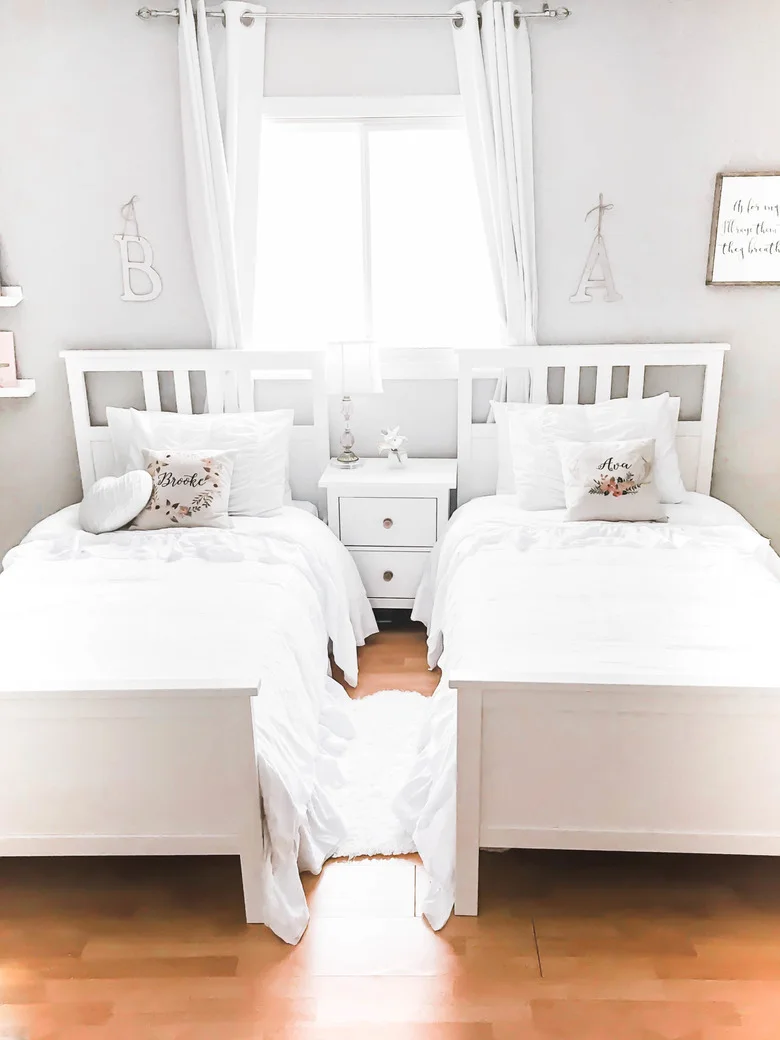
The white bed frames and bedding create repeating shapes across the shared room. Separate letters and small decorative pillows give the sleeping places individual details without changing the larger palette. A shared white chest occupies the gap between them, while the wood floor adds warmth beneath the otherwise pale furniture and curtains.
Use names, drawer labels or distinct washable pillowcases to help children recognize their belongings without buying two different furniture sets. Check the layout around the actual window before copying these bed positions, keeping beds away from windows and covering cords. Preserve enough access to make both beds and use the shared chest without one child moving the other’s things.
IDEA 09 / 18
Keep a Wood Bed and Favorite Toys in View
 SaveSupport Non AI Creator
Image credit: Instagram @burtsbrisplease
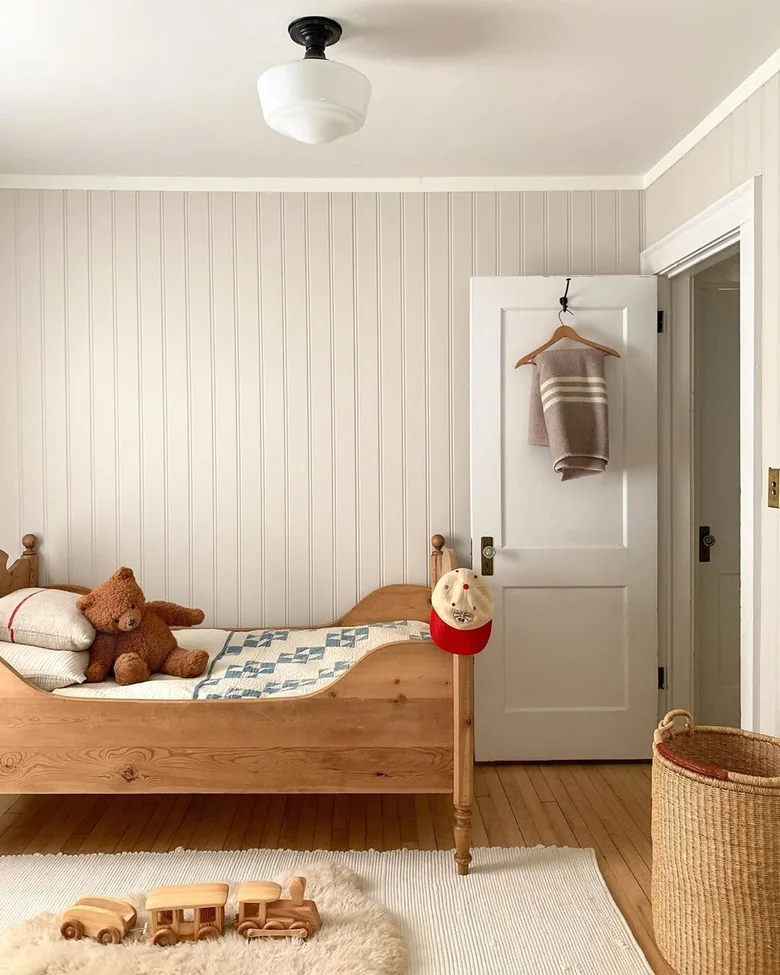
The wood bed supplies most of the warmth against the pale vertical wall paneling. A checked cover, teddy bear and small toys give the room personality without covering the wall with additional pictures. The woven basket repeats another warm texture nearby, while the light rug defines a small floor area beside the bed.
Keep a few regularly used toys accessible and give the rest a convenient home before reducing decorations. Bedrooms with paneling show more ways to use wall texture instead of a larger display of objects. Check the condition of older furniture and follow appropriate bed guidance; clear small toys from the walking route before bedtime rather than leaving the photographed arrangement permanently in place.
IDEA 10 / 18
Keep a Bunk Room to a Small Color Group
 SaveSupport Non AI Creator
Image credit: Future PLC
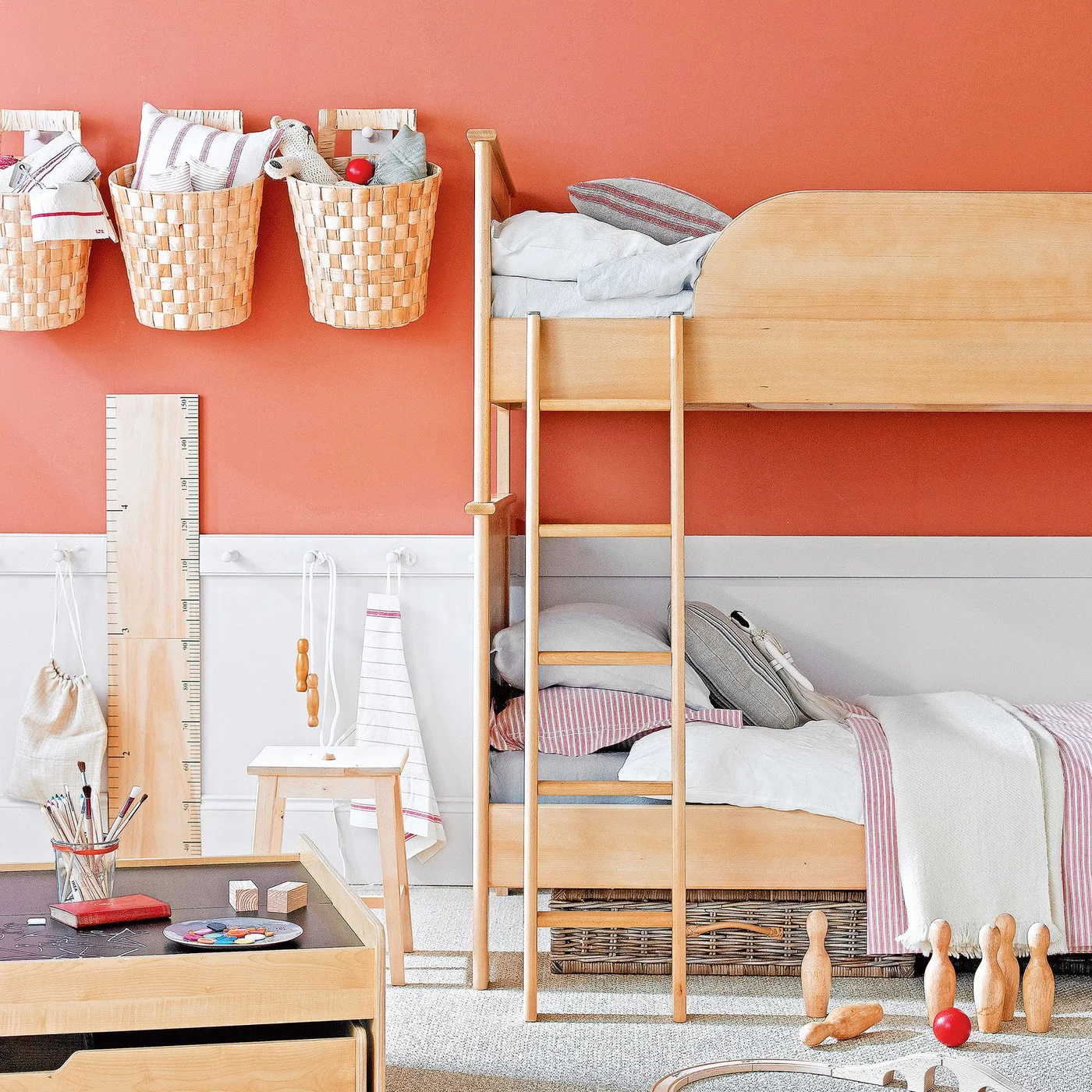
The plain wood bunk provides a simple outline against the coral wall. Baskets repeat one storage shape above and below the sleeping area, while the small desk adds a separate activity surface. Because the larger furniture stays in a similar wood tone, the stronger wall color does not need more competing patterns to feel playful.
Choose a bunk appropriate to the occupants and follow its instructions for guardrails, mattress size and assembly; children under six should not use an upper bunk. Keep the ladder route clear and store frequently used belongings lower down. A photograph cannot establish whether the pictured rails or mattress meet the requirements for a particular bed.
PART 03
Plan sleeping areas around useful storage
IDEA 11 / 18
Combine Plain Bunk Fronts with Baskets Below
 SaveSupport Non AI Creator
Image credit: Future PLC / Darren Chung
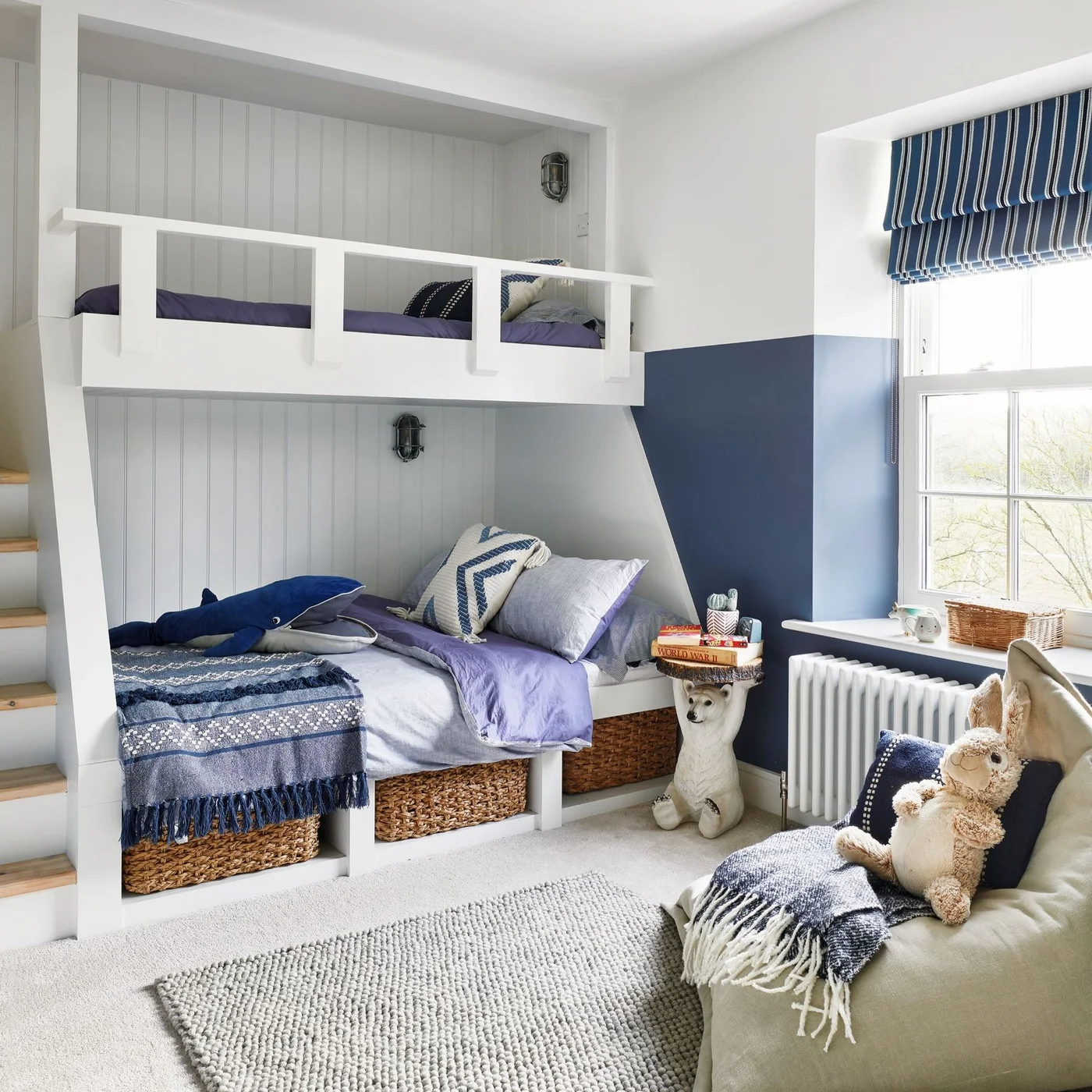
White bed fronts and vertical paneling create a consistent outline around the blue bedding. Woven baskets fit into the lower openings, providing a repeated storage shape rather than several unrelated containers. The navy lower wall adds a separate band of color, while the pale rug keeps the floor visually quieter beside the larger bed structure.
Plan storage so it can be reached without obstructing a ladder or the route out of the room. Have any custom bunk construction assessed appropriately and follow applicable bed instructions, keeping children under six off the upper bunk. Treat the nearby window and covering cords as a separate safety concern; do not use the photograph as proof that the placement is suitable.
IDEA 12 / 18
Give a Sleeping Nook Plain Storage Fronts
 SaveSupport Non AI Creator
Image credit: Future PLC/Tim Young
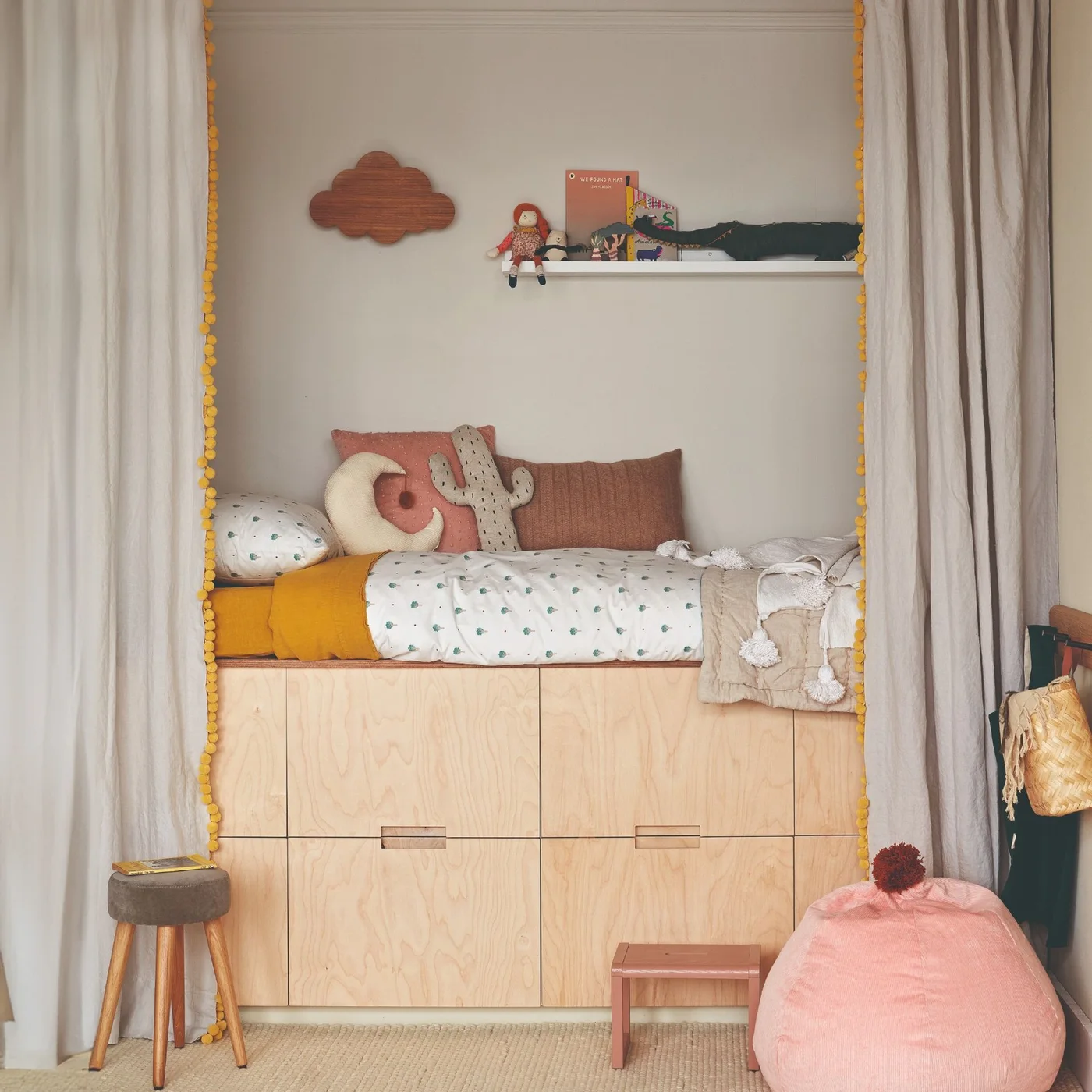
Pale wood drawers give the sleeping nook a clear lower edge and a place for belongings. The light wall behind stays comparatively simple, with one shelf and a cloud-shaped detail adding smaller features above the bedding. Pink cushions and the floor seat repeat a limited accent color instead of introducing several unrelated patterns.
Check drawer access with any nearby stool or floor cushion in use, and choose handles that are comfortable for the child who will use them. Do not copy enclosing curtains or hanging ties without checking their suitability around a sleeping area. Keep the route into the bed unobstructed, with useful belongings reachable without stepping onto loose furniture.
IDEA 13 / 18
Use a Quiet Gray Palette with Reachable Clothes
 SaveSupport Non AI Creator
Image credit: Future PLC/Anna Stathaki
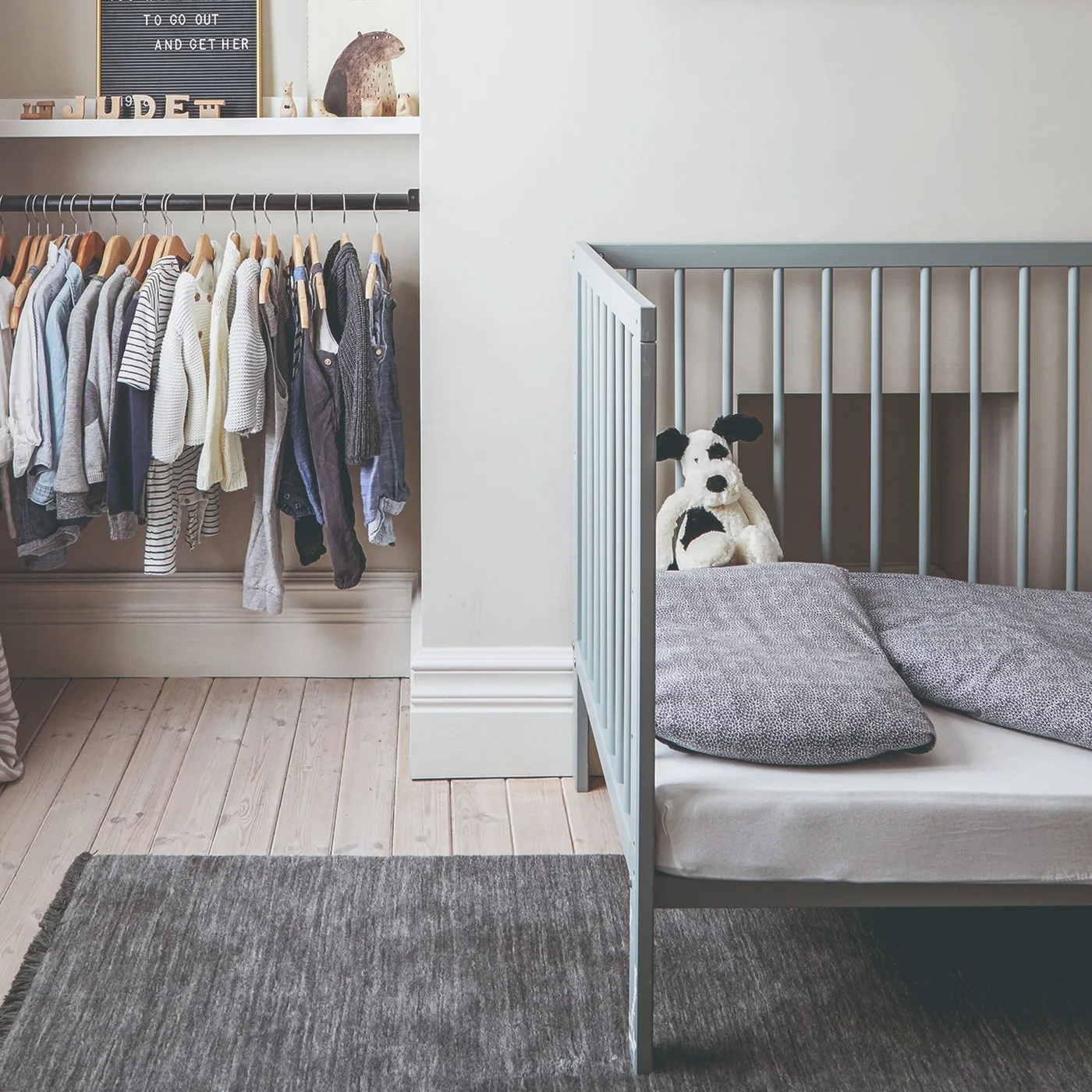
The gray bed, rug and pale walls keep the larger colors closely connected. Clothing becomes the main variation along the open rail, while a white shelf gives the storage area a clear upper boundary. The smaller bed leaves an exposed strip of wood floor between the sleeping place and the hanging clothes.
An open rail works best when it holds a manageable everyday selection rather than every size and season at once. Check that the rail and shelf are securely fitted and that the bed is suitable for its occupant, including any conversion instructions. Keep spare clothing elsewhere so choosing an outfit does not require moving a crowded row of hangers.
IDEA 14 / 18
Give Schoolwork One Defined Surface
 SaveSupport Non AI Creator
Image credit: Future PLC
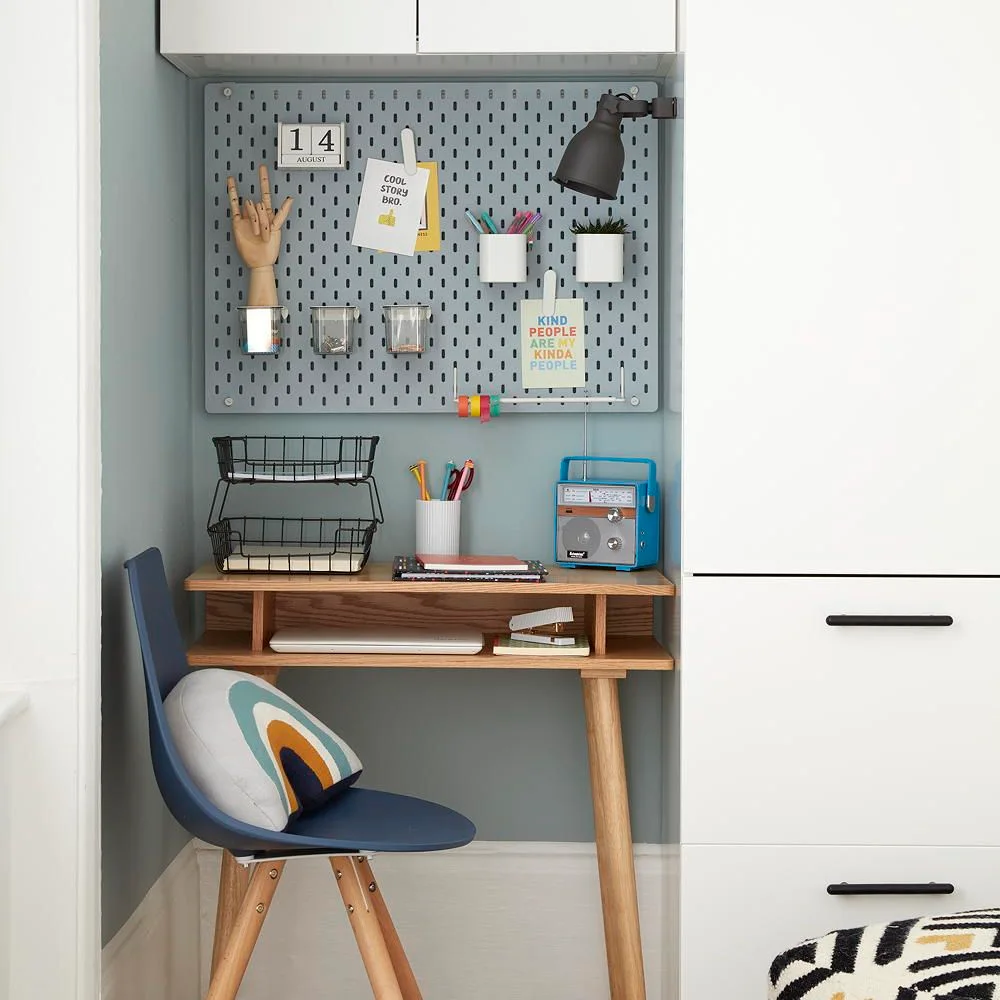
The desk occupies one defined gap between plain white cabinet fronts. A gray pegboard groups smaller tools above the work surface, while the dark lamp gives that area a clear practical focus. The blue chair adds color without changing the larger storage finishes, leaving the desk as a distinct activity zone within the room.
Check chair comfort and desk height with the child seated before choosing a similar arrangement. Keep only current schoolwork and regularly used supplies within reach, using the surrounding cabinets for overflow. Secure the pegboard and containers for their intended loads, and manage the lamp cable so it does not trail into the chair’s movement or across the floor.
PART 04
Make room for books and quieter activities
IDEA 15 / 18
Use a Limited Face-Out Book Display
 SaveSupport Non AI Creator
Image credit: Future PLC/Colin Poole
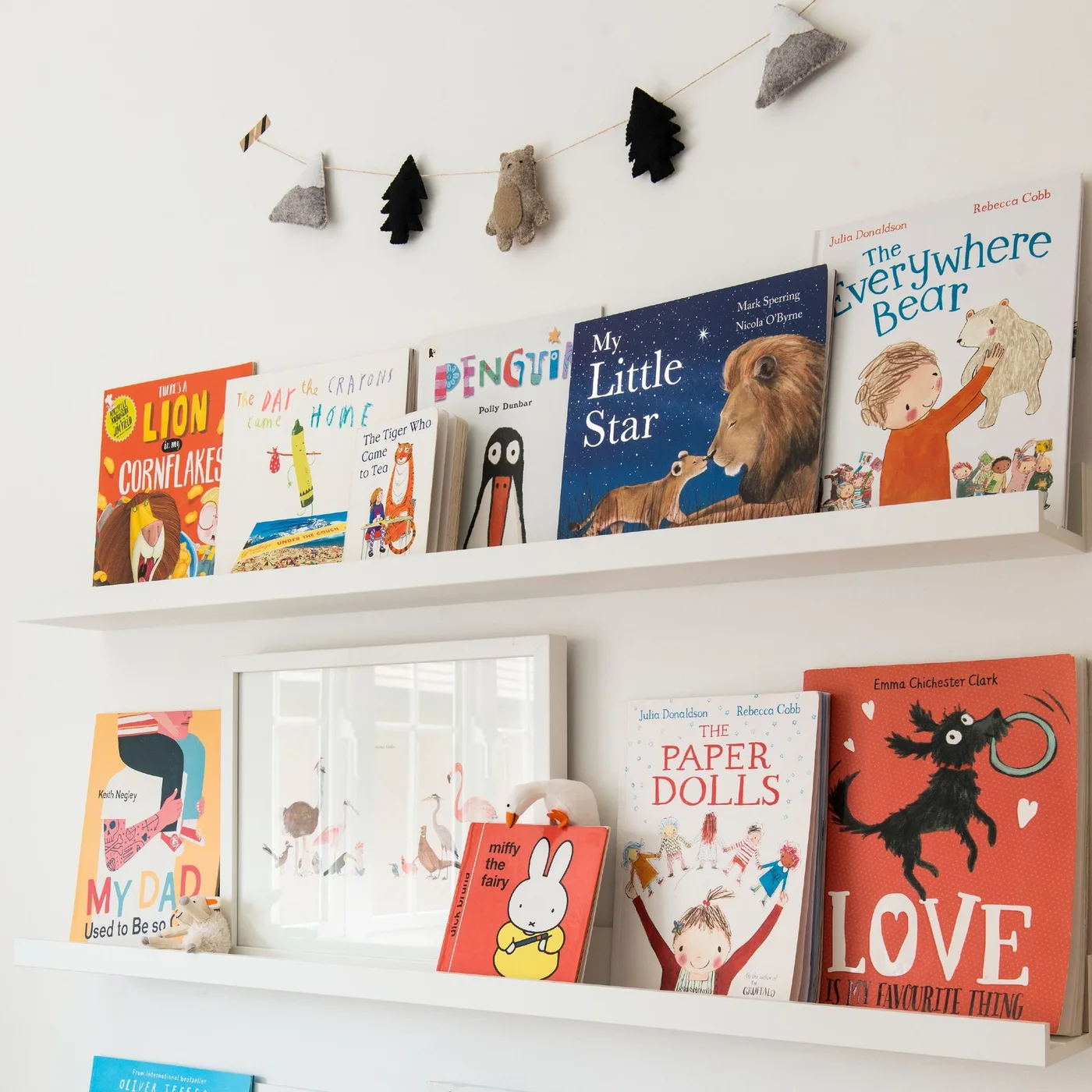
The narrow white ledges blend into the wall while the colorful book covers provide the main decoration. Displaying covers outward makes individual stories easy to identify without a separate collection of framed pictures. The repeated horizontal lines give the small reading collection a clear boundary instead of letting books spread across several unrelated surfaces.
Choose a reachable location away from the bed and use fittings suitable for the wall and intended load. Display a small current selection and store the rest elsewhere, swapping books when interests change. Avoid encouraging children to climb onto furniture to reach a higher ledge; a lower freestanding book display may fit your room and routine better.
IDEA 16 / 18
Limit a Bedside Display to One Wall Unit
 SaveSupport Non AI Creator
Image credit: Rafa Kids
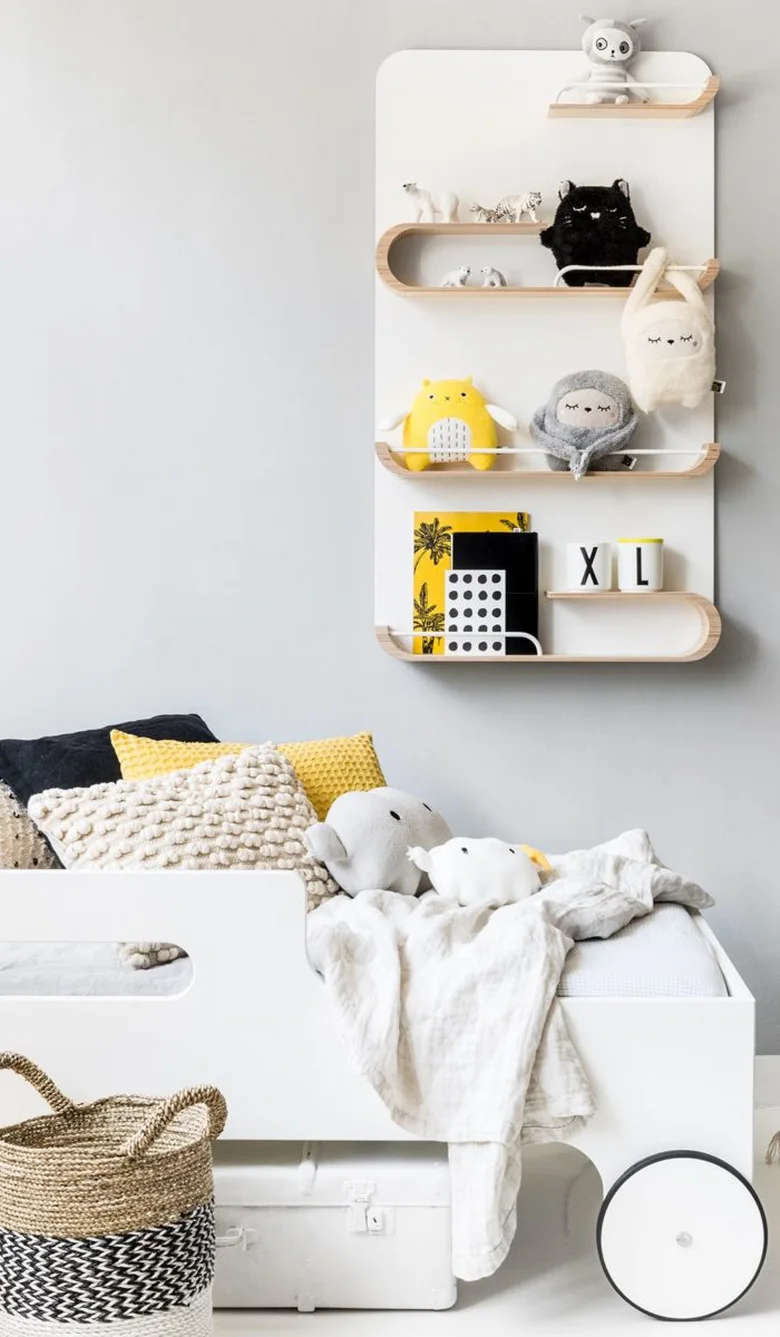
The rounded shelf groups books and toys within one defined shape against the pale wall. Yellow and black cushions repeat a small group of accent colors below, while the white bed keeps the larger furniture outline quiet. Woven baskets provide a separate place for loose belongings without extending the wall display across the whole room.
Borrow the idea of one limited display, then choose a safer practical location based on your room and child’s reach. Avoid placing heavy or breakable objects above a sleeping area. Fit shelves according to their instructions and wall construction, keeping everyday toys accessible lower down so the display does not encourage climbing on the bed or nearby furniture.
IDEA 17 / 18
Let a Mountain Shape Replace a Busy Wall Display
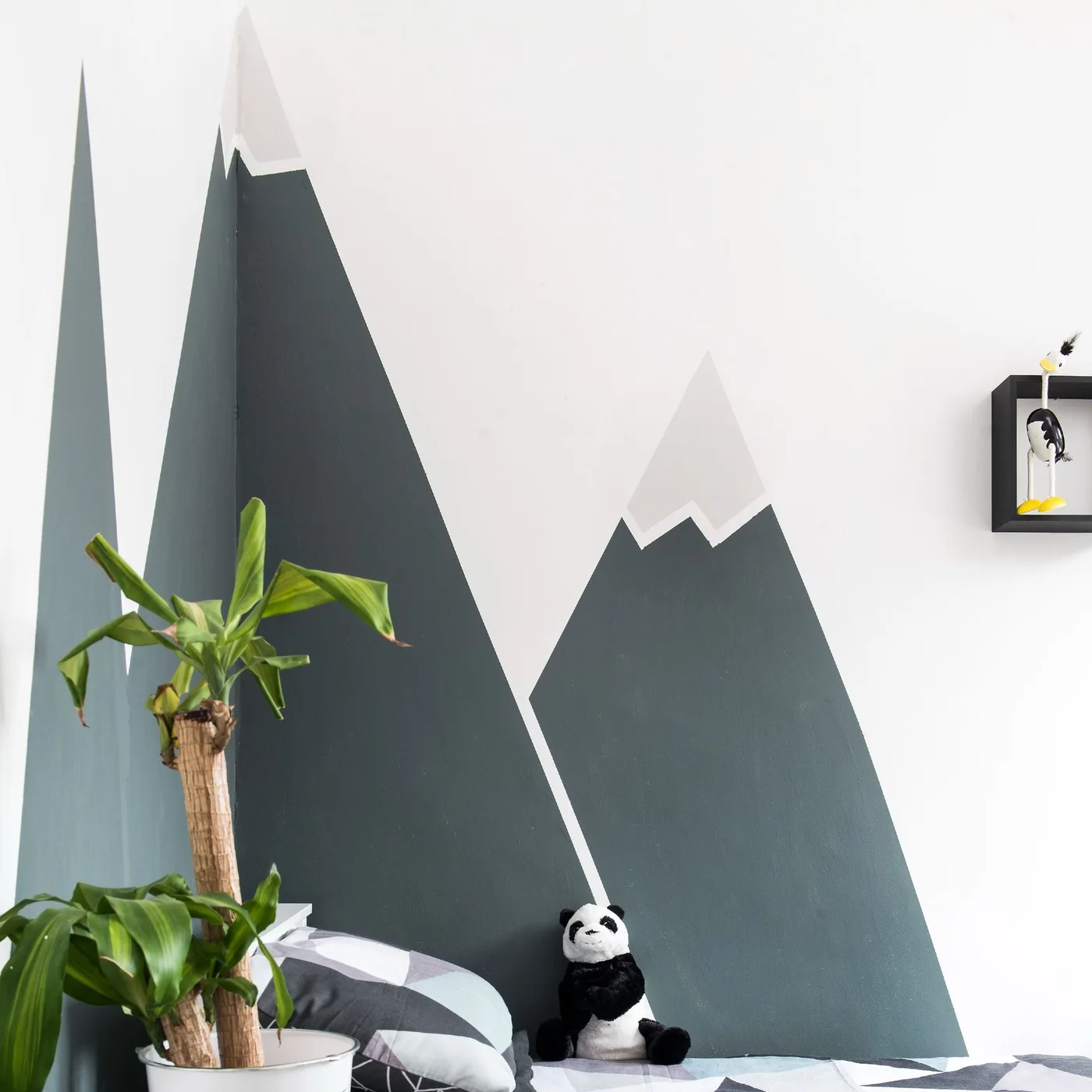 SaveSupport Non AI Creator
Image credit: Future PLC/Colin Poole
The broad mountain shapes provide one larger feature instead of several separate pictures. Dark and pale sections connect with the geometric bedding and panda toy below, while a small wall box supplies a contained decorative detail. The larger white areas leave room around the mural so its outline remains easy to read.
Keep the mural colors connected to existing bedding before adding another patterned rug or curtain. Black and white bedroom ideas compare more ways to balance a strong dark shape with a lighter background. Keep plants and their containers suitable for the child’s room, choosing placement carefully rather than copying a large pot beside the bed without considering access and stability.
IDEA 18 / 18
Build Storage Around a Defined Reading Seat
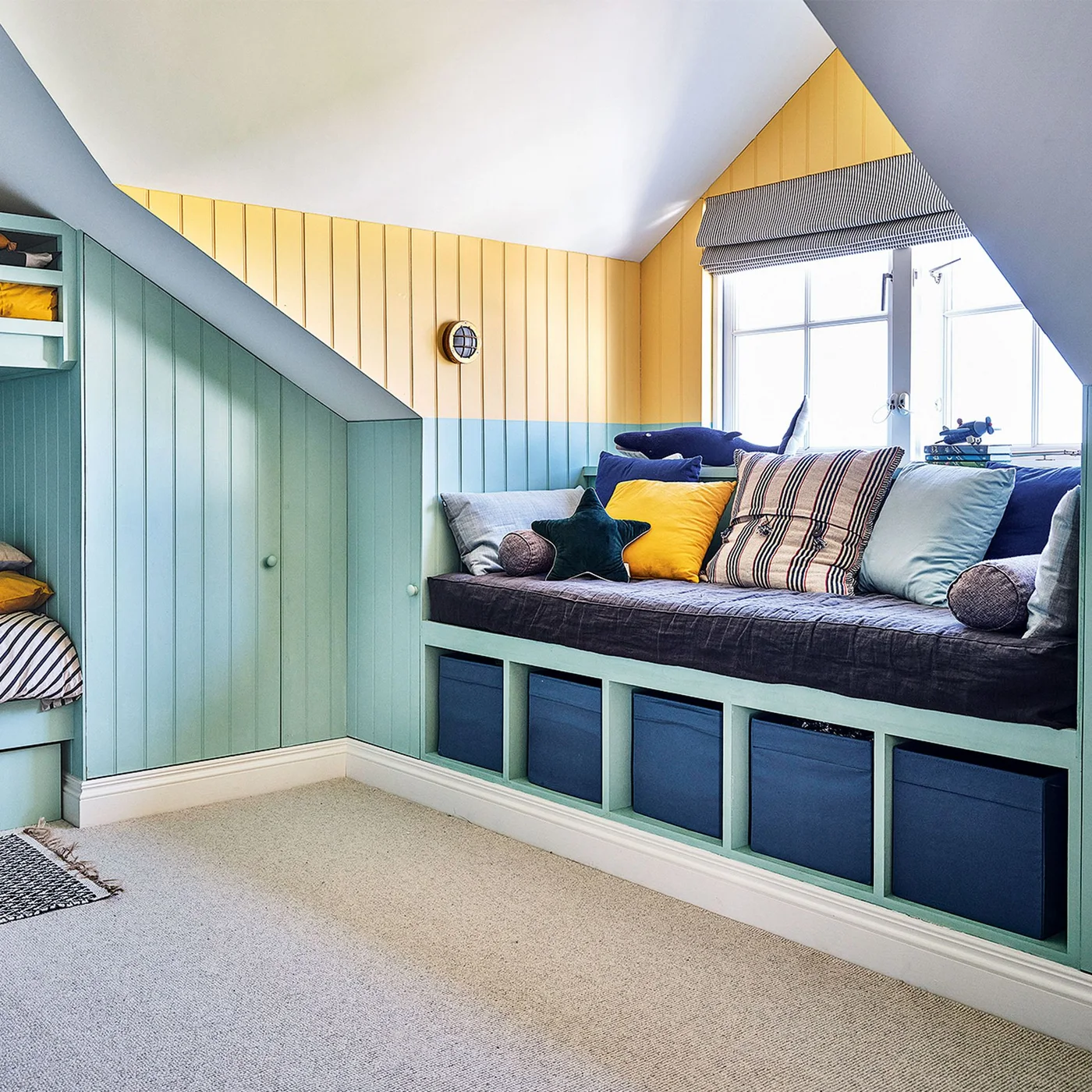 SaveSupport Non AI Creator
Image credit: Future PLC / Dan Duchars
The blue boxes repeat a single storage shape beneath the seat, giving the lower area an orderly outline. Green and yellow paneling brings color to the walls without requiring a dense display of pictures. Cushions make the seat a separate reading area, while the sloped ceiling helps define its smaller position within the room.
Plan accessible storage around the belongings that will actually be used near the seat, keeping boxes comfortable to pull out. Assess the window, opening controls and coverings before adding climbable seating beneath it; cordless coverings do not remove every window hazard. Use a reading chair on another wall if that provides a more suitable place for the child to sit.
BRING IT ALL TOGETHER
Give useful belongings a place before adding more
Begin with a bed that suits the child and a layout that leaves room for movement, dressing and tidying. Separate everyday belongings from overflow so the things used most often stay easy to reach. A few well-chosen containers can make more difference than replacing every piece of furniture with a matching set.
Then connect the larger colors and keep a limited collection of favorite details visible. Check furniture anchoring, shelf fittings, bed instructions and window arrangements independently of how orderly the room looks. Simplicity should make everyday routines easier while leaving the child room to enjoy books, toys and personal interests.