Rustic living rooms often draw their character from visible grain, varied surfaces and comfortable furniture. You do not need an exposed-beam house to introduce that feeling. A useful wooden table, a woven basket or a quieter natural-looking textile can change a room without replacing finishes that already work.
These photographs show rustic details in both lighter and deeper-colored settings. Start with the features you are keeping, then decide where another texture would help. A photograph cannot establish the age or origin of a surface, and decorative fireplace arrangements are not installation plans; use the requirements of your own appliance when positioning furnishings nearby.
PART 01
Work with the room’s visible surfaces
IDEA 01 / 20
Let a Rough Wooden Mantel Lead the Room
 SaveSupport Non AI Creator
Image credit: Future / David Brittain
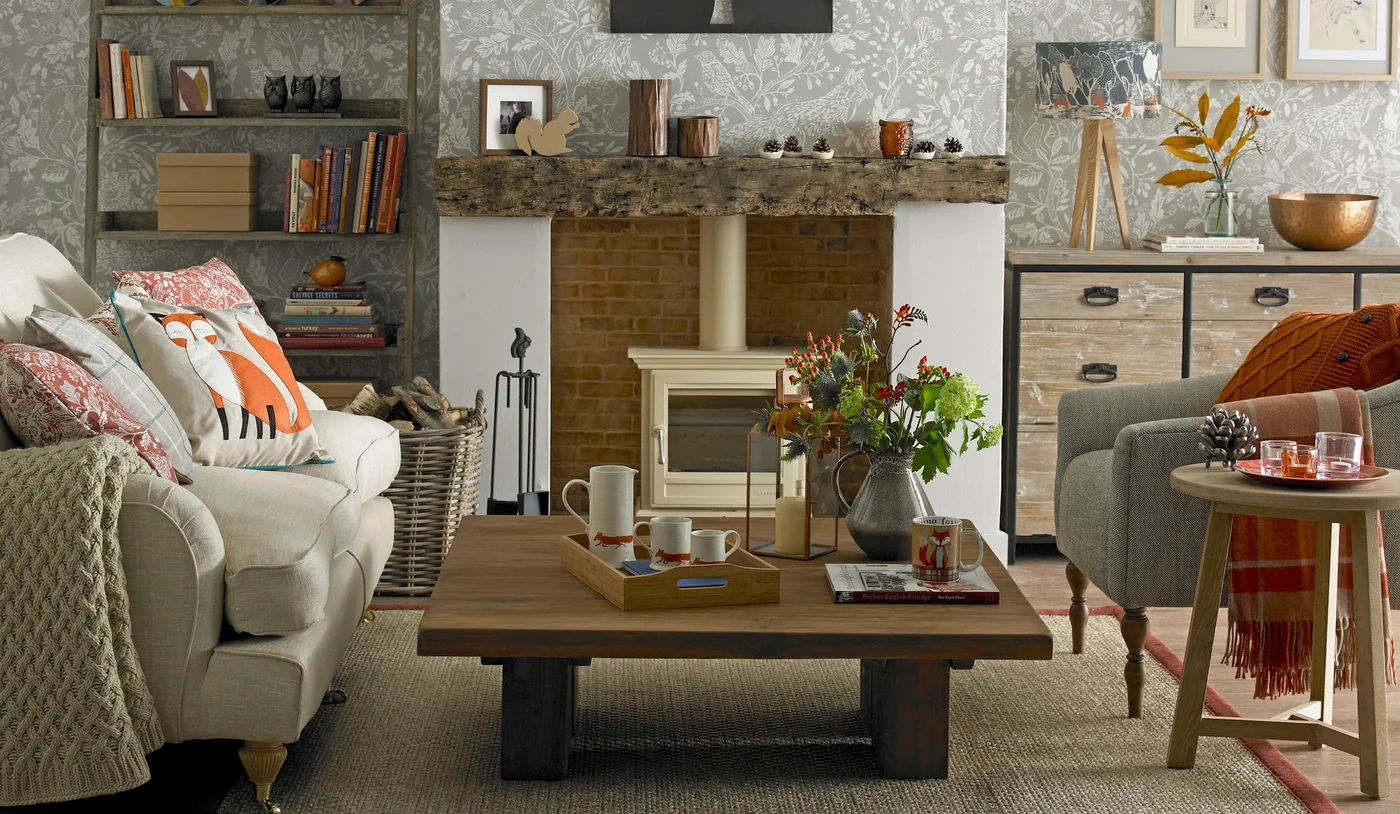
The rough wooden mantel provides a strong horizontal texture above the pale stove, with woodland-patterned walls extending the natural theme. A white sofa and straightforward wooden table keep the seating lighter. Open shelving and a drawer unit give smaller objects defined places, so the room’s texture comes from its larger surfaces as well as accessories.
Work with an existing mantel as a visual starting point rather than surrounding it with several competing wood finishes. If you are adding or changing one, have its placement checked against the fireplace requirements. Keep the coffee table useful for drinks and books, and group smaller decorations so they do not spread across every available ledge.
IDEA 02 / 20
Set a Modern Sofa Beside Brick and Wood
 SaveSupport Non AI Creator
Image credit: Future / Simon Whitmore
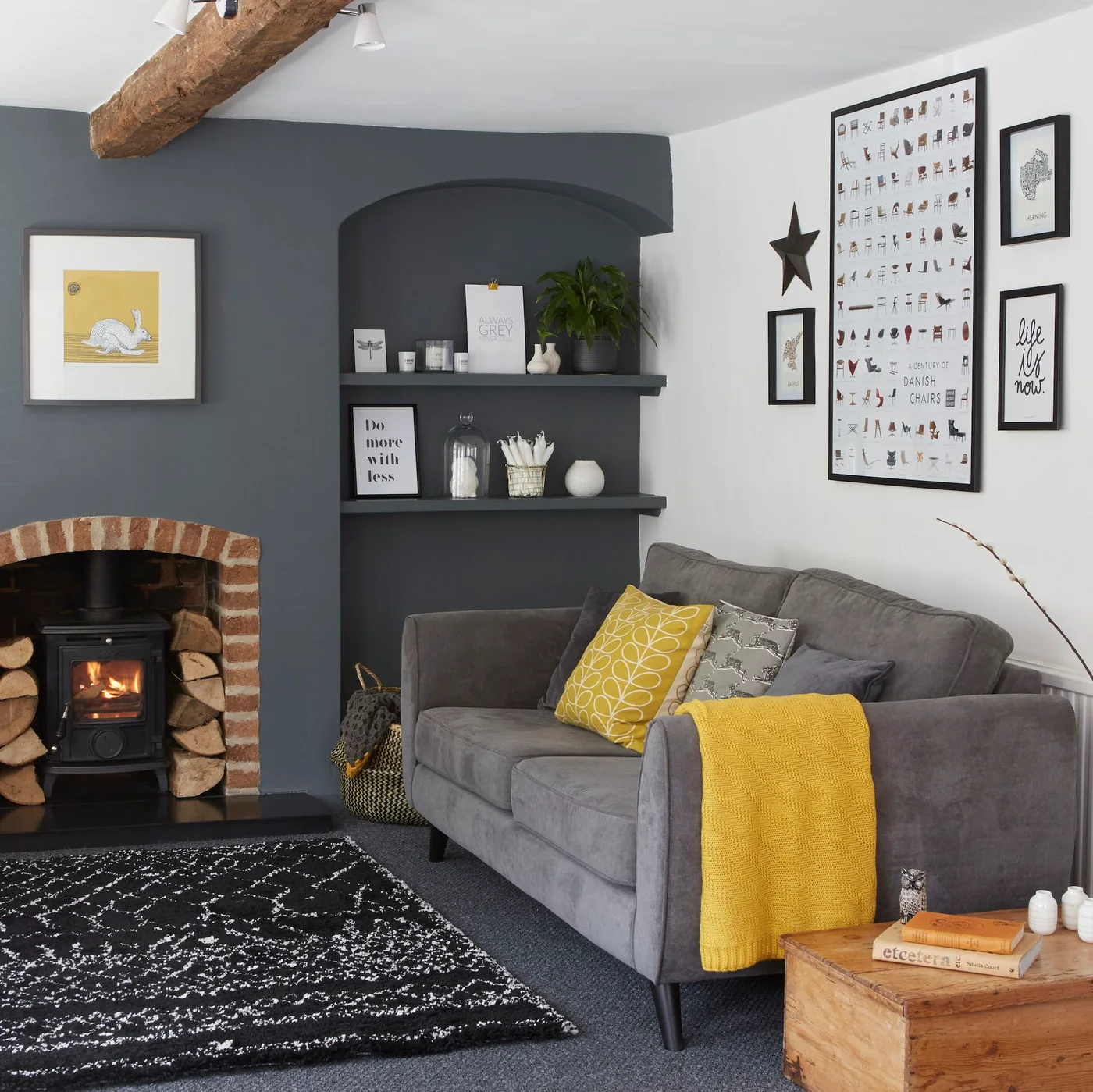
The brick-framed stove and exposed wooden beam supply rustic detail around a comparatively simple gray sofa. Yellow cushions and a throw add warmth without another large dark furniture piece. A wooden chest serves as a nearby surface, while the framed wall display keeps decoration separate from the useful space around the seating.
You can keep a modern sofa when the room already has textured architecture. Compare removable accents with the brick and beam before changing the upholstery. Our farmhouse living room ideas explore more combinations of familiar seating and visible structural details; keep the walking route and fireplace access practical when adding a chest or occasional table.
IDEA 03 / 20
Keep Furniture Low Beside a Large View
 SaveSupport Non AI Creator
Image credit: Future / Douglas Gibb
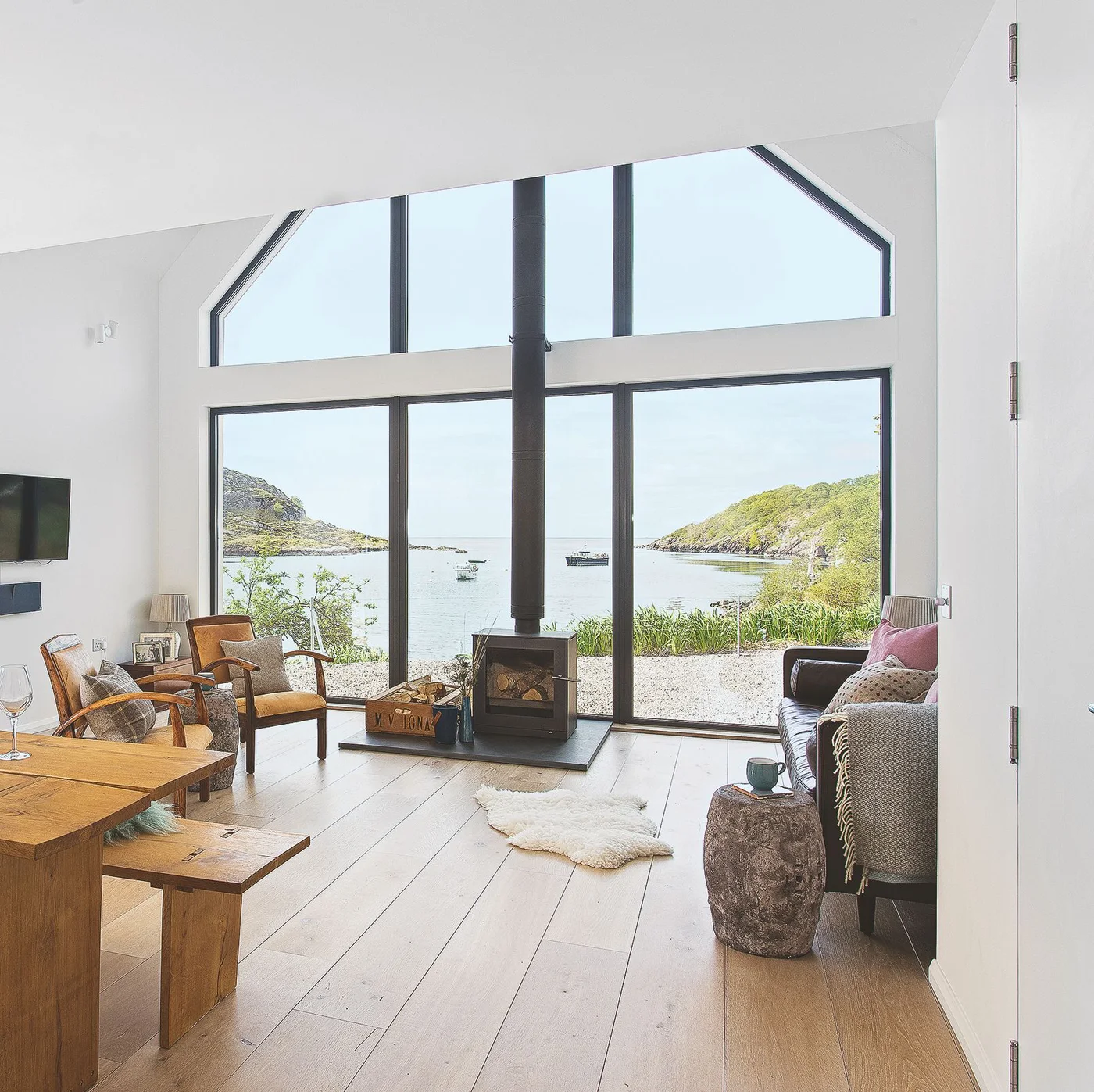
The broad window brings a water-and-hills view into the bright room, while low wooden furniture leaves much of the glass visible. Pale floorboards connect the seating with the adjoining table area. The dark stove introduces a clear vertical line, so the room can feel rustic through wood and the surrounding view without a dense collection of ornaments.
Where the view is a main feature, compare furniture from seated eye level and avoid filling the window area with tall storage. Keep practical access for window cleaning and opening. Use the actual stove installation requirements when planning its surroundings, and leave enough space between the different furniture zones for daily movement rather than copying the photographed distances.
IDEA 04 / 20
Use Pale Green Around Simple Wood Furniture
 SaveSupport Non AI Creator
Image credit: Future / David Brittain
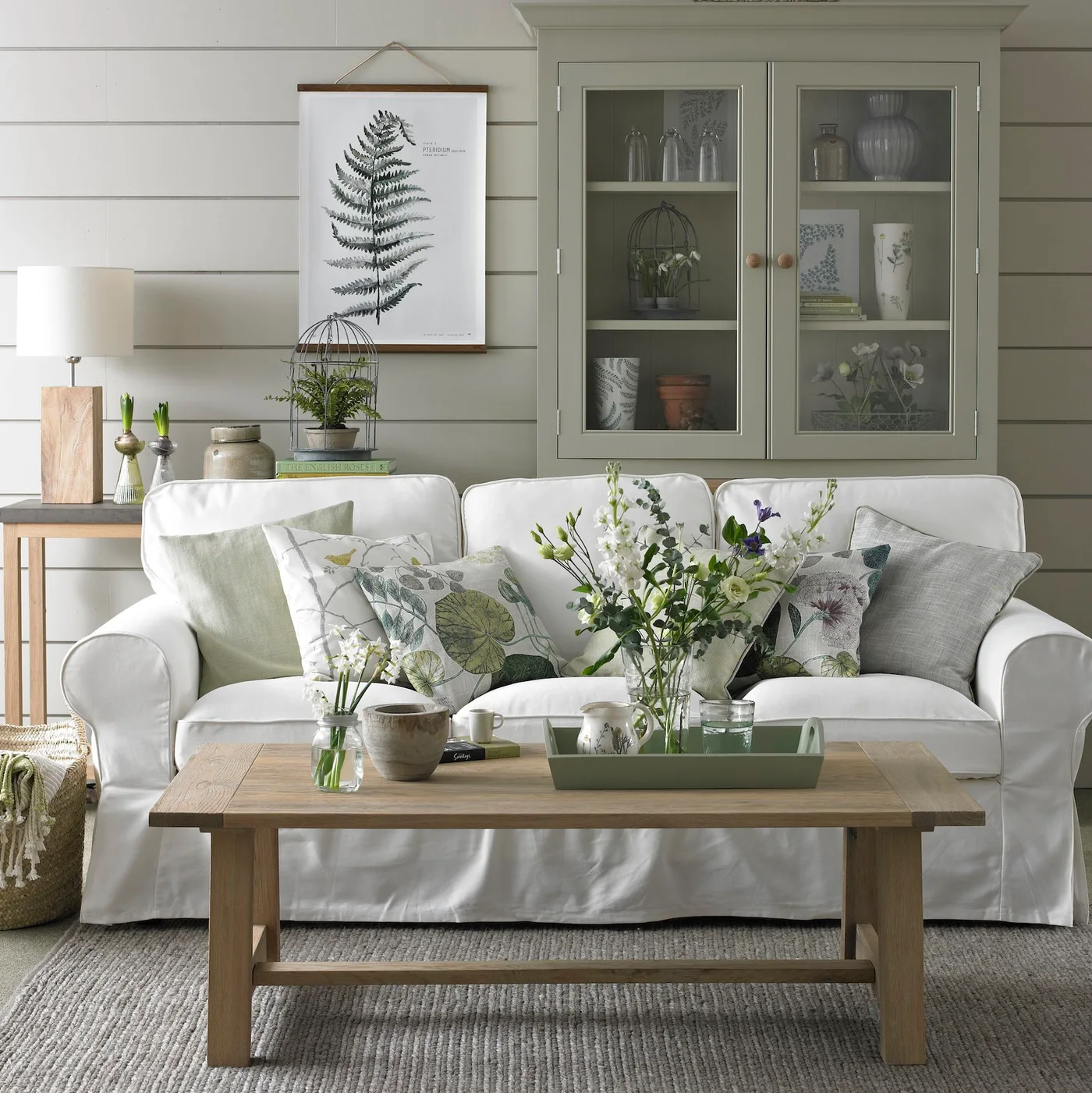
Pale green storage and botanical cushions connect the white sofa with the simpler wooden coffee table. A framed fern picture continues that theme on the paneled wall, while the light upholstery keeps the room from becoming dominated by wood tones. The cabinet offers a contained display, leaving the table with a limited group of useful objects.
If the room needs lighter rustic detail, start with one wooden table and a restrained painted storage piece. Compare cabinet contents before choosing glass doors, since what is inside remains visible. Keep botanical accessories selective and choose plants for the room’s actual light; you do not need a crowded display to connect the seating with a natural-looking palette.
IDEA 05 / 20
Combine a Stone-Look Fireplace with White Seating
 SaveSupport Non AI Creator
Image credit: Future / Bridget Peirson
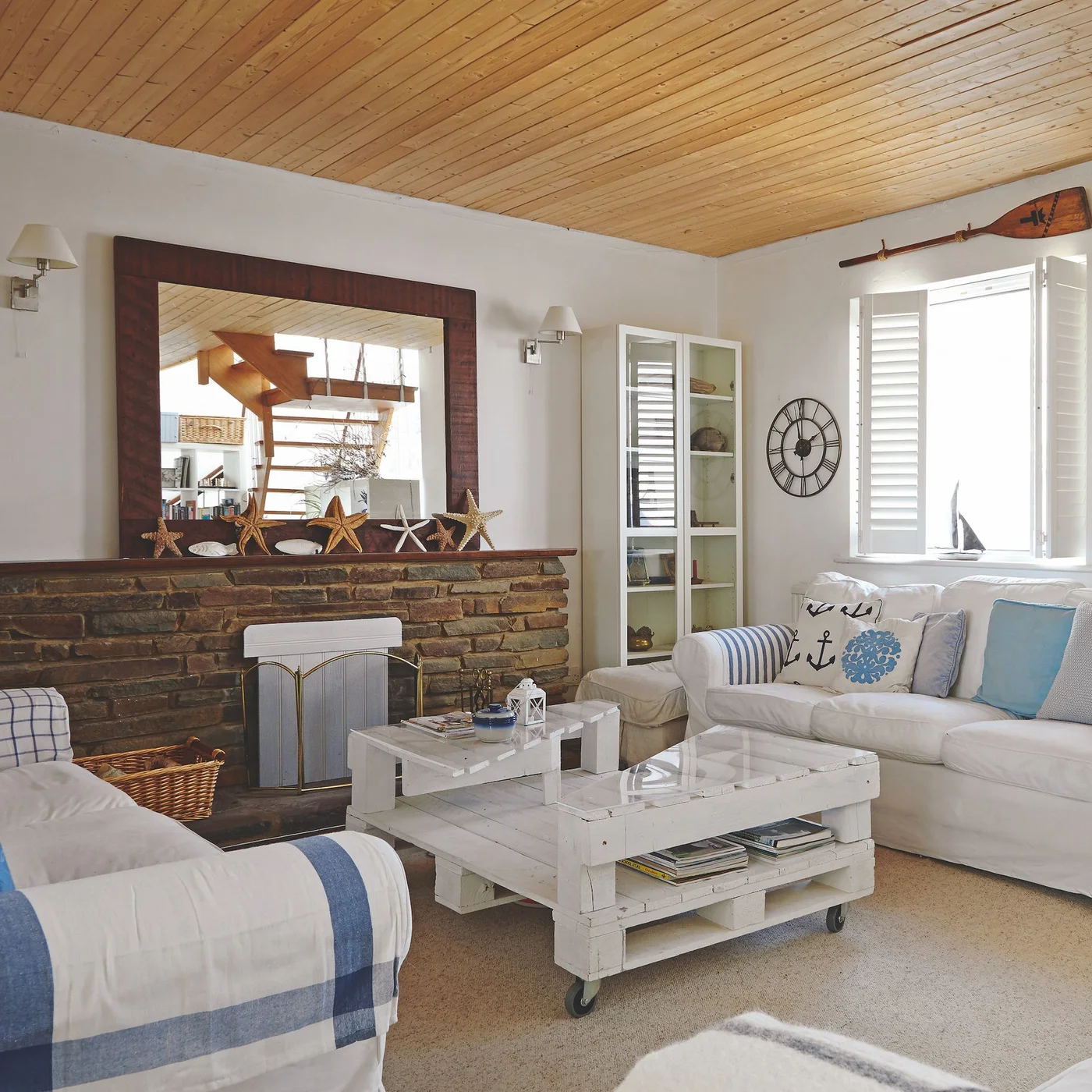
The textured brown fireplace wall gives the room a heavier surface, while white sofas and a pale wheeled table keep the seating lighter. A wooden ceiling repeats the warmer color above. Blue accents and small coastal objects introduce another theme, but the larger contrast remains between the rough-looking fireplace area and simple pale upholstery.
When a fireplace wall already has substantial texture, compare quieter sofa covers and tables before adding another patterned surface. Our coastal living room ideas offer more ways to use pale seating and blue accents beside warmer finishes. Check that a wheeled table stays stable in use, and keep its position compatible with comfortable movement and fireplace access.
PART 02
Choose textiles around comfortable seating
IDEA 06 / 20
Give a Plaid Chair a Reachable Side Surface
 SaveSupport Non AI Creator
Image credit: Future / Simon Whitmore
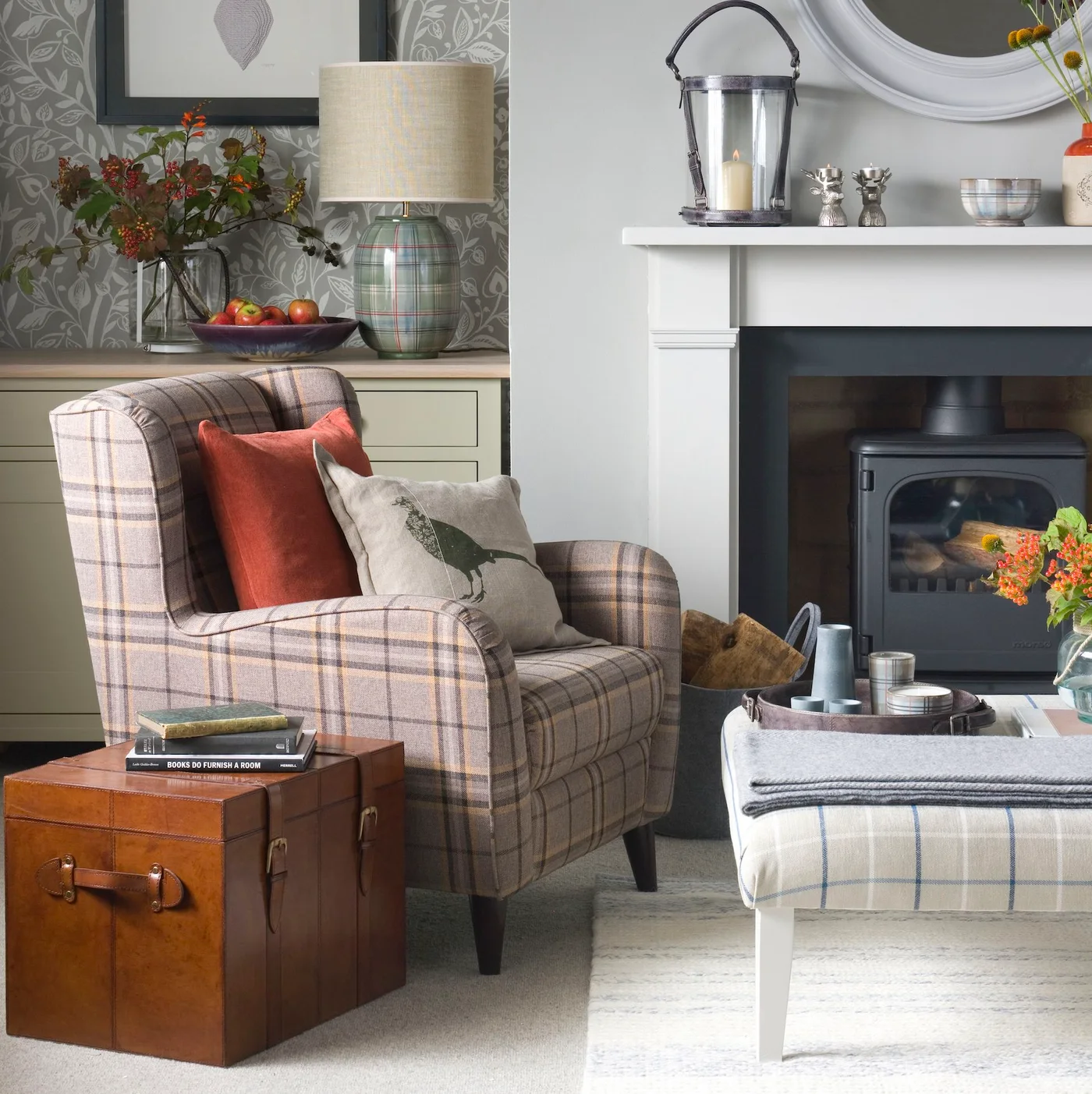
The plaid chair introduces a familiar country pattern beside the darker stove. A wooden chest provides a low surface nearby, with pale upholstery keeping the corner comparatively light. The lamp and wall display add detail above the seating, while the chair’s pattern does much of the work of connecting the textiles with the room’s rustic character.
Try a plaid sample at the scale of the whole chair before adding matching fabrics elsewhere. Check whether a chest is stable and comfortably reached from the seat, including whether opening it requires moving accessories. Choose lighting around reading comfort, and avoid positioning textiles or storage beside a working stove without checking the installation’s required clearances.
IDEA 07 / 20
Repeat Quiet Stripes Through the Seating
 SaveSupport Non AI Creator
Image credit: Future / Simon Whitmore
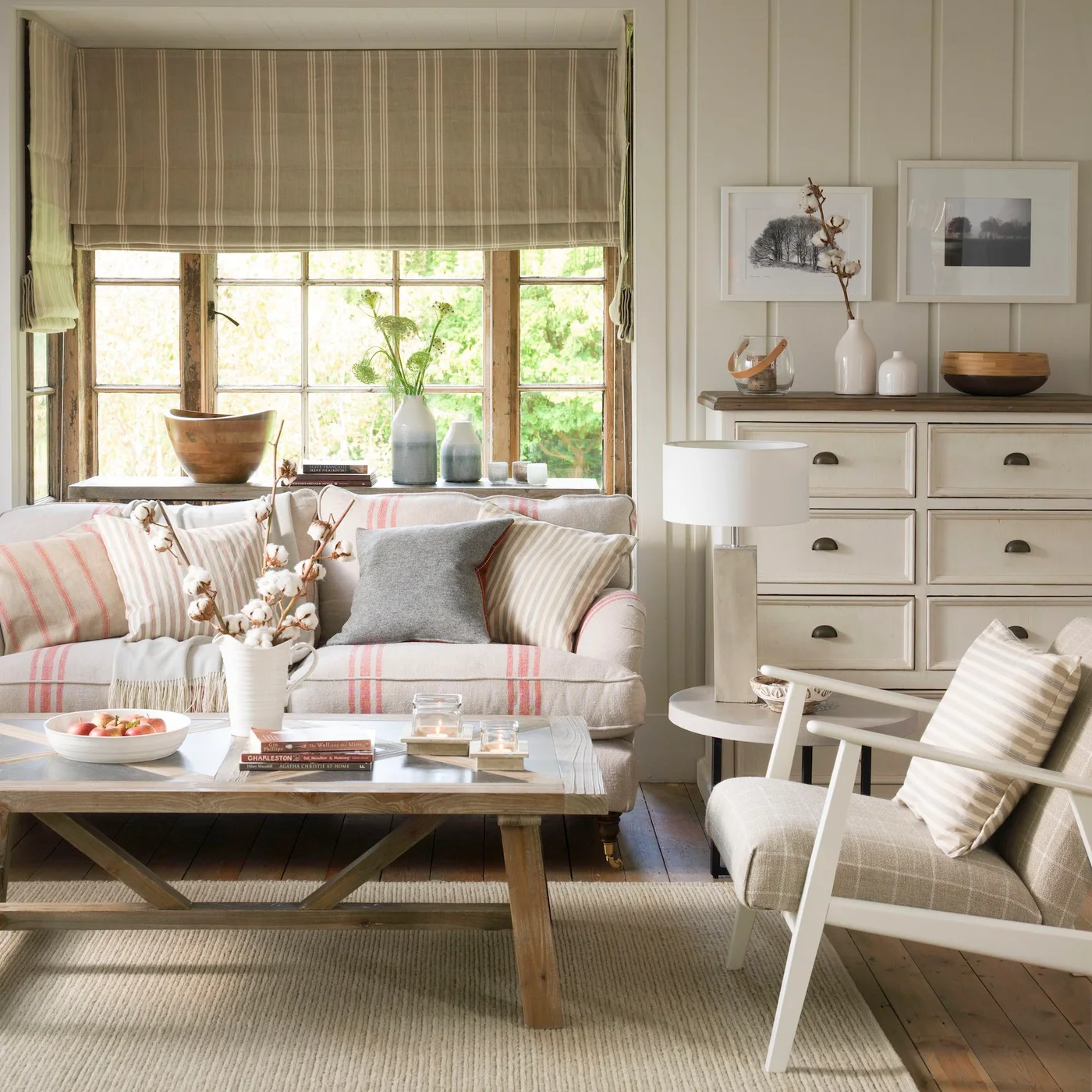
Quiet stripes connect the sofa, cushions and window treatment without making every textile identical. A wooden coffee table introduces a warm surface in the center, while the pale drawer unit and chair give the larger furniture a lighter background. The room’s texture comes from a small range of repeated finishes rather than strongly contrasting colors.
Compare stripe widths together before choosing several textiles for one seating group. Keep at least one broad surface, such as a curtain or cushion, relatively simple if the combinations become busy. Check drawer clearance and table reach around the actual sofa, and leave enough usable counter space on storage pieces for lamps or items you need every day.
IDEA 08 / 20
Use Deep Green Around Pale Upholstery
 SaveSupport Non AI Creator
Image credit: Future / Polly Eltes
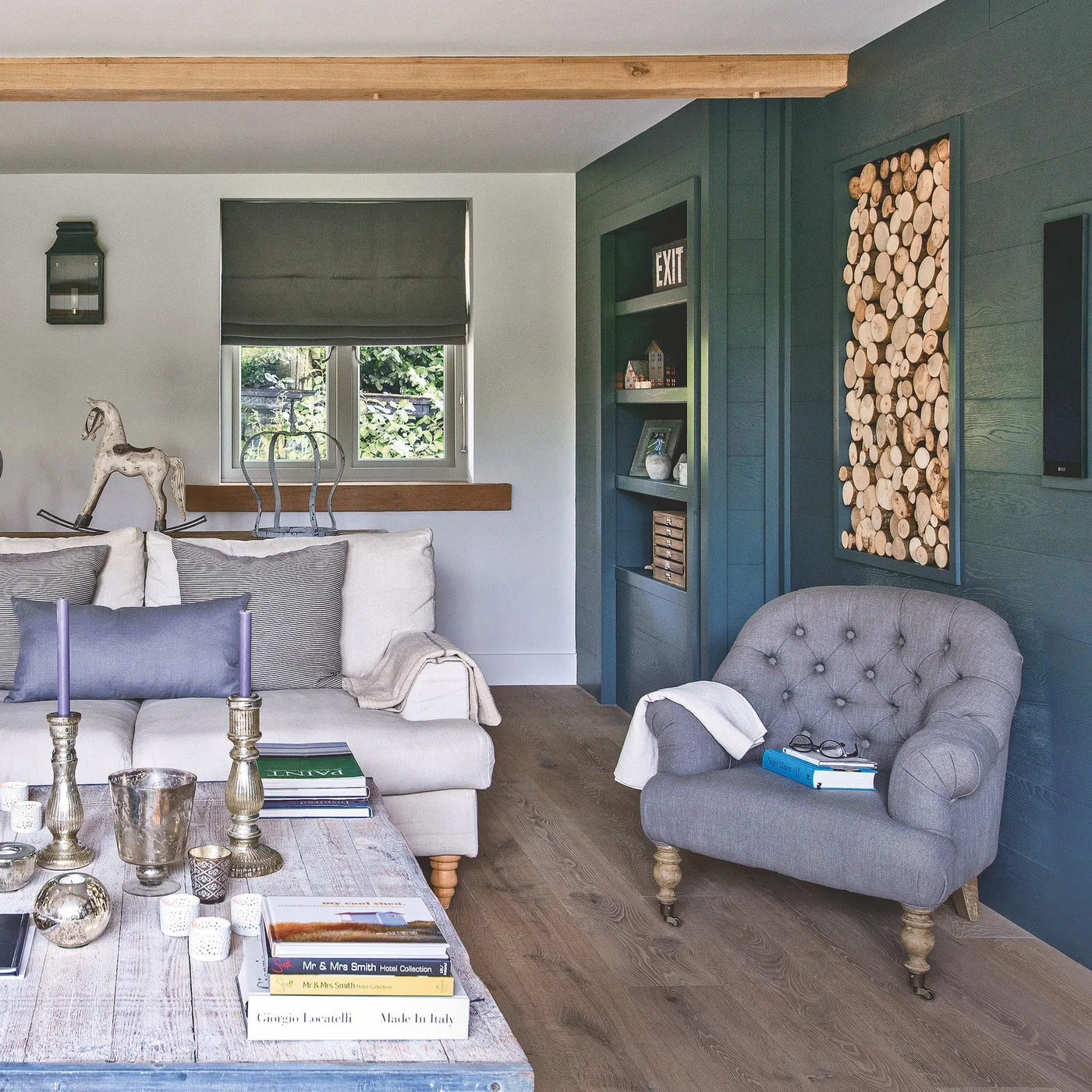
Deep green walls give the pale sofa and gray chair a stronger outline, while wooden trim repeats the warmer tones at the window and ceiling. A framed display of circular log ends adds a contained rustic detail. The light table and soft seating keep the room from relying entirely on darker, heavier-looking furniture.
Choose one defined textured display when you want wood detail without covering a whole wall. Check the weight, backing and mounting method before hanging anything substantial. Our earthy living room ideas compare other ways to combine deeper colors with pale seating; leave enough clear space around the chair and table to keep the arrangement useful.
IDEA 09 / 20
Mix Plaid and Floral Cushions Against a Quiet Wall
 SaveSupport Non AI Creator
Image credit: Future PLC/ David Brittain
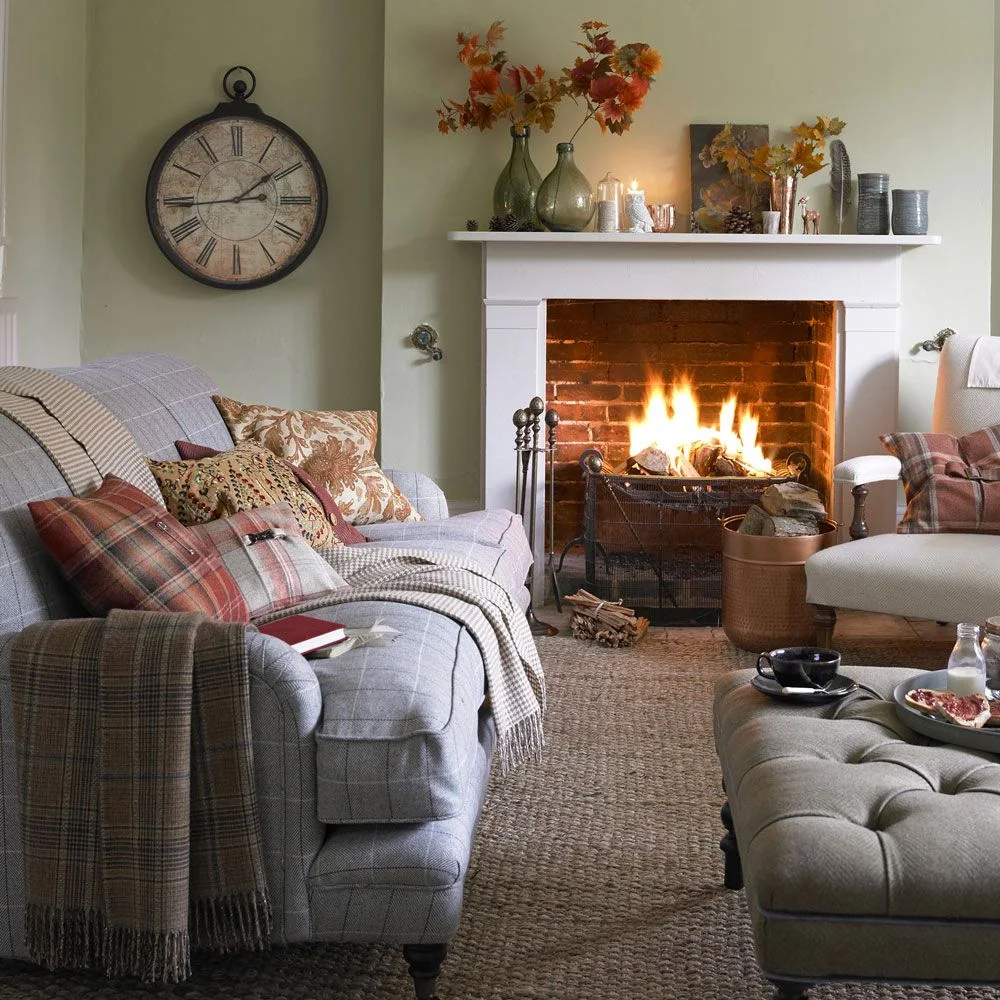
Plaid seating and smaller floral cushions give the room a layered country feeling, with muted green walls providing a quieter background. The pale fireplace draws the group toward one end of the room. A simple wooden clock and limited mantel arrangement repeat warmer details without extending the fabric pattern onto every visible surface.
Compare the largest plaid with the smaller cushion patterns before adding another textile. Keep the colors connected and leave some upholstery visible so the seats remain comfortable to use. Check the care instructions for each covering separately, and make sure the fireplace-side arrangement preserves the clearances and access required by your own installation.
IDEA 10 / 20
Add a Wooden Rocking Chair to Deeper Walls
 SaveSupport Non AI Creator
Image credit: Future PLC/ Joanna Henderson
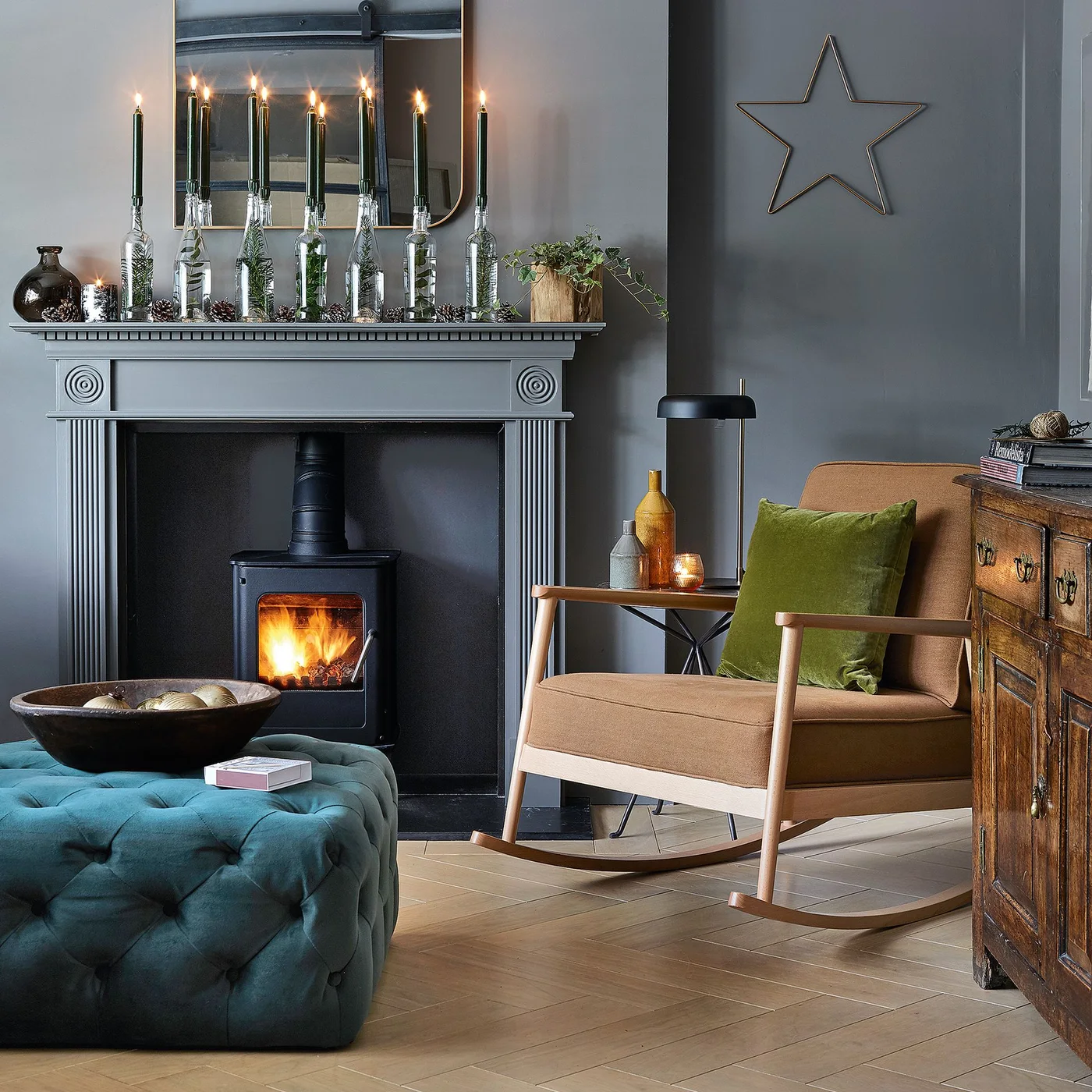
The wooden rocking chair provides a lighter frame against the deeper paneled wall, while the teal tufted ottoman adds a broader cushioned shape. A wooden drawer chest brings texture beside the seat. The darker fireplace and wall finish connect the larger background surfaces, leaving the chair’s frame and ottoman color clearly visible.
Allow for the rocking movement before placing a chair against storage or a wall. Test comfort and stability rather than choosing it only for its wooden outline. Keep a reachable surface beside the seat, and consider whether the upholstered ottoman is mainly for feet or occasional serving before relying on it as the room’s only table.
PART 03
Give storage and tables a practical role
IDEA 11 / 20
Choose a Coffee Table with Useful Drawers
 SaveSupport Non AI Creator
Image credit: Future / Joanna Henderson
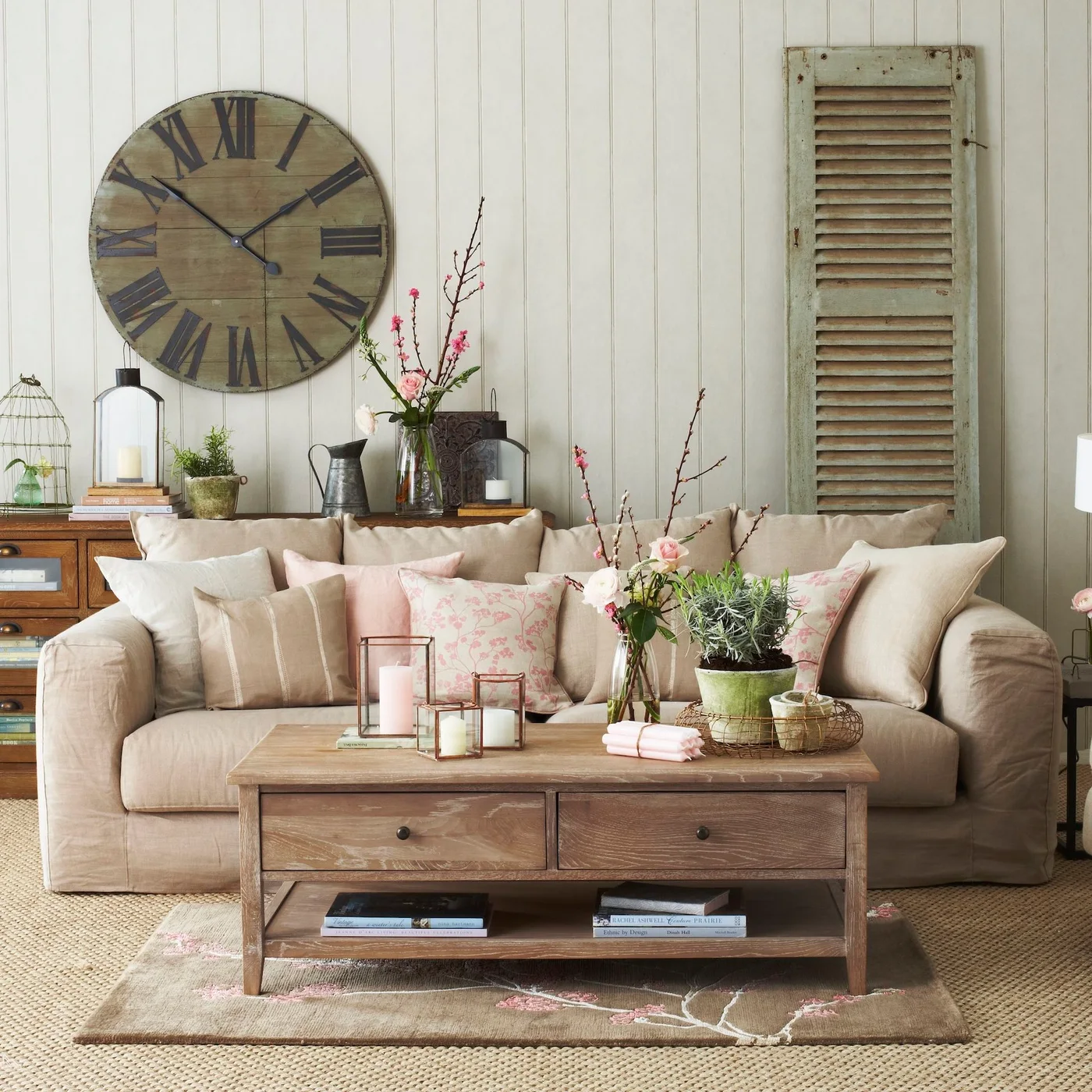
Drawers and a lower shelf make the wooden coffee table a practical center for the seating group. A large clock and shutter-style panel provide rustic-looking outlines above and beside the sofa. Pale upholstery gives those details room, while small pink accents soften the broad neutral palette without becoming another dominant surface.
Inspect drawer movement and the condition of the table finish before buying a similar piece. Decide what will be stored inside so the drawers do not simply collect unrelated objects. Measure the space around the sofa with the drawers open, and keep the top available for ordinary use instead of covering its useful surface with a large permanent display.
IDEA 12 / 20
Let Brick Connect Living and Dining Areas
 SaveSupport Non AI Creator
Source: idealhome.co.uk
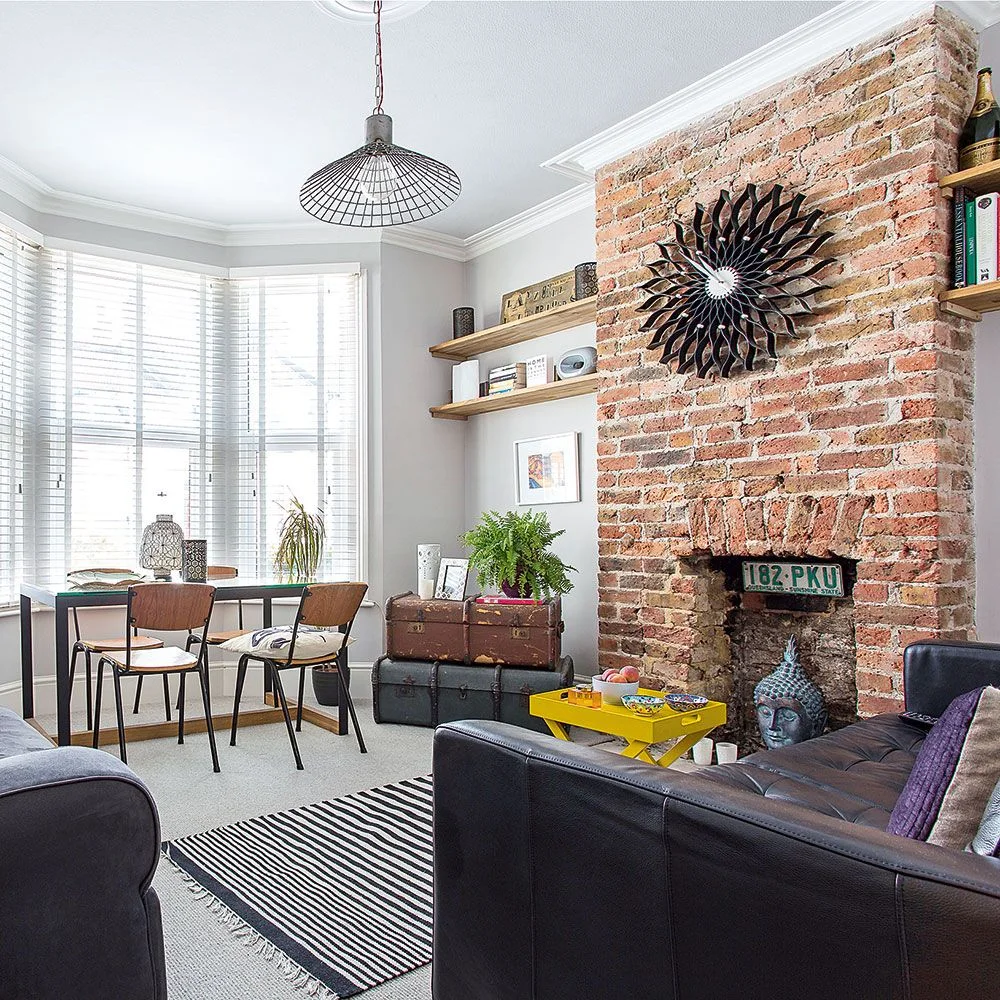
The brick chimney wall connects the living and dining areas through one visible textured surface. Wooden shelves repeat a warmer material outline beside it, while the darker sofa gives the seating its own identity. A small table near the window keeps the second zone practical without requiring a separate full wall of matching rustic storage.
In a shared room, choose the furniture around movement between the two activities before adding more decorative pieces. Keep shelves securely fixed for their intended load and leave chair-pulling space around the dining table. Use the brick wall as a background feature, then reduce competing accessories if the combined room starts to feel crowded.
IDEA 13 / 20
Use Textured Blinds Around a Reading Corner
 SaveSupport Non AI Creator
Image credit: English Blinds
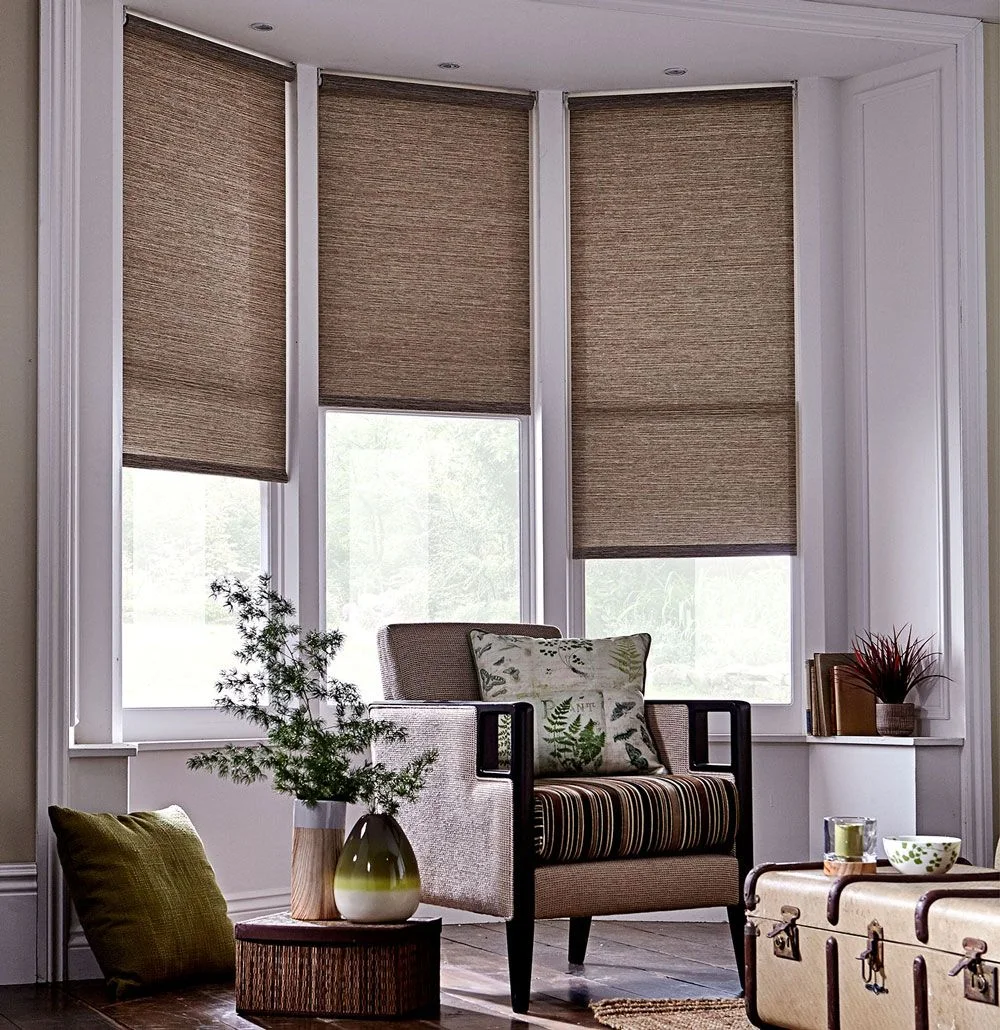
Textured brown blinds connect the three tall windows with the warmer furniture near them. A striped seat cushion adds another pattern in a limited area, while the trunk-style table offers a different shape beside the chair. The smaller wooden surface holds a vase, keeping some display away from the place used for sitting.
Check how the blinds operate and stack before placing furniture tightly beneath the windows. Choose the chair for sitting comfort and test the reach to the table. If a trunk will hold useful items, make sure it can open without repeatedly removing a large display, and inspect its lid support and overall stability before regular use.
IDEA 14 / 20
Keep Woven Storage Beneath a Narrow Console
 SaveSupport Non AI Creator
Image credit: Charles Ted
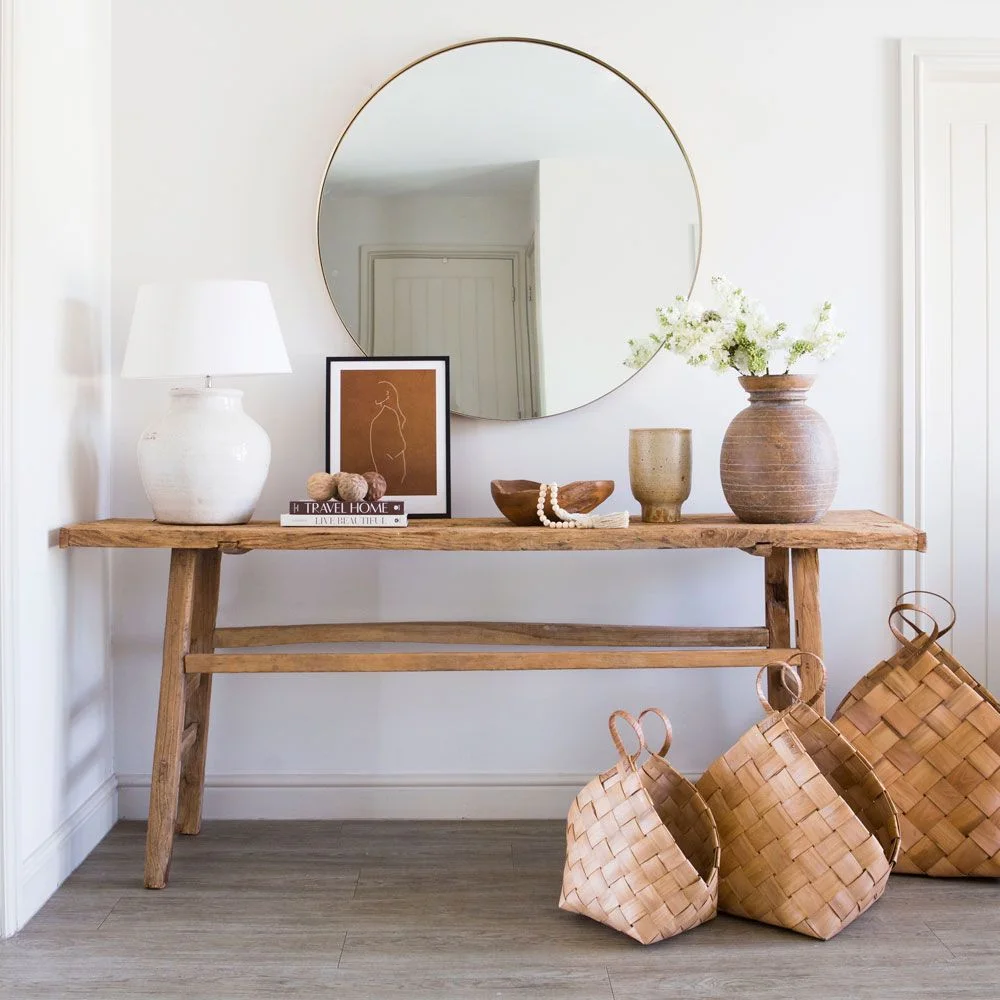
The wooden console introduces visible grain and an uneven-looking edge against a pale wall. A round mirror gives the arrangement a clear center above, while woven baskets sit below rather than occupying the table top. Pale lamps and vessels keep the smaller objects related, letting the wooden surface remain the main textured feature.
A narrow console can add useful storage at the edge of a living room, but compare its depth with the walking route before buying. Inspect the actual surface for snagging edges and follow its finish-care guidance. Use baskets for things you can readily return after use, and leave enough clearance to pull them out without moving the console.
IDEA 15 / 20
Repeat Wood in a Few Useful Pieces
 SaveSupport Non AI Creator
Image credit: Future PLC/ Simon Whitmore
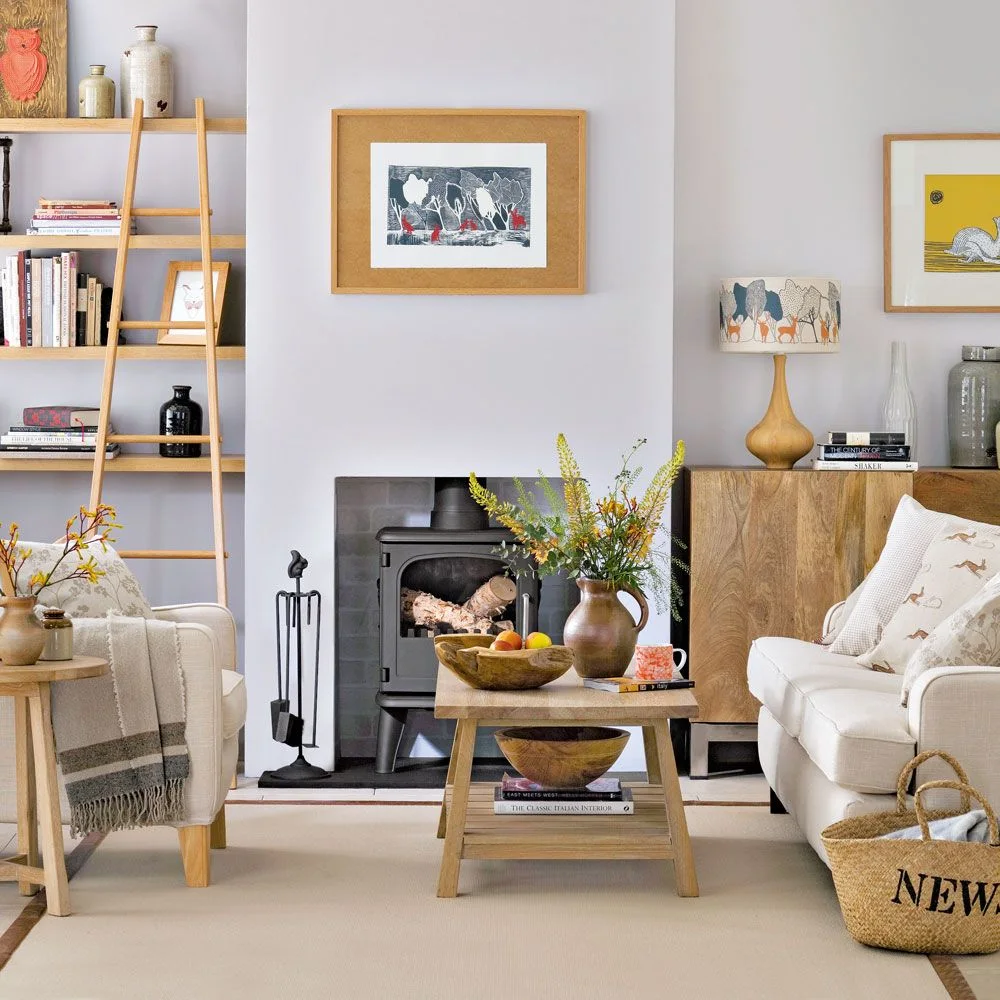
Wood appears in the coffee table, cabinet and shelves, giving the pale room a consistent warmer texture. A dark stove provides a central outline, while light chairs prevent the storage and tables from making the room feel uniformly heavy. The shelf arrangement contains a small display without removing the useful open area around the seating.
Repeat wood selectively through pieces that serve a purpose rather than buying a complete matching set automatically. Check shelf fixings and keep everyday items within comfortable reach. Position storage and furniture according to the stove’s actual requirements, and use the coffee table’s lower shelf for a manageable number of books instead of treating it as overflow storage.
PART 04
Connect rustic details with different room styles
IDEA 16 / 20
Pair Warm Leather with Exposed Timber
 SaveSupport Non AI Creator
Image credit: Future / Smons Hatton
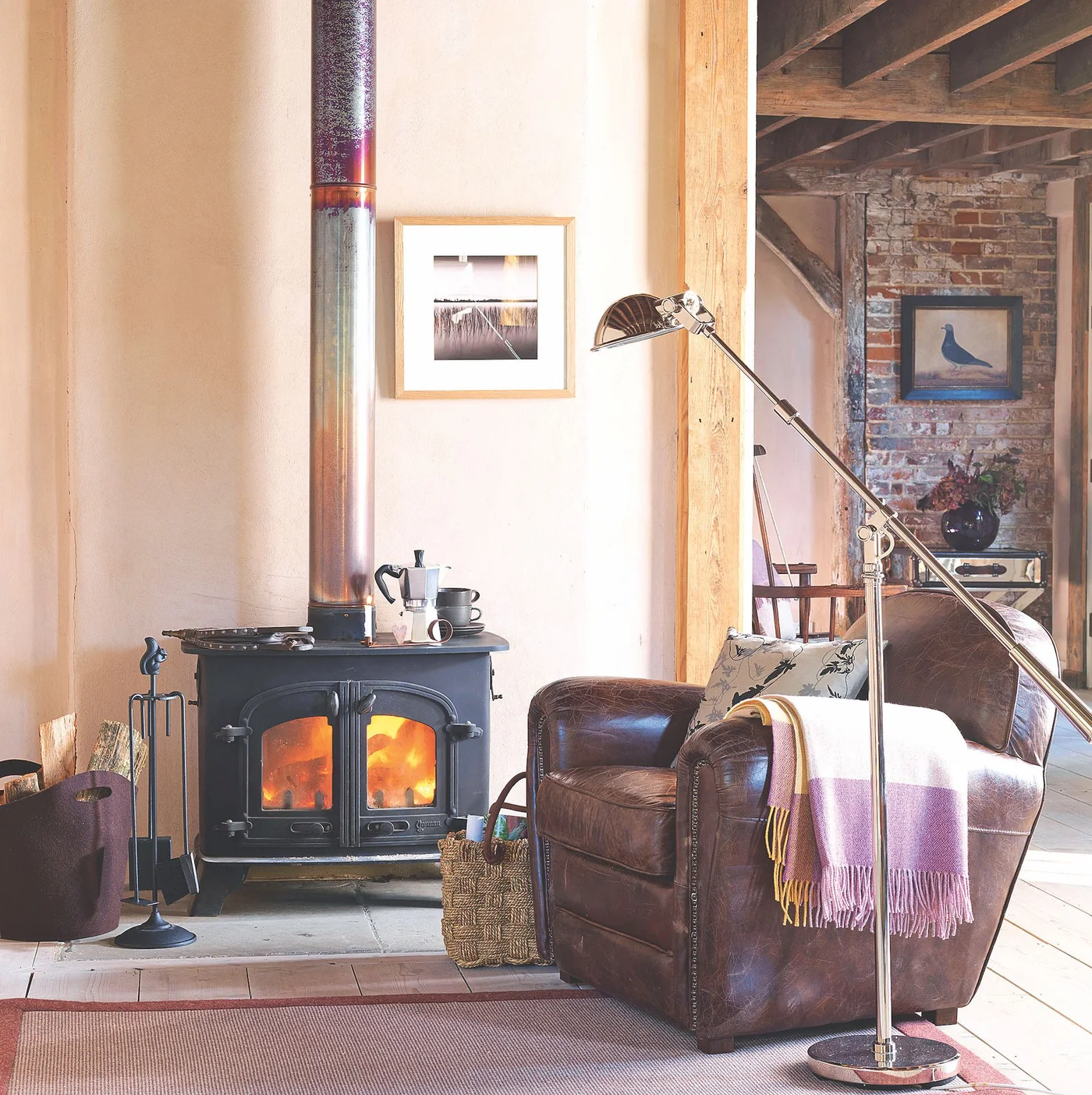
The brown chair introduces a softer surface beside the visible wooden framing and brick wall. A slender reading lamp gives the seat a useful light source without another large furniture piece. Pale flooring and a simple rug lighten the lower area, so the room’s heavier textures remain concentrated around the wall and fireplace.
Place a reading seat for comfort first, including the lamp position and a reachable surface for a book or drink. Follow the upholstery guidance for the actual chair, and check its distance from heating sources against the relevant requirements. For further fireplace-centered arrangements, cottage fireplace ideas compare different combinations of seating, mantel details and textured surroundings.
IDEA 17 / 20
Set Brown Seating Against a Strong Wall Color
 SaveSupport Non AI Creator
Image credit: Future PLC/ Simon Whitmore
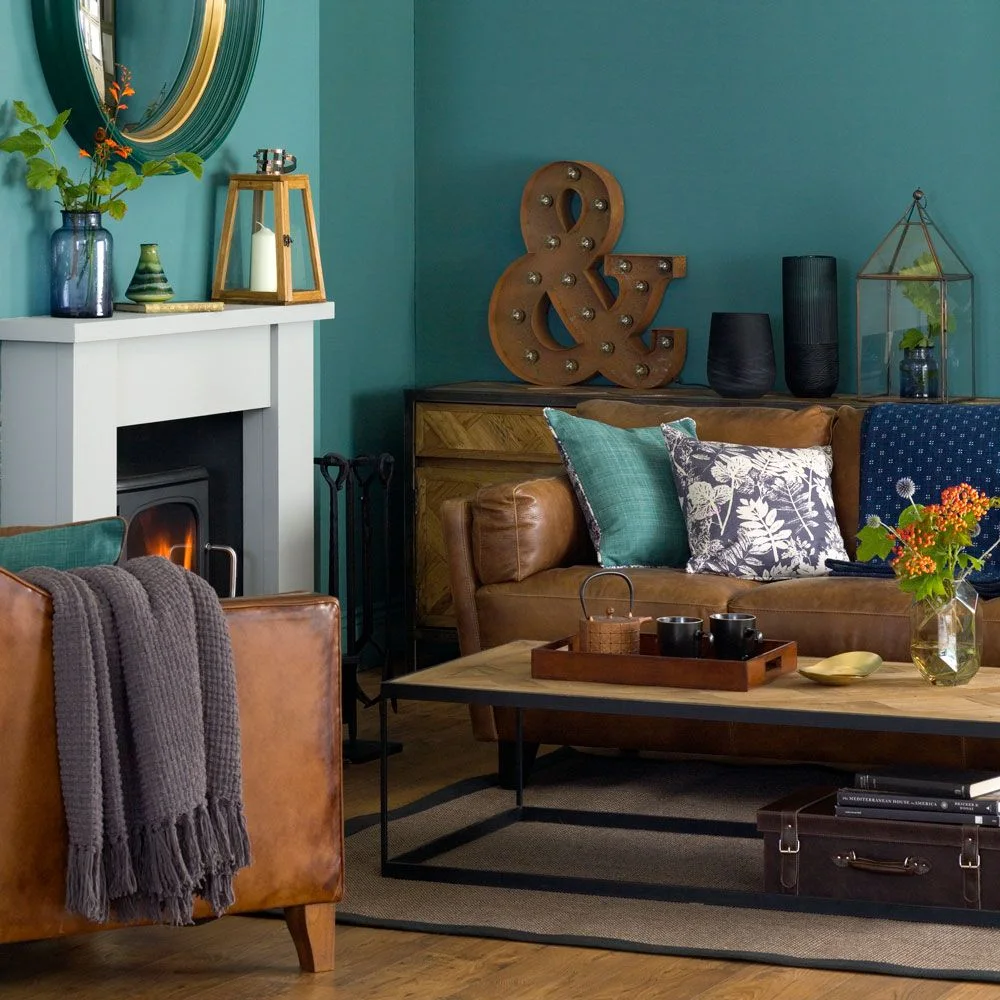
Teal walls give the brown seating a clear contrasting background, while the wooden table extends the warmer tones into the center of the room. Patterned cushions add smaller details without repeating the whole wall color. The pale fireplace surround interrupts the deeper backdrop and keeps the seating from appearing enclosed by dark surfaces on every side.
Compare a wall sample beside the upholstery and table finish at different times of day before committing to a deeper color. Keep cushion patterns selective so the larger combination remains clear. Check that the table height and position work from the actual seats, and avoid treating a strong wall color as a reason to add another set of matching accessories.
IDEA 18 / 20
Use a Wood-Effect Backdrop Where Real Boards Are Impractical
 SaveSupport Non AI Creator
Image credit: Future PLC/ Simon Whitmore
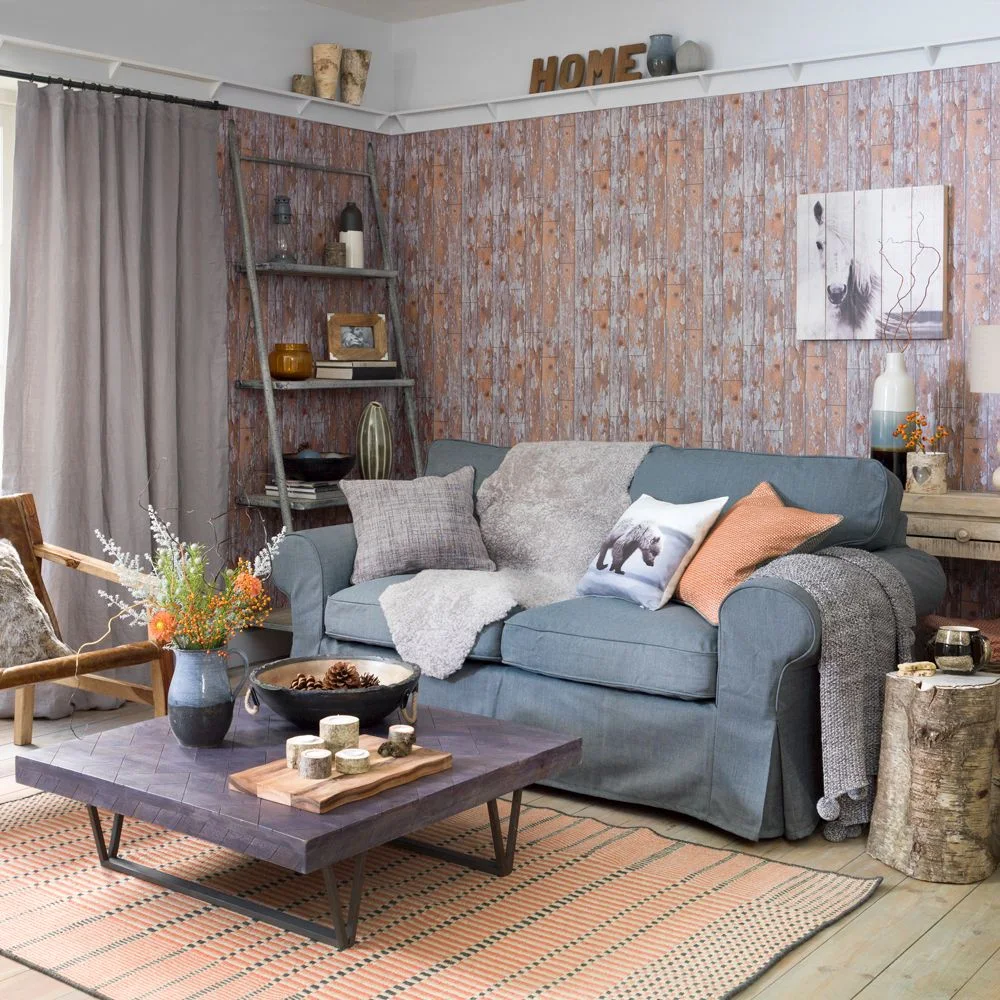
The wall’s wood-effect pattern provides a textured-looking backdrop behind the blue sofa without relying on visible structural boards. A wooden table and branch-shaped side piece bring different outlines into the seating area. Plain curtains and a limited cushion arrangement keep the patterned background from competing with another large decorative fabric.
Compare a full pattern repeat before choosing a wood-effect wall covering, including how it meets corners and shelves. Its appearance does not establish a wooden wall or the properties of real boards. Keep decorative leaning objects stable and away from the walking route, and choose the table finish around cleaning and daily use rather than appearance alone.
IDEA 19 / 20
Mix Comfortable Seating Beneath Exposed Beams
 SaveSupport Non AI Creator
Image credit: Future PLC/ Polly Eltes
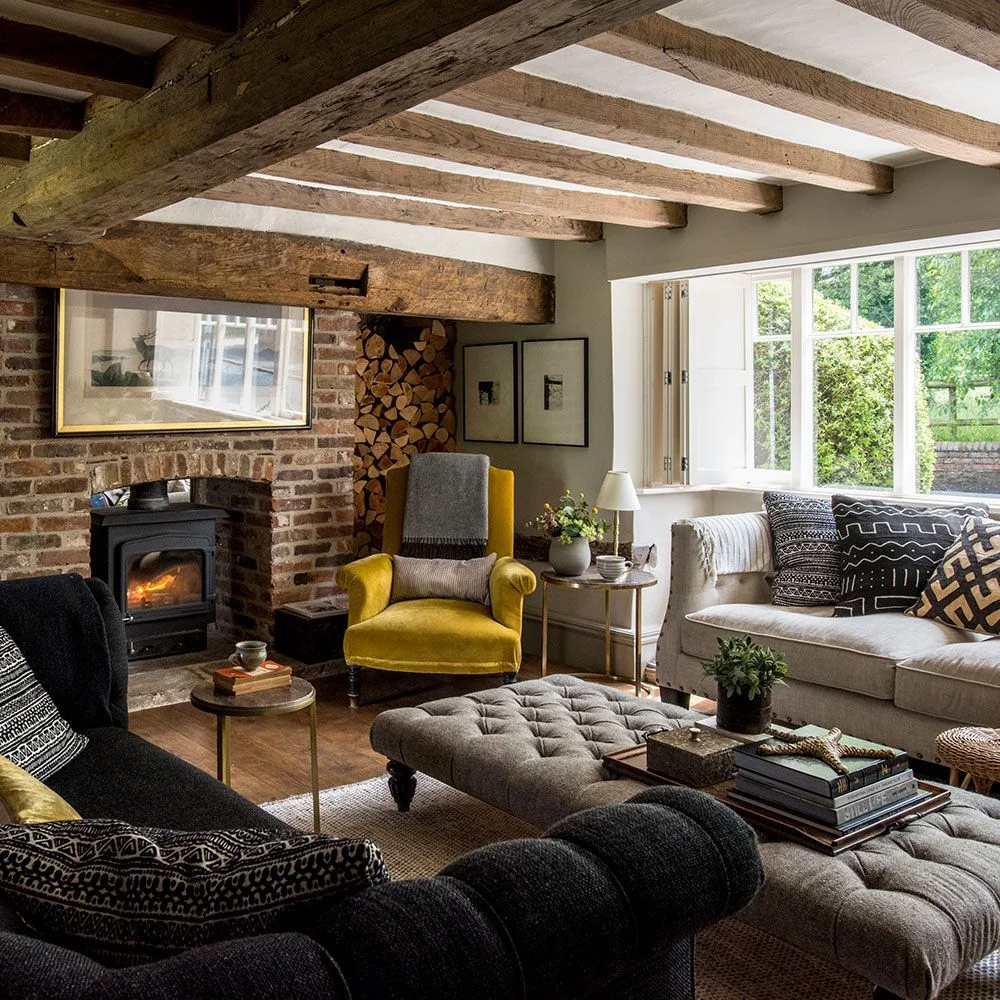
Exposed wooden beams and the brick fireplace establish the room’s rustic character, allowing the seating to use lighter fabrics and a bright yellow accent. A tufted ottoman gathers the group in the center. Different side tables provide reachable surfaces, while patterned cushions connect the darker furniture with the paler sofa.
When beams and brick already provide strong texture, choose seating for comfort rather than insisting on more visibly rough furniture. Check routes around the ottoman and between the chairs before adding another table. Avoid altering exposed timber or fireplace details based on a decorating photograph; obtain appropriate advice for any structural or installation work.
IDEA 20 / 20
Connect a Rustic Seating Area with Lighter Dining Furniture
 SaveSupport Non AI Creator
Image credit: Future PLC/ Richard Gadsby
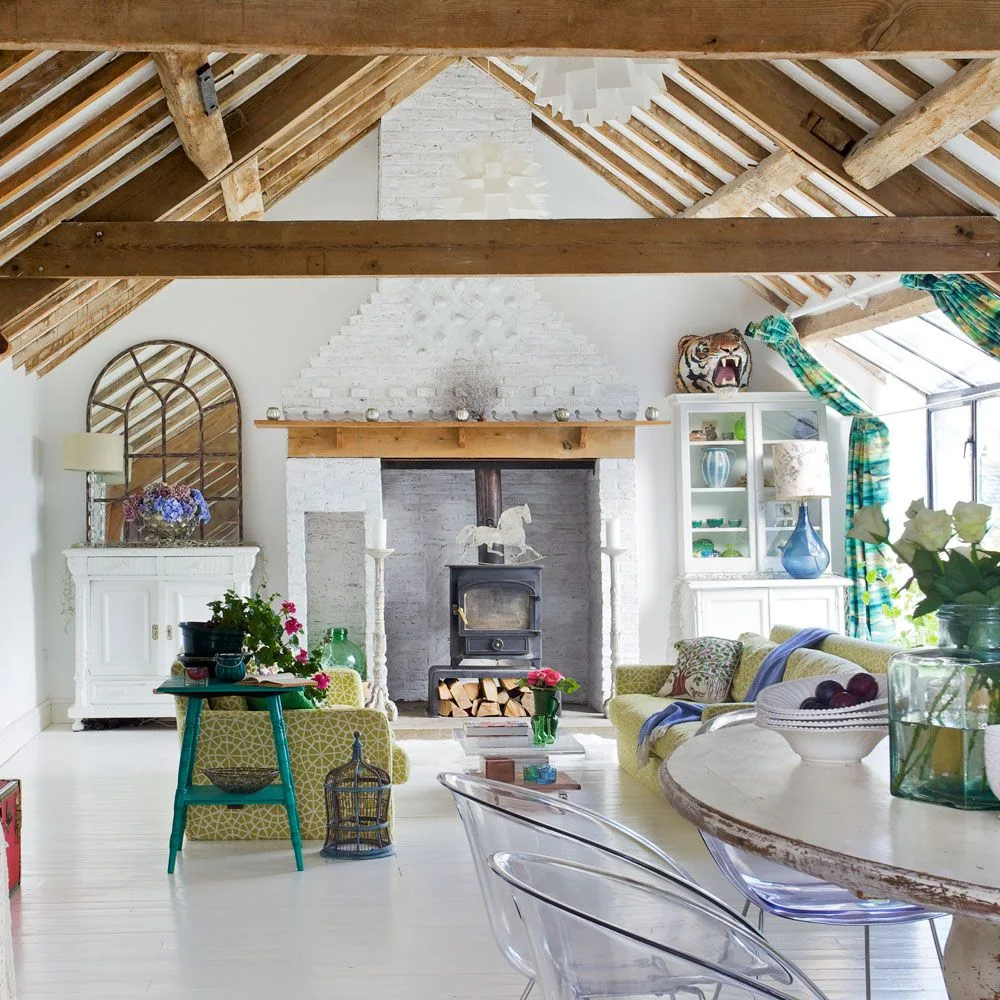
The exposed timber roof provides the largest rustic surface above the room, while the white fireplace and floor keep the lower space lighter. Green-patterned seating occupies the relaxing area, with transparent chairs at the dining table offering a different, less solid-looking silhouette. The arrangement combines visible structure with furniture that does not all imitate the same style.
In an open room, keep the paths between dining and seating practical before copying the furniture mix. Check the comfort and maintenance of the actual dining chairs rather than assuming a lighter appearance makes them easier to use. Repeat a small color between the two zones if needed, while leaving the timber roof and existing fireplace as the main shared features.
BRING IT ALL TOGETHER
Add texture where it earns its space
Choose a useful piece before adding a decorative collection. A stable coffee table, accessible basket or comfortable chair can introduce texture while solving an everyday problem. Compare finishes with the wood, brick or flooring you already have, and leave enough clear space to move between the seating and storage.
Look at the room after an ordinary day of use. Keep textiles easy to care for, tables reachable and storage simple enough that things can be returned without effort. If the arrangement feels crowded, reduce the small objects before adding more shelves. Rustic character comes through more clearly when each visible surface and useful furnishing has room around it.