A vintage living room does not need to recreate one decade or fill every corner with old furniture. Start with a piece you enjoy using, then find a relationship between its shape, color or texture and the things already in the room. A practical lamp, a comfortable chair and a useful table can help a collected arrangement feel settled.
These rooms combine traditional details, retro silhouettes and newer furnishings in different ways. A photograph cannot establish an object’s age or authenticity, so treat the examples as styling ideas rather than proof of antique provenance. When buying secondhand, inspect condition, measure carefully and consider repairs before deciding that a bargain belongs in your home.
PART 01
Make mixed furniture feel connected
IDEA 01 / 20
Give a Carved Sofa a Simple Wall Color
 SaveSupport Non AI Creator
Image credit: Farrow & Ball
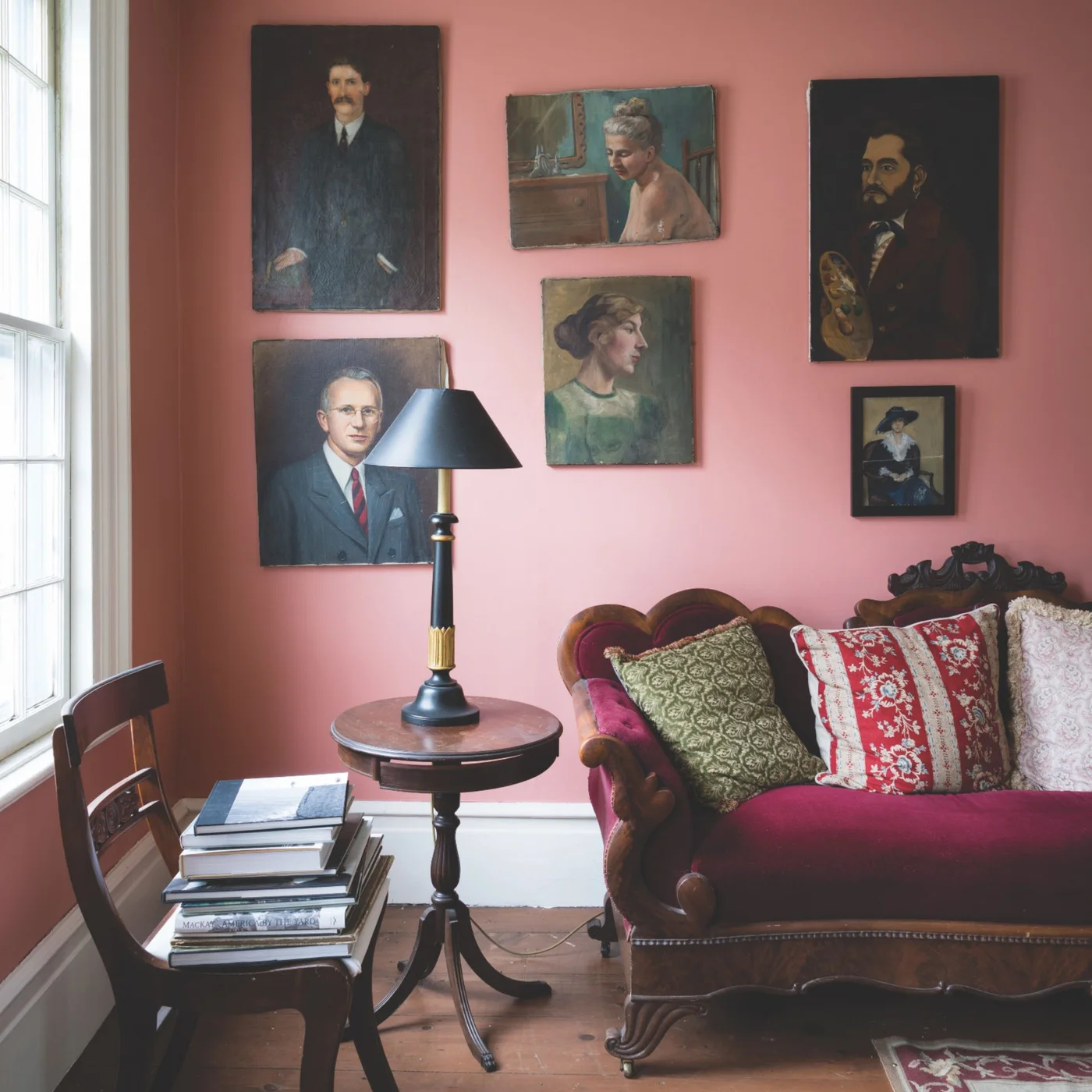
The carved sofa and gathered portraits supply much of the character against the pink wall. A round wooden side table repeats the darker furniture tone, while a straightforward dark lamp gives the seating a useful light source. Patterned cushions add another layer without hiding the sofa’s wooden frame or curved profile.
When you find a detailed sofa, check its frame and upholstery condition before planning the rest of the room around it. Include repair costs in the decision and measure the delivery route. A quieter wall color can give carved details space, while a reachable side table makes the arrangement useful rather than leaving the furniture as a purely decorative feature.
IDEA 02 / 20
Connect Different Chairs with a Shared Rug
 SaveSupport Non AI Creator
Image credit: Future PLC
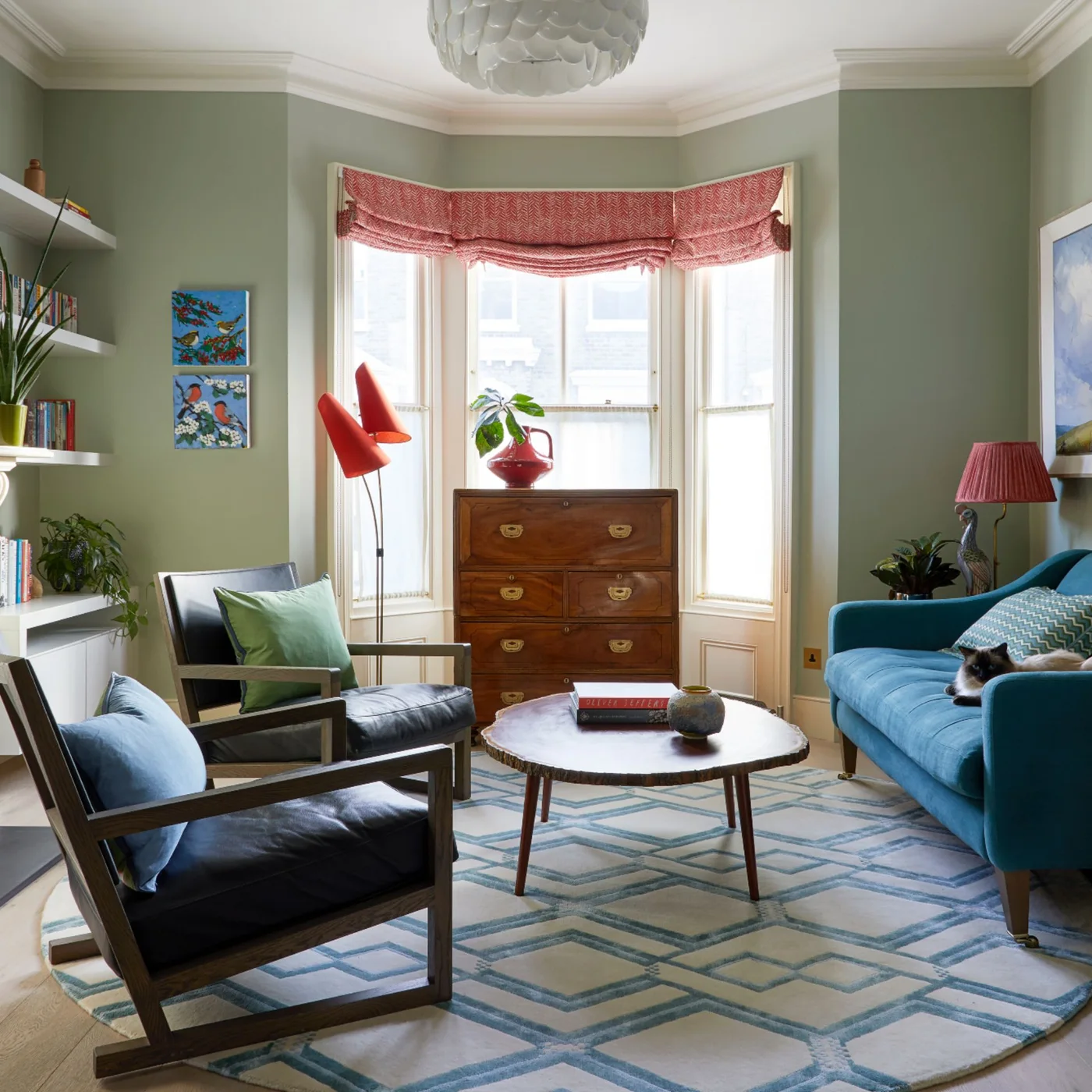
The blue sofa and darker wooden-framed chairs have different shapes, but the geometric rug gives them a shared base. Pale green walls and the wooden drawer chest soften the stronger blue upholstery. A red floor lamp and patterned window blind add smaller accents, keeping the mixed seating from looking like unrelated pieces placed along separate walls.
Compare chair seat heights and arm positions before combining them with a sofa for conversation. Our eclectic living room ideas offer more examples of mixed furniture arrangements. Choose the rug around the actual group, then check whether doors and windows remain easy to reach; a pleasing color combination cannot compensate for chairs that block the room’s regular route.
IDEA 03 / 20
Let a Wooden Sideboard Balance Bright Seating
 SaveSupport Non AI Creator
Image credit: Industvile
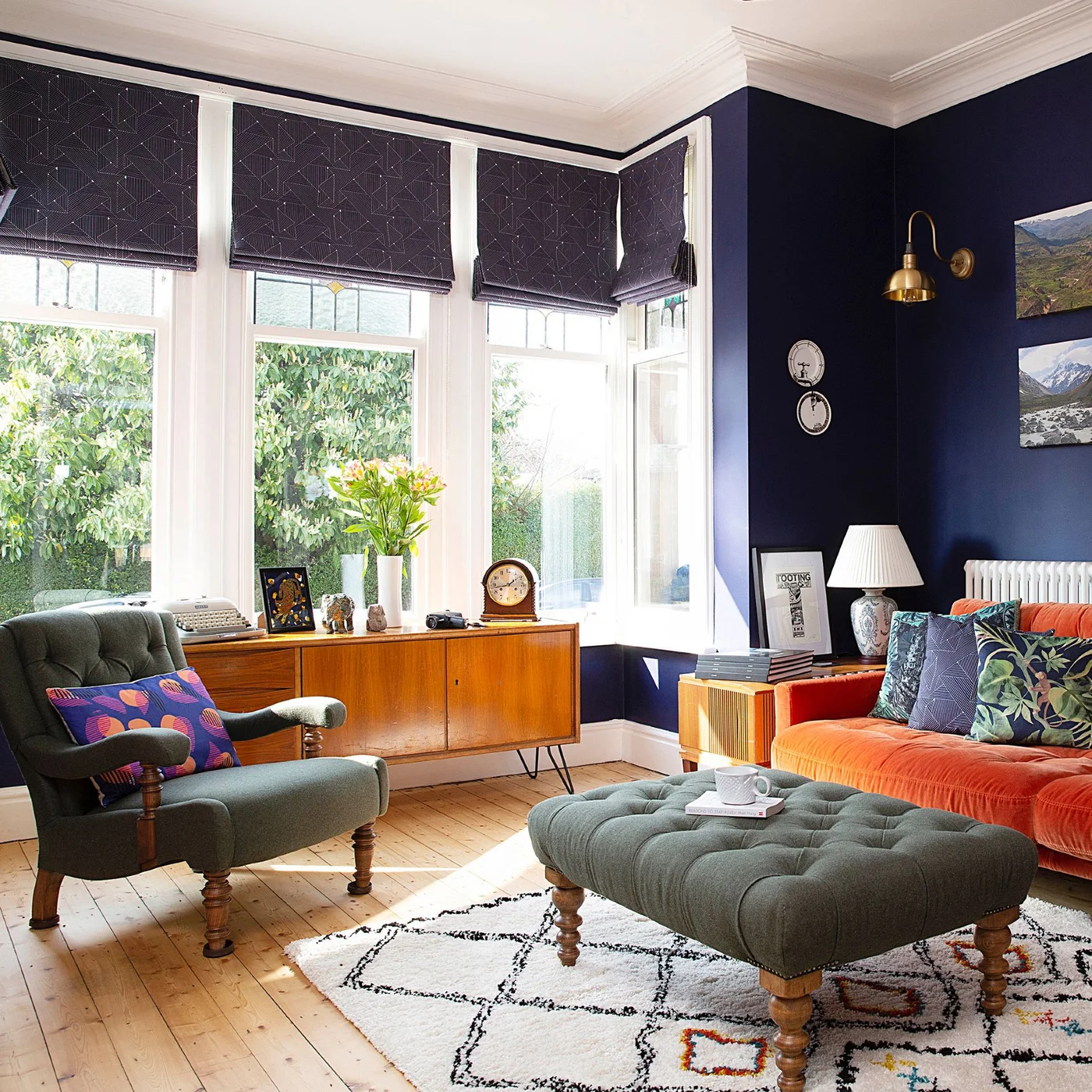
The wooden sideboard provides a calmer horizontal surface beside the orange sofa and green armchair. Dark blue walls frame the bay window, while patterned blinds keep another repeated shape within the window area. The tufted ottoman and geometric rug gather the furniture without requiring every upholstered piece to share the same color.
A secondhand sideboard should provide useful storage as well as the right silhouette. Check drawer and door movement, inspect its condition and compare the depth with the space beside the seating. Keep the top available for items you actually use, and avoid blocking the window with a tall collection simply because the cabinet has a generous display surface.
IDEA 04 / 20
Choose One Clear Collection Theme
 SaveSupport Non AI Creator
Image credit: Future PLC
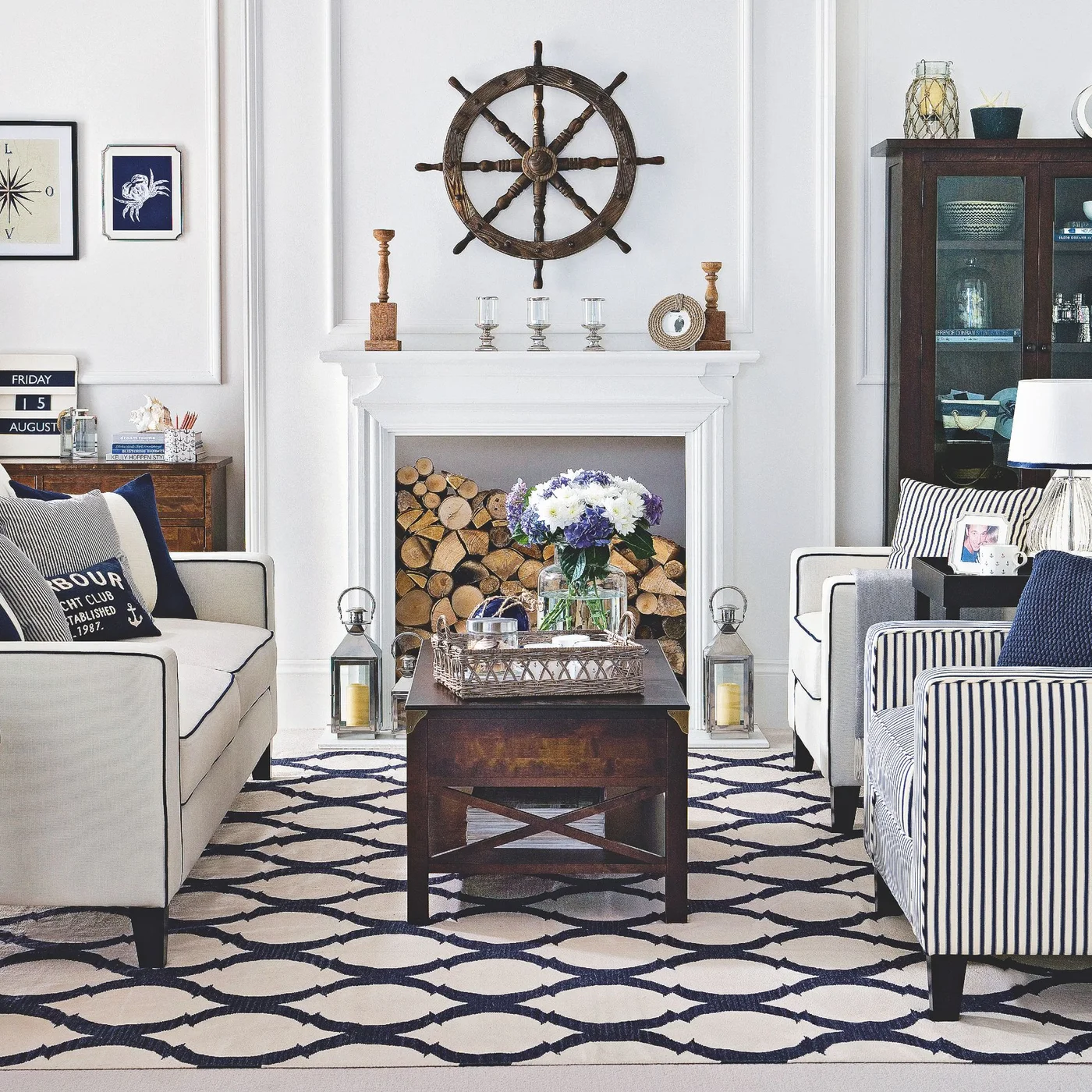
A ship wheel establishes the nautical theme above the fireplace, with blue-and-white seating and striped chairs carrying that color story through the room. A darker cabinet holds smaller objects behind glass. The wooden coffee table gives the center a warmer surface, while pale walls leave the collection and furniture outlines easy to distinguish.
Limit a themed collection to the objects you most enjoy rather than filling every surface with related ornaments. Check the fixing method for a heavy wall piece and keep any working fireplace clear according to its requirements. Use enclosed storage for smaller pieces that are awkward to dust, and leave the coffee table useful for everyday drinks and books.
IDEA 05 / 20
Use a Drawer Chest Beside a Reading Chair
 SaveSupport Non AI Creator
Image credit: Bridgman
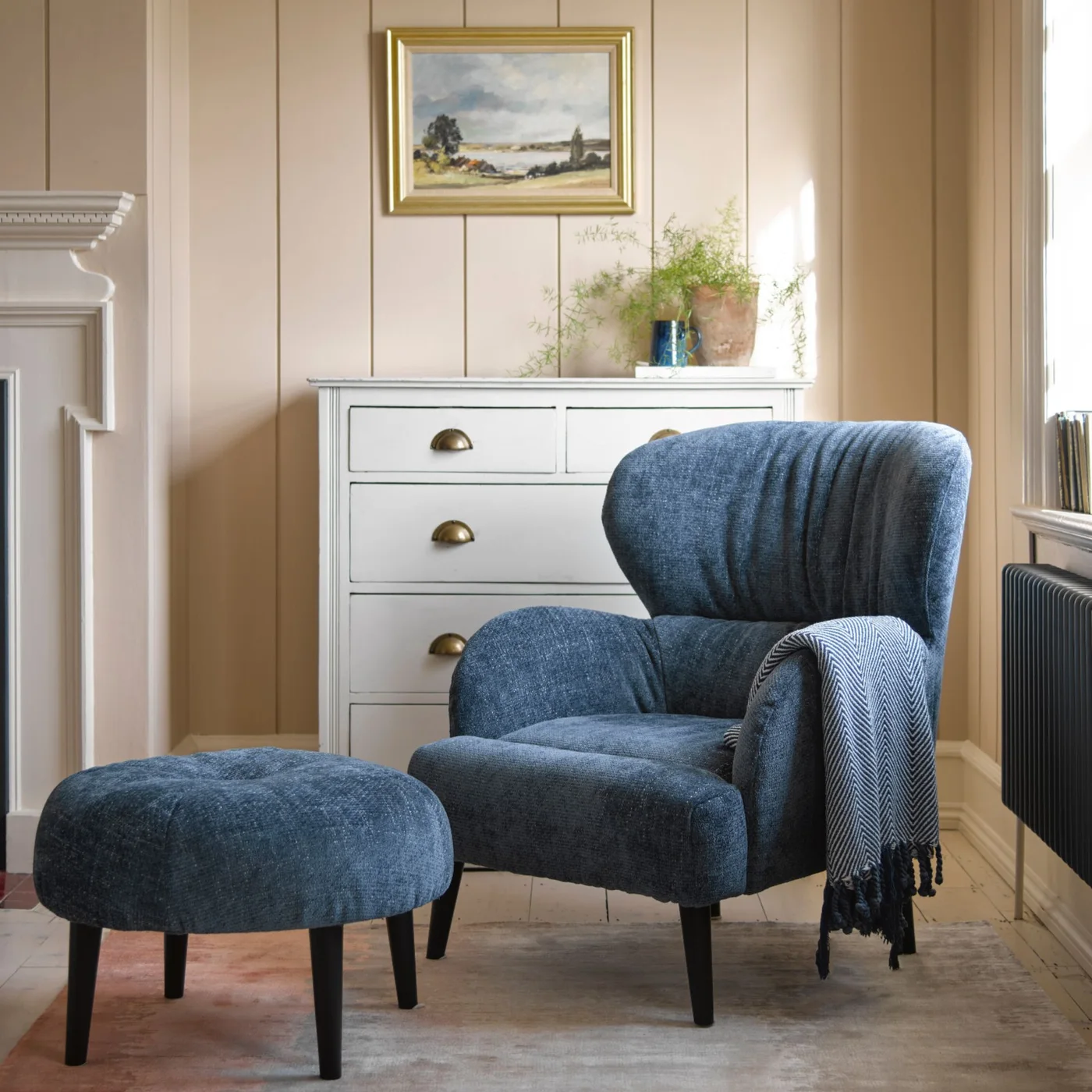
The blue armchair and footstool create a compact resting place beside the pale drawer chest. A framed landscape above the drawers adds another traditional-looking detail without covering the wall with a larger collection. The chest’s curved metal pulls echo the softer furniture shapes, while the seat and stool remain the most prominent color in the corner.
Try a secondhand chest where you need storage beside seating, but check its height and drawer clearance before buying. Keep it stable and position it so opening a drawer does not require moving the chair every time. Make sure the reading area has a suitable light source rather than expecting nearby decorative furniture to supply everything the seat needs.
PART 02
Give artwork and mirrors a clear role
IDEA 06 / 20
Give Framed Pictures a Shared Background
 SaveSupport Non AI Creator
Image credit: Future PLC
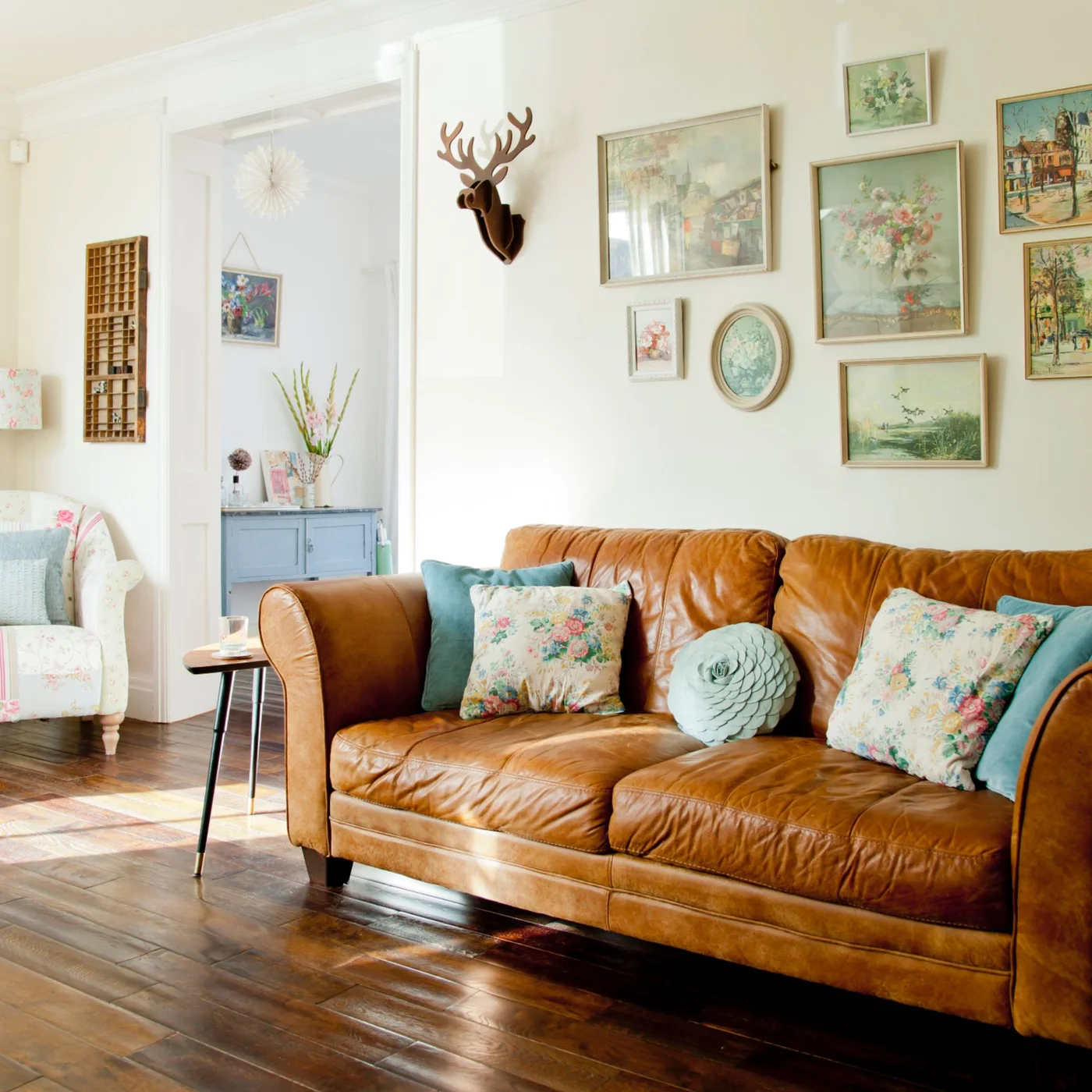
The pale wall connects several different framed pictures above the tan sofa, with floral cushions repeating smaller colors from the gallery. A floral chair at the side adds another pattern without matching the couch. The frames vary in size and shape, but the clear background allows the group to read together rather than as separate competing displays.
Arrange the frames on the floor first and plan their positions around the sofa’s width and seated sightlines. Our above-couch wall decor ideas compare other ways to organize a wall over seating. Use appropriate fixings and leave room to move the couch if needed; a varied gallery works best when its individual pieces remain securely mounted and easy to see.
IDEA 07 / 20
Pair an Ornate Mirror with Simpler Chairs
 SaveSupport Non AI Creator
Image credit: Future PLC
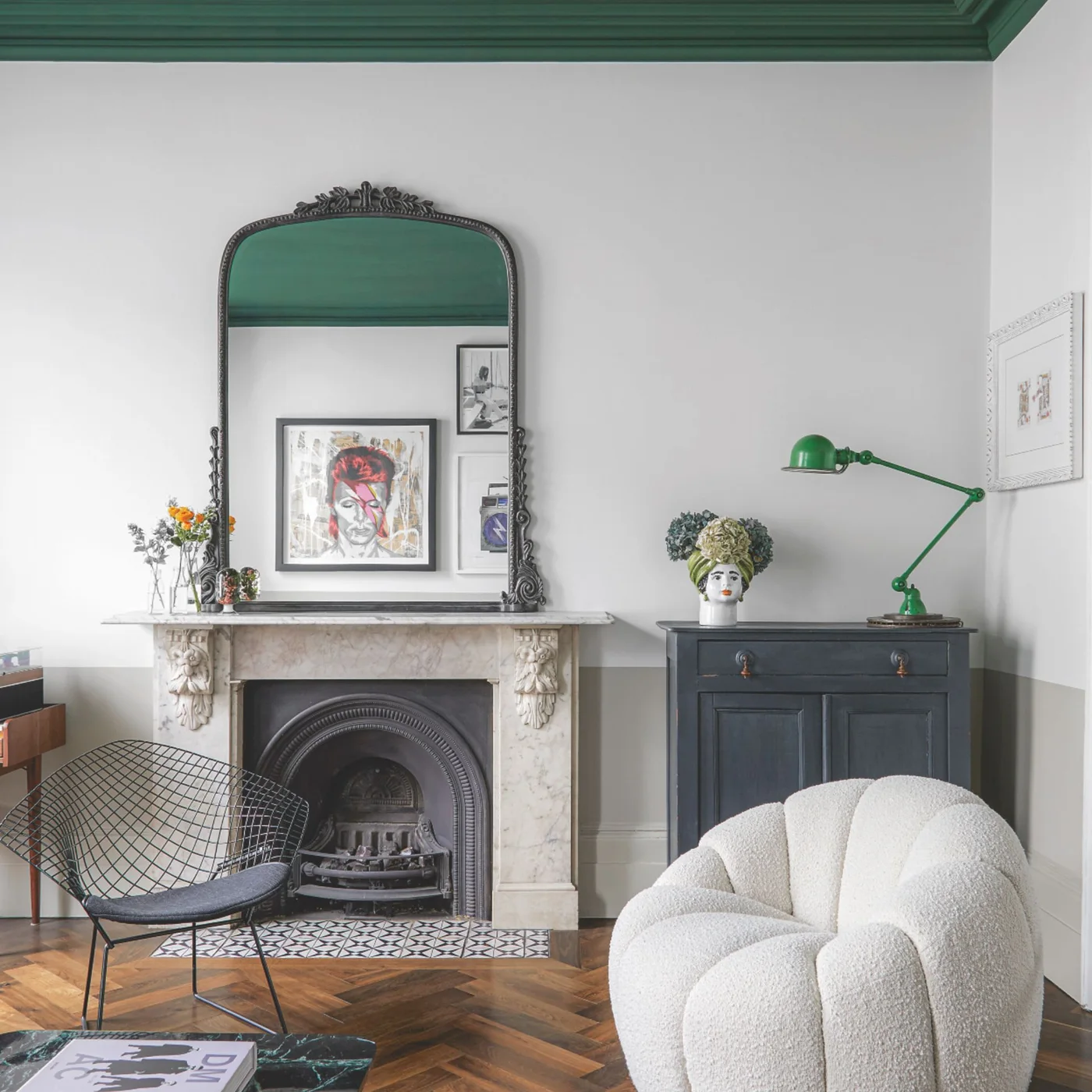
The ornate mirror brings a traditional outline above the pale fireplace, while the wire chair and rounded pale armchair offer different, simpler shapes below. A green lamp repeats the painted ceiling color without adding another large upholstered piece. The arrangement shows how one decorative frame can provide character within a room that otherwise leaves substantial wall space visible.
When mixing a decorative mirror with newer seating, compare the proportions from the doorway rather than matching every finish. Check the mirror’s weight and mounting requirements, and decide what it should reflect from the seats. Keep the nearby lamp convenient for use and leave enough room between different chair shapes so their frames do not interfere with each other.
IDEA 08 / 20
Keep Floral Upholstery Within a Defined Area
 SaveSupport Non AI Creator
Image credit: Pooky
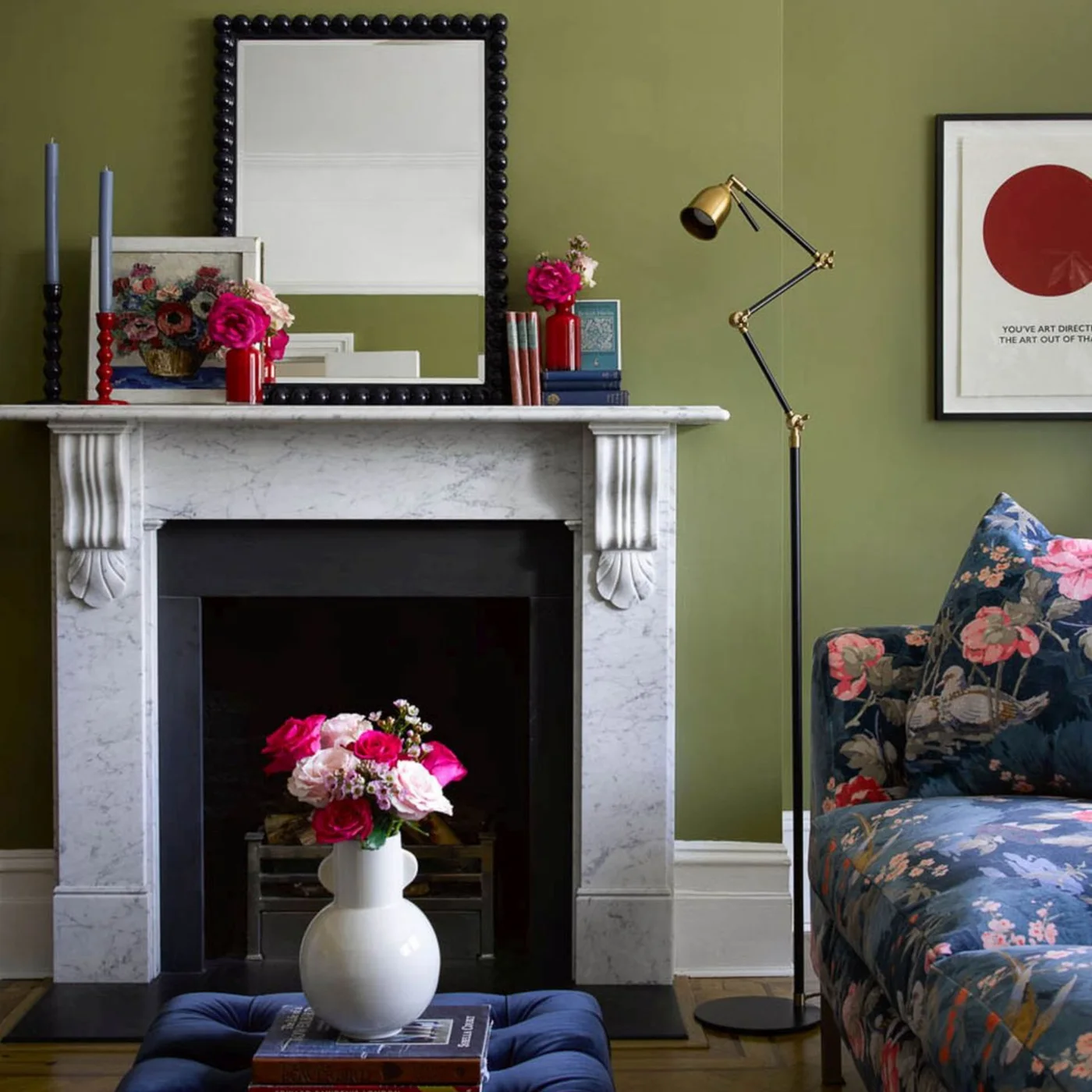
The floral sofa introduces several colors within one clearly defined seating piece. A blue tufted ottoman repeats one of those tones, while the green wall and pale fireplace create broader, quieter areas. The black beaded mirror and slender lamp provide outlines above the furniture without requiring another fully patterned chair beside the sofa.
If you choose patterned secondhand upholstery, inspect its condition and ask about cleaning before deciding it is a practical fit. Compare nearby fabrics against the actual pattern rather than choosing several unrelated florals. Leave the ottoman useful for the way you relax, and use a stable tray or side table where drinks need a firm surface.
IDEA 09 / 20
Let a Distinctive Cabinet Anchor a Gallery
 SaveSupport Non AI Creator
Image credit: Jessica Davis. Design: Atelier Davis
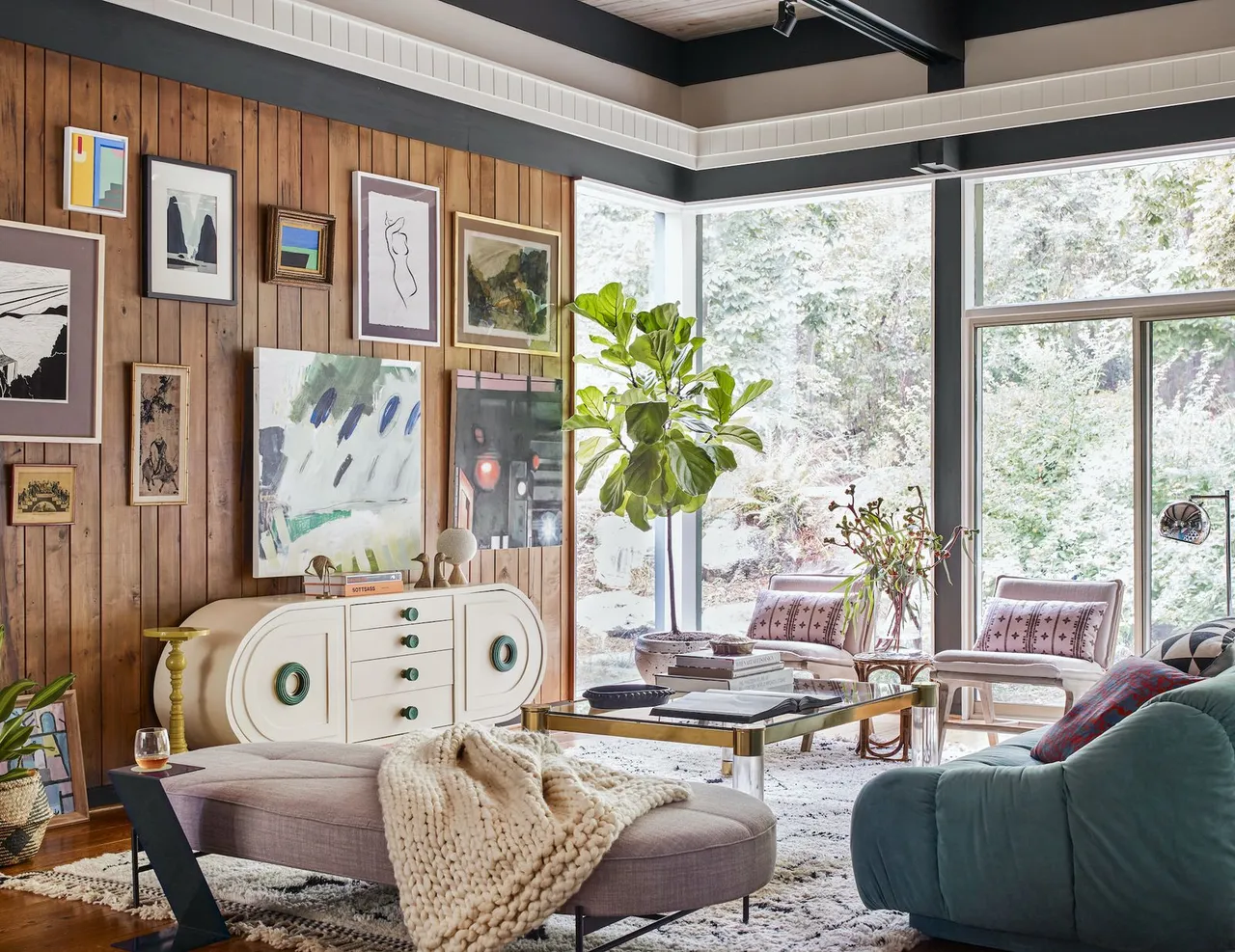
The rounded pale cabinet provides a clear anchor below the varied framed gallery. Wooden paneling connects the pictures with the surrounding furniture, while a pale chaise offers a simpler upholstered shape in front. The arrangement includes several contrasting pieces, but the cabinet and wall give the collection one visible center rather than allowing it to spread without a boundary.
Before buying an unusual cabinet, check that its interior suits the things you intend to store and that doors or drawers open comfortably. Plan the gallery around the furniture after it is in place. Leave enough room beside the chaise to move through the seating area, and avoid adding another small cabinet just to fill a remaining gap.
IDEA 10 / 20
Use Paired Mirrors to Settle Mixed Patterns
 SaveSupport Non AI Creator
Image credit: Kit Kemp / Simon Brown
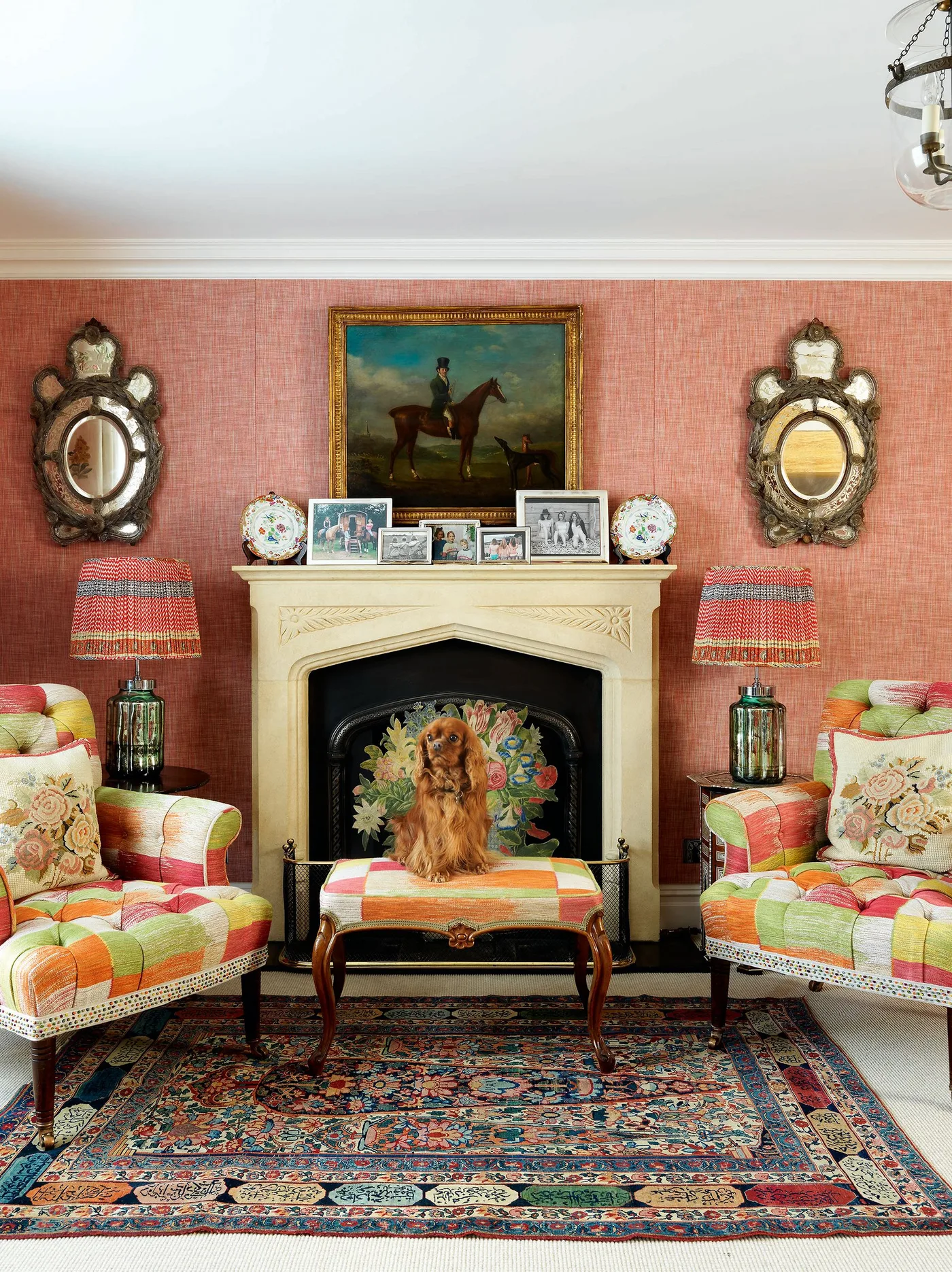
Paired ornate mirrors provide a repeated outline above the fireplace, balancing the varied pattern on the chairs and rug. Matching lamps establish another pair at seat level. The coral wall connects those details with the warmer upholstery colors, while a small framed collection on the mantel gives the room a more personal layer.
A repeated pair can bring order to a mixed room without requiring a matching furniture suite. Compare the overall width of the mantel arrangement before adding more objects, and keep displayed frames secure. If the fireplace operates, review the actual heat and clearance requirements; the photograph’s decorative placement does not establish where your own objects can safely sit.
PART 03
Layer upholstery, pattern and lighting
IDEA 11 / 20
Mix a Tufted Sofa with a Small Pedestal Table
 SaveSupport Non AI Creator
Image credit: Willow & Hall
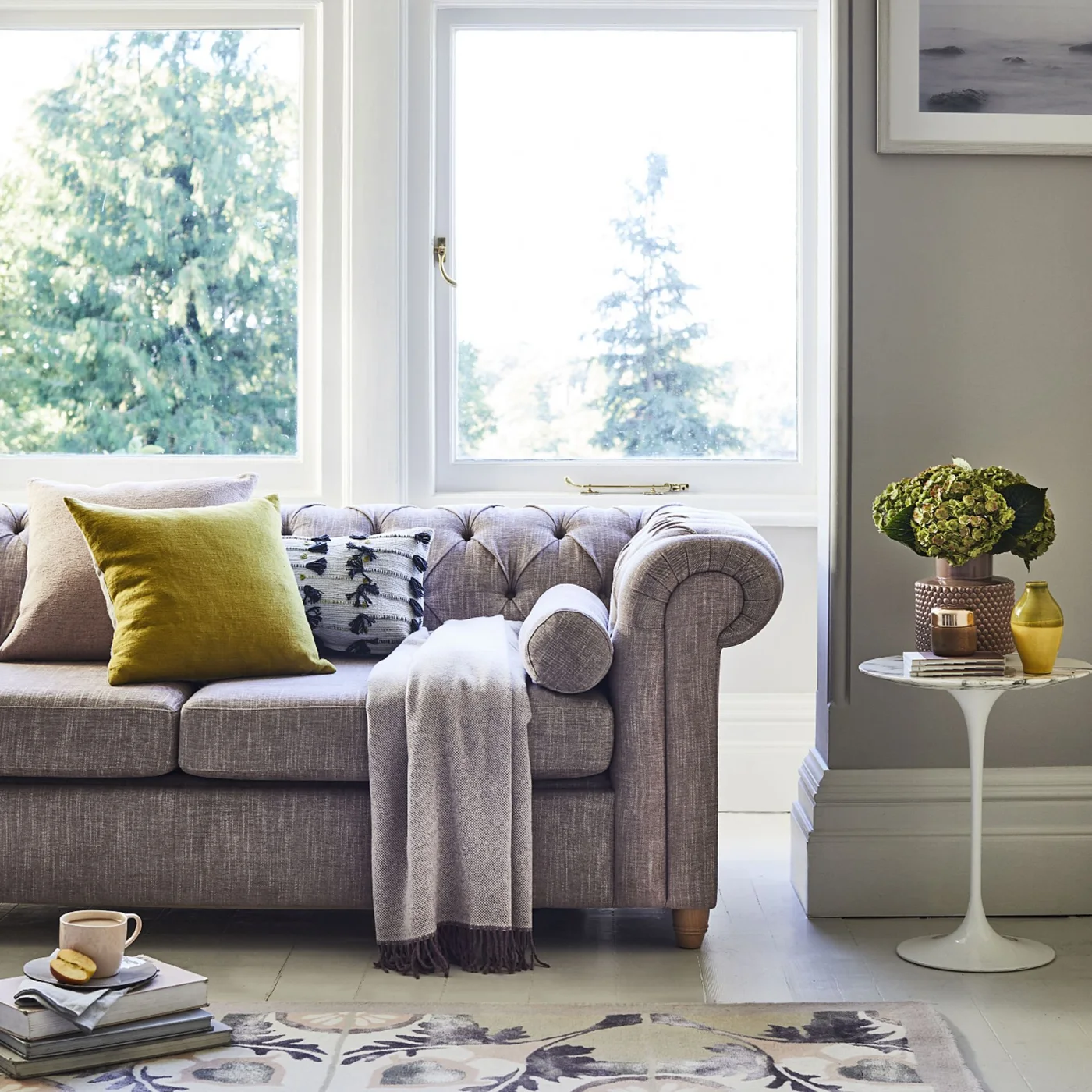
The gray sofa’s tufted back and rolled arm provide a traditional-looking silhouette, while the small pedestal table has a simpler outline. A yellow cushion adds one stronger accent against the quieter upholstery. The floral rug introduces pattern below, allowing the wall and table to remain comparatively restrained around the detailed sofa.
Use a smaller table when you need a reachable surface without another bulky furniture piece beside the arm. Check stability and height before buying, especially if the table has a narrow base. Our couch pillow ideas can help you add color with fewer accessories, leaving enough room to sit comfortably and preserving the sofa’s visible shape.
IDEA 12 / 20
Balance Bright Tufted Chairs with a Pale Sofa
 SaveSupport Non AI Creator
Image credit: Houzz project gallery
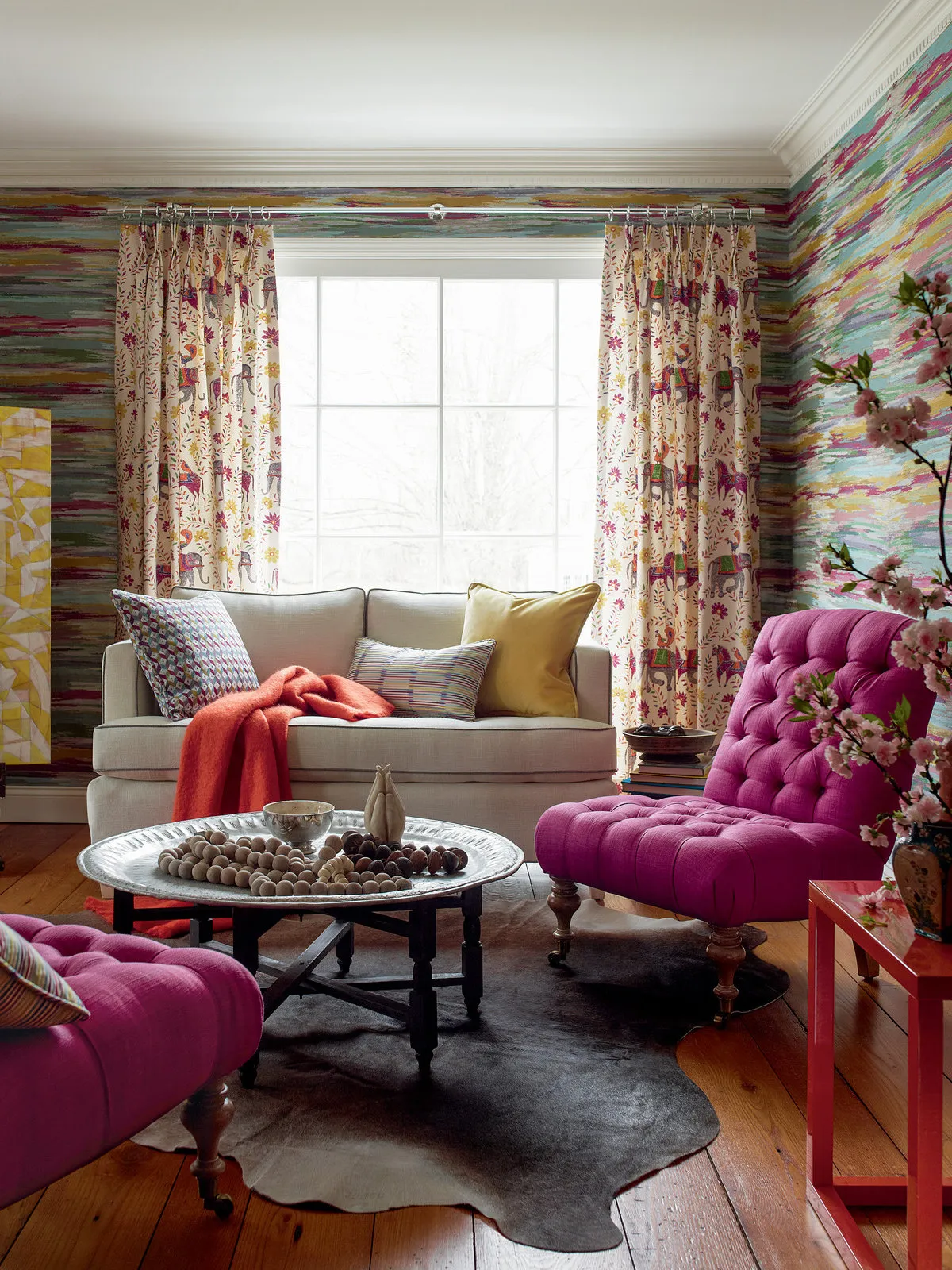
Purple tufted chairs provide a concentrated block of color opposite the pale sofa. Patterned curtains and the multicolored wall finish add detail around them, while a dark round table gives the group a shared center. The chairs’ wooden legs remain visible, making their smaller silhouettes easier to distinguish within the patterned background.
When two bold chairs are the pieces you want to keep, compare a quieter sofa covering before adding another strong pattern. Check whether the chairs are comfortable for the time people will spend in them. Make the central table reachable from each seat and reduce smaller accessories if they obscure the furniture shapes or take up the surfaces needed for daily use.
IDEA 13 / 20
Use Traditional Chairs Around a Simpler Table
 SaveSupport Non AI Creator
Image credit: Paula Coldiron
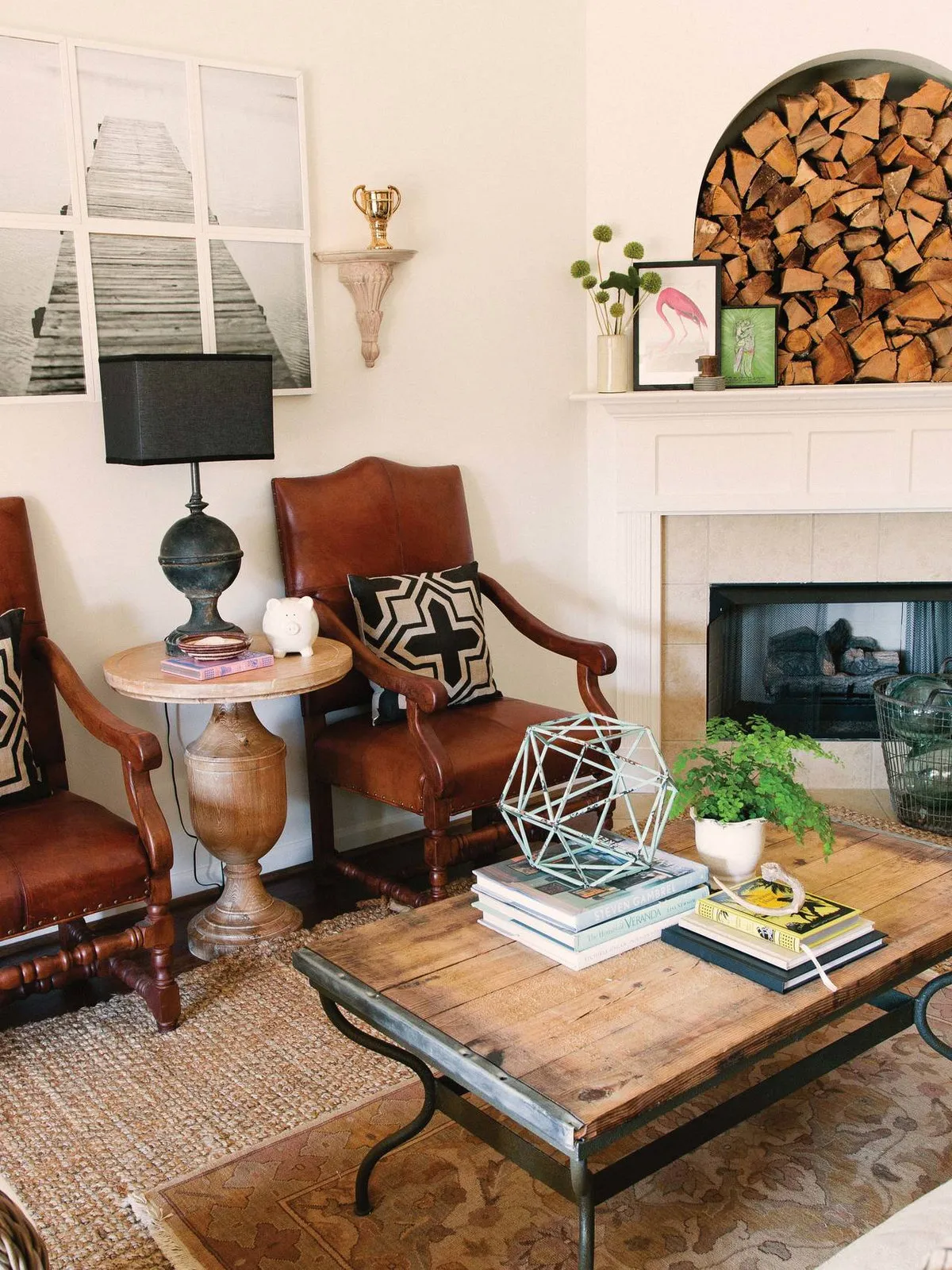
The wooden-framed brown chairs provide a more traditional shape beside the pale fireplace, with a low wooden table linking them at the center. Graphic cushions add contrast against the warmer upholstery. The larger framed picture and lamp occupy clear places around the seating, giving varied pieces a defined arrangement rather than scattering them across the room.
Inspect the joints and upholstery of older chairs before planning a seating group around them. Include any specialist repair in the budget and try the seat for comfort. Use the table for the items you need close by, and avoid displaying so many books or ornaments that the chairs become a decorative corner with no convenient place for a drink.
IDEA 14 / 20
Connect a Lounge Chair with a Tufted Sofa
 SaveSupport Non AI Creator
Image credit: Houzz project gallery
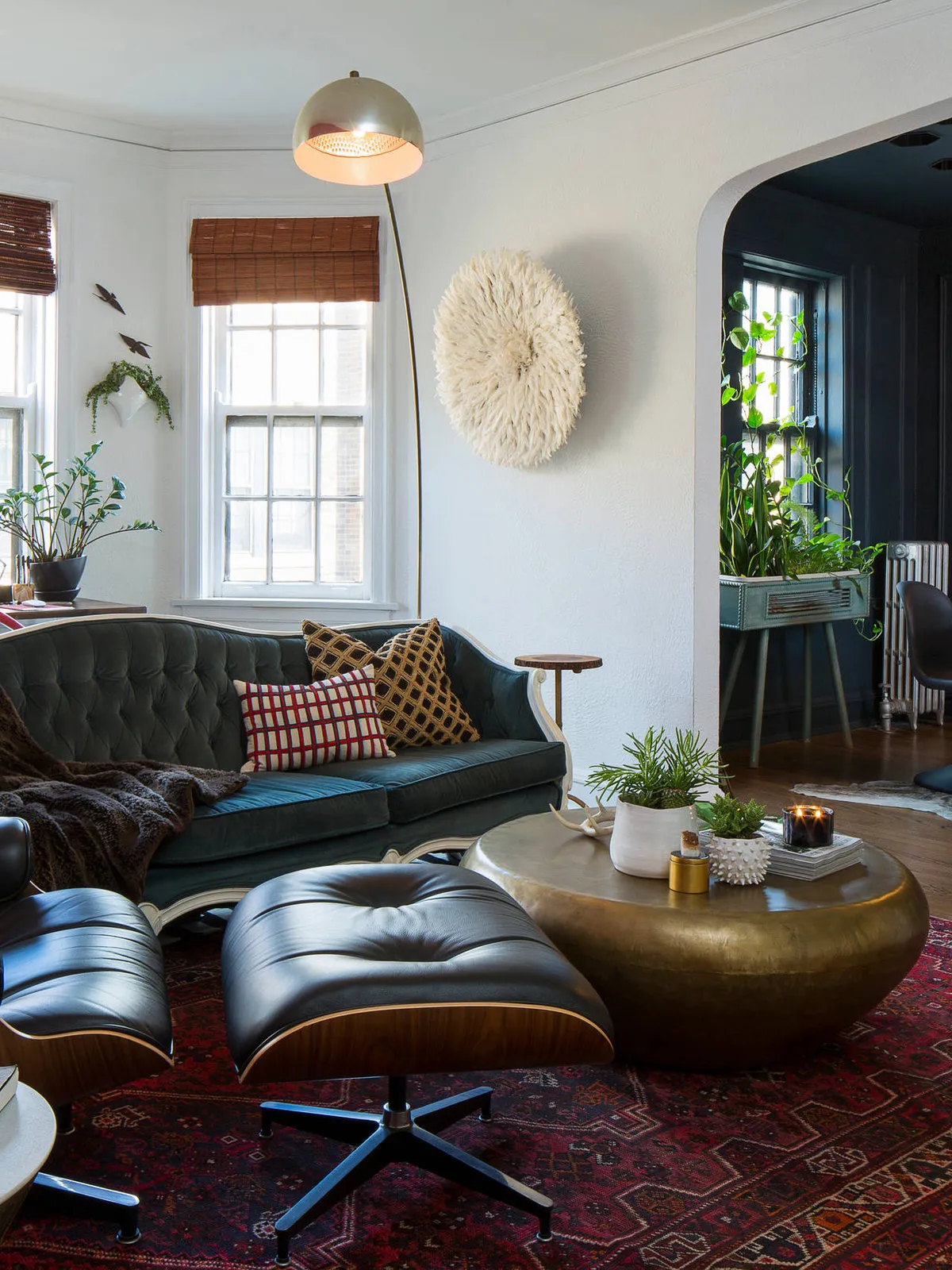
The lounge chair’s wooden shell and dark cushions contrast with the green tufted sofa, while the rounded metallic table adds another distinct shape. A patterned rug connects the furniture at floor level. Pale walls and straightforward window blinds leave those silhouettes visible, so the mix does not depend on surrounding every piece with extra decorative objects.
With a reclined lounge chair, allow for the space needed by the footstool and for getting in and out of the seat. Compare it with the sofa’s height before arranging them for conversation. Check secondhand mechanisms and stability in person where possible, and choose a reachable small table if the central one sits too far away from the reclined position.
IDEA 15 / 20
Let Smaller Patterns Echo Across the Room
 SaveSupport Non AI Creator
Image credit: Molly Mahon
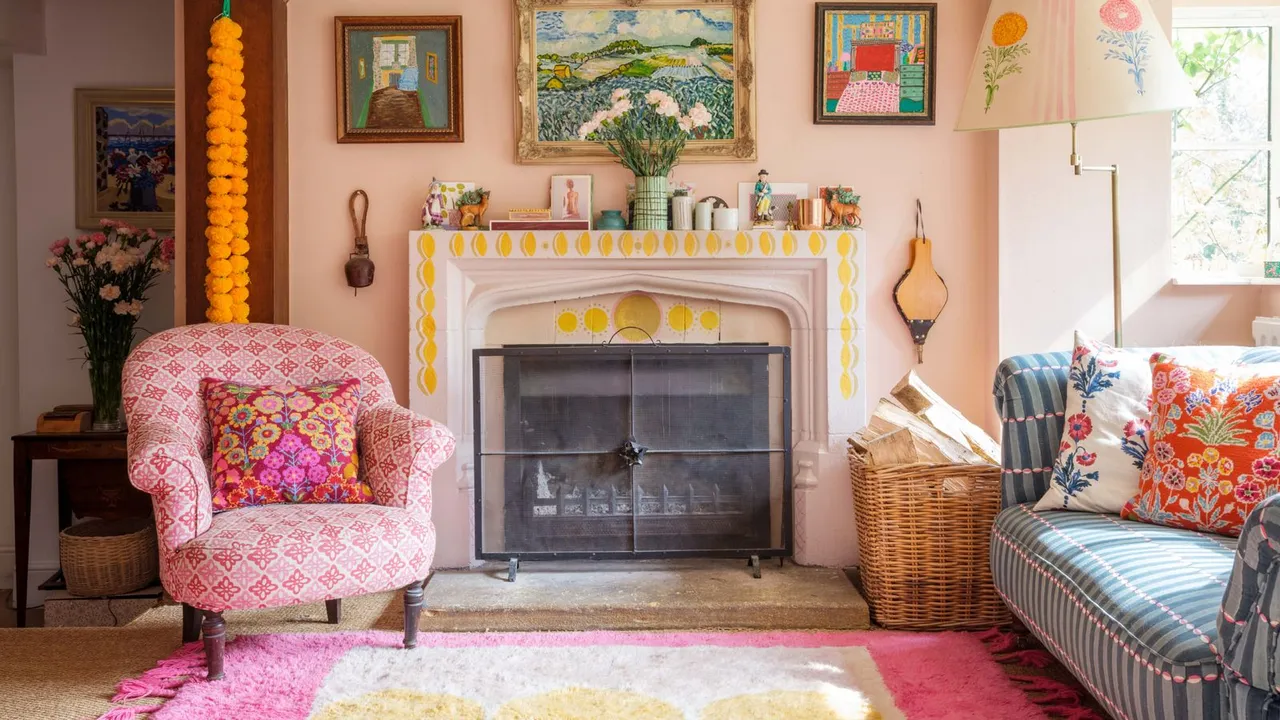
The pink chair and striped sofa share warmer accent colors without using identical fabrics. Smaller framed pictures and a decorated fireplace extend the pattern through the room, while a pale background keeps each shape visible. The cushions add another scale of detail within the seating rather than replacing the larger furniture’s own pattern.
Compare pattern sizes as well as colors when combining different upholstered pieces. A stripe can sit beside a smaller floral or geometric print without needing an exact match. For a more layered approach, boho vintage living room ideas explore related arrangements; keep the larger pieces comfortable and reduce decorative objects if every surface starts competing for attention.
PART 04
Arrange collected pieces for daily use
IDEA 16 / 20
Group Collected Vases Within One Alcove
 SaveSupport Non AI Creator
Source: realhomes.com
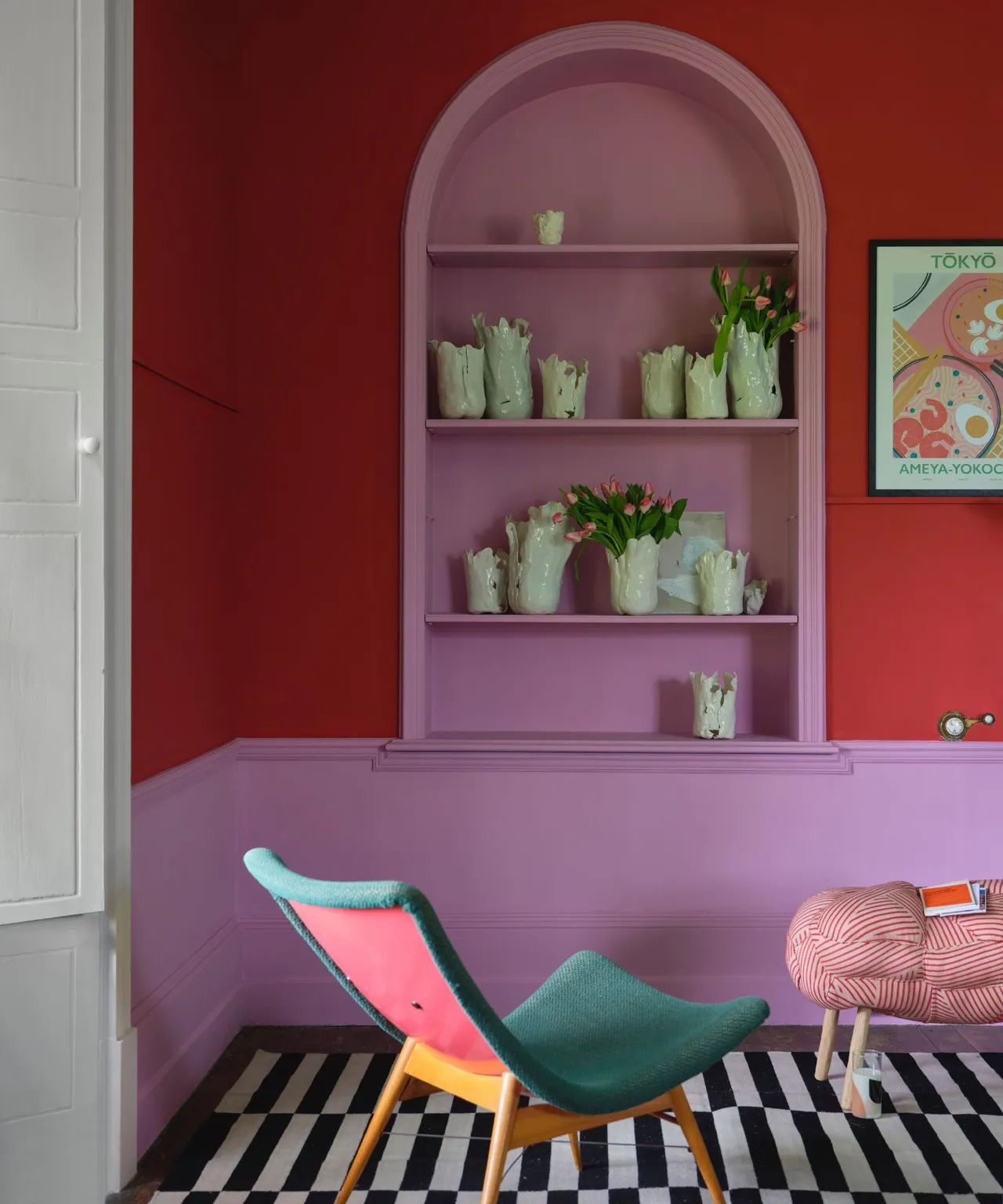
The arched pink alcove gives the pale green vase collection a fixed display area. A turquoise chair and checked floor add separate shapes below, while red walls frame the display. Grouping the vases together makes their repeated color visible, rather than distributing small pieces across every table and shelf in the room.
Choose a display boundary before collecting more objects, then check that the shelves are suitable for their weight. Leave enough space to lift pieces out for cleaning without knocking their neighbors. A small collection can add character beside seating, but keep fragile items away from the routes where people regularly pass or where a chair is pulled backward.
IDEA 17 / 20
Let a Decorative Light Contrast with Clean Seating
 SaveSupport Non AI Creator
Source: realhomes.com
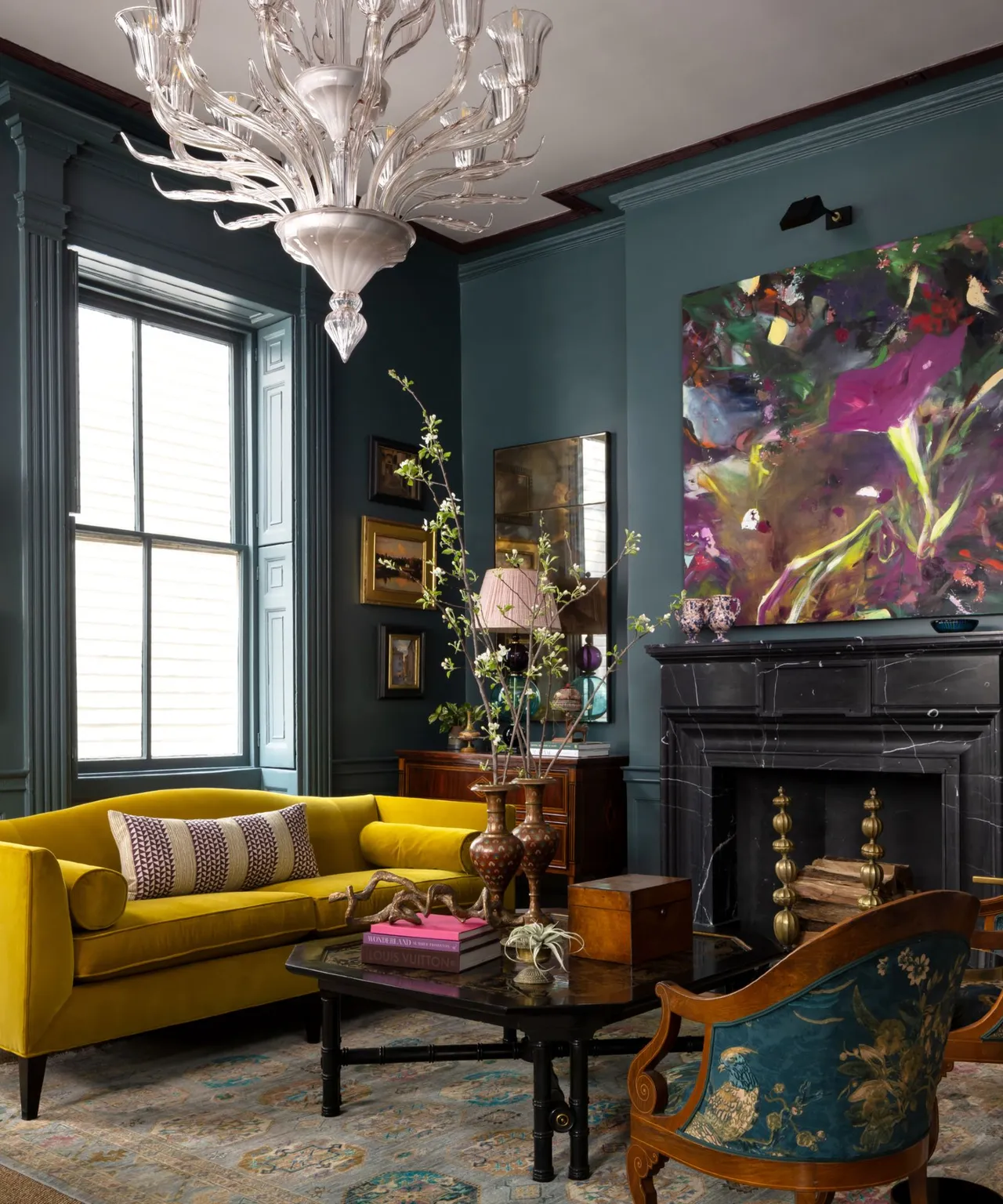
The branching chandelier provides the most elaborate shape above a comparatively clean-lined yellow sofa. A carved chair supplies a different furniture outline, while blue-green walls and a darker fireplace frame the colorful artwork. The mix works through contrast between larger simpler upholstery and more decorative details rather than requiring every object to share one style.
If you are considering an older decorative light, have its condition and installation requirements checked by a qualified professional before use. Compare its scale and hanging position with the actual room. Keep the main seating comfortable and avoid adding several other large decorative objects beneath it when the light already supplies much of the room’s visual character.
IDEA 18 / 20
Connect a Retro Chair with Useful Shelving
 SaveSupport Non AI Creator
Source: realhomes.com
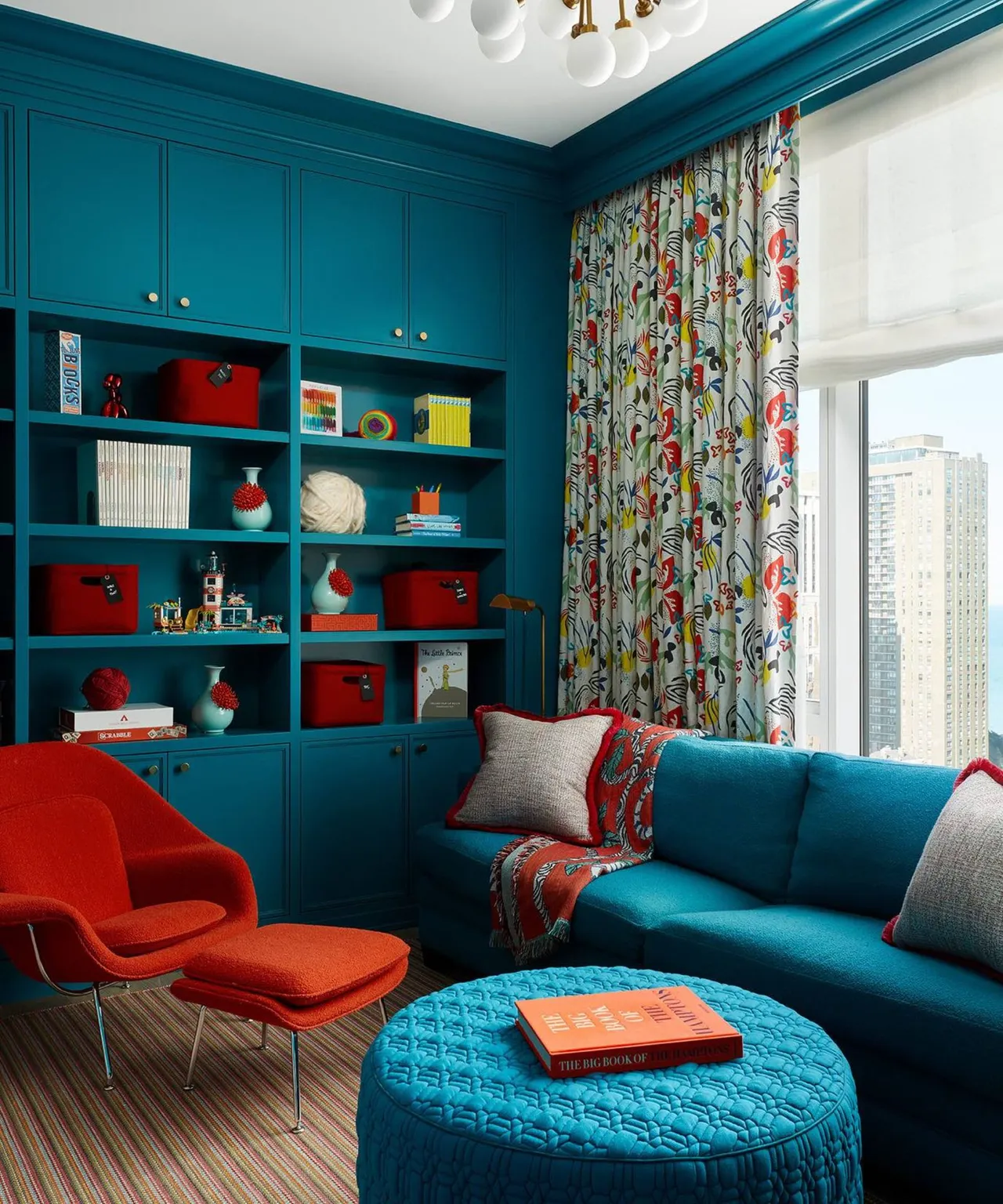
The red chair gives the teal room a contrasting seat, while matching shelving connects the wall with the sofa. Patterned curtains introduce smaller repeated colors around the window. Closed upper cupboards and lower drawers keep some storage out of view, leaving the open sections available for selected books and objects rather than every household item.
A distinctive chair can work with practical built-in storage when its color has a clear relationship with the room. Check shelf height around the objects you intend to keep and leave everyday storage easy to reach. Do not buy more ornaments simply to fill every cubby; some clear shelf space helps the chair and other collected pieces remain visible.
IDEA 19 / 20
Use an Ornate Mirror in a Pale Modern Room
 SaveSupport Non AI Creator
Source: livingetc.com
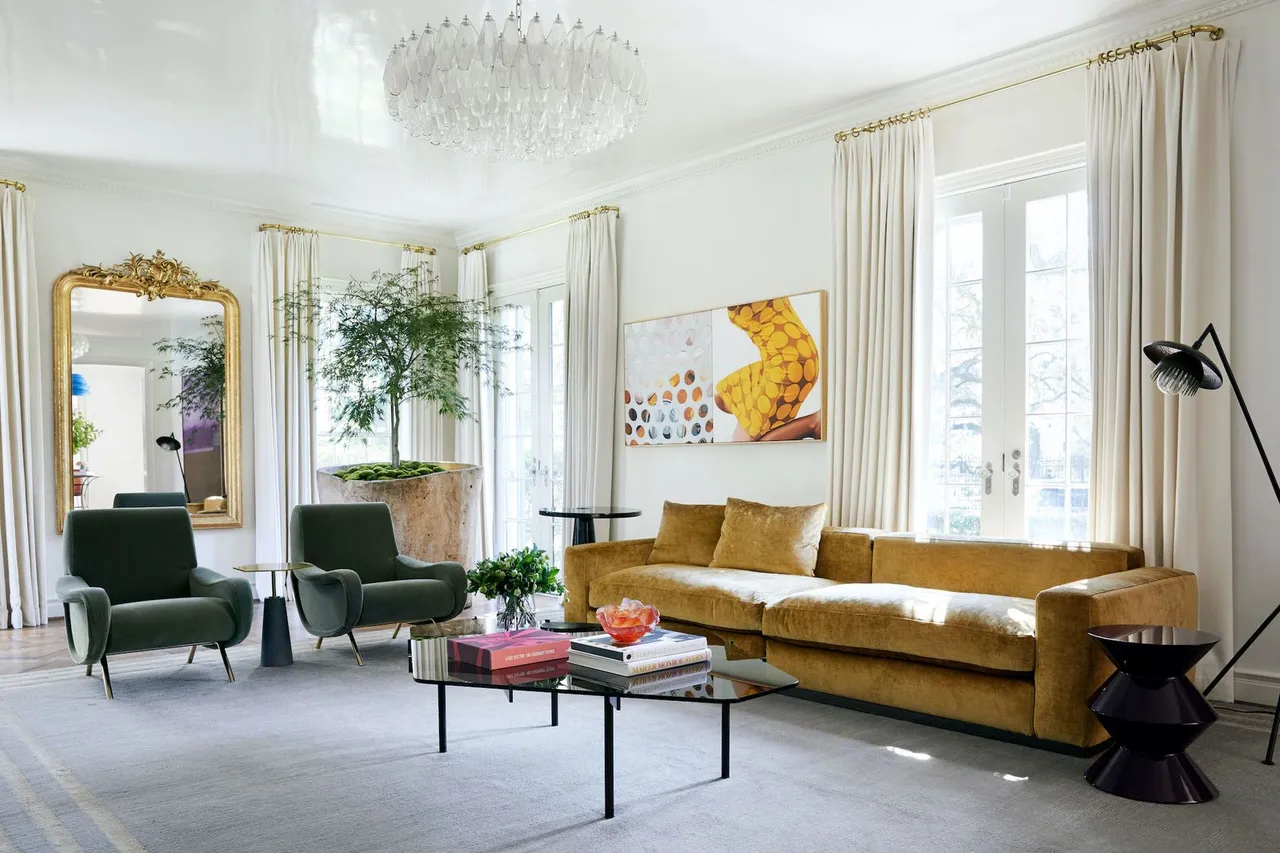
The gold-framed mirror introduces a decorative outline within the pale room, while dark green chairs and a gold-colored sofa provide larger, simpler shapes. A reflective table adds another light-catching surface without repeating the mirror’s ornament. Tall pale curtains and clear floor space give the mixed furniture room to be seen individually.
One decorative piece can bring a vintage-inspired detail into a room with newer furniture. Compare the mirror’s scale with the seating rather than buying several smaller ornaments to imitate its effect. Use suitable mounting for its weight, consider what it reflects, and keep enough separation between the chairs and sofa for comfortable conversation and movement.
IDEA 20 / 20
Use Warm Curtains Around Curved Seating
 SaveSupport Non AI Creator
Source: livingetc.com
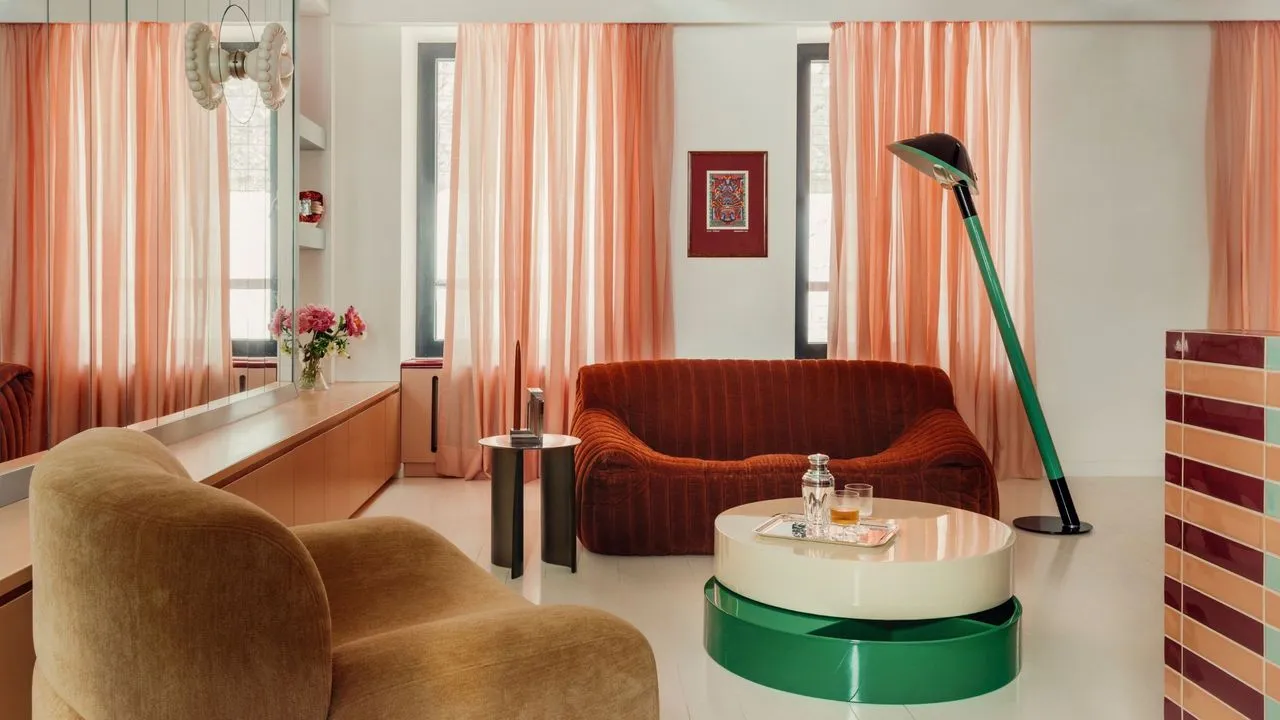
Warm peach curtains connect the curved red and tan seating with the room’s lighter walls. A green circular table introduces another color in a clearly defined piece, while the tall floor lamp gives the group a strong angled line. The arrangement draws on retro-looking shapes without requiring additional patterned wall coverings or a dense display around every seat.
When curved seating and colorful tables are the pieces you enjoy, keep the surrounding storage and wall display relatively simple. Test curtain movement and access to the window before placing furniture tightly beneath it. Check the table height from the actual seats, and choose a floor-lamp position that provides useful light without shining directly into someone’s eyes.
BRING IT ALL TOGETHER
Buy for the room you actually use
Measure the available space and the delivery route before collecting another substantial piece. Check drawers, joints, upholstery and the stability of furniture in person where possible. Include any necessary repair or transport costs when comparing options; a piece that needs work can still be worthwhile, but it should solve a useful problem in your room.
Arrange the larger furniture first, then add lamps, framed art and smaller objects gradually. Leave clear places for a drink, a book and comfortable movement between seats. If the room feels crowded, remove a few accessories before changing the main furniture. A collected room can reflect different eras while still being easy to clean and pleasant to live in.