A boho office can feel personal without making the desk difficult to use. Warm wood, a woven basket, artwork or a patterned rug can sit around practical storage and a chair that suits your working hours. Begin with the equipment, writing space and supplies you need each day, then decide where decorative texture will leave those essentials accessible.
These workspaces show different ways to borrow layered color and natural-looking texture, including quieter rooms with only a few boho details. Look at the available desk surface and chair space as closely as the shelves and wall pieces. Choose plants for the actual light, review fabric care and compare furniture in person where possible before adapting an arrangement to your own work.
PART 01
Bring texture around a clear desk surface
IDEA 01 / 15
Add woven storage around a quieter white desk
 SaveSupport Non AI Creator
Image credit: Photography by CODY GUILFOYLE
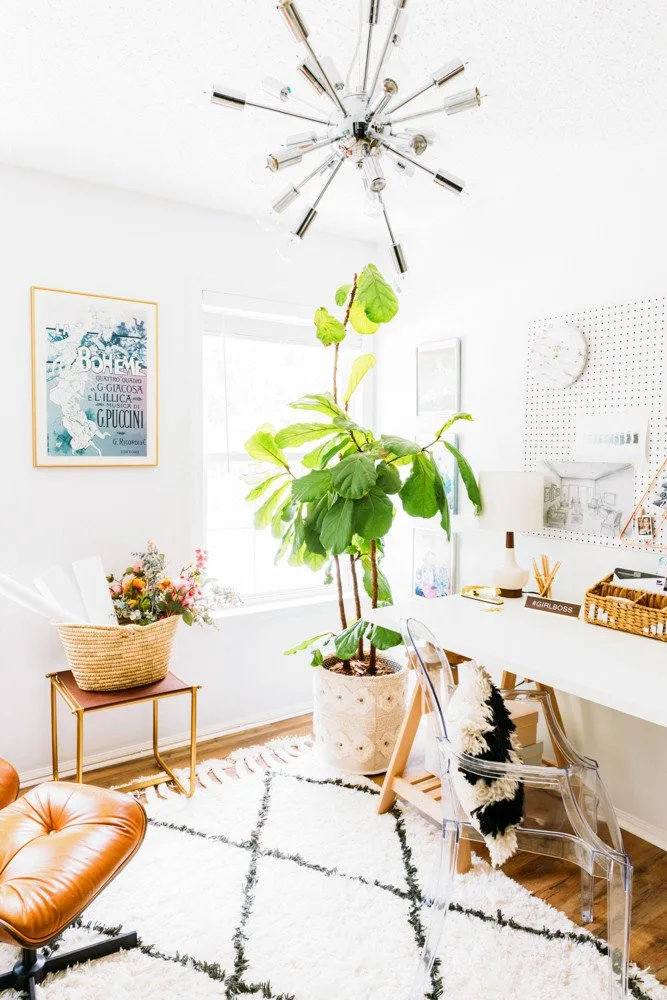
A white desk and pegboard give the workspace a quieter base for the woven basket and broad-leaf plant. Wooden trestles bring a warmer frame below, while the diamond-patterned rug adds a larger fabric detail under the chair. The clear seat leaves those layers visible, showing how boho texture can surround a useful work surface without requiring a heavily patterned desk or wall.
Check chair support and comfort for the time you will spend working rather than choosing a clear frame only for its lighter appearance. Keep the basket limited to supplies you can reach easily and leave a clear equipment area. Choose the plant for the room’s actual light, with water away from electronics, and secure the pegboard for its intended load.
IDEA 02 / 15
Use woven poufs beside a simple wooden desk
 SaveSupport Non AI Creator
Image credit: Photo: Life Created. From: Kirsten Holmstedt
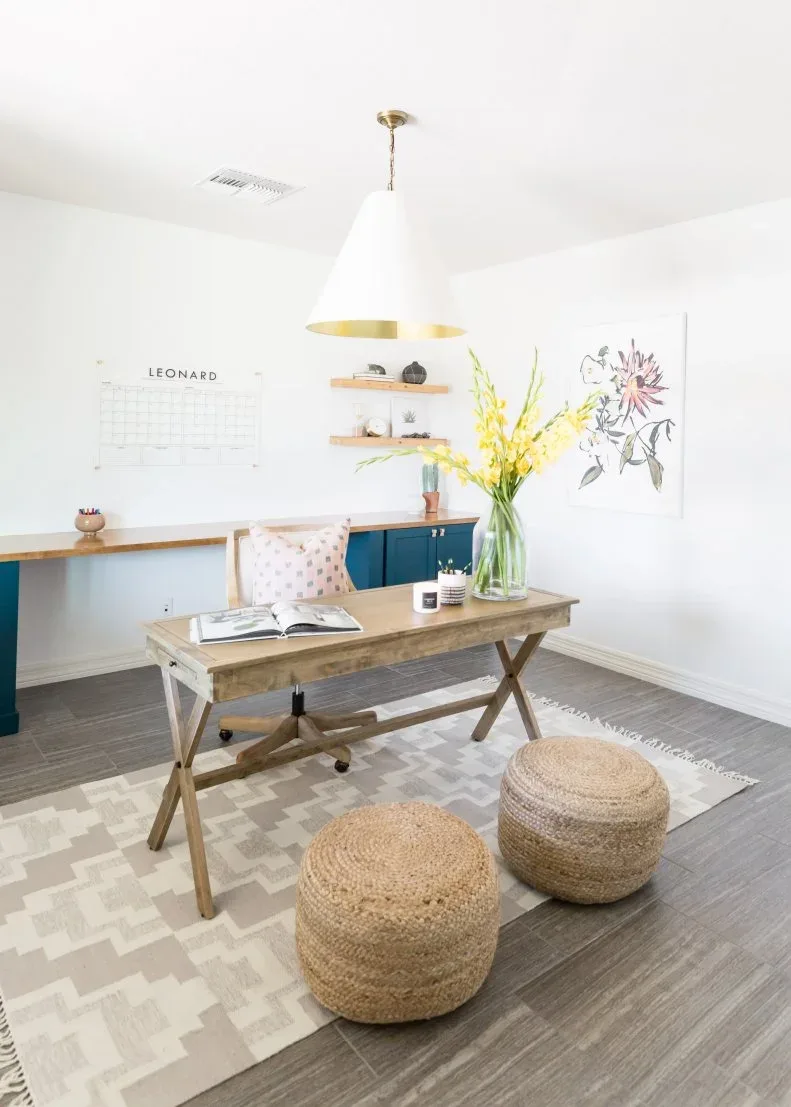
The woven poufs add rounded texture in front of a simpler wooden desk. A pale geometric rug connects them with the patterned working chair, while blue storage introduces a smaller solid color farther back. Botanical artwork adds another softer detail on the wall, allowing the larger workspace to remain fairly restrained even with several different fabric and woven surfaces present.
Keep the poufs outside the chair’s movement and main walking route, reducing them if the room does not need occasional extra seating. Check how the chair rolls over the rug and review the fabric care guidance. Retain enough clear desk space for your actual tasks, choosing wall pieces and storage according to usefulness as well as their relationship with the woven textures.
IDEA 03 / 15
Pair a woven chair with a warm wooden desk
 SaveSupport Non AI Creator
Image credit: Photo: True O'Neill, Interior Designer: Janice Barta
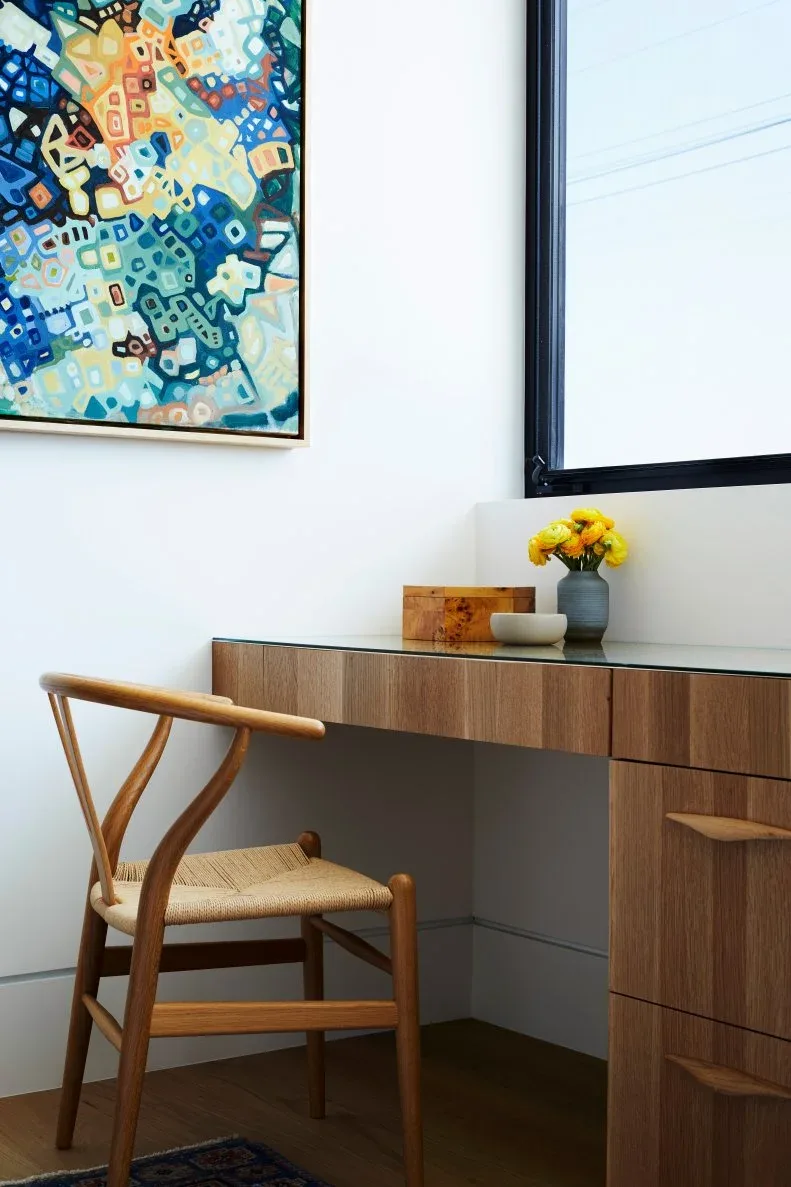
The woven chair seat introduces texture beneath the warm wooden desk without adding another large fabric pattern. Color comes mainly through the abstract artwork above, with the pale wall keeping both furniture and picture outlines clear. The drawers offer less visible storage below the working surface, giving a quieter workspace one selected decorative layer rather than filling its counter with smaller ornaments.
Try the chair and desk together, checking support and working height for the time you expect to sit. Keep drawers reachable from the intended position and compare the artwork with the actual wood tone. Check daylight glare on your equipment before settling the arrangement, using a suitably positioned task light rather than assuming a bright window will meet every working need.
IDEA 04 / 15
Give shared desks their own useful light
 SaveSupport Non AI Creator
Image credit: Photo: Molly Bender; www.mollyjeanstudio.com. From: Vanessa Matsalla
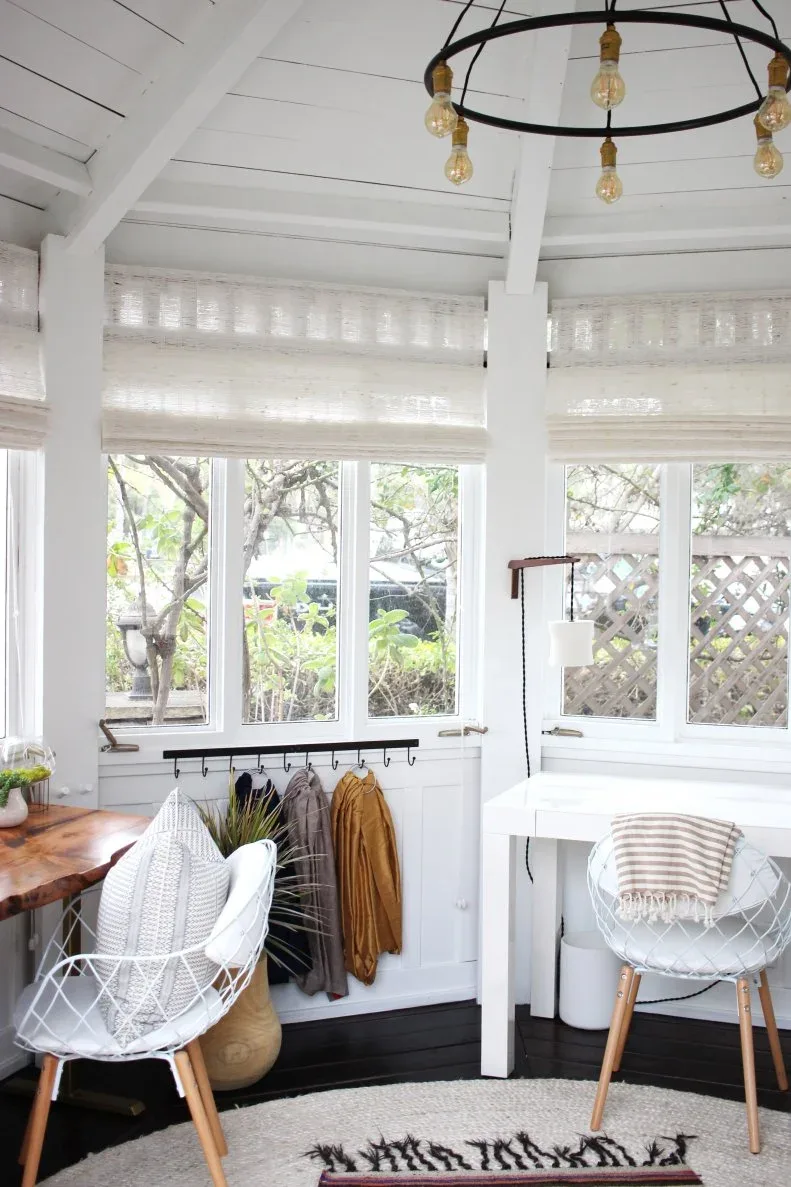
Separate white and wooden desks share a brighter room without requiring every surface to have the same finish. Individual lamps give each station a distinct light source, while woven shades and softer fabrics introduce warmer detail around the open chair frames. Wall hooks provide another place for belongings, leaving the desk surfaces less dependent on baskets or display pieces for storage.
Measure chair movement and walking access between the stations before copying a shared arrangement. Choose seats that support your working hours and check the lamps from each actual desk position. Have electrical supply and room conditions assessed for the intended workspace, keeping hooks and hanging belongings clear of the surfaces and routes you need to use every day.
PART 02
Use warmer color and artwork thoughtfully
IDEA 05 / 15
Mix ochre walls with a smaller blue accent
 SaveSupport Non AI Creator
Image credit: Chris Snook. Design: Appreciation Project
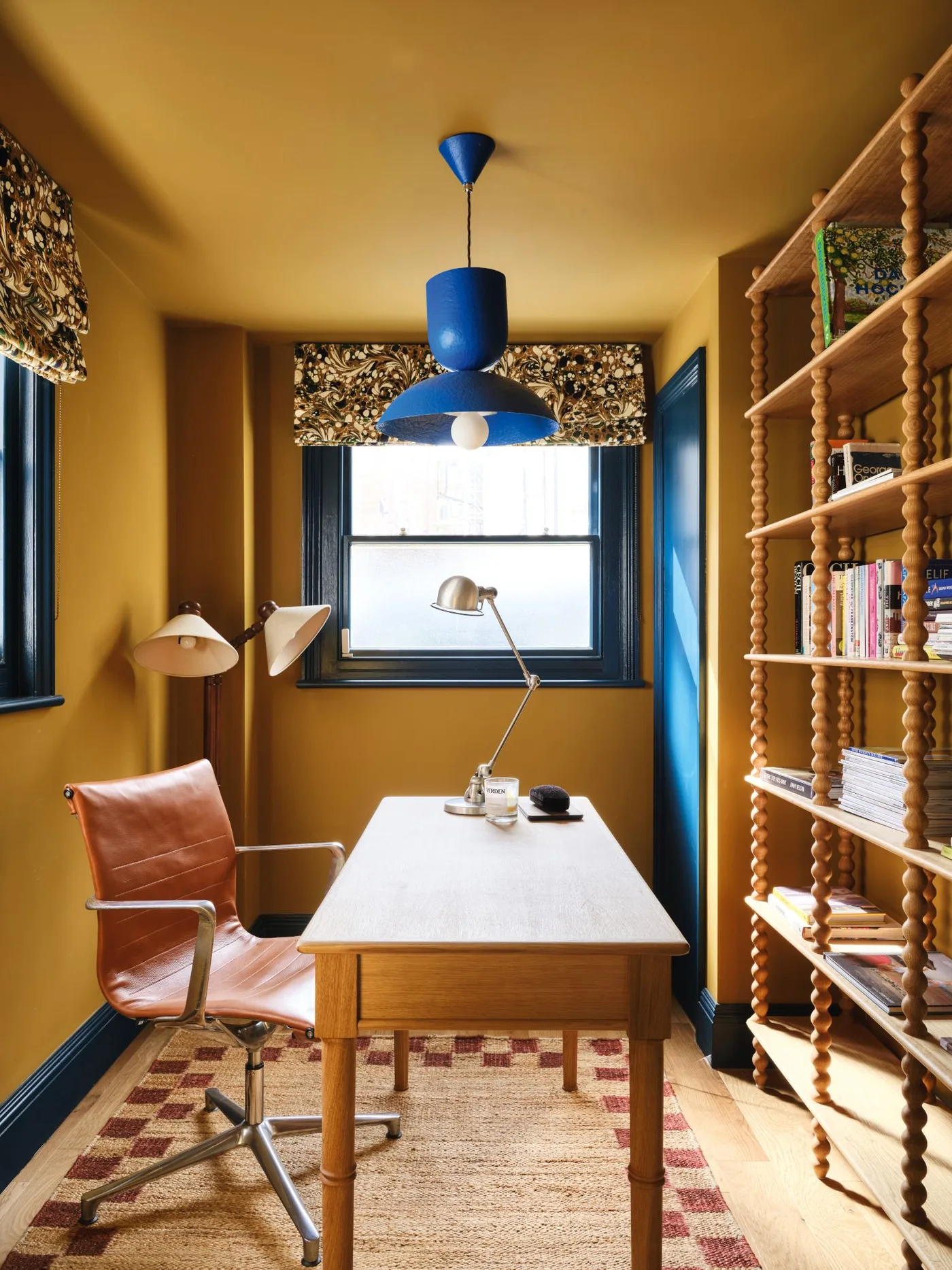
Ochre walls and ceiling create a warmer continuous background around the wooden desk and shelving. The blue pendant provides a smaller cooler contrast above, while the patterned window shades add a finer fabric layer. The tan chair connects with the room’s warmer furniture tones, showing how a strongly colored workspace can remain coherent without matching every useful fitting to the wall paint.
Test the ochre finish beside your wooden furniture and shade fabric under actual daylight and evening lighting. Check the chair’s support and desk reach before choosing the arrangement. Retain a useful task lamp as needed, and plan shelf support and lighting installation appropriately, keeping the stronger color from becoming a reason to compromise storage access or comfortable work.
IDEA 06 / 15
Hang a softer botanical textile behind the work area
 SaveSupport Non AI Creator
Image credit: Kensington Leverne. Design: David Collins Studio
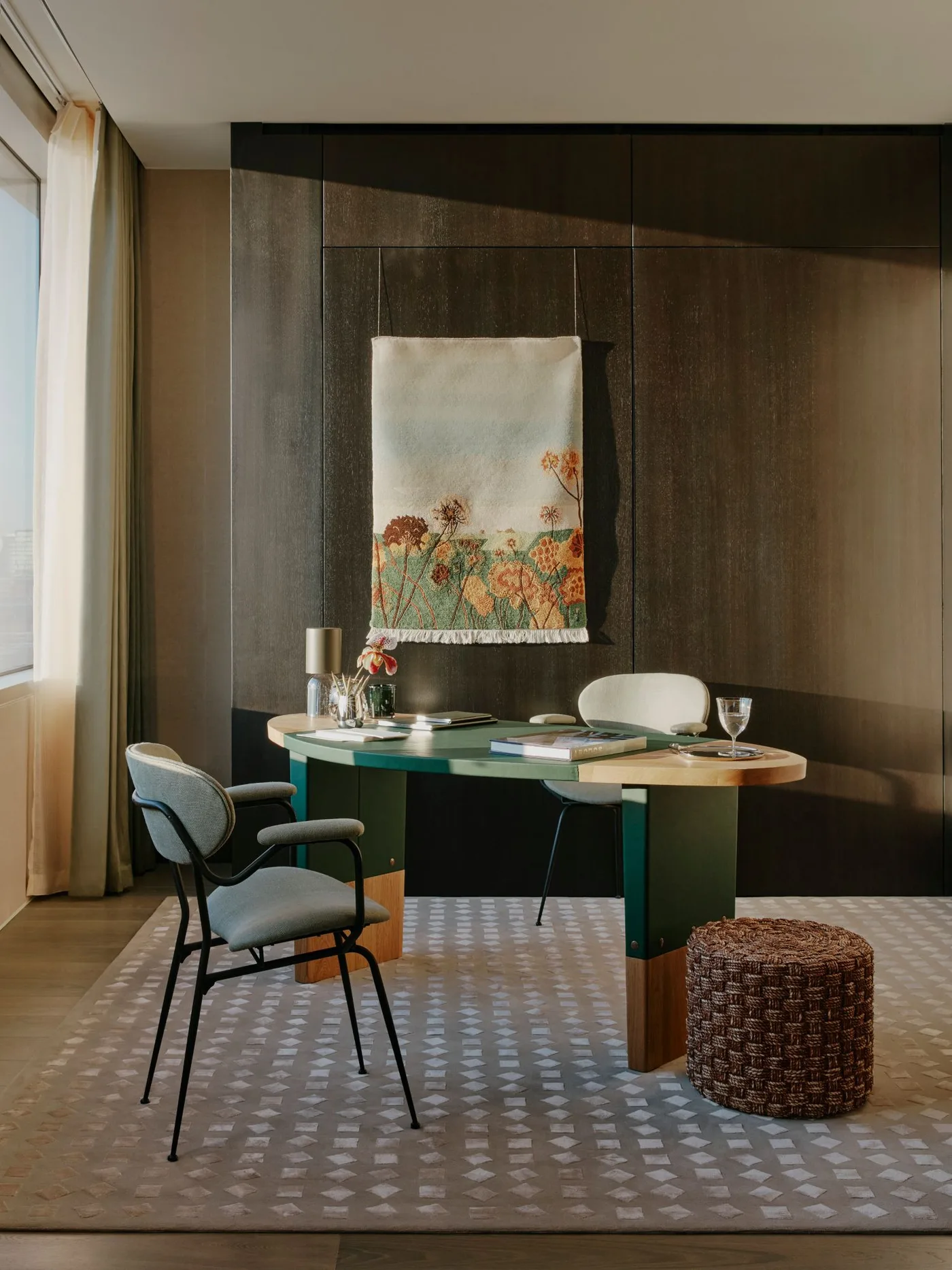
A botanical textile introduces softer color and texture onto the darker wooden wall behind the oval desk. Green desk details connect with the floral theme without repeating its print, while the gray chairs stay quieter around the working area. A woven pouf adds another warmer surface near the floor, giving the larger room several layers without placing them all on the desk.
Check the textile’s weight and suitable hanging method before fixing it to the wall. Compare its colors with the actual desk and panel finish, leaving the work surface free for the tasks you need to perform. Keep the pouf clear of chair movement, and try the chairs for support rather than assuming a coordinated fabric arrangement will be comfortable for longer sessions.
IDEA 07 / 15
Use warm wood as a background for personal artwork
 SaveSupport Non AI Creator
Image credit: Stephanie Rooney. Design: Julia Green
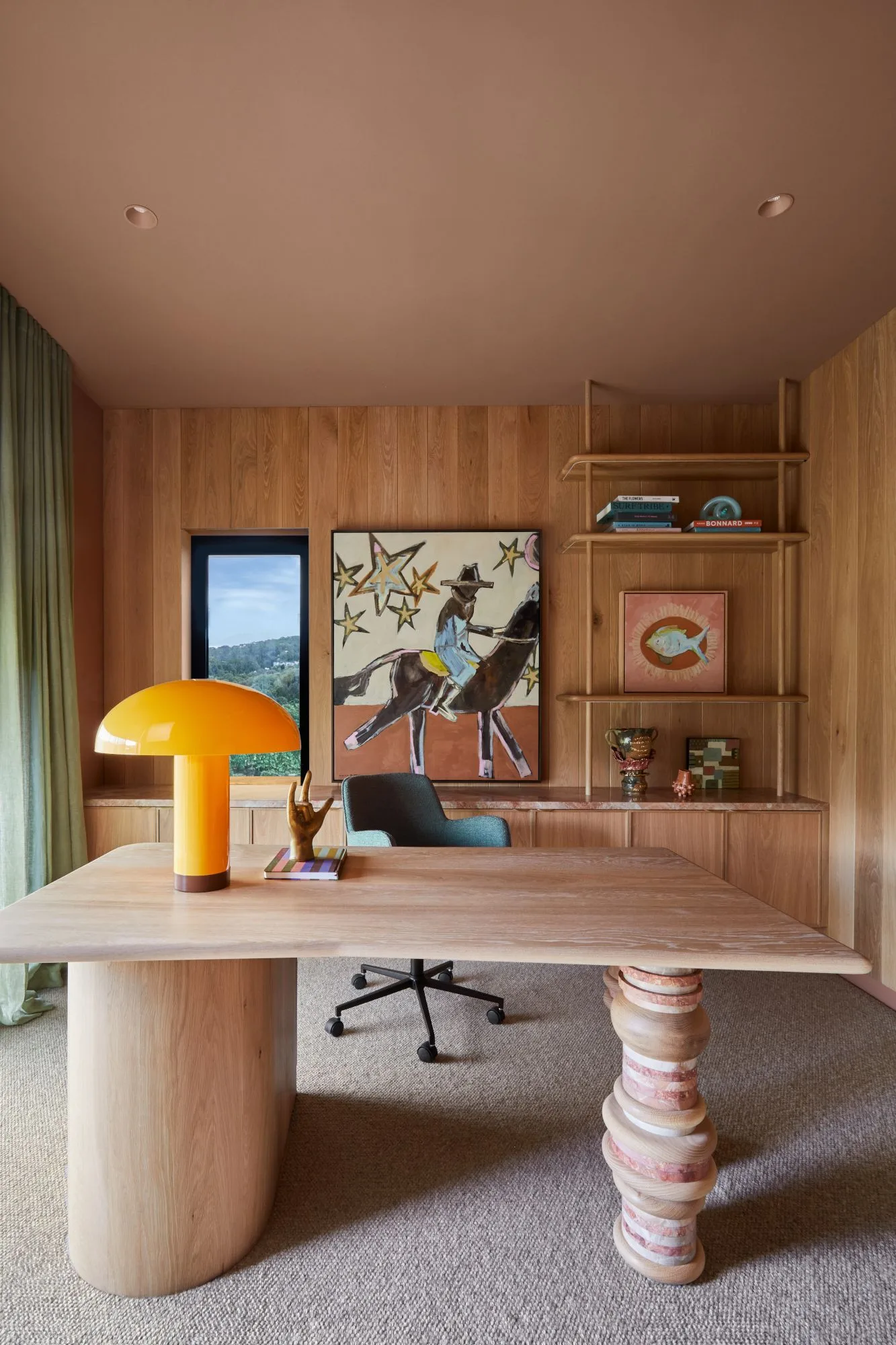
Warm wooden walls give the framed artwork a continuous background, while the pink ceiling adds a softer color difference above. The desk’s varied supports introduce another distinct furniture shape, balanced by its broad relatively clear surface. A yellow lamp brings a brighter smaller accent beside the working area, showing how personal artwork and selected color can create a layered room without a patterned rug.
Compare wood, paint and lamp colors together before extending a warmer finish across the room. Check the desk supports and actual knee space, including where the rolling chair needs to move. Choose artwork sizes and fixings for the wall you have, retaining useful light and clear equipment space rather than letting a sculptural furniture detail determine an uncomfortable working position.
IDEA 08 / 15
Layer a dark wall pattern behind lighter seating
 SaveSupport Non AI Creator
Image credit: Photo: David Duncan Livingston. From: Kari McIntosh Dawdy
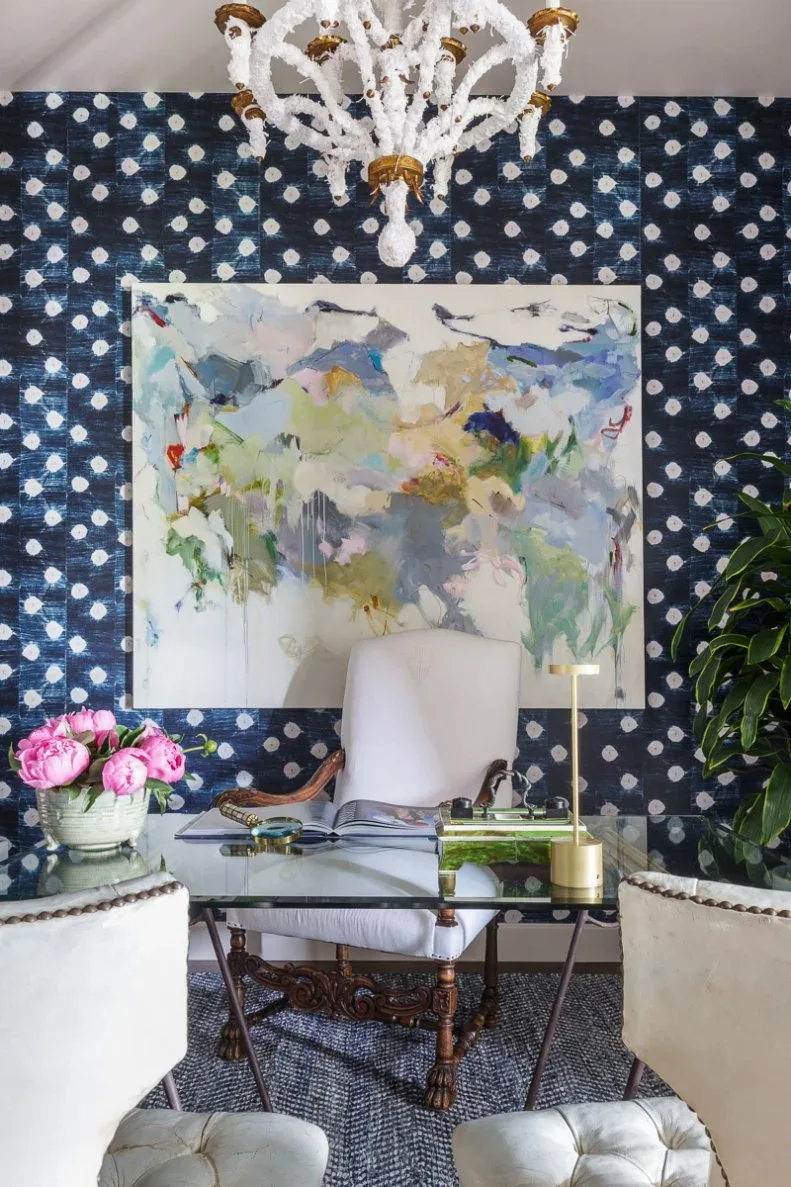
The dark blue wall pattern gives the lighter working chair and artwork a stronger background. A clear desk top leaves the more decorative wooden support visible, while the picture brings several softer colors above the work area. The patterned rug and leafy plant add different textures around the seat, creating a more collected arrangement whose main equipment surface can still remain relatively clear.
Compare the wallpaper repeat with the artwork at normal viewing distance, checking whether both remain readable in your room’s light. Assess the desk’s support and top-care guidance, keeping enough surface space for your equipment. Choose a chair for useful support and leave plant containers stable and away from electronics, limiting additional decorations if the layered wall already feels busy.
PART 03
Give books and supplies reachable places
IDEA 09 / 15
Use warmer texture inside a green desk nook
 SaveSupport Non AI Creator
Image credit: Chris Snook. Design: Studio Fabbri
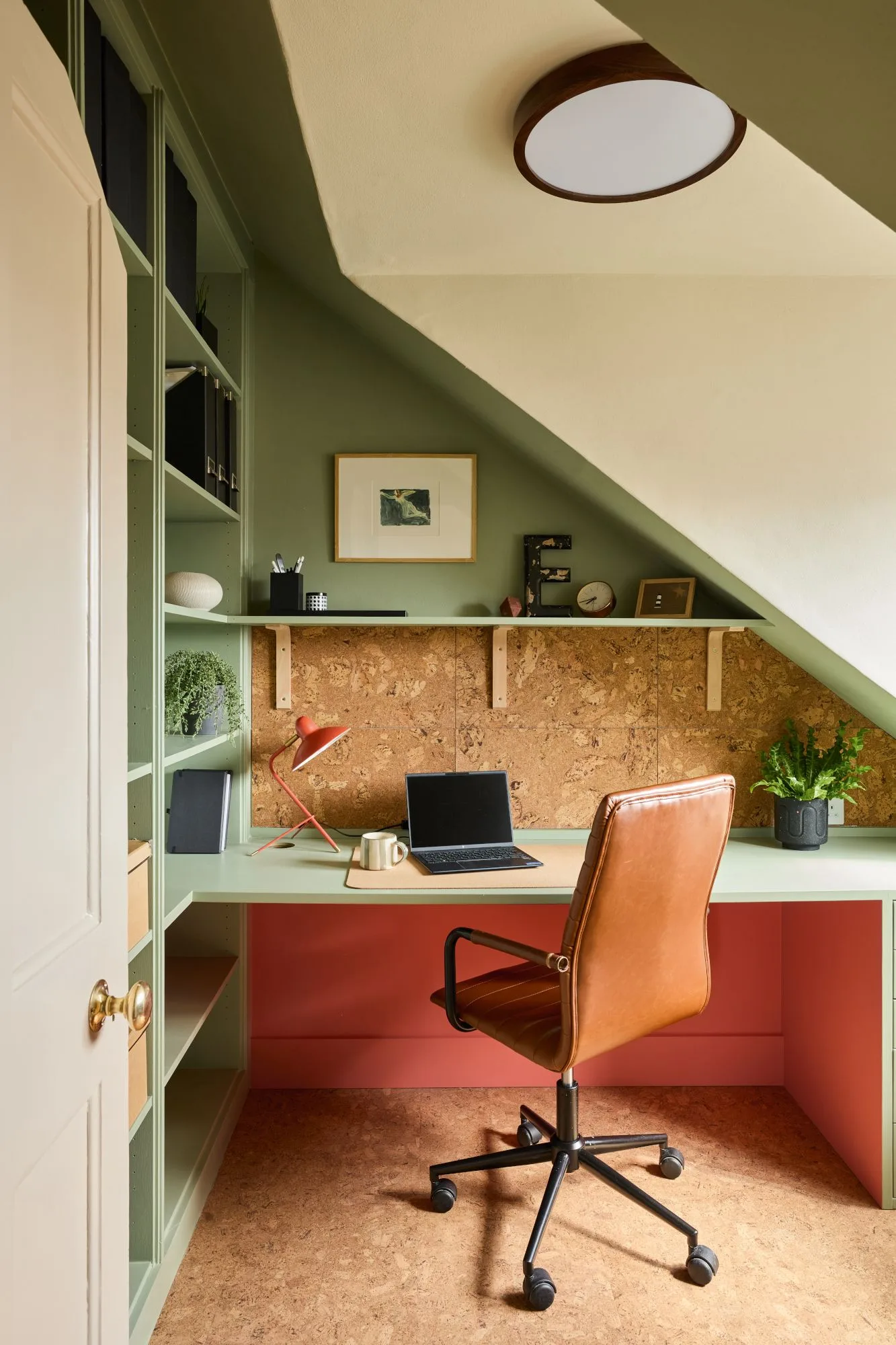
Green shelves and the desk connect the compact nook’s storage and working surface. The textured tan backing adds a warmer layer behind the laptop, with coral below providing a smaller stronger contrast. A red task lamp and plant remain limited details on the counter, showing how a room with an awkward ceiling can borrow boho color and texture without relying on several freestanding furniture pieces.
Check sitting and standing headroom beneath the real ceiling slope before planning a desk here. Keep the shelves supported appropriately and store frequently used supplies where you can reach them comfortably. Compare chair movement with the available floor area, retaining enough clear desk depth and suitable task light so the warmer textures do not hide an impractical workspace.
IDEA 10 / 15
Keep warm wall texture around simpler storage
 SaveSupport Non AI Creator
Image credit: Eric Petschek. Design: Emily Lindberg
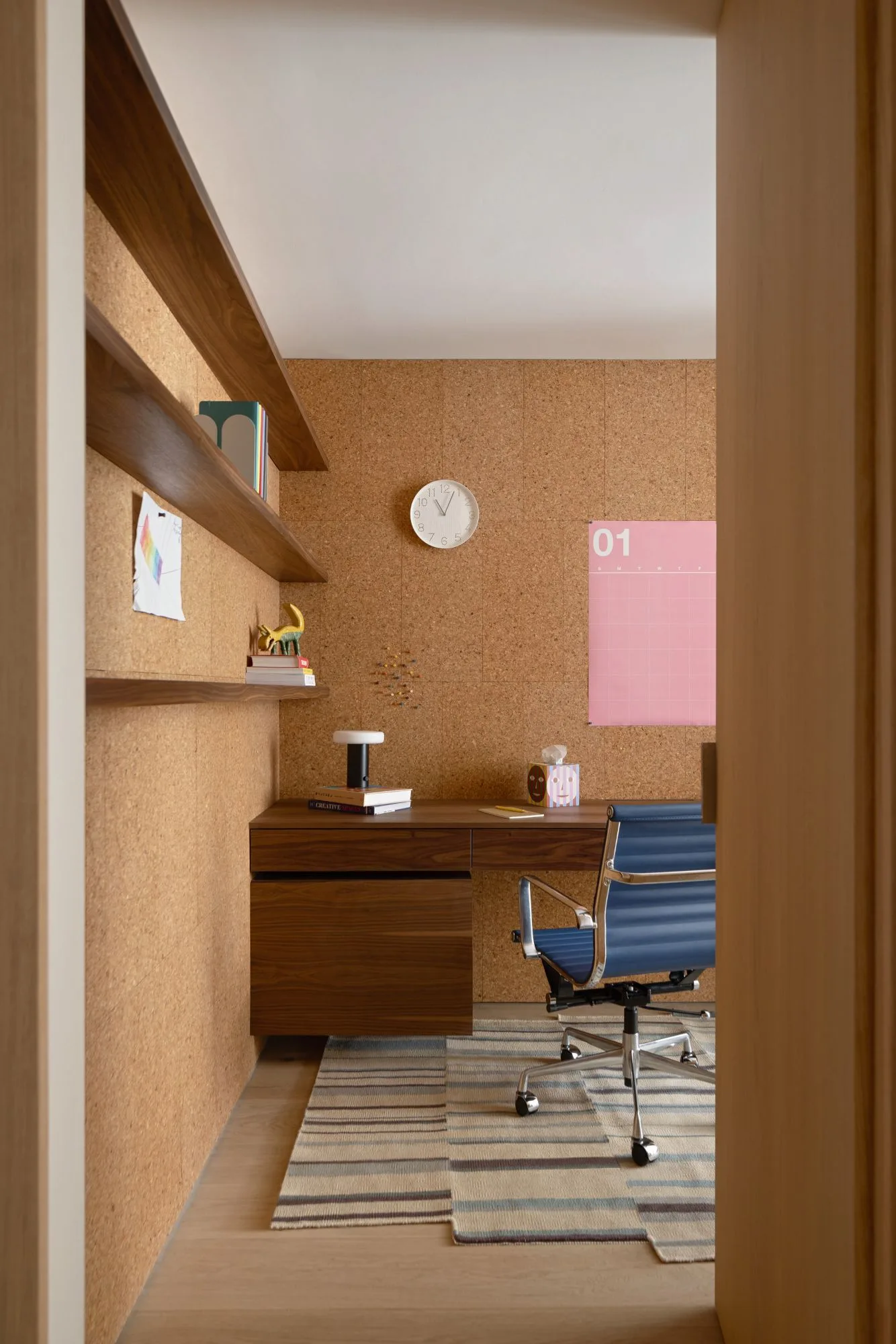
Textured tan walls surround the simpler wooden desk and shelves, giving the quieter workspace a warmer backdrop. A blue chair adds a cooler furniture accent, while the pink calendar provides another smaller color patch above. The striped rug introduces a softer floor layer, showing a restrained way to borrow boho warmth when you prefer fewer decorative objects around the working surface.
Check wall material and fixing requirements before adding shelves or a calendar, avoiding assumptions about support from the textured appearance alone. Compare the rug with chair movement and keep its edges stable. Retain clear desk space and reachable supplies, choosing the chair according to working comfort rather than using a brighter fabric color as its main selling point.
IDEA 11 / 15
Combine open bookshelves with closed wooden cupboards
 SaveSupport Non AI Creator
Image credit: Photo: True O'Neill, Interior Designer: Janice Barta
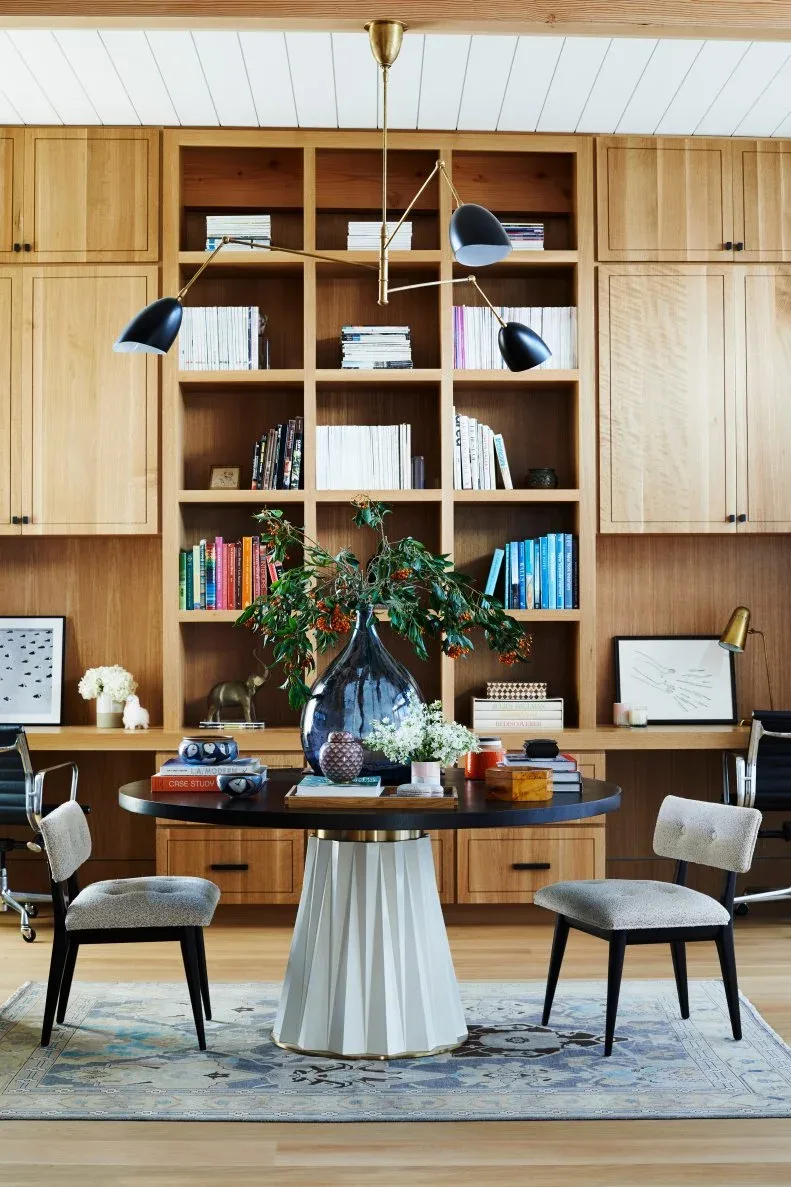
The wooden storage wall combines open compartments for books with closed doors for less decorative belongings. Its warmer finish gives the room a consistent background, while the blue-gray rug brings a finer fabric pattern underneath the table. Different chairs and a round central surface create another useful group in front, showing how layered warmth can come through storage rather than crowded desk accessories.
Plan compartments around the books and supplies you actually own, checking shelf load and the access needed for the closed doors. Keep a designated working surface clear within the arrangement and test chair support for its intended use. Compare the rug with the surrounding wood, retaining enough circulation around the central table before adding extra seating or decorative storage.
IDEA 12 / 15
Place collected objects above an orange drawer desk
 SaveSupport Non AI Creator
Image credit: Jessica Isaac
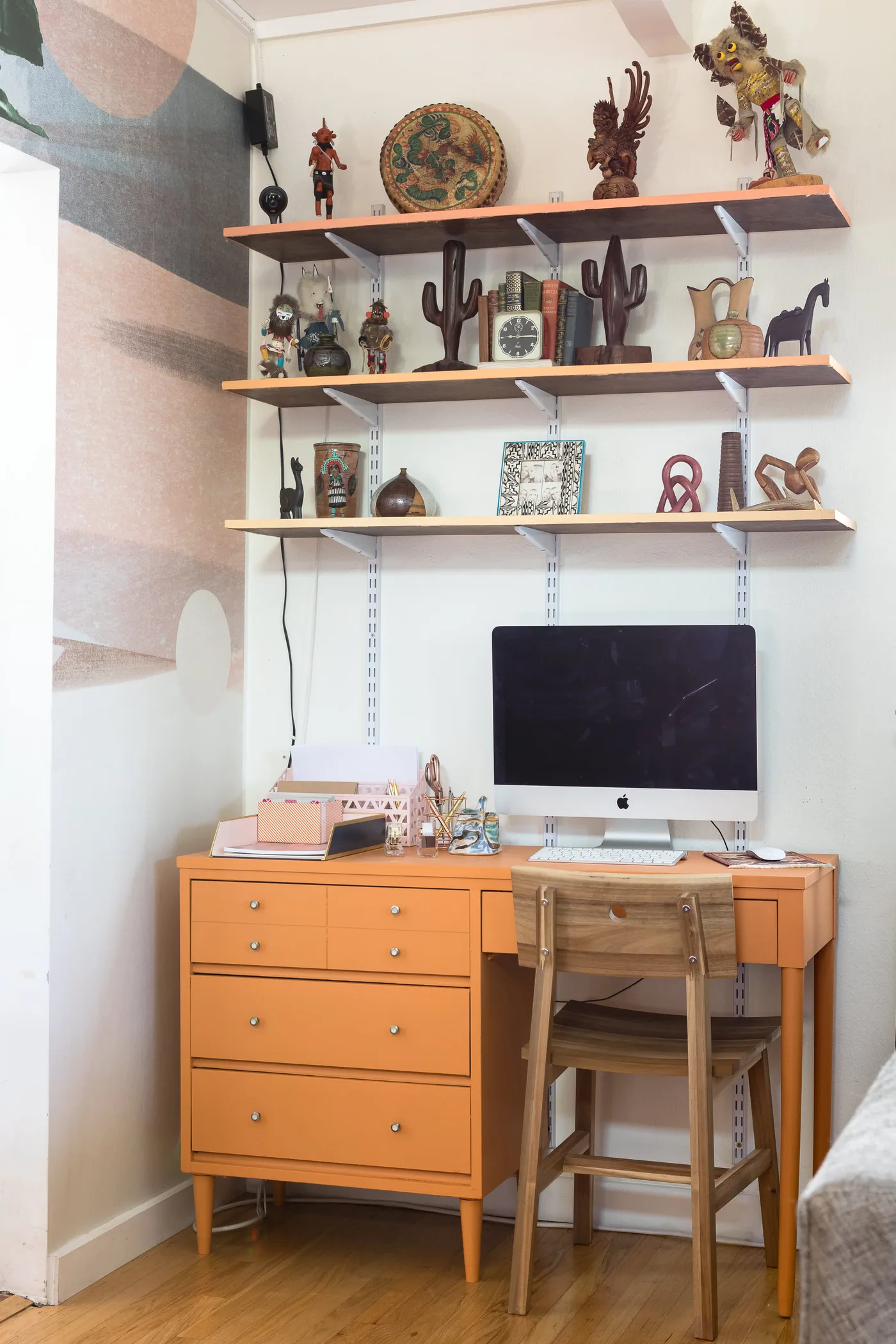
The orange drawer desk makes a warmer solid furniture feature beneath three wooden display shelves. Books and individual decorative objects give the wall a collected appearance, while the computer occupies a relatively clear working area below. A wooden chair keeps the lower furniture tones connected, showing how personal objects can provide boho character without covering every desk surface in small accessories.
Secure shelves for the actual weight of the books and objects, keeping unstable or heavy pieces away from the working position below. Check desk height, knee space and chair support for your own use. Leave the drawers reachable and organize equipment cables carefully, limiting the display to pieces you can maintain without making the compact workspace harder to clean.
PART 04
Make the workspace comfortable to use
IDEA 13 / 15
Use a patterned rug beneath a simpler open desk
 SaveSupport Non AI Creator
Image credit: Photo: Michael Hunter, Designer: Laura Umansky. From: Laura U Design Collective
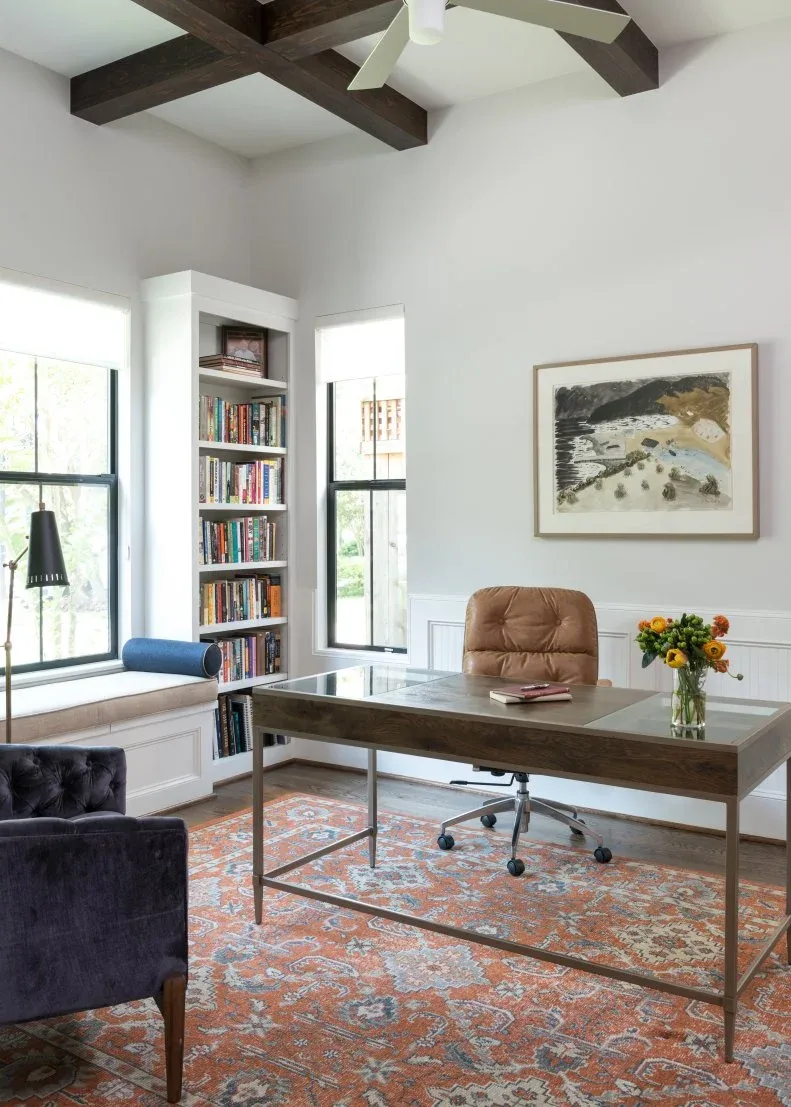
The orange-and-blue rug gives the otherwise quieter desk group its main patterned surface. A tan rolling chair introduces a warmer upholstery tone beside the open desk frame, while the pale walls leave the framed artwork and books distinct. The narrow bookcase uses the space between windows, showing how useful storage and one larger fabric pattern can make a workspace feel more personal.
Check the rug’s care guidance and how the chair rolls across it before choosing the fabric or pile. Measure access to the bookcase and the walking space around the open desk. Compare its working surface with your equipment needs and window glare, retaining a useful lamp and comfortable chair support rather than treating the patterned floor as the room’s only requirement.
IDEA 14 / 15
Keep pink fabric and plants around a simpler desk
 SaveSupport Non AI Creator
Image credit: Photo: Tomas Espinoza. From: Brian Patrick Flynn
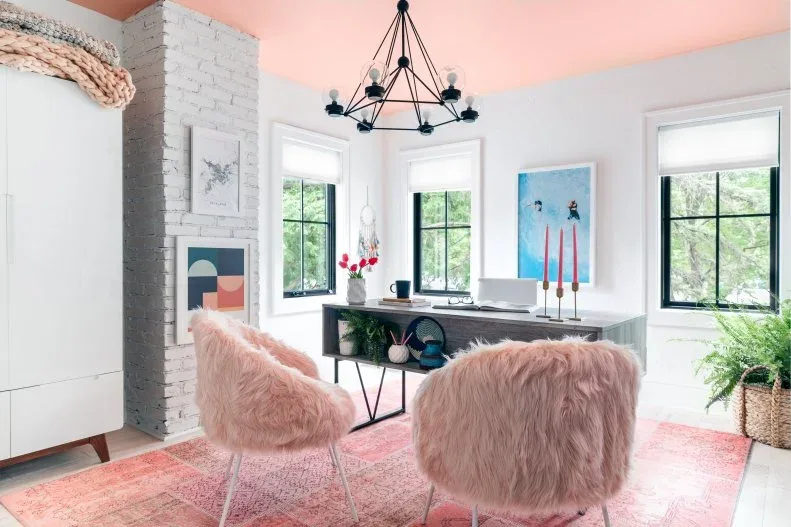
Pink returns in the ceiling, rug and textured guest chairs, giving the otherwise pale office a warmer fabric palette. The gray desk and white storage stay quieter, while plants in woven containers add another softer outline beside the windows. Artwork introduces smaller color patches, showing how several boho details can surround a relatively straightforward equipment and storage arrangement.
Choose the main working chair for support and leave the guest chairs clear of your walking route. Compare the pink fabrics and ceiling sample under actual lighting before repeating the color across several surfaces. Keep plants suited to the room’s light and their water away from equipment, retaining enough storage and desk access after the decorative seating is arranged.
IDEA 15 / 15
Make a personal wall display above a compact desk
 SaveSupport Non AI Creator
Image credit: Photo: Genevieve Garruppo
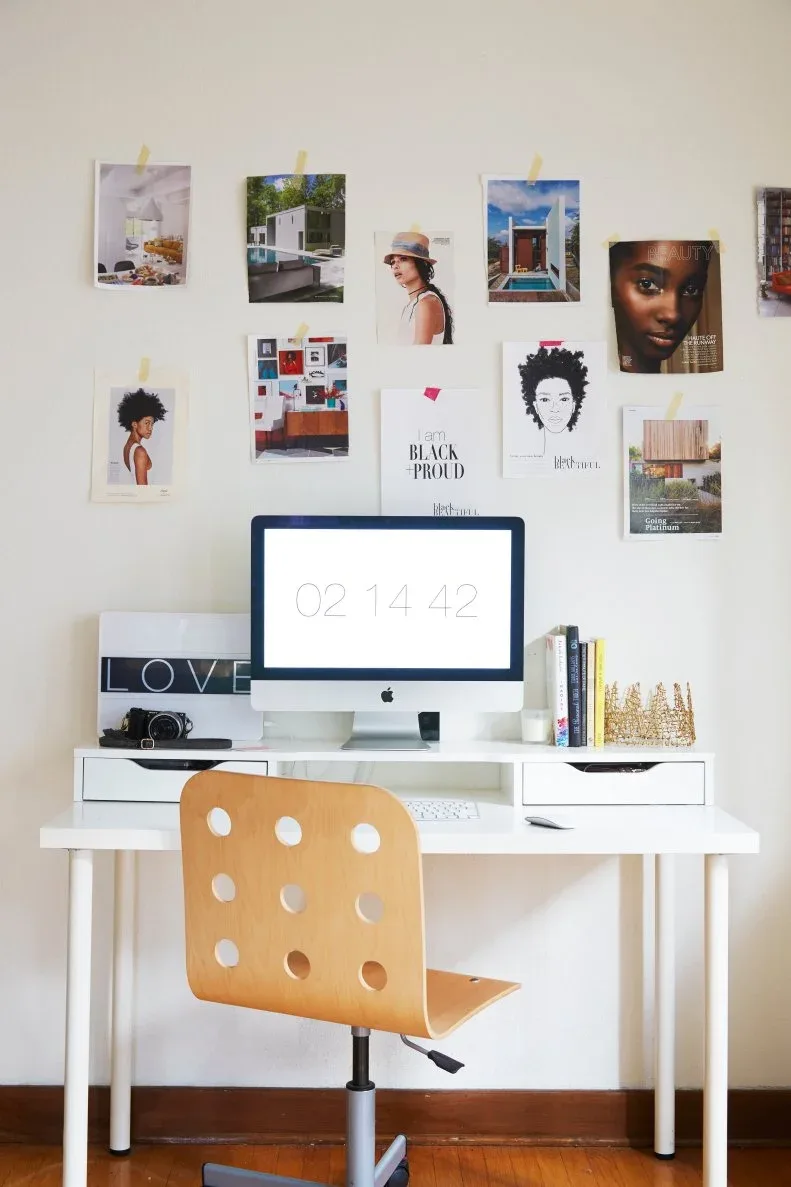
The informal wall display gives the compact desk area its personal character without requiring a large patterned wall covering. A warm wooden chair contrasts with the simpler white furniture, while books and a few small objects remain at the desk’s edges. The computer keeps its central position clear, offering a restrained option when you want collected boho detail but limited floor space.
Use wall-safe display methods suited to the actual finish and permission you have, especially in a rented room. Keep the pieces you want to see above the equipment rather than spreading them across the working surface. Try the chair and desk together for comfortable height and support, retaining drawer access and organized cables so the smaller arrangement stays useful throughout the day.
BRING IT ALL TOGETHER
Choose the practical pieces before the decorative ones
List the equipment and tasks the workspace needs to support, then check desk depth, chair clearance, supply storage and reachable outlets. Try the chair and desk together where possible rather than judging their comfort from a styled photograph. Keep a useful working area clear after the books, lamp and accessories are arranged.
Compare a rug, wall sample or artwork with the furniture you intend to keep before buying several new accents. Choose plants for the real light and avoid placing water near equipment. Secure shelves and heavier wall pieces appropriately, retaining access for cleaning and cable management so the warmer, more personal room continues to function as a workspace.