A boho vintage bedroom feels collected through the shapes, colors and objects you choose together. A turned bed frame, floral fabric, patterned rug or carved mirror can introduce an older-looking detail alongside furniture that works for your daily routine. You do not need every piece to come from the same period or every surface to carry a pattern.
These photographs offer ideas for a vintage-inspired room; appearance alone does not establish a piece’s age. When buying secondhand, inspect condition and comfort as carefully as style. Use the arrangements to explore how personal finds, patterned fabrics and warmer textures can share a bedroom while leaving the bed, storage and light easy to use.
PART 01
Start with a bed that has character
IDEA 01 / 20
Give turned bed frames a stronger painted color
 SaveSupport Non AI Creator
Image credit: Alecia Neo
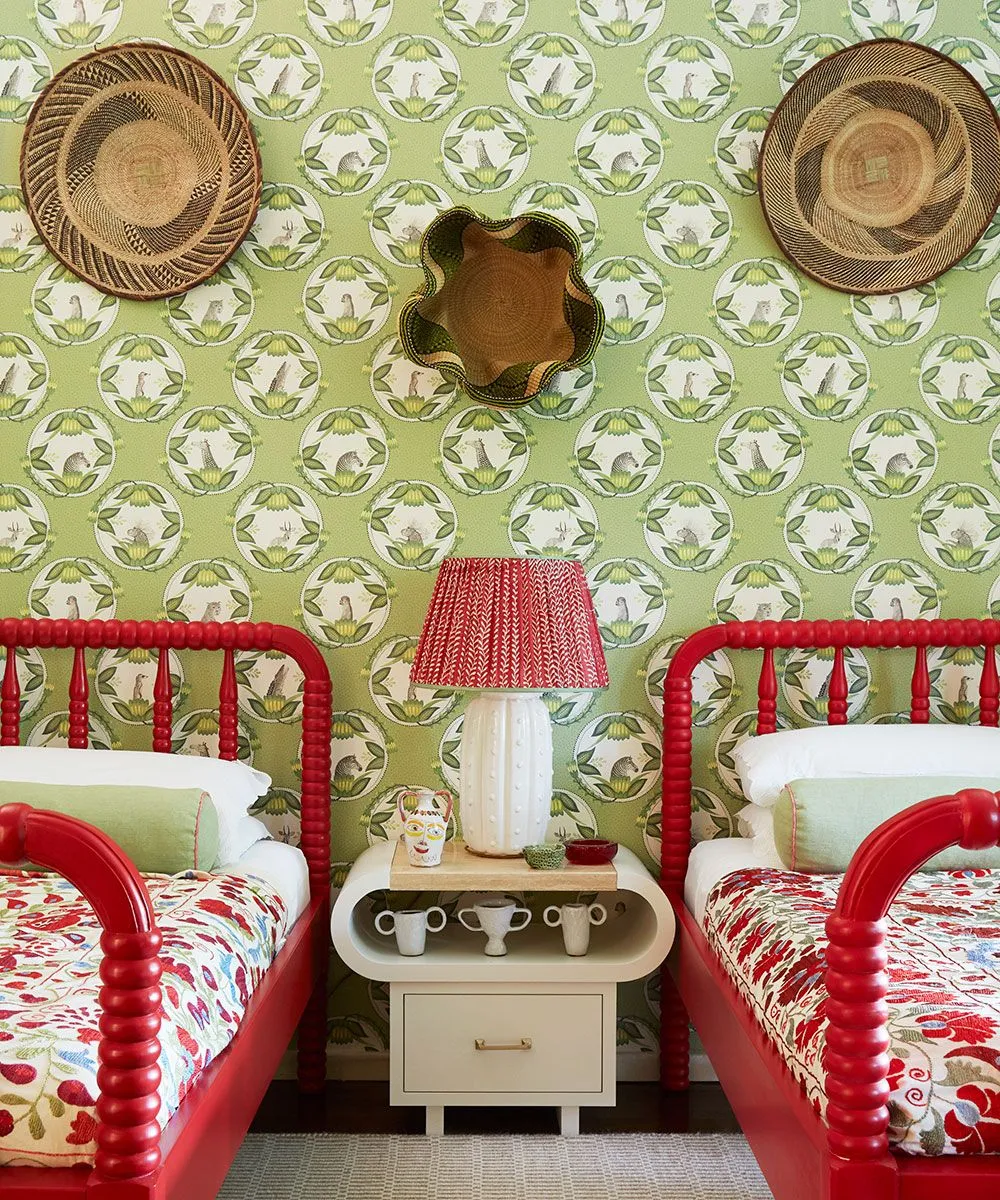
Red turned bed frames give these two beds a clear furniture outline against the green botanical wall. Floral bedding adds a smaller repeat below, while woven hats and a compact mirror provide different shapes above. The pale shared cabinet makes a quieter division between the bright frames, showing how one bold furniture color can connect a pair of beds within a mixed pattern arrangement.
Check a bed frame’s condition and mattress support before choosing it for its decorative outline. If refinishing furniture, identify the existing finish and use suitable preparation rather than sanding an unknown coating. Allow access to both beds and the shared cabinet, keeping useful lamp and storage space available instead of filling the center entirely with decorative objects.
IDEA 02 / 20
Keep warm wooden furniture visible beside pale bedding
 SaveSupport Non AI Creator
Image credit: Photography by A Pair And A Spare
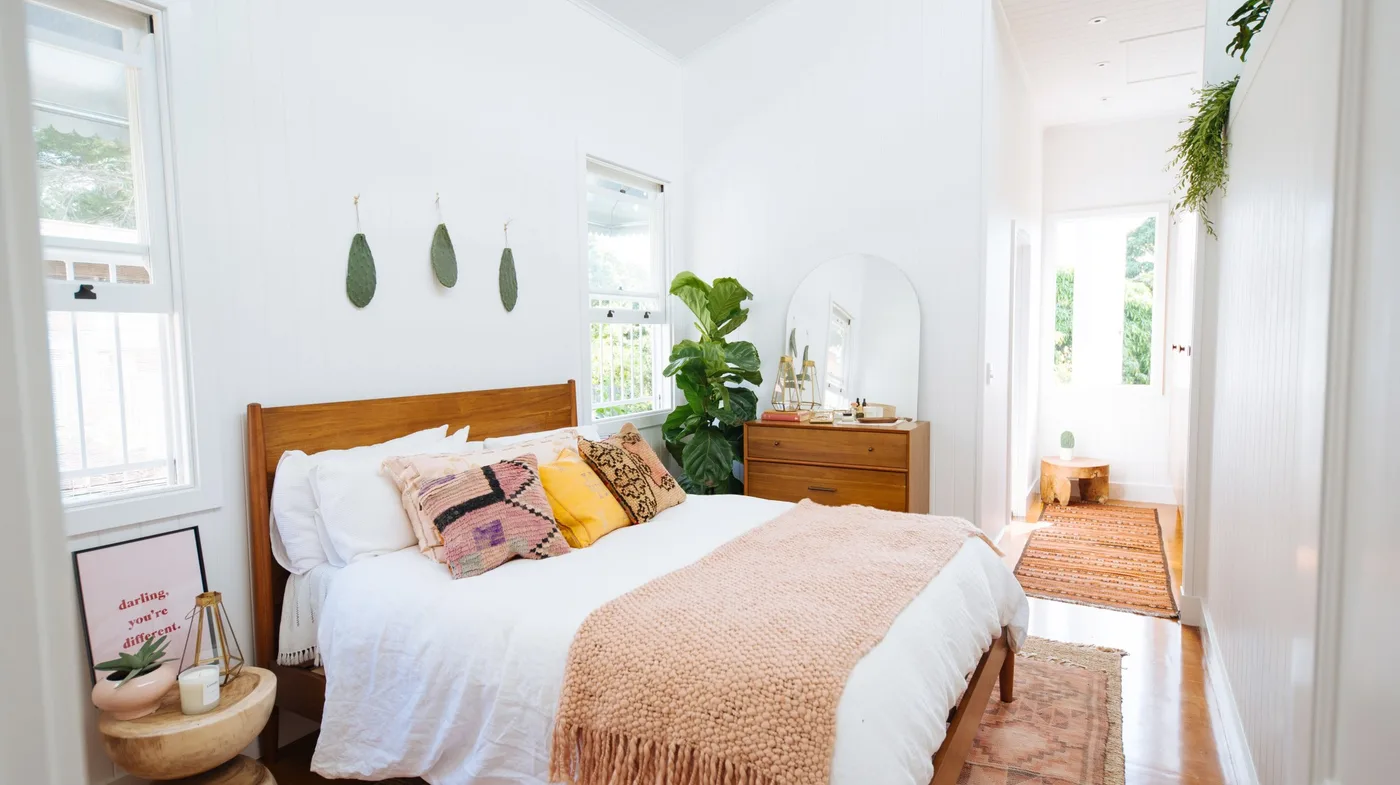
Warm wooden furniture gives this bright room a continuous older-looking tone without covering the walls in pattern. White bedding leaves the bed frame visible, while a pink throw and smaller cushions provide mixed fabric detail. A round bedside table breaks up the rectangular furniture lines, with the nearby plant adding a softer shape beside the dresser and pale wall.
Compare wooden tones in the room rather than expecting separately collected pieces to match exactly. Check joints, drawer operation and the bed’s support before use. Choose a manageable number of fabric layers and leave a practical bedside surface, keeping the dresser accessible so the warmer furniture remains useful rather than becoming only a background for plants and ornaments.
IDEA 03 / 20
Soften a woven headboard with a pink fabric canopy
 SaveSupport Non AI Creator
Image credit: Future/Oliver Perrot
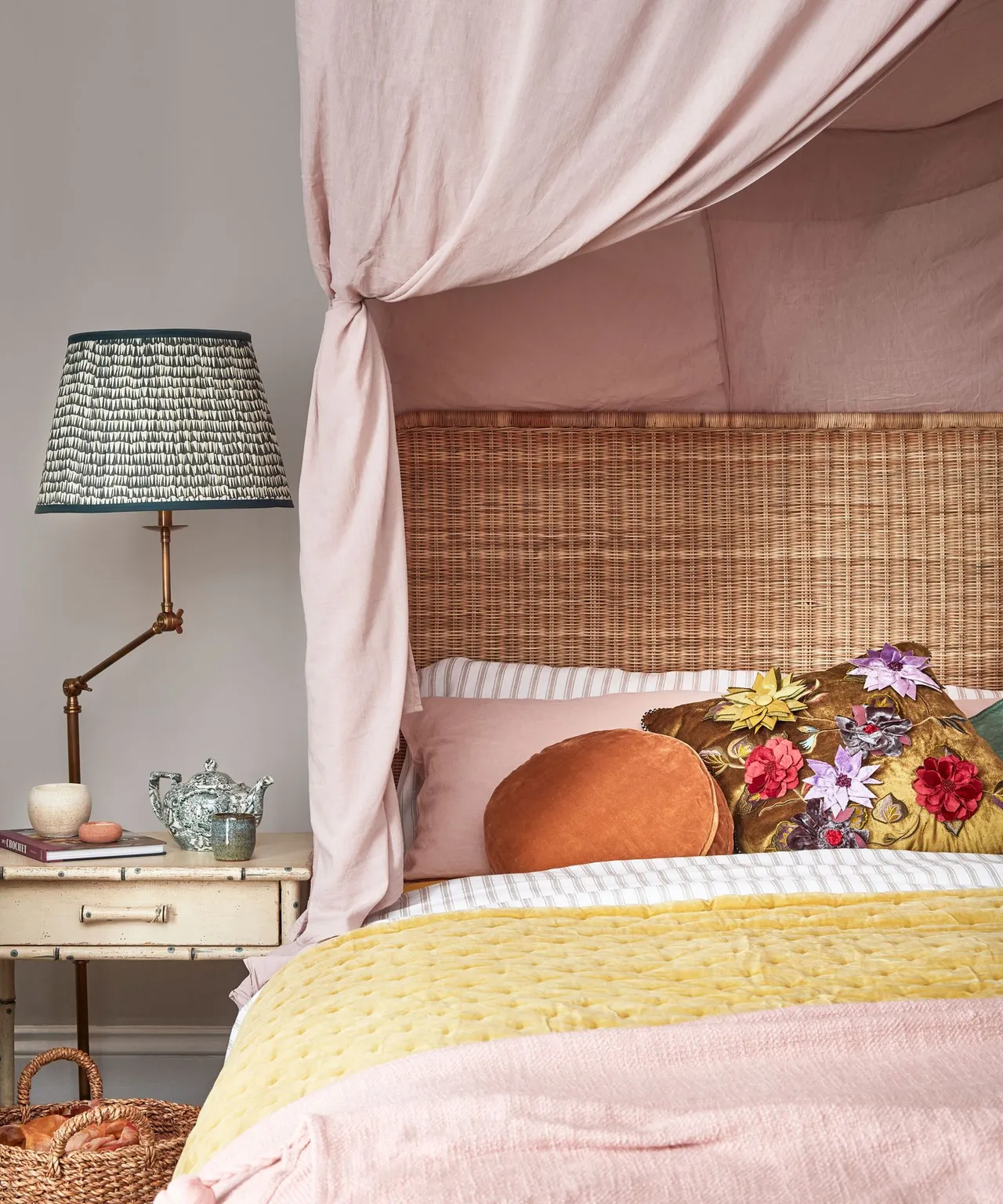
A pink fabric canopy softens the wider woven headboard, creating a sheltered-looking outline around the pillows. Yellow bedding and embroidered cushions add warmer detail below, while a green lampshade gives the bedside area a distinct accent. The smaller drawer table keeps useful storage close to the bed, connecting a practical furniture piece with the more decorative fabric arrangement.
Install canopy fabric with suitable support and keep it away from lamps, heaters and other heat sources. Check access around the bed and select fabric you can remove for cleaning. If using an older lamp, arrange an electrical check before use, and retain a reachable switch and clear bedside surface rather than allowing the drape to cover them.
IDEA 04 / 20
Combine an open woven bed with heavier room details
 SaveSupport Non AI Creator
Image credit: Future / Simon Bevan
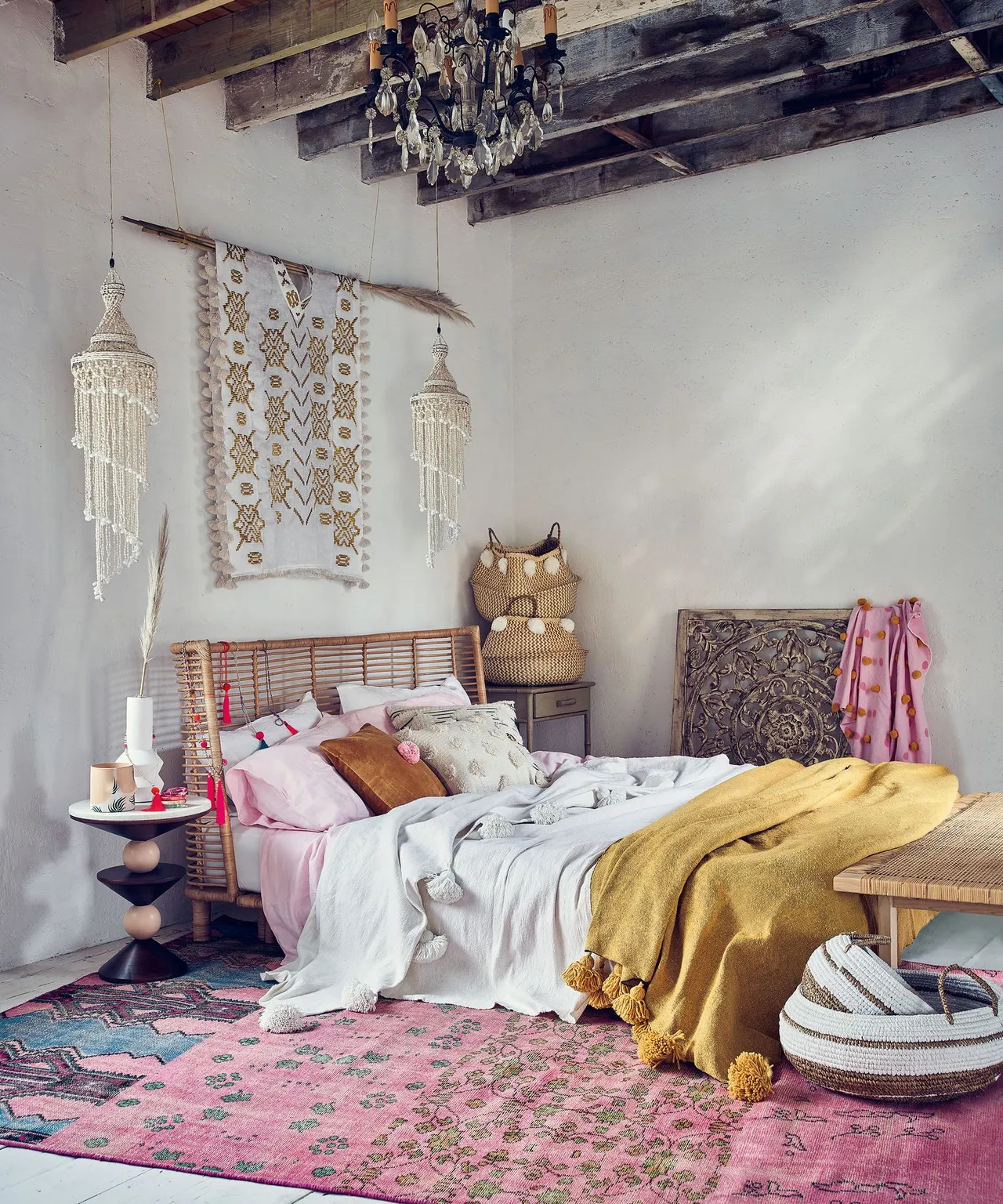
The open woven bed gives this room a lighter furniture outline beneath the heavier ceiling beams. Pink bedding and the patterned rug connect the lower colors, while a yellow throw creates a warmer accent across the bed. Hanging fabric details and a chandelier add different overhead shapes, giving the room a collected character through several textures rather than one matching furniture set.
Check the bed’s stability and cleaning needs before choosing an open woven frame. Leave useful floor space around the rug and keep long fabric details outside regular routes. Have older lighting assessed before use, and choose only as many decorative layers as you can remove and clean comfortably so the room remains manageable beneath its more detailed ceiling.
IDEA 05 / 20
Balance an ornate bed with a larger botanical wall
 SaveSupport Non AI Creator
Image credit: Chinasa Cooper
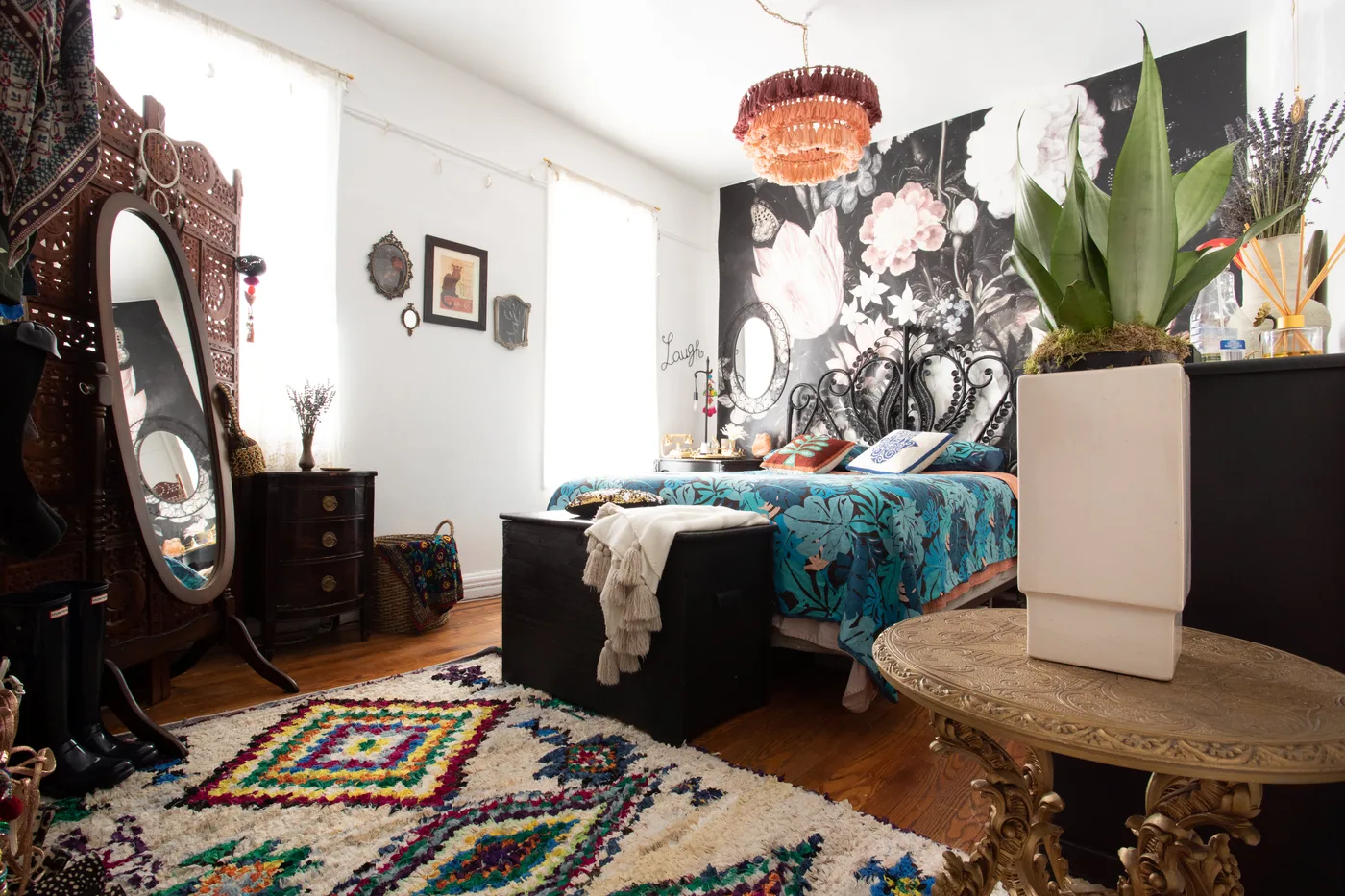
An ornate dark headboard stands in front of a large floral wall picture, giving the bed a strong decorative outline. Turquoise botanical bedding introduces a second plant pattern, with the colorful rug bringing another repeat below. Carved furniture and a green plant continue the layered character around the bed, while the lighter side wall leaves part of the room simpler.
Choose which pattern should dominate before combining a mural, bedcover and rug. Inspect any older bed frame carefully, including its mattress support and joints. Keep a clear bedside surface and enough room to move around the carved furniture, and protect furniture from watering if plants share those areas rather than placing pots directly on an unprotected decorative finish.
PART 02
Connect patterns through selected colors
IDEA 06 / 20
Mix rose patterns with smaller animal motifs
 SaveSupport Non AI Creator
Image credit: Future
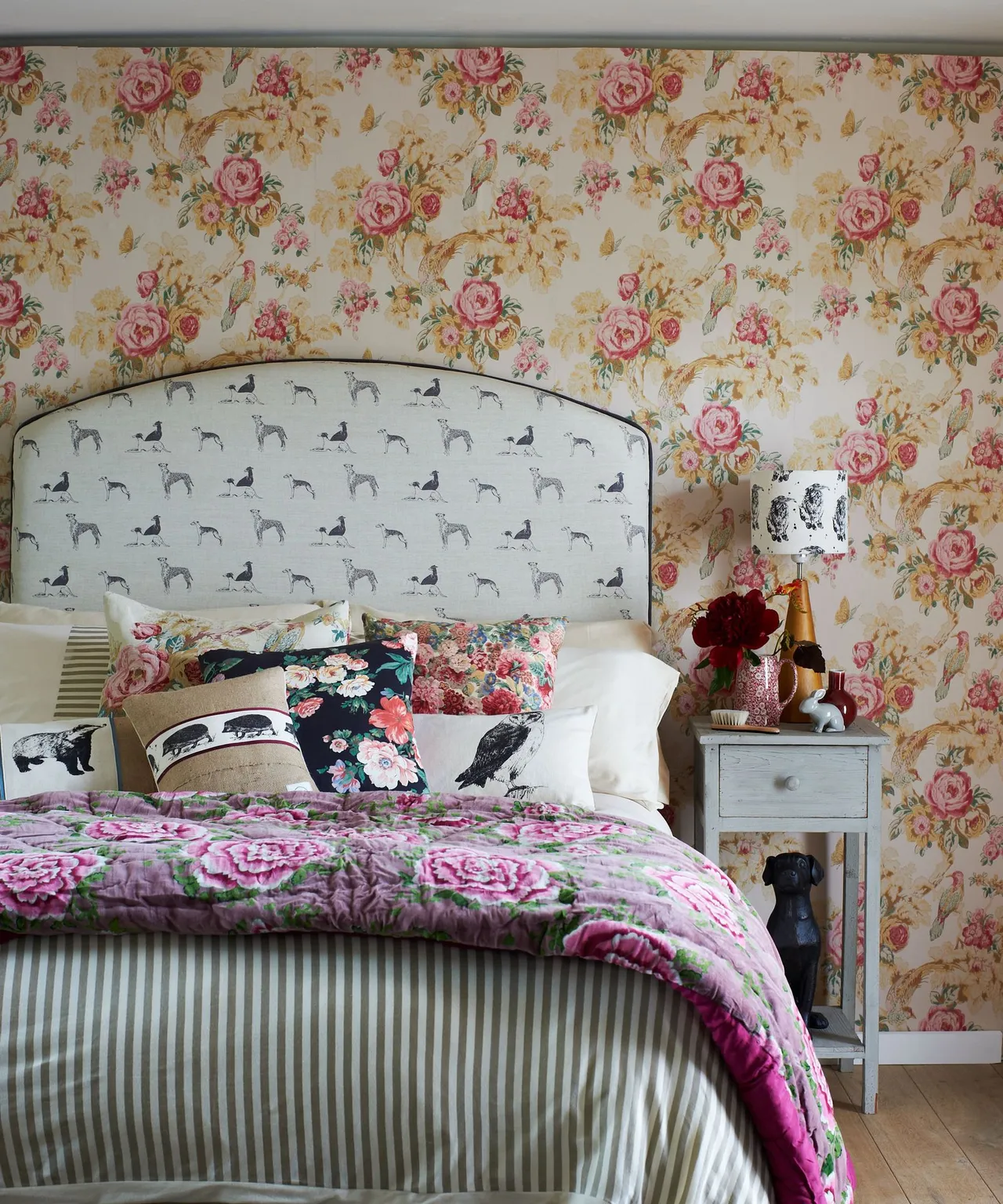
Large roses cover the wall while smaller animal motifs fill the curved headboard. Stripes introduce a more regular repeat below the bed, with floral fabrics and cushions continuing the stronger pink tones. The variation in pattern size lets the room feel mixed rather than identical, while the pale headboard background keeps the upholstered outline visible against the wallpaper.
Compare pattern samples together at the distance you will normally view the bed. Choose a few shared colors and leave some pillow or sheet surfaces simpler if the combination feels too busy. Check upholstery and bedcover cleaning guidance, giving extra cushions a separate storage place so the layered display can be cleared without leaving fabrics on the floor overnight.
IDEA 07 / 20
Use a red wall to connect woven plates and mixed prints
 SaveSupport Non AI Creator
Image credit: Future / Alecia Neo
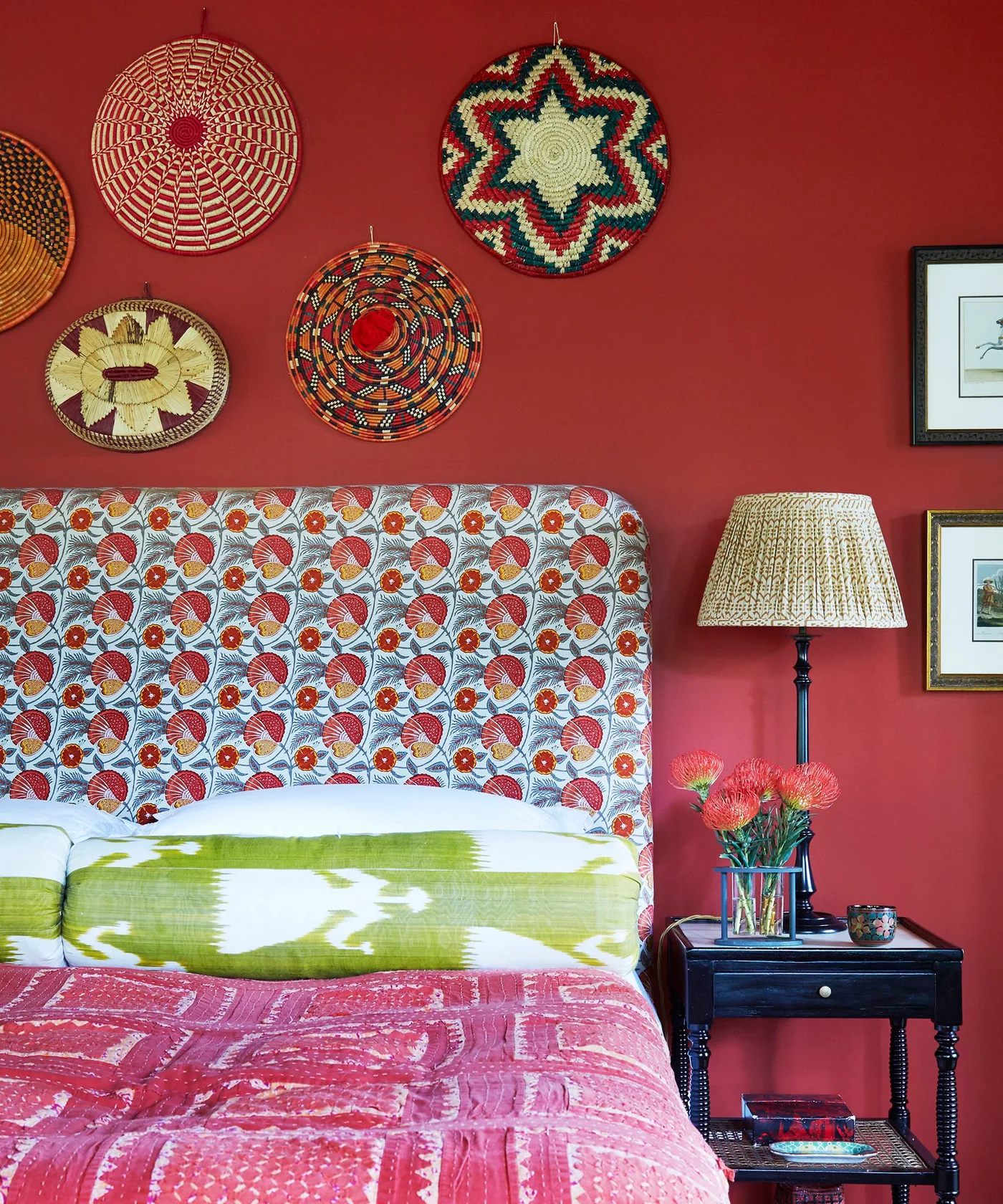
A red wall supplies a continuous background for the woven plates and floral headboard. Green and pink bedding introduces broader color blocks beneath the finer prints, while the darker turned-leg table gives the bedside area a clearer outline. Different plate designs add collected detail above, with their round shapes contrasting against the wider rectangular headboard and layered bedding.
Arrange the wall display on the floor first to compare its spacing and use fittings suitable for each object’s weight. Check that the headboard’s fabric and bedding can be cared for as needed. Keep bedside reach and table stability practical, and leave some wall space visible instead of adding plates simply because another gap remains in the display.
IDEA 08 / 20
Repeat a bright lamp color against a smaller wall pattern
 SaveSupport Non AI Creator
Image credit: Future / Mary Wadsworth
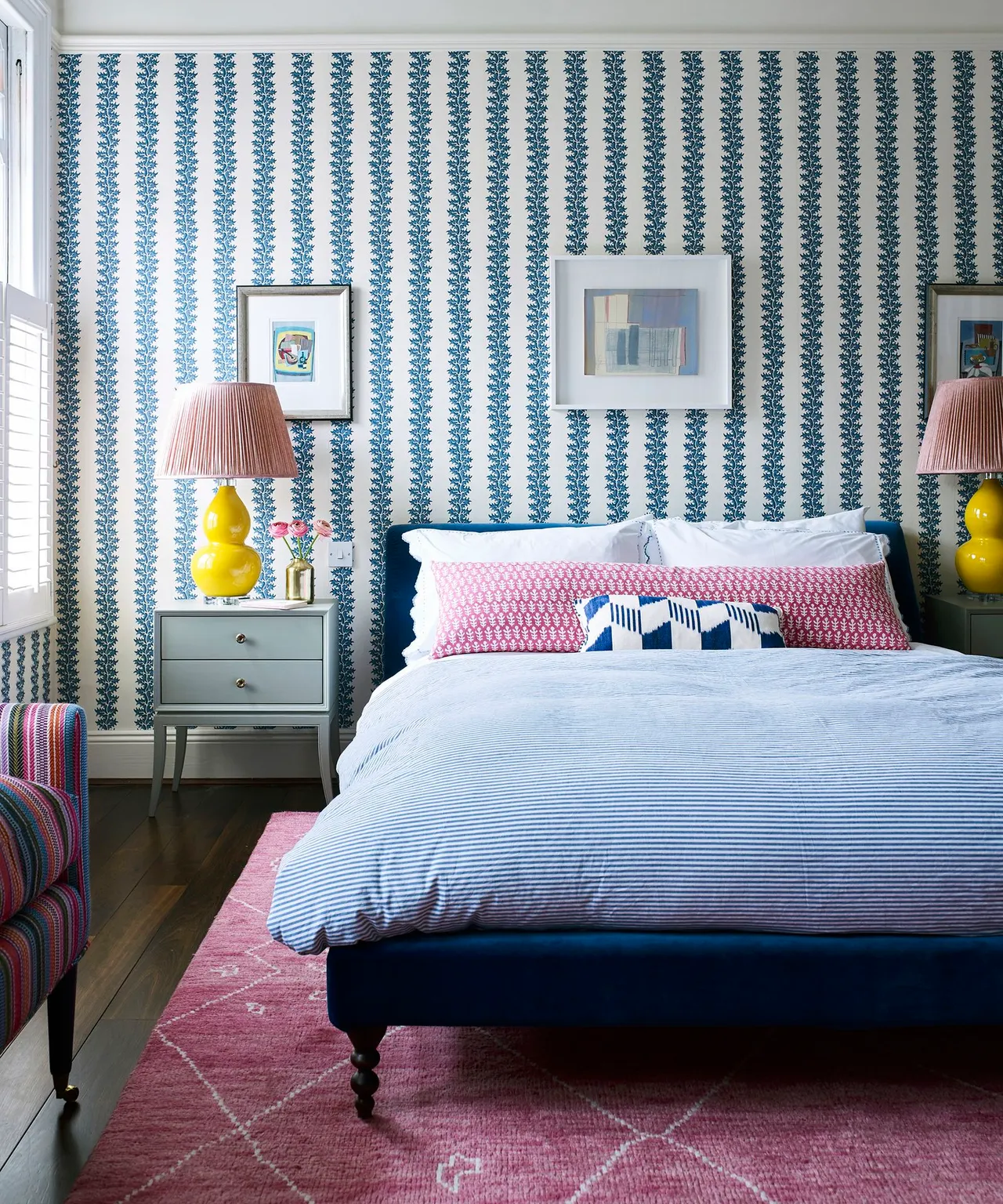
Small blue motifs form vertical lines behind this dark blue bed, giving the wall a more regular pattern than the surrounding fabrics. Yellow lamp bases provide bright paired accents, while the pink rug and pillow layer add a warmer color near the floor. Gray-green cabinets keep the bedside furniture restrained, letting the lamps and patterned wall remain easier to read.
Compare the wallpaper repeat with the full wall width and check how its lines meet corners or openings. Test the yellow and pink accents under the actual bedroom lighting. Choose bedside cabinets for usable storage and reach, and keep lamp cords controlled so the paired lamps function comfortably rather than providing only a symmetrical arrangement around the bed.
IDEA 09 / 20
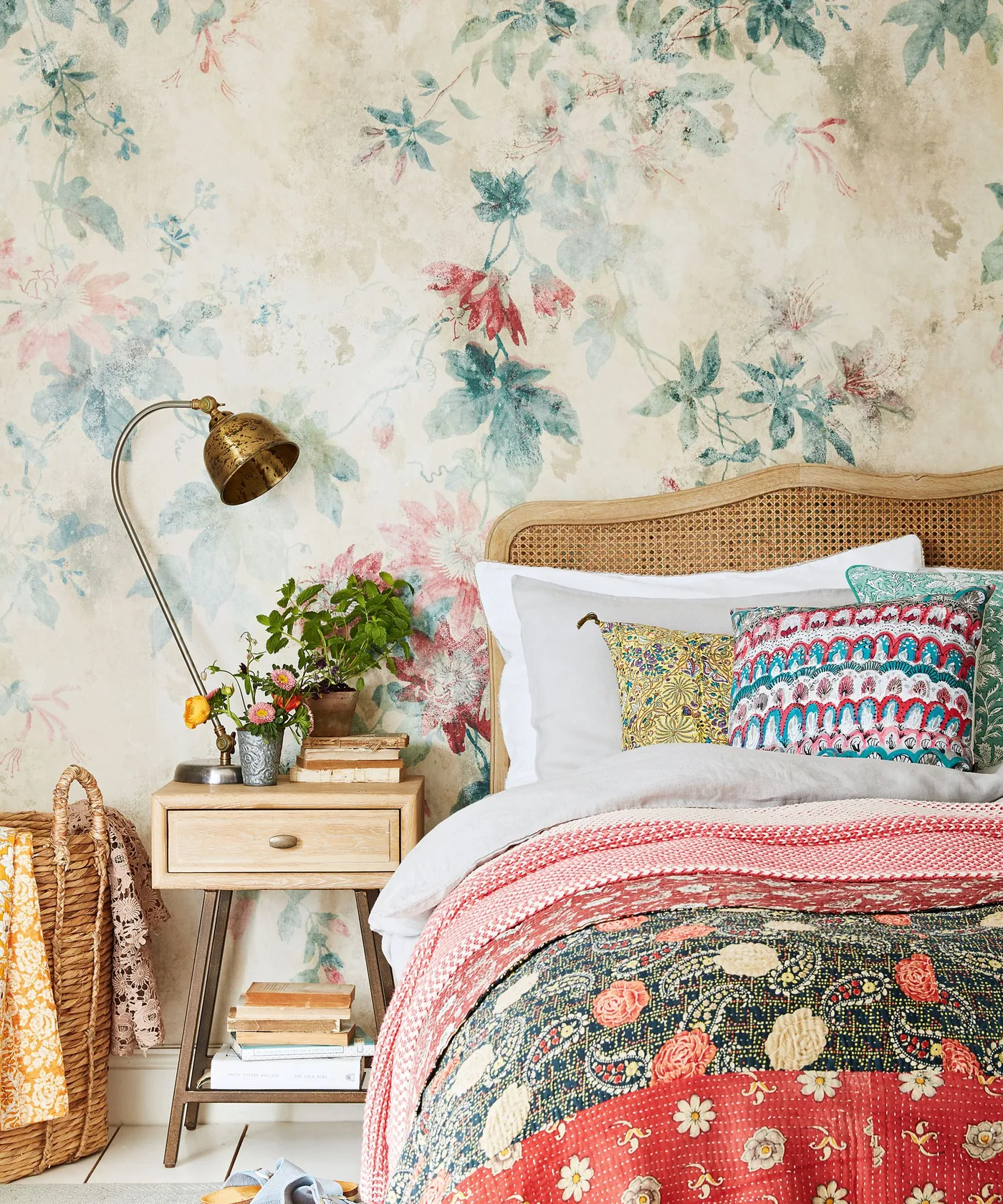
Layer floral fabrics around a lighter woven headboard
 SaveSupport Non AI Creator
Image credit: Future
The softer floral wall leaves the curved woven headboard visible, while several smaller textile patterns add detail across the pillows and bedcover. A pale wooden nightstand keeps the surrounding furniture lighter, with a curved reading lamp creating a distinct bedside shape. The flowers and warm woven texture produce an older-looking room through their relationship, without every object needing an elaborate outline.
Compare the wallpaper and bedcover in your room’s light, choosing a simpler sheet or pillow layer if the floral repeats compete. Check the headboard and fabric care before purchase. Keep the reading light easy to adjust and leave a useful nightstand surface, giving extra pillows a place overnight so the layered look does not make the bed awkward to use.
IDEA 10 / 20
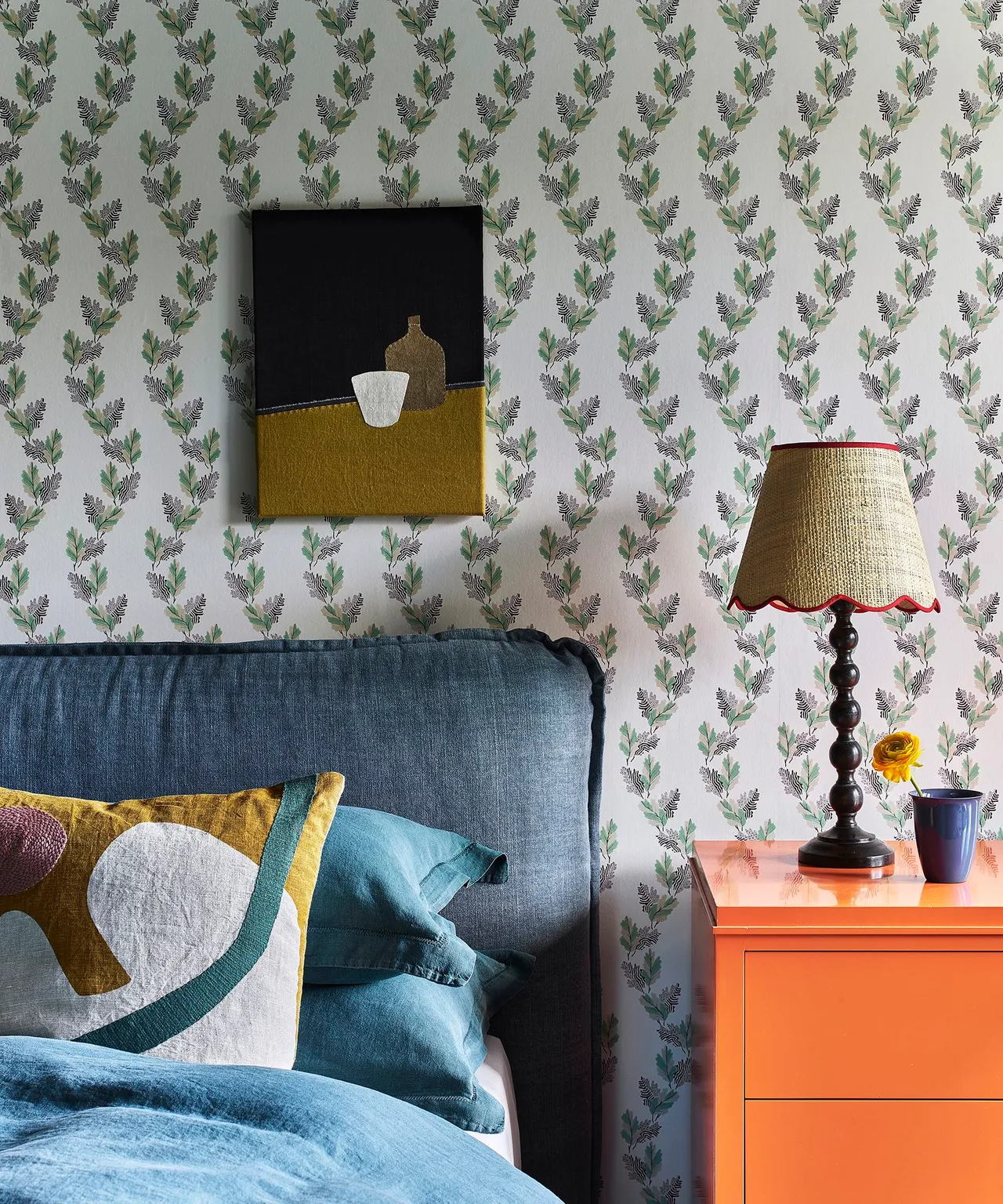
Bring an orange bedside cabinet beside darker blue fabric
 SaveSupport Non AI Creator
Image credit: Future / Polly Wreford
Orange drawers give this bedside area a strong warm block beside the darker blue headboard and bedding. The small botanical wall repeat is finer than the fabric colors, while a turned lamp base introduces an older-looking furniture detail above the cabinet. Abstract artwork adds a different shape to the same wall, making the bedside arrangement mixed but connected through clearly separated elements.
Try the orange and blue together in your actual room before painting or buying a larger furniture piece. Check drawer operation and the cabinet’s usable height beside the mattress. Have an older electrical fixture assessed before use, and keep the wall display secure and the bedside surface clear enough for daily items rather than covering it with additional patterns.
PART 03
Bring texture around the furniture
IDEA 11 / 20
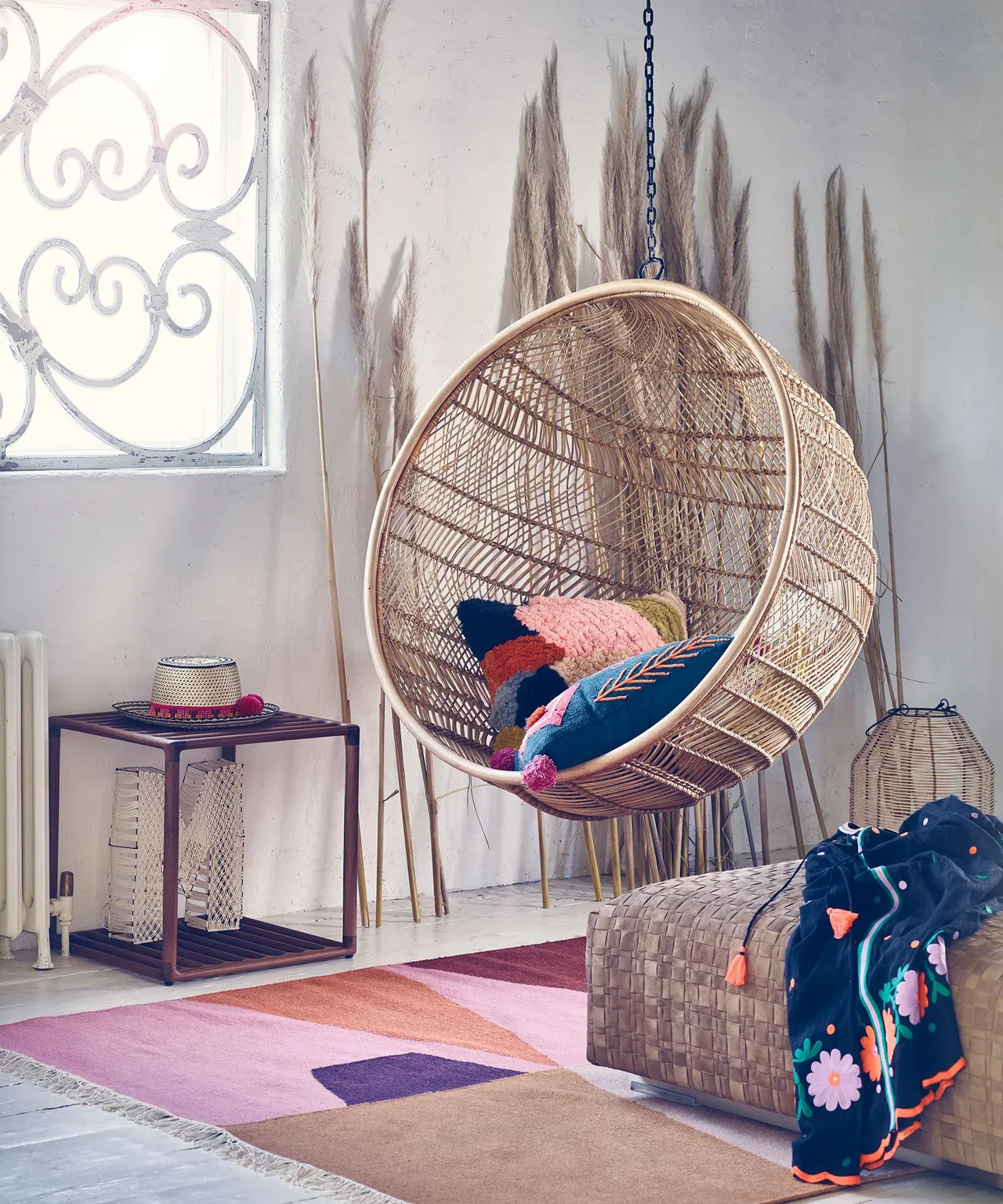
Add a woven seat beside a colorful bedroom rug
 SaveSupport Non AI Creator
Image credit: Future / Simon Bevan
A woven hanging chair creates a lighter outline above the stronger geometric rug. Mixed cushions carry several of the rug’s colors into the seat, while a woven basket repeats texture nearer the floor. The small dark side table provides a simpler neighboring shape, showing how a bedroom corner can gain collected character through useful seating and fabrics rather than a large matching suite.
Use a hanging chair only with suitable structural support and professionally assessed installation. Allow its required movement clearance, keeping the table and basket outside that area. Choose cushions around actual comfort and removable covers, and keep rug edges flat so the more colorful sitting corner remains easy to approach and clean within the bedroom.
IDEA 12 / 20
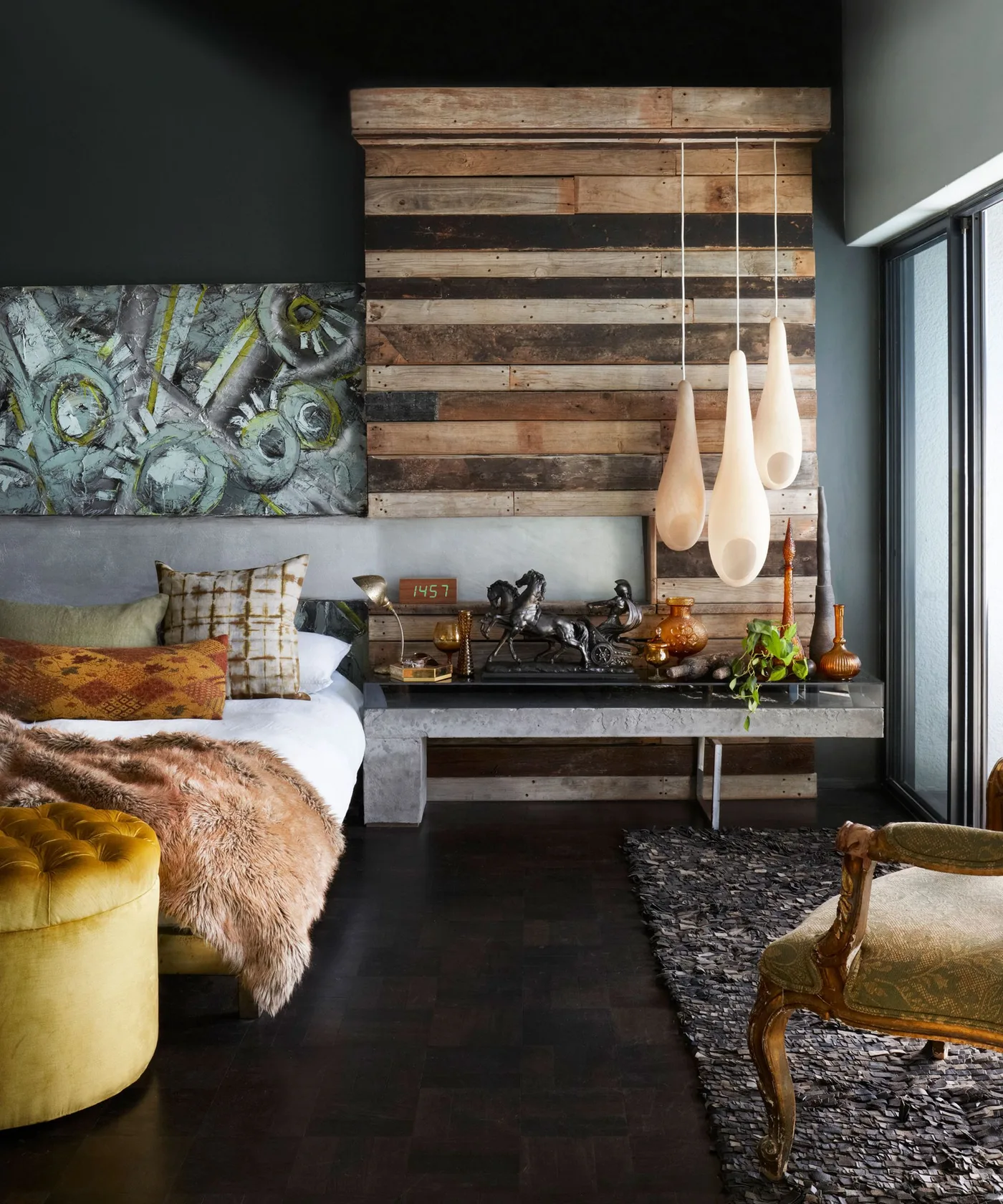
Keep a traditional chair within a darker textured room
 SaveSupport Non AI Creator
Image credit: Future / Micky Hoyle
Horizontal wooden boards give the darker bedroom a strong textured wall, while elongated pale lights introduce a contrasting vertical group. Soft bed layers and a yellow pouf add warmer detail below, with a curved wooden-framed chair bringing an older-looking furniture shape into the room. The different outlines remain distinct because the larger background colors are comparatively restrained.
Check the condition and comfort of a collected chair before making it regular bedroom seating. Compare darker finishes under the lamps you will use at night and retain practical reading light. Choose throws according to their care needs, keeping the pouf and chair outside the main bed route so the mix of textures does not make a darker room difficult to navigate.
IDEA 13 / 20
Use playful shapes beside an older-looking bedside table
 SaveSupport Non AI Creator
Image credit: Future
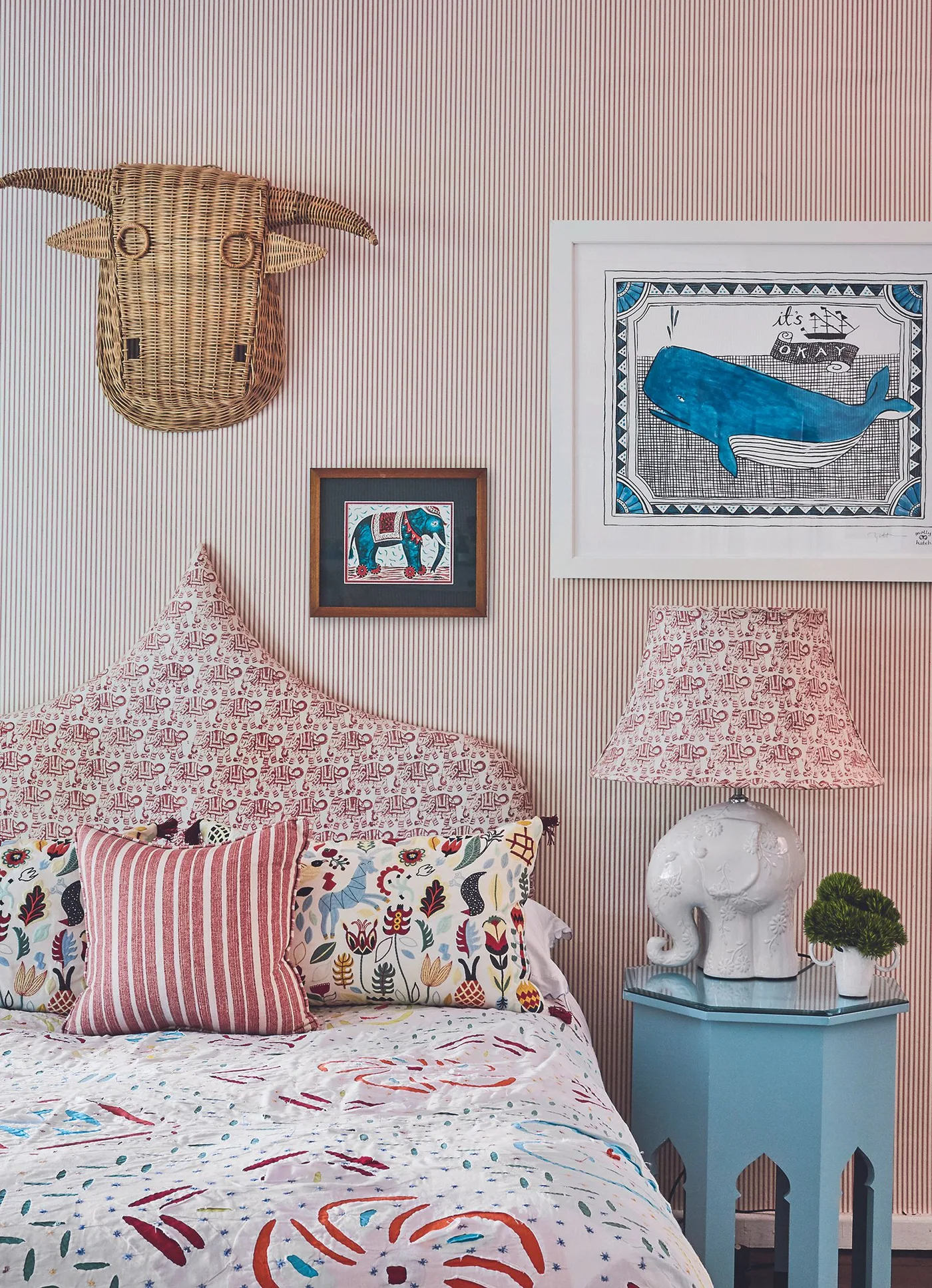
A pointed fabric headboard gives this bed a playful outline against the narrow pink wall stripes. Printed bedding continues the mixed pattern below, while the blue bedside table introduces an older-looking leg and edge shape. The animal lamp and woven wall decoration add personal character, connecting several different objects through a light background rather than making all the details match.
Choose playful objects that can be placed securely, especially if children use the bedroom. Keep electrical cords and small decorative pieces out of reach where appropriate, and check the table’s stability. Compare the headboard fabric with the bedding before adding more prints, retaining a usable bedside surface and enough room for the bed to remain comfortable during everyday use.
IDEA 14 / 20
Pair a patterned armchair with a simple dressing surface
 SaveSupport Non AI Creator
Image credit: Future / Davide Lovatti
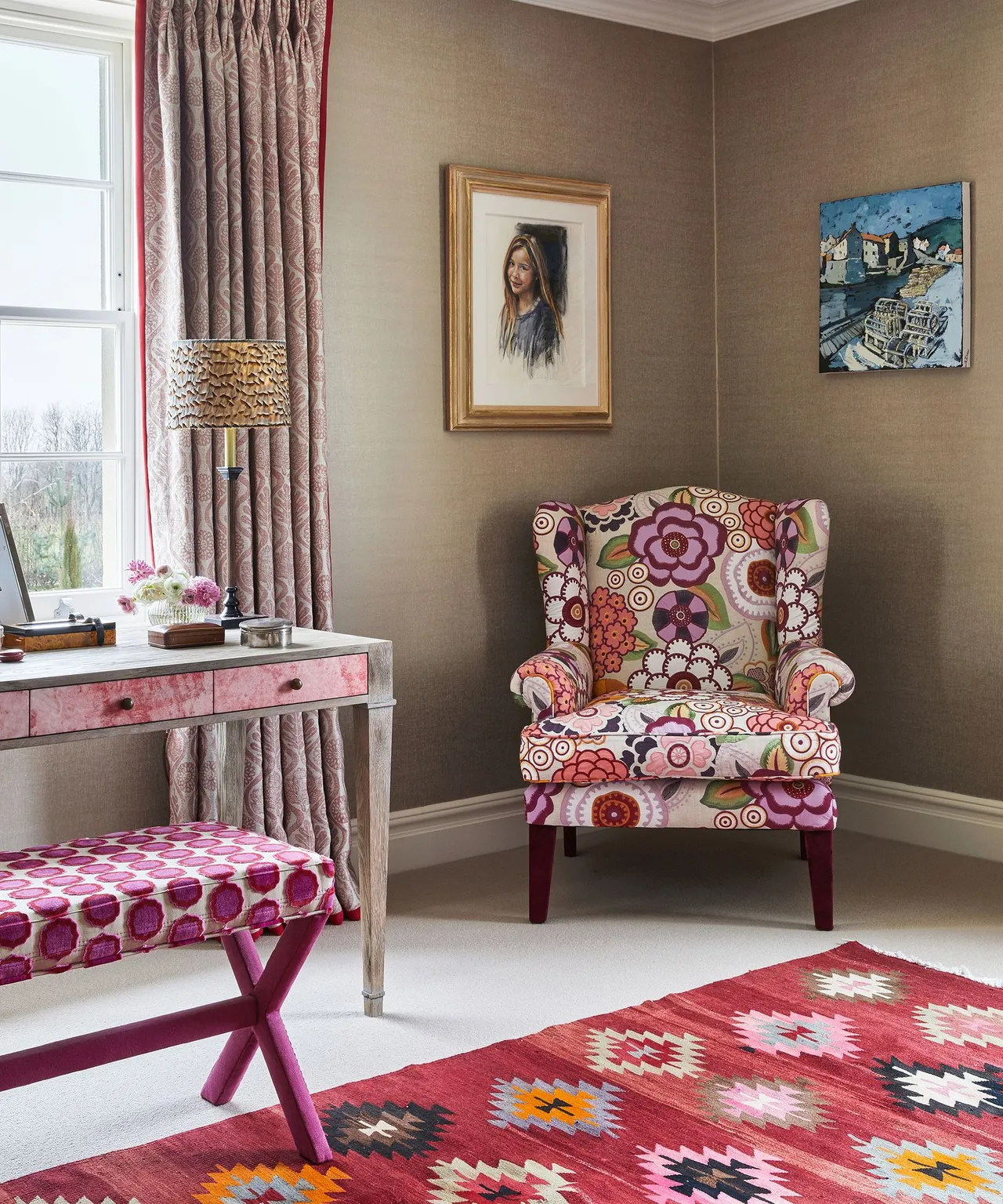
A floral armchair creates the strongest fabric feature in this quieter taupe corner. Pink drawers connect the dressing surface with the patterned stool and warmer rug below, while framed pictures make the wall more personal. The chair’s traditional outline adds older-looking character beside the straighter dressing table, giving the bedroom a useful sitting and dressing area with several related but different pieces.
Test the chair for comfort and inspect its frame and upholstery condition before regular use. Check the dressing table’s height with the chosen stool and retain practical light at the mirror or grooming area. Keep the rug secure beneath moving furniture, and choose patterns you can maintain rather than accepting difficult cleaning needs only because the colors work together.
IDEA 15 / 20
Give a dressing table a place within a floral room
 SaveSupport Non AI Creator
Image credit: Future / Jan Baldwin
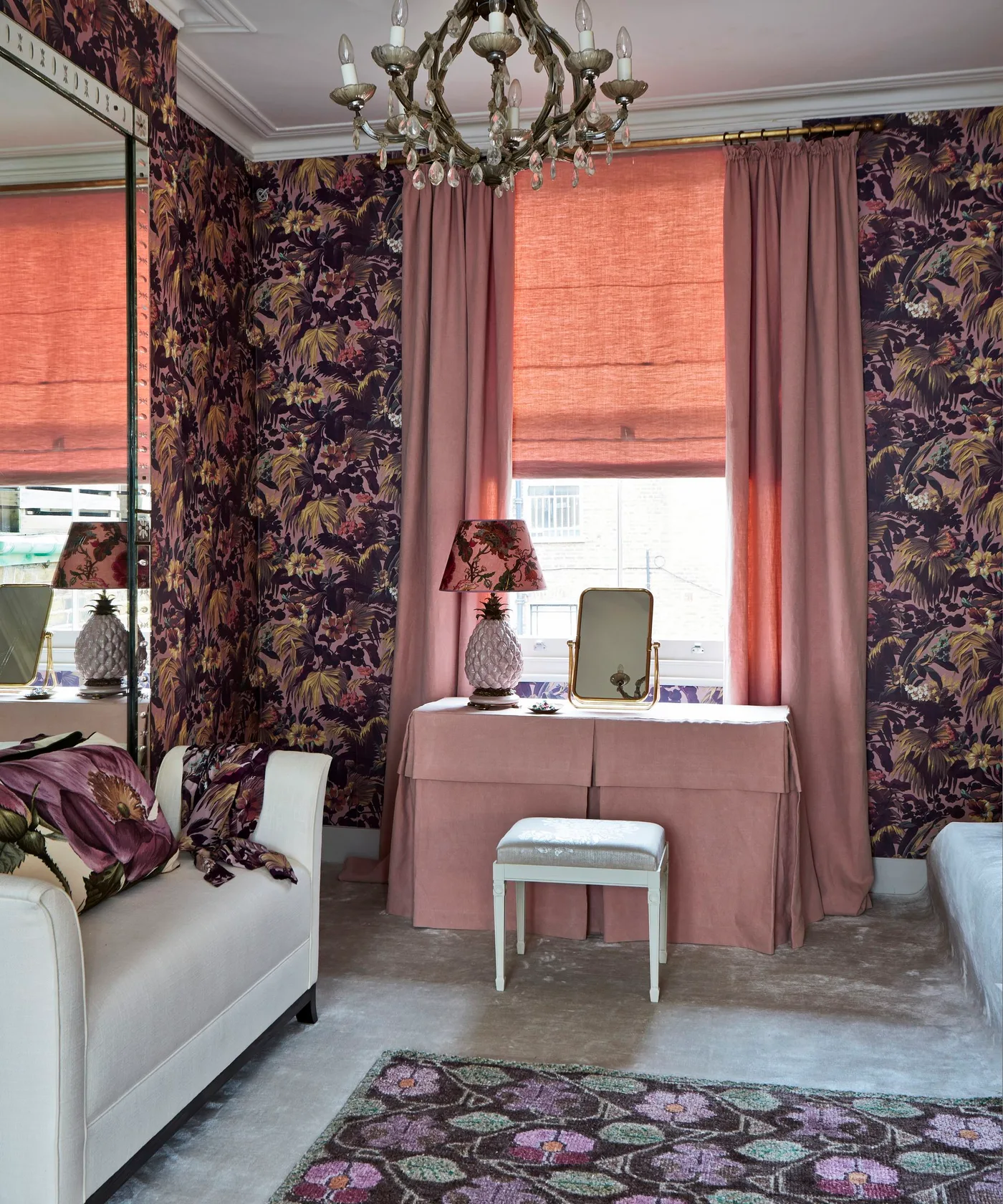
Dark floral walls surround the pink dressing table, making its simpler fabric-covered shape stand out near the window. Pink curtains and the blind connect the lighter colors, while a large mirror provides a clearer surface beside the pattern. The chandelier adds another older-looking detail overhead, with the small pale stool keeping the dressing area lighter at floor level.
Check usable table height and leg space with the stool you intend to use. Choose fabric coverings that can be removed or cleaned appropriately, and keep them away from heat sources. Secure the mirror and have older electrical fittings checked before use, retaining clear access to the window covering and enough useful table surface for daily dressing items.
PART 04
Give personal finds a useful place
IDEA 16 / 20
Let a few unusual objects personalize a light bed
 SaveSupport Non AI Creator
Image credit: Future / Paul Raeside
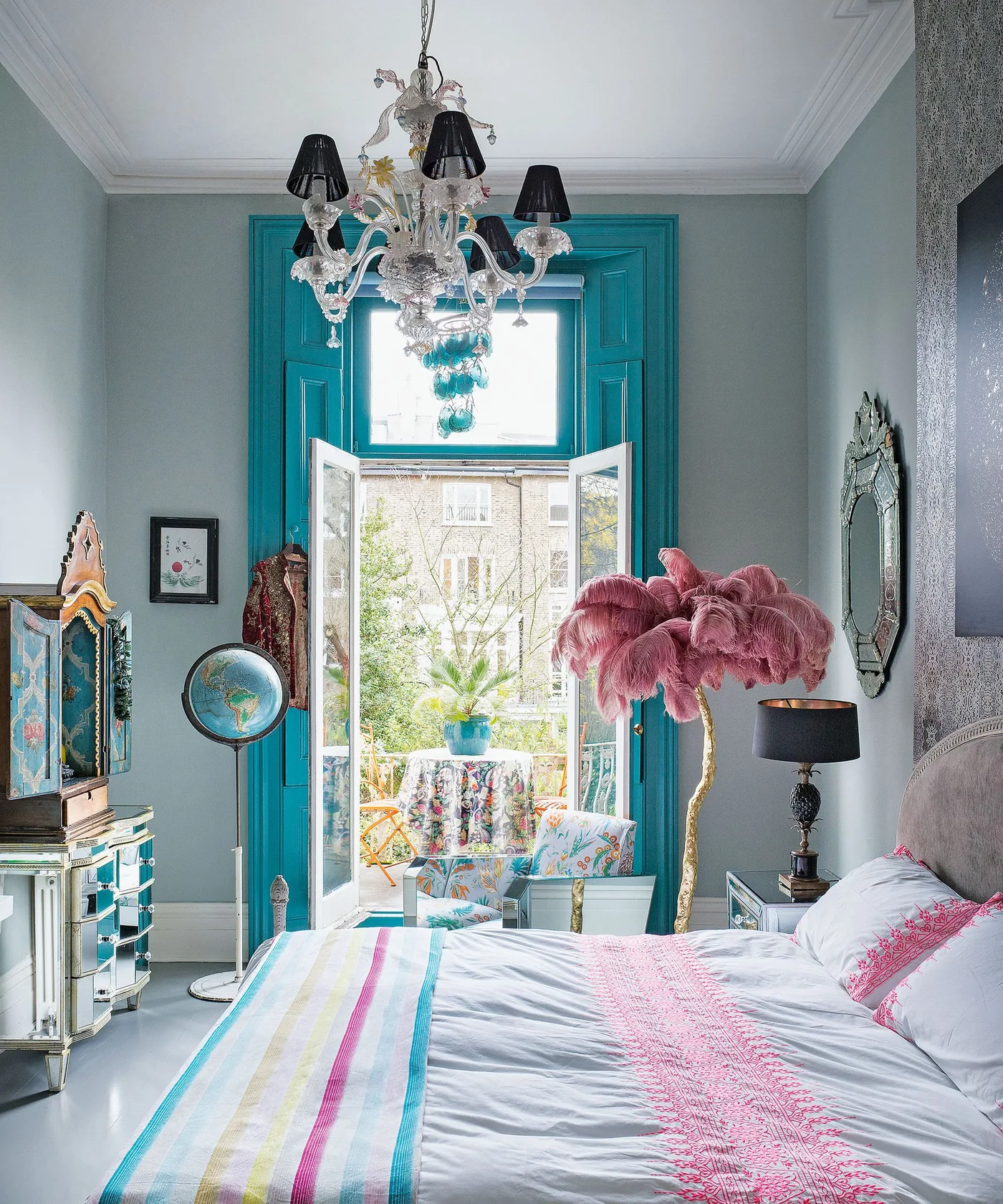
Turquoise window trim gives the room a stronger architectural color around the pale bed. A globe, mixed cabinets and an unusual pink feather-shaped detail make the surroundings feel collected, while the overhead light adds a more ornate outline. Stripes across the bedding keep the bed comparatively simple, allowing several personal objects to remain distinct within the wider bedroom.
Choose unusual pieces according to their condition, stability and cleaning needs as well as their shape. Keep fragile or bulky decorations outside the route around the bed, and have older lighting assessed before use. Leave access to cabinet drawers and window fittings practical, adding personal objects gradually so their display does not replace the storage and surfaces you need daily.
IDEA 17 / 20
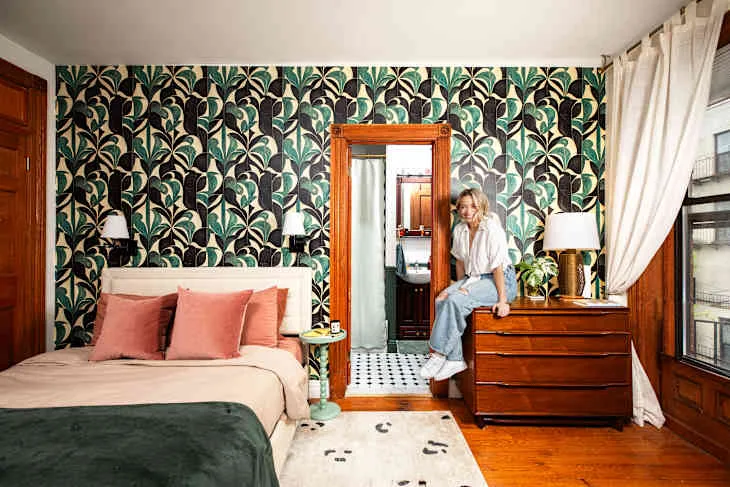
Connect a wooden dresser with a bold botanical background
 SaveSupport Non AI Creator
Image credit: Kiritin
Warm wooden storage stands out against the green botanical wall, giving this bedroom a clear furniture connection beyond the bed. Pink pillows and the green throw create larger fabric blocks beneath the wall’s finer repeat. A broad wooden mirror frame adds another older-looking outline beside the dresser, while the pale bedding leaves room for those furniture and wall details to show.
Inspect collected drawers for smooth operation and stable construction before using the dresser daily. Secure a heavy mirror with appropriate fittings and leave useful surface space below it. Compare a bold wallpaper sample with the wooden tones you already own, keeping extra bedding patterns smaller so the furniture remains visible rather than disappearing into several competing colors and repeats.
IDEA 18 / 20
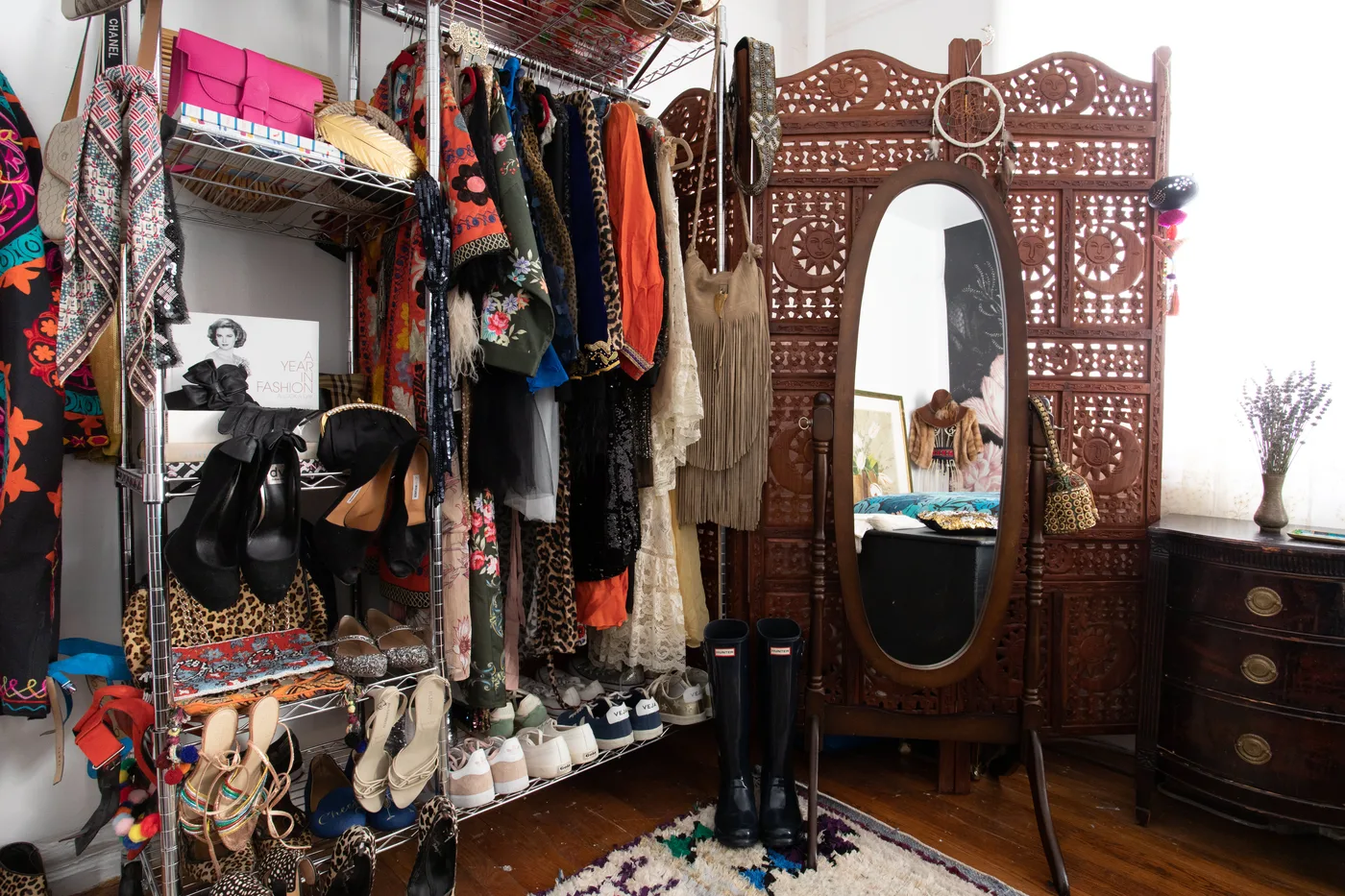
Make a carved screen part of a practical dressing corner
 SaveSupport Non AI Creator
Image credit: Chinasa Cooper
A carved screen and oval mirror create a decorative boundary beside the open clothes racks. Patterned garments become part of the room’s visible color, with baskets collecting smaller belongings around the storage. Dark drawers provide a more solid furniture shape next to the open hanging space, showing how a personal collection can form a useful bedroom dressing area as well as a display.
Check a screen’s stability and place it where it cannot obstruct an exit or fall into the walking route. Use storage supports suitable for the actual clothing weight and keep frequently used items easy to reach. Leave mirror access and drawer movement clear, protecting fabrics from sunlight and dust rather than assuming open storage will suit every garment or care routine.
IDEA 19 / 20
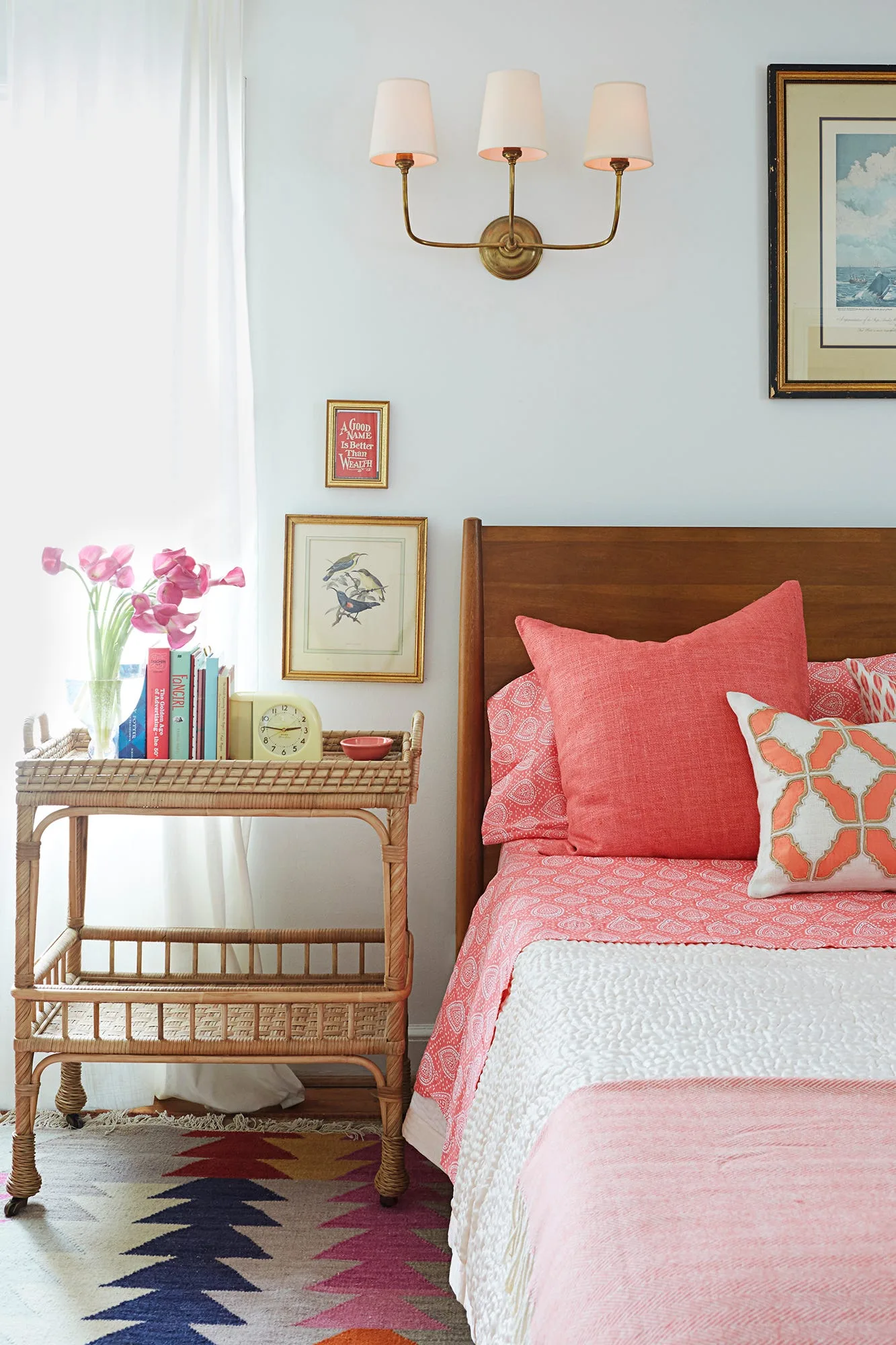
Try a woven trolley as a compact bedside surface
 SaveSupport Non AI Creator
Image credit: Mike Garten
A woven trolley supplies an open bedside surface beside the warmer wooden headboard. Pink bedding carries the stronger fabric color, while framed bird pictures and the multi-arm wall light make the pale wall personal. The second trolley level provides a defined place below the top, giving the older-looking piece a practical storage role rather than leaving it as a decorative object alone.
Check trolley stability and secure any wheels before using it beside the bed. Compare its height with the mattress and keep essentials on a surface you can reach comfortably. If collecting older lighting, have its electrical condition checked before use, and avoid overloading the lower shelf with belongings that project into the route or make the trolley difficult to clean.
IDEA 20 / 20
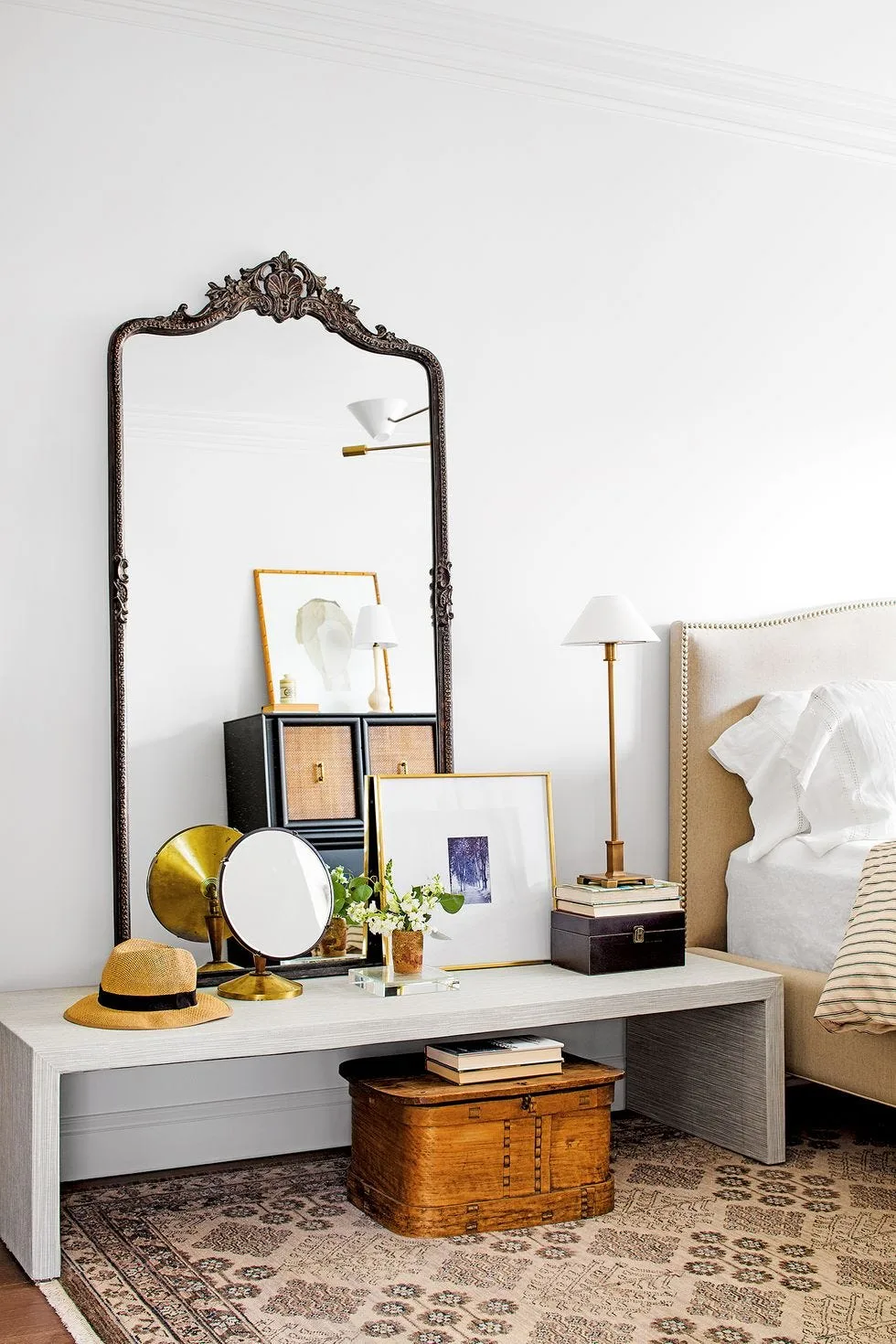
Build a dressing surface around an ornate mirror
 SaveSupport Non AI Creator
Image credit: Jennifer Hughes
A tall ornate mirror gives the dressing area its strongest older-looking outline above the long pale console. Smaller mirrors and pictures introduce a collected group at a lower level, while a wooden chest provides a warmer storage shape beneath. The pale bed and wall keep the surroundings quieter, letting the console combine personal objects with a useful surface beside the sleeping area.
Secure the tall mirror with fittings appropriate to its weight and the wall, rather than relying on its appearance of stability. Check reach and lighting at the console and leave enough clear surface for dressing items. Inspect the chest before use and allow lid access, keeping the collection manageable so dusting and daily storage do not require moving every object each time.
BRING IT ALL TOGETHER
Collect slowly around a comfortable bedroom
Choose a reliable bed and usable storage before adding the more decorative finds. Compare each new pattern with fabrics you already own, keeping a few simpler areas between the stronger repeats. A piece you enjoy looking at should still fit through the door, leave drawers accessible and work with how you move around the room.
Inspect secondhand furniture for stability and condition, and seek appropriate repair advice when needed. Have older electrical items checked before use rather than relying on appearance. Learn the care requirements of rugs, upholstery and decorative objects before buying them, so the room’s collected character remains manageable alongside everyday washing, dusting and storage.