An eclectic dining room brings together pieces with different colors, shapes or decorative histories. It might pair simple wood furniture with a bold wall, mix chair styles around one table or use artwork to connect a quieter room. The combination still needs comfortable seats, useful lighting and enough space to serve a meal.
These photographs show different ways to create that variety without assuming every piece must match. Look for one connection, such as a repeated color or a plain surface between stronger patterns. Then check how the arrangement will work when the chairs are pulled out, the table is set and people move through the room.
PART 01
Use Color to Connect Different Pieces
IDEA 01 / 20
Let Patterned Chairs Lead a Pale Room
 SaveSupport Non AI Creator
Image credit: Ruggable
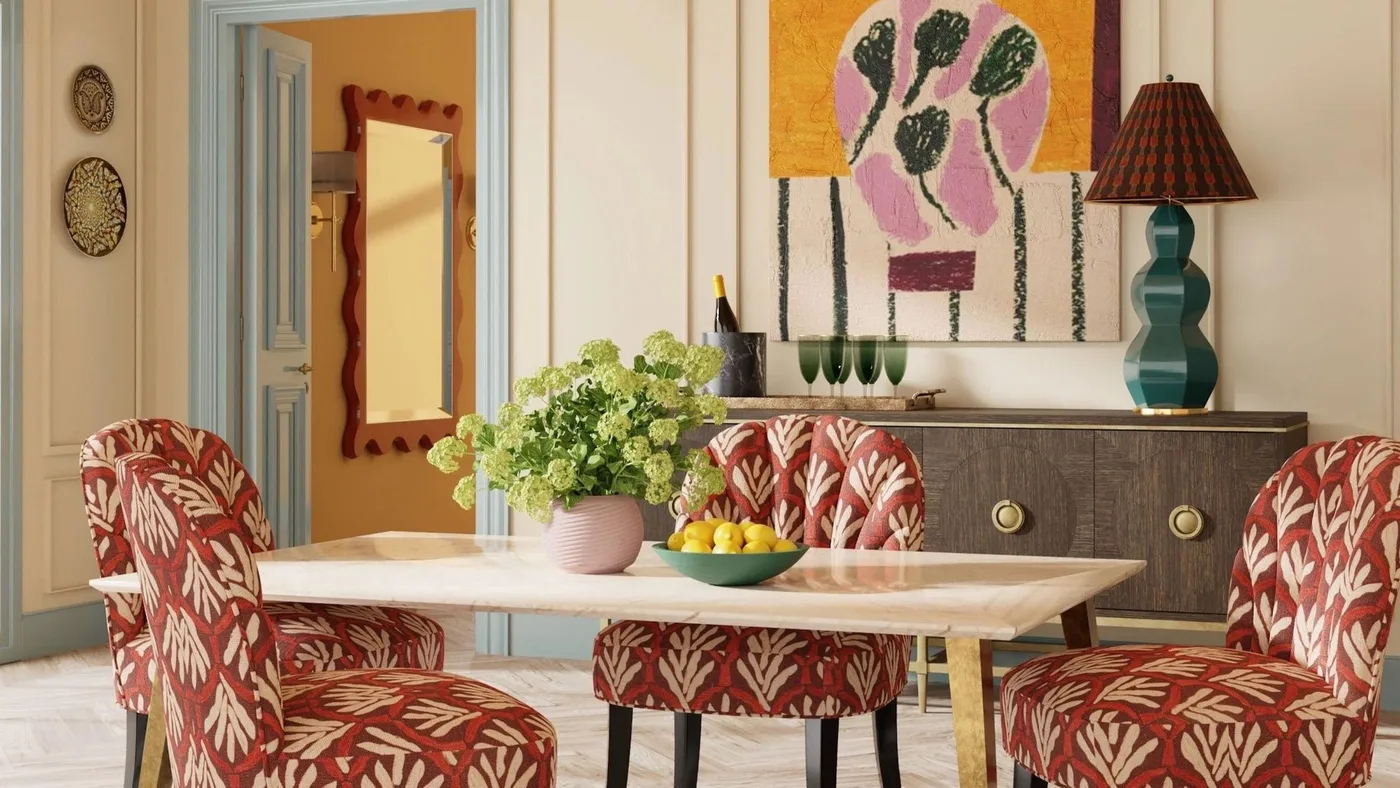
Rust botanical upholstery gives the chairs a strong presence around a pale dining table. Blue doorway trim adds another distinct color, while the dark sideboard, colorful artwork and sculptural green lamp bring different shapes into the background. The light walls allow these pieces to remain separate, showing how a room can mix pattern and furniture outlines without every surface being equally busy.
Begin with the chair fabric when deciding which colors to repeat elsewhere. A small blue trim detail or green lamp may be enough to connect the room without buying a matching furniture set. Check upholstery care before choosing patterned seats for everyday meals. Keep the sideboard useful for serving by limiting display objects, and leave enough room to pull the chairs out comfortably.
IDEA 02 / 20
Mix Geometric Flooring With Simple Wood Furniture
 SaveSupport Non AI Creator
Image credit: Studio Peake
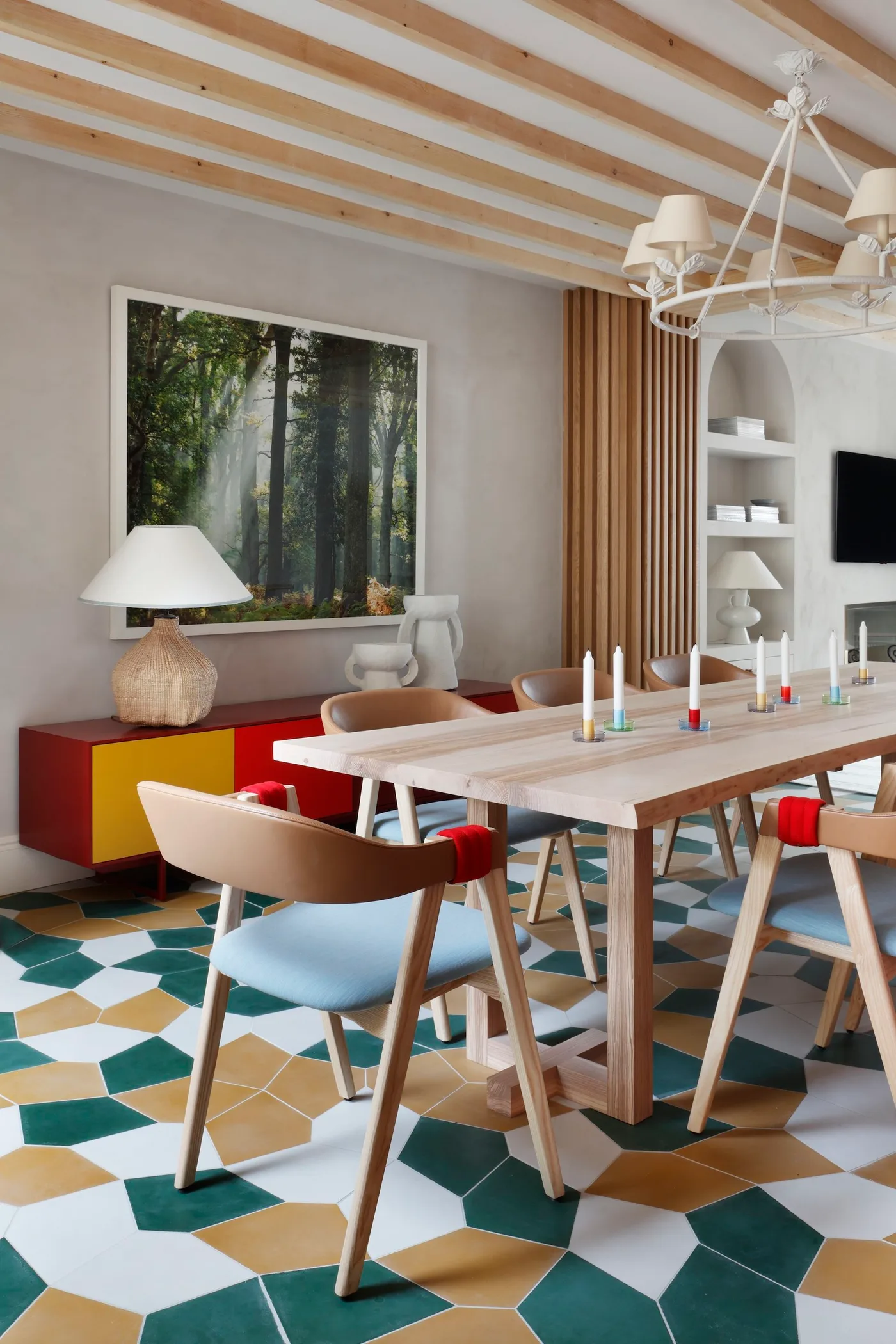
Green, ochre and white floor shapes create the strongest pattern beneath a pale wood table. Light blue chair seats and red details on the chair backs add smaller colors above, while a red-and-yellow sideboard repeats the brighter palette along the wall. Exposed wood ceiling lines provide another direction overhead, making the plain table surface useful as a quieter space between the patterns.
View a floor sample at a larger scale before choosing a geometric pattern for the whole room. Compare it with the furniture you plan to keep, including chair legs and sideboard colors. Keep table linens simple while you judge the combination. Check the actual floor finish for maintenance needs and chair movement, and leave enough clear sideboard space for the items you use when serving meals.
IDEA 03 / 20
Put a Bright Round Table Beside a Patterned Wall
 SaveSupport Non AI Creator
Image credit: Little Greene
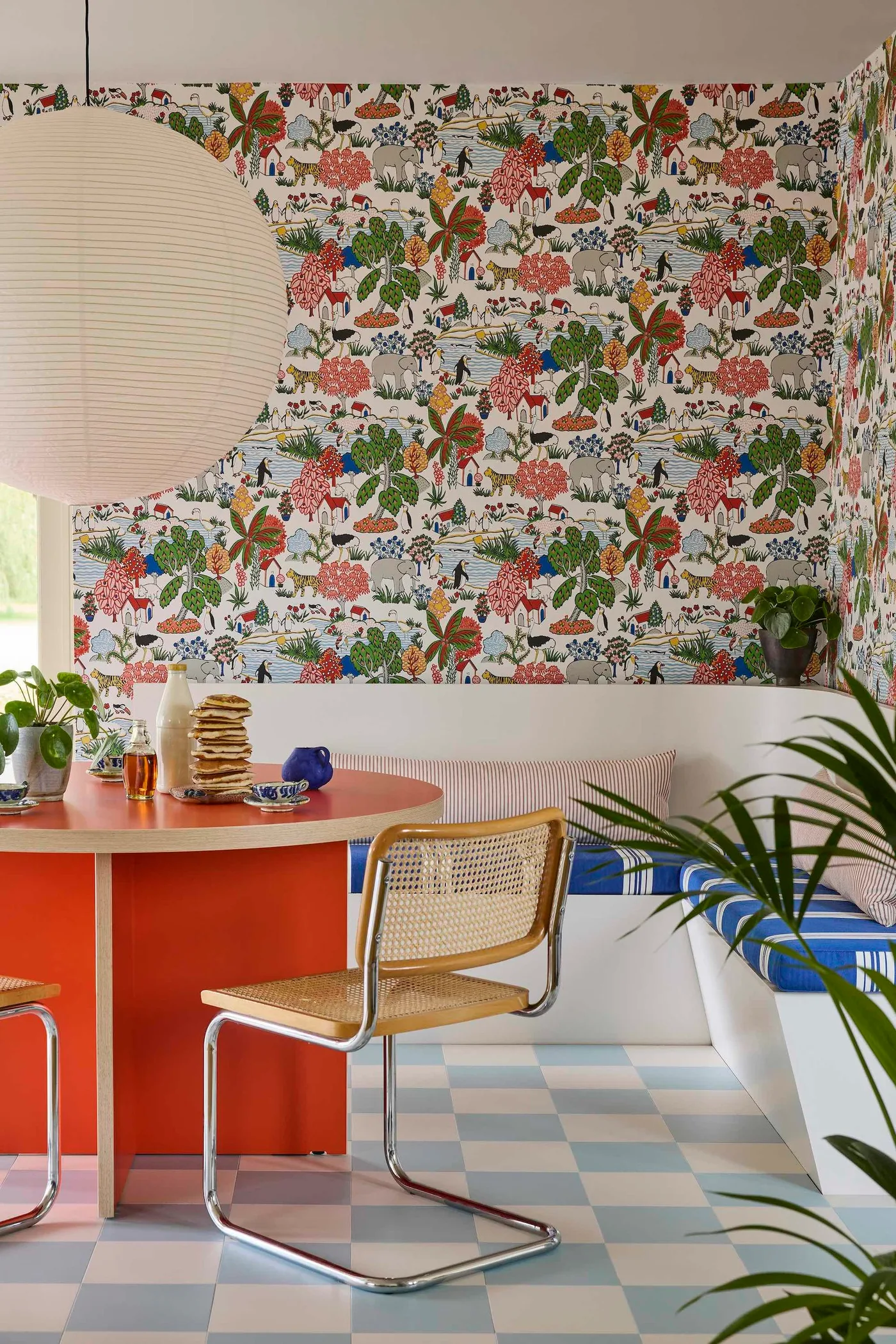
An orange round table stands beside a white corner bench beneath densely patterned wallpaper. A large white pendant supplies a simpler shape above, while woven-backed chairs add a different texture near the front. Blue striped bench cushions introduce another pattern lower down. The strong orange table remains easy to see because the bench and pendant provide broad pale areas around it.
Check the round table’s position against the bench so seated people can reach their places without squeezing past its edge. A busy wall benefits from at least one broad plain surface nearby. Compare cushion stripes with the wallpaper before adding another pattern. Choose a pendant with suitable light and cleaning guidance, and leave the bench accessible rather than filling the whole corner with loose cushions.
IDEA 04 / 20
Use Green and Yellow to Connect Different Pieces
 SaveSupport Non AI Creator
Image credit: Farrow & Ball
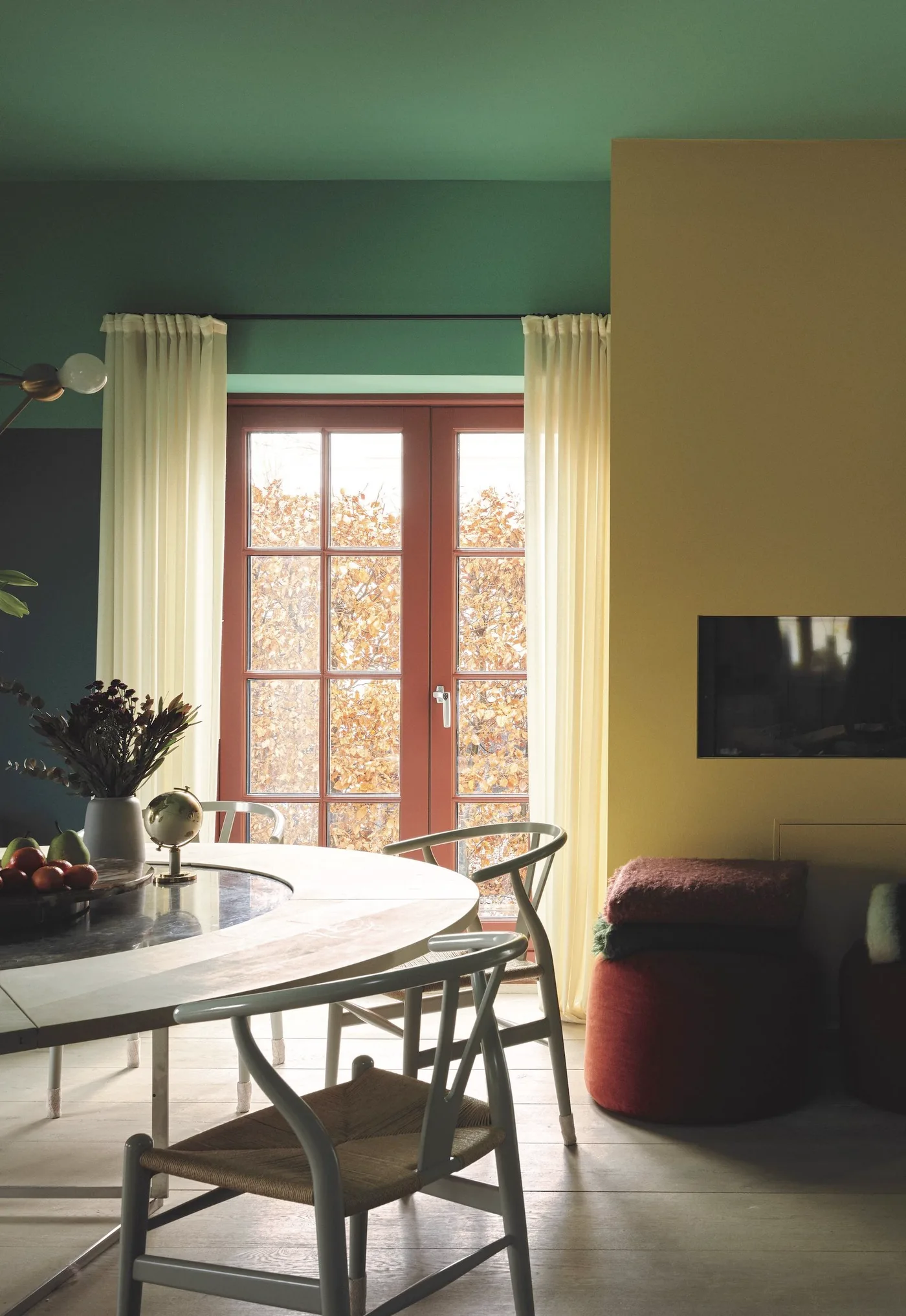
Green walls and ceiling meet a yellow side wall around this dining area, with pale curtains softening the doorway between them. A round table and open-backed chairs introduce curved furniture outlines, while a reddish upholstered piece sits beside the yellow wall. The room combines large color blocks with visibly different furniture shapes instead of using one finish across the entire arrangement.
Test green and yellow together on neighboring surfaces before committing to the whole room, including the ceiling if it will be painted. Keep the table and chair positions practical around the doorway. Pale curtains can provide a pause between stronger colors, but confirm their privacy and care needs. Introduce an extra accent on a movable piece first so you can adjust the balance without repainting.
IDEA 05 / 20
Pair Pastel Architectural Detail With Plain Seating
 SaveSupport Non AI Creator
Image credit: Yes Colours
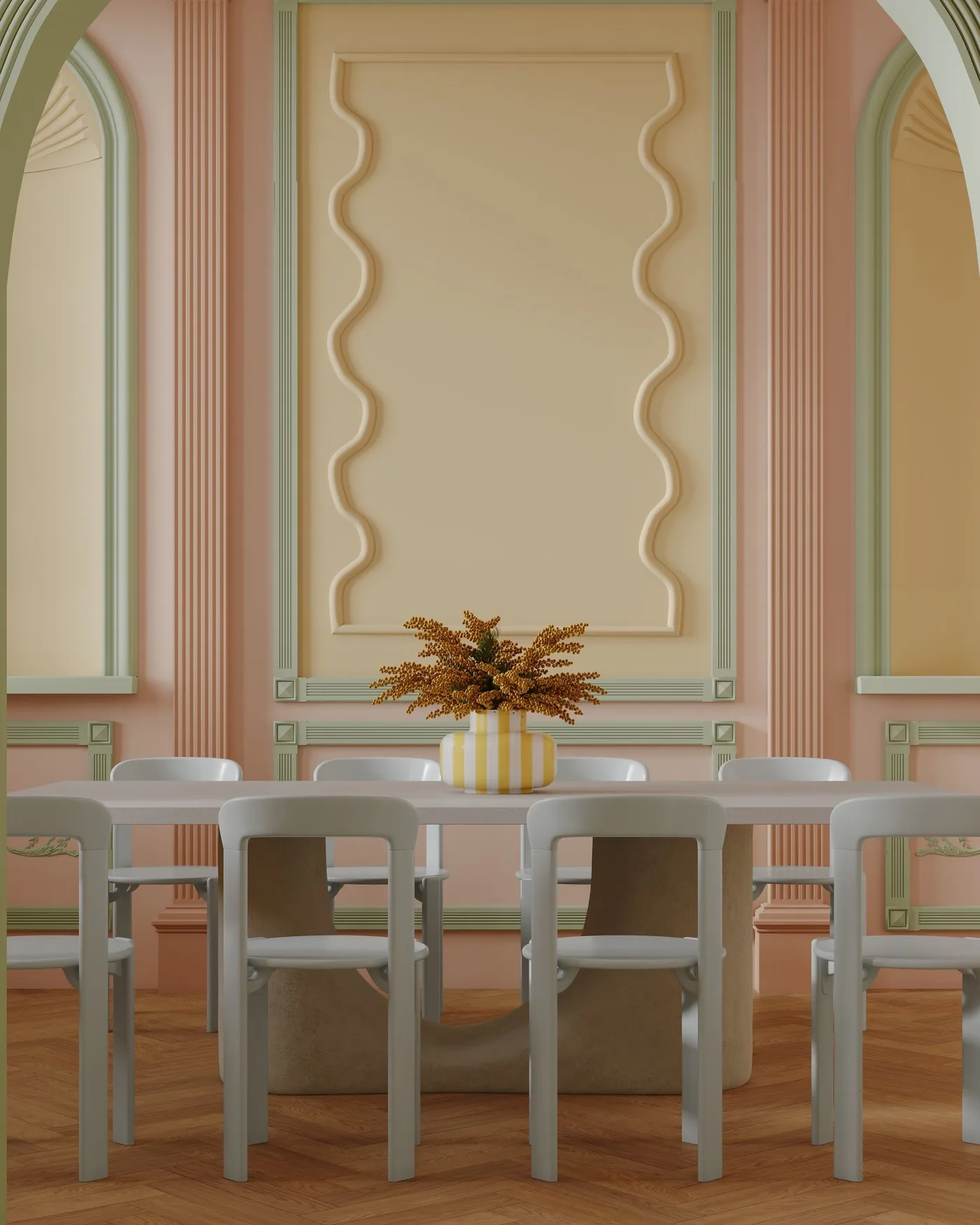
Curved decorative wall outlines sit within pale green borders, with pink vertical details separating the panels. The light dining table and chairs have much simpler shapes below. A striped yellow-and-white vessel adds a small new pattern at the center. This combination puts most of the room’s decorative energy on the wall while leaving the everyday seating group relatively straightforward.
If the room already has strong architectural detail, try a plain table and chairs before adding more ornate furniture. Compare pastel paint samples against each other in the actual light rather than selecting them separately. Keep a central display low enough for conversation and removable when serving. Check chair comfort and legroom as carefully as their shape, especially when a sculptural table base occupies the middle.
PART 02
Let the Wall Add Character
IDEA 06 / 20
Use Palm Wallpaper Behind a Small Dark Table
 SaveSupport Non AI Creator
Image credit: 1838 Wallcoverings
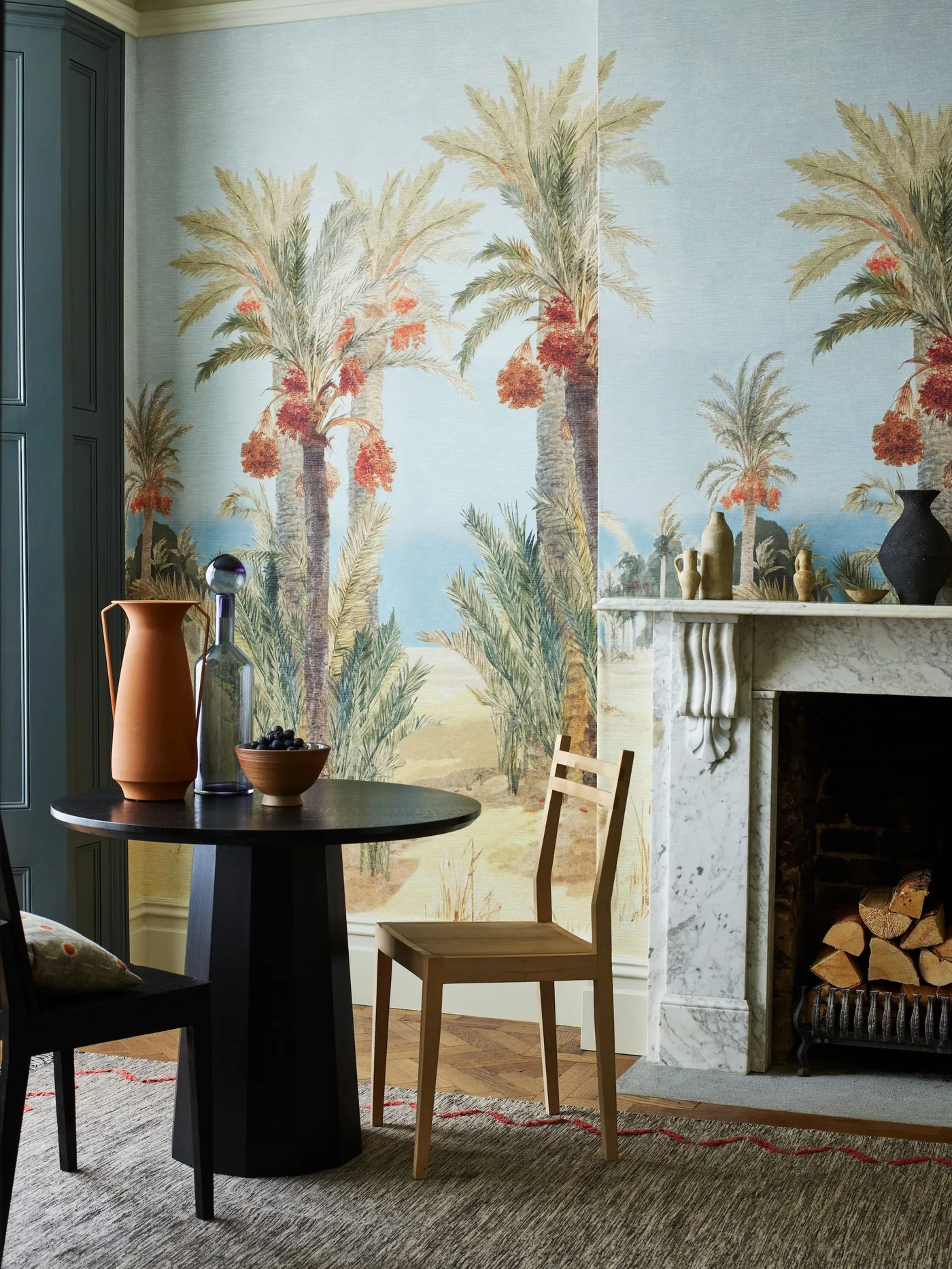
Palm-tree wallpaper brings a large scenic pattern behind a small dark round table. A pale fireplace surround interrupts the wallpaper on one side, while the chairs differ in color and outline around the table. A tall clay-colored vessel adds a warm foreground detail. The small furniture group leaves enough of the wall visible for the wallpaper to remain part of the room’s character.
Check a large wallpaper sample from your intended seating position before choosing a scenic design. Mix chairs only when their seat heights and table clearance work together. Keep tall table objects removable for meals and conversation. If the fireplace is used, follow its clearance requirements for furniture and decorations; the photograph does not establish what can safely sit near an active fire.
IDEA 07 / 20
Build a Wall Collection Around an Olive Bench
 SaveSupport Non AI Creator
Image credit: Birdie Fortescue x Sarah Corbett-Winder
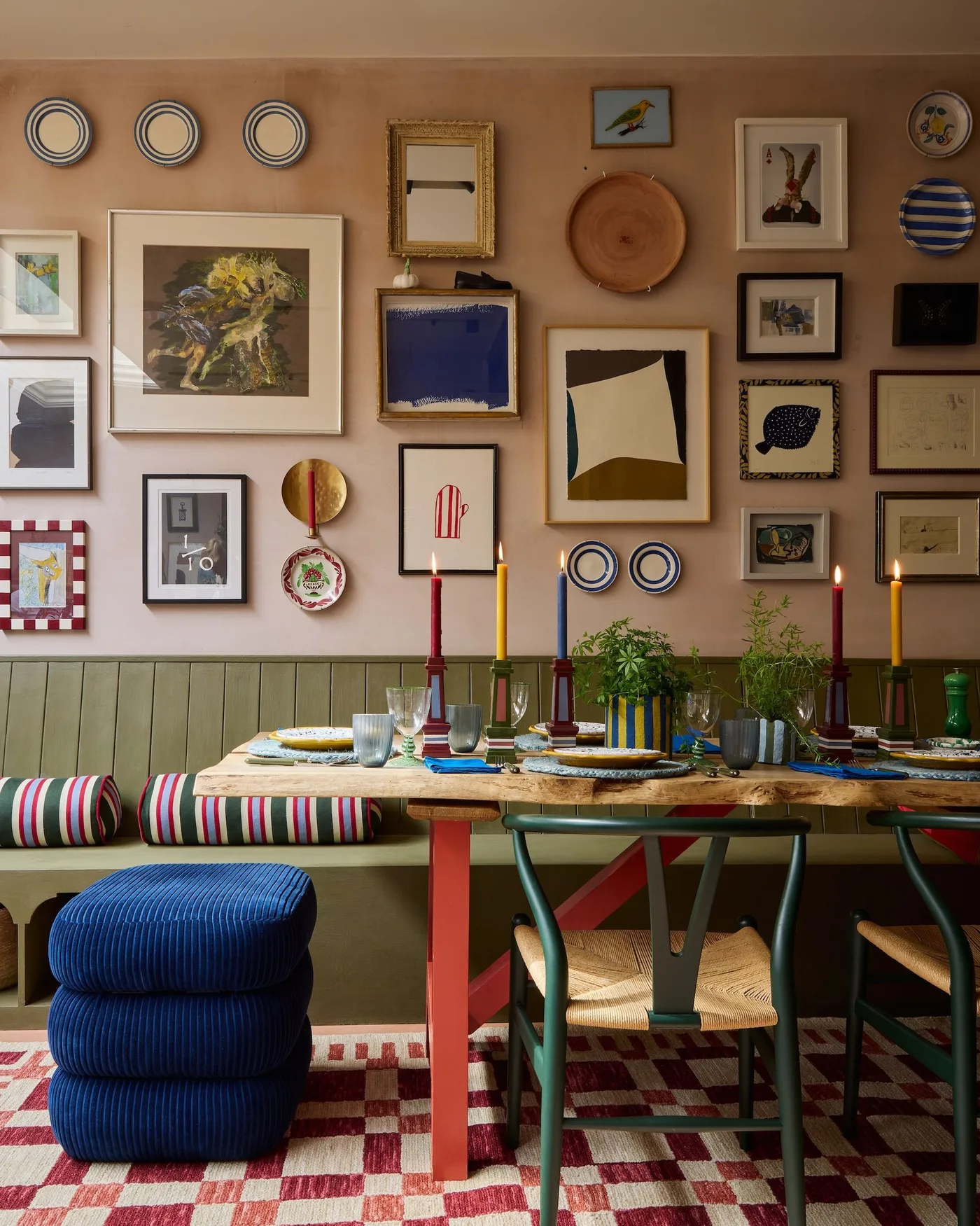
An olive bench runs beneath a wall collection of framed pictures, plates and a small mirror. A wood table with red legs sits in front, accompanied by green chairs and striped bench cushions. The red-and-cream checked rug and blue stacked stool add further pattern and shape. The bench’s continuous green surface helps connect these otherwise very different decorative pieces.
Arrange the wall collection on the floor first, leaving space between frames and plates before securing them above the bench. Use proper hangers for each object rather than assuming picture hooks suit everything. Check that the rug permits chair movement and stays flat at its edges. Keep the tabletop usable by reducing the number of candlesticks and plants during meals, especially if the wall already provides plenty to look at.
IDEA 08 / 20
Mix Bright Chair Colors Against Cobalt Blue
 SaveSupport Non AI Creator
Image credit: Pooky
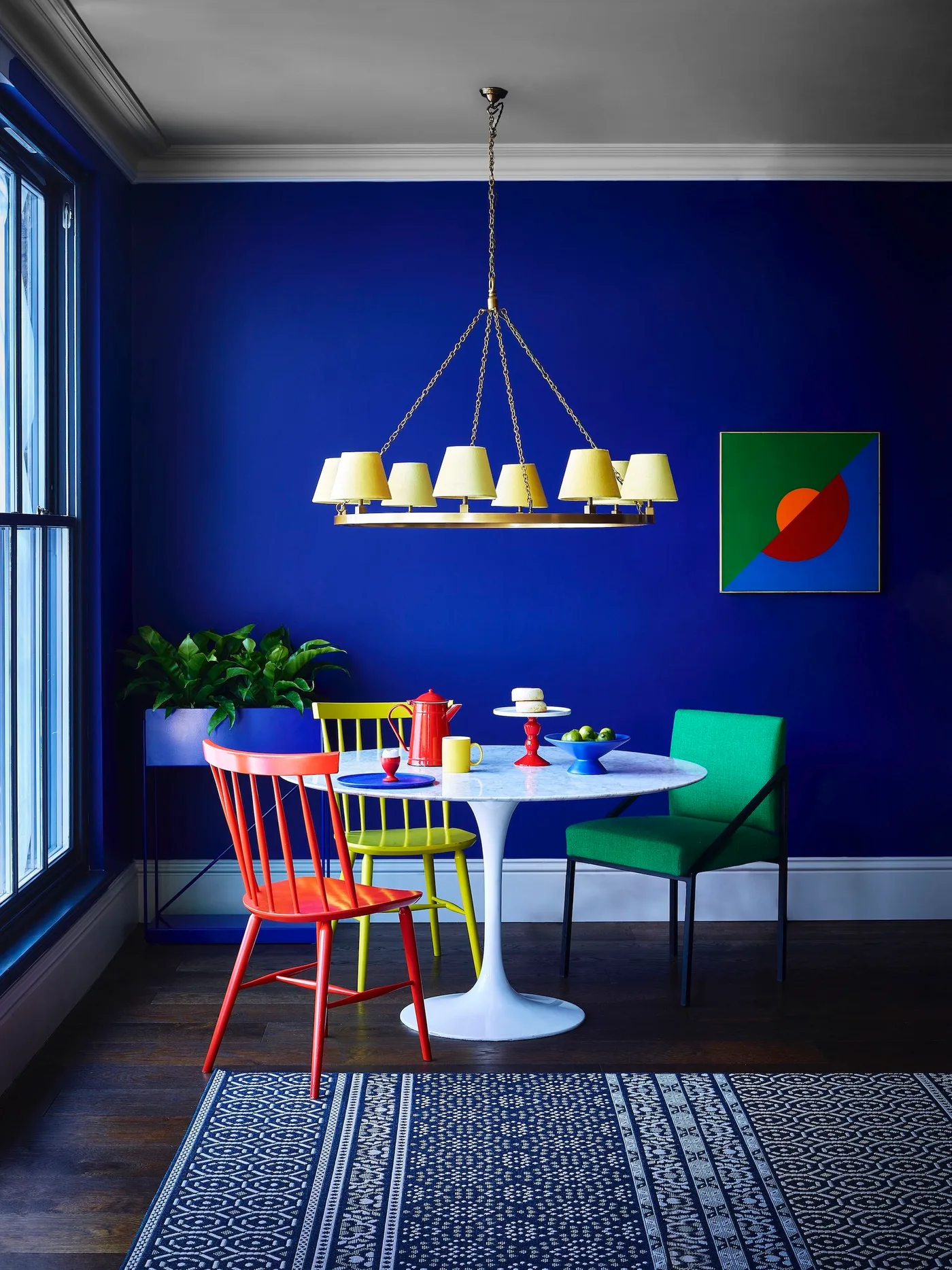
Cobalt blue walls create a strong background for a white pedestal table and brightly colored chairs. Red and yellow spindle chairs sit beside a green upholstered armchair, with a yellow-shaded chandelier overhead. A small geometric artwork repeats several of the room’s colors. The white table provides a clear center that keeps the varied chair styles from merging into the blue background.
Check each chair’s seat height, comfort and clearance beneath the table before choosing by color alone. The armchair needs room for its arms as well as its legs. Repeat one chair color in the lighting or artwork if you want a connection without matching every piece. Try strong blue paint in both daylight and evening light, and keep table accessories limited when the furniture already carries several bright colors.
IDEA 09 / 20
Set Pink Chairs Beside Green Pattern and Dark Lines
 SaveSupport Non AI Creator
Image credit: Graham & Green
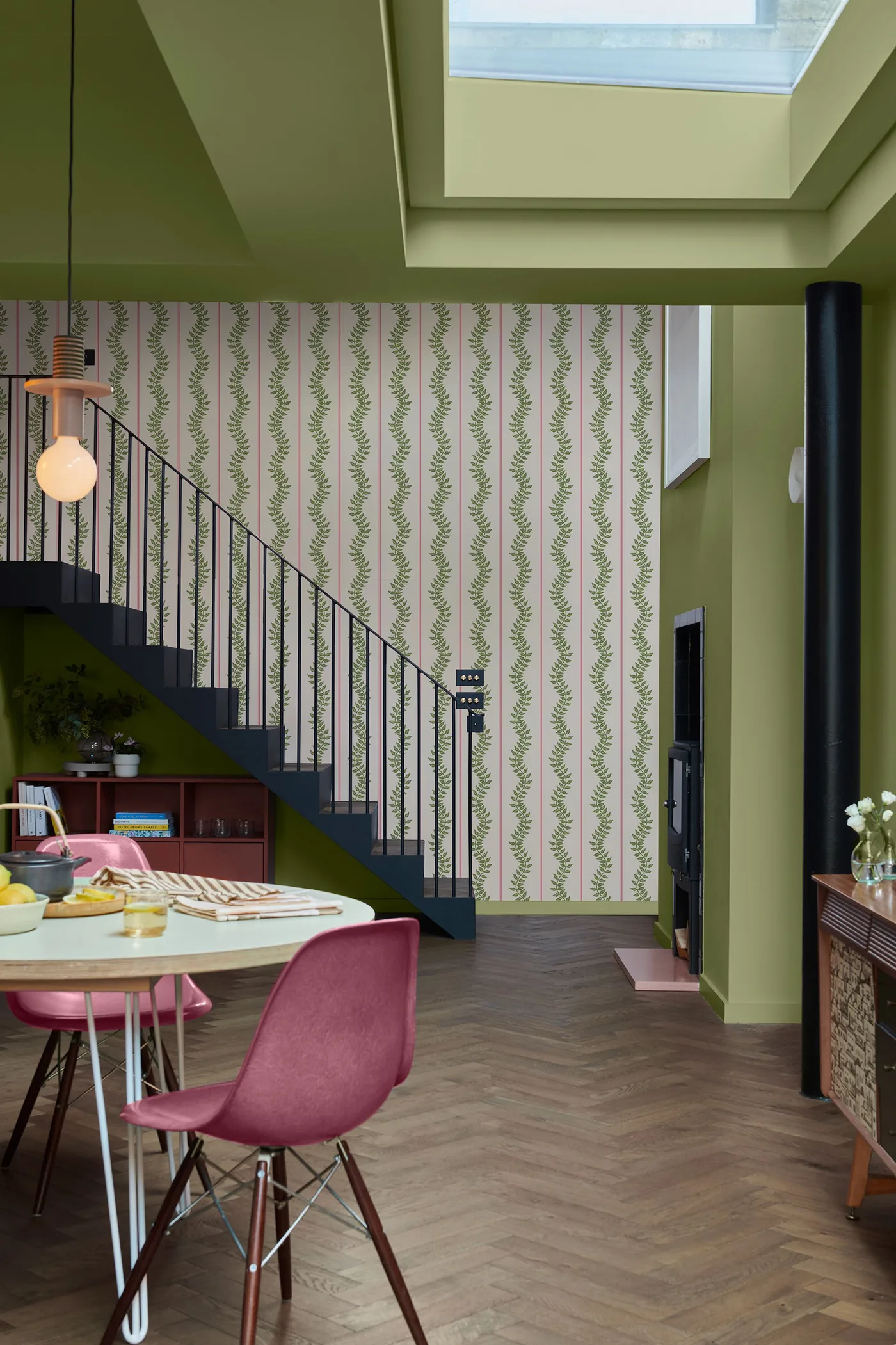
Pink molded chairs sit around a pale round table in a green room beside a dark staircase. Leafy striped wallpaper follows the wall behind the stairs, providing a more detailed version of the green color nearby. Dark railing lines add a sharper geometric structure above the softer chair shapes. The dining group uses a contrasting color without competing with the wall’s larger patterned area.
Position the table so chairs can be moved without interrupting the route to the stairs. Check the chair legs and seat shape for comfort on your actual floor. A pale tabletop can give stronger wall colors a useful pause, while pink cushions or chairs offer a movable accent. Compare the wallpaper repeat with the railing lines before adding another striped textile across the dining space.
IDEA 10 / 20
Pair Rounded Side Chairs With Patterned End Seats
 SaveSupport Non AI Creator
Image credit: Photo: Photographer: Kristopher Lewis. From: Studio Thomas
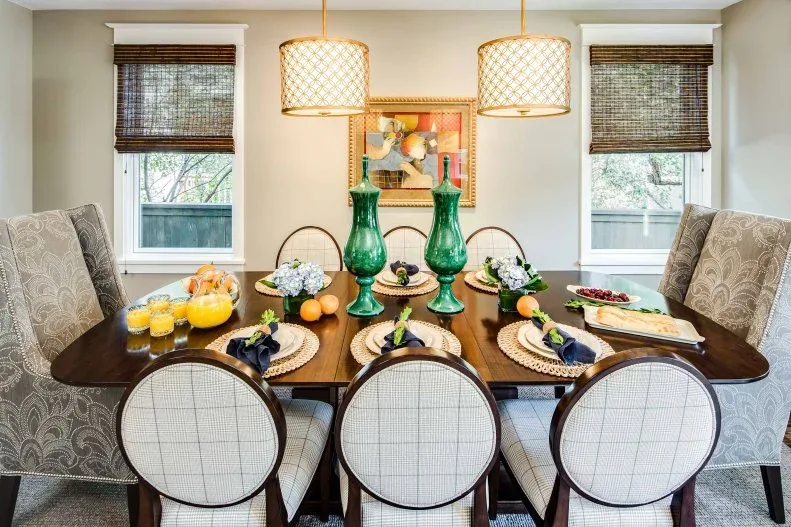
Rounded pale side chairs surround a dark wood table, with larger patterned chairs at the ends. Two light patterned pendants repeat the decorative detail overhead, while tall green vessels add color at the center. The chair shapes vary, but the pale upholstery helps connect them. The darker table provides a definite middle beneath the lighter fabric and lighting surfaces.
Check that the larger end chairs fit the table height and leave room for people passing behind them. Match comfort and usable seat height before considering upholstery coordination. Repeating a pale color can connect different shapes without needing identical chairs. Keep tall centerpieces easy to remove for meals, and choose pendant positions around the table’s everyday location rather than an arrangement used only for photographs.
PART 03
Mix Lighting With Furniture Shapes
IDEA 11 / 20
Add Colorful Art to Quiet Upholstered Seating
 SaveSupport Non AI Creator
Image credit: Photo: Michael Lowry Photography and Harvey Smith Photography. From: Phil Kean Design Group
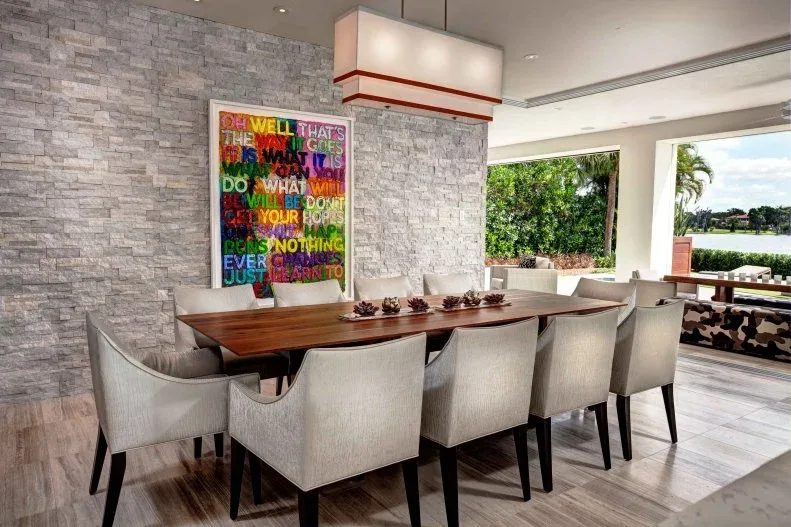
Pale upholstered chairs surround a warm wood table beside a gray textured wall. Colorful text artwork provides a bright rectangular patch behind the seating, while the overhead pendant repeats a simpler rectangular outline. The open view beyond adds daylight without requiring another decorative surface. The room’s contrast comes from the artwork and wall texture rather than mismatched chairs or several competing fabric prints.
Choose artwork you enjoy reading or looking at from the table, and hang it securely where the furniture will not rub against it. Keep seating fabric care suitable for the meals you have there. Test the pendant for glare and useful light across the full table. If the wall has an uneven texture, use hanging hardware appropriate to its actual construction rather than treating it like a smooth painted surface.
IDEA 12 / 20
Repeat a Chandelier Color in Chairs and Curtains
 SaveSupport Non AI Creator
Image credit: Photo: Eric Lucero Photography. From: Duet Design Group
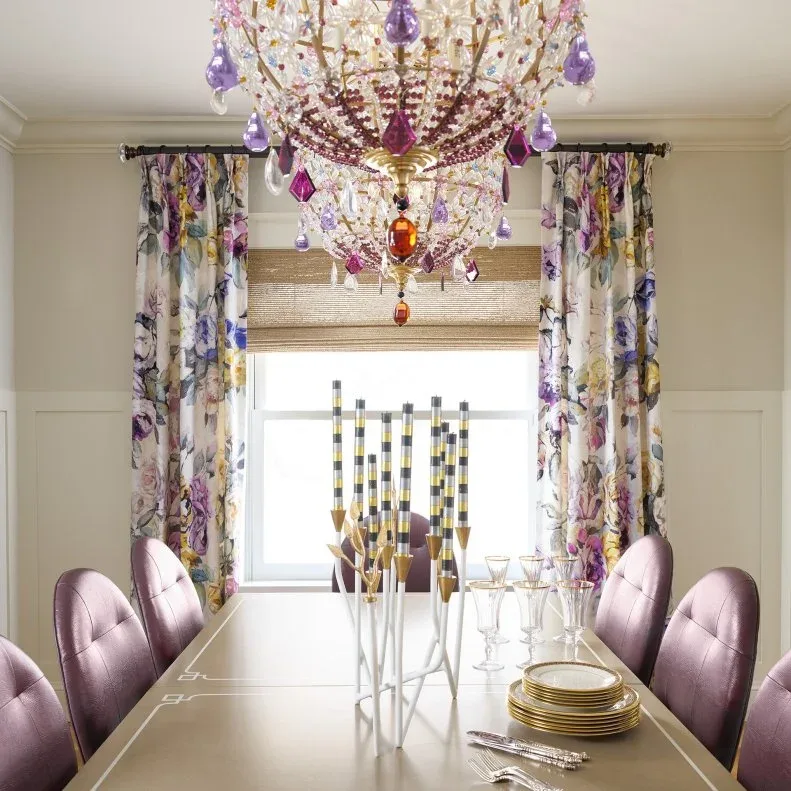
Colored hanging details in the chandelier echo the purple upholstered chairs and floral curtains around this dining table. The reflective tabletop introduces a smoother surface beneath the layered colors. White lower wall paneling provides a quieter border behind the chairs, helping the stronger overhead and window details remain distinct. The room mixes an ornate light fitting with more streamlined seating shapes.
Choose one or two colors from the chandelier to repeat in textiles rather than trying to match every hanging detail. Check the light’s cleaning requirements and how accessible it will be for maintenance. Reflective tabletops can show marks and glare, so compare finishes with your daily habits. Keep taller candlesticks out of the main conversation line during meals, and check that chair upholstery has care guidance you can follow.
IDEA 13 / 20
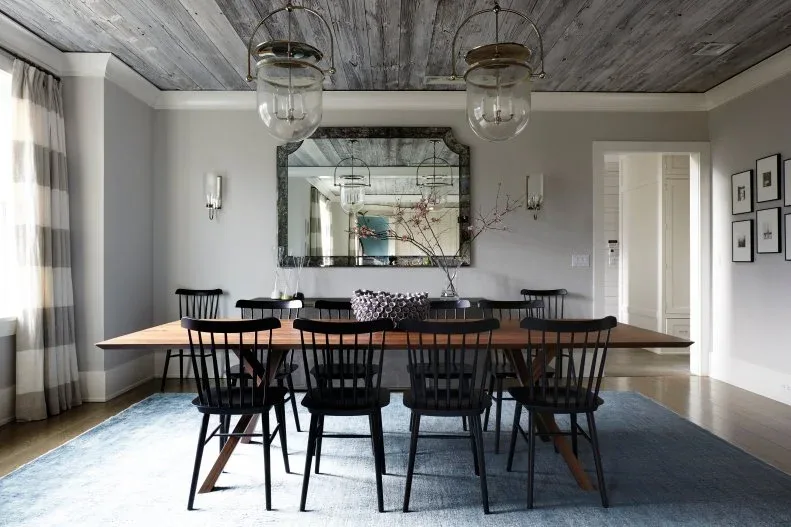
Combine Black Spindle Chairs With Oversized Glass Lights
 SaveSupport Non AI Creator
Image credit: Photo: Genevieve Garrupp. From: Nastasi Vail Design
Black spindle chairs create repeated narrow lines around a wood table beneath two large glass pendants. Broad striped curtains and a substantial framed mirror add different scales of detail to the gray surroundings. The textured ceiling supplies another visible surface overhead. The furniture colors stay relatively limited, allowing the mix of light fittings, chair outlines and window pattern to carry the room’s variety.
Check the pendants’ scale and hanging positions from a seated view, including any reflections in the mirror. Choose glass fittings with a cleaning routine you can maintain. Broad curtain stripes can provide enough pattern without adding printed chair cushions. Measure chair pull-out space over the rug, and compare the table finish with the ceiling and mirror so the different wood-looking surfaces feel considered rather than accidentally mismatched.
IDEA 14 / 20
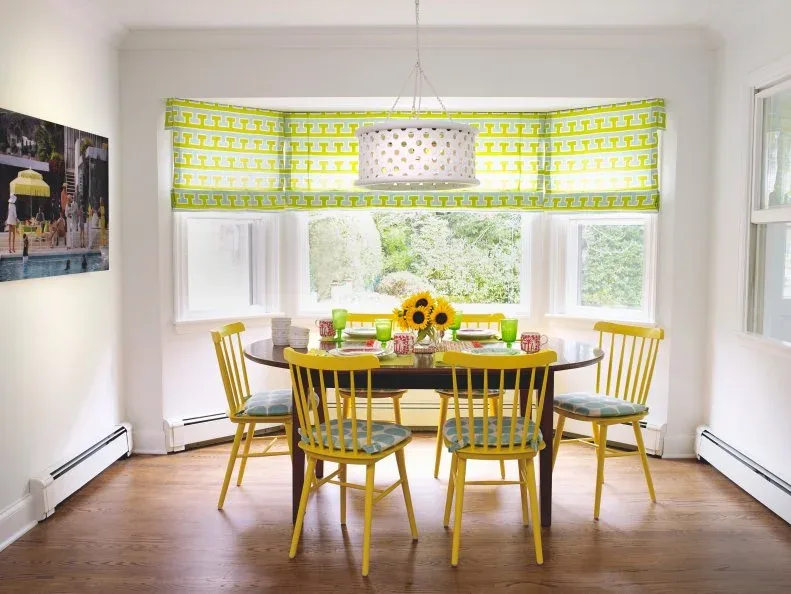
Use Yellow Chairs in a Bright Breakfast Nook
 SaveSupport Non AI Creator
Image credit: Photo: D2 Interieurs. From: D2 Interieurs
Yellow spindle chairs bring a cheerful color around a dark oval table in this bright nook. Green-and-white patterned fabric frames the window above, while a pale drum pendant adds a smaller perforated-looking pattern overhead. White walls keep the background simple, and a few green table items repeat the window color. The compact arrangement mixes clear chair outlines with softer textile detail.
Check the chair spacing around an oval table, especially where neighboring places approach the curved ends. Choose window fabric for the light and privacy you need as well as its pattern. Repeat green in one or two small objects if it helps connect the window treatment, but keep the table free for breakfast. Test painted chair finishes for the actual maintenance guidance and everyday wear you expect.
IDEA 15 / 20
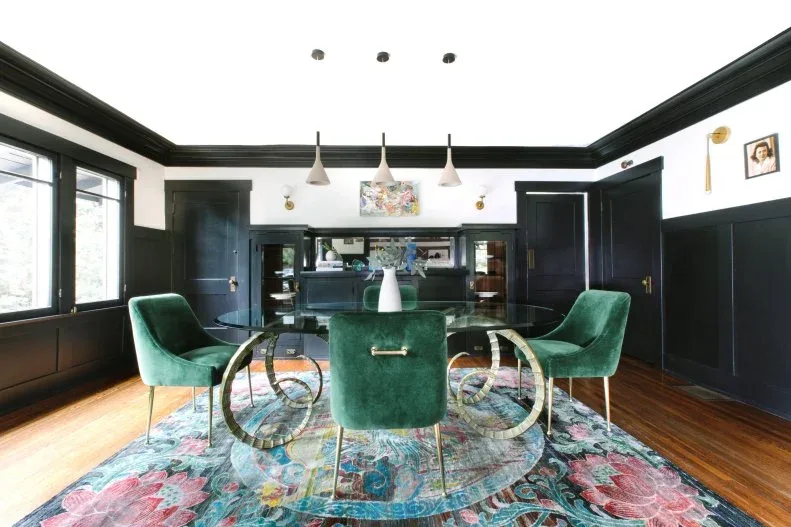
Put Green Upholstery Against Dark Paneling
 SaveSupport Non AI Creator
Image credit: Photo: Caitlin Murray. From: Caitlin Murray
Green upholstered chairs sit around a glass table against dark lower walls and trim. Three white pendants form a neat line above, while the colorful rug adds a much softer pattern underfoot. The upper walls and ceiling stay pale, giving the dark architectural border a clear stopping point. Curved table supports and chair legs contribute a different shape from the room’s straight paneling.
Compare upholstery and rug colors together before adding more patterned textiles. A glass table needs cleaning guidance and a layout that makes its edges easy to see in daily use. Check chair movement on the rug and leave enough pull-out space around the curved supports. Test pendant glare in the glass surface, and make sure the dark paneling does not leave storage or serving areas without useful light.
PART 04
Bring Different Seating Styles Together
IDEA 16 / 20
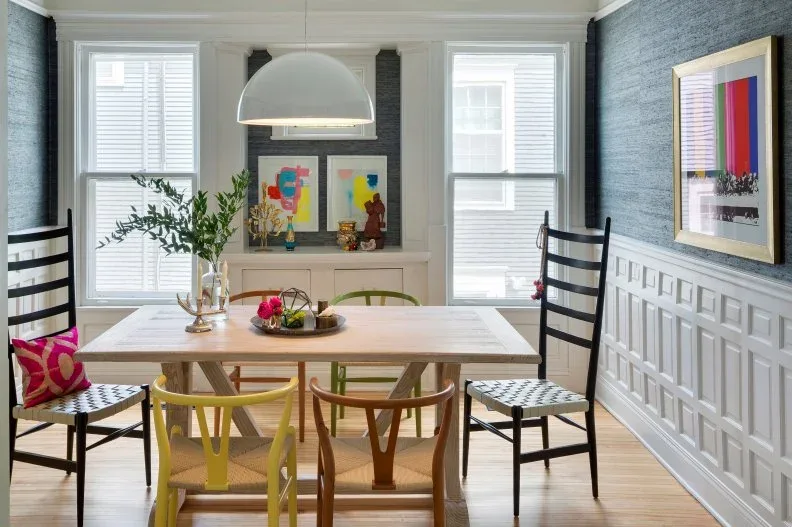
Mix Tall Black Chairs With Smaller Wood Seats
 SaveSupport Non AI Creator
Image credit: Photo: Spacecrafting. From: Lucy Penfield
Tall black chairs stand at the ends of a pale dining table, with smaller wood chairs along the sides. Blue-gray textured walls and pale lower paneling create a layered background for brightly colored framed artwork. A white dome pendant provides a broad simple shape above. The room connects different seat outlines through a relatively restrained table and wall palette rather than using identical furniture.
Test the tall chairs for comfort and table clearance before pairing them with smaller seats. Similar usable seat heights matter more than matching back heights. Keep the artwork’s colors visible by choosing a plain tabletop and limited centerpiece. Check the textured wall finish for cleaning needs, and position the dome light so it illuminates the table without blocking the view across the room from the doorway.
IDEA 17 / 20
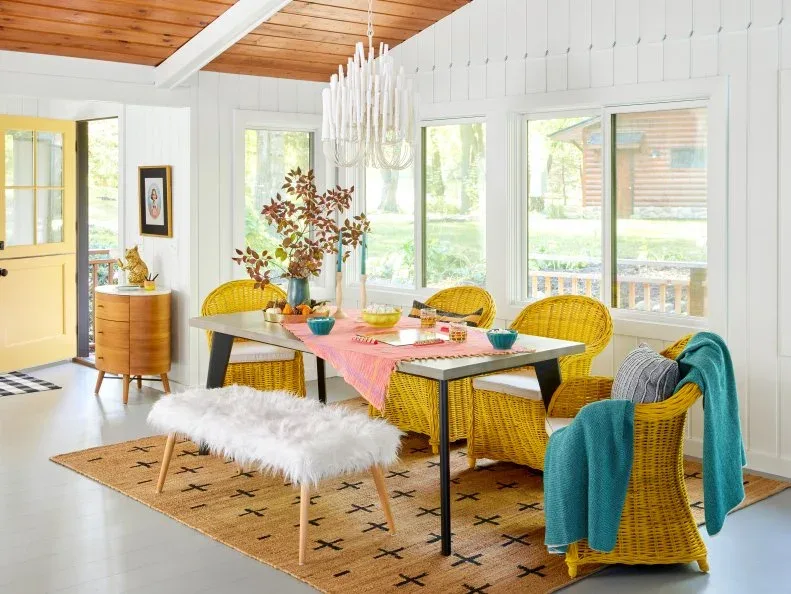
Bring Yellow Woven Chairs Into a Pale Room
 SaveSupport Non AI Creator
Image credit: Photo: Adam Albright. From: HGTV Magazine
Yellow woven chairs surround a rectangular table beside a pale bench with a fluffy cover. A pink runner brings another warm color onto the table, while a turquoise throw offers a cooler accent over one chair. White walls and ceiling beams keep the window area light beneath the warm wood overhead. The different seating textures create variety even before the smaller table items are added.
Check woven-chair construction and cleaning instructions before choosing them for everyday meals. A bench cover may need to be removed or cleaned more often in a dining area, so choose it for your actual routine. Leave enough space for people to enter and leave the bench. Keep the runner easy to wash, and use one contrasting throw or cushion rather than covering every chair with another color.
IDEA 18 / 20
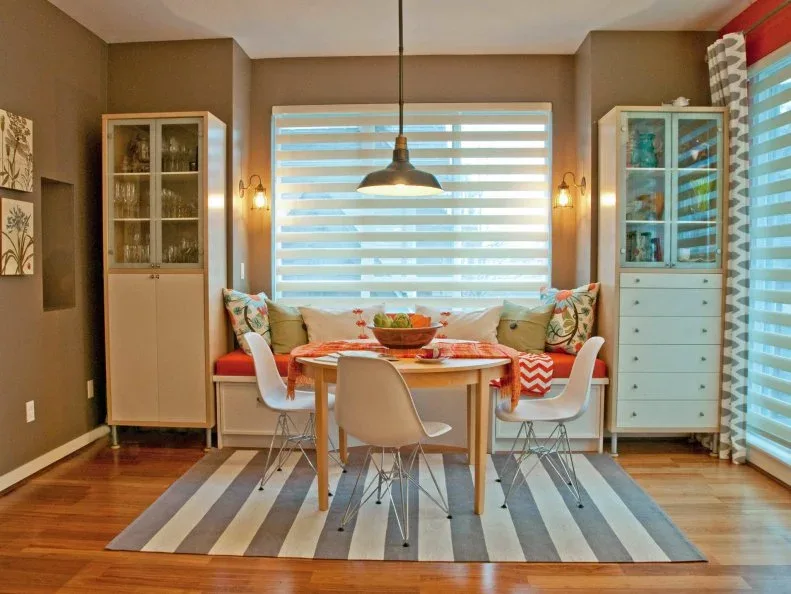
Connect Orange Bench Seating With White Chairs
 SaveSupport Non AI Creator
Image credit: From: Jil Sonia McDonald
An orange cushioned bench fills the window wall behind a round wood table, with white molded chairs facing it. A gray-and-white striped rug gives the seating area a clear base, while two pale display cupboards stand on either side. Patterned cushions add smaller colors against the broad orange seat. The arrangement mixes a fitted-looking bench with lighter loose chairs rather than treating every seat the same way.
Check that people can reach the bench places without moving several chairs first. Choose cushion covers with care instructions suited to regular meals, and keep their number manageable. A striped rug should stay flat as chairs move over it. Leave room to open the display cupboards, and use their shelves for items you actually want to see rather than filling them simply because they are visible.
IDEA 19 / 20
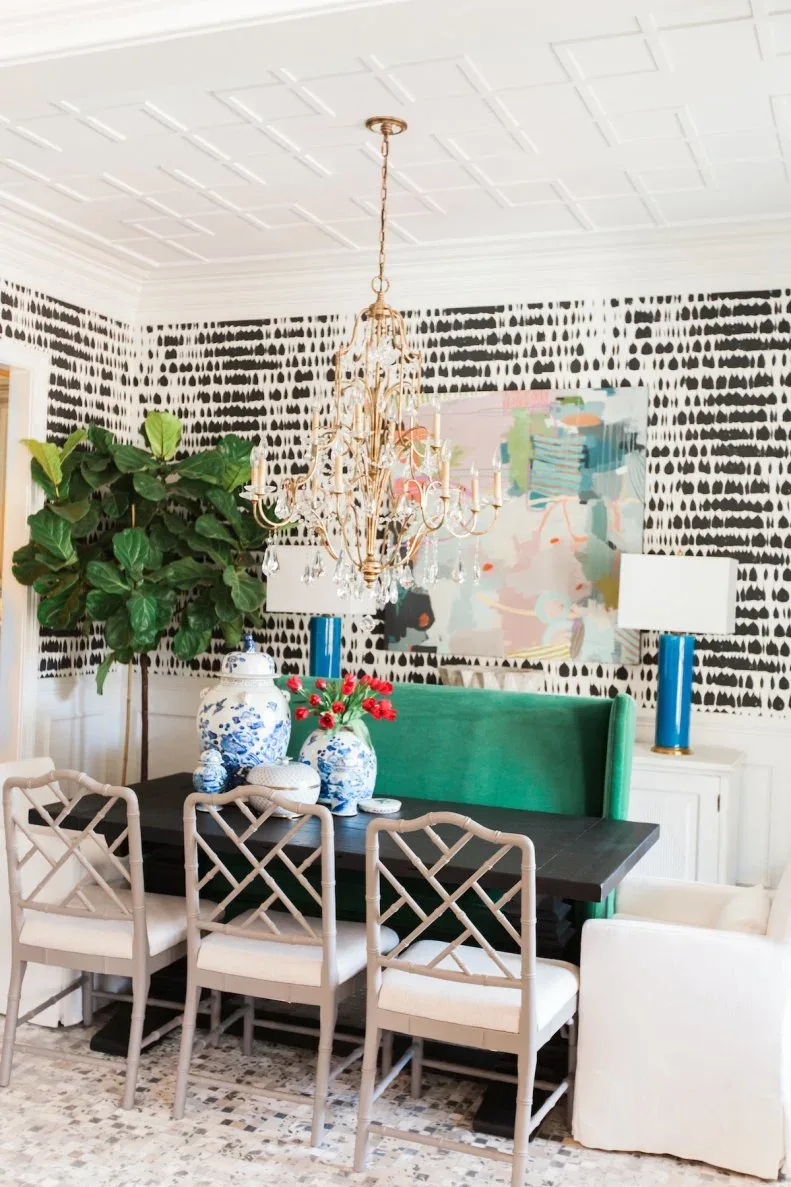
Layer Green Seating Over Black-and-White Pattern
 SaveSupport Non AI Creator
Image credit: Photo: Catherine Truman. From: Kendall Simmons
A green banquette forms a strong color block against black-and-white patterned wallpaper. Pale open-backed chairs sit across a dark table, while a gold-colored chandelier introduces a more ornate outline above. Blue lamps and patterned vessels add smaller decorative notes behind the seating. The pale lower wall and ceiling give the dense wall pattern a clear boundary rather than extending it across every surface.
Try a substantial wallpaper sample beside the green upholstery before committing to both. Keep chair comfort and bench access practical, even when their styles deliberately differ. Large tabletop vessels should be moved for meals if they block conversation or serving space. Follow cleaning guidance for the upholstery and chandelier, and leave sideboard space available for useful items instead of turning every surface into a permanent display.
IDEA 20 / 20
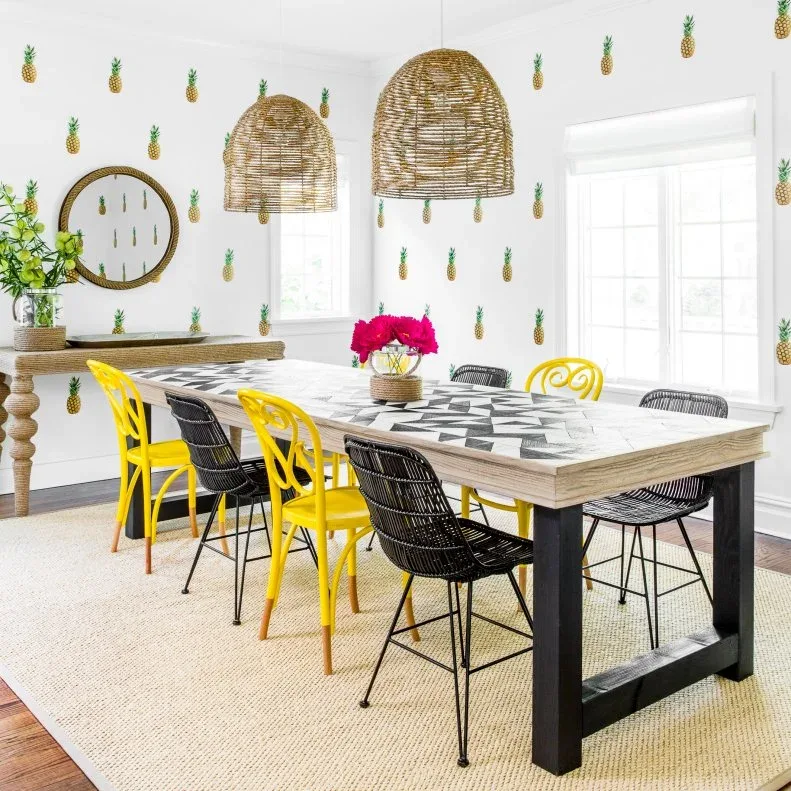
Mix Pineapple Wallpaper With Yellow and Black Chairs
 SaveSupport Non AI Creator
Image credit: Photo: Sean Litchfield Photography. From: Chango and Co.
Small pineapple motifs repeat across white walls behind bright yellow chairs and narrower black seats. Two woven pendants add larger textured shapes overhead, while a black-and-white geometric tabletop detail introduces a separate pattern below. A round mirror and turned-leg console bring additional furniture outlines along the wall. The white background gives the playful motifs room to remain distinct from the stronger chair colors.
Compare the wallpaper repeat with the tabletop pattern at a useful viewing distance before choosing both. Keep the chair seat heights compatible even when their shapes and colors differ. Woven pendants need suitable cleaning and hanging positions, particularly above regular meals. Limit extra table decorations while judging the patterns, and leave enough room between the chairs and console for people to move without catching chair backs on its edge.
BRING IT ALL TOGETHER
Keep One Connection and a Practical Table
Choose one detail to connect the room before collecting more furniture: a color in the artwork, the wood tone of a table or a simple pale background. Different chairs and patterns can work together when the useful parts remain clear. Test seat heights, arm clearance and chair movement before committing to a combination that looks attractive in photographs.
Keep the table and serving furniture available for meals. Move tall displays when they interrupt conversation, and choose textiles, light fittings and wall surfaces with care routines you can manage. Add another pattern only when you still enjoy the pieces already in the room and have enough space to use them comfortably.