An elegant dining room should feel comfortable before the first plate reaches the table. A chair that supports a long conversation, lighting that lets people see each other and enough space to walk past seated guests contribute as much as decorative wallpaper or a striking chandelier. Start with the way your household uses the room, then choose a few features that deserve attention.
These twenty rooms show different ways to balance pale upholstery, stronger wood finishes, patterned walls and sculptural lighting. Some use traditional paneling and ornate details; others rely on simpler shapes and warm color. Look at the visible arrangement in each photograph, then adapt the useful parts to your own furniture, cleaning routine and available space rather than trying to reproduce every detail.
PART 01
Balance Color and Pattern
IDEA 01 / 20
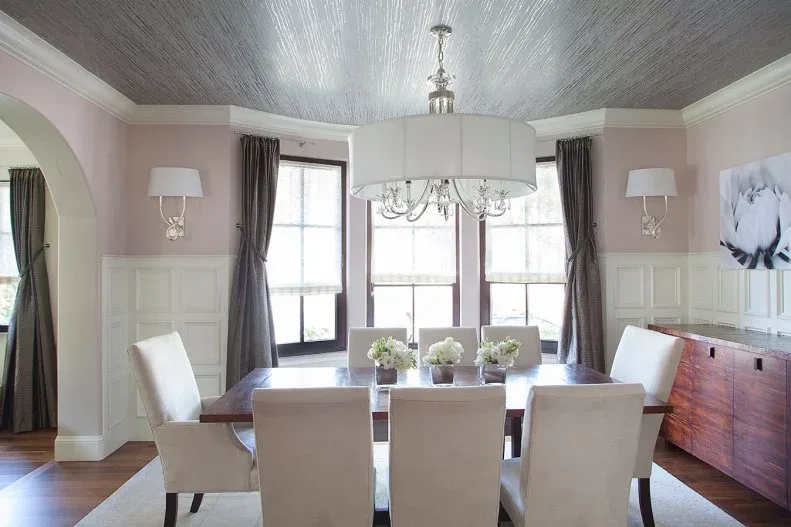
Keep Pale Pink Above White Wall Paneling
 SaveSupport Non AI Creator
Image credit: Photo: Seek Interior Design. From: Seek Interior Design
Pale pink upper walls sit above white paneling around this dining room, with pale chairs arranged beneath a broad white drum chandelier. A silvery textured ceiling adds another surface overhead, while the dark wood table and reddish sideboard supply warmer furniture color below. The large light areas give the room a composed appearance without removing all contrast or decorative detail.
Compare the pink paint with your chair fabric and lower paneling in daylight and evening light. Keep the table and sideboard finishes deliberate even if they differ. A broad shade needs a useful hanging position and accessible cleaning routine. Leave sideboard space available for serving, and check that chairs can be pulled out comfortably without catching nearby curtains or blocking the approach to the doors.
IDEA 02 / 20
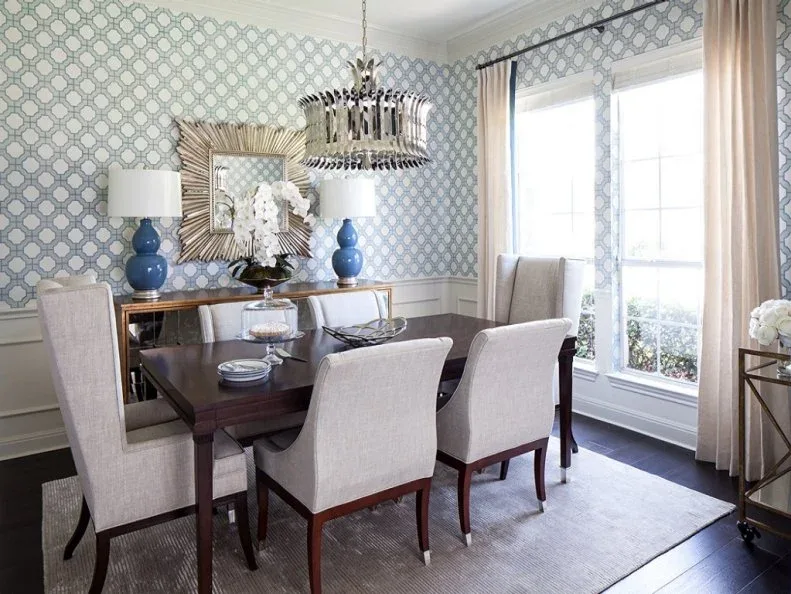
Balance Blue Wallpaper With Plain Upholstery
 SaveSupport Non AI Creator
Image credit: Photo: Kimberly Finkel Davis. From: Heather Scott Home & Design
Blue-and-white geometric wallpaper surrounds a dark rectangular table and pale high-backed chairs. A mirrored console carries two blue lamps, repeating the wall color through a more solid shape. The broad framed mirror and reflective chandelier add detail above the plain upholstery. This combination makes the seating relatively quiet so the wallpaper, mirror and lamps can remain visible as separate features.
Look at a large wallpaper sample beside the actual chair fabric before choosing both. Keep table linens plain while judging how much pattern the room already has. Test lamp reflections in the mirror from seated positions, and leave console space for practical serving needs. High-backed chairs require enough space behind them to move comfortably, especially where curtains or window hardware sit close to the dining area.
IDEA 03 / 20
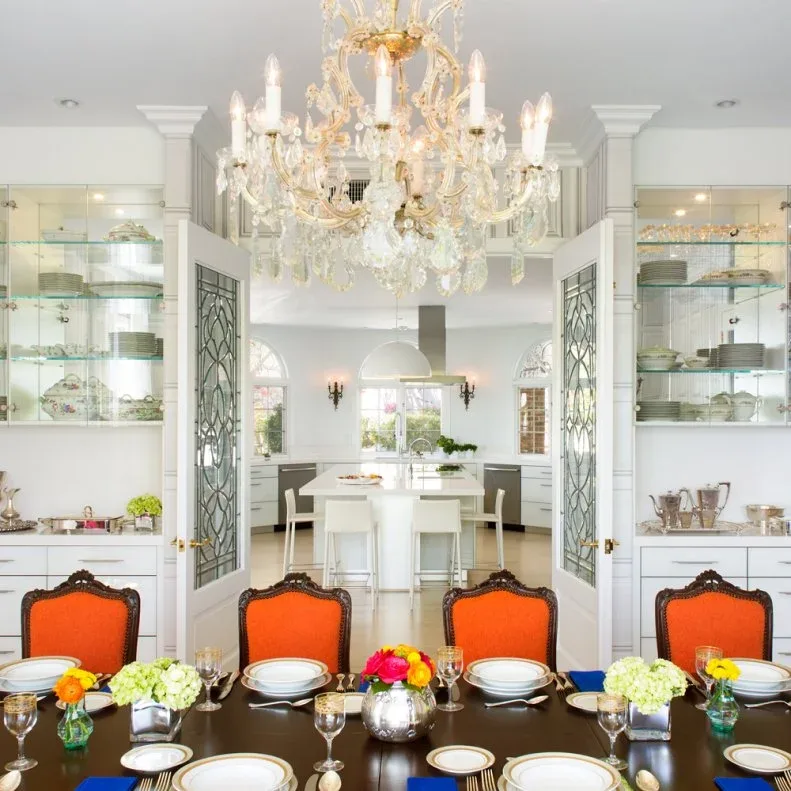
Let One Ornate Chandelier Set the Tone
 SaveSupport Non AI Creator
Image credit: Photo: Dawson Design Group, Inc.. From: Dawson Design Group, Inc.
An ornate gold-colored chandelier hangs above a dark table surrounded by orange-backed carved chairs. White cupboards display dishes on glass shelves, with decorative glazed doors opening toward the kitchen behind. The orange upholstery gives the furniture a strong color without changing the pale storage background. The chandelier remains the largest decorative feature, while the dish displays contribute smaller repeated shapes around it.
Choose a large light fitting only after checking its scale, cleaning needs and installation requirements for the room. Repeat a warm chair color sparingly in flowers or table items rather than filling every display shelf with another accent. Secure dishes appropriately and keep regularly used pieces within easy reach. Leave the glass-front storage accessible when the chairs are occupied, and move tall table decorations when they interfere with conversation.
IDEA 04 / 20
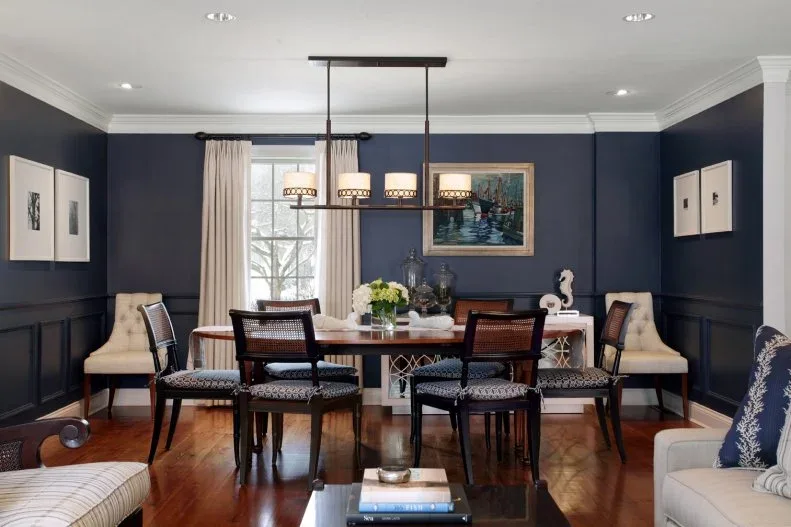
Pair Navy Paneling With a Linear Shaded Light
 SaveSupport Non AI Creator
Image credit: Photo: Stuart Siegel Photography
Navy walls and lower paneling create a defined dining area around a wood table. Dark open-backed chairs have patterned seats, while pale upholstered chairs at the ends provide a lighter contrast. A linear pendant with four small shades follows the table’s length rather than using one broad central fixture. Light curtains and a pale ceiling stop the dark color from extending across every surrounding surface.
Check the end chairs’ arm and seat clearance before choosing a mixed seating arrangement. Test a navy sample near the windows and beneath your evening lighting, since its depth will change with the room. Position the pendant around the table’s usual place and confirm glare from seated views. Keep the table surface useful for meals, and choose seat fabric with cleaning guidance suited to your household.
IDEA 05 / 20
Use Ochre Walls Above a White Architectural Border
 SaveSupport Non AI Creator
Image credit: Photo: Larny J. Mack. From: IS Architecture
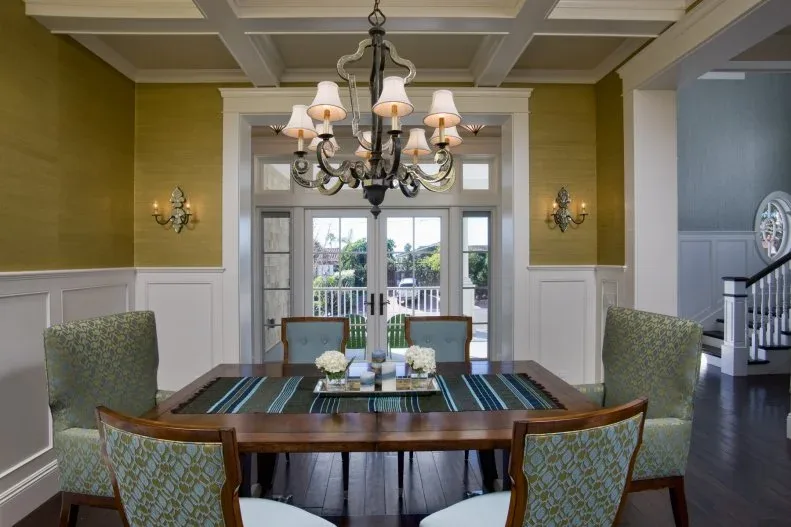
Ochre upper walls bring warmth above white lower paneling and a pale coffered ceiling. Green patterned chairs and deeper green end seats surround a dark table beneath a shaded chandelier. Small wall lights repeat the lighting detail on either side of the glazed doorway. The white architectural borders make the warmer color feel contained rather than spread across every surface of the room.
Compare ochre and green together in the actual daylight before choosing paint and upholstery. Keep the table runner relatively simple if the chair fabric already provides substantial pattern. Check chair movement around the doorway and the size of the end seats. Use the wall lights and chandelier for the light you need at meals, following their installation and bulb guidance rather than selecting them only for matching appearances.
PART 02
Give Chairs and Lighting Clear Roles
IDEA 06 / 20
Mix Pale Chairs With a Soft Blue Rug
 SaveSupport Non AI Creator
Image credit: Photo: Kristen Forgione. From: THELIFESTYLEDCO
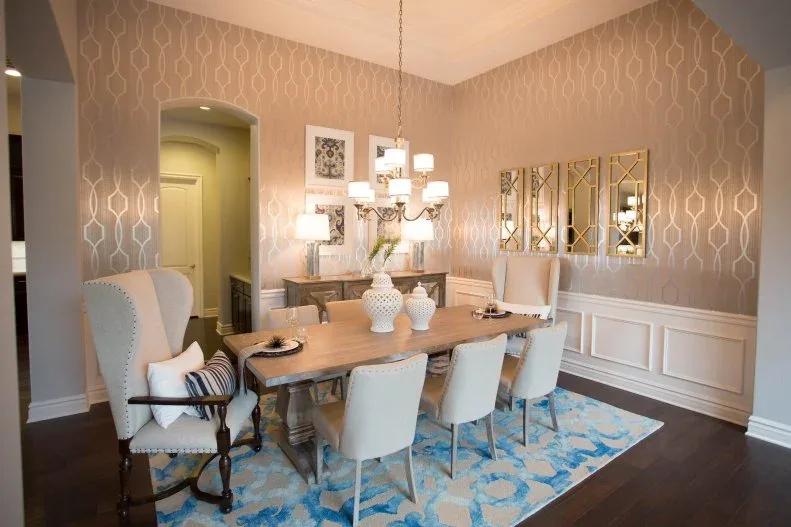
Pale pink wallpaper carries a fine geometric outline above white paneling around this dining table. Light side chairs sit between taller wing-shaped end seats, while a blue patterned rug supplies a cooler surface below. Three small framed mirrors repeat a vertical detail along one wall. The wood table provides warmth at the center without asking the upholstery and rug to share exactly the same color.
Measure the rug around the table with every chair pulled out, keeping its edges away from the points where chair legs repeatedly catch. Test the larger end seats for table clearance and comfortable movement behind them. A fine wallpaper pattern can still look busy across a whole room, so compare a large sample with the rug. Check mirror reflections in evening light before deciding their final hanging positions.
IDEA 07 / 20
Keep Monochrome Patterns at Different Scales
 SaveSupport Non AI Creator
Image credit: Photo: Jackson Design and Remodeling. From: Jackson Design and Remodeling
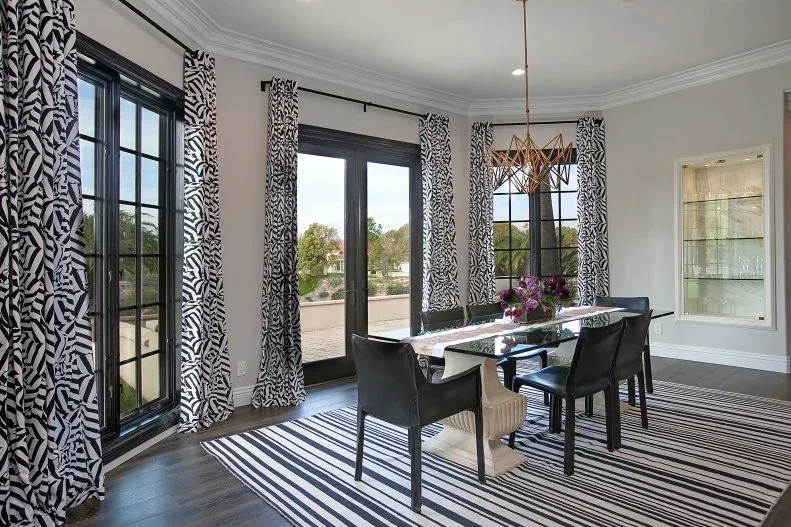
Black glazed doors create strong outlines beside black-and-white patterned curtains in this dining room. A narrower striped rug lies beneath a pale-topped table and dark chairs, introducing a second pattern at floor level. The small angular pendant provides a lighter geometric shape overhead. Pale walls and the light table surface give the repeated dark lines somewhere to pause between the windows and furniture.
Compare curtain and rug patterns at their actual scale before buying both, leaving plain table linens while judging the result. Check chair movement over the rug and choose a size that remains useful when people leave their seats. Keep the glazed-door handles and opening space clear. A patterned curtain still needs appropriate privacy and care guidance, and the table finish should suit the way you use it every day.
IDEA 08 / 20
Frame a Round Table With Pale Chairs and Dark Art
 SaveSupport Non AI Creator
Image credit: Photo: Julie Soefer. From: Nest Design Group
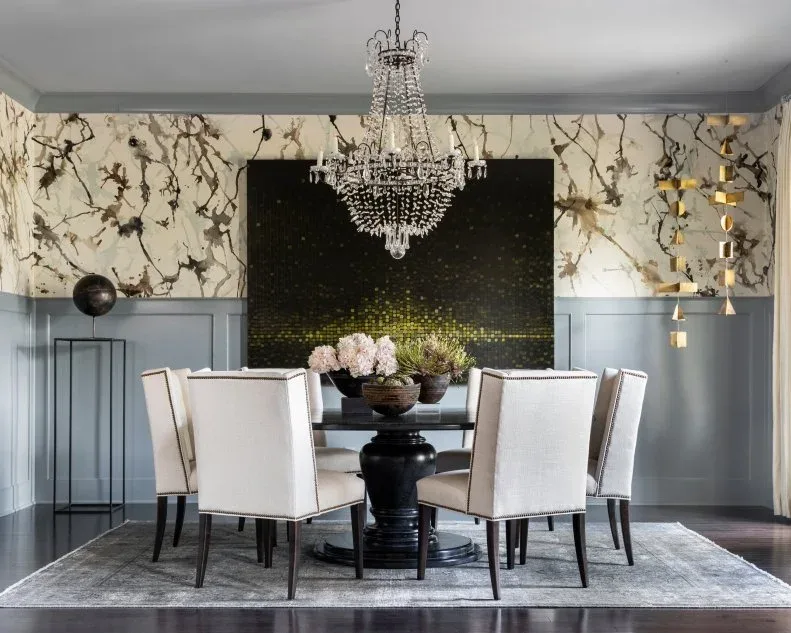
Gray lower paneling supports a pale branch-pattern wall above a dark round pedestal table. Tall pale upholstered chairs provide a light ring around the table, with a large dark artwork centered behind them. A hanging-detail chandelier adds a narrower decorative shape overhead. The room gains contrast from the pale seats and darker center rather than using several different furniture colors around the table.
Test the round table’s usable seating space with the actual chairs, since broad upholstered backs may need more room than their seat widths suggest. Check the pedestal base for leg clearance. Keep the artwork secure and positioned where chair movement will not touch it. Choose upholstery with suitable cleaning guidance, and compare chandelier reflections and glare before adding further reflective decorations to the table or wall.
IDEA 09 / 20
Repeat Dusty Pink in Chairs and Quiet Artwork
 SaveSupport Non AI Creator
Image credit: Photo: Emily Gilbert. From: Hackett Interiors
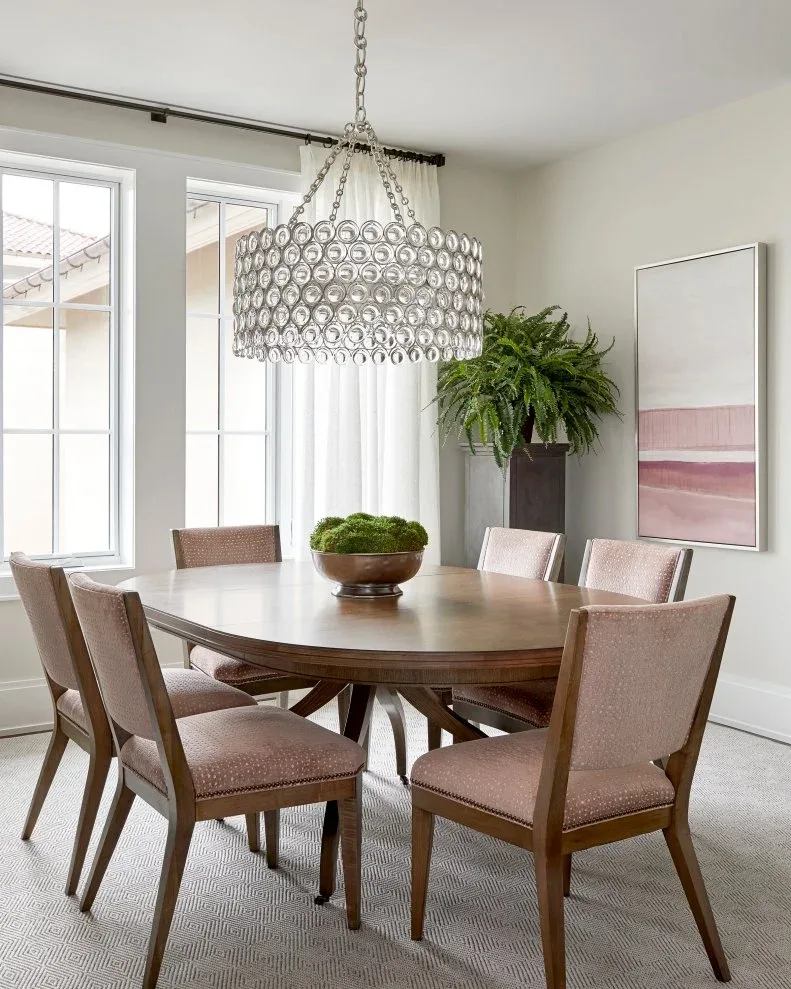
Dusty pink chairs surround a round wood table in this light dining room, with pale pink abstract artwork repeating the upholstery color on the wall. A large drum chandelier formed from circular loops adds a more intricate outline overhead. Light curtains keep the window area quiet, while a fern in a tall dark planter supplies a separate green accent beside the table.
Choose the pink upholstery and artwork together if you want them to support one another without matching exactly. Keep chair spacing practical around the curved table edge and check the rug for smooth chair movement. A detailed chandelier may take more cleaning than a plain shade, so consider access before installation. Place the fern according to its actual care needs, leaving space to clean around the planter and nearby chairs.
IDEA 10 / 20
Use a Sculptural Pendant Above a Small Round Table
 SaveSupport Non AI Creator
Image credit: Photo: Dane Austin. From: Dane Austin Design
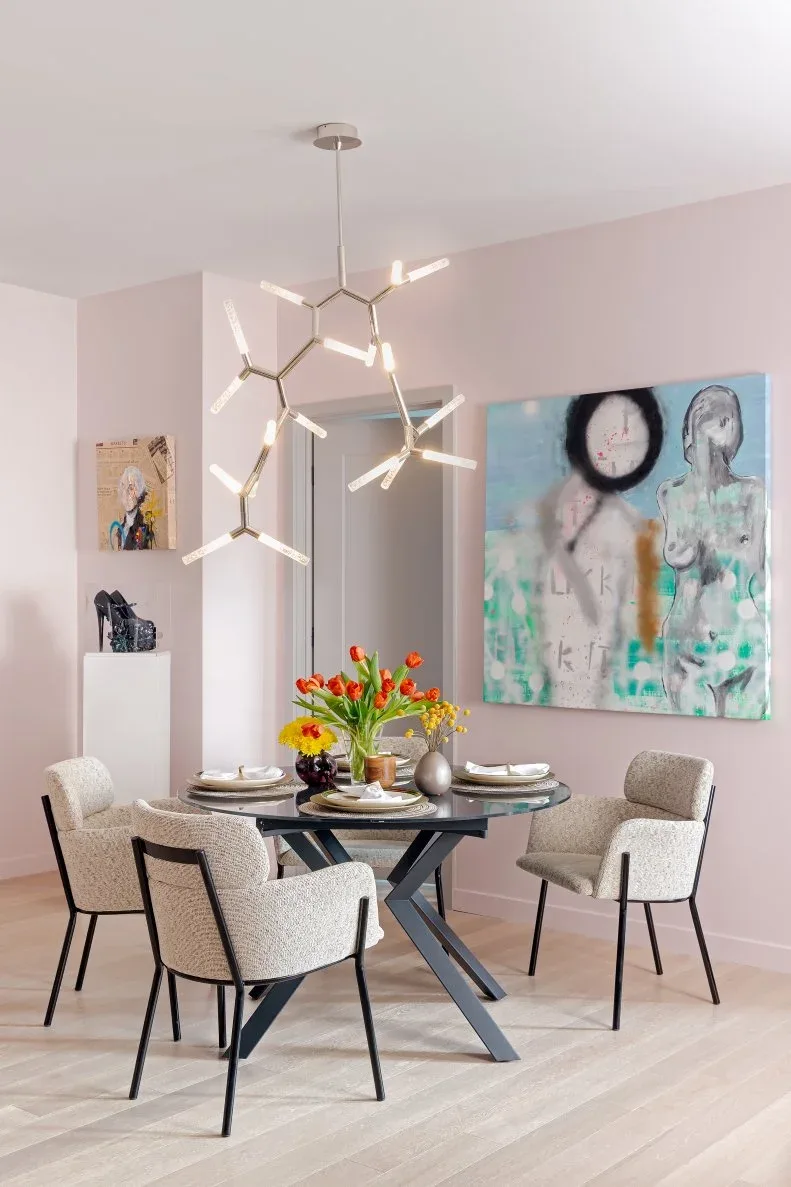
A slim branching pendant draws a light angular shape above a round dark table in this pale pink room. The table’s X-shaped base repeats the geometry below, while light textured chairs on dark legs introduce softer seat shapes around it. Colorful figure artwork supplies a broader decorative patch behind the table. The arrangement shows how a small dining group can have a distinct feature without a large chandelier.
Check the table base against the legroom needed at every place, particularly where the supports cross beneath the top. Choose chairs for comfort and care needs as well as their texture. View the pendant from seated positions to check glare and visibility across the table. Keep flowers low or removable during meals, and compare the pink wall with the artwork and upholstery before introducing another strong accent color.
PART 03
Add Warmth Without Crowding the Table
IDEA 11 / 20
Warm a Light Room With a Wood Fireplace Wall
 SaveSupport Non AI Creator
Image credit: Photo: J. Turnbow Photography. From: Urbanology Designs
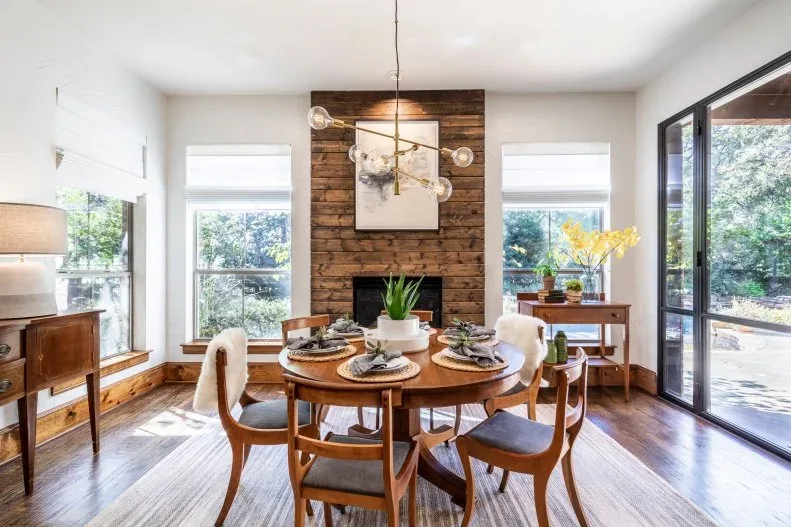
A wood-paneled fireplace wall provides a warm center between two light windows behind a round dining table. Curved wood chairs repeat the warmth lower down, with gray seat pads and pale covers adding softer surfaces. A branching globe light keeps the overhead outline relatively open. The pale walls and window shades give the stronger wood surfaces room to remain distinct without another large patterned feature.
Check the chair spacing and legroom around the round table before choosing it for your household. Follow the actual fireplace’s furniture and decoration clearance requirements if it is used; the pictured arrangement does not establish safe distances. Keep the table setting practical for everyday meals and select seat covers with suitable care guidance. Compare the wood finishes in daylight before adding another substantial wood storage piece to the room.
IDEA 12 / 20
Give Geometric Wallpaper a Plain Wood Table
 SaveSupport Non AI Creator
Image credit: Photo: Laurie Perez. From: Sally Wheat
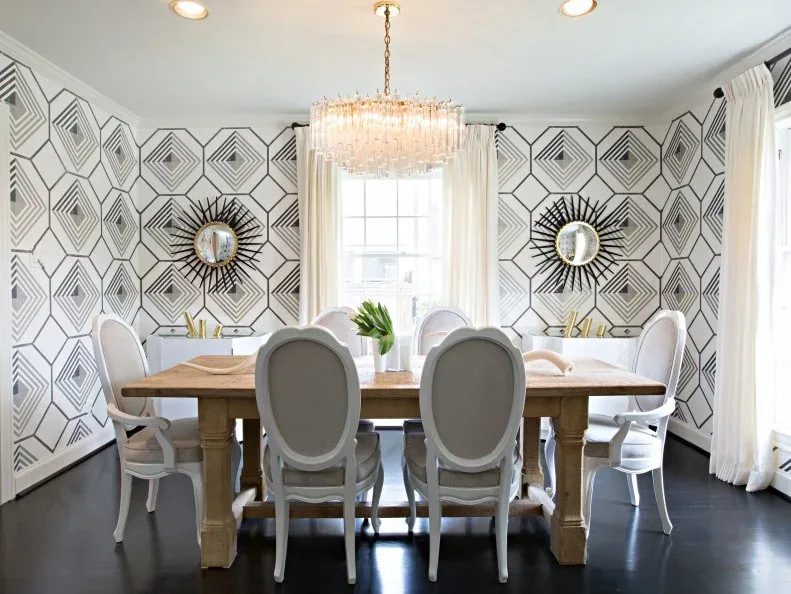
Outlined geometric wallpaper creates a repeated angular pattern around a long wood table. Pale oval-backed chairs offer a softer contrast, while twin sunburst mirrors add smaller decorative shapes beside the window. White curtains and a relatively simple tabletop give the room lighter pauses between the patterns. The narrow hanging-detail chandelier stays above the seating group rather than extending decoration into every corner.
Compare a large wallpaper sample with the chair backs before deciding how much additional wall decoration you need. Secure both mirrors appropriately and check their reflections from seated positions. Keep table linens simple while judging the pattern balance. Measure the space behind each chair as it is pulled out, especially near curtains, and select the table finish for the cleaning routine your household can maintain.
IDEA 13 / 20
Keep Modern Dining Shapes Within a Warm Border
 SaveSupport Non AI Creator
Image credit: PlaidFox
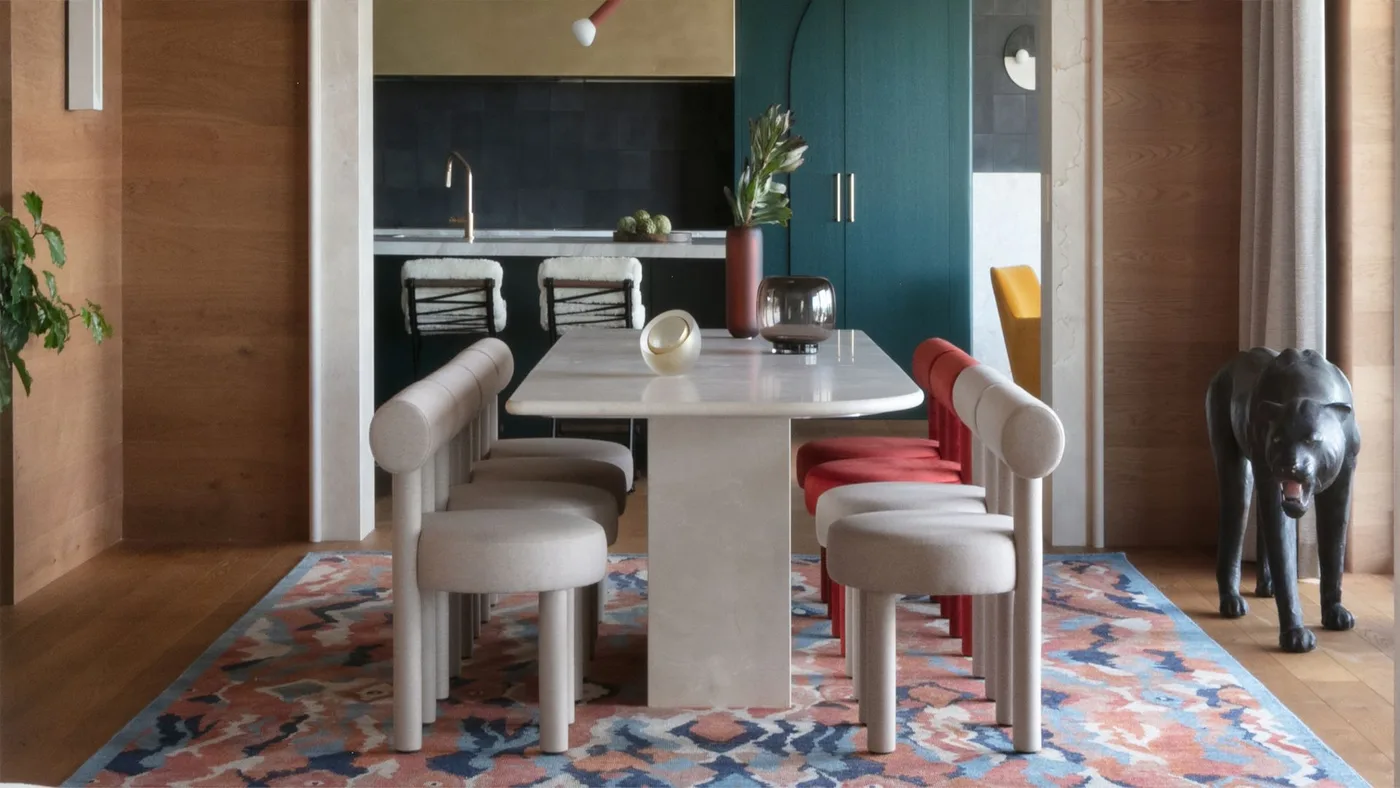
A white block-leg table sits between rounded pale chairs, with one red seat creating a small break in the upholstery color. A pink-and-blue patterned rug adds detail below, while warm wood wall panels frame the dining area beside the darker kitchen beyond. The pale furniture shapes give this mixed palette a clear center instead of allowing every color to compete equally.
Check the substantial table legs for clearance at all seating positions before choosing a similar shape. Rounded chairs still need comfortable support and enough space behind them. Compare the rug with the furniture colors in the actual room, and keep its edges clear of the walking route. Use one accent seat only if its height and comfort work with the others, rather than choosing it simply because the color is different.
IDEA 14 / 20
Use Dark Furniture Against Warm Wood Walls
 SaveSupport Non AI Creator
Image credit: Future / Simon Bevan / Hannah Franklin
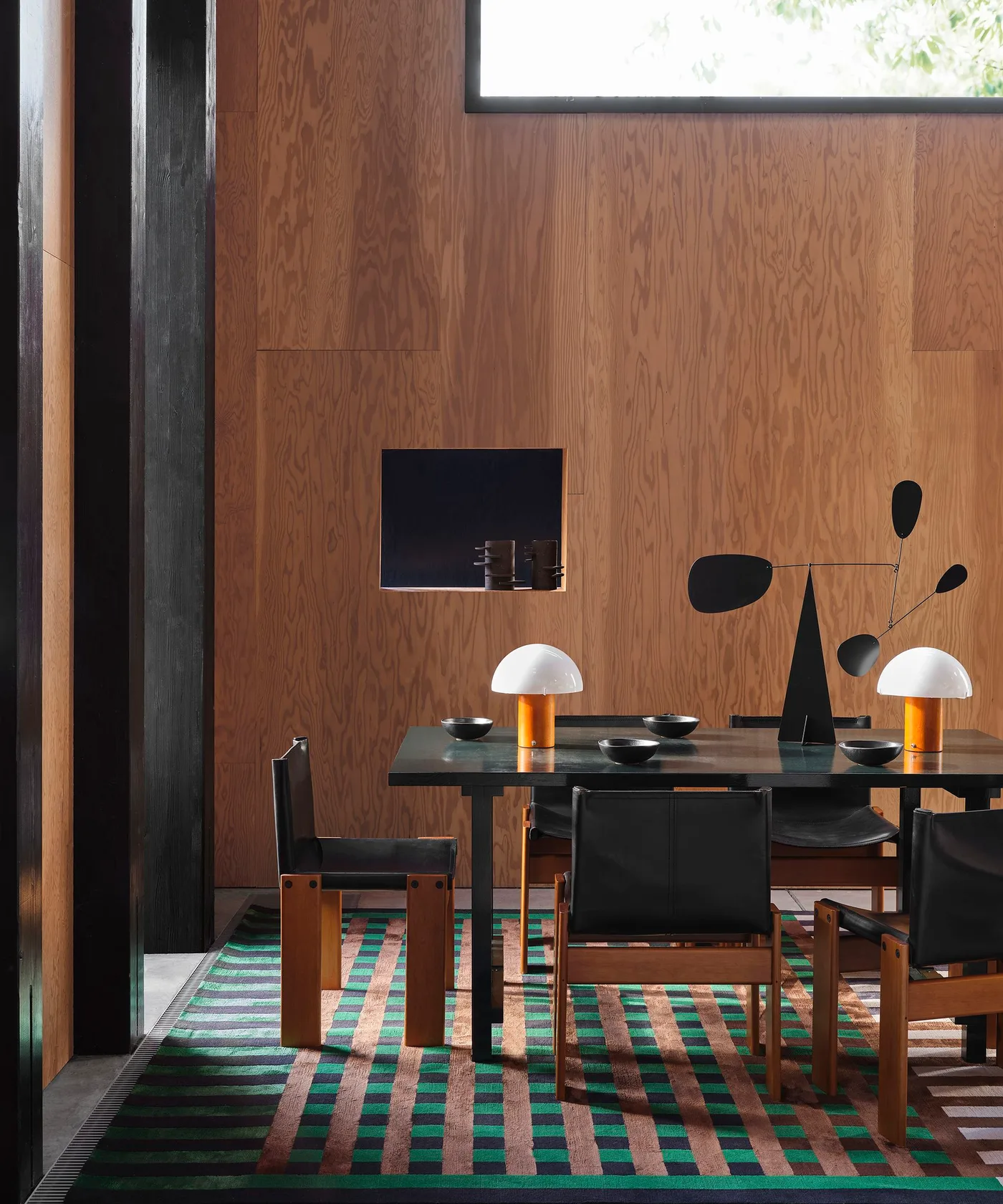
A black dining table and dark seats stand against warm wood walls, with substantial wood chair frames linking the furniture to the background. Green and pink rug stripes introduce a separate color pattern below. Two small lamps have orange bases and white dome shades, while a dark sculptural mobile sits between them. The larger furniture surfaces stay restrained despite the more playful smaller details.
Check how much useful dining space remains if you want lamps or sculpture on the table. Keep them removable and route any lamp cords so they cannot catch on plates, hands or chairs. Compare the rug stripes with your wood finishes before adding more patterned textiles. Choose the chairs for comfortable support and legroom, and follow care guidance for their actual seat surfaces rather than assuming a particular upholstery material.
IDEA 15 / 20
Choose Curved Chairs Around a Fluted Pedestal
 SaveSupport Non AI Creator
Image credit: Soho Home
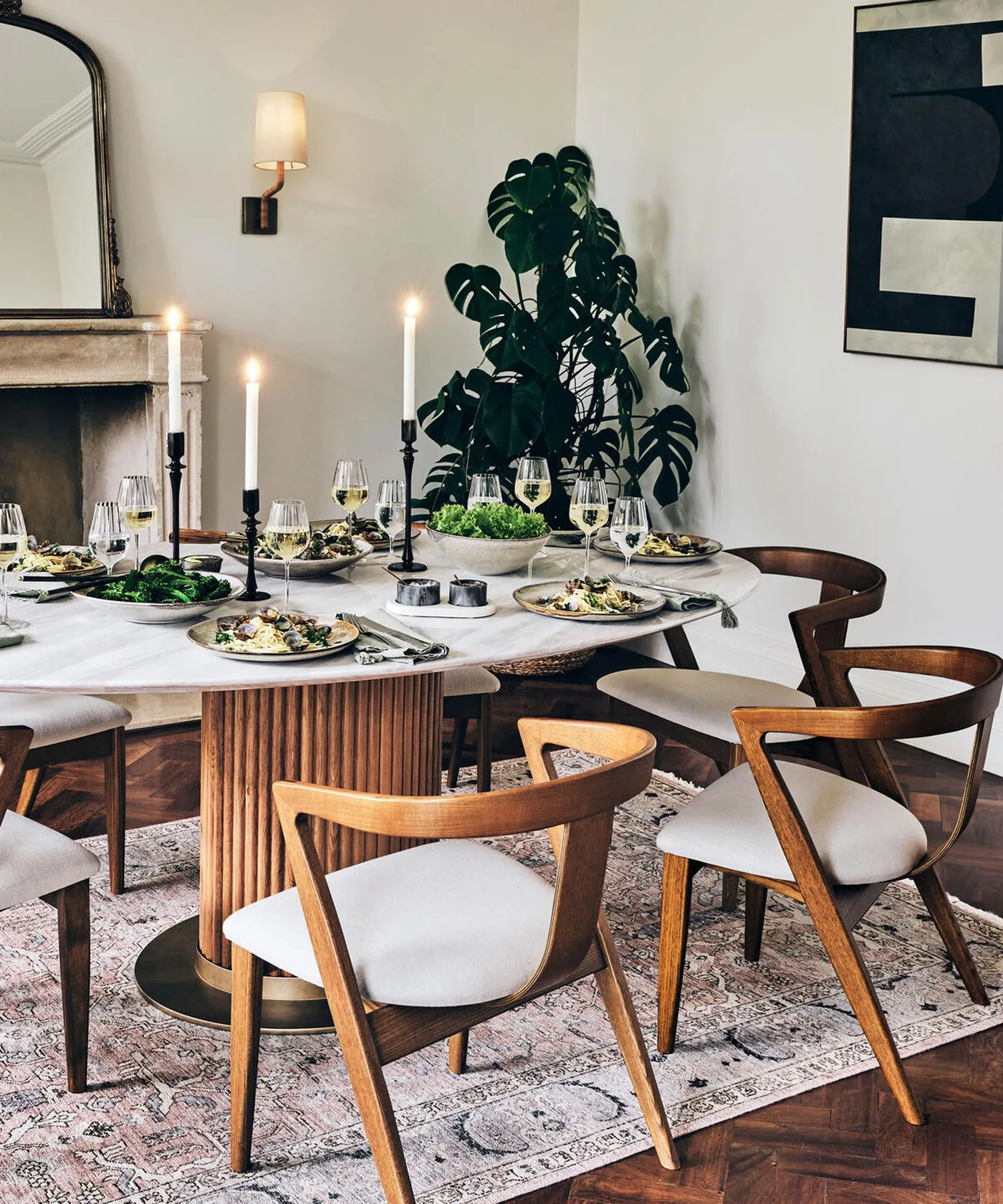
A pale round tabletop sits on a fluted wood-colored pedestal, surrounded by curved open wood chairs with pale seat pads. A patterned rug adds quieter detail beneath the seating, while a fireplace mirror, dark artwork and large green plant provide separate features along the wall. The combination gives the center a consistent warm outline without requiring all the room’s decorative pieces to match.
Check the pedestal diameter and chair placement for comfortable foot space at every seat. A pale tabletop needs care guidance suited to its actual finish; appearance alone does not identify its material. Keep candlesticks and other tall pieces removable when they block conversation. Follow fireplace clearances if it is used, and place the plant according to its actual care needs rather than using it to fill an inconvenient gap.
PART 04
Make Decorative Details Useful
IDEA 16 / 20
Keep Pink Chairs Simple Beside a Wood Table
 SaveSupport Non AI Creator
Image credit: George Barberis
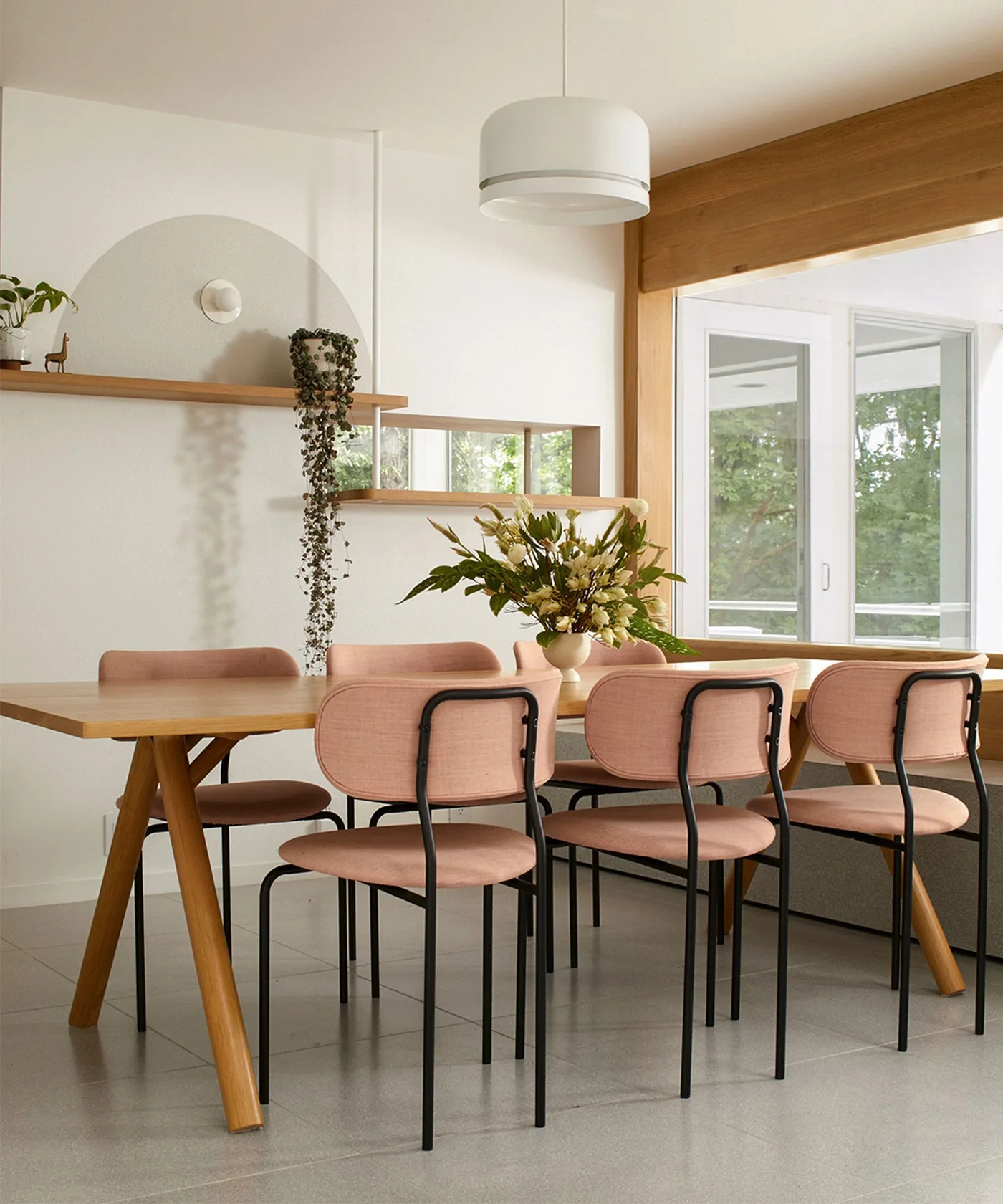
Dusty pink chairs on slim black frames surround a long wood table in this light room. A white drum pendant offers a simple overhead shape, while a horizontal mirror and wood ledge repeat the table’s longer lines along the wall. The large wood beam near the window supplies another warm surface above. Most of the color stays on the chairs, leaving the background relatively calm.
Check that the chairs slide comfortably beneath the table and provide useful support for the length of your meals. A slim frame can look light without guaranteeing comfort. Keep the wall ledge accessible for cleaning and secure anything displayed there. Position the mirror to avoid distracting glare, and choose the pendant for even table lighting as well as its shape. Remove large flowers when they obstruct conversation across the table.
IDEA 17 / 20
Use a Pale Table Between Dark Display Pieces
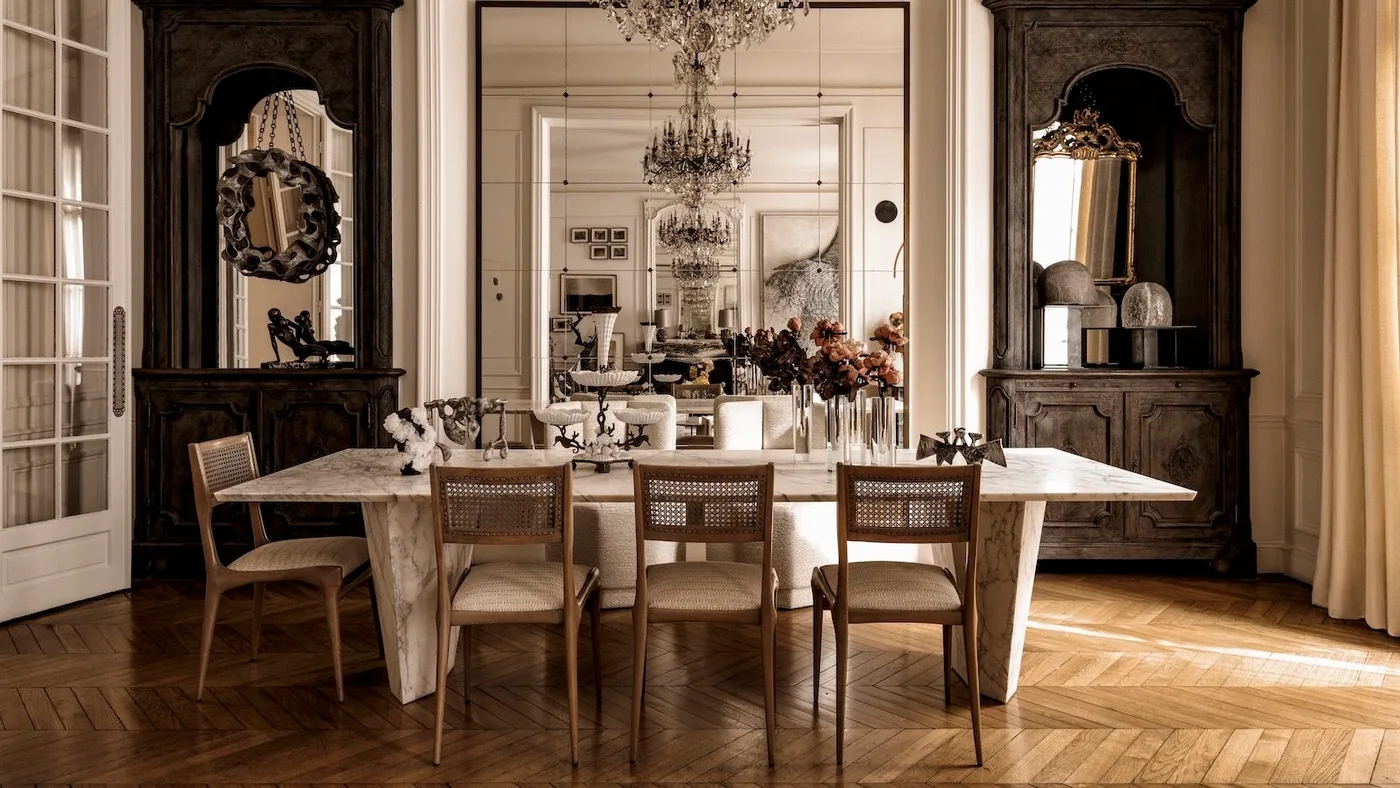 SaveSupport Non AI Creator
Image credit: Culture in Architecture/Matthieu Salvaing
A pale rectangular table sits between two substantial dark display cupboards, with woven-back wood chairs giving the middle a warmer, lighter outline. The large mirrored wall behind reflects the room’s decorative detail and lighting. Long pale curtains soften the edges, while the patterned wood floor adds another visible surface below. The pale table prevents the darker storage pieces from dominating the entire arrangement.
Check mirror reflections at different times of day before committing to a large reflective wall. Keep table displays limited if they appear twice in the reflected view. Secure tall furniture according to its installation guidance, and leave access to the cupboard doors around the occupied chairs. Woven chair backs and the table surface each need care suited to their actual construction; do not assume their materials from appearance alone.
IDEA 18 / 20
Pair Reflective Gray Walls With a Dark Round Table
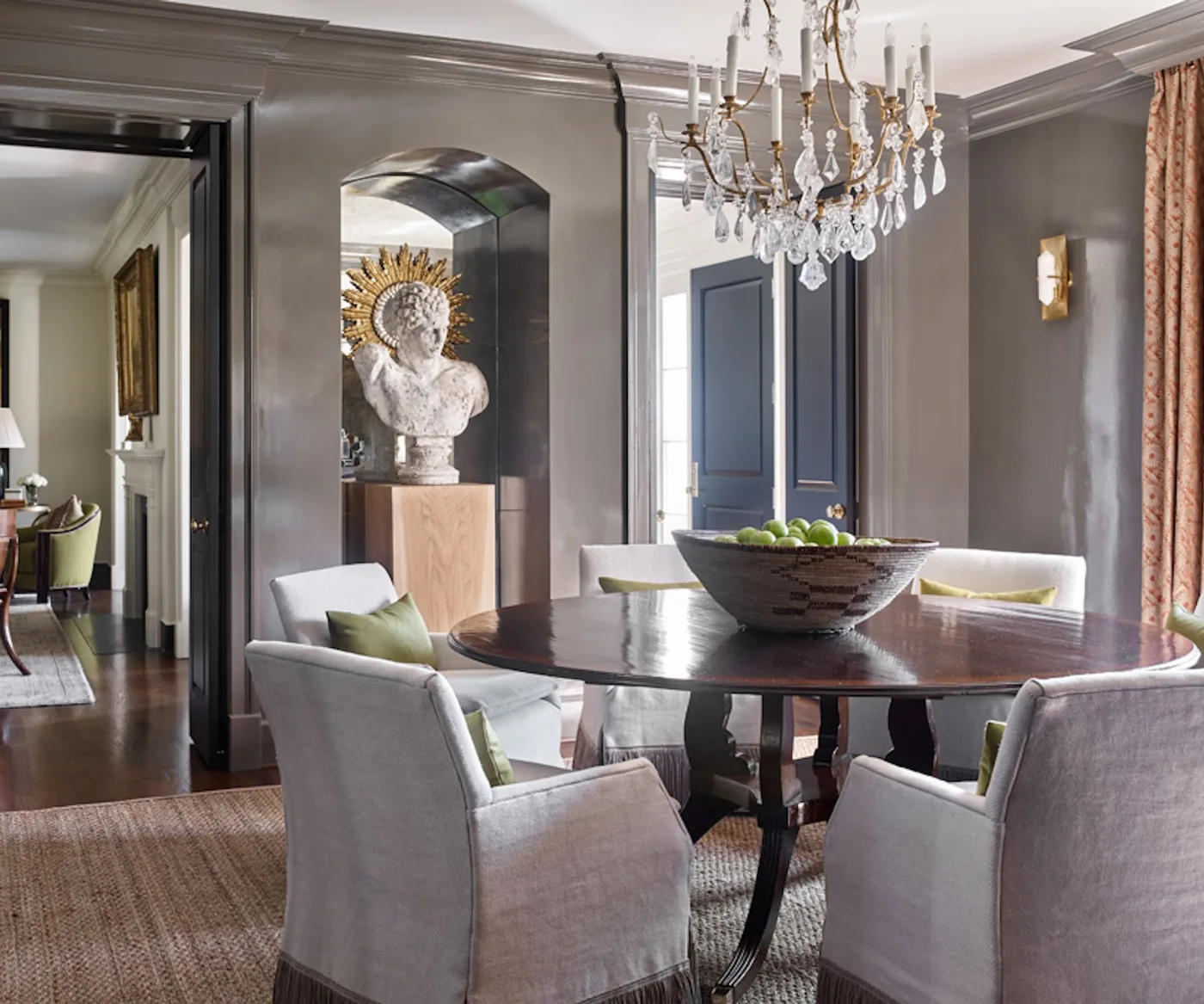 SaveSupport Non AI Creator
Image credit: Roger Higgins/Emily Followill
Reflective gray walls surround a dark round table and pale upholstered armchairs, with small olive cushions providing a limited color accent. An ornate chandelier adds hanging detail overhead, while a sculpture on a pedestal sits within an arched niche nearby. The warm patterned curtain introduces a softer edge. Pale seating keeps the dark table clearly defined against the reflective background.
Test the wall finish with the lighting you intend to use, since reflections can be distracting from some seats. Check the round table’s clearance for the armchairs, including their arms and the space needed to move behind them. Keep cushion numbers practical and choose upholstery with suitable care instructions. Secure the sculpture and pedestal appropriately, and avoid adding more reflective objects before seeing how the room behaves in evening light.
IDEA 19 / 20
Keep Large Lighting Above a Symmetrical Arrangement
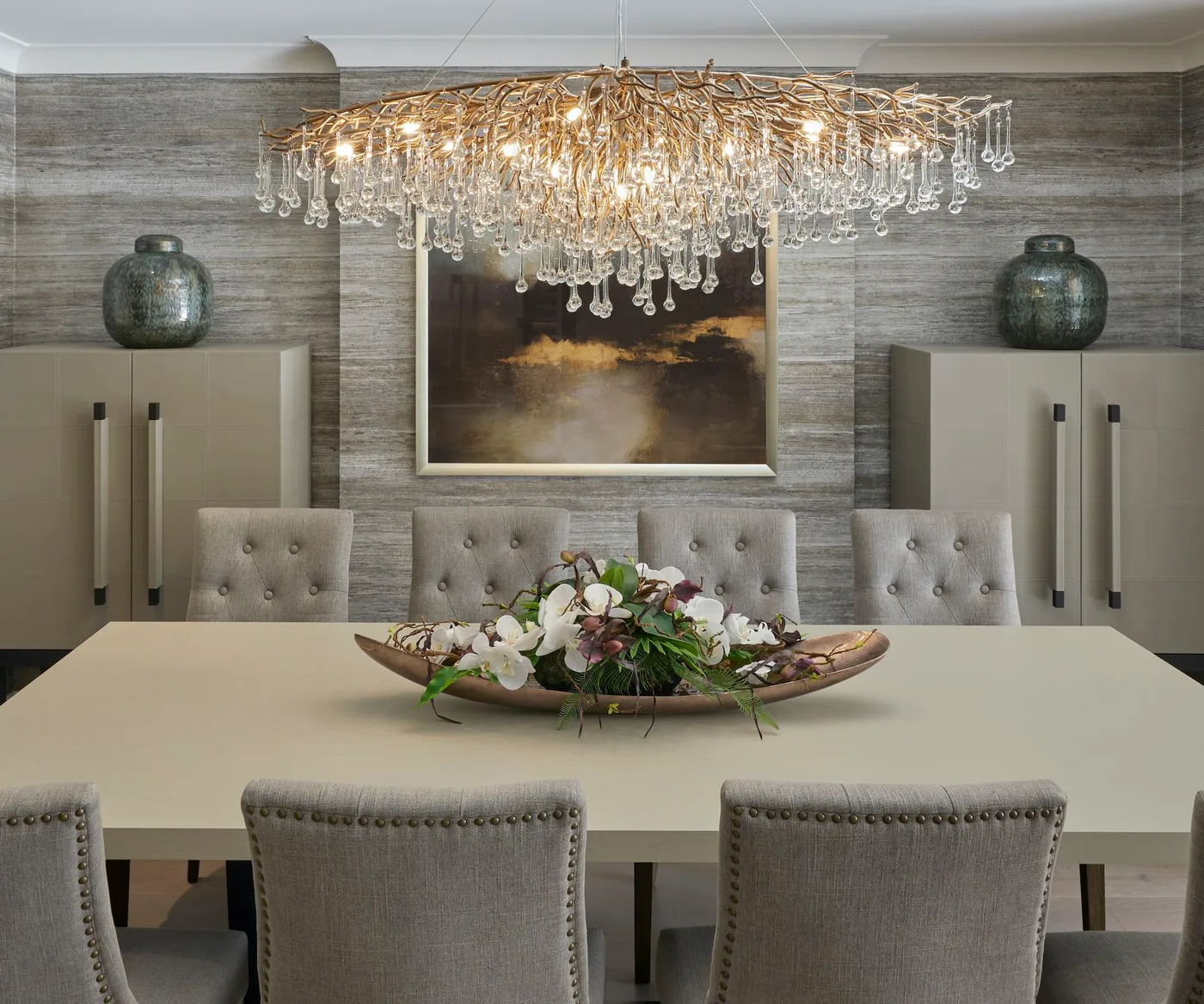 SaveSupport Non AI Creator
Image credit: Hill House Interiors/Ray Main
A broad gold-colored branching chandelier stretches above a pale rectangular table, with clear hanging details supplying most of the room’s ornament. Tufted gray chairs sit between matching tall cupboards, each topped by a rounded green vase. Gray textured walls and centered landscape artwork complete the arrangement behind. The repeated storage shapes give the oversized lighting a more orderly background than several unrelated display pieces would.
Check a large chandelier’s dimensions, weight, cleaning requirements and installation guidance before choosing it for your table. Keep the cupboards accessible when chairs are occupied, and follow any furniture anchoring requirements. Use high displays only where they are secure and can be cleaned safely. A low centerpiece can support the symmetrical arrangement without taking away the space needed for plates and serving dishes during regular meals.
IDEA 20 / 20
Frame Scenic Wallpaper Around an Elegant Fireplace
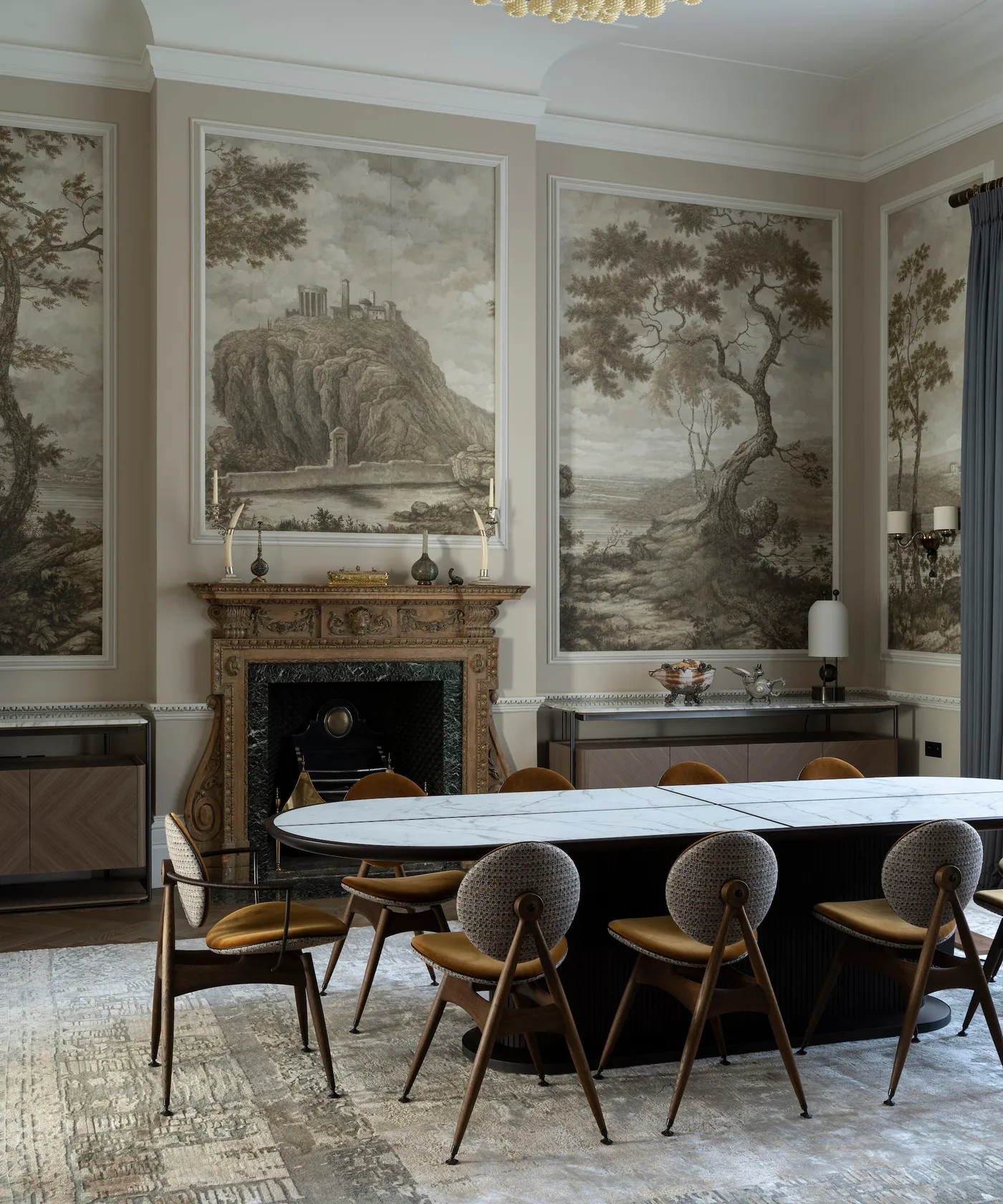 SaveSupport Non AI Creator
Image credit: Tollgard Studio
Tall framed scenic panels show trees and a rocky landscape around a carved fireplace in this dining room. An elongated pale table and rounded gray-backed chairs with ochre seats create a more compact set of shapes below. Narrow side consoles add useful-looking surfaces along the wall without covering the scenic panels. The large wall images provide decoration while the table remains visually simpler.
Compare the scenic panels with your room’s wall divisions before choosing a similar treatment. Plan furniture positions so the most useful parts of the scene remain visible without crowding the fireplace. Follow the actual fireplace’s clearance requirements if it is used. Check the elongated table’s seating space near the ends, and keep console displays modest so they do not interfere with serving or cleaning the nearby surfaces.
BRING IT ALL TOGETHER
Make Comfort Part of the Finished Room
Choose the table and chairs around daily use first, then decide which wall, light fitting or storage piece will carry the strongest decorative detail. A room can feel elegant with pink upholstery, warm wood or dark trim; the useful connection is a deliberate balance between those features and the quieter surfaces around them.
Before committing, test how the chairs move, where serving dishes will sit and whether the light is pleasant from a seated position. Check cleaning guidance for upholstery and decorative fittings, and follow the actual fireplace and electrical requirements where relevant. Those checks help the room keep its composed appearance when it is being used, not just when the table is empty.