A glam office should still make everyday work comfortable. Start with a useful desk, supportive seating and light you can control. Reflective finishes, expressive chairs and decorative lamps can then give the room character without taking over the working surface.
These twenty photographs include complete rooms and smaller writing corners. Some decorative seats suit occasional tasks better than a full day at a computer. Compare the furniture, storage and lighting with your own routine before borrowing the colors and shapes that catch your eye.
PART 01
Give Desks and Small Corners Character
IDEA 01 / 20
Frame a Useful Planning Board in Gold
 SaveSupport Non AI Creator
Source: hgtv.com
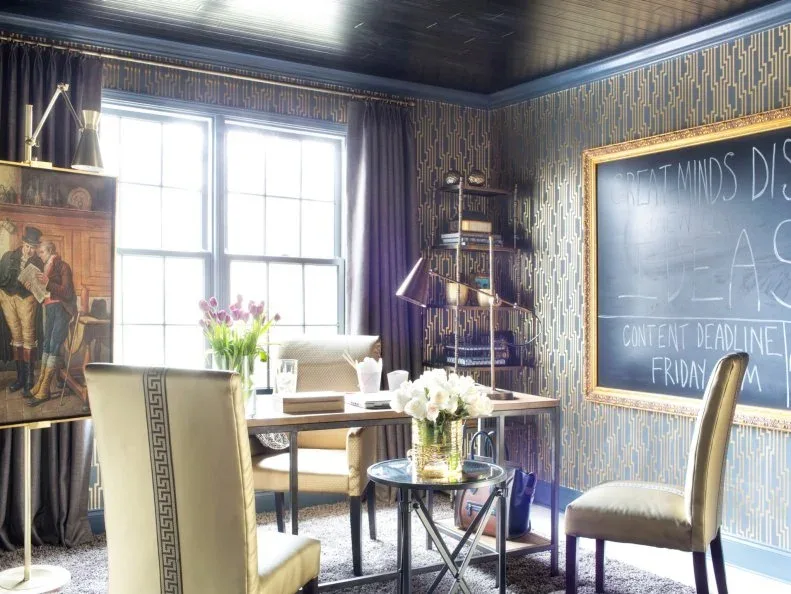
A large gold-toned frame turns the chalkboard into a deliberate part of this office. Fine geometric lines in the wallpaper repeat its warm color, while pale chairs brighten the darker walls and ceiling. The wooden desk remains positioned near the window. Decoration and practical planning share the same wall instead of competing for separate corners of the room.
Use a board for information you need to see regularly, leaving enough blank area for new notes. Check the writing surface’s cleaning instructions and keep chalk dust away from electronics. A decorative frame should not make the board awkward to reach. Position the desk and chair for comfortable work first, then check whether reflections from the window obscure the writing.
IDEA 02 / 20
Group Curved Mirrors Above Office Storage
 SaveSupport Non AI Creator
Source: hgtv.com
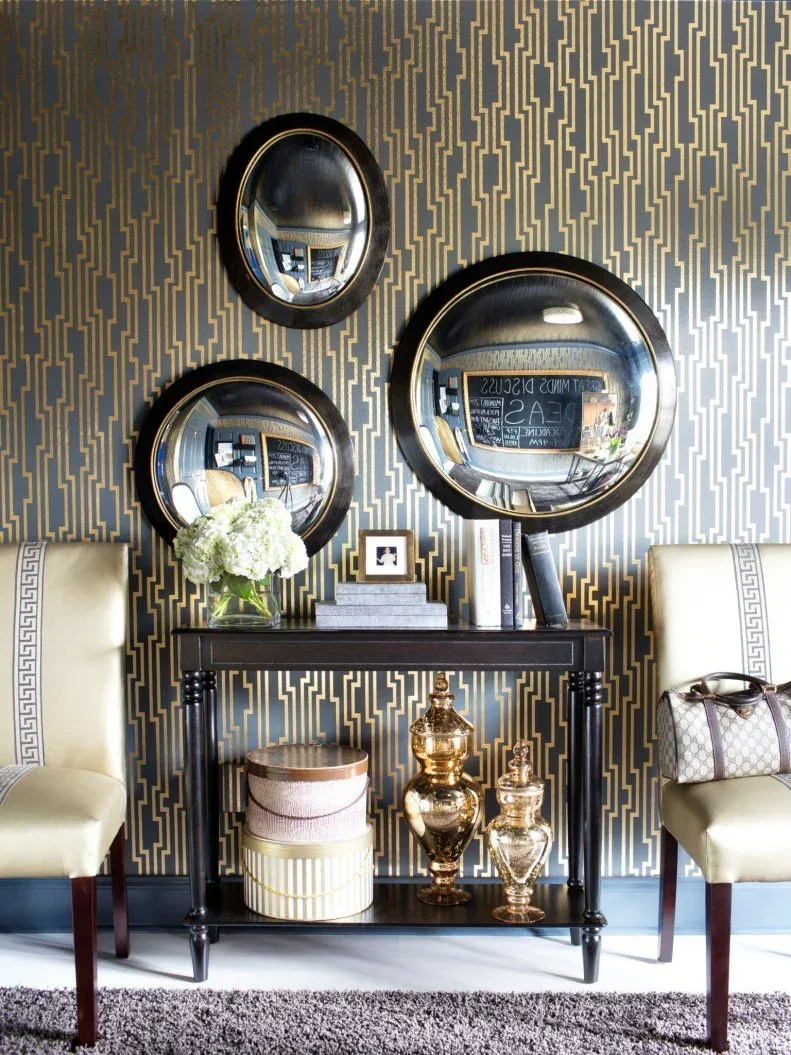
Three convex mirrors form a compact group above the narrow black shelf in this office. Their curved surfaces reflect different portions of the room, and the circular outlines contrast with the wallpaper’s straight gold-toned lines. Pale chairs sit on either side. The wall adds character without taking away the desk’s working area or requiring a deep storage cabinet.
Treat convex mirrors as decorative accents rather than clear substitutes for a normal mirror. Check the reflected view before fixing them, especially if a bright window or exposed lamp sits opposite. Use suitable wall fixings and leave access for cleaning. Keep any shelf below useful and uncluttered so the reflective group has a distinct outline against the patterned wall.
IDEA 03 / 20
Fit a Clear Desk Into a Bedroom Corner
 SaveSupport Non AI Creator
Image credit: Photo: Courtney McLeod
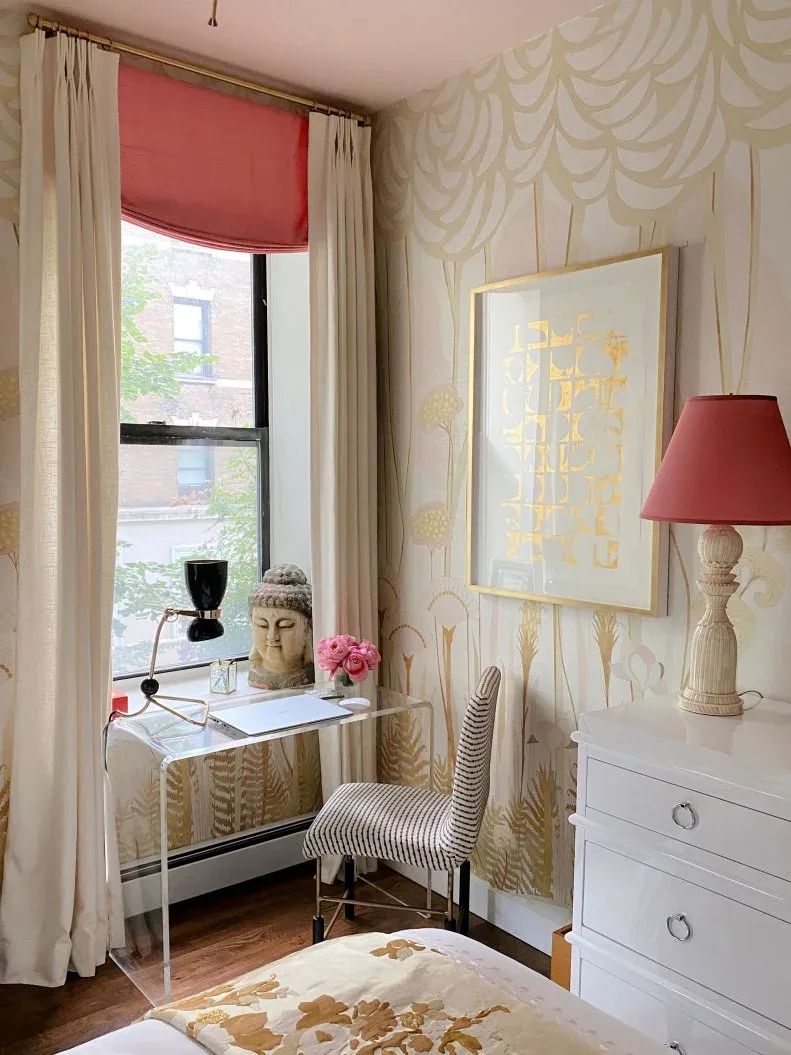
A clear desk sits beside the window in this bedroom corner, keeping the floor and patterned wall visible through its legs. Gold-toned decoration in the wallpaper and framed art connects with the warmer coral blind. A striped chair adds a smaller pattern below. The transparent furniture gives a compact writing station a light outline within an already furnished bedroom.
Measure the chair’s movement between the desk and bed before choosing this arrangement. A clear surface can show fingerprints and scratches, so follow its specific care guidance. Keep accessories limited enough to leave room for writing or a laptop. For longer computer sessions, test chair support and screen position rather than assuming a decorative bedroom chair will suit daily work.
IDEA 04 / 20
Give a Narrow Niche a Warm Metal Chair
 SaveSupport Non AI Creator
Image credit: Photo: Dustin Halleck
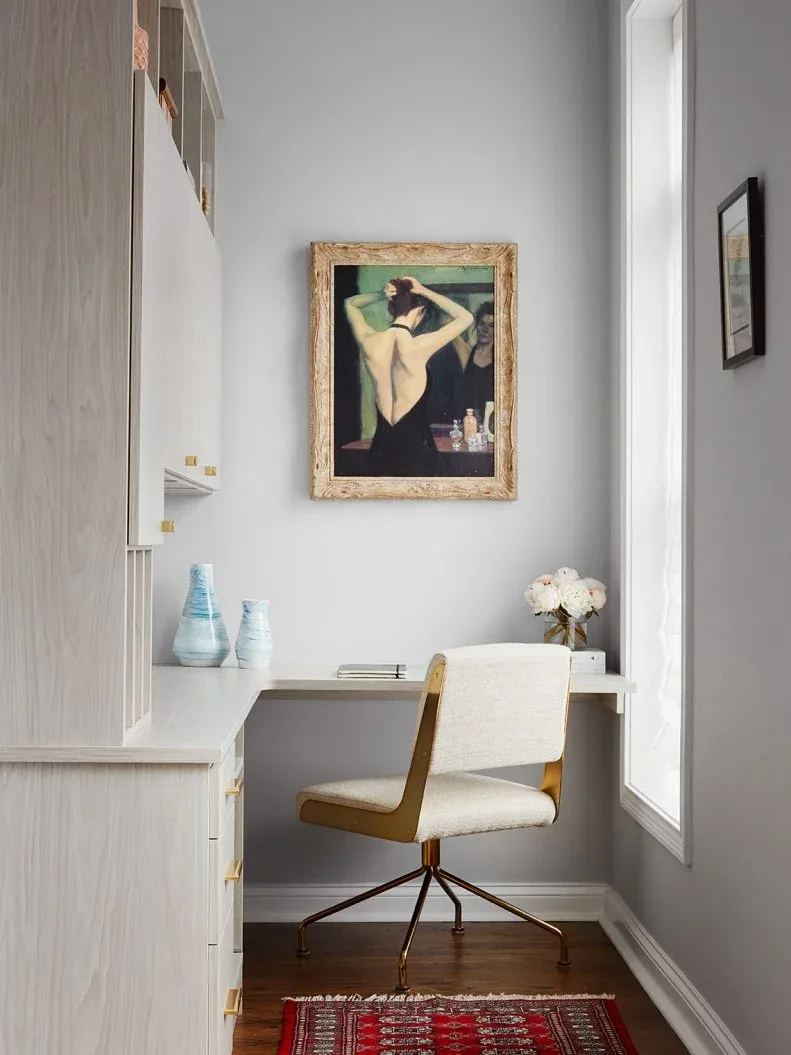
A pale built-in desk makes use of the narrow space between cabinetry and a tall window. The white upholstered chair has a warm metal frame, echoed by the cabinet handles and picture frame. Blue glass objects provide a restrained color accent. Most surfaces stay quiet, allowing the chair and artwork to supply the more decorative details in the small workspace.
Check knee space and usable desk depth before fitting a work surface into a niche. Place frequently used items within reach without crowding the center. A swivel base needs room to turn clear of cabinet edges. Test the chair’s height against the fixed surface, and plan sockets and cable routing while the cabinetry is being designed rather than after installation.
IDEA 05 / 20
Brighten Navy Storage With a Sculptural Light
 SaveSupport Non AI Creator
Image credit: Photo: Kristi Kohut
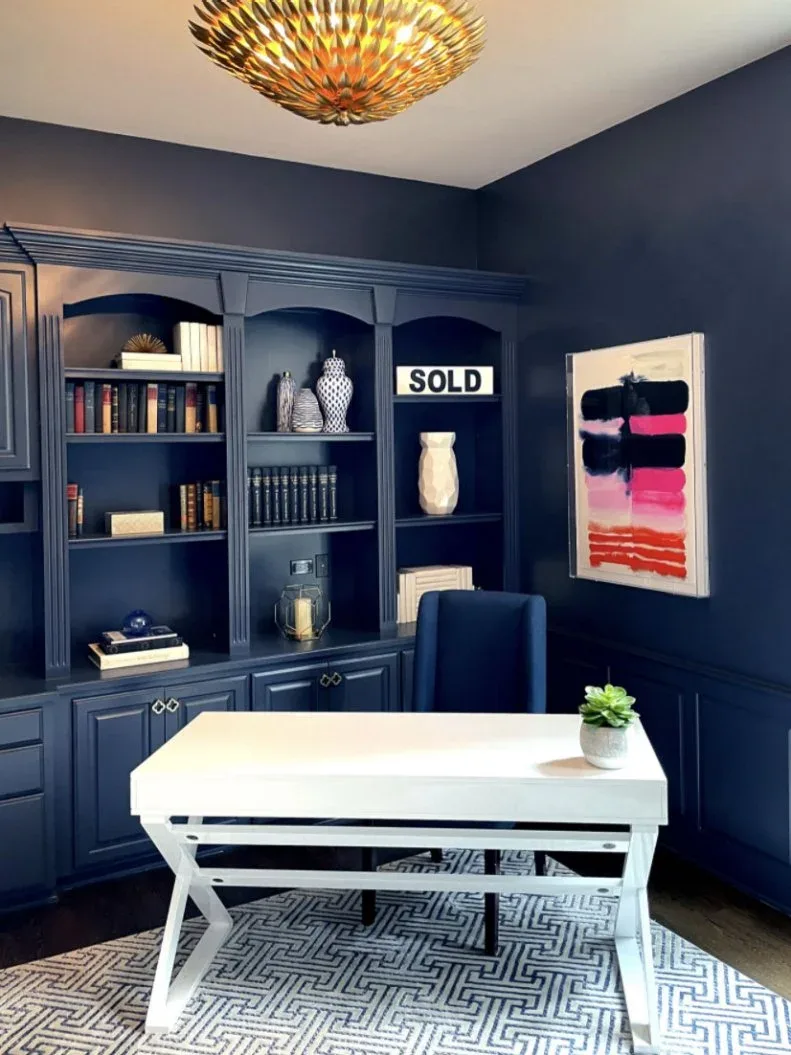
A gold-toned sculptural light stands out against this navy office. The shelves and walls share the dark color, while a white desk creates a bright central surface. Artwork adds pink and orange beside the storage. The decorative light brings warmth overhead without requiring the desk itself to carry a large collection of ornaments or shiny accessories.
Keep a separate adjustable work light even when the ceiling fitting is the main decorative feature. Test glare on the screen and desk surface at the time of day you usually work. Shelves painted to match the wall can look calm, but useful supplies still need an accessible place. Reserve a few clear sections so books and objects remain easy to find.
PART 02
Balance Pattern, Reflection and Useful Furniture
IDEA 06 / 20
Let a Patterned Task Chair Stand Out
 SaveSupport Non AI Creator
Image credit: Photo: Mackenzie Merrill Photography. From: Amy Leferink
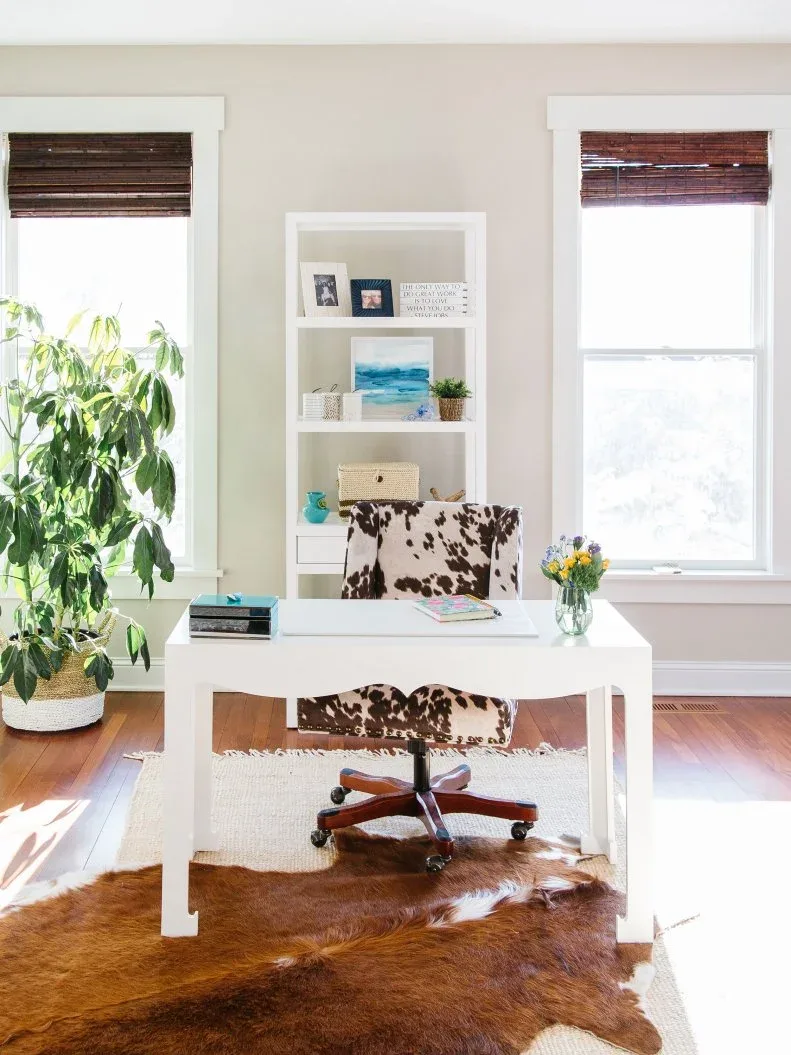
A brown-and-white patterned rolling chair gives this simple white desk a more expressive partner. A similarly colored rug extends the palette onto the floor, while the windows and open shelving keep the surrounding room bright. The chair carries most of the pattern at seated height. It shows how a functional office seat can also become the room’s distinctive furniture piece.
Choose the chair around adjustment and comfort before evaluating its pattern. Test how its wheels move across the actual floor covering; overlapping rugs can interrupt movement and create raised edges. Keep the nearby shelves orderly so the bold chair remains easy to see. Check the fabric care requirements, especially where arms and the front of the seat receive frequent contact.
IDEA 07 / 20
Use a Crystal Ring Above a Quiet Desk
 SaveSupport Non AI Creator
Image credit: Photo: Jessica Delaney
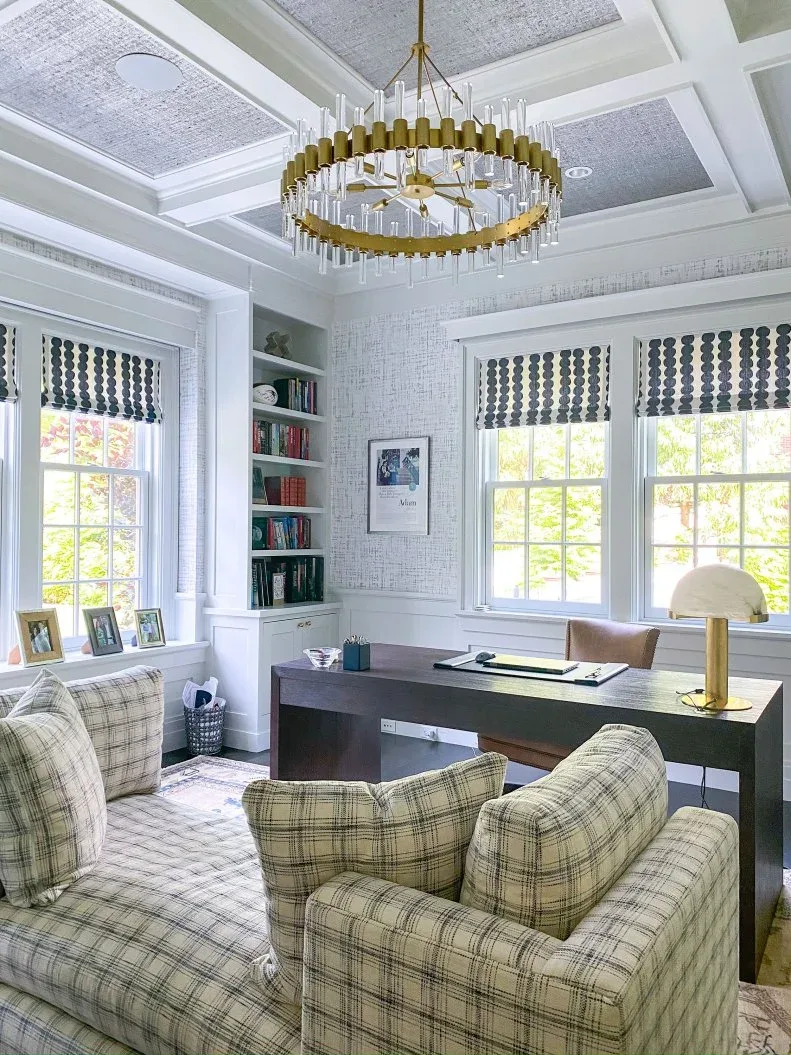
A ring chandelier with clear rods adds a bright decorative layer above the dark desk. Plaid seating provides another pattern lower down, while pale walls and window trim keep the setting light. The ceiling’s recessed sections frame the fitting rather than introducing a strong new color. The room combines familiar upholstered furniture with a more conspicuous contemporary light.
Check the chandelier’s size from the chair and doorway before installation. It should leave enough visual space around the ceiling details. A separate desk lamp can illuminate paperwork without running the whole room at full brightness. Keep the seating layout clear of desk movement, and consider how easily the light’s small rods can be cleaned over time.
IDEA 08 / 20
Mix Reflective Details Around a Dark Desk
 SaveSupport Non AI Creator
Image credit: Photo: Sara Ligorria-Tramp
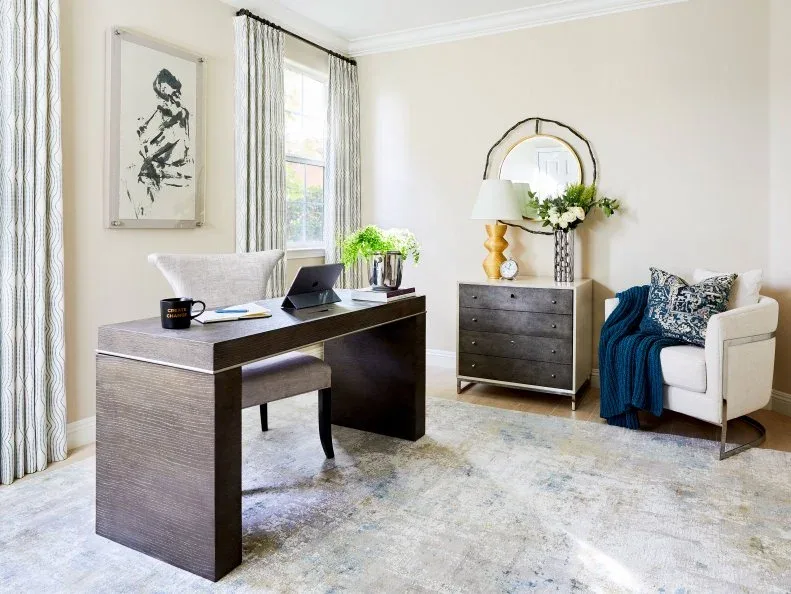
A dark desk anchors this pale office, with a round layered mirror providing a brighter outline behind it. A small chest supports a warm yellow lamp, and a white armchair creates a separate sitting place. Reflective details appear in several smaller pieces rather than one large shiny surface. The quieter upholstery and curtains leave those accents visible without overwhelming the work area.
Compare different metal tones in the room’s actual light before adding more pieces. Keep the lamp and mirror away from angles that send glare toward the computer. A separate armchair is useful only if the route around the desk remains clear. Store paperwork in a dedicated drawer rather than letting it spread over both the working desk and the chest.
IDEA 09 / 20
Warm Gray Built-Ins With a Golden Desk Frame
 SaveSupport Non AI Creator
Image credit: Photo: Reem Hassabella
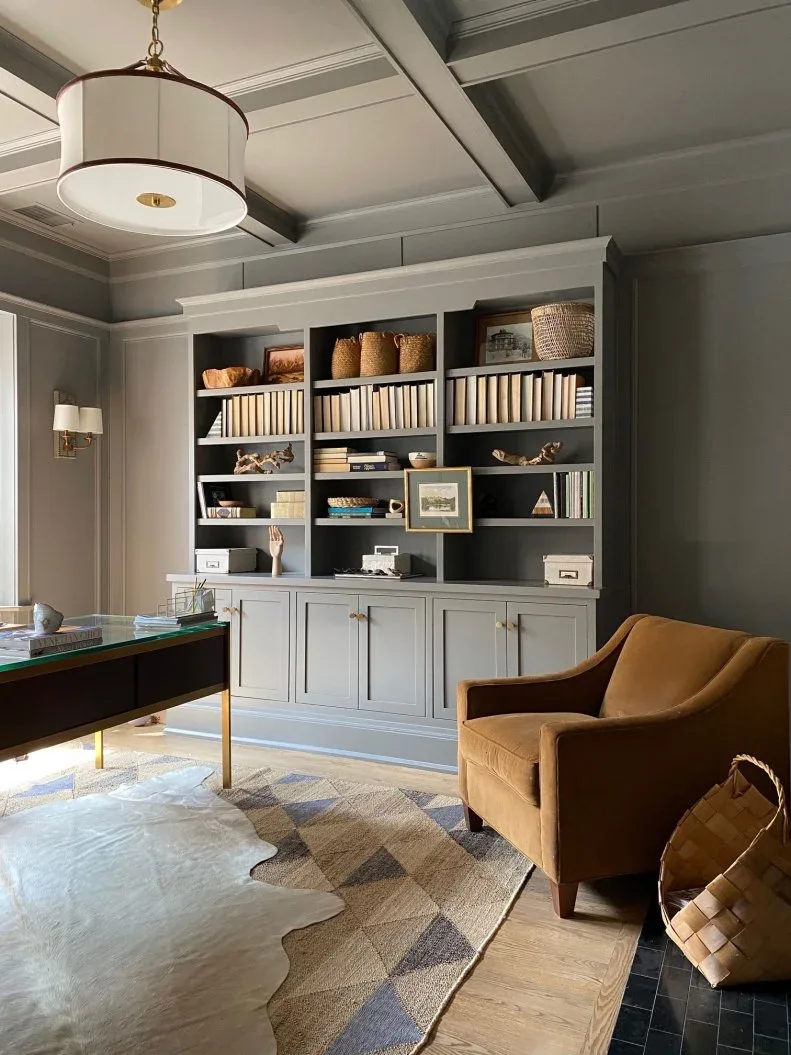
Gray built-ins and ceiling sections create a coordinated background in this office. The desk’s warm metal frame introduces a bright line beneath its darker top, while a brown armchair adds another warm tone nearby. Books and baskets occupy the open shelves. The metallic accent is part of the useful furniture rather than a separate object placed on the working surface.
Plan closed storage for supplies that do not need to be displayed, keeping the open shelves manageable. Test the desk’s legroom with the chair you use, particularly around decorative crosspieces. Check whether a reflective top creates screen glare. Keep rug edges clear of the chair’s travel and leave enough room for someone to sit in the armchair without blocking the desk.
IDEA 10 / 20
Add Warm Metal to Black Shelves and Lighting
 SaveSupport Non AI Creator
Image credit: Photo: Kyle J. Caldwell
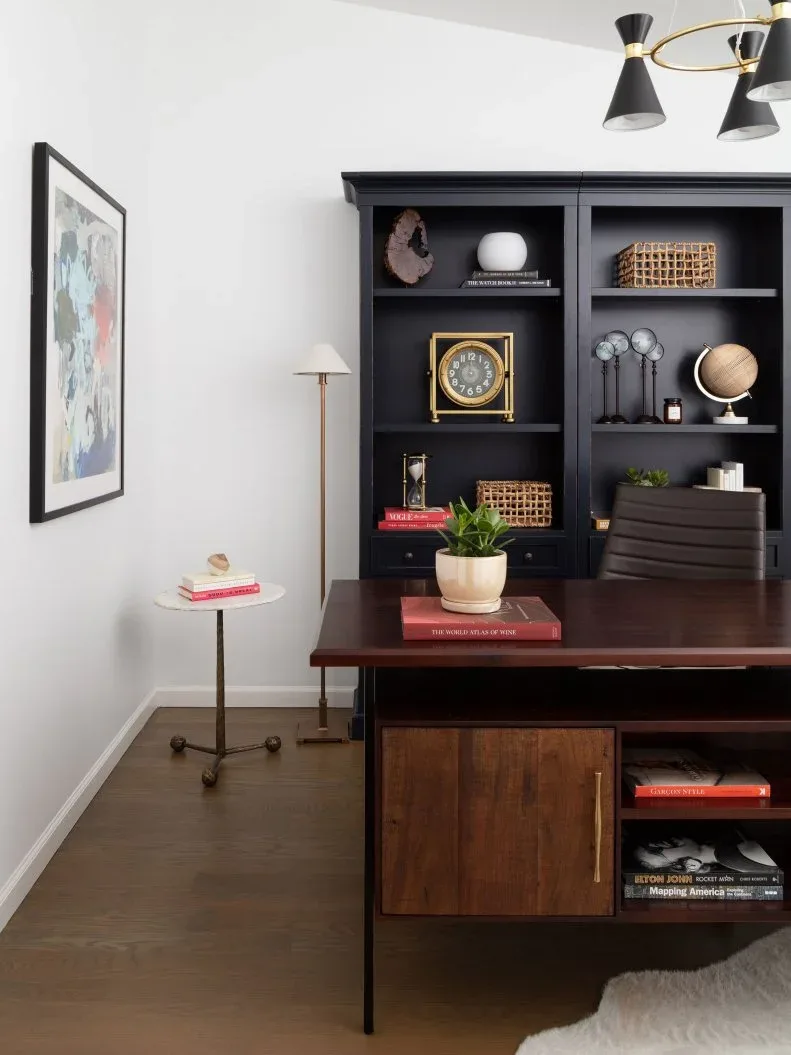
Black shelves provide a strong background behind the wooden desk. Gold-toned details in the ceiling light and smaller shelf objects keep the dark arrangement from feeling entirely flat. A pale wall and a small light-colored side table introduce contrast at the edges. The warm accents remain limited, so the room still reads clearly as a practical workspace with substantial storage.
Use the dark shelves for a mix of books and useful containers, leaving some empty space between groups. Check shelf loads and secure tall furniture as directed. A black shade can concentrate light differently from a pale one, so test the desk’s illumination. Repeat the warmer finish only where it serves a purpose, such as a lamp joint or a framed clock.
PART 03
Add Color Through Seating and Storage
IDEA 11 / 20
Combine a Starburst Light With Clear Guest Chairs
 SaveSupport Non AI Creator
Image credit: Photo: Claire Paquin. From: Claire Paquin
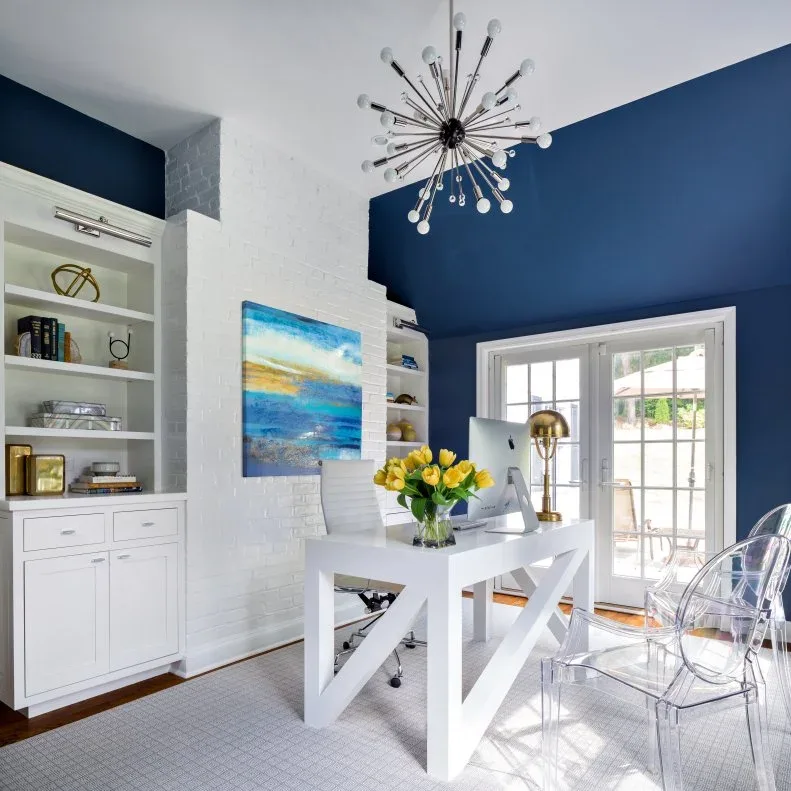
A starburst chandelier spreads fine bright lines above the white desk in this navy office. Clear guest chairs let more of the desk’s diagonal supports and floor remain visible. White shelving provides another bright area against the dark walls. A small gold-toned desk lamp brings warmth closer to the work surface without competing with the larger fixture overhead.
Distinguish guest seating from the chair used for several hours of work. Transparent chairs may suit short conversations, but test support and comfort before choosing them for daily use. Check their care guidance to avoid scratching the surface. Position the starburst fitting where its arms remain clear of movement, and use the desk lamp to control the light on documents.
IDEA 12 / 20
Repeat Gold-Toned Lines in Open Shelves
 SaveSupport Non AI Creator
Image credit: Photo: Stephanie Studer
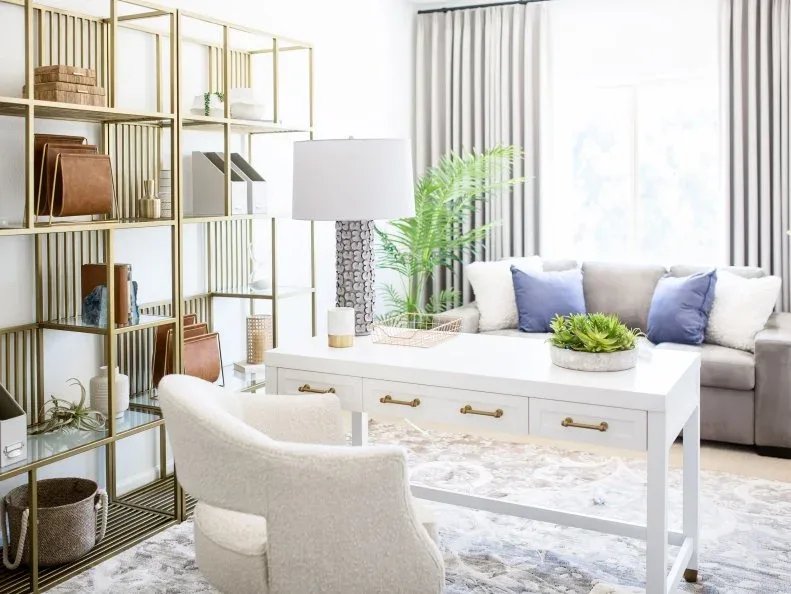
Tall open shelving brings a repeated grid of gold-toned lines into this light office. The white desk echoes that finish through its drawer pulls, with a pale textured chair and sofa softening the setting. Books, baskets and a bag occupy the shelves. Their open frame adds decoration while allowing the wall and daylight to remain visible behind the storage.
Measure the objects you intend to store before buying an open shelving unit. A decorative frame is useful only when its shelf heights suit books and containers. Follow the anchoring and load guidance, keeping heavy items lower. Check access to desk drawers from the chair, and leave clear shelf sections so the warm metal outline remains visible rather than buried under supplies.
IDEA 13 / 20
Keep a Glass Desk Light Beside Bold Patterns
 SaveSupport Non AI Creator
Image credit: Photo: Marco Ricca
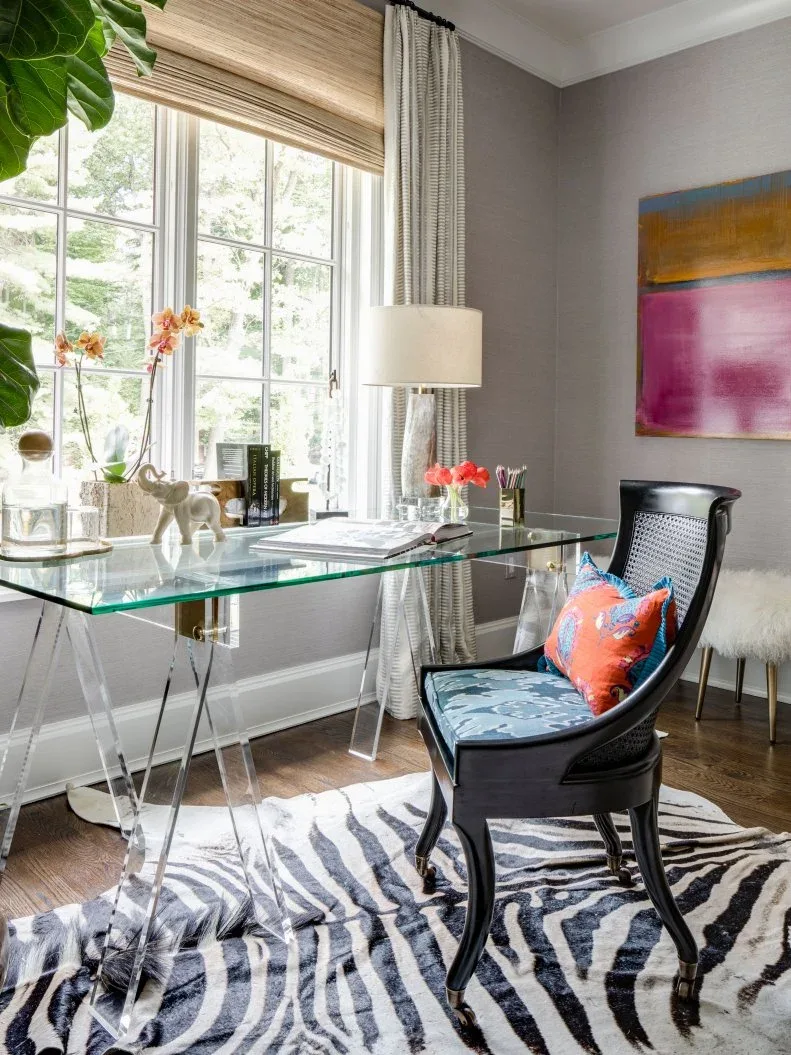
A glass-topped desk on clear supports gives this patterned office a light central outline. A black curved chair, a strongly striped-looking rug and colorful artwork provide most of the visual weight. The tabletop also reflects the window and lamp beside it. The transparent furniture helps several decorative elements share the space without adding another opaque block at desk height.
Check reflections at the screen position before settling the desk beside a window. Glass surfaces need frequent wiping, and their edges should remain easy to see in the walking route. Test the desk’s stability and load rating with the equipment you use. Keep a clear area around the keyboard or notebook so accessories do not turn a light-looking surface into a crowded one.
IDEA 14 / 20
Pair Aqua Shelves With a Globe Chandelier
 SaveSupport Non AI Creator
Image credit: Photo: Stylish Productions
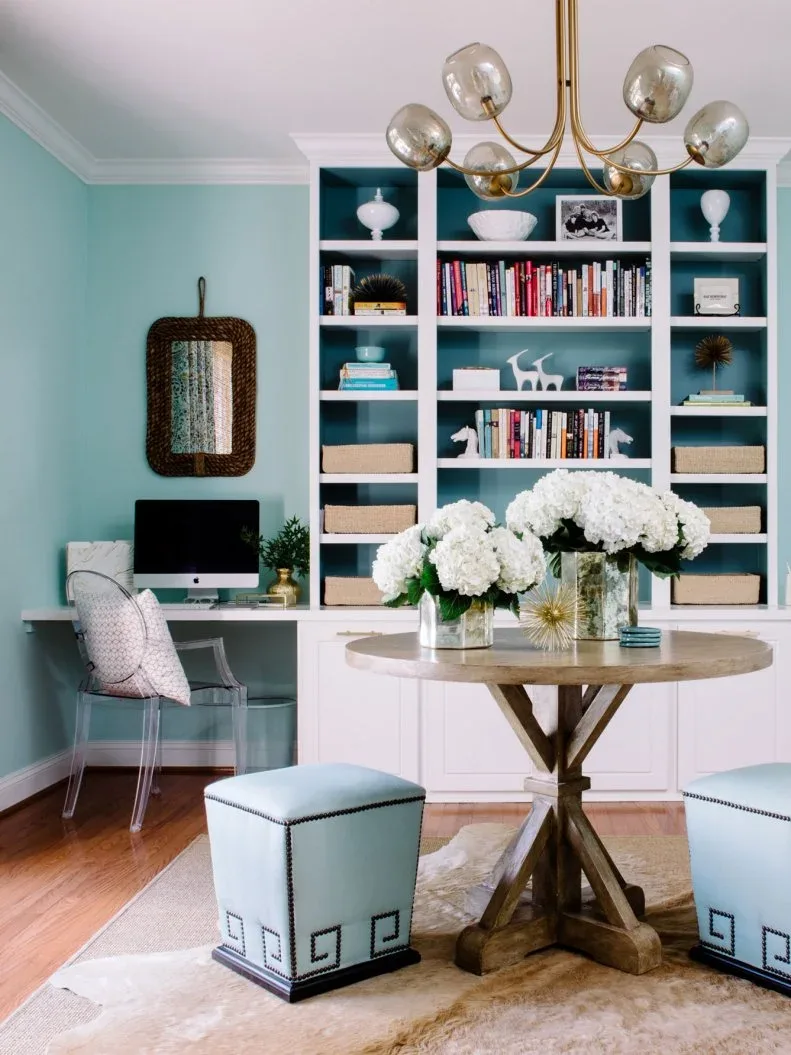
Aqua walls and shelf backs provide a soft color background for white books and objects. A gold-toned globe chandelier hangs above the round table, while a built-in computer desk occupies the wall behind it. Pale stools add another seating layer in front. The room separates screen work from a table used for spreading out papers or talking with someone else.
Choose the main desk chair for the work you perform most often, and use stools for shorter visits if they suit your routine. Keep the route between the two surfaces open. Check light levels at both the table and computer rather than assuming the decorative fixture handles everything. Baskets on the shelves can contain smaller supplies without obscuring the aqua backdrop completely.
IDEA 15 / 20
Give Traditional Storage a Turquoise Accent
 SaveSupport Non AI Creator
Image credit: Photo: Erick Hodge
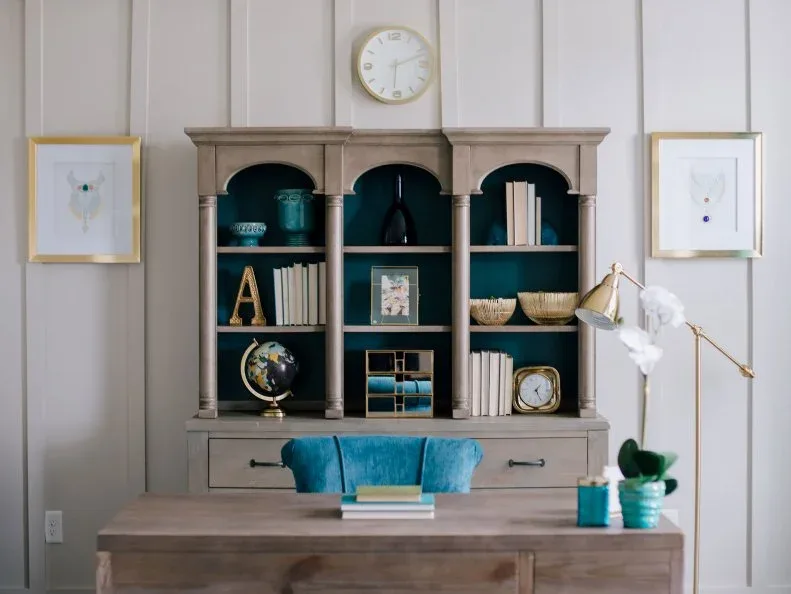
A turquoise chair introduces a bright accent in front of the gray cabinet’s arched shelves. The shelf interiors repeat a deeper blue-green tone, while pale framed pictures and warm metal lamps add smaller points of contrast. A wooden desk gives the foreground a warmer surface. The traditional cabinet therefore supports colorful seating without every piece needing the same furniture style.
Try the chair color against the cabinet before repainting a large storage piece. A small upholstery change may provide enough contrast on its own. Keep the desk lamps positioned for the tasks they serve, leaving the center available for work. Check how the chair arms fit beneath the surface, and keep frequently used supplies lower than decorative objects on the tall shelves.
PART 04
Make Decorative Details Work Every Day
IDEA 16 / 20
Connect a Pink Rug With a Decorative Desk
 SaveSupport Non AI Creator
Image credit: Photo: Julie Soefer, Designer: Laura Umansky. From: Laura U Design Collective
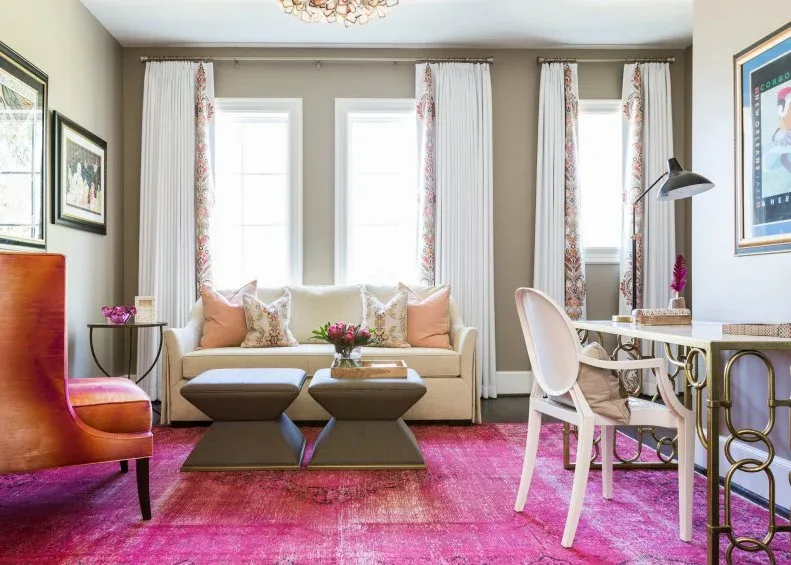
A vivid pink rug connects the desk and sitting area in this office. Gold-toned loop-shaped supports give the desk a decorative outline, while a pale sofa and curtains keep the larger background surfaces calm. An orange chair adds another warm accent nearby. The rug provides most of the color beneath furniture that serves different parts of the room.
Select a rug that works with the chair’s movement and the furniture footprint, not only its color. Test transitions at its edges and leave enough clear space behind the desk seat. If the office also hosts conversations, keep the sofa reachable without passing through cables. A strong pink floor covering can remain the main accent while the desktop stays relatively plain.
IDEA 17 / 20
Use a Small White Desk With Warm Metal Legs
 SaveSupport Non AI Creator
Image credit: Photo: Heather Hawkins. From: Abbe Fenimore
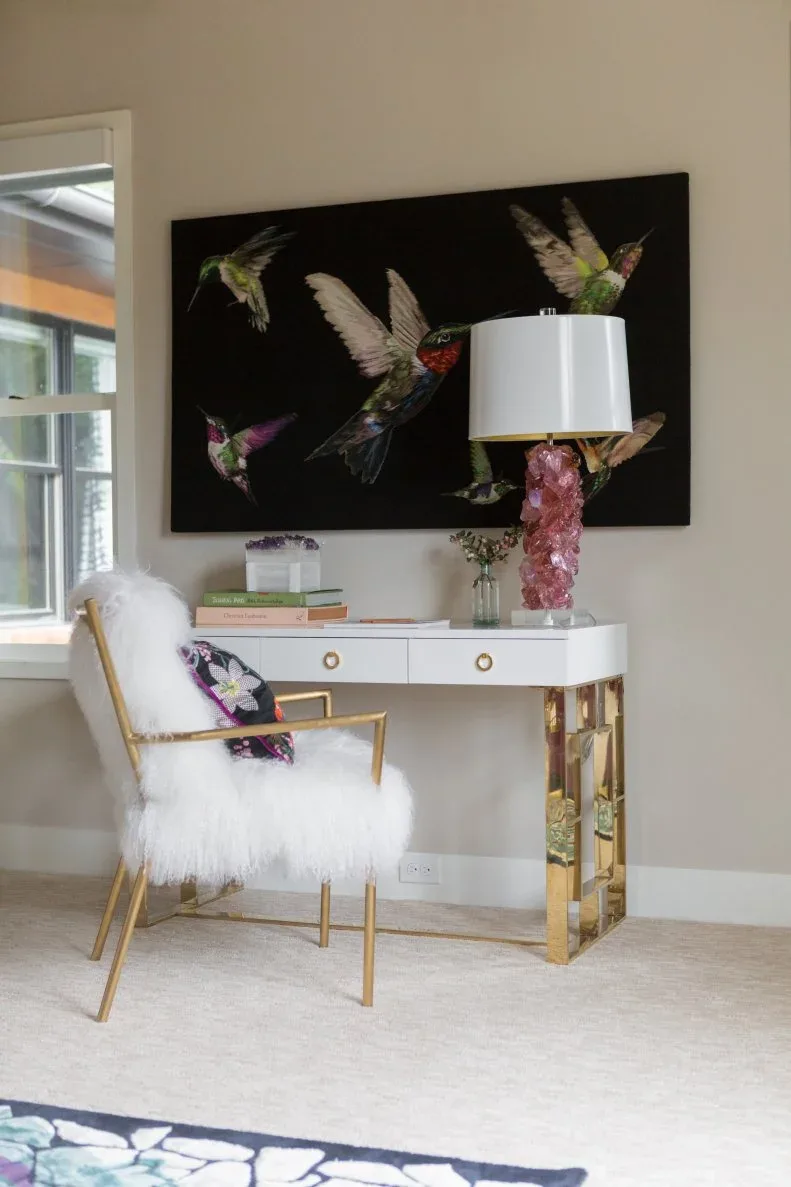
Gold-toned legs and ring-shaped drawer pulls give this small white desk a distinctive outline. A fluffy pale chair introduces soft texture, and a pink lamp repeats color from the artwork above. The desk’s compact drawers leave the surface relatively open. This arrangement suits a decorative writing corner where the furniture itself provides most of the room’s visual detail.
Match a compact desk to the size of the work you expect to do. Spread out a notebook and laptop before assuming the surface is sufficient. A fluffy chair needs its own cleaning routine and may be better for occasional writing than long screen sessions. Check legroom beneath the drawers and keep the lamp positioned so its shade does not crowd the usable surface.
IDEA 18 / 20
Use Paired Sconces in a Pale Desk Nook
 SaveSupport Non AI Creator
Image credit: Photo: Butter Lutz Interiors. From: Butter Lutz Interiors
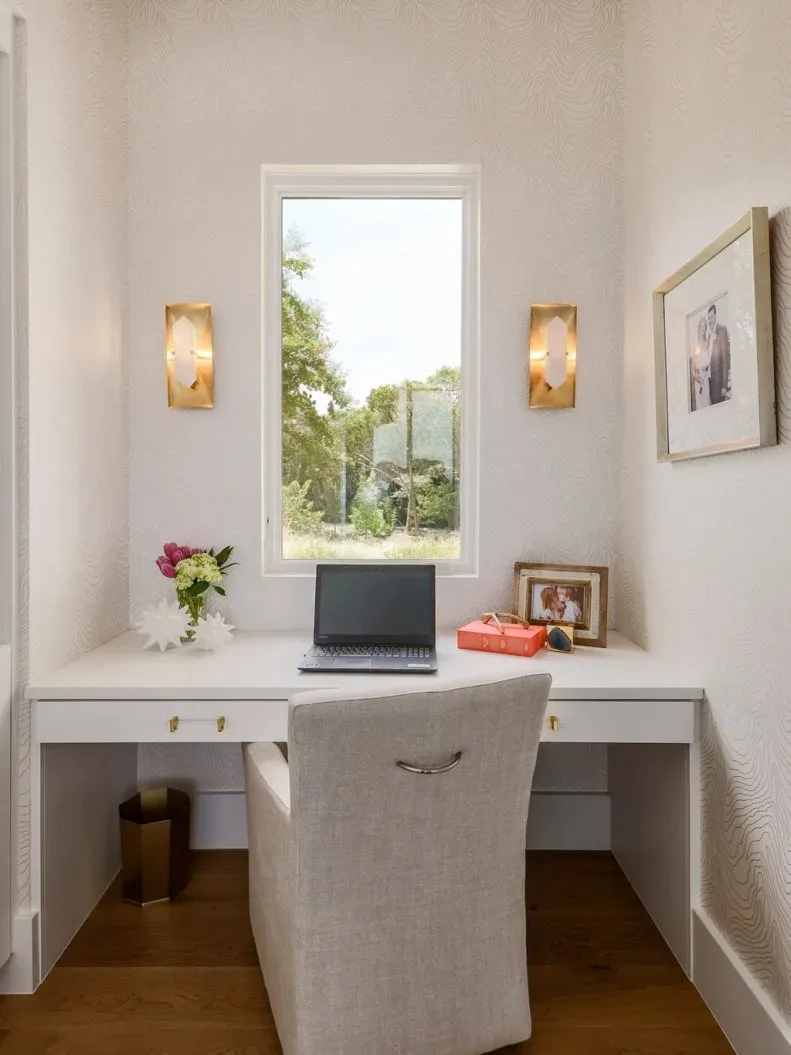
Two gold-toned sconces flank the narrow window above this pale built-in desk. The light fittings and small drawer pulls introduce warm details without filling the worktop. A tall upholstered chair occupies the center, with flowers and a framed picture placed toward the edges. The restrained palette lets the symmetry of the lighting give the nook its decorative character.
Test whether the wall lights illuminate the working surface adequately or need a separate task lamp. Have wiring and installation assessed appropriately rather than running exposed cables across the niche. Check the chair’s arm and back clearance as it moves. Keep the window treatment easy to operate, and reserve the central desk area for the equipment and paperwork used each day.
IDEA 19 / 20
Make a Gold-Toned Desk Base the Main Feature
 SaveSupport Non AI Creator
Image credit: Studio Thomas James
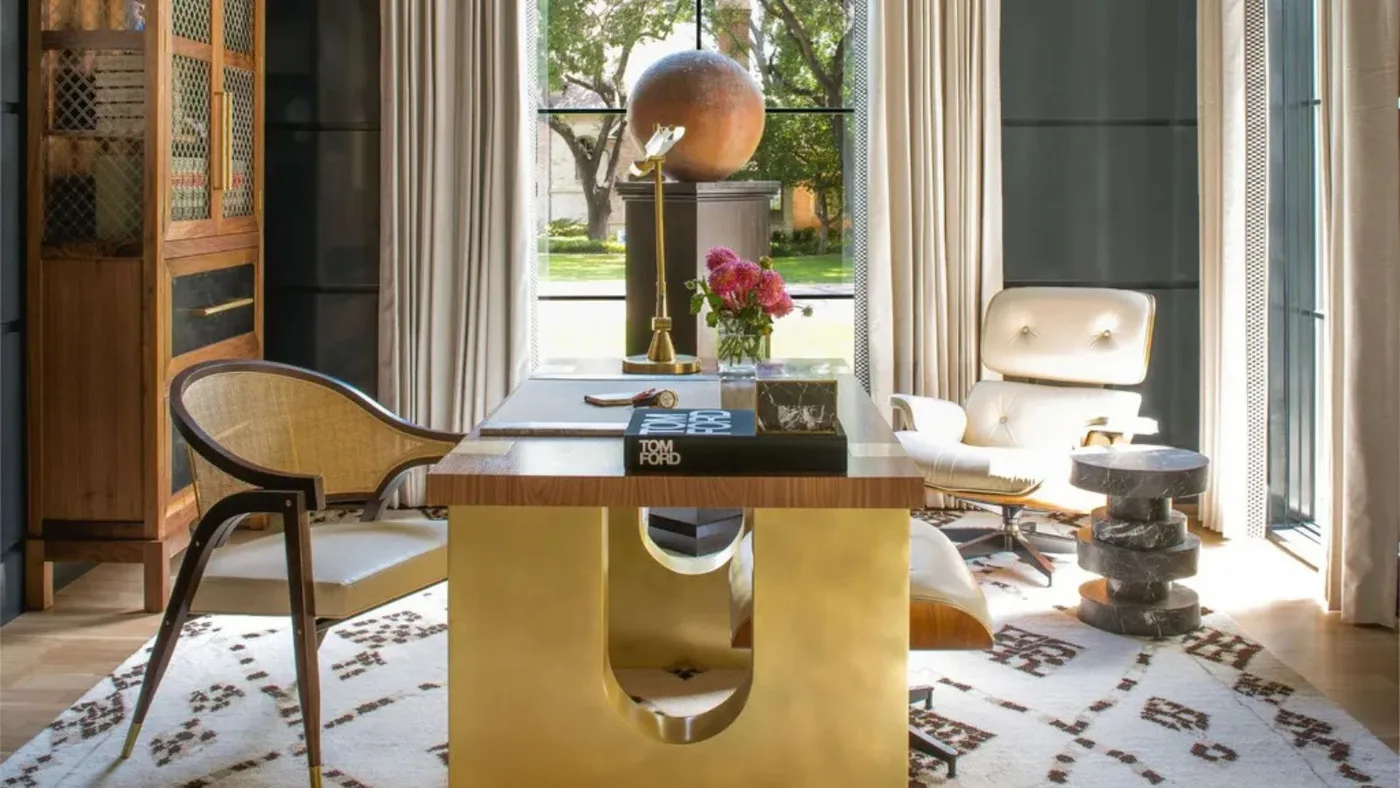
A broad gold-toned base gives this wood-topped desk a strong sculptural presence. Dark green walls provide contrast, while tall windows and pale curtains brighten the surrounding room. A slender warm metal lamp repeats the base’s color at desk height. The main reflective feature belongs to the central piece of furniture rather than a collection of accessories spread around the office.
Look at the desk base from the chair as well as from the doorway. A dramatic shape must still leave comfortable knee and foot space. Test screen reflections near the windows before choosing the final position. Keep the tabletop useful and check the recommended cleaning method for its different finishes, avoiding abrasive products on decorative metal surfaces.
IDEA 20 / 20
Bring a Statement Light Into a Working Studio
 SaveSupport Non AI Creator
Image credit: Gray Walker Interiors
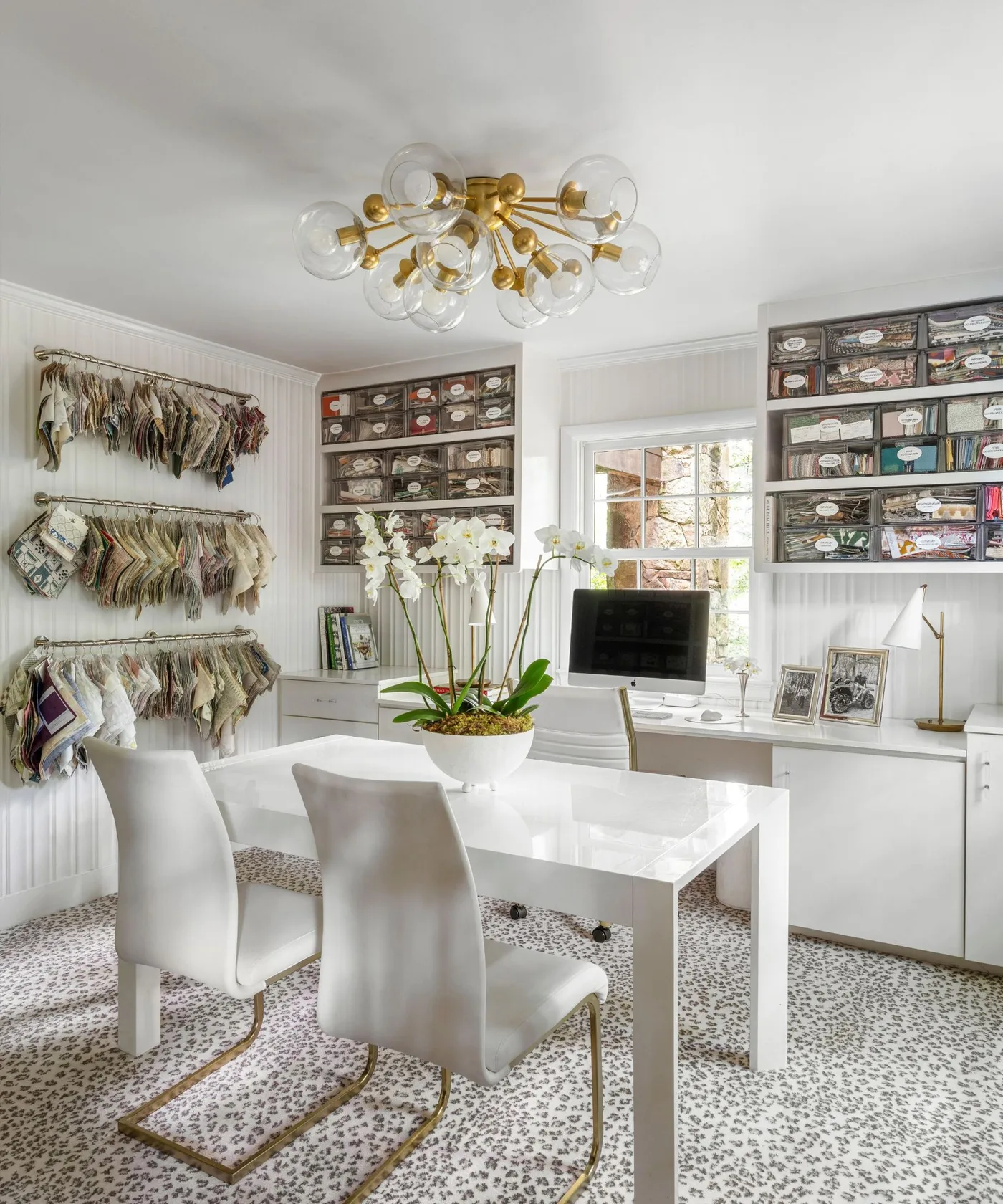
A gold-toned globe fitting adds a decorative center to this white working studio. Boxes fill upper shelves, and fabric samples hang along the side wall, showing how the room supports real materials and supplies. The tables and chairs remain pale and simple. The fixture gives the busy space a dressed-up detail without making the storage look like a separate display room.
Keep work samples and storage labels readable when adding decorative lighting. Check brightness at each table, especially where colors are being compared. Separate task lighting may be needed even with a large ceiling fitting. Leave space to pull chairs away and handle materials, and avoid tall tabletop decorations that would reduce the surfaces available for sorting, writing or meetings.
BRING IT ALL TOGETHER
Keep the Working Surface Useful
Test the desk and chair together before buying decorative additions. Check room for your knees, screen position and the route behind the seat. Plan reachable storage for frequently used supplies so the desk does not have to hold everything.
Choose one main decorative feature and support it with smaller repeated details. Control glare, follow cleaning guidance for reflective surfaces and keep cables out of circulation routes. A workspace is more enjoyable when its attractive furniture also makes daily tasks easier.