Green can connect a dining room through the walls, chairs, storage or a few useful smaller pieces. Choose the furniture around the meals you serve and the room you need to move through, then decide whether green should provide a broad background or a limited accent. A patterned blind and a painted wall can create quite different arrangements.
These rooms show lighter and deeper greens alongside wood, pale crockery and warmer textiles. Compare samples together in daylight and under the lights used for dinner. Check chair movement, cabinet openings and the space needed for shared dishes before adding decoration, so the finished color scheme also works when guests are seated.
PART 01
Choose how much green the room needs
IDEA 01 / 20
Let Green Pattern Frame Simple Dark Furniture
 SaveSupport Non AI Creator
Image credit: Future
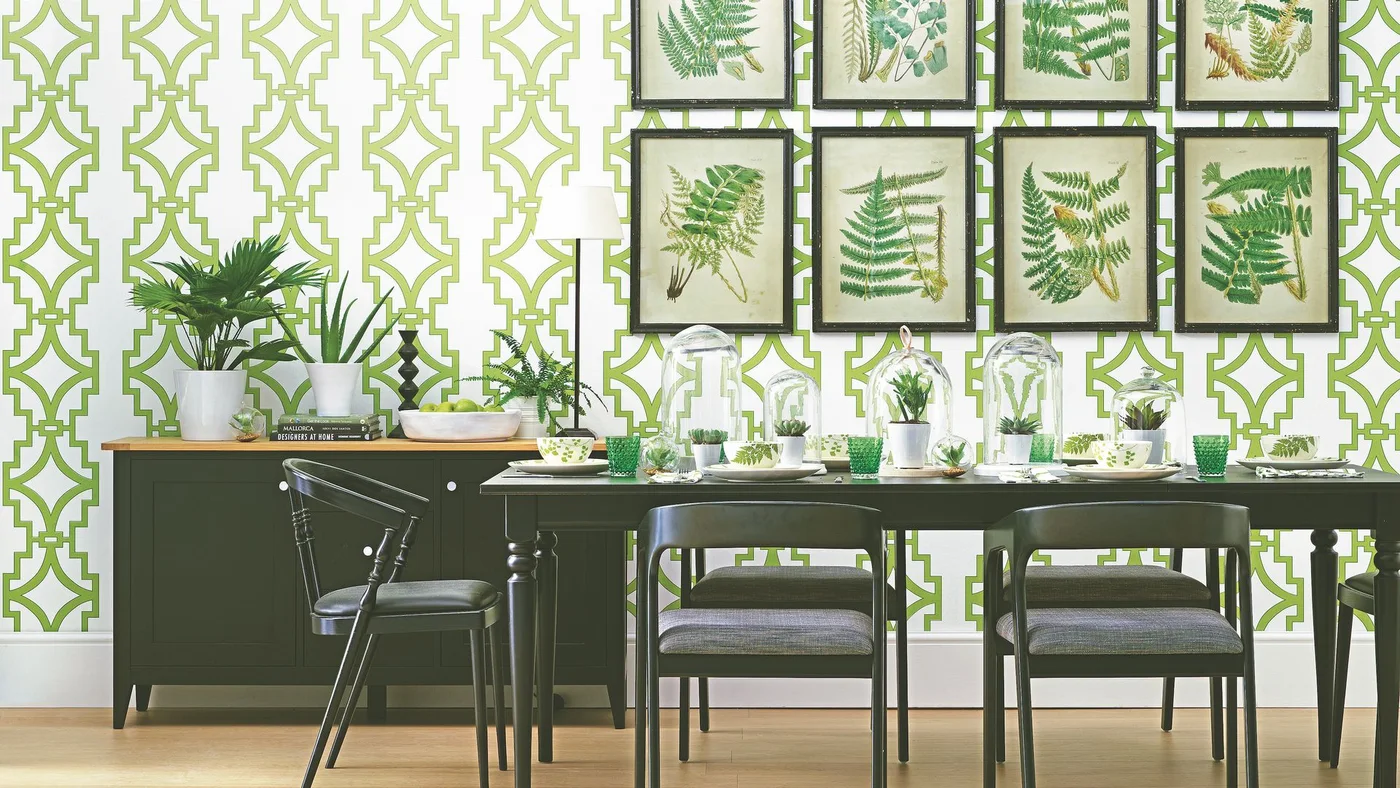
The green geometric wallpaper gives the room a repeating pattern, while botanical pictures extend the color in smaller framed areas. Dark chairs, table and sideboard provide simpler solid outlines beneath it. Pale flooring and the lighter background of the wallpaper keep the combination from becoming uniformly dark across every surface.
Compare a full wallpaper repeat with the framed collection before deciding how much wall space each needs. Choose the furniture around daily seating and storage first. If the pattern is already strong, keep table decorations selective and leave useful surface space rather than repeating the botanical theme in every available object.
IDEA 02 / 20
Keep Deep Green Around a Compact Table
 SaveSupport Non AI Creator
Image credit: Colourtrend
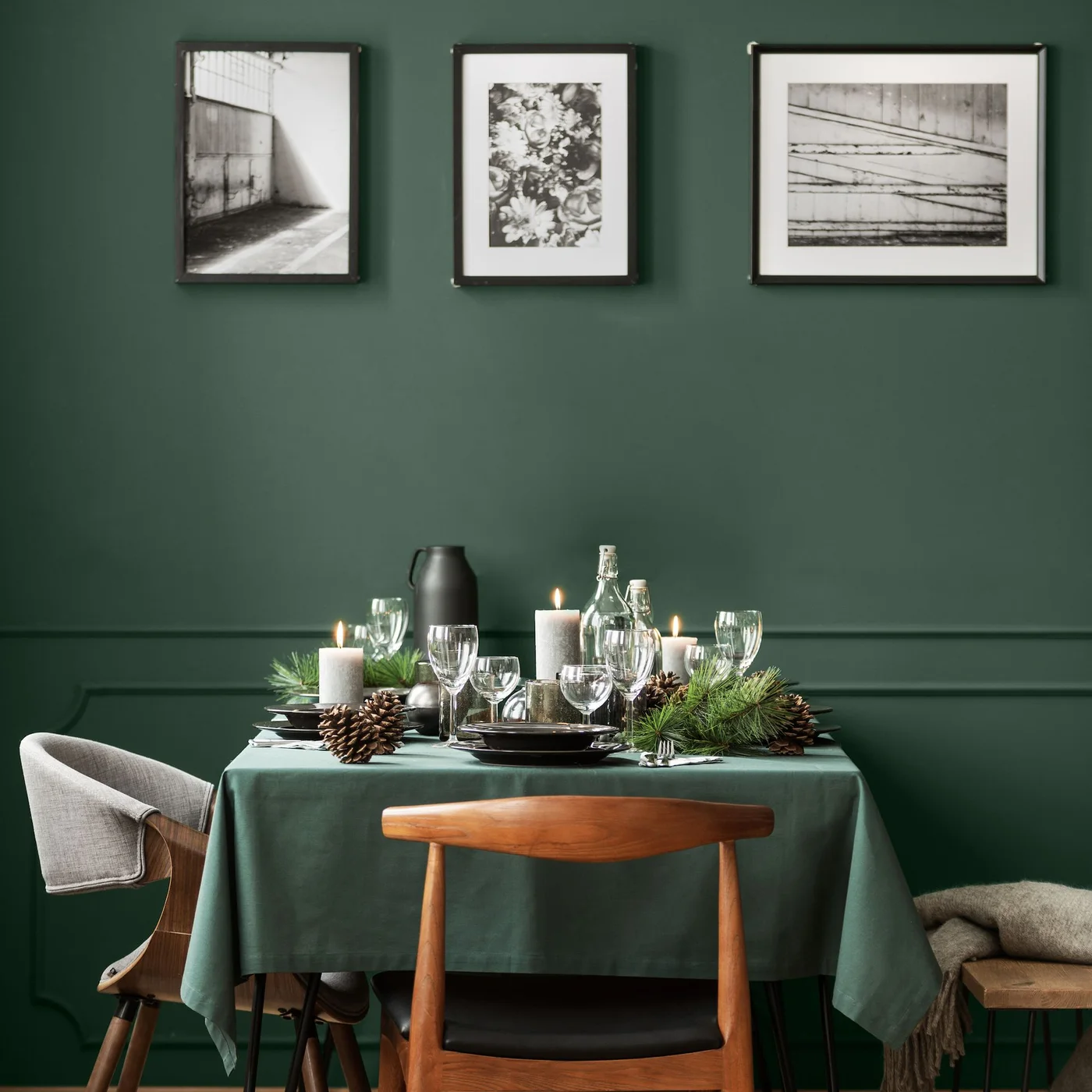
Deep green walls continue around the small dining area, with the green cloth repeating the color on the table. Three pale framed pictures create lighter areas above. Wooden seating adds a warmer surface, while clear glassware and pale textiles keep some of the smaller details lighter within the deeper surrounding palette.
Test the green in the dining area’s evening light as well as daylight before choosing the full wall color. A compact table needs practical serving space even when the surrounding palette is simple. Keep decorative greenery away from food and use battery candles where foliage crowds the light holders; the photographed centerpiece does not establish useful spacing for your meal.
IDEA 03 / 20
Use a Botanical Wall Behind a Dining Bench
 SaveSupport Non AI Creator
Image credit: Future
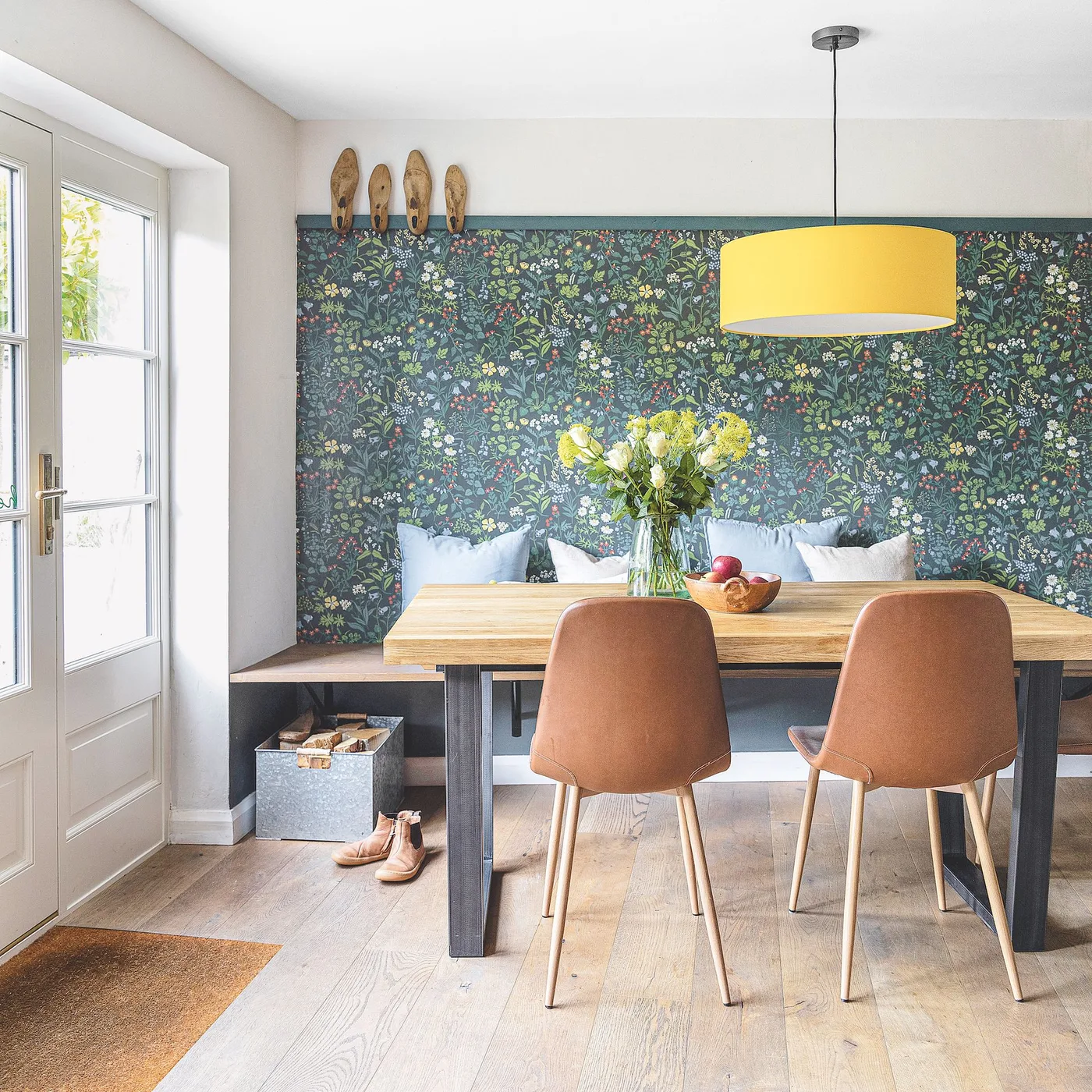
The green botanical wall provides the larger pattern behind the bench, while the yellow pendant adds a stronger warm accent above the table. Wooden surfaces and warm-toned chairs keep the furniture separate from the wallpaper. Pale cushions make the bench area lighter, allowing the patterned background to remain clearly visible.
Check seated comfort and the position of the table before adding a fuller cushion arrangement. A built-in bench also needs accessible entry at its ends. Dining room banquette ideas compare different ways to arrange fixed seating, useful when you want the patterned wall as a feature but still need comfortable everyday access to each place.
IDEA 04 / 20
Paint the Bench Back Green Beside Warm Walls
 SaveSupport Non AI Creator
Image credit: Barker and Stonehouse
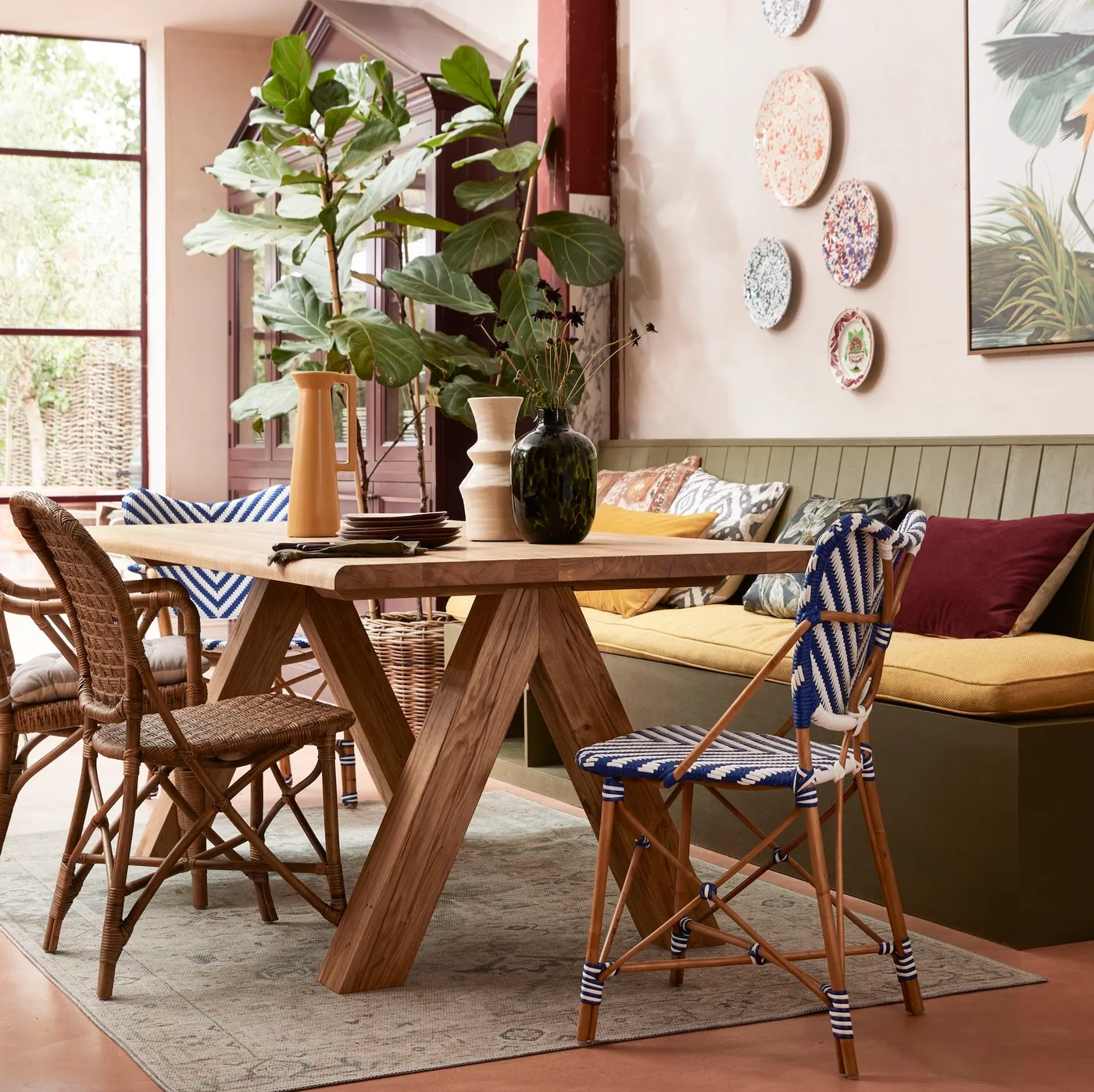
The green bench back introduces color along the seating, leaving the larger wall above a warmer pale shade. Woven and blue-striped chairs add different textures around the wooden table. Decorative plates on the wall continue the mixed character, while the green stays concentrated in one useful furniture feature rather than all the surrounding surfaces.
Choose the bench finish for the actual material and regular cleaning needs, then compare it with the seat fabric. Test whether cushions leave enough seating depth before buying several. Keep chair-pulling space clear around the table’s legs, and make sure the bench’s occupants can reach their places without moving another guest every time.
IDEA 05 / 20
Set Warm Chairs Against Muted Green Walls
 SaveSupport Non AI Creator
Image credit: Future PLC
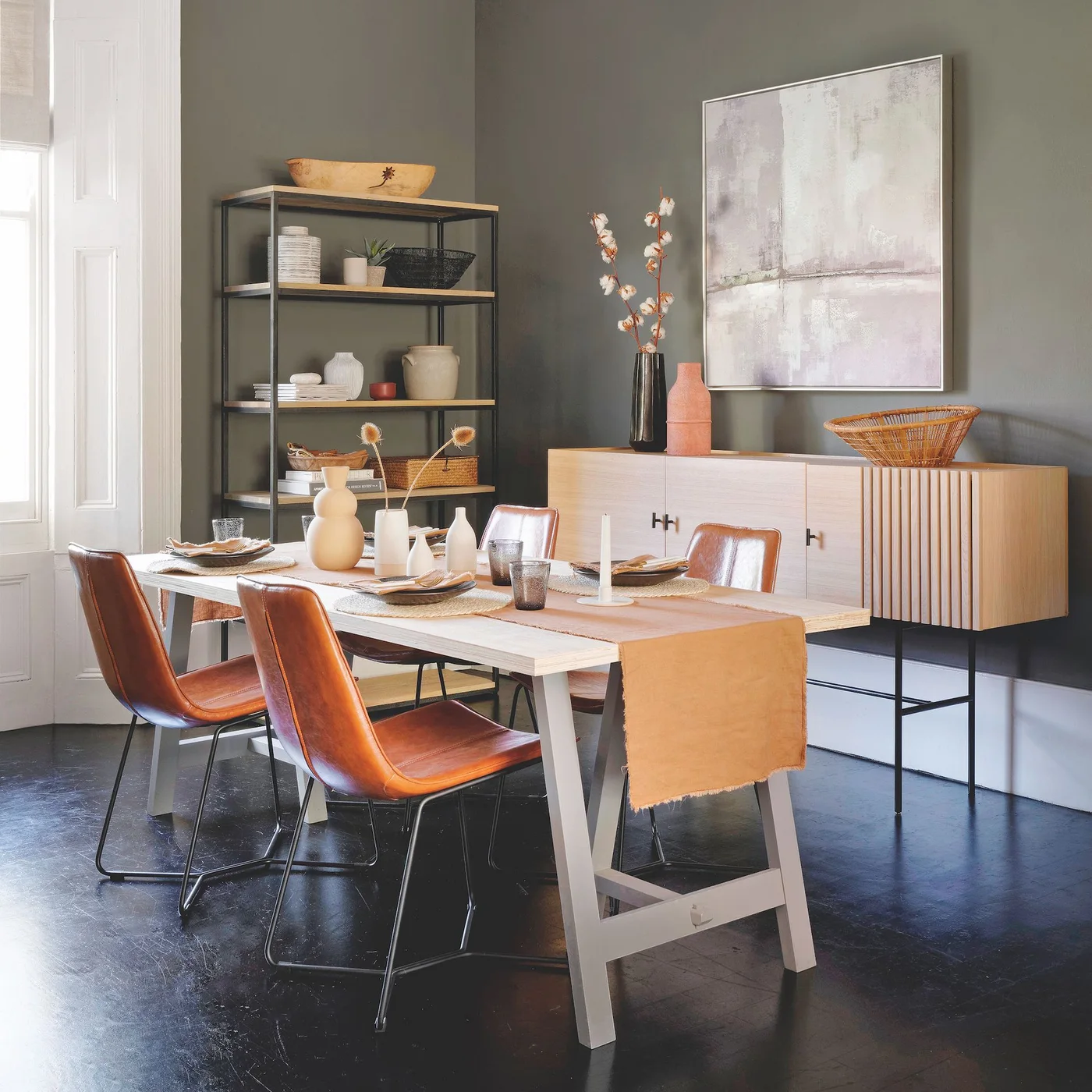
Muted green walls provide a quieter background for the warmer brown chairs and pale wooden table. Open shelving and a sideboard add storage in different forms, with a pale abstract picture above. The room repeats wood and darker frames selectively, leaving the green wall broad enough to connect the separate useful pieces.
Compare the green sample with both the chairs and sideboard rather than expecting different wood finishes to match automatically. Keep open shelves for things that can be stored tidily and reached easily. Leave room to open sideboard doors with the chairs pulled out, and choose table decorations around serving space instead of filling the larger room with another display.
PART 02
Connect useful furnishings with the color
IDEA 06 / 20
Display Pale Tableware Against Sage
 SaveSupport Non AI Creator
Image credit: Future PLC
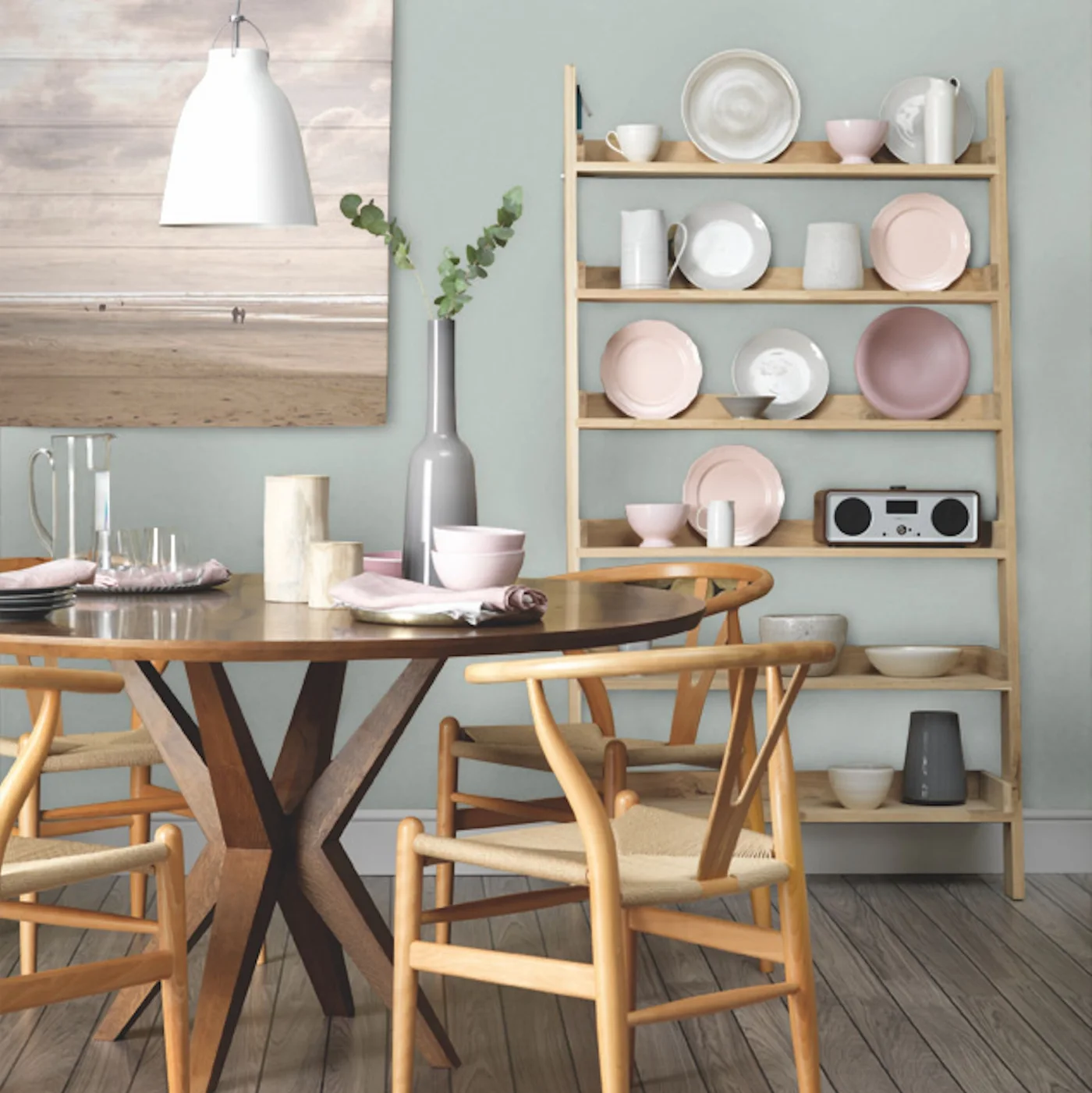
Pale plates and pitchers stand out against the sage-colored wall within the simple wooden shelves. The round table and curved chairs introduce different outlines below. A pale pendant leaves the larger color scheme restrained, while smaller pink tableware pieces add warmth without requiring a second strong painted surface.
Check the shelf supports and reach before displaying frequently used crockery. Keep the heavier pieces in suitable supported locations rather than copying the pictured arrangement by size alone. Dining room storage ideas compare open displays with enclosed cabinets if you want the pale tableware visible but need another place for larger or less tidy serving pieces.
IDEA 07 / 20
Keep Bright Green Below a Pale Upper Wall
 SaveSupport Non AI Creator
Image credit: Future
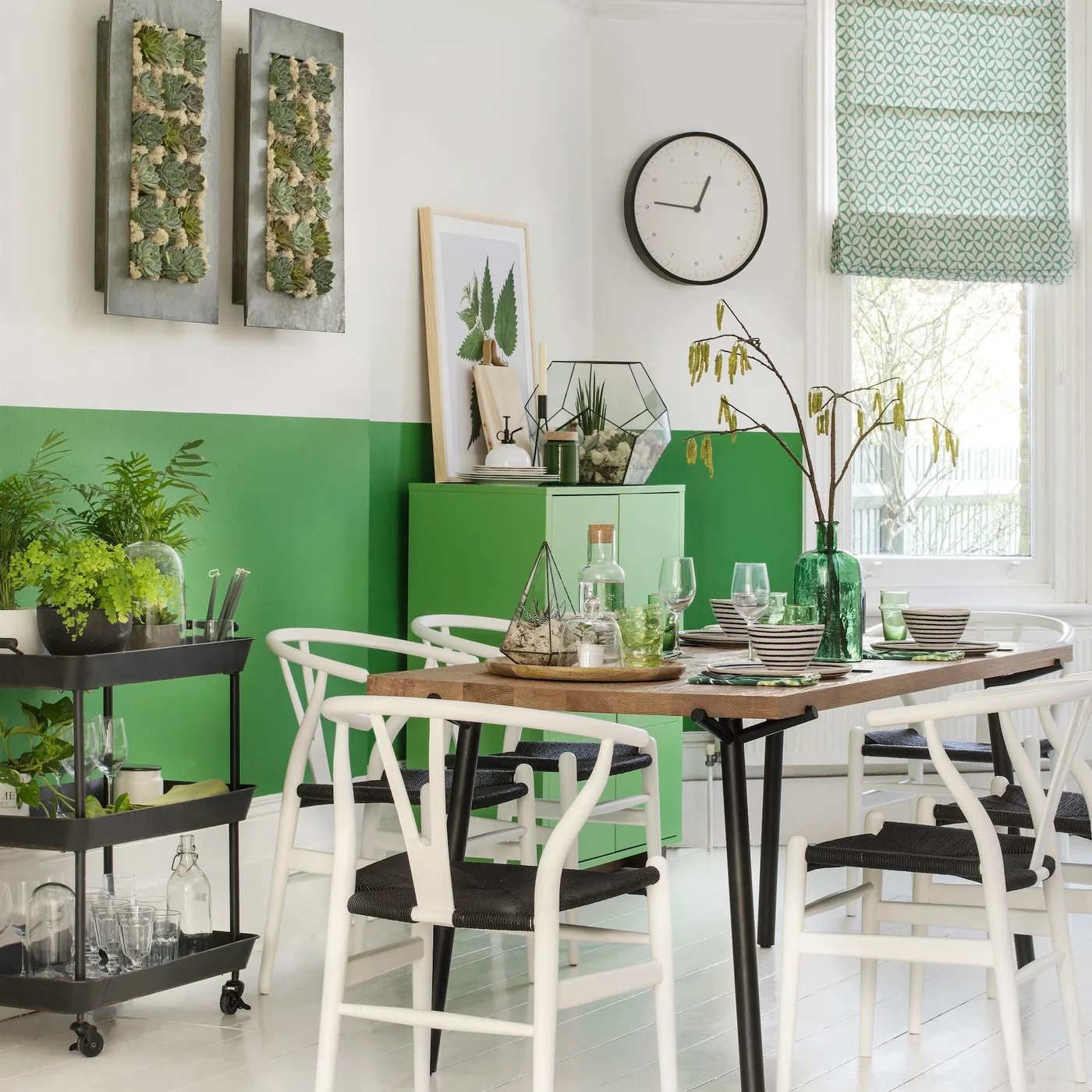
Bright green covers the lower wall and cabinet, leaving the upper section pale around the clock and pictures. White chairs lighten the seating, while the wooden table adds a warmer central surface. A pale green blind introduces a related pattern at the window without matching the stronger paint exactly.
Choose the painted boundary around the room’s existing fittings and furniture height before starting. Compare the cabinet finish with the wall if they will be adjacent. Leave room to operate the blind and open storage, and keep a trolley or plant stand positioned so it does not narrow the path between the dining chairs and the window.
IDEA 08 / 20
Repeat Pale Green in Blinds and Smaller Lights
 SaveSupport Non AI Creator
Image credit: Future
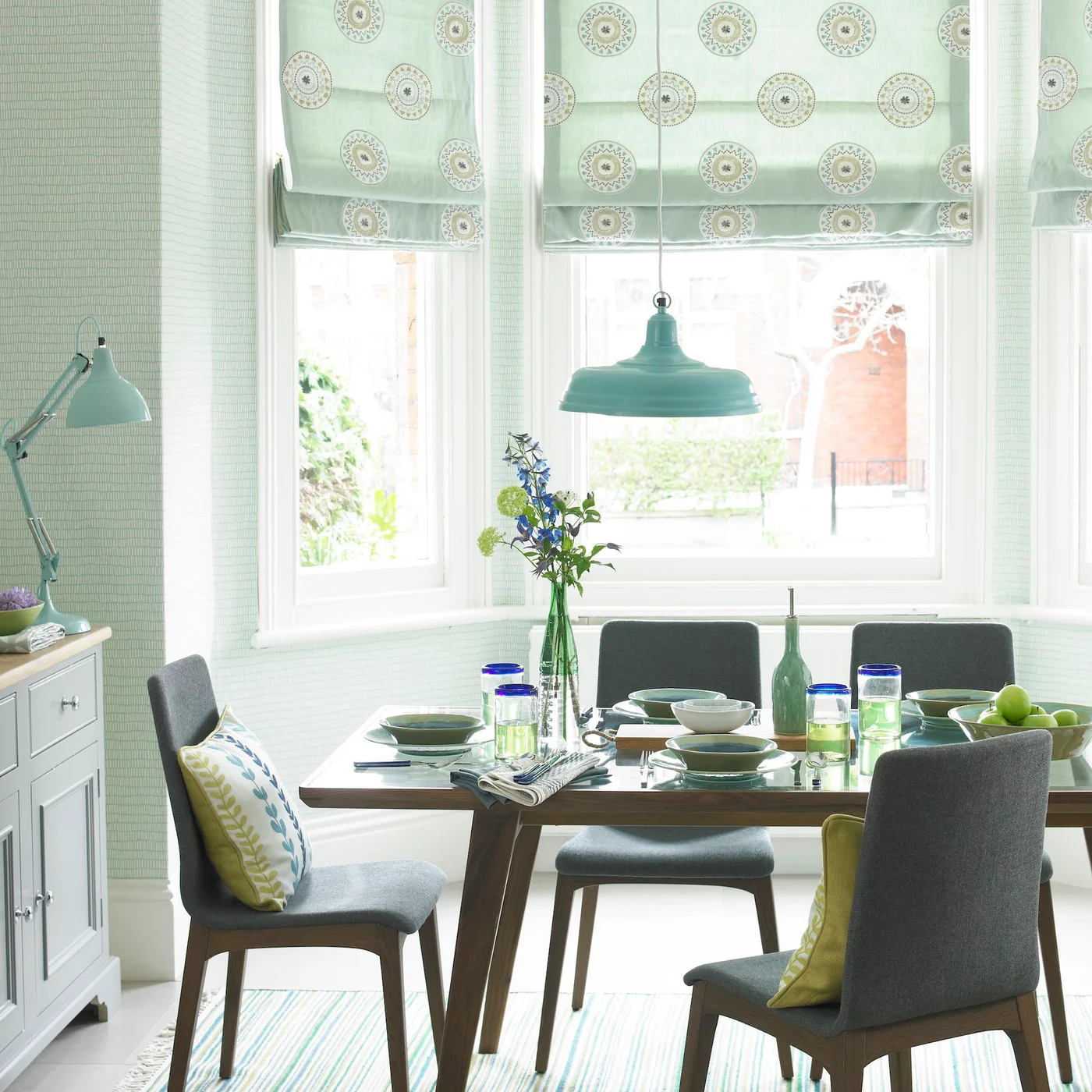
Pale green blinds introduce the room’s pattern near the windows, with green light fittings and glassware repeating the color at smaller scales. Gray chairs keep the seating quieter. The pale sideboard and lighter wall surfaces let the window treatment provide much of the decorative detail rather than surrounding the table with several competing colors.
Test the blind fabric when it is lit from behind as well as closed in the evening. Keep the light positions practical for eating and check their relation to the actual table. Limit the tabletop green accents to useful pieces, leaving room for serving dishes instead of adding more glassware purely to match the window treatment.
IDEA 09 / 20
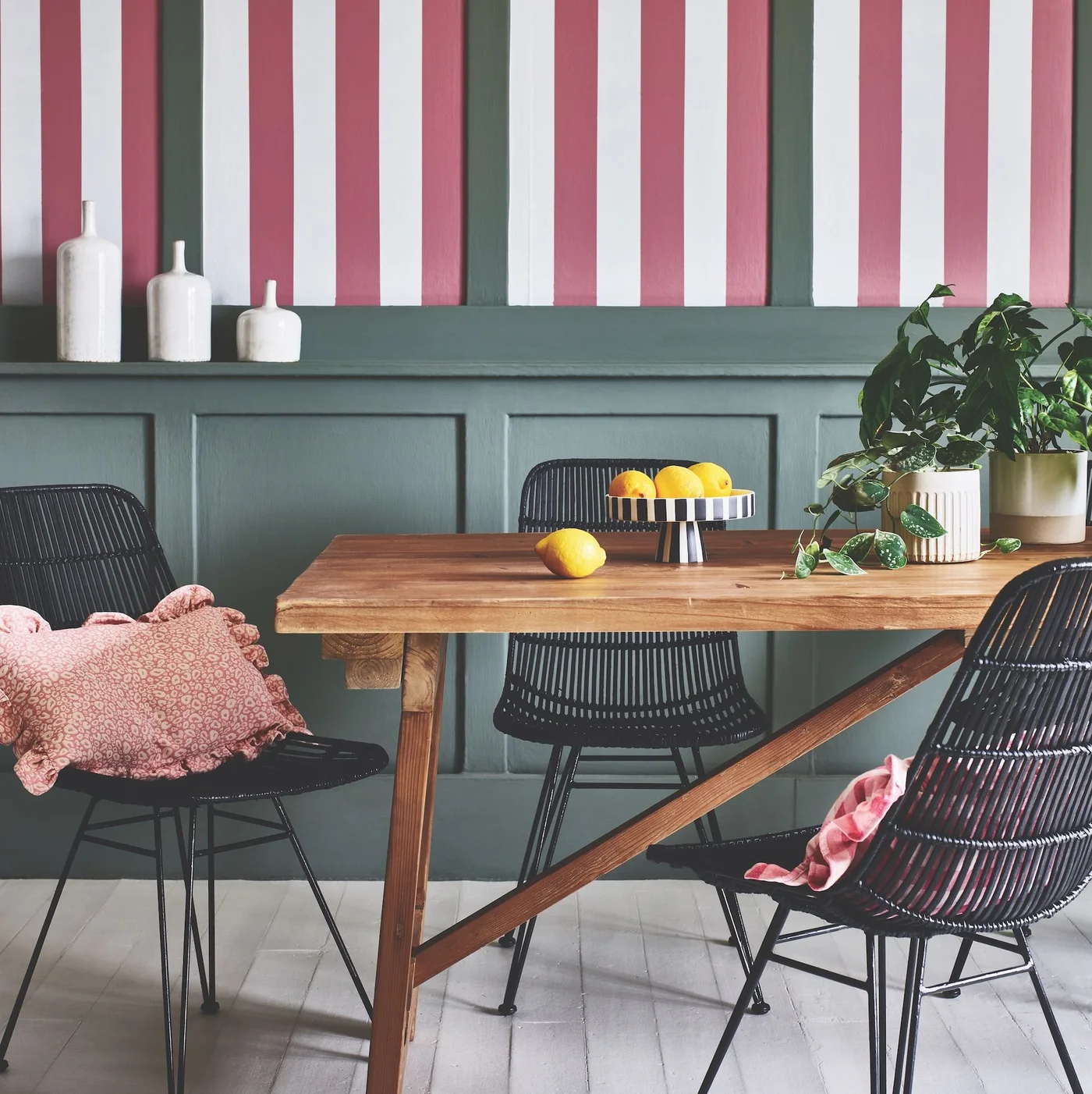
Balance Green Paneling with Warm Stripes
 SaveSupport Non AI Creator
Image credit: Future PLC
The green paneling creates a solid lower background beneath the warmer red-and-pale stripes. Wooden furniture adds another warm surface, while dark chairs keep their outlines distinct against the paneling. Pink cushions repeat a smaller warm accent, helping the stronger striped wall relate to the seating instead of standing alone.
Compare the stripe and green samples at their intended heights before choosing the full treatment. The meeting line remains prominent, so plan it around corners and existing trim. Keep the chair cushions useful for comfort rather than several decorative layers, and choose a simpler table arrangement when the wall already carries a strong pattern.
IDEA 10 / 20
Bring Green in Through Upholstered Chairs
 SaveSupport Non AI Creator
Image credit: Marks & Spencer
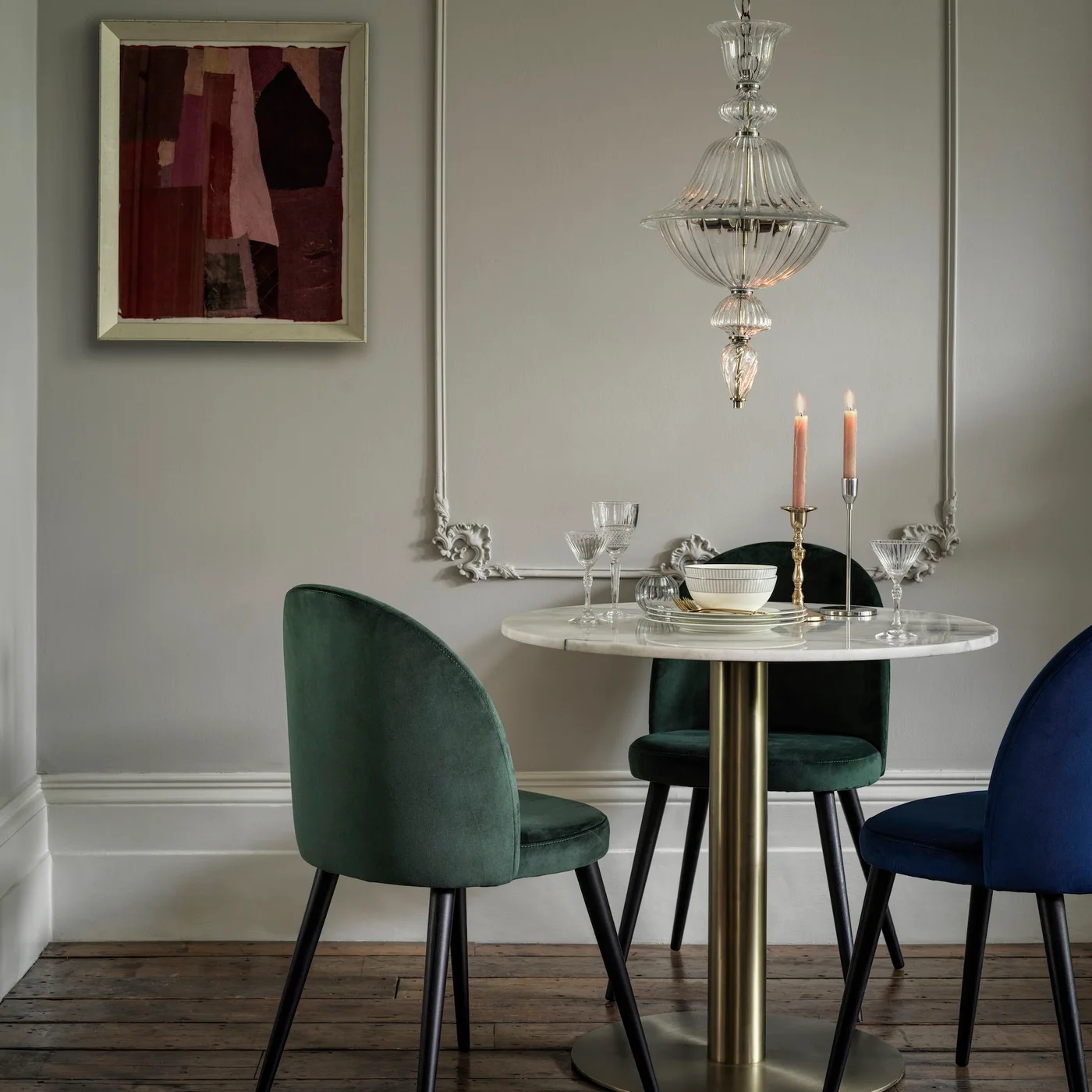
Green chairs introduce color around the pale table, with one blue chair adding a related contrast within the seating group. Gray walls keep the larger background quieter. The glass pendant provides a more decorative outline above, while the round pedestal table leaves the chair arrangement clear without another heavy central frame.
Compare chair samples around the actual table height before choosing upholstery. Comfort, maintenance and how far each chair pulls out matter alongside the color mix. Keep the pendant positioned around the table you will use, and choose a manageable number of decorative tabletop pieces so the smaller round surface remains practical for a meal.
PART 03
Coordinate the table with the surrounding room
IDEA 11 / 20
Pair Pale Green Walls with a Bench and Wood Chairs
 SaveSupport Non AI Creator
Image credit: Crown Paints
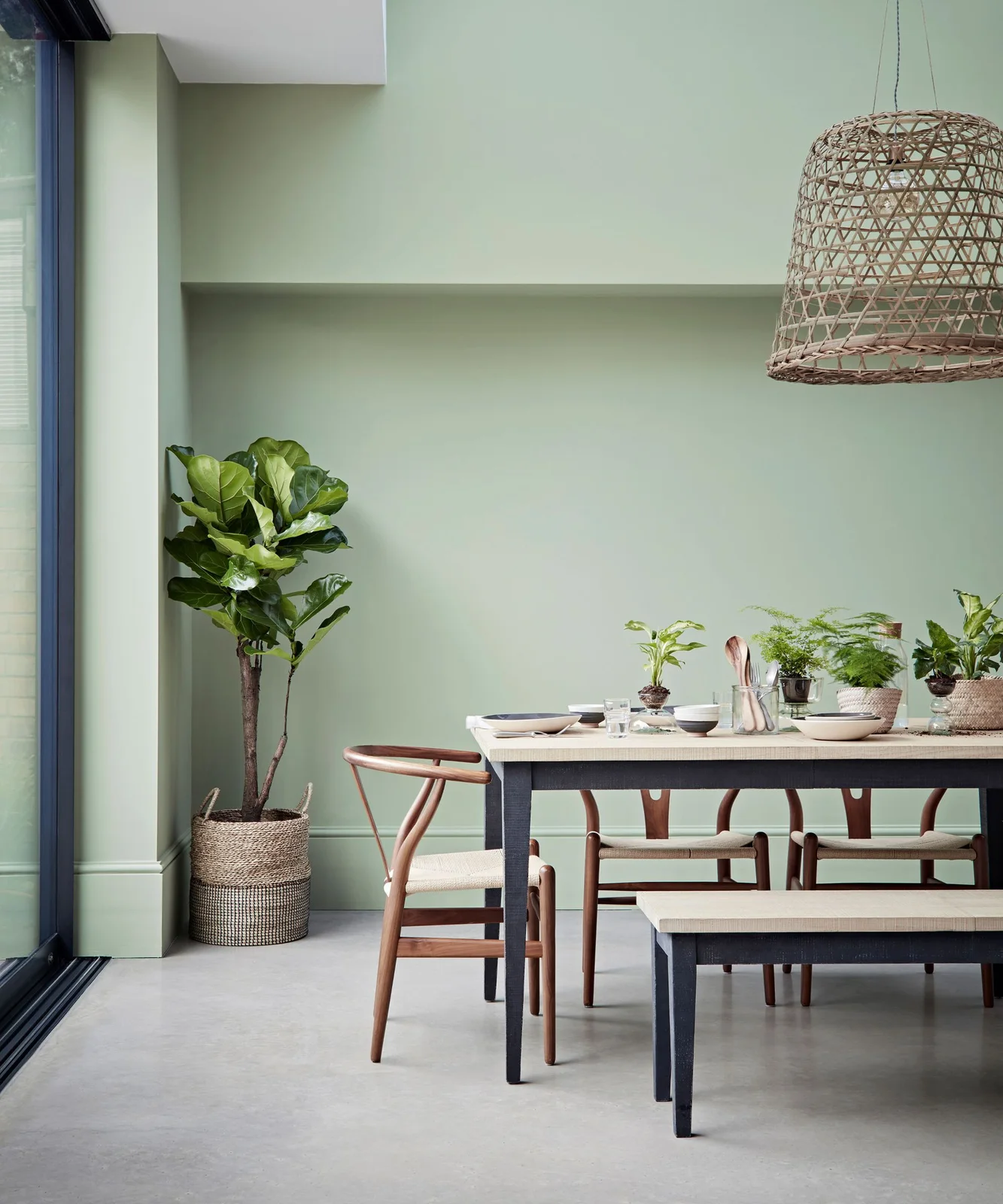
Pale green walls connect the corner with the adjoining dining area, leaving the table’s wooden top and dark legs clearly outlined. A matching bench reduces the number of separate chair shapes on one side. The woven-looking pendant adds texture above, while a larger plant brings another green tone into the quieter background.
Check access to the bench ends and compare its depth with the table position before choosing the set. Confirm that the pendant height and spread suit the dining surface rather than copying its photographed position. Keep plants selected for the actual light, and leave room around their pots so they do not narrow the route past the table.
IDEA 12 / 20
Use Soft Green Stripes Beneath a Leafy Wall
 SaveSupport Non AI Creator
Image credit: Future
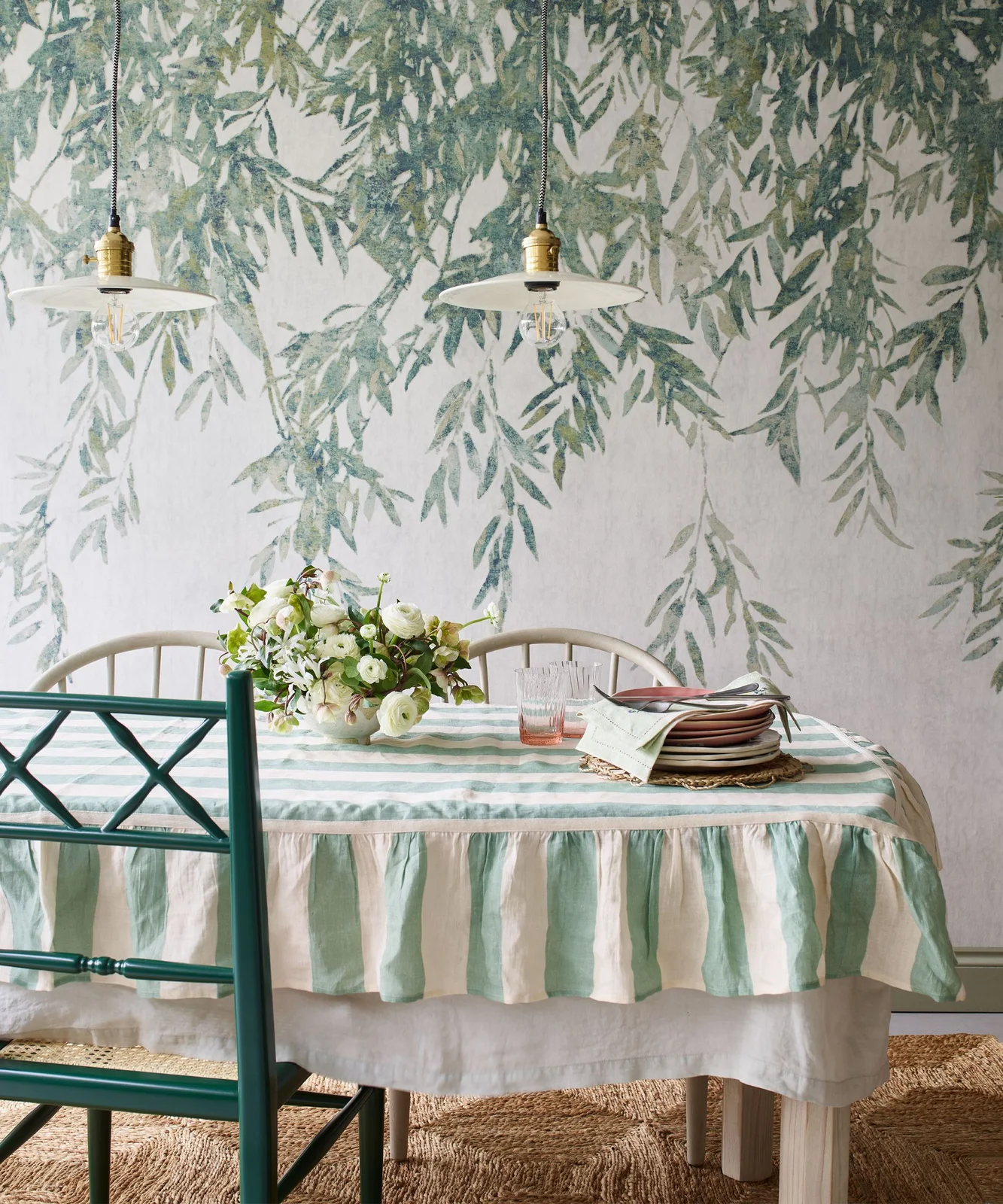
Soft green stripes on the tablecloth repeat the leafy wall color in a simpler linear pattern. Mixed pale and green chairs add another small variation around the table. The low floral arrangement and smaller place settings keep the useful dining surface visible, so the wall and cloth provide most of the decorative detail.
Compare the full stripe and wall repeat together before choosing both patterned surfaces. A quieter cloth can help when the leafy background has greater detail. Check the cloth length from seated height so it does not interfere with knees or chair movement, and keep the centerpiece easy to move when serving bowls need the same area.
IDEA 13 / 20
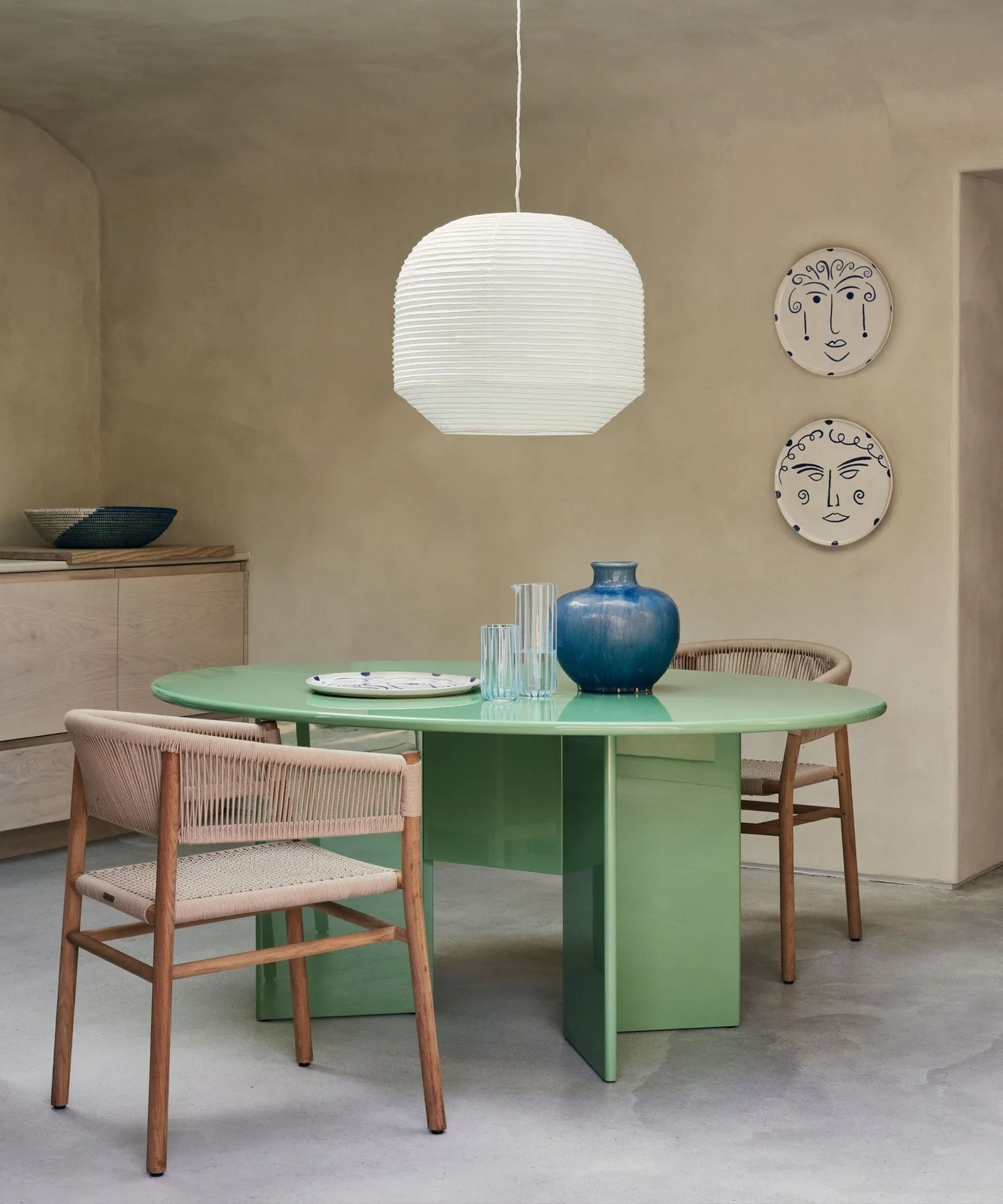
Make a Mint Table the Main Color Feature
 SaveSupport Non AI Creator
Image credit: One Represents Ltd
The mint-green table supplies the strongest color within the neutral room, allowing the walls and chairs to stay quieter. Its rounded shape is repeated by the white hanging light above. A few blue and pale tabletop pieces add smaller contrasts without making the green compete with another large painted background.
Assess the table finish around spills, cleaning and regular use before choosing it for its color. Check seated knee room around the pedestal and compare the chair height with the table. A few useful accessories can repeat the palette, but leave enough clear surface that the table remains comfortable to use rather than becoming a permanent display.
IDEA 14 / 20
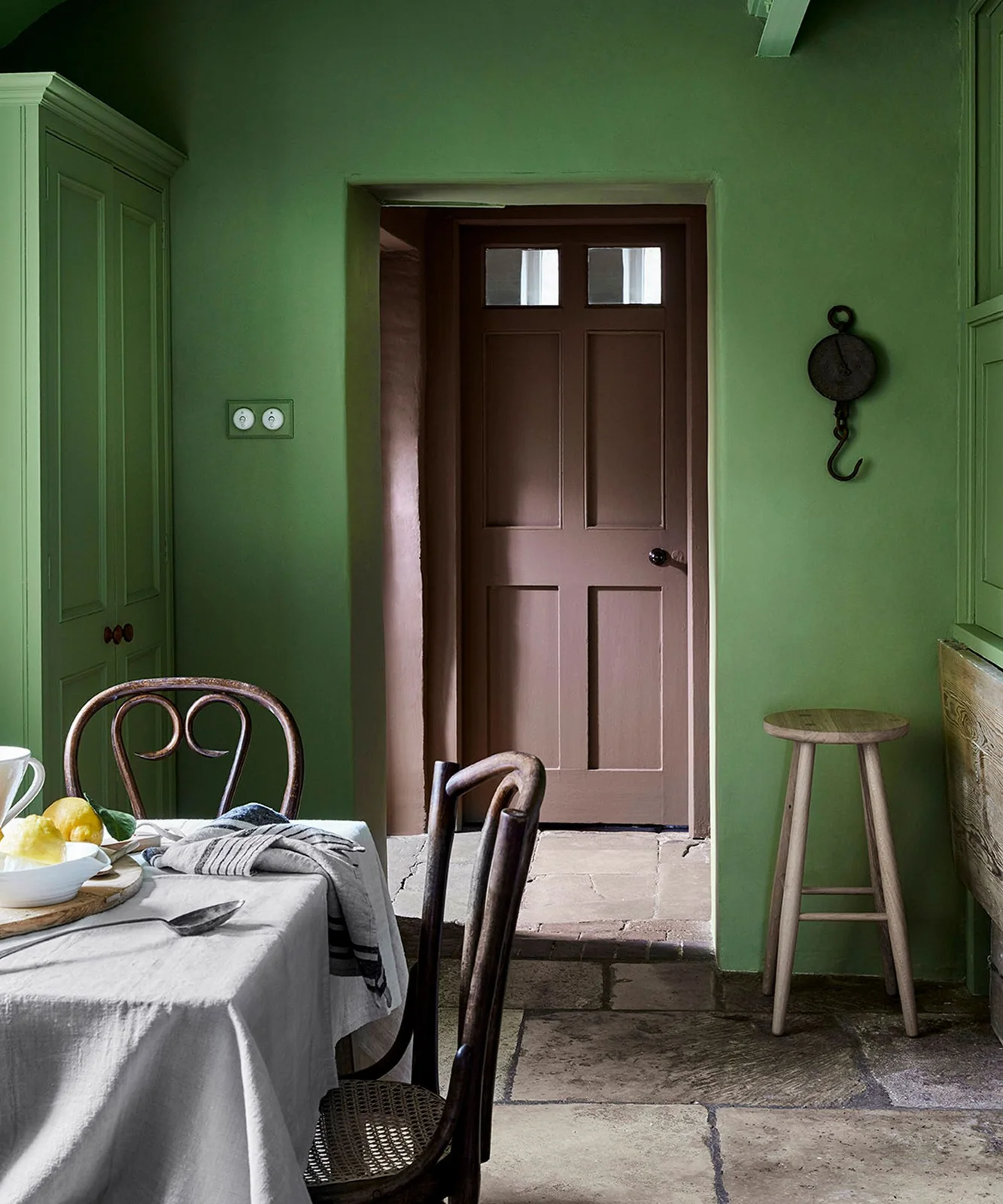
Connect Green Walls and Storage with Darker Wood
 SaveSupport Non AI Creator
Image credit: Little Greene
Green continues across the walls and storage, linking the different larger surfaces around the dining area. The brown door and darker curved chairs provide warmer outlines within it. Pale linens and the lighter table setting keep the meal area separate from the stronger painted background, with a simple stool offering another useful wooden shape.
Compare the green finish with doors and cabinetry you are keeping before painting a whole connected area. Check storage access with the dining furniture in place, including the route through the door. Keep the stool only if it has a useful role and a clear place to stand; another seat can become an obstruction in a compact room.
IDEA 15 / 20
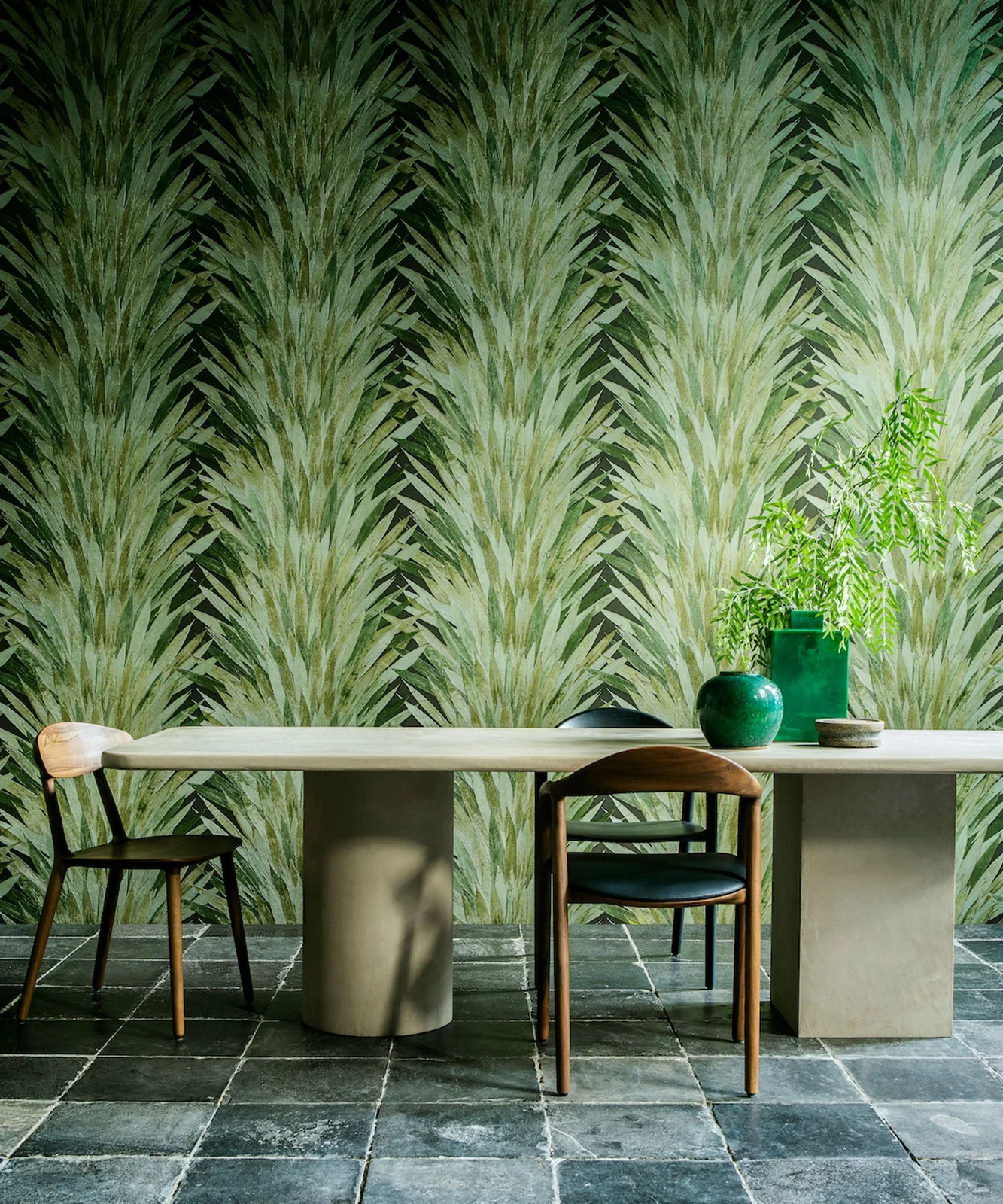
Set a Simple Table in Front of Large Green Leaves
 SaveSupport Non AI Creator
Image credit: ARTE
Large green leaves make the wall the room’s strongest patterned surface. The pale table has a simpler solid shape, while wooden chairs provide warmer outlines on either side. A small group of green vessels relates to the wall without covering the whole tabletop, allowing the wallpaper to supply most of the decorative character.
Compare a full wallpaper repeat behind the furniture before ordering, especially where large leaves meet corners and openings. Keep the chair and table arrangement practical first. Dining room wallpaper ideas compare different pattern scales if you want a green background but are unsure whether a large leaf motif will suit the room’s available wall space.
PART 04
Balance repeated color with different patterns
IDEA 16 / 20
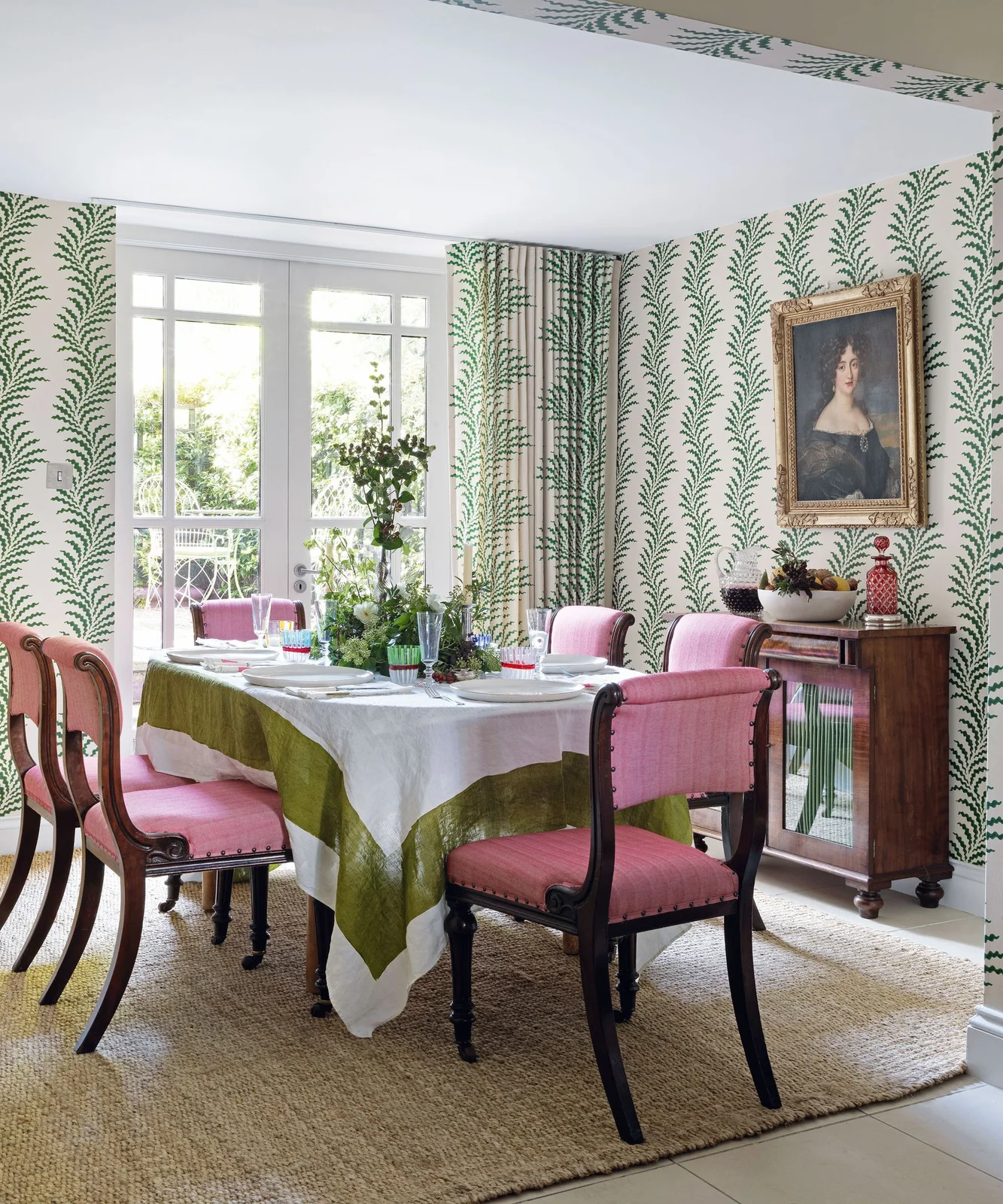
Pair Repeated Green Fronds with Pink Seating
 SaveSupport Non AI Creator
Image credit: Simon Brown
Green fronds repeat across the walls and curtains, making the patterned background consistent around the dining area. Pink upholstered chairs provide a warmer contrast, with dark frames keeping their shapes distinct. Pale table linens give the central surface a quieter area within the larger pattern, while the wooden cabinet adds storage without another matching textile.
Compare the curtain fabric with the wall covering at a full repeat, including how the pattern changes when folds form. Check chair comfort and upholstery care before choosing pink seating to match small accessories. Keep the table setting simpler if the surrounding pattern already supplies enough detail, and leave cabinet doors able to open with the chairs in normal use.
IDEA 17 / 20
Use Two Green Shades Around Traditional Wall Detail
 SaveSupport Non AI Creator
Image credit: Little Greene
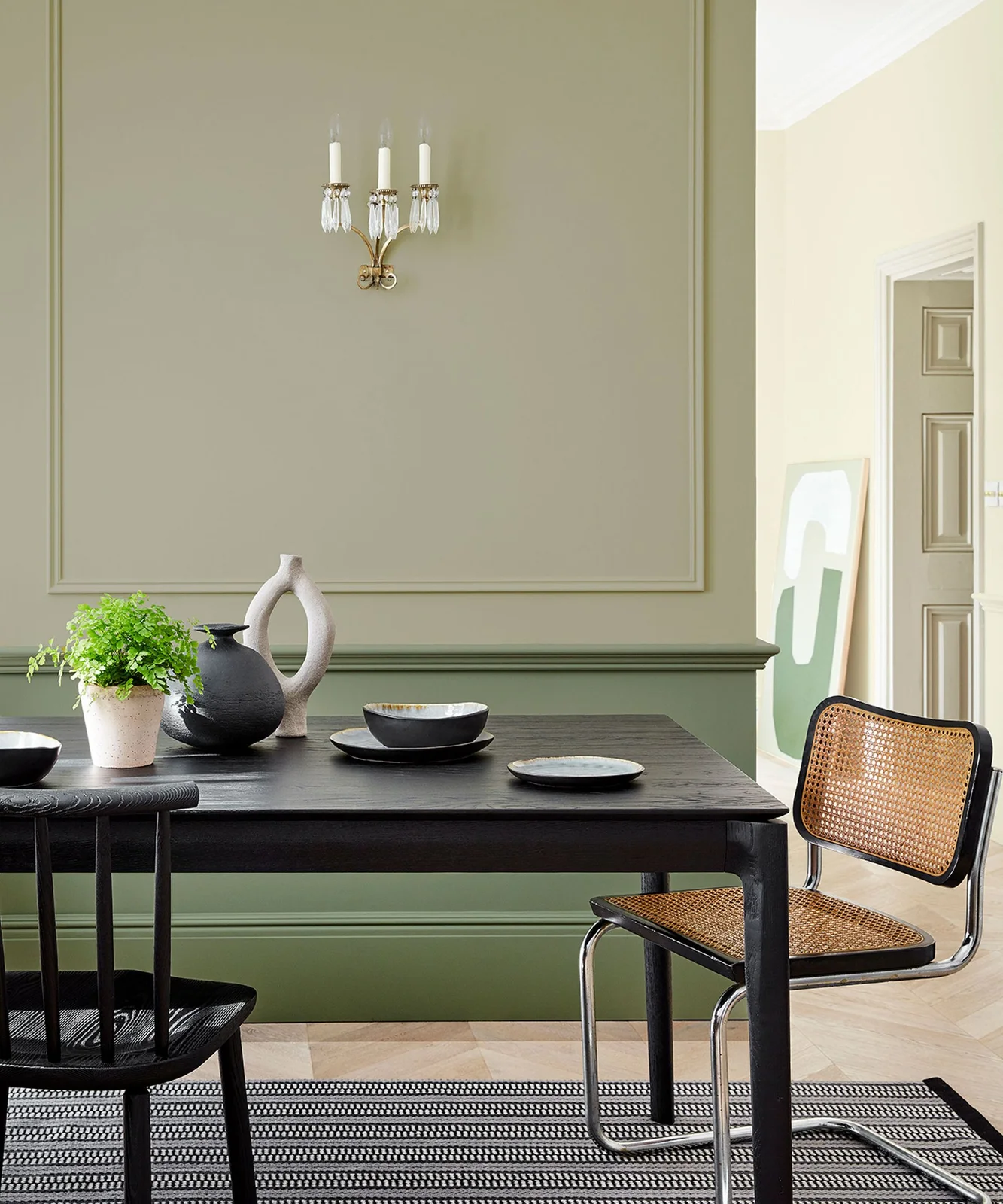
Two muted greens distinguish the upper and lower wall areas, with narrow trim outlining the larger surfaces. The dark table provides a strong horizontal contrast below. A woven-seat chair adds another texture, while a few pale vessels keep the tabletop detail restrained so the wall treatment remains clearly visible.
Compare the two paint samples adjacent to each other rather than choosing them in separate rooms or light conditions. Plan the trim around the actual wall dimensions before fixing it. Keep the table useful for dining, and avoid surrounding a restrained two-color treatment with many new decorative objects that compete for attention.
IDEA 18 / 20
Repeat Green in Hanging Lights and Display Plates
 SaveSupport Non AI Creator
Image credit: Chris Everard
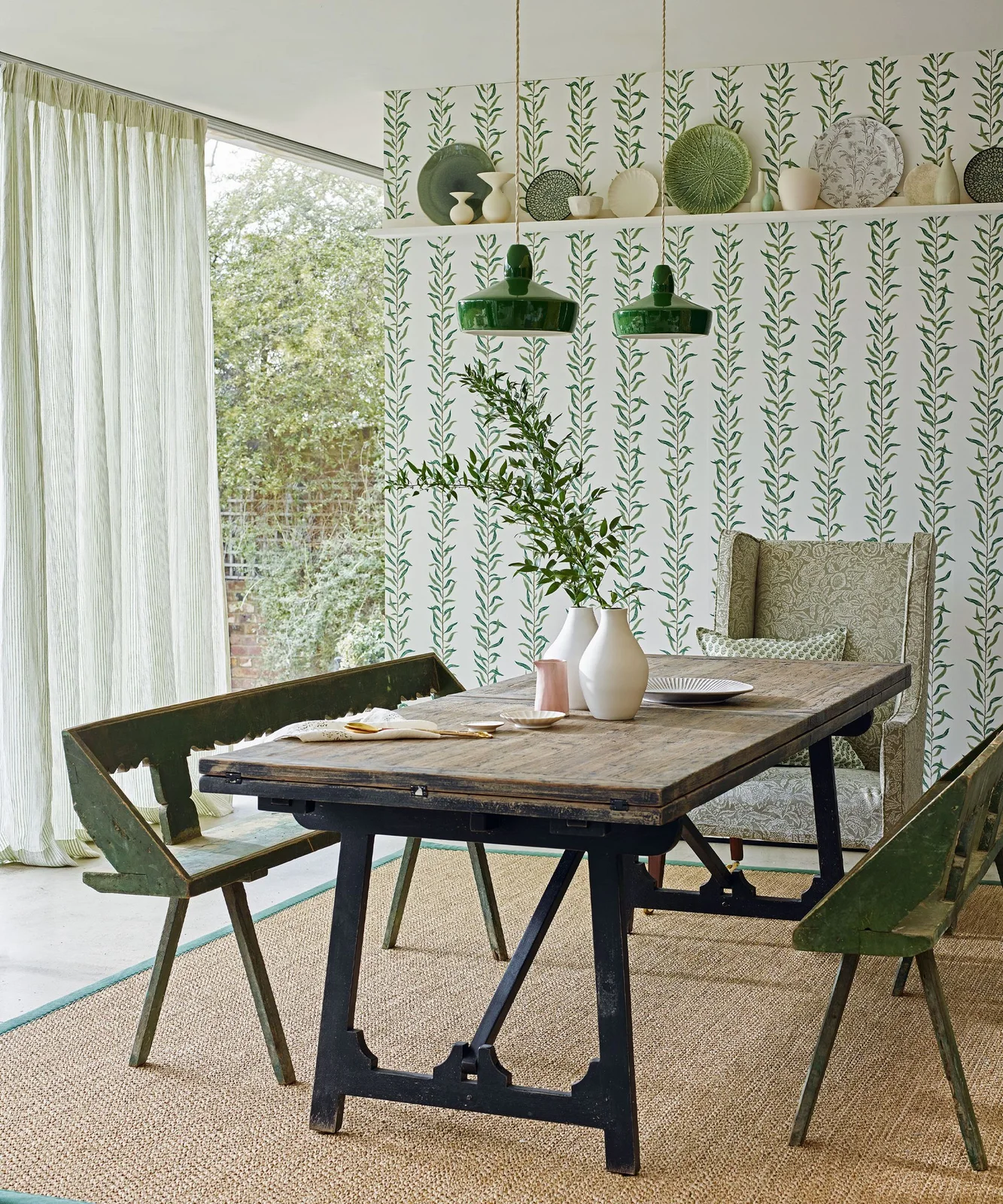
Green pendant lights repeat the leafy wallpaper color above the table, with green and pale plates arranged on a shelf higher up. The wooden table and benches add warmer surfaces below. A lighter curtain at the broad window leaves part of the room quieter, preventing every visible area from carrying the same pattern.
Check shelf fixings and plate supports before recreating a high display, keeping heavy or frequently used pieces somewhere practical to reach. Choose the pendant positions around the actual table. Dining room light over table ideas compare fixture arrangements when you want repeated green shades without sacrificing useful light or comfortable sightlines across the meal.
IDEA 19 / 20
Combine Green Seating with a Related Blue Pattern
 SaveSupport Non AI Creator
Image credit: Chris Everard
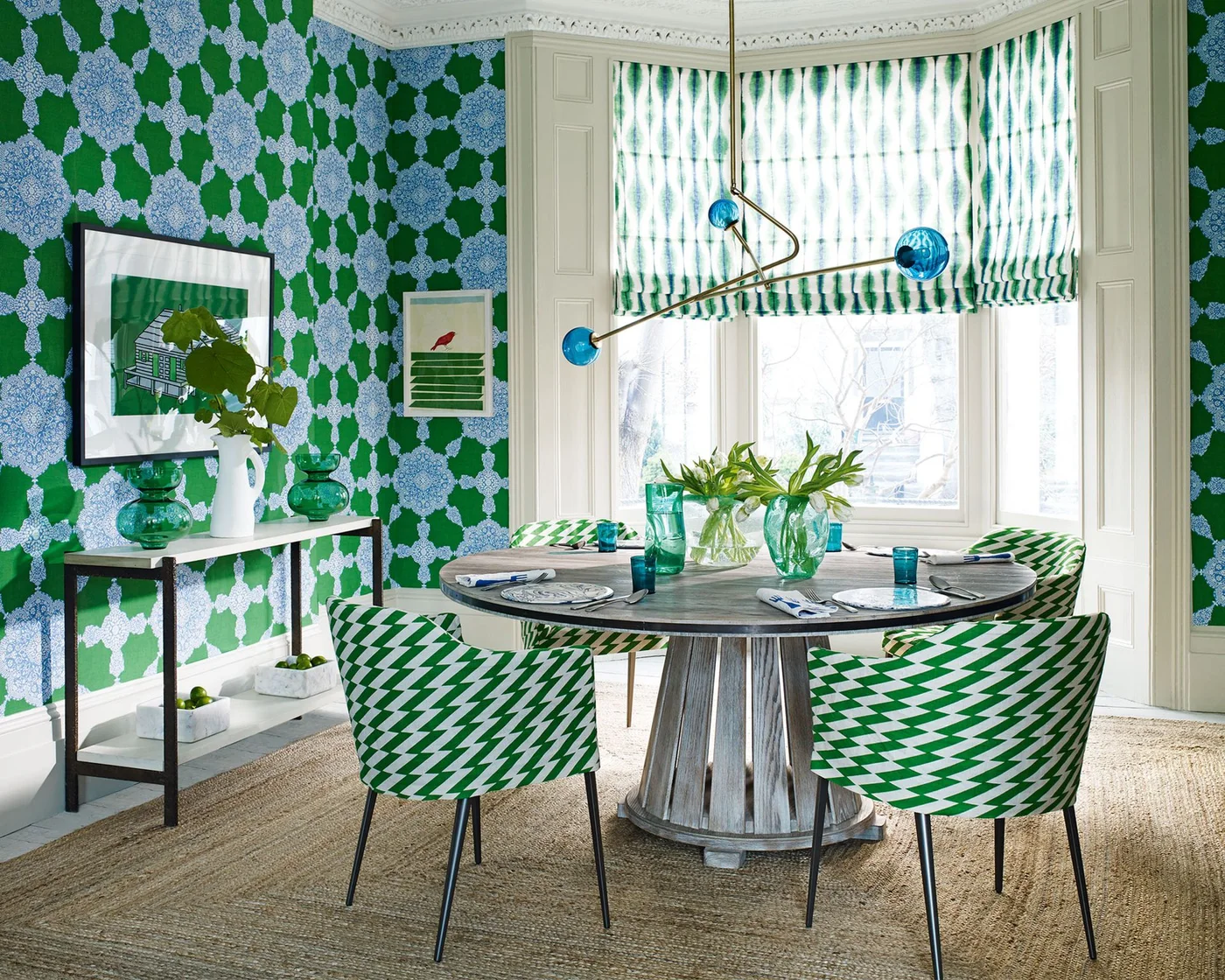
Green patterned chairs connect the seating with the stronger blue-and-green wall, while the dark round table gives the center a quieter solid surface. A sculptural blue pendant repeats the cooler color above. Pale curtains and trim break up the patterned areas, allowing different motifs to share related colors without using the same design everywhere.
Compare the chair and wall patterns at their full scale before combining them; small samples can make two busy designs look quieter than they become in a room. Check seated comfort and access around the round table first. Keep useful tabletop pieces simple and leave space to serve rather than adding another patterned cloth automatically.
IDEA 20 / 20
Let Bright Green Surround a Pale Round Table
 SaveSupport Non AI Creator
Image credit: Little Greene
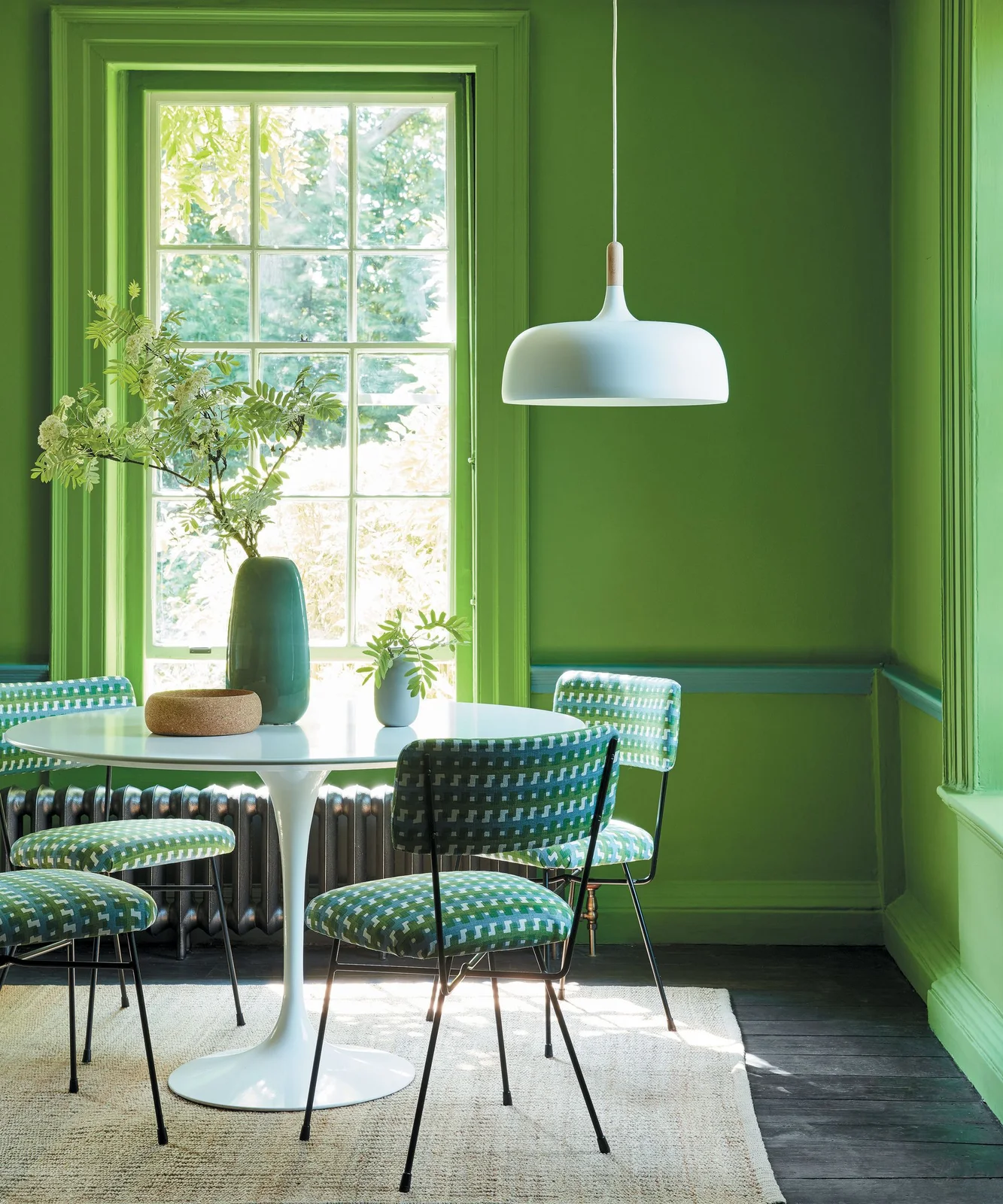
Bright green covers the wall and window trim, giving the pale table and pendant a clear contrasting outline. Patterned green chairs repeat the larger color with smaller variations. The tall window provides a broad lighter area, while the darker floor anchors the furniture without adding another strong pattern to the room.
Test a bright paint sample beside the table finish and under the lighting used for dinner before committing to all the trim. Check the chairs’ pull-out area around the pedestal and nearby radiator. A simple vase can provide enough tabletop detail when the walls and seating are already strong, leaving the round surface available for everyday meals.
BRING IT ALL TOGETHER
Plan the meal area before the decorative layers
Position the table and chairs, then check how the storage opens when people are seated. Compare green samples beside the furniture you are keeping rather than selecting paint or fabric separately. Repeat the color in a few useful pieces, leaving some larger surfaces quieter when the main wall or seating already has a strong pattern.
Set out the dishes you normally use before deciding how much decoration fits. Keep lights practical for the table and choose upholstery around comfort and maintenance. If the room feels crowded, simplify the smaller display first. A consistent green background does not need every cabinet, napkin and vase to match exactly to make the room feel connected.