Green can surround a home office through its walls or appear in one useful piece, such as a desk, chair or cupboard. Choose the work position and storage around your daily tasks first. A larger painted wall, a patterned backdrop and a green chair introduce different amounts of color and need different supporting furnishings.
These offices show lighter and deeper greens alongside wooden desks, patterned walls and practical storage. Compare samples in the actual room and check the view from the seat, including screen reflections and access to drawers. Keep decorative objects selective so the work surface remains available, and try the chair with the desk before choosing it for appearance alone.
PART 01
Choose how green surrounds the work position
IDEA 01 / 20
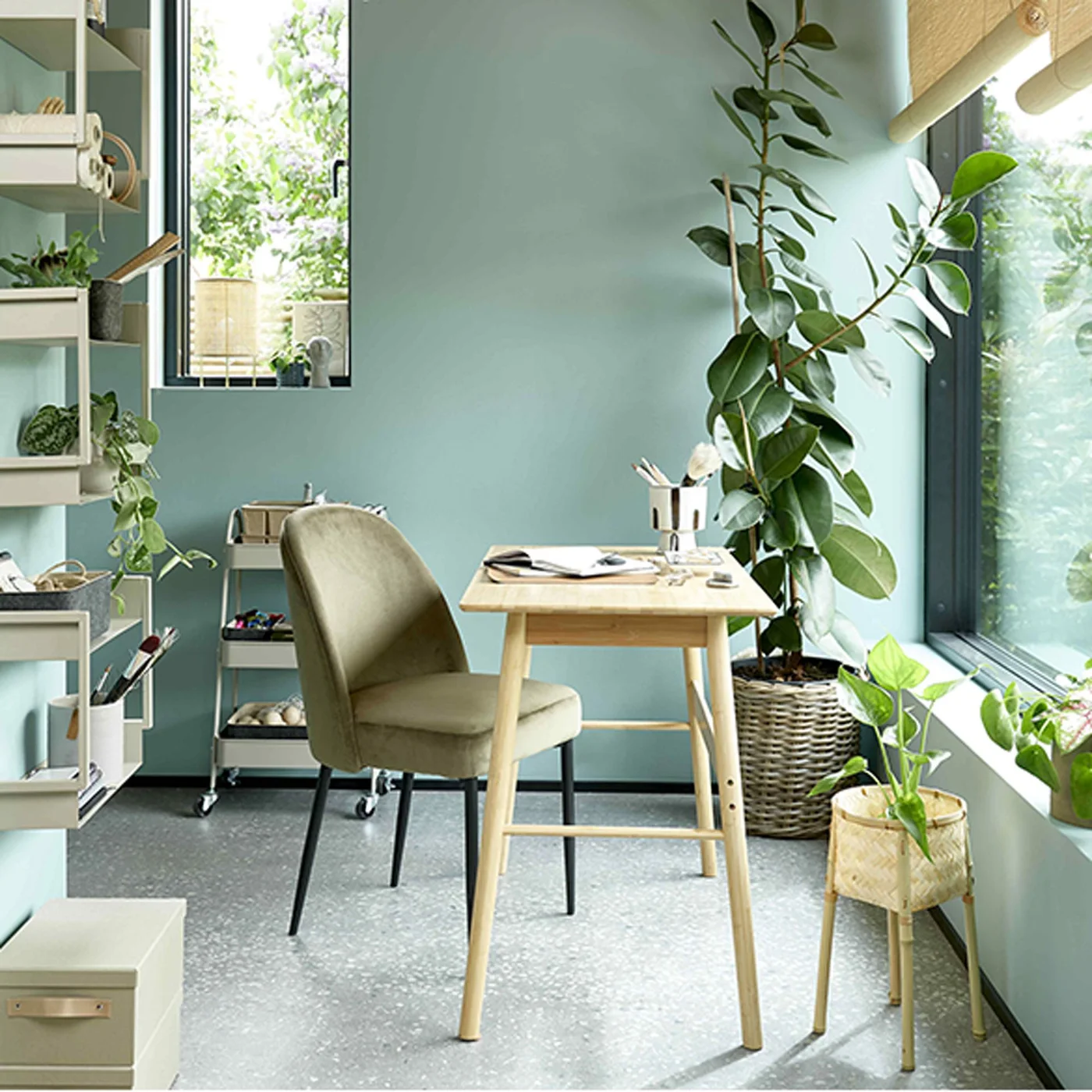
Keep Pale Green Around a Small Wooden Desk
 SaveSupport Non AI Creator
Image credit: JYSK
Pale green walls connect the work corner without making the wooden desk another strong colored surface. Open shelves and a small trolley provide different storage options beside the seat. Leafy plants repeat green in varied shapes near the window, leaving the chair and work surface as quieter practical pieces.
Check the desk depth with the equipment you actually use and keep room to move the chair comfortably. Choose storage around daily supplies rather than filling shelves with decoration first. Keep plant containers separate from electronics and make sure foliage does not interfere with the window treatment or the light needed at the desk.
IDEA 02 / 20
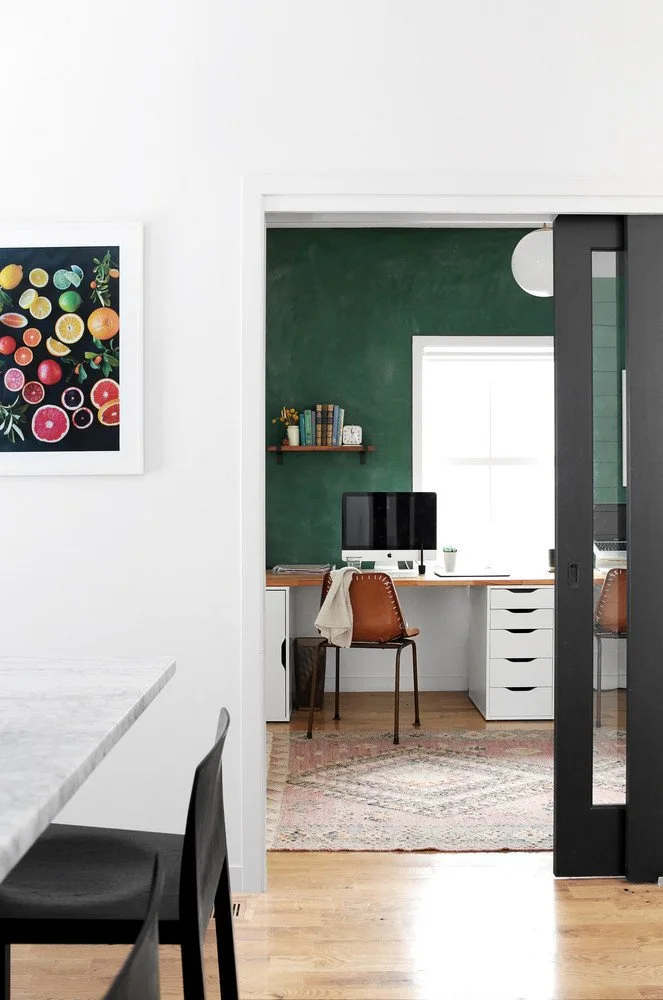
Give a Simple Desk a Deeper Green Wall
 SaveSupport Non AI Creator
Image credit: Photography by MELISSA COLEMAN
The deep green wall defines the desk area seen through the open doorway, while pale drawer units make the lower storage lighter. A wooden desktop and brown chair add warmth around the screen. The narrow shelf supplies a small line of storage above without introducing a full bank of cabinetry.
Set out the screen, keyboard and paperwork before deciding how much desktop decoration fits. Keep the drawers easy to open with the chair pulled in and choose a task light for the work you do after dark. Test the green behind the screen in the actual room, checking reflections and contrast instead of relying only on the pictured daylight.
IDEA 03 / 20
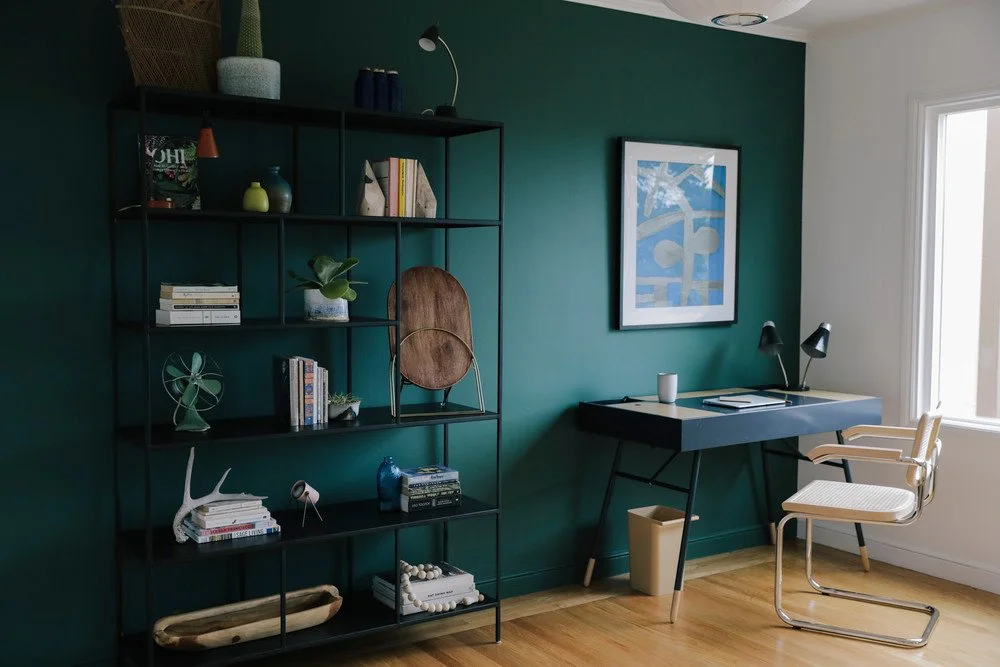
Use Dark Green Behind Open Shelving
 SaveSupport Non AI Creator
Image credit: Photography by ANDREA POSADAS CREATIVE
Deep teal-green gives the open shelving and desk one colored background, while their dark frames remain clearly outlined. A pale woven-seat chair introduces a lighter texture at the work surface. Books and a small framed picture provide smaller varied details without changing the larger wall color.
Store frequently handled books at comfortable reach and use appropriate supports for the shelves’ intended load. Keep the desk top available for working rather than moving shelf decoration onto it. A lighter chair can contrast with a dark wall, but try its support and height with the actual desk before selecting it for daily use.
IDEA 04 / 20
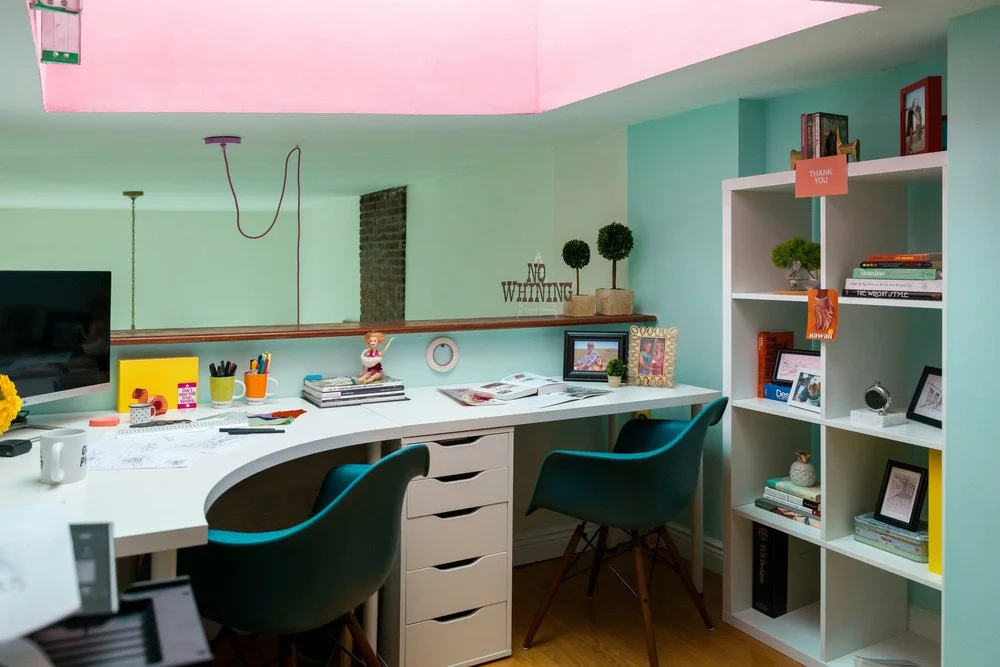
Connect Two Workspaces with Pale Green
 SaveSupport Non AI Creator
Image credit: Photography by JEFF ANZULEWICZ
Pale green walls connect the two work positions, with deeper teal chairs supplying stronger colored shapes at the desk. White cubby storage and a pale work surface keep the larger furnishings lighter. The pink overhead area adds a contrasting warm accent, making the color arrangement more varied than an all-green room.
Give each user enough space for the equipment and papers they need, then plan shared storage between the two positions. Route cables so neither person’s chair movement catches them. Keep the display behind the desk manageable, and choose task lights separately if one person works while the other needs a quieter or less brightly lit space.
IDEA 05 / 20
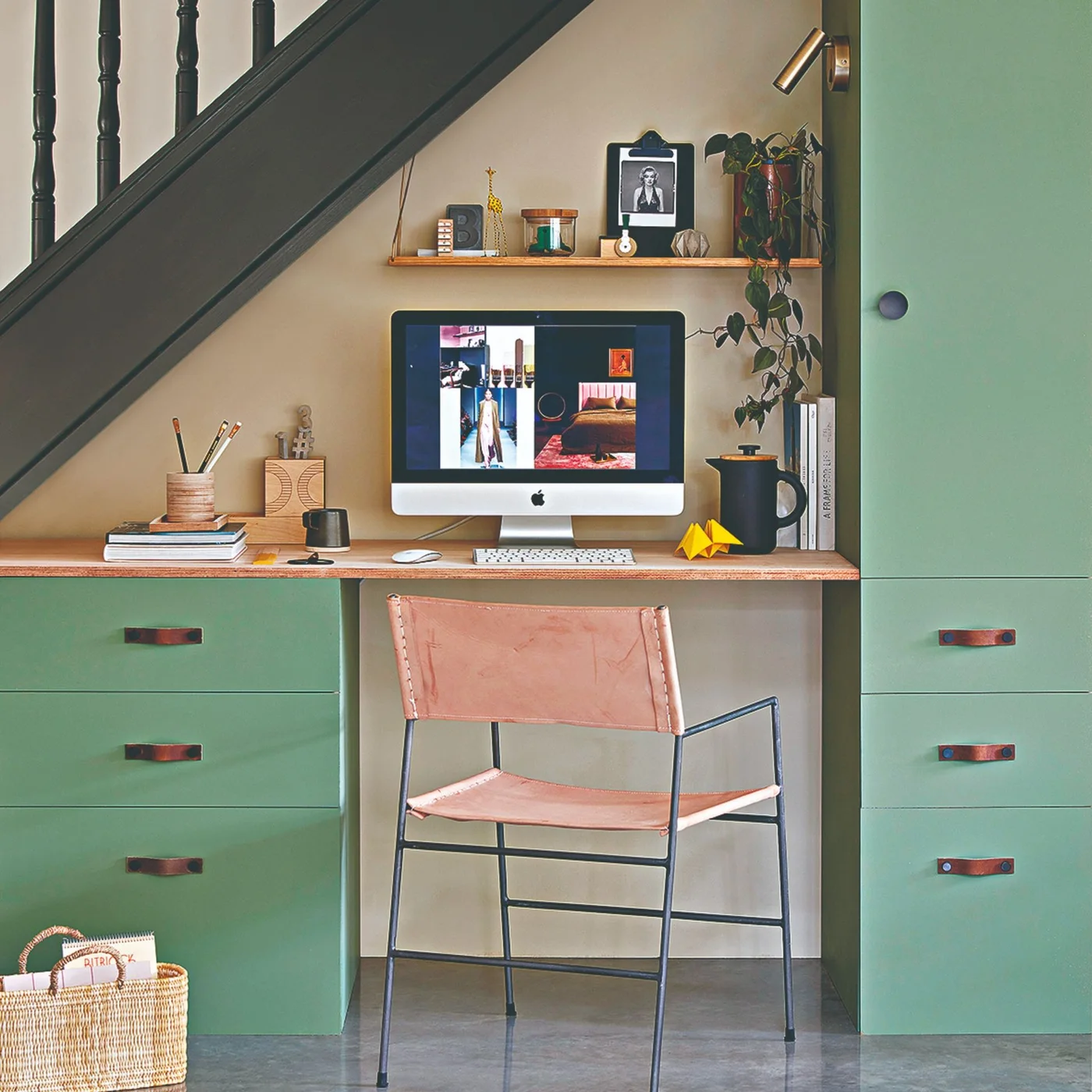
Use Green Storage Beneath the Stairs
 SaveSupport Non AI Creator
Image credit: Future PLC/Tim Young
The green cabinetry gives the area beneath the stairs a clear storage role on both sides of the desk. A wooden work surface warms the paler background above, while the pink chair introduces a smaller contrasting color. The narrow shelf follows the available space without covering the sloping area in several rows.
Check seated headroom and the route to the chair before planning a desk beneath stairs. Keep drawers and cupboard doors usable without moving the chair every time. Choose the shelf height around actual reach, and allow practical space for cables and lighting rather than using every remaining gap as another display surface.
PART 02
Use green in smaller painted and furniture features
IDEA 06 / 20
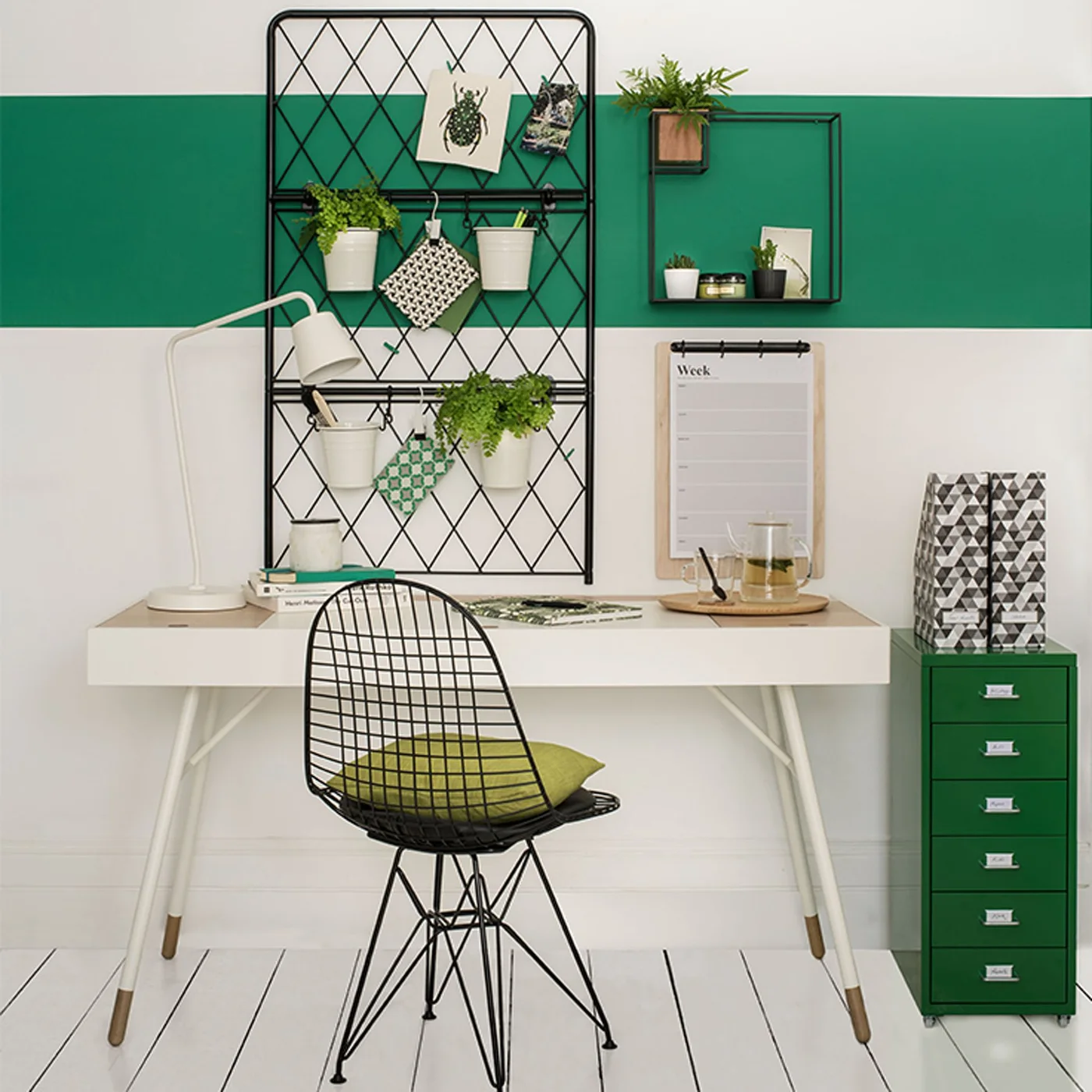
Paint a Green Band Behind a Pale Desk
 SaveSupport Non AI Creator
Image credit: Future PLC/Dominic Blackmore
The green band crosses the wall behind the desk, connecting with the small green drawer cabinet below. A dark mesh panel and smaller wall shelves provide visible organization above the pale surface. The light upper and lower wall areas keep the stronger green concentrated within one clearly defined stripe.
Plan the painted band with the desk and wall storage in place, checking the line around nearby corners. Secure display panels for their intended use and keep items from projecting into the work area. Choose the drawer cabinet height so it fits alongside the desk without interrupting useful leg space or chair movement.
IDEA 07 / 20
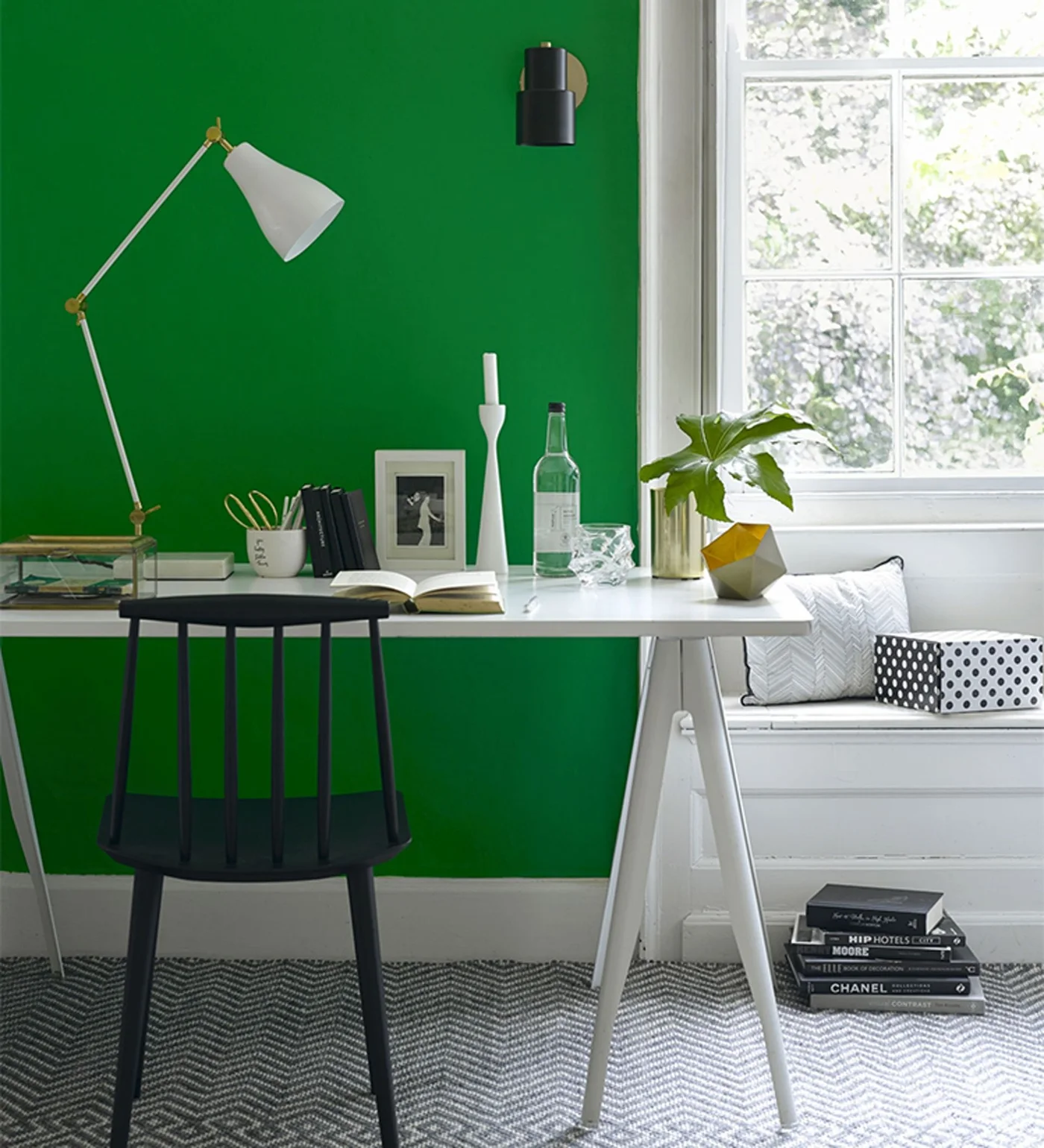
Place a Bright Green Wall Beside a Window
 SaveSupport Non AI Creator
Image credit: Pooky
Bright green forms the main colored wall behind the simple pale desk, while the black chair gives the seat a firmer outline. An adjustable pale lamp creates a smaller light shape against that background. The window and pale seat area provide larger lighter sections beside the stronger paint.
Try a large green sample where you will actually sit, viewing it in daytime and under the task light. Keep access to the window seat clear and choose a chair that works with the desk’s height. A strong painted wall does not require many matching objects on the surface; leave practical space for the work itself.
IDEA 08 / 20
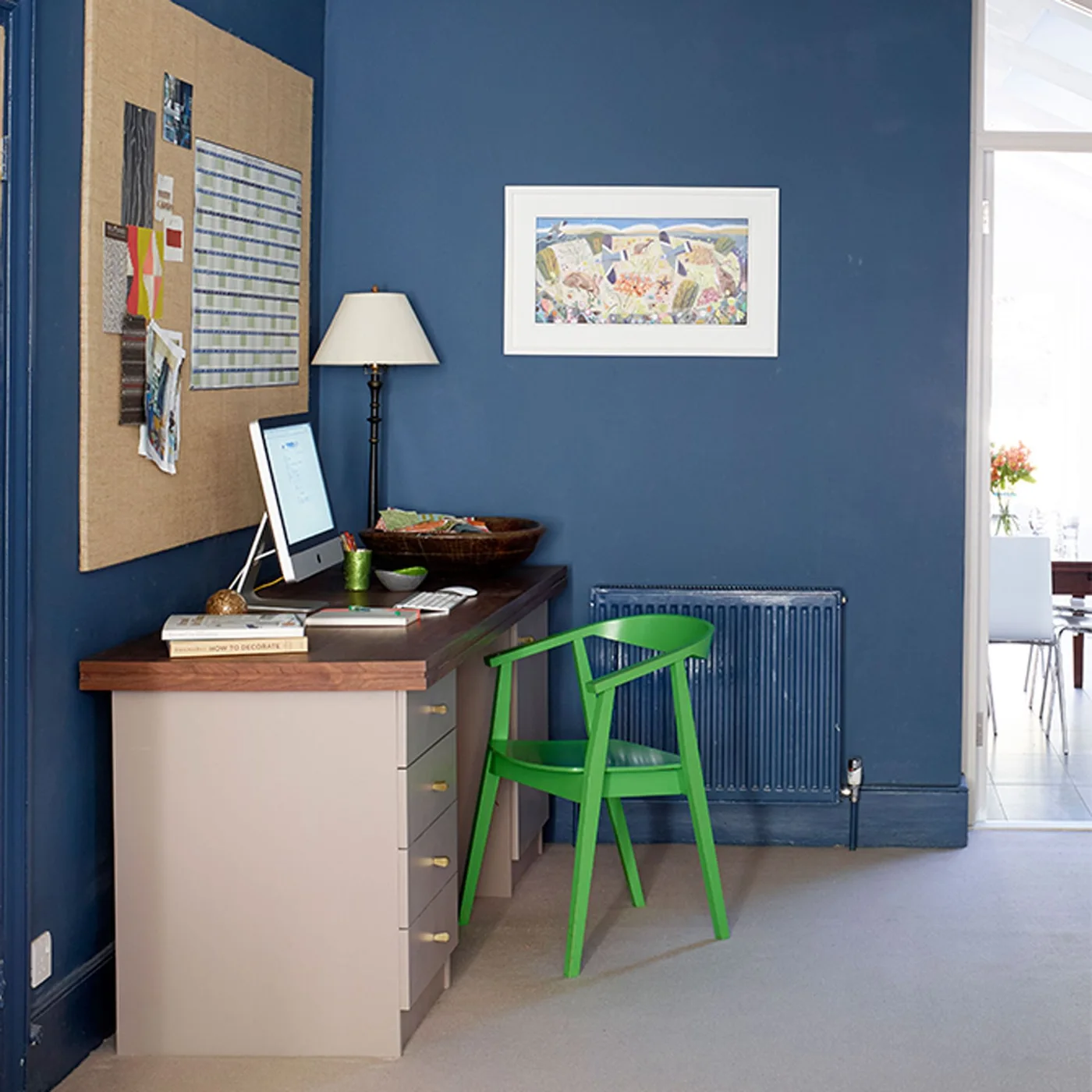
Introduce Green Through a Useful Desk Chair
 SaveSupport Non AI Creator
Image credit: Future PLC/Rachael Smith
The green chair supplies one clear colored accent against the blue wall and darker desktop. Pale drawer units make the storage lighter beneath it, while the noticeboard provides a large practical background above. The arrangement introduces green through furniture rather than repainting the whole office.
Choose the chair by trying it with the desk, checking support and whether its arms or back suit the way you sit. Color can be changed later on suitable furniture, but comfort is harder to fix with decoration. Keep noticeboard materials within practical reach and leave the radiator and passage beside the desk appropriately clear.
IDEA 09 / 20
Make a Green Desk Stand Apart from Blue Walls
 SaveSupport Non AI Creator
Image credit: Kitesgrove
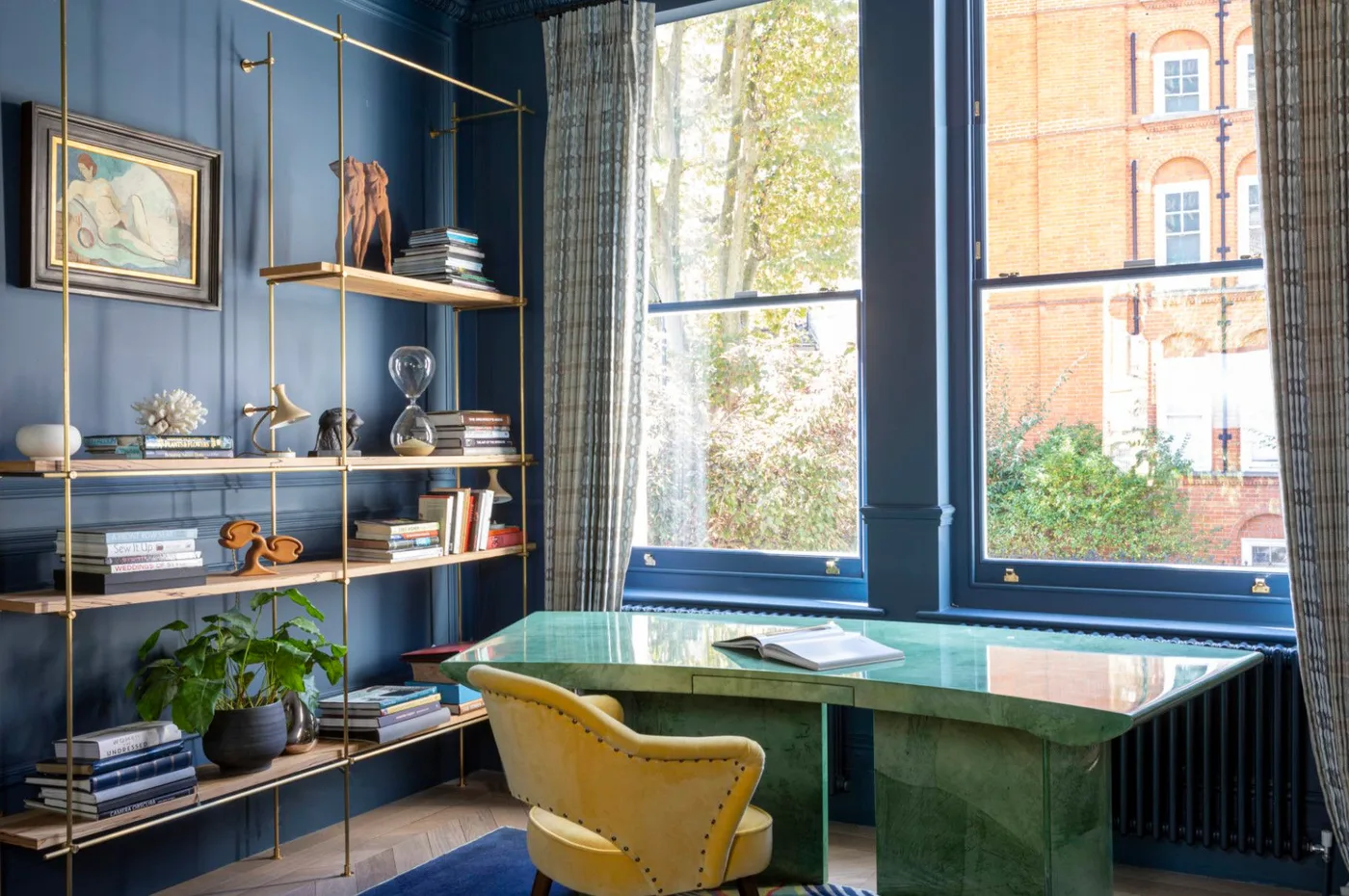
The green desk is the larger colored furniture piece in a room whose walls are blue. A yellow chair adds warmth near the work surface, while the thin warm metal shelf frame leaves books and smaller objects visible. The reflective desktop has a different appearance from the softer chair and curtains.
Check a reflective desk surface in the intended position for glare before choosing it for screen work. Keep a suitable working area clear of display objects and follow the finish’s cleaning guidance. Green and gold office ideas compare other ways to use warm metal details when you want green furniture to remain the main feature.
IDEA 10 / 20
Let Teal Green Frame a Pale Freestanding Desk
 SaveSupport Non AI Creator
Image credit: Photo: Wildwood Photography
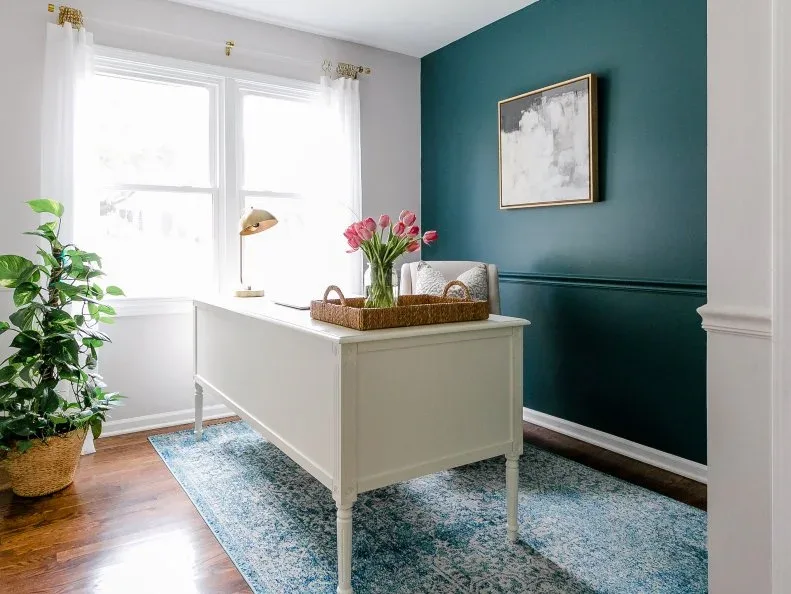
The teal-green accent wall provides a stronger backdrop behind the pale freestanding desk. Light curtains and the window keep one side brighter, while the warm frame and lamp add smaller warm details. The darker lower paneling gives the wall another visible layer without repeating that weight in the desk itself.
Check the space behind and beside a freestanding desk so the chair can move and storage can open comfortably. Route power to the desk without leaving loose cable across the room. Compare the wall sample with the rug and desk finish together, then keep the surface arranged around daily work rather than the decorative tray alone.
PART 03
Connect pattern and storage with everyday tasks
IDEA 11 / 20
Connect Leafy Wallpaper with Plain Lower Walls
 SaveSupport Non AI Creator
Image credit: Photo: Emilie Smith
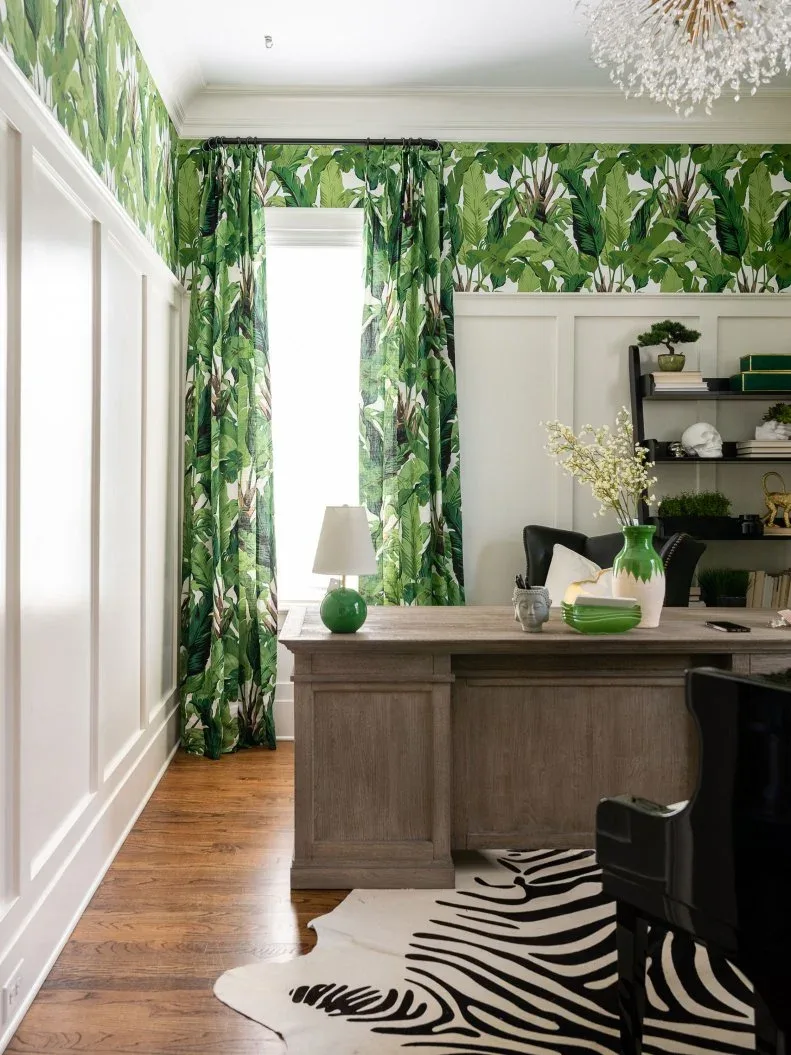
Leafy green wallpaper and curtains repeat the larger botanical pattern around the desk, while pale lower paneling gives the room a simpler solid area. The wooden desk adds warmer lines beneath the patterned background. Dark seating and shelving provide clear outlines against the lighter areas of the fabric and wall.
Compare a full fabric repeat with the wallpaper before combining them, including how curtains will look when open. Keep nearby storage simpler if the pattern already occupies several surfaces. Boho office ideas offer more ways to mix botanical details and useful furnishings without letting decorative layers take over the working area.
IDEA 12 / 20
Use a Pale Green Drawer Desk with Decorative Detail
 SaveSupport Non AI Creator
Source: jenniferrizzo.com
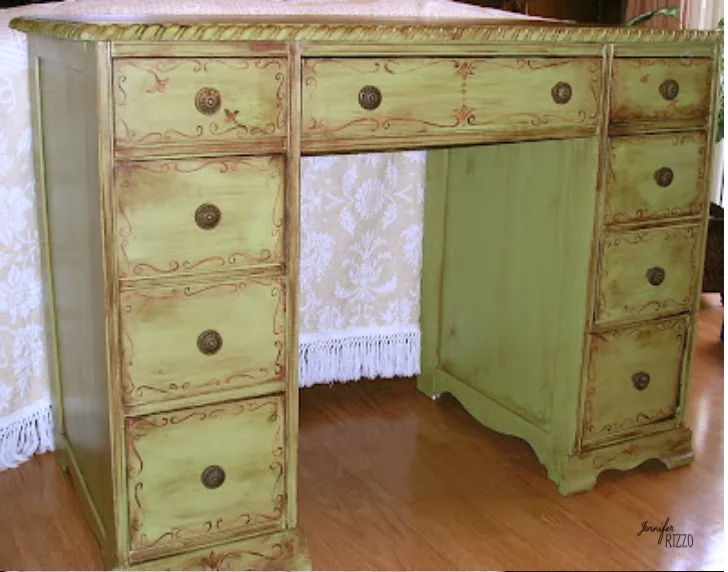
The pale green desk carries its color through drawers, side panels and the framed area around the knee space. Reddish decorative lines add finer details over the green, while small warm metal knobs keep the hardware compact. Light curtains behind leave the painted furniture as the main patterned feature.
Inspect a decorative desk for sturdy joints, smooth drawer movement and a surface suitable for the work you intend to do. Do not assume a worn-looking finish establishes its age or construction. Check the knee opening with your chair, and follow suitable care guidance so cleaning does not damage painted details you want to retain.
IDEA 13 / 20
Give Green Built-Ins a Pale Back Panel
 SaveSupport Non AI Creator
Source: maggieoverbystudios.com
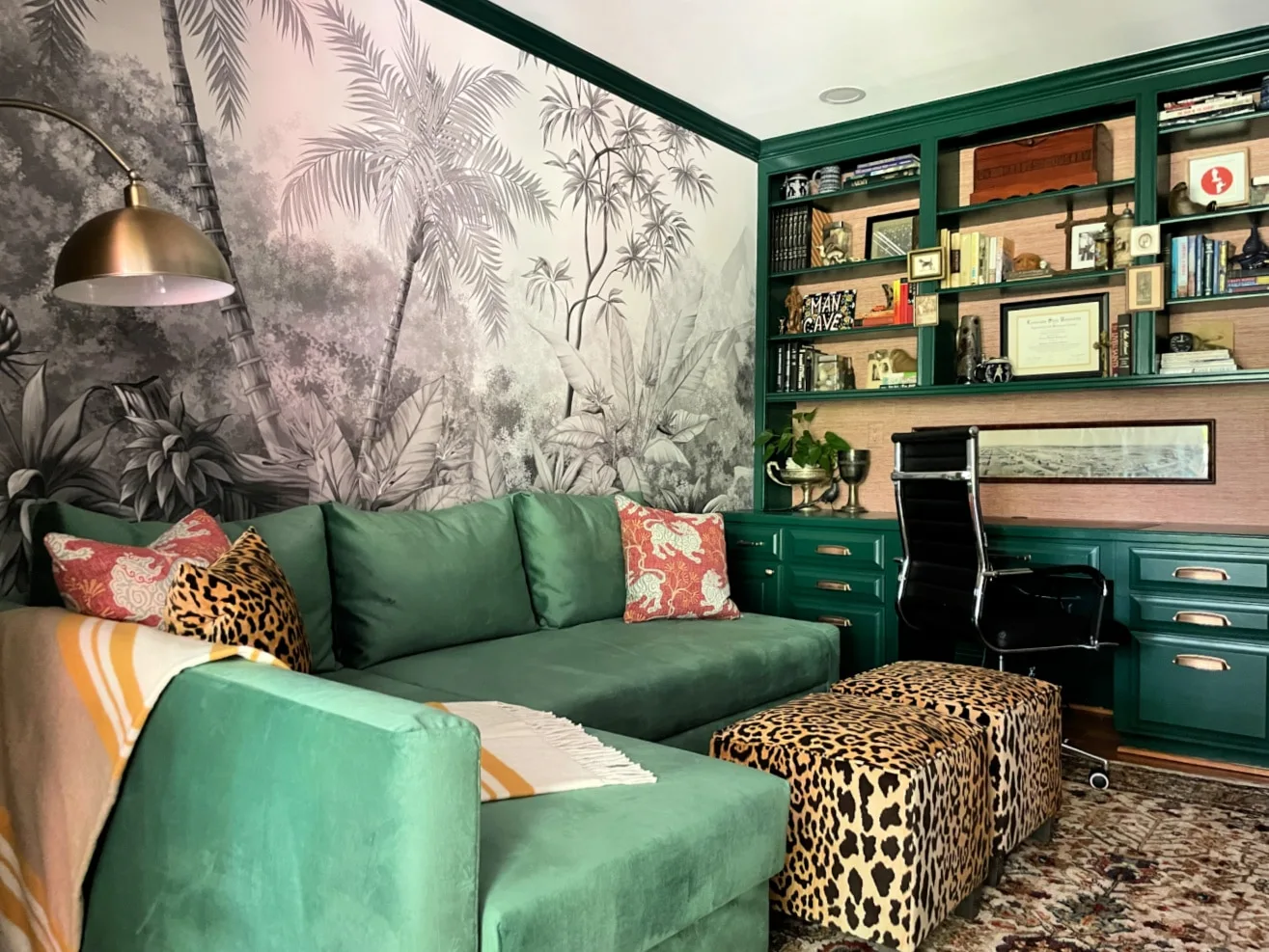
Green shelves and drawers connect the desk storage with the nearby upholstered seating, while paler backing areas separate the objects on display. The botanical wall supplies a larger pattern beside the joinery. Warm metal pulls repeat a smaller detail across the storage without becoming another broad colored surface.
Plan the built-ins around the work position first, keeping useful drawer access and sufficient space for the chair. Choose shelf spacing for books and files that need to fit rather than a perfectly even decorative grid. Limit keepsakes around the screen so regular work materials have a clear home within the larger storage arrangement.
IDEA 14 / 20
Contrast Green Trim with a Warm Storage Cabinet
 SaveSupport Non AI Creator
Source: maggieoverbystudios.com
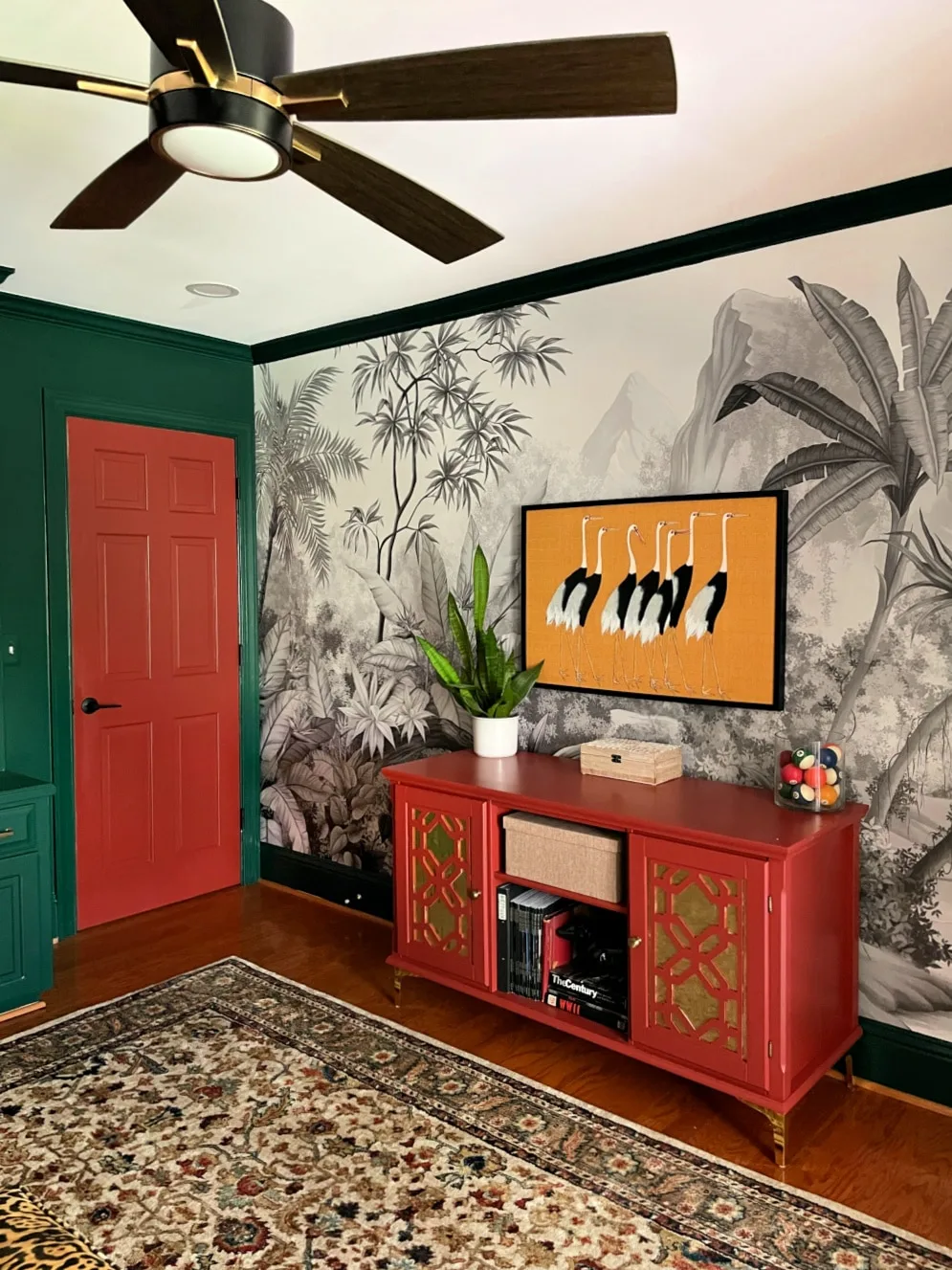
Deep green trim connects the edge of the botanical wall with the solid green wall beside it. The red cabinet supplies a contrasting storage feature beneath a warm-toned framed picture. Its open central shelves provide a place for books, while the pale ceiling separates the darker trim and fan above.
A contrasting cabinet can hold work supplies away from the main desk, leaving the working surface clearer. Check its doors and shelves for the items you need to store rather than buying it only for color. Keep display objects secure on top and allow useful access beside the cabinet without filling the floor with another storage piece.
IDEA 15 / 20
Fit a Wooden Desk into a Green Guest Room
 SaveSupport Non AI Creator
Image credit: Shannon Eddings
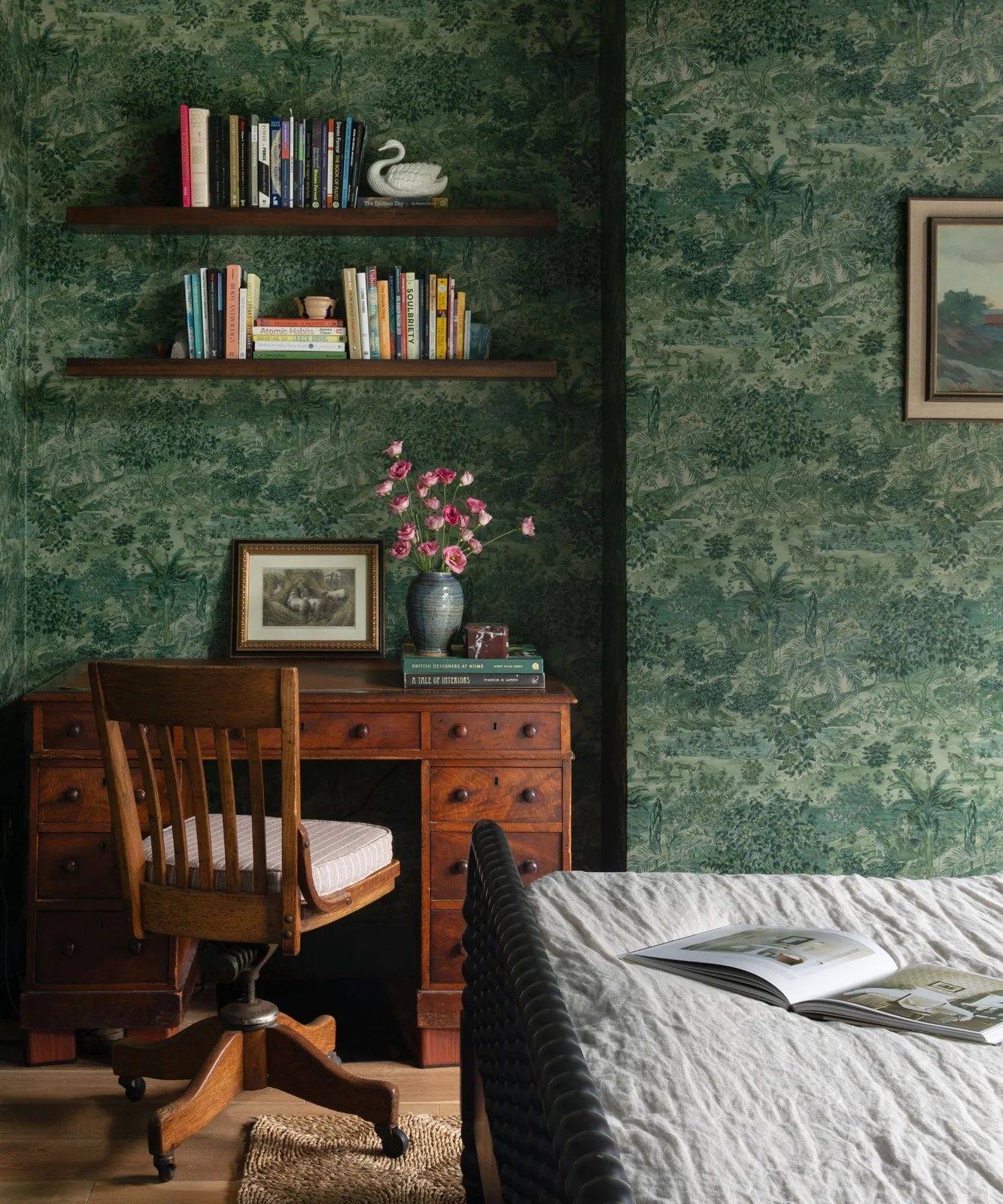
Green patterned wallpaper connects the working corner with the guest room around it. The wooden desk and chair supply warmer simpler shapes, while open shelves hold books above. The desk’s many smaller drawers create a different storage arrangement from the larger bedside and sleeping surfaces visible nearby.
Keep guest-room work supplies contained so the desk can be cleared easily when someone stays. Check the route between the chair and bed with both in use, and use suitable supports for shelves above the desk. A compact desk can handle occasional work, but compare its usable surface and chair comfort with the actual tasks you need it for.
PART 04
Make varied rooms comfortable to work in
IDEA 16 / 20
Keep a Leafy Green Wall Behind a Simple Desk
 SaveSupport Non AI Creator
Image credit: Little Greene
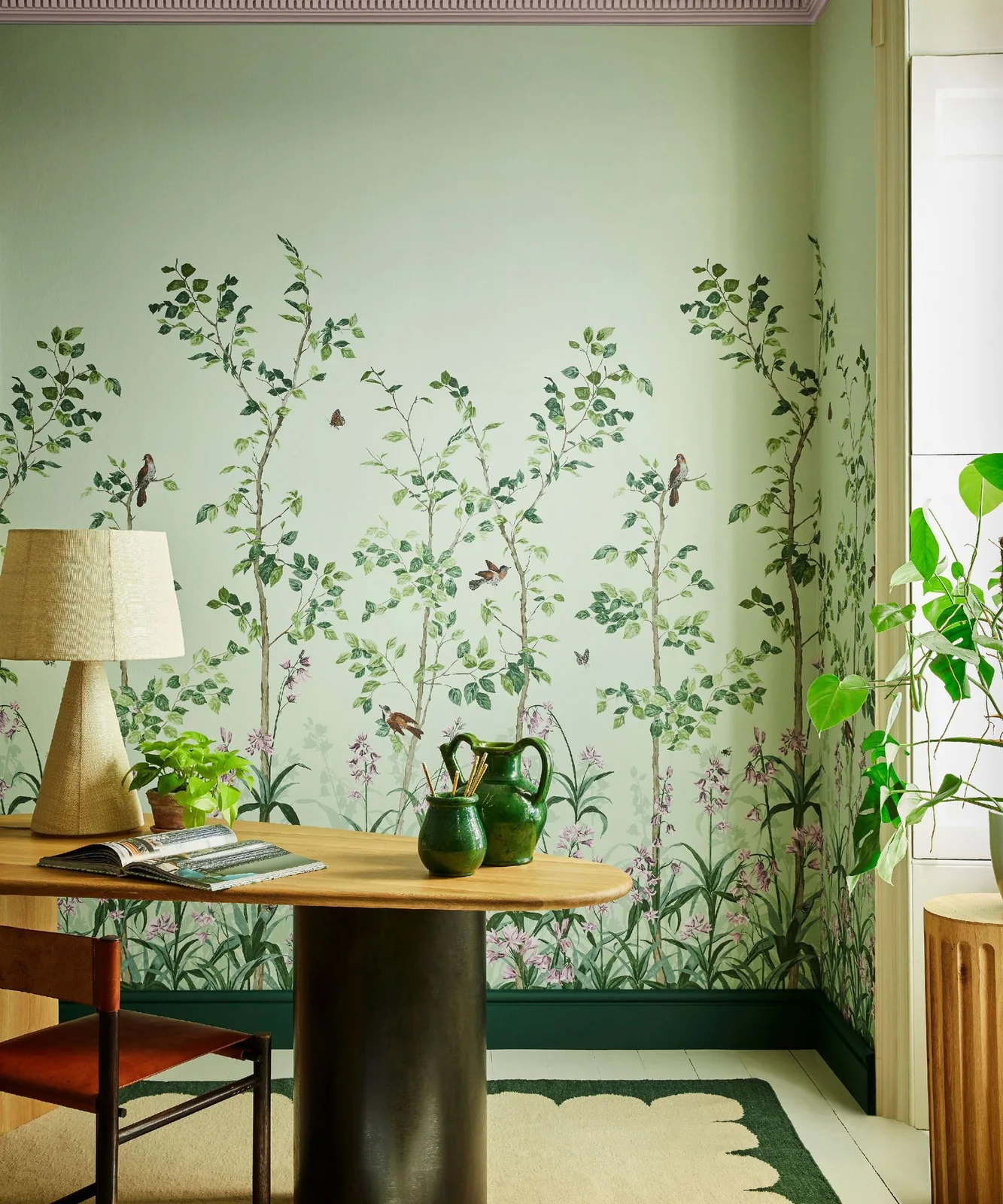
The leafy green wall supplies the larger decorative pattern behind the desk, while the rounded wooden top introduces a simpler warm shape below. Green pitchers repeat the color in smaller objects on the surface. The shaded lamp and orange chair add warmth without asking the desk itself to become another patterned piece.
Compare the wallpaper repeat from the seated position before choosing a full wall treatment. Keep the desk objects few enough to leave room for writing or a computer, moving decorative containers elsewhere when needed. Choose a lamp that suits the work surface and avoid letting nearby foliage block access to the window or useful storage.
IDEA 17 / 20
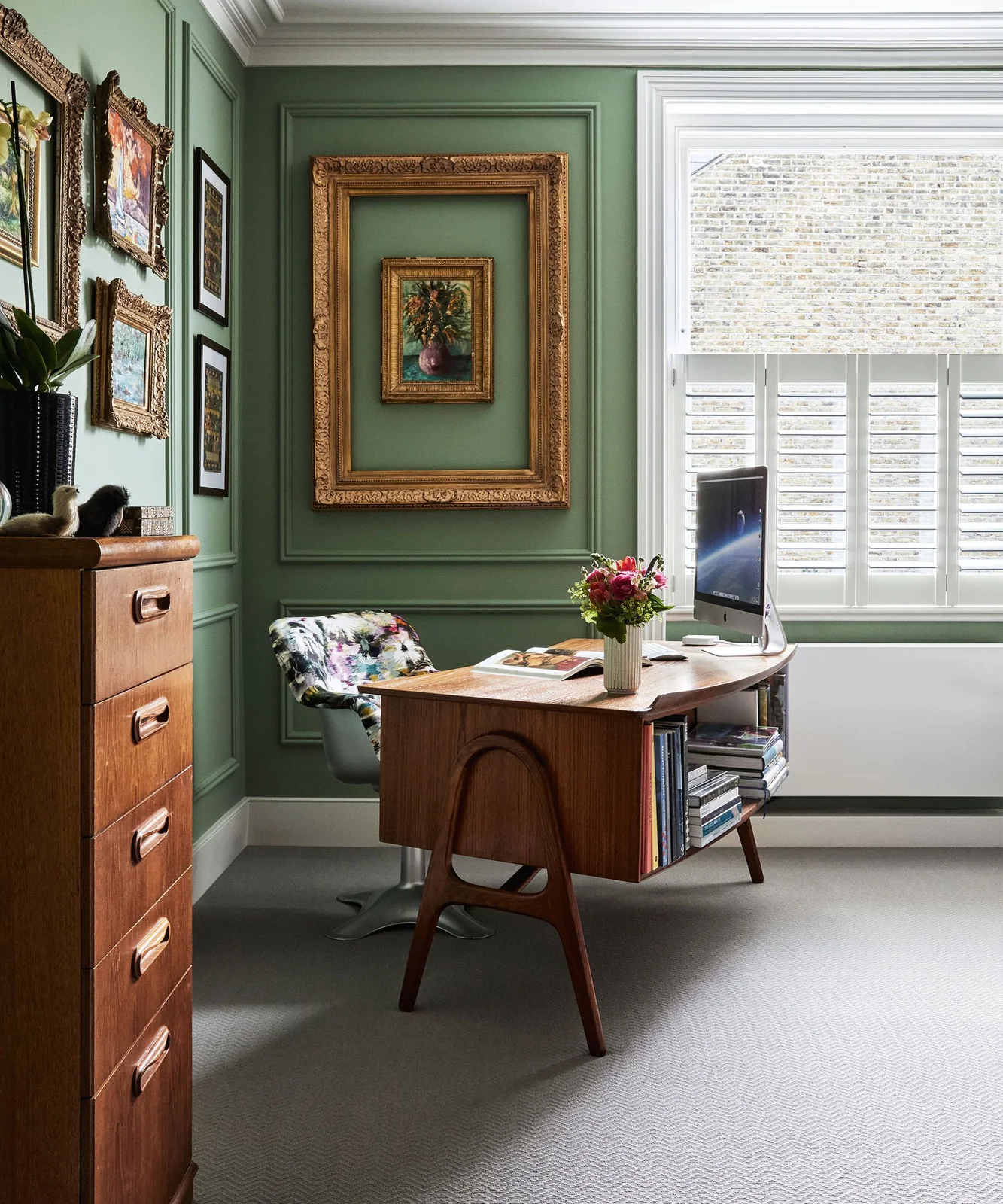
Let Green Paneling Frame Collected Pictures
 SaveSupport Non AI Creator
Image credit: Davide Lovatti
Green paneling gives the mixed frames one consistent painted background, allowing different artwork sizes to share the wall. The rounded wooden desk adds a warmer surface beneath the collection, while a floral chair supplies a smaller fabric pattern. A separate drawer cabinet provides additional storage beside the working area.
Lay out the picture collection around the desk position before hanging it, checking that larger frames remain securely fixed. Keep enough space to use both the desk and drawer cabinet without moving the chair repeatedly. Select artwork you want to see daily, then choose a simpler desktop arrangement if the wall already has several competing details.
IDEA 18 / 20
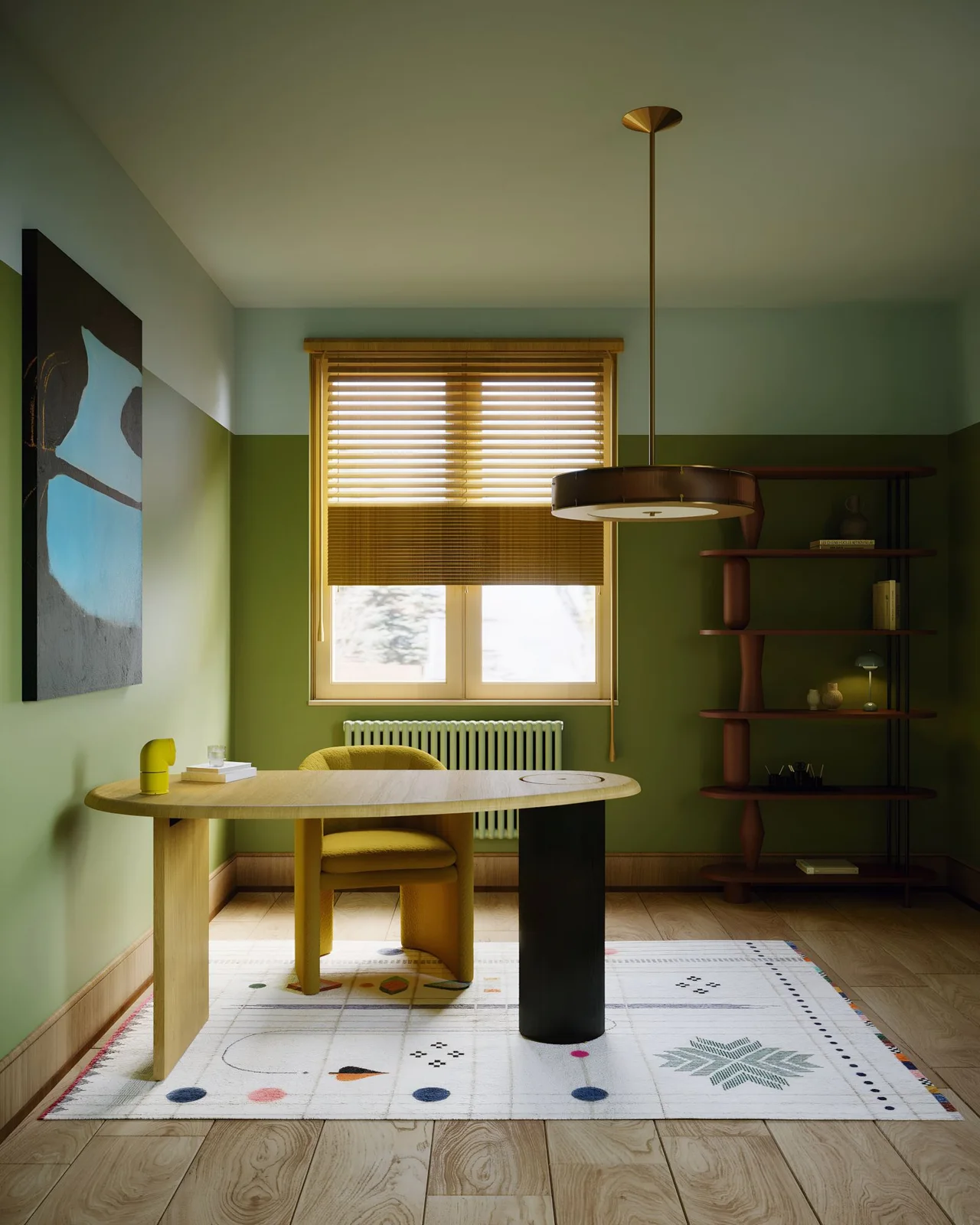
Pair Olive Walls with a Light Upper Area
 SaveSupport Non AI Creator
Image credit: Anna Nezamutdinov. Design: Studio Bosko
Olive green connects the lower walls with the larger shelf background, while the paler upper area keeps the painted treatment visibly divided. A wooden desk and yellow chair add warmer surfaces around the work position. The yellow blind repeats that warmth near the window, with abstract artwork adding a smaller blue accent.
Plan the painted boundary around the room’s actual wall features and check the desk placement beneath it. Keep the window covering easy to adjust for screen reflections and daylight changes. Choose the chair and shelf spacing for practical use first, and leave the central desk surface available rather than filling it with objects to repeat every accent color.
IDEA 19 / 20
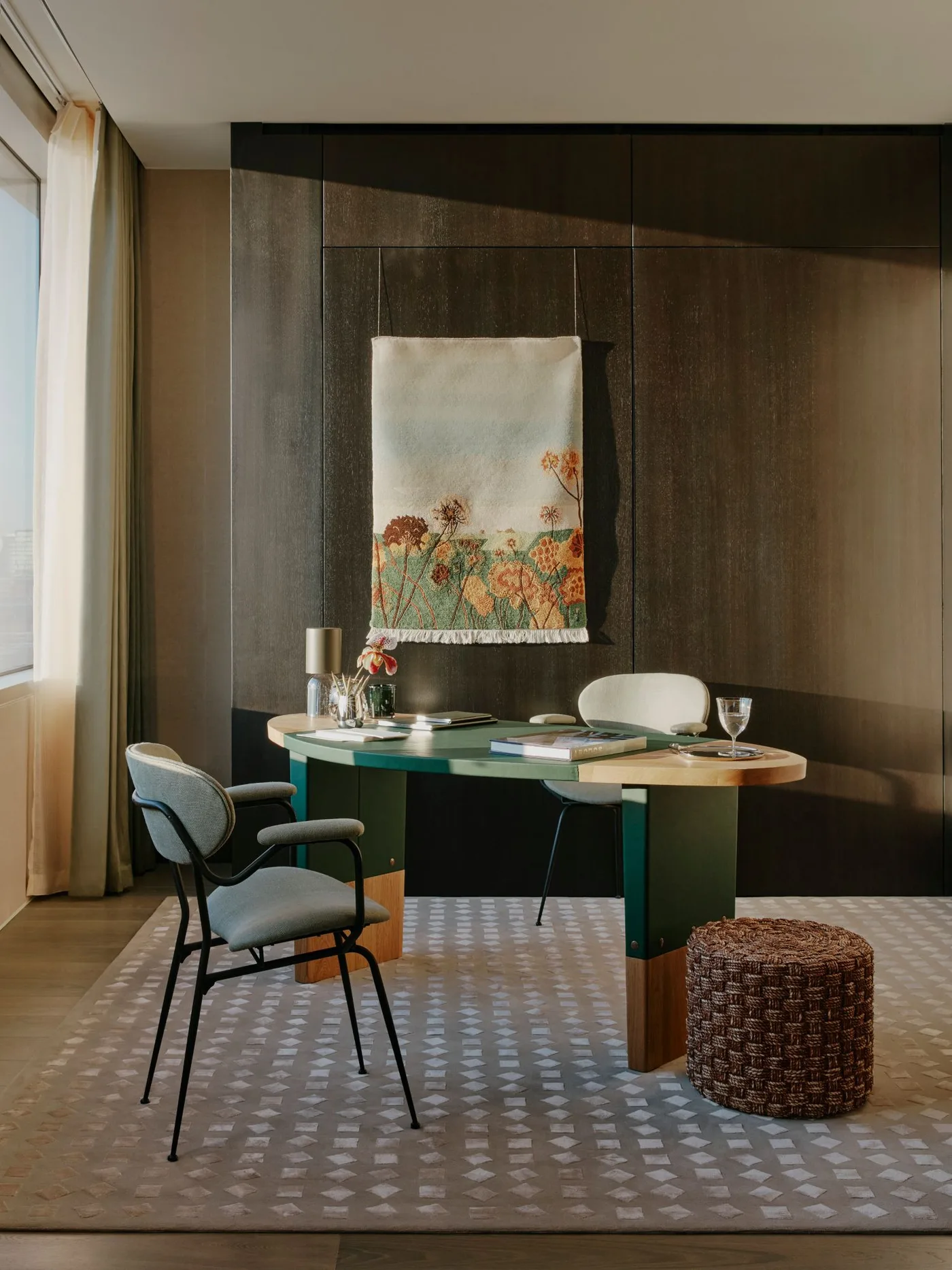
Use a Green Table for a Flexible Work Area
 SaveSupport Non AI Creator
Image credit: Kensington Leverne. Design: David Collins Studio
The green area of the oval table provides a contained color feature against the darker wood-clad background. Pale wooden edges make its curved outline easier to distinguish, while upholstered chairs add softer surrounding surfaces. The floral hanging introduces green and warmer colors above without repeating the table’s simple shape.
If one surface must handle more than work, keep supplies in nearby storage that can be cleared quickly. Check seated reach and the position of the table supports before choosing an oval outline. Dining room office combinations offer other ways to share a useful table while still keeping work materials separate from meals and social use.
IDEA 20 / 20
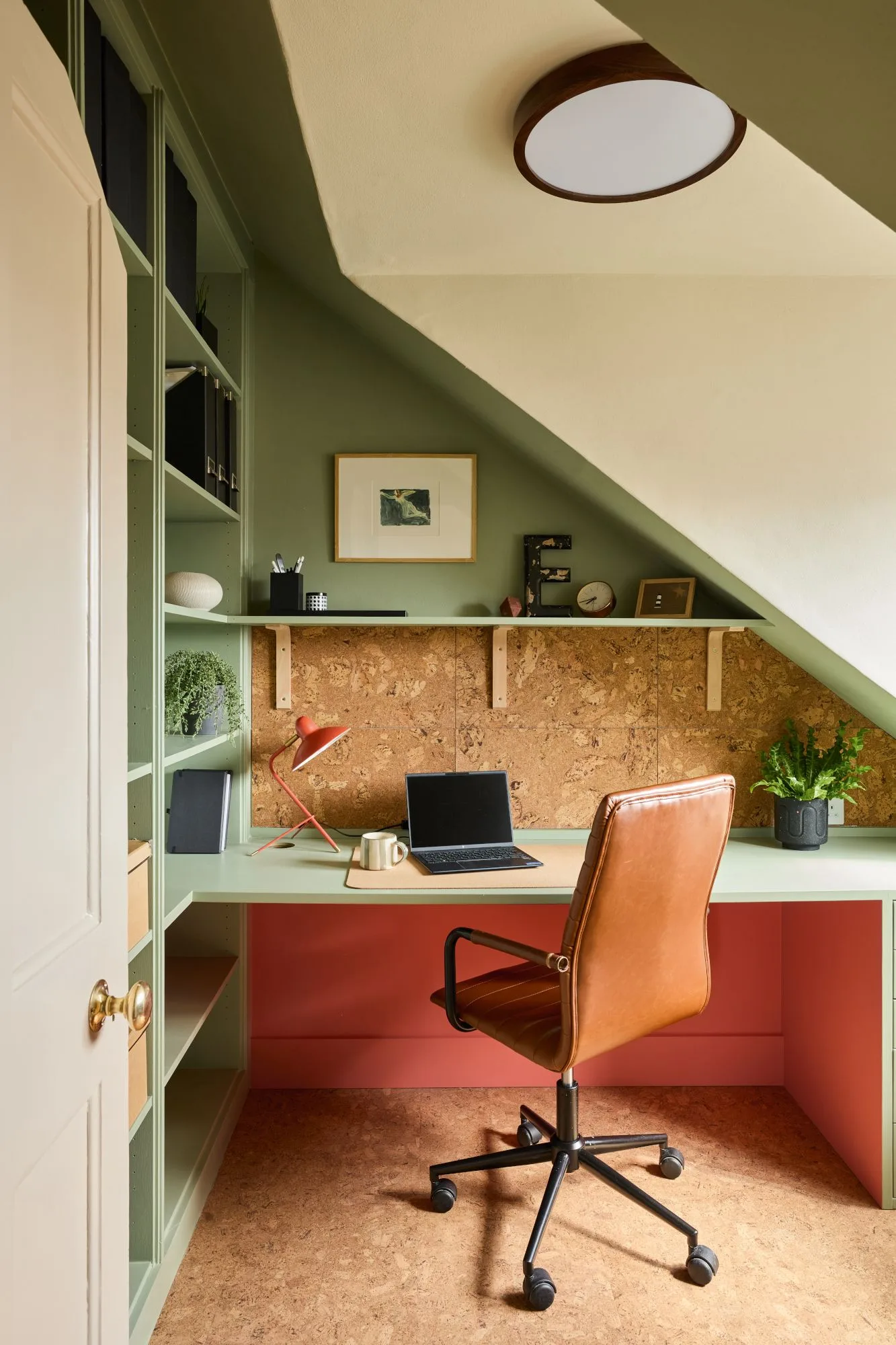
Fit Green Shelving Beneath a Sloping Ceiling
 SaveSupport Non AI Creator
Image credit: Chris Snook. Design: Studio Fabbri
Green connects the shelves and work surface within the sloping alcove, while the pale ceiling remains a separate lighter area above. Coral lower storage adds a warmer band below the desktop. A tan swivel chair and cork-colored wall section supply different textures around the compact working position.
Check seated headroom, chair movement and comfortable access to the shelves before fitting storage into the slope. Keep lighting positioned for the desktop rather than only the room’s center. Attic office ideas compare other ways to arrange work beneath eaves when you need the ceiling shape and storage to work together.
BRING IT ALL TOGETHER
Keep the working arrangement useful as the color develops
Set out the equipment and papers you use before choosing the final desk decoration. Check seat comfort, drawer access and the routes around the work position, then compare green samples with the larger surfaces. A contained green chair or cabinet can introduce color where changing the entire wall treatment would be unnecessary.
Place heavier supplies within comfortable reach and choose open storage only for items you can keep organized. Keep plants and decorative vessels separate from electronics, and adjust window coverings and task lights for the work itself. The finished office should remain practical when the desk is in use, rather than depending on an empty surface to look complete.