A living room accent wall needs to work with the furniture in front of it. A pattern that looks appealing close up can feel quite different behind a sofa, beside a cabinet or across from your usual chair. Begin with the seating you intend to keep and judge the wall from those everyday viewpoints.
These photographs focus on the relationship between wall treatments and seating: how a mural defines a nook, how shelves frame a television, and how paint or paneling connects separate chairs. Compare samples at a useful size, check installation and care requirements, and choose one change that suits the room before replacing several finishes.
PART 01
Compare pattern and texture behind the sofa
IDEA 01 / 20
Frame a Gray Sofa with a Repeating Pattern
 SaveSupport Non AI Creator
Image credit: Future PLC/Simon Whitmore
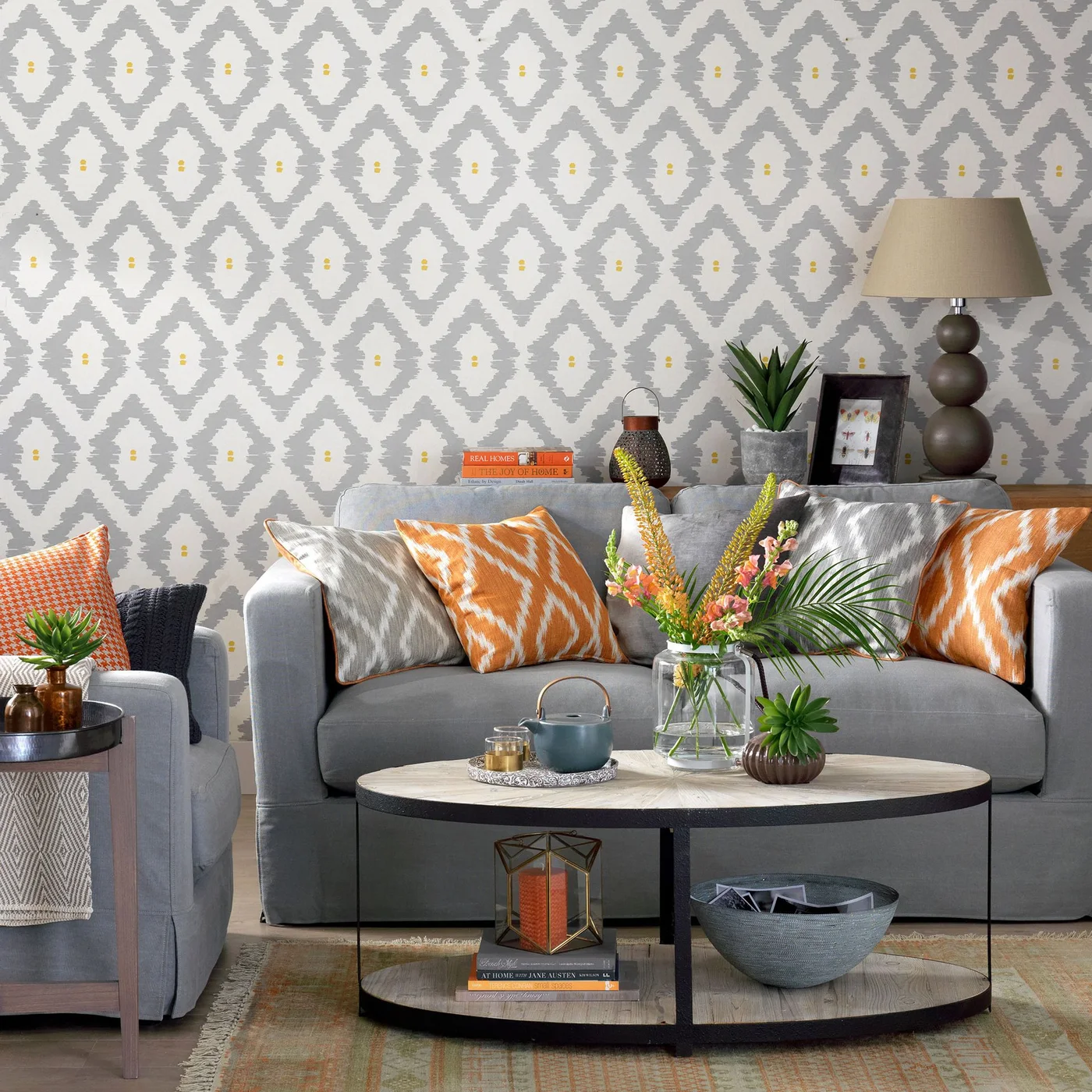
The wallpaper gives this sofa wall a repeating outline behind the quieter gray upholstery. Orange cushions pick up the smaller warm details across the seating group. An oval coffee table adds a different shape below, keeping the room from relying entirely on the wallpaper’s angular repeat.
Place a generous wallpaper sample behind your sofa before ordering, viewing it from the opposite seats as well as close up. Compare the repeat with patterned cushions you intend to keep. Gray couch living room ideas show more fabric and accessory combinations if you want to choose the seating palette first.
IDEA 02 / 20
Define a Sitting Nook with a Woodland Mural
 SaveSupport Non AI Creator
Image credit: Future PLC/David Giles
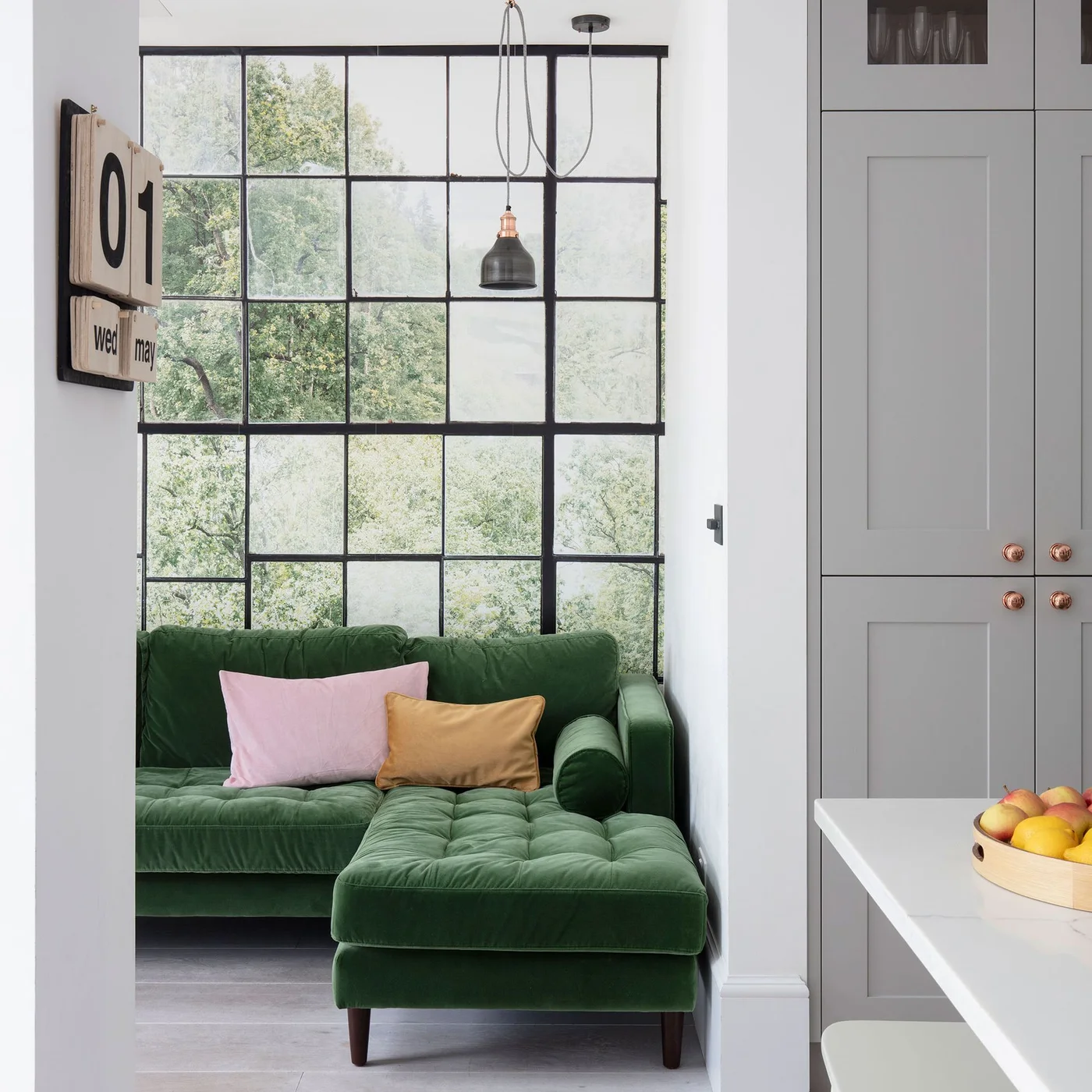
The woodland mural gives this small sitting nook a separate backdrop beside the kitchen cabinets. Its black grid adds a window-like outline, while the green corner sofa connects to the trees pictured behind it. Pale surrounding walls keep the darker seating area clearly defined within the shared room.
Measure the available wall and check the mural’s crop before ordering a scaled image. Keep the main tree details visible above the sofa back rather than hiding the useful part of the picture. Choose a finish appropriate to the nearby kitchen and follow its cleaning guidance around cooking residue.
IDEA 03 / 20
Use a Large Floral Repeat Beside Warm Wood
 SaveSupport Non AI Creator
Image credit: Future PLC/Lizzie Orme
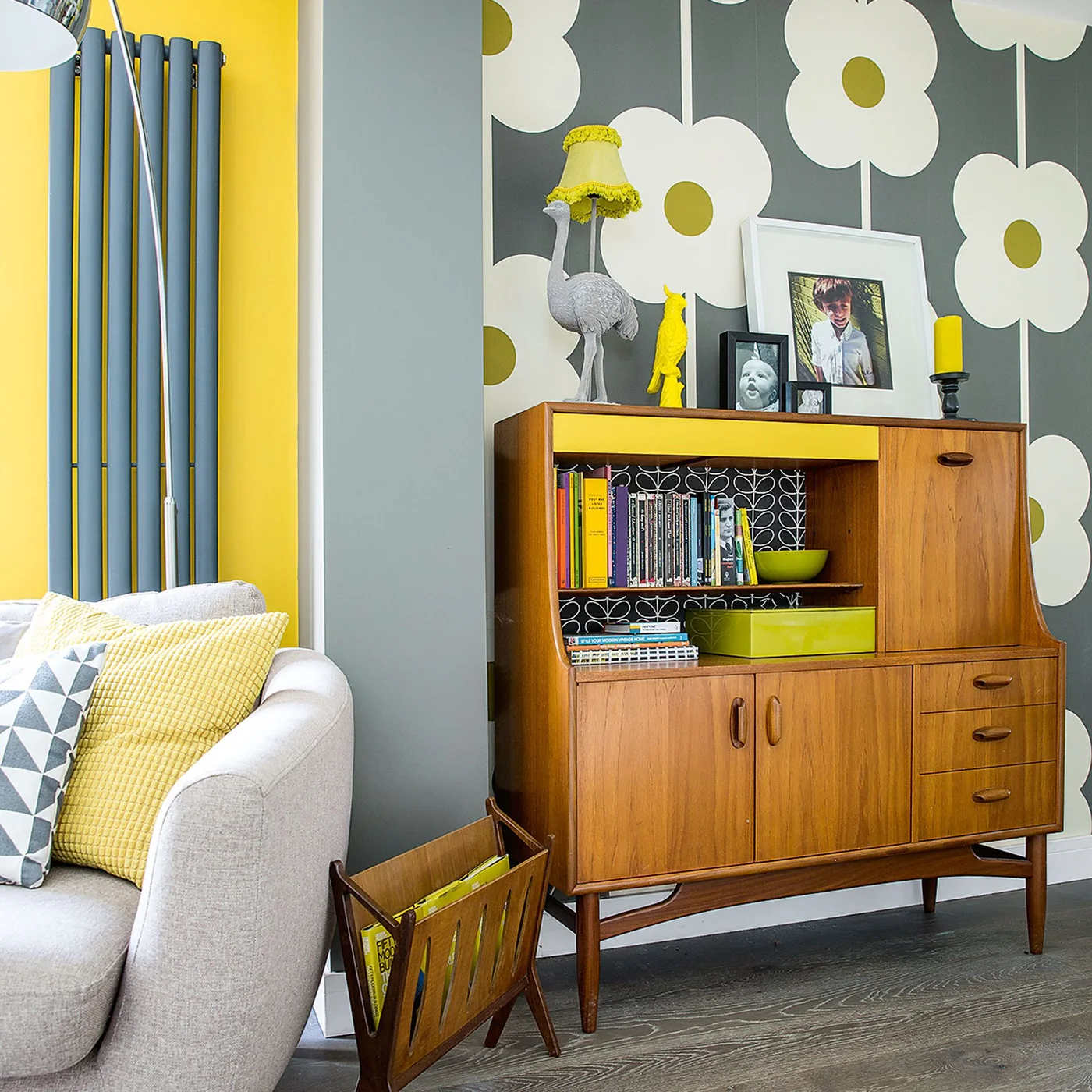
The oversized white flowers make this gray wallpaper a strong backdrop for the wooden cabinet. Yellow appears on the neighboring wall and smaller accessories, linking the separate surfaces without copying the floral pattern everywhere. The pale sofa leaves the wallpaper’s larger shapes easy to read beside the furniture.
Look at several joined wallpaper drops when comparing a large repeat; a small sample may miss its overall spacing. Allow for pattern matching and check where the flowers meet corners or cabinet edges. Boho wallpaper ideas offer other expressive patterns if you prefer more variation around warm wooden furniture.
IDEA 04 / 20
Give the Stove Wall a Quieter Textured Finish
 SaveSupport Non AI Creator
Image credit: Future PLC/Anna Stathaki
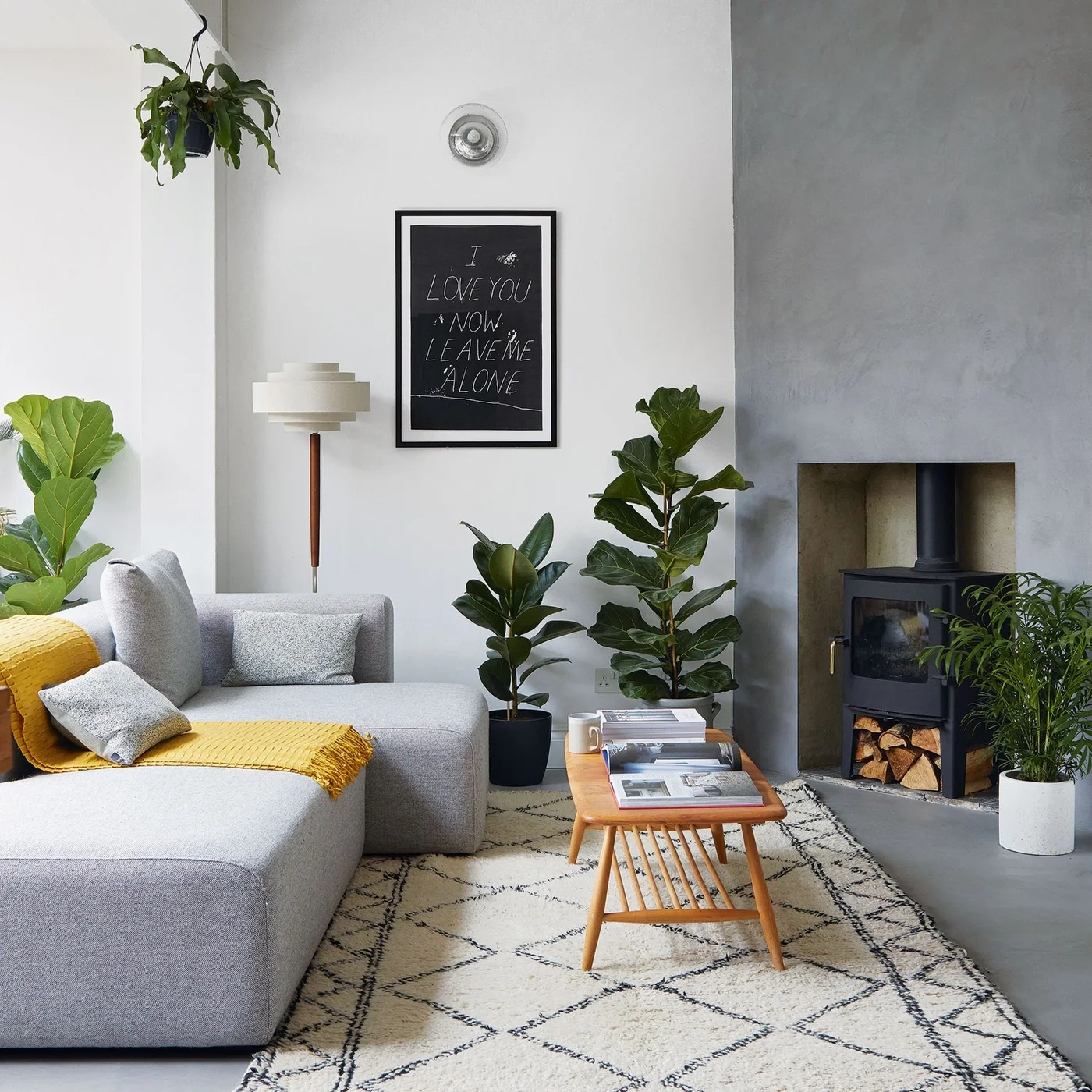
The gray textured chimney wall separates the black stove from the lighter wall beside it. A pale gray corner sofa and simple wooden tables keep the seating group lighter than the vertical feature. Green plants introduce softer outlines around the room’s more straightforward furniture and wall shapes.
Ask the appropriate installer which finishes and clearances are suitable around your actual stove before changing its surround. A photograph cannot establish those requirements. Fireplace accent wall ideas compare other ways to emphasize this area while keeping the relationship between the appliance, furniture and wall treatment central to the decision.
IDEA 05 / 20
Let Vertical Paneling Support a Plant Display
 SaveSupport Non AI Creator
Image credit: Future PLC/Joanna Henderson
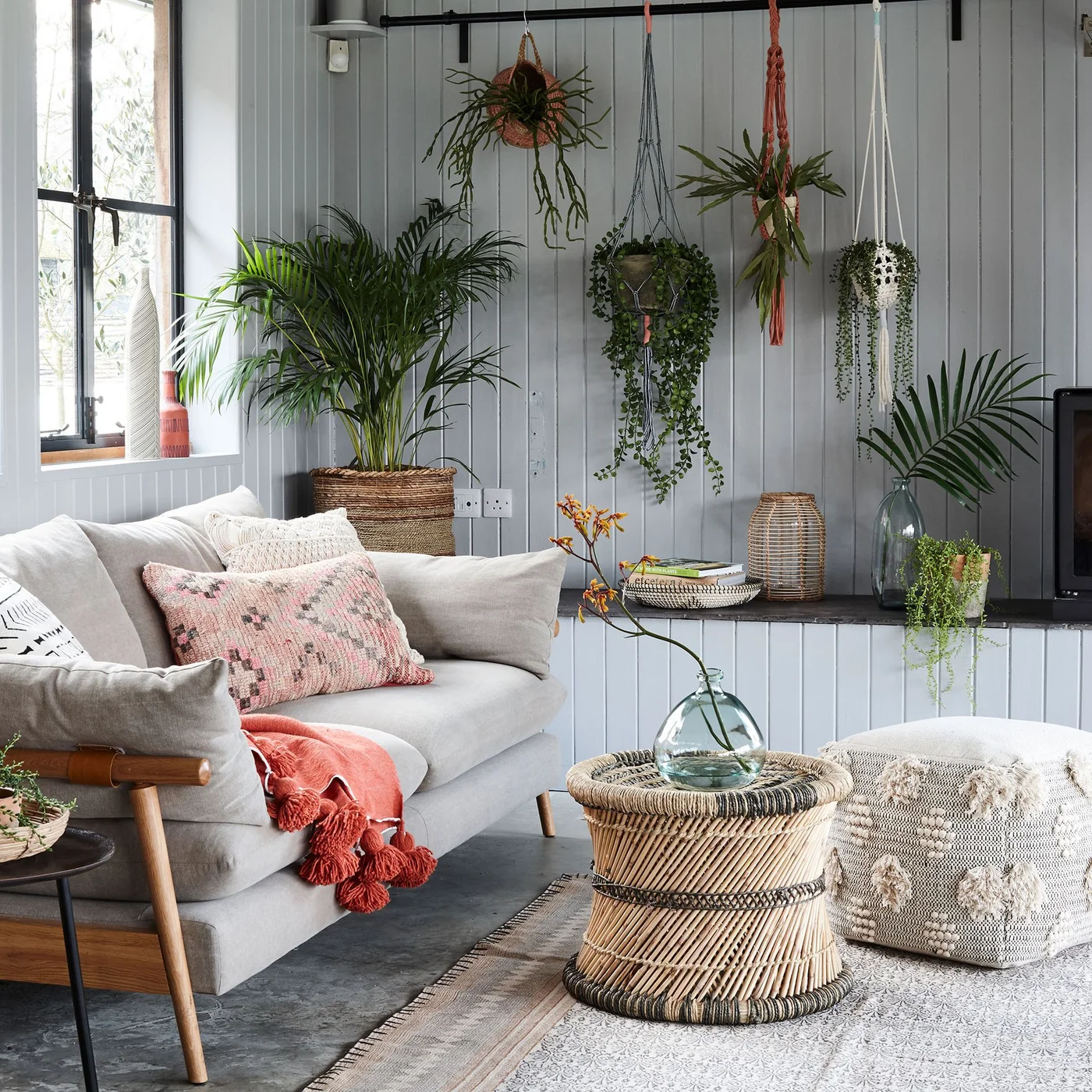
Gray vertical panels provide a regular background for the hanging plants above this pale sofa. The foliage crosses those straighter lines, with woven furniture adding warmer texture below. Smaller pink and coral textiles break up the gray seating area without adding a second large patterned wall.
Check the wall construction and suitable fixings before hanging planters, accounting for their weight when watered. Use containers that protect the wall and furniture from drips, and keep plants reachable for care. Limit the display to varieties suited to the actual light rather than copying every plant shown.
PART 02
Connect wall displays with shelves and seating
IDEA 06 / 20
Make a Storage Wall the Feature
 SaveSupport Non AI Creator
Image credit: Future PLC/Dominic Blackmore
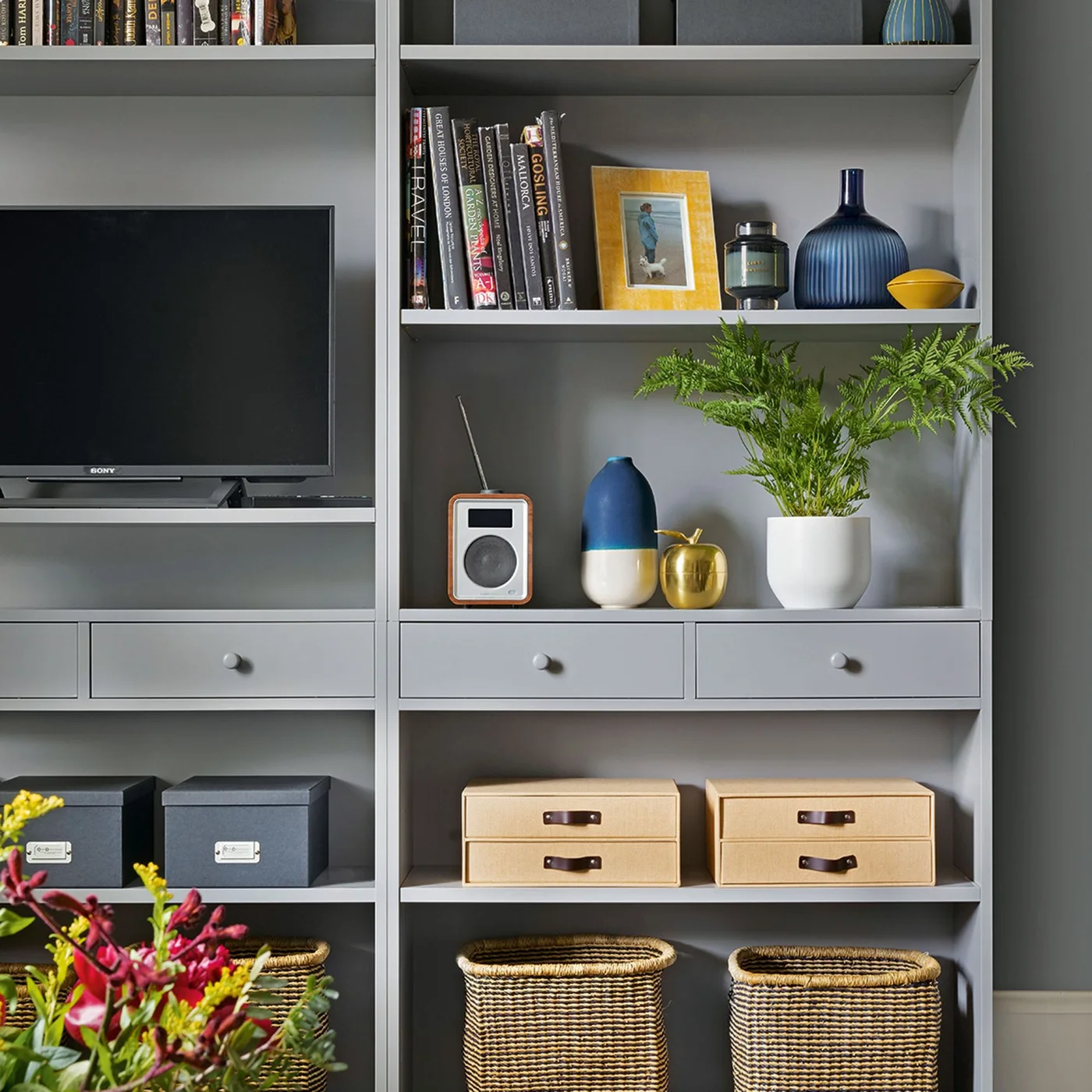
The gray shelving turns the television wall into a larger storage arrangement. Books and blue vessels occupy different compartments, while drawers and baskets contain smaller items below. Using one gray across the shelves and surrounding structure makes the contents stand out without several competing cabinet colors.
List the equipment and objects you need to store before choosing shelf spacing. Allow access to cables and follow ventilation requirements for the actual electronics. Keep frequently used items within comfortable reach, and leave some shelves less crowded so the television and everyday storage remain easy to use.
IDEA 07 / 20
Connect a Paneled Sofa Wall to Blue Storage
 SaveSupport Non AI Creator
Image credit: Future PLC/Simon Whitmore
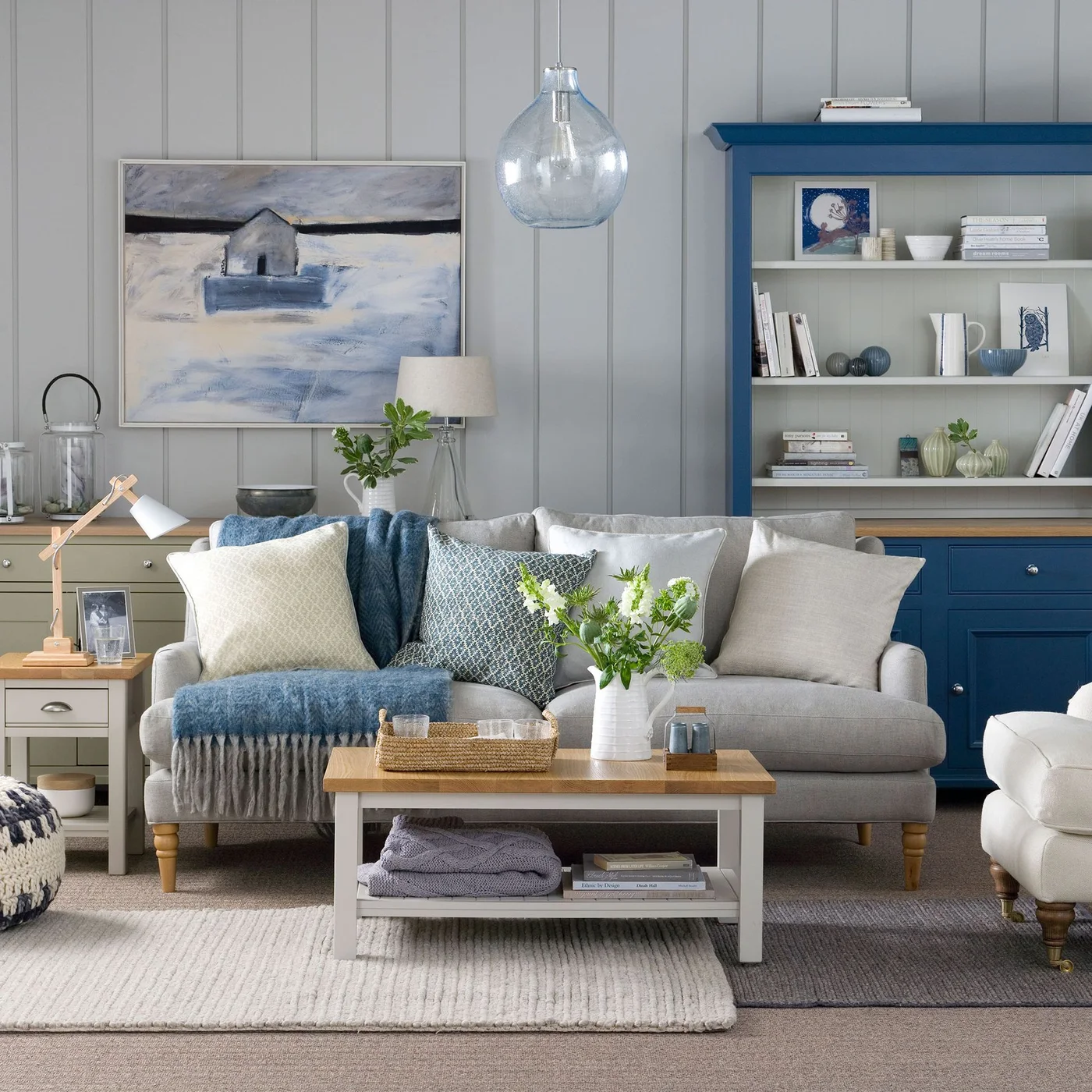
The pale gray paneling gives this sofa wall narrow vertical lines without a bold color contrast. A framed picture breaks up the panels above the seating, while the blue cabinet adds a stronger color on one side. Blue textiles carry that neighboring storage color back across the sofa.
Plan the panel divisions around outlets and the furniture you will keep, checking how they meet door frames and corners. Choose artwork that can sit clearly within the available space above the sofa. Blue living room ideas compare other ways to distribute blue when a single cabinet supplies the strongest color.
IDEA 08 / 20
Build a Gallery with a Deliberate Outer Edge
 SaveSupport Non AI Creator
Image credit: Future PLC/Dominic Blackmore
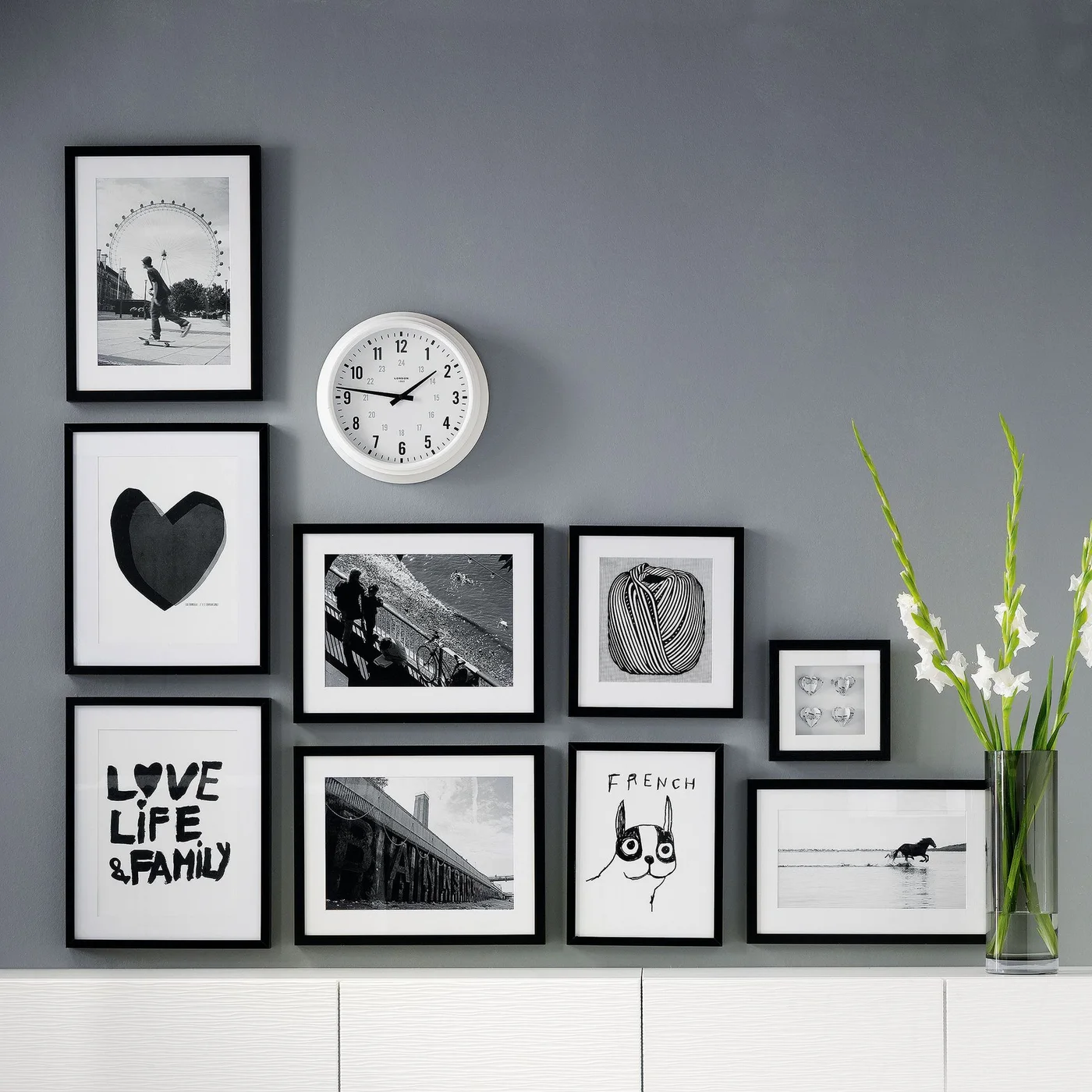
The black frames give these photographs and illustrations a shared outline against the gray wall. Their stepped arrangement leaves a different outer edge from a single rectangular grid. A white clock relates to the sideboard below, making the wall display feel connected to the furniture rather than completely separate.
Arrange paper templates before making holes, allowing room for the clock and the tallest objects on the sideboard. Check suitable wall fixings for each frame’s weight. Above couch wall decor offers more display arrangements if this wall sits behind seating instead of a cabinet and needs a different hanging position.
IDEA 09 / 20
Use a Yellow Lower Wall to Connect the Seats
 SaveSupport Non AI Creator
Image credit: Future PLC/Dan Duchars
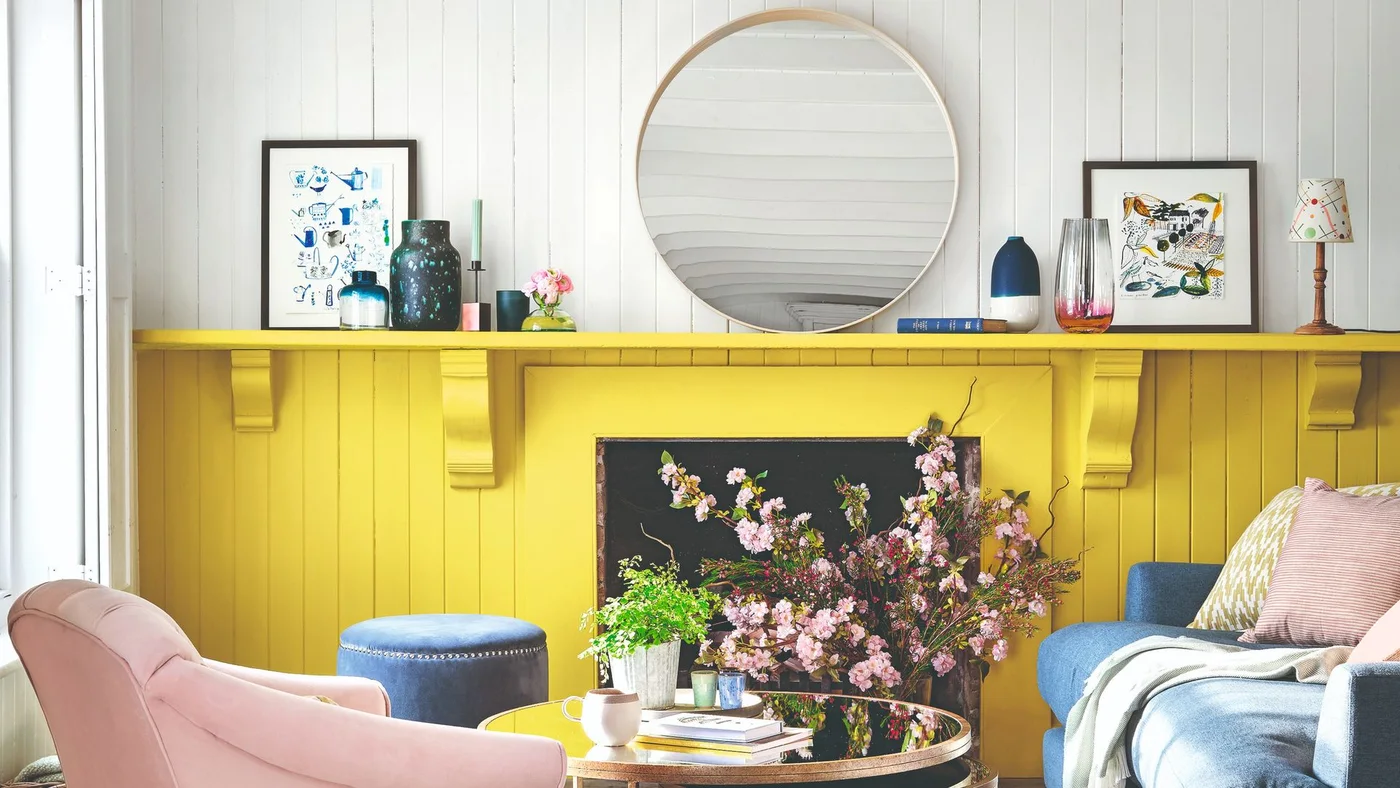
The yellow lower paneling gives this seating area a warm band beneath the white upper wall. A long shelf connects the framed pictures, vessels and round mirror across the same line. Pink and blue seats introduce separate colors while the wall provides a common background between them.
Test the yellow beside both upholstery colors before committing to the full lower wall. Decide the shelf height from actual furniture and reachable display space, using appropriate fixings. Keep breakable objects away from busy seat edges, and leave enough empty shelf to dust without dismantling the whole arrangement.
IDEA 10 / 20
Pair a Green Botanical Wall with Patterned Seating
 SaveSupport Non AI Creator
Image credit: Future PLC/Polly Wreford
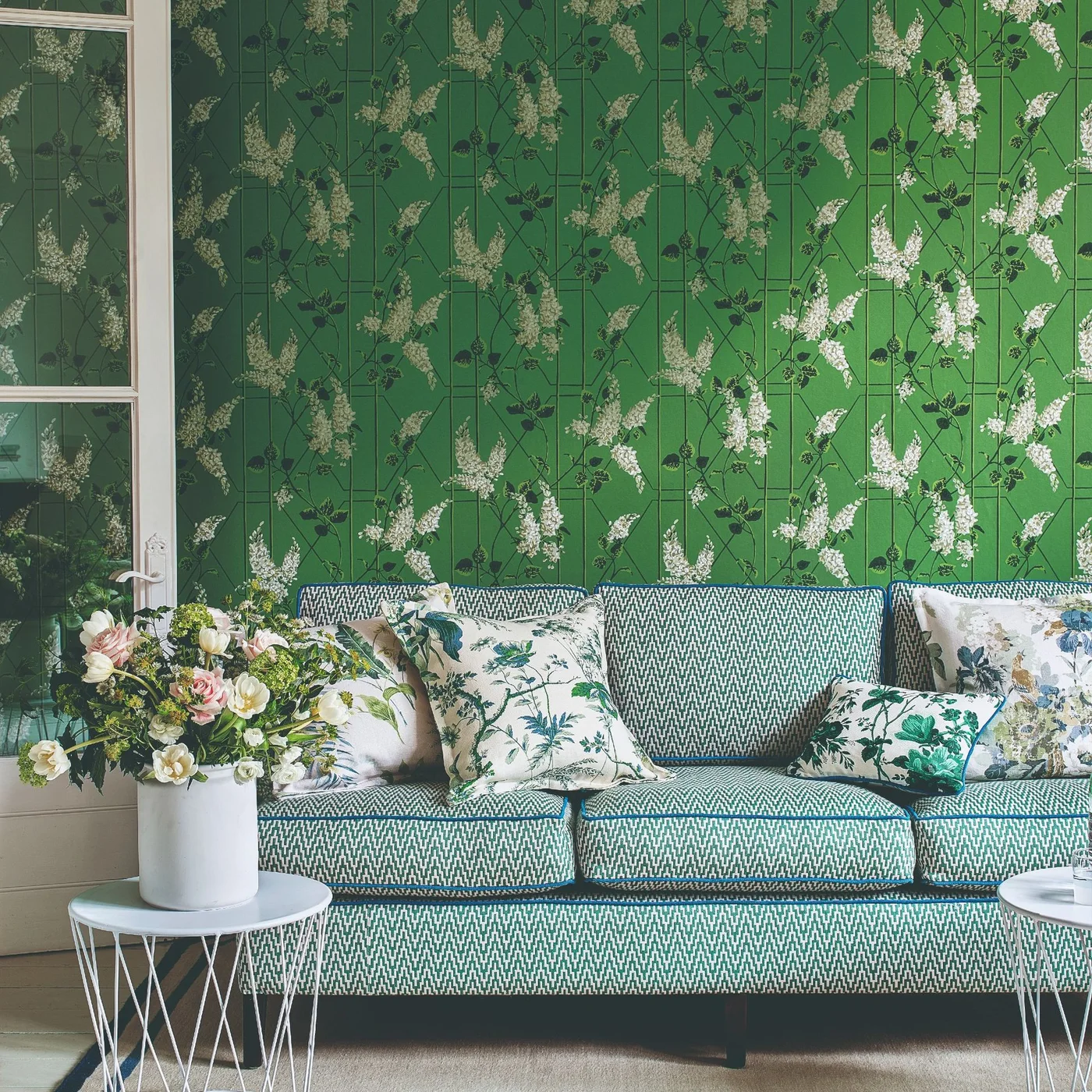
Green botanical wallpaper covers the wall behind this patterned sofa. The repeated green links the two surfaces, while the different pattern scales keep the upholstery and wall from appearing identical. Floral cushions add another smaller layer, with the nearby glazed door interrupting the full wall of print.
Compare wallpaper and upholstery samples together at the distance you normally sit across the room. If both patterns feel busy, simplify the cushions before replacing larger furniture. Green couch living room ideas show quieter and more colorful backgrounds when you want to compare this layered approach with a less patterned wall.
PART 03
Choose a backdrop around existing furniture
IDEA 11 / 20
Put Dark Vertical Slats Behind a Pale Sofa
 SaveSupport Non AI Creator
Image credit: Naturewall
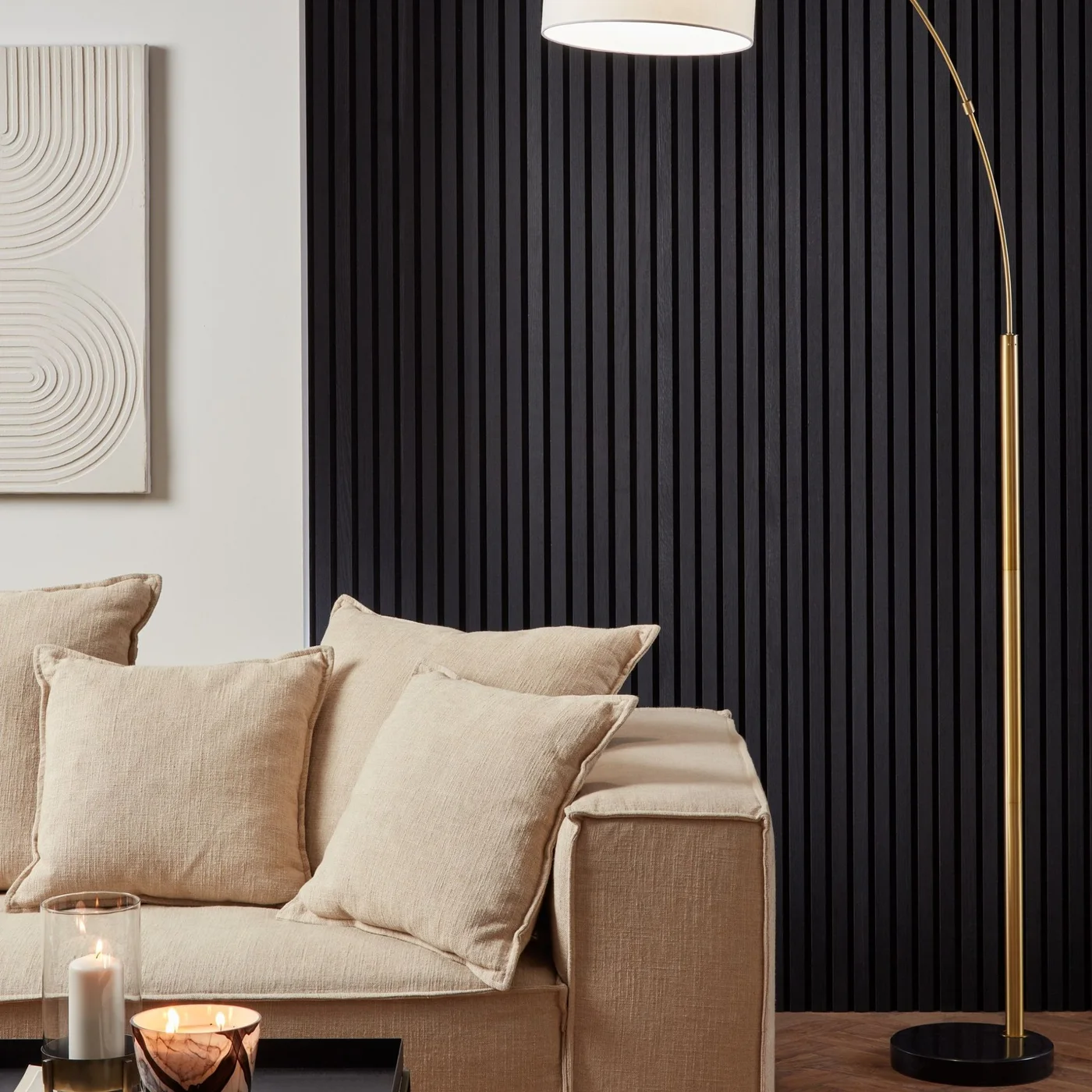
The black vertical slats make a strong backdrop for the beige sofa. Their closely spaced shadows supply detail without a printed pattern, while the pale neighboring wall keeps the darker treatment concentrated behind the seating. A slim lamp adds light above the cushions without hiding much of the paneling.
Review a full panel sample rather than judging the effect from its front color alone. Check edge finishing, outlet access and how you will remove dust between the slats. Choose the product for its actual installation requirements; the photograph does not establish sound reduction or the material beneath the finish.
IDEA 12 / 20
Frame a Pink Mural with Green Battens
 SaveSupport Non AI Creator
Image credit: Future PLC/Carolyn Barber
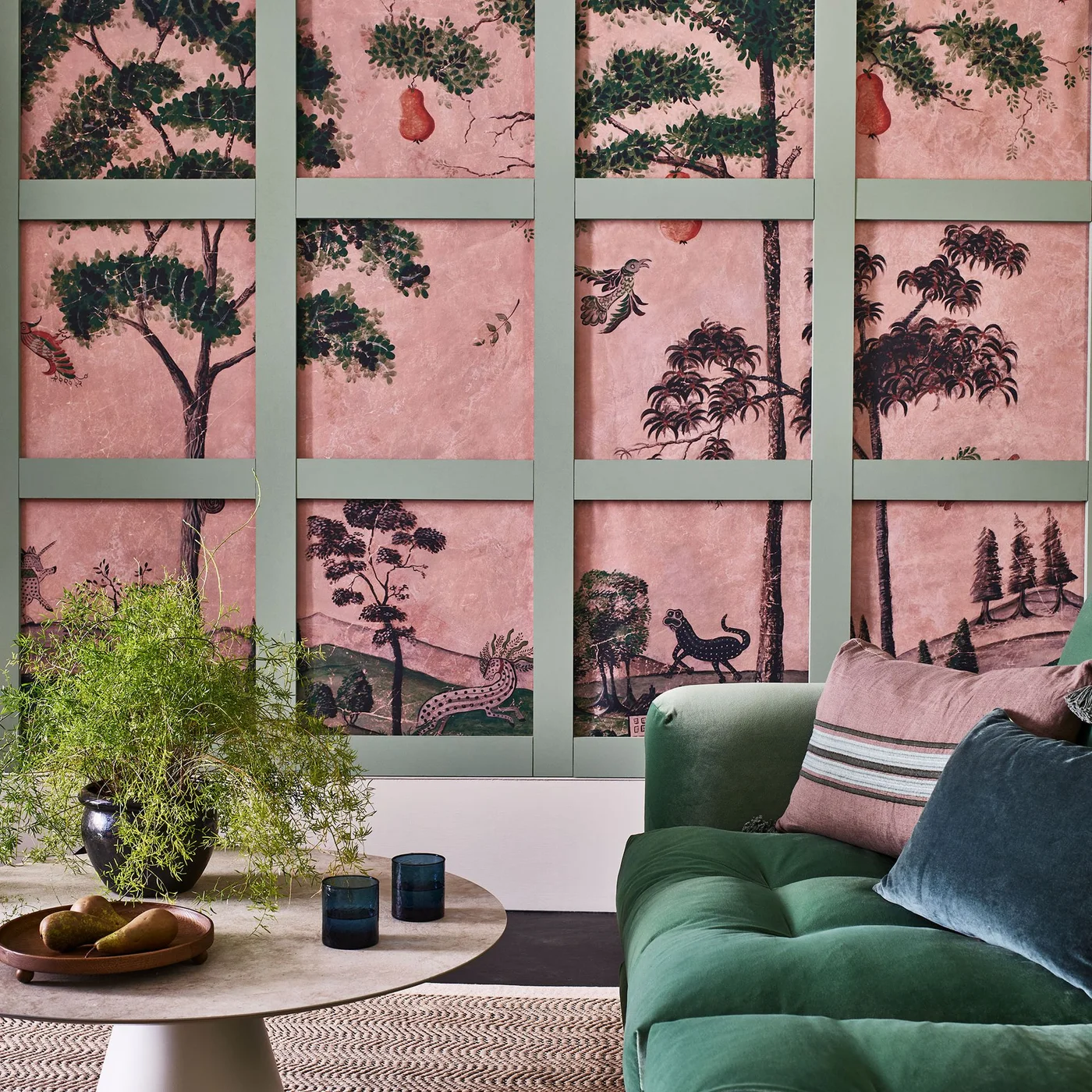
Green framing divides this pink woodland mural into separate rectangular sections. Birds, trees and other illustrated details remain visible inside the grid, with the green sofa repeating the framing color below. The round pale coffee table gives the seating area a quieter shape beside the more detailed wall.
Plan the mural and framing together so important illustrated details do not disappear behind battens. Confirm the surface preparation and attachment method before ordering either part. Keep nearby textiles simpler if the pink scene already supplies enough pattern, and compare the green finish with your sofa under evening light.
IDEA 13 / 20
Leave an Existing Textured Wall Visible
 SaveSupport Non AI Creator
Image credit: Future
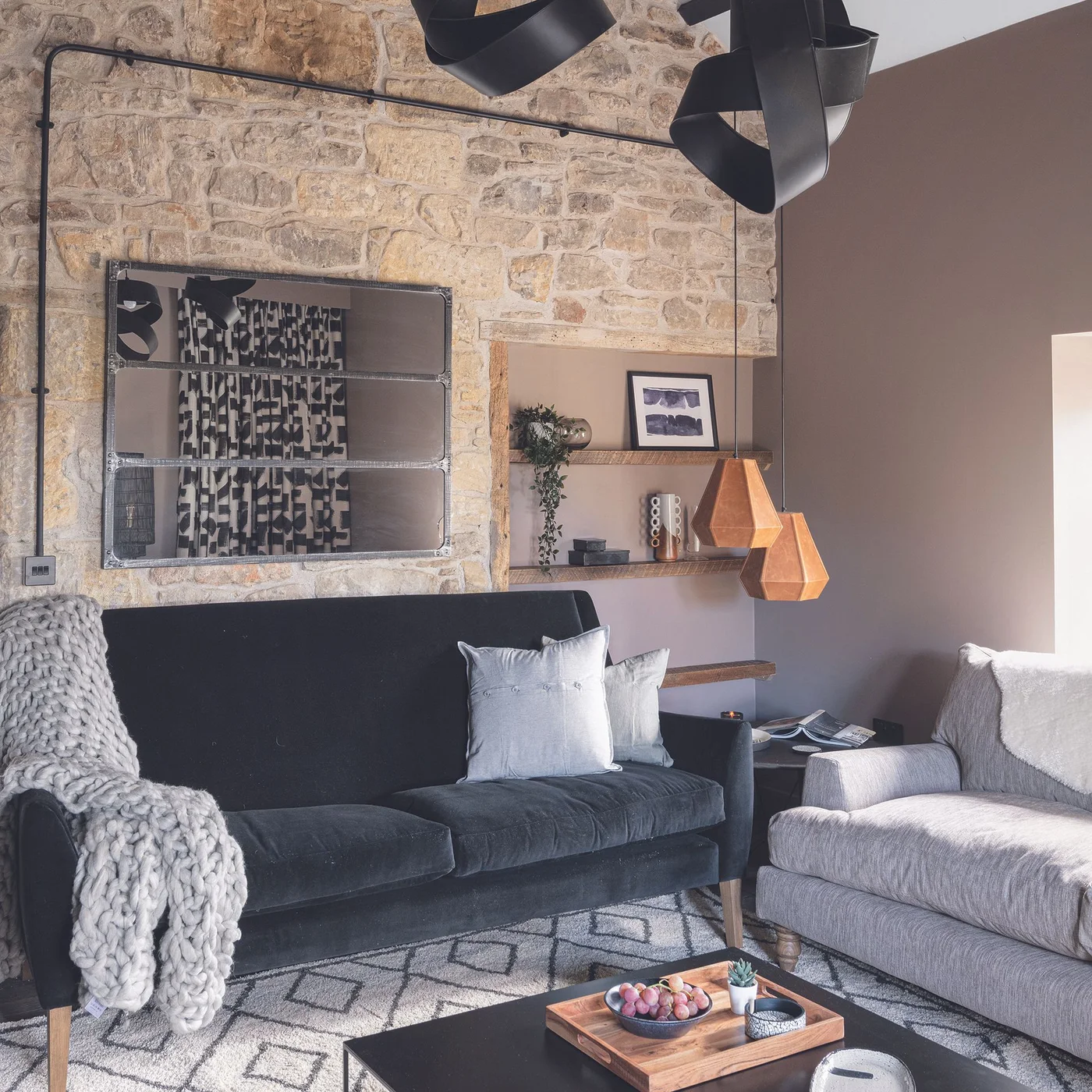
The pale rough masonry wall provides a textured backdrop behind this dark sofa. Framed art adds a more regular rectangle across the uneven surface, while wooden shelves occupy the adjacent recess. The gray armchair and patterned rug connect the seating group without covering the wall’s natural-looking variation.
Have an appropriate professional assess an existing wall before stripping finishes or drilling into it. Choose fixings for the actual construction, and ask about suitable cleaning or sealing if the surface sheds dust. Keep large furniture slightly clear where necessary for inspection and care rather than treating the photographed arrangement as an installation plan.
IDEA 14 / 20
Coordinate a Patterned Wall with Its Doors
 SaveSupport Non AI Creator
Image credit: Sofology
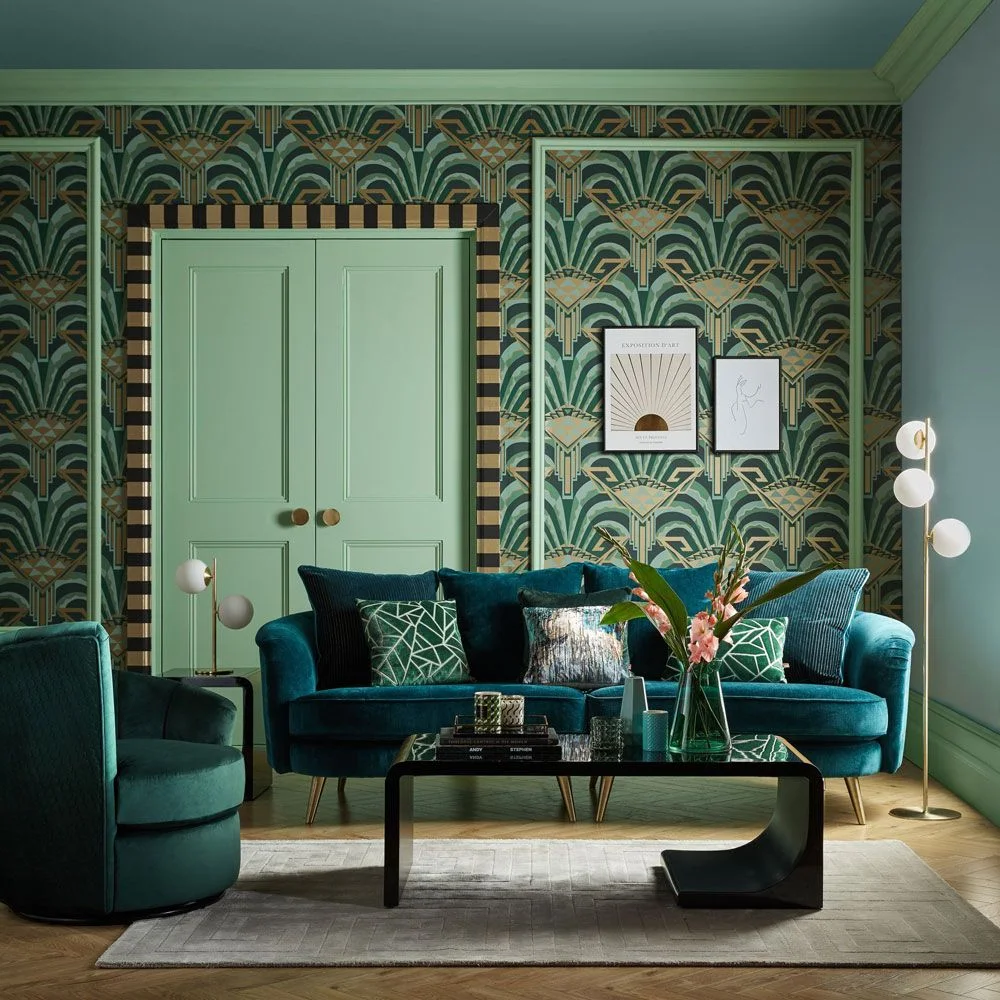
The green wallpaper surrounds the mint-green doors, making the opening part of the feature instead of a separate white interruption. Teal seating picks up the wall’s darker tones, with the black coffee table adding one quieter outline below. Framed pictures remain smaller than the wallpaper’s main repeat.
Compare door paint and wallpaper together before refinishing existing woodwork. Check how the pattern ends at trim and choose preparation appropriate to the door surface. Keep the coffee table and larger textiles relatively simple if you want the repeated wall pattern to remain the most noticeable detail in the room.
IDEA 15 / 20
Break Up a Dark Sofa Wall with Mirrors
 SaveSupport Non AI Creator
Image credit: Future PLC/Brent Darby
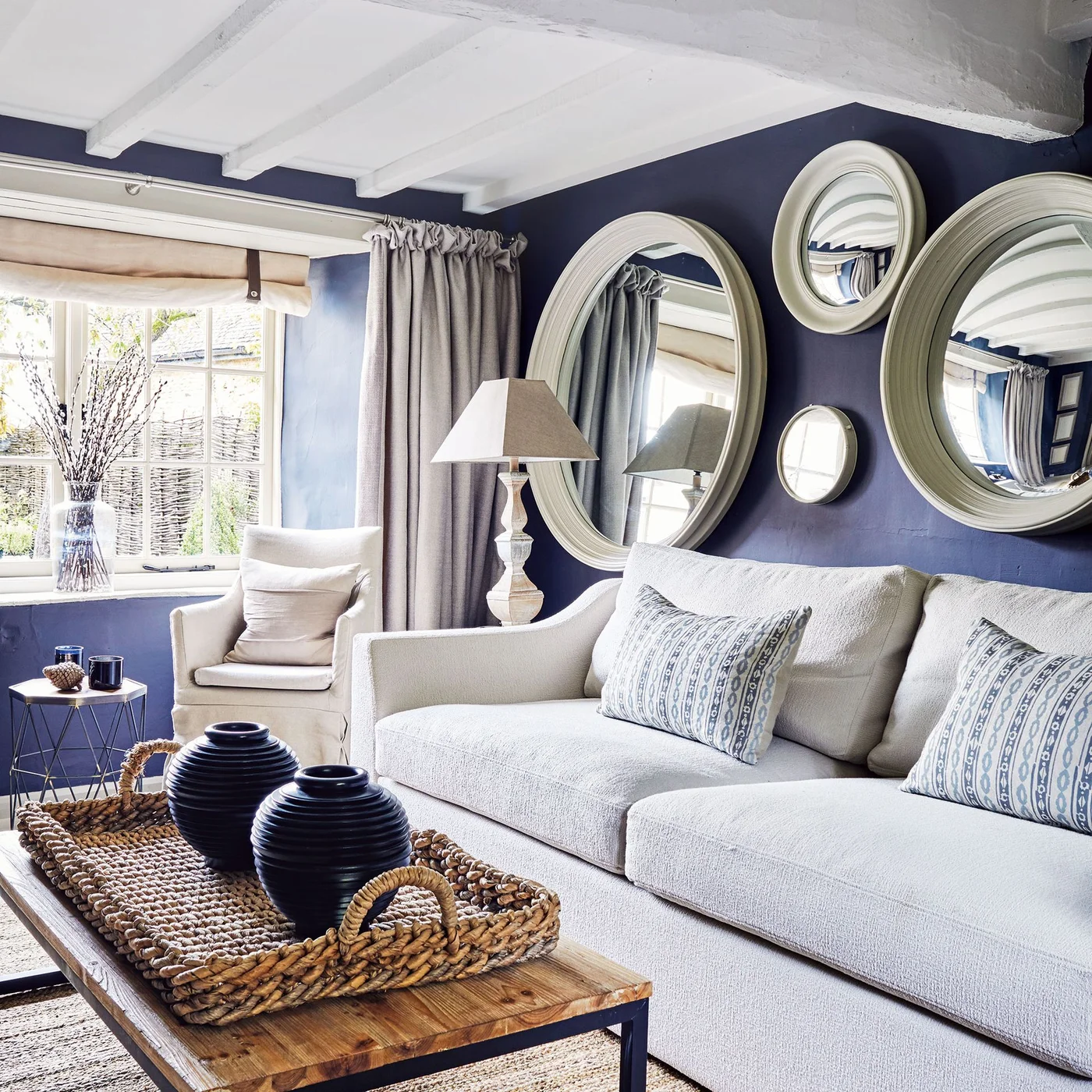
Several pale-framed mirrors interrupt the dark blue wall above this white sofa. Their different sizes add variation while repeating a similar lighter outline. The white ceiling beams and window-side chair carry that lighter color around the room, keeping the blue wall connected to the wider seating arrangement.
Check reflections from each normal seat before fixing mirrors in place, especially opposite screens or bright lamps. Use appropriate fittings for their weight and wall construction. Choose a manageable group rather than filling every gap, leaving enough space above the sofa to keep the arrangement comfortable to sit beneath.
PART 04
Balance tiles, pictures and painted sections
IDEA 16 / 20
Make a Tiled Chimney the Color Focus
 SaveSupport Non AI Creator
Image credit: Future PLC/Colin Poole
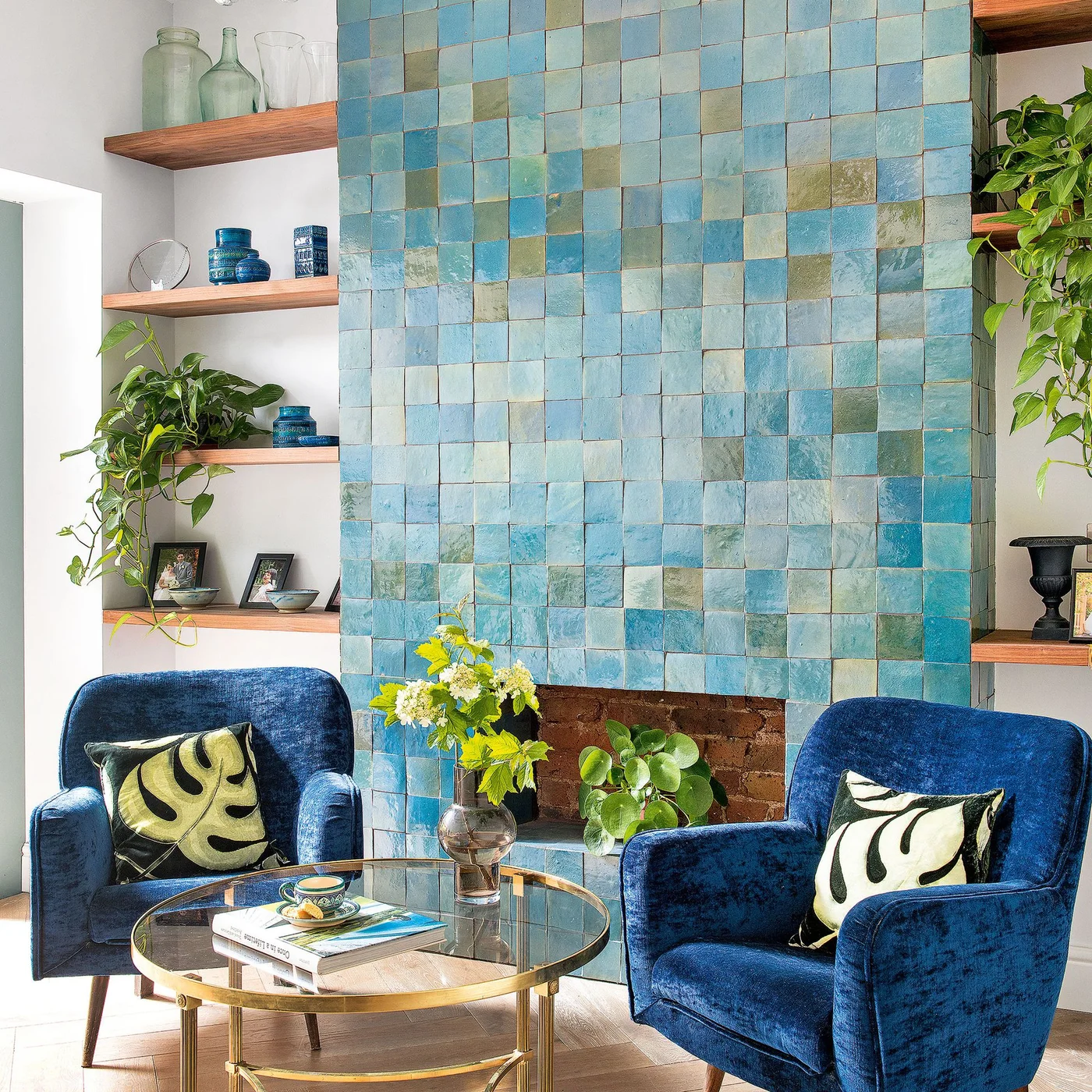
The square tiles bring several blue-green shades onto this chimney breast. Blue armchairs repeat the cooler color at seat level, while wooden shelves add warmer horizontal lines on either side. The surrounding white wall keeps the tiled section distinct without requiring the entire room to use the same surface.
Review several tiles together so you can judge their shade variation and grout spacing before ordering. Confirm wall preparation, weight support and any appliance-related requirements with a qualified installer. Choose a cleaning method for the actual tile finish rather than assuming every glossy or irregular-looking tile needs the same care.
IDEA 17 / 20
Use a Wall Hanging Behind Existing Seating
 SaveSupport Non AI Creator
Image credit: Future PLC/Chris Snook
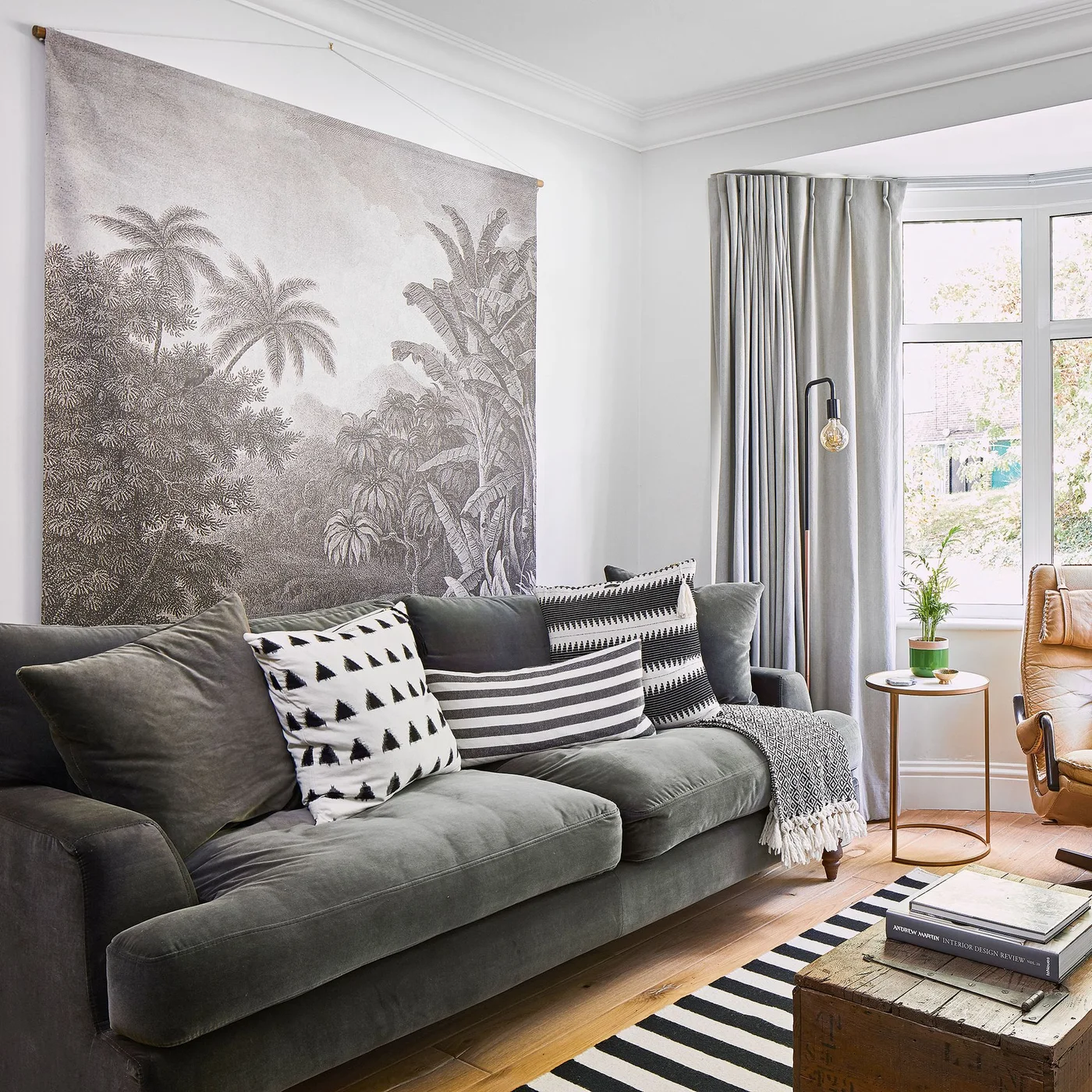
The monochrome botanical hanging gives the gray sofa a detailed background without covering the whole wall. Its trees contrast with the smaller stripes and angular cushion patterns below. Pale surrounding paint and the nearby window keep the illustrated panel clearly visible across the seating area.
Measure the hanging against your sofa and check the mounting system before buying it. Follow the maker’s cleaning instructions, considering sunlight and dust where it will hang. Leave the window controls accessible and avoid adding a second large wall display immediately beside it unless the room has enough clear space.
IDEA 18 / 20
Repeat Wallpaper Colors in Small Accessories
 SaveSupport Non AI Creator
Image credit: Future PLC/Tim Young
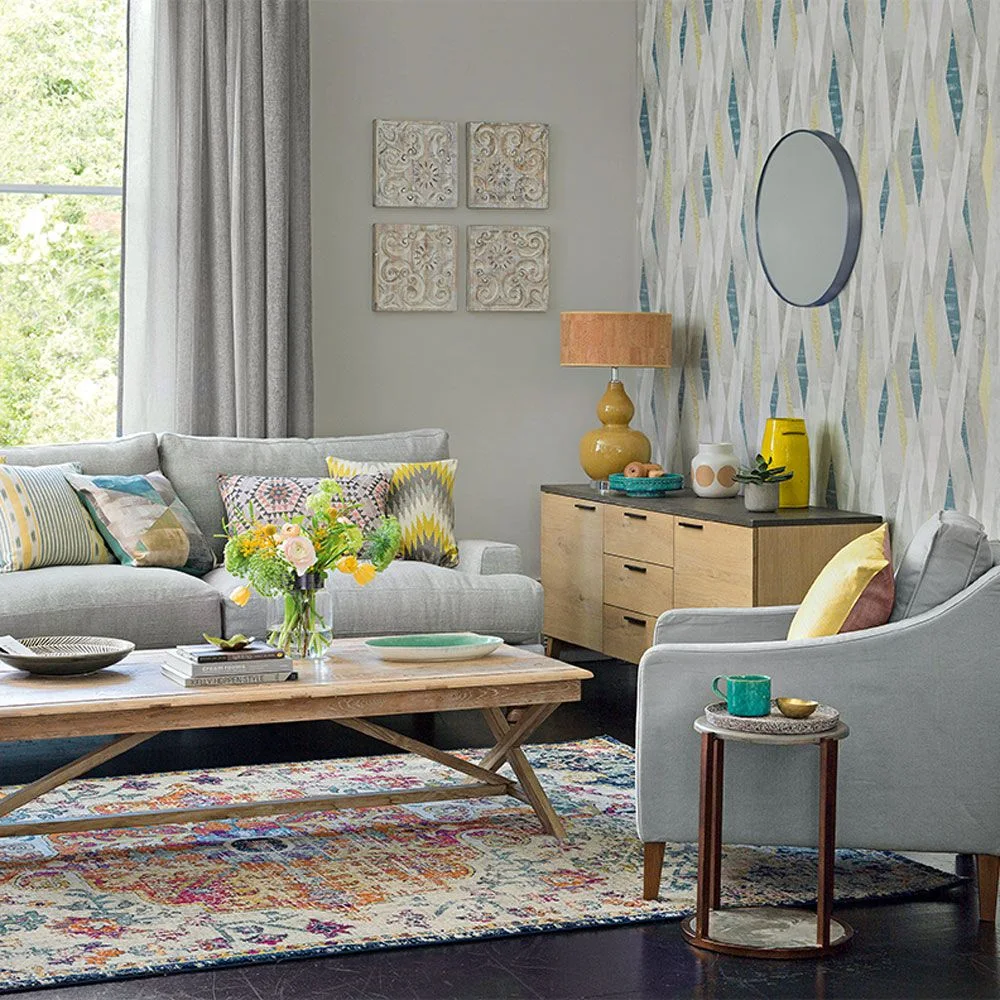
The blue-and-gray wallpaper gives this cabinet wall a stronger pattern than the surrounding pale gray paint. A round mirror interrupts its angular lines, with yellow lamps and cushions adding small warm details. The sofas stay quieter in color even though the rug introduces another pattern below.
Compare the wallpaper with the rug and cushions you plan to keep, checking all three from the main seats. Try removing smaller patterned accessories if the combination feels crowded. Position the mirror so it reflects something you enjoy seeing, and keep cabinet-top objects low enough for comfortable access.
IDEA 19 / 20
Frame a Fireplace with Painted Color Blocks
 SaveSupport Non AI Creator
Image credit: Future PLC/Carolyn Barber
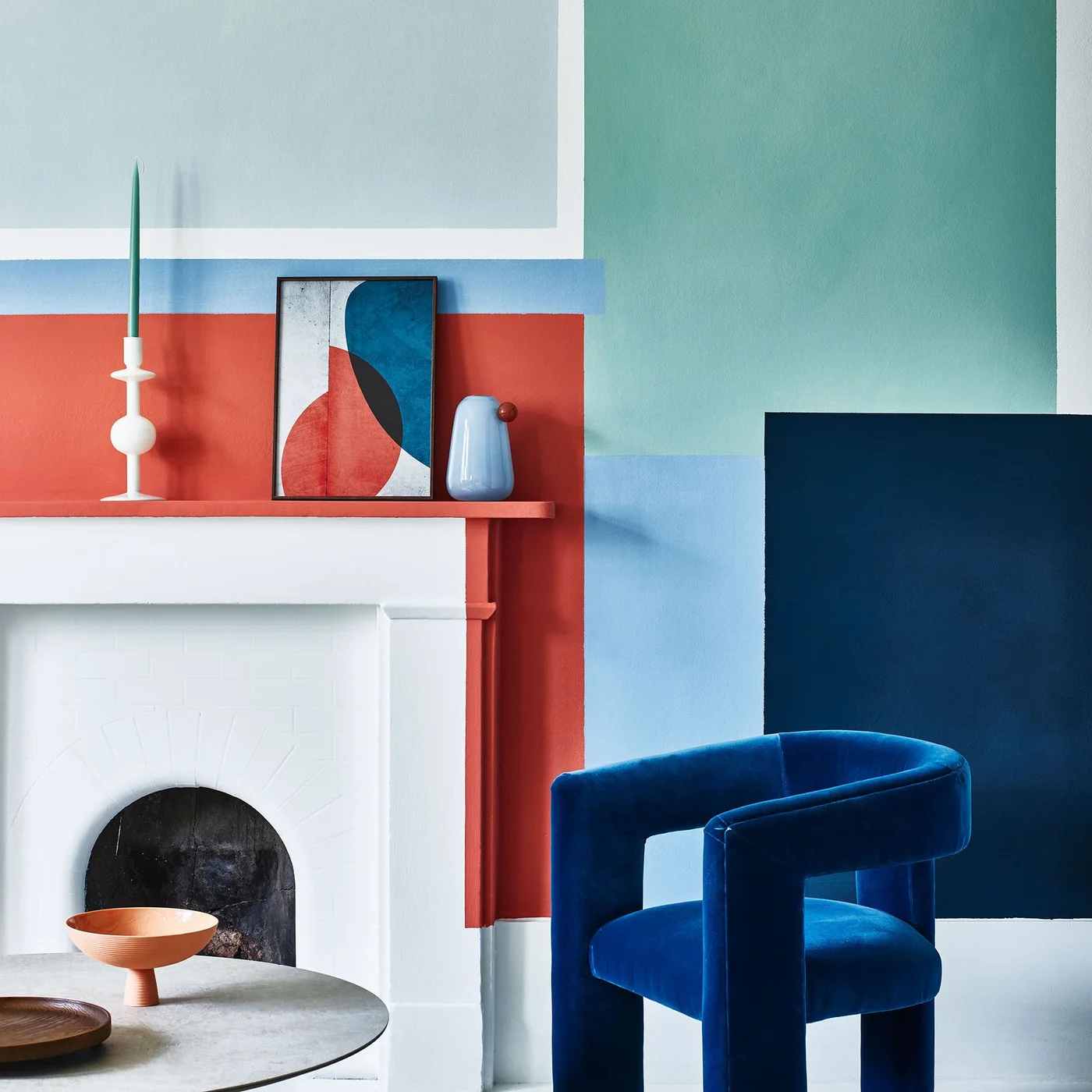
Coral, blue and green paint create separate blocks around the white fireplace. The coral follows part of the mantel, while the blue armchair repeats a darker patch of the wall. Smaller objects remain grouped on the mantel, leaving the painted geometry visible around the central opening.
Draw the proposed blocks on paper and test samples before masking the actual wall. Check which edges align with the mantel and neighboring furniture so the pattern looks deliberate from the room entrance. Use finishes suitable for each actual surface and confirm any heat-related requirements before painting around a working fireplace.
IDEA 20 / 20
Connect a Picture Group with a Yellow Band
 SaveSupport Non AI Creator
Image credit: Future PLC/Jo Henderson
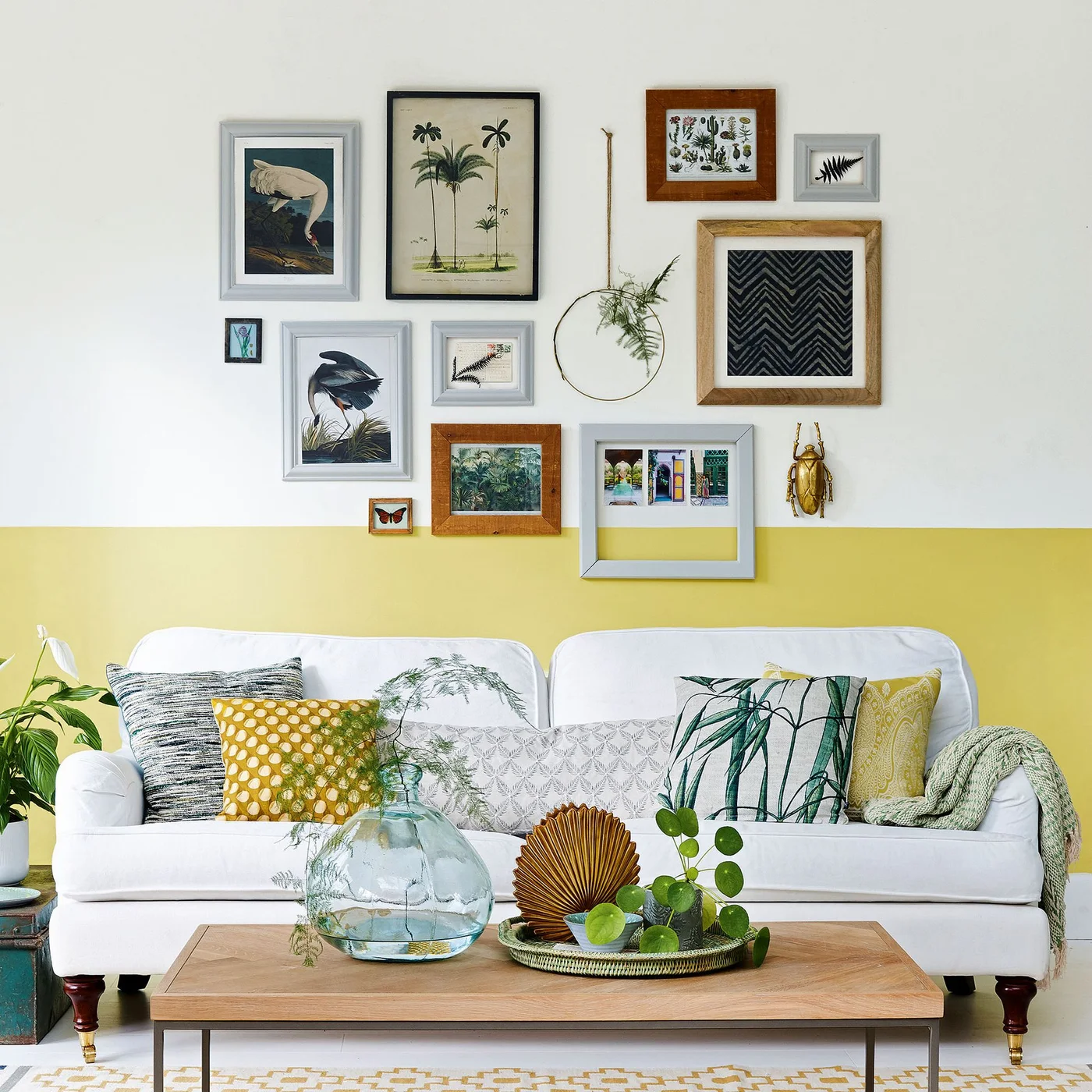
The yellow band connects the lower wall to the smaller yellow details on this white sofa. Botanical pictures extend above that line in a loose gallery, with mixed frames adding different outlines. Green cushions and plants repeat the subject of the artwork without requiring botanical wallpaper behind the whole seat.
Choose the painted division from the sofa height and existing wall features, then check it with a temporary guideline before painting. Arrange picture templates so the gallery remains clear of the cushion tops. Keep the frame grouping manageable and use suitable fixings rather than adding extra pictures simply to fill the wall.
BRING IT ALL TOGETHER
Choose the wall from the seats you use
Stand at the entrance and sit in your usual chair before deciding which wall needs attention. Note what is already visible: the sofa back, television, cabinet, window or fireplace. Compare the proposed treatment with those objects, using larger samples or paper outlines instead of choosing from a small color swatch alone.
Plan how you will install, reach and clean the finished feature. Shelving needs useful spacing, framed displays need appropriate fixings, and any work around an appliance needs suitable professional guidance. Keep the rest of the room comfortable to use, choosing fewer supporting objects when the wall itself supplies plenty of detail.