Mid-century-inspired bedrooms can bring wood furniture, clean outlines, geometric details and expressive lighting into a comfortable sleeping space. These photographs include pale arrangements, rooms with continuous wood panels and stronger green, mustard or orange accents. Look at how the bed, bedside storage and window treatments work together before choosing an individual statement piece.
Start with a bed height and layout that suit daily use, then compare storage, reading light and fabric care. A furniture shape can suggest the style without replacing every part of the room. View larger finish samples in your own lighting and preserve comfortable routes to doors and wardrobes, using each photograph as inspiration for an arrangement that fits your actual space.
PART 01
Connect wood furniture with practical bedside details
IDEA 01 / 20
Make Room for Wood-Framed Bedroom Seating
 SaveSupport Non AI Creator
Image credit: Yoshihiro Makino. Design: Jamie Bush + Co
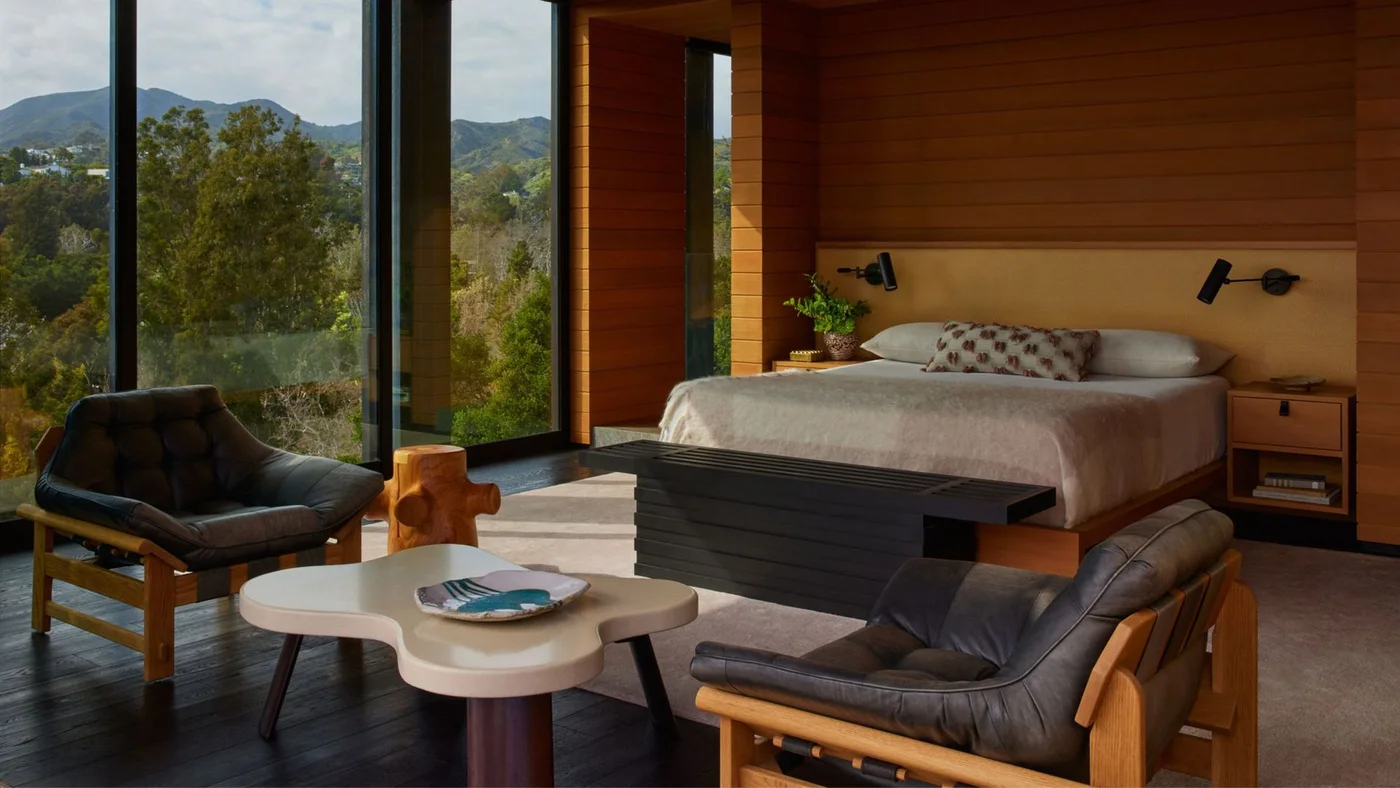
Two wood-framed chairs form a separate sitting area in front of the low bed. Their dark cushions contrast with the pale curved table between them, while warm wall panels connect the furniture with the bed’s broad headboard. Tall glazing brings the garden into view beyond that distinct conversation group.
Add bedroom seating only after checking comfortable routes to the bed, wardrobe and windows. Measure the chairs in use as well as at rest, leaving table reach and cleaning access practical. Boho bedroom furniture ideas compare more wood-framed seats if you want warmer furniture outlines with a different cushion or textile palette.
IDEA 02 / 20
Connect a Floating Bedside Cabinet with a Blue Headboard
 SaveSupport Non AI Creator
Image credit: Christian Bense
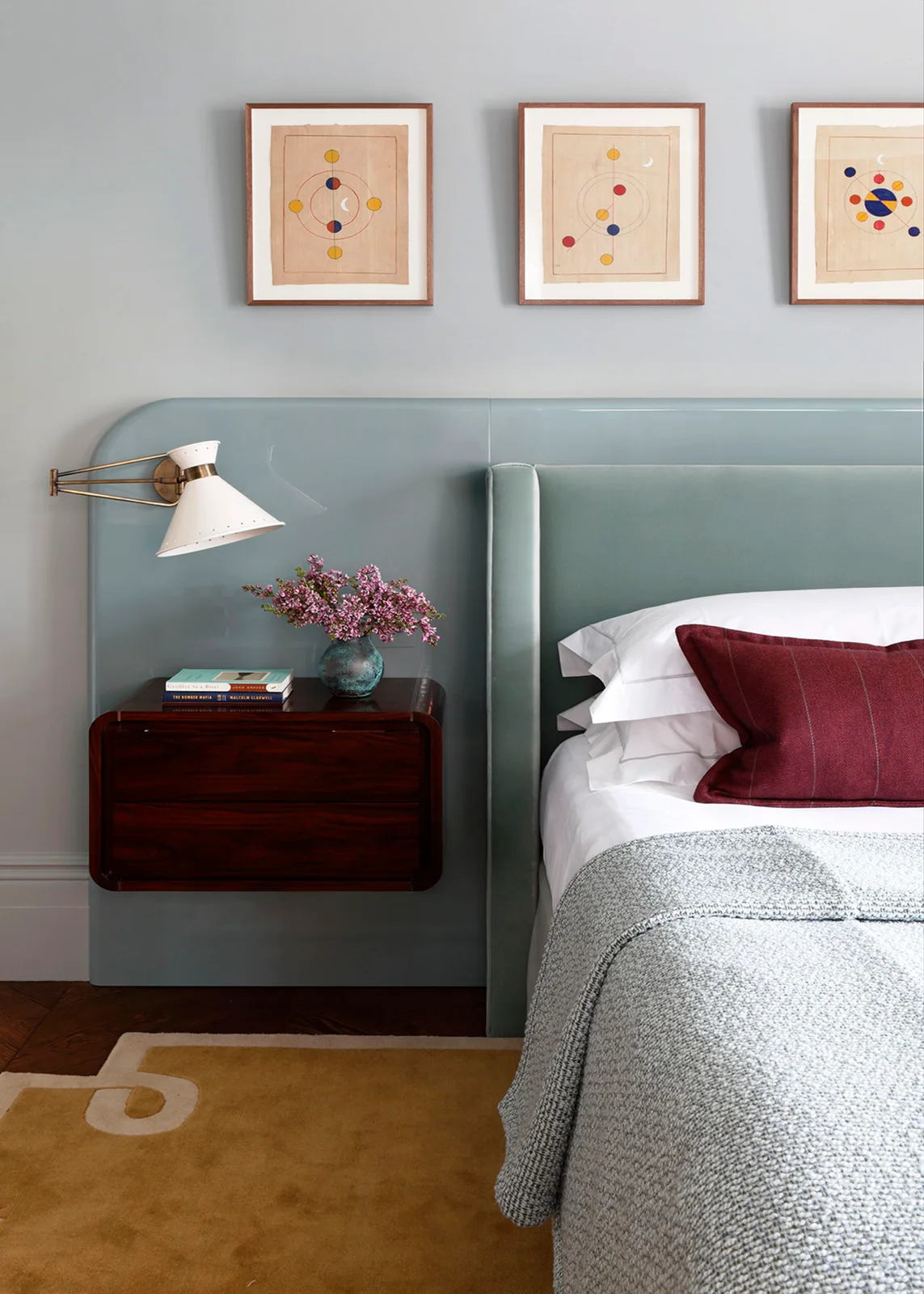
The floating bedside cabinet introduces a dark rounded block against the pale blue headboard. A projecting wall light frees the cabinet top for books and a small vase, while framed prints repeat a regular line above. The burgundy cushion supplies a concentrated warmer accent beside the otherwise pale bedding.
Check whether the wall can support a floating cabinet and have suitable fixings specified before installation. Choose its height from reach when sitting in bed, keeping enough usable space for everyday essentials. Plan the wall light’s position and power supply around reading comfort rather than copying the angle shown in the photograph.
IDEA 03 / 20
Repeat Warm Wood Between a Headboard and Wardrobe
 SaveSupport Non AI Creator
Image credit: Design: Holly A Kopman Interiors / Photography: Christopher Stark
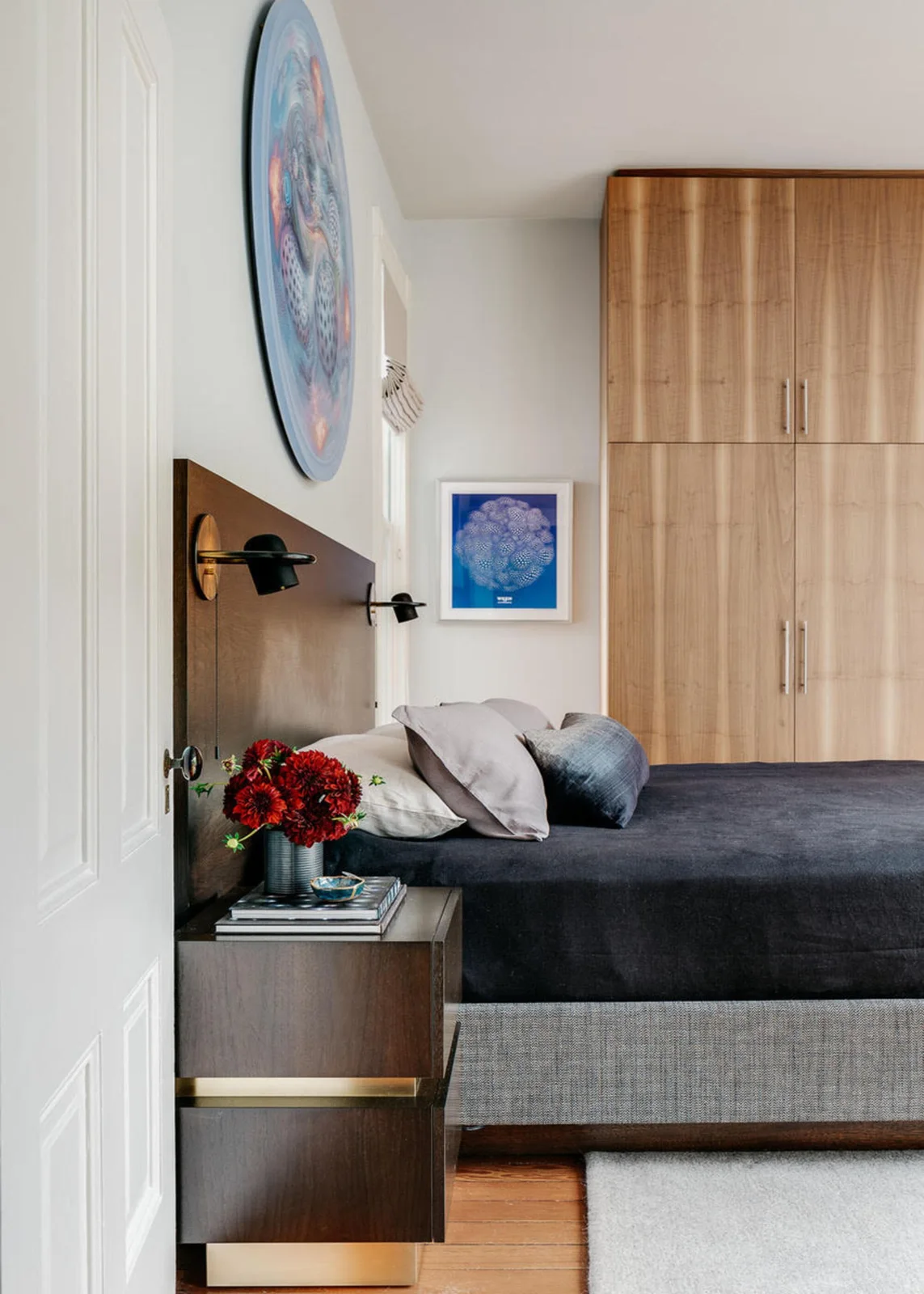
The broad wood headboard connects with the taller wardrobe at the far end of the room. Dark bedding gives that warmer furniture a quieter contrasting section below the artwork. Small wall lights sit close to the headboard, while the bedside cabinet repeats the wood color with a narrower warm metal-colored detail.
Check wardrobe door movement and bedside access before choosing a bed width, particularly where tall storage meets the headboard wall. View wood samples together if the pieces come from different ranges. Bedrooms with paneling offer more ways to carry warmer wood details onto walls while keeping storage and lighting useful around the bed.
IDEA 04 / 20
Give a Dark Bedside Cabinet a Sculptural Wall Light
 SaveSupport Non AI Creator
Image credit: Design: Les Keepers / Photography: Lars Stephan
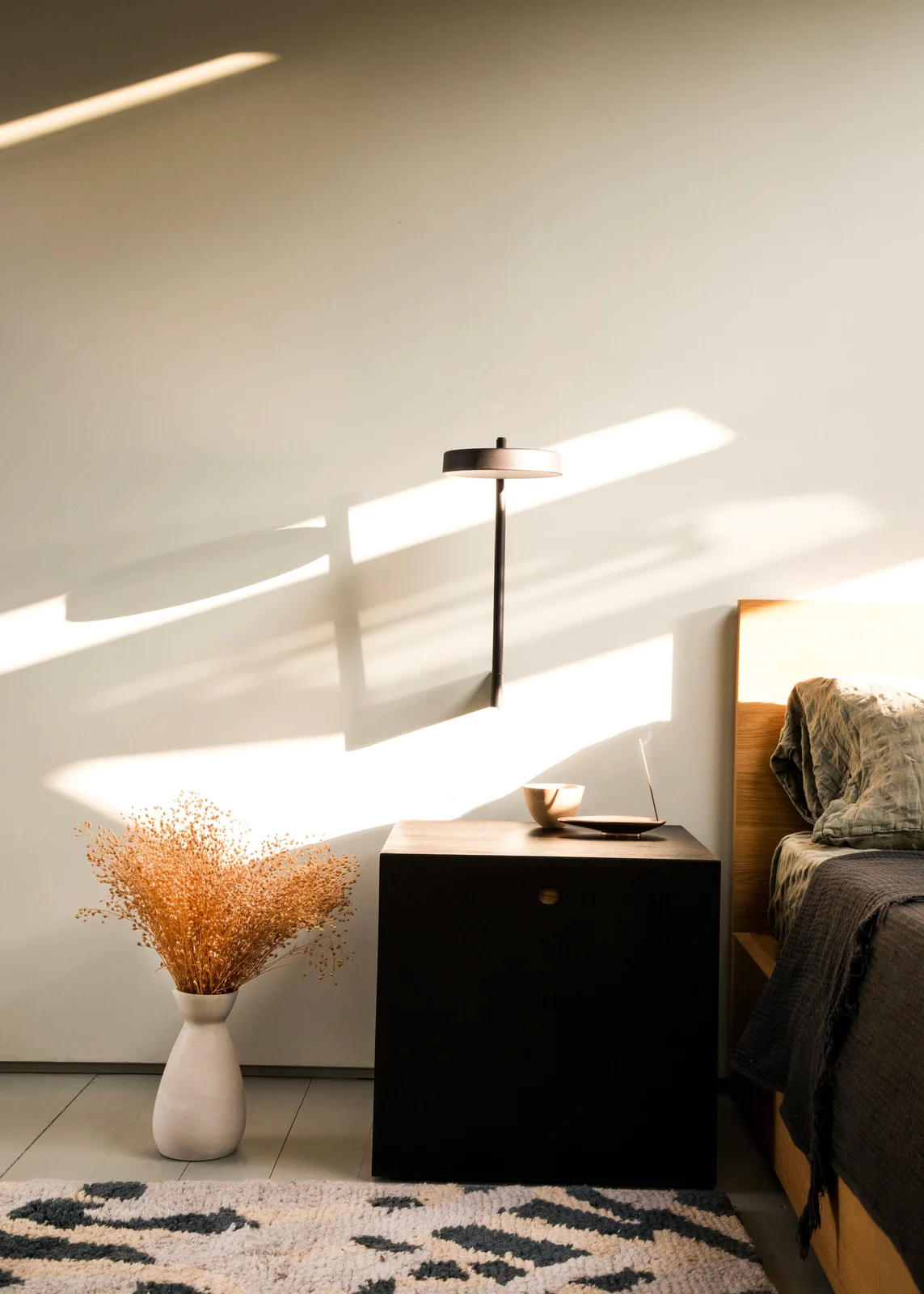
The dark bedside cabinet makes a compact square outline beside the wood bed frame. A slim projecting wall light introduces a longer vertical shape above it, leaving most of the pale wall open. The rug’s darker curved pattern supplies a softer repeat below, with a floor vase adding a separate rounded detail.
Choose cabinet depth from what you need beside the bed and check that its front opens without hitting bedding or nearby furniture. Test a wall light’s reach and glare before fixing its position. Keep floor vases outside the walking route and select a stable rug arrangement so the simple furniture remains comfortable during everyday use.
IDEA 05 / 20
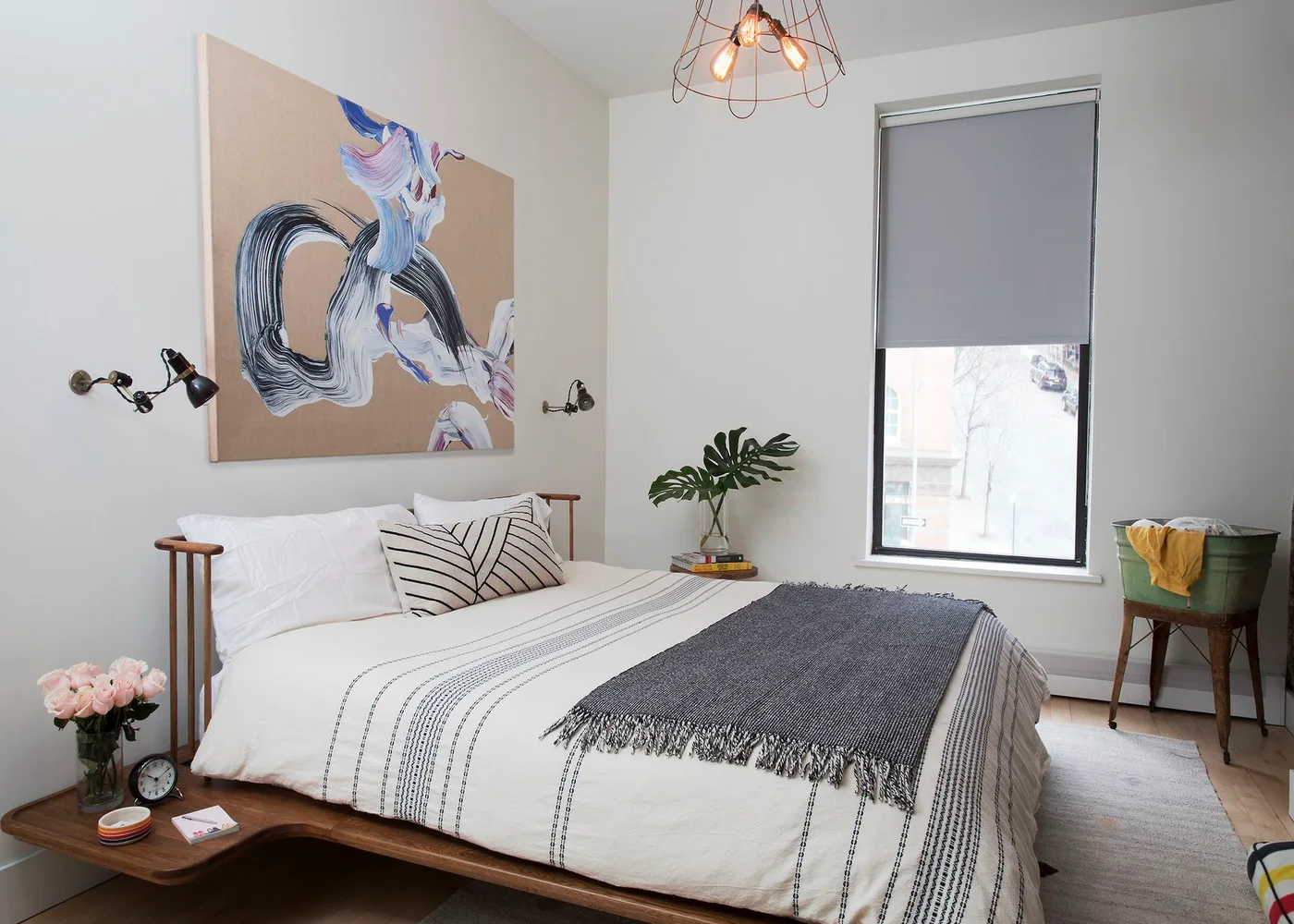
Use a Wood Bed Platform as the Bedside Surface
 SaveSupport Non AI Creator
Image credit: Design: Brittany Marom / Photography: Don Freeman
The wood platform extends beyond the mattress to provide a broad bedside surface. Slender headboard spindles repeat vertical lines behind pale pillows, while wall lights leave the platform largely open. A large abstract painting and dark throw introduce stronger shapes above and across the bed without adding another large furniture piece.
Check the platform’s projecting edges against comfortable entry and nighttime movement around the bed. Place drinks and delicate objects where bedding will not knock them, and confirm the bed supports your chosen mattress. Plan artwork fixings and light positions from actual wall construction and use, retaining access to outlets and the neighboring window.
PART 02
Compare warmer textures and bedroom color blocks
IDEA 06 / 20
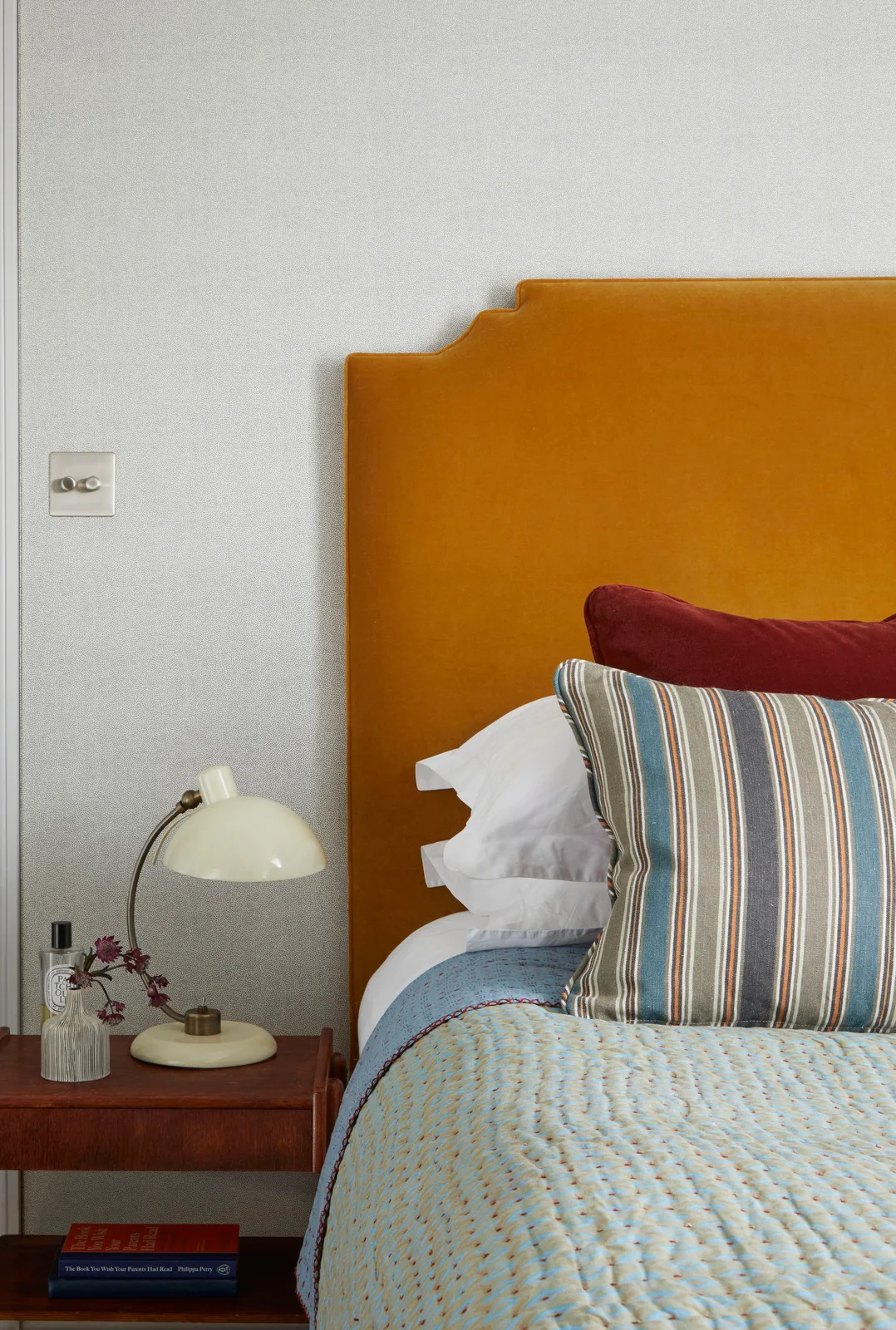
Warm Pale Bedding with an Orange Headboard
 SaveSupport Non AI Creator
Image credit: Violet & Georgia
The orange upholstered headboard gives the bed a strong warm backdrop against the pale wall. Burgundy and striped pillows introduce smaller layers in front, with light blue bedding bringing a cooler section below. The wood bedside table and pale rounded lamp provide simpler forms beside those more expressive fabric colors.
Compare upholstery and bedding samples together before purchasing, checking how the orange reads under evening lamps. Keep the number of decorative pillows manageable for making the bed and use washable covers where practical. Choose the bedside lamp from reading needs as well as its rounded shape, preserving enough table space for the items used every night.
IDEA 07 / 20
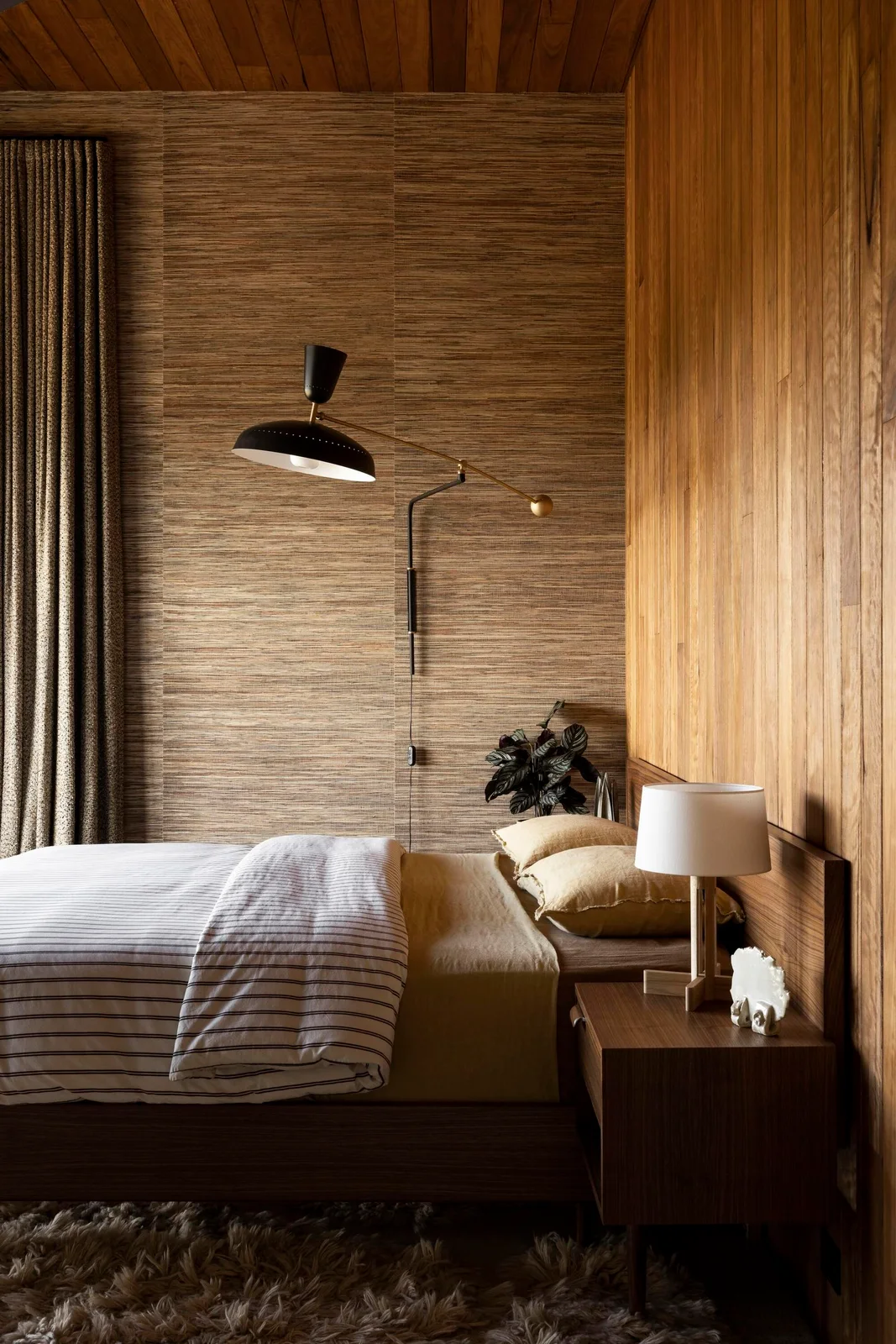
Layer Fine Stripes Against Wood Wall Panels
 SaveSupport Non AI Creator
Image credit: Dylan James. Design: Simone Haag Team. Architects: Dion Keech Architects
Fine stripes across the bedding introduce a smaller regular pattern beneath the textured wall. Wood panels continue along the neighboring wall and ceiling, connecting that warmer enclosure with the bedside cabinet. A white table lamp and projecting dark wall light offer different shapes against the room’s otherwise closely related brown and pale tones.
Compare textile texture with the wall finish rather than adding another large print immediately. Check upholstery and bedding care instructions, choosing layers that suit your washing routine. Keep the cabinet top useful and plan light placement around sitting and reading positions, especially where wall panels limit convenient fixing locations or access to existing electrical points.
IDEA 08 / 20
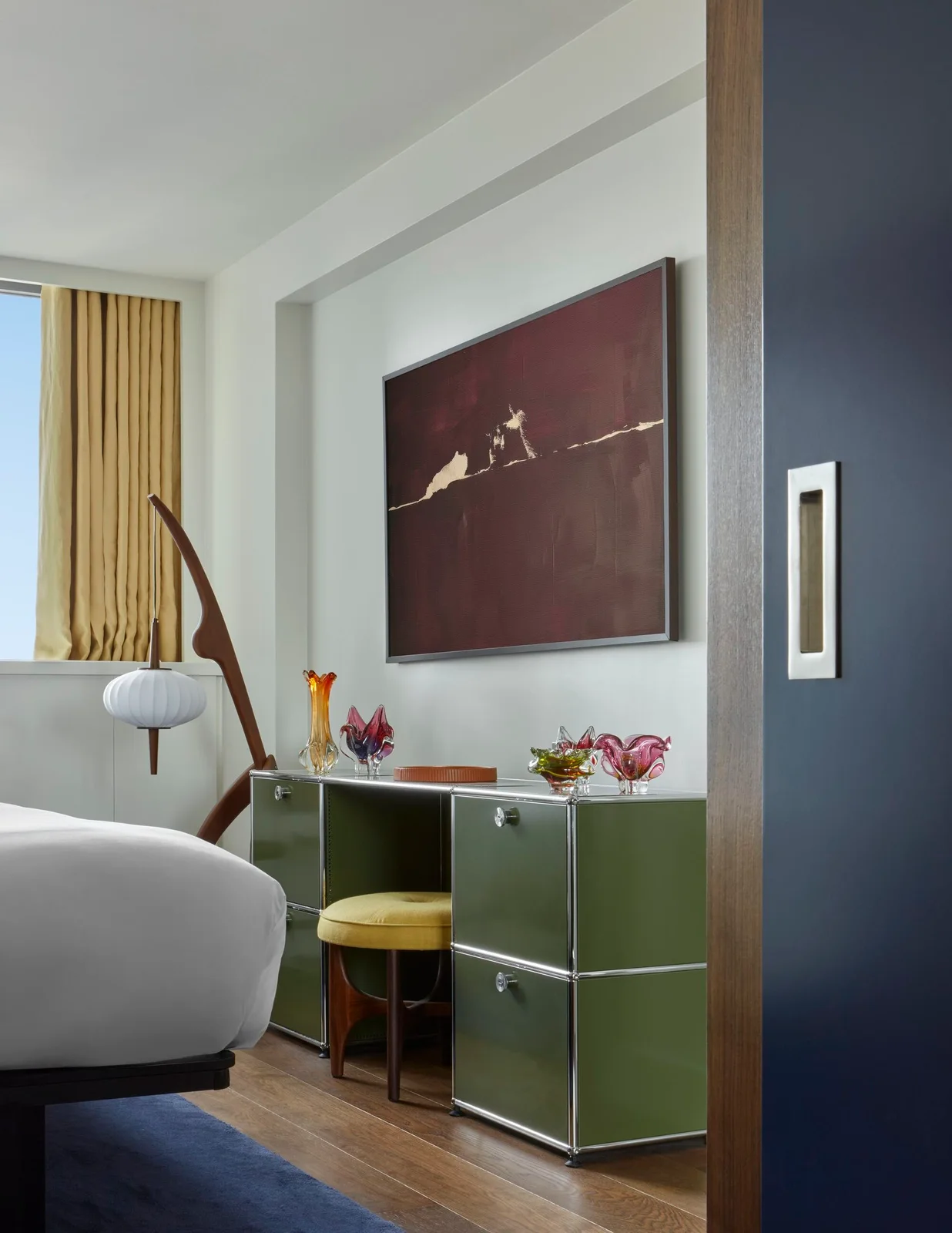
Give a Bedroom Dressing Table a Green Color Block
 SaveSupport Non AI Creator
Image credit: James McDonald. Design: The Lore Group
Green drawer fronts form a clear color block beneath the framed artwork. A yellow seat and yellow curtains repeat a warmer accent at different heights, while the sculptural wood floor lamp introduces a tall angled outline nearby. Pale walls and the darker floor section let the dressing table remain distinct from the sleeping area.
Check knee space and drawer access before selecting a table for dressing or occasional work, measuring the seat while occupied. Leave the curtain and window route usable behind it. Secure the lamp where its projecting shape will not be knocked, and keep a clear practical surface instead of arranging decorative glassware across every part of the tabletop.
IDEA 09 / 20
Use Green Carpet Beneath Warm Wood Furniture
 SaveSupport Non AI Creator
Image credit: Jacqui Turk. Design: Frank Designs. Styling: Jono Flemming
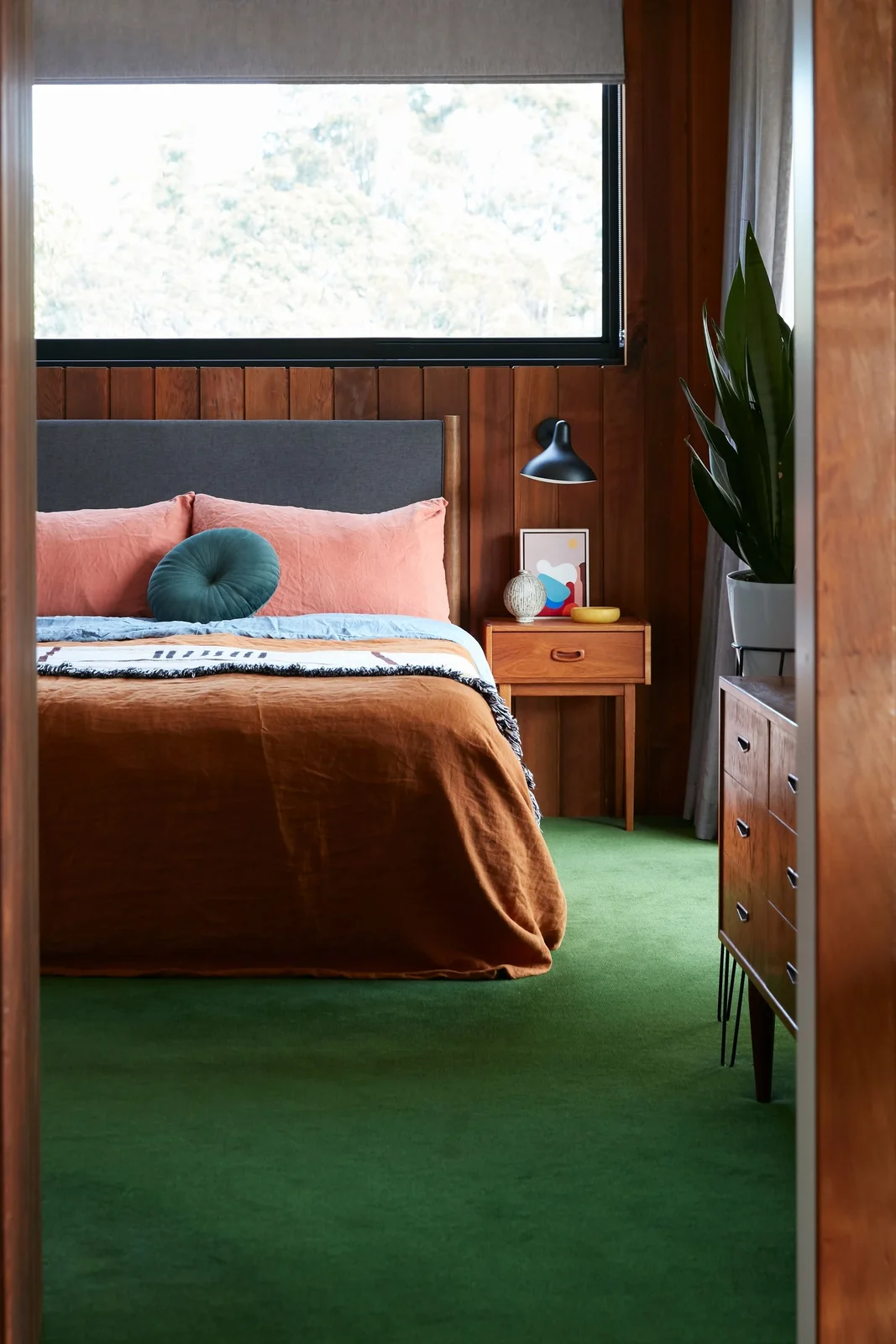
Green carpet creates the room’s strongest lower color beneath the warm orange bedcover. Wood panels connect the headboard wall with the bedside cabinet, while pink pillows and a round darker cushion introduce separate softer shapes. The high window brings a broad light section above the darker headboard and warmer furniture.
Check carpet cleaning guidance and how its color looks beside larger bedding samples before replacing the floor. Choose textiles that can be washed or cleaned without an elaborate routine. Green bedroom ideas compare more placements for green if you prefer it on a wall or curtain while retaining the warmer wood furniture.
IDEA 10 / 20
Build Storage into a Wood-Paneled Bed Wall
 SaveSupport Non AI Creator
Image credit: Megan Bayley. Design: Destination Eichler
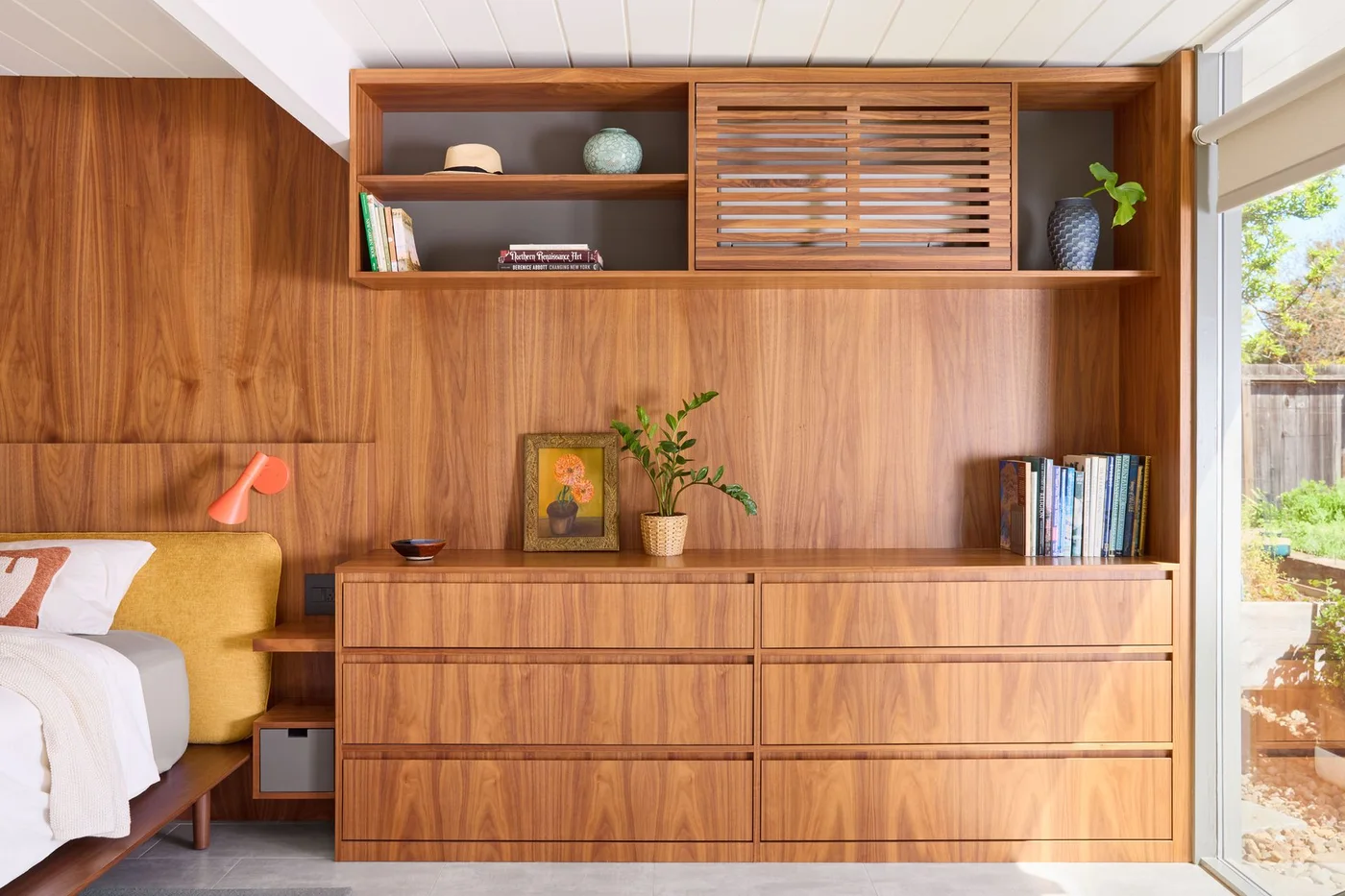
Wood panels form a continuous background behind the long drawer cabinet. Overhead shelves combine open display space with a slatted section, repeating the cabinet’s straighter lines above. Yellow bedding supplies a smaller brighter accent beside the warmer storage wall, while the glazed opening keeps the neighboring edge comparatively light.
Plan drawers around the clothes and objects you need to store before ordering a fitted wall. Keep heavy items low and have overhead cabinetry secured appropriately, allowing cleaning and maintenance access. Measure both drawer extension and movement beside the bed, using open shelves selectively so useful storage does not become an obligation to display many objects.
PART 03
Plan patterns, lighting and useful storage around the bed
IDEA 11 / 20
Pair Sage Walls with a Mustard Headboard
 SaveSupport Non AI Creator
Image credit: Caitlin Atkinson. Design: And And And Studio
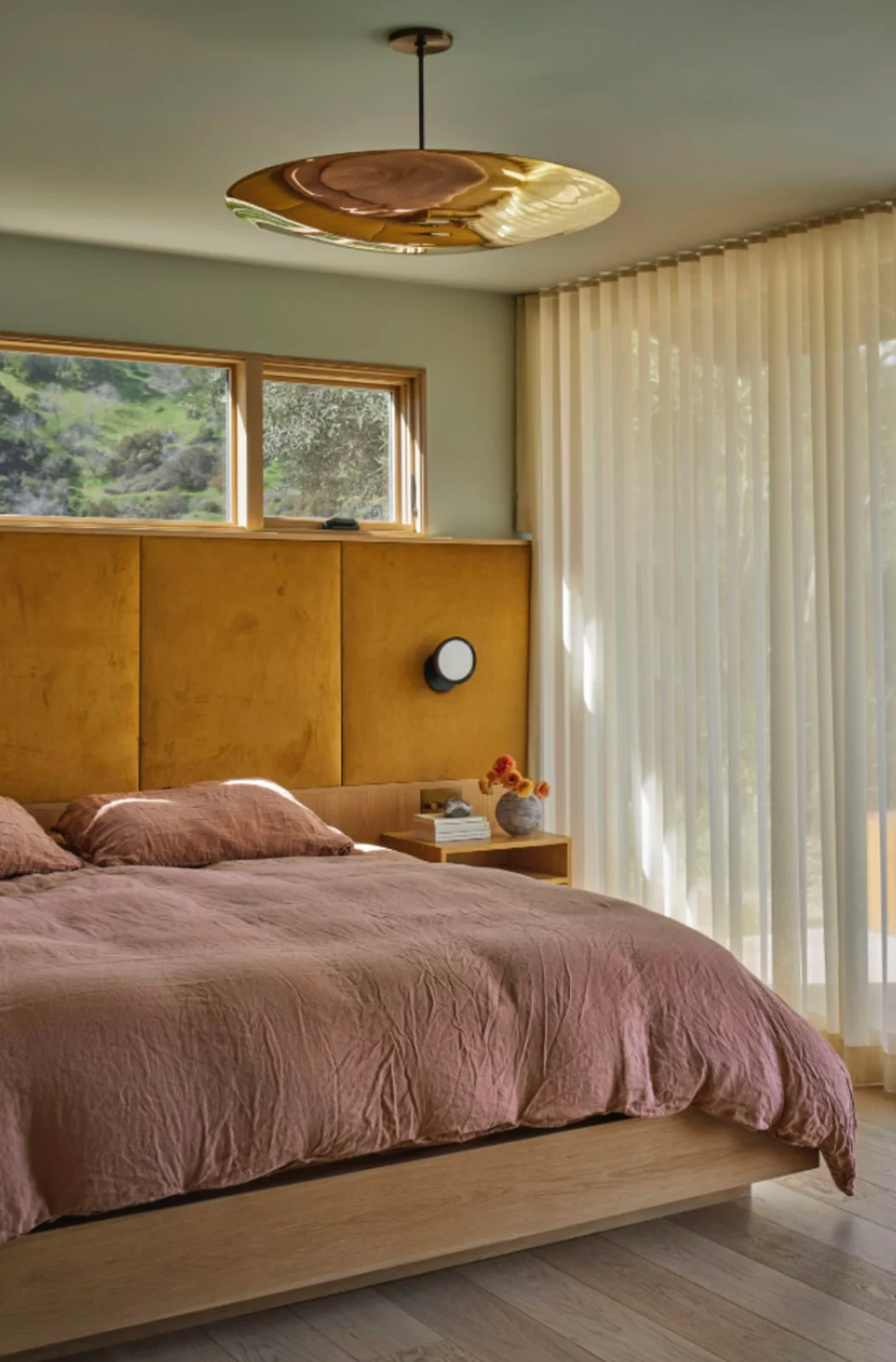
The mustard headboard creates a warm horizontal band beneath the high wood-framed windows. Sage walls and ceiling provide a quieter surrounding color, with pink bedding adding a softer warmer section below. Pale curtains soften the full-height glazing to one side, while the broad pendant introduces a separate curved shape overhead.
Compare wall paint and headboard fabric in the room’s changing daylight before choosing the bedding color. Keep curtain operation and ventilation access convenient around the bed. A large pendant needs suitable installation and positioning, leaving comfortable head clearance and useful reading light rather than assuming its decorative presence supplies every lighting need.
IDEA 12 / 20
Repeat Tall Green Shapes Behind a Simple Bed
 SaveSupport Non AI Creator
Image credit: Bert & May
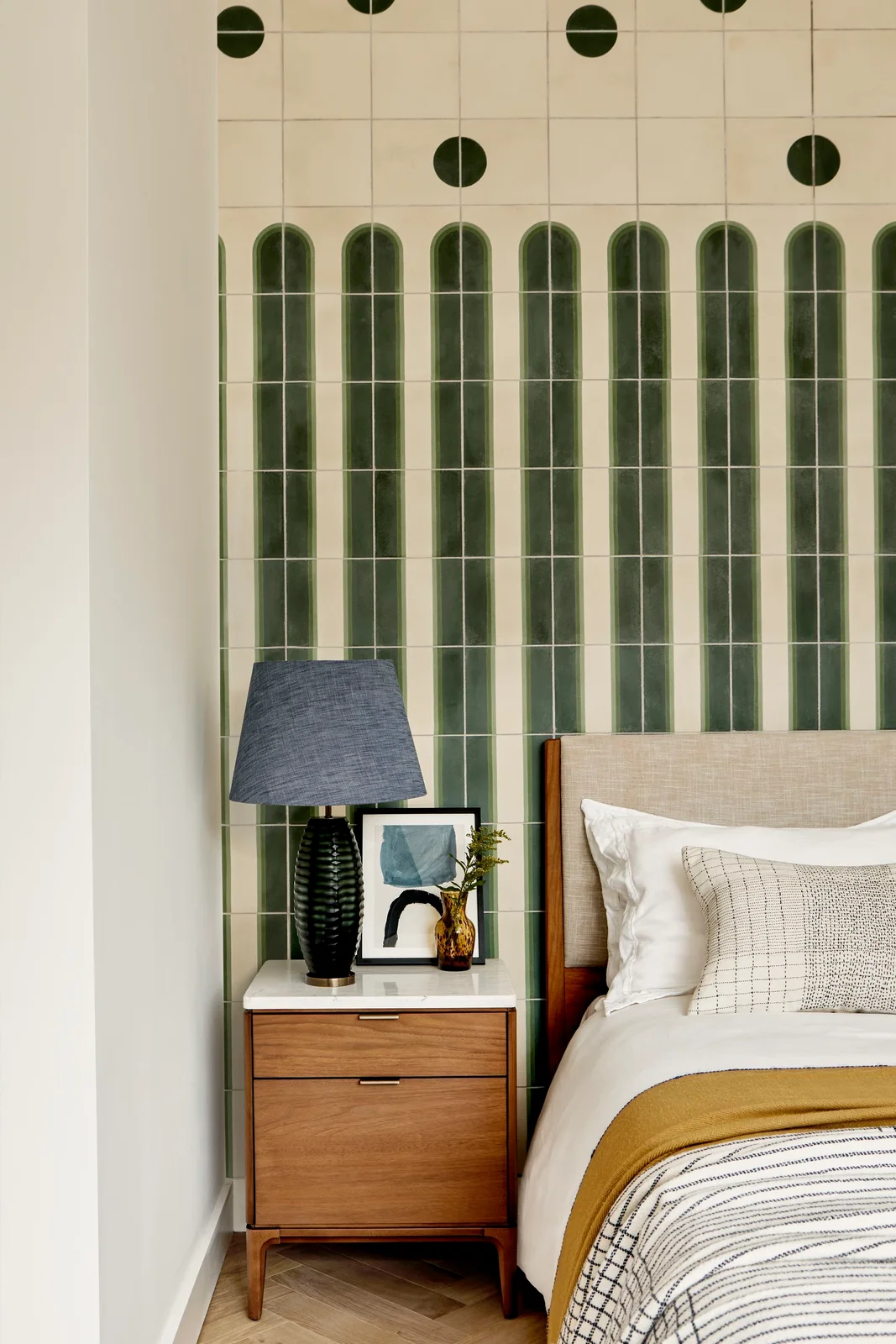
Tall green shapes create a repeated vertical pattern behind the bed, with smaller dark circles breaking up the pale grid above. A simple upholstered headboard gives that wall a quieter lower section. The wood bedside cabinet and dark lamp introduce separate warmer and darker blocks, while the bedding keeps its pattern finer and less dominant.
Confirm the wall finish’s actual specification and installation needs before copying the tiled appearance. Lay out the repeat against the headboard width so important shapes are not hidden accidentally. Keep nearby cabinet fronts and lamp shapes comparatively simple, choosing the pattern as a lasting backdrop rather than adding several unrelated prints at the same scale.
IDEA 13 / 20
Combine Vertical Wood Details with Globe Lighting
 SaveSupport Non AI Creator
Image credit: Nick Smith. Design: Designed by Woulfe
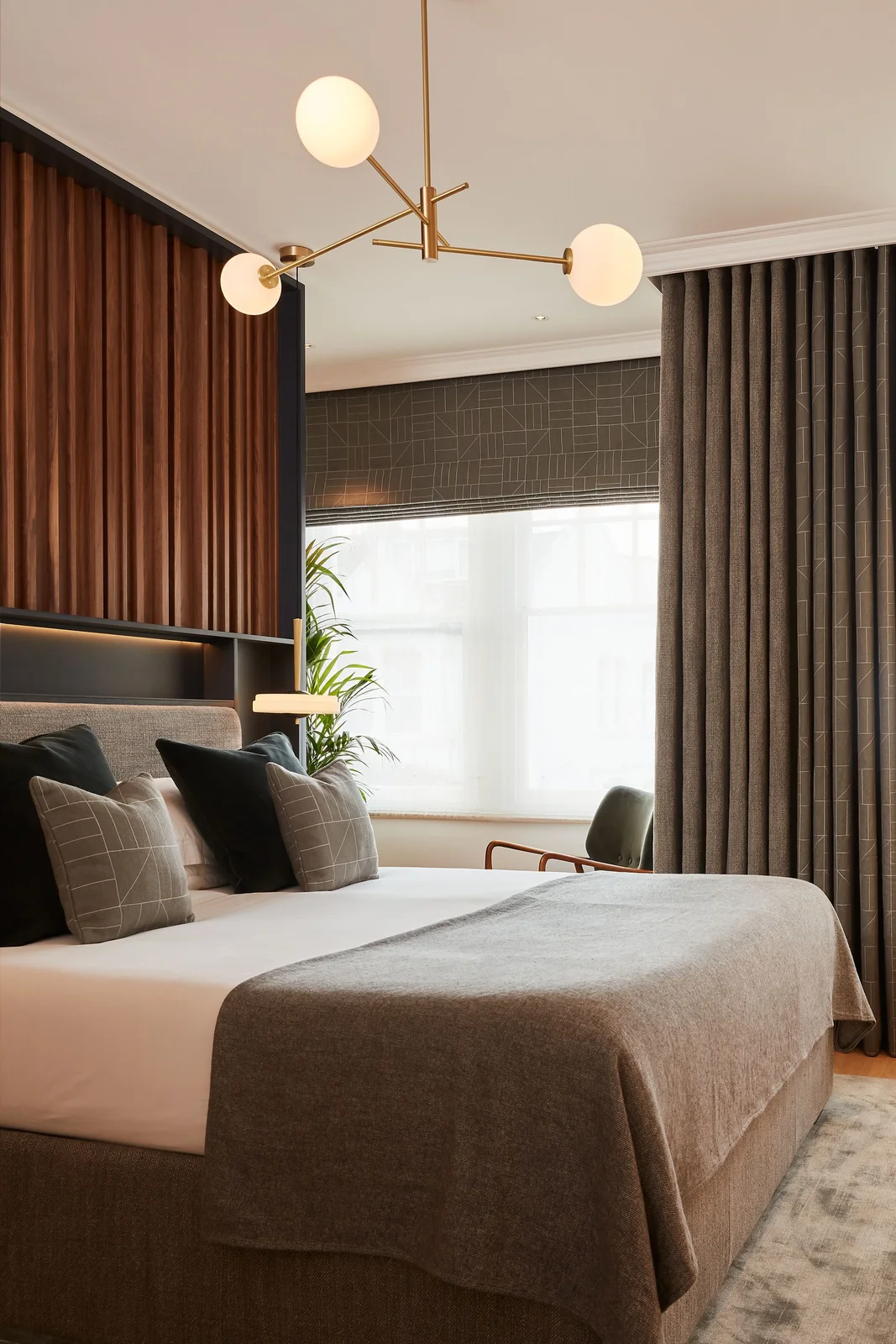
Vertical wood details provide a warmer backdrop behind the dark pillows and pale bedding. A three-globe pendant introduces rounded pale shapes above that straighter arrangement. Tall gray curtains repeat the room’s quieter fabric tones beside the glazing, while a narrow geometric blind adds a finer pattern closer to the window.
Compare curtain fabric with both the bedding and wood finish under your planned evening lighting. Check blackout needs and how the curtains stack when open rather than selecting them solely by color. Keep the pendant appropriately positioned and supplement it with useful reading light, retaining access to the window and the furniture beside the bed.
IDEA 14 / 20
Connect a Wood Bed with a Geometric Pendant
 SaveSupport Non AI Creator
Image credit: Photography by Stephen Kent Johnson
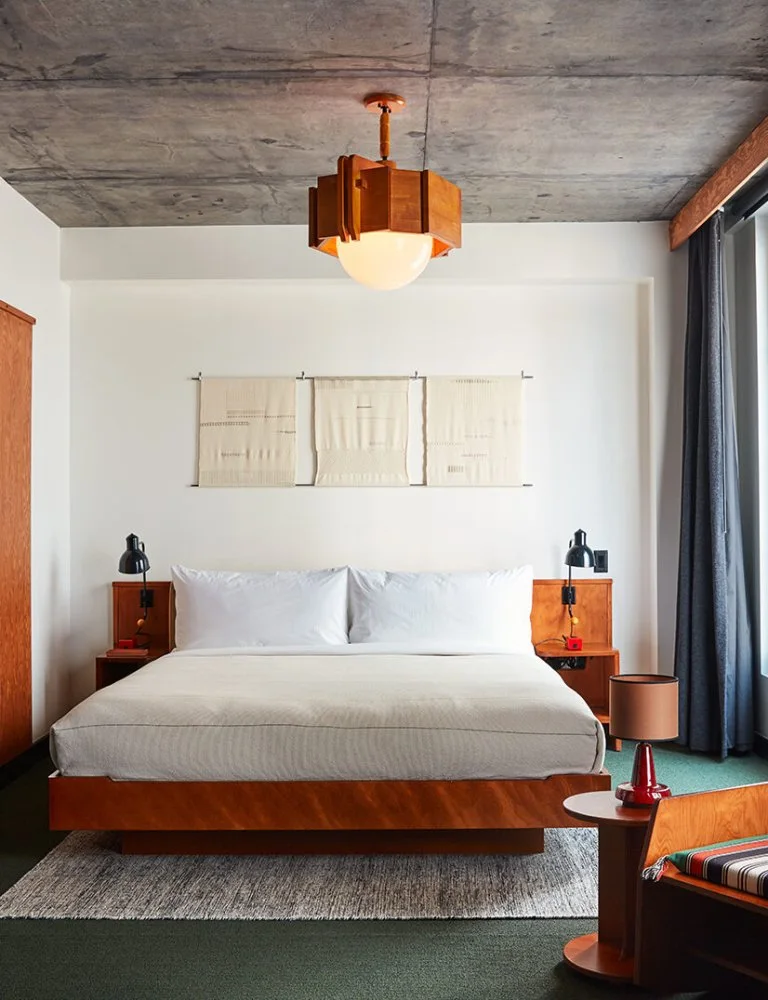
The wood platform bed and compact bedside units repeat a warm color beneath the pale bedding. A geometric wood-framed pendant carries that detail overhead, with a rounded pale lower section contrasting against the exposed gray ceiling. Green carpet and dark curtains provide deeper surrounding colors while the textile artwork keeps the wall comparatively quiet.
Check the bed’s projecting platform edges against walking space and confirm its suitability for the chosen mattress. Select an overhead light for secure installation, comfortable clearance and a useful spread of light. Keep the bedside shelves practical for everyday objects, comparing curtain opacity and carpet care before treating their darker colors as purely decorative choices.
IDEA 15 / 20
Connect a Low Bed with a Window-Side Desk
 SaveSupport Non AI Creator
Image credit: PHOTOGRAPHY BY DOUGLAS FRIEDMAN
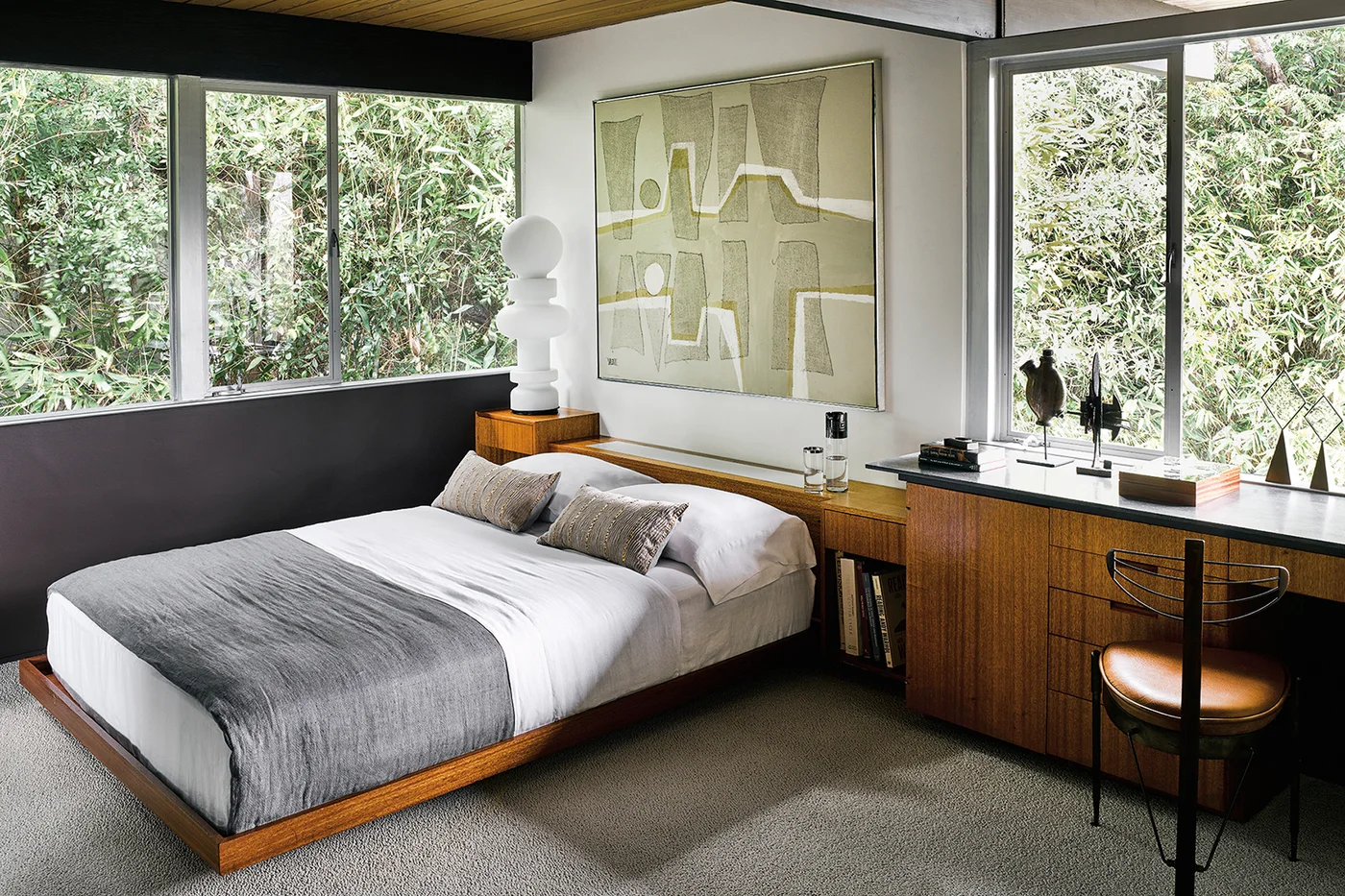
The low wood bed connects with the longer cabinet and desk beneath the windows. Dark lower walls provide a contrasting band below the garden view, with pale bedding making the sleeping area clearly visible within that enclosure. Abstract artwork introduces a separate pale shape between the windows above the headboard.
Measure the desk chair in use and preserve a clear route beside the bed before fitting continuous cabinetry. Check daylight glare and privacy when choosing window treatments, allowing access for ventilation. Low beds need to suit the people using them; compare comfortable sitting and rising height rather than assuming a lower frame is practical for everyone.
PART 04
Give stronger shapes and colors a clear place
IDEA 16 / 20
Arrange a Wood Platform Bed Beside Open Shelves
 SaveSupport Non AI Creator
Image credit: PHOTOGRAPHY BY ALICE GAO
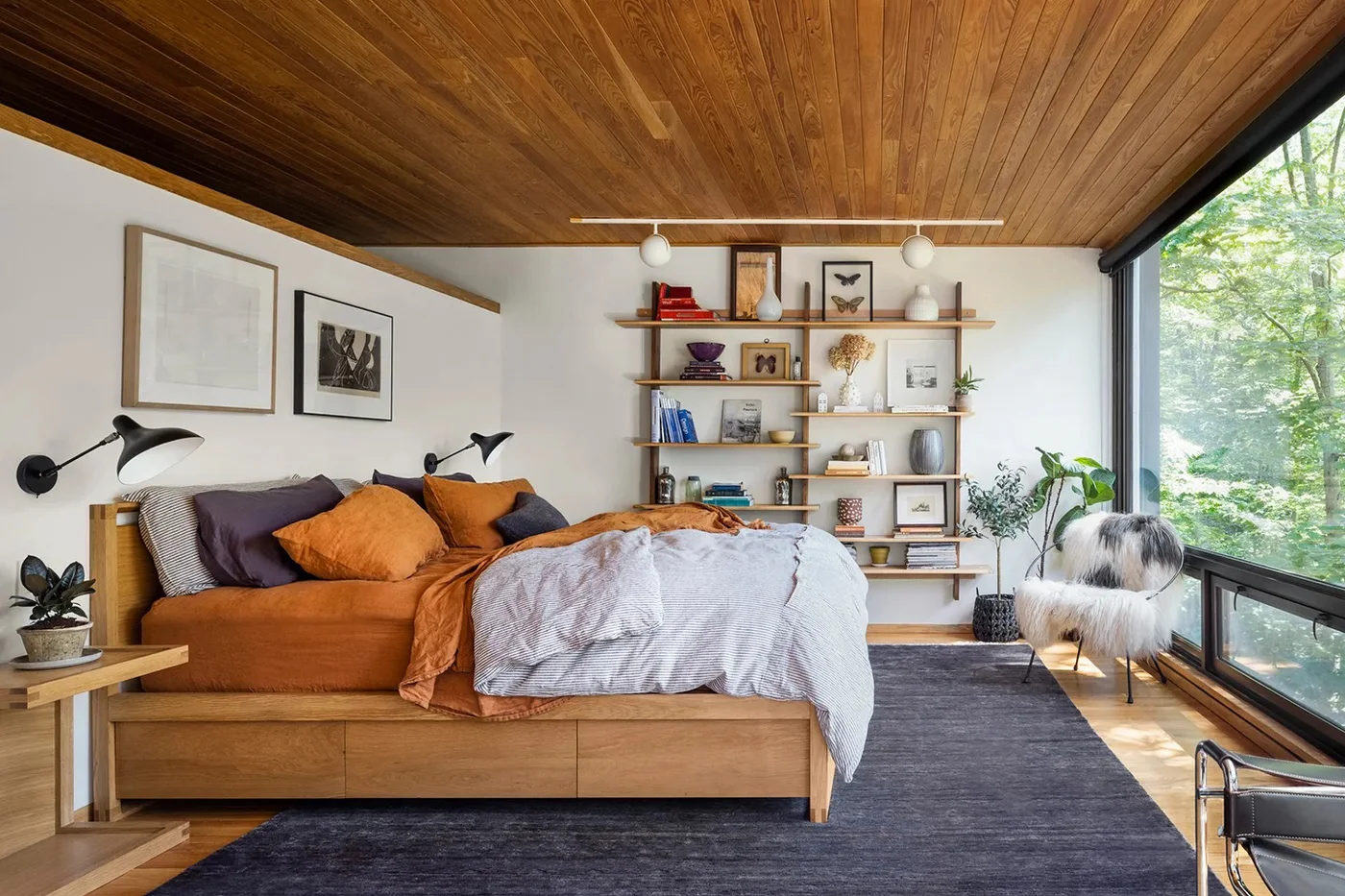
The wood platform bed repeats the warmer ceiling boards below the pale walls. Orange bedding connects those wood tones with the sleeping area, while gray pillows and a dark rug provide cooler sections around it. Open wall shelves hold smaller objects beside the bed, with black reading lights introducing clearer curved outlines above.
Choose shelves from the objects you need to keep and secure them according to their load and wall construction. Leave comfortable reach to the reading lights and keep the route toward the glazing open. Select bedding and rug textures from realistic care needs, limiting exposed objects if frequent dusting would make the room harder to maintain.
IDEA 17 / 20
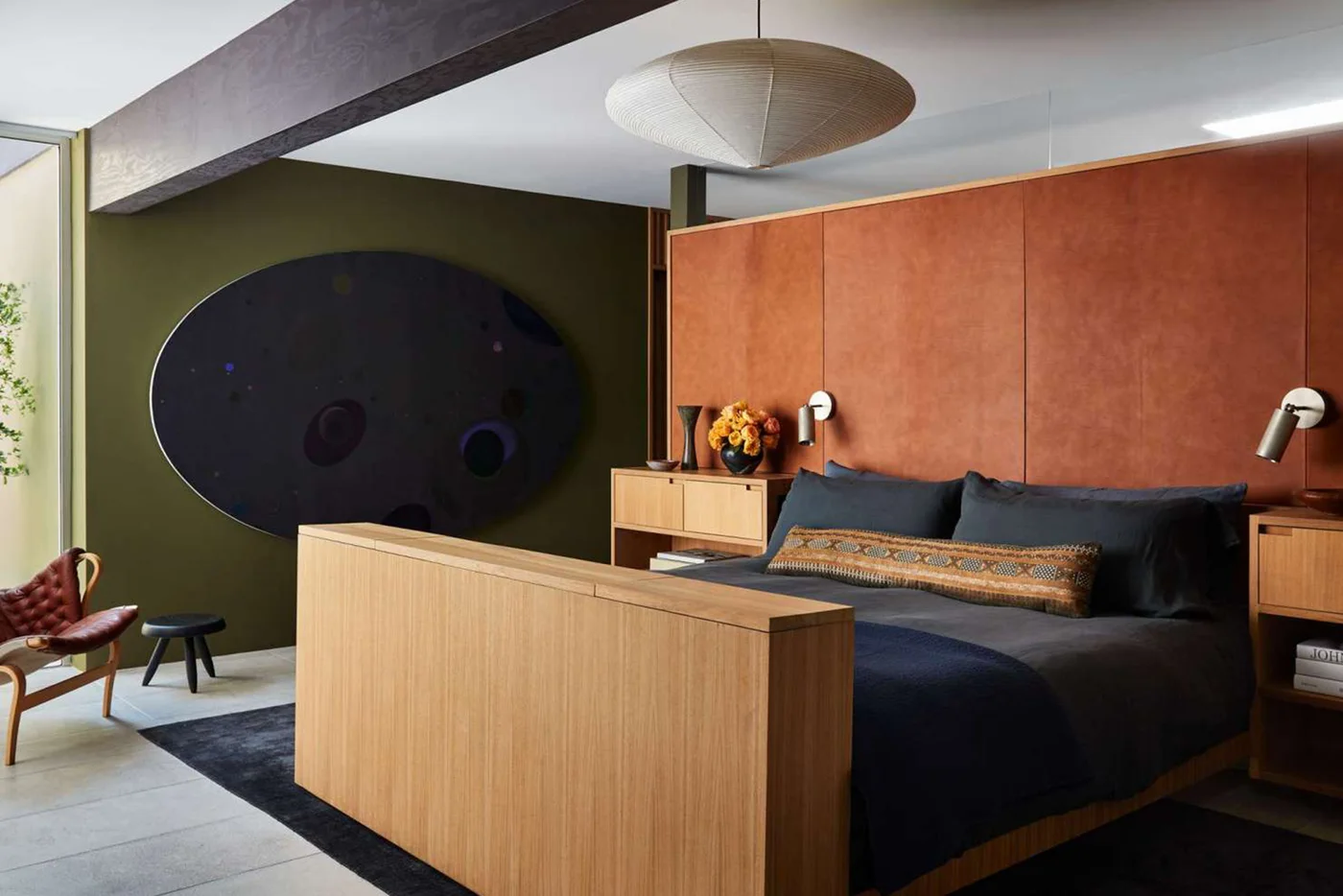
Balance a Broad Wood Footboard with Dark Bedding
 SaveSupport Non AI Creator
Image credit: PHOTOGRAPHY BY STEPHEN KENT JOHNSON; STYLING BY MICHAEL REYNOLDS.
The broad wood footboard establishes a strong horizontal shape in front of the darker bedding. Pale bedside cabinets repeat the lighter wood color beside the warm orange headboard wall. A deeper green wall and large dark oval artwork provide separate surrounding blocks, with the rounded pendant softening the room’s dominant straight furniture lines.
Measure the bed frame’s full footprint rather than the mattress alone before choosing a broad footboard. Check walking space at its corners and easy access to the bedside drawers. Compare wall and fabric samples together, leaving some surrounding surfaces quieter so the strong orange, green and dark bedding retain distinct roles rather than competing everywhere.
IDEA 18 / 20
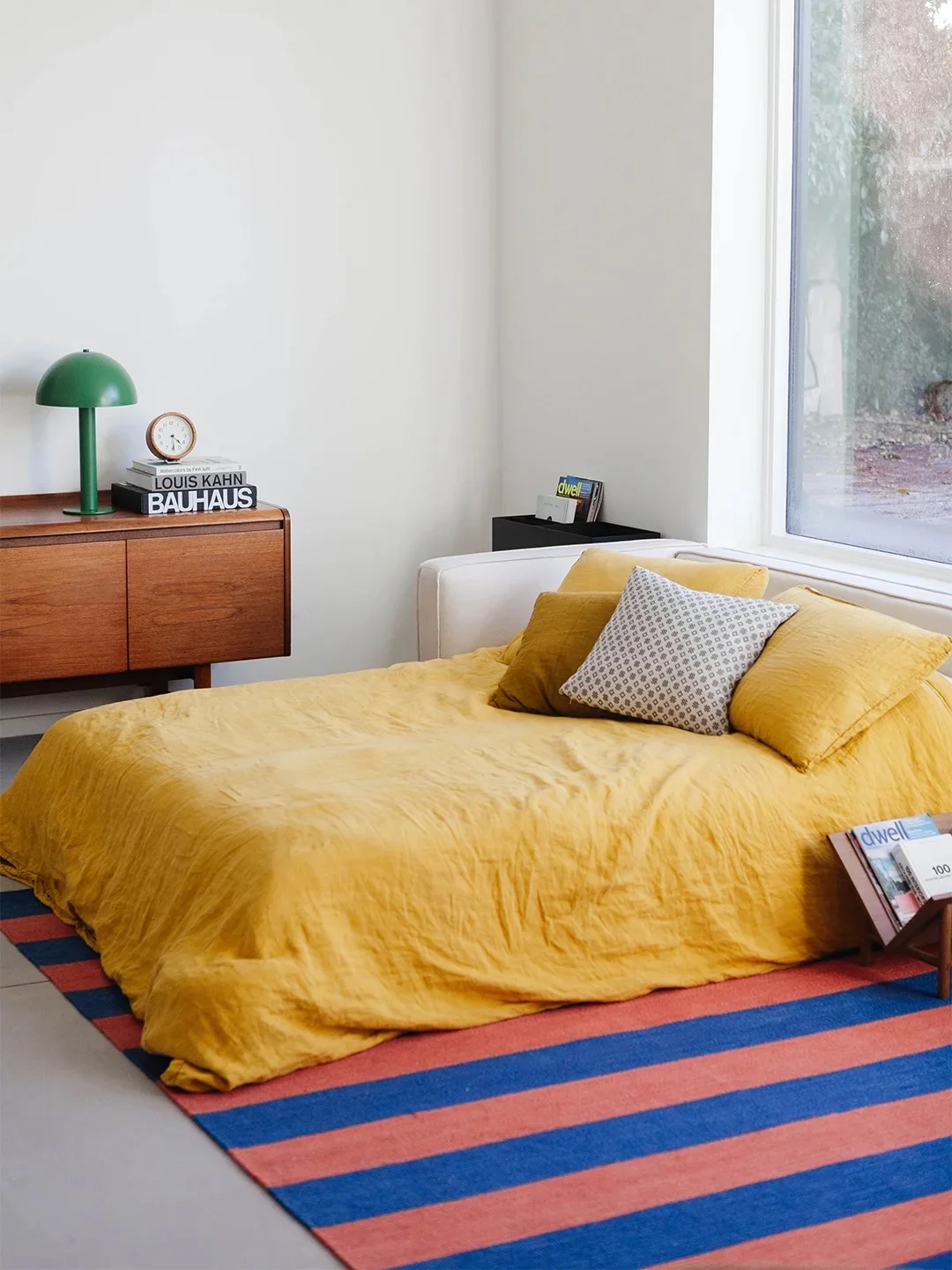
Repeat Yellow Bedding with a Green Table Lamp
 SaveSupport Non AI Creator
Image credit: PHOTOGRAPHY BY AMANDA JANE JONES
Yellow bedding creates a broad warm section across the bed, with smaller patterned cushions providing a finer repeat above it. The green dome-shaped lamp stands on a simple wood cabinet beside the pale wall. Blue and coral rug stripes introduce a separate angular pattern below, connecting the warm bedding with cooler color near the floor.
Choose the rug size from usable floor space and keep its edges stable where you step out of bed. Compare a larger yellow textile sample with the green lamp under your actual lighting. Maximalist bedroom ideas compare more strong color arrangements if you want additional pattern while keeping the furniture outlines simple and the sleeping area useful.
IDEA 19 / 20
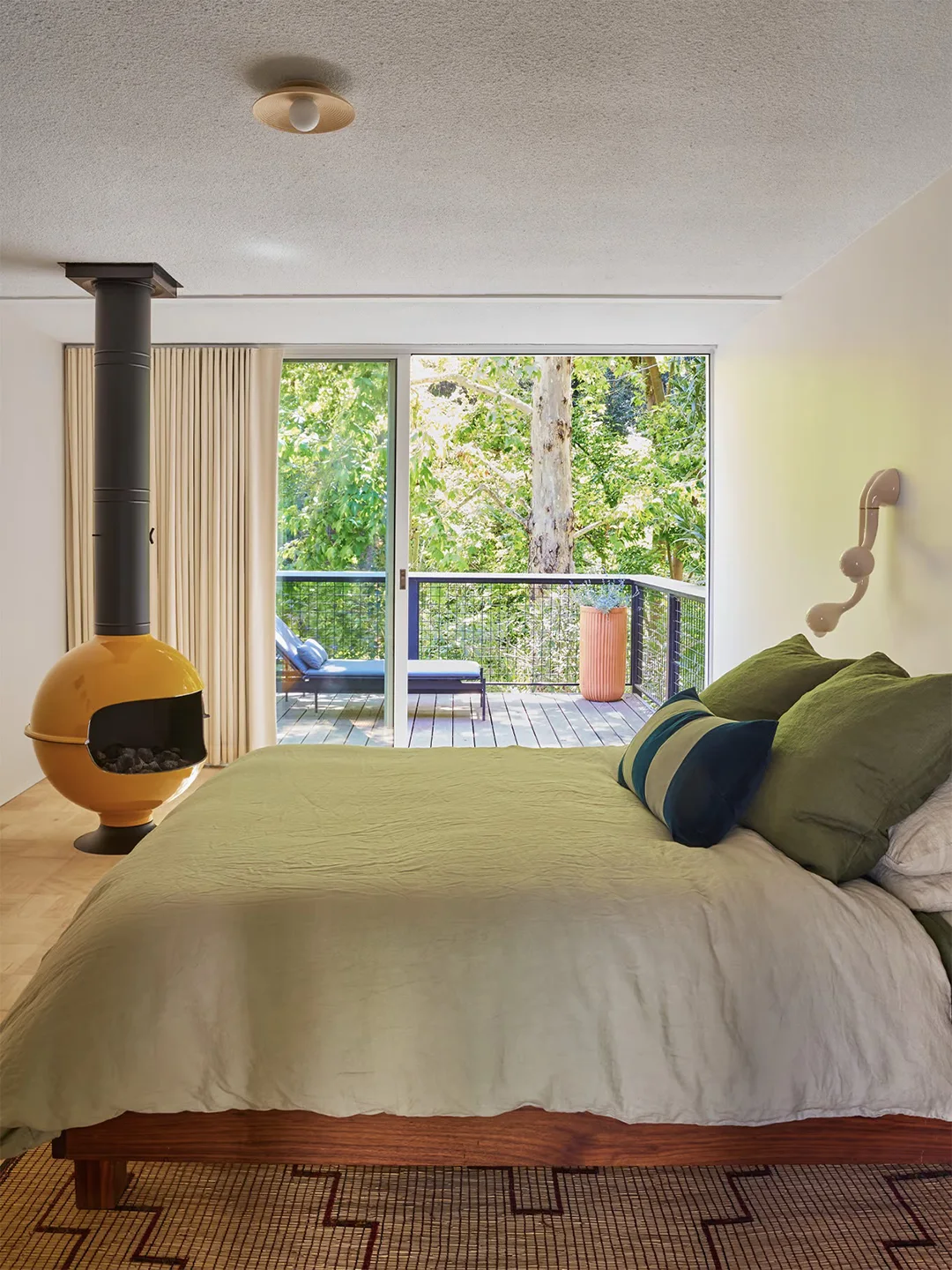
Give a Yellow Fireplace a Clear Place Beside the Bed
 SaveSupport Non AI Creator
Image credit: PHOTOGRAPHY BY YOSHIHIRO MAKINO; STYLING BY KATE BERRY.
The yellow fireplace introduces a rounded freestanding shape beside the bed, with its tall dark flue creating a contrasting vertical line above. Pale green bedding and the warmer wood frame provide quieter lower sections nearby. Tall curtains soften the glazed doorway, leaving the garden view visible beyond the room’s stronger fireplace accent.
Use the fireplace as visual inspiration and have any installation assessed appropriately for the actual appliance and room. Follow its clearance requirements for beds, curtains and other combustible furnishings rather than inferring safe spacing from the photograph. If installation is impractical, borrow the yellow accent through a lamp or textile while preserving easy access to the glazed doors.
IDEA 20 / 20
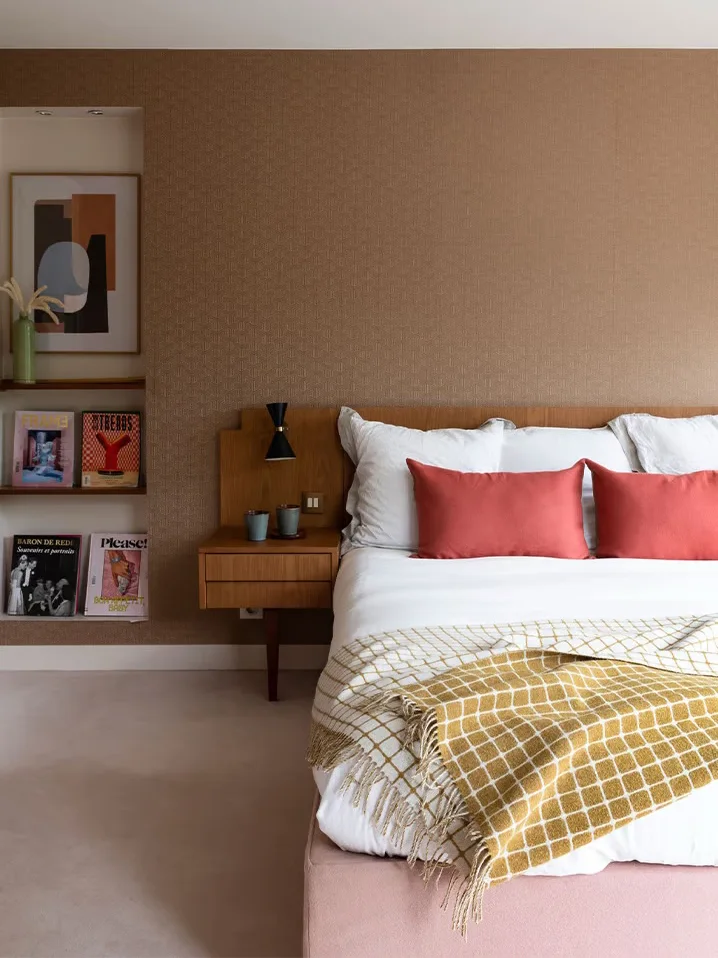
Bring Reading Material onto Reachable Bedside Shelves
 SaveSupport Non AI Creator
Image credit: PHOTOGRAPHY BY JULIEN FERNANDEZ; STYLING BY AMANDINE BERTHON.
Small shelves create a reachable book display beside the wood headboard. The textured brown wall connects with the warmer cabinet below, while pale bedding separates the sleeping area from that continuous background. Coral cushions and a yellow patterned throw introduce smaller bright sections without covering the whole wall with additional color.
Keep regularly used books within comfortable reach and avoid projecting shelves where they narrow bedside movement. Check the wall covering’s care requirements and secure shelving for the intended load. Earthy bedroom ideas compare more textured brown and pale arrangements if you want warmer walls with fewer bright textiles or a simpler display beside the bed.
BRING IT ALL TOGETHER
Start with a comfortable bed and usable storage
Check bed height, mattress support and walking space before choosing a platform frame or broad headboard. Measure drawer and wardrobe movement alongside the bed itself. Wood furniture, a curved light or a geometric textile can introduce mid-century character while leaving enough room for daily routines, cleaning and access to windows.
Compare larger textile and finish samples under daylight and evening lamps. Choose reading lights for comfortable use and curtains for privacy and the darkness you prefer at night. Keep display shelves manageable, checking fixings and appropriate electrical or fireplace installation where needed rather than treating a finished photograph as a complete construction guide.