A modern bedroom can pair clear furniture shapes with warmer wood, useful storage and personal color. These photographs show open bed frames, lower upholstered beds, practical desks and different ways to organize bedside surfaces. Some rooms retain older tables or familiar window details, with contemporary lighting and restrained larger arrangements connecting them to everyday use.
Begin with comfort and the space needed to move, dress and change bedding. Then choose storage, useful light and a small group of finishes that work together. Check upholstery and textile care before relying on a decorative look, keeping any extra chair, bench or desk only when it supports a real routine in the room.
PART 01
Connect the bed with a clear larger background
IDEA 01 / 20
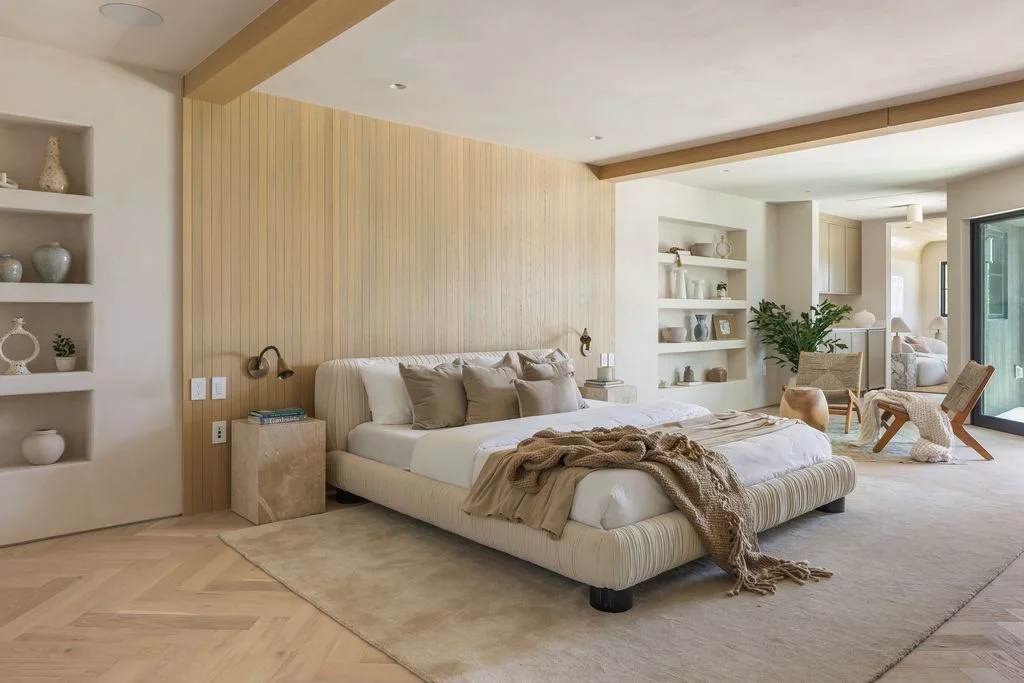
Connect a Low Bed with a Pale Wood Wall
 SaveSupport Non AI Creator
Image credit: Design: Kishani Perera Photo: Anthony Barcelo
The low upholstered bed gives the room one broad soft shape beneath the taller wood wall. Pale shelves and a light-framed chair repeat the quieter color group, while the rug keeps the floor connected to the bedding. The wood wall supplies most of the surrounding texture without needing a dense collection of pictures above the pillows.
Compare the wall finish with existing flooring before adding several more wood pieces. Keep open shelves for a manageable display and give everyday belongings a convenient closed home where needed. Japandi bedroom ideas offer more pale wood combinations, while the bed height and upholstery care should be checked around your own comfort and cleaning routine.
IDEA 02 / 20
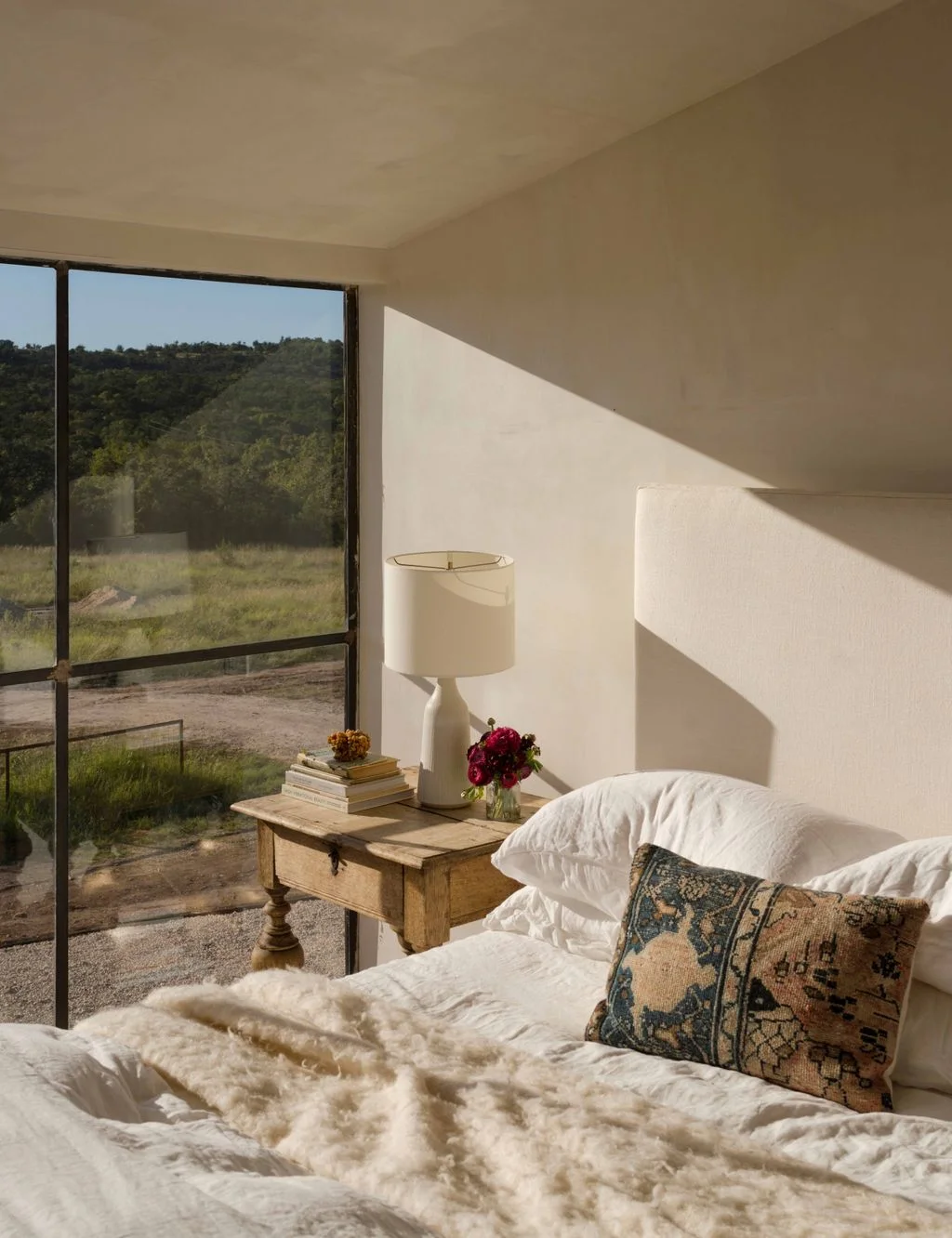
Warm a Plain Bedroom with One Wood Table
 SaveSupport Non AI Creator
Image credit: Photo: Jack Thompson
The plain walls and sloping ceiling leave the wood bedside table clearly visible beside the softer bedding. One patterned cushion adds detail without changing the larger pale palette. A white lamp supplies a separate useful shape on the table, while the dark window frame gives the otherwise light corner a firmer vertical edge.
Check that the table height is convenient from the mattress and that the lamp leaves useful space for bedtime essentials. Choose patterned cushions with removable covers if they will be used regularly. Keep the window controls accessible and plan privacy at the actual glazing, allowing curtains or shades to operate without the table or bedding getting in the way.
IDEA 03 / 20
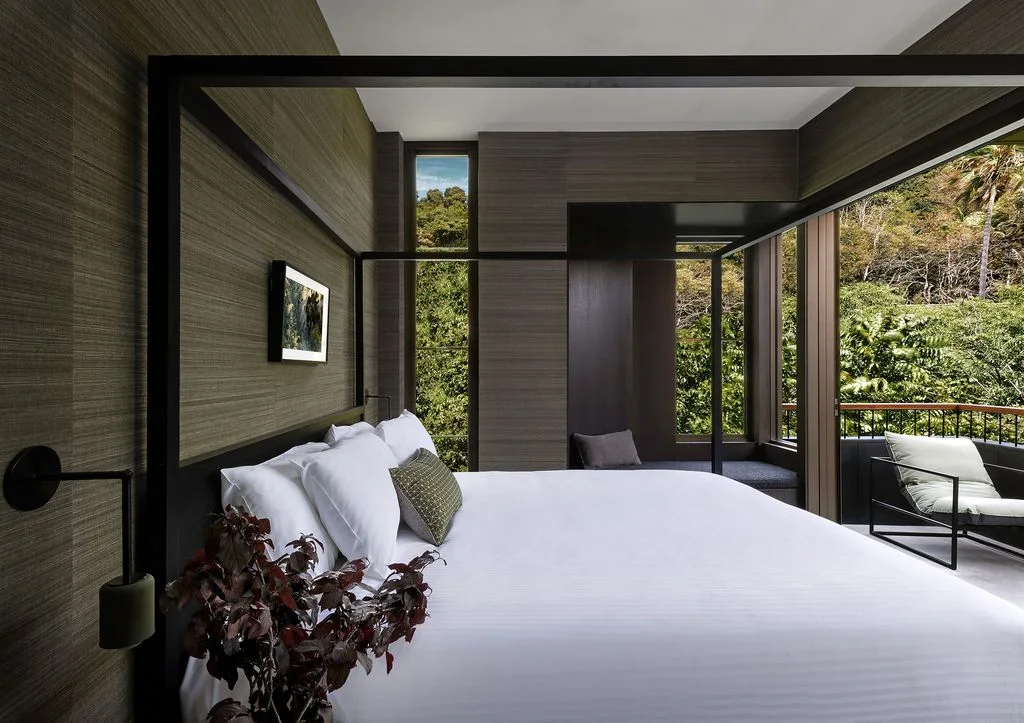
Give a Dark Bed Frame a Clear Background
 SaveSupport Non AI Creator
Image credit: Photo: Michael Lean
The open dark frame gives the bed a distinct outline without enclosing it in heavy curtains. White bedding provides a clear lighter block beneath the muted wall texture. Broad glazing repeats the frame’s darker lines at the side, while the limited bedside surfaces keep the surrounding furniture comparatively restrained.
Measure the full frame rather than only the mattress footprint, including height and access for changing bedding. Compare darker wall samples in the evening light you will use most often. Keep useful bedside storage available without adding several small tables, and plan window privacy independently of the photographed view so the room supports comfortable everyday rest.
IDEA 04 / 20
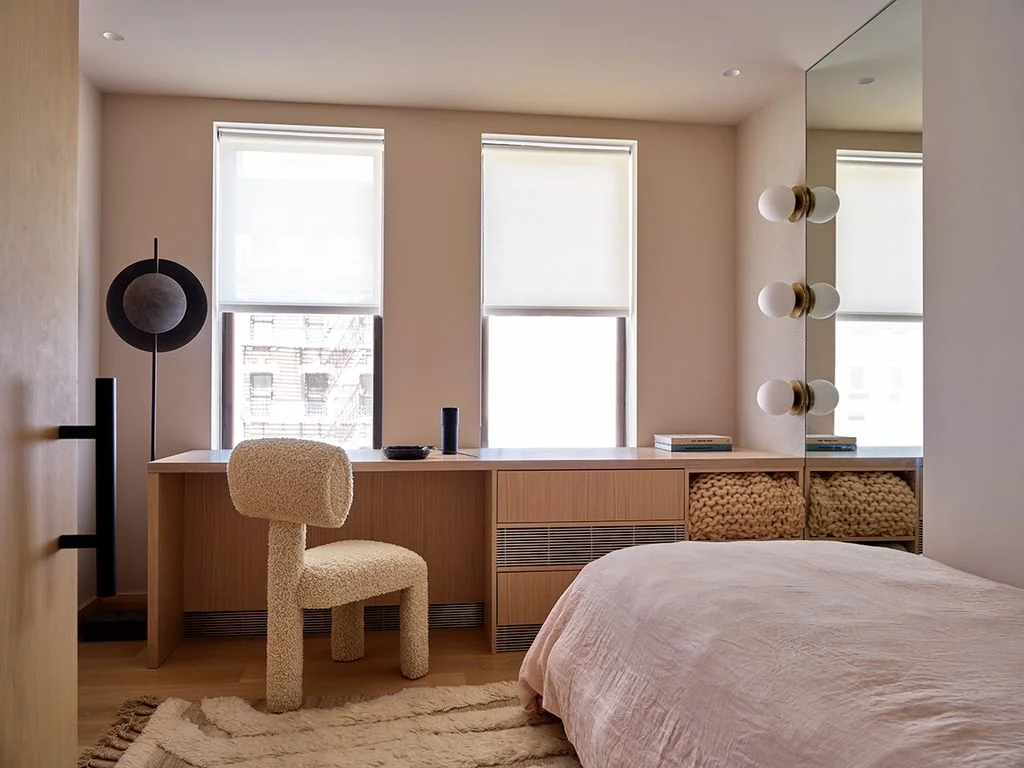
Give a Small Bedroom One Defined Desk
 SaveSupport Non AI Creator
Image credit: Photo: Sean Litchfield
The long desk occupies one clear wall section beneath the windows, keeping work separate from the bed. Pale pink and beige tones connect the larger surfaces, while the textured chair adds a smaller soft shape. Mirror panels and globe lights provide defined details at the side instead of spreading accessories along the full desk.
Check desk depth and chair movement with the bed in place before choosing a similarly long surface. Keep only current work within reach and store overflow away from the desktop. Manage lamp and charging cables, and plan the room’s privacy without blocking useful daylight or letting desk furniture interfere with the operation of the window coverings.
IDEA 05 / 20
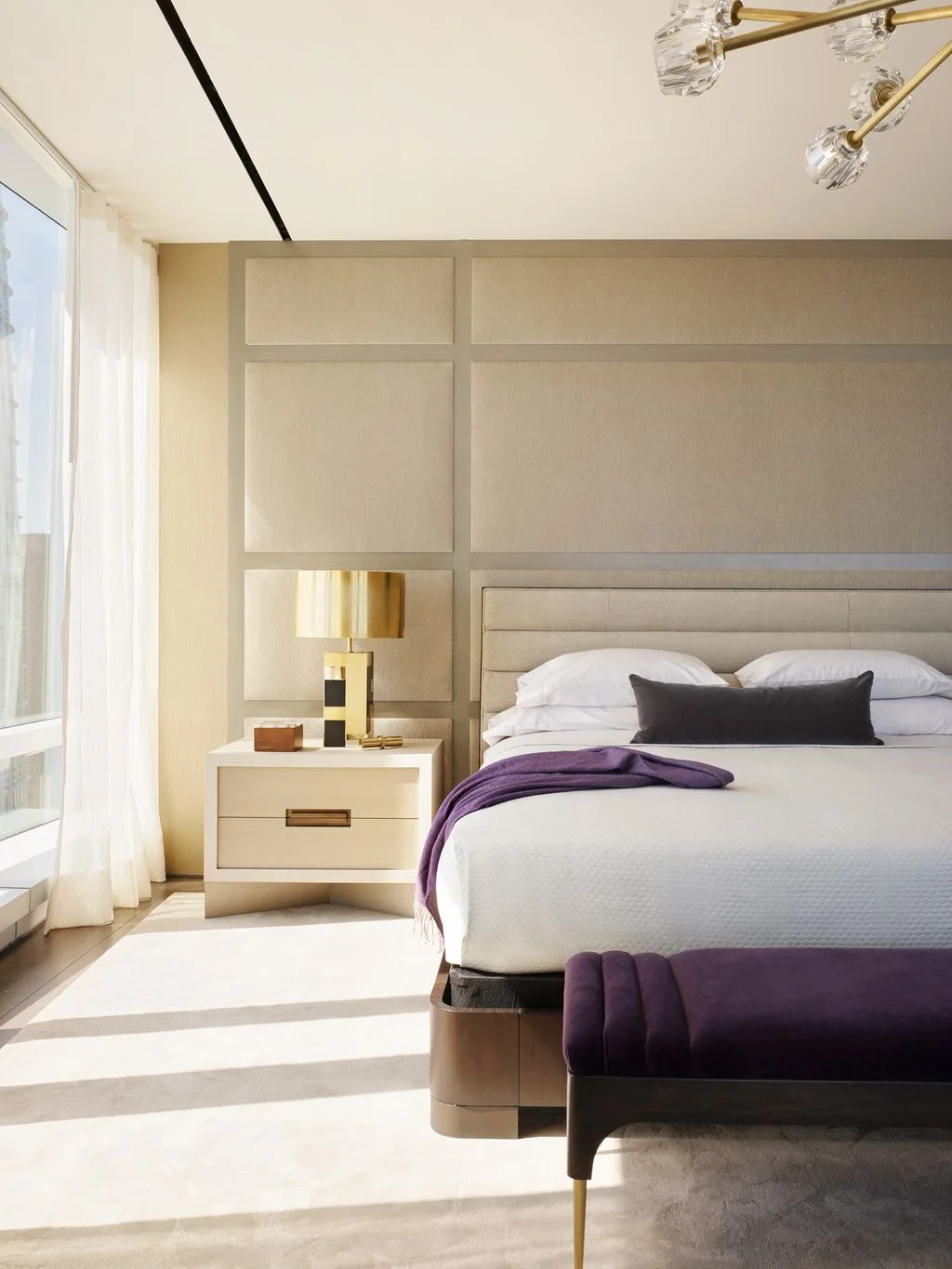
Use Metallic Detail Within a Quiet Bedside Group
 SaveSupport Non AI Creator
Image credit: Photo: Matthew Millman
The wall panels and pale bed keep the larger background shapes connected. A gold-toned lamp introduces a stronger reflective accent at the bedside, while the purple bench and throw add another limited color group below. The plain drawer front provides useful storage without repeating the lamp’s decorative detail across every piece.
Choose a reflective accent where it can be enjoyed without creating glare from the lamp or window. Check that the drawer opens comfortably beside the bed and that the bench leaves a usable route at the foot. Give the bench a practical role before buying it, rather than adding another place for clothing that should have a convenient storage home.
PART 02
Make bedside furniture and extra seating useful
IDEA 06 / 20
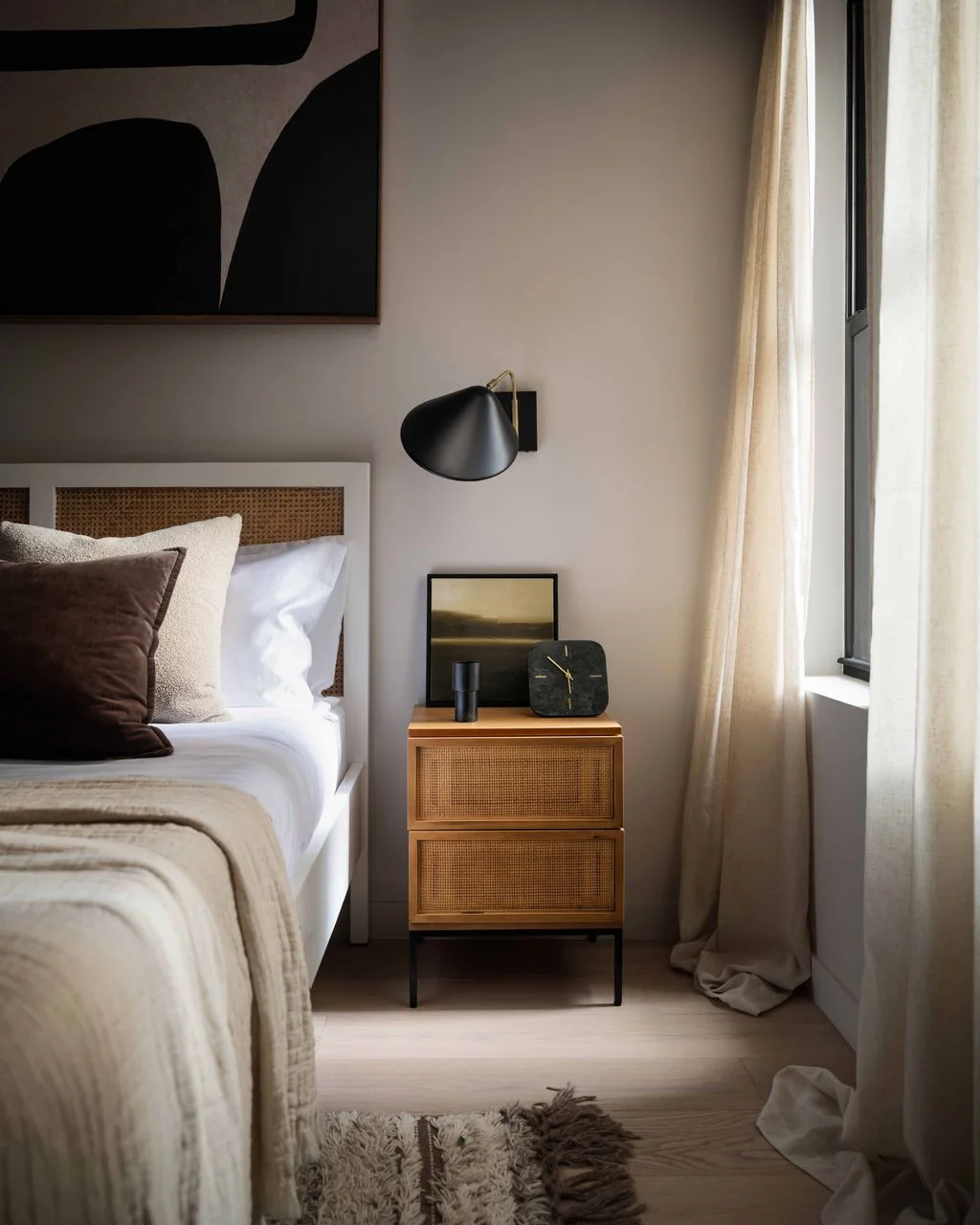
Use a Wall Light Above a Small Bedside Chest
 SaveSupport Non AI Creator
Image credit: Photo: Joe Kramm
The wall lamp leaves the smaller bedside chest more available for useful belongings. A woven inset in the headboard connects with the chest’s warmer texture, while pale bedding keeps the larger sleeping area quiet. The abstract picture gives the wall one defined decorative section instead of a larger collection of smaller frames.
Check lamp reach, shade direction and switch access from the sleeping position before fixing it to the wall. Keep the bedside chest’s top useful and manage cables away from moving curtains. Minimalist bedroom ideas compare other compact bedside arrangements, with room for a personal picture or favorite object when it does not interfere with everyday use.
IDEA 07 / 20
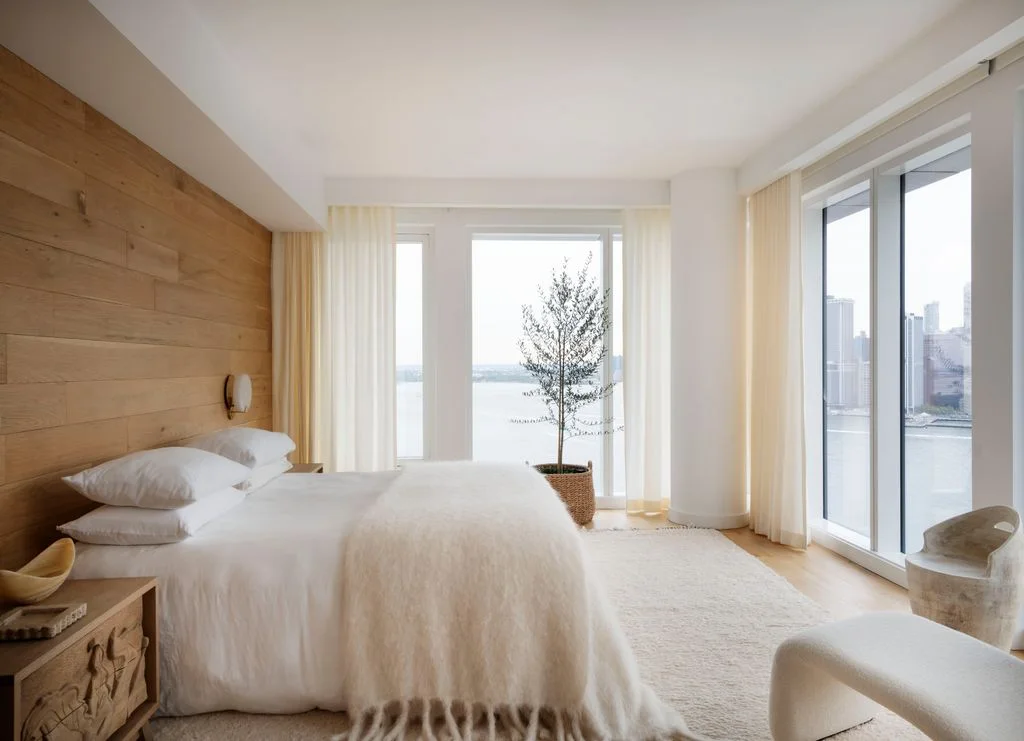
Let a Horizontal Wood Wall Warm White Bedding
 SaveSupport Non AI Creator
Image credit: Photo: Matthew Williams
The horizontal boards supply one larger warm surface behind the pale bed. White bedding and curtains connect the quieter surrounding colors, while the rug softens the floor beside the sleeping area. Broad glazing keeps another wall visually open, with the small chair providing an additional place to sit without filling the whole room.
Compare the board finish with flooring and bedside furniture before introducing more wood tones. Bedrooms with paneling show other ways to connect a textured wall with simpler bedding. Keep access to glazed doors comfortable and plan privacy for evening use, checking the chair’s position with curtains closed rather than arranging the room only around its daytime view.
IDEA 08 / 20
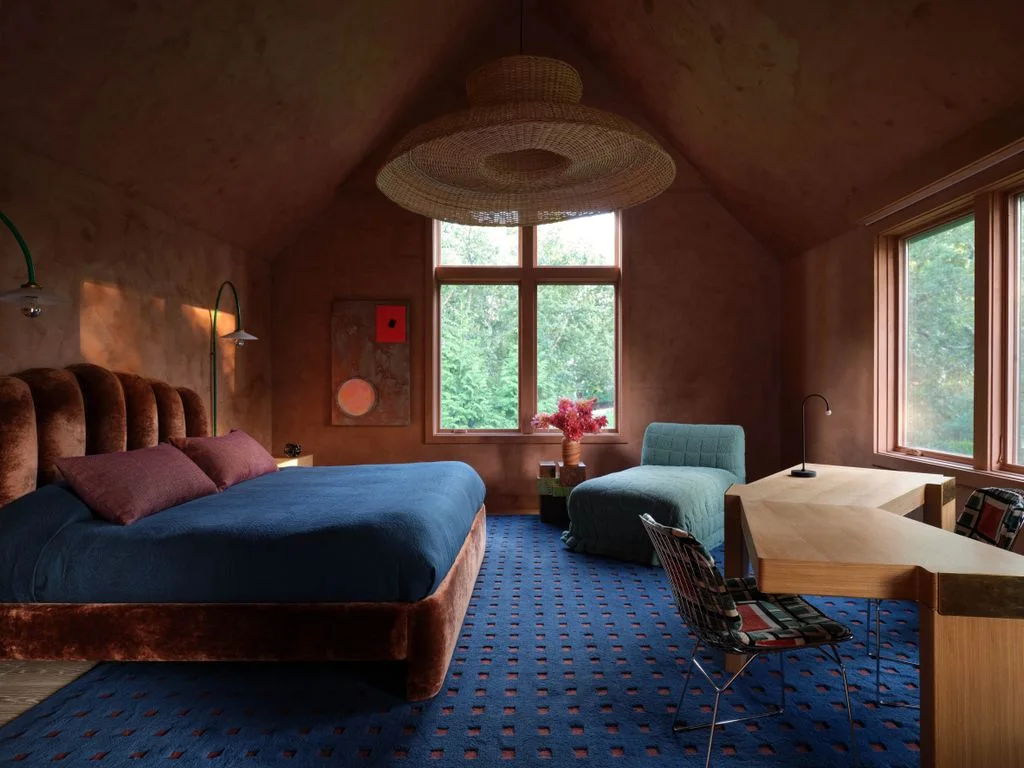
Place a Useful Desk Beside Stronger Color
 SaveSupport Non AI Creator
Image credit: Art: Patrick Brennan and Halsey McKay Gallery; Photo: Reid Rolls; Styling: Martin Bourne
The blue bedding and chair create a connected cooler group against the reddish walls. An angular wood desk supplies a separate work surface beneath the window, while the larger woven pendant adds texture overhead. The room uses confident color, but each larger furniture piece retains a clear role and position.
Compare the warm wall color with bedding in both daylight and evening lighting before extending it across the ceiling. Check the desk’s usable depth and chair clearance, keeping work supplies contained when the room is used for rest. Choose window coverings around privacy and glare, and keep the pendant’s scale appropriate to the room rather than assuming a larger shade always gives better light.
IDEA 09 / 20
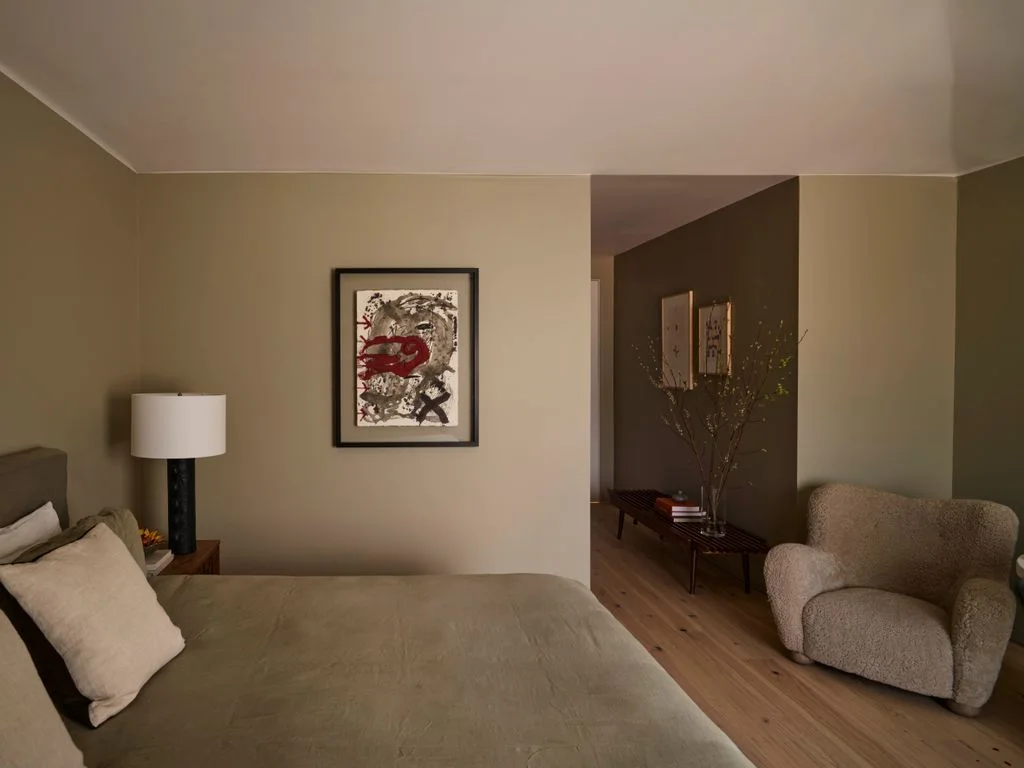
Keep an Additional Chair Within a Quiet Palette
 SaveSupport Non AI Creator
Image credit: Art: © 2023 Comissió Tàpies / Artists Rights Society (ARS), New York / VEGAP, Madrid; Photo: Fernando Marroquin
The chair repeats the room’s warmer neutral tones without matching the bed exactly. One framed artwork provides a defined accent on the mostly clear wall, while the smaller bedside lamp adds useful light close to the pillows. Light wood flooring connects the separate sleeping and sitting areas beneath their softer upholstery.
Test the chair for the way it will be used, whether reading, putting on shoes or occasional sitting. Keep a clear route around it instead of squeezing in extra furniture merely because a corner is empty. Beige bedroom ideas compare other warmer palettes, while washable bedding and appropriate upholstery care help keep a pale arrangement manageable in daily life.
IDEA 10 / 20
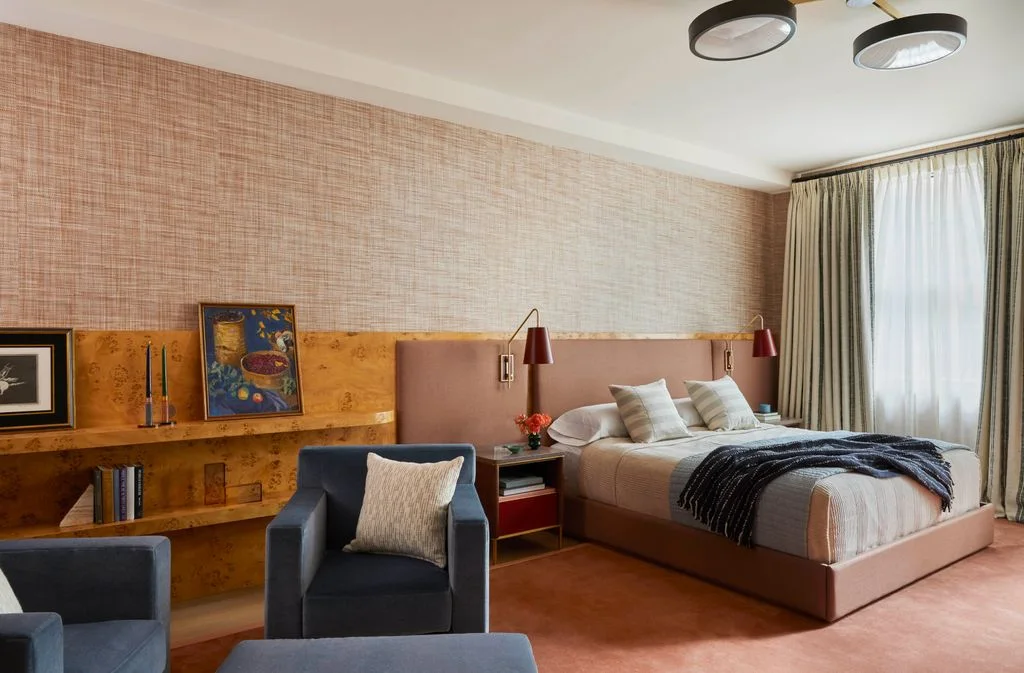
Combine Bedside Storage with a Longer Wall Unit
 SaveSupport Non AI Creator
Image credit: Photo: Genevieve Garruppo; Styling: Veronica Olsen
The longer wood unit combines bedside surfaces with open shelves along one wall. A dusty pink bed gives the sleeping area a separate softer block, while red wall lamps provide smaller directional accents at its sides. The textured upper wall remains visible above the furniture, connecting the larger room without another dense display of frames.
Plan shelf depths and bedside reach around the things you actually use before commissioning a longer unit. Keep open display areas manageable and choose lighting whose controls are convenient from bed. Preserve access to outlets and fittings, giving less-used belongings a closed storage place if they would otherwise crowd the surfaces beside the pillows.
PART 03
Plan shared spaces, storage and larger bed forms
IDEA 11 / 20
Give Shared Beds a Connected Headboard Wall
 SaveSupport Non AI Creator
Image credit: Photo: Douglas Friedman
The matching dark bed outlines connect the shared sleeping places along one wall. Green throws repeat a limited accent on both beds, while the larger abstract picture supplies one central decorative feature above them. Patterned chairs add separate sitting places nearer the windows without changing the simpler shapes of the beds.
Leave practical access to both beds and decide where each occupant’s belongings will stay before adding more seating. Check the chairs’ footprint with people seated so they do not narrow the route along the windows. For a child’s room, assess age-appropriate furniture and window safety independently; matching beds and an orderly arrangement do not establish those details.
IDEA 12 / 20
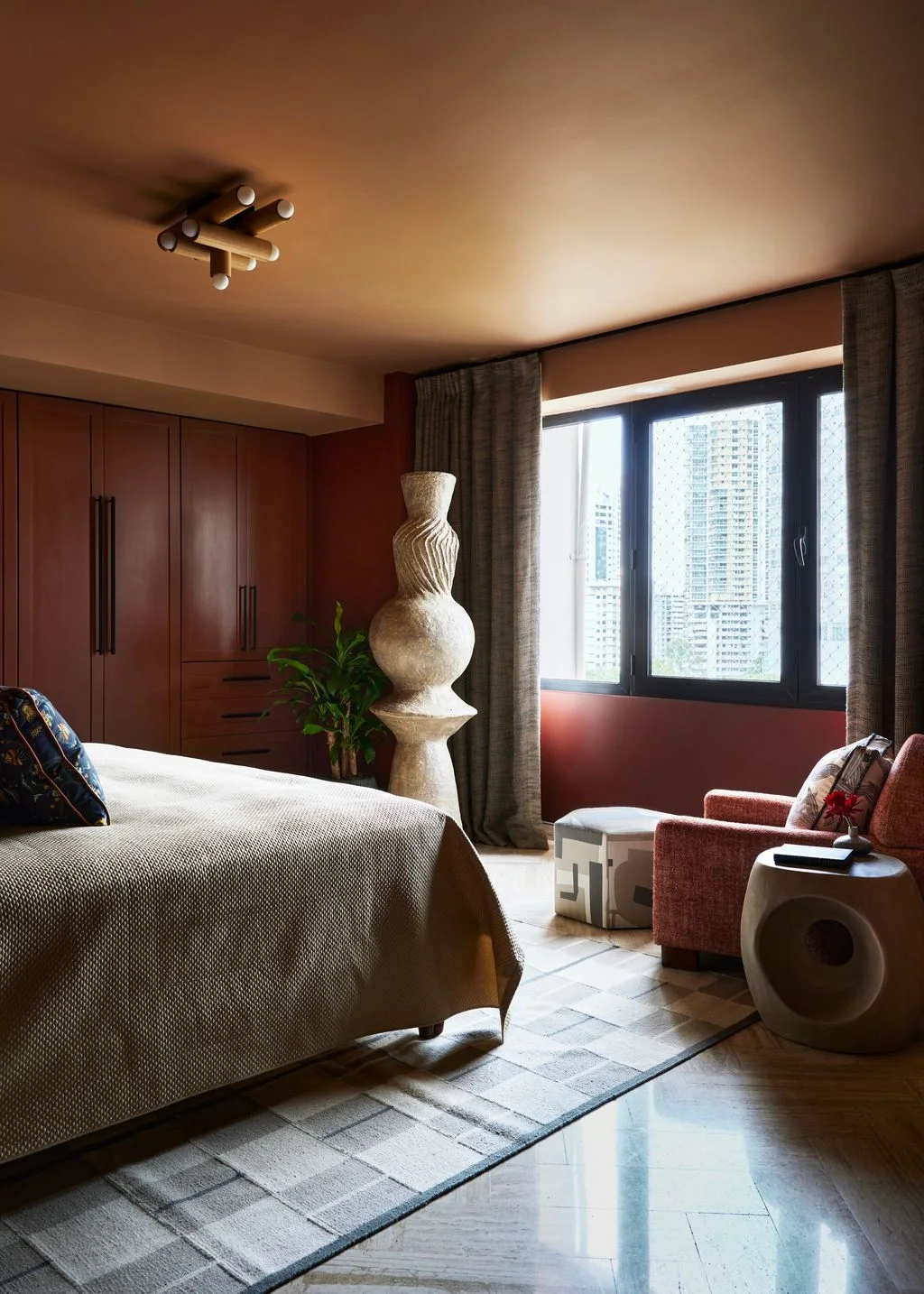
Connect Wardrobes with a Deeper Wall Color
 SaveSupport Non AI Creator
Image credit: Photo: Jared Kuzia
The wardrobe doors repeat the deeper wall color, allowing their larger storage shape to stay connected to the room. Pale bedding creates a lighter section beside the reddish chair, while gray curtains separate the window area. A sculptural side table adds one defined object rather than a collection of smaller decorative surfaces.
Test the wall color beside the actual wardrobe finish before painting both, including how they look under bedside lighting. Check door movement and internal storage around everyday clothing. Keep the chair and table useful without blocking drawer or curtain access, limiting further strong objects if the room already has substantial color and sculptural detail.
IDEA 13 / 20
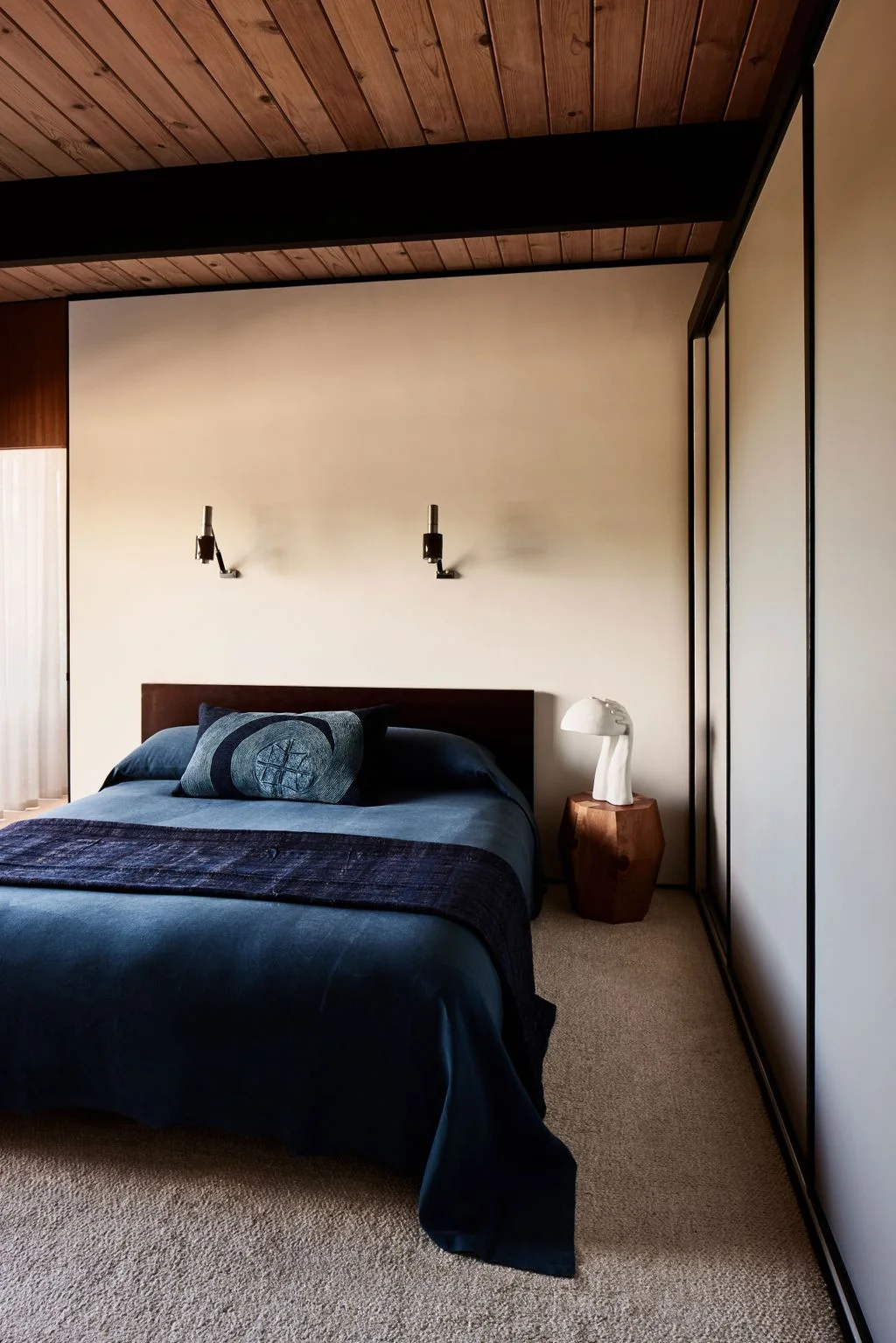
Keep Bedding Simple Beneath a Wood Ceiling
 SaveSupport Non AI Creator
Image credit: Photo: Sam Frost; Styling: Michael Reynolds
The wood ceiling brings much of the room’s warmth above the darker blue bedding. Plain pale walls give the bed a quieter background, while small wall lights provide separate practical details above the pillows. The wood side table repeats a warmer tone below without adding another large patterned furniture piece.
Work with an existing ceiling by comparing bedding and larger furniture colors beneath it rather than adding matching wood everywhere. Keep reading lights within comfortable reach and check the side table’s usefulness from the mattress. Dark blue bedroom ideas provide more bedding and wall combinations if you want a deeper sleeping-area color while retaining lighter surrounding surfaces.
IDEA 14 / 20
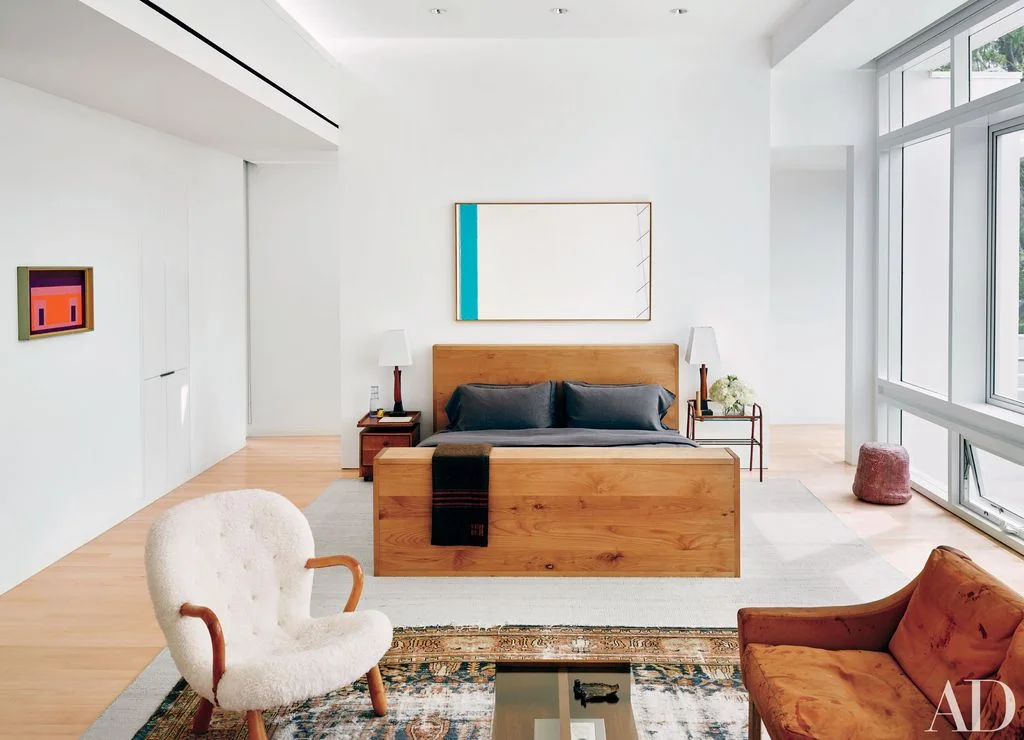
Let a Plain Wood Bed Stand Within White Walls
 SaveSupport Non AI Creator
Image credit: Photo: Douglas Friedman
The wood bed supplies a larger warm furniture shape against the tall white walls. Dark bedding adds a defined central block, while the simpler artwork gives the upper wall a limited color detail. A small sitting group occupies a separate lower area, leaving the bed’s position clear within the larger room.
Keep the bed size tied to comfortable access and furniture reach rather than filling a taller room with larger pieces automatically. Check the sitting area’s use before adding several chairs and a table. Plan privacy at broad windows and choose lighting for both areas, retaining clear routes when curtains are closed and the room is used in the evening.
IDEA 15 / 20
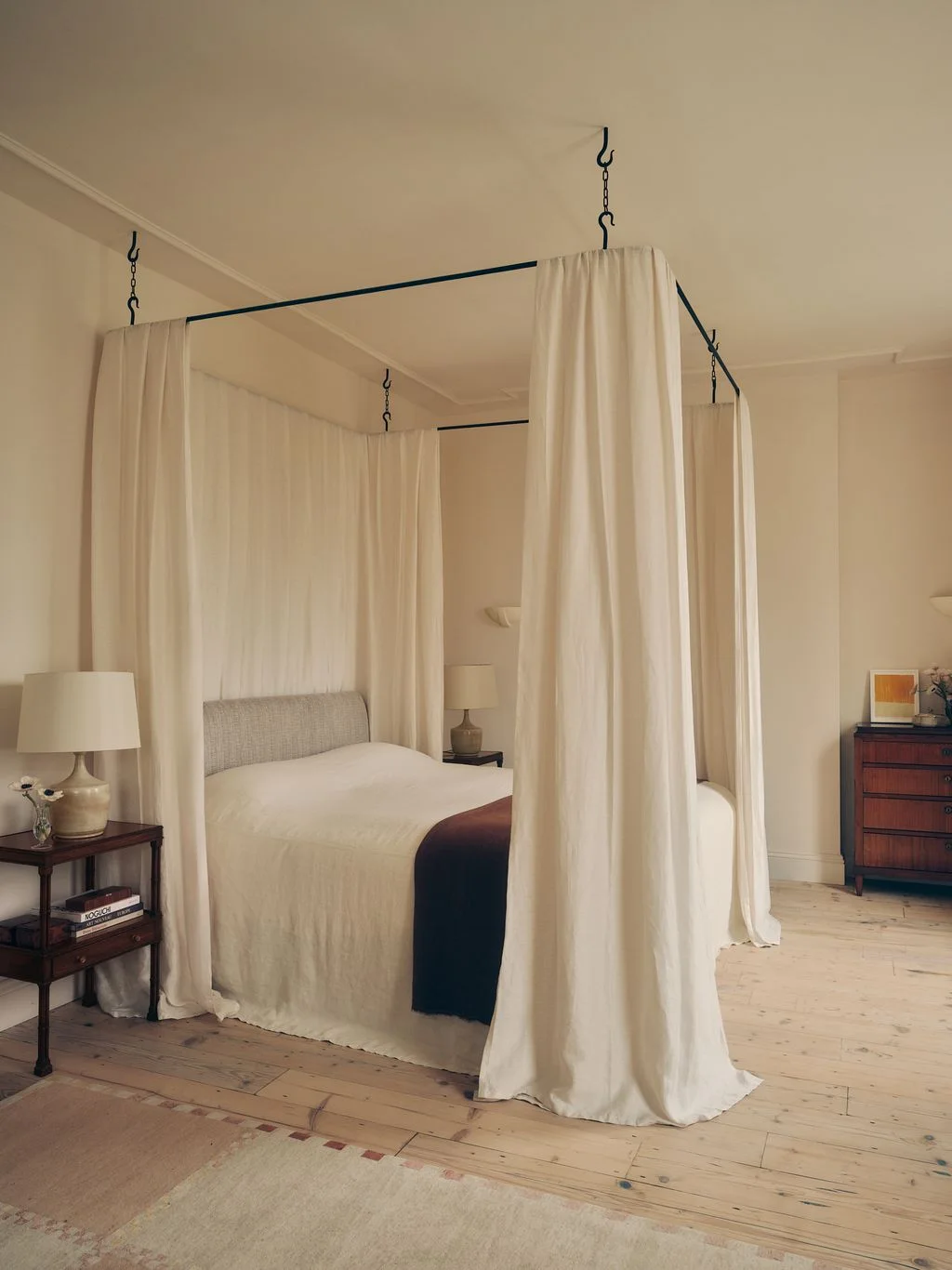
Use a Thin Canopy Outline with Light Curtains
 SaveSupport Non AI Creator
Image credit: Jasper Fry
The thin dark outline gives the canopy a clear shape without a heavy upper structure. Light curtains connect with the pale bedding and walls, while the small wood bedside tables add warmer surfaces at either side. The room retains a familiar canopy idea but keeps its larger frame and surrounding colors comparatively restrained.
Have any suspended frame properly assessed and fitted for the actual ceiling rather than copying its appearance as a simple decoration. Check access around curtains for changing bedding and cleaning. Use this as adult-room inspiration, keeping hanging fabric and cords away from children’s sleeping arrangements and choosing a simpler bed when a canopy would make daily use more awkward.
PART 04
Choose personal color and practical lighting
IDEA 16 / 20
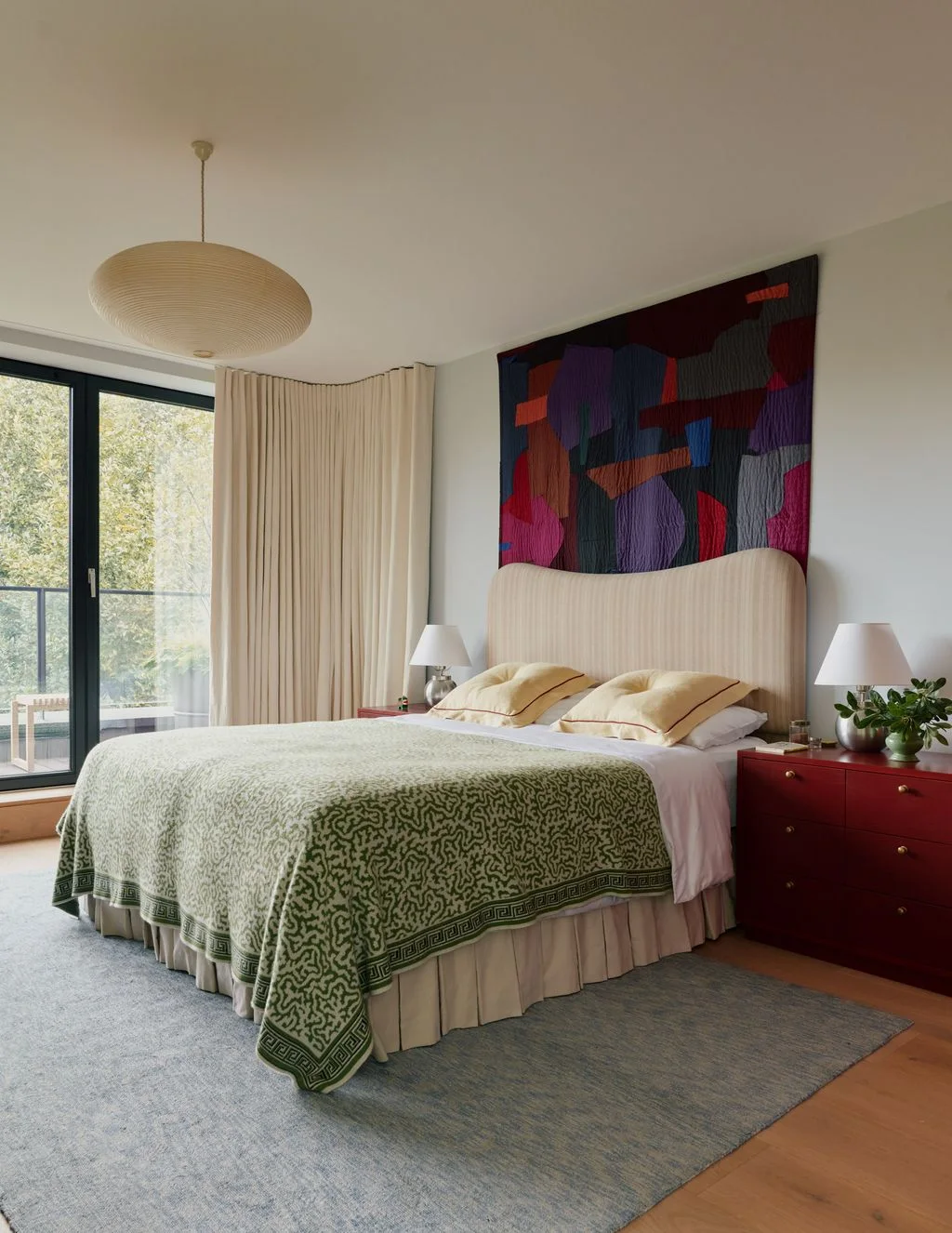
Keep a Colorful Wall Hanging Above Quieter Furniture
 SaveSupport Non AI Creator
Image credit: Michael Sinclair
The colorful hanging occupies one larger area above the pale headboard. Red bedside chests give the lower wall a separate warm accent, while the pale lamps and curtains keep other outlines quieter. A green patterned cover connects another color to the bed, showing how contemporary decoration can remain concentrated around useful furniture.
Choose the main wall hanging first, then compare bedding and storage colors with it before adding more artwork. Keep the chests useful for bedside belongings and verify that the lamp bases leave practical tabletop space. Secure the hanging appropriately, checking fabric care and access for dusting rather than treating every colorful surface as something that needs an additional decorative layer.
IDEA 17 / 20
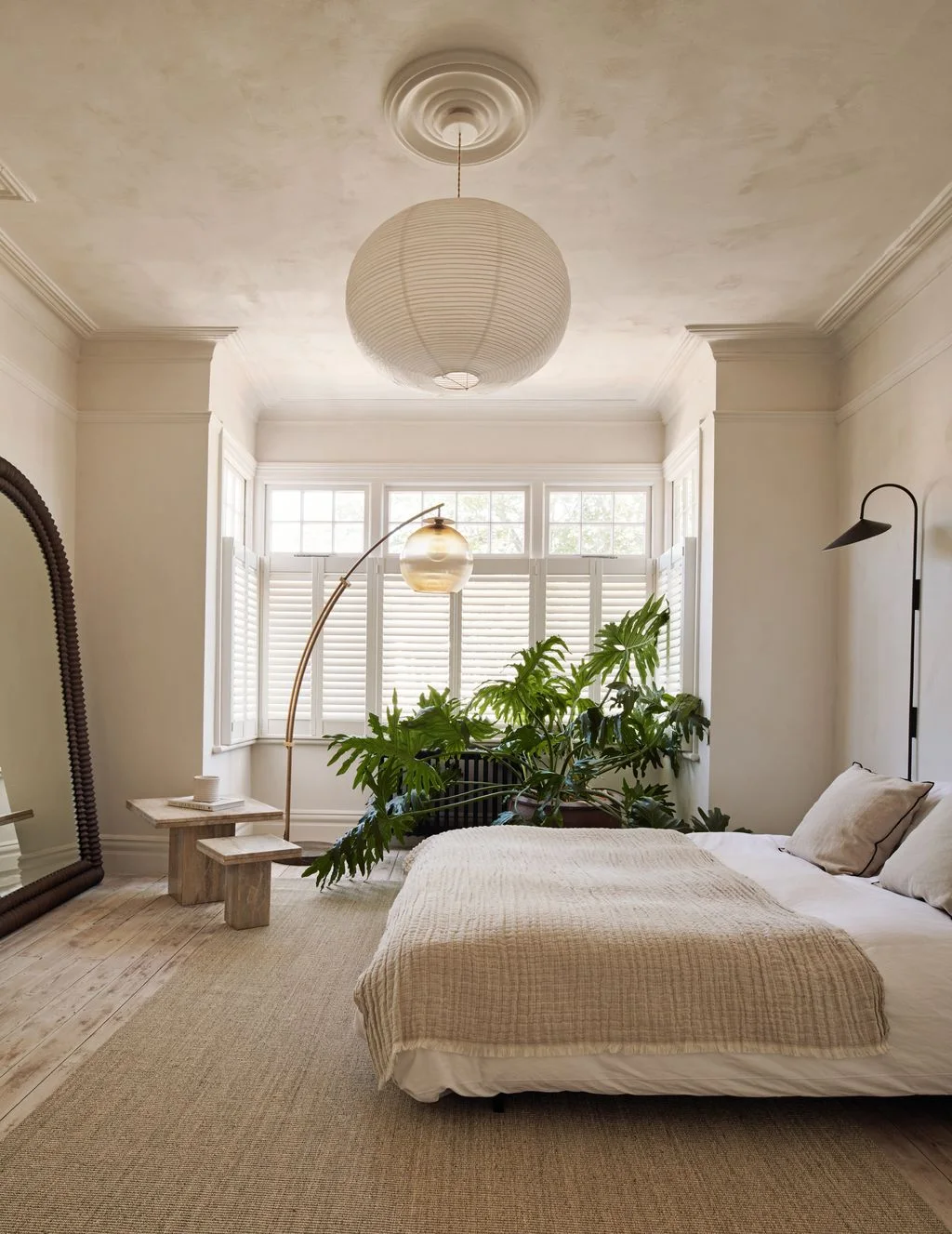
Use Different Lamps for Different Bedroom Tasks
 SaveSupport Non AI Creator
Image credit: MICHAEL SINCLAIR
The room uses separate lamp shapes around a mostly pale bed and wall palette. A curved floor lamp stands closer to the window area, while the dark wall lamp provides another smaller light position beside the bed. Simple wood tables offer useful surfaces, with the larger pendant adding one soft curved shape overhead.
Choose lighting around reading, dressing and moving through the room, rather than expecting one overhead pendant to serve every task. Check glare and switch access from the bed and keep floor-lamp cables outside walking routes. Plan shutter movement and the tables’ positions together, leaving the window area useful without spreading small furniture across every available gap.
IDEA 18 / 20
Repeat Blue Pattern Around Plain Wood Furniture
 SaveSupport Non AI Creator
Image credit: Paul Massey
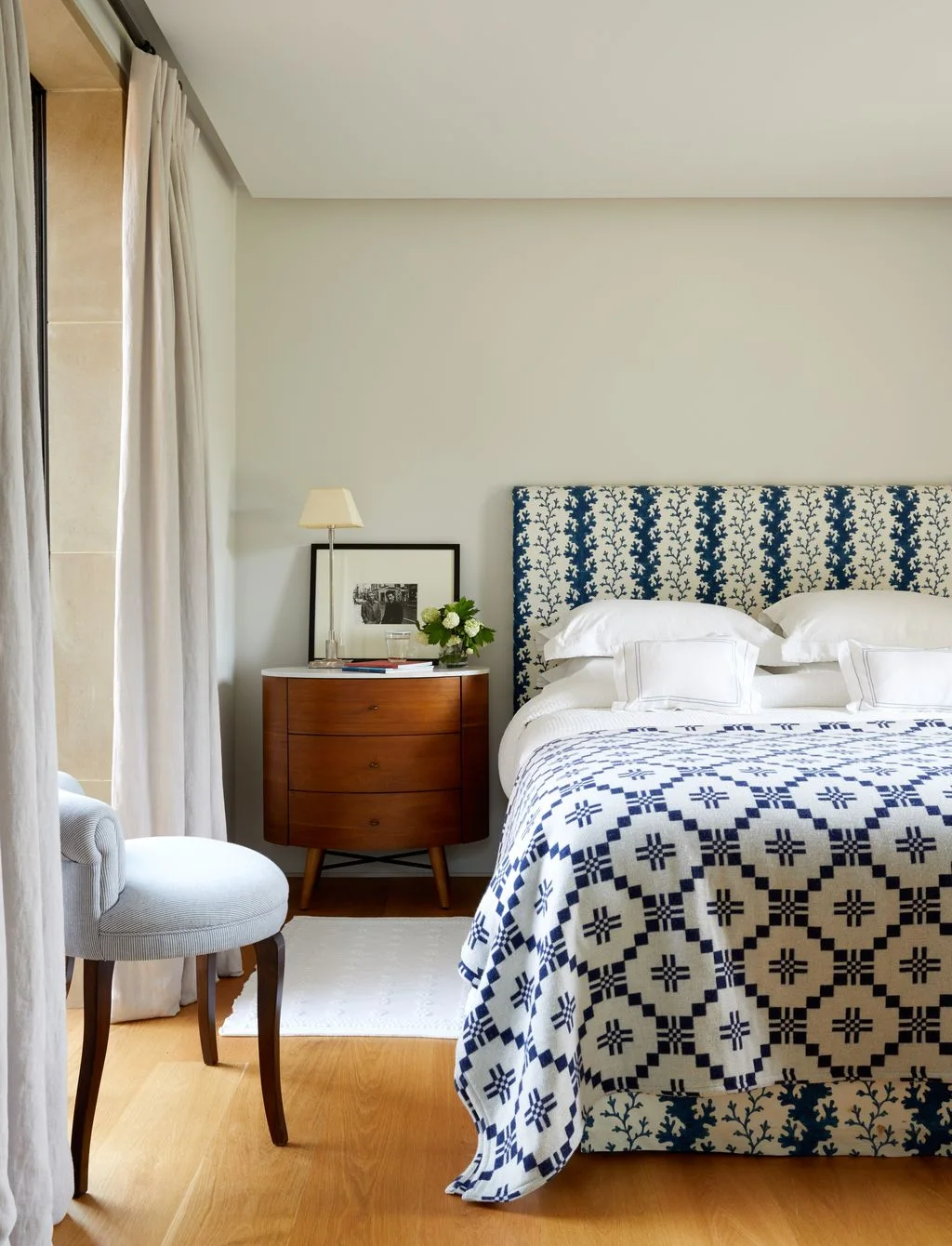
The headboard and cover repeat blue in different patterns around the bed. A plain wood chest gives those textiles a calmer neighboring surface, while light curtains connect with the larger pale background. The upholstered chair adds a useful place to sit without introducing another strong furniture color beside the patterned sleeping area.
Compare patterns at their actual scale before combining them, keeping the surrounding furniture simpler if the bedding already carries substantial detail. Check textile washing guidance and give spare pillows or covers a convenient storage home. Keep the chest’s drawers accessible with the chair in place so the arrangement remains useful beyond the initial decorative effect.
IDEA 19 / 20
Keep a Four-Poster Bed Open Around a Work Area
 SaveSupport Non AI Creator
Image credit: Michael Sinclair
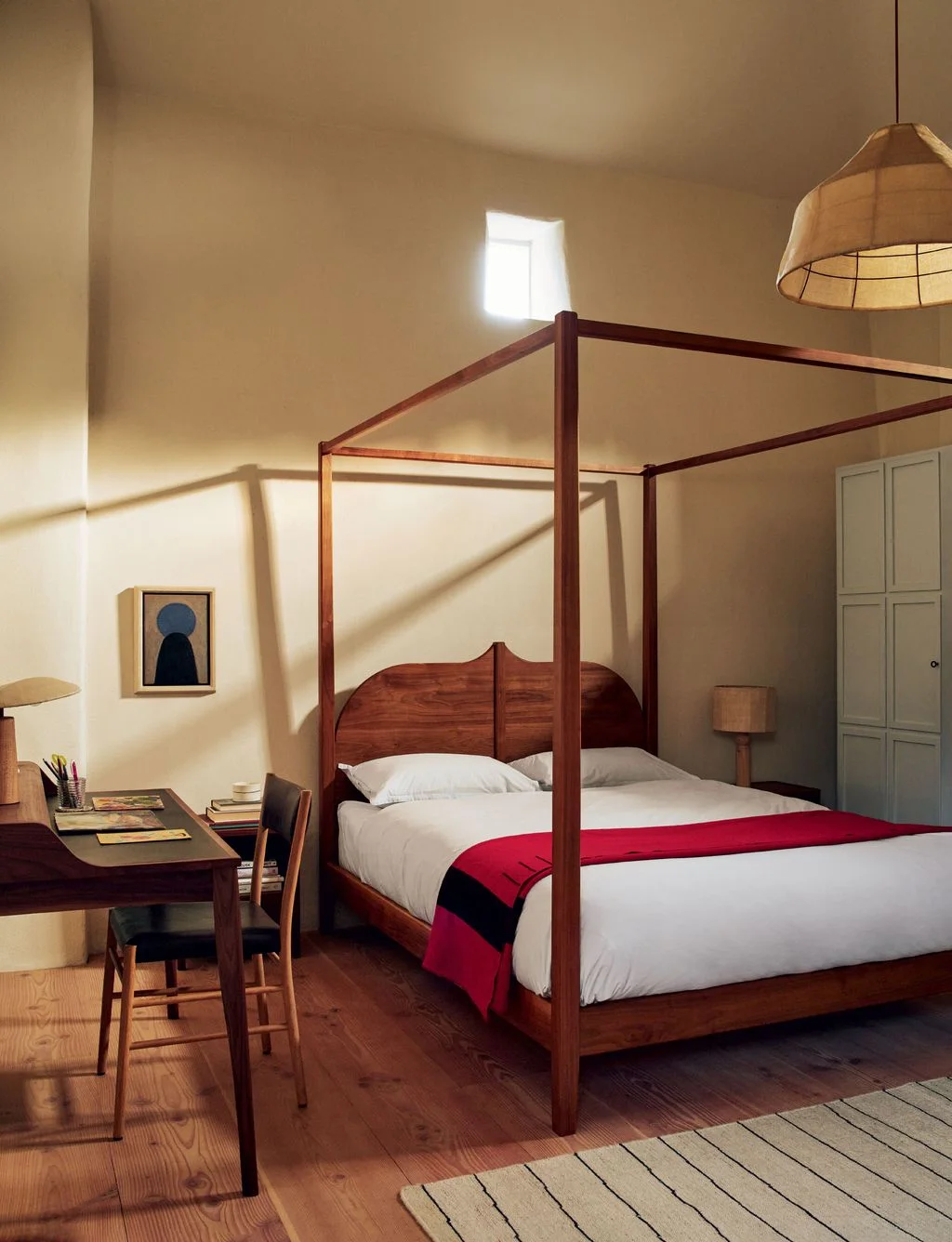
The open wood posts define the bed without hiding the neighboring desk. Pale walls leave the frame’s larger shape visible, while the red throw provides a concentrated accent on the bedding. A simple desk and chair repeat warmth at the side, giving the bedroom a separate practical work position.
Check the entire bed-frame footprint and height before selecting a four-poster for a smaller room. Preserve comfortable desk access with the chair pulled out, keeping work supplies contained when they are no longer needed. Plan pendant clearance and useful bedside light independently, using the open frame to organize space rather than assuming it eliminates the need for clear walking routes.
IDEA 20 / 20
Use One Graphic Throw to Connect Stronger Accents
 SaveSupport Non AI Creator
Image credit: Michael Sinclair
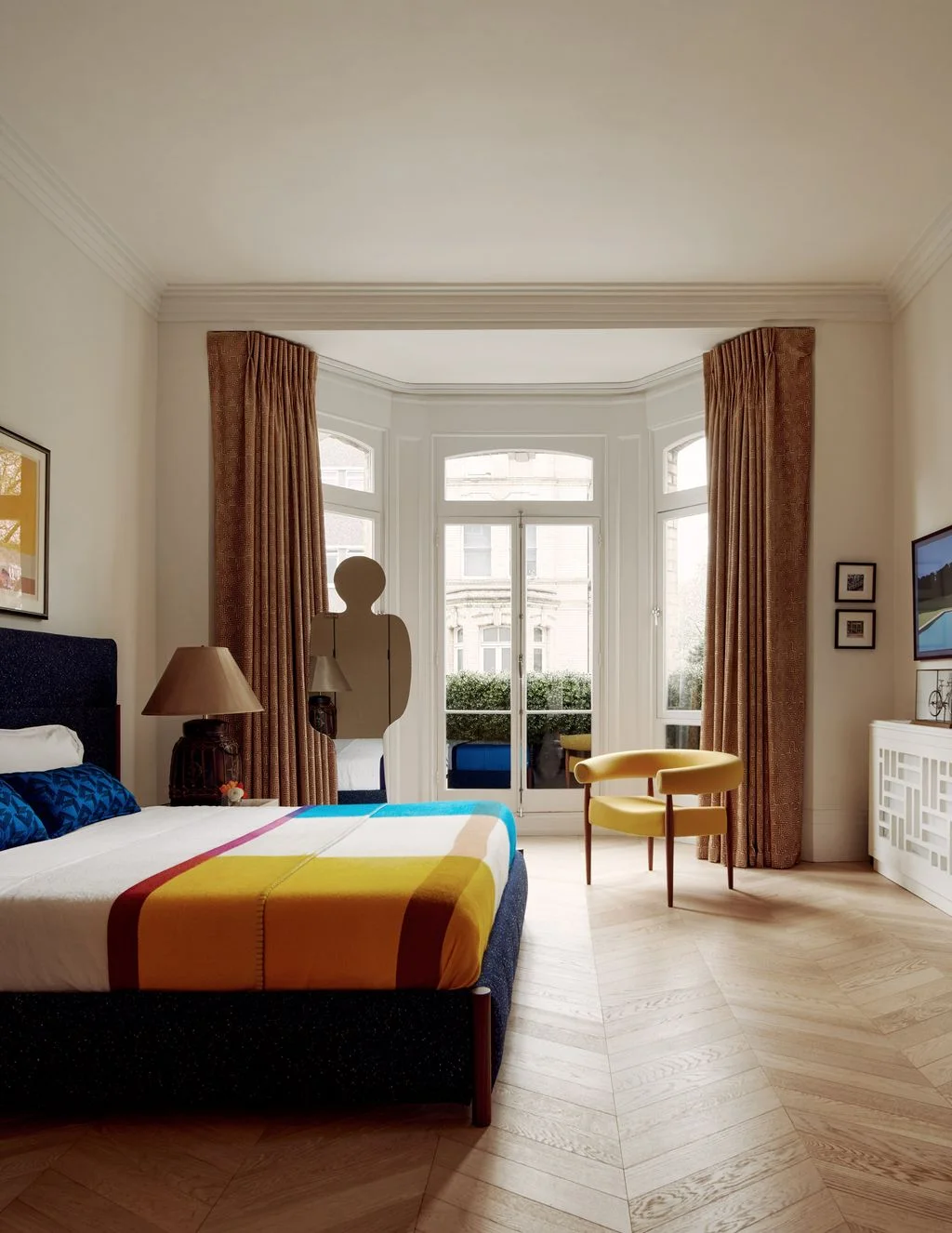
The graphic throw brings yellow, blue and warmer tones together across one larger bed surface. A yellow chair repeats a single brighter accent near the window, while the curtains provide another warmer vertical area. Pale walls and simpler furniture outlines leave the room’s stronger colors distinct rather than covering every surface with pattern.
Choose a larger textile that can connect existing accents before buying more small colorful accessories. Check the chair’s comfort and keep it outside the curtains’ movement, with room to use the window. Keep bedding maintenance straightforward and compare the colors under evening lighting, allowing the throw to remain the main graphic detail instead of adding a competing rug or wall pattern.
BRING IT ALL TOGETHER
Keep comfort and storage at the center
Start with a bed that suits how you rest and a layout that leaves useful room for movement and storage access. Check table reach, lamp controls and wardrobe doors before adding another chair or decorative bench. A clearer furniture arrangement matters more than buying a matching set or removing every personal object.
Then connect the larger finishes and choose a limited collection of patterns, artwork or stronger colors. Keep textiles manageable to wash and surfaces easy to use. Existing wood, familiar window shapes or an older bedside table can remain when the surrounding pieces support a comfortable contemporary room rather than competing for attention.