A home library works best when the collection is easy to find, remove and return, with a comfortable place to enjoy it nearby. That may mean a dedicated room or bookcases within a shared sitting or work area. Start by measuring the books you own and choosing the reading positions you will actually use.
These rooms show full book walls, smaller reading corners and shelves fitted around doors, windows and desks. Compare the storage with the access it leaves for people and furniture. Plan shelves for their intended loads, keep everyday volumes within comfortable reach and choose lighting around the page as well as the room’s overall appearance.
PART 01
Keep the collection close to comfortable seating
IDEA 01 / 20
Arrange Seating Within a Larger Book Room
 SaveSupport Non AI Creator
Image credit: Future
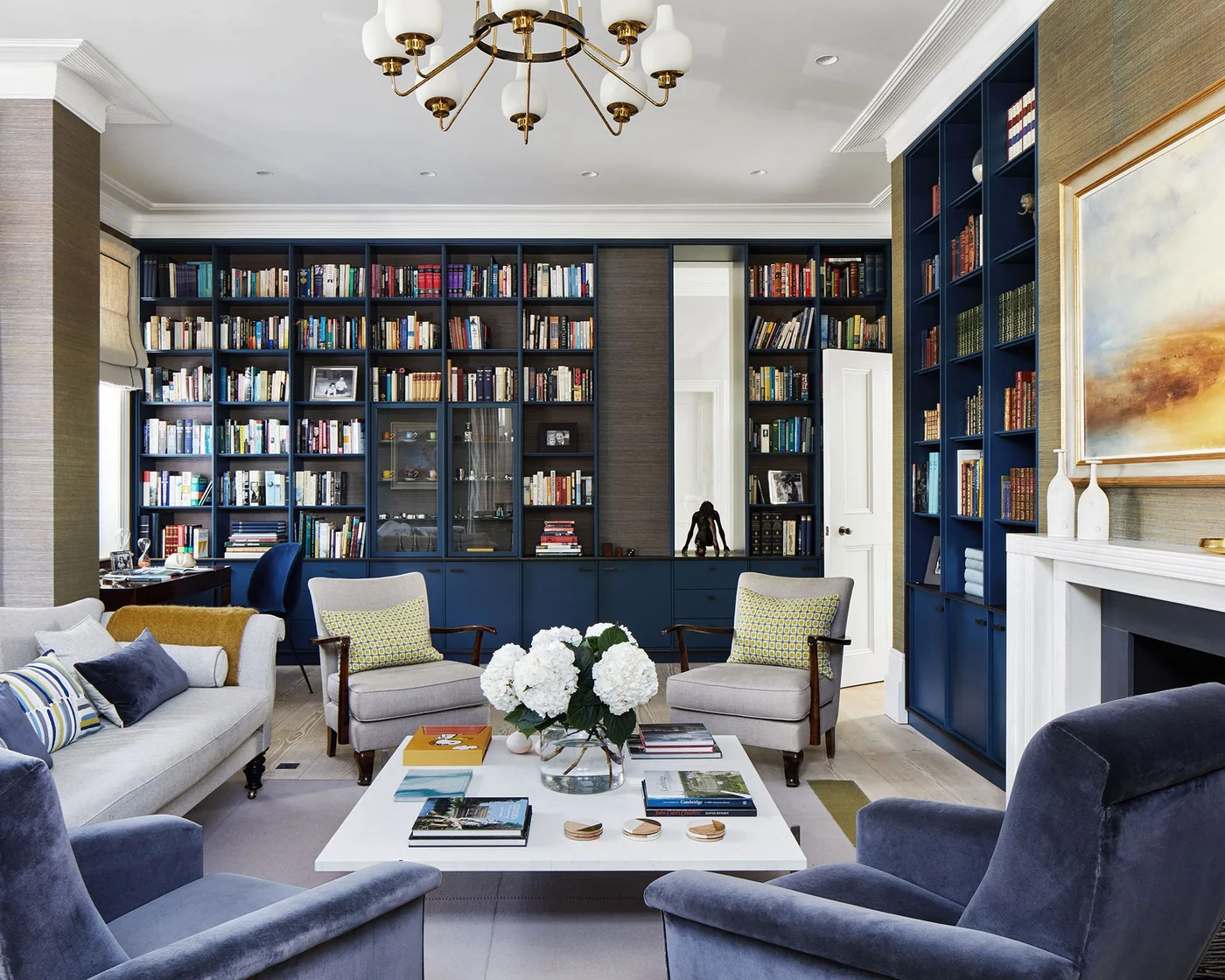
Dark blue shelving connects the book storage across several walls, with lighter seating grouped in the middle. The white coffee table provides a separate place for books currently being read. Closed lower cupboards and glazed sections add alternatives to open shelves, keeping the larger library arrangement varied without changing its main color.
Measure the seating group with a clear route to the shelves and doorway before choosing its table. Organize books by a method you can remember, keeping frequently used volumes within comfortable reach. Leave some space for returning books rather than filling every compartment so tightly that the collection becomes difficult to browse.
IDEA 02 / 20
Connect Bookcases Around a Central Door
 SaveSupport Non AI Creator
Image credit: Credit: Andrey Avdeenko
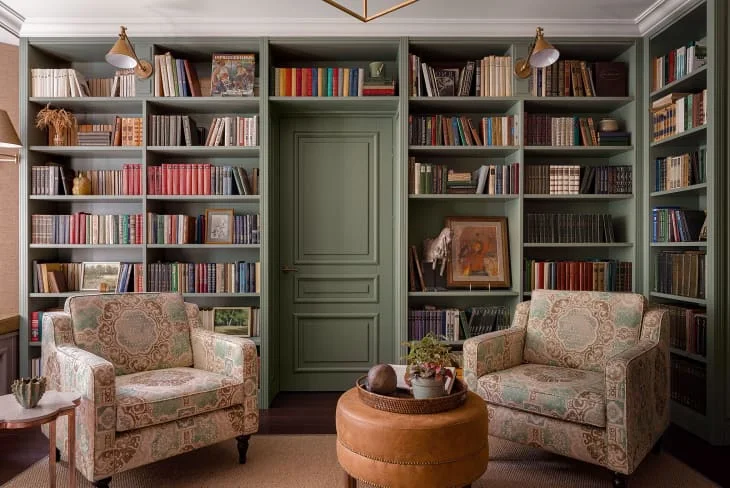
Green connects the shelves to the central door, making book storage a continuous backdrop around the room’s entrance. Two patterned chairs introduce softer varied surfaces in front of the straight shelves. A round brown ottoman provides a different central shape without turning the space into another row of storage.
Keep the door’s opening path and the route between the chairs clear when planning shelving around an entrance. Ask for shelves and fixings suitable for the intended book loads. Choose seats you can read in comfortably, and add a separate firm surface if the ottoman does not provide a practical place for drinks.
IDEA 03 / 20
Place a Comfortable Bench Beside Reachable Books
 SaveSupport Non AI Creator
Image credit: Photography by Anaïs & Dax; Styling by Merisa Libbey
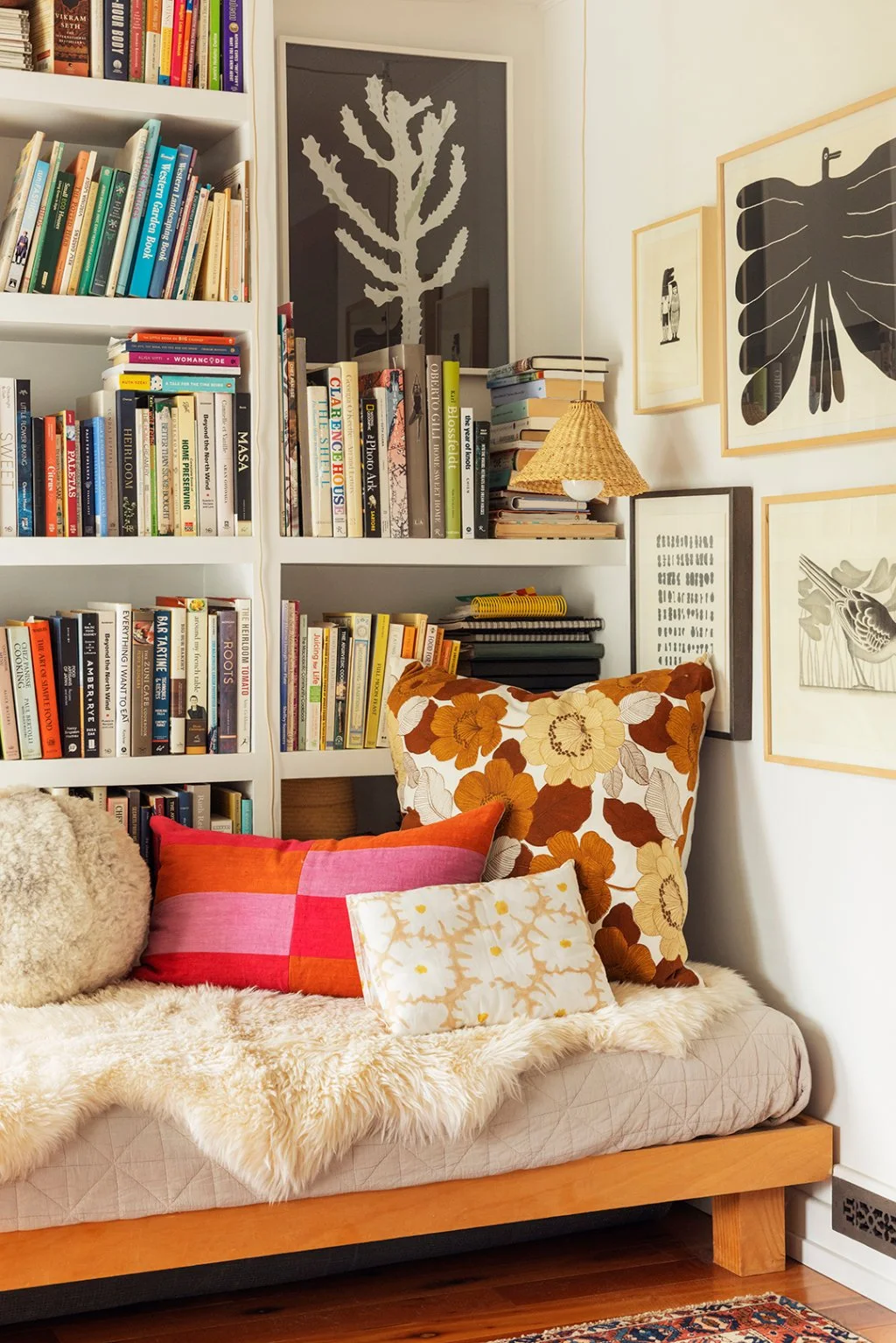
The bench puts a cushioned reading position immediately beside the book collection. White shelving keeps the many spine colors visible, while stronger pillow colors and botanical artwork give the corner smaller personal details. The wooden bench frame adds a warmer outline beneath its pale cover.
Check seat depth and back support before using a bench as your main reading place. Leave enough shelf space to remove and return books without disturbing the lamp or nearby objects. Choose covers that can be cared for according to their instructions, especially when the corner will be used every day.
IDEA 04 / 20
Build Seating Between Blue Shelves and Windows
 SaveSupport Non AI Creator
Image credit: Photography by Max B
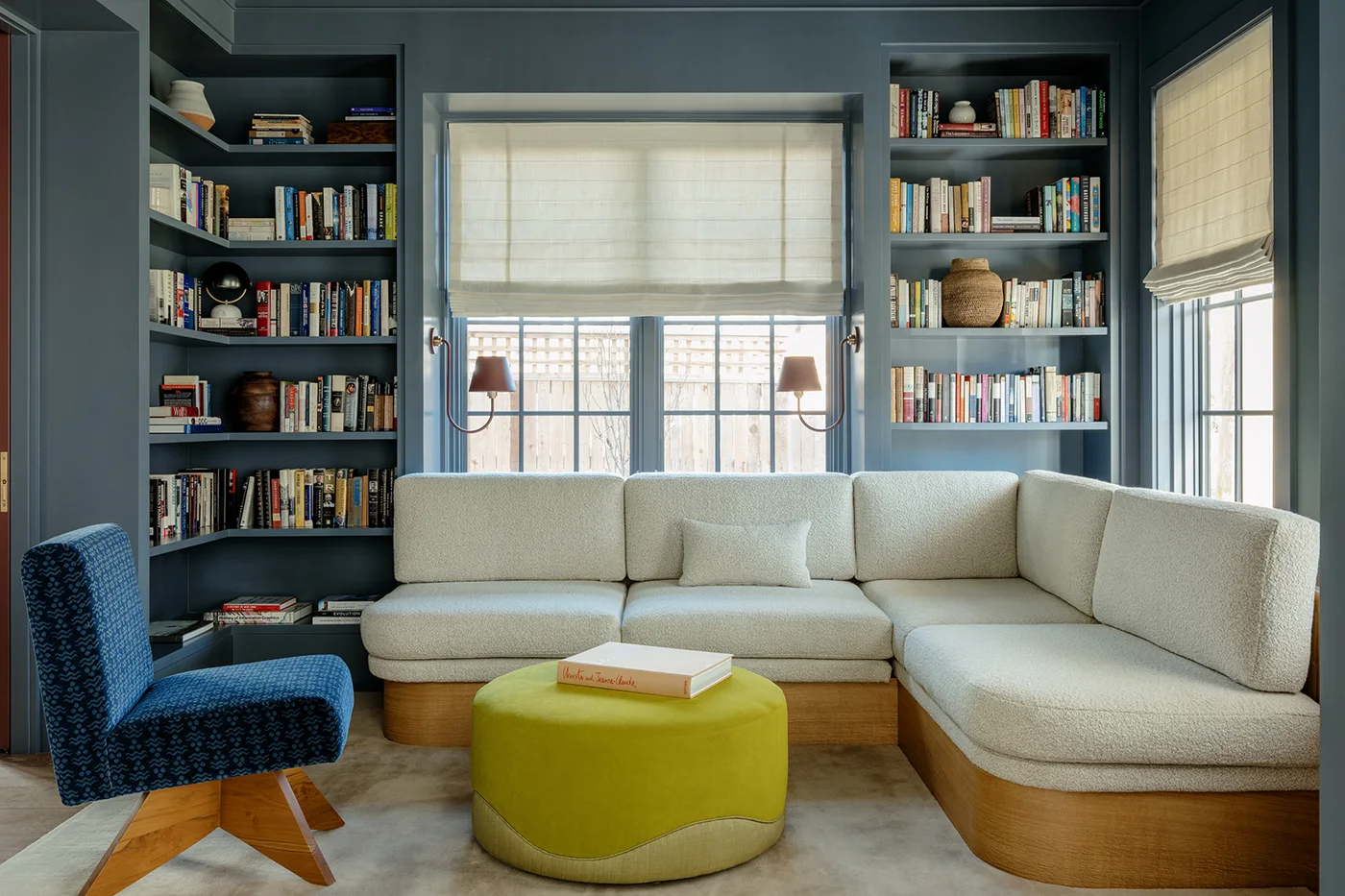
Blue shelving frames the windows around the pale wraparound seating, keeping books close to several reading positions. A blue chair repeats the larger storage color, while the yellow-green ottoman supplies one stronger contrasting shape. The window blinds remain separate lighter areas between the bookcases.
Plan window access and blind operation before extending seating along the wall. Check how comfortably each person can reach a light or side surface without crossing the central space. Choose the ottoman’s size around the paths between seats, and keep books used most often on shelves reachable from the surrounding floor.
IDEA 05 / 20
Match Warm Shelving to the Room’s Walls
 SaveSupport Non AI Creator
Image credit: Photography by Martina Gemmola; Styling by Bea Lambos
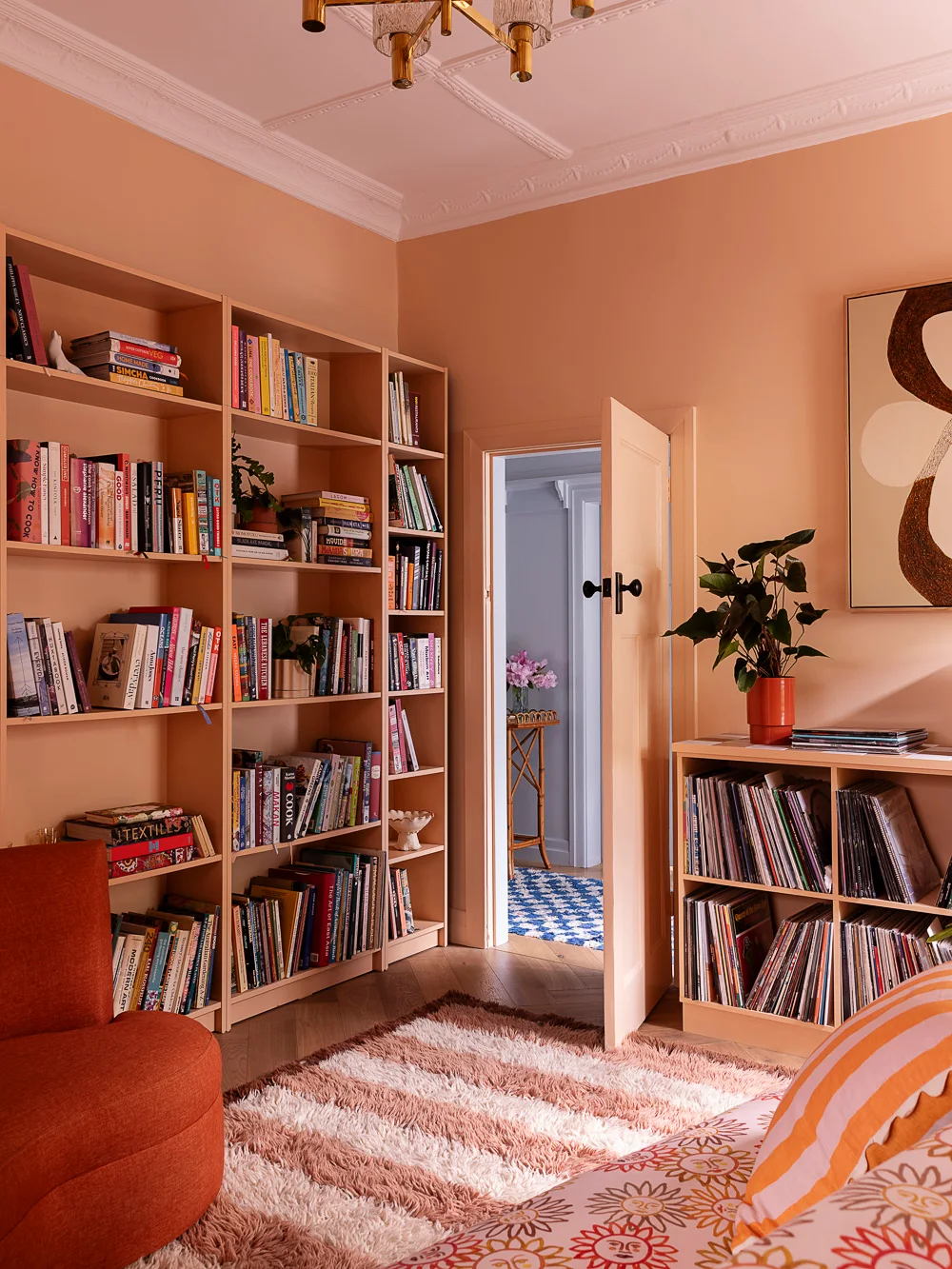
Peach connects the shelves to the walls, leaving the books’ varied colors as smaller details within one warm backdrop. Taller book storage and lower cubbies provide different compartment sizes. Patterned upholstery and a textured pale rug add softer surfaces around the straight shelving without introducing another large storage finish.
Measure the larger books before fixing shelf heights and separate record or magazine storage where needed. Keep the doorway usable when choosing lower furniture beside it. Eclectic living room ideas offer other ways to combine a colored backdrop with varied patterns while retaining clear places to sit and move.
PART 02
Work with roof shapes and different room finishes
IDEA 06 / 20
Fit Book Storage Beside Sloping-Roof Seating
 SaveSupport Non AI Creator
Image credit: Photography by Suzanna Scott; Styling by Lucy Bamman
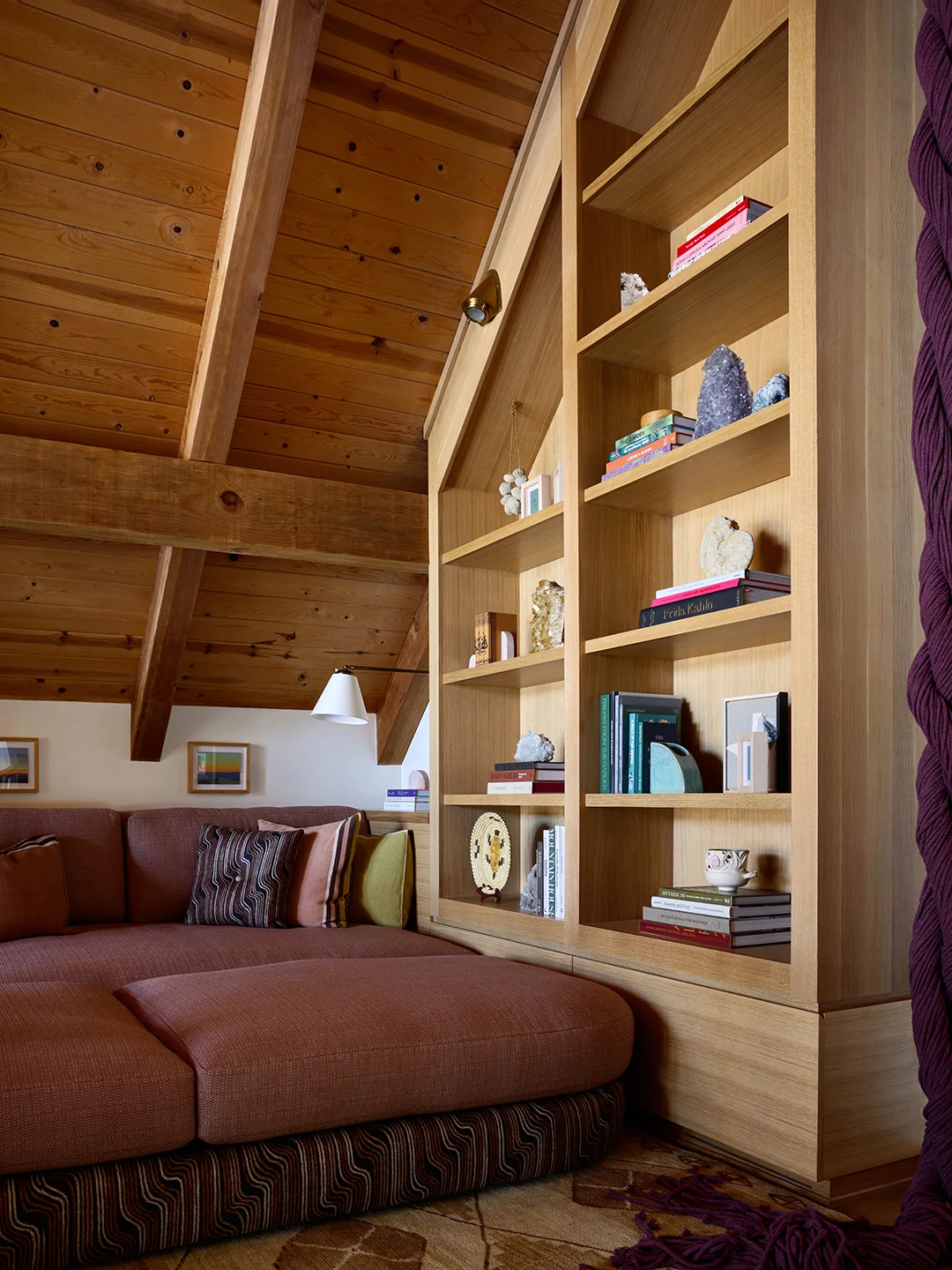
Wooden shelves use the taller area beside the sofa while their upper outline follows the roof’s slope. Rust-colored upholstery adds a softer surface against the visible grain and framing. A mixture of upright books and small horizontal stacks makes the collection visible without filling every open compartment.
Check seated and standing headroom before placing furniture beneath the roof. Keep frequently handled books below the level that requires awkward reaching, and get appropriate advice for fitted shelving and its load. Attic office ideas show more ways to plan useful storage around eaves when one room needs space for both reading and working.
IDEA 07 / 20
Use Deep Blue Behind Paler Reading Seats
 SaveSupport Non AI Creator
Image credit: Sims Hilditch
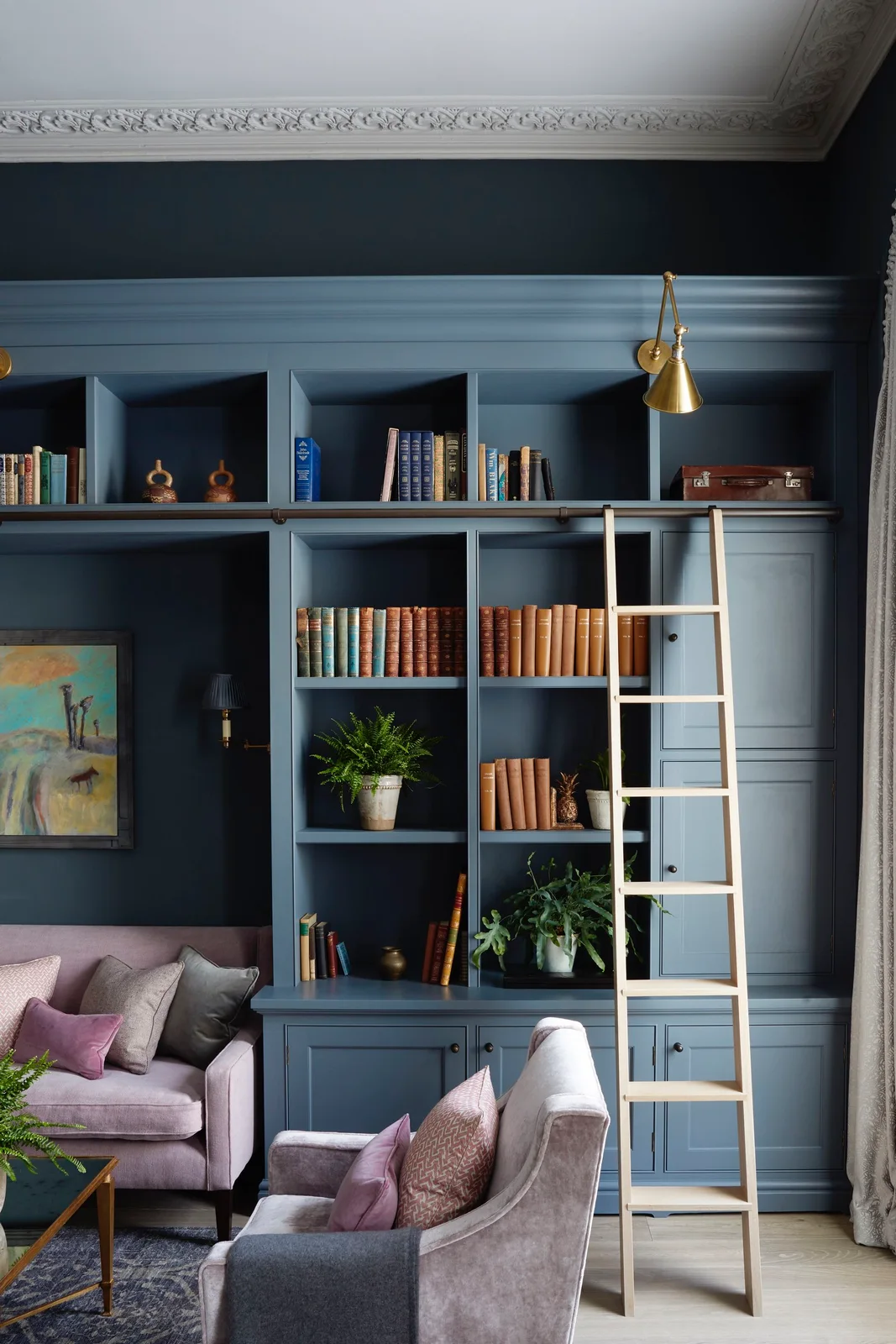
Deep blue gives the shelving a strong continuous background around the smaller book and object groups. Closed cupboards below provide a different storage option from the open upper compartments. Pale seats and the wooden ladder introduce lighter outlines, keeping the larger dark shelves from being the room’s only substantial surface.
Plan accessible shelving first, keeping everyday books within reach from the floor. If a library ladder is needed, have a suitable system specified and installed with appropriate guidance for its use and clear working space. Avoid treating the pictured ladder as proof that any ladder can safely work with ordinary shelving.
IDEA 08 / 20
Keep White Shelves Around a Fireplace
 SaveSupport Non AI Creator
Image credit: Future / Matthew Williams
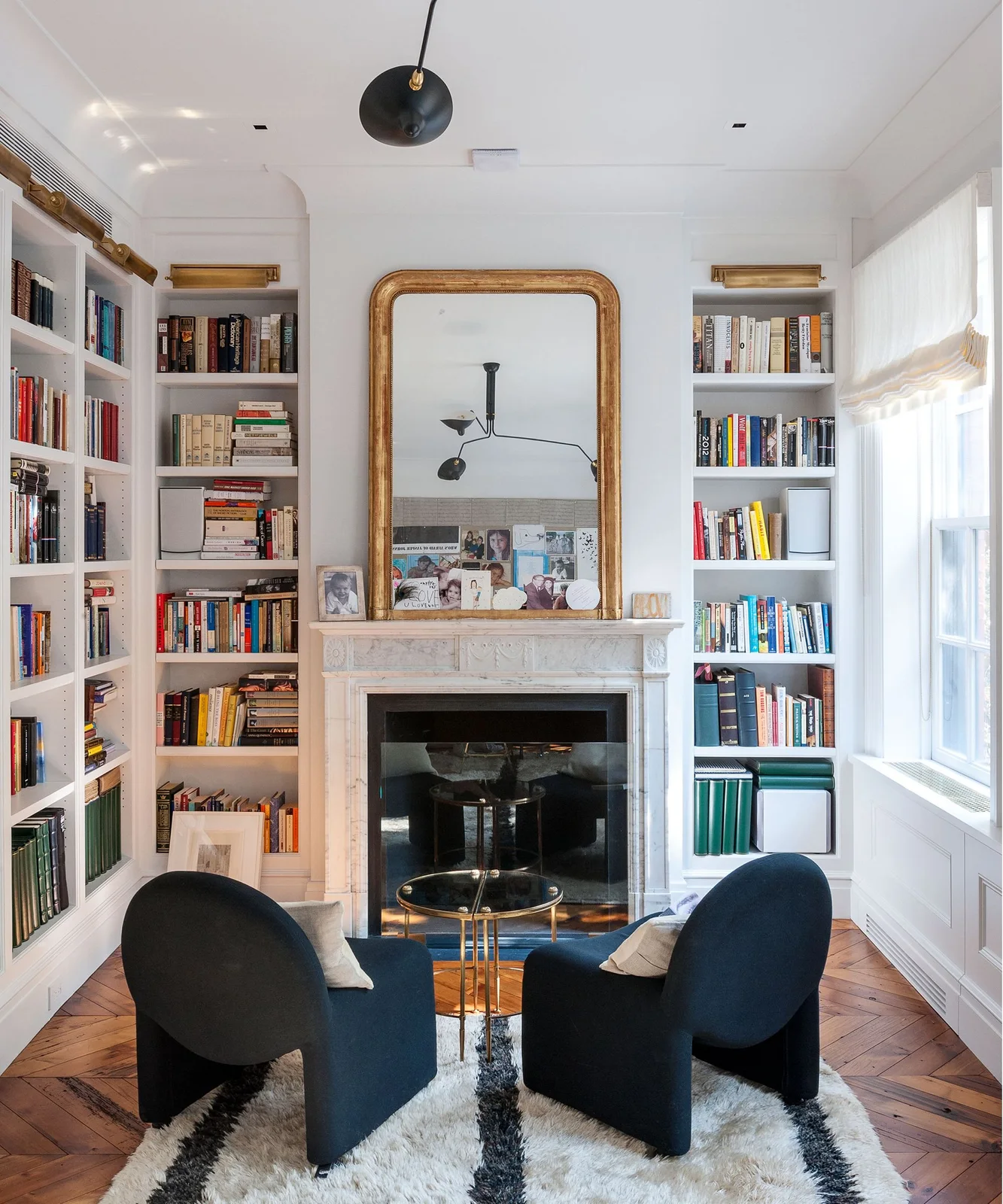
White shelving makes the book collection a varied lighter backdrop around the fireplace. Two dark blue chairs provide separate reading positions in front, with a small round table between them. The gold-toned mirror gives the central wall a different outline without requiring another tall cabinet or shelving unit.
Follow the fireplace installer’s required clearances for books, furniture and textiles rather than estimating distances from the photograph. Position the chairs for comfortable reading and conversation while leaving access to the shelves. Keep decorative objects away from volumes you remove frequently, so browsing the collection does not require rearranging the display.
IDEA 09 / 20
Combine Reading Storage with Softer Seating
 SaveSupport Non AI Creator
Image credit: Lucas Eilers Design Associates Photograph: Julie Soefer
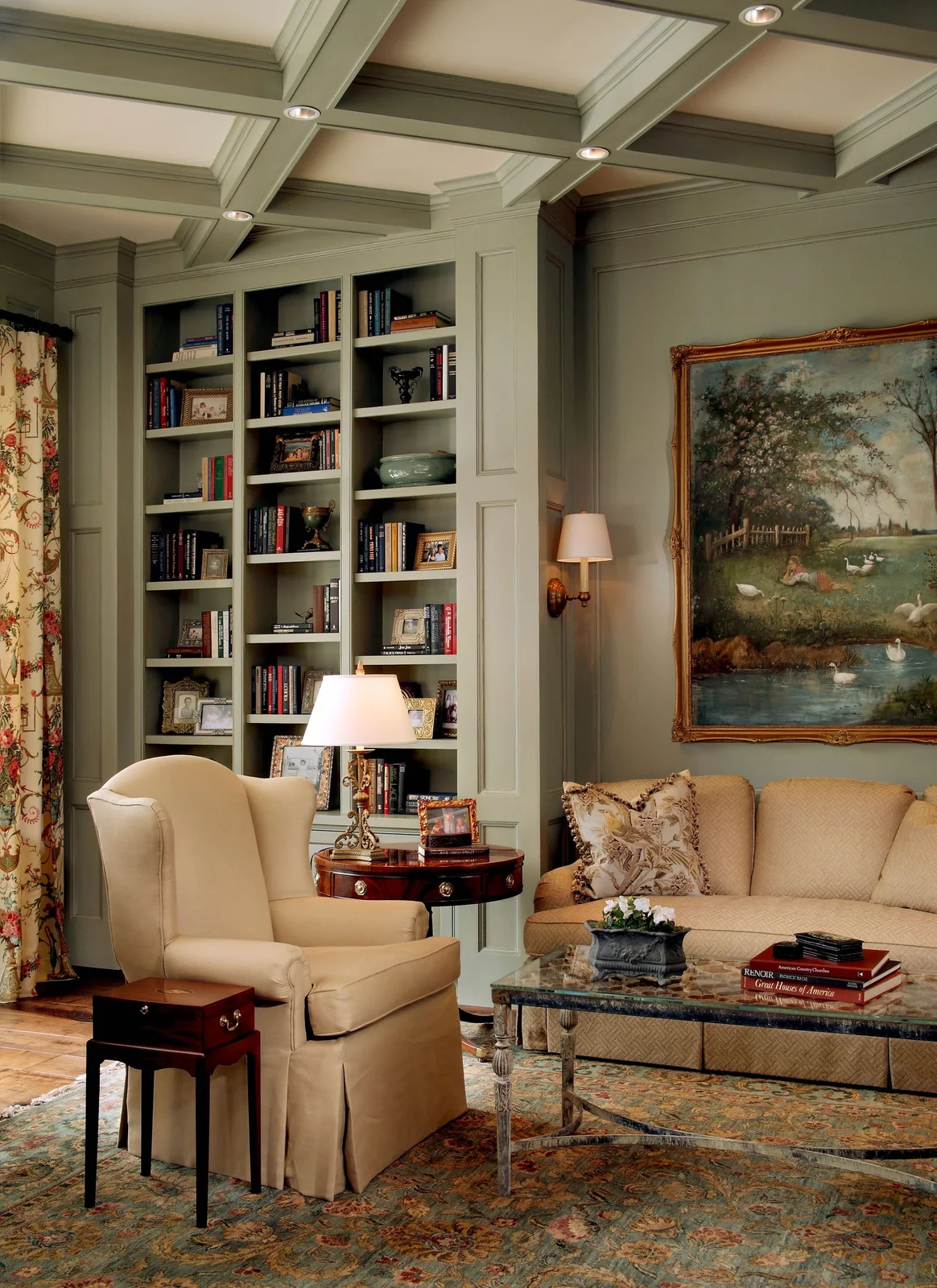
The shelving shares the pale paneled finish around the larger landscape picture, making the book collection part of a varied room backdrop. A cream armchair and sofa offer different reading positions. The nearby lamp and smaller wooden side surfaces introduce practical details without filling the central table with several competing objects.
Try the armchair’s support and the sofa’s seat depth before selecting them for a reading room. Place a light where it serves the page comfortably without obstructing the route to storage. Keep heavier books on suitable lower shelves and use bookends where needed to prevent smaller groups from leaning across empty compartments.
IDEA 10 / 20
Warm the Room with Wooden Corner Shelves
 SaveSupport Non AI Creator
Image credit: Meg Lonergan Photograph: Meg Lovoi
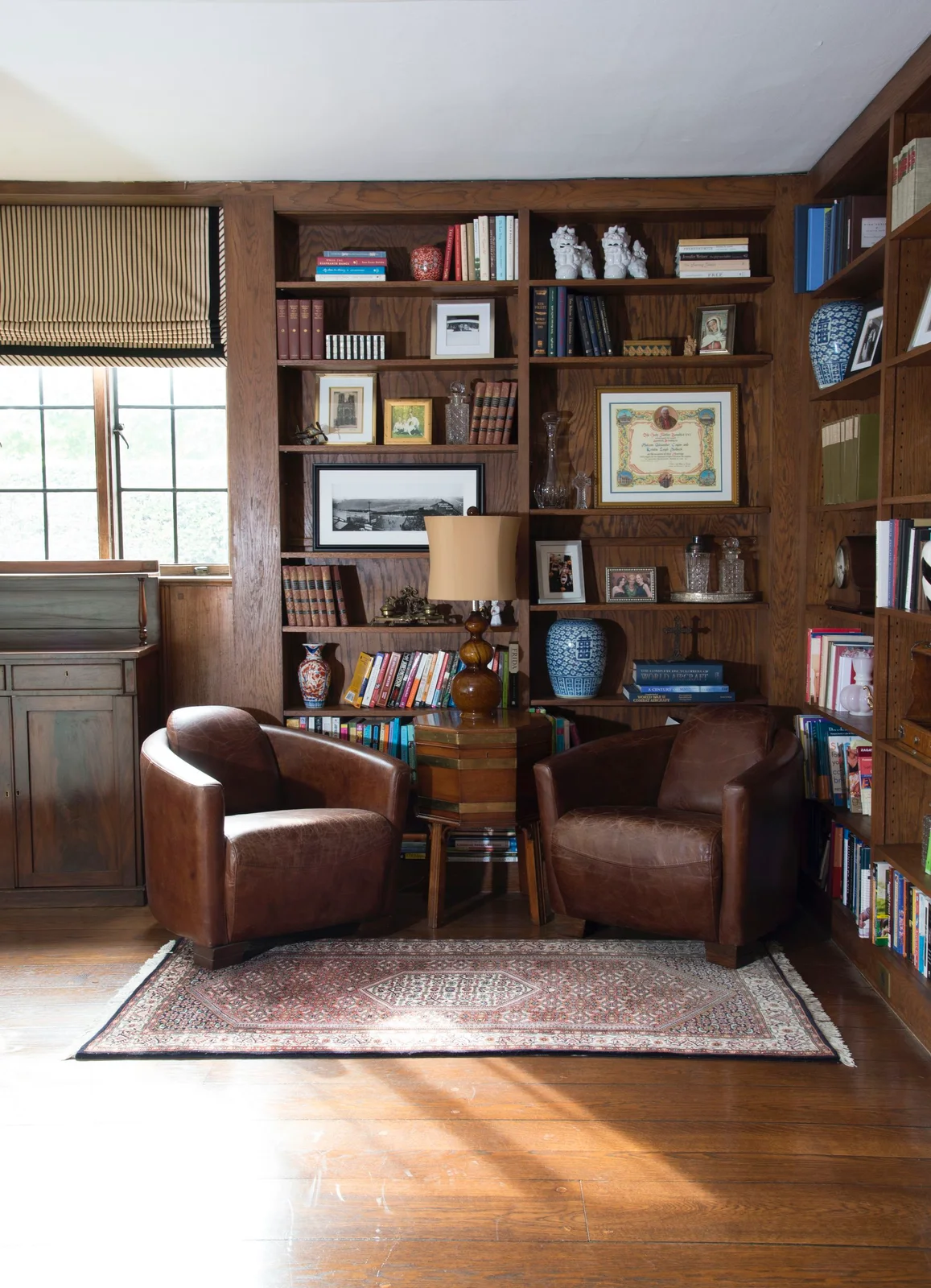
Wooden shelving follows the corner, surrounding the two brown chairs with visible book storage. Framed pictures and smaller vessels break up some shelf groups without replacing the collection. The shared side table and patterned rug give the seating area a clear central position within the warmer wall arrangement.
Keep enough room behind and beside the chairs to browse the lower shelves. Choose a table height that is reachable from both seats and leave space for the lamp and current reading. Vintage living room ideas compare other arrangements with warmer wooden furnishings and patterned textiles when the library shares a sitting room.
PART 03
Arrange storage around doors, windows and desks
IDEA 11 / 20
Frame a Window with Pale Blue Bookcases
 SaveSupport Non AI Creator
Image credit: Future Publishing Ltd Photograph: Simon Brown
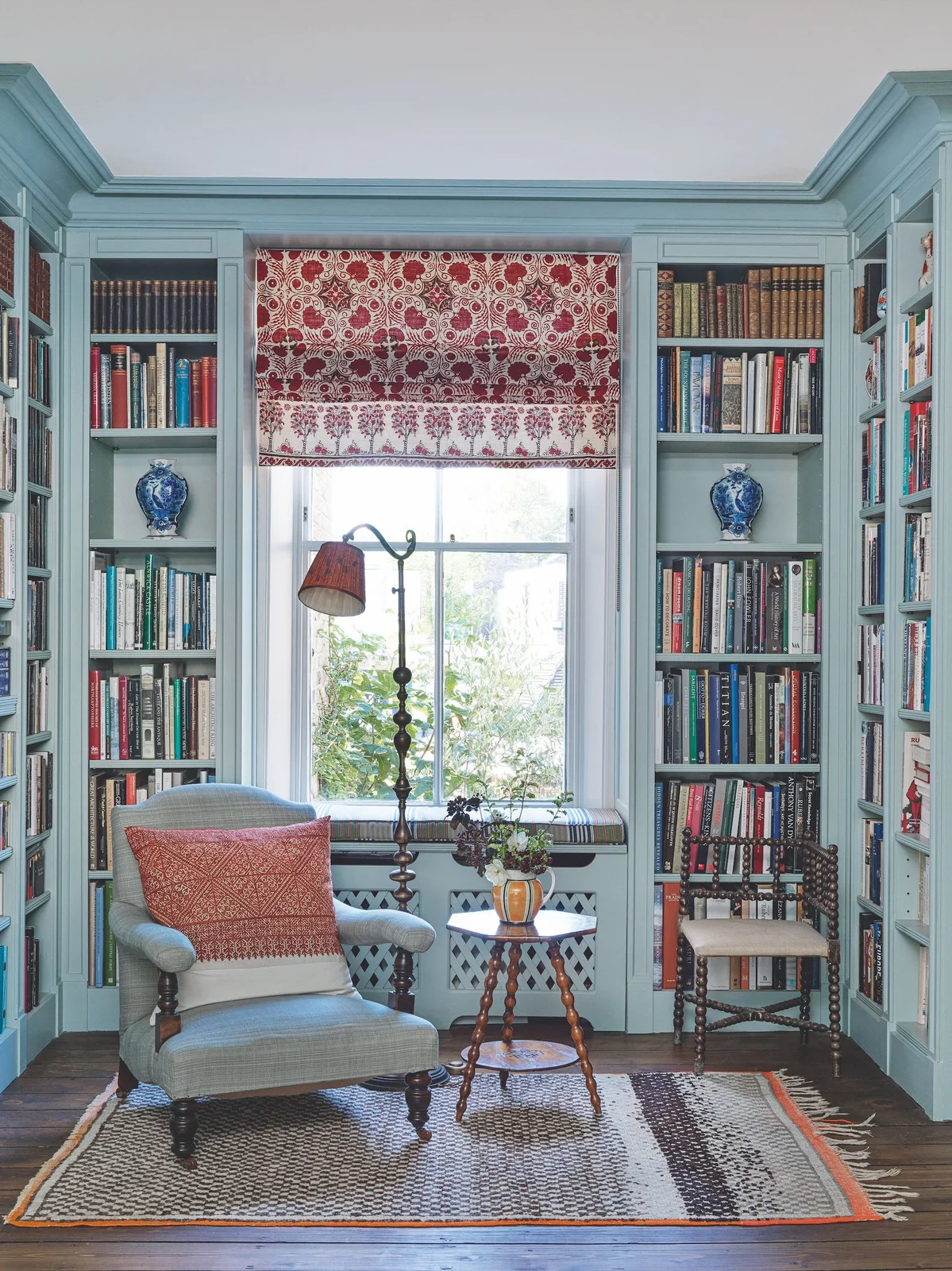
Pale blue shelving makes the tall book collection a connected backdrop on both sides of the window. The red patterned blind and cushion add warmer smaller details above and beside the armchair. A floor lamp and compact side table create a distinct reading position without covering the central window area.
Check the blind and window operation with the fitted shelves in place. Choose the lamp’s position from the actual chair, keeping its cable out of the walking route. Use the small table for items needed while reading, and avoid stacking so many books there that it loses its practical firm surface.
IDEA 12 / 20
Organize Book Rows Around a Wooden Door
 SaveSupport Non AI Creator
Image credit: VSP Interiors
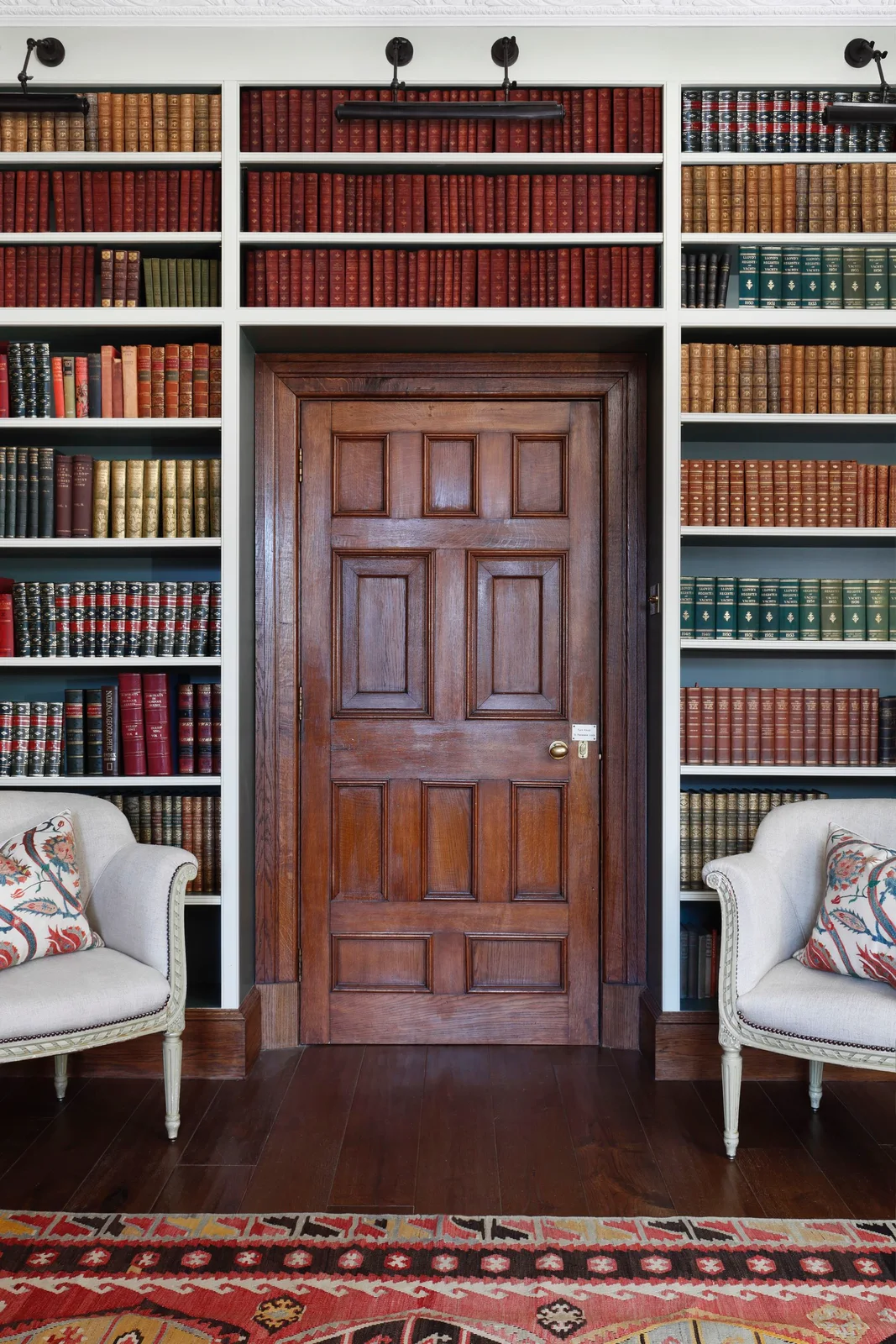
The shelves continue above and beside the wooden door, giving the larger book collection a defined central opening. Groups of red, brown and green spines create repeated bands across the pale compartments. The chairs introduce softer light shapes in front without interrupting the door’s stronger wooden outline.
Keep the door route open and plan shelf fixing and capacity for the actual weight of the collection. Choose an organizing method that helps you find books, even if it does not produce evenly matched color bands. Leave books stored upright with suitable support and retain enough space to remove them without pulling at the top of their spines.
IDEA 13 / 20
Fit Bookcases Between Tall Windows
 SaveSupport Non AI Creator
Image credit: Future Publishing Ltd
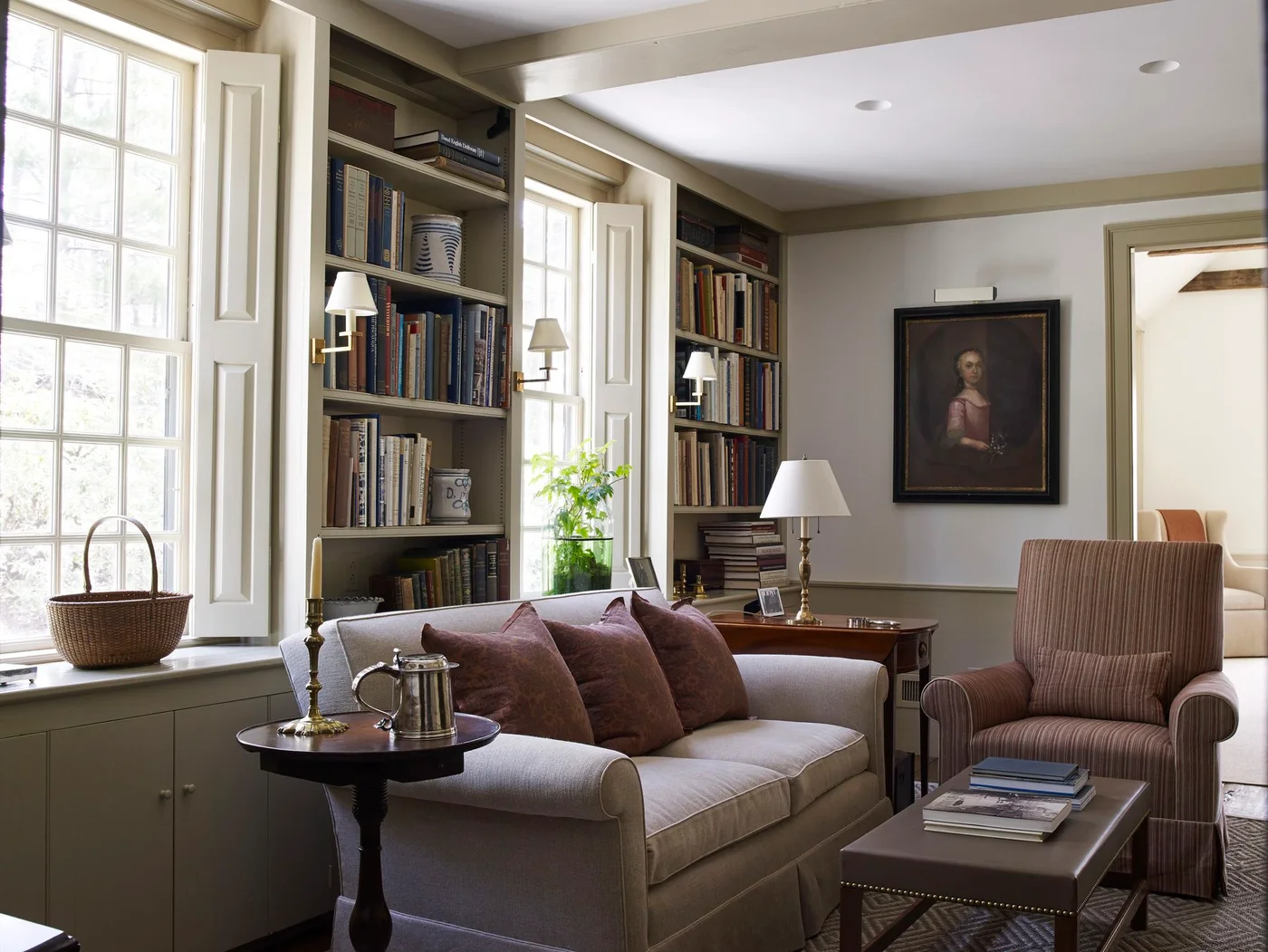
The bookcases use wall sections between the windows, keeping the collection spread around the room instead of concentrated in one freestanding unit. A pale sofa and striped chair offer separate reading positions. Smaller tables and lamps sit close to the seats, supporting practical use alongside the larger storage.
Leave shutters and window handles accessible when deciding shelf depths and furniture positions. Check glare and available light at each seat, especially when reading after dark. Keep one useful table surface near each regular reading place rather than adding a single larger central table that is difficult to reach from the room’s corners.
IDEA 14 / 20
Use a Book Collection in a Shared Living Room
 SaveSupport Non AI Creator
Image credit: JL Design
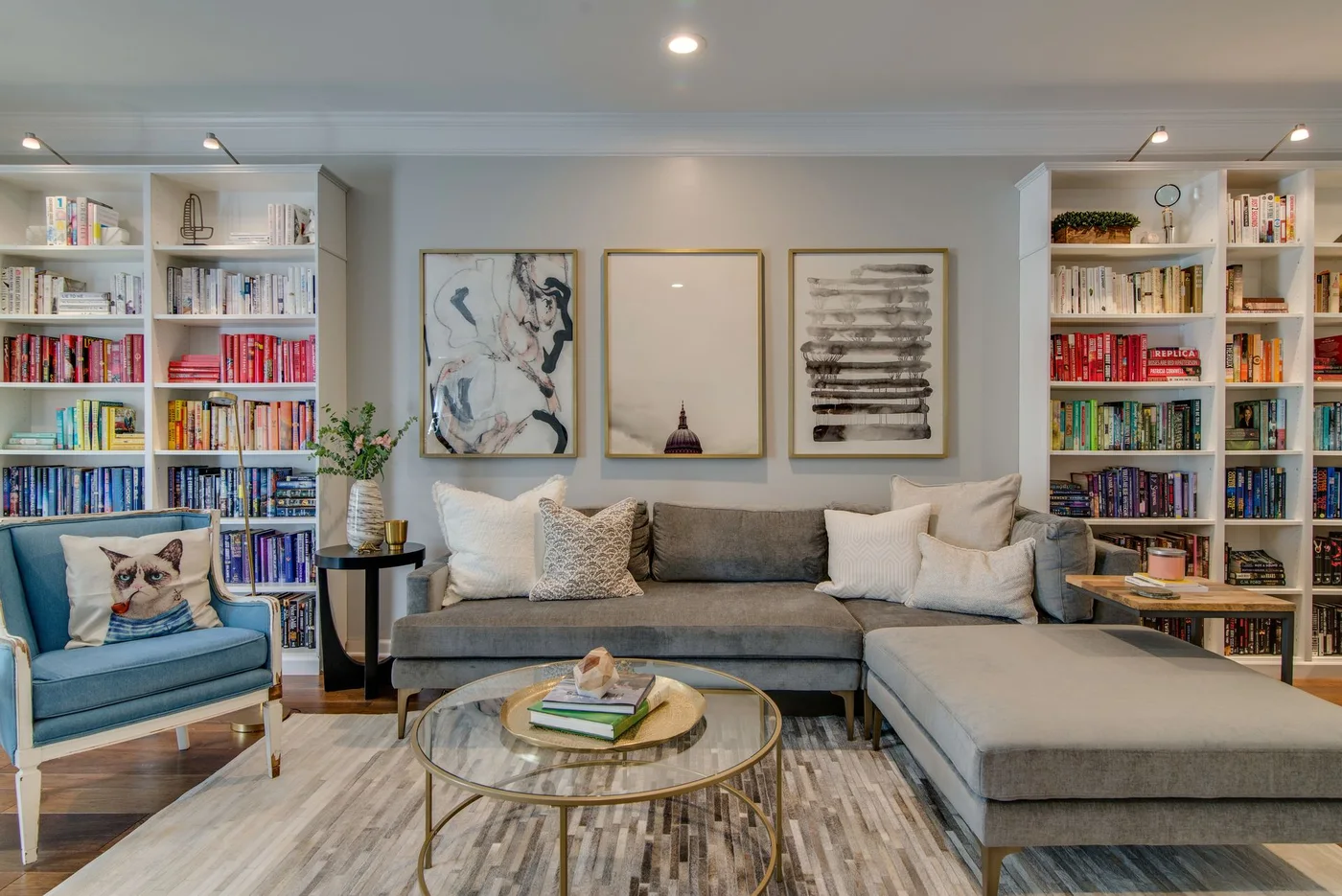
The two white bookcases frame the gray sectional while leaving a separate central wall area for artwork. The collection’s varied spine colors give the shelves most of their detail. A blue chair and round table create another seating position in front, allowing book storage to remain part of an everyday living room.
Keep access to the bookcases clear around the sectional’s ends and choose shelf heights for your actual volumes. Decide whether sorting by color will help or hinder how you find books before copying the pictured groups. Gray couch living room ideas compare more ways to arrange useful tables and additional seating around a neutral sofa.
IDEA 15 / 20
Combine a Desk with Blue Library Shelving
 SaveSupport Non AI Creator
Image credit: Future Publishing Ltd Photograph: Brent Darby
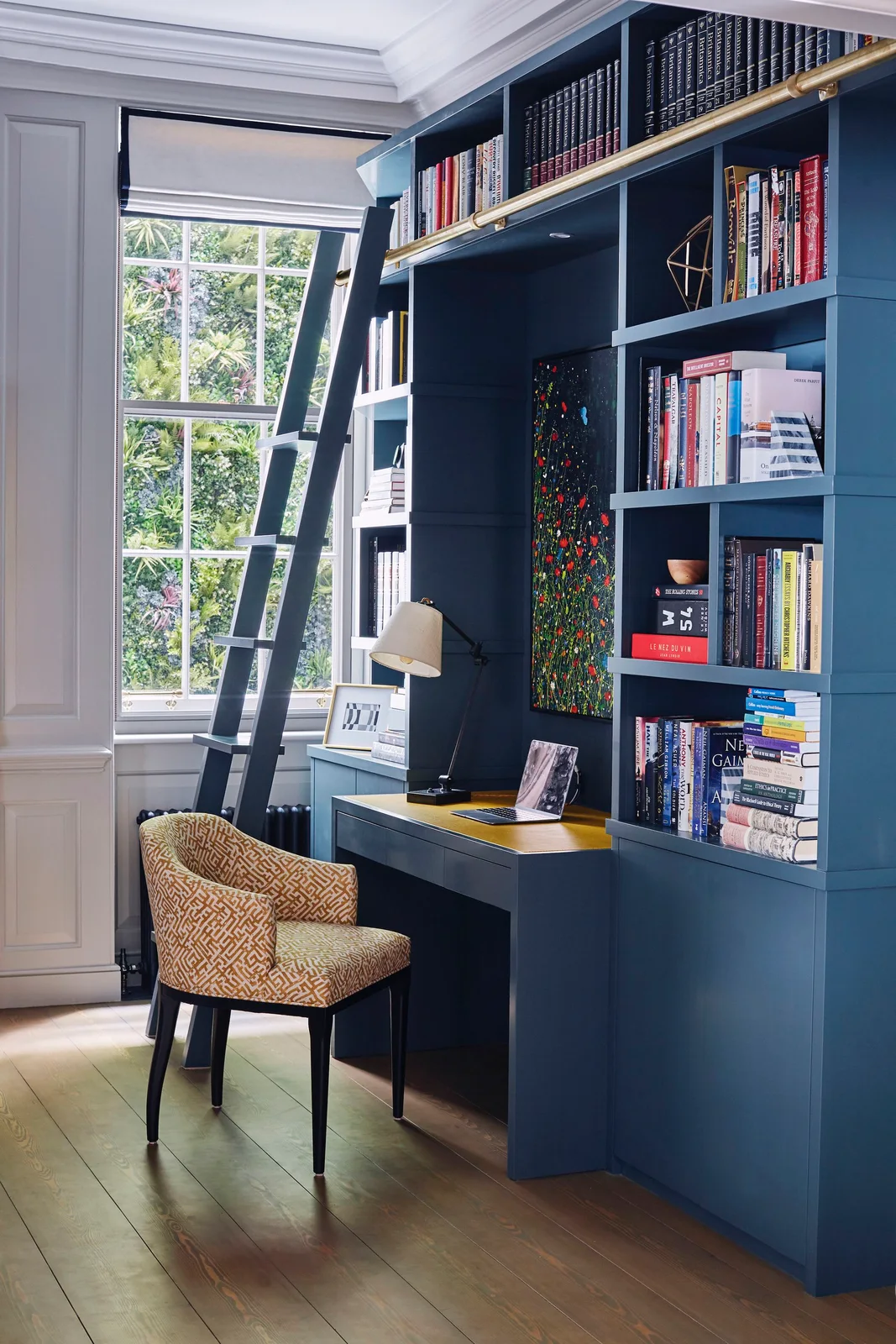
The blue desk and shelving form one connected work and book-storage area, with a contrasting yellow desktop marking the useful working surface. The patterned chair introduces smaller detail at the seat. A tall window remains visible beside the shelves, while closed lower doors provide storage outside the open collection.
Plan screen position, chair movement and equipment connections before fitting shelves around a desk. Keep books used during work within comfortable reach and leave room for papers beside the keyboard. Use only a properly specified library access system if upper shelves require one; ordinary furniture should not become a substitute for safe access equipment.
PART 04
Make colorful and shared reading rooms useful
IDEA 16 / 20
Add Book Storage Around a Bay Window
 SaveSupport Non AI Creator
Image credit: Future / Emma Lewis
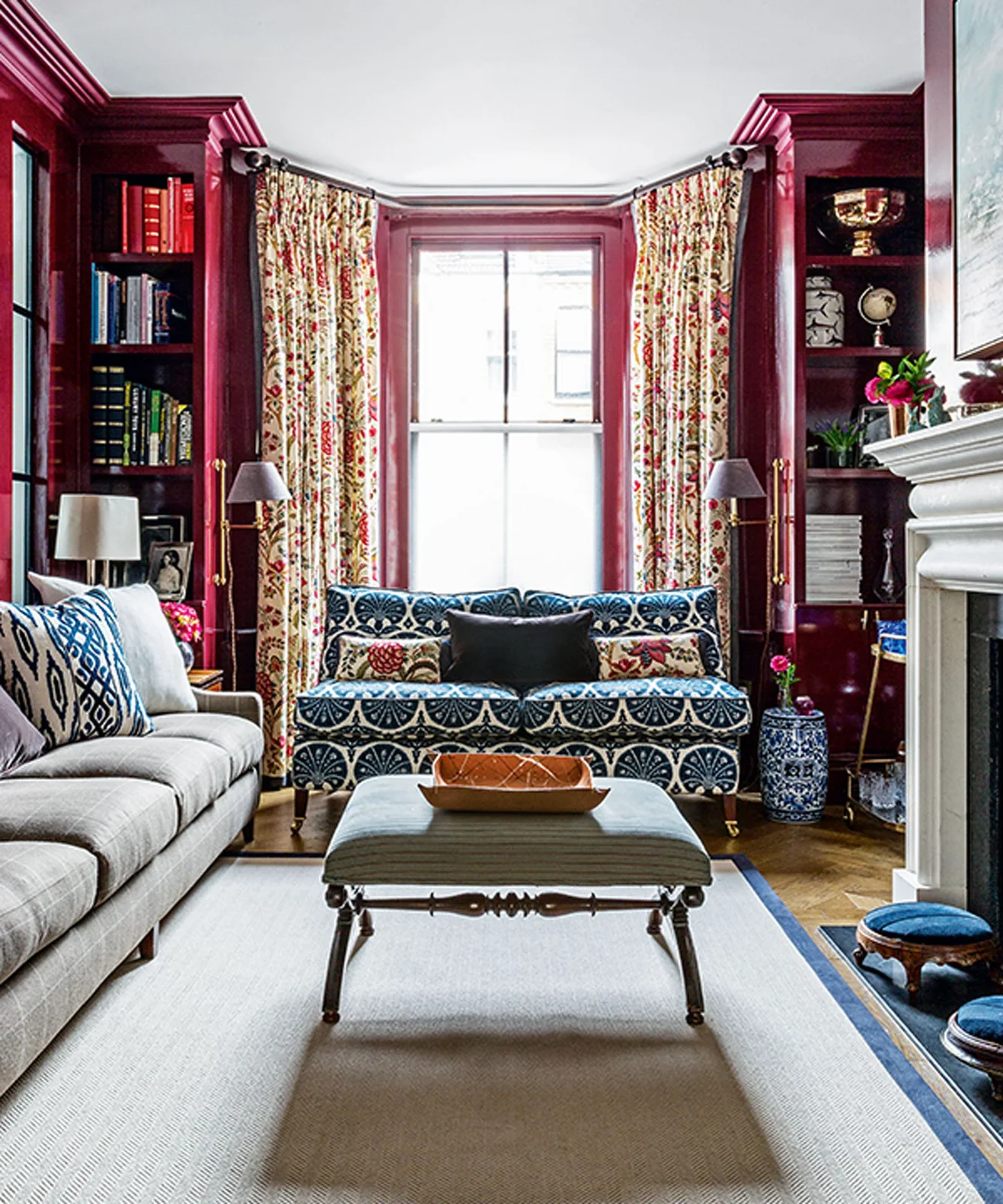
Red bookcases and trim give the window area a strong surrounding color. The blue-and-white patterned sofa and curtains introduce separate detailed surfaces within that frame. A paler neighboring sofa and central ottoman balance the stronger patterns, keeping the room useful for both reading and sitting together.
Check the combined shelf depth and seating arrangement before filling a bay with furniture. Keep curtains from brushing book rows and leave window access clear. Choose a smaller group of surrounding patterns you enjoy together, allowing some larger surfaces to stay quieter so the collection remains easy to see and use.
IDEA 17 / 20
Share a Reading Collection with a Table
 SaveSupport Non AI Creator
Image credit: Future / Brent Darby
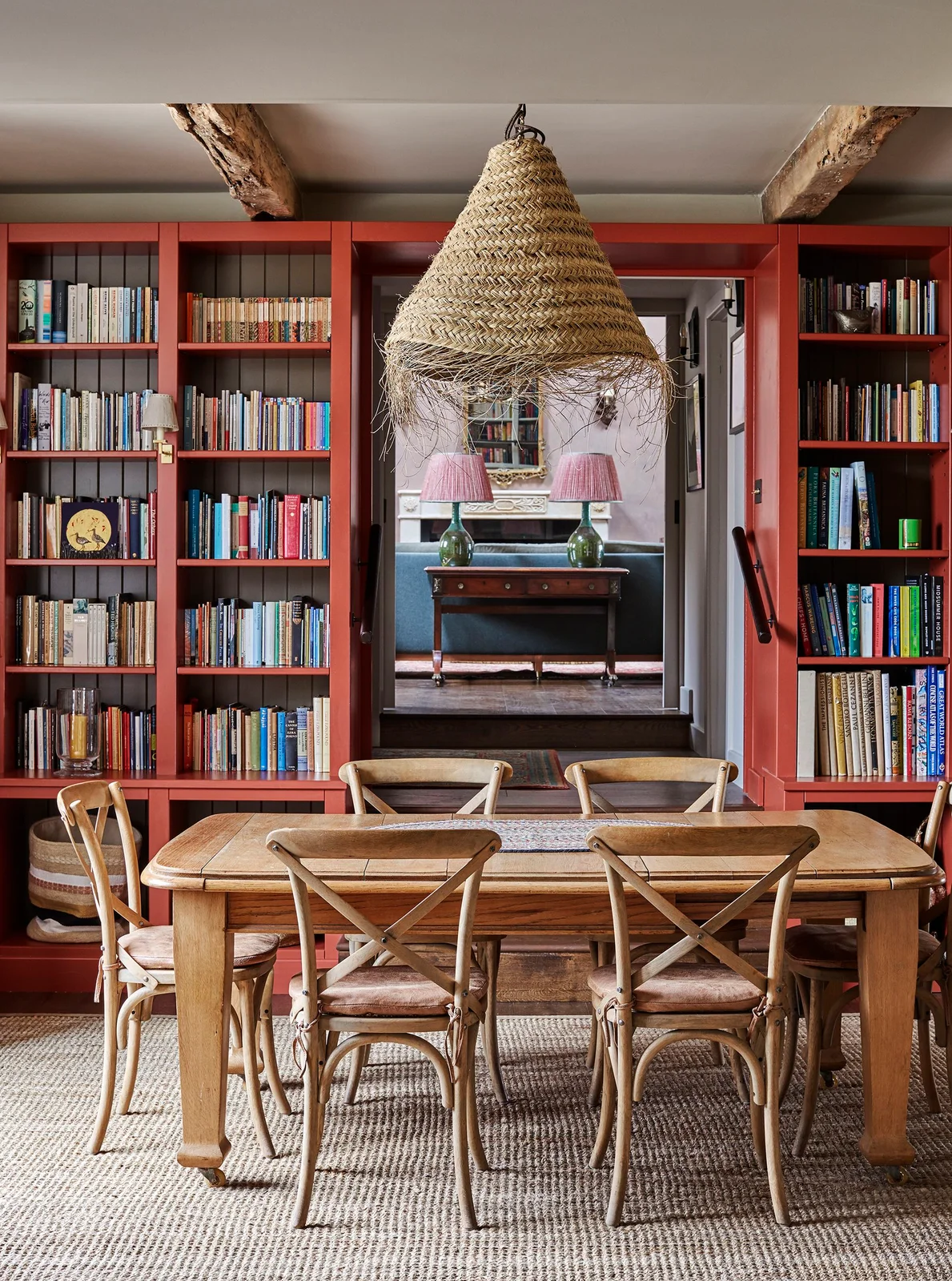
Red shelves turn the wall around the doorway into a larger book-storage surface behind the wooden table. The table provides a separate place to open volumes or spread out papers. Wooden chairs and the woven pendant introduce warmer textures without requiring the shelving to match the surrounding furniture.
Keep enough chair movement and a clear doorway route before planning shelves close to a table. Protect books from spills and clear food or drinks before using the surface for more delicate volumes. Dining room office combinations offer other ways to share a practical table while keeping reading, work supplies and meals easy to separate.
IDEA 18 / 20
Place a Reading Chair Before Dark Shelves
 SaveSupport Non AI Creator
Image credit: Neptune
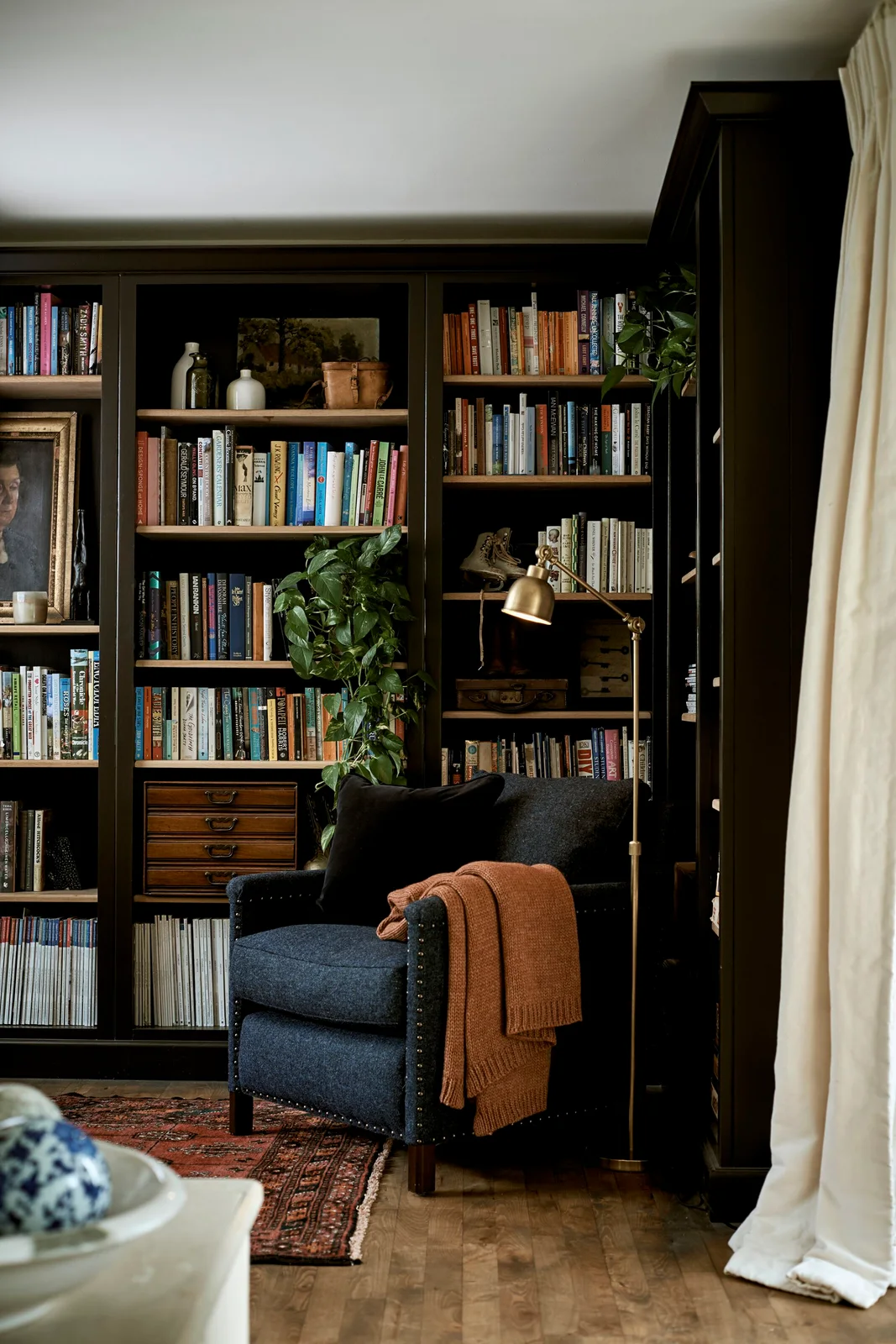
Dark shelving and the chair create a deeper reading corner, with wooden shelf edges making each storage level distinct. An orange throw and gold-toned lamp introduce warmer smaller accents around the seat. Upright books, horizontal groups and a few objects provide visible variety across the collection.
Try the chair with the lamp in position, checking page lighting and comfortable support for longer reading. Keep plant containers separate from books when watering and trim foliage that makes shelves harder to reach. Store the volumes you handle most often near the seat without using the chair’s surrounding floor as overflow storage.
IDEA 19 / 20
Keep Artwork Within a Useful Book Wall
 SaveSupport Non AI Creator
Image credit: Elizabeth Krueger Design Photograph: Mickey Schwartz
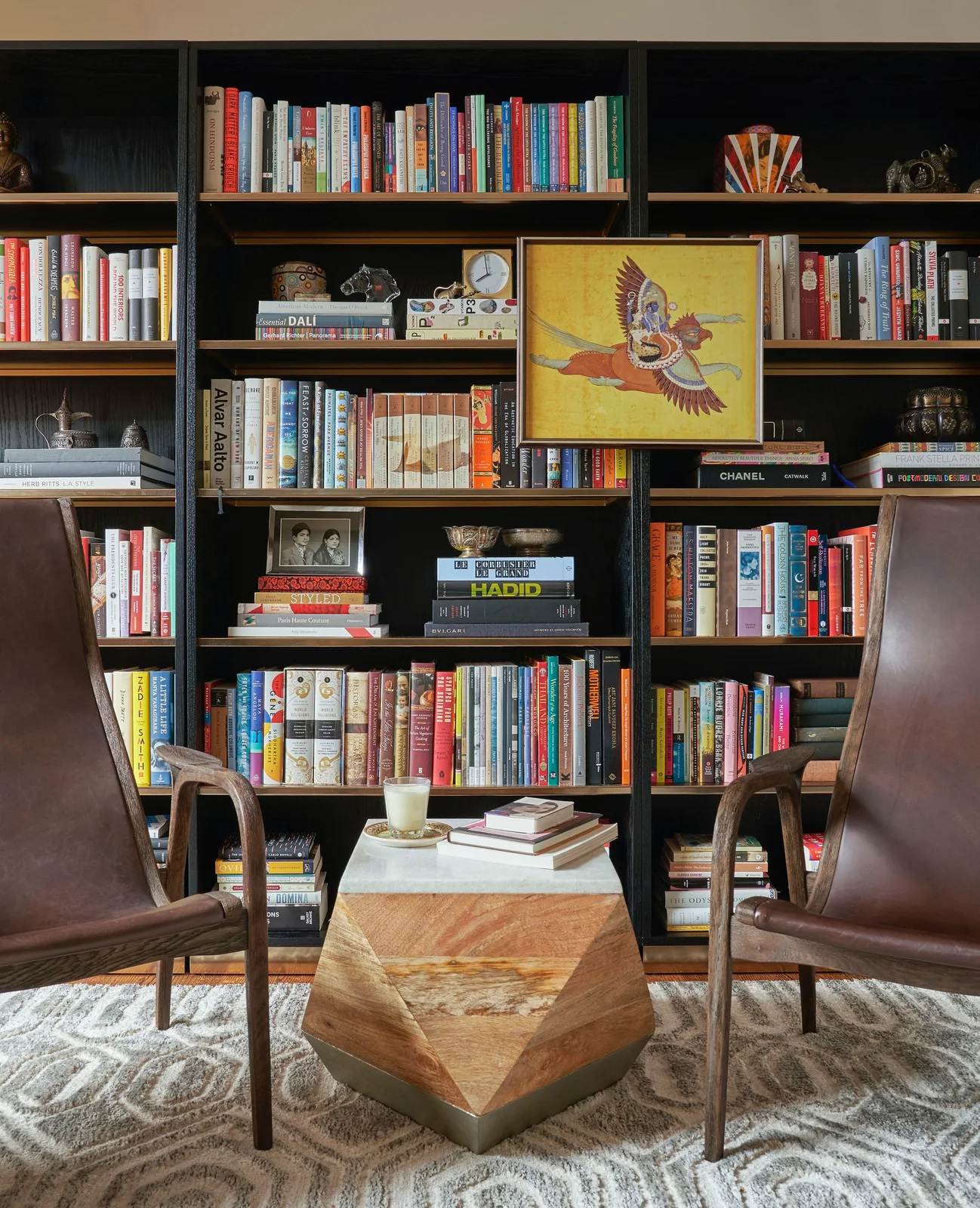
Dark shelves make the lighter books and small objects more distinct, while wooden shelf edges repeat the chairs’ warmer outlines. A framed picture hangs in front of part of the collection, adding another layer of detail. The geometric table provides a separate central surface between the two reading positions.
Keep any artwork secure and choose its position around shelf access, avoiding books that need to be removed frequently behind it. Check that the table is reachable from both seats without narrowing the route beside them. Leave practical shelf space for returning volumes so the room remains usable as the collection changes.
IDEA 20 / 20
Use a Long Table Between Library Cabinets
 SaveSupport Non AI Creator
Image credit: M Lavender Interiors Photograph: Janet Mesic Mackie
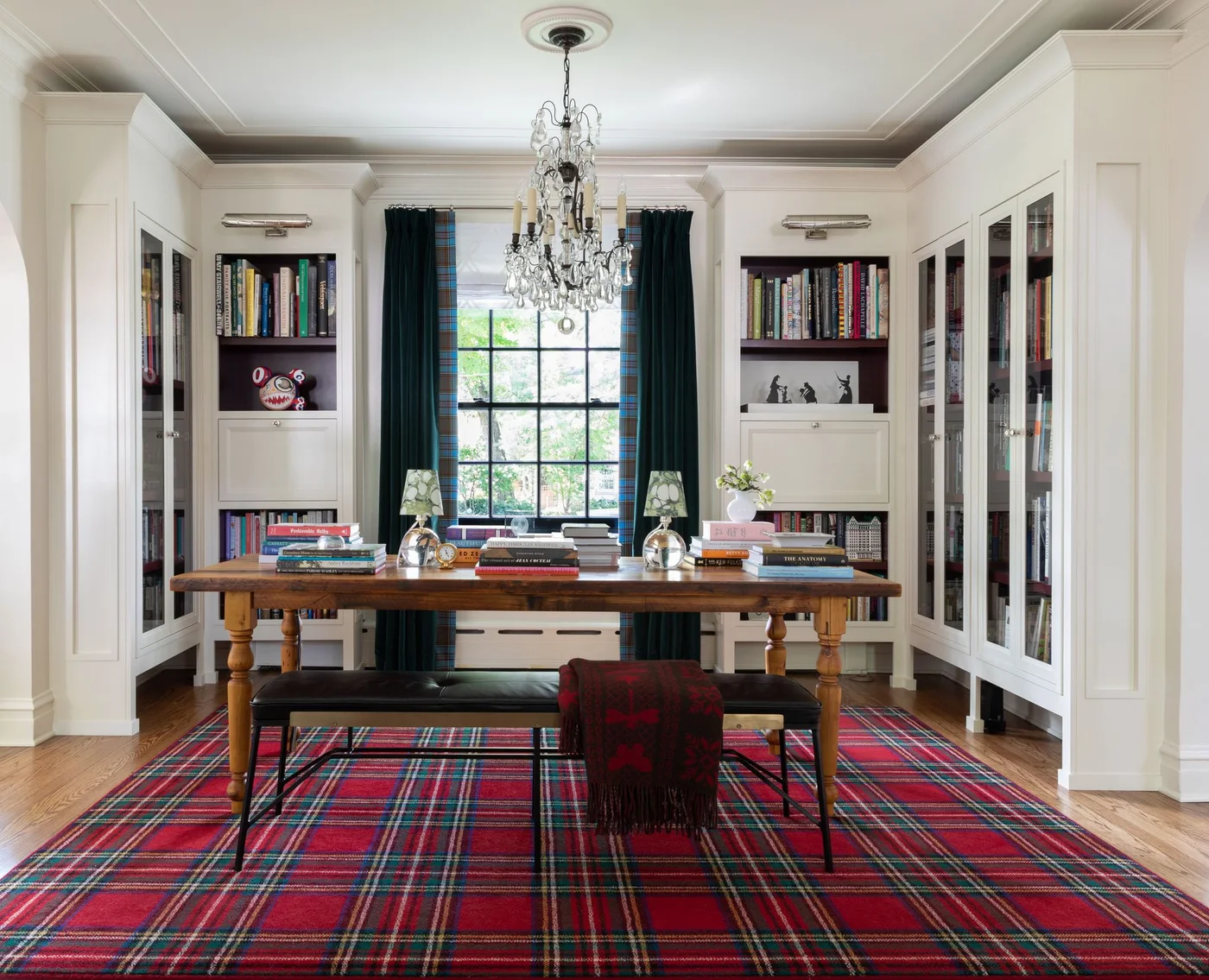
White cabinets and open shelves frame the longer table, with glazed doors offering a more enclosed view of some book storage. A dark bench gives the table a different seating outline from individual chairs. The tartan rug introduces a concentrated pattern beneath the larger wooden surface.
Choose table and bench dimensions around comfortable reading and the route to the surrounding cabinets. Leave room for glazed doors to open without moving every seat first. Keep frequently handled books near the table and plan cleaning access inside closed storage, rather than assuming glazing removes the need to care for the collection.
BRING IT ALL TOGETHER
Organize around the books you use and seats you enjoy
Measure larger volumes and allow useful space for books to be removed without squeezing their spines. Plan shelf capacity and fixings with appropriate installation advice, keeping heavier books lower where possible. Choose an organizing method you will remember, whether that follows subject, author or another practical arrangement.
Try the reading seat with its light and a reachable firm side surface before adding further decoration. Leave access to doors, windows and storage, and keep plants and drinks separate from the collection. A room can feel complete without every shelf being full, especially when empty space makes browsing and returning books easier.