A luxury TV wall should make watching comfortable while giving the room useful storage and details you enjoy when the screen is off. The strongest arrangement may come from a curved cabinet, a rich paint color or artwork you already own. Begin with the seats you use most and the equipment you need to accommodate.
These twenty photographs compare open screens, fitted cabinets, art displays and concealed television arrangements. Look at each wall alongside the furniture around it, then test glare and sightlines in your own room. Plan equipment ventilation, connections and maintenance access before adding panels or closed storage, following the requirements of the actual television and any nearby fireplace.
PART 01
Choose the wall color and useful storage proportions
IDEA 01 / 20
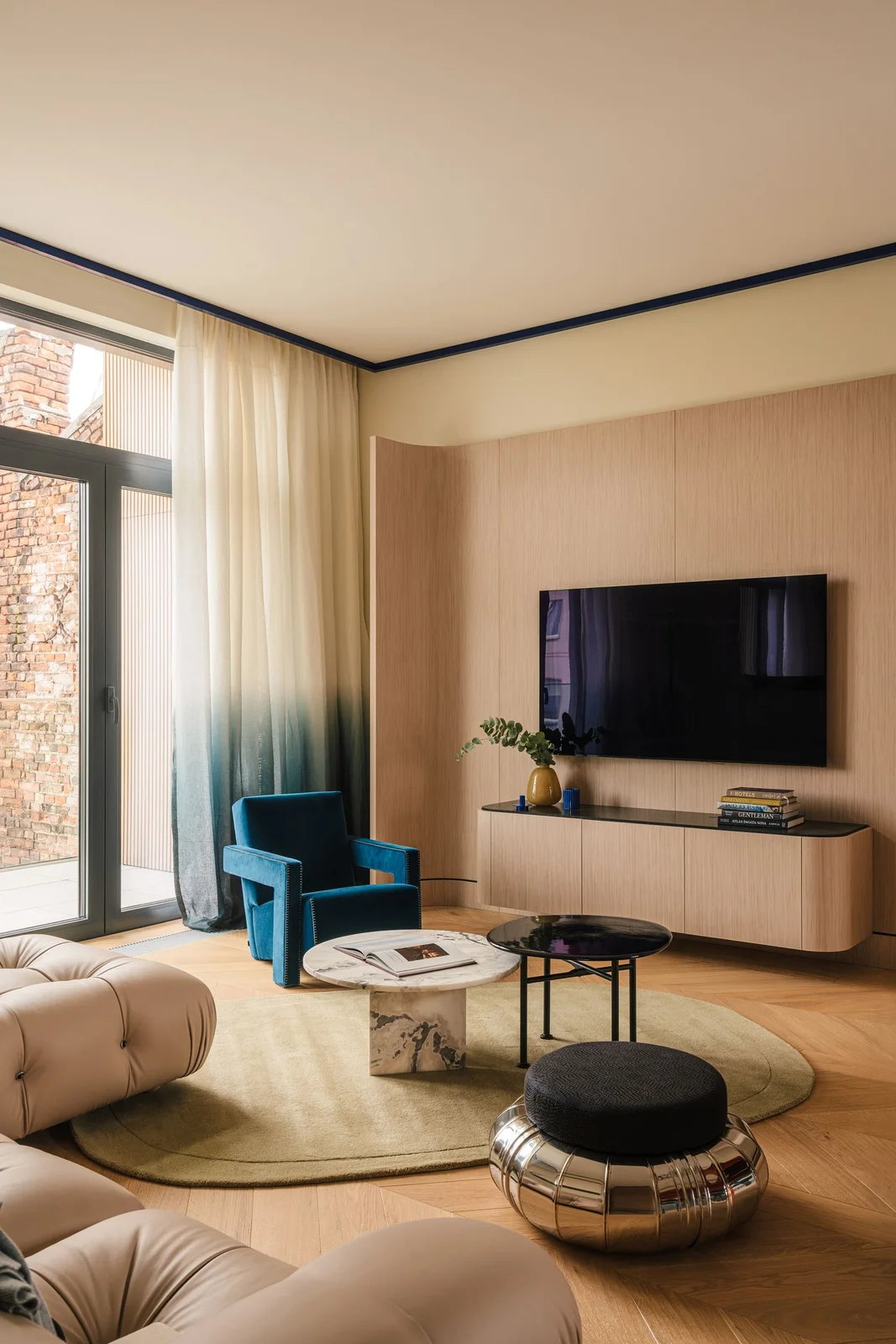
Round the Edges of a Warm Wooden TV Wall
 SaveSupport Non AI Creator
Image credit: Mood Authors. Design: JT Grupa
The curved ends of this wooden wall give the television a softer surrounding shape. A matching cabinet continues the same outline below, with a dark top separating the two larger wood surfaces. The blue chair and shaded curtains introduce cooler color beside the warm paneling and floor.
Check the cabinet depth against the route beside your seating before choosing rounded ends or projecting doors. Plan access to sockets and equipment as part of the cabinet, including the television’s ventilation requirements. Compare a larger wood sample with the floor so similar warm colors remain distinguishable under evening light.
IDEA 02 / 20
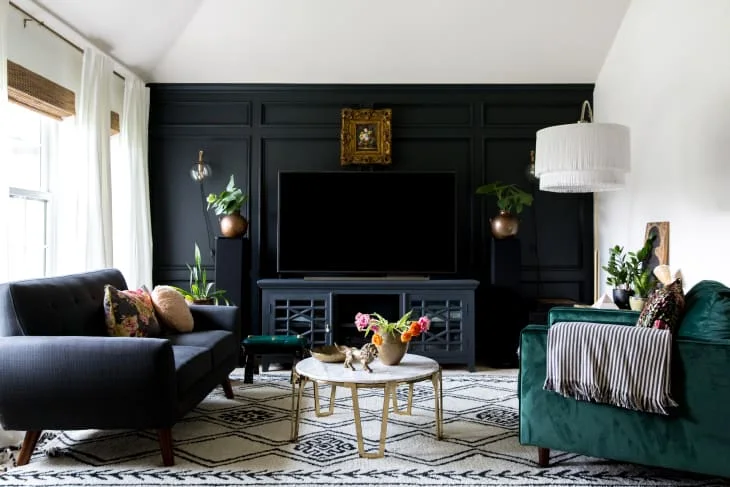
Let a Dark Paneled Wall Frame the Screen
 SaveSupport Non AI Creator
Image credit: Credit: Minette Hand
The black paneling gives this television a darker background within the lighter room. A dark cabinet continues that color below, while plants add smaller shapes on either side. The pale round table and patterned rug keep the seating area visually separate from the larger dark rectangle on the wall.
Test the paint beside your switched-off screen before committing to the whole wall, checking both daylight and lamp light. Plan the panel divisions around the television and cabinet rather than fitting them afterward. Living room accent wall ideas compare other ways to connect a stronger wall color with the seating arrangement.
IDEA 03 / 20
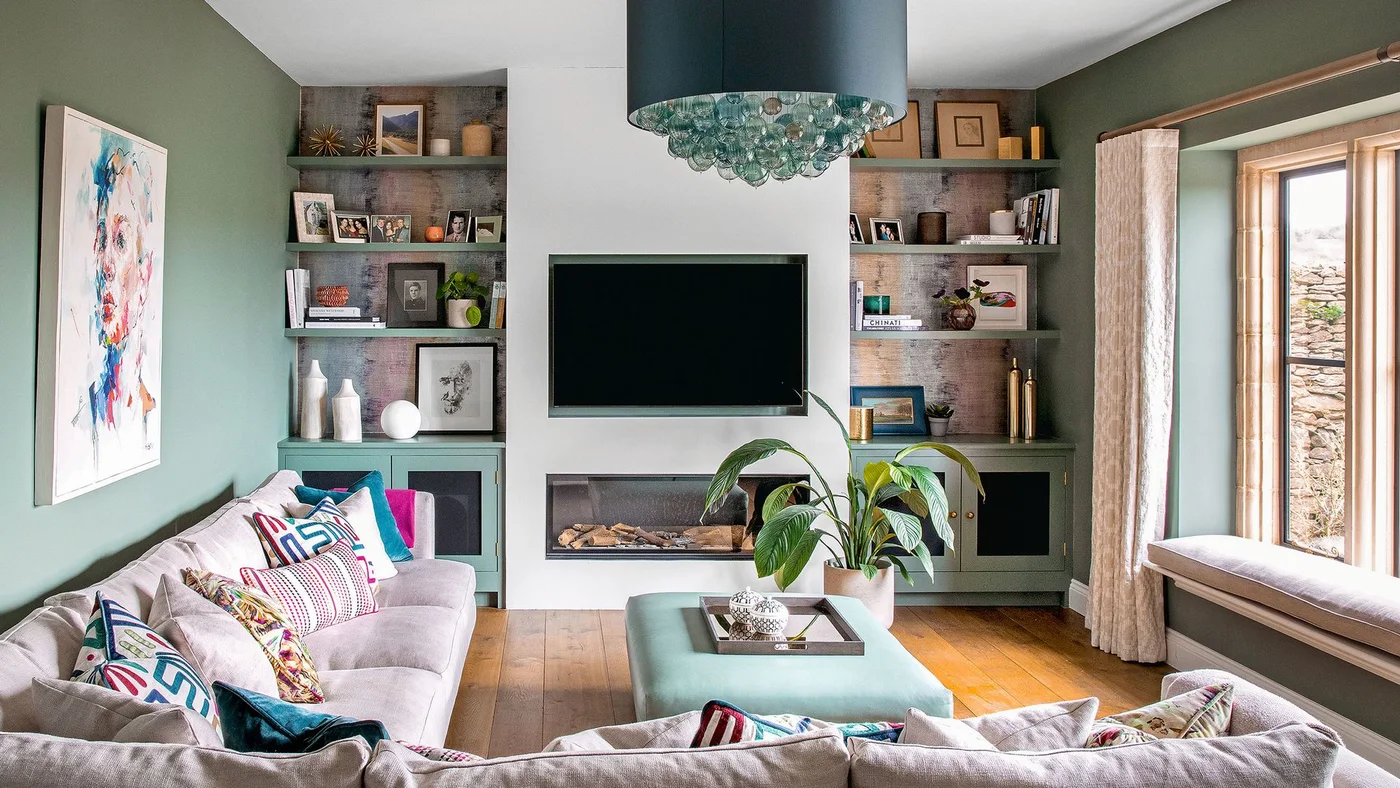
Balance a Central Screen with Shelves and Closed Storage
 SaveSupport Non AI Creator
Image credit: Paul Raeside / Future
Open shelves frame the central television, with green cabinets carrying useful closed storage below them. The lighter chimney section keeps the screen distinct from the surrounding color. Pale sofas and a window seat gather the seating area in front, while smaller framed objects give the shelves a collected appearance.
Choose shelf spacing from the books and objects you actually keep, leaving equipment easy to reach rather than burying it behind displays. Have any television position above a fireplace assessed against both manufacturers’ requirements. Fireplace built-in ideas offer more storage arrangements when the appliance and shelving need to share one wall.
IDEA 04 / 20
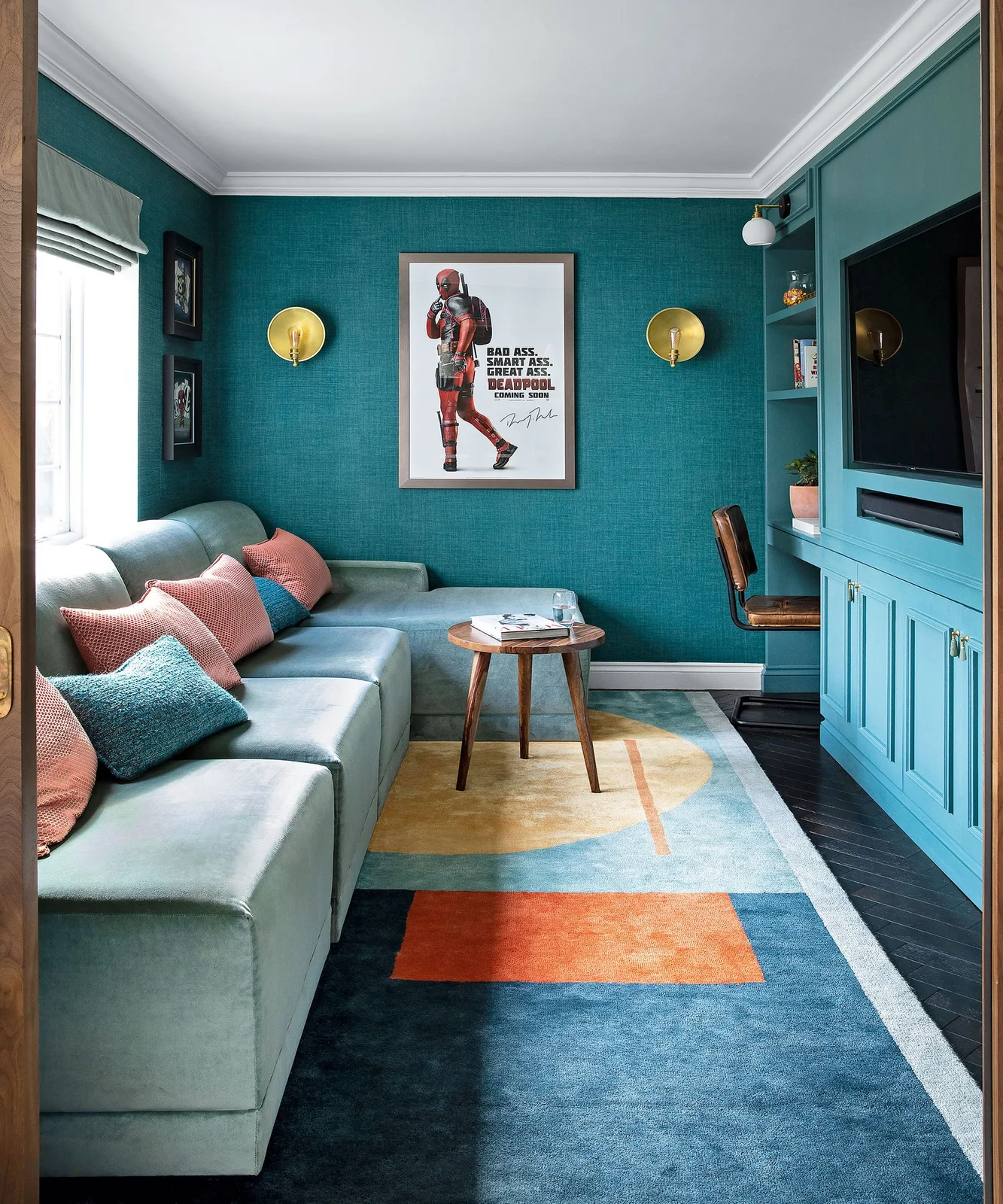
Connect a Recessed TV Area with a Blue-Green Room
 SaveSupport Non AI Creator
Image credit: Paul Raeside / Future
Blue-green cabinets connect the recessed television with the walls and nearby sofa cushions. Smaller shelf openings and lower doors keep storage grouped around the screen. Gold-toned wall lights add warmer circular details across the room, with a colorful rug supplying another larger surface below the seating.
Check that a recess accommodates the actual television, connections and required ventilation, allowing room to service or replace it later. Sit on the longest-used sofa position before deciding its height. Blue living room ideas compare related colors if you want a coordinated cabinet and wall arrangement without buying every furniture piece anew.
IDEA 05 / 20
Combine a Broad Cabinet Wall with Corner Seating
 SaveSupport Non AI Creator
Image credit: Richard Powers / Future
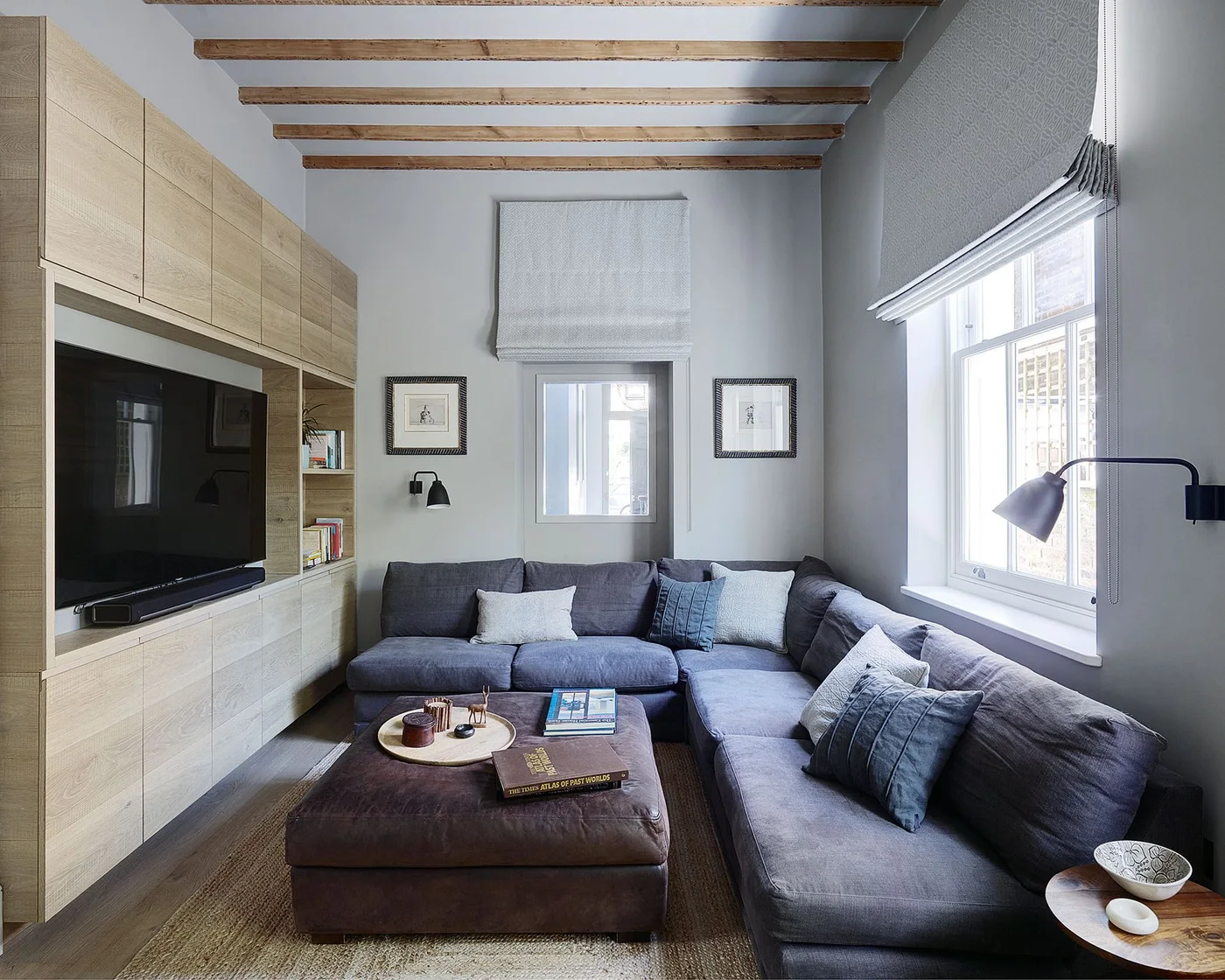
The pale wooden cabinets extend above and beside the television, giving this compact room a continuous storage wall. A gray corner sofa faces the screen from two directions, with a low upholstered center piece keeping the seating group soft. Ceiling beams repeat the warmer wood higher above.
Map occupied seating and cabinet-door movement before ordering a wall of storage. Leave equipment and cable connections reachable even if the outer doors look seamless. Apartment living room ideas show more compact arrangements when a larger sofa needs to coexist with useful cabinets and clear access to the windows.
PART 02
Connect the screen with comfortable furniture
IDEA 06 / 20
Keep a Dark Media Wall Beside a Bright Opening
 SaveSupport Non AI Creator
Image credit: Paul Raeside / Future
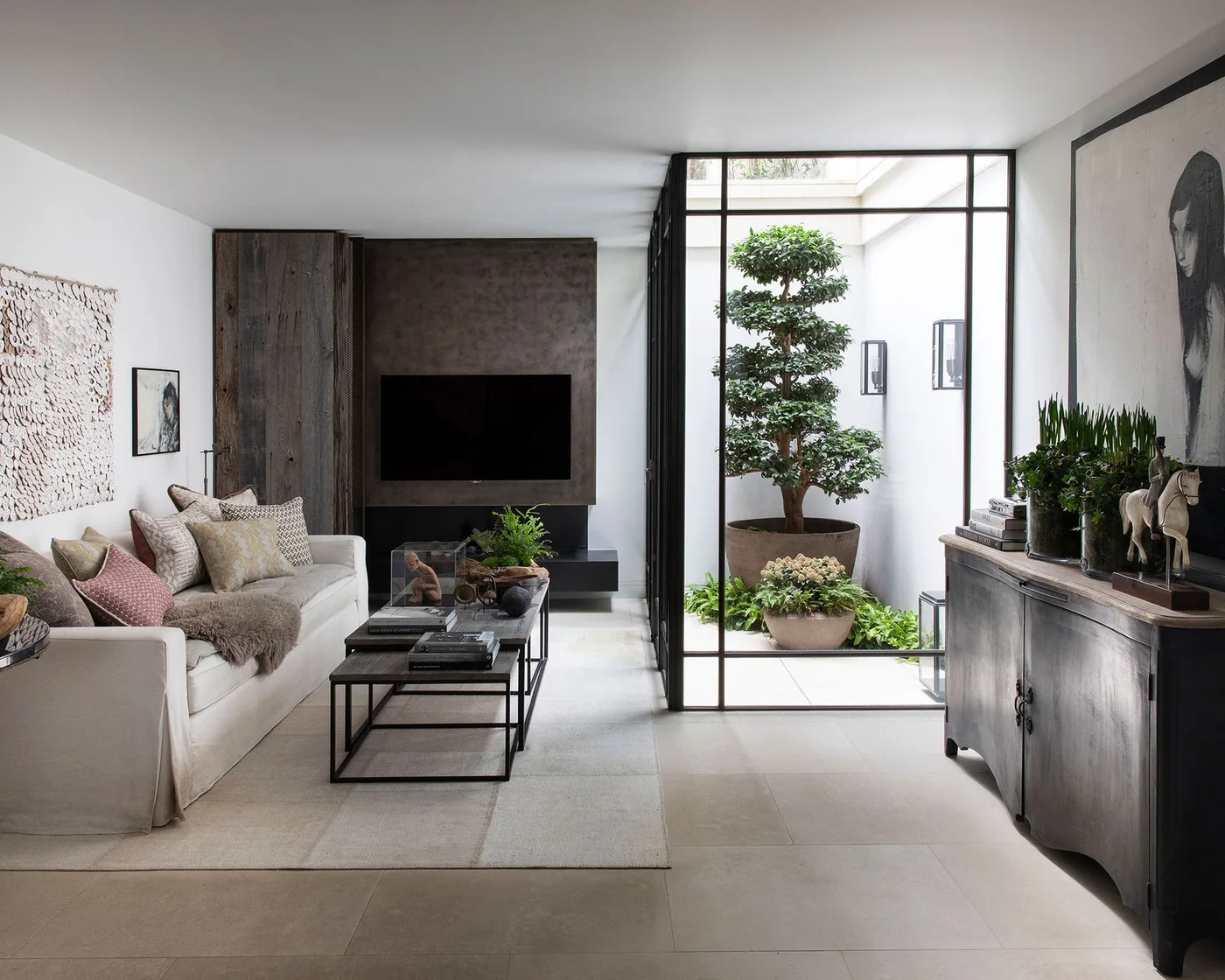
The dark media wall concentrates the television within one end of this lighter room. A tall black-framed opening repeats the darker lines beside it, while the pale sofa and rug keep the seating group quieter. The narrow table provides a lower dark outline without a large block of furniture in the center.
Check glare at the times you usually watch, especially when a bright opening sits close to the screen. Test the viewing angle from the sofa before fixing the television position. Compare the wall finish with existing dark furniture so the room remains connected without making every surrounding surface equally heavy.
IDEA 07 / 20
Use Strong Blue Around Shelves and Lower Cabinets
 SaveSupport Non AI Creator
Image credit: Richard Powers / Future
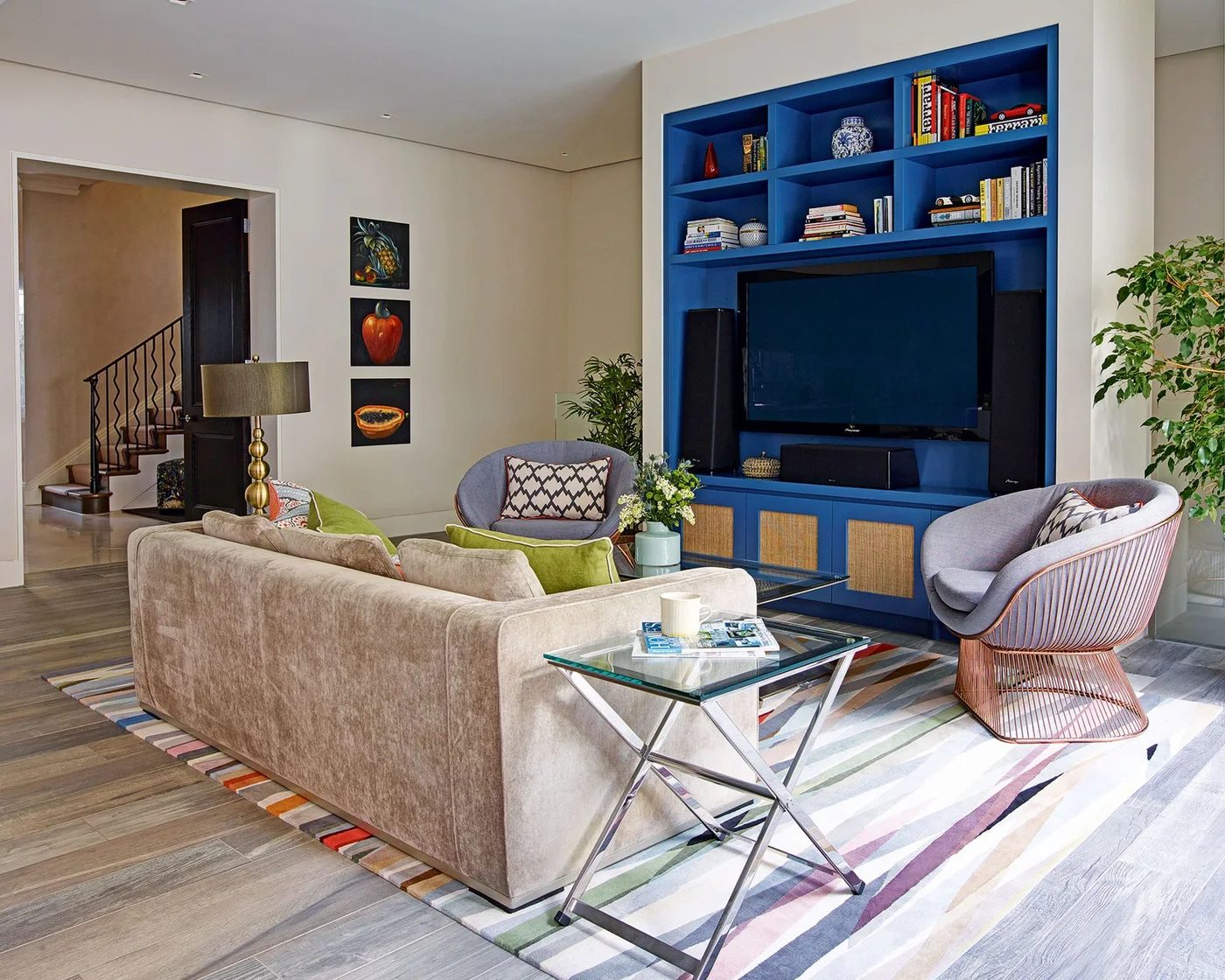
Strong blue gives this television wall one continuous color above and below the screen. Books and small objects break up the upper shelves, while lower doors introduce warmer rectangular details. The beige sofa and pale chair keep the surrounding furniture lighter, leaving the cabinet wall as the room’s larger color feature.
Choose the cabinet compartments from the equipment you own and leave a practical place for remotes and chargers. Check door movement behind the sofa before selecting deep storage. Keep shelf displays easy to remove for dusting, using fewer objects if the blue surface already gives the room the character you wanted.
IDEA 08 / 20
Pair a Simple Screen with a Low Wooden Cabinet
 SaveSupport Non AI Creator
Image credit: Paul Raeside / Future
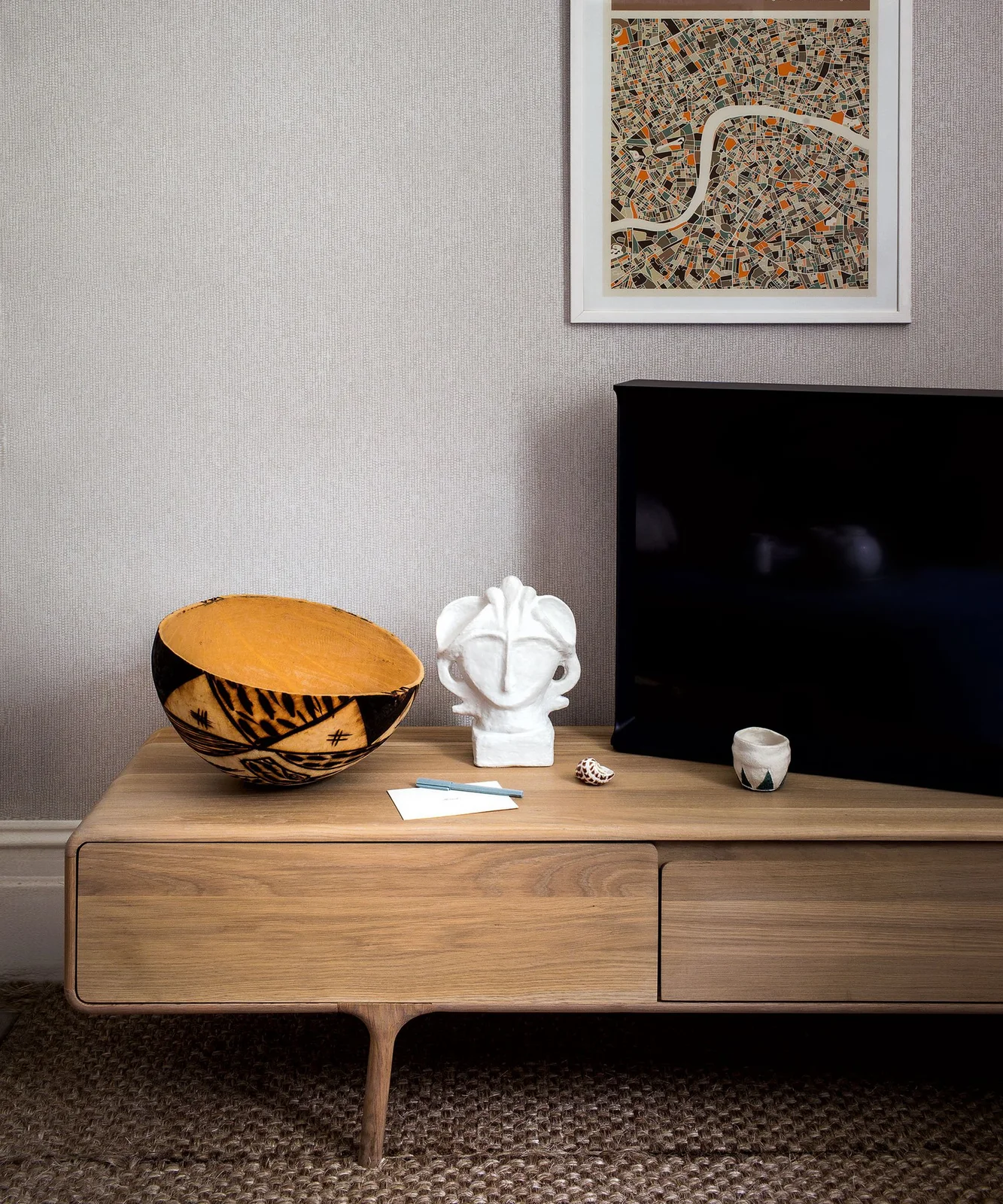
The low wooden cabinet gives this screen a warmer base against the quieter textured wall. A yellow patterned bowl and white sculpture add distinct shapes beside it, with framed artwork providing a separate rectangle above. Rounded cabinet edges keep the furniture outline softer than the television itself.
Check the cabinet’s usable depth, support and stability against your actual television rather than choosing by width alone. Leave the screen and connections accessible, moving decorative objects if they interrupt viewing or controls. Compare the wood finish with nearby furniture and follow its care instructions before placing vessels directly on top.
IDEA 09 / 20
Make the Television Part of a Larger Seating Group
 SaveSupport Non AI Creator
Image credit: Davide Lovatti / Future
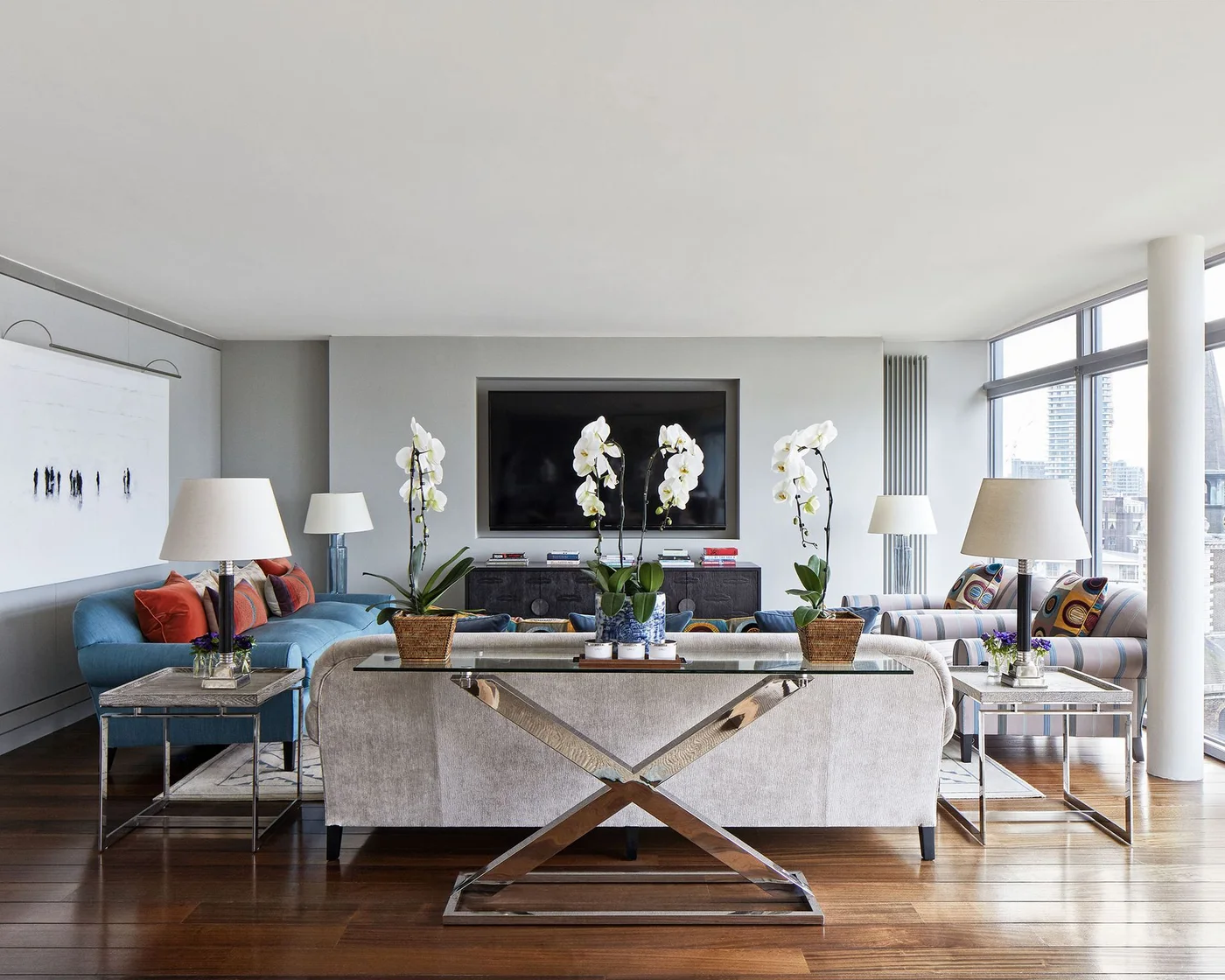
The television occupies a quiet central wall beyond several different seats. Blue upholstery adds a stronger color at one side, with white orchids and matching lamps creating lighter repeated shapes around the room. A console behind the nearer sofa supplies another surface without becoming the television’s direct base.
Test the view from every seat that will be used regularly, including whether plants or lamps interrupt the screen. Check glare from the larger windows and adjust light control before selecting a mounting position. Keep circulation behind the sofa workable so a room arranged for conversation remains comfortable when the television is on.
IDEA 10 / 20
Consider the Screen Alongside Curved Comfortable Chairs
 SaveSupport Non AI Creator
Image credit: Rowland Roques O'Neil / Future
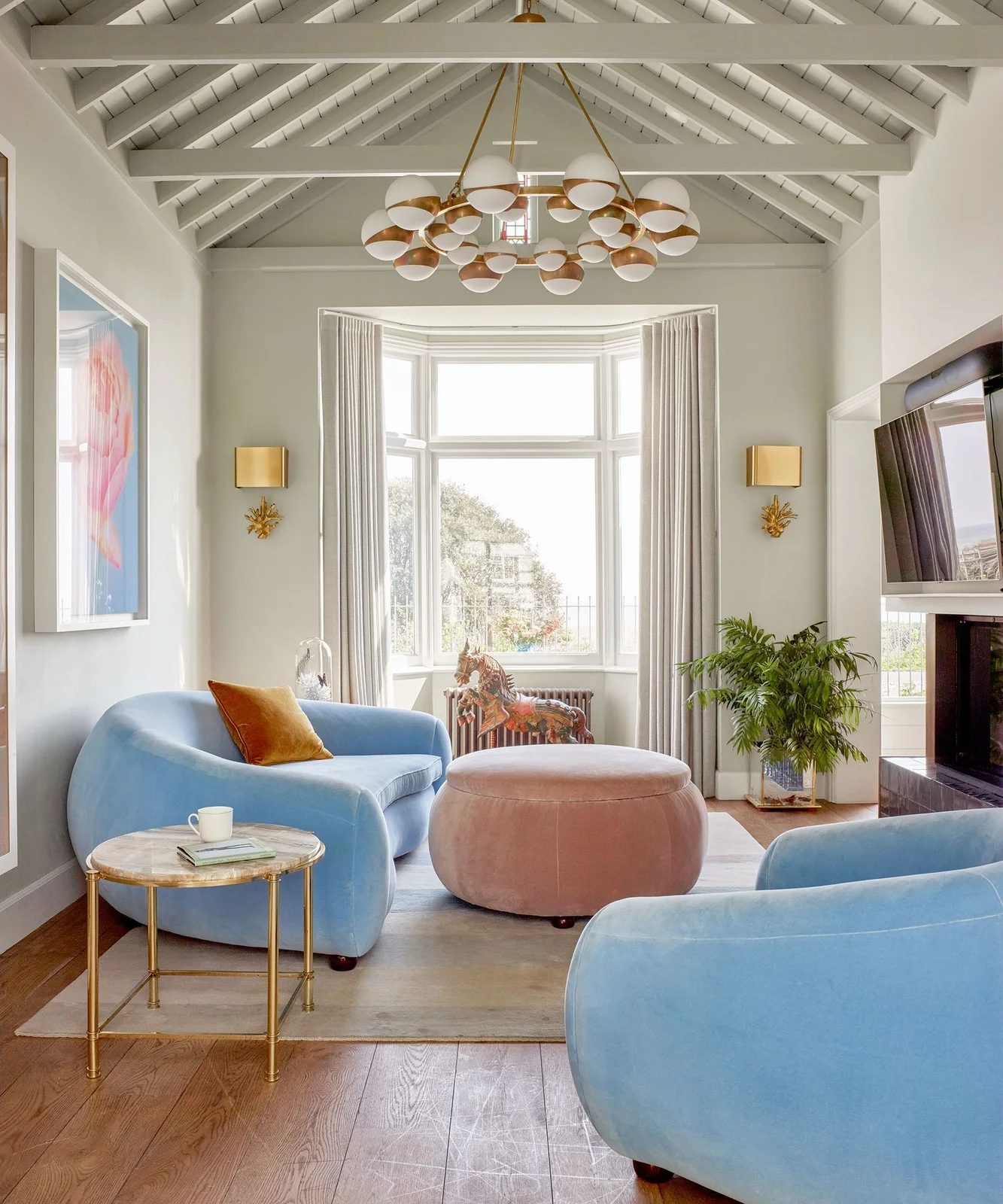
The angled television shares this room with curved blue chairs and a rounded pink ottoman. Their softer shapes contrast with the screen and the white roof beams above. A decorative light and warmer wall accents keep the seating area expressive rather than making the television the only noticeable detail.
Try the screen position from both chairs before choosing a bracket, checking whether a long viewing session feels comfortable. Confirm the mount suits the television and wall, including its movement range and cable access. Keep side tables reachable from the seats so the room works for reading and conversation as well as watching.
PART 03
Compare rich cabinets, art displays and sliding fronts
IDEA 11 / 20
Give Books and a Screen a Rich Red Cabinet Background
 SaveSupport Non AI Creator
Image credit: Michael Sinclair. Design: De Rosee Sa
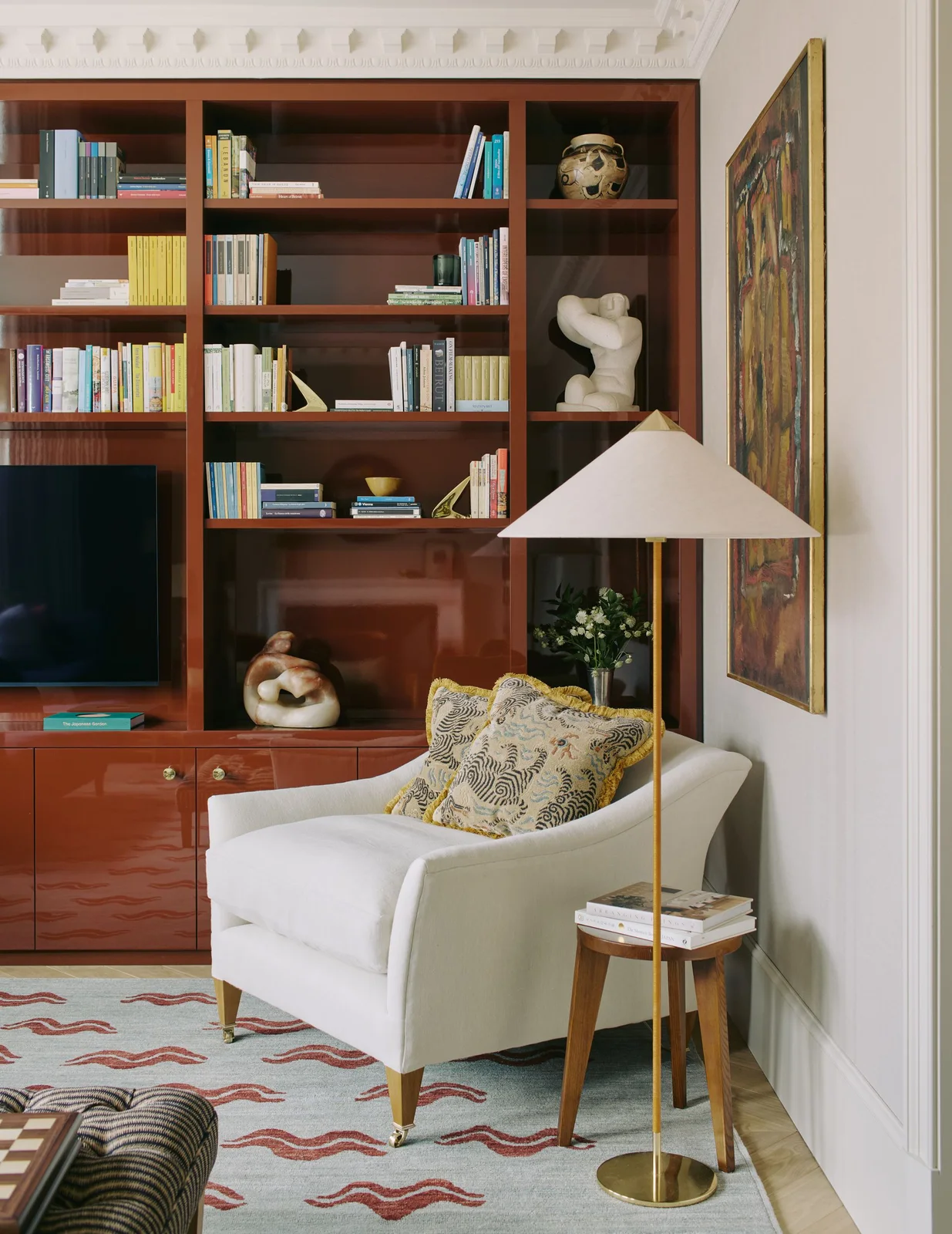
The glossy red-brown cabinet combines the television with books and decorative objects across one larger wall. A pale armchair and shaded lamp provide quieter shapes in front, while the patterned cushion relates to the room’s warmer colors. Lower closed doors keep part of the storage separate from the open display.
Compare the cabinet finish in the room because reflections can change how strong the color feels. Plan compartments around book sizes and the equipment’s access needs rather than filling every gap with fixed shelves. Keep the most-used controls and connections reachable without moving the chair or clearing an entire display.
IDEA 12 / 20
Use Sliding Panels to Choose What the Room Shows
 SaveSupport Non AI Creator
Image credit: R. Brad Knipstein. Styling: Yedda Morison. Architecture: Wayne Leong. Design: JYO Studio
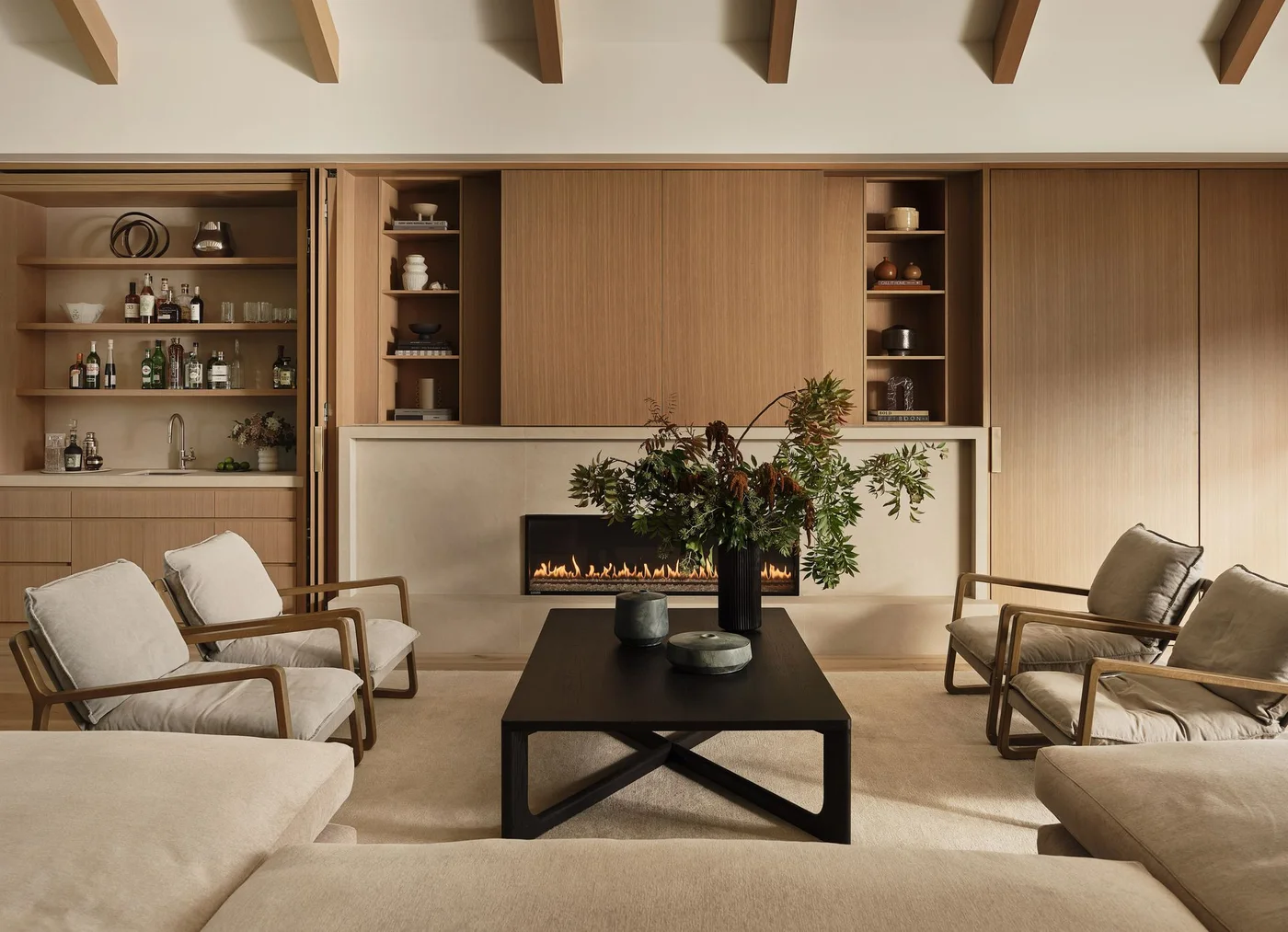
The wooden panels give this media wall a continuous warm backdrop above the pale fireplace. Open shelves remain visible at the sides, with lighter chairs gathered around the dark table in front. The screen is concealed in this photographed arrangement, so the panel surfaces become the room’s main upper-wall feature.
Plan the full travel of sliding panels before commissioning them, checking what they cover in both open and closed positions. Confirm equipment ventilation and access with the actual television installed. Any fireplace beneath the cabinet needs coordinated professional assessment; a concealed screen does not remove either appliance’s heat or servicing requirements.
IDEA 13 / 20
Combine an Art-Displaying Screen with Smaller Pictures
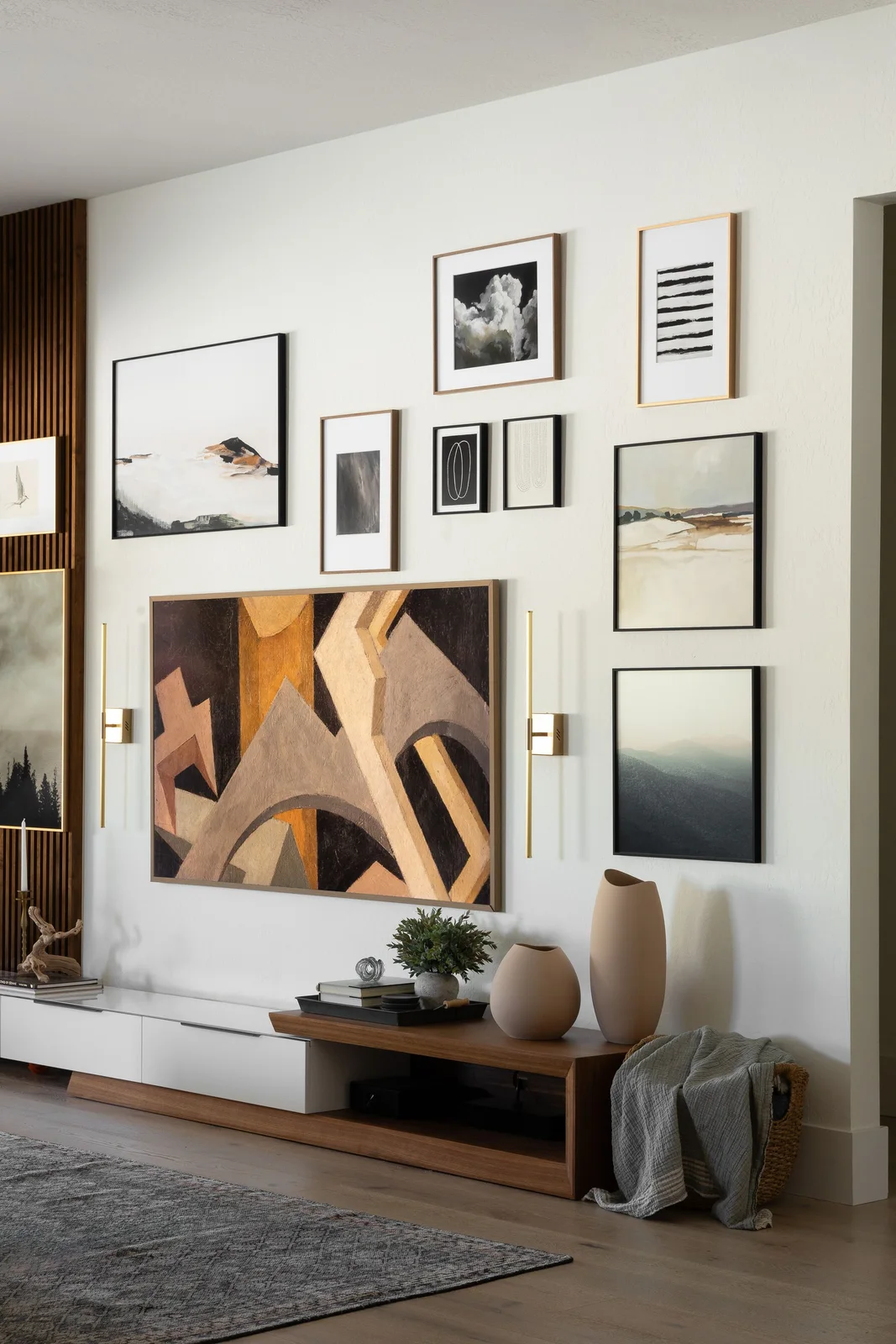 SaveSupport Non AI Creator
Image credit: Kevin Brost. Design: Homesmith Design
The larger art-displaying screen sits within an uneven group of smaller framed pictures. Slim gold-toned wall lights give the central display a lighter border, while the low cabinet provides a separate horizontal base. The mixture of landscape and abstract images keeps the wall from looking like one repeated frame size.
Lay out the frames before making wall holes, checking the arrangement from the sofa as well as close up. Leave connections and the television’s required ventilation accessible behind the display. Choose artwork and frames you enjoy individually so the surrounding gallery still feels worthwhile when ordinary programs replace the screen’s artwork.
IDEA 14 / 20
Give a Media Cabinet a Warm Sliding-Glass Front
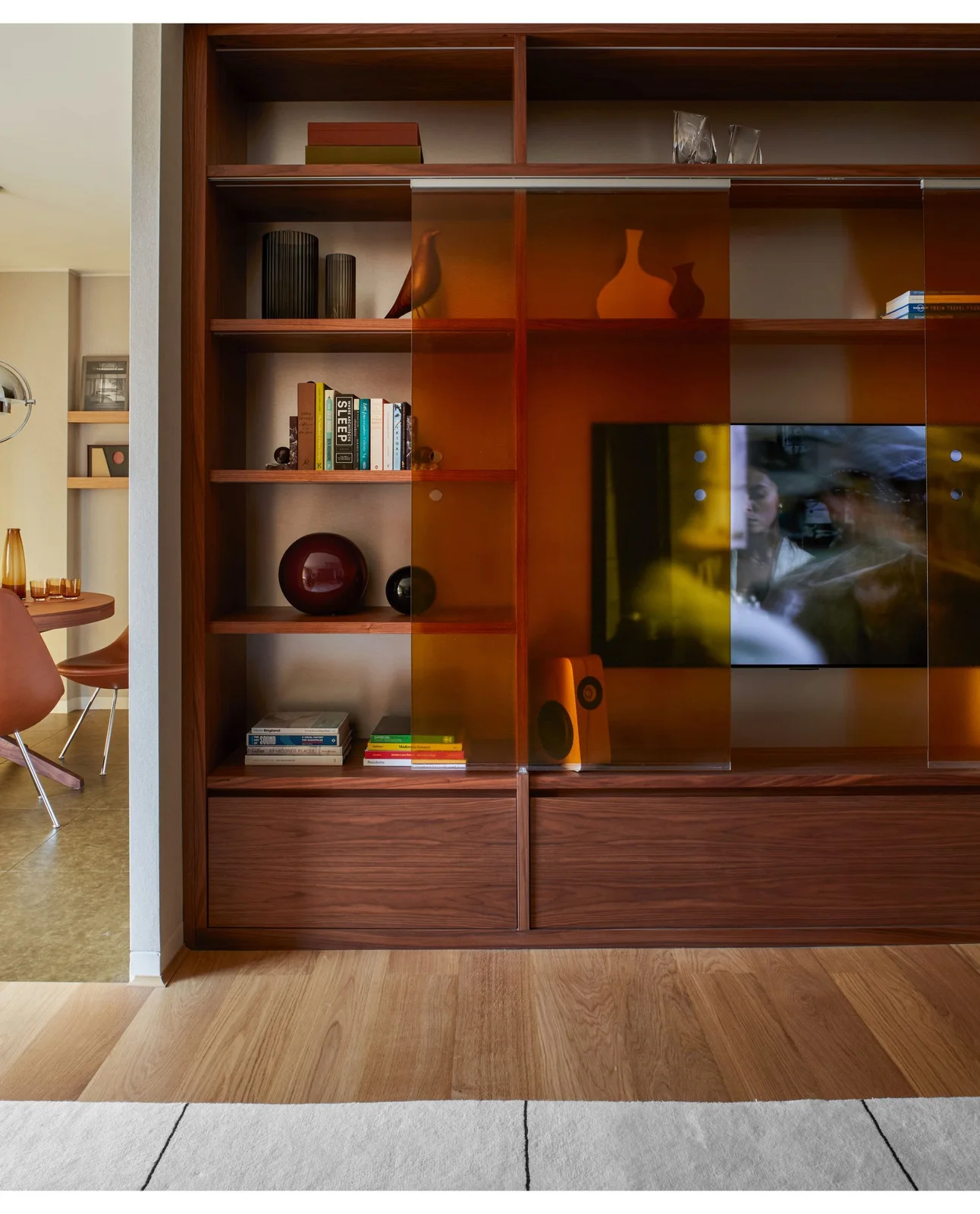 SaveSupport Non AI Creator
Image credit: Phillip Durrant. Design: Black & Milk
Amber panels add a warm translucent layer across the wooden shelving and television. Books and vessels remain visible through parts of the front, while lower drawers create a more solid storage band. The changing overlap between the panels gives the cabinet detail without adding another pattern to the adjoining wall.
Request a working sample or demonstration before ordering a similar front, checking reflections, handles and how clearly the screen can be watched. Confirm suitable glass, hardware and installation with the cabinet maker. Plan the panel movement around equipment access and cleaning so an attractive closed arrangement remains practical in daily use.
IDEA 15 / 20
Mix Warm Cabinet Doors with Reflective Shelf Backs
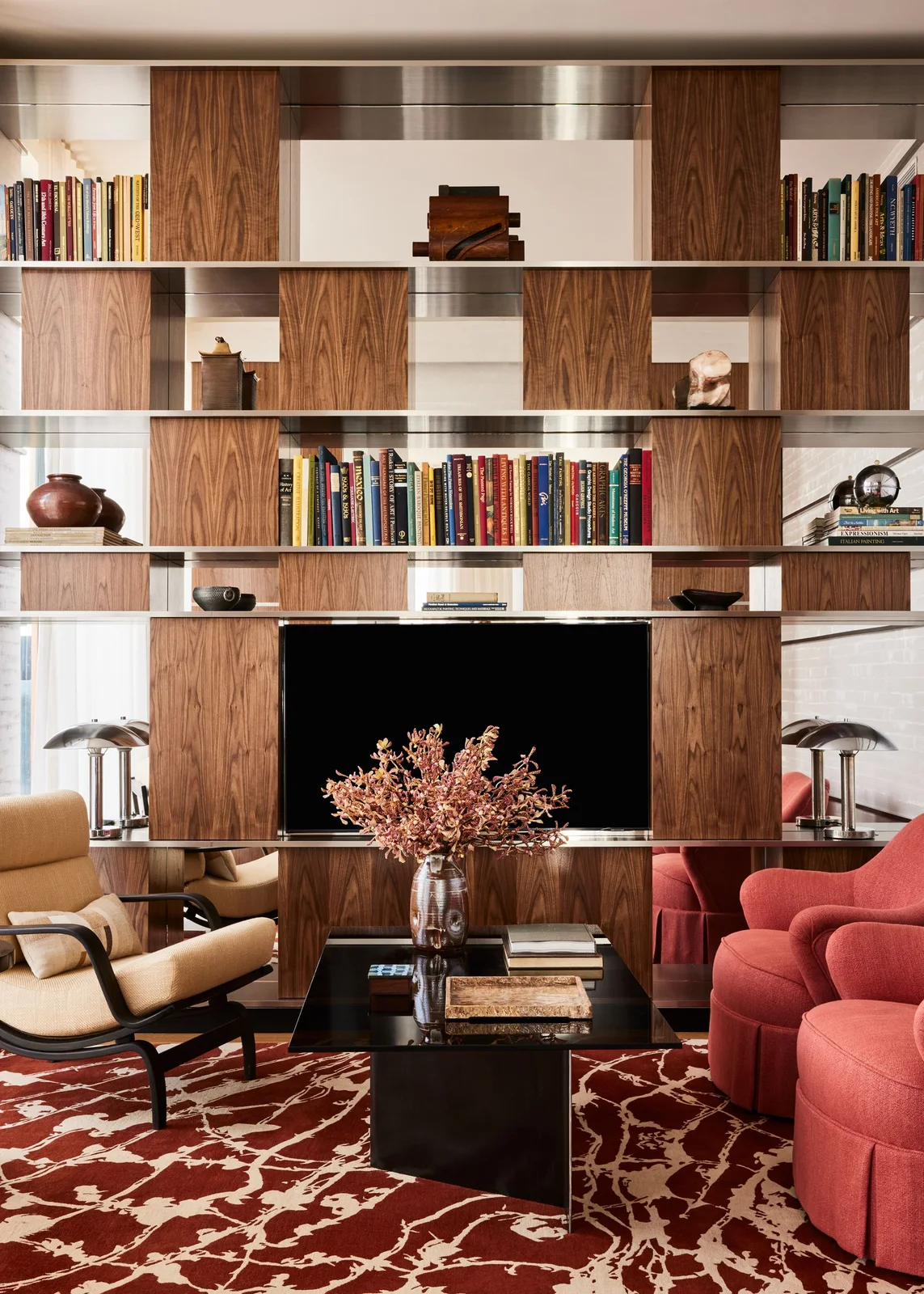 SaveSupport Non AI Creator
Image credit: Nicole Franzen. Design: Husband.Wife
Warm wooden doors interrupt the reflective shelf backs around this television. Books and smaller vessels add varied outlines above the screen, while red and yellow chairs give the seating group stronger color below. Narrow horizontal shelves connect the different cabinet sections across the wall.
Check reflections from normal viewing positions before specifying mirror or another reflective finish around a television. Leave some shelves less crowded so the cabinet’s different surfaces remain visible. Plan door and shelf dimensions from actual storage needs, confirming where equipment will stay cool and how connections can be reached for replacement.
PART 04
Consider patterned walls, concealed screens and recesses
IDEA 16 / 20
Use Pale Cabinets as a Background for Collected Art
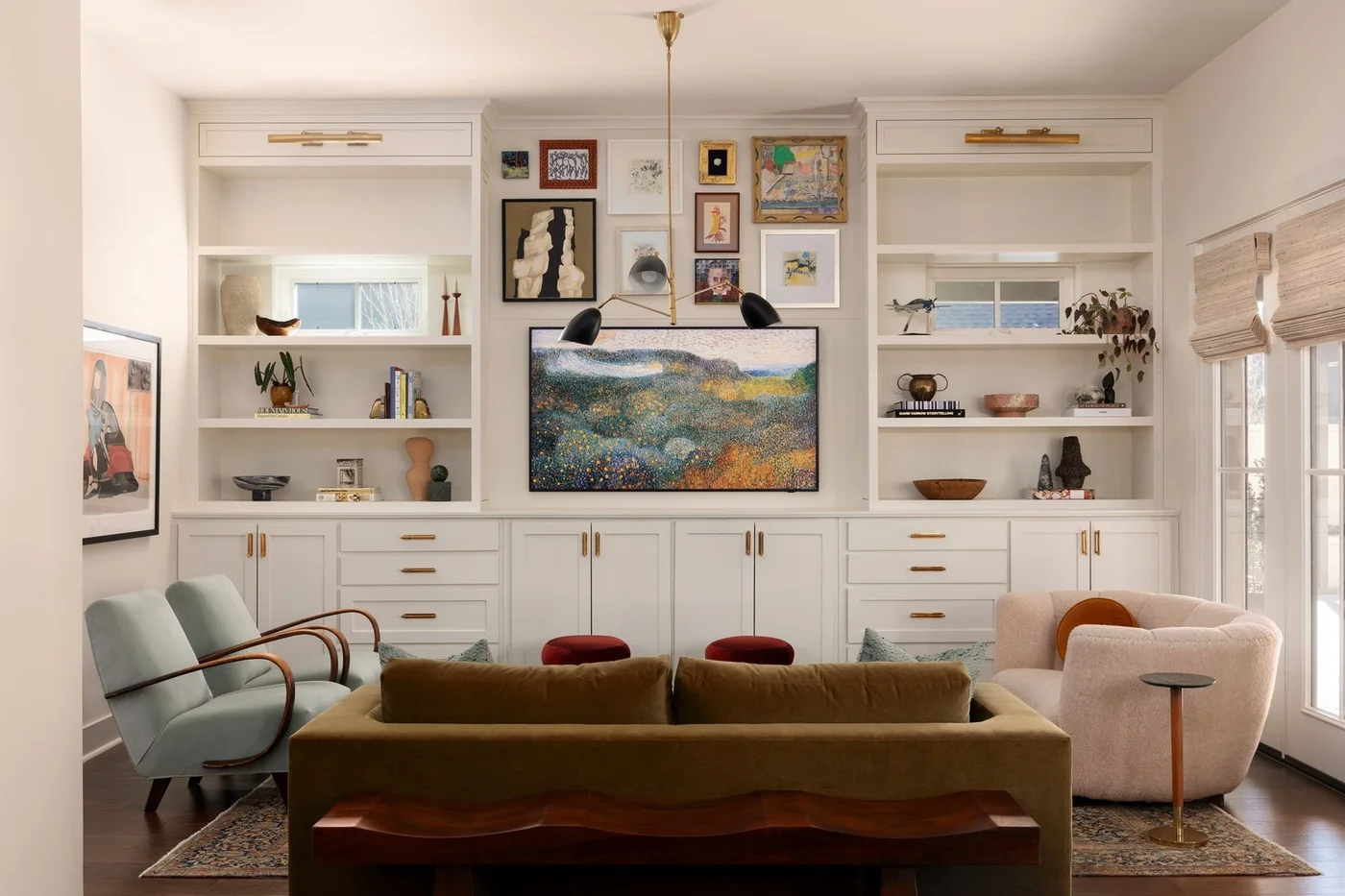 SaveSupport Non AI Creator
Image credit: Rett Peek. Design: MeetWest
Pale cabinets frame the art-displaying television with open shelves and closed drawers. Smaller pictures form a separate group higher above, adding a collected character without another large dark surface. The green sofa and differently shaped pale chairs keep the room’s furniture from becoming a complete matching set.
Choose drawer and shelf sizes from the items you need to store before arranging decorative objects. Keep a clear view from the sofa and check the picture group at seated eye level. Rotate a smaller selection of shelf objects rather than filling every opening, especially where equipment access or cleaning would otherwise become awkward.
IDEA 17 / 20
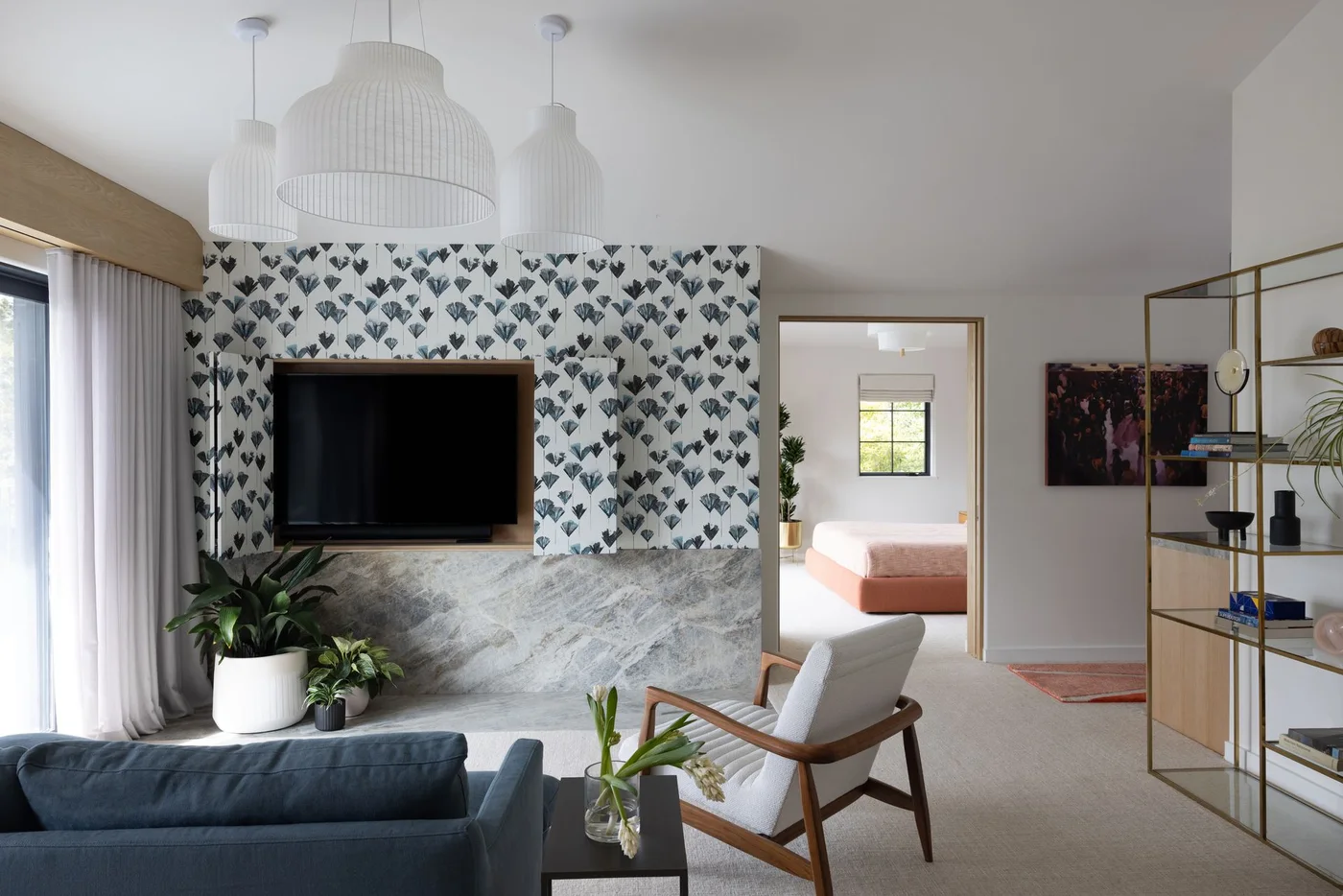
Frame a Screen Within a Patterned Wall
 SaveSupport Non AI Creator
Image credit: Bess Friday. Design: Medium Plenty
The botanical pattern gives this screen wall repeated small shapes around the wood-edged recess. A pale veined base introduces a contrasting broader pattern below, with the blue sofa adding a solid color in front. White hanging shades and curtains keep the room’s upper surfaces lighter.
Compare the wallpaper and lower finish over larger samples because two patterns will meet directly around the television. Plan the opening and joins before installation, leaving the screen accessible. Keep nearby furniture quieter if the patterned wall is the detail you want to enjoy most, and test glare from the adjoining windows.
IDEA 18 / 20
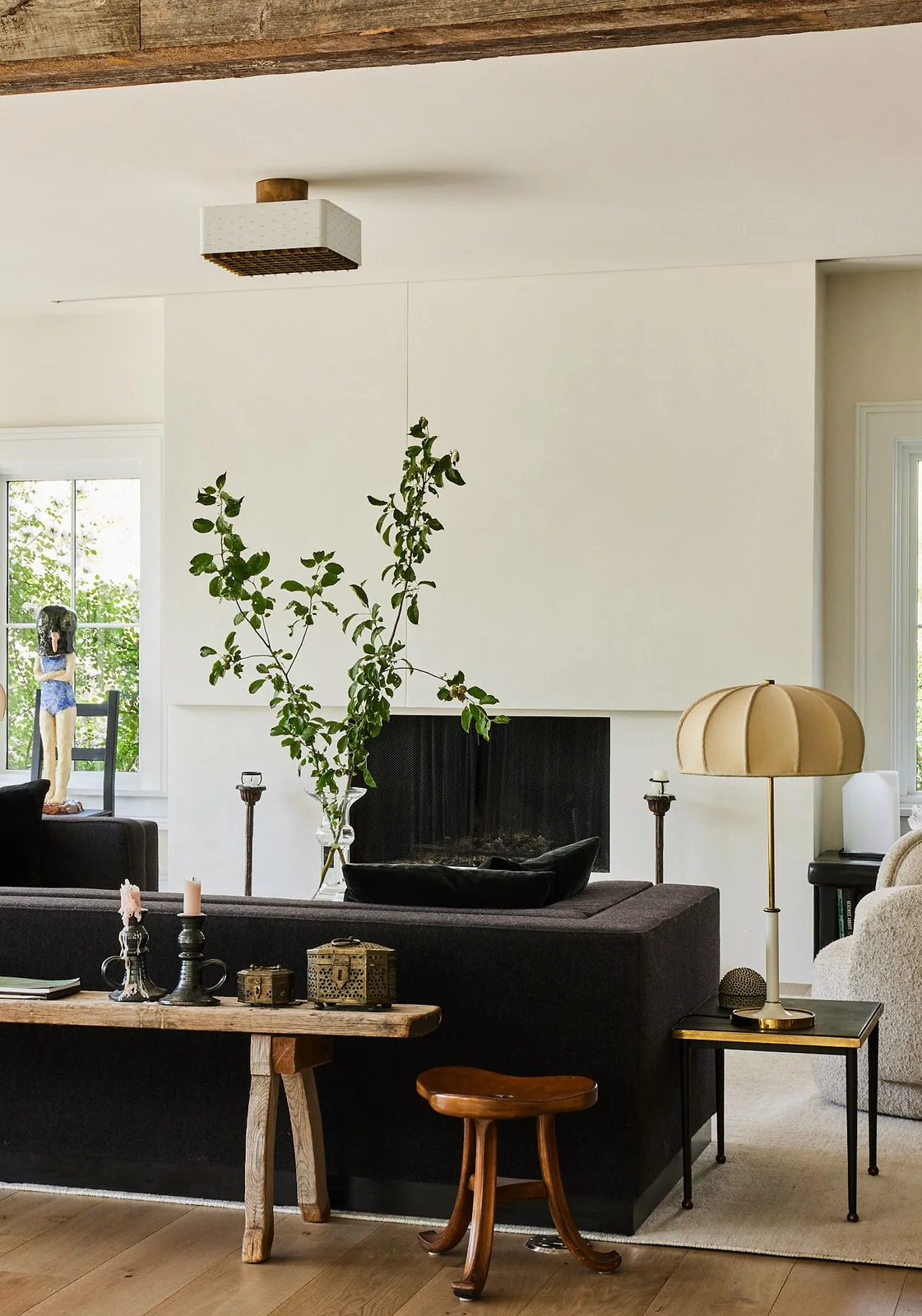
Conceal a Screen Behind a Quiet Pale Wall
 SaveSupport Non AI Creator
Image credit: Nicole Franzen
The television is concealed behind pale panels in this view, leaving the dark fireplace as the main opening on the wall. A dark sofa repeats that contrast below, while a wooden stool and gold-toned lamp add warmer shapes beside it. The restrained upper wall lets the furniture remain distinct.
Ask for a demonstration of the complete opening mechanism before commissioning concealed panels, checking their weight, movement and service access. Coordinate the fireplace and television requirements rather than treating the panel as a simple decorative cover. Fireplace wall ideas compare other arrangements if you prefer a screen that remains visible beside the appliance.
IDEA 19 / 20
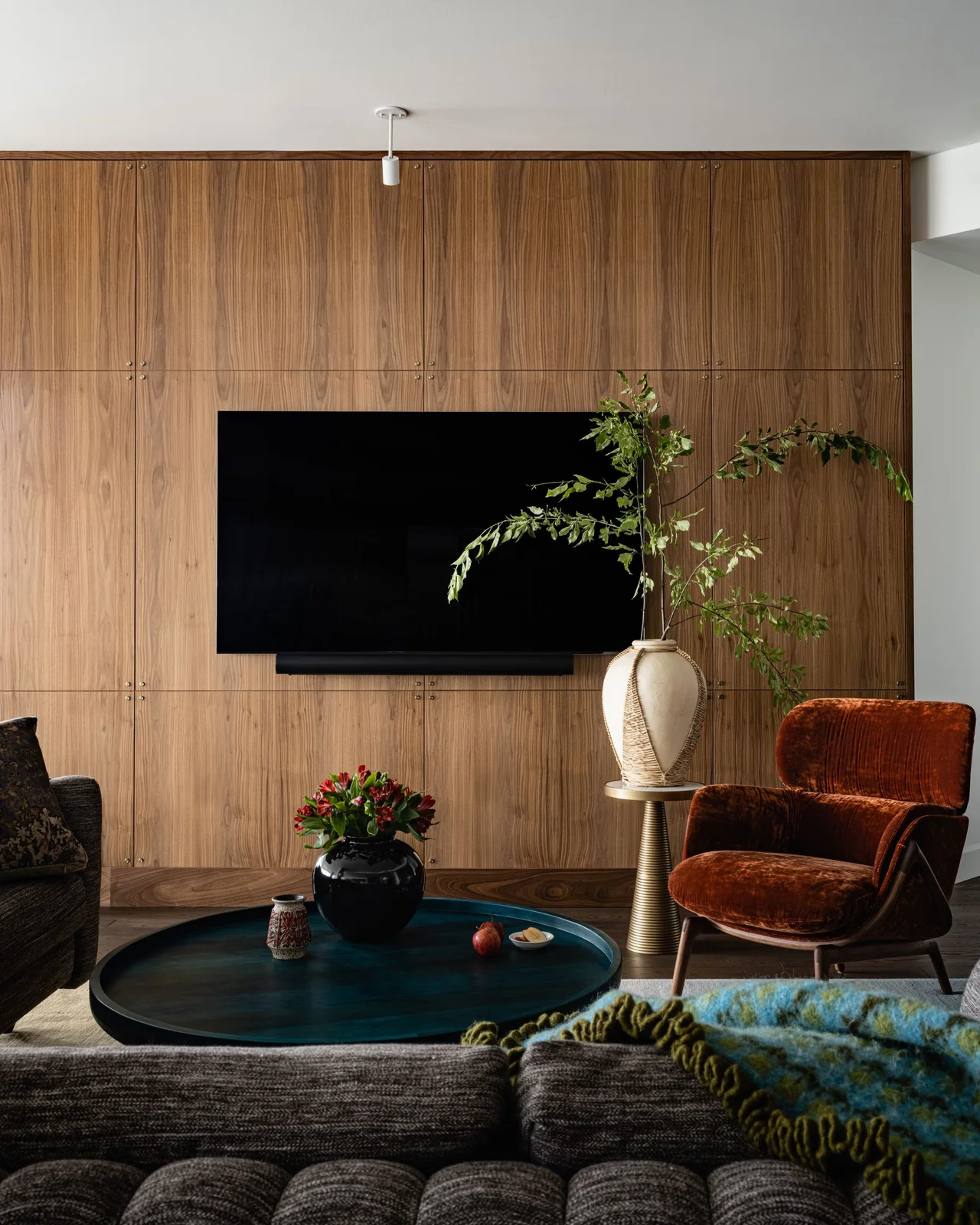
Let a Wooden Cabinet Wall Keep the Screen Central
 SaveSupport Non AI Creator
Image credit: Kara Mercer
The full wooden cabinet wall gives the television a consistent warm background, with smaller door joins continuing above and beside it. A soundbar forms a narrow line beneath the screen. The red-brown chair and rounded table introduce separate furniture shapes without another tall storage unit beside the wall.
Plan hidden storage access and screen mounting together so cabinet doors remain useful after installation. Compare the wood sample with your floor and chairs before choosing a whole wall of it. Keep cables and the soundbar’s connections serviceable, confirming ventilation and suitable support rather than assuming the panel itself can carry the television.
IDEA 20 / 20
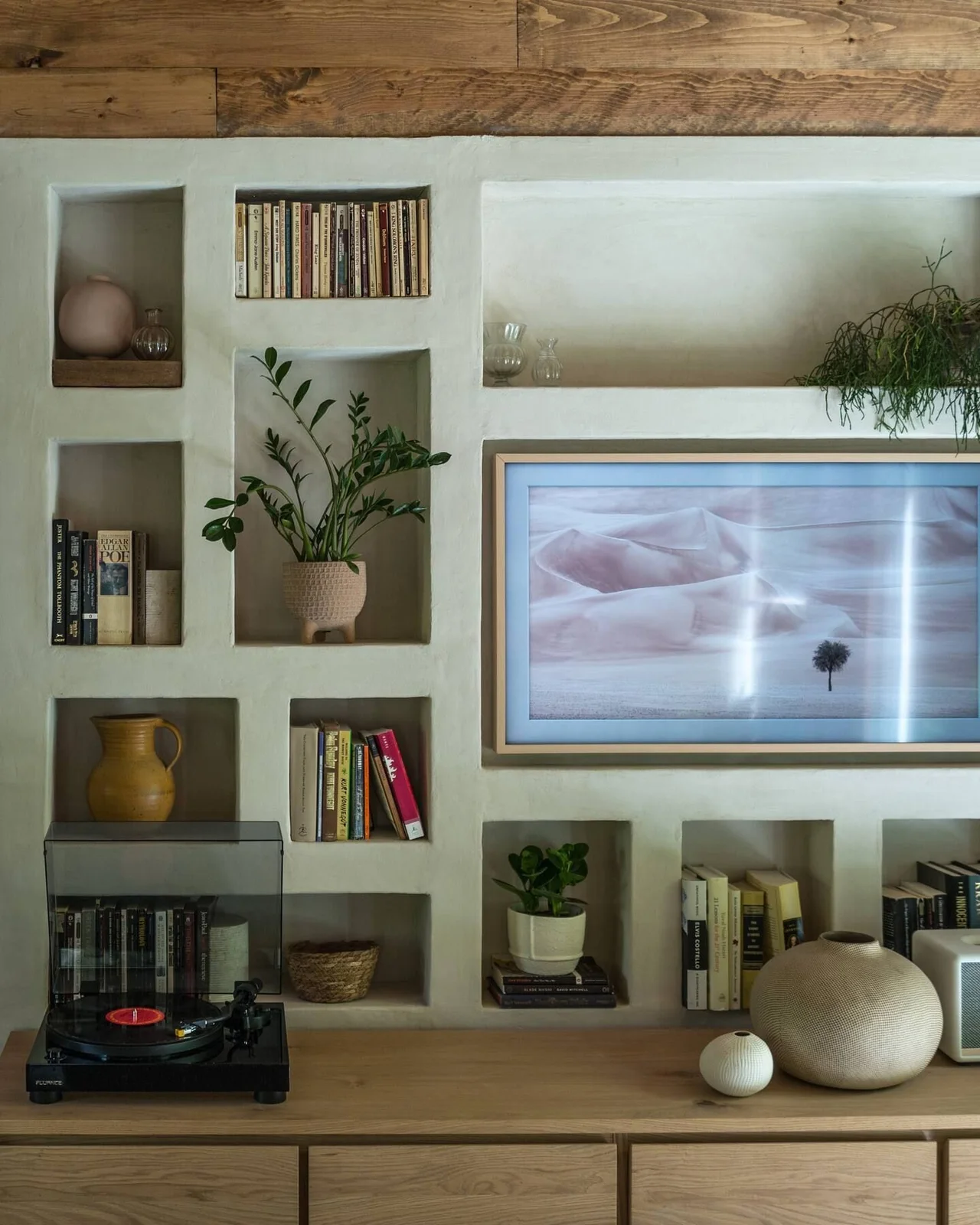
Set an Art-Displaying TV Within Varied Recesses
 SaveSupport Non AI Creator
Image credit: The Hunter Houses
The pale recesses give this wall a varied arrangement of books, plants and small vessels around the screen. A wooden cabinet connects the television with the record player below. The artwork displayed on the screen adds a broader quieter image beside the smaller shapes of the surrounding objects.
Choose recess sizes from your real collection and leave each object easy to remove for cleaning. Keep plant watering separate from electronics, checking where any drainage or spills could travel. Plan screen access and equipment ventilation before the wall is finished so the varied recesses remain useful rather than hiding the connections you need.
BRING IT ALL TOGETHER
Start with the view from your favorite seat
Place a temporary outline of the screen at the proposed position and view it from the seats you use most. Check daylight glare, evening reflections and any objects that interrupt the view. Keep enough room for people to move comfortably without making the television the reason every chair must face one direction.
Build storage around the actual equipment, allowing suitable ventilation and access to connections. Compare finish samples with furniture you intend to retain, then choose one or two details that give the wall character. A sliding panel or art display should remain easy to use rather than adding a daily obstacle between you and the screen.