A maximalist bathroom can combine color, pattern and collected details while still leaving comfortable space to wash and move around. Choose the pieces you enjoy most, then connect them through a few repeated colors or shapes. A patterned wall and expressive basin may do more for the room than adding another shelf of ornaments.
These twenty photographs show saturated paint, patterned tiles, botanical walls and more collected traditional arrangements. Compare the actual surfaces with your own room’s moisture exposure and cleaning routine before choosing them. Keep useful storage, ventilation and access to fixtures in the plan so decorative layers remain enjoyable once the bathroom is used every day.
PART 01
Connect strong color with decorative fixture shapes
IDEA 01 / 20
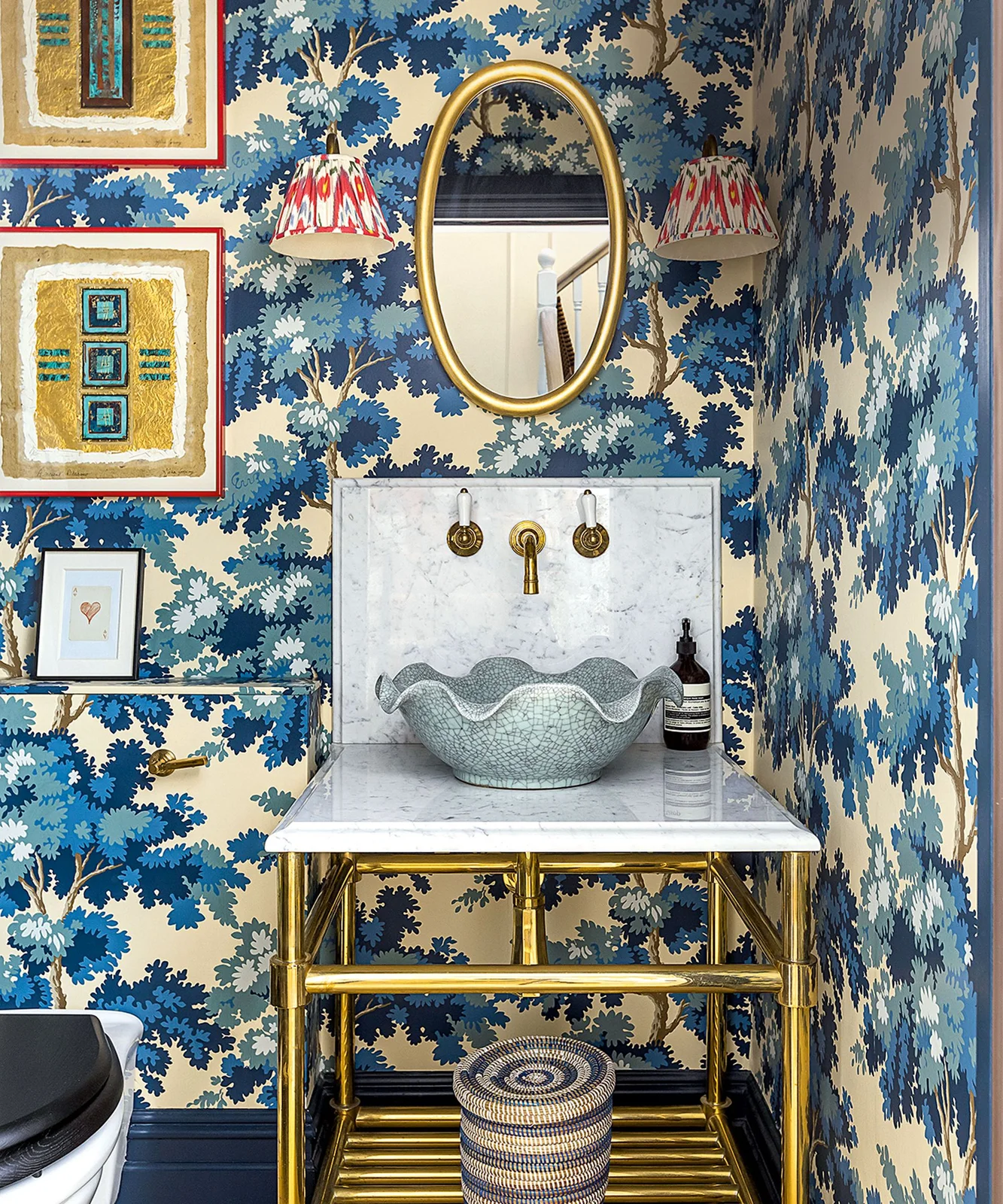
Mix Botanical Walls with a Scalloped Basin
 SaveSupport Non AI Creator
Image credit: Barlow & Barlow
Blue botanical wallpaper wraps this compact basin area, giving the wall a continuous leafy pattern. The scalloped bowl adds a different rounded detail below the oval mirror. Red patterned shades and framed pictures introduce smaller contrasting shapes, while the pale counter separates the basin from the busier background.
Compare the wallpaper with a basin sample before choosing both, checking whether their smaller details remain clear together. Confirm the wall covering suits the actual room and its exposure to moisture. Keep the counter useful for washing, with accessories grouped away from the bowl rather than filling every available corner.
IDEA 02 / 20
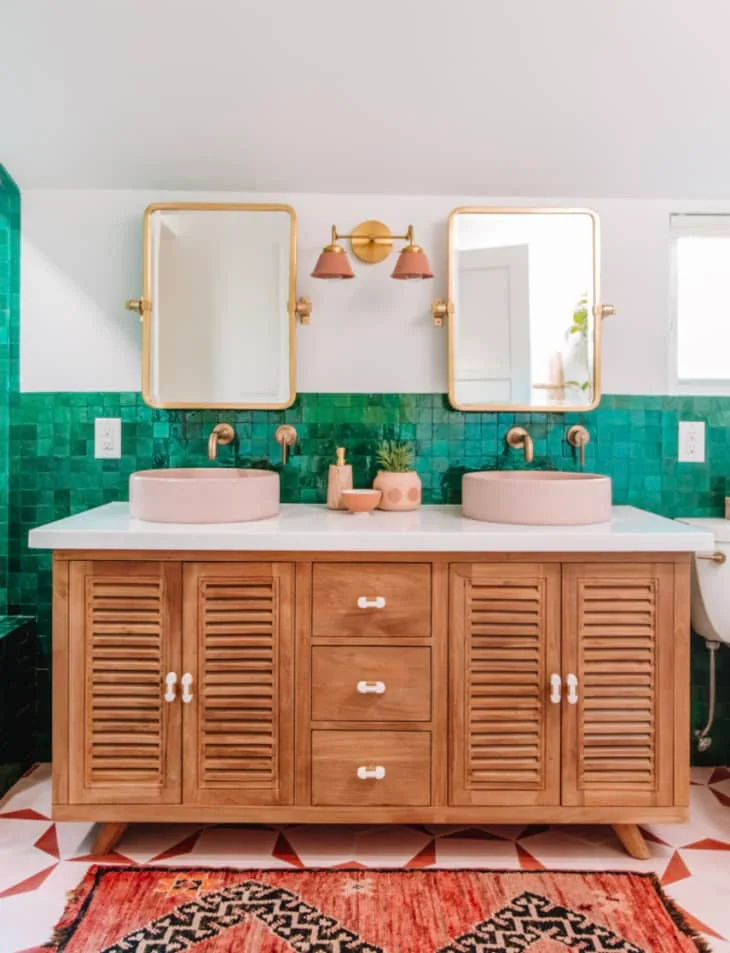
Combine Emerald Tiles with Pink Basins and Warm Wood
 SaveSupport Non AI Creator
Image credit: Credit: Kelly Mindell
Emerald tiles give this double vanity a strong green background behind the pink basins. Warm wood and slatted cabinet doors add another texture below, with gold-toned mirrors repeating lighter rectangles above. The patterned rug and geometric floor carry smaller warm-color details into the lower part of the room.
Check the basin and counter heights together before choosing a vessel bowl, testing everyday reach rather than appearance alone. Follow care guidance for the actual cabinet finish and keep textiles suitable for the damp setting. Boho bathroom ideas compare more warm wood and collected-texture arrangements if you enjoy this mix.
IDEA 03 / 20
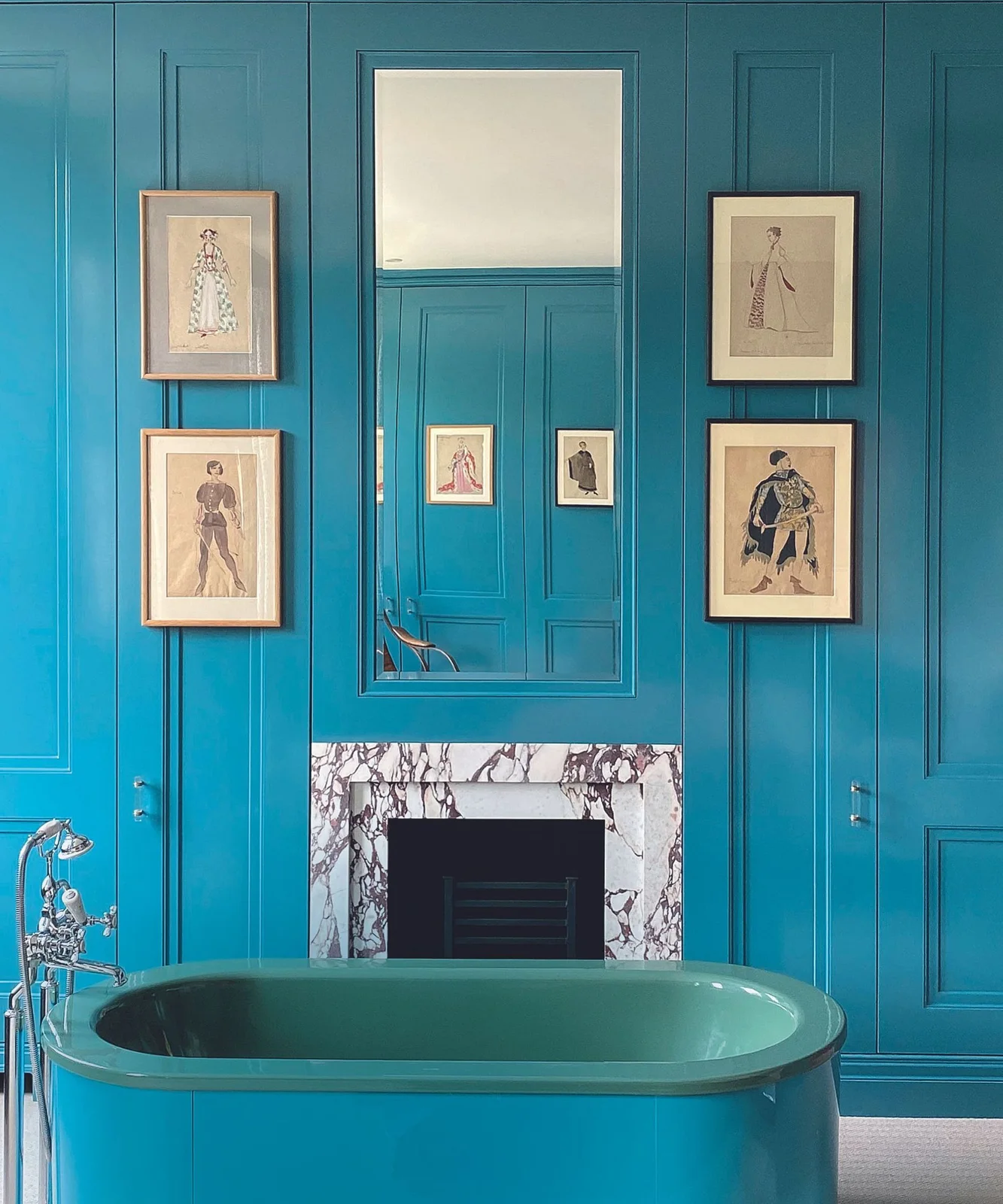
Create a Gallery Around a Saturated Blue Bath
 SaveSupport Non AI Creator
Image credit: Waldo Works
Blue covers both the paneled walls and freestanding bath, creating a continuous saturated background. Framed pictures introduce lighter rectangles around the tall central mirror. The veined fireplace surround supplies a separate larger pattern below, so the room combines artwork and architectural detail without changing its main wall color.
Plan picture positions from the bath and doorway, keeping frames clear of frequent splashes and checking suitable fixings. Confirm the room’s ventilation and the finish requirements before repainting existing fixtures. Dark blue bathroom ideas offer more arrangements if you want rich color to connect several different decorative pieces.
IDEA 04 / 20
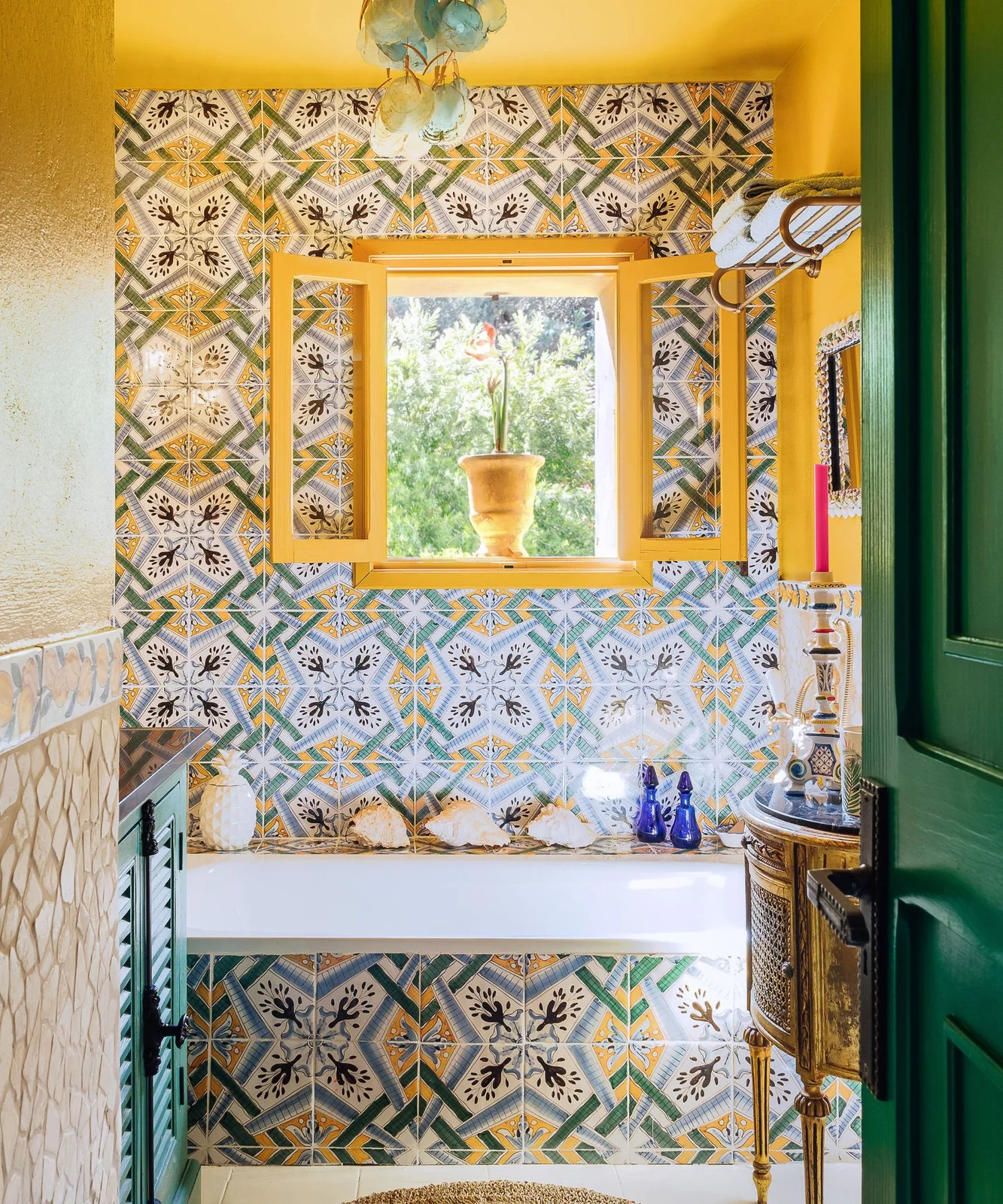
Set Yellow Walls Against Several Tile Patterns
 SaveSupport Non AI Creator
Image credit: Matthew Williamson, Photography by Iaia Cocoi
Yellow paint picks up a warm color within the varied wall tiles around this bath. The green door adds another solid color beside their smaller repeating shapes. Decorative vessels and an open window give the arrangement further detail while leaving the white bath visible beneath the patterned wall.
Lay several tiles together before ordering, checking their pattern direction and how different designs meet at corners. Confirm which products suit wet walls and floors rather than using one specification everywhere. Bathroom floor tile ideas compare more patterns when you need the lower surface to relate to a lively wall.
IDEA 05 / 20
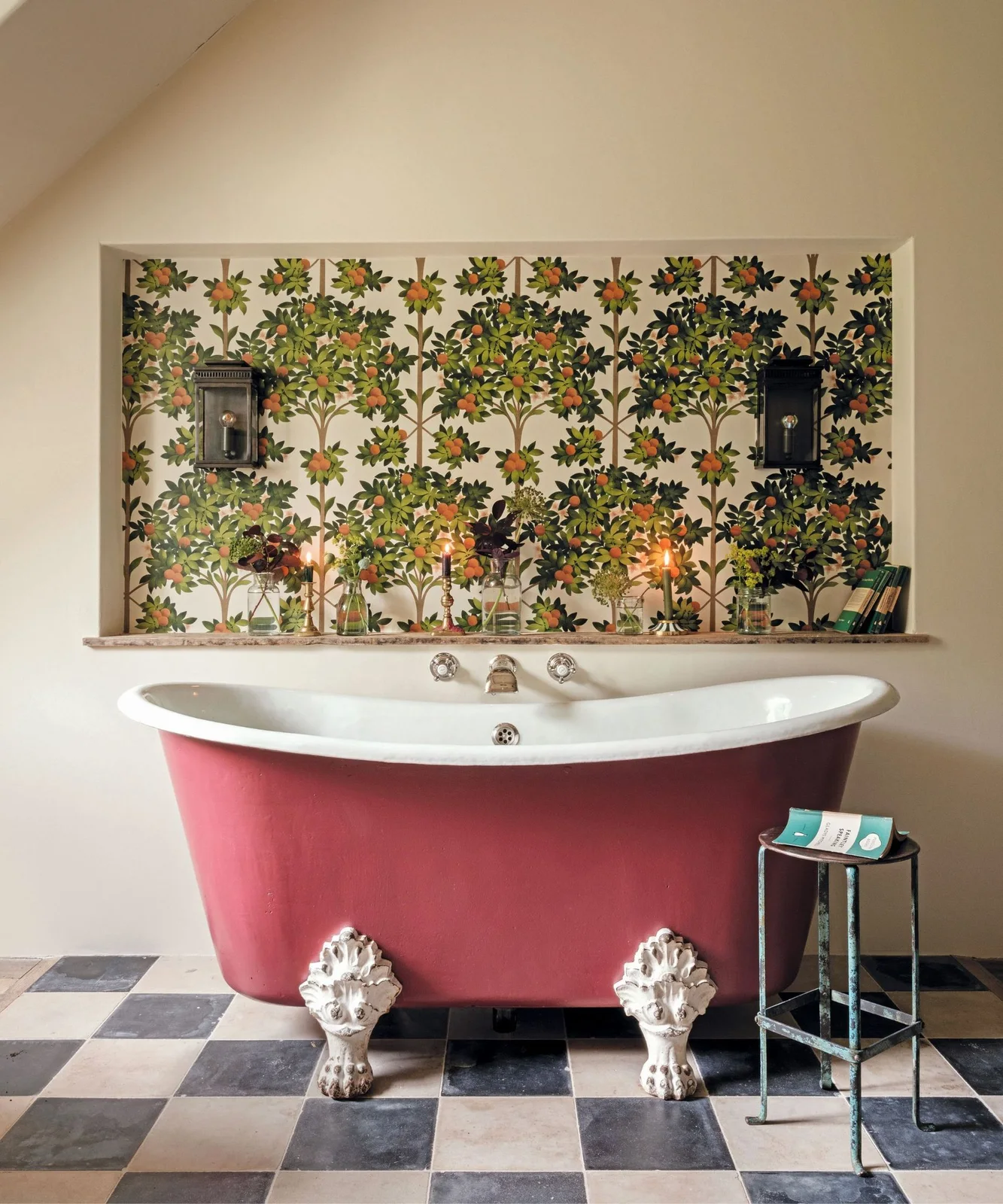
Pair a Red Bath with Botanical Print and Checks
 SaveSupport Non AI Creator
Image credit: Emma Lewis
The red bath gives this room a substantial warm shape beneath the botanical print. Black-and-white checks create a separate pattern on the floor, while darker wall lights connect with their black squares. Pale walls above the print leave the busy details concentrated around the bathing area.
Compare the bath color with a larger wallpaper sample and the floor pattern before making a final choice. Leave access around decorative bath feet for cleaning and servicing. Classic bathroom ideas show more traditional fixture shapes if you want to pair a detailed bath with bolder colors and patterns.
PART 02
Compare veining, tile grids and repeated prints
IDEA 06 / 20
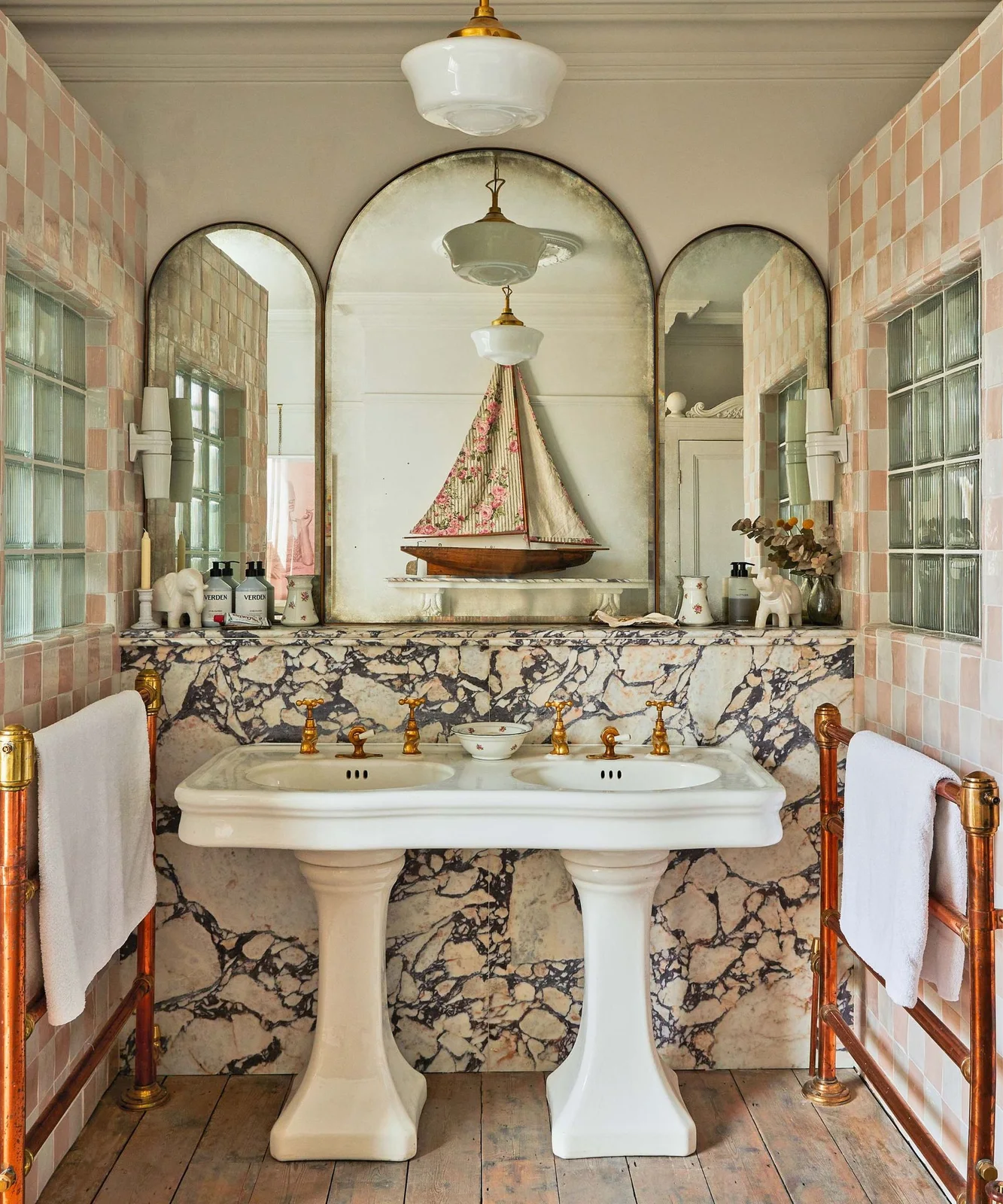
Combine Strong Veining with Multiple Arched Mirrors
 SaveSupport Non AI Creator
Image credit: Alexander James
Three arched mirror sections give this double basin a repeated curved outline above the strong veining. Pink checked tiles introduce a smaller pattern on the side walls. Warm metal details and a decorative model boat add separate accents, with white basins and pedestals keeping the fixtures clearly defined.
Compare the veined surface and tile samples together, checking the junction where their different pattern scales meet. Confirm actual materials and care requirements before specifying the lower wall. Keep basin surroundings practical for cleaning, and choose mirror dimensions from the people using the room rather than the decorative arch alone.
IDEA 07 / 20
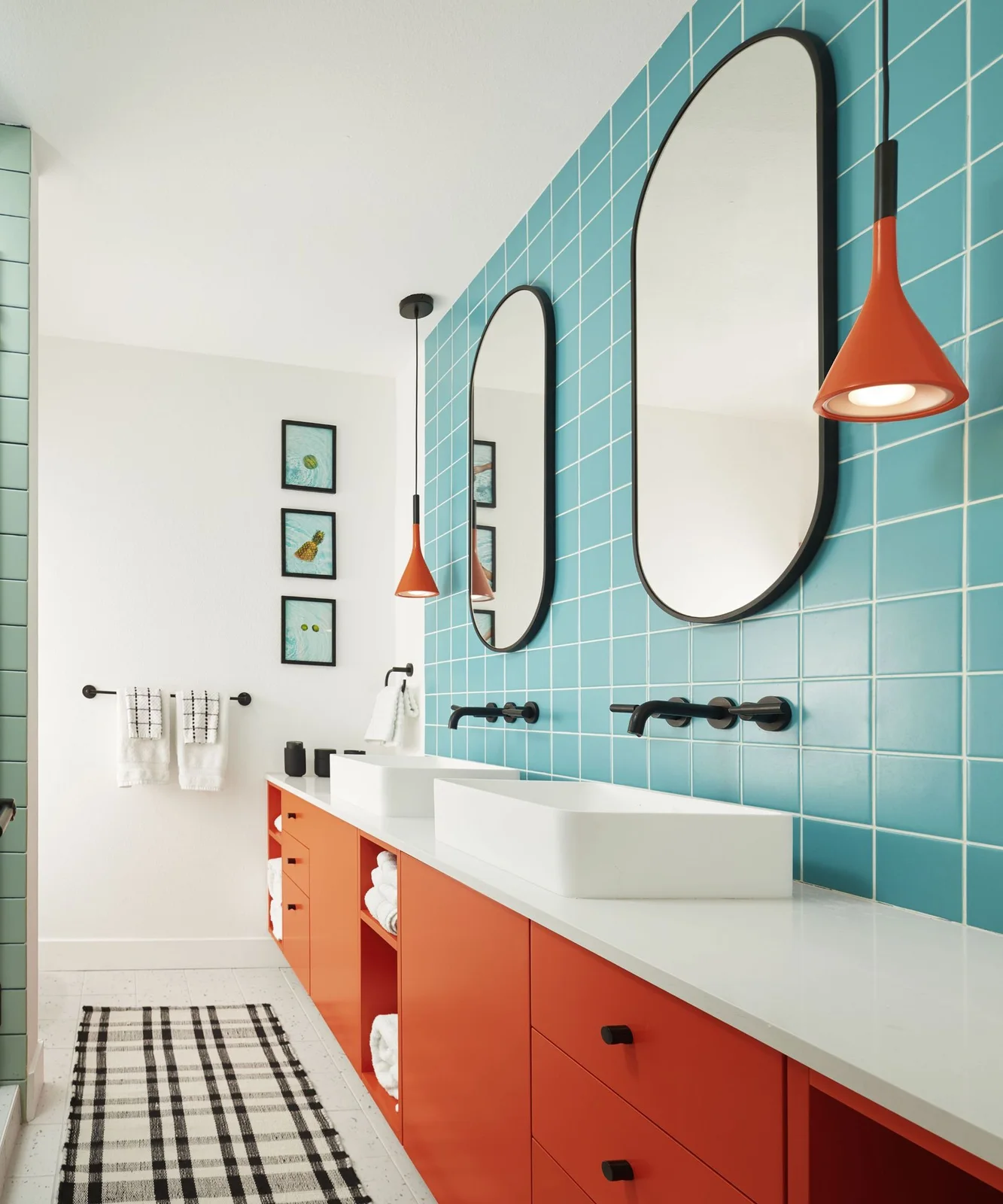
Give Blue Tiles an Orange Cabinet Counterpart
 SaveSupport Non AI Creator
Image credit: Benjamin Moore
The blue tile grid provides a cooler backdrop for the orange cabinet fronts and pendant shades. Oval mirrors soften the repeated squares, while white basins and counters separate the stronger colors. A checked runner introduces another small pattern along the floor without repeating the wall’s larger blue field.
View paint and tile samples beside one another before committing to complementary colors. Test drawer access and basin height with the people who will use the vanity. Confirm all electrical fittings are appropriate for their bathroom location, and choose floor textiles that stay manageable under the room’s actual moisture and cleaning routine.
IDEA 08 / 20
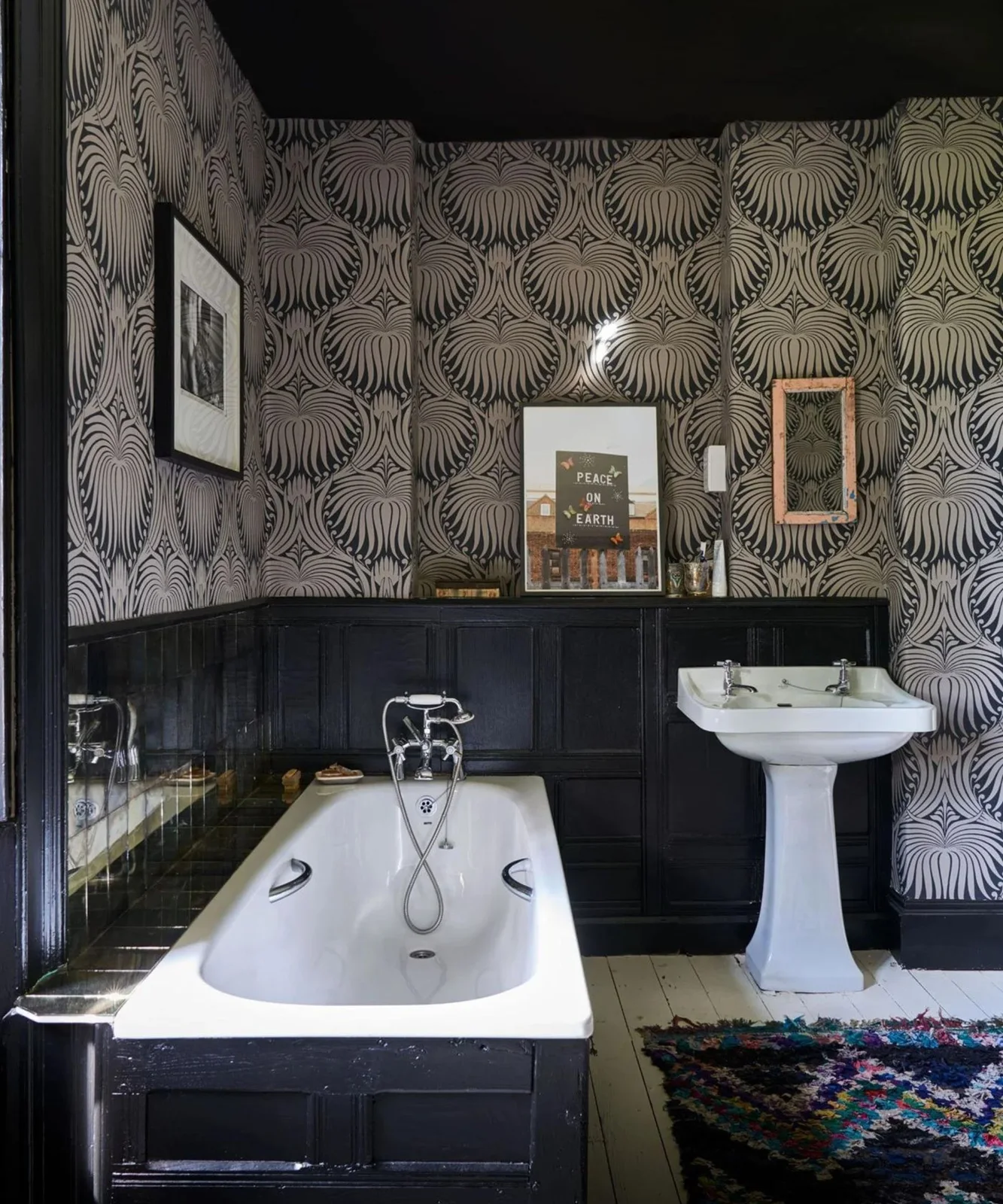
Use Dark Paneling Beneath an Expressive Wallpaper
 SaveSupport Non AI Creator
Image credit: Farrow & Ball
Dense monochrome wallpaper introduces repeated curved shapes above the black paneling. The white bath and pedestal basin remain distinct within that darker room, while the multicolored rug supplies smaller warmer accents below. A few framed pieces continue the collected appearance without covering the whole patterned wall.
Compare a larger wallpaper section with the dark paint in both daylight and evening light before installation. Check the wall covering’s suitability for the room and keep it outside direct splash exposure where required. Choose a washable, stable floor textile and retain useful space around the basin for ordinary cleaning.
IDEA 09 / 20
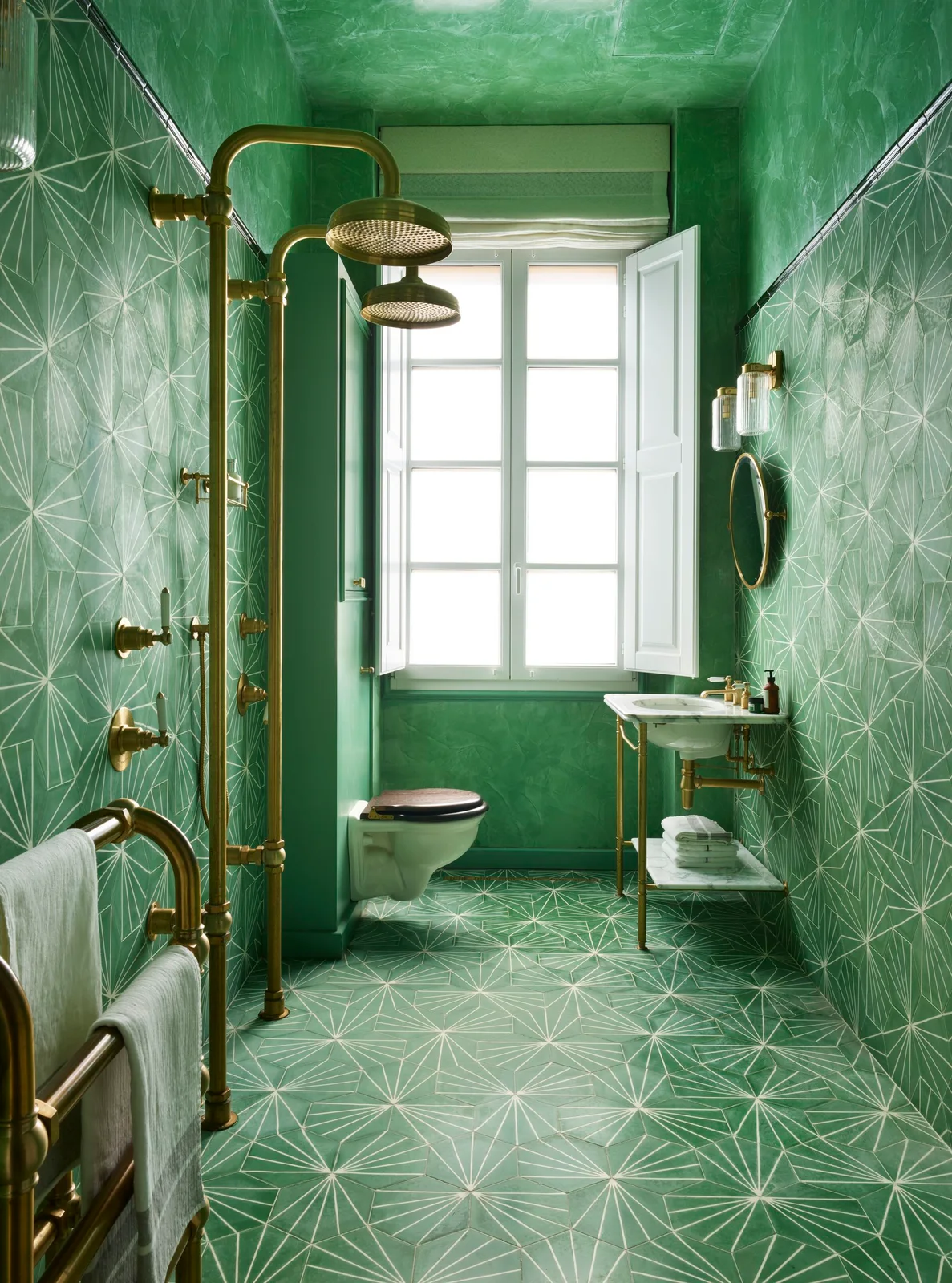
Carry Green Geometric Pattern Across Walls and Floor
 SaveSupport Non AI Creator
Image credit: Drummonds
The green geometric pattern continues from the shower walls onto the floor, making the room feel closely connected in color. A green ceiling and window blind extend that background above. Gold-toned fittings provide brighter outlines, with the pale basin and towel separating smaller useful details from the surrounding pattern.
Plan the pattern at wall-to-floor junctions before installation, checking cuts around the window and fittings. Confirm each tile’s suitability for its intended surface, including shower-floor performance. Compare grout colors in a larger sample so the pattern remains readable, and leave reachable storage for washing products rather than relying on decorative surfaces.
IDEA 10 / 20
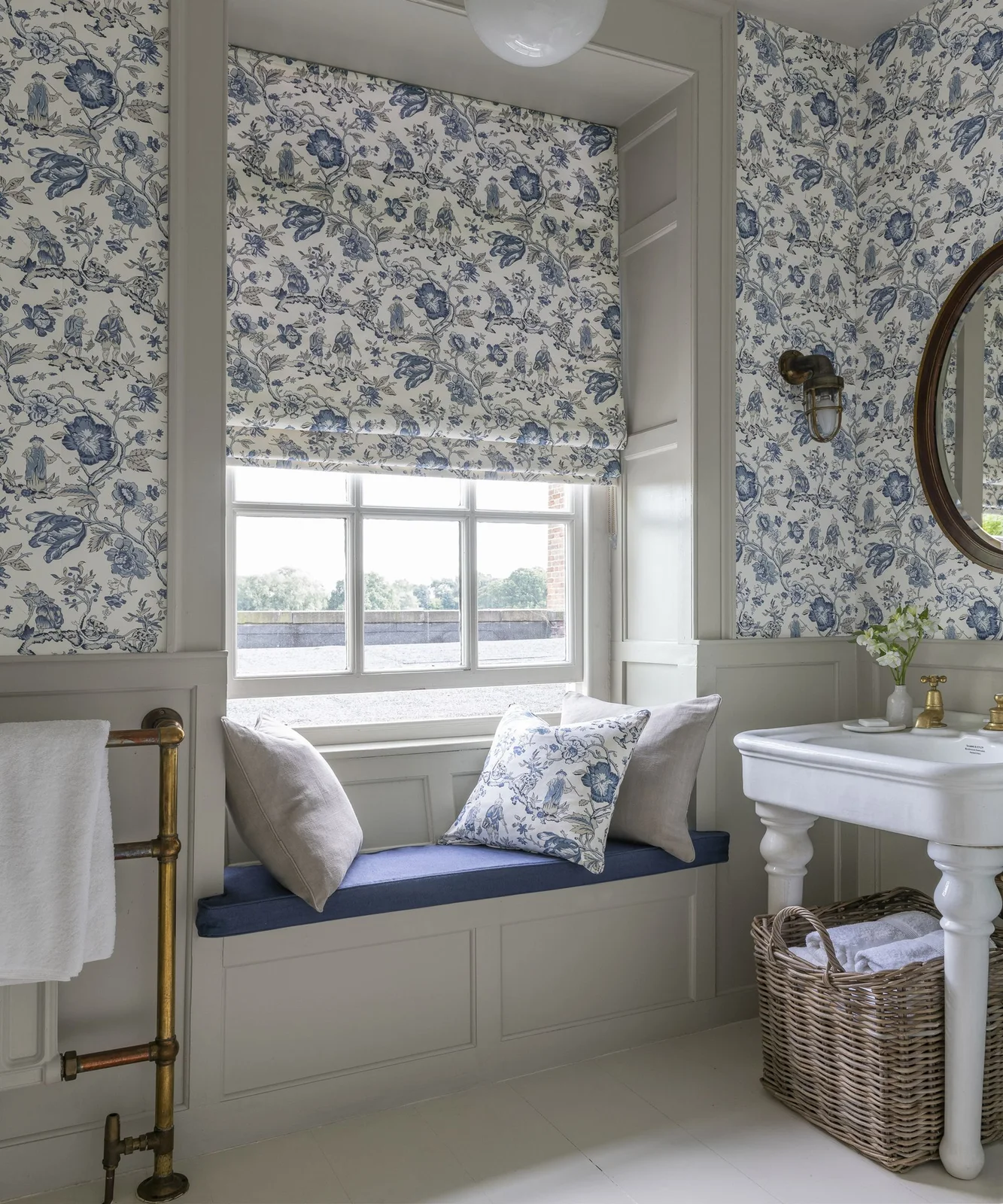
Repeat a Botanical Print in Several Useful Places
 SaveSupport Non AI Creator
Image credit: Warner House
The botanical print repeats across the walls, blind and cushion, tying several separate surfaces together. The blue window seat gives that lighter pattern a stronger base. Pale paneling and a white pedestal basin leave quieter sections around the room, with a woven basket adding a different texture beneath.
Compare the print repeat across wallpaper and fabric before ordering, especially if the window recess exposes both closely together. Choose cushion and blind fabrics from their actual care requirements. Keep the seat clear enough to use and place towel storage where it can be reached without blocking access to the basin.
PART 03
Combine contrasting surfaces and adjoining patterns
IDEA 11 / 20
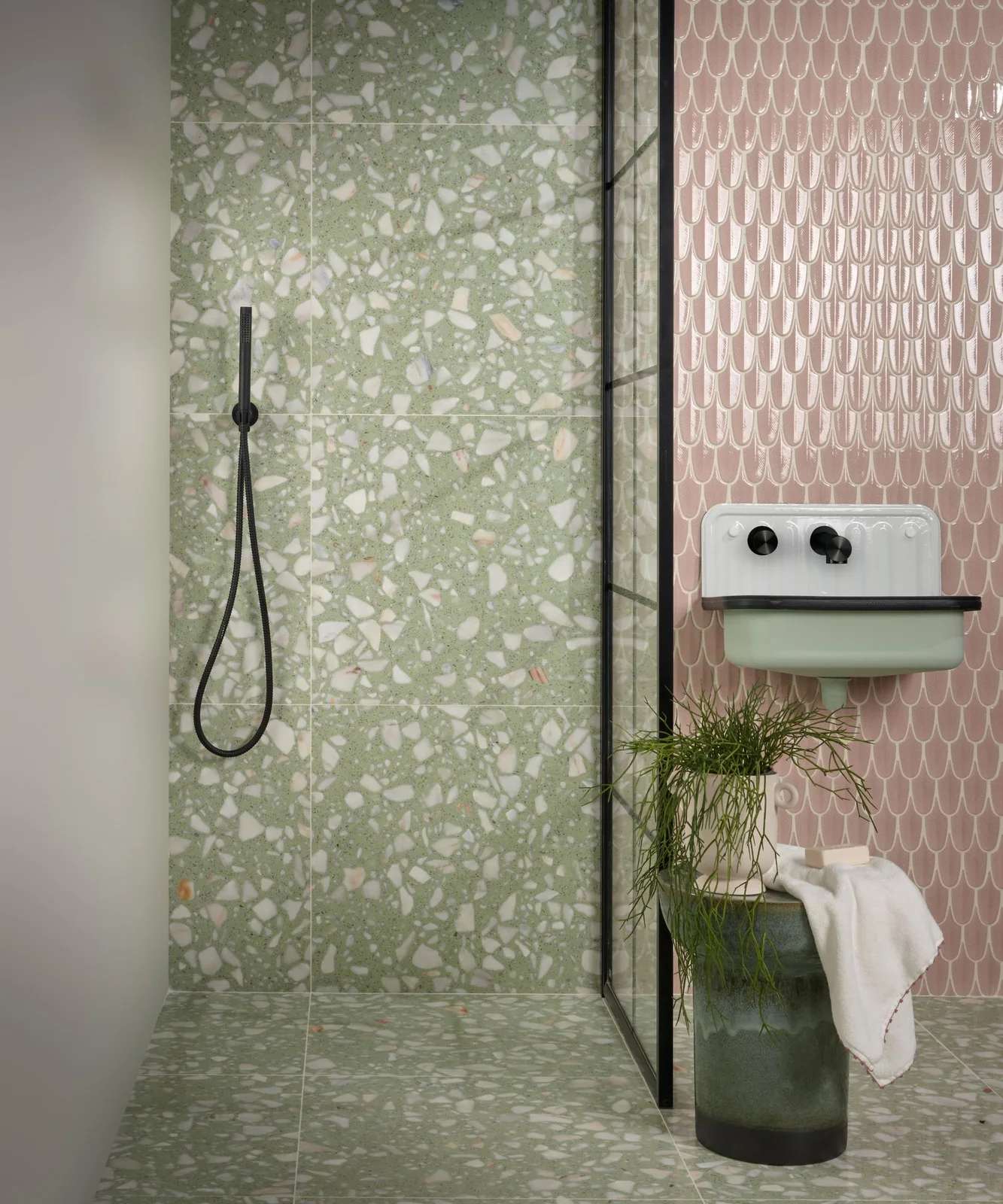
Connect Speckled Green Surfaces with Pink Scallops
 SaveSupport Non AI Creator
Image credit: West One Bathrooms
The green speckled surface covers both the shower wall and floor, creating a broad varied pattern beside the pink scallops. A pale green basin connects the two areas through color, while black fittings add smaller crisp outlines. The glass shower screen keeps the different surface treatments visible together.
Compare the size of the speckles with the scallop pattern over a larger area before ordering. Confirm the actual products suit the shower and floor, checking their cleaning instructions as well as appearance. Pink bathroom tile ideas offer more color combinations if you want a pink feature to sit beside another patterned surface.
IDEA 12 / 20
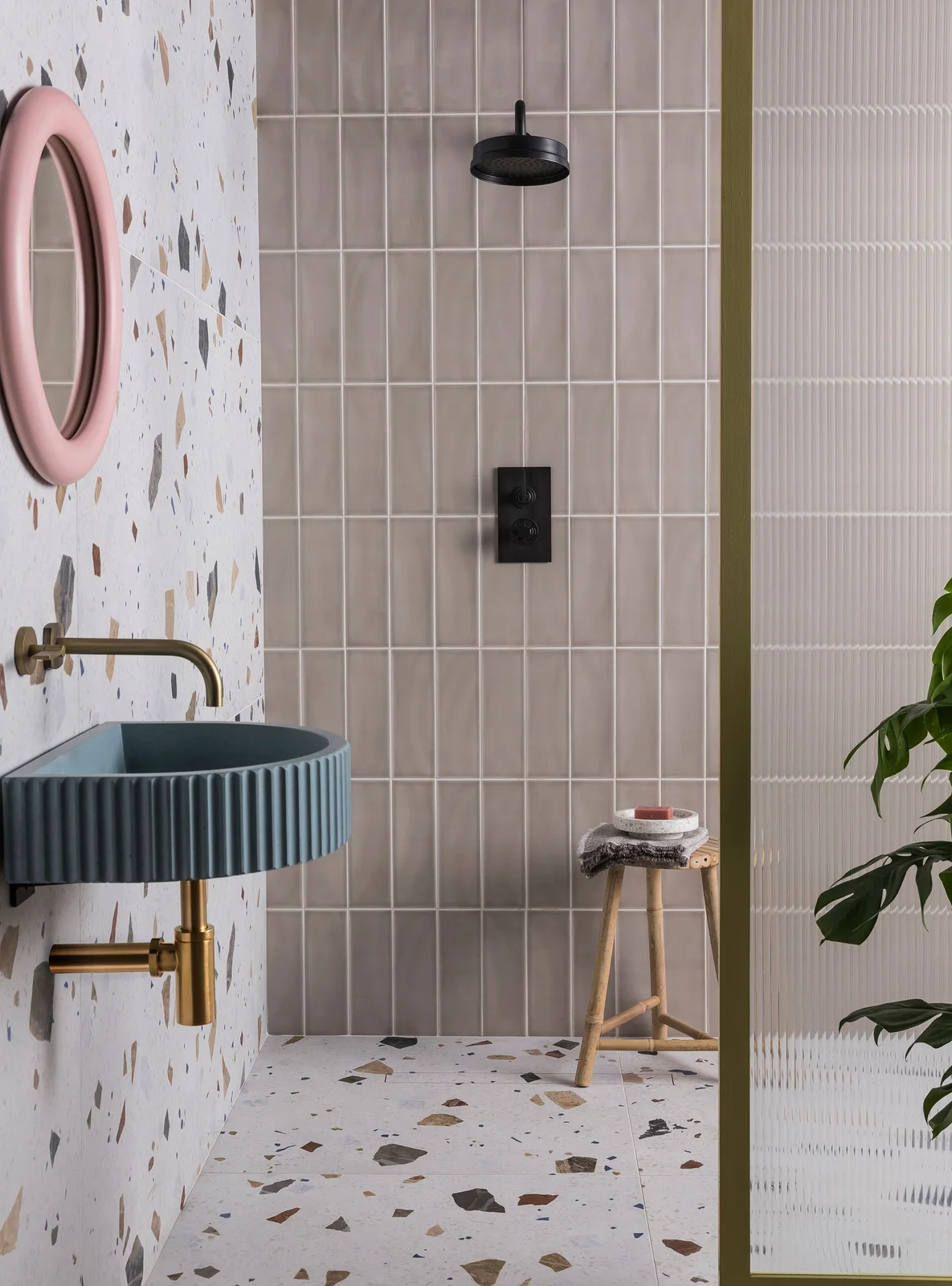
Layer a Ribbed Blue Basin with Pink and Speckled Surfaces
 SaveSupport Non AI Creator
Image credit: Oli Douglas / Mandarin Stone
The ribbed blue basin gives this room a small sculptural feature against the speckled wall. A pink round mirror relates to the shower tiles, whose rectangular grid provides another pattern beside the irregular speckles. Black fittings and warm metal details add separate accents without changing the larger surface colors.
Check the basin’s usable depth and the tap position together before ordering, leaving enough room for comfortable washing. Compare the tile and speckled finish samples under the same light. Modern bathroom tile ideas show more surface combinations when you need to coordinate shaped fixtures with both wall and floor patterns.
IDEA 13 / 20
Connect a Patterned Floor with an Adjoining Room
 SaveSupport Non AI Creator
Image credit: Future/Mel Yates
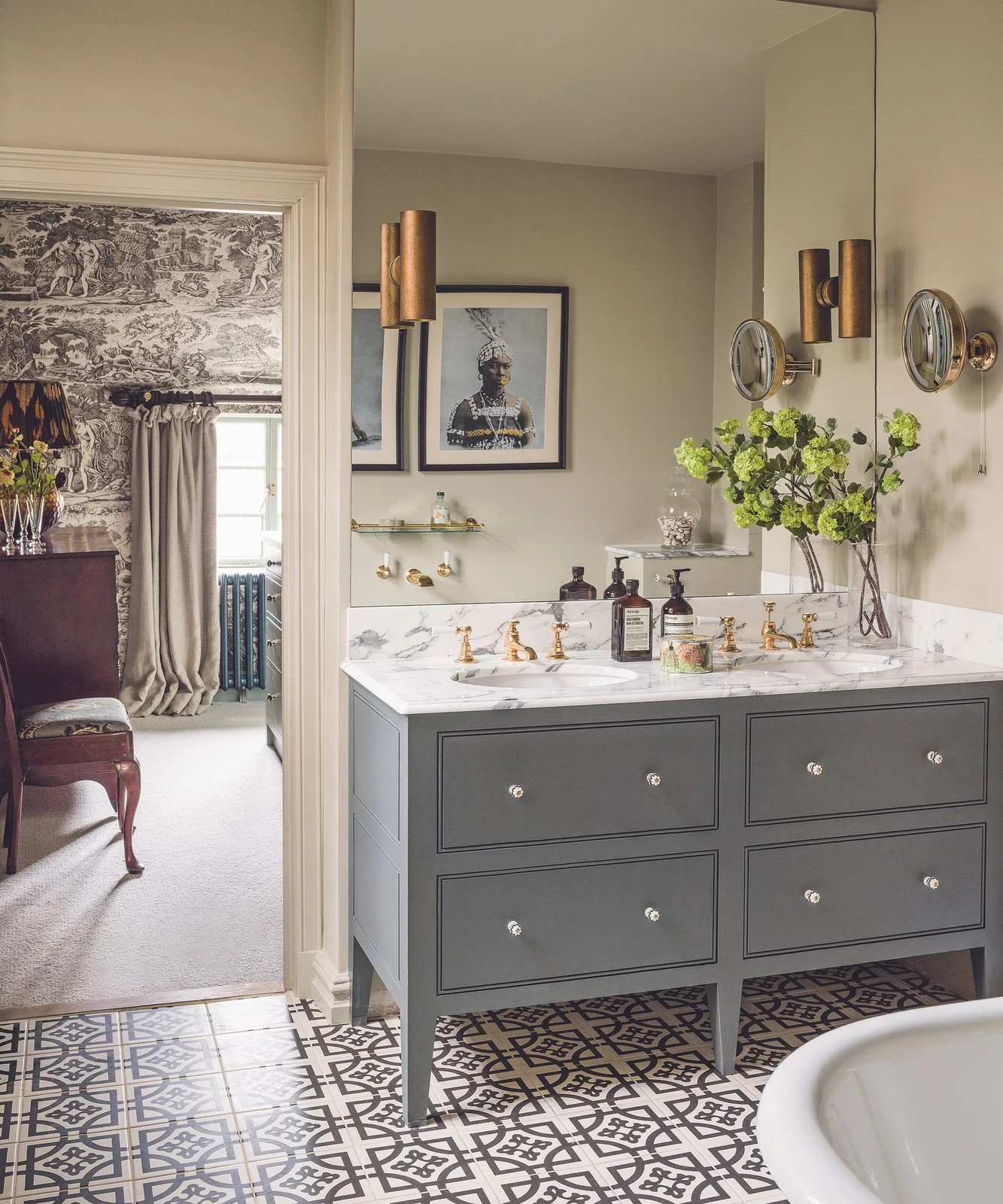
The patterned floor gives this bathroom a detailed lower surface beneath the quieter gray vanity. Large mirrors add reflections above, with warm metal lights introducing a separate color beside them. Through the doorway, the adjoining bedroom’s patterned wallpaper creates another layer that can be seen from within the bathroom.
Compare the floor pattern with the adjacent room as well as the bathroom cabinets, especially when the door is often open. Keep drawer access and standing space practical at both basins. Choose counter accessories that are easy to remove, allowing the floor and neighboring pattern to provide detail without a crowded washing area.
IDEA 14 / 20
Let a Geometric Pattern Cover Several Surfaces
 SaveSupport Non AI Creator
Image credit: Katrin Vierkant
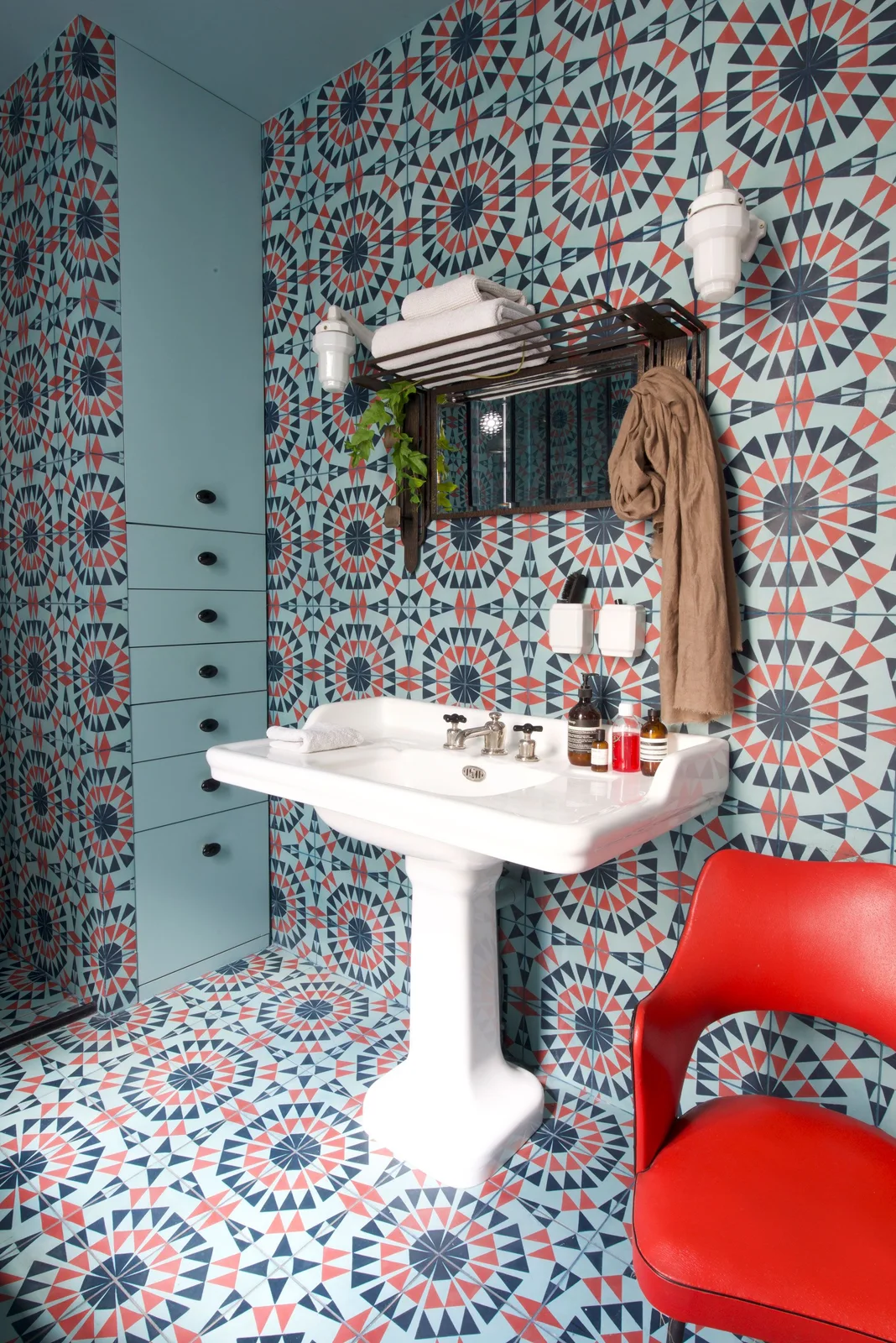
The geometric pattern crosses walls and floor, giving this room a continuous mixture of blue, red and dark shapes. A pale blue cabinet supplies a quieter storage surface at the side. The pedestal basin and red chair introduce larger solid forms, with a wall rack gathering towels and other smaller items above.
Plan tile orientation and cuts across adjoining surfaces before installation so the pattern meets deliberately at corners. Confirm floor suitability separately from wall use. Keep the chair and wall rack outside necessary movement routes, choosing only the extra furniture that remains useful once the bathroom is occupied and towels are in regular use.
IDEA 15 / 20
Pair a Blue Bath with Two Scales of Pattern
 SaveSupport Non AI Creator
Image credit: CP Hart/Kit Kemp
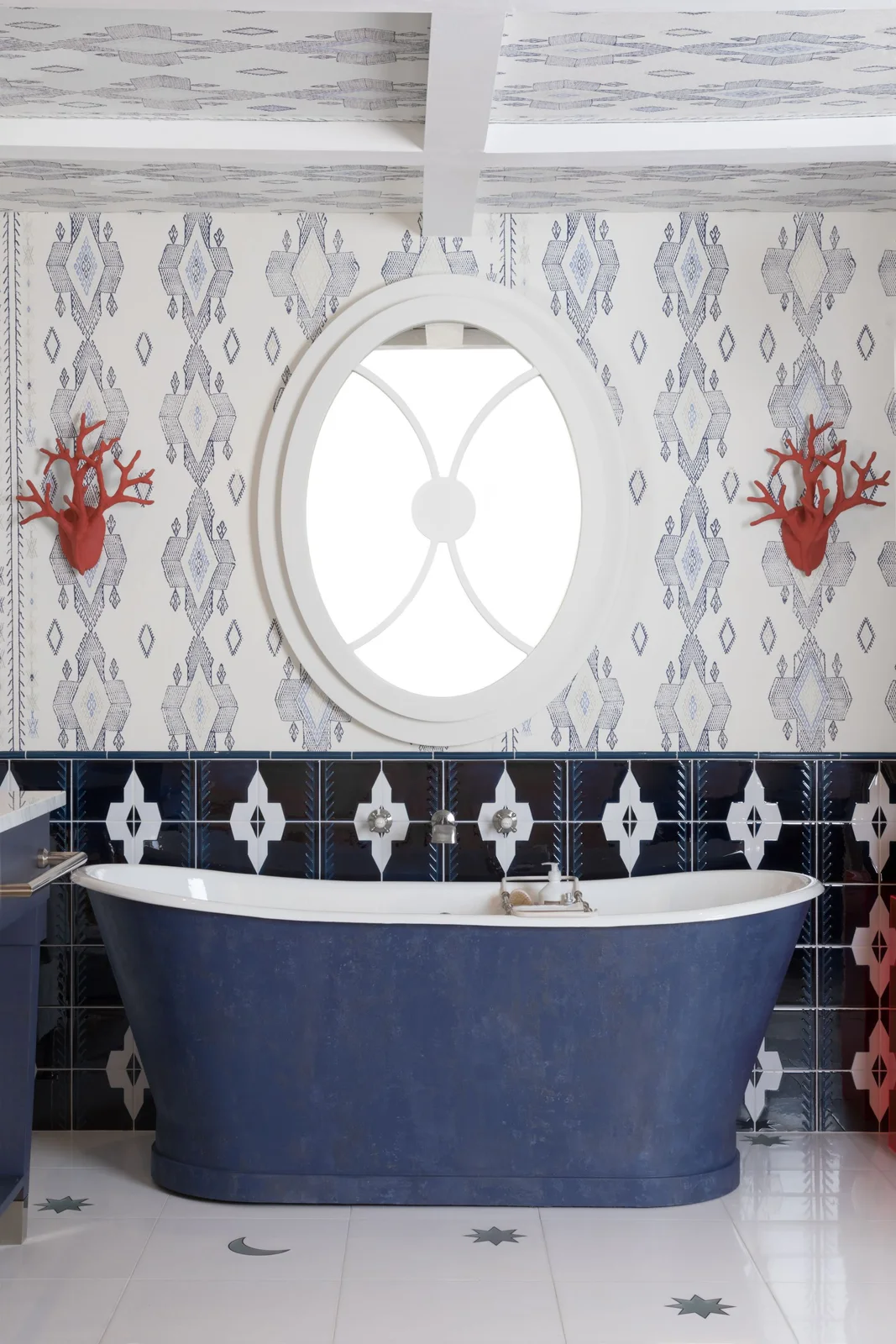
The blue bath stands against dark lower tiles with large pale motifs. A finer pattern continues above around the round window, making the wall feel layered without repeating the same scale everywhere. Red wall lights supply a brighter accent on either side of the window and the bath’s broad blue shape.
Compare the two pattern scales across a larger sample rather than selecting them separately. Plan joins around the round window and have the chosen fittings assessed for their bathroom position. Leave practical access behind and beside the freestanding bath, checking cleaning and maintenance needs before choosing its final placement.
PART 04
Choose expressive baths, murals and smaller details
IDEA 16 / 20
Use Green Upholstery Beside a Deep Bath Alcove
 SaveSupport Non AI Creator
Image credit: BC Designs/Jake Eastham
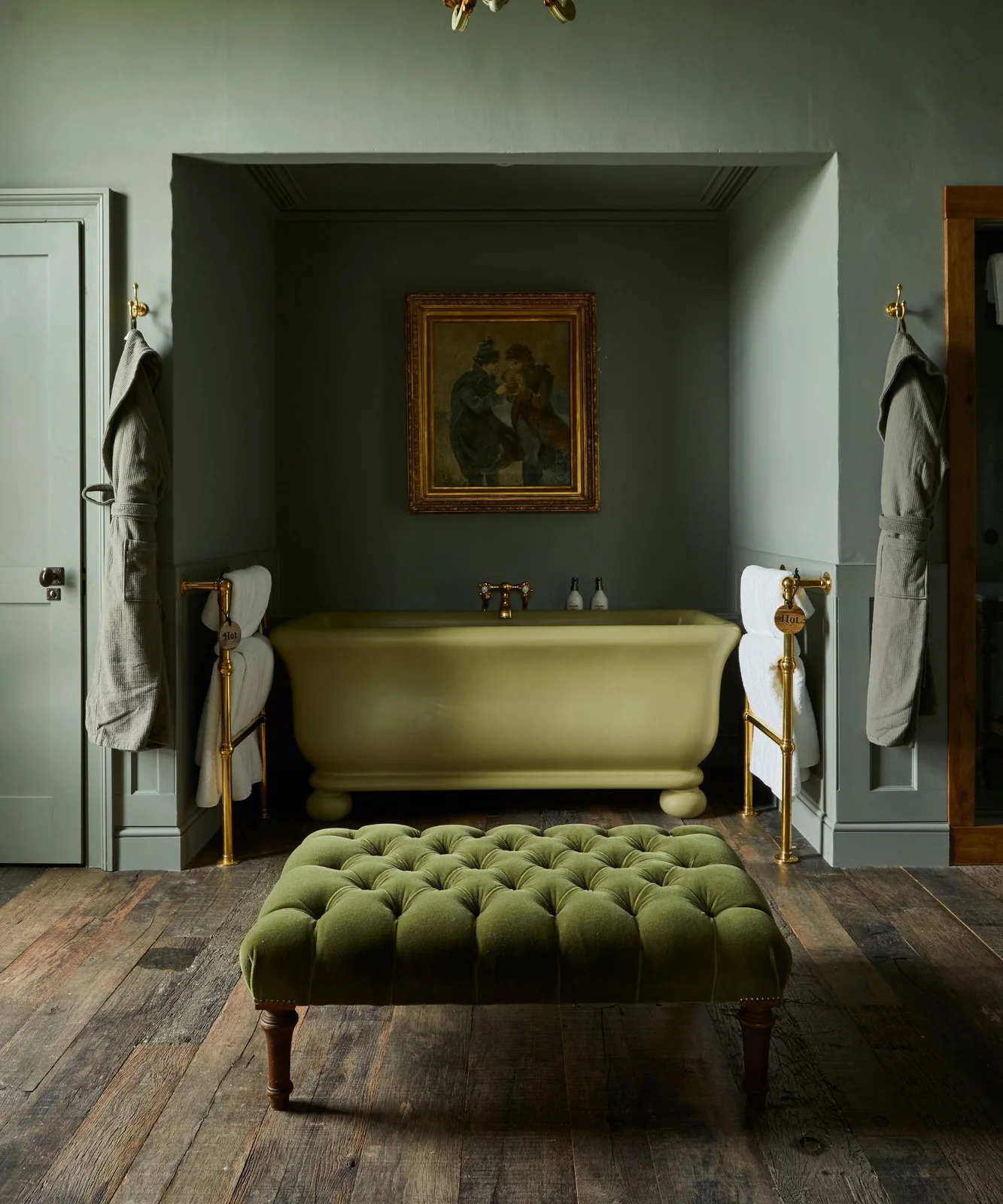
Green repeats across the bath, alcove and tufted ottoman, giving this room a layered character through different shapes and textures. Framed artwork introduces a separate decorative rectangle above the tub. Warm metal towel rails stand out against the darker walls, while the wooden floor provides another quieter surface below.
Check the ottoman’s fabric care and suitability for a damp room before placing upholstery beside a bath. Leave enough circulation to use the tub and towel rails comfortably. Compare several green samples together, and keep artwork away from repeated splashes with fixings appropriate to the wall and the room’s conditions.
IDEA 17 / 20
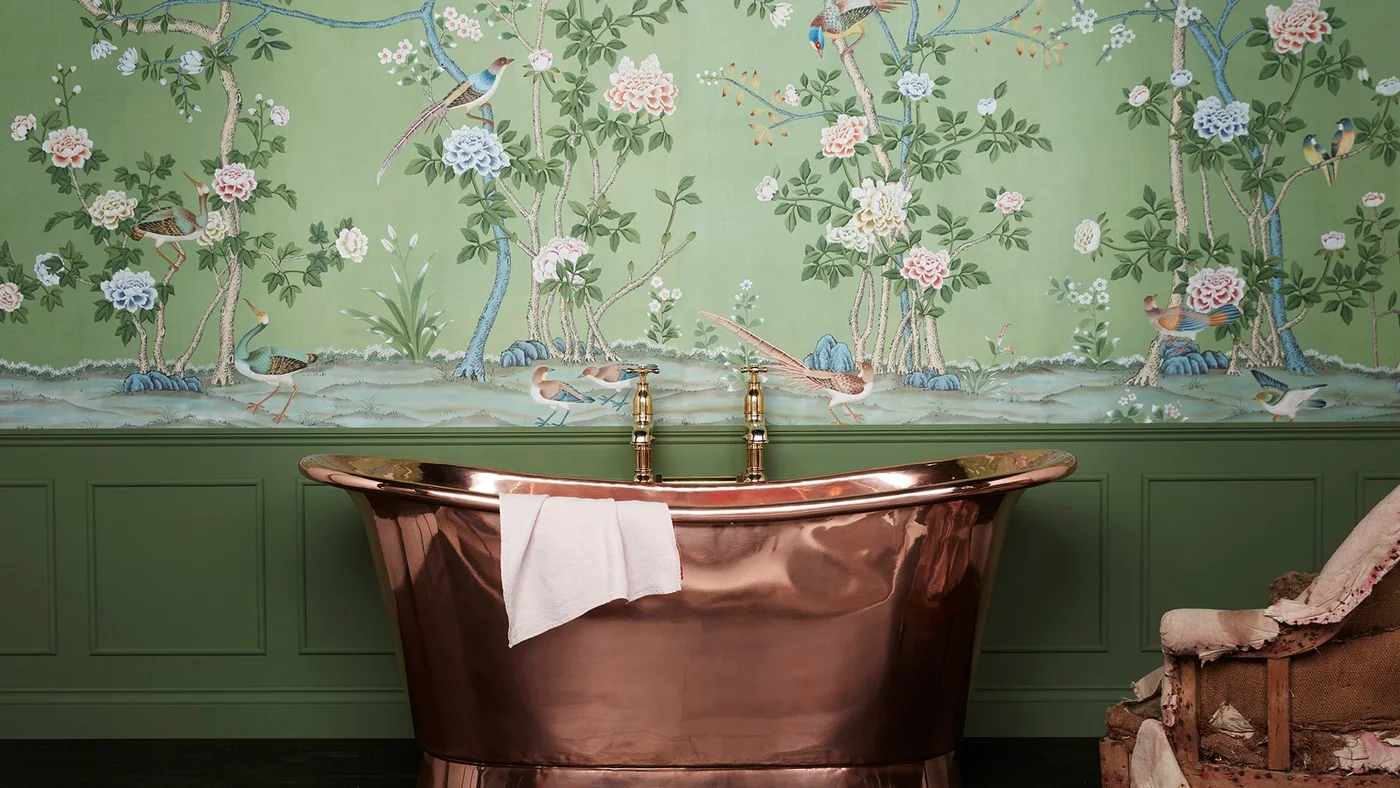
Set a Reflective Bath Below a Detailed Botanical Wall
 SaveSupport Non AI Creator
Image credit: Drummonds
The reflective bath introduces a warmer color beneath the green botanical wall. Paneled lower walls give the detailed print a quieter base, while the upholstered chair adds another pattern at the side. Small flowers, birds and branches spread across the upper wall without needing a collection of framed pictures above the bath.
Confirm the bath’s actual material, finish and care instructions before selecting a reflective surface. View a larger wallpaper panel to understand where important details will fall behind the fixture. Keep upholstered furniture where it can remain dry, and plan access around the bath for cleaning rather than judging the straight-on photograph alone.
IDEA 18 / 20
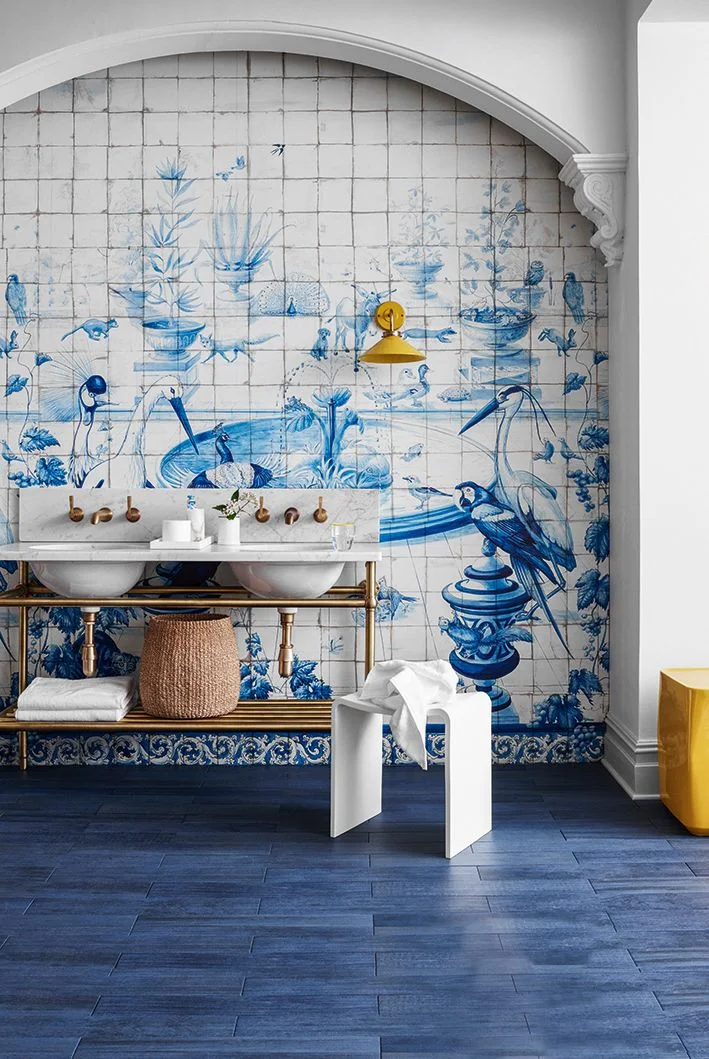
Give a Double Basin a Large Scenic Backdrop
 SaveSupport Non AI Creator
Image credit: Future
The scenic blue-and-white backdrop supplies the room’s largest illustrated surface above the double basin. A blue floor repeats its cooler color below, with yellow accents introducing warmer contrast. The arched border gives the scene a separate architectural frame around its smaller figures and decorative details.
Plan the scene around the basin and fittings before installation, checking which details remain visible at standing height. Confirm the wall finish is suitable for the actual splash exposure and cleaning routine. Keep the surrounding storage simpler if the mural already supplies the detail you want, leaving useful clear space at both bowls.
IDEA 19 / 20
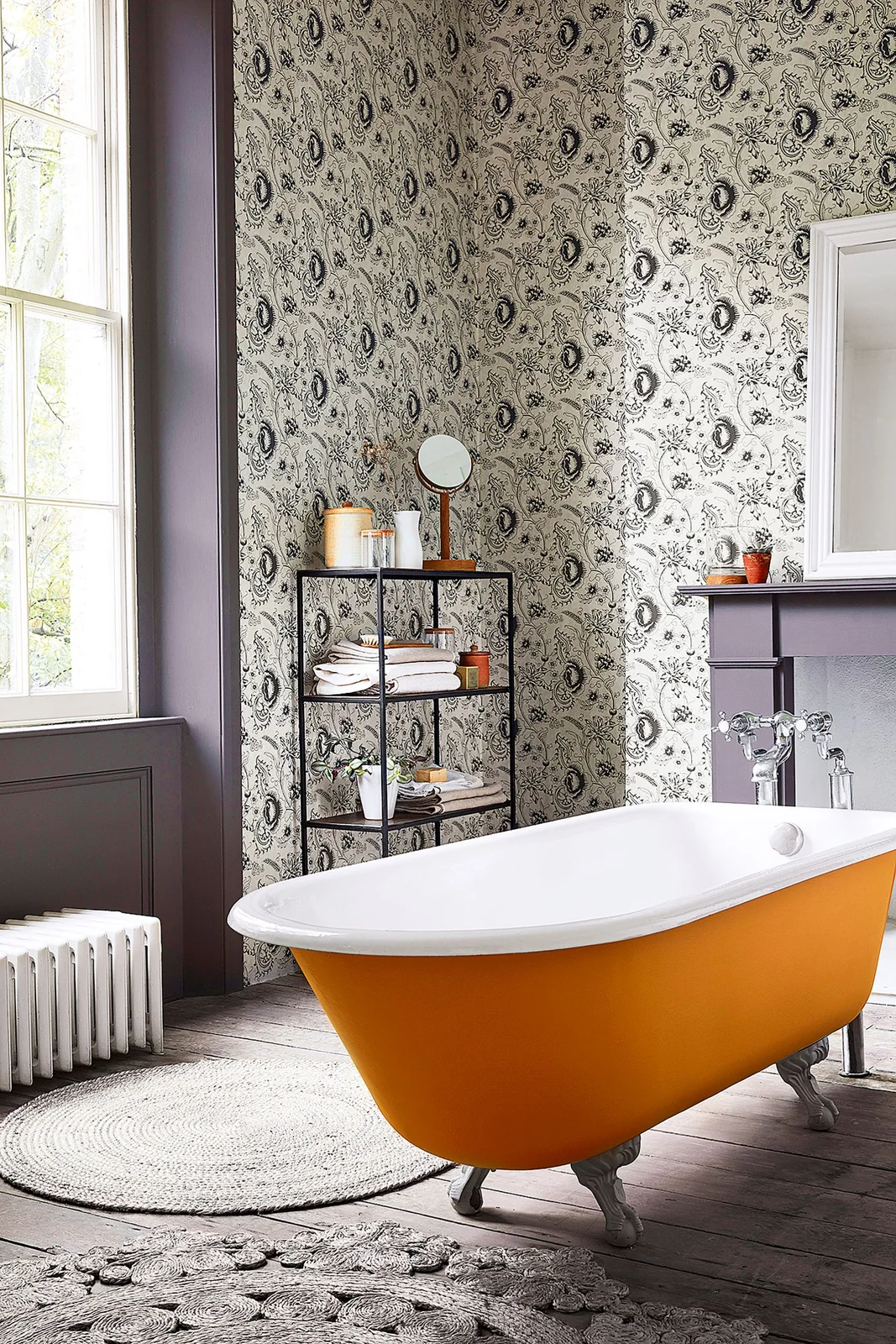
Combine an Orange Bath with Dense Monochrome Print
 SaveSupport Non AI Creator
Image credit: Little Greene Woodblock Mono wallpaper Knightsbridge wallpaper
The orange bath supplies a strong solid color below the dense monochrome wallpaper. Dark plum trim adds another warm-toned border around the wall and window. Open shelves keep towels and smaller objects visible beside the bath, while the pale rug gives the lower area a quieter rounded shape.
Compare the orange and plum paint samples with the wallpaper in the room before refinishing existing surfaces. Follow the bath manufacturer’s guidance for its actual finish rather than using ordinary wall paint. Keep open storage manageable for cleaning and choose a floor textile suitable for the room’s moisture and regular washing routine.
IDEA 20 / 20
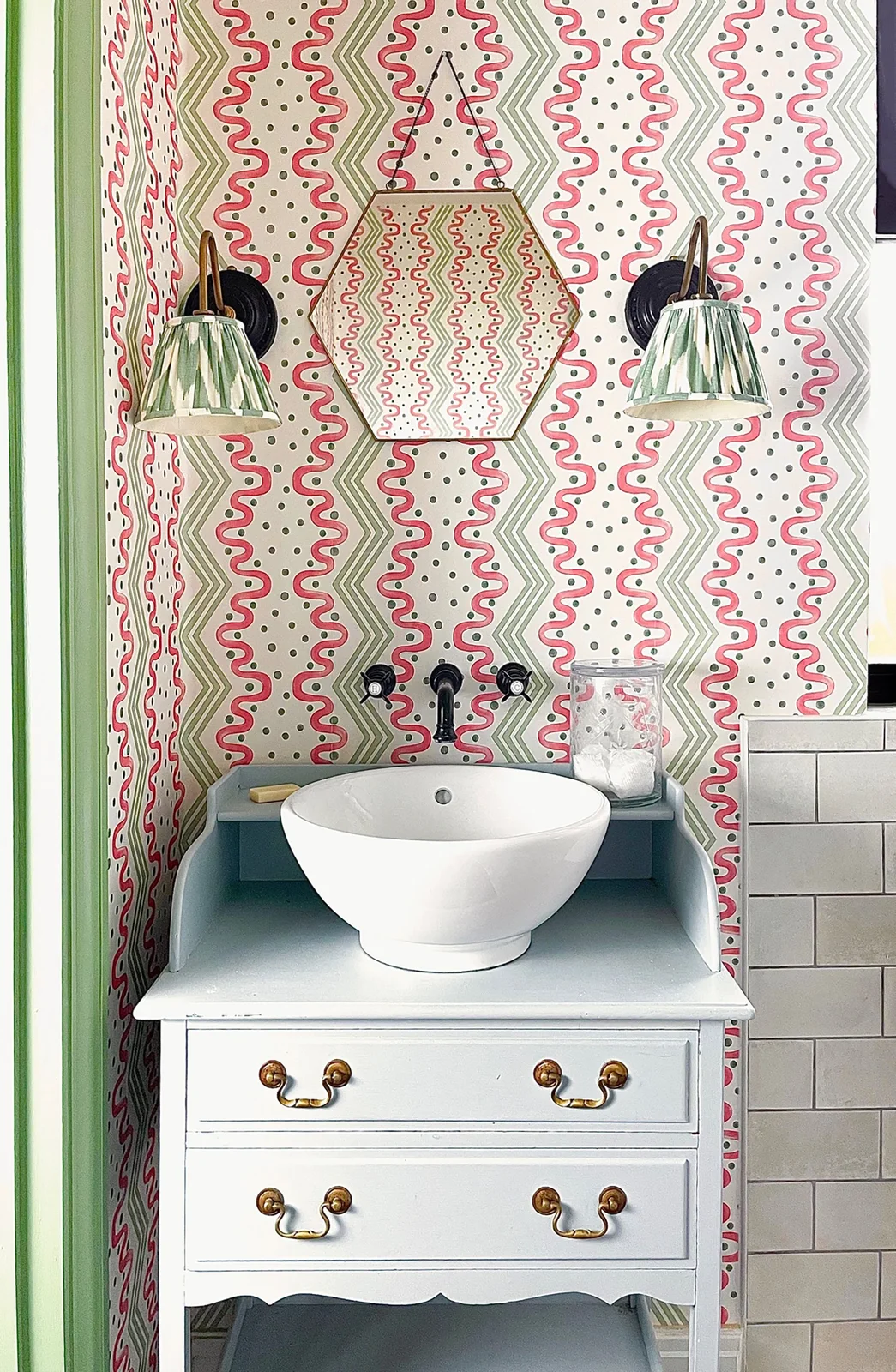
Repeat a Playful Pattern Around a Small Vanity
 SaveSupport Non AI Creator
Image credit: House of Norica
Pink waves and green angular shapes repeat around this small vanity, giving the walls a lively patterned background. The hexagonal mirror introduces a separate outline above, with green patterned shades adding detail on both sides. A white basin and pale drawers keep the useful furniture easier to distinguish from the wall.
Compare the wallpaper and shade fabrics together, checking how their different repeats look at normal basin distance. Confirm electrical fittings suit the room’s conditions and placement. Choose a vanity from useful storage and comfortable washing height, leaving counter space for daily items instead of adding ornaments solely to match the pattern.
BRING IT ALL TOGETHER
Keep the useful parts clear within the pattern
Choose a starting point you love, such as an expressive bath color or botanical print, and compare the other finishes beside it. Look at full pattern repeats and actual surface samples rather than relying on small swatches. Keep basin space and the main walking route useful as the decorative layers develop.
Check each finish for its intended bathroom position and ask about the cleaning it will need. Use suitable fittings and professional installation where required, keeping service access around baths and storage practical. Choose textiles and accessories that are easy to care for so the room’s character does not depend on a display that is difficult to maintain.