Monochrome bedrooms can use a pale bed within darker outlines or a deeper wall behind lighter bedding. These photographs include modern and traditional furniture, full room arrangements and closer bedside details. Gray, warm wood and a few small colored accents soften the larger black-and-white palette without requiring every piece to match.
Choose the bed’s route, useful storage and reachable lighting before combining more patterns. One botanical-wall bedroom appears in three views to explain its wall arrangement, wardrobe access and bedside lighting separately. Compare actual finish and fabric samples under your room’s light, using their care instructions rather than assuming a photograph identifies materials or proves the arrangement will fit.
PART 01
Start with useful lighter and deeper surfaces
IDEA 01 / 20
Keep a White Bed Within a Few Dark Lines
 SaveSupport Non AI Creator
Image credit: Dulux
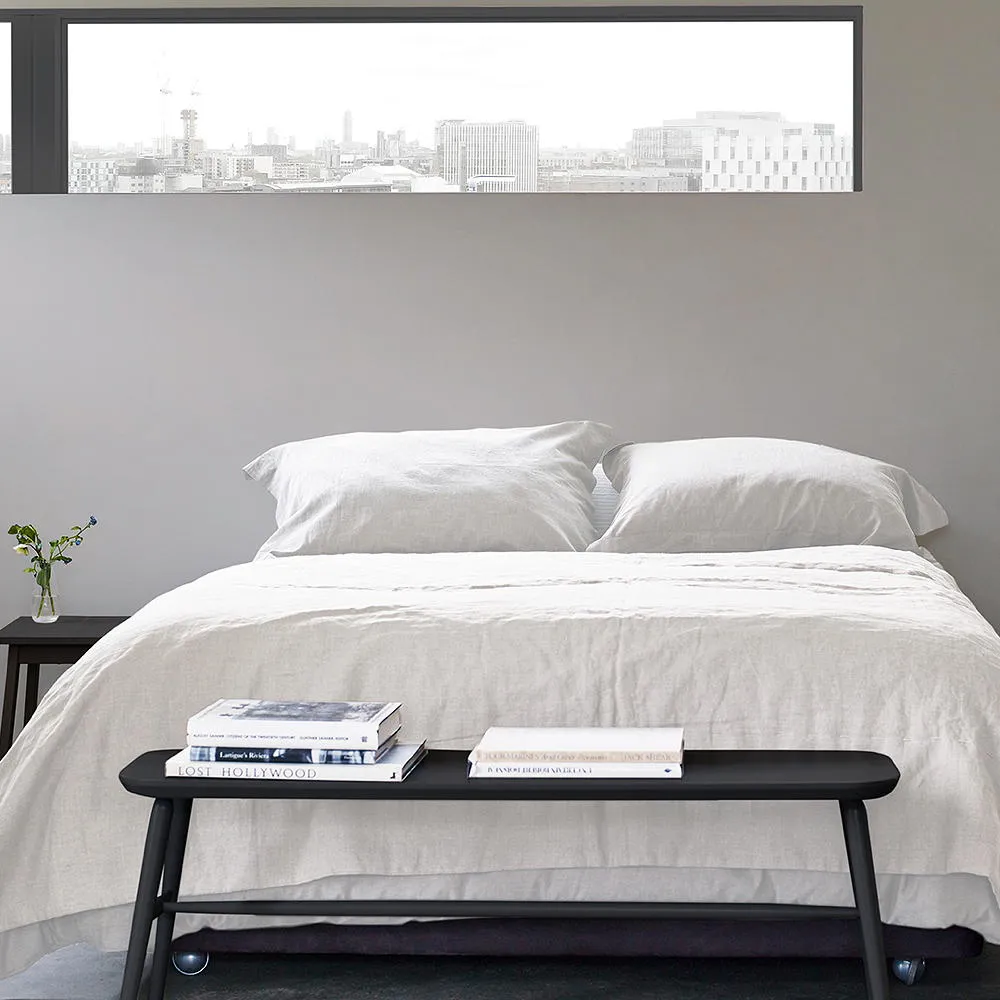
The white bedding supplies the room’s largest pale surface beneath the narrow window. Black furniture gives the bed smaller defined edges through the bedside table and longer bench. The gray wall softens the contrast, leaving the arrangement dependent on a few clear outlines rather than a repeated decorative pattern.
Check that a foot-of-bed bench preserves the walking route and serves a useful purpose before adding it. Keep books easy to lift when cleaning its surface and leave window access practical. Minimalist bedroom ideas compare similarly restrained arrangements, helping you decide which pieces support daily use without turning the bed’s surrounding space into storage.
IDEA 02 / 20
Balance an Attic’s Dark End Wall with Pale Slopes
 SaveSupport Non AI Creator
Image credit: Future PLC/Colin Poole
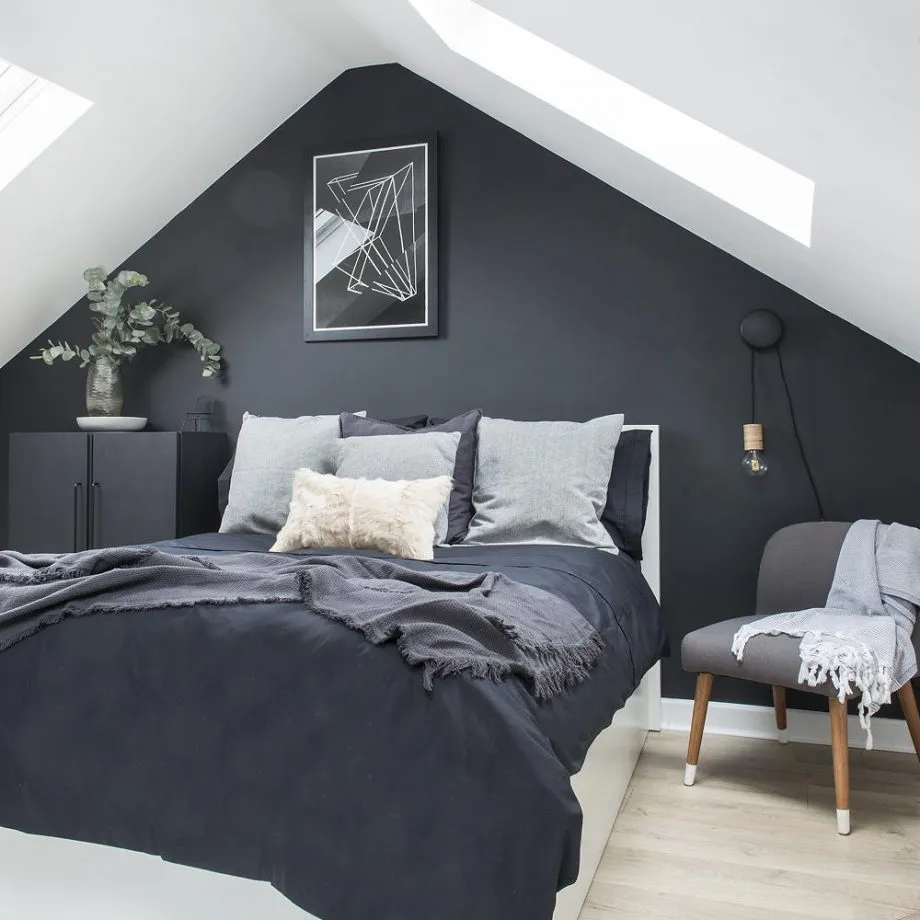
The dark end wall gives the bed a deeper background while the pale slopes remain separate lighter surfaces overhead. Gray bedding connects the bed with that wall without matching every shade. The framed print adds one smaller upright detail, with the chair kept to the side of the sleeping area.
Check headroom at the bed and chair before copying furniture positions beneath slopes. Choose skylight coverings around actual light control, privacy and access for cleaning. Test the end-wall color under daylight and evening lamps, keeping bedside lighting reachable rather than relying on the skylights to provide useful light after dark.
IDEA 03 / 20
Give Charcoal Bedding a Lighter Pillow Group
 SaveSupport Non AI Creator
Image credit: Future PLC/Colin Poole
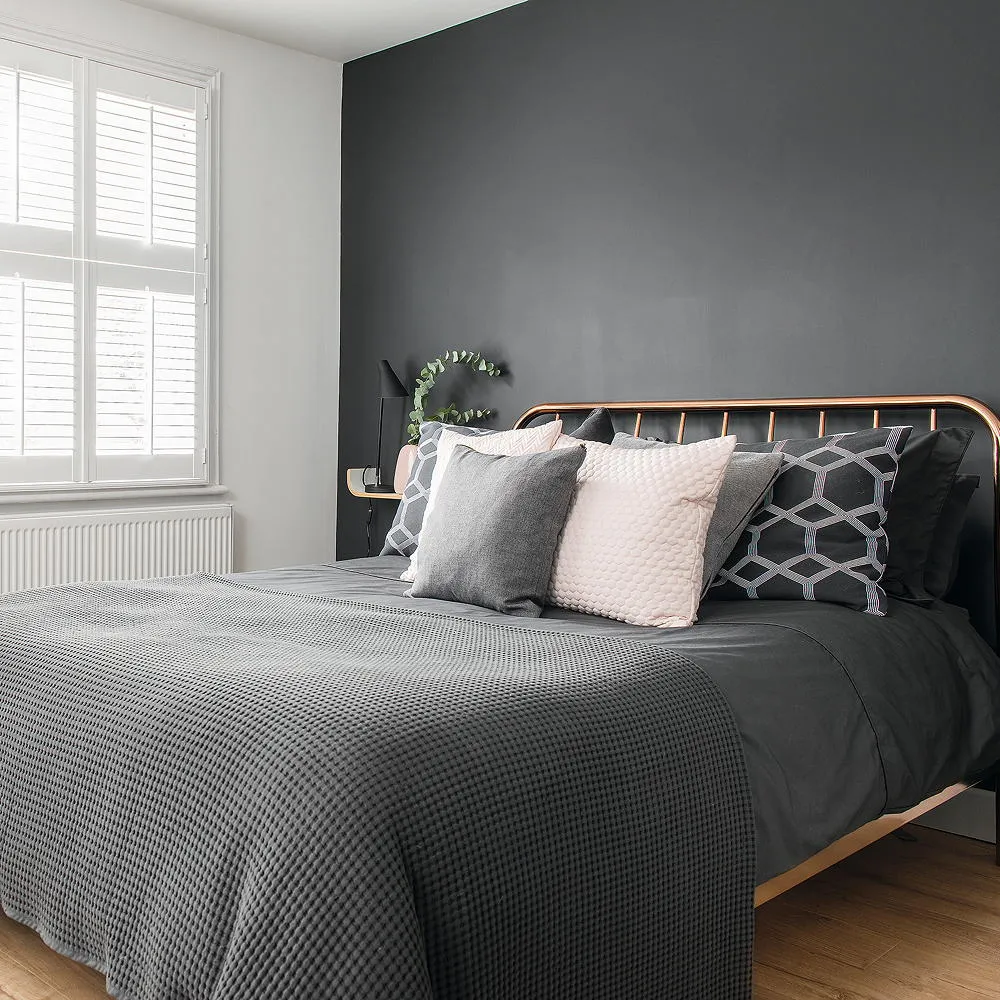
The charcoal wall and bed covering form a connected deeper group behind the paler cushions. Their lighter fronts interrupt the larger dark surface without changing the wall color. A warm-colored headboard supplies thinner contrasting lines, while the white shutters keep the window area lighter beside the bed.
Choose cushions that can be moved easily at bedtime, keeping only the layers that add useful comfort. Compare bedding colors under the room’s actual light and check washing guidance before selecting a textured cover. Keep the window controls accessible and ensure the bedside lamp can illuminate reading without requiring more objects on the small landing surface.
IDEA 04 / 20
Connect White Storage with a Dark Open Bed Frame
 SaveSupport Non AI Creator
Image credit: Future PLC/Fiona Walker-Arnott
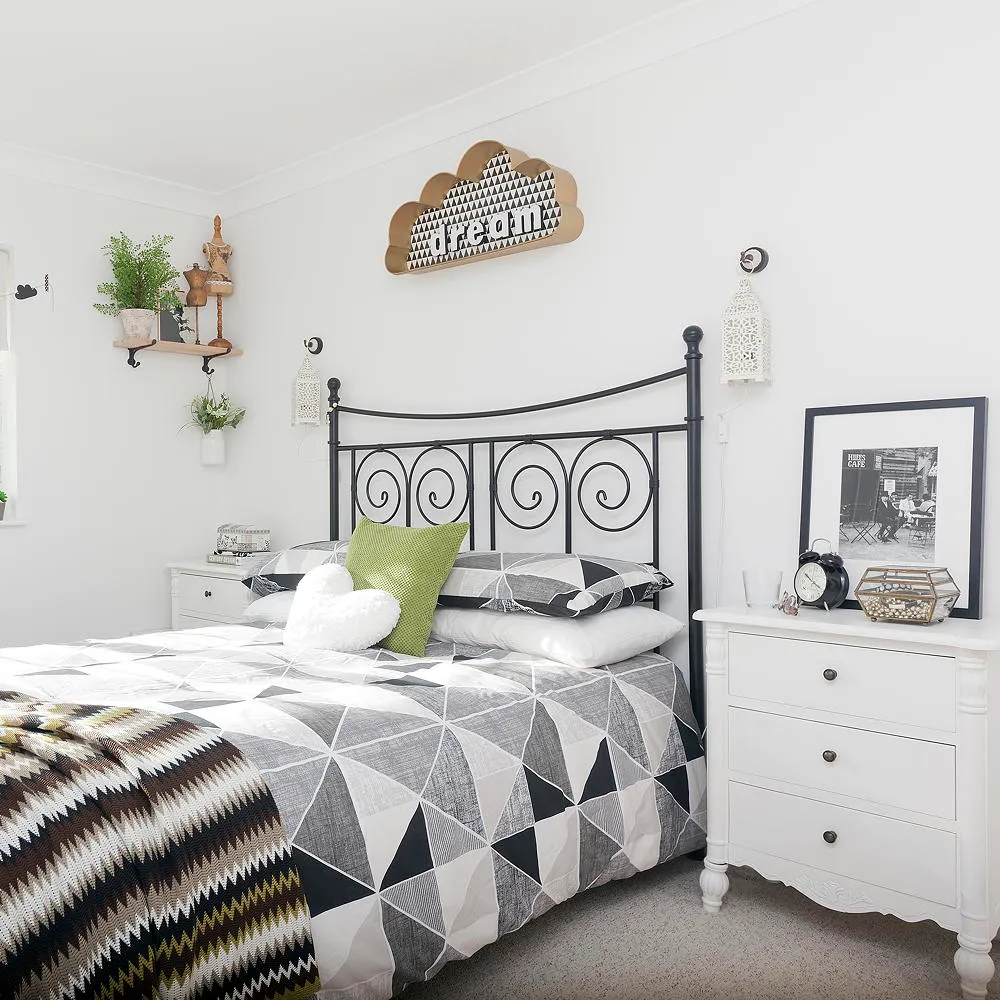
The dark open frame defines the bed against the white wall without another solid headboard panel. White drawer chests repeat the lighter surrounding surfaces, with gray geometric bedding introducing most of the pattern. The green cushion and plants add smaller accents while the larger arrangement remains a light-and-dark neutral group.
Check drawer movement beside the bed and keep both landing surfaces useful for everyday items. Choose geometric bedding that fits the mattress and washing routine, reducing extra cushions when they need storing overnight. Anchor suitable storage according to its instructions and secure wall decorations, keeping plants and their containers stable rather than filling the bedside route.
IDEA 05 / 20
Let One Botanical Wall Carry the Pattern
 SaveSupport Non AI Creator
Image credit: Future PLC/James French
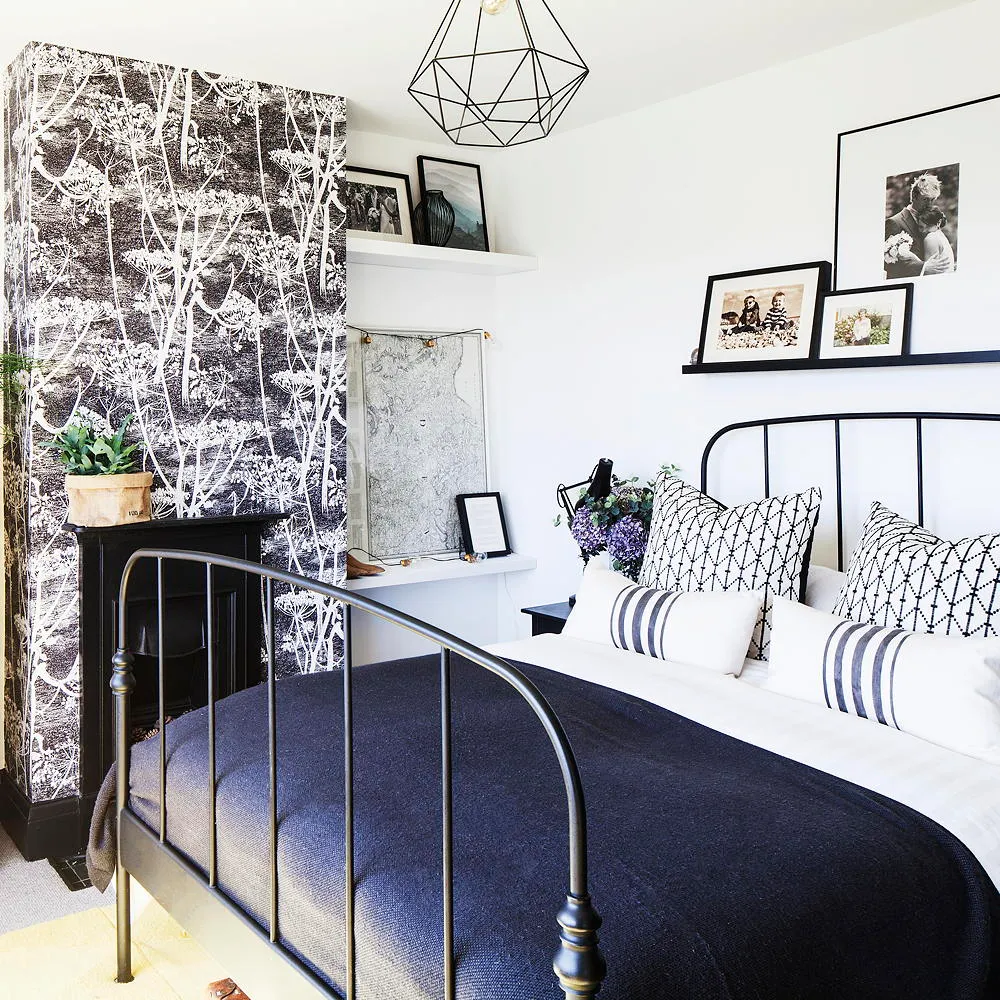
The botanical repeat concentrates the strongest wall pattern around the chimney shape. White walls leave the bed’s dark framework and picture ledges clearly outlined beside it. Smaller geometric pillows connect with the black-and-white group, while the plainer lower bed cover prevents every textile from adding another busy repeat.
Compare the wall pattern with bedding at full scale before choosing several smaller prints together. Secure picture ledges and framed pieces appropriately, keeping the bedside lamp’s controls reachable. Accent wall bedroom ideas compare other ways to contain a pattern, helping you decide which wall deserves the stronger detail while the remaining surfaces stay quieter.
PART 02
Compare patterns around the sleeping area
IDEA 06 / 20
Use Fine Wallpaper Behind a Plainer Gray Headboard
 SaveSupport Non AI Creator
Image credit: Future PLC/Colin Poole
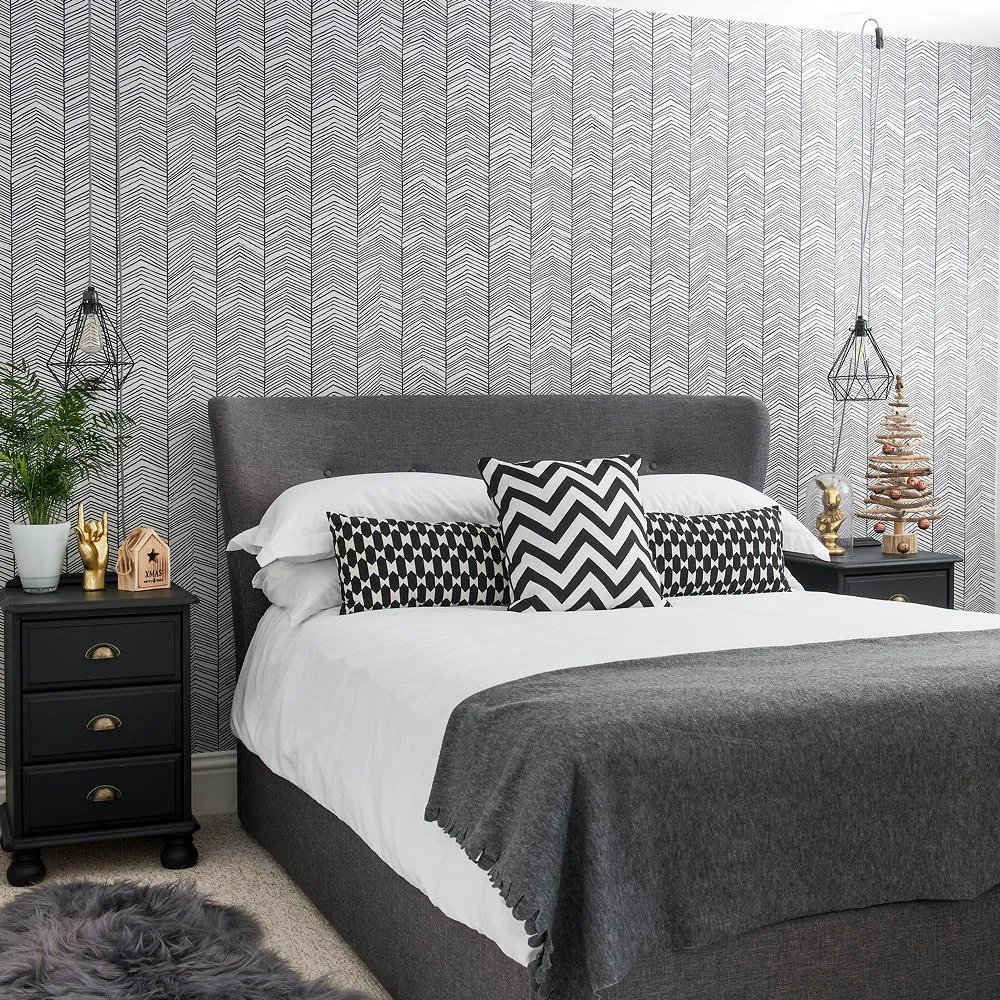
The finer herringbone repeat gives the wall a smaller pattern behind the plainer gray headboard. Dark drawer chests connect with the bedside pendants’ open outlines. White bedding supplies a larger lighter area between the wall repeat and the stronger patterns on the cushions, keeping their scales distinct.
View the wallpaper sample from bed height as well as close up before selecting a fine repeat across a whole wall. Check pendant placement and lighting controls around daily reading. Keep decorative objects limited on the drawer chests, choosing removable cushion covers and a bedding arrangement that remains manageable during regular washing and bedtime storage.
IDEA 07 / 20
Add Thin Dark Lines to a Pale Traditional Bed
 SaveSupport Non AI Creator
Image credit: Future PLC/James French
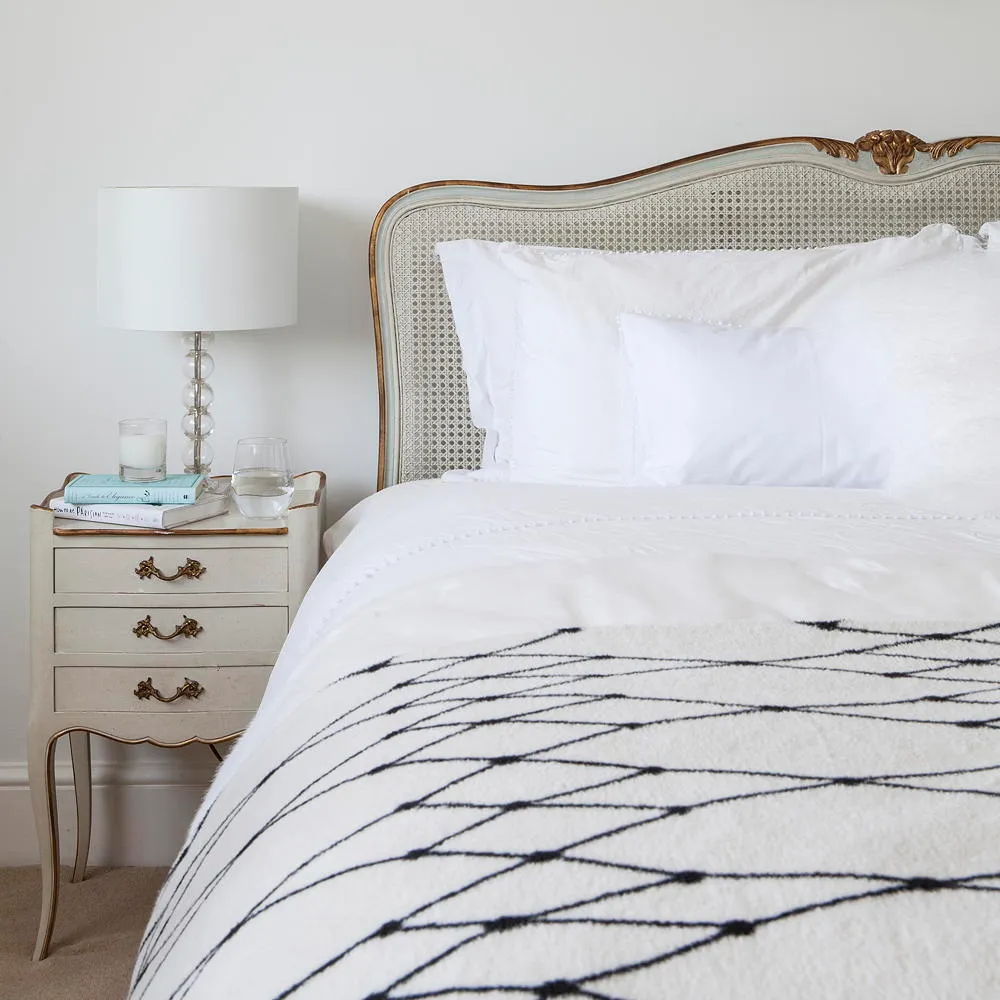
The pale headboard and white bedding keep most of the sleeping area lighter. Thin dark lines on the throw introduce contrast across the lower bed without another dark furniture group. The bedside chest and shaded lamp repeat softer pale forms, with the headboard’s warmer frame supplying a separate restrained outline.
Check the actual headboard construction and cleaning guidance before deciding how to maintain the woven detail. Choose a throw that can be moved easily and washed according to its label. Classic bedroom ideas compare other traditional furniture combinations, useful when balancing a curved bed with practical bedside storage and a lighter, simpler textile arrangement.
IDEA 08 / 20
Pair a Bold Wall Mural with Smaller Bedding Marks
 SaveSupport Non AI Creator
Image credit: Credit: Erin Derby
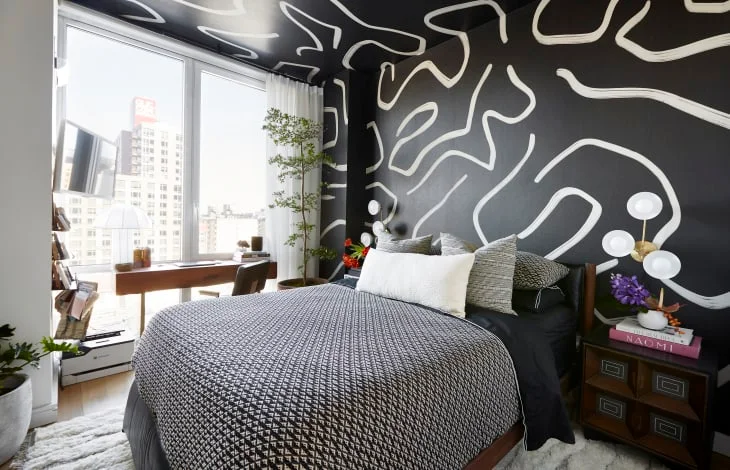
The broad white lines move across the dark wall and ceiling in a larger repeat than the bed covering. White pillows interrupt the darker sleeping surface, with the wood desk supplying a warmer horizontal line along the windows. The arrangement depends on different pattern scales within one strong light-and-dark background.
Try a larger pattern sample before extending a mural overhead, checking its effect from the pillow and doorway. Keep the window desk useful with a clear chair route and accessible controls. Choose separate reading light as well as desk light, limiting other large patterned surfaces when the wall and ceiling already supply the room’s main visual detail.
IDEA 09 / 20
Keep a Strong Headboard Pattern Above Quiet Bedding
 SaveSupport Non AI Creator
Image credit: Elicyon
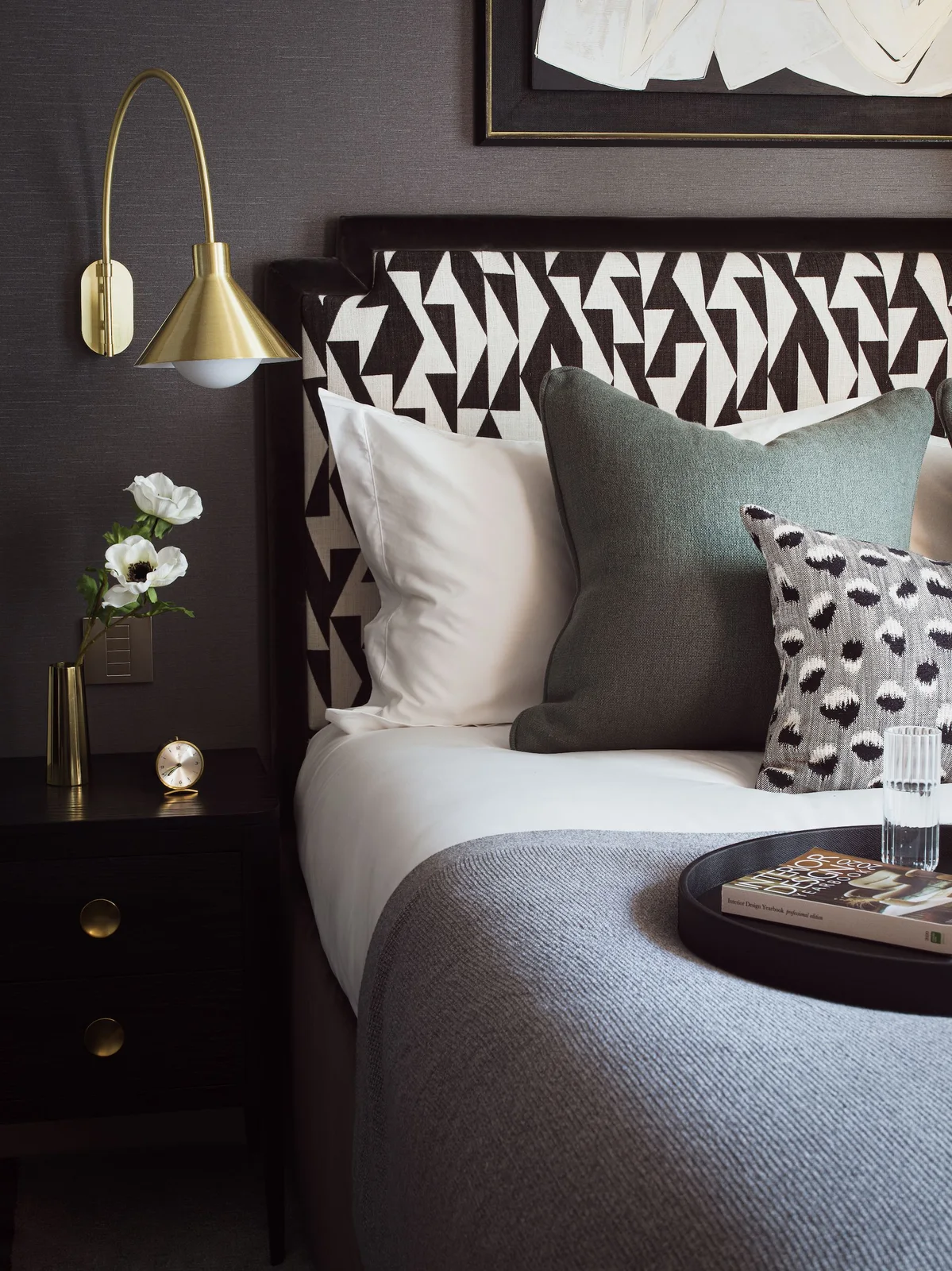
The angular headboard provides the stronger black-and-white repeat above plainer gray bedding. White pillows break up the larger darker wall and bed surfaces, while the wall lamp introduces a smaller warmer outline. A dark bedside chest keeps the lower storage connected with the surrounding deeper background.
Compare the headboard pattern with actual pillow and bedding samples before adding another large print. Check the lamp’s reach and reading position while sitting in bed, preserving a clear landing area on the chest. Keep trays and drinking glasses stable and easy to move, following the specified upholstery’s care guidance rather than assuming its appearance identifies the fabric.
IDEA 10 / 20
Frame a Pale Bedroom with a Black Window
 SaveSupport Non AI Creator
Image credit: AK Interiors/Annalicia Hermann
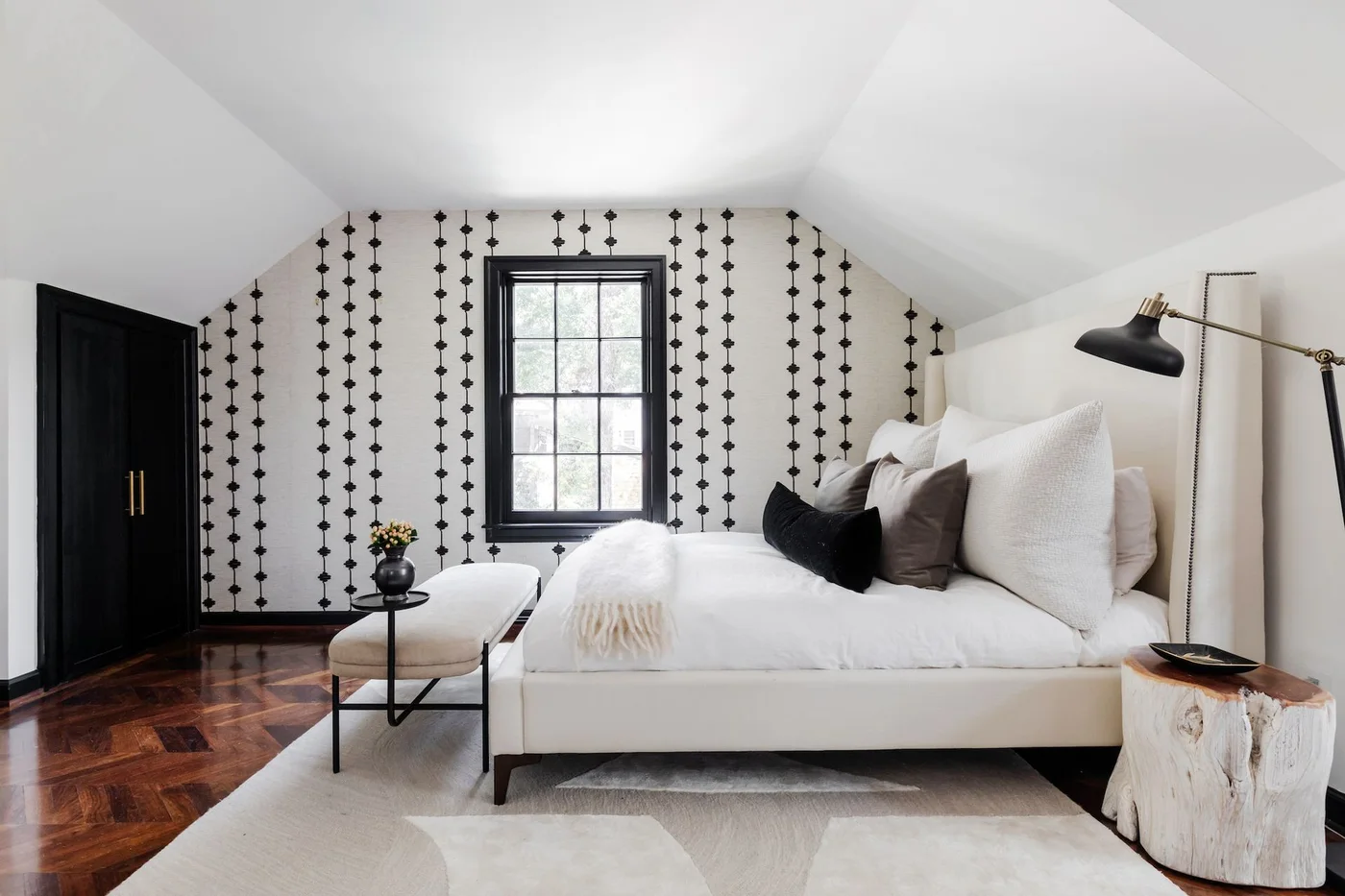
The black window gives the patterned end wall one stronger upright outline. Smaller vertical motifs repeat its darker color across a much larger white surface. A pale bed and rug keep the lower sleeping area lighter, with the warmer floor supplying another neutral texture beside the dark wardrobe.
Check wardrobe access and the walking route past the foot-of-bed seat before adopting a similar arrangement. Compare the patterned wall with the actual window treatment needed for sleeping privacy and light control. Keep bedside furniture sized around reachable surfaces, choosing rug placement that remains flat and clear of doors rather than simply copying the photographed overlap.
PART 03
Connect darker frames with practical bedside details
IDEA 11 / 20
Repeat Smaller White Motifs Behind the Pillows
 SaveSupport Non AI Creator
Image credit: Rachael Smith
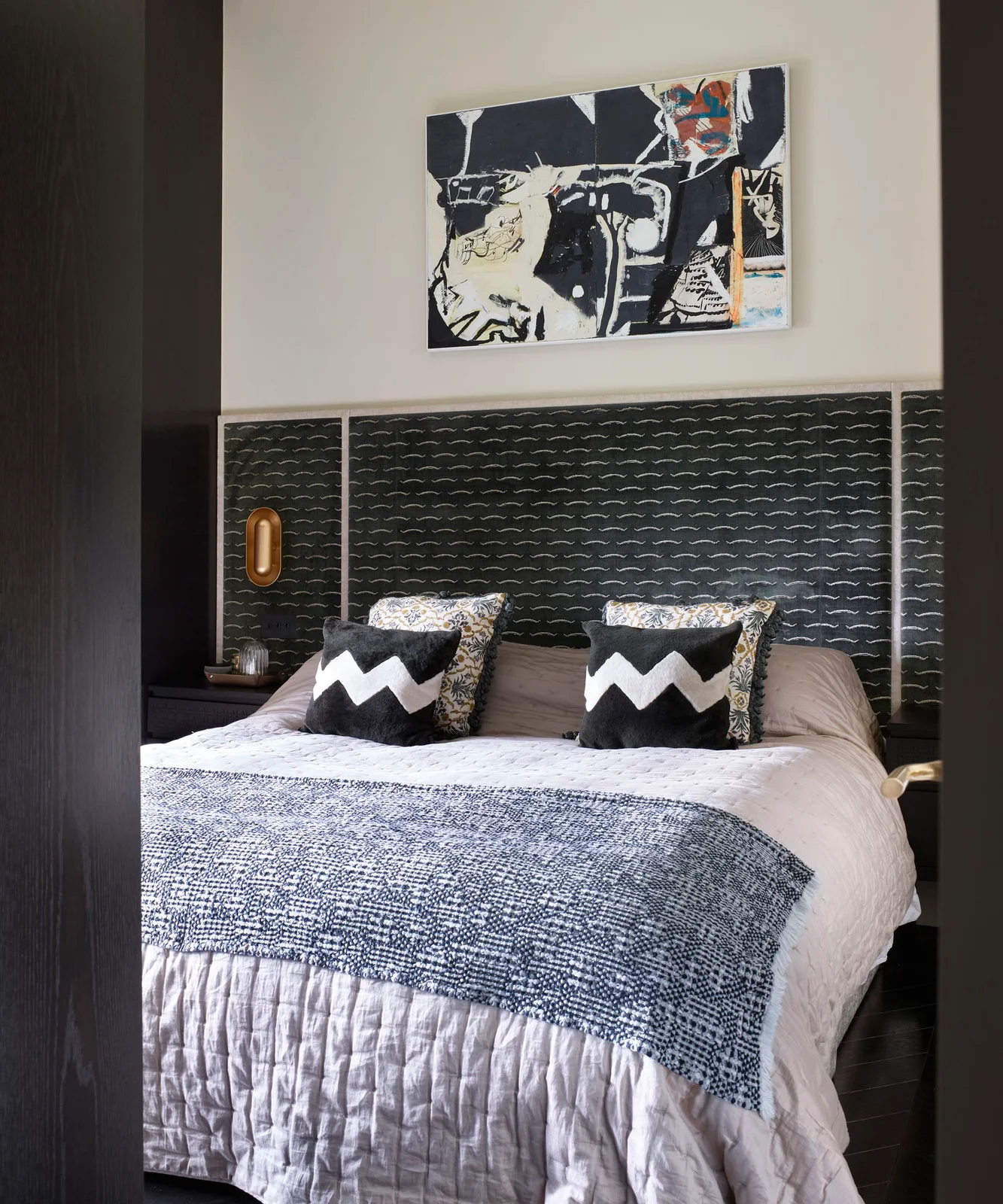
The small white motifs give the dark headboard area a finer repeated background. Stronger zigzag cushions supply a larger black-and-white pattern in front, while pale bedding separates those layers. The framed picture sits above them with a looser graphic arrangement, adding another scale within the same main contrast.
Choose one larger pattern to remain dominant before combining several different repeats around the bed. Secure the picture and headboard appropriately, checking the usable height when sitting against pillows. Keep extra cushions easy to store overnight and compare the bedding’s washing requirements, reducing decorative layers if daily tidying becomes more work than their appearance justifies.
IDEA 12 / 20
Keep a Dark Paneled Wall Behind Useful Furniture
 SaveSupport Non AI Creator
Image credit: Farrow & Ball
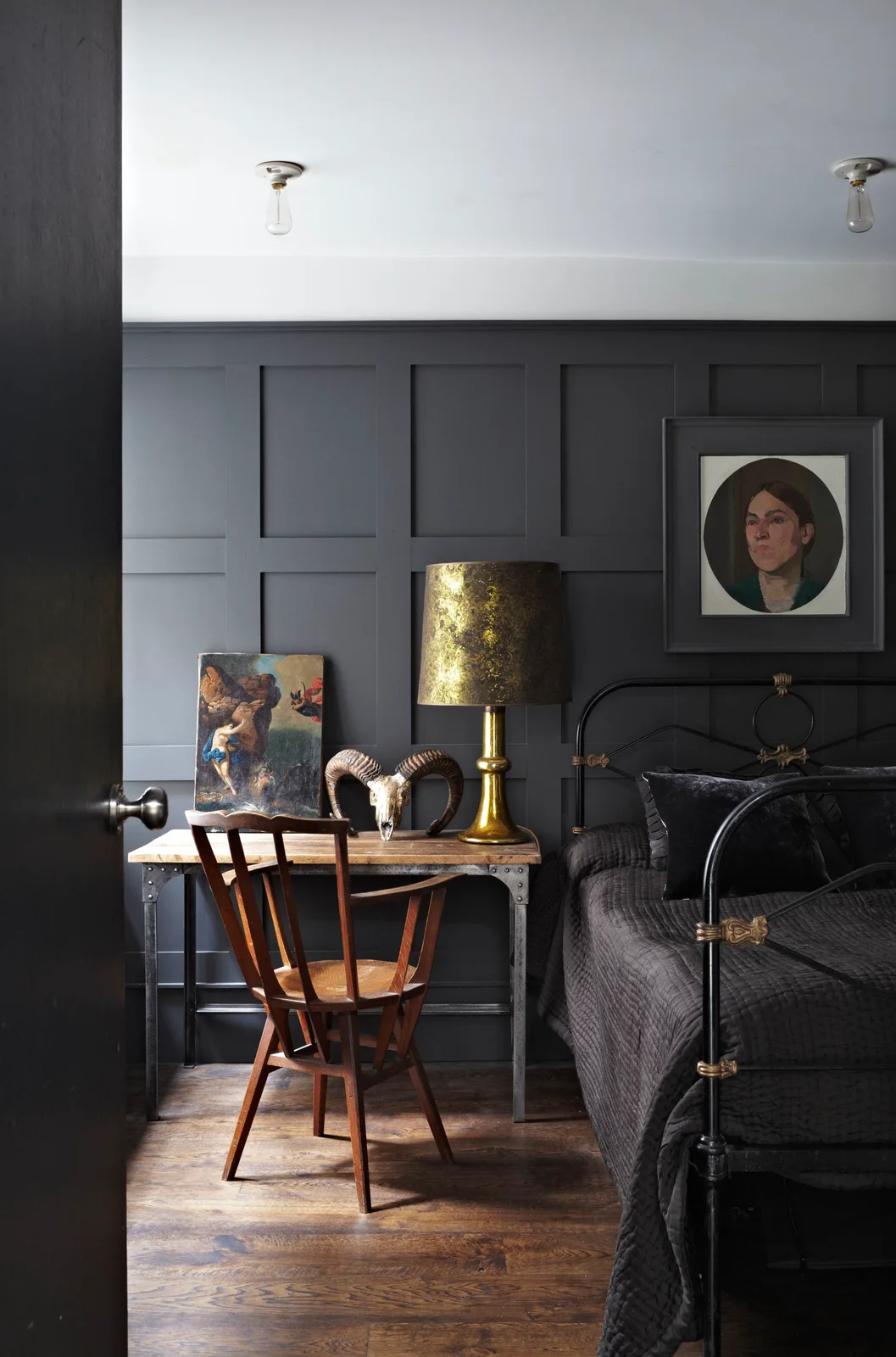
The dark paneling and bed frame connect through deeper surfaces while the white ceiling remains lighter above them. A warmer desk and chair provide a separate work position beside the bed. The lamp repeats a smaller warmer accent without requiring another large painted furniture color in the sleeping area.
Check the chair’s movement and bedside access before placing a desk close to the bed. Keep working supplies contained so the desktop remains useful and does not become overflow storage. Bedrooms with paneling compare other wall treatments, helping you decide how much detail to retain when furniture and lighting already provide several separate shapes.
IDEA 13 / 20
Make a Tall Dark Bed Frame the Main Outline
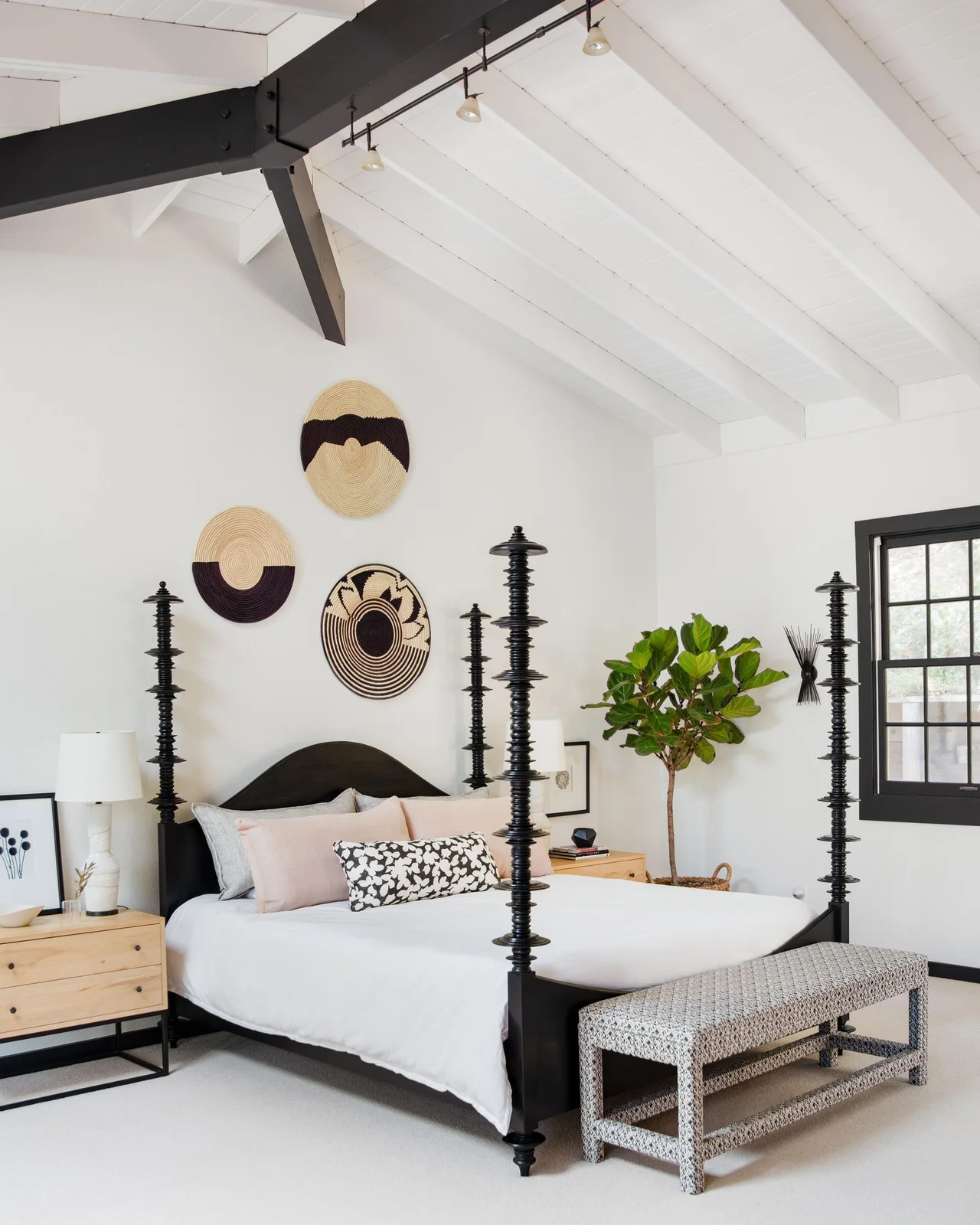 SaveSupport Non AI Creator
Image credit: Heather K. Bernstein Interior DesignK/Thomas Kuoh
The taller dark posts define the bed against the white walls and ceiling. Pale wood bedside drawers add warmer storage below, with the patterned bench repeating smaller darker marks at the foot. Pink cushions and a plant supply limited accents while the larger room remains built around the dark bed and white background.
Check clearance around the tall posts, overhead lighting and the foot-of-bed bench before choosing this furniture combination. Keep drawer movement practical and compare the bench’s height with the way it will actually be used. Secure wall decorations appropriately, reducing smaller display objects when the bed’s taller framework already supplies the room’s strongest structure.
IDEA 14 / 20
Contain Dark Color on the Headboard Wall
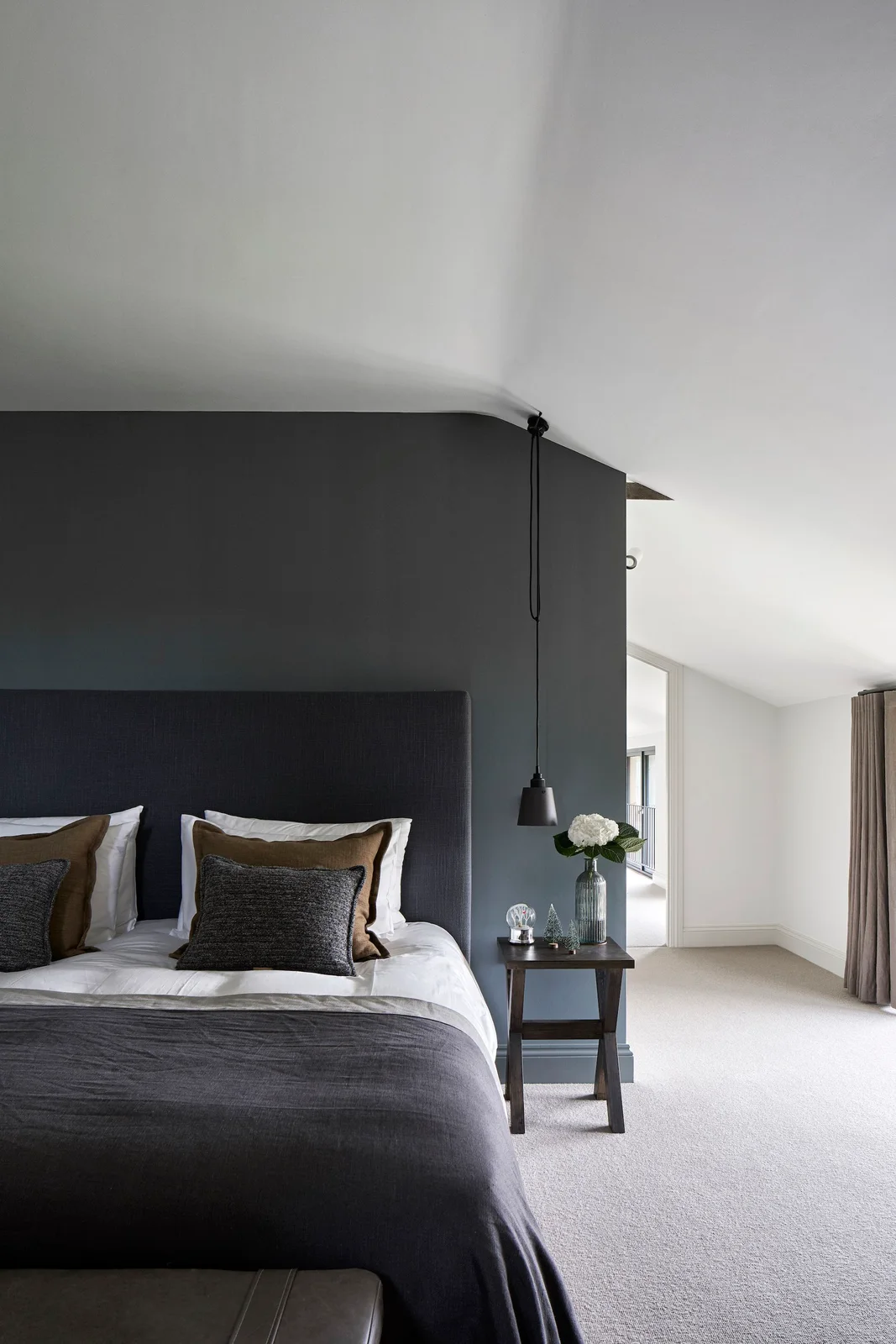 SaveSupport Non AI Creator
Image credit: Future
The dark wall concentrates the deeper color around the headboard rather than carrying it across every surrounding surface. Gray bedding connects with that wall, while the paler ceiling and adjoining room area remain lighter. A warmer bedside table adds one smaller useful landing surface below the pendant.
Check pendant position from both lying and sitting in bed, keeping its controls reachable and the table surface clear. Test the wall sample under the actual light before painting the whole headboard area. Choose lighter or deeper bedding around the amount of contrast wanted, preserving the route beside the bed rather than adding another matching dark cabinet.
IDEA 15 / 20
Give White Bedding a Small Black Bedside Frame
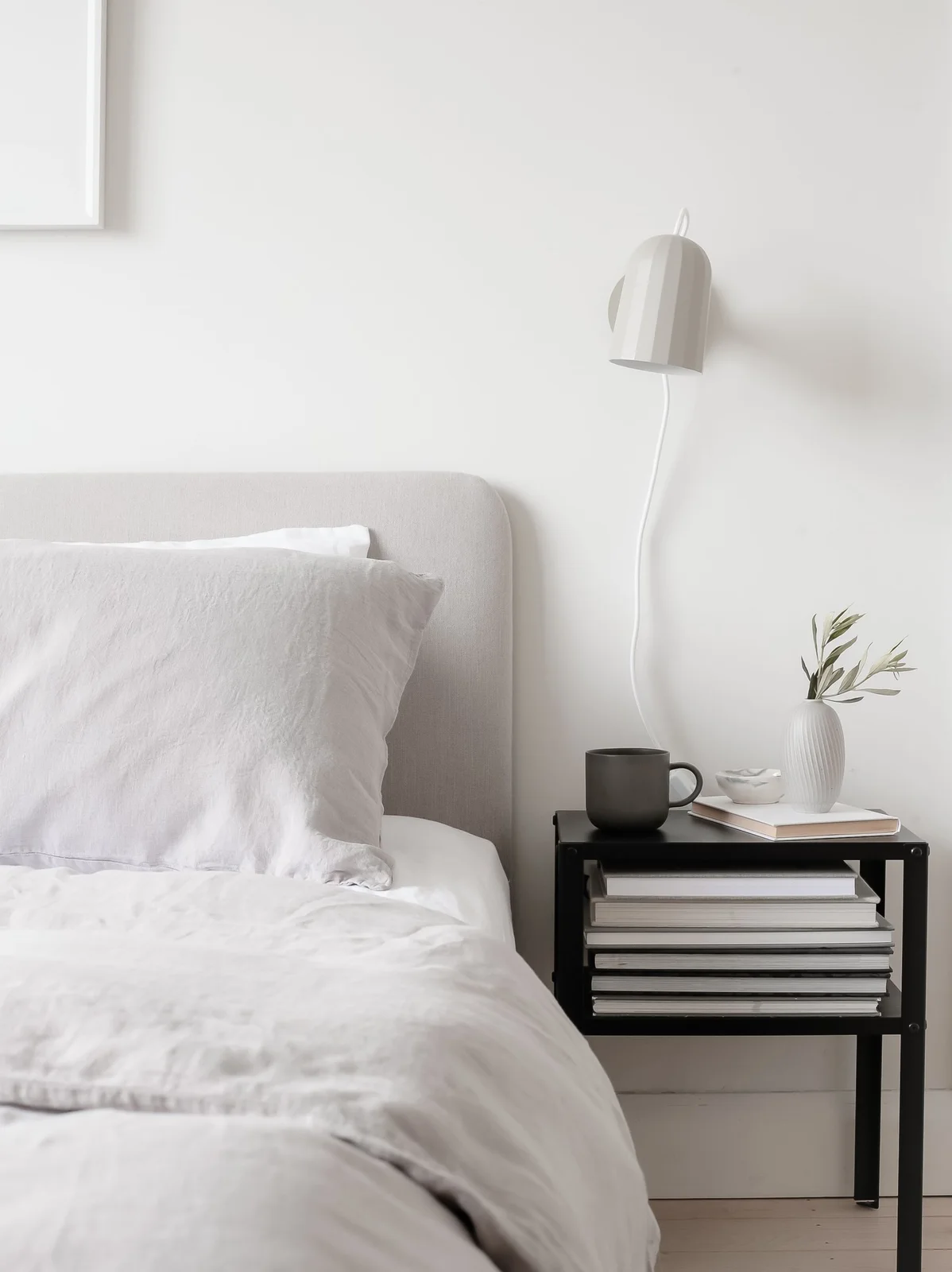 SaveSupport Non AI Creator
Image credit: Scooms
The black table supplies a small defined frame against the larger white bedding and wall. Its lower book stack repeats lighter horizontal lines within that open shape. A white wall lamp keeps the light fitting quieter, leaving the bedside furniture responsible for most of the visible contrast.
Choose an open table only when the items stored below can stay tidy and easy to lift for cleaning. Check the lamp’s reach and control position from the pillow, keeping the top useful for a drink or book. A small closed drawer may be more practical if charging cables and everyday personal items need separate concealed storage.
PART 04
Keep layered rooms and storage arrangements useful
IDEA 16 / 20
Keep Four-Poster Lines Light Around Pale Bedding
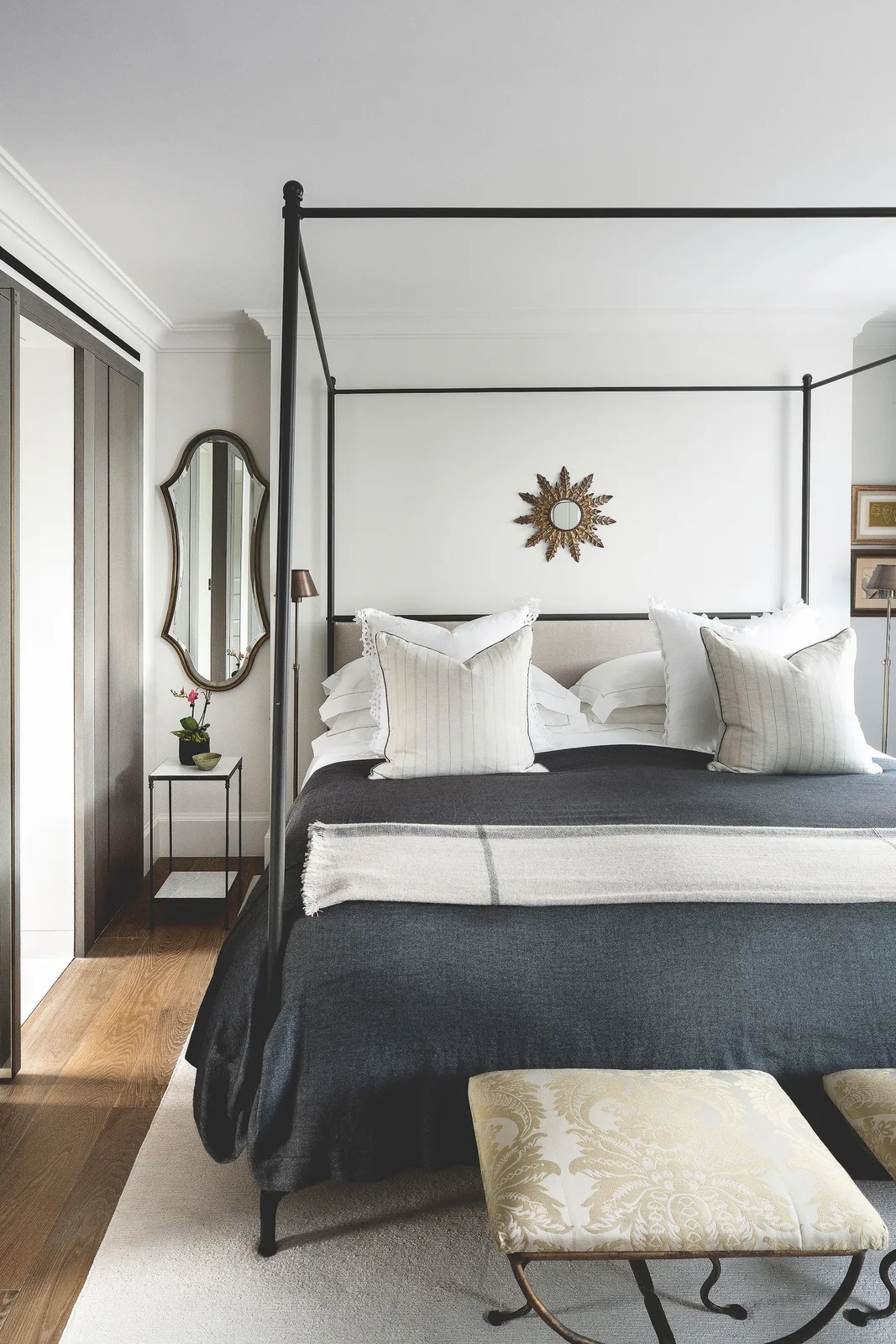 SaveSupport Non AI Creator
Image credit: Future
The slender upper frame gives the bed a taller dark outline without opaque curtains around the sleeping area. Pale pillows and walls keep more of the room lighter, with the darker cover connecting to the bed’s framework below. Mirrors and the patterned stool supply smaller separate details beside those larger contrasting surfaces.
Check ceiling height, lighting clearance and access around the posts before choosing a four-poster frame. Keep the stool out of the main route when its position narrows movement at the foot. Compare the mirrors’ reflections from bed height, selecting useful storage independently of the room’s open framework rather than filling its edges with decorative furniture.
IDEA 17 / 20
Use White Paneling Around a Dark Bed Cover
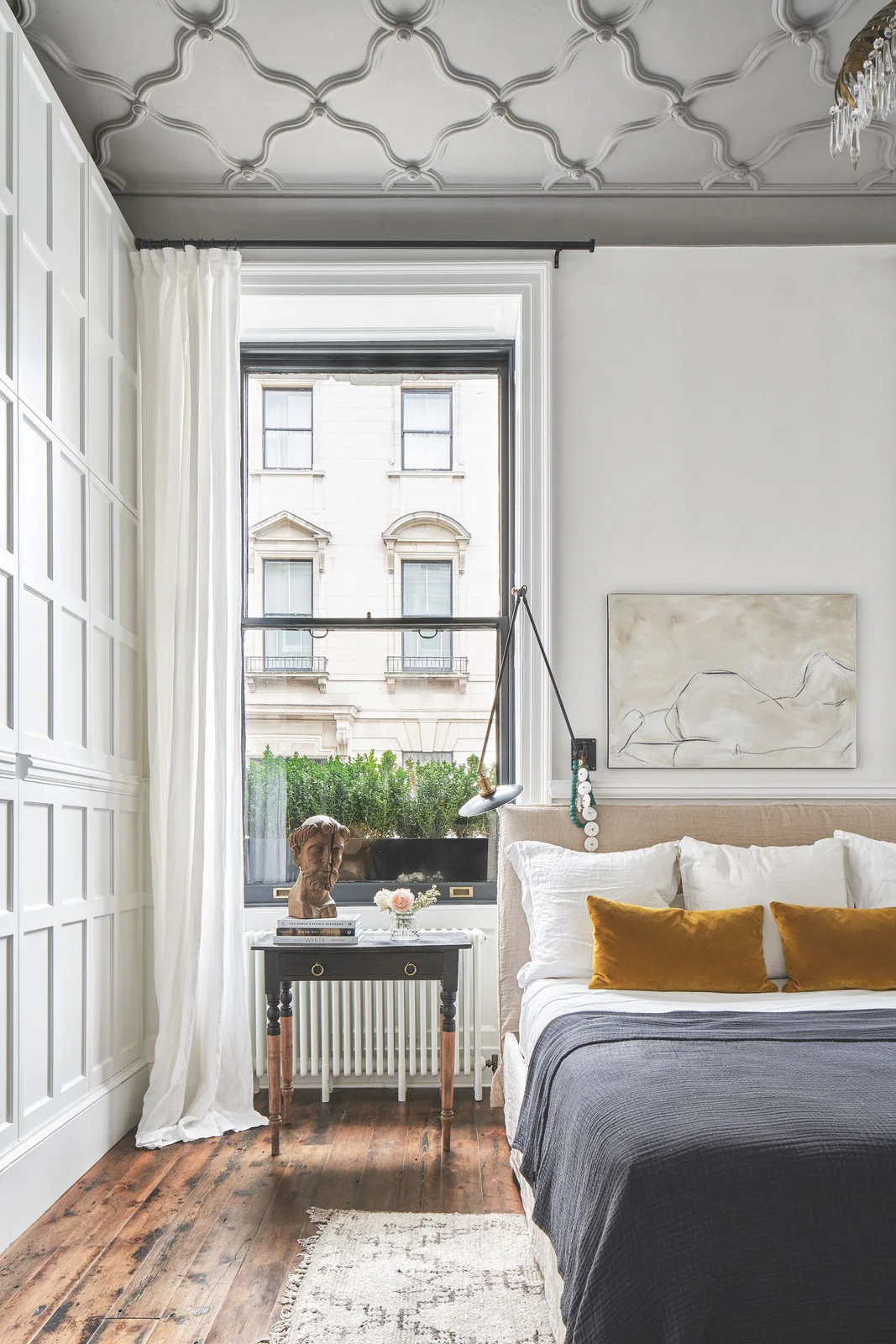 SaveSupport Non AI Creator
Image credit: Future
The white paneling keeps the side wall within a larger pale group below the ceiling’s decorative repeat. A dark bed cover supplies contrast across the lower sleeping surface, with mustard cushions introducing a small warmer accent. The tall window and light curtains leave another broader lighter section beside the bed.
Choose a window treatment for the actual privacy and light-control needs, checking its movement around the nearby furniture. Let the ceiling remain the larger patterned detail before adding more wallpaper. Compare the bed cover with the cushions under evening light and preserve access to heating and window controls rather than filling that side with additional storage.
IDEA 18 / 20
Balance Several Small Patterns with White Bedding
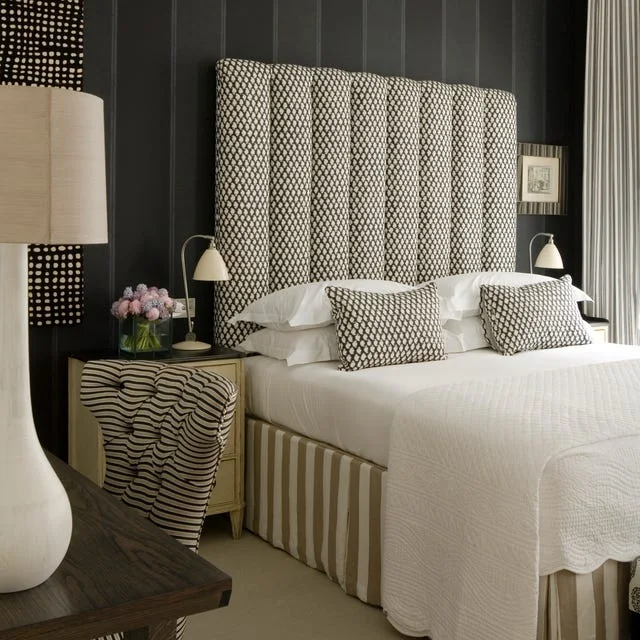 SaveSupport Non AI Creator
Source: www.goodhousekeeping.com
The tall headboard places its finer black-and-white repeat against a darker plainer wall. White bedding gives the different patterns a larger quiet surface between them. The striped lower bed upholstery and curved chair pattern introduce separate directions, while the small pale lamps repeat lighter shapes beside the pillows.
Compare patterns at full scale before repeating this layered approach in a smaller room. Keep one plainer bedding surface between the stronger upholstery details, checking cleaning guidance for each specified fabric. Choose lamps around useful reading light and preserve bedside access, reducing the additional chair when its footprint crowds the route around the bed.
IDEA 19 / 20
Connect Dark Doors with a Warmer Wardrobe
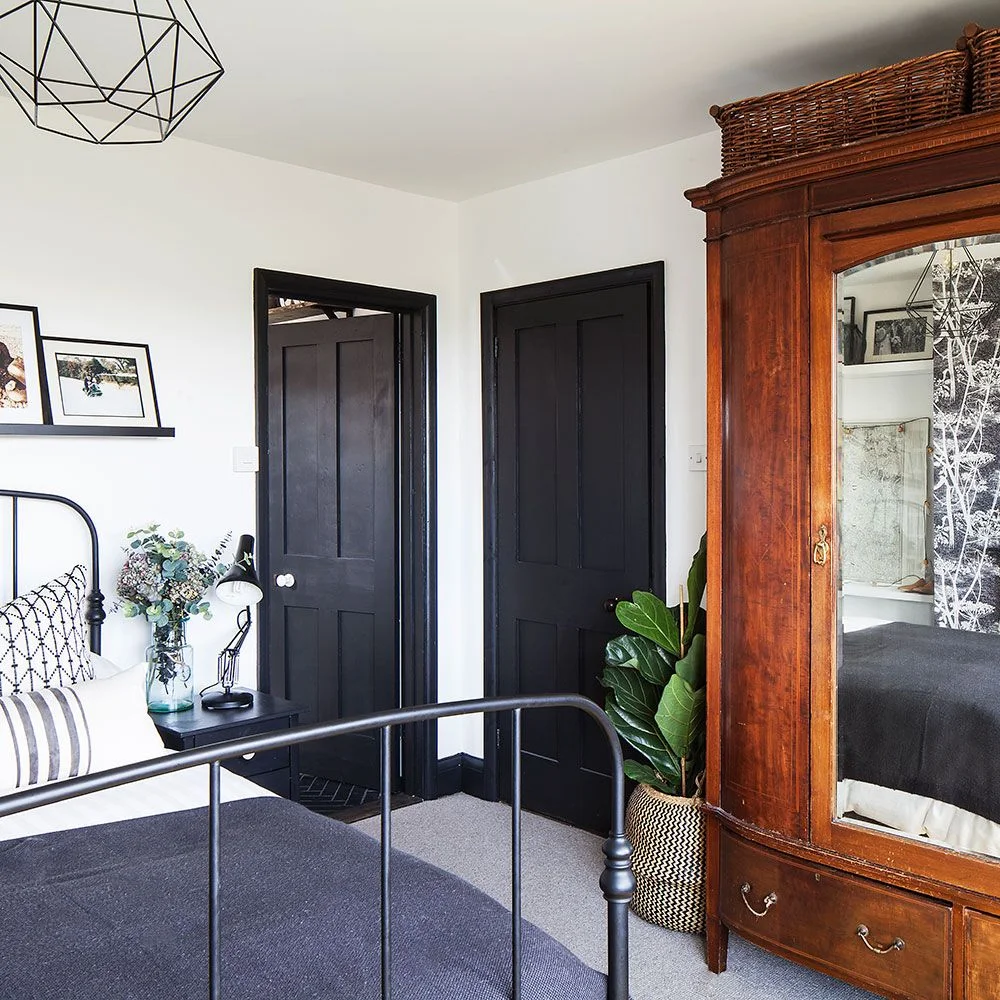 SaveSupport Non AI Creator
Image credit: Future PLC/James French
The black doors repeat the bed frame’s deeper outlines against the white walls. The warmer wardrobe introduces a larger wood surface, with its mirror reflecting the patterned wall opposite. This is another view of the botanical-wall bedroom, showing how the darker doors connect with useful storage beyond the sleeping position.
Check wardrobe-door movement against the bed and the route to the room’s other doors. Store heavier supplies where they remain safely reachable, using upper baskets only when they can be accessed securely. Keep the mirror clean and compare its reflection from the doorway, retaining useful storage before deciding whether a larger dark painted furniture group is needed.
IDEA 20 / 20
Keep Bedside Lighting Reachable Below a Picture Ledge
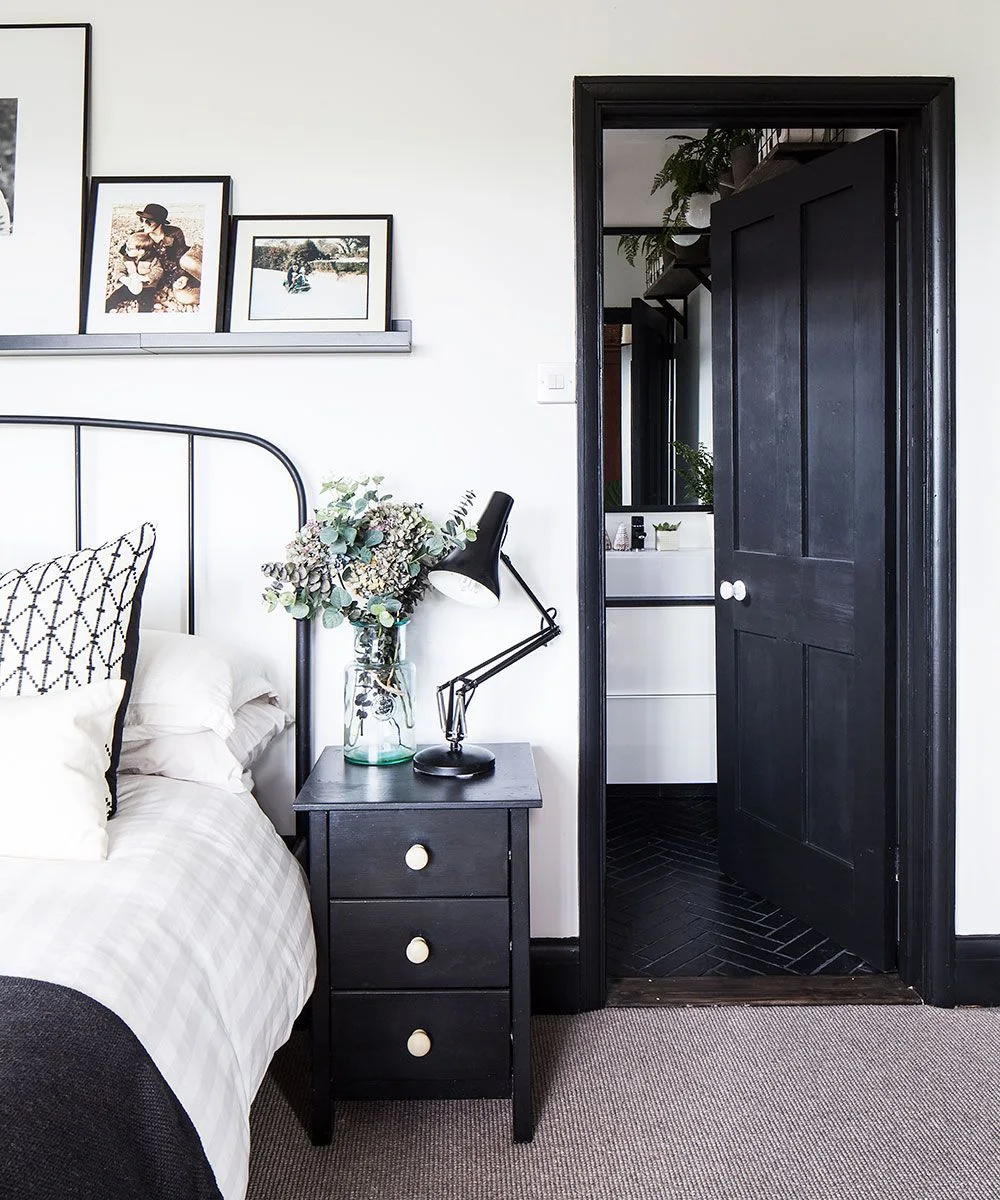 SaveSupport Non AI Creator
Image credit: James French
The dark chest and adjustable lamp repeat the bed frame’s smaller black outlines below the white wall. Framed pictures sit together on the ledge instead of spreading across every surface. This closer view of the botanical-wall bedroom shows a useful bedside arrangement separate from its larger patterned wall and wardrobe.
Secure the ledge and framed pieces appropriately above the sleeping area, checking their placement before filling it. Keep the lamp adjustable from the position used for reading and leave space on the drawer top for everyday items. Choose flowers or decorative containers that can be moved easily, checking drawer access and cable routes beside the bed.
BRING IT ALL TOGETHER
Build the palette around comfortable daily use
Choose the largest contrasting surface first: the headboard wall, bed frame or bed covering can supply enough depth on its own. Then compare smaller patterns at full scale, keeping a plainer surface between them. Preserve useful light at the bed and the clear movement needed for drawers, doors and chairs.
Plan the routine as carefully as the appearance. Keep cushions easy to store at bedtime, open shelves manageable and lighting controls reachable. Select window coverings for privacy and sleeping light control, following the actual furniture and textile care guidance instead of inferring fabric, construction or measurements from the photographed room.