Monochrome dining rooms can connect black, white and gray through table surfaces, seating, walls or finer window outlines. These photographs include patterned formal rooms, quieter glass-table arrangements and fitted breakfast seats. Warm wood, plants and small colored accessories appear in some rooms, while their larger neutral surfaces provide the main contrast.
Start with comfortable seating, usable table space and clear routes to doors and storage. One dining room contributes a separate artwork detail alongside its full view; the remaining photographs show different ways to arrange a light-and-dark palette. Compare the actual furniture and finishes before buying, keeping cleaning and everyday serving needs as important as the colors.
PART 01
Connect stronger outlines with useful dining details
IDEA 01 / 20
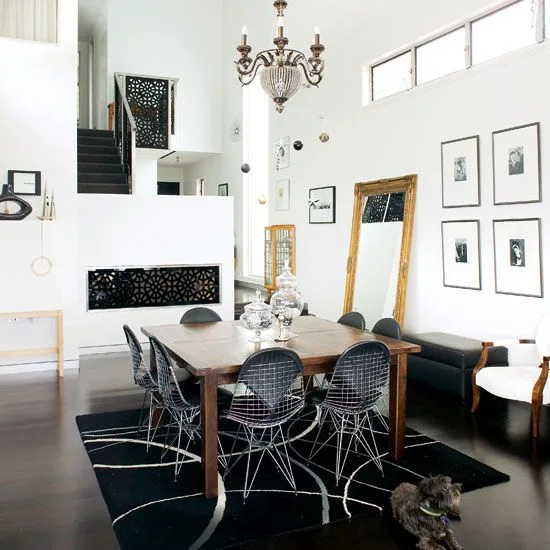
Outline a White Dining Room with Dark Seating
 SaveSupport Non AI Creator
Image credit: Future PLC/John Downs
The dark chairs and rug connect the dining position with the smaller black picture frames on the white wall. The table introduces a warmer central surface, while the chandelier and gold-colored mirror add separate reflective details. The larger white walls leave those darker outlines visible around the seating.
Check the chairs’ actual support and sitting comfort before choosing an open frame for daily meals. Size the rug around chairs pulled away from the table, keeping its edges flat. Dining room rugs compare other table-and-floor arrangements, useful when deciding whether a patterned rug adds enough contrast without another busy wall treatment.
IDEA 02 / 20
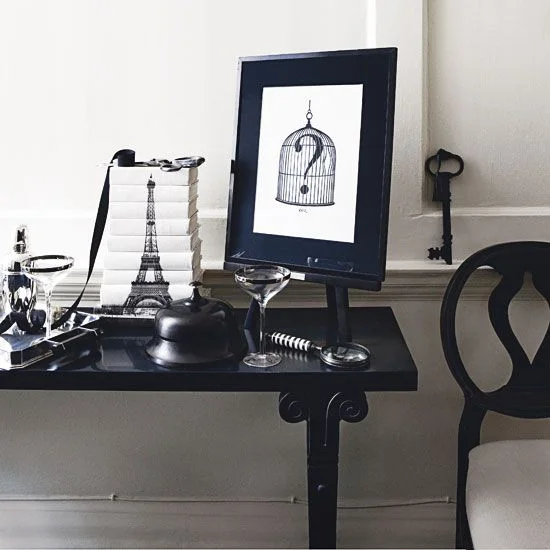
Keep a Small Dark Table Beside Pale Walls
 SaveSupport Non AI Creator
Image credit: Future PLC/Paul Raeside
The glossy tabletop supplies the smaller arrangement’s main darker surface. The curved chair and framed print repeat its black outlines against the pale wall, while clear glasses introduce lighter reflective details. Books add another horizontal group without requiring a larger patterned wall behind the table.
Clear decorative objects before serving so the tabletop remains useful for plates and comfortable seating. Follow the actual finish’s cleaning instructions rather than assuming every glossy surface tolerates the same products. Choose a stable frame position and keep glasses away from the table edge, using nearby storage for display items when meals require the full surface.
IDEA 03 / 20
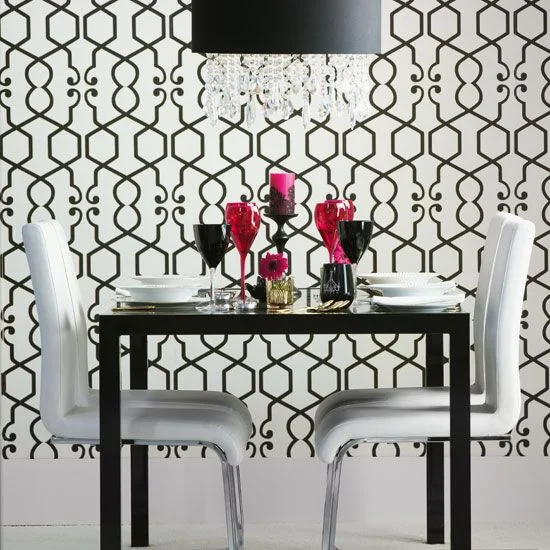
Pair White Chairs with a Strong Geometric Wall
 SaveSupport Non AI Creator
Image credit: Future PLC/Dominic Blackmore
The black table gives the white chairs a stronger central outline below the geometric wall repeat. The dark pendant connects with the table while its hanging clear details introduce smaller reflective shapes. Red glassware supplies a concentrated accent at the center, leaving the larger furniture and wall black and white.
Compare the wallpaper at full scale before extending a strong repeat across a smaller dining room. Keep glassware and decorations low or easily removable when people need to see across the table. Check chair movement and pendant placement around actual seated use, simplifying the centerpiece when the wall already carries the strongest pattern.
IDEA 04 / 20
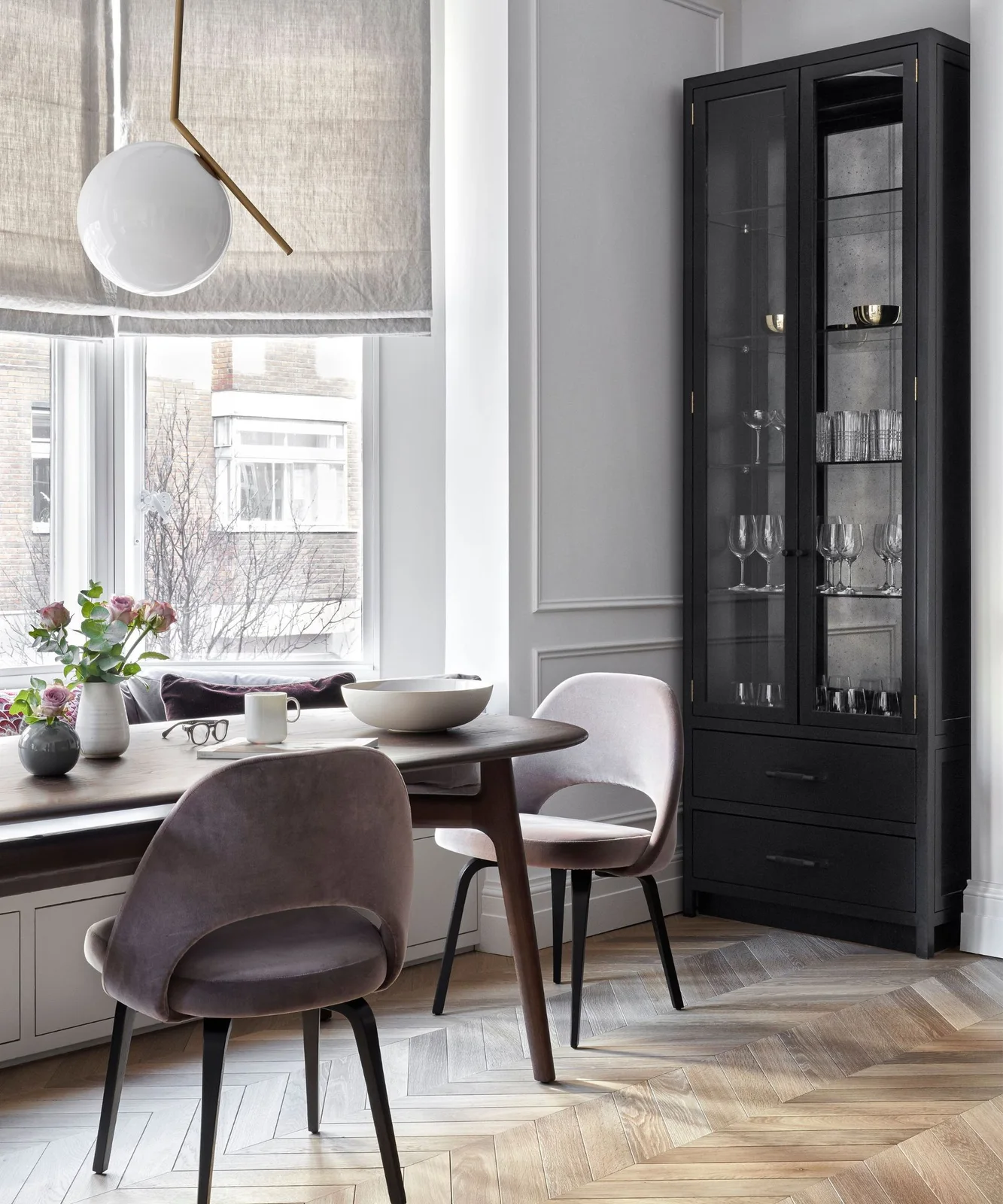
Connect Pale Wall Paneling with Dark Glass Storage
 SaveSupport Non AI Creator
Image credit: Future
The dark cabinet gives the pale paneled room a stronger storage outline beside the breakfast table. Its glazed doors show smaller repeated glass shapes within that darker frame. Pale chairs soften the contrast around the table, with the white pendant repeating a larger rounded shape near the window.
Check cabinet-door movement with the chairs pulled out and store frequently used glasses at safely reachable heights. Keep window coverings accessible around the table and choose upholstery for the household’s cleaning routine. Dining room storage compares other arrangements, helping you decide whether a tall glazed cabinet suits everyday use better than additional open shelves.
IDEA 05 / 20
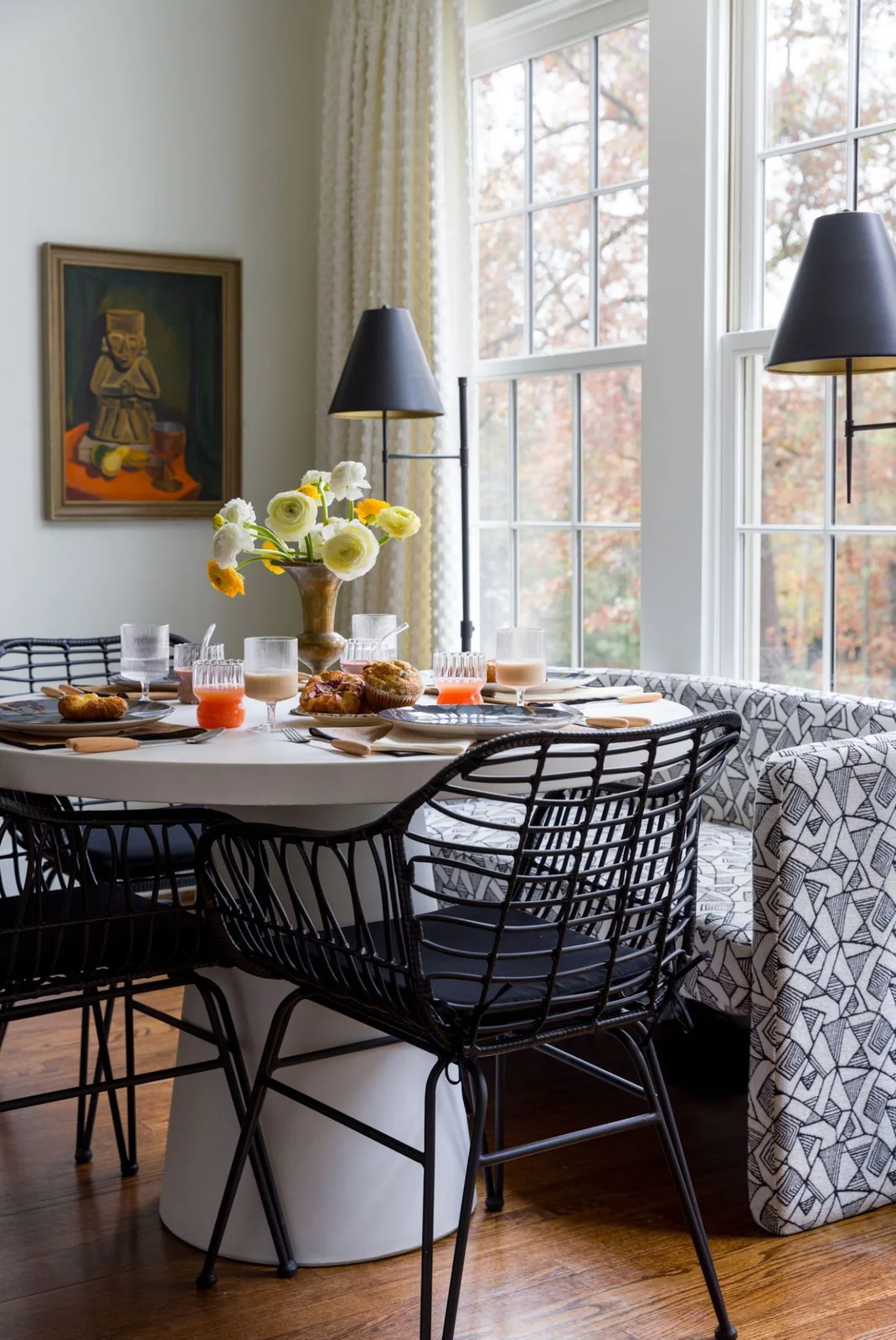
Repeat Black Outlines Around a White Breakfast Table
 SaveSupport Non AI Creator
Image credit: Mary Margaret Smith.
The dark chair frames repeat the bench fabric’s finer outlines around the plainer white tabletop. Dark lamp shades connect those lines above the seating, while the larger window leaves the surrounding wall lighter. Flowers and table settings add smaller accents without changing the main contrast between chairs, bench and table.
Check comfortable movement into the bench and the chair route around the pedestal before choosing the table’s size. Select removable or cleanable bench covers around everyday meals, keeping decorative pillows easy to move. Dining room banquette ideas compare other fitted seating arrangements, useful when deciding whether a bench improves access or makes some seats harder to reach.
PART 02
Keep contrasting layouts and glass tables practical
IDEA 06 / 20
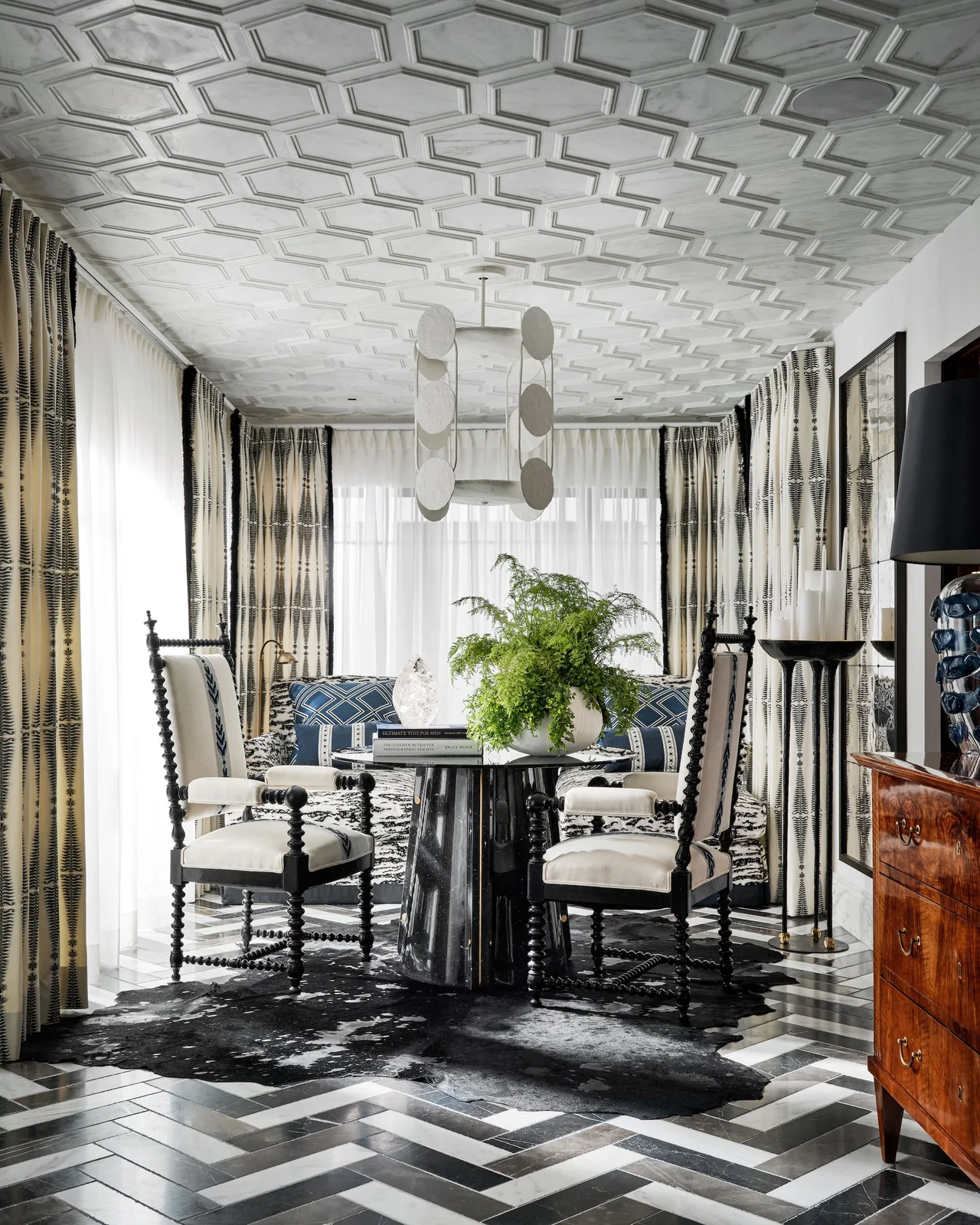
Let a Black-and-White Floor Connect Formal Seating
 SaveSupport Non AI Creator
Image credit: Stephen Karlisch. Design: Morgan Madison Design
The patterned floor connects the chairs’ darker outlines with the round table below the larger pale ceiling. The curtains introduce another finer repeat along the room’s edges. Blue patterned seating farther back supplies a separate accent, while the main table, chairs and floor retain their light-and-dark contrast.
Compare the floor and curtain repeats together before selecting two stronger patterns for one room. Check the floor’s actual slip and cleaning characteristics rather than identifying its material from the photograph. Keep chairs moving easily around the table and choose the lighting around useful visibility, reducing smaller display objects when the architecture and fabrics already provide substantial detail.
IDEA 07 / 20
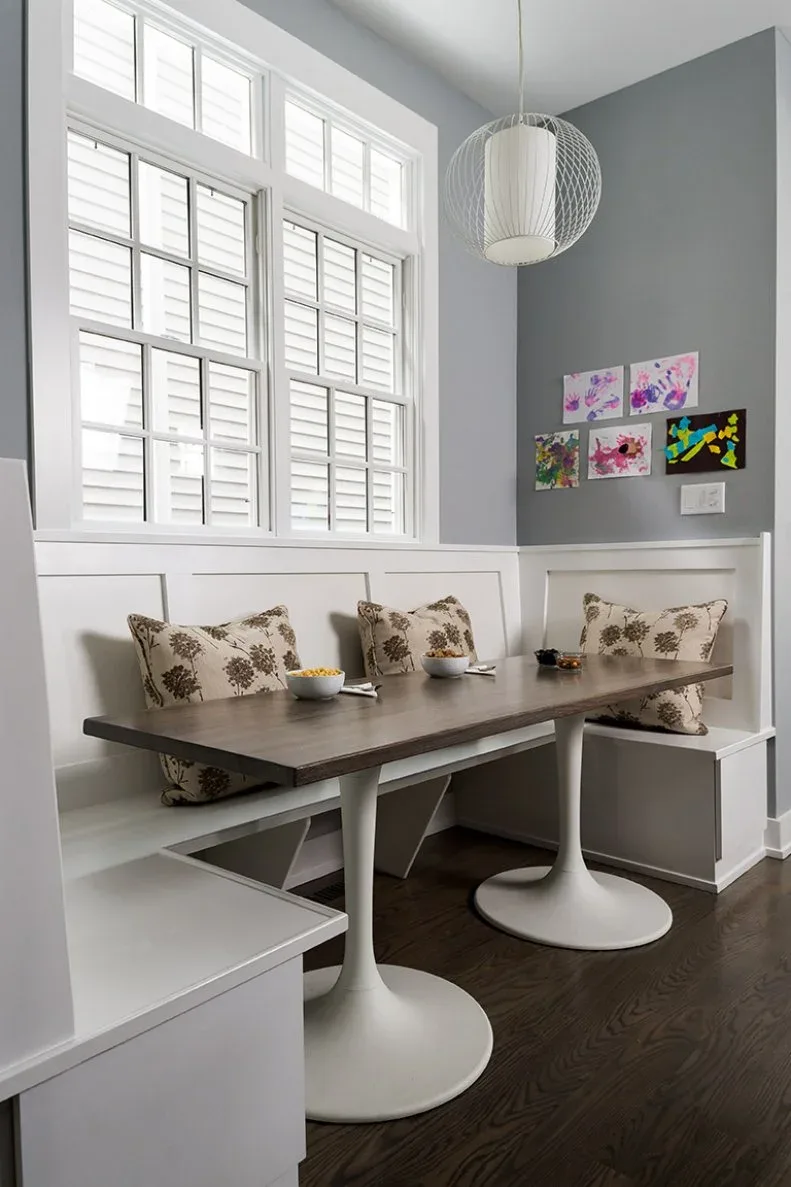
Use a Dark Tabletop Within White Corner Seating
 SaveSupport Non AI Creator
Image credit: Photo: Stacey Cohen
The dark tabletop provides a clearer horizontal surface between the white seat base and shuttered windows. Two white pedestals connect the table with the surrounding fitted seating. Gray upper walls soften the contrast, with patterned pillows and children’s pictures supplying smaller varied details rather than another large furniture color.
Check entry into the corner seats and the room available for legs around both pedestal bases. Keep shutters usable with people seated and choose pillows that can be moved for meals. Confirm the bench’s actual storage and access separately from its paneled appearance, preserving useful seating depth before adding more decorative cushions.
IDEA 08 / 20
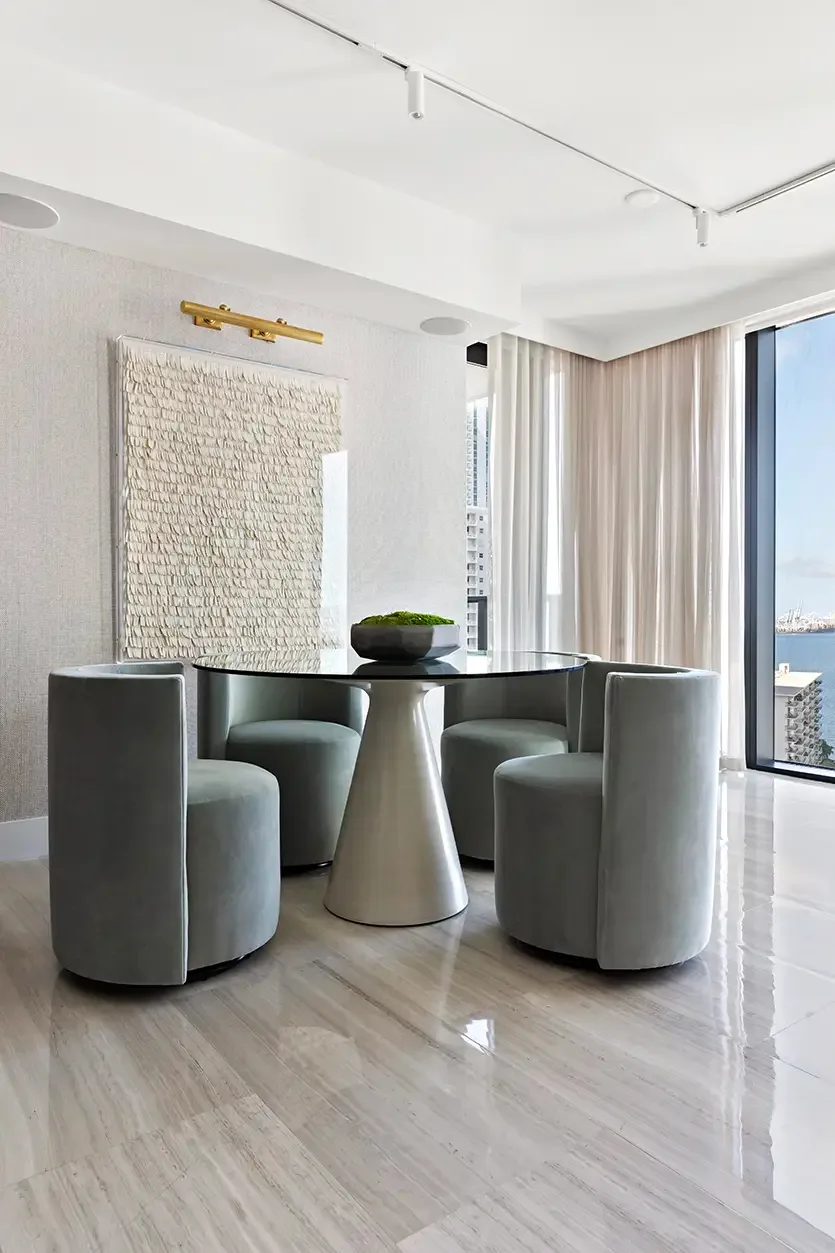
Group Gray Chairs Around a Dark Round Table
 SaveSupport Non AI Creator
Source: dkorinteriors.com
The curved gray chairs form one softer group around the darker circular tabletop. The pale pedestal gives that surface a lighter central support, connecting with the room’s curtains and walls. The surrounding neutral finishes allow the table’s deeper top to remain the clearest contrast without a busier floor pattern.
Compare the chairs’ width and movement around the actual table diameter before choosing a full matching group. Check the tabletop’s specified care and support requirements, keeping its edge easy to see near the walking route. Dining room glass table ideas compare other base and chair combinations, helping you assess legroom as well as the surface’s appearance.
IDEA 09 / 20
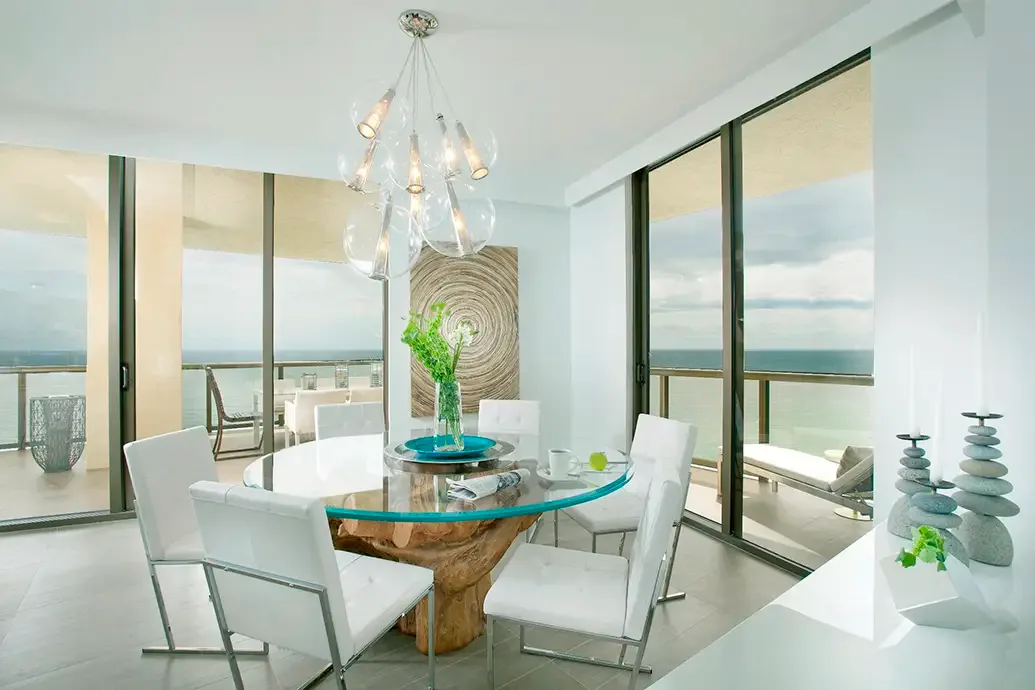
Keep White Chairs Clear Around a Glass Top
 SaveSupport Non AI Creator
Source: dkorinteriors.com
The white chairs and walls make the darker window lines more visible around the circular glass tabletop. The warmer base adds a separate central texture below the clearer surface. Turquoise accessories contribute a small colored accent, with the larger seating and room remaining mainly pale beside those deeper outlines.
Check legroom against the actual sculptural base rather than judging only the glass top’s diameter. Keep windows and nearby doors accessible with chairs pulled out, reducing table decorations when they interrupt conversation. Ask about the specified glass, edge treatment and cleaning guidance before choosing the surface for daily meals or a room frequently used by children.
IDEA 10 / 20
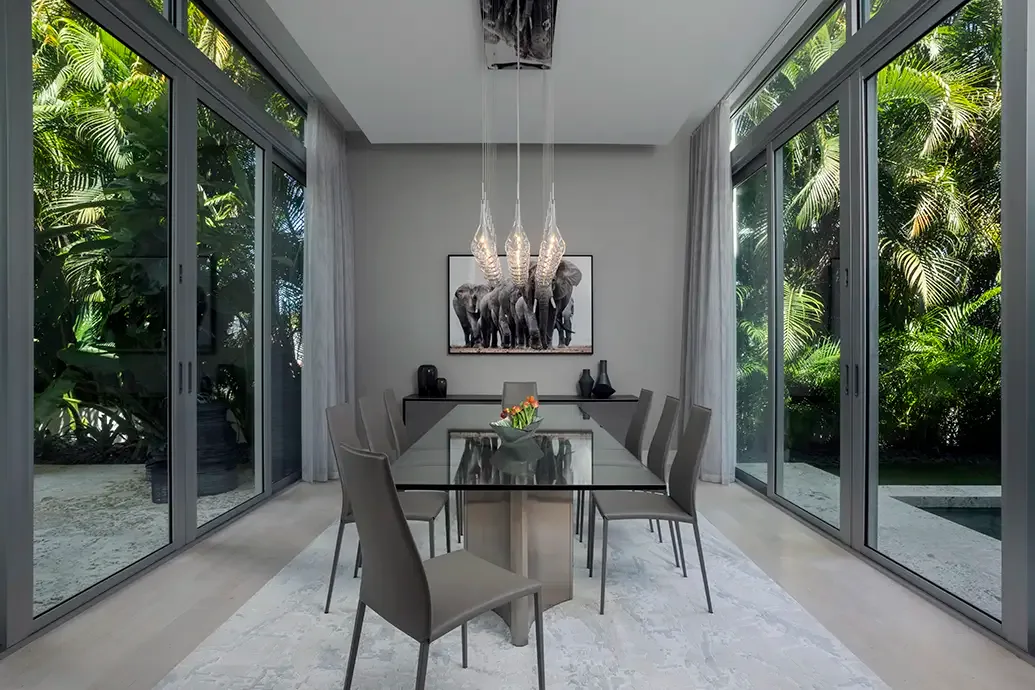
Frame Gray Dining Chairs with Dark Window Lines
 SaveSupport Non AI Creator
Source: dkorinteriors.com
The dark window frames define both sides of the narrower dining area above the gray chairs. The clear tabletop leaves more of the pale rug visible through the center. Lighter curtains and walls soften the room’s deeper outlines, with the hanging clear lights repeating smaller reflective shapes over the table.
Check chair clearance on both window sides before choosing a rectangular table for a narrow space. Keep curtain movement and door access useful, selecting a rug that stays flat under moving chairs. Plan lighting for actual meals after daylight fades, following the specified glass care guidance and keeping the centerpiece low enough for clear conversation.
PART 03
Compare pale seating and deeper table surfaces
IDEA 11 / 20
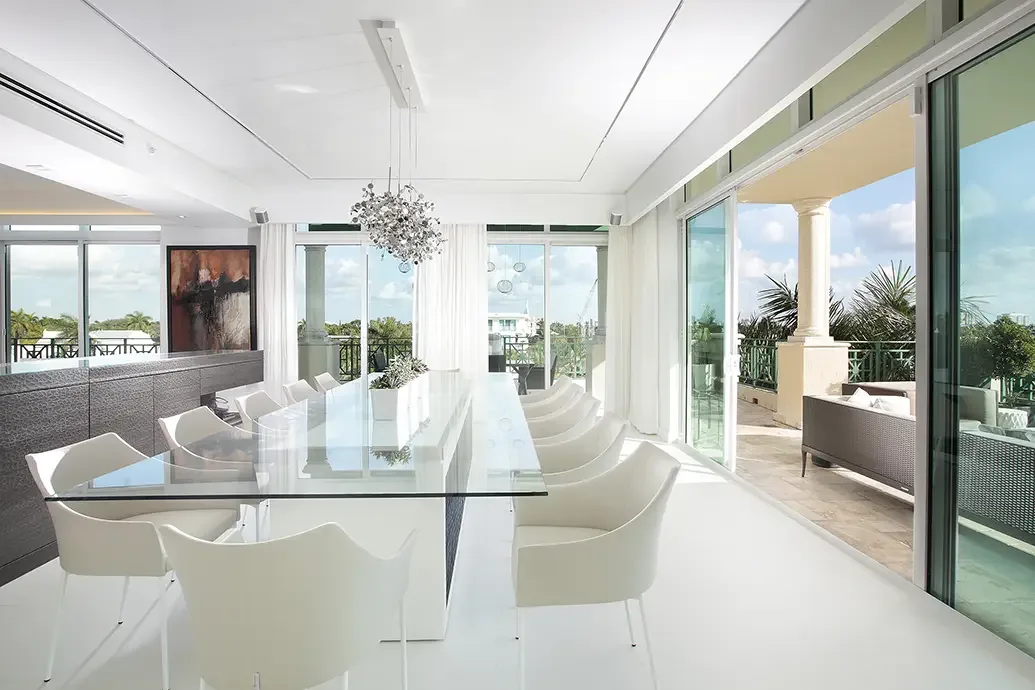
Give a Long White Seating Group a Clear Tabletop
 SaveSupport Non AI Creator
Source: dkorinteriors.com
The white chairs connect with the table’s pale support and larger light room surfaces. The glass top leaves their separate curves visible through the longer arrangement. Dark lower storage and glazing lines introduce contrast around the edges, while the central seating group remains predominantly lighter beside the outdoor view.
Check that every chair has comfortable legroom along the actual central support, particularly at the table ends. Preserve the sliding-door route when chairs move away from the table. Choose accessible storage for dishes nearby and keep the tabletop’s cleaning needs practical, testing the arrangement for serving space rather than adding chairs solely because the surface looks long enough.
IDEA 12 / 20
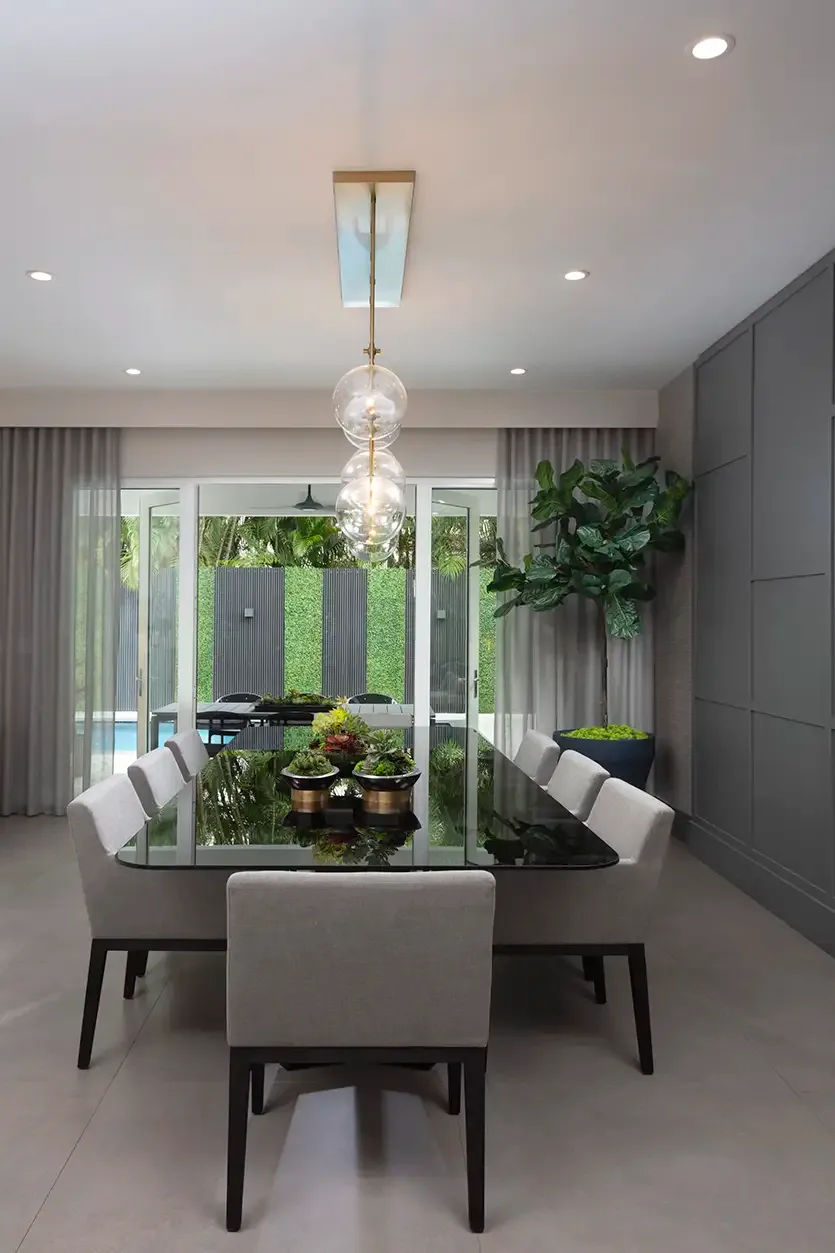
Connect a Dark Glass Table with Gray Wall Panels
 SaveSupport Non AI Creator
Source: dkorinteriors.com
The deeper tabletop repeats the gray wall’s stronger contrast below the clear globe lights. Pale chairs and curtains leave larger surrounding surfaces lighter, separating the table from the background. The paneled wall supplies a restrained repeat without another patterned textile across the main seating group.
Check the actual upholstery’s stain care and the glass finish’s cleaning guidance before using this combination for daily meals. Keep the pendant group placed around useful tabletop light and clear seated sightlines. Compare wall and chair samples under evening lighting, leaving enough movement behind the chairs and access to nearby doors before adding a longer table.
IDEA 13 / 20
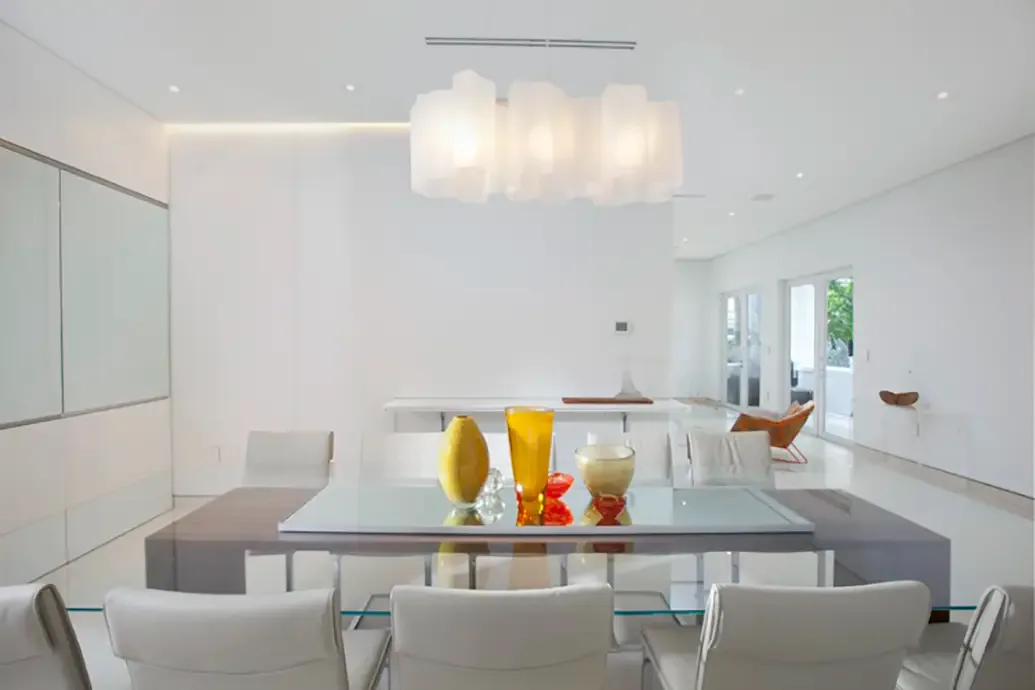
Use Small Colored Objects Within a Pale Dining Area
 SaveSupport Non AI Creator
Source: dkorinteriors.com
The white chairs and pale surrounding walls create a lighter dining group around the clear tabletop. Gray bench ends provide slightly deeper horizontal shapes beside it. Yellow and orange vases introduce a small central accent, while the larger arrangement stays restrained through white, gray and reflective surfaces.
Choose a few removable objects rather than making the tabletop a permanent display when it is needed for meals. Check bench access and the chair route around the glass edge, keeping enough serving room on the actual surface. Follow the specified table’s care instructions and select lighting that remains useful at night instead of relying on the bright photographed room.
IDEA 14 / 20
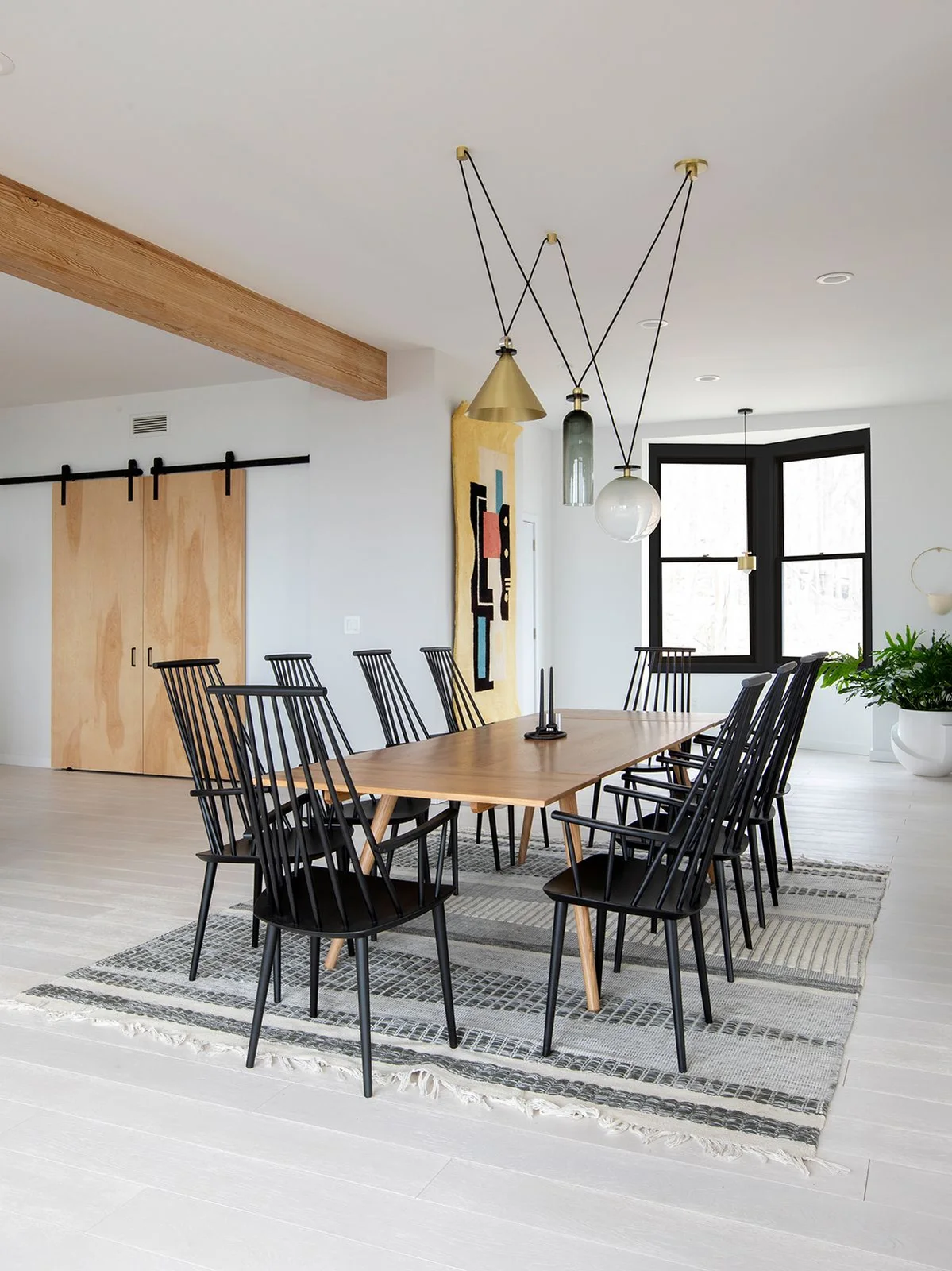
Repeat Black Seating Lines Around a Lighter Table
 SaveSupport Non AI Creator
Image credit: Tangible Space. Photo credit: Charlie Schuck
The black chair backs repeat finer vertical lines around the lighter table. A striped rug adds a separate horizontal repeat below, while dark window trim connects the seating with the room’s edges. Warm wood details soften the larger black-and-white contrast without adding another painted furniture color.
Check sitting comfort and chair movement before choosing a full set of spindle-back seats. Compare the rug’s stripes with the chair outlines at full scale, keeping its edges clear of the door route. Leave enough serving space on the table and assess the mixed lights as a useful group, simplifying smaller decorations when the hanging shapes already introduce variation.
IDEA 15 / 20
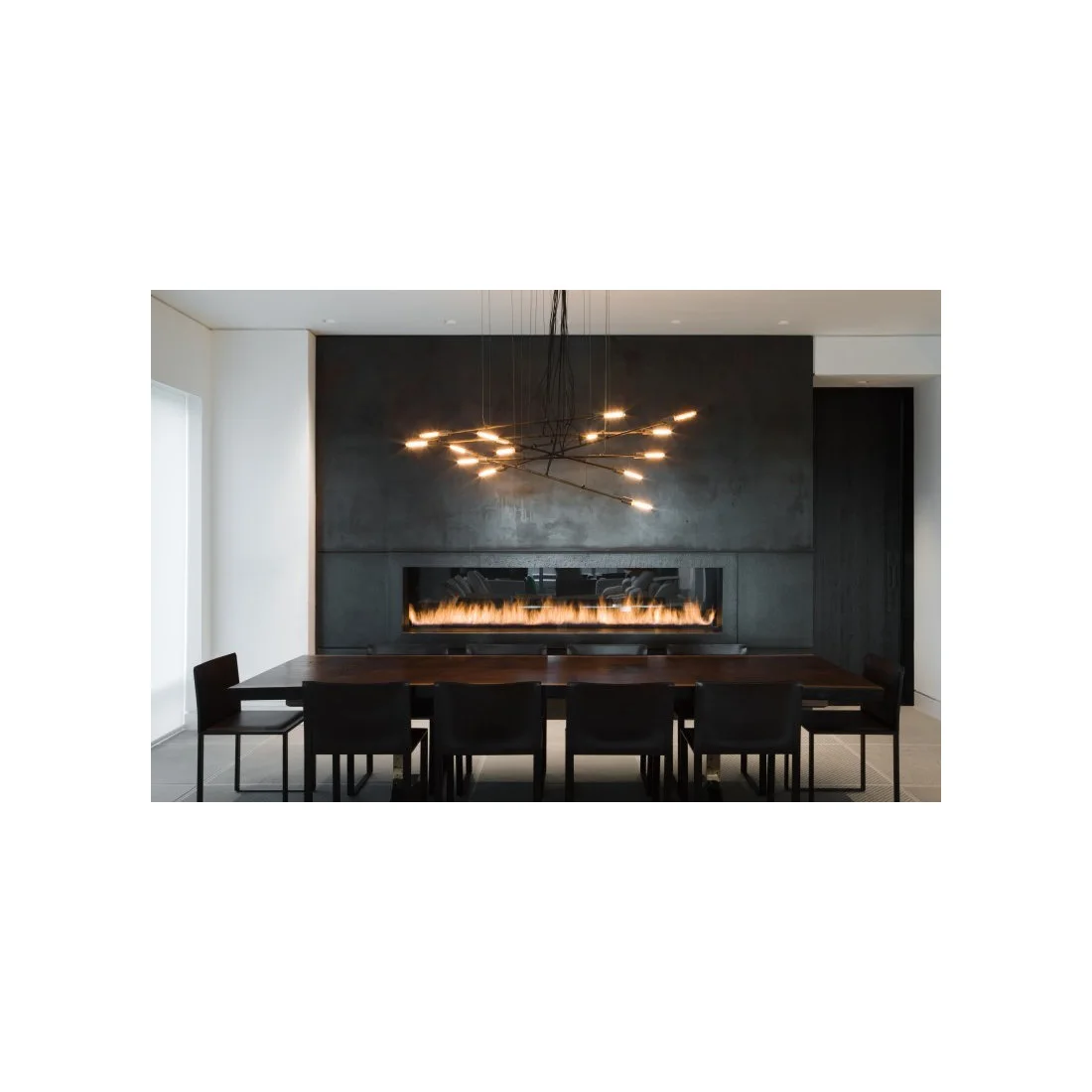
Balance a Dark Dining Group with Pale Side Walls
 SaveSupport Non AI Creator
Source: www.houzz.com
The deeper table and chair group connects with the charcoal fireplace wall behind it. Pale walls at the sides keep that darker arrangement contained within the wider room. The branching light adds finer lines above the table, with the longer fireplace opening repeating a separate horizontal detail below.
Have the actual fireplace and furniture clearances assessed according to the appliance and installation requirements before adapting this arrangement. Keep the dining route separate from its heat and servicing needs. Choose useful light at the table and test the charcoal finish under evening lighting, avoiding assumptions about the fire’s fuel or safe distances from the photograph alone.
PART 04
Balance overhead details, access and wall displays
IDEA 16 / 20
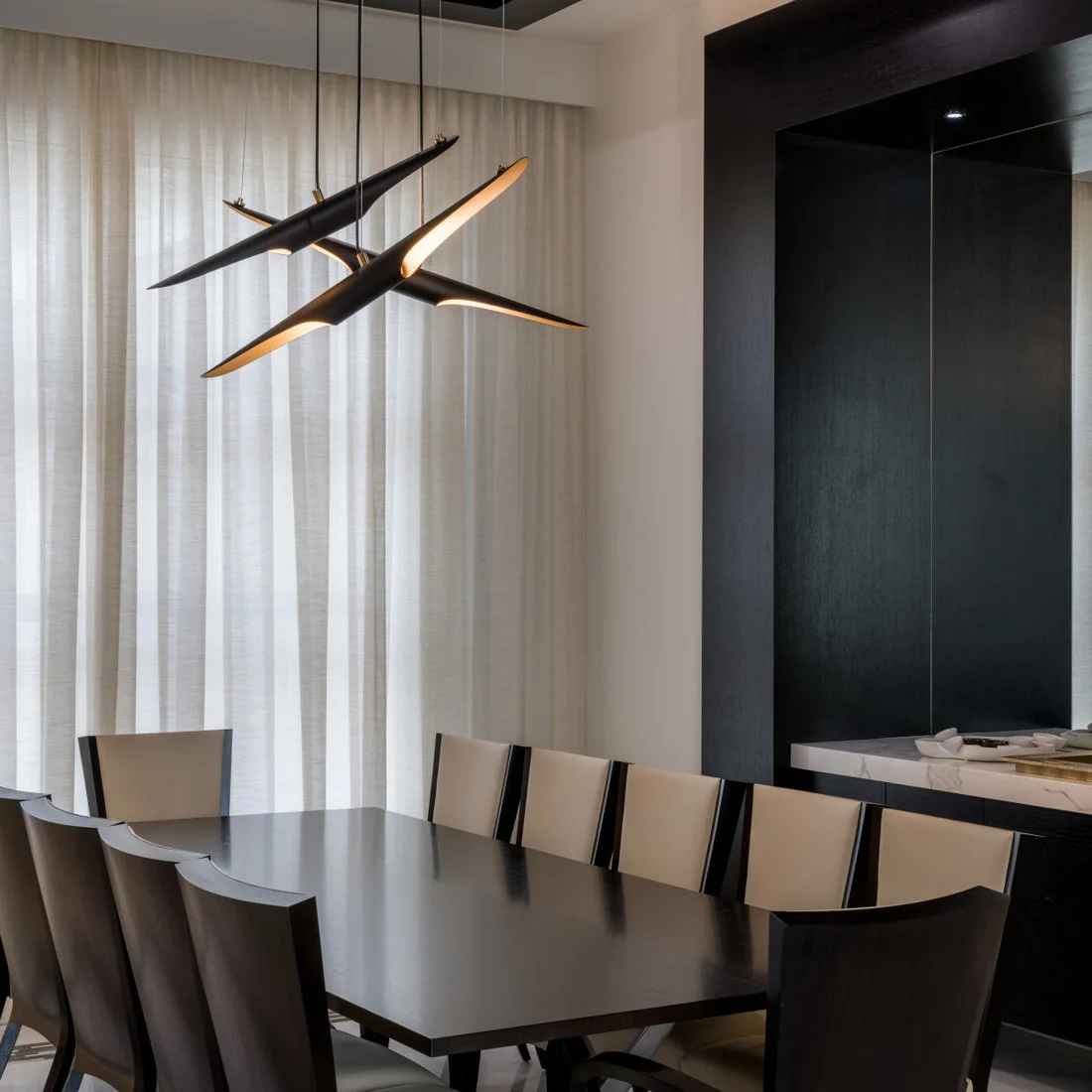
Give Pale Chair Backs a Deeper Table and Wall
 SaveSupport Non AI Creator
Source: www.houzz.com
The pale chair-back panels interrupt the darker seating group with smaller light surfaces. Pale curtains give the table a much larger lighter background at one side, contrasting with the dark storage beyond. Angular lights repeat deeper outlines overhead, with warmer illuminated surfaces adding a limited accent.
Check the chair backs’ actual construction and care before choosing a two-tone seat, keeping the table height and legroom comfortable together. Plan storage-door movement around the seated route. Position the hanging light group for usable visibility without obstructing conversation, leaving the table clear enough for meals when the surrounding fittings already create several stronger shapes.
IDEA 17 / 20
Keep Dark Chairs and Pendants Within a Pale Room
 SaveSupport Non AI Creator
Source: www.houzz.com
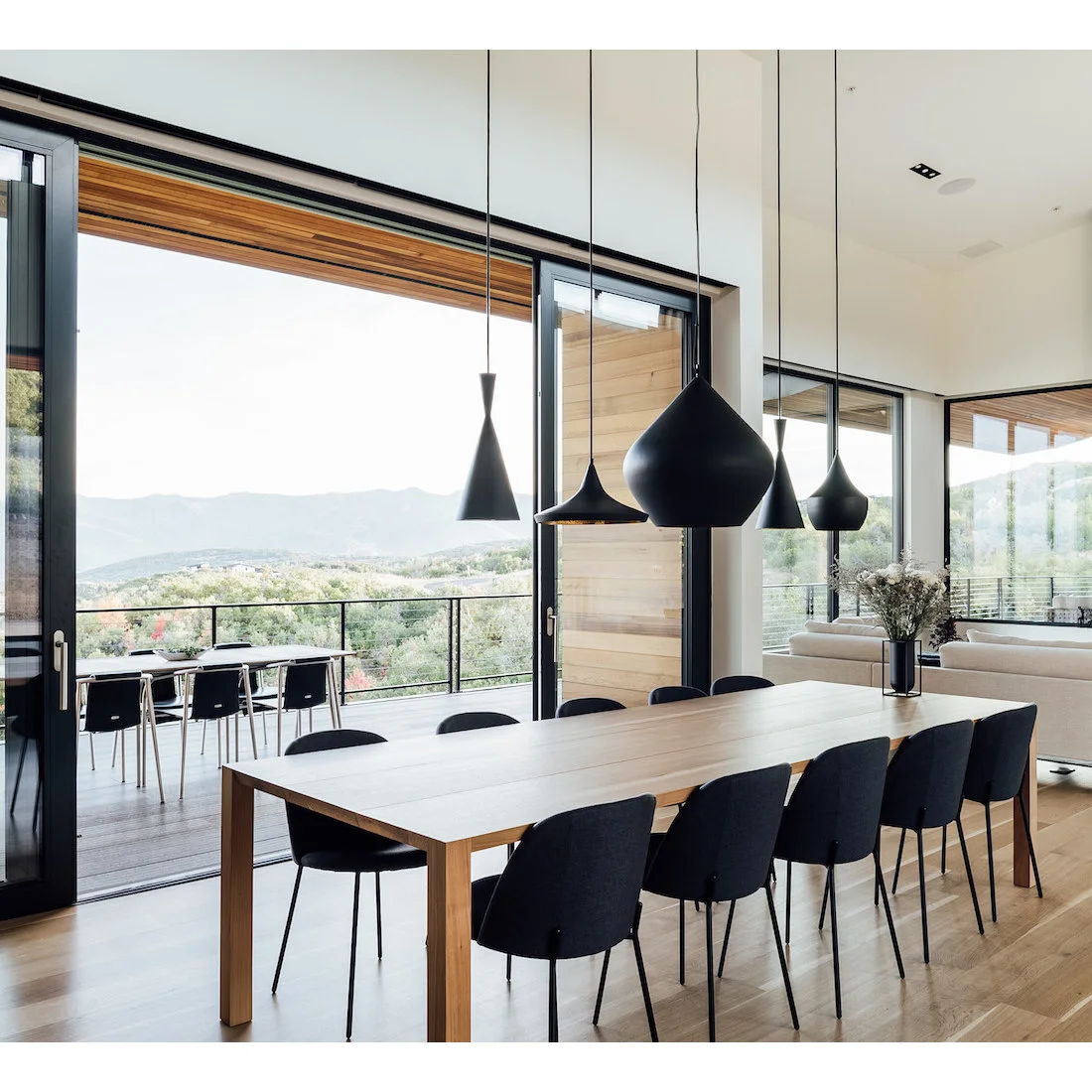
The dark chairs connect with the five pendant shades and larger glazing outlines around the lighter tabletop. White walls and paler lower surfaces leave those repeated deeper shapes visible. Wood details supply a warmer neutral layer, while the varied light silhouettes introduce most of the difference above the table.
Check that the separate pendants illuminate the full table rather than leaving uneven spots between chairs. Keep the door route clear with people seated and compare the chairs’ comfort before choosing a slim profile. Modern dining room ideas show other fixture and table arrangements, useful when deciding how much overhead variation the room actually needs.
IDEA 18 / 20
Pair Pale Seats with a Dark Table and Clear Door Route
 SaveSupport Non AI Creator
Source: www.houzz.com
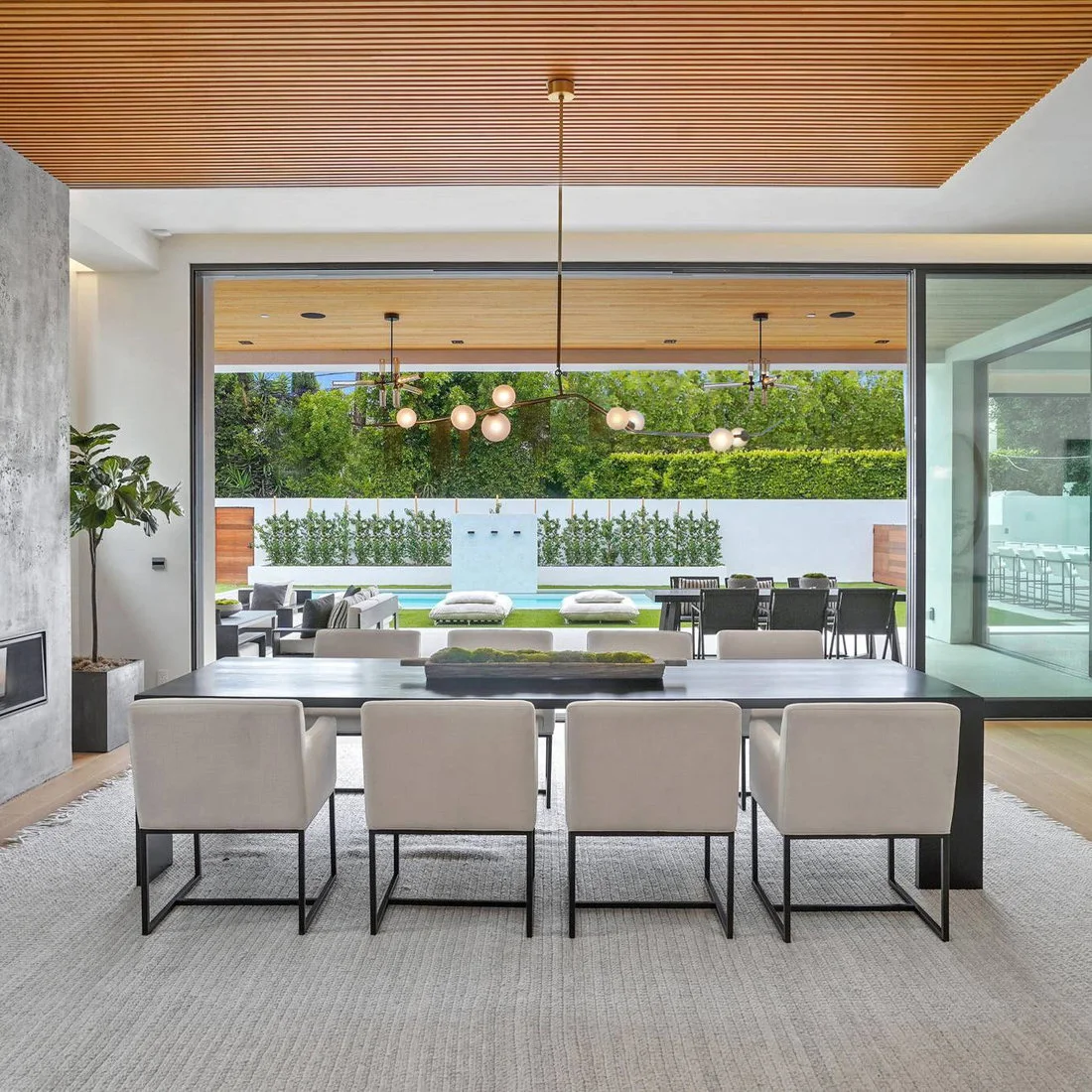
The pale chair backs define separate seats against the dark tabletop. The gray rug keeps the lower dining position within a softer neutral group, while the slatted ceiling supplies a warmer finer repeat overhead. The broad doorway leaves the lighter adjoining seating and garden view visible beyond the table.
Check the doorway route with chairs pulled back before placing the table close to the opening. Choose rug size and texture around easy chair movement and routine cleaning. Keep upholstery care manageable for the household, allowing the ceiling to carry the finer repeated detail rather than adding another strong patterned tablecloth or additional freestanding furniture beside the route.
IDEA 19 / 20
Use a Pale Curved Bench Against Dark Chairs
 SaveSupport Non AI Creator
Image credit: Arteriors
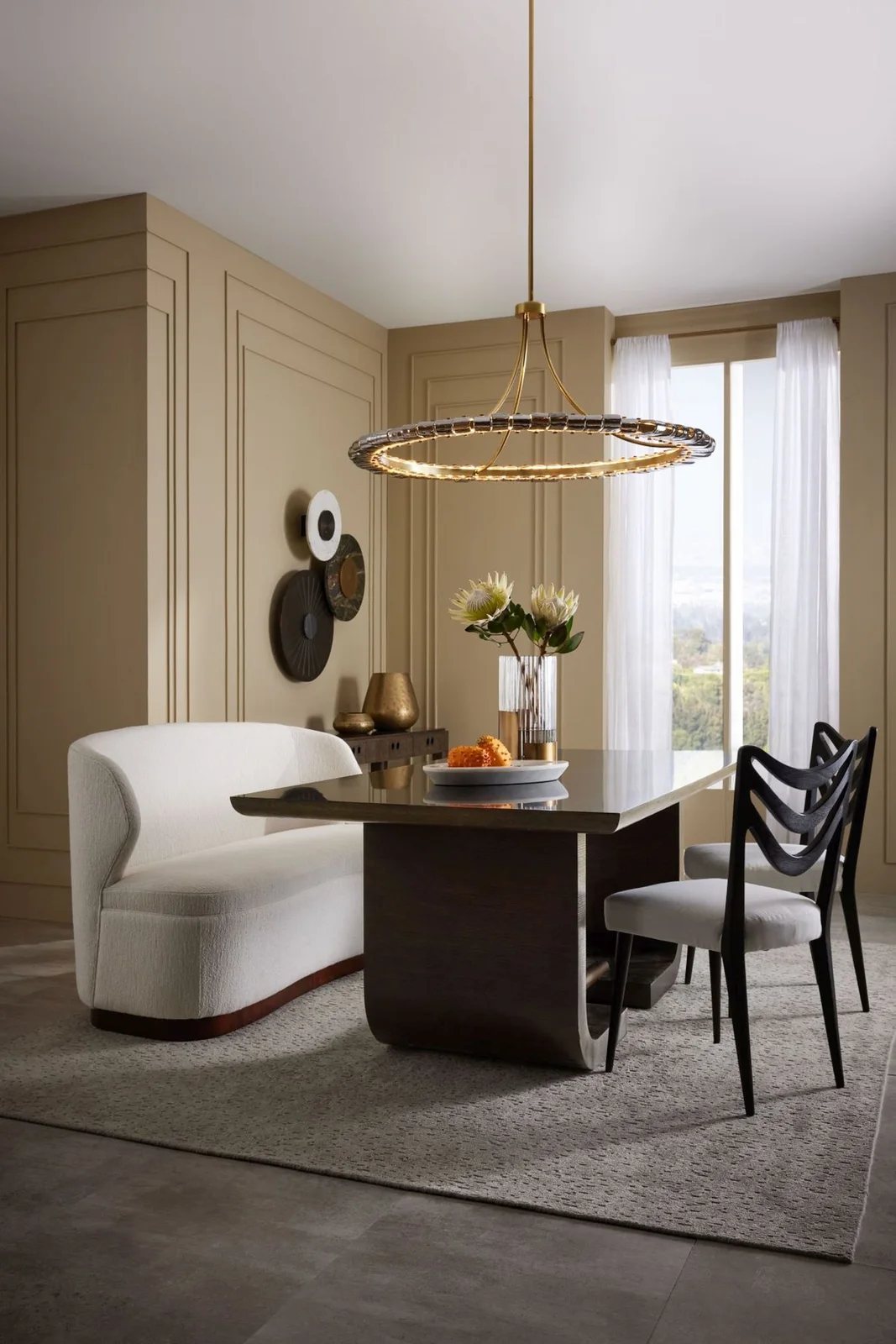
The pale curved bench provides a softer lighter shape behind the straighter dark tabletop. Black chair backs repeat deeper outlines on the opposite side, while the paneled wall stays within a muted neutral background. The ring pendant introduces one larger rounded detail above the contrasting seating group.
Check how many people the bench comfortably seats and how they enter or leave without moving the whole table. Compare the chairs’ seat height with the bench before mixing them. Keep the curtain route useful and choose upholstery according to its actual care guidance, using the bench for comfortable seating rather than adding more decorative pillows around the curve.
IDEA 20 / 20
Group Dark Picture Frames Beside the Dining Area
 SaveSupport Non AI Creator
Image credit: Future PLC/John Downs
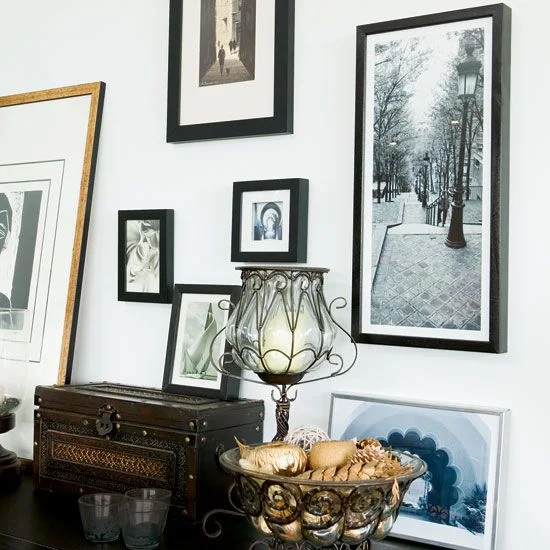
The darker picture frames connect through their pale mounts and shared wall, creating a repeated black-and-white display. Smaller reflective and warmer objects add variety below without changing the larger framed group. This closer wall view belongs to the white dining room shown first, explaining its artwork arrangement separately from the table.
Secure the frames and any leaning pieces appropriately, keeping display objects clear of nearby chair movement and useful serving space. Compare the mounts’ widths together before choosing a mixed frame group. Dining room wall decor offers other arrangements, helping you decide whether a contained picture display supplies enough detail without extending more objects across the dining table.
BRING IT ALL TOGETHER
Choose contrast around comfortable meals
Start with the actual table and chair arrangement, checking legroom and movement with everyone seated. A deeper tabletop, chair group or window framework can supply enough contrast beside lighter walls. Compare patterns and lighting together, keeping a plainer surface between the stronger repeats when the room already contains decorative architecture.
Then choose storage and finishes for daily use. Keep glass care, upholstery cleaning and rug movement manageable, preserving routes to doors and cupboards. Use removable centerpieces and secure wall displays so the table remains useful for serving and conversation. The photographed arrangement suggests an idea; it does not establish measurements, construction or the maintenance requirements of your chosen pieces.