A moody bedroom can use deep blue, green, charcoal or darker wood without leaving everyday comfort behind. These photographed rooms compare focused headboard walls, fuller dark palettes and bedside arrangements, showing how lighter bedding, warm furniture and useful lamps can separate the sleeping area from its deeper background.
Start with the room’s actual daylight, storage needs and routes around the bed. Compare finish samples under evening light and check furniture access before adding layers. The photographs show arrangements to consider, not proof of materials, installation suitability or dimensions; use the actual products’ instructions when making practical decisions.
PART 01
Compare deeper backgrounds and brighter bedding
IDEA 01 / 20
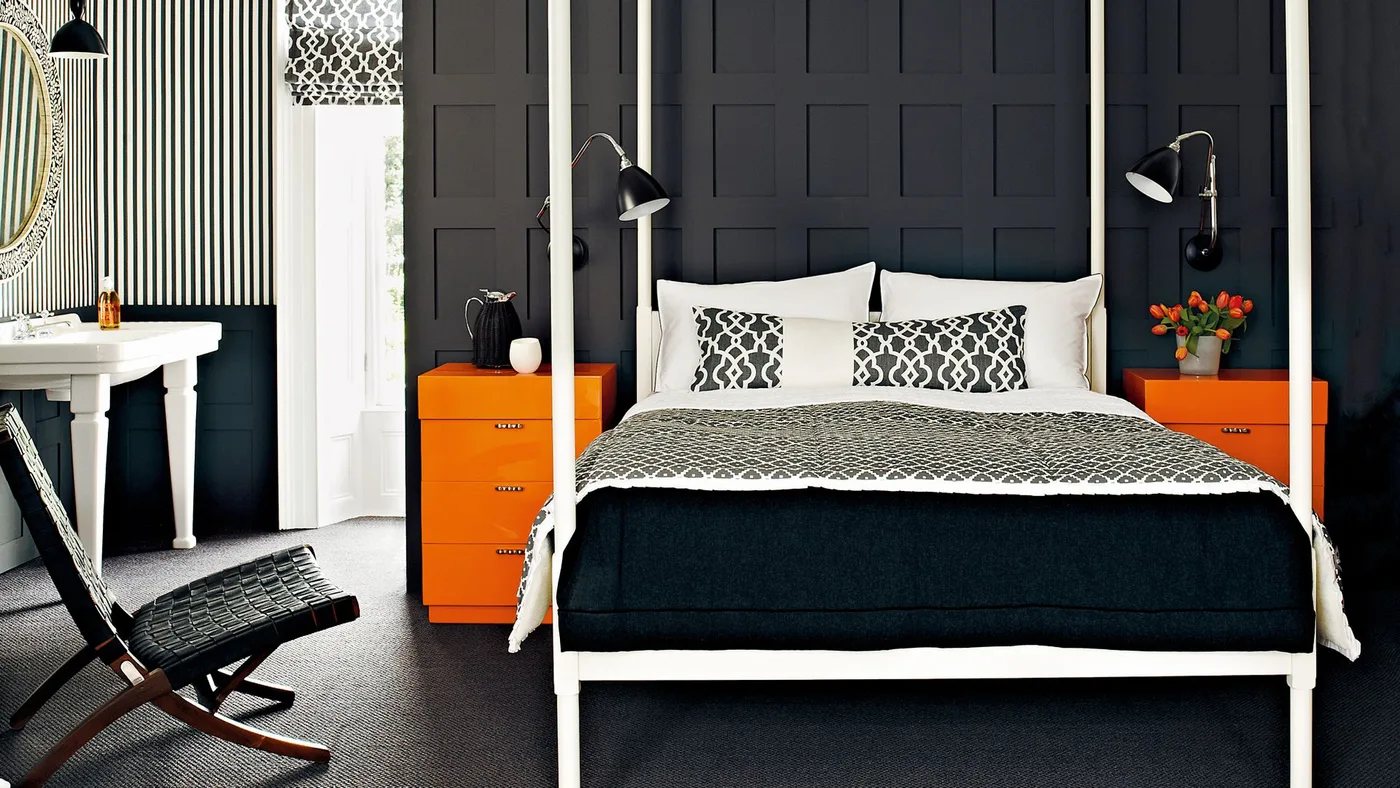
Brighten Charcoal Paneling with Orange Storage
 SaveSupport Non AI Creator
Image credit: Future/Adrian Briscoe
Charcoal panels establish the dark background while the white bed frame supplies a clear outline across it. Orange drawer chests concentrate the brighter color beside the pillows. Patterned cushions and bedding connect with the striped wall at the left without requiring more color on the headboard wall.
Check drawer access beside the bed and leave room to reach the wall lamps without leaning around the posts. A bright bedside finish can provide enough accent color by itself. Compare Dark boho bedroom ideas for other deeper backgrounds, choosing extra patterns only when they add something beyond this already distinctive arrangement.
IDEA 02 / 20
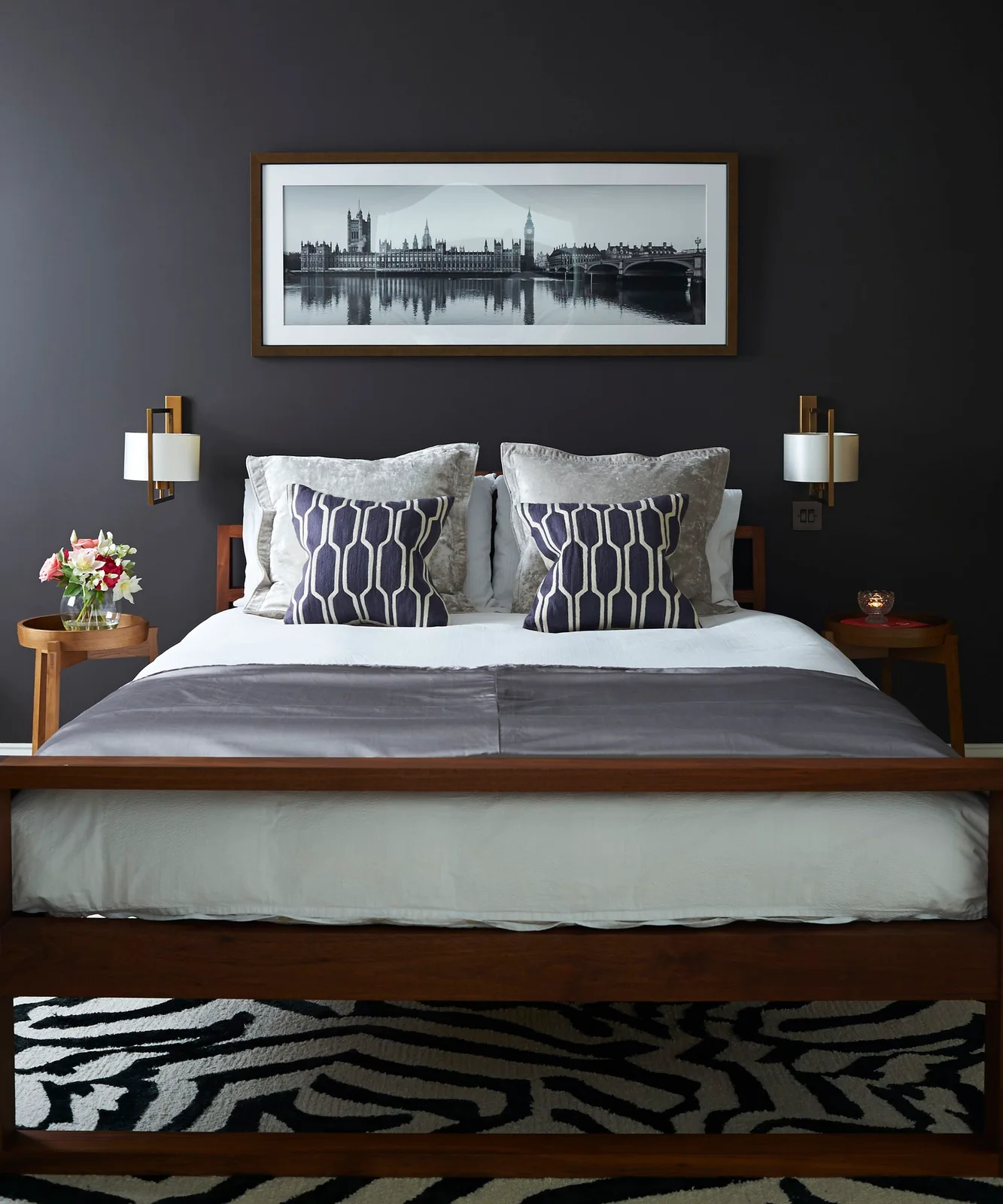
Keep Pale Bedding Against a Charcoal Wall
 SaveSupport Non AI Creator
Image credit: Future/Jonathan Gooch
The broad charcoal wall gives the pale bedding a stronger outline without another large decorative surface behind the pillows. Matching wall lamps establish two smaller light points beside the bed. A horizontal framed photograph and the rug’s black-and-white pattern introduce separate details above and below the sleeping area.
Test the wall color with your actual bedding rather than relying on the photograph’s lighting. Keep reading lamps independently controllable and check their reach from each pillow. Choose fewer cushions if storing them at bedtime becomes awkward, preserving the useful landing surfaces instead of moving decorative items onto the floor.
IDEA 03 / 20
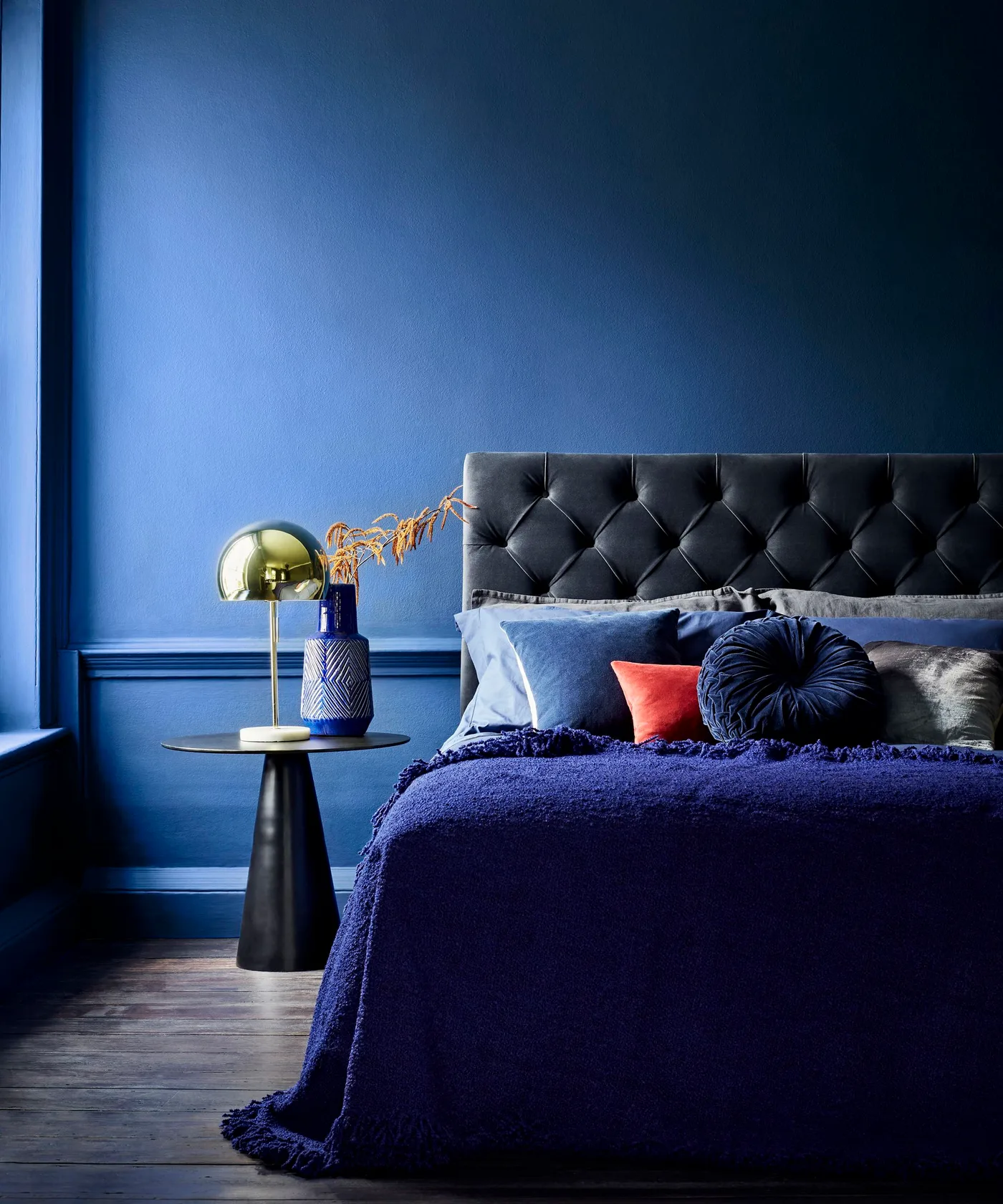
Layer Deep Blue Around a Dark Tufted Headboard
 SaveSupport Non AI Creator
Image credit: Crown
The blue wall and bed covering create a connected deeper group around the dark headboard. An orange cushion supplies a smaller contrasting patch among the blue pillows. The reflective domed lamp brings a brighter curved shape to the bedside table without another large pale furnishing interrupting the palette.
Compare wall and bedding samples under both daylight and the lamps you use at night. Keep the table large enough for daily essentials after allowing space for the lamp. Dark blue bedroom ideas offer other ways to balance this color with lighter furniture when a fully layered blue bed would feel too intense.
IDEA 04 / 20
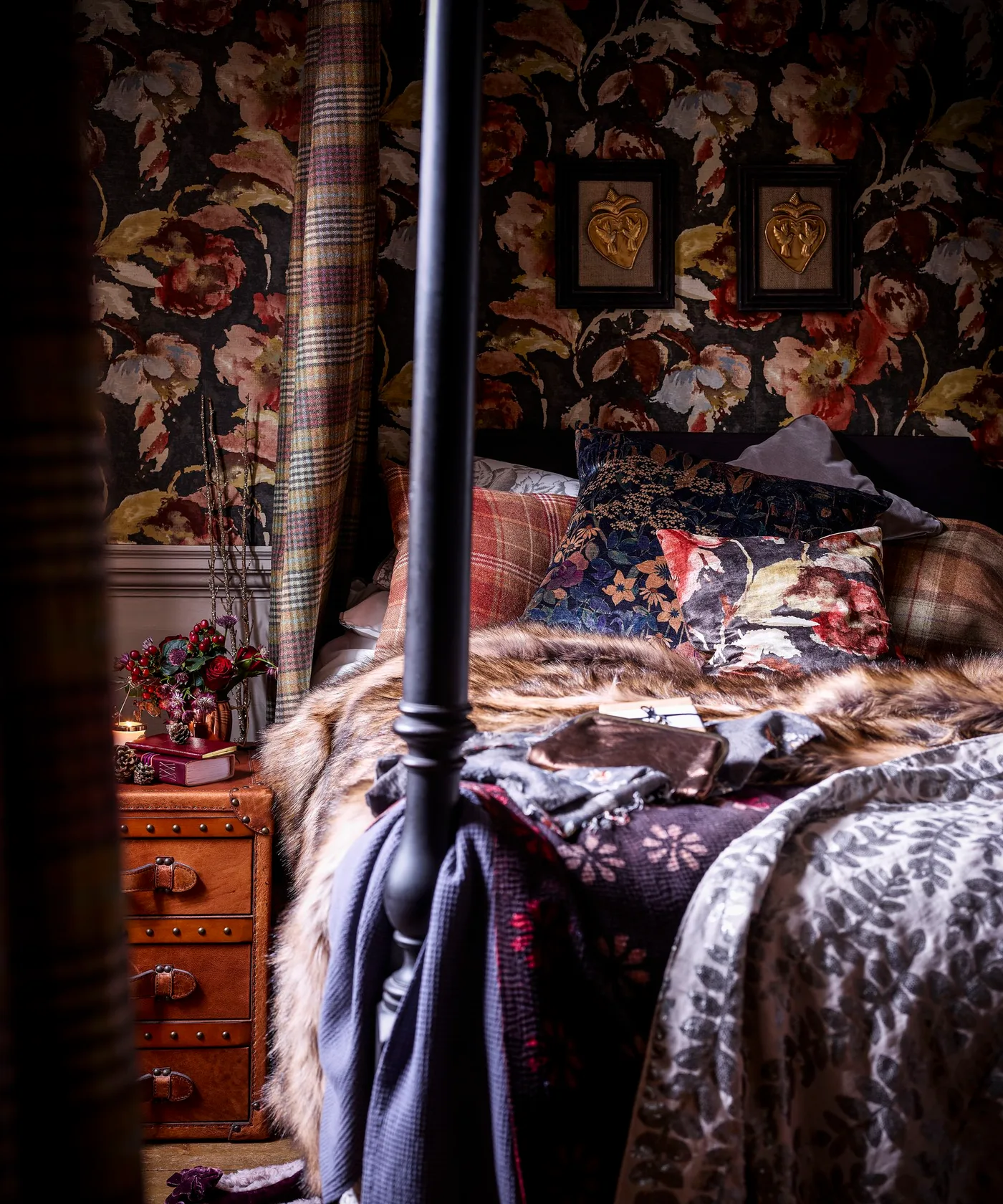
Use a Dark Floral Wall as the Main Pattern
 SaveSupport Non AI Creator
Image credit: Future
The floral wallpaper gives this bedroom a dense patterned background behind the tall dark bed frame. Plaid curtains and several bedding patterns add different scales rather than repeating the same motif. Warm-colored trunks beside the bed introduce storage outlines below the more elaborate wall and fabric layers.
Start with one wallpaper sample and compare the bedding beside it before committing to several patterns. Check how the curtain stack clears the posts and window. Choose bedside storage for its reachable surface and access, recognizing that stacked trunks are less convenient for frequent small items than an easily opened drawer.
IDEA 05 / 20
Carry Dark Green Across the Wall and Bedding
 SaveSupport Non AI Creator
Image credit: Crown
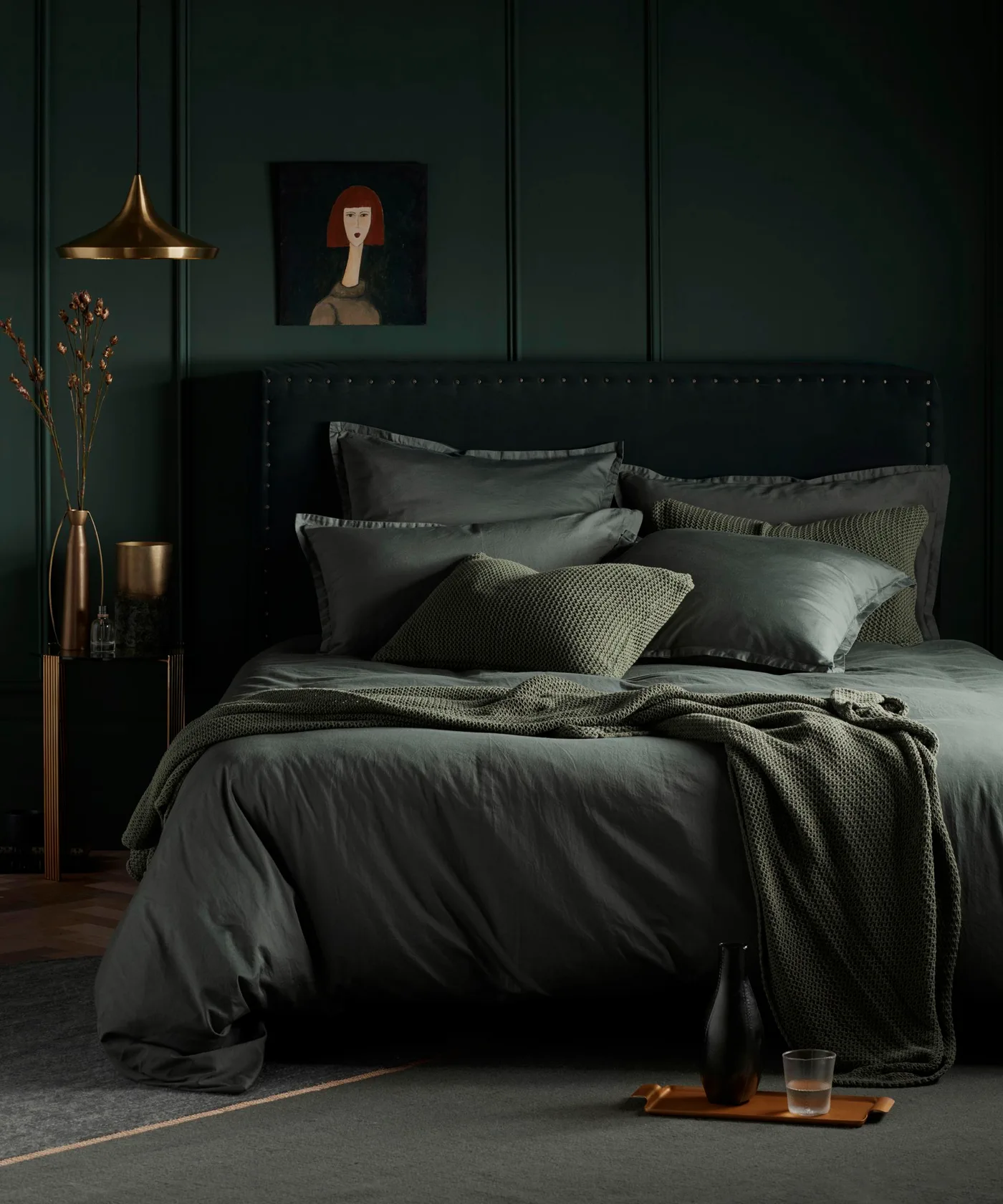
The green wall and bedding establish a deeper continuous group around the sleeping area. Different cushion and cover textures provide changes within that narrow palette. A warm-colored hanging light and the small portrait interrupt the larger dark surface without replacing it with a second dominant wall color.
Check samples together under the actual evening light because similar greens can separate differently once lit. Keep pendant controls accessible and its position practical when sitting up. Dark green bedroom ideas compare other green arrangements, useful when deciding whether lighter bedding would make this deeper wall easier to balance.
PART 02
Keep contrast useful around the sleeping area
IDEA 06 / 20
Give a Dark Paneled Bedroom a Useful Writing Spot
 SaveSupport Non AI Creator
Image credit: Farrow & Ball
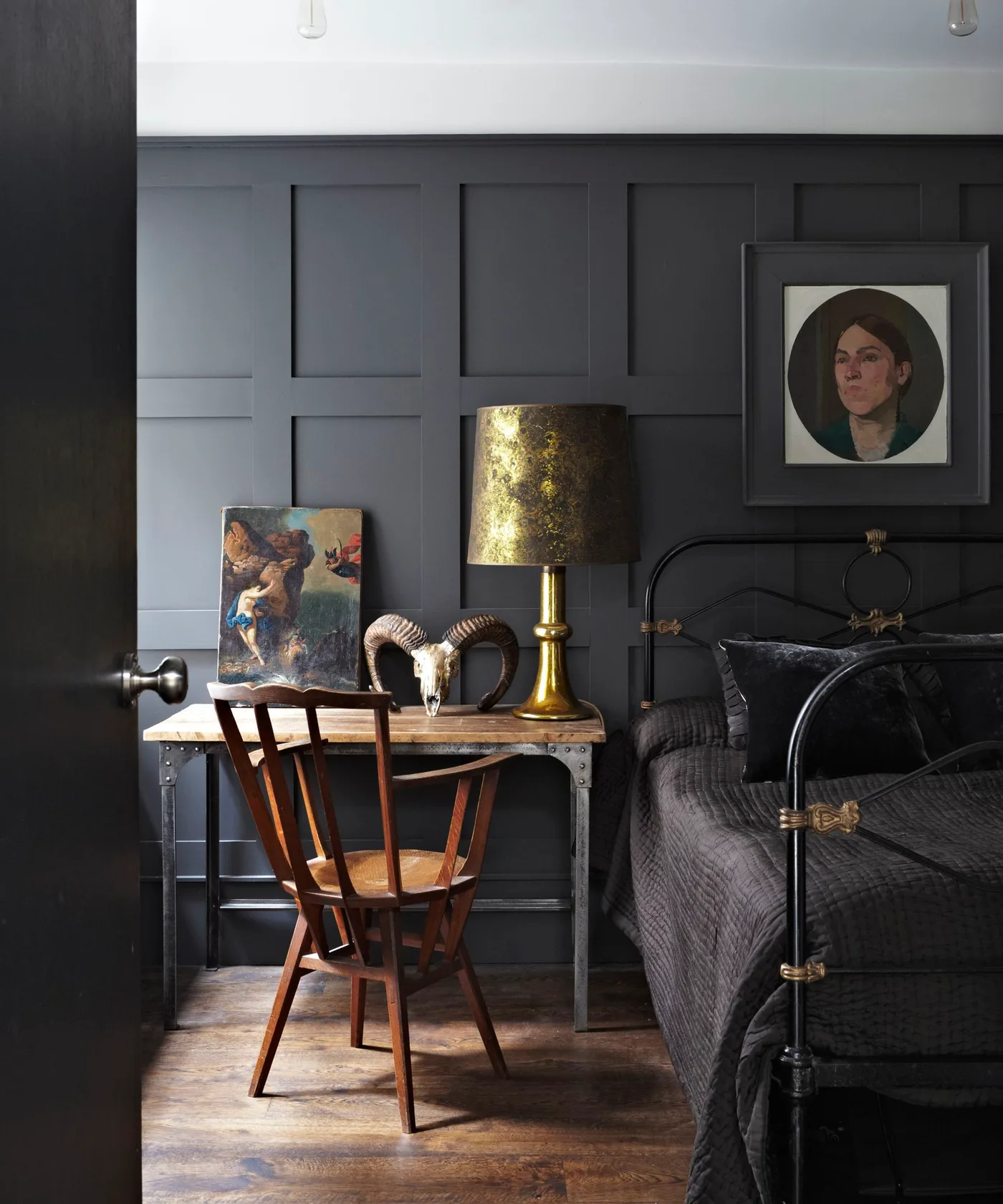
The paneled wall ties the desk corner to the bed’s darker covering and open framework. A wooden chair introduces warmer narrow lines rather than another broad upholstered shape. The table lamp and portrait provide smaller points of interest, leaving the desk surface recognizable as a separate useful work position.
Check that the chair can pull out without narrowing the route beside the bed. Choose desk lighting for the tasks actually performed there, with cables kept clear of movement. Leave enough surface for writing after adding a lamp, reducing display pieces when a small desk also needs to hold daily essentials.
IDEA 07 / 20
Pair Dark Wood Paneling with Floral Bedding
 SaveSupport Non AI Creator
Image credit: Future/Katya de Grunwald
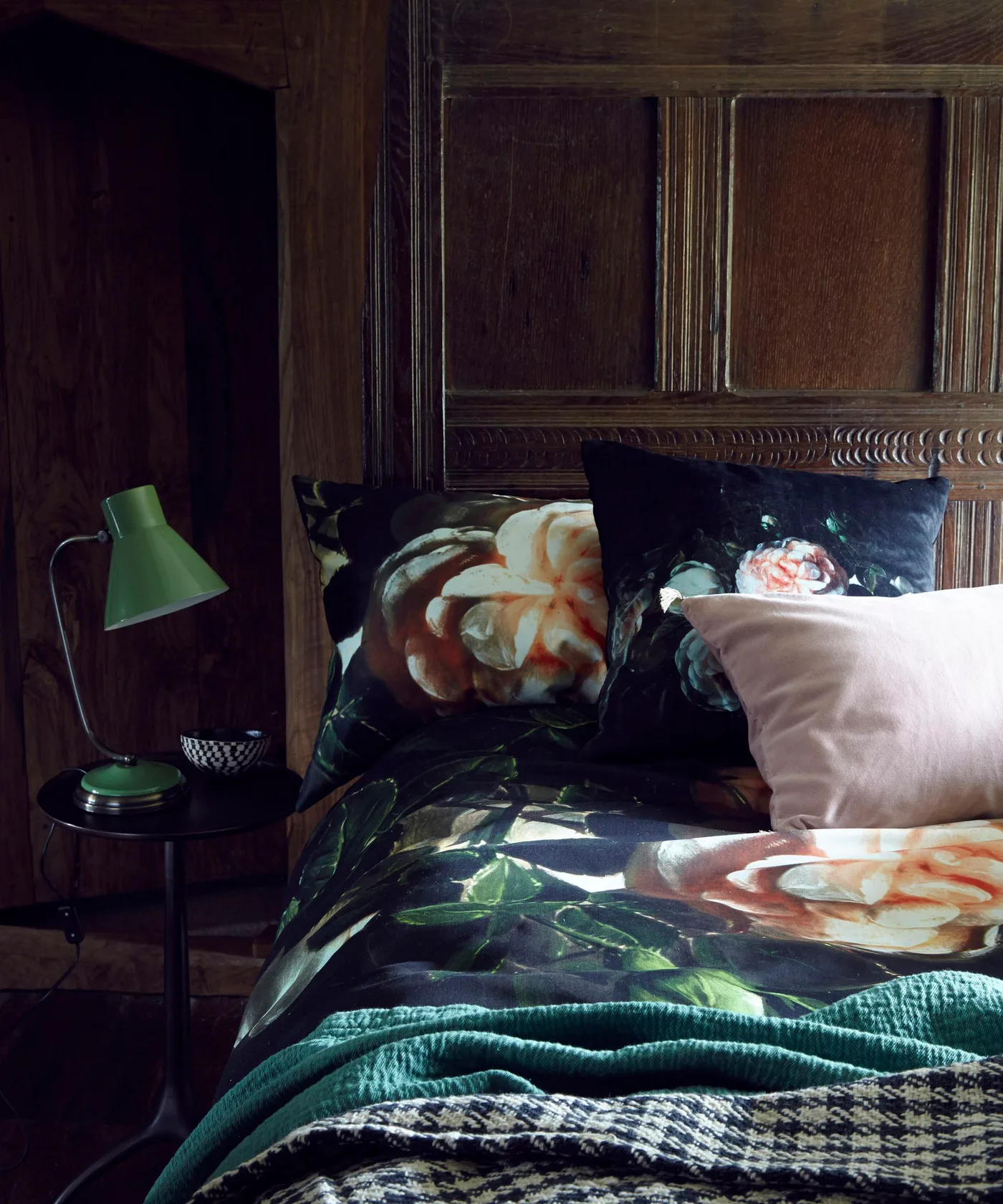
The dark paneling supplies most of the room’s deeper background, with the floral bedding introducing larger lighter patches close to the pillows. A pale pink cushion separates the floral layers. The green bedside lamp and textured cover connect through color without making every surrounding surface match.
Check the panel finish before choosing a cleaning method, avoiding assumptions about age or construction from the photograph. Compare floral bedding at the scale of the actual bed. Keep the lamp’s adjustment range useful for reading and leave its base stable, choosing washable layers around your own care routine.
IDEA 08 / 20
Let a Yellow Cover Lift a Dark Wall
 SaveSupport Non AI Creator
Image credit: Kersaint Cobb
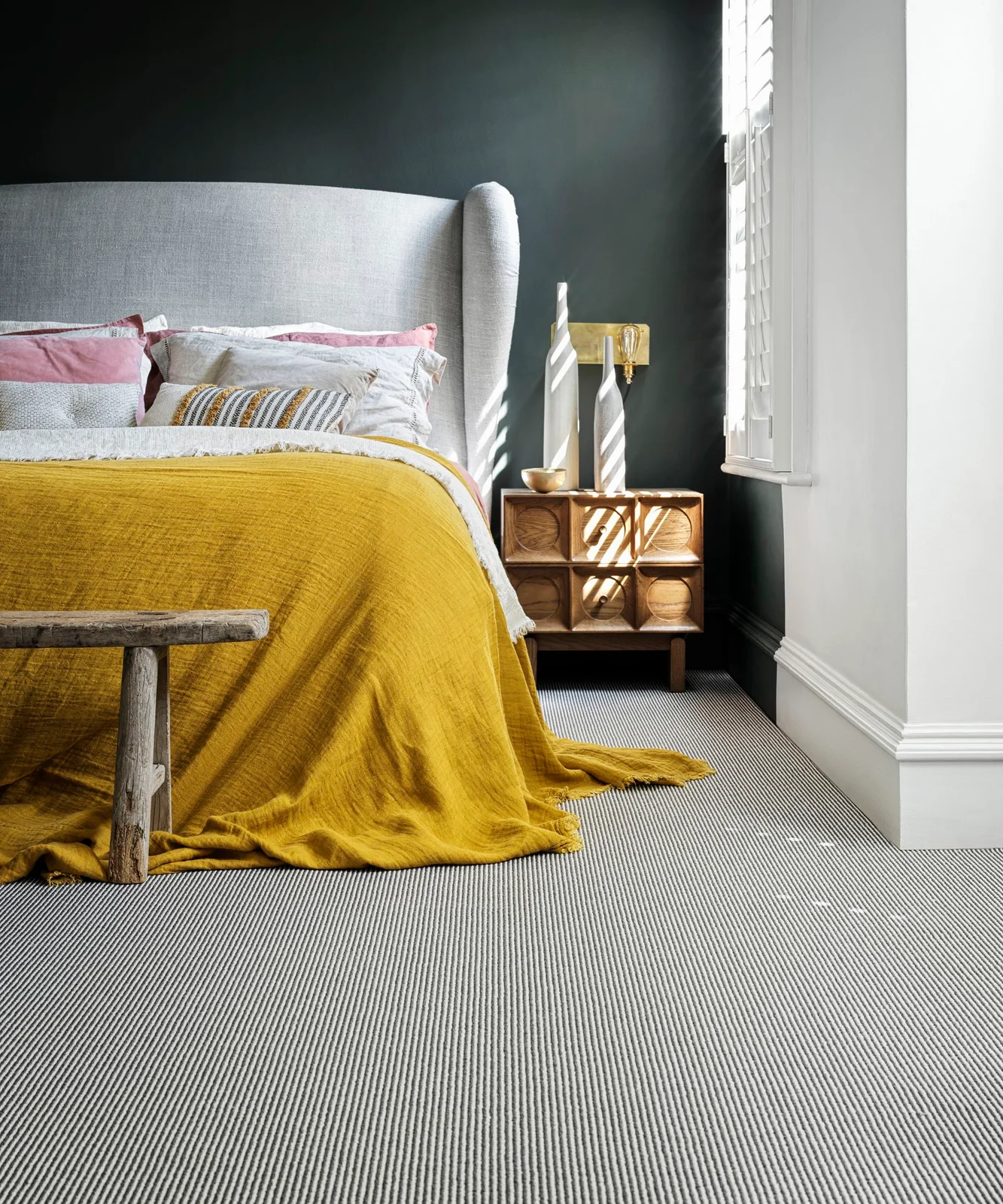
The yellow cover creates the largest bright patch against the darker wall beside the bed. A pale headboard keeps the pillows within a lighter frame, with white shutters adding another clear vertical contrast. Smaller patterned cushions connect the colors without extending that strong yellow across the whole room.
Try the cover color with the wall sample under natural light before selecting matching accessories. Keep shutter access clear and check bedside drawer movement against the bed. Avoid choosing storage solely for its appearance; reachable surface space and practical handles will matter more during the room’s daily use.
IDEA 09 / 20
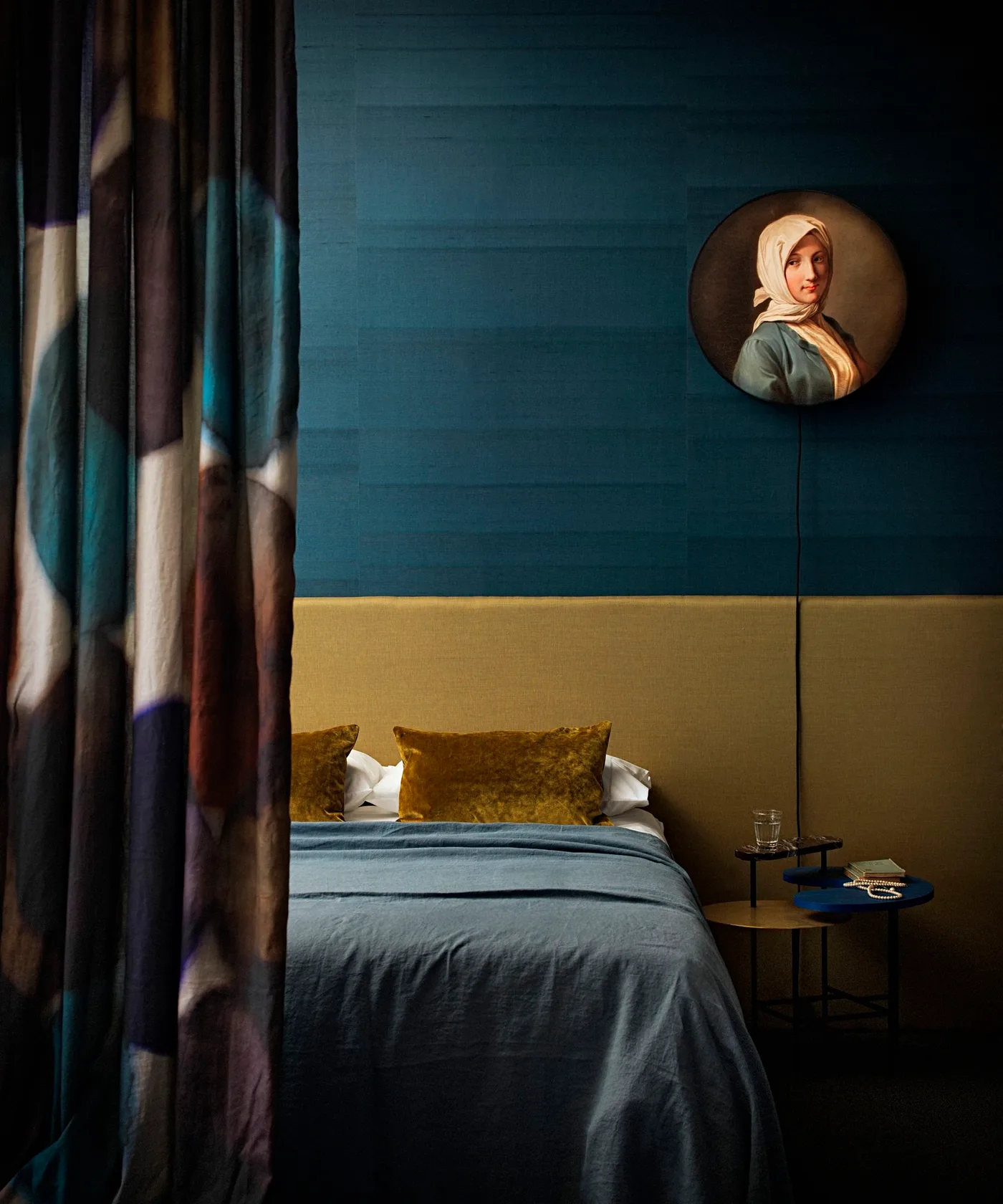
Set a Warm Headboard Against Deep Teal
 SaveSupport Non AI Creator
Image credit: Future/Damian Russell
The deep teal wall provides a cool background for the wide warm-colored headboard. Similar cushions connect with the headboard while the blue-gray covering returns to the wall’s quieter color family. A small round table occupies the bedside position below the portrait and slender upright light.
Measure the usable table surface after allowing for glasses or a book, and check the light’s controls from bed height. Keep the curtain movement clear of the furniture. Choose the headboard height around comfortable sitting and the room’s proportions rather than assuming a taller upholstered shape always adds practical comfort.
IDEA 10 / 20
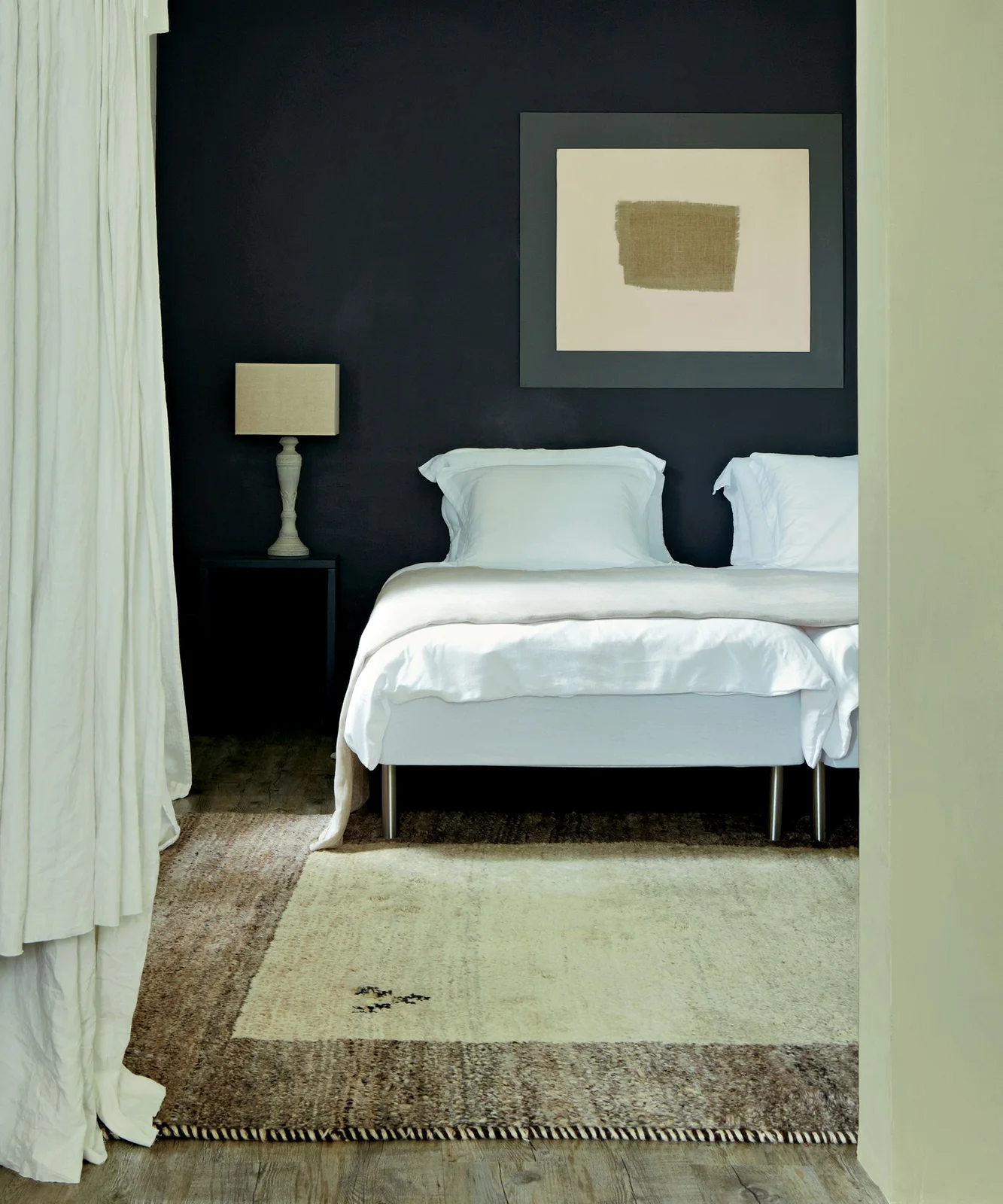
Keep One Deep Wall Behind White Bedding
 SaveSupport Non AI Creator
Image credit: Farrow & Ball
The dark wall concentrates the deeper color directly behind the pillows. White bedding and curtains leave larger adjacent surfaces pale, making the wall stand out without darkening every part of the photographed room. The smaller framed artwork and bedside lamp repeat quieter lighter shapes within that darker background.
Consider this focused arrangement when you want depth without repainting every wall. Compare the color beside the curtains under daylight and evening lamps. Check that layered floor coverings lie securely and do not catch a door, selecting fewer layers if the bedside route or regular cleaning becomes less convenient.
PART 03
Plan light and storage beside deeper walls
IDEA 11 / 20
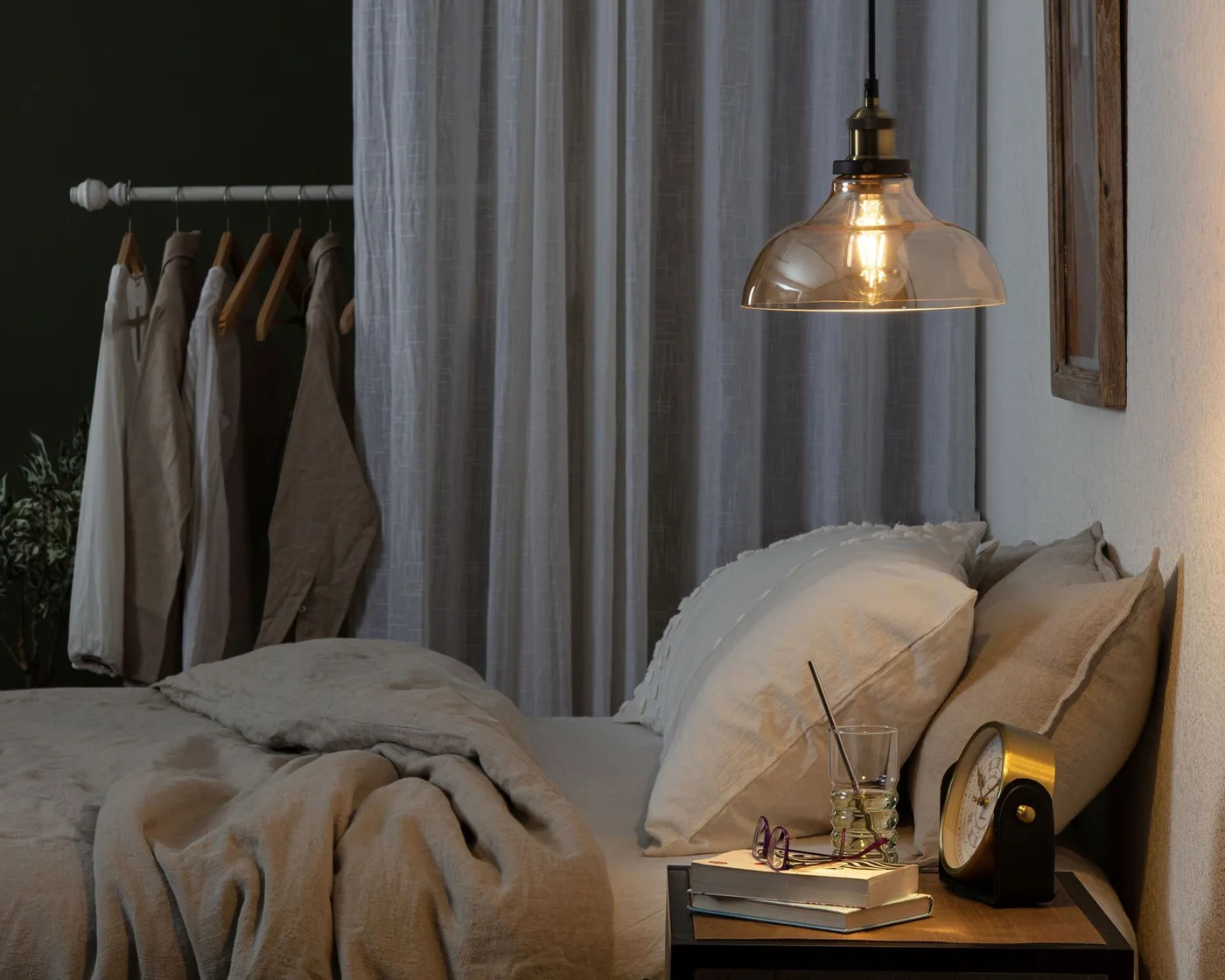
Keep Warm Bedside Light Separate from Open Storage
 SaveSupport Non AI Creator
Image credit: Iconic Lights
The warm bedside light provides the main brighter point within this quieter dimly lit arrangement. Pale bedding keeps the sleeping area readable beside the darker open storage recess. A white curtain introduces a separate vertical surface, while books and a small clock occupy the bedside landing area.
Choose a dimmable fitting compatible with its bulb if you need different light levels for reading and settling down. Check the pendant against sitting height and curtain movement. Keep open clothes storage manageable, with fewer exposed items when the adjoining bed and bedside surface already need regular clearing and cleaning.
IDEA 12 / 20
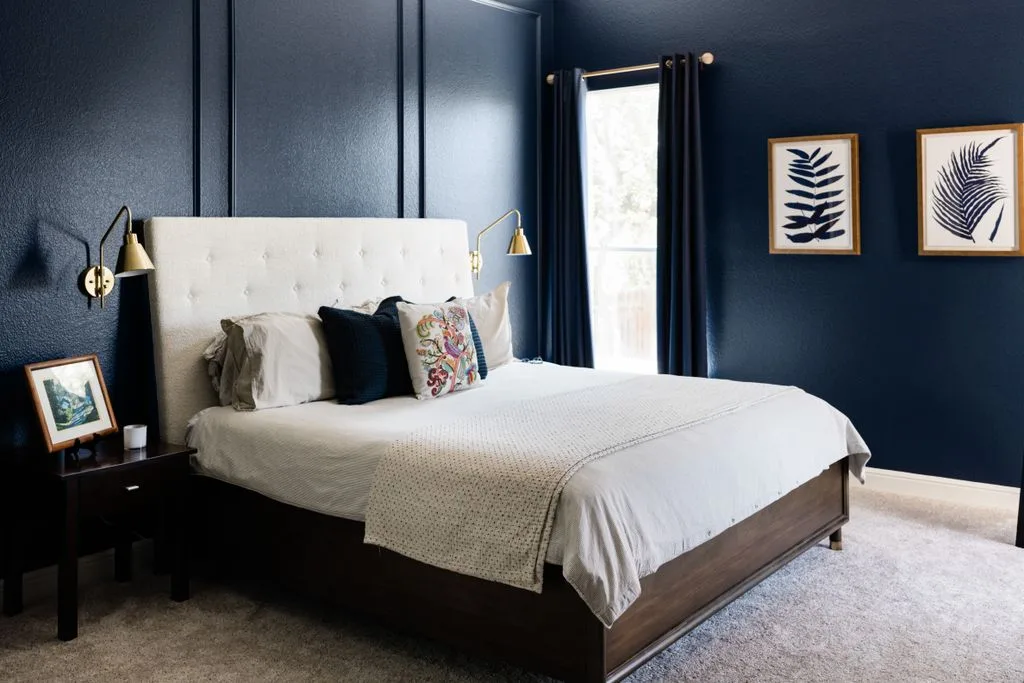
Frame a Cream Headboard with Navy Walls
 SaveSupport Non AI Creator
Image credit: Photo: Madeline Harper
The navy wall gives the cream headboard a clearly defined larger pale outline. Rectangular molding adds quieter lines within the dark background rather than another contrasting pattern. Small botanical prints and warm-colored wall lamps introduce separate details, while white bedding connects with the lighter headboard below.
Check lamp positions after establishing the actual mattress and headboard heights, keeping switches reachable from each side. Compare molding profiles at full scale before adding more lines. Bedrooms with paneling show other arrangements to consider when planning wall detail around existing furniture rather than changing the bed solely to fit decorative trim.
IDEA 13 / 20
Connect Navy Paneling with Striped Bedding
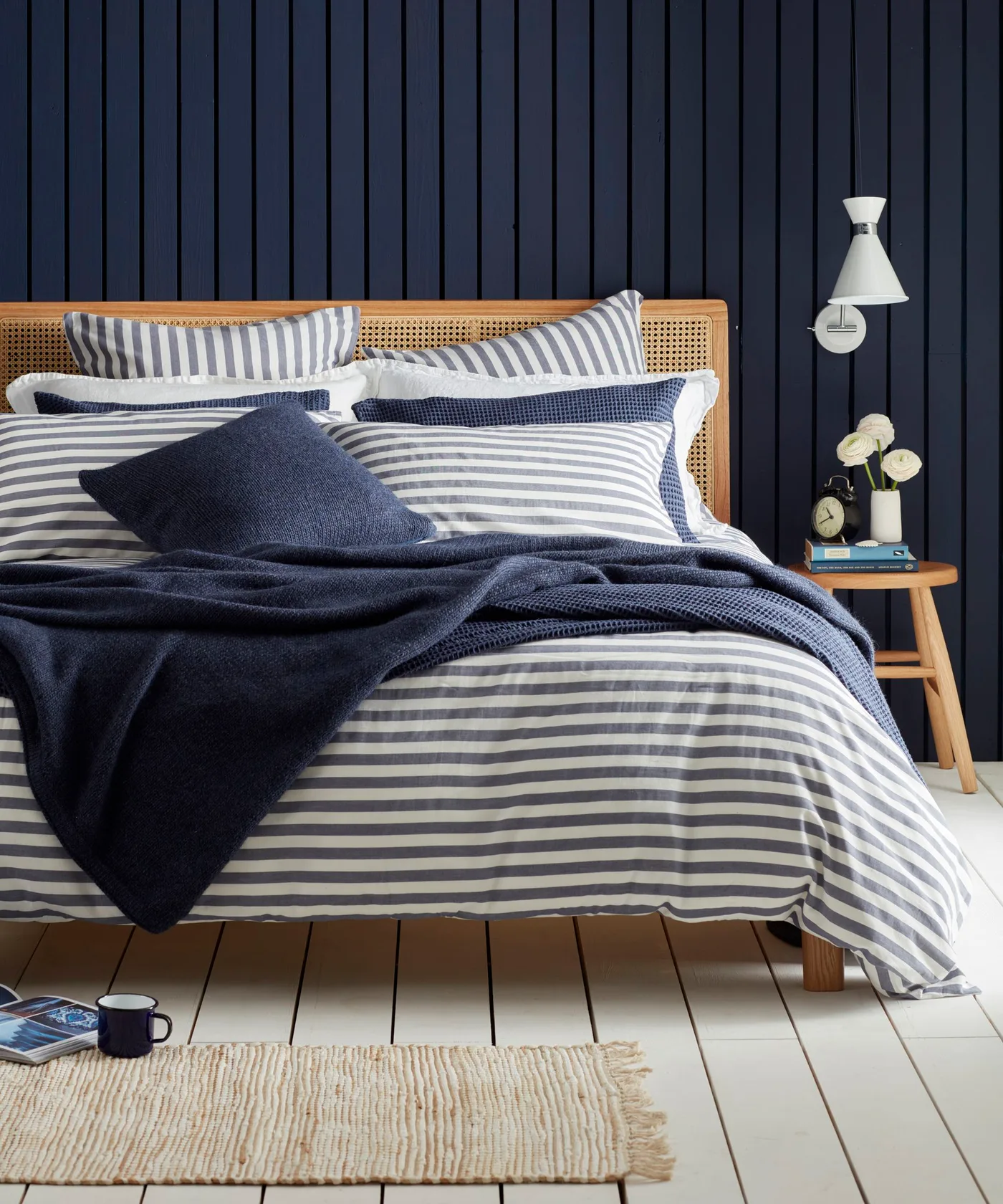 SaveSupport Non AI Creator
Image credit: Secret Linen Store
The deep vertical wall lines create a darker background behind the warmer woven headboard. Horizontal bedding stripes supply a different direction within the blue-and-white group. A white wall lamp provides a smaller pale shape beside the bed, leaving the wall and covering responsible for most of the contrast.
Choose one stripe scale that remains comfortable across the actual bed, comparing it beside the panel spacing before buying several patterned layers. Keep the lamp adjustment useful from the pillow. Follow the headboard’s care guidance for its particular construction, and preserve access for cleaning where furniture sits near the wall.
IDEA 14 / 20
Let Bedroom Storage Share the Deep Wall Color
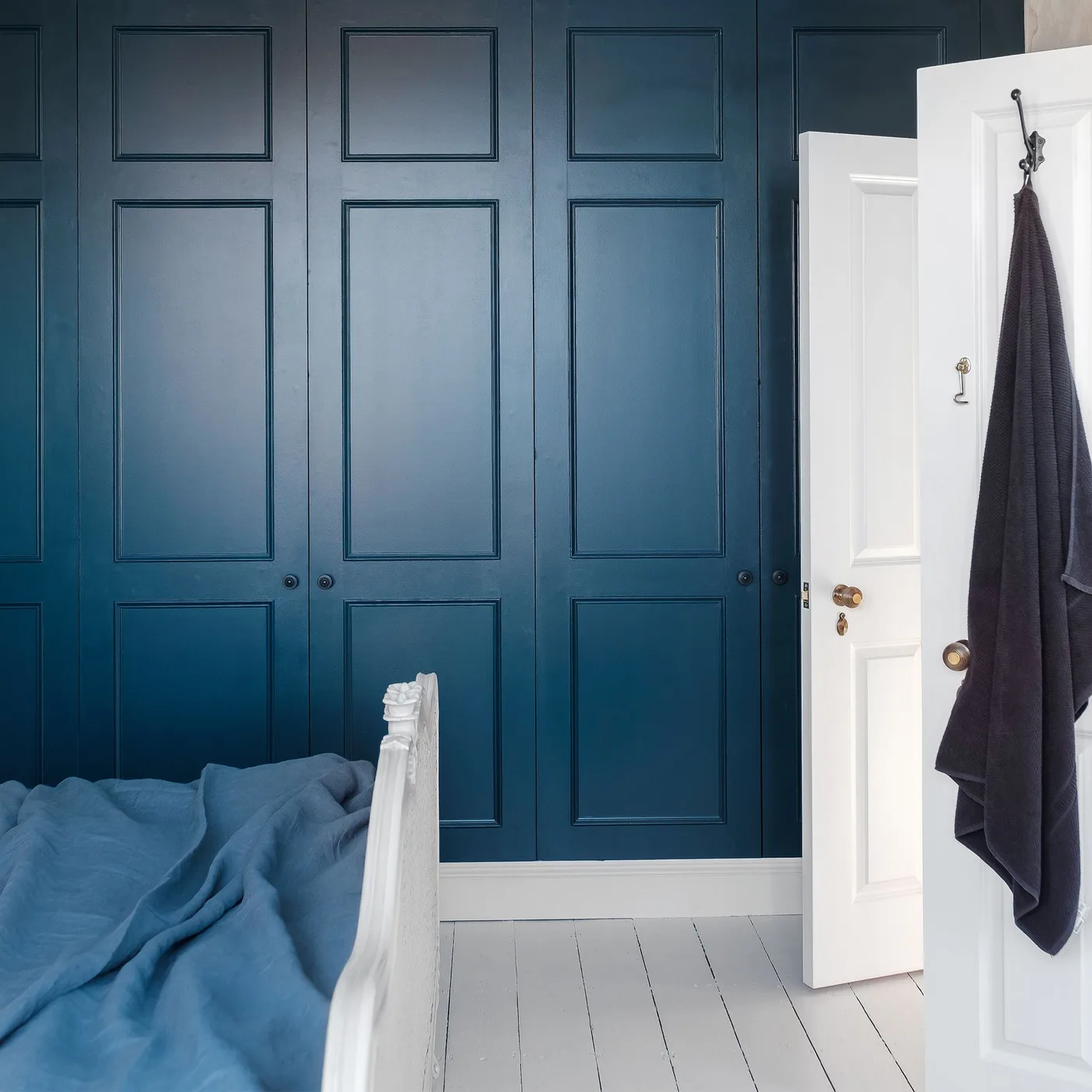 SaveSupport Non AI Creator
Image credit: James Merrell
The blue storage fronts repeat the surrounding deeper color, making their rectangular lines more noticeable than a separate contrasting cabinet finish. A white doorway and pale floorboards introduce larger lighter edges around that storage. Blue bedding connects the sleeping area with the wall rather than adding another strong color.
Check every door’s opening range with the bed in place before planning fitted storage. Allow access to handles and the room doorway without shifting furniture. Keep frequently used items within comfortable reach, choosing internal shelves and drawers around what you store instead of treating a matching painted exterior as the whole storage solution.
IDEA 15 / 20
Keep a Brighter Window Frame Within Dark Blue
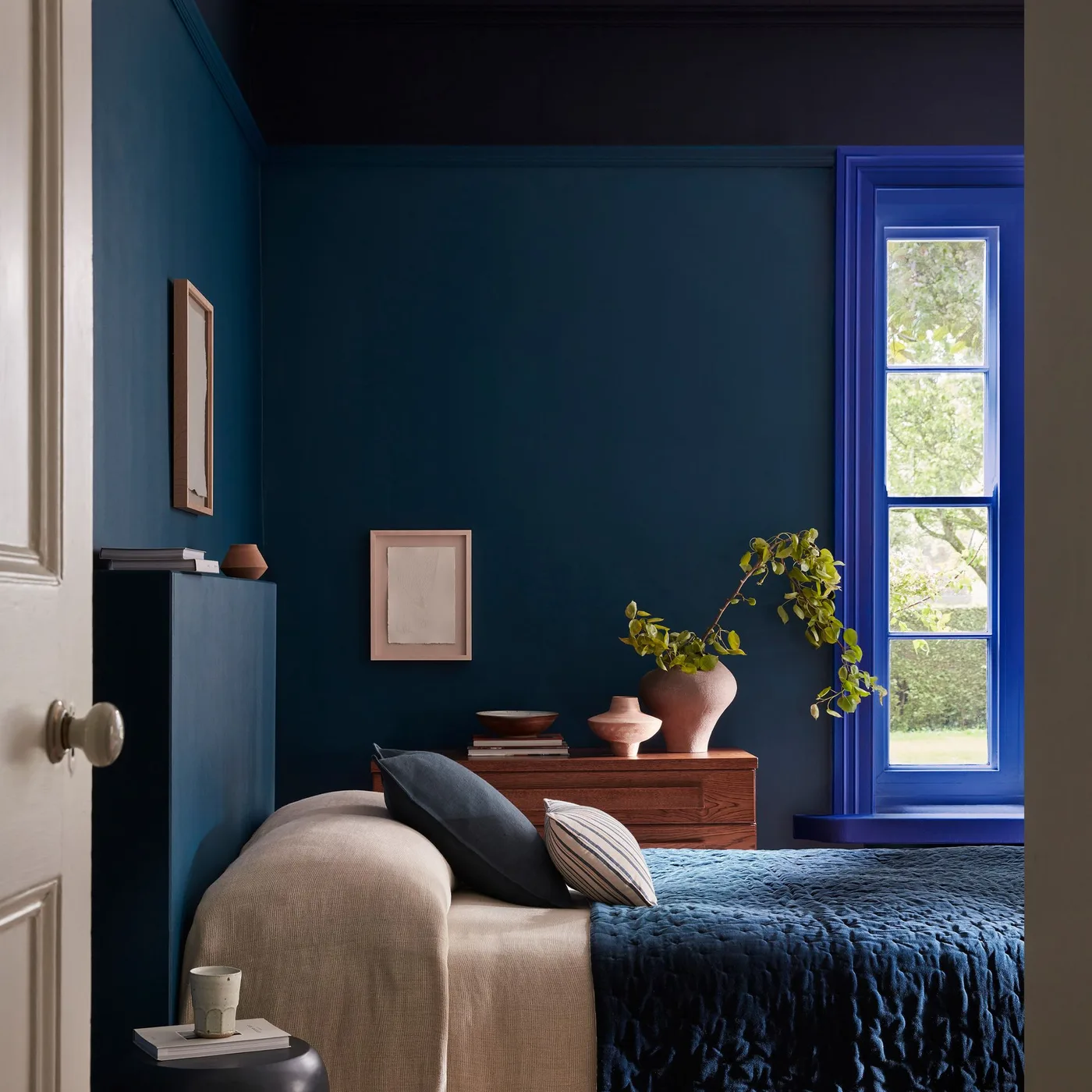 SaveSupport Non AI Creator
Image credit: Little Greene
The dark ceiling extends the deeper background above the bed, while the brighter window frame introduces a distinct blue outline around daylight. A beige bed and wooden dresser provide warmer lighter surfaces below. The window and furniture supply separation within a room that uses deep color extensively.
Test the ceiling and wall colors on larger samples under the light available through your own window. Keep window operation and coverings practical beside the furniture. Check the dresser’s drawers and anchor it appropriately, choosing bedding that makes the sleeping area comfortable to use rather than matching every painted surface exactly.
PART 04
Choose layers that support daily routines
IDEA 16 / 20
Give a Dark Wall a Small Warm Bedside Surface
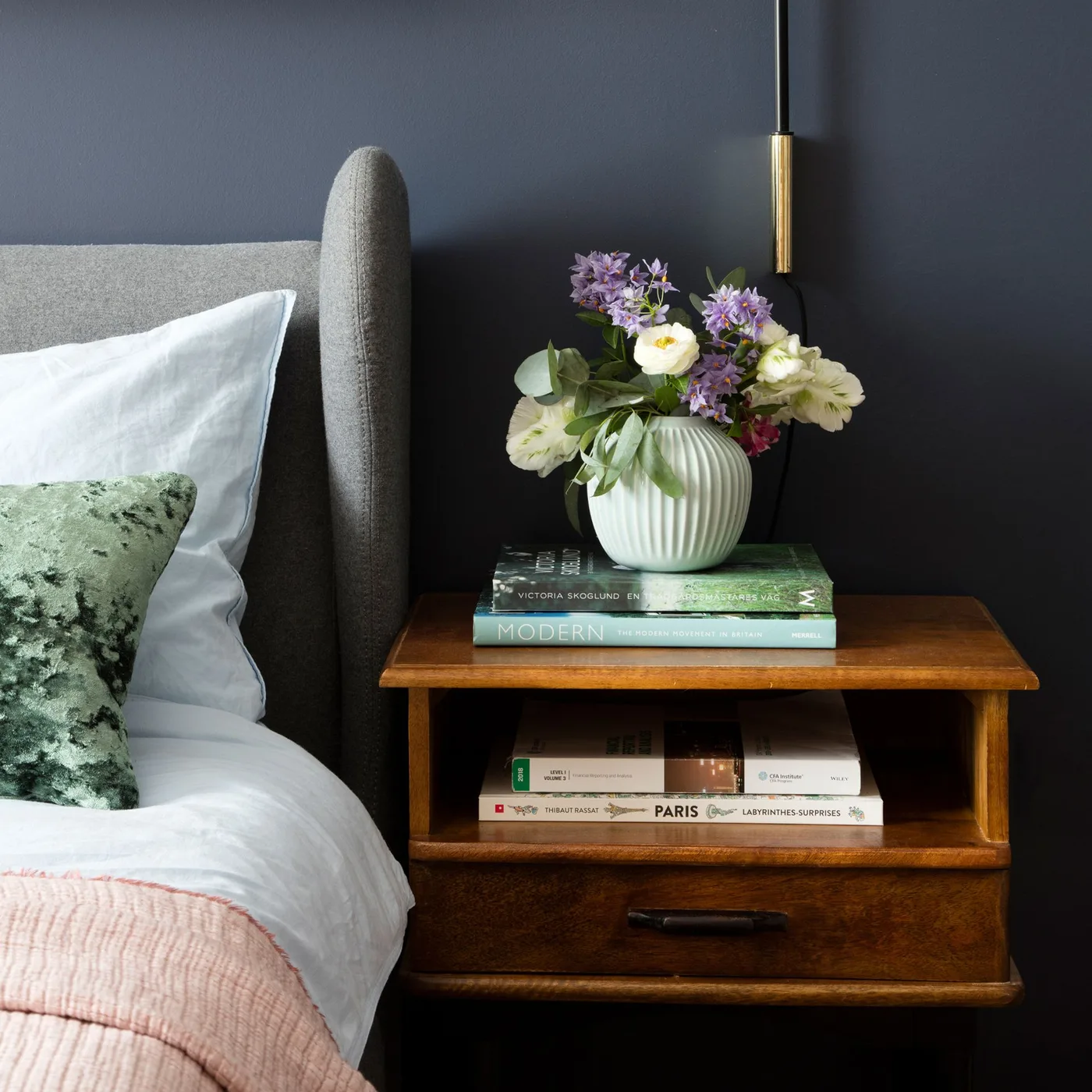 SaveSupport Non AI Creator
Image credit: David Giles
The dark wall creates a quiet background for the pale curved headboard edge. A wooden bedside table supplies a warmer horizontal surface, with its lower shelf carrying a separate book stack. Flowers introduce small lighter patches below the pendant, keeping decoration concentrated around one compact useful bedside position.
Leave enough table space for the items used nightly before adding flowers or stacked books. Check pendant position against sitting height and keep its controls reachable. Choose a stable vessel and protect the surface according to its actual finish, reducing display objects when watering or regular dusting becomes awkward beside the bed.
IDEA 17 / 20
Soften a Deep Wall with Pale Storage and Bedding
 SaveSupport Non AI Creator
Image credit: Future PLC
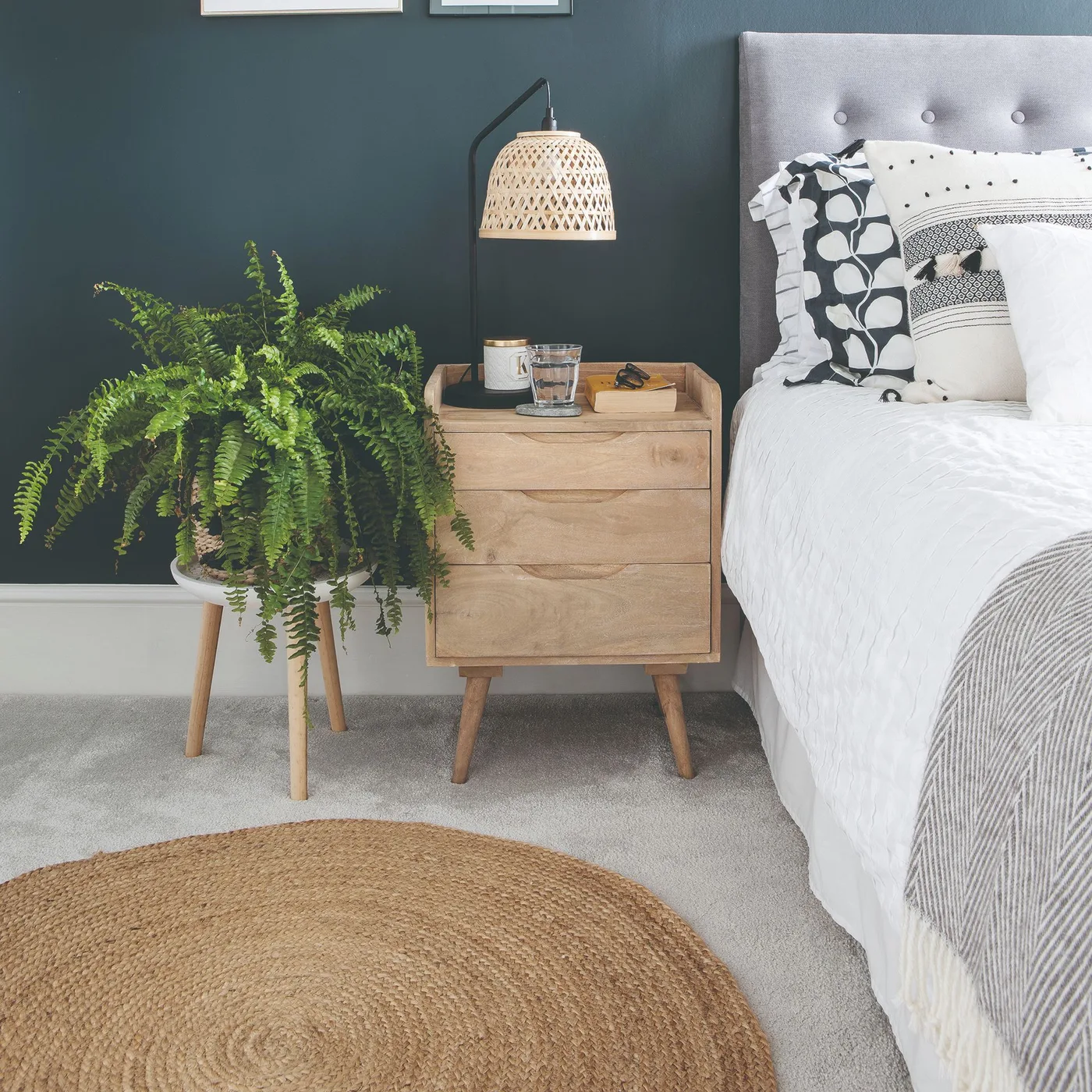
The deep wall provides the darker background while the headboard, bedding and bedside drawers keep the furniture group lighter. A woven-looking hanging shade introduces a textured outline above the table. The fern adds a separate green patch beside that storage without requiring another painted accent in the room.
Check the plant’s needs against the actual light and keep its container stable away from the route beside the bed. Leave the bedside drawers easy to open and clean. Select lamp fittings around safe installation and useful controls, following product instructions rather than assuming the photographed hanging position suits every bedroom.
IDEA 18 / 20
Warm Navy Paneling with a Geometric Headboard
 SaveSupport Non AI Creator
Image credit: Simon Whitmore
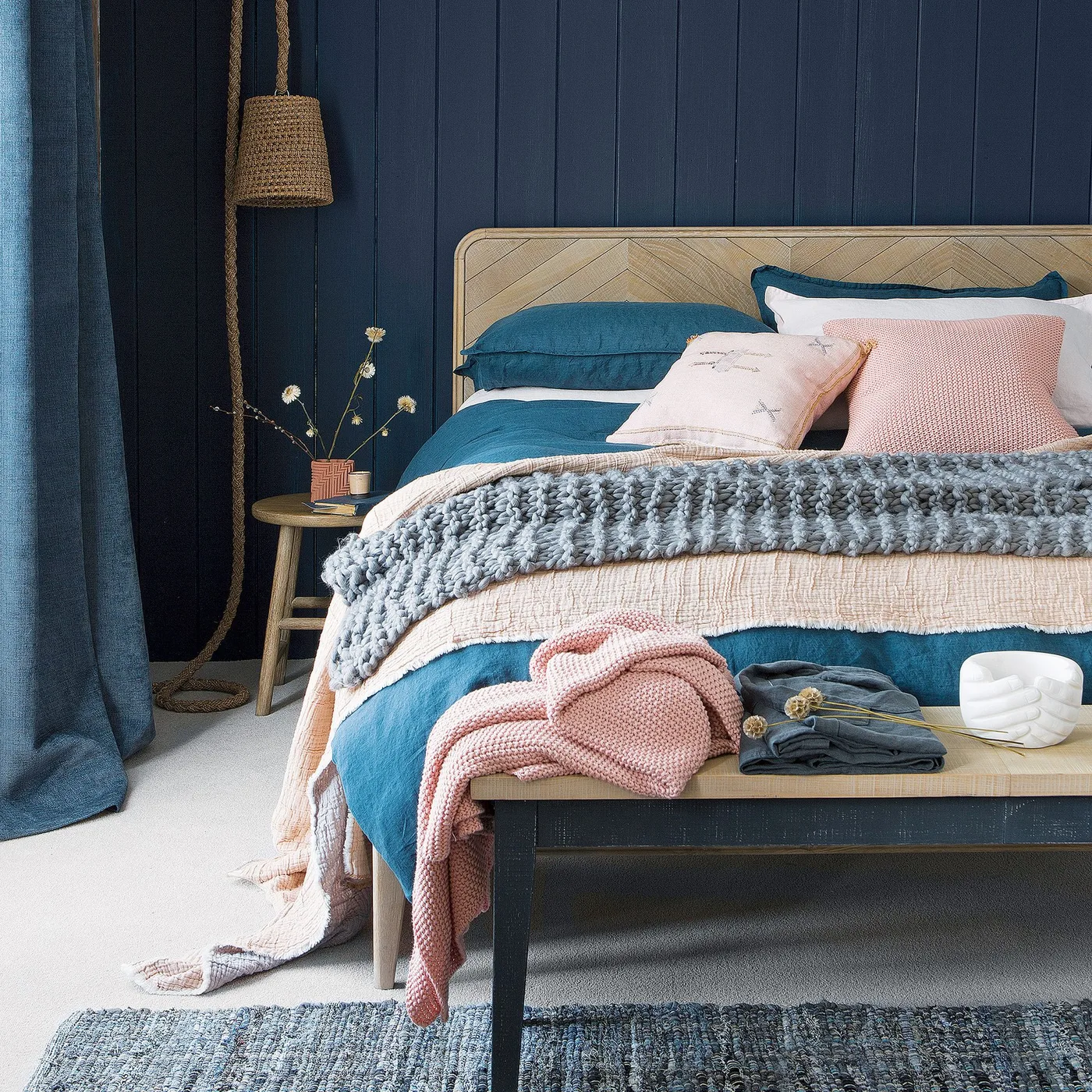
The navy wall and curtain connect as larger dark surfaces around the warmer geometric headboard. Blue bedding continues that deeper color while pink throws and a gray textured cover interrupt it with lighter layers. A bench supplies a separate horizontal landing area at the foot of the bed.
Check bench clearance before adding it, particularly where the room door or drawers open nearby. Choose bedding layers that can be stored easily when removed at night. Keep curtain movement clear and compare the headboard pattern beside the panel lines, reducing extra decoration if those two existing structures already provide enough detail.
IDEA 19 / 20
Make Wall Lamps Useful Against Navy
 SaveSupport Non AI Creator
Image credit: Future/Adrian Briscoe
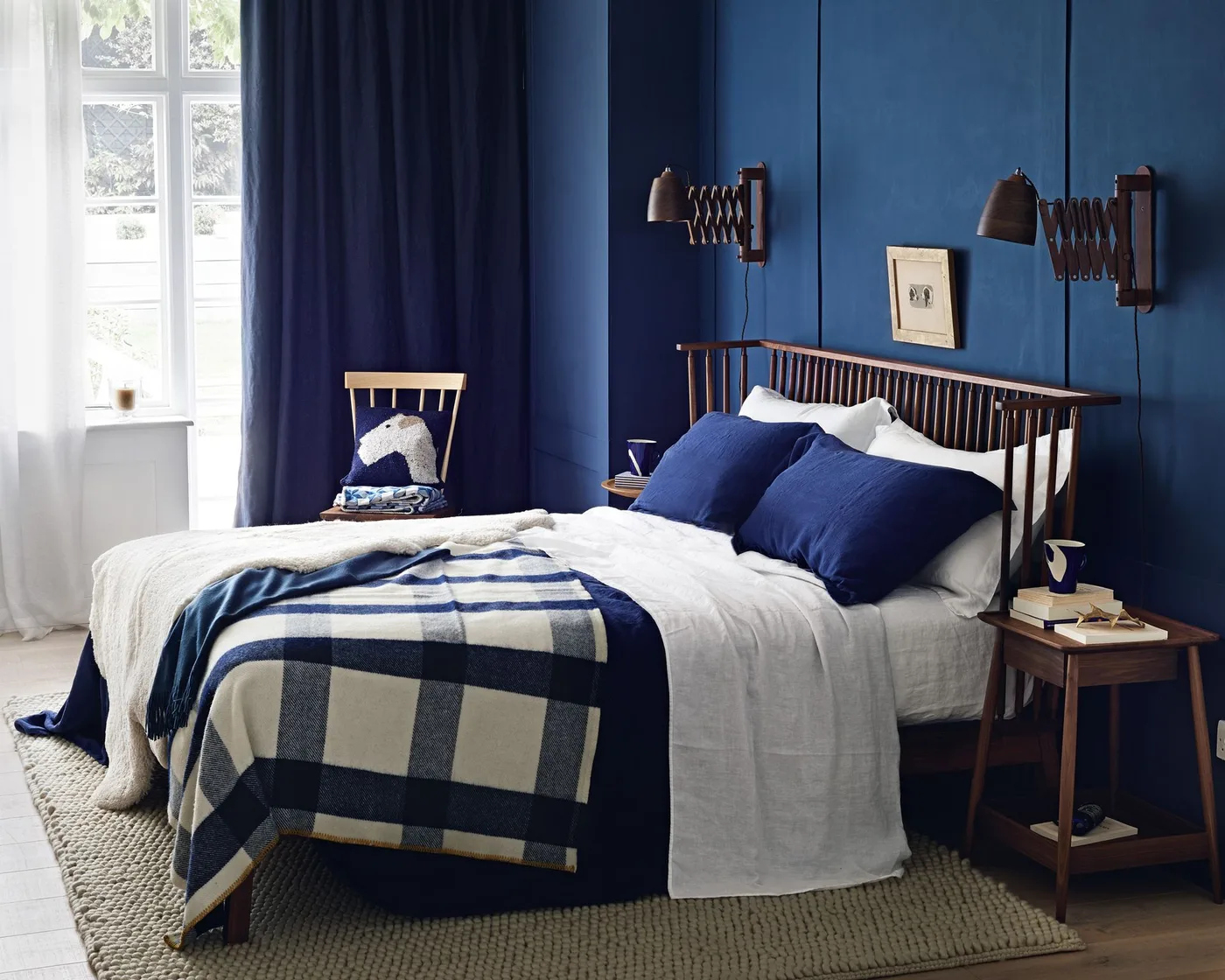
The navy wall gives the wooden spindle frame a stronger outline above the white bedding. A checked blanket and blue pillows connect the bed with the surrounding deeper color. Extending wall lamps occupy the bedside positions, with small tables below keeping the furniture around the sleeping area relatively compact.
Check lamp reach and controls from the actual pillow positions, allowing for adjustment without striking the bed frame. Leave curtain access practical beside the chair and table. Keep bedside surfaces clear enough for daily items, choosing a smaller blanket layer when a heavier cover becomes awkward to fold and store overnight.
IDEA 20 / 20
Use a Deep Lower Wall Below a Display Shelf
 SaveSupport Non AI Creator
Image credit: Future PLC
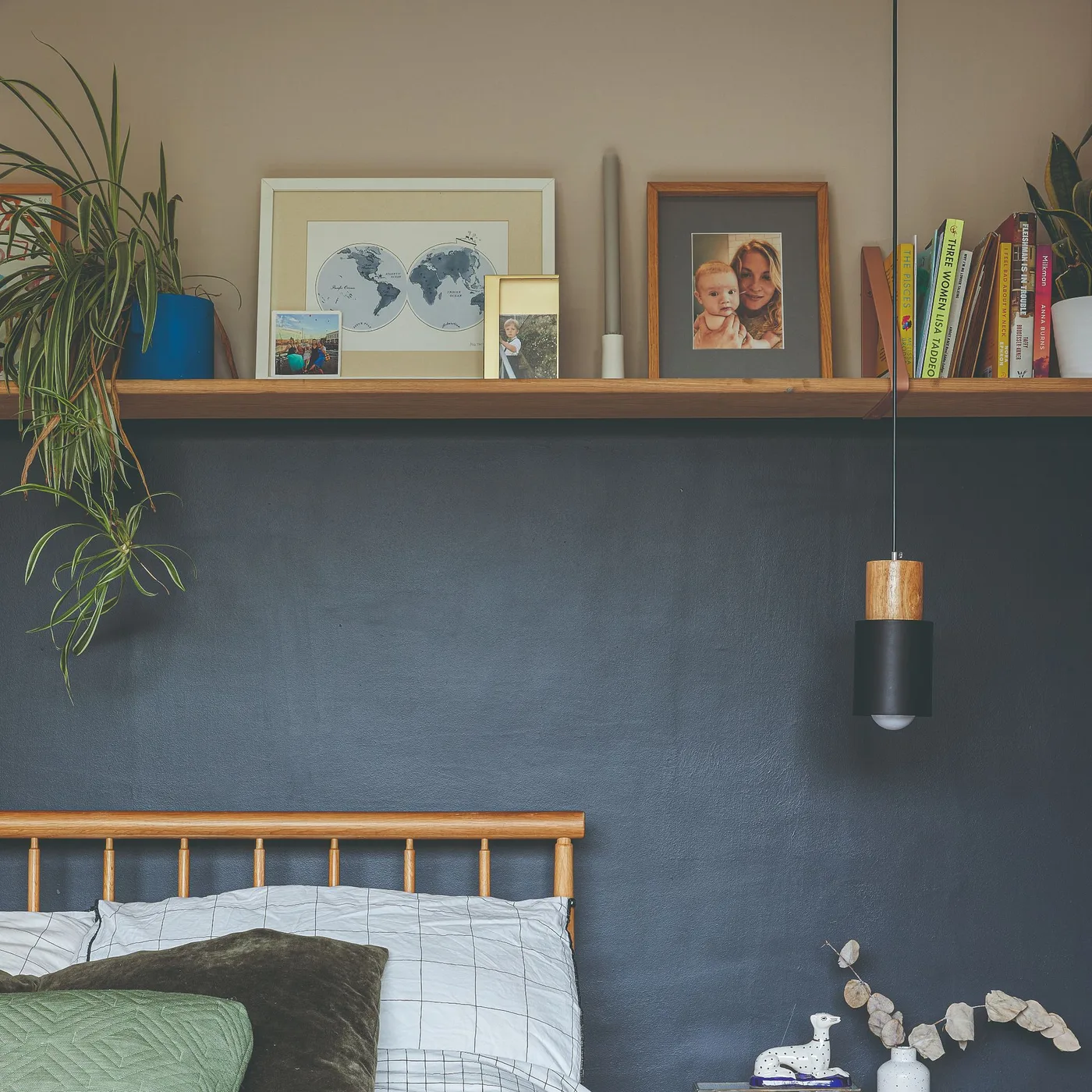
The deeper lower wall creates a darker background directly around the bed, while the paler upper wall remains separate above the display shelf. Warm wood links the shelf and spindle headboard through smaller outlines. Books and framed pictures concentrate the decoration along one horizontal line rather than across several walls.
Secure the shelf and displayed objects appropriately, keeping heavy or unstable items away from positions above sleepers. Check the hanging light against head clearance and reach. Accent wall bedroom ideas compare other ways to contain deeper color when you want a defined bed background while keeping the upper part of the room lighter.
BRING IT ALL TOGETHER
Keep the room comfortable beyond its darker palette
Choose where the deeper color will sit before layering several patterns. One headboard wall can provide enough contrast, while a darker ceiling creates a more extensive change. Test samples under the actual daylight and evening lamps, comparing the bedding and furniture you plan to keep.
Plan useful bedside surfaces, reachable controls and clear routes around drawers and curtains. Reduce cushions and display pieces when they create more work than comfort. Use actual product instructions for lighting, furniture anchoring and care, keeping the room’s practical routine as important as its photographed appearance.